News & Updates
The latest news and updates from companies in the WLTH portfolio.
Anthropic Launches Claude Opus 4.7 With Enhanced Coding and Cyber Safeguards
Anthropic just dropped Claude Opus 4.7, and the $380 billion AI company isn't messing around. The new model delivers double-digit improvements in coding benchmarks while introducing automated safeguards that block high-risk cybersecurity requests -- a direct response to concerns that forced the company to keep its more powerful Mythos Preview model under wraps. The release comes weeks after Anthropic announced its Claude Mythos Preview was too dangerous for public deployment, with sources indicating government officials were briefed on its advanced cyber capabilities. Opus 4.7 scored 72.5% on SWE-bench Verified at high effort versus 68.6% for its predecessor. Early testers reported more meaningful gains on real-world tasks. Cursor's internal benchmark showed a jump from 58% to 70%. Rakuten claims the model resolves 3x more production tasks than Opus 4.6. The vision upgrade might matter more than the headline numbers suggest. The model now processes images up to 2,576 pixels on the long edge -- roughly 3.75 megapixels, or three times previous limits. XBOW's penetration testing team reported visual acuity scores jumping from 54.5% to 98.5%, effectively unlocking an entire class of computer-use applications. Memory handling got a quiet but significant boost. The model now maintains context across multi-session work using file system-based memory, reducing the context-stuffing that drives up token costs. Here's where it gets interesting for anyone tracking AI risk. Anthropic explicitly stated they "experimented with efforts to differentially reduce" Opus 4.7's cyber capabilities during training. The model ships with automated detection systems that block prohibited cybersecurity uses. Security professionals wanting legitimate access -- vulnerability research, penetration testing, red-teaming -- can apply through a new Cyber Verification Program. This two-tier approach signals Anthropic's strategy for eventually releasing Mythos-class models: prove the safeguards work on less capable systems first. API pricing stays flat at $5 per million input tokens and $25 per million output tokens. The model is live across Claude's consumer products, Amazon Bedrock, Google Cloud's Vertex AI, and Microsoft Foundry. Developers can hit it via . One catch for existing users: the updated tokenizer means identical inputs can map to 1.0-1.35x more tokens depending on content type. Anthropic's migration guide recommends measuring real traffic impact before assuming costs stay constant. Anthropic's February Series G valued the company at $380 billion -- roughly on par with Nvidia's market cap when it first cracked the AI narrative. The Opus 4.7 release, combined with the company's April expansion of its Google and Broadcom compute partnership for "multiple gigawatts" of next-gen infrastructure, suggests the private company is positioning for either an IPO or strategic acquisition. For public market exposure, watch enterprise software companies citing Claude integration in earnings calls. Harvey, Notion, Replit, and Vercel all provided testimonials for this release -- their deployment patterns could signal broader AI infrastructure spend trends heading into Q3.
Money falling from the sky? Viral video shows chaos in China after woman tosses cash from balcony
There is a common saying that money doesn't grow on trees or fall from the sky -- but in Guangdong, it almost looked like it did. In the city of Shantou, a woman reportedly tossed large amounts of Hong Kong currency from a high-rise apartment, triggering a chaotic scramble as people rushed to grab the notes drifting down below. Clips and photos from the scene spread quickly online, with some claiming they picked up several bills. According to Hong Kong-based outlet The Standard, early, unverified reports suggest the incident may have followed a heated argument between a couple, during which the woman began throwing cash out of the window. Witnesses said police and firefighters later arrived at the scene. Local media, citing the property management at Star Lake City, confirmed the episode and said some residents had already returned the money they collected. They also verified that the banknotes were real. Watch the video: View this post on Instagram A post shared by Daily Mail (@dailymail) Management stated that a resident was responsible for throwing the cash for reasons that are still unclear and added that they are assisting authorities with the investigation. They also urged anyone who picked up money to return it to the office or the nearest police station. Officials from the Zhuchi Police Station, under the Longhu District Public Security Bureau, said the matter has been "handled" and remains under investigation, while again appealing to the public to return any money they may have found. As the video went viral, social media users didn't hold back. One person joked, "I can never be this angry." Another wrote, "Even i am not her husband but still it's giving me stress." A third comment read, "She's just giving an example that 'money is not the most important thing in life.'" Someone else added, "Ik I have really bad anger issues buy I'm not getting to this point," while another remarked, "Chinese society has started behaving like American society." Disclaimer: This story is based on unverified social media reports and viral claims. While the events are presented for informational purposes, the underlying circumstances have not been independently verified. Please exercise caution and refer to official local authorities for confirmed details regarding this incident.

Anthropic has revealed Claude Opus 4.7, and you can use it right now
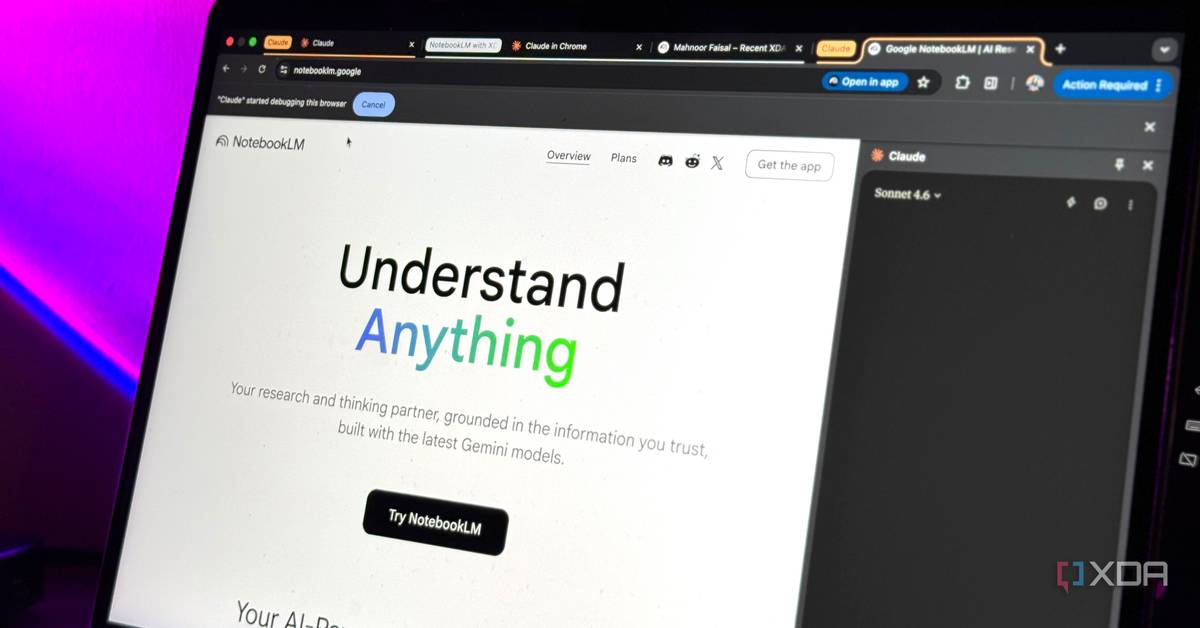
This article covers a developing story. Continue to check back with us as we will be adding more information as it becomes available. As the LLM wars heat up, some of the biggest players in the AI market are quickly releasing new, more powerful models than the last. It's going at such a breakneck speed that it's easy to get lost, but with big companies seizing huge amounts of investment to work as fast as they can, the competition has to go as quickly as possible, else they'll be left behind. Anthropic know this as well as anyone, which is why it has released Opus 4.7. It claims that it's a lot more useful than Opus 4.6, which is amazing, given how the prior version came out just over two months ago. And if you'd like to try it for yourself, we're getting reports that people can access it right now. Anthropic releases Opus 4.7 to the public You should be able to try it right now As announced on the Anthropic website, the company has pulled back the curtain on Opus 4.7. The company states that you can give this new model a try right now; sure enough, several members of the XDA team report being able to select the model on the Claude website, sporting the description "Most capable for ambitious work." If you want an idea on how fast the world of AI is going, just check out the table above, which pits Opus 4.7 against the most recent version that released on February 5th. That's just over two months of work, and we're already seeing huge jumps in how well the model works. Anthropic wastes no time announcing all the things its new model can do: Opus 4.7 is a notable improvement on Opus 4.6 in advanced software engineering, with particular gains on the most difficult tasks. Users report being able to hand off their hardest coding work -- the kind that previously needed close supervision -- to Opus 4.7 with confidence. Opus 4.7 handles complex, long-running tasks with rigor and consistency, pays precise attention to instructions, and devises ways to verify its own outputs before reporting back. Anthropic also claims that Opus 4.7 is better with vision, rendering things in higher resolution and "producing higher-quality interfaces, slides, and docs." And while Anthropic openly admits that Opus 4.7 isn't quite as mighty as its legendary Mythos model (which you can also see in the table above), this is still the strongest AI model you can use without being a part of a special group of companies.
Blue Origin's third New Glenn launch faces key reuse test in rivalry with SpaceX
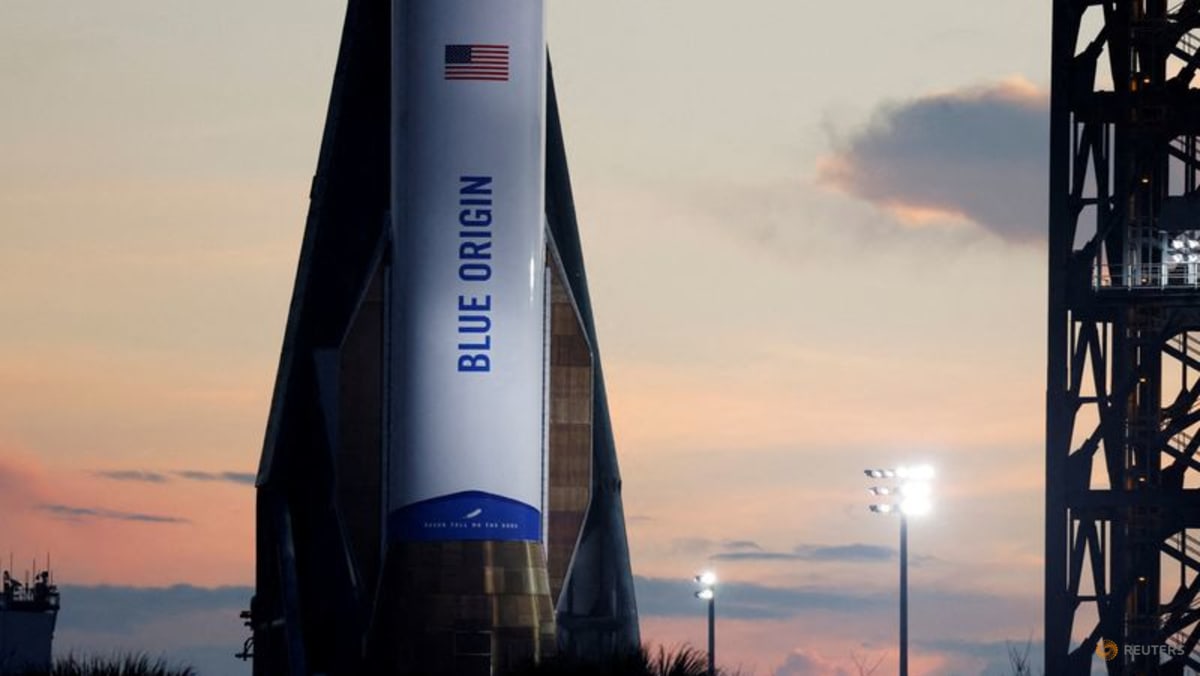
April 16 : Blue Origin is set to launch its third New Glenn mission on Friday, carrying AST SpaceMobile's BlueBird 7 satellite to low-Earth orbit in a flight that marks a pivotal step for the Jeff Bezos-led company's ambitions. The mission is critical in proving New Glenn, a 29-story heavy-lift rocket, can compete with Elon Musk's SpaceX, by demonstrating reliable booster reuse, a capability that has underpinned Falcon 9's dominance. "The successful flight of New Glenn-3 would end SpaceX's nine-year monopoly on orbital launch vehicle reusability, marking a historic shift toward a competitive, multi-player market," said Micah Walter-Range, president of space consulting firm Caelus Partners. The mission is scheduled for a launch window between 6:45 a.m. and 12:19 p.m. ET from Cape Canaveral, Florida. Following a series of delays earlier this month, the mission comes amid a surge of activity in the space sector, including a successful NASA Artemis II lunar flyby. The rocket's booster, "Never Tell Me the Odds," previously flew on the NG-2 mission in November and was recovered, setting up this week's milestone attempt. The name is a nod to Han Solo's line in 'Star Wars: The Empire Strikes Back.' A successful landing would also signal Blue Origin is narrowing a gap with SpaceX, which has confidentially filed for a U.S. IPO targeting a valuation of about $1.75 trillion. Blue Origin said in November it would build a bigger, more powerful variant of its New Glenn rocket. KEY PAYLOAD New Glenn is designed for the higher end of the commercial launch market. Its seven-meter payload fairing allows it to carry bulkier payloads, including multiple satellites in a single mission. On NG-3, the rocket will carry AST SpaceMobile's BlueBird 7, the second satellite in its next-generation Block 2 constellation. The satellite features what the company describes as the largest commercial communications array deployed in low-Earth orbit. Designed to connect directly with smartphones, the satellite is part of an effort to build a space-based cellular broadband network, similar to Amazon's Leo or SpaceX's Starlink. AST SpaceMobile is targeting a constellation of 45 to 60 such satellites by the end of 2026.
A Polymarket trader made $300,000 betting on Biden's pardons, a new analysis shows
In the final hours of President Biden's term, a Polymarket trader made around $300,000 correctly betting on Biden's last-minute pardons, according to new data provided to NPR by an analytics firm that examines cryptocurrency transactions. As Biden issued a wave of pardons just hours before leaving the White House, the Polymarket trader bet big on four names, with the odds of those pardons occurring rapidly dropping to near zero on the prediction market site. The trader, whose identity is not publicly known, placed around $64,000 worth of bets that Biden would issue pre-emptive pardons for Jim Biden, the former president's brother, former Rep Liz Cheney, Sen. Adam Schiff, former Rep. Adam Kinzinger -- all prominent critics of President Trump. While none were ever charged with crimes, all four were given pardons to shield them against possible prosecution in Trump's second term. A month earlier, the same bettor placed a well-timed wager on Polymarket that Biden's son, Hunter, would receive a pardon over gun and tax charges. Together, those five bets netted the trader $316,346 in profits, according to an analysis by the Paris-based analytics company Bubblemaps, which shared its findings exclusively with NPR. "The odds of this happening by random chance are virtually zero," said Columbia Law School's Joshua Mitts, who advises the Department of Justice on insider trading cases. "The trader could've been a White House insider," he said. "But the trader could have possessed the information without being an insider," said Mitts, who published a paper last month estimating that $143 million in profits have been earned on Polymarket by bettors with insider information. The trades linked to Biden's pardons show that individuals could have been profiting from confidential government information before President Trump returned to office, when prescient bets related federal policy and military strikes on sites like Polymarket started to draw intense scrutiny. Polymarket did not return a request for comment. To piece together the suspicious trades related to Biden's pardons, Bubblemaps' forensic investigators looked at Polymarket trades using pattern-matching artificial intelligence software. They discovered two accounts had a perfect track record of betting on Biden pardons. "We looked at all the accounts trading on this one market and looked at their mutual transactions," Nick Vaiman, Bubblemap's founder, told NPR in an interview. "And we found a connection between two accounts, which was a shared deposit wallet." That means the analysts determined that both accounts were sending profits from Polymarket bets to the same cryptocurrency wallet on the site Kraken, a U.S.-based crypto exchange. "Exchanges like Kraken don't offer information on individual accounts," Vaiman said. "We've tried desperately, but they don't give up this information easily." Kraken has "know-your-customer" rules similar to a bank, requiring its customers to verify their identities before using the exchange. Yet it remains difficult to publicly identify a customer based on a crypto wallet alone. Federal prosecutors often find that crypto wallet-holders engaging in insider trading do so through other people or shell companies, said Mitts. "If the government subpoenas, and gets data back showing some entity did the trading that has no connections to the White House, that's where the trail runs cold." And even when a wallet on a cryptocurrency blockchain is connected to a person, a legal case of insider trading is far from open-shut, Mitts added. "If it was misappropriation of information, the problems for prosecutors begin there," he said. "Who was misappropriating? Could you prove it? Could you prove the conditions under which they got the information?" Prediction markets, like Polymarket and its main rival, Kalshi, have flourished in Trump's second term. The administration has embraced an industry once considered a pariah in Washington over fears that the markets could be ripe for abuse and manipulation. The investment firm Bernstein projects that in the next four years, prediction markets could become a $1 trillion industry, and the Trump family is getting in on the action. Donald Trump Jr., the president's son, is an adviser to both Kalshi and Polymarket. As millions of people turn White House announcements and geopolitical episodes into opportunities to make money, there have been a series of controversies over suspected insider trading. Hours before Venezuelan leader Nicolás Maduro was toppled by U.S. forces in January, a Polymarket trader placed a bet that netted $400,000. Likewise, an account trading under the username "Magamyman" made more than $500,000 after wagering on Polymarket that Iran's Ayatollah Ali Khamenei would soon no longer lead Iran. Not long after the bet was placed, an Israeli strike killed him. Most recently, a group of new accounts on Polymarket raked in hundreds of thousands of dollars in profits by betting that the U.S. and Iran would reach a ceasefire before the agreement had been unveiled. U.S. prosecutors have not announced any investigations or charges over potential insider trading. In Israel, authorities arrested several people in connection to a case alleging that military reservists traded on Polymarket using classified military intelligence. The largest U.S. prediction market, Kalshi, is regulated by the Commodity Futures Trading Commission, a status that is being contested in court by dozens of states. The CFTC prohibits betting on markets related to war, assassinations and terrorism, but otherwise has overseen the industry with a light touch, in contrast to the Biden administration, which prohibited most types of "event contracts" except those related to things that had clear public value, like the weather, oil futures and grain prices. Polymarket, too, has been welcomed by the Trump administration. Under Biden, the Federal Bureau of Investigation raided the home of Polymarket's CEO and forced the site to wind down in the U.S. It continues to operate mostly as an overseas exchange, with its largest site accessible by Americans only via virtual private network. Unlike Kalshi, Polymarket uses cryptocurrency, making it easier for traders to remain anonymous. But Trump's law enforcement agencies have taken a more hands-off approach to Polymarket's most controversial markets on everything from conditions in Gaza, war to the next nuclear detonation. "These markets are problematic," said Nizan Packin, a law professor at Baruch College. "If we want to offer this type of gambling about geopolitics and elections, we need to do this in a proper way, which means guardrails that we have created after we studied the consequences and the problems. This is not something that was done," said Packin, who co-authored a new paper in the the journal Science examining the risks of online prediction markets. "Without clear regulation, and clearer and stricter enforcement, the gray zone becomes larger and more questions should and will be asked," she said.

Anthropic Unveils Updated Opus Model Aimed at Advanced Coding
Anthropic PBC is introducing an updated version of its most powerful, widely available AI model, barely a week after it limited the release of a more advanced offering called Mythos. Anthropic said Opus 4.7 is meant to be better at software engineering, a key growth area for the company. The new model is less broadly capable than Mythos, however, including for cyber capabilities, Anthropic said. Last week, Anthropic warned that its Mythos system was able to identify and then exploit vulnerabilities "in every major operating system and every major web browser when directed by a user to do so." The company decided to only make a version of the model available to select businesses to help them safeguard their software. The Claude maker is locked in a heated rivalry with OpenAI to deploy better artificial intelligence models and convince more business customers to pay for them. In recent months, Anthropic has seen strong momentum for its AI coding offerings as well as growing traction with consumers amid a standoff with the Pentagon over AI safeguards. Anthropic was most recently valued at $380 billion. The company is now fielding offers from investors for a new round of funding that could value it at about $800 billion or higher. Apple Inc. and Google have continued to offer mobile apps that let users make nonconsensual sexualized images of people despite their policies prohibiting such content, according to a report published Wednesday by the Tech Transparency Project. Searching for terms like "nudify" and "undress" in the Apple and Google app download stores gives customers access to software that can be used to alter images of celebrities and others to make them appear nude or in a state of partial undress, according to the group, a research arm of the nonprofit Campaign for Accountability. The companies also run ads for similar nudifying apps in their search results. Apps identified by the group have been downloaded 483 million times and generated $122 million in revenue, according to the report, which cited revenue estimates from market researcher AppMagic. A spokesperson for AppMagic said the Tech Transparency Project's work has resulted in several apps being removed and prompted others to change their user policies. Over the past year, politicians around the world have ratcheted up calls to curb the spread of nudifying apps. Earlier this year, the companies removed apps flagged by the Tech Transparency Project. But just a few months later, dozens of similar ones could be found, researchers from the organization said. "It's not just that the companies are failing to actually appropriately review these apps and continue to approve them and profit from them," Katie Paul, director of the project, said in an interview. "They are actually directing users to the apps themselves." From its app store searches, the group identified 18 apps with nudifying capabilities in the Apple App Store and 20 in the Google Play Store. In addition, both Apple and Google sometimes directed users to the apps via their autocomplete feature by suggesting the names of more nudifying apps as users typed, the researchers said. Some of the apps used names and images that cast them in a sexual light. Others could easily be used for that purpose despite not being marketed as such, making them more convenient than traditional photo-editing software. Some offered subscriptions, the Tech Transparency Project said. Apple's App Store guidelines for developers ban "overtly sexual or pornographic material." The Google Play Store bans "apps that degrade or objectify people, such as apps that claim to undress people or see through clothing, even if labeled as prank or entertainment apps. Google said that many of the apps referenced in the report have been suspended from Google Play for violations of its policies, and an investigation is ongoing. "When violations of our policies are reported to us, we investigate and take appropriate action," the company said in an email. Apple said it removed 15 apps identified by the group after Bloomberg reached out about their presence. Among the apps taken down were PicsVid AI Hot Video Generator, which offered templates that featured women sucking on phallic lollipops, according to the researchers. PicsVid's developer didn't respond to a request for comment. Another app identified by the Tech Transparency Project, Uncensored AI -- No Filter Chat, stripped clothes from an image of a woman uploaded by the researchers. A representative of Uncensored AI's developer said the app no longer allows removal of clothes. Apple said it contacted the developers of six apps to alert them to issues that need to be addressed and that they are at risk of being removed. Other apps mentioned by the Tech Transparency Project didn't violate the company's guidelines, Apple said. The company added that it has proactively rejected many apps and removed others. The tech giants' enforcement efforts are "uneven and largely opaque," according to Anne Helmond, a professor at Utrecht University in the Netherlands. "If an app presents itself as a generic image generator, it may pass review, even if it can be misused in practice," said Helmond, who is a director of the App Studies Initiative, an international research group. "Visibility is shaped by ranking and search systems that reward engagement, meaning that controversial uses can increase an app's prominence." One of the apps identified by the researchers in the Google Play Store, Video Face Swap AI: DeepFace, advertised swapping actress Anya Taylor-Joy's face onto Game of Thrones character Daenerys Targaryen. But inside the app, under a category called Girls, users could paste people's faces onto video templates of women bouncing their breasts or shaking their hips, Bloomberg found. The app, which is rated "E" for Everyone, has been downloaded over 1 million times from the store, where users could find it by typing "face swap" into the search bar. Okapi Software, the company that offers Video Face Swap AI, said it had launched an investigation into the issues raised by Bloomberg and removed some of the content, which it said had been uploaded by users. "Our app does not offer 'nudify' functionality, and we do not permit the generation of nude or sexually explicit content," Okapi said. "We take content safety and compliance seriously." A growing chorus of regulators are calling for the companies to do more to uphold their policies. Last year, President Donald Trump signed the Take It Down Act, which criminalizes the publication of non-consensual sexual content and compels social media and websites to remove such posts." In April, the UK government plans to introduce legislation that would open a path to prosecute tech executives whose companies do not take down such images.
Starlink Growth Surges as SpaceX Moves Closer to Potential IPO - Wall Street Pit
The United States recorded app downloads that more than tripled year-over-year to a record 1.2 million in the January-March quarter, sustaining Starlink's high-growth phase after its subscriber base surpassed the 10-million mark in February and highlighting future opportunities such as orbital data centers. Starlink's accelerating global momentum is cementing its position as the central pillar of SpaceX's anticipated public debut later this year. Market research firm Apptopia said in a report that the satellite internet service has more than doubled both app downloads and monthly active users in the first quarter compared with the same period a year earlier, while posting four consecutive quarters of monthly active user growth above 100%. These metrics arrive as investor expectations center on a targeted valuation for SpaceX of around 1.75 trillion dollars, with Starlink having generated an estimated 11.4 billion dollars in revenue last year. The expansion reflects balanced strength across emerging and developed economies. Brazil delivered one of the most dramatic increases, with monthly active users jumping over fivefold year-over-year and now representing about 13% of the global user base, up sharply from less than 5% previously. Argentina added user growth of 159%. Together the two markets now account for more than a fifth of worldwide active users, demonstrating Starlink's deepening penetration in Latin America. At the same time, the United States - Starlink's largest and highest-margin market - recorded app downloads that more than tripled year-over-year to a record 1.2 million in the January-March quarter. The surge points to faster subscriber acquisition even in a mature, infrastructure-rich environment. Collectively, these regional gains confirm that Starlink continues to operate in a high-growth phase after its subscriber base crossed the 10-million mark in February. Starlink operates a constellation of low-Earth orbit satellites that deliver broadband connectivity to locations where traditional terrestrial networks are unavailable or unreliable. The service's ability to scale rapidly in both high-potential developing markets and established ones underscores its technological edge and operational efficiency, factors that public-market investors are expected to weigh heavily when assessing long-term value creation. Analysts note that maintaining this subscriber trajectory will remain essential. Future opportunities, including SpaceX's plans to build orbital data centers, are viewed as the logical next chapter that could further differentiate the business and support sustained expansion beyond its current user base.

Anthropic plans UK rollout of Mythos AI model for financial institutions
Anthropic's AI model, Mythos, triggers cybersecurity concerns amidst its UK financial sector debut. Anthropic PBC is set to release its Mythos artificial intelligence model to UK financial institutions in the coming weeks under its "Project Glasswing" programme, which provides limited early access to selected organisations, as confirmed by Pip White, the company's UK, Ireland and Northern Europe chief, in a recent interview with Bloomberg. The model has reportedly uncovered thousands of zero-day vulnerabilities across major operating systems and browsers during testing, raising concerns over its cybersecurity implications. UK and international financial and regulatory attention has intensified ahead of the rollout. White said interest from UK chief executives has been significant and that safeguards are being applied due to the system's capabilities. Early access participants have so far included Amazon, Apple, Microsoft and Cisco. The development has prompted discussions among policymakers, with US and UK officials and regulators examining potential risks, including the Bank of England. The UK AI Security Institute said the model represents a step up from previous frontier systems in simulating cyber attacks. Anthropic also plans to expand its London office capacity substantially next year.
Anthropic rolls out Claude Opus 4.7, an AI model that is 'broadly less capable' than Mythos
Claude Mythos Preview is Anthropic's most powerful AI model that excels at identifying weaknesses and security flaws within software. The company announced the model earlier this month and said it would roll out to a select group of companies as part of a new cybersecurity initiative called Project Glasswing. Anthropic said that while Claude Opus 4.7 is not as powerful as Claude Mythos Preview, it still shows improvements over Claude Opus 4.6, which the company announced in February. "We are releasing Opus 4.7 with safeguards that automatically detect and block requests that indicate prohibited or high-risk cybersecurity uses," Anthropic said in a release. "What we learn from the real-world deployment of these safeguards will help us work towards our eventual goal of a broad release of Mythos-class models."

Anthropic Starts Requiring Govt IDs and Video Selfies From Claude Users
Anthropic has introduced identity verification requirements for certain users of its Claude platform, marking a shift in how access to some features is managed. The company is asking selected users to provide a government-issued photo ID along with a live selfie when accessing specific capabilities. According to Anthropic, this is part of "platform integrity checks" and broader safety and compliance measures. The policy is not applied universally. Verification is triggered only in certain cases, including when activity appears potentially fraudulent or abusive. Anthropic is using Persona as its verification partner. Users must submit a valid passport, driver's license, or national ID card. Photocopies, mobile IDs, and student IDs are not accepted. The company said that identity data is processed through Persona's systems rather than stored directly by Anthropic. The data is encrypted during transfer and storage, excluded from model training, and not used for marketing purposes. The move has drawn criticism from users, particularly those who had previously viewed Anthropic as a privacy-focused alternative. The requirement is not tied to any government mandate, but rather a decision made internally by the company. Concerns have also been raised about the risks of storing sensitive identity data with third-party providers. Past incidents, including breaches involving similar verification systems, have highlighted potential vulnerabilities. Anthropic saw a surge in users earlier this year, including users switching from OpenAI. At the time, the company reported strong growth in signups and increased usage of its free tier. The introduction of verification measures comes as Anthropic continues to expand safety controls across its platform. The verification requirement aligns with other measures introduced by Anthropic, including systems to detect underage users and enforce regional access restrictions. These controls have led to some account suspensions, including cases where users reported being incorrectly flagged and losing access to their data.

SpaceX is buying a lot of Cybertrucks.
Reporting from Bloomberg on how many Cybertrucks Elon's other companies have been buying: SpaceX, the Musk-led rocket and satellite maker, accounted for 1,279 -- or more than 18% -- of the 7,071 Cybertrucks registered in the US during the fourth quarter, according to registration data that S&P Global Mobility provided to Bloomberg News. The billionaire's other ventures acquired another 60 vehicles during those months.

Europe may run out of jet fuel in 6 weeks: Why IEA warns Europe could face flight chaos as Iran war sparks a global energy crisis
Europe jet fuel shortage: Europe could soon begin to feel the real impact of the ongoing Iran war, with energy supplies tightening and disruptions becoming more visible in daily life. According to IEA Executive Director Fatih Birol, the continent may have only "maybe six weeks or so" of jet fuel left if current supply blockages continue, raising the possibility of flight cancellations in the near future, as per a report. Speaking in Paris, Birol described the situation as one of the "the largest energy crisis we have ever faced," as quoted by AP. With oil, gas, and other key supplies restricted through the Strait of Hormuz, the effects are already spreading beyond the region. He warned that the longer the disruption lasts, the more pressure it will put on global economic growth and inflation, with rising fuel, gas, and electricity prices expected. He pointed out that, "In the past there was a group called 'Dire Straits.' It's a dire strait now, and it is going to have major implications for the global economy. And the longer it goes, the worse it will be for the economic growth and inflation around the world," adding that the impact will be "higher petrol (gasoline) prices, higher gas prices, high electricity prices," as quoted by AP. While the crisis is global, its impact will not be equal. Birol noted that developing nations in Asia, Africa, and Latin America are likely to be hit the hardest. Still, he stressed that no country will escape the effects entirely, regardless of wealth or energy resources. He highlighted that, "Some countries may be richer than the others. Some countries may have more energy than the others, but no country, no country is immune to this crisis," as quoted by AP. The situation could worsen if the vital waterway remains closed. Birol warned that some oil products may run short, and in Europe, reduced jet fuel supplies could soon disrupt travel between cities. He also raised concerns about Iran's use of a "toll" system for ships passing through the strait, warning that it could set a wider precedent for other major trade routes if allowed to continue. Meanwhile, more than 110 oil tankers and over 15 liquefied natural gas carriers are currently stuck in the Persian Gulf, unable to move freely. Even if tensions ease, damage to more than 80 energy facilities in the region, many of them severely hit, means recovery will take time. Birol said it could take up to two years for production levels to return to what they were before the war, as per the AP report. Why is Europe facing a jet fuel shortage? Supply disruptions linked to the Iran war and blocked routes are limiting fuel availability. How long could Europe's jet fuel last? It may have only around six weeks of supply if the situation continues.
Starlink's User Growth Is Strengthening SpaceX's IPO Pitch
Apptopia data shows Starlink doubling users year over year, lifting revenues and expanding in Brazil, Argentina, and the US as investors focus on subscriber momentum. Starlink is adding users fast, and app tracker Apptopia says its downloads and monthly active users more than doubled in Q1 from a year earlier. What does this mean? Apptopia counted four straight quarters with monthly active users up over 100% year over year, suggesting this isn't just a one-off surge. That matters because many investors see Starlink as SpaceX's most straightforward cash-flow engine - and in subscription businesses, user momentum often stands in for future revenue. Apptopia estimates Starlink generated about $11.4 billion last year, and Reuters-cited analysts say continued growth is the metric to watch. Valuation chatter may come and go, but..
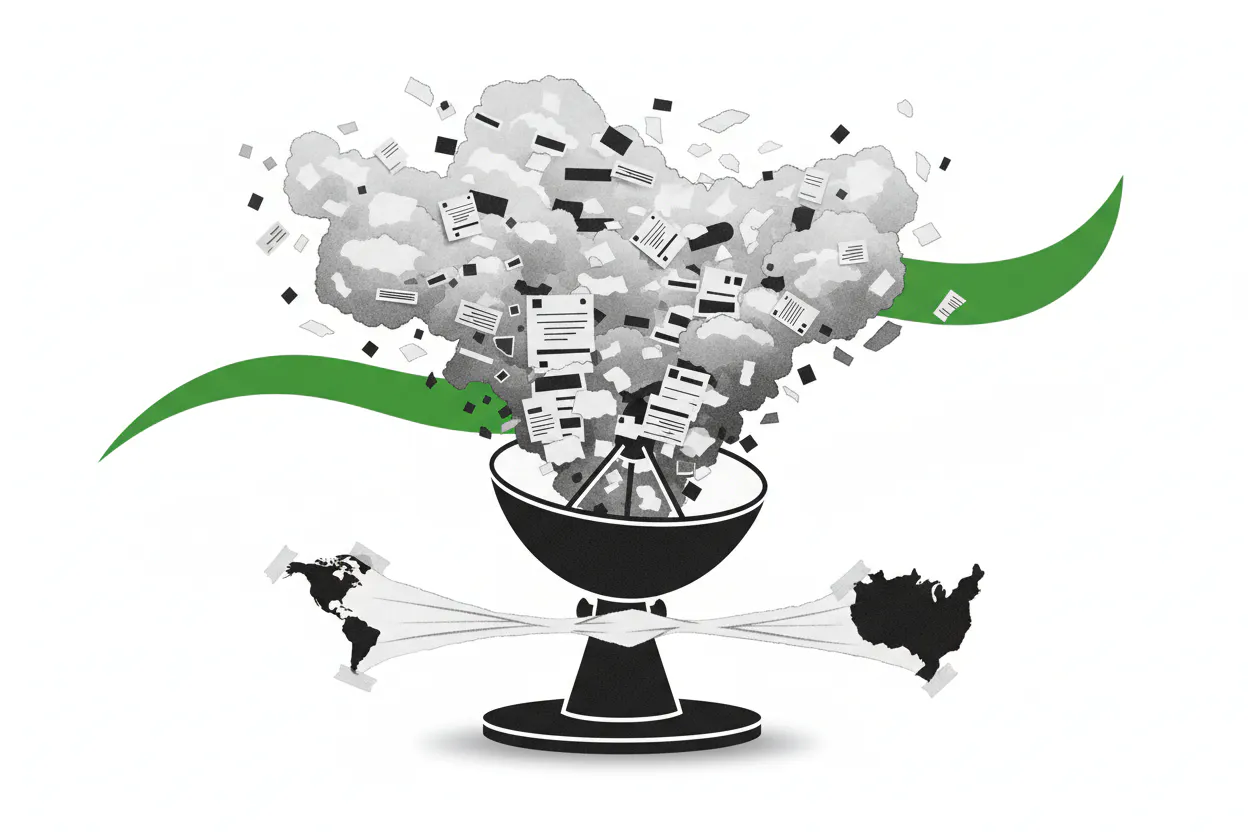
EU in talks with Anthropic over risks of AI model Mythos - The Economic Times
The EU said Thursday it is in discussions with US AI firm Anthropic over concerns about the capabilities of its latest model, which the company itself worries could be a boon for hackers. But no foreign entities were included, raising concerns about the world's preparedness for a model whose offensive capabilities would not stop at US borders.The EU said Thursday it is in discussions with US AI firm Anthropic over concerns about the capabilities of its latest model, which the company itself worries could be a boon for hackers. Anthropic's new model, Claude Mythos, has proven keenly adept at exposing software weaknesses, pushing the company to postpone full release. "We have a new AI model that is being released. It comes with a certain number of risks. We need information when it comes to these risks," European Commission spokesman Thomas Regnier told reporters. "We're reaching out to the platform, to Anthropic. We have received certain information," Regnier added, confirming that a first meeting took place Wednesday and more would follow. Anthropic said earlier this month it restricted the release of Mythos to just 40 major tech players to give firms a head start in fixing vulnerabilities before they could be exploited by attackers. But no foreign entities were included, raising concerns about the world's preparedness for a model whose offensive capabilities would not stop at US borders. According to Anthropic and partners, Mythos can autonomously scan vast amounts of code to find and chain together previously unknown security vulnerabilities in all kinds of software, from operating systems to web browsers. Crucially, they warn, this can be done at a speed and scale no human could match, meaning it could be used to bring down banks, hospitals or national infrastructure within hours. Anthropic's announcement has encountered a mix of alarm and scepticism, with some pointing out the firm -- one of several contenders in a fierce artificial intelligence race -- stood to gain from the hype. But the heads of America's biggest banks reportedly met this month with Federal Reserve Chairman Jerome Powell and Treasury Secretary Scott Bessent to weigh the security implications of the yet-to-be released model.
Trump War Chaos Sparks Alarming Jet Fuel Shortage Warning
Europe may have only about "six weeks" of jet fuel left as the Iran war continues to choke global energy supplies, the head of the International Energy Agency warned Thursday. In an interview with the Associated Press, IEA Executive Director Fatih Birol said the disruption to oil and gas flows through the Strait of Hormuz has triggered what he called "the largest energy crisis we have ever faced." "In the past there was a group called 'Dire Straits.' It's a dire strait now," Birol said, warning the fallout will intensify the longer the conflict continues, driving up costs for gasoline, heating fuel and electricity worldwide. Birol also warned of the prospect of flight cancellations. He said Europe could soon see disruptions in air travel as jet fuel supplies tighten. "I can tell you soon we will hear the news that some of the flights from city A to city B might be canceled as a result of lack of jet fuel," he said. Birol added that poorer countries in Asia, Africa and Latin America are likely to be hit hardest, though "no country is immune." He also warned that even a ceasefire would not immediately restore stability, citing extensive damage to more than 80 energy facilities in the region and saying recovery could take up to two years.

SpaceX fires up world's biggest rocket ahead of crucial flight
Add Yahoo as a preferred source to see more of our stories on Google. SpaceX has completed an important test of what CEO Elon Musk describes as "the most powerful object ever made". The company fired up its Starship megarocket at its Starbase facility in southern Texas on Wednesday, ahead of what will be a landmark flight next month. The static fire of the Super Heavy rocket, which came a day after a similar test of the smaller upper stage rocket, saw its 33 engines light up while the spacecraft remained tethered to the launchpad. When stacked together, the Starship rocket measures 124 metres tall and is capable of carrying more than 100 tons to low Earth orbit, according to Mr Musk. The rocket is crucial to Nasa's plans to return astronauts to the Moon as part of its Artemis program, with SpaceX contracted to develop a lunar lander alongside Jeff Bezos's Blue Origin. The US space agency completed a lunar flyby earlier this month, which saw four astronauts travel to the Moon last week for the first time in more than 50 years. The first crewed mission to the surface of the Moon is expected to take place in late 2028 as part of Artemis IV, though it will depend on the readiness of Starship and Blue Origin's Blue Moon. Nasa has already been forced to push back its lunar ambitions due to delays with Starship's Human Landing System (HLS), with the mission originally scheduled for December 2025. Ahead of the last Starship flight test in October, safety advisers for the US space agency said that fundamental challenges remain with Starship's HLS. Members of the Aerospace Safety Advisory Panel said the next six months of Starship launches will likely determine whether HLS is capable of flying a crew before the end of the decade. Speaking at a Senate Committee hearing in September, former Nasa chief Jim Bridenstine said Starship delays meant the US was likely to fall behind China in the race to the Moon. "Our complicated architecture requires a dozen or more launches in a short time frame, relies on very challenging technologies that have yet to be developed like cryogenic in-space refueling, and still needs to be human rated," he said. "Unless something changes, it is highly unlikely the United States will beat China's projected timeline to the Moon's surface." No date has been set for the next flight test, which will be the 12th suborbital mission for Starship, though Mr Musk indicated on 3 April that it was "4 to 6 weeks away".
Anthropic's Mythos to bolster cybersecurity at UK banks
SiliconRepublic.com has asked Anthropic whether Irish financial institutions will take part in Project Glasswing. Anthropic will release Mythos to UK financial institutions within the next week, said the company's UK, Ireland and Northern Europe head Pip White. White, in an interview with Bloomberg, said that Project Glasswing is coming to the UK "in the next week". "The engagement I have had from UK CEOs in the last week has been significant," she said. White was appointed to the role last November. Anthropic's newest model Mythos vastly outperforms others in vulnerability detection and exploitation. The model was launched as part of a limited release earlier this month, with access granted to big businesses and financial organisations to bolster their security. The company's approach to launch Mythos in a controlled fashion has been called "responsible" by the Irish National Cyber Security Centre (NCSC). Involved parties include Amazon Web Services, Apple, Google, Microsoft, Nvidia, JP Morgan Chase, Goldman Sachs and Morgan Stanley among others. SiliconRepublic.com has reached out to Anthropic, AIB and the Bank of Ireland to query a potential Mythos deployment within financial institutions in Ireland. Soon after the model's launch, US authorities warned Wall Street leaders to take Mythos seriously, while top Canadian financial institutions and state agencies gathered to discuss cybersecurity risks raised by it. Similar discussions commenced in the UK and Germany. Meanwhile, an Oireachtas Joint Committee on AI earlier this week heard on the dangers that Mythos poses for the future of cybersecurity. "In five months - six months - it'll be in the hands of an active state [actor]," Richard Browne, the director of the NCSC said. "Governance is great, very important, but it doesn't stop criminal actors." "The issue is not that Anthropic has created this. The issue is that Anthropic has demonstrated that this is possible," he said. The Claude-maker will be creating 200 new jobs in Dublin by 2027 as its premises in the city expands. Following Mythos, OpenAI, this week, has said that it will only allow select verified users access to its latest AI model for cybersecurity operations. The cyber-specific version of GPT-5.4 lowers the refusal boundary for "legitimate" cybersecurity work, the company said. Don't miss out on the knowledge you need to succeed. Sign up for the Daily Brief, Silicon Republic's digest of need-to-know sci-tech news.

Starlink user growth accelerates as SpaceX eyes public market debut, report says
April 16 (Reuters) - Starlink, the satellite internet unit of Elon Musk's SpaceX, is seeing a surge in global user growth and app downloads, market research firm Apptopia said in a report, highlighting its role in supporting the parent's expected listing this summer. Global downloads of the Starlink app and monthly active users (MAU) more than doubled in the first quarter from a year earlier. The service has now delivered four consecutive quarters of MAU growth above 100%, the report said on Thursday. SpaceX is expected to go public later this year and investor expectations for the listing hinge heavily on Starlink, seen as the primary driver of the company's targeted valuation of around $1.75 trillion. The business generated an estimated $11.4 billion in revenue last year, the report said. The expansion is being driven by both emerging and mature markets. Brazil recorded one of the fastest growth rates, with MAUs jumping roughly over fivefold from the year earlier. It accounts for about 13% of the global user base, up sharply from less than 5% a year ago. Argentina posted user growth of 159%. Together, the two markets represent more than a fifth of global active users. The U.S., Starlink's largest and highest-margin market, also showed strong momentum. App downloads in the country more than tripled year-over-year to a record 1.2 million in the January-March quarter, indicating an acceleration in subscriber acquisition. The combined strength in both emerging and developed markets suggests Starlink remains in a high-growth phase, after its subscriber base breached the 10-million mark in February. Continued subscriber growth will be key, according to analysts, with public market investors looking at future expansion opportunities, including SpaceX's plans to develop orbital data centers as the next phase of growth for its business. (Reporting by Akash Sriram in Bengaluru; Editing by Shilpi Majumdar)

Anthropic Announces Major UK Expansion
"The UK combines ambitious enterprises and institutions that understand what's at stake with AI safety with an exceptional pool of AI talent -- we want to be where all of that comes together," said Pip White, Anthropic. Anthropic has announced plans to significantly expand its UK footprint with a new office in London, stepping up its competition with OpenAI. The AI firm's new UK hub in Central London's "Knowledge Quarter" will have space for 800 staff, a notable step up from Anthropic's current base in the capital, home to just 200 employees. In a statement shared with CNBC, Anthropic's head of EMEA North, Pip White, said that the new site would give the company the space to grow, with London already "one of our most important research and commercial hubs outside the US". "The UK combines ambitious enterprises and institutions that understand what's at stake with AI safety with an exceptional pool of AI talent -- we want to be where all of that comes together," said White. The move follows reports last week that the UK Government was trying to take advantage of Anthropic's highly public rift with the Trump administration in an attempt to woo the firm to increase its presence in London, including discussions of a potential dual stock listing. According to the FT, London Mayor Sadiq Khan also reportedly wrote to Anthropic CEO Dario Amodei earlier this year to pitch the capital as a base, saying that London offered a "stable, proportionate and pro-innovation environment", his letter coming a week after Trump hit out at the firm as being run by "left wing nutjobs". While the government have yet to comment, the news that Anthropic is signing a new London lease shows that Labour's efforts are paying off, and perhaps not a moment too soon. Recommended reading Earlier this week, OpenAI announced its own plans for the firm's first permanent office in London, with capacity for 544 staff, with the firm promising a "long-term commitment" to investing in the UK. However, despite OpenAI's stated mission to make the new London base its "greatest research hub outside of the US", the firm has paused plans for its major infrastructure project, Stargate UK, citing concerns around UK energy costs and nascent AI regulations. OpenAI's shelving of Stargate UK has come as a blow to the government's wider AI Action Plan, a potential chink in the UK's relationship with the AI firm that Anthropic could pry open with its slower, sure-footed approach.

DSB to review handling of Tuesday's train chaos - The Copenhagen Post
DSB and Banedanmark are reviewing Tuesday's suspension of nearly all train traffic on Zealand. Banedanmark is investigating how two overhead wires were torn down, likely due to a traction power system fault. DSB faced criticism regarding passenger communication, which Information Chief Tony Bispeskov explained was difficult to provide without a repair timeline. Improving traffic information [...]