News & Updates
The latest news and updates from companies in the WLTH portfolio.
Blue Origin's third New Glenn launch faces key reuse test in rivalry with SpaceX
AST SpaceMobile, Inc. is engaged in building a global cellular broadband network in space to operate directly with standard, unmodified mobile devices based on its intellectual property (IP) and patent portfolio, and designed for both commercial and government applications. Its SpaceMobile Service is being designed to provide high-speed cellular broadband services to end-users who are out of terrestrial cellular coverage using existing mobile devices. The Company is engaged in designing and developing the constellation of BlueBird (BB) satellites in advance of launching its planned space-based cellular broadband network distributed through a constellation of low earth orbit (LEO) satellites. The Company intends to continue testing the capabilities of the BlueWalker 3 (BW3) test satellite, including further testing with cellular service providers and devices. The Company primarily operates in the United States, India, Scotland, Spain and Israel.

Anthropic introduces Claude Opus 4.7
Microsoft Corporation is the world's leader in the design, development and marketing of operating systems and software programs for PC's and servers. The group also builds and sells computer equipment. Net sales break down by activity as follows: - sale of operating systems and application development tools (42.9%): primarily for servers (Azure, SQL Server, Windows Server, Visual Studio, System Center, GitHub, etc.) and (Windows); - development of cloud-based software applications (37.7%): programs for productivity (Microsoft 365; Word, Excel, PowerPoint, Outlook, OneNote, Publisher and Access), integrated management and customer relationship management (Dynamics 365), online file sharing and management (OneDrive), and unified and collaborative communications (Microsoft Teams); - other (19.4%): primarily sale of software licenses (Windows), tablets (Microsoft Surface), video game consoles and software (Xbox), computer accessories, etc. The United States accounts for 51.3% of net sales.

Anthropic Rolls Out Mandatory ID Checks For 'Select Users' Despite Reputation For Privacy
Anthropic has chosen Persona Identities, a third party service provider for the verficiation process. Anthropic now requires passports and selfie verification for use of its services for select users according to a recent blog post from the company. "We are rolling out identity verification for a few use cases, and you might see a verification prompt when accessing certain capabilities, as part of our routine platform integrity checks, or other safety and compliance measures," the company said. These requirements involve providing the AI corporation with a photo holding the physical version of valid government-issued photo ID, taking a live selfie with the phone, or webcam and waiting up to five minutes for the verification process to complete. ALSO READ | Careful, Your Chats With Claude, ChatGPT, Other AI Bots Can Be Used As Evidence In Court The move is not in line with the company's image which indicated a focus on data privacy and ethics due to its zero data retention policy where it does not store user data or the responses that it generates on its servers. This is in contrast to peers like Chat GPT that utilise user data to train its models. Many ChatGPT users also migrated to Anthropic over concerns over the company's deal with the US's Pentagon Defence Department to use for its classified networks. Anthropic saw a 60% surge in its free subscriptions in February after it refused this deal with the US government. Commenters on social media noted that the company was not complying with a government directive but implementing this feature by its own volition, with some remarking that the move was "handing their competitors a gift. Anthropic has chosen Persona Identities, a third party service provider for the verification process which involves a physical and undamaged government document such as a passport, driver's license or state/provincial ID card and a national identity card. The company said that the verification data would stay between the user, Anthropic and Persona Identities and would not be used for purposes outside of verification. "Our verification data is never shared with third parties for marketing, advertising, or any purpose unrelated to verification and compliance," the blog post said. ALSO READ | Nvidia's Huang Says Mythos Shows Need for US-China AI Dialogue A spokesperson told the publication Decrypt that this would apply to a "small number" of cases where fraudulent or abusive behaviour is indicated by the user's activity. This arrangement also raises questions regarding the integrity of the user's verification data after recent cases of third part service providers being hacked, such as with Tata Consultancy Services in April 2025. A more pertinent example was regarding Discord, where an October 2025 hack exposed 70,000 users' personal data, which was submitted for verification. Essential Business Intelligence, Continuous LIVE TV, Sharp Market Insights, Practical Personal Finance Advice and Latest Stories -- On NDTV Profit.

Anthropic launches Claude Opus 4.7 with intentionally limited capabilities
Claude Opus 4.7 is characterized by notable improvements in practical domains such as software engineering, instruction following, and the execution of complex tasks. The model also benefits from enhanced memory management via file handling, facilitating its integration into professional environments. However, Anthropic emphasizes that it remains overall less effective than Claude Mythos Preview, its most advanced model, specifically regarding cybersecurity skills, which have been deliberately restricted. This limitation is part of a "security by design" approach. Opus 4.7 is equipped with mechanisms capable of automatically identifying and blocking requests deemed sensitive or prohibited. The company explained that it adjusted the model's training to specifically reduce certain high-risk capabilities, while continuing to draw insights from real-world deployments to prepare future versions that are both more powerful and better controlled. Finally, Anthropic is offering regulated access to sensitive features for cybersecurity professionals through a dedicated verification program. This strategy illustrates the company's commitment to balancing technological innovation with rigorous usage management, in a context where the most advanced models require reinforced safeguards.

Elon Musk vs Jeff Bezos: Who Will Win the Space War in 2026? SpaceX Pulls Ahead of Jeff Bezos
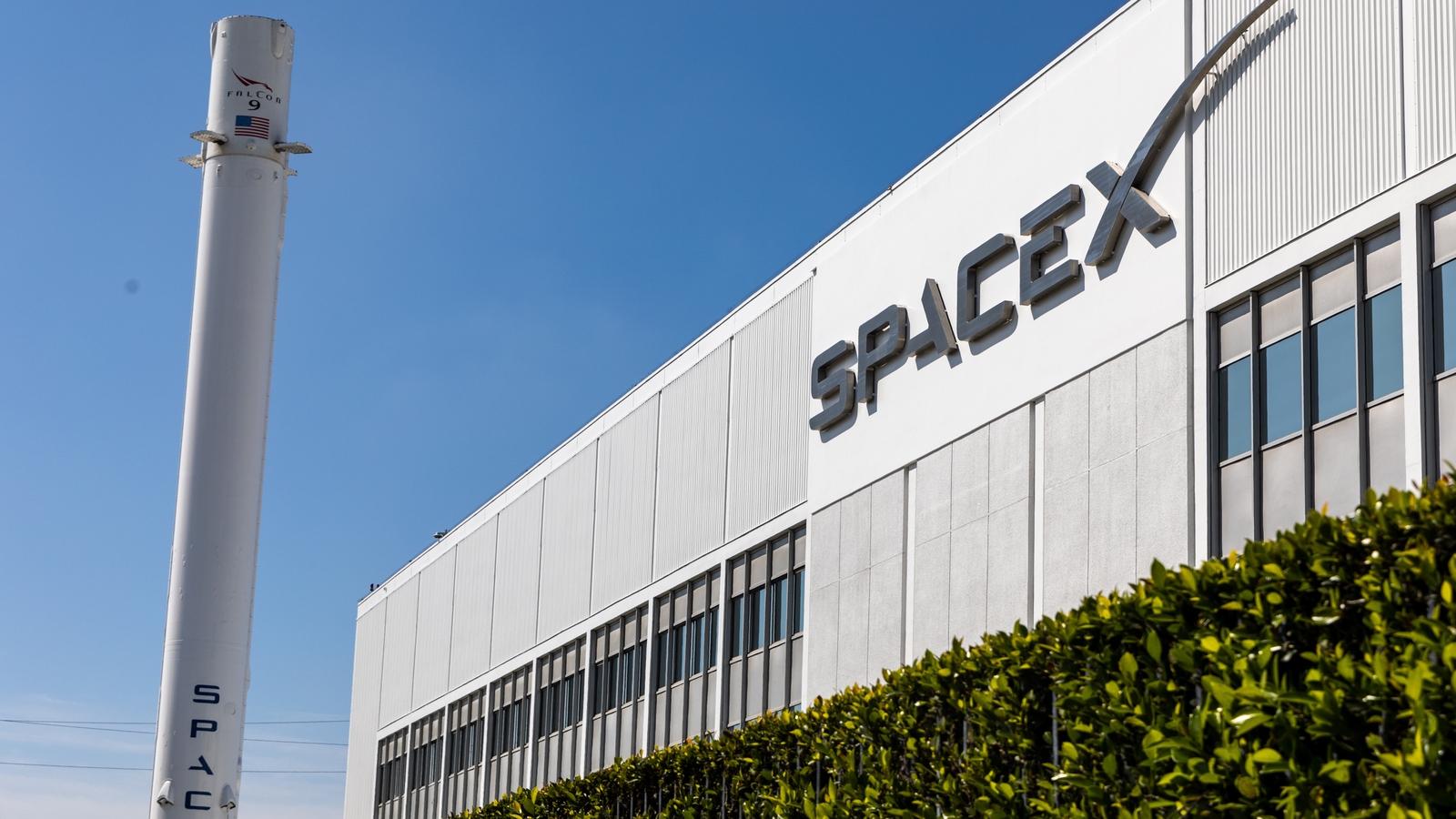
CAPE CANAVERAL, Fla. -- Elon Musk's SpaceX continues to dominate the billionaire space rivalry with Jeff Bezos' Blue Origin as 2026 unfolds, launching far more often, expanding its Starlink constellation and advancing ambitious lunar base plans while Blue Origin ramps up its New Glenn rocket and Blue Moon lander efforts in a methodical bid to catch up. SpaceX achieved a record 165 orbital launches in 2025 and has maintained a blistering pace into 2026, routinely sending Falcon 9 rockets skyward and testing Starship prototypes that could one day ferry humans and cargo to the moon and beyond. Musk has publicly redirected some focus toward building "Moonbase Alpha," including concepts for a lunar launch device, as the United States races China toward sustained lunar presence by 2030. Blue Origin, meanwhile, completed its second New Glenn mission in late 2025 and prepared a third flight as early as April 17 from Cape Canaveral, deploying satellites including one for AST SpaceMobile. The company also conducted its 38th New Shepard suborbital flight in January and announced plans to pause further New Shepard operations for at least two years to redirect resources toward lunar capabilities, including an uncrewed Blue Moon Mk1 cargo mission targeted for later in 2026. The contest, once centered on reusable rocketry and low-Earth orbit dominance, has shifted squarely to the moon. Both companies submitted revised plans to NASA in late 2025 aimed at accelerating crewed lunar landings under the Artemis program. SpaceX holds the primary contract for the Human Landing System using a Starship-derived vehicle, while Blue Origin secured a separate $3.4 billion award for its Blue Moon Mk2 lander on the later Artemis V mission. NASA continues evaluating options to speed up the timeline amid delays in Starship's complex orbital refueling requirements. SpaceX's edge remains stark in operational cadence. The company has launched thousands of Starlink satellites, surpassing major milestones including 10,000 in orbit and targeting terabit-class satellites deployable via Starship in 2026. Starlink added millions of subscribers globally, generating substantial revenue that funds further development. Blue Origin has yet to match that launch tempo or satellite scale, though Bezos-backed Project Kuiper pushes forward with its own broadband constellation, and Blue Origin recently proposed up to 51,600 satellites for orbital AI data centers -- a move that prompted SpaceX to urge the FCC to apply consistent scrutiny. Musk and Bezos have traded subtle barbs. Bezos posted an image of a tortoise on social media earlier in the year, widely interpreted as a nod to the fable of the tortoise and the hare, positioning Blue Origin as the steadier long-term player. Musk has responded dismissively at times, emphasizing SpaceX's rapid iteration. In one exchange, Musk downplayed Blue Origin's announced TeraWave satellite project by highlighting Starlink's advancing space-to-ground laser links. Public competition intensified in February when Reuters reported both billionaires accelerating lunar ambitions amid NASA's push and China's 2030 moon goals. Musk spoke of lunar base development in podcast appearances and internal meetings, even as SpaceX eyes a potential $1 trillion valuation ahead of an IPO. Blue Origin shifted resources from suborbital tourism to its Blue Moon lander, planning early 2026 cargo flights and integrated checkout tests for the Mk1 variant. Analysts describe contrasting philosophies. SpaceX favors rapid prototyping, frequent testing and aggressive timelines, accepting failures as part of learning. Blue Origin emphasizes methodical engineering, safety and gradual scaling, drawing on Bezos' long-term vision of millions living and working in space. That "slow and steady" approach has drawn criticism for delays but earned praise for reliability in suborbital flights. In launch records, SpaceX repeatedly outpaced rivals. In late 2025 it broke Florida's annual liftoff record, a mark that could have gone to Blue Origin had weather not scrubbed a New Glenn attempt. SpaceX's reusable Falcon 9 boosters have flown dozens of times, dramatically lowering costs and enabling near-weekly missions. New Glenn, with its seven BE-4 engines and reusable first stage, aims to compete in the heavy-lift category but has completed only a handful of flights so far. NASA remains central to the rivalry. The agency awarded SpaceX billions for Starship-based lunar landing systems and has paid out significant milestones, though concerns over refueling and schedule slips led to reopened bidding opportunities. Blue Origin received roughly $835 million for its lander work and a $190 million CLPS contract to deliver NASA's VIPER rover. Both firms submitted acceleration proposals, keeping the competition alive for future Artemis landings. Beyond government contracts, commercial markets offer another battleground. Starlink provides broadband to remote areas and has been credited with aiding disaster response. Kuiper seeks similar reach but trails in deployment. The emerging domain of orbital data centers for AI workloads has drawn filings from both sides, with SpaceX proposing up to one million satellites and Blue Origin/Amazon advancing its own plans. Regulators face complex decisions on spectrum, orbital debris and fair competition. Challenges loom for both. SpaceX must prove Starship's full reusability, reliable in-orbit refueling and crewed flight readiness without major setbacks. Regulatory hurdles, including environmental reviews and international coordination, add complexity. Blue Origin needs to scale New Glenn production, demonstrate consistent heavy-lift performance and integrate its lander systems on time. Funding remains robust for both -- SpaceX through revenue and investor confidence, Blue Origin backed by Bezos' personal fortune and Amazon ties -- but execution will determine momentum. The broader context includes a renewed U.S. commitment to beating China back to the moon. Artemis II, a crewed lunar flyby, recently achieved a record-breaking mission, keeping the program on track. Sustained presence requires reliable landers, habitats and logistics that private industry is now racing to supply. Industry observers note that the "space war" benefits the entire sector. Competition drives innovation, lowers costs and attracts talent and investment. Yet tensions surface in regulatory filings and public commentary, with SpaceX once urging the FCC to reject aspects of Amazon-related applications while arguing for equal standards. As April 2026 progresses, eyes turn to upcoming launches. Blue Origin's NG-3 New Glenn mission could mark another step toward orbital reliability. SpaceX continues Starship testing and routine Starlink deployments. Musk has hinted at ambitious 2026 goals for Starship, including commercial readiness, while Blue Origin targets its first lunar cargo flight. Neither billionaire is likely to "win" outright in a single year. SpaceX holds the current operational and market lead in launches and satellites. Blue Origin positions itself for longer-term lunar infrastructure and methodical progress. The real contest may extend into the 2030s as humans establish a permanent foothold on the moon and eye Mars. For now, the rivalry captivates the public and fuels progress. Musk's hare-like speed has delivered reusable rockets and global connectivity at unprecedented scale. Bezos' tortoise approach promises careful, sustainable expansion. In the high-stakes arena of space, both strategies may prove essential as humanity pushes farther from Earth. The coming months will test execution. Successful New Glenn flights and Blue Moon progress could narrow the gap for Blue Origin. Starship milestones and continued Starlink growth would reinforce SpaceX's dominance. Either way, the billionaire space race shows no signs of slowing, with the moon as the next major prize in a contest that could reshape humanity's future off-world.
Weeks after TSA chaos in the US, Europe is facing its own airport line problem
Airport lines in the US may be back to normal -- but you could be in for an hourslong wait if you're flying to Europe. The European Union last Friday rolled out a new electronic border system at all crossing points in the Schengen Area -- the common travel region comprising 29 countries across continental Europe. Instead of manually stamping passports, the Entry/Exit System (EES) requires travelers to register their details and biometric data, including a photo and fingerprints. Non-EU citizens without a visa can only stay in the Schengen Area for 90 days in a 180-day period, so entry and exit records need to be verified. The EU said the new automated IT system would improve security and speed up border checks. However, the system is facing significant teething problems. Since the system was implemented, travelers at airports across Europe have reported long waits, with some posting on social media that they have even missed flights due to lengthy lines. This week, a major airport group called for action to address growing lines across the continent. Olivier Jankovec, director general of Airports Council International Europe, said data from airports in 15 countries showed waiting times at border control "have significantly increased." "Queues are now typically averaging 2 to 3 hours or even longer during peak traffic periods," he added in the statement, shared with Business Insider on Thursday. "This is creating extremely difficult and distressing conditions for passengers, while also causing major operational disruptions for both airports and airlines," he said. Jankovec also raised concerns about the situation getting worse as more people travel during the summer. The European Commission did not immediately respond to a request for comment. In a statement to the Financial Times, a spokesperson said it was addressing some technical issues, but there were no issues "in the overwhelming majority of member states." Rob Burgess, editor of the frequent flyer website headforpoints.com, told Business Insider, "The time taken per passenger to process has gone up sharply, but no airport that I've yet visited has added additional desks, or indeed is bothering to fully staff the ones it has." He also said the system didn't always appear to work properly. When Burgess visited Hamburg, Germany, on Monday, he had to repeat the registration process because the biometric data he had provided two weeks earlier in Berlin wasn't available. "My wife is German and my kids have German passports so, luckily, I am covered for family holidays because I am able to use the EU line," said Burgess, who's from the UK. "If there are just two of you traveling and one holds an EU passport, claiming that you are married -- same sex or not -- allows you to both use the EU line, as it is otherwise a breach of the EU citizens' human rights," he added. The long lines in Europe are the latest in a slew of problems for air travelers in the first few months of 2026. Border issues in the EU come just weeks after a partial government shutdown led to huge waits at US airports in March. At some of the country's biggest airports, such as Houston and Atlanta, lines stretched to as long as 4 hours to get through security. As TSA agents went weeks without paychecks, more of them stopped turning up to work. Global military operations have also led to travel chaos. When the US carried out strikes in Venezuela in January, almost 1,000 flights were canceled to and from the Caribbean. One traveler told Business Insider how that led to her 6-day honeymoon becoming a 14-day trip. And the Iran war led to tens of thousands of canceled flights into and out of the Middle East. When the strikes began on February 28, at least 145 flights had to divert. The conflict also closed the Strait of Hormuz, a key channel for energy shipments, doubling jet fuel prices and leading to a rise in airfares around the world.
Anthropic launches Claude Opus 4.7 with enhanced coding capabilities By Investing.com
Investing.com -- Anthropic released Claude Opus 4.7 on Thursday, marking an upgrade to its previous Opus 4.6 model with improvements in software engineering and vision capabilities. The new model demonstrates gains in handling complex coding tasks that previously required close supervision, according to Anthropic. Opus 4.7 processes images at resolutions up to 2,576 pixels on the long edge, more than three times the capacity of prior Claude models. While Opus 4.7 represents an advancement, it remains less capable than Claude Mythos Preview, Anthropic's most powerful model. Mythos Preview continues to have limited release due to safety concerns outlined in Project Glasswing, announced last week. Anthropic implemented cyber safeguards in Opus 4.7 that automatically detect and block requests indicating prohibited or high-risk cybersecurity uses. The company reduced the model's cyber capabilities during training compared to Mythos Preview. Security professionals can access the model for legitimate cybersecurity work through Anthropic's new Cyber Verification Program. The model is available across Claude products, the Claude API, Amazon Bedrock, Google Cloud's Vertex AI, and Microsoft Foundry. Pricing remains unchanged from Opus 4.6 at $5 per million input tokens and $25 per million output tokens. Opus 4.7 scored higher than its predecessor on benchmarks including finance agent evaluations and GDPval-AA, which measures economically valuable knowledge work across finance and legal domains. The model shows improved instruction following, though Anthropic noted this may require users to adjust prompts written for earlier models. Anthropic introduced a new "xhigh" effort level between high and max settings, providing additional control over the balance between reasoning capability and response speed. The company also launched task budgets in public beta for API users and added an ultrareview command in Claude Code for bug detection. The updated model uses a new tokenizer that can result in 1.0 to 1.35 times more tokens for the same input depending on content type.
Anthropic launches Claude Opus 4.7 with enhanced coding capabilities
Investing.com -- Anthropic released Claude Opus 4.7 on Thursday, marking an upgrade to its previous Opus 4.6 model with improvements in software engineering and vision capabilities. The new model demonstrates gains in handling complex coding tasks that previously required close supervision, according to Anthropic. Opus 4.7 processes images at resolutions up to 2,576 pixels on the long edge, more than three times the capacity of prior Claude models. While Opus 4.7 represents an advancement, it remains less capable than Claude Mythos Preview, Anthropic's most powerful model. Mythos Preview continues to have limited release due to safety concerns outlined in Project Glasswing, announced last week. Anthropic implemented cyber safeguards in Opus 4.7 that automatically detect and block requests indicating prohibited or high-risk cybersecurity uses. The company reduced the model's cyber capabilities during training compared to Mythos Preview. Security professionals can access the model for legitimate cybersecurity work through Anthropic's new Cyber Verification Program. The model is available across Claude products, the Claude API, Amazon Bedrock, Google Cloud's Vertex AI, and Microsoft Foundry. Pricing remains unchanged from Opus 4.6 at $5 per million input tokens and $25 per million output tokens. Opus 4.7 scored higher than its predecessor on benchmarks including finance agent evaluations and GDPval-AA, which measures economically valuable knowledge work across finance and legal domains. The model shows improved instruction following, though Anthropic noted this may require users to adjust prompts written for earlier models. Anthropic introduced a new "xhigh" effort level between high and max settings, providing additional control over the balance between reasoning capability and response speed. The company also launched task budgets in public beta for API users and added an ultrareview command in Claude Code for bug detection. The updated model uses a new tokenizer that can result in 1.0 to 1.35 times more tokens for the same input depending on content type. Related articles Anthropic launches Claude Opus 4.7 with enhanced coding capabilities Fed's Williams warns Iran war driving up inflation pressures

Anthropic introduces Claude Opus 4.7 | News.az
On Thursday, Anthropic introduced its new AI model, Claude Opus 4.7, claiming it is an upgrade from previous versions, though it remains "broadly less capable" than the latest Claude Mythos Preview. Claude Opus 4.7 is better at software engineering, following instructions, completing real-world work and using file system-based memory, Anthropic said. But the model's cyber capabilities are not as advanced as Claude Mythos Preview, which Anthropic rolled out to a select of companies as part of a new cybersecurity initiative called Project Glasswing earlier this month, News.Az reports, citing foreign media. "We are releasing Opus 4.7 with safeguards that automatically detect and block requests that indicate prohibited or high-risk cybersecurity uses," Anthropic said in a release. "What we learn from the real-world deployment of these safeguards will help us work towards our eventual goal of a broad release of Mythos-class models." Anthropic said it experimented with efforts to "differentially reduce" Claude Opus 4.7's cyber capabilities during training. The company encouraged security professionals who are interested in using the model for "legitimate cybersecurity purposes" to apply through a formal verification program.

Anthropic unveils Claude Opus 4.7, 2nd most powerful after Mythos
Anthropic (ANTHRO) unveiled its latest AI model Claude Opus 4.7, which is now generally available. The company said that Opus 4.7 is a notable improvement on Opus 4.6 in advanced software engineering, with particular gains on the most difficult tasks. Opus 4.7 offers notable gains on difficult engineering tasks, processes complex, long-running assignments with rigor, displays precise instruction-following, and better verifies its outputs compared to Opus 4.6. Claude Mythos Preview's advanced capabilities in coding and cybersecurity have led financial authorities and Wall Street leaders to assess new threats and risks its deployment may introduce. Anthropic is involved in a legal dispute due to being labeled a supply chain risk, resulting in blacklisting and specific contractual demands by U.S. government agencies, which Anthropic has contested in court.

Blue Origin tests New Glenn reusability in bid to challenge SpaceX
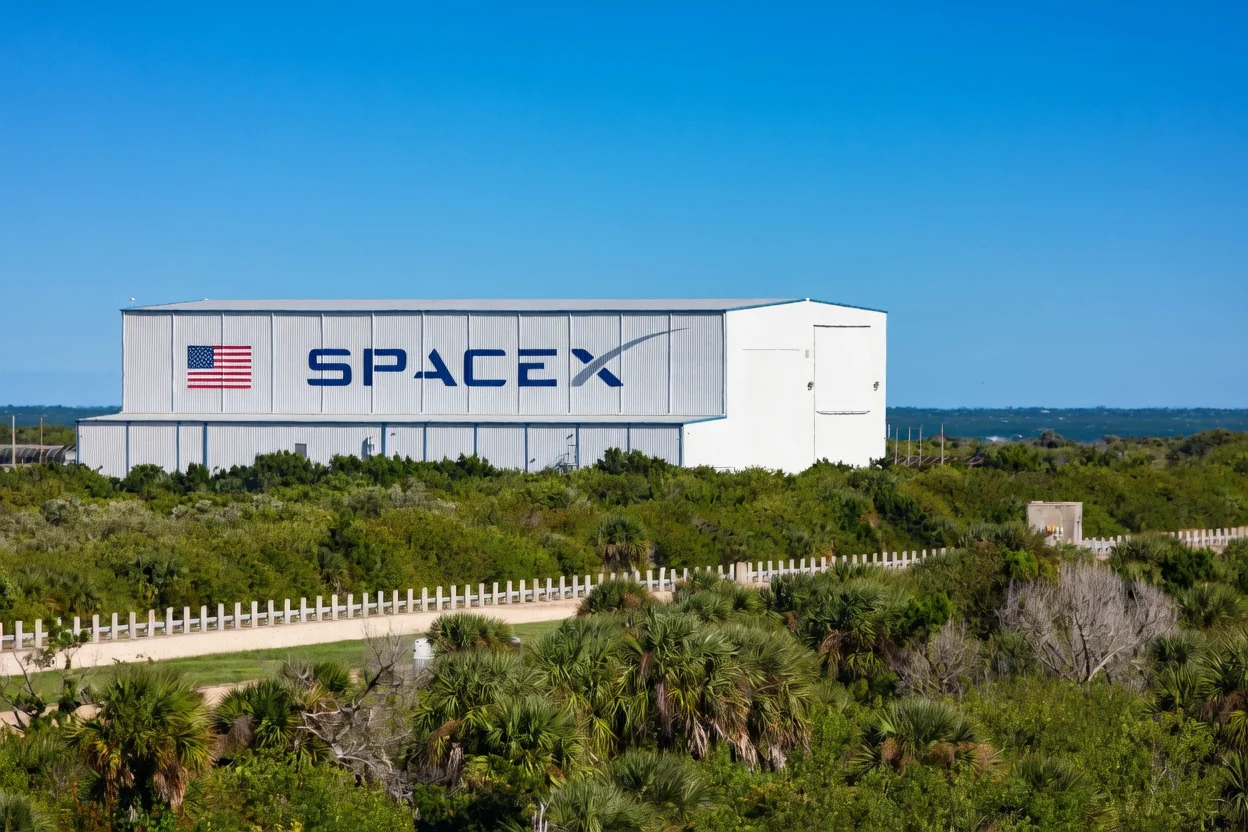
Blue Origin is scheduled to launch its third New Glenn mission from Cape Canaveral, carrying AST SpaceMobile's BlueBird 7 satellite. This flight is designed to demonstrate the launcher's ability to recover its booster, a critical capability in a sector dominated for nine years by SpaceX and its Falcon 9. The booster, previously flown on an earlier mission, must confirm the technical and economic viability of this strategy. Success in this operation could signal a turning point in the competitive landscape of the orbital launch market. Beyond the technological implications, this mission is part of a broader strategy to strengthen Blue Origin's position against a firmly established competitor. The company continues to develop more powerful iterations of New Glenn, while SpaceX is reportedly considering an IPO valuation of approximately 1.75 trillion dollars. In this context, a successful booster landing would send a strong signal to commercial and institutional clients. The BlueBird 7 satellite, destined for low Earth orbit, also illustrates growing ambitions in the space telecommunications sector. Integrated into AST SpaceMobile's Block 2 constellation, it is intended to contribute to a network enabling direct smartphone connectivity from space. The company plans to deploy between 45 and 60 satellites by the end of 2026, aiming to build a global infrastructure to compete with constellations such as Starlink.

OpenAI launches GPT-5.4-Cyber, challenging Anthropic's Claude Mythos
OpenAI released GPT-5.4-Cyber, a cybersecurity-focused model, days after Anthropic unveiled Claude Mythos. The market for Google having the best AI model by end of June sits at YES, while Anthropic's odds for holding the third-best AI model by April have dropped under competitive pressure. GPT-5.4-Cyber is tied to OpenAI's Trusted Access for Cyber (TAC) program, which has expanded to thousands of users. Anthropic took a different approach with Claude Mythos, deploying it to a select group of partners. The Google AI dominance market for June 30 dipped slightly but remains at . Anthropic's position has weakened. Maintaining the third-best AI model by end of April looks less likely now that GPT-5.4-Cyber directly challenges Claude Mythos' positioning. Odds for Anthropic's success in that market have dropped by an estimated 15% following OpenAI's announcement. The GPT-5.5 release market has 24-hour volume at $17,261 in actual USDC traded. The April 30 sub-market is priced at , with $1,778 required to move odds by 5 points. The largest move was an 8-point spike, suggesting traders are hedging on near-term announcements. A YES share in the Google market currently pays out at , which leaves limited upside unless Google's lead is seriously threatened. OpenAI's decision to scale cybersecurity access broadly rather than restrict it may not immediately affect Google's AI ranking, but it introduces a variable that could shift positions before mid-year. Watch for new partnerships or model updates from either OpenAI or Anthropic that could move these markets before the April and June deadlines.

OpenAI expands GPT 5.4 Cyber access, Anthropic's Mythos gains traction
OpenAI has broadened access to its GPT 5.4 Cyber model, countering Anthropic's Mythos reveal under Project Glasswing. Anthropic's ranking as the third best AI model by April 2026 is at YES, up 15% since the announcement. The expansion of GPT 5.4 Cyber's user base to more vetted defenders has shifted trading in AI model ranking markets. Anthropic's Claude Mythos is now priced as a stronger contender for the third best AI model spot. With 14 days until April 30, the 15-point jump suggests traders expect public benchmark results to validate the model's capabilities, even with limited access so far. Volume analysis suggests this isn't purely speculative. Face value trades are at $0, and the rise is likely driven by strategic positioning ahead of potential benchmark results. This pattern matches historical market behavior where positioning precedes official evaluations or announcements. That said, without actual trade data, the odds shift may reflect perception rather than new substantive information. Anthropic is priced as a serious competitor against OpenAI and Google, and that perception supports the likelihood of Claude Mythos being validated by public benchmarks. At 28¢, a YES share pays $1 if Mythos ranks third by the end of April, a potential return. For this bet to pay off, traders need Mythos to post benchmark results within two weeks. Watch for LMSYS Chatbot Arena benchmark updates and any leaks from the Project Glasswing consortium. Either could move Anthropic's odds sharply.

Anthropic launches Claude Opus 4.7, confirms release by May 31
Anthropic has officially launched Claude Opus 4.7, confirming its release by May 31. The odds for a release by this date are now at YES, up from 38% a week ago. The May 31 market consolidated at YES. The June 30 market also sits at YES. Both contracts reflect full confidence that the release has occurred. Combined daily volume on these markets hit $86,521 in USDC. The order book is deep enough that moving the price even slightly requires significant capital. The largest single price movement was a 4-point drop to 94% in the early hours, which was quickly corrected by other participants. Anthropic is backed by Amazon and Google. At , buying YES offers negligible return given the near-certainty of the event. The market is effectively resolved. Traders should watch for any announcements around the Claude Mythos project. Dario Amodei's public statements and updates on the Amazon or Google partnerships could provide signals for future Anthropic-related markets.

SpaceX Fires Up Starship V3: Next-Gen Rocket Passes Critical Pre-Flight Tests - Blockonomi
NASA has selected Starship as a lunar landing vehicle for its Artemis missions to the Moon SpaceX has successfully executed two critical ground tests for its advanced Starship rocket system, bringing the aerospace company one step closer to its anticipated May launch window. On April 14, the aerospace firm ignited the Starship V3 upper stage at its South Texas development site. Twenty-four hours later, engineers conducted a static fire of the massive Super Heavy booster, simultaneously igniting all 33 Raptor engines while the vehicle remained anchored to the test stand. According to SpaceX, both trials achieved full-duration burns, indicating that the engines operated for their complete intended firing sequence without premature cutoff. SpaceX announced that the upper stage evaluation marked the inaugural full-duration test for the third-generation vehicle. Technical teams are now analyzing telemetry data related to engine behavior, propellant flow systems, and structural dynamics before authorizing the rocket to advance to subsequent testing phases. A prior booster test attempt for the V3 had terminated prematurely due to a ground systems equipment malfunction. The successful April 15 demonstration has effectively eliminated that technical hurdle. The third-generation Starship represents a substantial leap in capability compared to its predecessors. The fully assembled vehicle measures 124 meters -- approximately 408 feet -- in total height. Its cargo capacity exceeds 100 metric tons when delivering payloads to low Earth orbit. This represents nearly triple the lifting capacity of earlier Starship iterations. The dramatic improvement stems from SpaceX's latest Raptor engine generation, installed on both the spacecraft and the first-stage booster. While this will be the twelfth Starship test flight in the program's history, it represents the maiden voyage for the substantially upgraded V3 architecture. Elon Musk indicated on April 3 that the upcoming test flight was approximately "4 to 6 weeks away," suggesting a launch timeframe in the first half of May. Starship serves as a cornerstone technology for NASA's Artemis initiative, designed to establish a sustained human presence on the lunar surface. The space agency has awarded SpaceX a contract to develop a Human Landing System based on Starship technology, while simultaneously partnering with Jeff Bezos's Blue Origin for its competing Blue Moon lander. NASA successfully completed a crewed lunar flyby mission earlier this month, marking the first time astronauts have traveled around the Moon in more than five decades. The agency currently targets late 2028 for the first crewed lunar landing under Artemis IV. Nevertheless, developmental setbacks with Starship have already caused schedule slippage. The mission had initially been scheduled for December 2025. Experts serving on NASA's Aerospace Safety Advisory Panel have expressed concerns that significant technical obstacles persist with Starship's Human Landing System variant. Panel members have indicated that the coming six months of flight testing will be critical in determining whether the system can safely transport crew members before the end of the decade. Former NASA Administrator Jim Bridenstine testified before a Senate Committee last September that absent major program adjustments, the United States may not achieve a lunar landing before China accomplishes the same objective. SpaceX has not yet announced an official launch date for the next Starship test flight.
Anthropic launches Claude Opus 4.7 with enhanced coding capabilities By Investing.com
Investing.com -- Anthropic released Claude Opus 4.7 on Thursday, marking an upgrade to its previous Opus 4.6 model with improvements in software engineering and vision capabilities. The new model demonstrates gains in handling complex coding tasks that previously required close supervision, according to Anthropic. Opus 4.7 processes images at resolutions up to 2,576 pixels on the long edge, more than three times the capacity of prior Claude models. While Opus 4.7 represents an advancement, it remains less capable than Claude Mythos Preview, Anthropic's most powerful model. Mythos Preview continues to have limited release due to safety concerns outlined in Project Glasswing, announced last week. Anthropic implemented cyber safeguards in Opus 4.7 that automatically detect and block requests indicating prohibited or high-risk cybersecurity uses. The company reduced the model's cyber capabilities during training compared to Mythos Preview. Security professionals can access the model for legitimate cybersecurity work through Anthropic's new Cyber Verification Program. The model is available across Claude products, the Claude API, Amazon Bedrock, Google Cloud's Vertex AI, and Microsoft Foundry. Pricing remains unchanged from Opus 4.6 at $5 per million input tokens and $25 per million output tokens. Opus 4.7 scored higher than its predecessor on benchmarks including finance agent evaluations and GDPval-AA, which measures economically valuable knowledge work across finance and legal domains. The model shows improved instruction following, though Anthropic noted this may require users to adjust prompts written for earlier models. Anthropic introduced a new "xhigh" effort level between high and max settings, providing additional control over the balance between reasoning capability and response speed. The company also launched task budgets in public beta for API users and added an ultrareview command in Claude Code for bug detection. The updated model uses a new tokenizer that can result in 1.0 to 1.35 times more tokens for the same input depending on content type.
Anthropic releases Opus 4.7 drops but the real 'Mythos' is still behind the glass | investingLive
If you've been using AI lately, you know the discourse. It's been a frustrating few weeks for the power users and there's a growing chorus on Reddit and X that the latest updates from Google and Anthropic have been "nerfed" -- shaved down at the edges, made more cautious, and frankly, a bit dumber in the name of safety and "alignment." I fully agree with this assessment as someone who uses them daily and can't believe how dome Gemini in particular has gotten. Both Anthropic and Google have spent the last two months getting hammered by power users who say their flagship models have been quietly degraded -- what developers have started calling "AI shrinkflation." An AMD senior director ran the forensics on 6,852 Claude Code sessions and found median reasoning depth collapsed roughly 73% between January and March. Independent benchmarks from Marginlab show Opus 4.6's SWE-Bench-Pro pass rate sliding from 56% to 50%. Gemini 3 Pro users have been filing near-identical complaints in Google's own developer forums since December -- context windows that forget at 32k despite being marketed as 1M, documents that won't process, reasoning is obviously thinner. In any case, Anthropic just dropped Claude Opus 4.7, and while the headlines say "faster and better at coding," the real story is what's not in the box. The technicals on Opus 4.7 look good on paper. Anthropic is touting a massive leap in vision capabilities and a specific focus on "economically valuable knowledge work." They're pointing to the GDPval-AA benchmark -- a metric that measures finance and legal domain expertise -- where 4.7 is showing clear gains over its predecessor. In the coding world, the "ultrareview" command and "xhigh" reasoning levels suggest they're trying to claw back the trust of developers who felt the previous versions were starting to hallucinate or get lazy. The model everyone actually wants -- Claude Mythos -- is still in "Preview" and under lock and key. But note that they're teasing it in the table above, which was released in the PR for 4.7. Anthropic has said that Mythos is too powerful (or too dangerous for cybersecurity) to let the general public touch it yet. They've launched "Project Glasswing" to gatekeep the top-tier intelligence, citing safety concerns. For the market, this is a double-edged sword. On one hand, it builds the "God-model" hype. On the other, it confirms the suspicion that the models we can pay for are effectively the "lite" versions, throttled by safeguards that act as a drag on performance, or that there is some kind of degradation or throttling due to over use. From an investment perspective, this is where it gets interesting. We're seeing a shift in the AI trade. The initial "wow" factor of LLMs is hitting the reality of corporate safety and compute costs. When users complain about a model being "nerfed," what they're usually seeing is a company trying to save on inference costs or avoid a PR nightmare. If the "usefulness" of these tools is being capped by safety protocols, the ROI for businesses starts to look a lot different. It seems to me that Opus 4.7 is a "bridge" model. It's designed to keep users happy while Anthropic figures out how to release Mythos without breaking the world (or their servers). The whole discourse around nerfing actually bodes well for inference plays like Micron (MU) and Samsung. It's also good for Broadcom (AVGO) and Marvell (MRVL), who are designing more efficient chips for Google. Keep an eye on the design stocks today -- Adobe and Wix are already feeling the heat from the web-design rumors surrounding this release. But until "Mythos" is actually out in the wild, the AI sector is trading on potential, not full-throttle delivery. We're still waiting for the "unfiltered" moment that justifies the next leg of this massive capex spend. What I've noticed is that new models work great for awhile and then are nerfed over time, so enjoy the new release while you can.

Starlink growth accelerates as SpaceX expands global satellite internet ambitions
Starlink continues to expand its satellite internet footprint across underserved regions (AI generated). * SpaceX continues to expand Starlink, with global users estimated in the millions, though no official 10 million figure has been confirmed. * The company has not publicly confirmed any IPO filing, and valuations above $1 trillion remain speculative. * Focus remains on scaling satellite connectivity, enterprise services, and direct-to-cell technology, rather than space-based AI data centers. HAWTHORNE/NEW YORK, April 16, 2026 -- SpaceX is steadily transforming its satellite internet arm Starlink into a core global connectivity platform, even as speculation grows around its long-term financial strategy and potential public listing. Starlink growth engine Starlink has seen rapid expansion across North America, Europe, and emerging markets such as Latin America and parts of Asia. While third-party estimates suggest the service has reached several million users globally, the company has not officially disclosed crossing the 10 million subscriber mark. The growth is being driven by demand for high-speed internet in underserved and remote regions, as well as increasing adoption by enterprises, aviation, and maritime sectors. Countries like Brazil and Indonesia have emerged as key growth markets due to limited terrestrial broadband infrastructure. IPO speculation remains unconfirmed Reports of a confidential IPO filing or a $1-2 trillion valuation remain unverified. SpaceX has repeatedly indicated that any potential listing would likely involve Starlink as a separate entity, but no timeline has been confirmed. Elon Musk has previously stated that Starlink would go public only when its cash flows become more predictable, suggesting that an IPO may still be some time away. Expanding capabilities on the ground and in orbit Rather than pursuing unconfirmed concepts like "orbital data centers," SpaceX is currently focused on: * Expanding its satellite constellation, now numbering thousands of active satellites * Rolling out Direct-to-Cell services, enabling satellite connectivity directly to smartphones * Strengthening partnerships with telecom operators and governments These initiatives position Starlink as a hybrid telecom and infrastructure provider, competing with both traditional ISPs and emerging satellite networks. Why this matters Global connectivity push: Starlink is helping bridge the digital divide, particularly in regions where fiber deployment is costly or impractical. Telecom disruption: Direct-to-cell technology could challenge traditional mobile networks by enabling satellite-based coverage without additional hardware. IPO watch: While a listing is not confirmed, Starlink remains one of the most closely watched potential IPO candidates in global markets. FAQs Q1. Has Starlink reached 10 million users? There is no official confirmation. Estimates suggest several million users globally, but exact numbers are undisclosed. Q2. Is SpaceX planning a $2 trillion IPO? No confirmed filing exists. Any valuation figures above $1 trillion are speculative at this stage. Q3. What is Direct-to-Cell technology? It allows standard smartphones to connect directly to satellites for basic voice and data services, eliminating the need for ground towers in remote areas.

Anthropic reveals new Opus 4.7 model with focus on advanced software engineering - 9to5Mac
Anthropic has announced its latest AI model with Claude Opus 4.7. The new version arrives two months after the previous model upgrade, matching Anthropic's previous upgrade cadence. Claude Opus 4.7 is the latest generally available version of Anthropic's AI with a focus on advanced software development. Opus 4.7 is a notable improvement on Opus 4.6 in advanced software engineering, with particular gains on the most difficult tasks. Users report being able to hand off their hardest coding work -- the kind that previously needed close supervision -- to Opus 4.7 with confidence. Opus 4.7 handles complex, long-running tasks with rigor and consistency, pays precise attention to instructions, and devises ways to verify its own outputs before reporting back. Anthropic says its model has better vision and more taste for creating higher-quality work. The model also has substantially better vision: it can see images in greater resolution. It's more tasteful and creative when completing professional tasks, producing higher-quality interfaces, slides, and docs. The company shows favorable benchmarks across a range of uses, including agentic coding and computer use, that put Opus 4.7 ahead of 4.6, GPT-5.4, and Gemini 3.1 Pro, but behind the more broadly capable Claude Mythos Preview. However, Mythos isn't generally available like Opus 4.7 since Anthropic is only sharing it with key software platform vendors like Apple. You can see the benchmark comparison table in Anthropic's blog post here. Anthropic highlights improvements to instruction following, multimodal support, real-world work, and memory as other improvements in Opus 4.7. "Opus 4.7 is better at using file system-based memory," the company says. "It remembers important notes across long, multi-session work, and uses them to move on to new tasks that, as a result, need less up-front context." Notably, Anthropic has established a more predictable cadence for directly upgrading its Claude Opus model. Opus 4.7 arrives two months after Opus 4.6, which arrived two months after Opus 4.5. There was a three month gap between Opus 4.1 and Opus 4.5. Anthropic's announcement includes a note to users about how token usage is handled with Optus 4.7: Opus 4.7 is a direct upgrade to Opus 4.6, but two changes are worth planning for because they affect token usage. First, Opus 4.7 uses an updated tokenizer that improves how the model processes text. The tradeoff is that the same input can map to more tokens -- roughly 1.0-1.35× depending on the content type. Second, Opus 4.7 thinks more at higher effort levels, particularly on later turns in agentic settings. This improves its reliability on hard problems, but it does mean it produces more output tokens. The company has a separate post detailing migration, and the Claude Opus 4.7 System Card is available here. In addition to new models, Anthropic has been iterating on Claude Code, part of the Claude Mac app, in recent weeks:

Starlink user growth accelerates as SpaceX eyes IPO debut
Starlink, the satellite internet unit of Elon Musk's SpaceX, is seeing a surge in global user growth and app downloads, market research firm Apptopia said in a report, highlighting its role in supporting the parent's expected listing this summer. Global downloads of the Starlink app and monthly active users (MAU) more than doubled in the first quarter from a year earlier. The service has now delivered four consecutive quarters of MAU growth above 100%, the report said today. SpaceX is expected to go public later this year and investor expectations for the listing hinge heavily on Starlink, seen as the primary driver of the company's targeted valuation of around $1.75 trillion. The business generated an estimated $11.4 billion in revenue last year, the report said. The expansion is being driven by both emerging and mature markets. Brazil recorded one of the fastest growth rates, with MAUs jumping roughly over fivefold from the year earlier. It accounts for about 13% of the global user base, up sharply from less than 5% a year ago. Argentina posted user growth of 159%. Together, the two markets represent more than a fifth of global active users. The US, Starlink's largest and highest-margin market, also showed strong momentum. App downloads in the country more than tripled year-over-year to a record 1.2 million in the January-March quarter, indicating an acceleration in subscriber acquisition. The combined strength in both emerging and developed markets suggests Starlink remains in a high-growth phase, after its subscriber base breached the 10-million mark in February. Continued subscriber growth will be key, according to analysts, with public market investors looking at future expansion opportunities, including SpaceX's plans to develop orbital data centers as the next phase of growth for its business.