News & Updates
The latest news and updates from companies in the WLTH portfolio.
OpenAI GPT-5.4-Cyber Model Launched to Enhance Defensive Security Work Following Anthropic's Mythos Launch | 📲 LatestLY
OpenAI has introduced GPT-5.4-Cyber, a specialised variant of its flagship artificial intelligence model designed specifically for defensive cybersecurity applications. The announcement, made on Tuesday, comes just one week after rival Anthropic revealed its own frontier model, Claude Mythos, highlighting an intensifying race between AI developers to provide autonomous tools for vulnerability detection and software protection. GPT-5.4-Cyber is fine-tuned to be "cyber-permissive," meaning it has lower refusal boundaries for legitimate security tasks that standard models might otherwise block. The model is capable of performing advanced defensive workflows, such as binary reverse engineering, which allows security professionals to analyse compiled software for hidden malware or vulnerabilities. Anthropic Mythos Dangers: Check All About Risks Involved With New Artificial Intelligence Model by Anthropic. To manage the deployment of these powerful capabilities, OpenAI is expanding its Trusted Access for Cyber (TAC) program. Originally launched in February, the program now features additional tiers of verification. Higher levels of authentication unlock more permissive versions of the model, allowing vetted security vendors, researchers, and corporate teams to conduct sensitive vulnerability research without the friction of standard safety filters. The company stated it is scaling the TAC program to include thousands of verified individual defenders and hundreds of teams responsible for critical infrastructure. Approved users in the highest tier will gain exclusive access to GPT-5.4-Cyber, which OpenAI claims can reason across complex codebases and support meaningful parts of the cyber-defence workflow. OpenAI's release follows the April 7 announcement of Claude Mythos by Anthropic. Mythos is being deployed through "Project Glasswing," a controlled initiative involving major technology and infrastructure partners including Amazon Web Services (AWS), Microsoft, Google, and Cisco. Early results from Project Glasswing suggest that the Mythos model has already identified thousands of "zero-day" vulnerabilities across major operating systems and web browsers. Anthropic has opted to keep Mythos as a gated research preview, citing concerns that its advanced exploit capabilities could be misused if released publicly. OpenAI appears to be following a similar "defenders-first" strategy, ensuring that its most capable tools are placed in the hands of verified protection teams before they become accessible to broader audiences. The introduction of these models marks a significant transition in cybersecurity, moving away from purely human-led analysis toward AI-driven automation. Both OpenAI and Anthropic have noted that AI models have crossed a threshold where they can now identify and fix security flaws at a pace and scale previously impossible for human teams alone. Anthropic Explores In-House AI Chip Design Amid Rising Demand and Hardware Shortages: Report. While these advancements offer a significant advantage for defenders, they also pose new risks. Experts warn that as AI models become more capable at finding vulnerabilities, the window between discovery and exploitation by adversaries will continue to collapse. This has prompted government officials and financial leaders to urge critical infrastructure providers to aggressively adopt AI-driven defensive measures to keep pace with evolving threats.
Anthropic Nears $800 Billion Valuation as Investor Confidence Surges - EconoTimes
Anthropic, the artificial intelligence startup behind the Claude AI assistant, is reportedly fielding investment offers that could value the company at up to $800 billion. According to Business Insider, multiple venture capitalists approached the company with proposals at that valuation within recent weeks, signaling a dramatic rise in investor enthusiasm for one of Silicon Valley's most closely watched AI firms. This potential new valuation would represent a significant leap from the $380 billion figure attached to Anthropic's February funding round and would put it in close proximity to the $852 billion valuation that rival OpenAI secured during its March fundraise. The narrowing gap between the two companies reflects how competitive the generative AI landscape has become, with investors racing to back the most promising players. Much of this renewed confidence stems from Anthropic's strong product momentum. The company has rolled out a series of sophisticated AI coding tools and agentic capabilities in recent months, drawing attention from enterprise customers and developers alike. Claude has also been steadily growing its user base, reinforcing its position as a serious contender in the consumer AI space. Financially, Anthropic appears to be on a steep upward trajectory. The startup recently disclosed that its annualized revenue run rate now stands at $30 billion, a dramatic increase from the $9 billion reported at the end of 2025. That kind of growth rate is exactly what institutional investors look for when evaluating high-stakes technology bets. Adding to the buzz, Anthropic announced last week that its newest model, Mythos, is too advanced for public release due to its power level. Access has been extended only to a select group of companies, a move that has only intensified curiosity and speculation around the model's capabilities. The company continues to benefit from strategic backing by Amazon and Alphabet, two of the most influential technology giants in the world.

Sources: at least two US federal agencies and three congressional committees have reached out to Anthropic to test Claude Mythos, quietly bypassing Trump's ban
New model: GPT-5.4-Cyber 'Today we're expanding this program by introducing additional tiers of access for users willing to work with OpenAI to authenticate themselves as cybersecurity defenders. Customers in the highest tiers will get access to GPT-5.4-Cyber, a model purposely fine-tuned for additional cyber capabilities and with fewer capability restrictions.'
Anthropic Attracts Investor Offers at an $800 Billion Valuation
Natasha Mascarenhas, Rebecca Torrence, Bailey Lipschultz, Ed Ludlow and Shirin Ghaffary (Bloomberg) -- Anthropic PBC has received several offers from investors for a new round of funding that could value the artificial intelligence startup at about $800 billion or higher -- overtures that the Claude maker has so far resisted, according to people familiar with the matter. The offers would more than double the $350 billion pre-money valuation Anthropic attached to its $30 billion fundraising in February. The discussions between Anthropic and investors are still early and a deal could fail to materialize or the details could change, said the people, asking not to be identified because the information is private. Business Insider previously reported some details of the talks. Anthropic declined to comment. Anthropic has released a series of AI tools aimed at overhauling the way businesses handle tasks from coding to cybersecurity. Those products are resonating with a growing base of business customers, leading to a surge in revenue and rising competition with rival OpenAI. While Anthropic hasn't ruled out raising new money in the coming months, according to one of the people, it's not clear the company will accept investors' terms or if it will raise at an $800 billion value. Anthropic has also discussed a public listing as soon as October, Bloomberg has reported. Investors have been impressed by Anthropic's strong revenue growth, particularly with deep-pocketed enterprise customers. Earlier this month, the startup said it had reached $30 billion in annual run-rate revenue, marking a sharp increase from $19 billion just a few months before. Anthropic has risen in prominence recently after a disagreement with the US Defense Department over the safety of using its AI tools. The company also recently unveiled a new model, Mythos, that it said would be irresponsible to release widely because it can identify and exploit software vulnerabilities. (Updates with context starting in the fourth paragraph.) More stories like this are available on bloomberg.com

Bessent Calls Anthropic's Mythos a Breakthrough in China AI Race
(Bloomberg) -- US Treasury Secretary Scott Bessent hailed Anthropic PBC's Mythos as a revolutionary step that will keep America ahead of China in AI, endorsing an industry leader that's clashed with Washington over its role in military endeavors. Bessent, speaking Tuesday at a Wall Street Journal event in Washington, dismissed a question suggesting China was rapidly catching up in AI technology, though he said American artificial intelligence stood just three to six months ahead. He singled out Mythos -- a model Anthropic says is highly adept at finding vulnerabilities in software and computer systems that's being released to a very limited number of carefully-chosen parties. The Treasury Secretary's comments emerged just days after he and Federal Reserve Chair Jerome Powell summoned Wall Street banks to an urgent meeting on concerns that Anthropic's latest model will usher in an era of greater cyber risk. "This Anthropic mythos model was a step function change in abilities, learning capabilities," he told the audience. "It's all logarithmic. You go from x to the 10th power to x to the 12th and then it's very difficult to catch up." Still, Anthropic has run afoul of some agencies in Washington. The Pentagon this year declared the company a threat to the US supply chain, under an authority normally reserved for foreign adversaries. The company won a court order last month blocking a ban on government use of the technology, after Anthropic argued the move could cost it billions of dollars in lost revenue. Founded in 2021 by former OpenAI staffers including Chief Executive Officer Dario Amodei, Anthropic has aimed to be a more responsible AI steward than its competitors. Claude and its underlying technology have gained traction with enterprise customers in sectors like finance and health care, as well as with developers. Anthropic has pledged to spend $50 billion to build custom data centers in the US. On Tuesday, Bessent also called out America's lead in AI computing -- the enormous data centers that hyperscalers from Meta Platforms Inc. to Google are spending hundreds of billions of dollars to build out. "I've seen studies that say that in a few years, the US is going to have 70 or 80% of the global computing power," he said. "We were in the 30s. Now, I think we're in the 50s, and we're well, well on our way." More stories like this are available on bloomberg.com
Bessent Calls Anthropic's Mythos a Breakthrough in China AI Race
(Bloomberg) -- US Treasury Secretary Scott Bessent hailed Anthropic PBC's Mythos as a revolutionary step that will keep America ahead of China in AI, endorsing an industry leader that's clashed with Washington over its role in military endeavors. Bessent, speaking Tuesday at a Wall Street Journal event in Washington, dismissed a question suggesting China was rapidly catching up in AI technology, though he said American artificial intelligence stood just three to six months ahead. He singled out Mythos -- a model Anthropic says is highly adept at finding vulnerabilities in software and computer systems that's being released to a very limited number of carefully-chosen parties. The Treasury Secretary's comments emerged just days after he and Federal Reserve Chair Jerome Powell summoned Wall Street banks to an urgent meeting on concerns that Anthropic's latest model will usher in an era of greater cyber risk. "This Anthropic mythos model was a step function change in abilities, learning capabilities," he told the audience. "It's all logarithmic. You go from x to the 10th power to x to the 12th and then it's very difficult to catch up." Still, Anthropic has run afoul of some agencies in Washington. The Pentagon this year declared the company a threat to the US supply chain, under an authority normally reserved for foreign adversaries. The company won a court order last month blocking a ban on government use of the technology, after Anthropic argued the move could cost it billions of dollars in lost revenue. Founded in 2021 by former OpenAI staffers including Chief Executive Officer Dario Amodei, Anthropic has aimed to be a more responsible AI steward than its competitors. Claude and its underlying technology have gained traction with enterprise customers in sectors like finance and health care, as well as with developers. Anthropic has pledged to spend $50 billion to build custom data centers in the US. On Tuesday, Bessent also called out America's lead in AI computing -- the enormous data centers that hyperscalers from Meta Platforms Inc. to Google are spending hundreds of billions of dollars to build out. "I've seen studies that say that in a few years, the US is going to have 70 or 80% of the global computing power," he said. "We were in the 30s. Now, I think we're in the 50s, and we're well, well on our way." More stories like this are available on bloomberg.com
Anthropic's rise is giving some OpenAI investors second thoughts | TechCrunch
OpenAI's $852 billion valuation is facing skepticism from some of its own investors as the company scrambles to reorient itself around enterprise customers and fend off Anthropic, according to the Financial Times. Anthropic's annualized revenue jumped from $9 billion at the end of 2025 to $30 billion by the end of March, driven largely by demand for its coding tools. One investor who has backed both companies told the FT that justifying OpenAI's round required assuming an IPO valuation of $1.2 trillion or more -- making Anthropic's current $380 billion valuation look like the relative bargain. The secondary market tells a similar story right now, where demand for Anthropic shares has grown nearly insatiable while OpenAI shares are trading at a discount. Altman has been here before. During his tenure leading Y Combinator, aggressive valuation inflation left some portfolio companies financially stranded while others proved worth every penny and then some. Iconiq Capital partner Roy Luo -- whose firm has invested over $1 billion in Anthropic while holding a smaller stake in OpenAI -- told the FT where he stood. "There's room for both, but there is fundamentally a number one and a number two dynamic, and the number one will win disproportionately," he said. "We picked." OpenAI CFO Sarah Friar pushed back, telling the FT that the company's $122 billion raise -- the largest private fundraising in history -- was evidence of continued investor confidence.

Anthropic wins accolades from Canada's AI minister over Mythos approach
A Canadian Cabinet minister has praised Anthropic's decision to introduce its Mythos model to select companies and allow them to test the technology before releasing it more widely. "Working with defenders first, rather than releasing this new model broadly, is the responsible path and gives people protecting critical systems a head start," Evan Solomon, Canada's minister responsible for artificial intelligence, said Tuesday after meeting with officials from the AI company. Anthropic has warned that Mythos is powerful enough that it may be capable of cyberattacks if companies don't try it against their own systems and build defenses ahead of any wider release. The San Francisco-based company has limited access to a small number of firms initially, including JPMorgan Chase & Co., Amazon and Apple. They're all part of "Project Glasswing," which will work to secure the most important systems before similar AI models become available.

Novartis CEO Vas Narasimhan Joins Anthropic Board Ahead Of Potential IPO
Artificial intelligence startup Anthropic has appointed Vas Narasimhan, Chief Executive Officer of Novartis, to its board of directors, marking a significant crossover between the pharmaceutical and AI sectors. Narasimhan becomes the first executive from the global pharma industry to join the company's board, underscoring Anthropic's growing focus on real-world applications of AI, particularly in healthcare and life sciences. His appointment comes as Anthropic continues to strengthen its governance structure, and follows the addition of Chris Liddell earlier this year. Narasimhan has been appointed by the Anthropic Long-Term Benefit Trust -- an independent governing body designed to ensure that the company balances commercial ambitions with its broader public benefit mission. Notably, members of the Trust do not hold financial stakes in the company. With this appointment, Trust-backed directors now form a majority on Anthropic's board. Narasimhan joins a high-profile lineup that includes co-founders Dario Amodei and Daniela Amodei, along with industry leaders such as Reed Hastings and Jay Kreps. ALSO READ: Anthropic Hires Amlan Mohanty To Lead Policy Initatives In India Narasimhan's inclusion signals Anthropic's intent to deepen its engagement with healthcare -- a sector widely seen as one of AI's most transformative frontiers. A physician-scientist by training, Narasimhan has overseen the development and approval of more than 35 new medicines during his tenure at Novartis, operating within one of the world's most tightly regulated industries. Anthropic leadership highlighted his experience in safely scaling complex technologies, drawing parallels between drug development and the responsible deployment of advanced AI systems. In his remarks, Narasimhan pointed to AI's potential to accelerate breakthroughs in disease understanding and drug discovery, noting that responsible deployment remains critical to unlocking long-term benefits. The board expansion comes amid reports that Anthropic is evaluating a potential initial public offering that could materialise as early as this year. Strengthening governance and diversifying expertise on the board are seen as key steps in preparing for public markets. For Anthropic, bringing in a global healthcare leader signals a strategic pivot: positioning itself not just as an AI research firm, but as a company aiming to shape high-impact, regulated industries. ALSO READ: Anthropic's Claude Mythos Is Striking Fear Into The Heart Of Banks -- Here's Why Essential Business Intelligence, Continuous LIVE TV, Sharp Market Insights, Practical Personal Finance Advice and Latest Stories -- On NDTV Profit.
Anthropic draws VC interest at up to $800 billion valuation, Business Insider reports
Anthropic has so far resisted overtures from investors for a new round of funding, according to a Bloomberg News report. The reports also come weeks after Anthropic announced a power new model named Mythos earlier this month, describing it as its "most capable yet for coding and agentic tasks," referring to the model's ability to act autonomously. Anthropic has received multiple offers from venture capital firms in recent weeks to invest in the Claude maker at valuations as high as $800 billion, more than double its current value, Business Insider reported on Tuesday, citing sources. Anthropic has so far resisted overtures from investors for a new round of funding, according to a Bloomberg News report on Tuesday, citing people familiar with the matter. Anthropic did not immediately respond to Reuters' requests for comment. Reuters could not immediately verify both reports. In February, Anthropic raised $30 billion in a funding round that valued it at $380 billion amid massive investor interest in the startup and the broader AI industry. The firm is also reportedly exploring an IPO as early as this year. Demand for its AI model Claude has accelerated in 2026, with the startup's run-rate revenue now surpassing $30 billion, up from about $9 billion at the end of 2025. The reports also come weeks after Anthropic announced a power new model named Mythos earlier this month, describing it as its "most capable yet for coding and agentic tasks," referring to the model's ability to act autonomously. Its advanced coding capabilities could give it unprecedented ability to spot and exploit cybersecurity flaws, experts say.
Post-Quantum Cryptographic Agility in Model Context Protocol Proxies - IT Security News
The technical storage or access is necessary for the legitimate purpose of storing preferences that are not requested by the subscriber or user. The technical storage or access that is used exclusively for statistical purposes. The technical storage or access that is used exclusively for anonymous statistical purposes. Without a subpoena, voluntary compliance on the part of your Internet Service Provider, or additional records from a third party, information stored or retrieved for this purpose alone cannot usually be used to identify you.

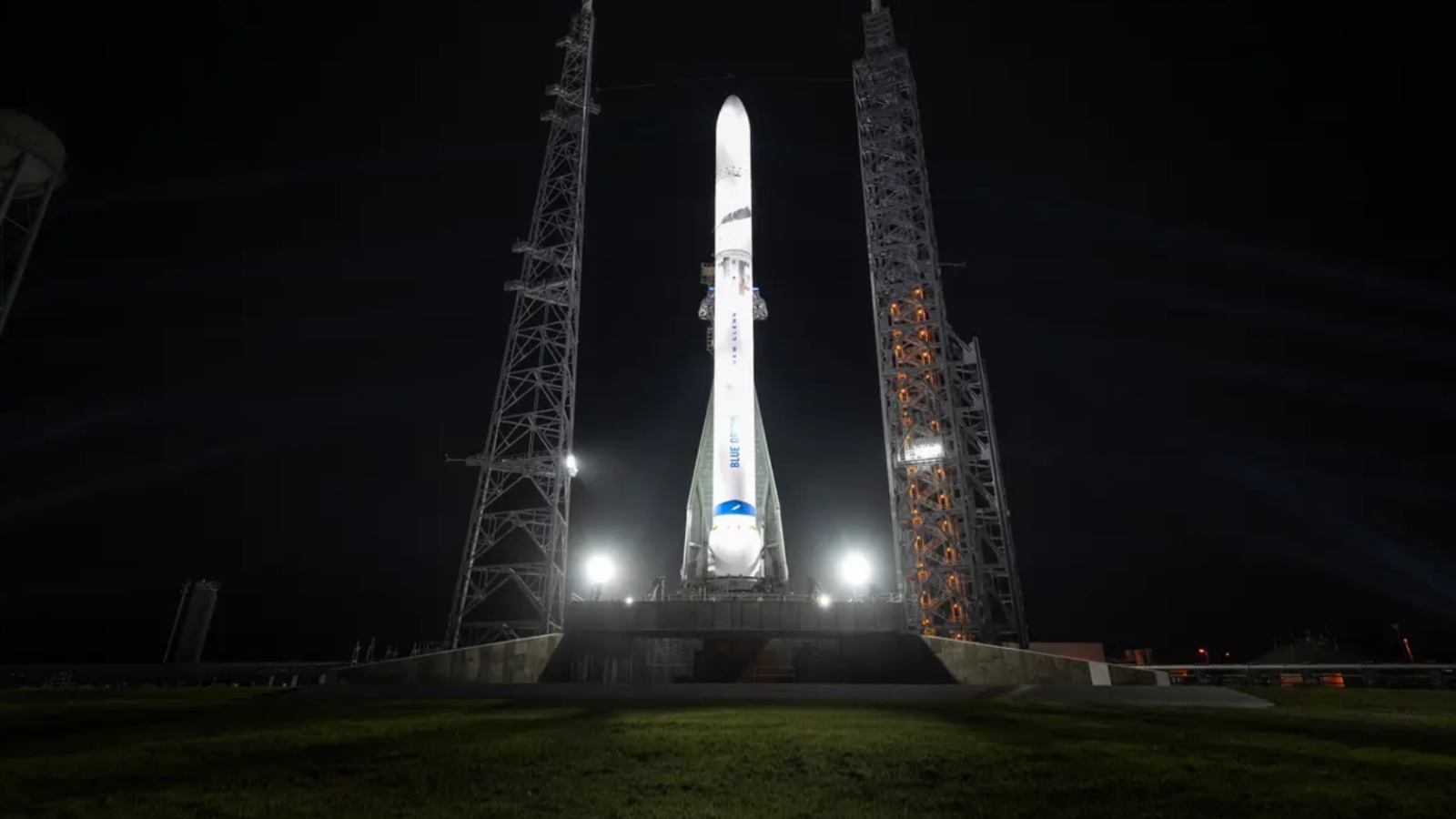
Blue Origin Prepares for New Glenn's 3rd Launch as SpaceX Faces Starship V3 Delays
Blue Origin is on its way to launch New Glenn's upcoming third mission as the company ramps up the spacecraft's future to fulfill missions. The Federal Aviation Administration (FAA) shared an advisory which details that Blue Origin is planning to launch its heavy-lift reusable rocket, New Glenn, on April 17, no earlier than 6:45 a.m. ET. This comes after a recent announcement from the company via their X account that it had completed a successful launch rehearsal for the New Glenn 3 (NG-3) mission. The next step for the company is an upcoming hotfire test for the integrated launch vehicle, which will take place on April 15. The Jeff Bezos-owned space company is setting up for one of its most important missions yet as the New Glenn rocket is set to reuse the same booster that the company used for the second flight of New Glenn (NG-2) from last year, according to Gizmodo. Meanwhile, SpaceX's Starship V3 is currently experiencing delays. Elon Musk said on X last month that the Starship V3 is set to take its first flight "in about four weeks," which should have been during the first week of April. However, when the expected time came, Musk shared another update on the Starship V3 where the space company's CEO said that the first flight will come in around four to six weeks, delaying the maiden launch of this "improved" version of the stainless-steel rocket. Around this time, NASA Spaceflight shared a video showing the Starship Version 3 going up in flames at the McGregor testing facility. According to Gizmodo, NASA Administrator Jared Isaacman previously said on the Artemis II briefing that launch cadences of the commercial providers will help determine those that will be chosen for the Artemis III mission, where a moon landing is set to be tested. Both SpaceX and Blue Origin were selected for the Artemis program, but if SpaceX is not yet ready with the Starship V3 by then, Gizmodo speculated that NASA may not wait for them.
Anthropic Briefs Trump Administration on Mythos, Confirms Co-Founder
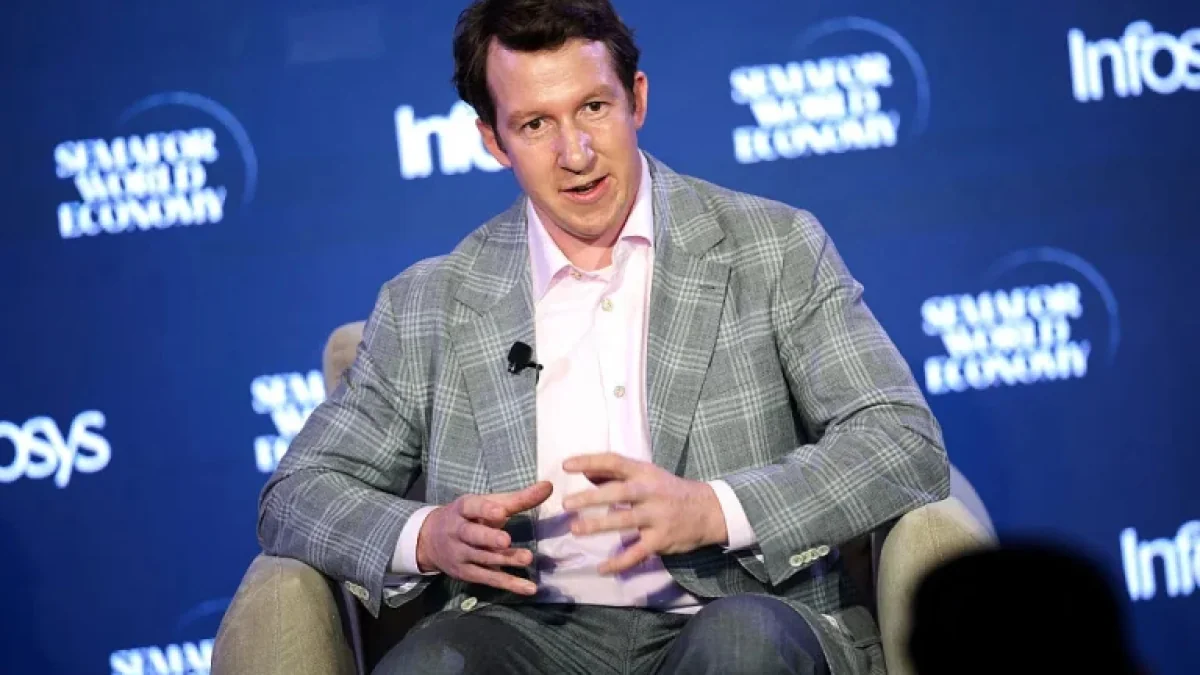
A recent announcement from Anthropic reveals significant developments regarding the company's AI model, Mythos. Jack Clark, co-founder and Head of Public Benefit at Anthropic, confirmed that the Trump administration has been briefed about Mythos due to its potentially dangerous cybersecurity capabilities. This model is currently not available to the public. Engagement with the U.S. Government During an interview at the Semafor World Economy summit, Clark explained the complexities of Anthropic's relationship with the U.S. government. Despite filing a lawsuit against the Department of Defense in March, the company continues to engage with officials to discuss national security concerns. Legal Challenges with the Department of Defense Anthropic's legal issues stem from the DOD labeling it as a supply-chain risk. The company has contested the Pentagon's stance, arguing against unrestricted military access to its AI systems for purposes such as mass surveillance and autonomous weaponry. The case adds to the backdrop of competition as OpenAI secured a significant defense contract instead. Mythos and Banking Sector Collaboration * Clark revealed that Trump administration officials suggested major banks test the Mythos model. * Banks involved include JPMorgan Chase, Goldman Sachs, Citigroup, Bank of America, and Morgan Stanley. AI's Societal Impact Clark discussed the broader implications of AI on society, particularly regarding employment and education. Although Anthropic CEO Dario Amodei warns of potential unemployment rates reaching Depression-era levels, Clark expressed a more measured outlook. He acknowledged early signs of employment weaknesses, particularly in specific industries. Advice for Students in the Age of AI When asked about college majors to pursue amid these changes, Clark emphasized the importance of interdisciplinary studies. He suggested that students focus on fields that encourage synthesis of information across various subjects, promoting analytical thinking. Clark elaborated, stating that AI broadens access to expert knowledge from diverse domains. However, he stressed that the key skill is knowing the right questions to ask and understanding how to integrate insights from different disciplines. This ongoing engagement with the government and the financial sector reflects Anthropic's commitment to navigating the challenges and opportunities presented by advanced AI systems like Mythos.
Anthropic Nears OpenAI Territory With Reported $800 Billion Valuation Chatter As Explosive Claude Growth
Anthropic has reportedly received multiple unsolicited investment offers from venture capital firms valuing the company at as much as $800 billion. Investor Frenzy Drives $800B Valuation Buzz Anthropic did not immediately respond to Benzinga's request for comments. The company was last officially valued at about $380 billion in a February funding round backed by global investors. That figure is still under half of the roughly $852 billion valuation ChatGPT-parent OpenAI reached in its latest funding round last month. The Claude-parent's valuation has climbed to $688 billion on Caplight, a secondary marketplace for trading shares of private companies, marking a 75% surge over the past three months, the report noted. Claude Growth Powers Revenue Surge A major driver of this enthusiasm is Anthropic's flagship AI model, Claude. Demand for its tools -- particularly coding-focused capabilities -- has accelerated sharply in 2026. The company's annualized revenue has surged past $30 billion, up from roughly $9 billion at the end of 2025. Mythos Raises Stakes -- And Concerns Anthropic, earlier this month, also introduced Mythos, its most advanced AI model to date, designed for complex coding and autonomous, agent-like tasks. However, the company has not released it widely, citing concerns over potential misuse, including cybersecurity threats. Expansion Across Enterprise And Infrastructure At the same time, the company is reportedly exploring in-house chip development, signaling ambitions to control more of the AI technology stack. Palantir Comparison Sparks Debate However, analysts such as Dan Ives argue the two operate in different segments, with Palantir focused on enterprise data platforms rather than foundational AI models. Disclaimer: This content was partially produced with the help of AI tools and was reviewed and published by Benzinga editors. Photo Courtesy: gguy on Shutterstock.com Market News and Data brought to you by Benzinga APIs To add Benzinga News as your preferred source on Google, click here.

Coinbase Eyes Access to Anthropic's Restricted Claude Mythos AI for Cybersecurity Defense - TokenPost
Coinbase is reportedly in talks with Anthropic to secure access to Claude Mythos Preview, a highly restricted frontier AI model built with advanced cybersecurity capabilities. The outreach, first reported by The Information, signals growing urgency among major crypto platforms to counter increasingly sophisticated AI-powered threats. Anthropic launched Project Glasswing in early April 2026, a defensive cybersecurity initiative offering select partners limited access to the Mythos model. During testing, the system uncovered thousands of previously unknown zero-day vulnerabilities, including a 27-year-old flaw in OpenBSD and a 16-year-old bug in FFmpeg. Founding partners span some of the world's most influential technology and financial institutions, including Amazon Web Services, Apple, Google, JPMorgan Chase, Microsoft, and Palo Alto Networks. More than 40 additional organizations managing critical software infrastructure also gained access. Anthropic has further committed $100 million in compute credits and $4 million in funding directed toward open-source security groups participating in the program. For Coinbase, the largest cryptocurrency exchange in the United States, the stakes are especially high. In 2025, the platform suffered a significant insider data breach that exposed personal information belonging to approximately 70,000 users after overseas support contractors were bribed by criminal actors. Coinbase refused to pay a $20 million ransom demand and instead offered a matching bounty for information leading to arrests. Separately, Anthropic's own research has demonstrated that AI agents are capable of autonomously exploiting smart contract vulnerabilities, simulating the theft of millions of dollars, a finding that reinforces why exchanges now view cutting-edge AI security tools as essential. Claude Mythos will not be made publicly available. Anthropic plans to fold its core capabilities into future Claude model releases with additional safeguards. Post-preview pricing is set at $25 per million input tokens and $125 per million output tokens. Coinbase already uses Claude across customer support operations in over 100 regions worldwide. Whether the exchange ultimately secures formal Glasswing partnership status remains to be confirmed.

Kraken Files Confidentially for IPO Amid Shifting Valuation - TokenPost
Kraken co-CEO Arjun Sethi confirmed at the Semafor World Economy Summit in Washington, D.C., that the cryptocurrency exchange has submitted a confidential IPO filing with the U.S. Securities and Exchange Commission. The filing was initially submitted around November 2025, shortly after Kraken secured $800 million in funding at a $20 billion valuation. By April 2026, however, Kraken's valuation had dropped to approximately $13.3 billion, a roughly 33% decrease from its late-2025 high. The decline came alongside a $200 million secondary share purchase by Deutsche Börse Group, operator of the Frankfurt Stock Exchange. The transaction grants Deutsche Börse around a 1.5% fully diluted stake in the exchange, with the deal expected to close in the second quarter of 2026. This investment deepens an existing partnership between the two companies announced in December 2025, aimed at connecting traditional financial infrastructure with the growing crypto economy through trading, custody services, and tokenized assets. Kraken had briefly put its public listing plans on hold in March 2026 due to unfavorable market conditions. Sethi's public remarks indicate the confidential filing is still active as the company monitors market sentiment for a more suitable window to proceed. At the summit, Sethi outlined Kraken's core mission as democratizing access to sophisticated financial tools. He emphasized that retail traders deserve the same level of institutional-grade products available to firms like Citadel, Jane Street, and JPMorgan. Supporting this vision, Kraken acquired futures trading platform NinjaTrader for $1.5 billion and secured a Federal Reserve master account, positioning itself among the most ambitious crypto firms targeting public markets in 2026. Kraken's IPO ambitions emerge as fellow crypto exchange Coinbase marks five years since its landmark 2021 public debut, a milestone that highlights how far the industry has evolved.

Post-Quantum Cryptographic Agility in Model Context Protocol Proxies
The post Post-Quantum Cryptographic Agility in Model Context Protocol Proxies appeared first on Read the Gopher Security's Quantum Safety Blog. Imagine waking up in five years only to find out every private ai prompt your team sent today was just decrypted by a bored hacker with a quantum computer. It sounds like sci-fi, but "harvest now, decrypt later" is a very real strategy where bad actors scoop up encrypted traffic today, waiting for the hardware to catch up. Standard security like RSA or ECC -- the stuff we usually trust for api connections -- simply won't hold up once cryptographically relevant quantum computers (CRQCs) arrive. In the world of the Model Context Protocol (MCP) -- an open standard that enables AI models to connect to local and remote data sources and tools -- this is a massive blind spot. When we're constantly piping sensitive data between local tools and remote models, the protocol itself needs to be hardened. According to IBM's 2024 Cost of a Data Breach Report, the average cost of a breach has hit $4.88 million, and that doesn't even account for the "ticking time bomb" of future quantum decryption. Honestly, just slapping a standard cert on your proxy isn't enough anymore because the math is changing. We need to look at how we can swap these out without breaking the whole system, which brings us to the idea of cryptographic agility. Ever tried to swap a car engine while driving down the highway at 70 mph? That is basically what we're asking our systems to do with cryptographic agility in the mcp world. It isn't just about having a new shiny lock; it is about the ability to change the locks and the keys without the user ever noticing the door was even touched. For an mcp proxy, this means being ready for quantum threats before they actually arrive. The big idea here is separating the transport layer -- how the data moves -- from the encryption primitives -- the math that keeps it secret. If your proxy is tightly coupled to one specific algorithm, you're stuck when that math gets broken. The proxy is the perfect spot to handle this because it acts as a central hub for all your api keys and secrets. Instead of updating fifty different mcp servers, you just update the proxy configuration. According to the NIST Post-Quantum Cryptography (PQC) standards, finalized in 2024, organizations should start transitioning to algorithms like ML-KEM to ensure long-term data integrity. This is huge for healthcare where patient data has to stay private for decades. If your proxy handles the automated rotation of these quantum-safe credentials, your devs can focus on building cool ai features instead of worrying about math. It makes the whole transition feel less like a crisis and more like a routine oil change. Once you have this agile setup, the next step is figuring out how to actually build the technical tunnels that move this data between peers securely. So, we've got our mcp proxy acting as a gatekeeper, but how do we actually move the data without some future quantum bot snooping on the p2p (peer-to-peer) tunnel? That's where things get a bit messy, but in a good way, if you're using the right framework. I've been looking at how Gopher Security handles this, and honestly, their 4D framework is pretty slick for mcp deployments. It basically treats every p2p connection like it's already under attack by a quantum computer. The framework consists of four main pillars: Discovery of all connections, Defense via quantum-resistant tunnels, Detection of handshake anomalies, and Deployment across hybrid environments. One thing that's cool is how the 4D framework handles the "identity" part of the p2p link. It's not just about the encryption; it's about making sure the peer on the other end is actually who they say they are using Dilithium-based signatures. Anyway, setting this up isn't as scary as it sounds. Here is a tiny snippet of what a policy might look like when you're telling your proxy to enforce these quantum-safe p2p links: So, once you have these secure tunnels running, you gotta start thinking about who actually gets the keys to the kingdom. Which leads us right into how we manage all those identities without losing our minds. So you finally got your pqc tunnels up, but now comes the real headache -- how do you stop a "quantum-ready" user from accidentally (or on purpose) nuking your whole ai setup? It is one thing to have a secret pipe, but quite another to control what actually flows through it. In a typical mcp setup, your proxy is basically a traffic cop. You gotta set rules that say "if you aren't using ML-KEM, you can't touch the healthcare database." It's about tying access to the actual strength of the math. Honestly, i've seen teams in retail get burned because they forgot to restrict their inventory apis to quantum-safe routes. It's a mess. By locking down these policies today, you create a foundation for the long-term auditability and compliance requirements that are becoming mandatory for ai systems. Honestly, the scariest part of ai security isn't the math -- it is the paperwork. We're moving toward a world where your mcp proxy doesn't just encrypt data but actually proves it happened for the auditors. Security shouldn't be a manual chore. Automation is taking over the boring stuff: Anyway, if you start building for the quantum future now, you won't be scrambling when the regulations finally catch up. Stay safe out there. *** This is a Security Bloggers Network syndicated blog from Read the Gopher Security's Quantum Safety Blog authored by Read the Gopher Security's Quantum Safety Blog. Read the original post at: https://www.gopher.security/blog/post-quantum-cryptographic-agility-mcp-proxies

Dow Jones Top Company Headlines at 9 PM ET: Elon Musk's xAI Sued by NAACP Over Memphis Data Center | China-Backed ...
Elon Musk's xAI Sued by NAACP Over Memphis Data Center The lawsuit alleges that xAI's efforts to power its data centers in Tennessee and Mississippi are creating a health risk for local residents. ---- China-Backed Yancoal Australia to Buy Kestrel Coal Mine Stake For Up to $2.4 Billion The Kestrel mine, located in Queensland's Bowen Basin, is one of the largest underground metallurgical-coal operations in production in Australia. ---- U.S. Economy Remains Resilient in Face of Iran War, Banks Say Still, higher energy prices have begun to weigh on consumers. ---- Rivian's Illinois Factory Will Run on Recycled EV Batteries The project highlights how battery energy is increasingly being used to power businesses and industrial facilities in the U.S. ---- UPS Seeks to Replace Manual Scans With Tracking Tech The shipping giant increases use of RFID tags to eliminate 20 million manual scans a day. ---- Why Amazon Is Buying Starlink Rival Globalstar in $11 Billion Deal Amazon has agreed to acquire Globalstar in a move that allows its Amazon Leo satellite network to offer direct-to-device connections. ---- Apple CEO Tim Cook Just Bought Nike Stock. His Last Purchase Didn't Go So Well. Cook is Nike's lead independent director and has been on the company board since 2005. ---- Gucci Owner Kering Logs Lower Sales, But Flags Improving Trends The improving trends are an encouraging sign for the luxury giant as it prepares to unveil a new plan later this week aimed at reviving growth. The startup behind the popular Claude chatbot and coding tool is eyeing a potential IPO as soon as this year. ---- Albertsons Swings to a Loss on Charge From Opioid Settlement Albertsons swung to a fourth-quarter loss fueled by a charge from a new opioid settlement set to resolve substantially all opioid-related claims brought against the company. ---- BMW Group Vehicle Sales Fall on Weakness in China and U.S. BMW group vehicle sales fell in the first quarter as deliveries to the U.S. and China continued to drop. ---- Lucid Secures $750 Million in New Funding, Names New CEO Lucid Group said it secured $750 million in fresh funding commitments from Uber Technologies and Saudi Arabia's sovereign-wealth fund. ---- CarMax Shares Plunge as Used-Car Seller Cuts Prices The selloff came despite CarMax's fiscal fourth-quarter results meeting or exceeding Wall Street expectations for same-store sales and revenue. ---- Dow Taps 30-Year Veteran Karen Carter to Succeed Jim Fitterling as CEO Dow has designated its chief operating officer, Karen Carter, to succeed Jim Fitterling as the chemical maker's chief executive, effective July 1. ---- J&J's First-Quarter Sales Grow on Cancer-Drug Strength The drug and medical-device maker has been working to ensure consistent growth after losing patent protection for its blockbuster Stelara. ---- Wegovy Maker Novo Nordisk Strikes Deal With OpenAI to Speed Up Drug Discovery The drugmaker gained more than 4% after it said it would integrate OpenAI's models across its operations to help analyze complex datasets and deliver treatments faster. ---- BlackRock Posts 46% Gain in Quarterly Profit on Growth in Investment Fees The world's largest investment firm's assets under management slipped below $14 trillion in March, down slightly from three months earlier.

Federal agencies skirt Trump's Anthropic ban to test its advanced AI model
In recent days, staff from at least two large federal agencies have reached out to Anthropic to express interest in integrating Claude Mythos into their cyber defense efforts, according to a former senior U.S. technology official with direct knowledge of the discussions. The Commerce Department's Center for AI Standards and Innovation -- tasked with evaluating U.S. and foreign AI models for potential risks and opportunities -- is actively testing Mythos' hacking prowess, according to four people familiar, including one current and one former cybersecurity official; a former Trump administration official; and a former senior national security official. And staff on at least three congressional committees have held or requested briefings from Anthropic over the last week to learn more about Mythos' cyber scanning capabilities, according to three congressional aides working on AI policy. These people, like others in this report, were granted anonymity to share non-public details of government collaboration with Anthropic. The federal effort to gain access to Mythos despite ongoing litigation with the AI company -- and in particular its current use by CAISI -- underscores how the Trump administration's plan to blackball Anthropic is being carefully circumvented by government officials eager to experiment with its new model to bolster America's cyber capabilities. In late February, Trump and Defense Secretary Pete Hegseth directed all federal agencies to stop using Anthropic's tech after its CEO, Dario Amodei, took a firm stance against allowing the Pentagon to deploy its models in autonomous lethal attacks or mass surveillance operations against Americans. Hegseth formally designated Anthropic a supply chain risk last month -- an unprecedented move against an American company that effectively bars its AI models from use on DOD contracts. "It's ironic that the U.S. government tried to ban U.S. government use of Anthropic products -- and then a few weeks later, there's this revolutionary Anthropic product that's very important for cybersecurity, and has very important national security implications and so forth," said Charlie Bullock, a lawyer and senior research fellow at the Institute for Law and AI think tank. The White House campaign against Anthropic has prevented federal agencies from taking full advantage of some of the country's most cutting-edge technology, according to the three congressional aides. They expressed frustration that the government isn't deploying Mythos more aggressively to secure its networks, which are increasingly under attack by adversaries, including Russia and China, that could soon possess equivalent AI capabilities. The Pentagon has "shot itself in the foot by giving the middle finger to the most capable AI provider," said one of the three aides. Spokespeople for the Pentagon declined to comment. The White House said in a statement that the Trump administration "continues to work and engage with AI companies to ensure their models help secure critical software vulnerabilities." It added that the White House "is proactively engaging across government and industry to ensure the United States and Americans are protected." Anthropic announced last week that it was only offering Mythos to a select group of tech and cyber organizations because the model was too dangerous to release to the public, given its ability to find and exploit unknown software flaws. An Anthropic official, granted anonymity to share additional details on the effort, said that the firm had briefed U.S. government officials about Mythos' hacking capabilities. But no federal agencies were identified publicly in Anthropic's press release announcing the AI model's existence. IT officials at the Treasury Department are also seeking to use Mythos to fix unknown flaws in the agency's network, Bloomberg reported Tuesday. Anthropic sued the government over the supply chain risk designation last month, filing cases in two separate courthouses due to a quirk in federal law. That led to a split ruling, with a federal judge in Northern California pausing part of the government's supply chain risk determination several days before it was temporarily upheld by the D.C. Circuit Court of Appeals. Bullock said federal agencies might have had an even tougher time getting their hands on Mythos had the government won both its cases against Anthropic. He suggested that federal agencies "would not have been allowed" to test the company's model if the California judge had ruled in the government's favor. But Trump's attacks on Anthropic have made deeper collaboration with the company more challenging as it rolls out Mythos, according to one former senior national security official. In a February social media post, the president called the people running the company "Leftwing nut jobs" because of the company's stance against the use of its tool for mass domestic surveillance of U.S. citizens or in lethal autonomous attacks. The same official said the administration's public statements have had a "chilling effect" that discouraged federal agencies from engaging openly with Anthropic or potentially using its model to find and fix cybersecurity vulnerabilities in their networks. That type of work, the official said, requires large teams of software engineers and significant investments that could run afoul of Trump's directives. Still, there are signs that the Trump administration knows it can't completely ignore the novel AI model's potential impact on national security -- for better or worse. The four people familiar said cybersecurity experts at CAISI -- a sub-agency of the National Institute of Standards and Technology created in 2024 and rebranded last year by the Trump administration -- have been testing Mythos' hacking chops since before Anthropic's announcement. The officials said researchers at CAISI are currently "red teaming" Mythos to assess its capabilities and possible risks to national security. NIST did not respond to a request for comment about its work with Anthropic. In a statement, an Anthropic official confirmed the company had made Mythos available for "the government's own testing and evaluation of the technology." In an initial directive posted to X, Hegseth gave DOD officials six months to continue using Anthropic models to complete a "seamless transition to a better and more patriotic service." While it is possible that U.S. national security agencies could have received special exemptions to partner with Anthropic in classified settings, a senior CIA official recently echoed the White House's criticism of the firm. The CIA will "not let private companies dictate how and when the CIA will make lawful use of their technologies," Deputy CIA Director Michael Ellis said in a speech last Friday. Anthropic has projected that other models with equivalent hacking capabilities will be widely available within the next two years, potentially enabling an avalanche of new cyber attacks -- a prospect that some former national security officials are deeply concerned about. "I would certainly hope that the current tensions between the Pentagon and Anthropic don't get in the way of something critically important to cyber security," said Glen Gerstell, a former general counsel at the National Security Agency.
Live Coverage: West Coast SpaceX Falcon 9 mission to launch 25 Starlink satellites
SpaceX is counting down to the launch of a Falcon 9 rocket from Vandenberg Space Force Base in California, carrying another 25 satellites for its Starlink internet service. Liftoff from Space Launch Complex 4 East is scheduled for 9:29:49 p.m. PDT (12:29:49 a.m. EDT / 04:29:49 UTC). The Falcon 9 will depart from the central California coast on a southerly trajectory, as it targets an orbit of 258 x 246 km, with a 97-degree inclination. Spaceflight Now will have live coverage starting about 30 minutes prior to liftoff. The Starlink 17-27 mission is SpaceX's 46th Falcon 9 launch of the year and will use a first-stage booster making its 21st flight. Booster B1082 entered the SpaceX fleet in January 2024 and has already launched 17 previous Starlink delivery missions. It also flew the USSF-62, OneWeb Launch 20, and NROL-145 missions. A little more than eight minutes after liftoff, the first stage will target a landing on the drone ship, 'Of Course I Still Love You,' positioned in the Pacific Ocean. The 25 Starlink V2 Mini satellites stacked atop the second stage will deploy about an hour into flight.