News & Updates
The latest news and updates from companies in the WLTH portfolio.
NAACP sues Musk's xAI, alleging illegal operation of gas turbines
WASHINGTON, April 14 (Reuters) - The largest U.S. civil rights group on Tuesday sued xAI and a subsidiary, claiming they illegally operated more than two dozen gas turbines in Mississippi to power its Colossus 2 data center, posing a health risk to local residents. The NAACP, represented by Earthjustice and the Southern Environmental Law Center, sued xAI and subsidiary MZX Tech, charging they violated the federal Clean Air Act by running 27 gas-fired turbines before getting necessary air permits for its massive data center that powers xAI's Grok chatbot. Elon Musk's artificial intelligence startup xAI has invested more than $20 billion to build the data center in Southaven with the full backing of Mississippi Governor Tate Reeves, but the facility, as well as Colossus 1 just over the border in Memphis, Tennessee, hasmet heavy opposition from local communities due to their effect on local air and environmental quality. "By looking to evade clean air laws to operate dirty turbines that emit pollution and known carcinogens, these companies are following a shameful, familiar pattern: asking Black and frontline communities to bear the toxic brunt of 'innovation,'" said Abre' Conner, director of the Center for Environmental and Climate Justice at the NAACP. The NAACP announced its intention to sue xAI and MZX in February because the Clean Air Act requires 60 days of notice ahead of filing a lawsuit. Mississippi regulators held one public hearing that month about permits for those turbines after just a few days of public notice for the hearing, and subsequently approved the permits. xAI was not immediately available for comment. Earthjustice said that xAI's Southaven power plant has the potential to emit more than 1,700 tons of smog-causing nitrogen oxides (NOx) each year, a major source of smog in the greater Memphis area. They are also estimated to emit 180 tons of fine particulate matter, 500 tons of carbon monoxide, and 19 tons of cancer-causing formaldehyde. (Reporting by Valerie Volcovici; editing by David Gaffen)
VCs are flooding Anthropic with offers to invest at up to an $800 billion valuation
Still, the valuations indicate the feverish demand for Anthropic shares that has overtaken Silicon Valley. Anthropic has fielded multiple offers from VCs valuing the startup behind Claude at as much as $800 billion in recent weeks, more than double its current valuation, according to multiple people familiar with the matter. Buzzy startups frequently field preemptive offers from investors only to rebuff them. Still, the valuations VCs are floating indicate the feverish demand that has overtaken Silicon Valley for a stake in Anthropic as the company prepares for a possible IPO later this year. A spokesperson for Anthropic declined to comment. Anthropic closed a funding round in February led by GIC and Coatue that valued the company at $380 billion. That is less than half the $852 billion valuation OpenAI achieved in the funding round it closed last month. Anthropic is valued at $688 billion on Caplight, a secondary exchange where investors can trade shares of privately held companies. That is up 75% in three months. Investors and founders have been wowed by Anthropic's torrid growth and momentum around AI-powered coding assistant Claude code. "They're crushing it," Jared Quincy Davis, founder and CEO of Mithril, an AI cloud platform, said about Anthropic last week at HumanX, an AI conference. Anthropic's run-rate revenue, the revenue a company expects to collect over a year, has soared to $30 billion, up from $9 billion at the end of last year, the company announced last week. It also added that over 1,000 business customers are spending more than $1 million a year, a figure that has doubled in less than two months. Last week, Anthropic announced its latest model, Mythos, which it said is so powerful it cannot yet be unleashed upon the general public because of the risk of cyber attacks. "The Mythos model is a huge deal, Tomasz Tunguz, founder and general partner of Theory Ventures, said last week at HumanX. "There's a tremendous amount of excitement."
Elon Musk's xAI Sued by NAACP Over Memphis Data Center
The NAACP sued Elon Musk's xAI Tuesday, alleging the company's efforts to power its data centers in Tennessee and Mississippi are creating a health risk for local residents. Musk's artificial intelligence company and its subsidiary MZX Tech are illegally operating gas turbines without an air permit at a data center in Southaven, Miss., in violation of the Clean Air Act, the lawsuit said. The suit alleged the turbines emit pollution and hazardous chemicals that have been linked to increases in asthma, respiratory diseases, heart problems and certain cancers. "A data center should not be a potential death sentence for a community's health," NAACP's Director of Environmental and Climate Justice Abre' Conner said in a statement. xAI didn't respond to a request for comment. Lawmakers in more than 10 states have proposed temporary bans on data-center construction this year amid rising public concerns, reflected in opinion polls, over energy prices, noise pollution and other issues. This once-sleepy plot of land along the Tennessee and Mississippi border has become the front line of Musk's foray into the AI wars as he tries to play catch-up to rivals including OpenAI and Anthropic. Musk already built one massive data center in Memphis that his company describes as the world's largest supercomputer. That facility, called "Colossus," powers the technology behind the AI chatbot Grok. Musk is also working on a second facility in the region that will be even bigger, called Colossus 2. Among locals, his arrival has kindled hopes of an economic renaissance, but it has also stoked controversy. The billionaire's pitch to Memphis is that he is building infrastructure that will benefit the city. Musk's data centers will probably bring in only a few hundred jobs while consuming millions of gallons of water a day and more electricity than is needed to power all of the homes in Memphis. Responding to criticism over the use of natural-gas turbines, xAI has argued that many of the structures are temporary and don't require a permit. The civil rights group filed the suit in the Northern District of Mississippi, where it is being represented by the Southern Environmental Law Center and Earthjustice. The suit said xAI has built the power plants for these data centers in communities with significant Black populations. xAI has weathered internal churn ahead of the initial public offering of its parent company SpaceX. The company conducted a round of layoffs in March.

War Chaos Hits Bling as Luxury Watches Take Hit - Kashmir Observer
Geneva- The bling is back, but the war in the Persian Gulf has tarnished the outlook for the luxury watch industry -- the ultimate in bling. Starting Tuesday, Geneva hosts the annual "Watches and Wonders" fair, a premiere gathering in an industry eager for a rebound after two years of market contraction, hopefully including sales in oil-rich Gulf Arab countries. The US and Israeli war against Iran that began February 28, however, has had a sweeping impact on the global economy: Driving up energy prices, stalling shipments of fertiliser, disrupting air travel, and other things. High-end watches have not been spared. Soaring prices for precious metals like gold and silver over the last year and US President Donald Trump's Liberation Day tariffs launched a year ago - while down from peak levels - already affected the market. Now, renewed inflation pressures and doubts about consumer confidence are throwing new uncertainty into the market that generates tens of billions of dollars in revenue each year. Philippe Pegoraro, chief economist at FH -- the Federation of the Swiss Watch Industry -- said official export figures for March won't be finalised until later this month. "At this point, we're expecting a sharp drop" in part because of logistical issues and sagging demand, Pegoraro said. Purchases from residents in the United Arab Emirates, for example, appear to be holding up, but tourist traffic that drives sales in places like the Dubai airport has taken a hit due to Iranian strikes on the country, he said. "Rebuilding confidence is going to take some time," Pegoraro said. A cloud over Watches and Wonders The show is a rarefied, elite gathering that showcases innovations, drums up deals, and hosts some 65 exhibiting brands from around the world: That's just a sliver of an industry that counts some 450 watchmakers in Switzerland alone. About 60,000 visitors are expected to attend. Morgan Stanley, in the 9th Annual Swiss Watcher report put together with independent consultancy LuxeConsult, said in February that Swiss watch exports declined 1.7 per cent last year in value terms -- a year when Switzerland's franc was relatively strong compared with the US dollar and the euro. It was a second straight year of market contraction, the report said. "When you look back at a year ago, the sort of theme was: The tariffs and the uncertainty," said industry analyst Ming Liu. "Unfortunately, we aren't anywhere closer to certainty, probably even less with what's happening in the Middle East." "That's obviously going to have a cloud over Watches and Wonders," she said. "But it has a cloud over everything, right?" Similar to the luxury goods sector as a whole, the biggest brands have been gaining market share: Four of Switzerland's 450-odd watch brands -- Rolex, Cartier, Patek Philippe and Omega -- make up over half the total Swiss retail market share, the report said. And the upper-end segment has been growing: hand-crafted watches priced at more than 50,000 francs (more than USD 63,000) apiece made up 37 per cent of the total value of Swiss watch exports last year -- up from 33.5 per cent in 2023, it said. Switzerland still stands out in the luxury watch business The Morgan Stanley report said Swiss-made watches represent about 96 per cent of the global luxury watch market, or those that retail for at least 2,000 francs each (more than USD 2,200). Japan's Grand Seiko is the "most credible non-Swiss challenger", and India's Titan is making a run at the top tier, the report said. The Swiss are coming off a turbulent year. Trump imposed exceptionally high US tariffs on goods from Switzerland last year, hitting a peak of 39 per cent -- the highest faced by any developed Western country. A delegation of Swiss business executives travelled to the White House and offered Trump gifts, including a Rolex clock in November. The following month a deal was announced that sharply lowered US tariffs on Swiss products. (AP)

VCs are flooding Anthropic with offers to invest at up to an $800 billion valuation
Anthropic has fielded multiple offers from VCs valuing the startup behind Claude at as much as $800 billion in recent weeks, more than doubling its current valuation, according to multiple people familiar with the matter. Buzzy startups frequently field preemptive offers from investors only to rebuff them. Still, the valuations VCs are floating indicate the feverish demand that has overtaken Silicon Valley for a stake in Anthropic as the company prepares for a possible IPO later this year. A spokesperson for Anthropic declined to comment. Anthropic closed a funding round in February led by GIC and Coatue that valued the company at $380 billion. That is less than half the $852 billion valuation OpenAI achieved in the funding round it closed last month. Anthropic is valued at $688 billion on Caplight, a secondary exchange where investors can trade shares of privately held companies. That is up 75% in three months. Investors and founders have been wowed by Anthropic's torrid growth and momentum around AI-powered coding assistant Claude code. "They're crushing it," Jared Quincy Davis, founder and CEO of Mithril, an AI cloud platform, said about Anthropic last week at HumanX, an AI conference. Anthropic's run-rate revenue, the revenue a company expects to collect over a year, has soared to $30 billion, up from $9 billion at the end of last year, the company announced last week. It also added that over 1,000 business customers are spending more than $1 million a year, a figure that has doubled in less than two months. Last week, Anthropic announced its latest model, Mythos, which it said is so powerful it cannot yet be unleashed upon the general public because of the risk of cyber attacks. "The Mythos model is a huge deal, Tomasz Tunguz, founder and general partner of Theory Ventures, said last week at HumanX. "There's a tremendous amount of excitement."
BoE's Bailey sees major cybersecurity risks in new Anthropic model
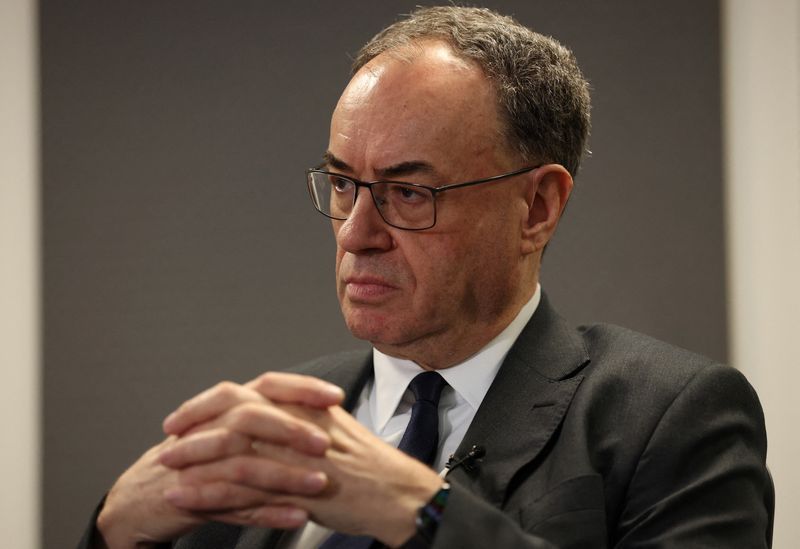
April 14 (Reuters) - Central banks and financial regulators must quickly understand the implications of a new artificial intelligence model that could pose major cybersecurity dangers, Bank of England Governor Andrew Bailey said on Tuesday. "It would be reasonable to think that the events in the Gulf are the most recent challenge to us in this world, until, I think it was last Friday, you wake up to find that Anthropic may have found a way to crack the whole cyber risk world open," Bailey said at an event at Columbia University in New York. Anthropic's Mythos product has drawn warnings from cyber experts about its potential to supercharge complex cyberattacks, which could challenge the banking industry and its existing technology systems. Regulators wanted to "work out what this actually means," Bailey said. "The issue is: to what extent is this new version of the product going to be able to, in a sense, identify vulnerabilities in other systems which can be exploited for cyberattack purposes." He said cyber risks had risen up the list of concerns of regulators most rapidly in recent years. "It's the one that never goes away. You have to keep mitigating it, but the threat actors will move on, so we have to deal with it," Bailey said. He dedicated most of Tuesday's event to discussing the issue of central banks' operational independence, which was "not robust enough" when it came to matters of financial stability. Bailey argued that monetary and financial stability policy - often depicted as separate issues or sometimes even at odds with each other - should be viewed together within an overarching objective of protecting the value of money. While monetary policy is defined by numerical inflation targets, financial stability is harder to grasp, leading to a distinction between the two, Bailey said. "This is important because independence in respect of financial stability is otherwise not as robust, and I would argue not robust enough," Bailey said in his speech. His remarks come as central banks on both sides of the Atlantic face increasing levels of political pressure, albeit to differing degrees. In the United States, U.S. President Donald Trump has called for lower interest rates and has repeatedly chastised Fed Chair Jerome Powell. In Britain, finance minister Rachel Reeves has pushed regulators including the BoE to give greater weight to economic growth when making decisions. Bailey said financial stability cuts across private interests in the financial system, as well as governments seeking to boost economic growth by loosening regulation to increase lending - particularly when memories of past crises fade. Much as monetary policy aims to protect the real value of money, Bailey said financial stability policy protects trust in money and that the two should be seen as complementary. "I see merit in creating a single overarching narrative with a strong focus on the value of money. It would remove descriptions of financial stability such as 'tangential' or 'in conflict'," Bailey said. (Additional reporting by Suban Abdulla; Editing by Andrea Ricci )
Is Blue Owl's 11% yield under threat amid private credit chaos?
Despite the chaos, Blue Owl's underlying credit portfolio continues to perform strongly, and most Wall Street analysts still rate the stock a buy. Dividend-paying stocks are popular with income investors for good reason. Fidelity notes that dividends can provide "portfolio ballast" regardless of market direction, delivering income whether the broader market is rising or falling. That appeal is why Blue Owl Capital (OWL) has drawn so much attention lately. Its dividend yield has shot past 11%, making it one of the highest-yielding names in the alternative asset management space. The problem? OWL stock has cratered. And with every new headline about private credit chaos, more investors are asking the same question: Is this dividend stock actually safe? Blue Owl's dividend stock ratios Before diving into the crisis, here's a snapshot of key dividend metrics for OWL as of April 2026: * Annual dividend: $0.92 per share * Dividend yield: ~11% * Payout ratio: 107%-108% for 2025 (above 100%, meaning it exceeds reported earnings) * Target payout ratio: ~85% (management's stated goal over the next few years) * Fee-related earnings (FRE) per share: $0.96 for full-year 2025 (up 12% year-over-year) * Distributable earnings (DE) per share: $0.84 for full-year 2025 * Dividend coverage: DE of $0.84 vs. dividend of $0.90 The payout ratio above 100% is the number that will make investors nervous. It means that Blue Owl is paying out more than it earns per share, at least by traditional accounting metrics. More on dividend stocks: Management has been clear that bringing the ratio down to 85% is a priority but that's going to take time. Blue Owl stock is down 66% from all-time highs Blue Owl grew from zero to over $300 billion in assets under management in less than 10 years. It was one of the hottest names in alternative asset management before things started to unravel. The initial blow came from fears of artificial intelligence. Concerns about AI disrupting software companies rattled private credit investors, as software loans make up a meaningful portion of many direct-lending portfolios. Evercore ISI noted that two of Blue Owl's private credit funds were capping redemptions at 5% after receiving withdrawal requests of 21.9% and 40.7%, figures it described as undeniably large. Investors asked to pull roughly $5.4 billion from Blue Owl's flagship Credit Income Corp (OCIC) fund and its tech-focused OTIC fund in the first quarter of 2026. That is a meaningful signal of fear, even if the underlying loans tell a different story. Moody's piled on, cutting its outlook on the $36 billion OCIC fund to "negative" from "stable," citing elevated redemptions and a concentrated equity-holder base. It warned that high redemptions could persist and further slow inflows, potentially eroding currently strong liquidity. Then there's the stock itself. OWL shares have lost more than 66% from their all-time highs, raising the dividend yield to 11%. Blue Owl remains optimistic While the headlines have been brutal, Blue Owl's Co-CEO Marc Lipschultz pushed back hard on the narrative during the firm's Q4 earnings call. His argument, in short: don't confuse stock price panic with credit reality. * In direct lending, Blue Owl's average loan-to-value ratio is around 40%, meaning there's a 60% equity cushion before it'd take a loss. * The average borrower in their portfolio was delivering high single-digit revenue growth and low-teens EBITDA growth through the fourth quarter. * Non-accruals remain near zero, and the firm's annualized net loss rate over the past decade has been just eight basis points. On the software concern specifically, Lipschultz noted that tech portfolio companies have grown revenue by nearly 40% and EBITDA by nearly 50% since ChatGPT launched in late 2022. Software represents just 8% of total assets under management across Blue Owl's funds. Evercore ISI maintained its Outperform rating, saying the earnings impact from the redemptions is materially more modest than the headlines imply, noting that the affected funds represent just 12.5% of fee-paying AUM and that the cap implies less than 2.5% annualized outflows. Piper Sandler trimmed its price target on OWL to $12.50 from $15. Still, the firm kept an Overweight rating, saying downside scenarios may already be reflected in current valuation, a view echoed by Bank of America. Of 13 Wall Street analysts covering OWL stock, the consensus rating remains bullish, with a median 12-month price target of $13.88, implying significant upside from current levels. Is the 11% dividend yield sustainable? The short answer: the dividend is under pressure, but not obviously at the point of being cut. Management is locked into a fixed annual dividend of $0.92 for 2026, payable quarterly at $0.23 per share. That commitment is meaningful. Blue Owl Co-CEO Doug Ostrover said at the Bank of America Financial Services Conference in February that the firm is "laser-focused" on growing FRE per share. Ann Dai, the Managing Director at Blue Owl, stated: "We declared a dividend of $0.225 per share for the fourth quarter payable on March 2 to holders of record as of February 20, and we also announced an annual fixed dividend of $0.92 for 2026, or $0.23 per quarter, starting with our first quarter 2026 earnings." Alan Kirshenbaum, the CFO, acknowledged the firm is behind its Investor Day targets, but expects modest FRE per share growth in 2026 and an acceleration in 2027. The payout ratio above 100% does bear watching. * A dividend stock paying out more than it earns has a limited runway to sustain that pace without growth. * Blue Owl's path back to a healthier ratio runs through better fundraising, especially in the private wealth channel, which the firm expects to stabilize in the second half of 2026. * The digital infrastructure and asset-backed finance businesses remain bright spots. Blue Owl's net lease strategy delivered gross returns of over 13% in 2025. * Its alternative credit fund returned 16.6% gross for the year. * The 11% yield on this dividend stock is elevated because the market is pricing in serious risk. Whether that risk materializes depends largely on whether private credit sentiment stabilizes and on whether Blue Owl's underlying portfolio performance continues to diverge from the grim narrative. For income investors comfortable with that uncertainty, the yield is real, and the dividend is currently intact. For those who need certainty, the payout ratio and the redemption headlines are hard to ignore.

BUILT TO BEAT NETWORK CHAOS FOR BUSINESS
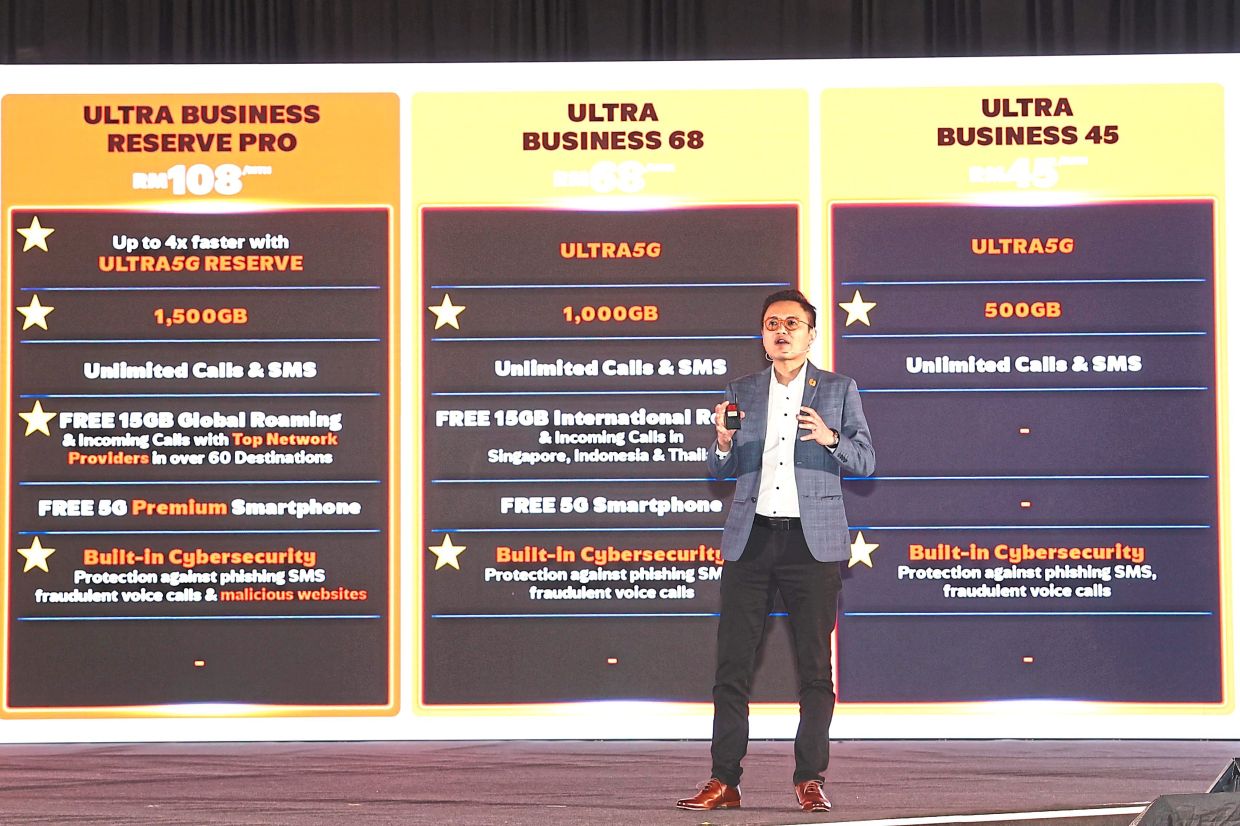
BUSINESSES today face growing demands for reliable connectivity, seamless global roaming and secure network environments to stay competitive. Yet, inconsistent speeds, network congestion and limited flexibility continue to disrupt operations and impact productivity. Addressing these challenges, U Mobile - Malaysia's latest 5G network provider - introduces its U Business ULTRA Business mobile plans, designed to deliver greater assurance and performance. It also features ULTRA5G Reserve, which offers enterprise-grade connectivity through dedicated network priority. These solutions aim to empower businesses with the reliability and control they need. Tailored for all businesses from small and medium enterprises (SMEs) to large-scale enterprises, U Business is transforming how organisations stay connected, enabling them to operate with confidence in an increasingly digital landscape. Network priority The cornerstone of this rollout is ULTRA5G Reserve, the industry's first dedicated network priority offering designed to meet the performance demands of both SMEs and enterprise businesses, ensuring consistent, enhanced access to network resources during high-traffic periods. It gives businesses exclusive access to a "dedicated" or "VIP lane" within U Mobile's 5G Standalone (SA) network, where enterprise traffic is prioritised to help maintain stable performance for critical operations during peak usage. This translates into tangible performance benefits: > Speed: Up to four times faster performance during peak hours; > Visibility: On compatible devices, "ULTRA5G RESERVE" is displayed as the network identifier instead of "ULTRA5G", clearly indicating priority access for U Business customers. To experience this service, customers must be on selected ULTRA5G Reserve plans, use a 5G Standalone (SA) compatible phone (such as iPhone 15 or newer) and a 5G-compatible SIM or eSIM. U Mobile chief business officer How Lih Ren said that this launch represents a strategic shift toward a model designed around business outcomes. "Today's launch marks a clear pivot in U Mobile's enterprise strategy, made possible by our next-gen, 5G AI-driven network," Lih Ren said. "With ULTRA5G Reserve, we are leveraging our network advantage to introduce enterprise-grade prioritisation, a first in Malaysia." Seamless mobility and intelligent security The ULTRA Business suite extends beyond local connectivity to address the critical needs of global mobility and cybersecurity. Premier Roaming offers a premier cross-border connectivity experience in over 60 destinations. By leveraging Tier-1 network partners, U Business ensures that business travellers remain connected and productive, regardless of geographical boundaries. Security is also a primary consideration, especially as over 60% of SMEs currently lack basic digital protection. U Business's Intelligent Security feature provides enterprise-grade, Artificial Intelligent (AI)-powered protection built directly into the network layer: > Built-in protection: The system automatically safeguards against scam calls, fraudulent SMS and malicious websites; > Ease of use: As an "always-on" network security, it requires no additional software installation or configuration on individual devices; A comprehensive business ecosystem At the core of U Business' portfolio are its ULTRA Business Reserve plans, designed to meet the demands of data-intensive and performance-driven organisations. The ULTRA Business Reserve Pro (RM108 per month) offers 1,500GB of high-speed data on ULTRA5G Reserve, enabling businesses to support everyday digital operations with prioritised network performance and enhanced connectivity, during periods of high network usage. At the highest tier, the ULTRA Business Reserve Elite (RM138/per month) delivers an enhanced 2,000GB data allowance, built for enterprises with greater connectivity demands and larger operational scale. Powered by ULTRA5G Reserve, it provides prioritised network access for improved stability and responsiveness, particularly during peak usage periods. These plans also come with expanded global roaming benefits, supporting organisations that require seamless connectivity across multiple markets. Together, these plans form a scalable foundation that allows businesses to choose a plan aligned with their operational needs while maintaining access to U Business dedicated connectivity network experience. For SMEs, U Business offers tailored bundles to enhance productivity and team connectivity, including the 3-Line Device Bundle with three business lines and a free 5G flagship device and the 3-Line SIM Bundle with three lines and unlimited calls under flexible 24- or 36-month contracts. Beyond mobile, its enterprise ecosystem includes Ultra Business WiFi Plans for plug-and-play ULTRA5G office connectivity, Business Fibre with speeds from 100Mbps to 10Gbps, Dedicated Internet Access (DIA) for mission-critical operations and ULTRA IoT solutions for smarter, connected business management. By the end of March 2026, U Mobile achieved 80% nationwide coverage of populated areas, completing its rollout three months ahead of schedule. This infrastructure underpins its position as Malaysia's fastest 5G network, as recognised by Ookla, supporting an integrated ecosystem that empowers enterprises with a stronger competitive edge in the digital economy. For more information on ULTRA5G Reserve, scan the QR code.
5 unconventional road trip snacks
As a Midwestern girl, road trips are something that have been ingrained in my life since childhood. Whether it's the 27 hour trip to Florida from my hometown in Wisconsin or the eight hour trip to Chicago, snacks are the most make-or-break addition to the experience. After driving back to campus after spring break, I realized I've mastered my snack setup and learned the most efficient ways to eat the least efficient foods. Here are some of my favorite avant-garde road trip snacks. Chips with a hint of lime and chunky salsa Starting off strong with my absolute favorite road trip snack: Tostitos Hint of Lime chips and salsa. Now, I am not picky about what salsa I'm using. However, I prefer my salsa to be super chunkily diced, including the massive tomatoes, peppers, and lots of corn and beans. The runnier the salsa, the more difficult it is to eat while driving, so naturally I lean away from it. But I will also eat super finely sliced and diced homemade salsa if the opportunity presents itself. This snack usually evokes the strongest reaction out of others when I suggest it, but honestly, super spicy chips and salsa in the car with nothing but a water bottle and the open road creates an unforgettable experience -- for better or for worse. Trader Joe's buffalo style chicken dip and pretzels You've already probably sensed a theme. For some reason I love a dip and a crunchy add-on at the most inconvenient times, such as on a freeway or two lane highway. This buff-chick dip is something that has been recently added to my road trip snack list, but it is worth it every time. I love pretzels, but sometimes they can be too bread-y, so adding a cold, cream cheese based dip helps to lighten the dish. Pro tip: buy the mini coolers from Trader Joe's as well to keep several dips and a drink cold for you. I also highly recommend the chunky guacamole or any cheese dip to either go with the left over hint of lime chips or the pretzels. Pomegranates and raspberries As arguably the least controversial food on this list, I almost didn't mention these fruits, but I must speak my truth. When I would drive back home to Wisconsin from Iowa or vice versa, I would buy one of the large containers of raspberries and cut up five pomegranates and eat them out of a glass bowl that I had stolen from my parents kitchen. As stated before, I like to keep my meals light, so these fruits are more than ideal. They also provide the perfect break from all of the savory dips I often have packed. Similarly, in my messy car eating fashion, I either eat them with my bare hands or with my car spoon -- that is, the spoon that stays in my car in case of emergencies. Kwik Trip glazer donuts This may sound like a typical car snack to you guys, but I must admit that I absolutely hate stopping on car rides. If I'm by myself, I never stop when the trip is less than five hours, so stopping for a bite at Kwik Trip means something. Kwik Trip's glazer donuts are the best donuts, from their airy and flaky dough to the slightly crispy glaze topping. These donuts are one of the only sweets I deem necessary for a car ride. An oreo blizzard from Dairy Queen In addition to the largest-sized blizzard, you must also get the chicken strips and fries for dipping purposes. Within my trip from Wisconsin to Iowa, there is a Dairy Queen Grill and Chill at about the halfway mark, and this has been highly regarded as one of the only stops I'll allow on my lonesome, but I'm not getting out of the car, so does it really count as a stop? Nevertheless, if I'm getting a blizzard it's because I know some open road is coming where I'll really get the chance to appreciate the full sweetness of the ice cream without spilling all over myself.

Artificial Intelligence Minister says Anthropic taking 'responsible' approach with Mythos
Federal Artificial Intelligence Minister Evan Solomon said that Anthropic's decision to not publicly release its powerful new AI model is the "responsible" approach, after meeting with officials from the company on Tuesday. The San Francisco-based company announced its Claude Mythos model earlier this month, but opted not to make it widely available because of the cybersecurity risks it presents. Adept at reasoning and writing computer code, Mythos is also skilled at finding and exploiting vulnerabilities in existing software, according to Anthropic. The company has instead opened preview access to tech giants such as Amazon, Microsoft, Apple, Google, CrowdStrike, Palo Alto Networks and JPMorganChase to first shore up their defences. Opinion: Canadian companies need access to Anthropic's Mythos before hackers arrive "Anthropic's approach of working with defenders first, rather than releasing this new model broadly, is the responsible path and gives people protecting critical systems a head start," Mr. Solomon said in a e-mailed statement. "This is the kind of proactive approach we expect from frontier AI companies." Mr. Solomon also cited the Canadian Centre for Cyber Security (part of the Communications Security Establishment) and the Canadian AI Safety Institute, or CAISI, as organizations capable of identifying and responding to the risks posed by AI. It is not clear if any Canadian companies or organizations have access to Mythos. Mr. Solomon's office did not immediately respond to follow-up questions on the matter. Anthropic also did not respond to a request for comment. Even as Mr. Solomon welcomed Anthropic's approach, some experts in Canada are alarmed that the decision to publicly release powerful AI models rests with commercial entities in the absence of a clear regulatory and auditing process. Canadian AI pioneer Yoshua Bengio previously told The Globe and Mail that dynamic is "deeply concerning." Some experts have also called for Anthropic to extend Mythos access to Canadian institutions. Researchers working with CAISI, for instance, would be well-positioned to assess Mythos. The institute launched in November, 2024, with $50-million in funding over five years from the Trudeau government. CAISI runs a program to study the immediate and long-term risks of advanced AI models through the Canadian Institute for Advanced Research and is housed within Innovation, Science and Economic Development Canada. Opinion: Mythos sets the world on edge. What comes next may push us beyond CAISI's counterpart in Britain, the AI Security Institute, published an assessment of Mythos on Monday and found that it was more capable than other models at autonomously exploiting software vulnerabilities, particularly in weakly defended systems. Researchers could not say for certain whether Mythos would be able to attack more robust systems, however. Canadian bank executives and regulators met on Friday to discuss the cybersecurity risks posed by Mythos. The meeting of the Canadian Financial Sector Resiliency Group, which is chaired by Alexis Corbett, the chief operating officer of the Bank of Canada, followed similar discussions in the United States last week. Canada's Communications Security Establishment did not comment on Mythos specifically, but said that AI models represent a growing threat when used by bad actors. "These models can accelerate how quickly vulnerabilities are identified and exploited, including flaws in software code and weaknesses in existing security controls," spokesperson Janny Bender Asselin said in an e-mail.

Anthropic recently changed Claude Enterprise pricing; customers now pay $20/month per user plus consumption-based charges, instead of a fixed subscription
Max Weinbach / @mweinbach: iMessage is great for agents because you get connectivity literally anywhere with satellites Imagine texting your agent in the middle of the ocean via satellites. Offline access is starting to matter way less... $AMZN buying Globalstar and merging it with its satellite business called Leo is a strategic AI robotics play IMO. When we have AI humanoid robots, a key problem will be connectivity, as these humanoids will be doing different tasks all over the world, where connectivity might be an issue. Ground networks might also be unstable and congested if we have millions of robots. Having a satellite layer as backup or primary connectivity will be really valuable, since you can offer a stable service (and "uptime") that few others can.

Anthropic Wins Accolades From Canada's AI Minister Over Mythos Approach
A Canadian cabinet minister praised Anthropic PBC's decision to introduce its Mythos model to select companies and allow them to test the technology before releasing it more widely. "Working with defenders first, rather than releasing this new model broadly, is the responsible path and gives people protecting critical systems a head start," Evan Solomon, Canada's minister responsible for artificial intelligence, said Tuesday after meeting with officials from the AI company. Anthropic has warned that Mythos is powerful enough that it may be capable of cyberattacks if companies don't try it against their own systems and build defenses ahead of any wider release. The San Francisco-based company has limited access to a small number of firms initially, including JPMorgan Chase & Co., Amazon.com Inc. and Apple Inc. They're all part of "Project Glasswing," which will work to secure the most important systems before similar AI models become available. US Treasury Secretary Scott Bessent and Federal Reserve Chair Jerome Powell summoned Wall Street leaders last week to a meeting on the related cyber risks. Treasury's technology team is now seeking to gain access to the Anthropic model so it can begin looking for vulnerabilities, a person familiar with the matter told Bloomberg News. US Treasury Seeking Access to Anthropic's Mythos to Find Flaws OpenAI Releases Cyber Model to Limited Group in Race With Mythos Lagarde, Worried About AI, Lauds Anthropic's Approach on Mythos Odd Lots Newsletter: You Don't Hear Much About the AI Overbuild Officials in the Canadian financial sector and government are also in active talks about the potential threats. Last week, members of a government-industry committee known as the Canadian Financial Sector Resiliency Group met to discuss Mythos. The group includes representatives from the Bank of Canada, regulators, banks and other financial firms. Desjardins Group, a large financial co-operative based in the province of Quebec, said it's "actively preparing" for the launch of Mythos. "We are working closely with various working groups, both in Canada and internationally, to anticipate challenges and ensure that our organization is ready to adopt this technology in a responsible and secure manner," a spokesperson said in an emailed statement. Desjardins was hit by a huge leak in 2019 of the personal information of millions of Canadian customers, though it turned out to be the work of a rogue employee. Solomon's brief comments made no mention of the specific vulnerabilities posed by the technology, nor of any efforts by the Canadian government to get access to Anthropic's model for testing. Instead, he lauded the company's preparation. "This is the kind of proactive approach we expect from frontier AI companies: identify risks early, engage governments and the security community, and put safeguards in place before capabilities are widely available," he said. On Tuesday, Tobias Adrian, director of the monetary and capital markets department at the International Monetary Fund, warned that governments and regulators must "stay at the frontier" of rising threats from artificial intelligence, adding that it's important for global financial stability that security threats are quickly addressed.
Why Anthropic's Mythos AI poses 'catastrophic' cybersecurity risk to banks running antiquated tech
NEW YORK, April 15 -- Anthropic's Mythos, a new AI model the company and cybersecurity experts warn could supercharge complex cyberattacks, poses significant challenges to the banking industry with its legacy technology systems, experts said in the days following the model's announcement. The model, announced April 7, is the company's "most capable yet for coding and agentic tasks," the company said in a blog post, referring to the model's ability to act autonomously. Its capabilities to code at a high level have given it a potentially unprecedented ability to identify cybersecurity vulnerabilities and devise ways to exploit them, experts said. That's a particular problem for banks and other financial institutions, which run technology stacks that integrate state-of-the-art tools with decades-old software, potentially opening a large number of vulnerabilities, according to TJ Marlin, the chief executive of enterprise AI security firm Guardrail Technologies. Marlin said Mythos Preview can "look across a very complex architecture, including this legacy infrastructure where, frankly, these undiscovered vulnerabilities and complexities are now accessible and threat factors." The banking industry is also closely connected, with many companies operating the same narrow set of software to onboard customers, perform know-your-customer checks, and handle transactions. "Because it's a very specialised industry and heavily regulated, there's a lot of IT interconnections," said Naresh Raheja, a San Francisco-based consultant who previously worked at the Office of the Comptroller of the Currency. "Many banks use the same vendors and the same solutions." Marlin said that could act as a force multiplier for breaches, making any AI-powered exploits "potentially catastrophic at scale." Government officials in at least three countries - the US, Canada and Britain - have met with top banking officials to discuss the threats posed by Claude Mythos Preview. The US Treasury said that Donald Trump's administration was pushing financial institutions "to understand and anticipate a wide range of market developments" and that further meetings around the issue were planned. Anthropic declined to comment beyond its April 7 announcement. Anthropic has said Claude Mythos Preview will not be made generally available. Instead, the company announced Project Glasswing, in which it invited major tech companies, cybersecurity vendors and JPMorgan Chase, along with several dozen other organisations, to privately evaluate the model and prepare defences accordingly. Identifying vulnerabilities Claude Mythos Preview is capable of identifying and exploiting previously undiscovered vulnerabilities in every major computer operating system and every major web browser, the company said in announcing Project Glasswing. In a technical blog released alongside the main announcement, Anthropic researchers describe how Mythos Preview identified "thousands" of high and critical-severity vulnerabilities, meaning that targets could suffer grave impacts as a result, including data and operational compromise. The researchers described how the model identified a 16-year-old vulnerability in the widely used Ffmpeg software library, an open-source program used for processing audio and video files, and how it identified a bug in an unnamed virtual machine monitor program, which allows users to create segregated virtual computers within their own in ways that are supposed to protect the host system. A Cloud Security Alliance coalition of cybersecurity executives and former senior US government officials warned in an April 12 strategy briefing that Mythos represents "a step change" in the trajectory of capable AI models that "lowers the cost and skill floor for discovering and exploiting vulnerabilities faster than organisations can patch them." Costin Raiu, a longtime security researcher and co-founder of cybersecurity firm TLPBLACK, said in an interview that the banking industry has key legacy technology systems initially released decades ago that have been updated many times over the years, pointing to products produced by firms including IBM, as an example. "A model like Mythos would have a field day finding exploits" in certain IBM systems, Raiu said, pointing to examples of IBM-related vulnerability research. "And it's just one example of ancient technologies powering the financial industry." In an April 9 blog post, IBM said that Mythos is "forcing enterprise security teams to rethink their defences from the ground up," and called for more of an open-source approach, where more companies and researchers have access to the model to make everyone more secure. The company did not respond to requests for comment. JPMorgan Chase said in a statement last week that it was part of a group of leading companies that were privately evaluating Mythos, something it called "a unique, early-stage opportunity to evaluate next-generation AI tools for defensive cybersecurity across critical infrastructure." The company did not return a message. Wells Fargo also didn't respond to a message. FS-ISAC, the nonprofit that works to boost the cybersecurity of the global financial system, did not respond to written questions. Bank of America, Citibank, the American Bankers Association and the Consumer Bankers Association declined comment. -- Reuters
Mercor subjected to several breach-related lawsuits
According to a case document, the breach resulted in the exfiltration of consumers' and employees' sensitive personal identifiable information. It also led to Meta putting their work with Mercor on pause. Mercor was reportedly one of "thousands" of affected companies that used the breached interface. Plaintiffs allege that the incident led to breach of privacy, breach of implied contract, negligence, unjust enrichment, and violation of California's Unfair Competition Law. They are asking for injunctive relief, compensation for out-of-pocket costs linked to detection, recovery, and prevention from identity theft, unauthorized use of data, and fraud. While the number of affected individuals has not been disclosed, the independent contractors suing Mercor allege that the putative class consists of at least 100 Mercor clients and employees.

NAACP lawsuit accuses Elon Musk's xAI of polluting Black neighborhoods near Memphis - AOL
A new lawsuit accuses Elon Musk's artificial intelligence company of illegally spewing toxic pollutants into the Black neighborhoods on the border of Tennessee and Mississippi. The suit, filed on Tuesday in Mississippi federal court, alleges xAI is violating the Clean Air Act due to emissions from itsmakeshift power plant in Southaven, Mississippi, which powers its data centers in South Memphis. The plaintiff - storied civil rights group the NAACP, represented by environmental groups Southern Environmental Law Center and Earthjustice - says xAI has been polluting the surrounding historically Black communities by using dozens of methane gas generators without permits. The organization is seeking to force the company to stop operating its unpermitted turbines in Southaven. "All too often, big corporations like xAI treat our communities and families like obstacles to be pushed aside," said Derrick Johnson, the president and CEO of the NAACP. xAI's datacenters, nicknamed "Colossus" and "Colossus II" by Musk, are massive facilities, with the latter occupying one million square feet in Memphis. They are located in Memphis's industrial zone and a few miles from residential neighborhoods that have long dealt with harmful pollution, including Boxtown, a neighborhood that was established by formerly enslaved people after emancipation in the 19th century. The lawsuit alleges xAI illegally installed and operated up to 27 gas turbines, each one the size of a large bus, to power the data centers. . Combined, they have the capacity to emit tons of harmful nitrogen oxides per year, along with toxic chemicals like formaldehyde, according to the Southern Environmental Law Center. xAI issued a statement in response to the lawsuit: "We take our commitment to the community and environment seriously. The temporary power generation units are operating in compliance with all applicable laws." The company did not respond to questions about whether it will address the alleged violations listed in the lawsuit. Black residents still make up a large portion of the Memphis neighborhoods, which have faced higher rates of asthma and respiratory diseases as well as a lower life expectancy than other parts of the city. Studies have likewise shown these neighborhoods have a cancer risk that is four times the national average. "We cannot afford to normalize this kind of environmental injustice - where billion-dollar companies set up polluting operations in Black neighborhoods without any permits and think they'll get away with it because the people don't have the power to fight back," Johnson said. "We will not allow xAI to get away with this." The NAACP is seeking injunctive relief, civil penalties and fees to cover the cost of litigation. xAI first announced the construction of its first Colossus datacenter in Memphis in 2024. Shortly after, methane gas generators started to appear, though the Memphis generators are separate from the Mississippi turbines being challenged in court. By the time Musk said the facility was up and running, 122 days later, there were at least 18 generators going, per aerial photographs the law center took of the facility. By April this year, that number had nearly doubled, photos showed. The rapid growth of xAI in Memphis and Southaven has seen fierce opposition from residents, despite support from Memphis's mayor, Paul Young, and the chamber of commerce. After xAI was awarded the permit, local environmental groups appealed against the decision to the county's air pollution control board, saying the facility was in an "area that has failed to meet EPA's air quality standard for ozone for years". They said the permit ignored the remaining unpermitted generators at the site. Community members, local politicians and environmental non-profits have held protests and public forums to speak out against the pollution they say xAI is generating. "Mayor Young and [Shelby county] Mayor Lee Harris need to do their jobs to protect our air and protect our lives," Justin Pearson, a Tennessee state representative from Memphis, said during a hearing in late April. "We deserve clean air, and our lungs are not for sale to xAI or Elon Musk."
NAACP sues Musk's xAI, alleging illegal air pollution
The NAACP and its Mississippi State Conference are suing Elon Musk's xAI, alleging that it did not get a permit before emitting large amounts of pollution into a Memphis-area community. The suit alleges that xAI and subsidiary MZX Tech violated the Clean Air Act by not getting the permit for their Colossus Gas Plant, which powers its Colossus 2 data center with 27 gas turbines. This data center powers the AI chatbot "Grok" which is used on Musk's social media site X and operates as a standalone app. The suit says that the plant emits large amounts of pollution that are linked to asthma, respiratory diseases, heart problems and certain cancers. It also says that the communities surrounding the plant have a disproportionately high Black population. It says that if the companies had gone through the Clean Air Act process, they could have been required to install technology that cuts down on this pollution. "A data center should not be a potential death sentence for a community's health," Abre' Conner, NAACP's director of environmental and climate justice, said in a statement Tuesday. "By looking to evade clear air laws to operate dirty turbines that emit pollution and known carcinogens, these companies are following a shameful, familiar pattern: asking Black and frontline communities to bear the toxic brunt of 'innovation,'" she continued. The NAACP initially threatened to sue xAI over the Memphis gas turbines in mid-February. The Clean Air Act requires plaintiffs to provide a 60-day notice of their intent to sue under the law. The Hill has reached out to xAI for comment. Robert Tipton, branch president of the NAACP in DeSoto County, Miss., told The Hill that he's not against Musk being a businessman or "making money," but he is against "secrecy" and "potential health issues that may come from this." "We have members that live within a mile or two miles" of the plant, he said, adding that "they believe they are experiencing a different kind of cough" and their family members are sick. The lawsuit is the latest instance of resistance to data centers because of their community impacts. Residents of communities around the country have raised concerns about energy prices and water use as well as potential pollution. AI companies have pushed to rapidly build data centers in an effort to expand their computing power amid the race to develop the technology. They initially had support among both Republican and Democratic politicians, but the tide has turned against the infrastructure over the past year. Meanwhile, this is not the only time xAI has been accused of skirting air pollution requirements. The NAACP previously threatened to sue over pollution from the company's Colossus 1 data center.

Claude Mythos: Prepare for your board's cybersecurity questions about the latest AI model from Anthropic - IT Security News
As the pace of vulnerability discovery accelerates with the use of frontier models like Claude Mythos, exposure management can help organizations quickly, continuously, and autonomously assess if they're impacted by these vulnerabilities, evaluate the risk they pose, and orchestrate remediation. On April 7, 2026, Anthropic unveiled Claude Mythos Preview, its most powerful frontier model to date and one that excels at cybersecurity tasks, specifically, vulnerability discovery in code. (I previously wrote about Claude Opus 4.6 and its impact on cybersecurity.) I'll spare you the details of the decades-old, zero-day vulnerabilities that Claude Mythos proved capable of finding and exploiting in internal testing, as I'm sure you're already aware. But suffice it to say the model was so powerful, Anthropic thought it prudent to assemble a group of technology partners in an initiative called Project Glasswing to apply Mythos' capabilities to defensive security. And now, with Federal Reserve Chairman Jerome Powell meeting with leaders of the largest U.S. banks to discuss the cybersecurity implications of this mythic new model, you can bet that your board of directors and executive management team will have questions for you about Claude Mythos at the next quarterly meeting -- or sooner. We're here to help you provide answers. When it's time for your 15-minute cyber update, your board of directors will inevitably ask you, "What are you doing about Claude Mythos? How are you preparing for a world in which AI-assisted attackers can find and exploit vulnerabilities in minutes?" Essentially, your board-friendly answer needs to be, "We're fighting fire with fire. We're transforming our security operations with agentic AI so that we can autonomously and preemptively find and fix our exposures at machine speed." You can then report on the number of security workflows you've automated with AI and the increases in efficiency and effectiveness that you're achieving as a result. Depending on your board's security savvy, you may need to address how you're evolving your vulnerability management function to handle this new reality of AI-driven vulnerability discovery. One new approach that forward-leaning security leaders have begun implementing is exposure management, or CTEM. Exposure management is a strategic approach to preemptive security designed to reduce cyber risk. It continuously assesses, prioritizes, and remediates your organization's most critical cyber exposures. Cyber exposures are toxic combinations of preventable cyber risks (such as vulnerabilities, misconfigurations, and excessive permissions) that give threat actors a path to your most sensitive systems and data. By continually and agentically assessing, prioritizing, and remediating risks, exposure management provides the answer to the question of how to build a "Mythos-ready" security program. It offers the solution to the single biggest challenge associated with AI-vulnerability discovery: how security and remediation teams will address the massive backlog of findings that AI-assisted vulnerability discovery will create. To understand the role exposure management plays in a world flooded with AI-driven vulnerability discoveries, it's im [...] Content was cut in order to protect the source.Please visit the source for the rest of the article.

SpaceX IPO: Elon Musk's $2 Trillion Gamble - News Directory 3
SpaceX has evolved into a diverse conglomerate of high-tech ventures. Elon Musk is preparing to take SpaceX public in a move that could represent the largest initial public offering in history. According to an analysis by The Atlantic, the conglomerate is seeking a valuation of $2 trillion, a figure that would immediately establish it as the sixth-most-valuable company in the United States. The scale of the IPO is unprecedented. While some reports indicate a target valuation of $1.75 trillion with a June 2026 listing and a goal to raise up to $75 billion, other indications suggest Musk is pushing for the full $2 trillion mark. Such a valuation would see SpaceX trading at more than 100 times its annual sales, far exceeding the price-to-sales ratios of other trillion-dollar entities like Nvidia, Alphabet, and Apple. SpaceX has evolved into a diverse conglomerate of high-tech ventures. Its core rocket business maintained a dominant position last year, accounting for more than 80 percent of all commercial rocket launches in the United States. The company also operates the Starlink division, which provides high-speed satellite internet to over 9 million subscribers and is described as healthily profitable. Following a merger in February 2026, SpaceX now owns xAI, Musk's artificial intelligence firm, which in turn owns X, the platform formerly known as Twitter. Despite these assets, the financial fundamentals of the company remain complex. A report from The Information indicates that SpaceX's annual revenue last year was less than $20 billion, and the company lost nearly $5 billion, largely due to the significant capital costs associated with xAI. The disconnect between SpaceX's current financial losses and its projected $2 trillion valuation mirrors the trajectory of Tesla. Tesla remains one of the world's most valuable companies despite earning less than $4 billion last year, with a price-to-earnings ratio that has climbed above 300 since December 2022. The Atlantic describes Musk as one of the finest corporate dream weavers in existence, noting that investors often ignore current costs in favor of his future visions. For Tesla, this included the promise of millions of robotaxis and billions of Optimus robots. For SpaceX, the vision includes the ambitious plan to launch and operate up to 1 million AI data centers in space to beam data back to Earth. To secure this valuation, Musk appears to be targeting a specific demographic of investors. While IPO shares are typically reserved for institutional banks and mutual funds, SpaceX may allocate as much as 30 percent of its shares to retail investors. This strategy relies on fanboy investors and true believers who are more likely to hold shares based on faith in Musk's vision rather than performing rigorous discounted cash-flow analyses. The decision to go public at such a high valuation creates a significant challenge for future growth. Because the stock price would already incorporate nearly all foreseeable positive news, delivering the kind of returns seen in Tesla's early years -- which rose roughly 31,000 percent since 2010 -- is viewed as nearly impossible. Historical data from other "mega-IPOs" provides a cautionary tale, as companies like Snap, Uber, and Airbnb have all underperformed the S&P 500 since their public debuts. Some analysts warn that a potential 2027 merger between Tesla and SpaceX could trigger a value loss of $750 billion due to valuation risks. Despite these risks, the sheer power of Musk's influence and his dedicated following suggest he may successfully achieve the $2 trillion target. If successful, the SpaceX IPO would stand as the largest act of faith in the history of investing.

Anthropic Mythos Prompting Calls for More Security Measures
Although access to Mythos is limited, the risk of it falling into the wrong hands is high, necessitating urgent action by organizations to protect themselves. Even after Anthropic released its cybersecurity model to a few users, warnings about its advanced capabilities, such as its ability to exploit software vulnerabilities, are growing, prompting enterprises to find ways to protect against the threats it poses. In early April, the generative AI vendor released the new model under Project Glasswing, giving access to select vendors and enterprises. The model has heightened urgency among cybersecurity experts worried about its threat to software. Even Federal Reserve Chairman Jerome Powell and Treasury Secretary Scott Bessent issued warnings to banks about the increased cyber risks posed by Mythos. The fear surrounding the model suggests that many enterprise leaders feel that, even without access to what Mythos can do, technology is now at a stage at which those who choose not to use generative AI technology risk becoming vulnerable. The perceived danger that the introduction of the model poses to the cybersecurity community, however, is not because Mythos is providing new capabilities that did not previously exist. It is because the model "lowers the floor for bad actors to discover vulnerabilities and create exploits," said Rich Mogull, chief analyst at Cloud Security Alliance. The organization prepared the report "The AI Vulnerability Storm: Building a Mythos-ready Security Program." An Easy Target As one of the report's authors, Mogull said that Mythos makes it easier for malicious actors to exploit software weaknesses. "You give it the code, type in a few commands, and it's going to find exploitable vulnerabilities," he said. He added that enterprises are facing "a flood that's going to challenge our existing pacing and processes for patches." Patches are software updates that attempt to fix vulnerabilities within an application or OS. The fix for enterprises is to "start the work now," Mogull added. Therefore, although most enterprises do not have access to Mythos, Mogull said they need to act right now and prepare. "You, as the chief information security officer, and your security team need to start using AI now," he said. He added that while patches have long been available to cybersecurity teams, it is likely they will no longer be able to rely solely on these security updates as their only defense. "It's not about just being ready for Mythos and Glasswing in those patches," Mogull said. "But about building a resilient program that can withstand the new ground rules for risk calculations." Getting Ready Enterprises should realize that, even though only a few people, within a few organizations, have access to Mythos, the model's release means it is likely to get into the wrong hands sooner rather than later, said David Nicholson, an analyst at Futurum Group. "This is a new reality that you have to deal with," Nicholson said. "Either get on board the train to protect yourself or just know that you've been notified that the world is a more vulnerable, more dangerous place, and you're more vulnerable than ever before." He added that, given the likelihood that bad actors already have access to the technology, enterprises should aim to protect themselves. "Embrace the best technology available to uncover your own vulnerabilities before bad actors do," he said. However, even if they embrace of stronger large language models like Mythos, enterprises should know that they still present challenges, said Gal Malachi, co-founder and CTO at Terra Security. "[Mythos is] an amazing agent, but if it cannot authenticate, if it cannot work with guardrails, comply with the policies of the organization ... it might create a lot of noise that now someone needs to go and validate and fix," Malachi said. That is why, even with powerful technology like Mythos, a secure software wrapper or harness is needed, he added. "As an engine, you have to have everything around that so it can give some value," he said. While Mythos remains a closed proprietary model, Malachi said he is sure that it will not be long before an open source version comes out from an open source-friendly vendor. An open source version of Mythos could give enterprises the ability to find ways to use the technology to defend against cyber-attacks. "Security will stay, cybersecurity will stay. It will emerge with new techniques, hackers, and bad actors," he said. "We always need to be one step ahead."

Coinbase, Binance seek Anthropic Mythos access as crypto firms brace for AI security threats
The Information said major crypto platforms are testing or pursuing Anthropic's new security focused model as firms prepare for faster AI driven vulnerability discovery. Coinbase and Binance are seeking access to Anthropic's Mythos model as crypto exchanges and custodians move to prepare for a new wave of AI driven cyber threats, according to a report from The Information. The report said Coinbase is in close communication with Anthropic about Mythos, with Coinbase CSO Philip Martin saying the model will accelerate digital threats as well as defense, while Binance and Fireblocks are also taking steps to understand how far it could reshape cyber offense and defense tools. The push comes just one week after Anthropic introduced Claude Mythos Preview, a new frontier model the company described as unusually capable at cybersecurity tasks. Anthropic said the model can identify and exploit zero-day vulnerabilities across major operating systems and web browsers. Mythos is not being released broadly. Instead, Anthropic is limiting access to a small group of partner organizations through Project Glasswing, a new initiative that provides early access to select companies including Amazon Web Services, Apple, Google, JPMorganChase, Microsoft, Nvidia, Palo Alto Networks, and others. Anthropic acknowledged in late March that it was testing a new model representing a step change in performance after a data leak exposed its existence. The leak involved a draft blog post about the model, then internally referred to as Capybara, that had been left in an unsecured cache. That was separate from Anthropic's early April Claude Code source leak, which exposed internal code for its coding tool rather than the Mythos model itself. Fireblocks had already been testing Anthropic's earlier Opus 4.6 model, which Anthropic said was able to find meaningful zero-day vulnerabilities in well tested codebases without specialized scaffolding. In February, Anthropic said Opus 4.6 had found more than 500 previously unknown high severity flaws in open source libraries, underscoring why crypto infrastructure firms are paying attention to what comes next with Mythos.