News & Updates
The latest news and updates from companies in the WLTH portfolio.
BoE's Bailey sees major cybersecurity risks in new Anthropic model
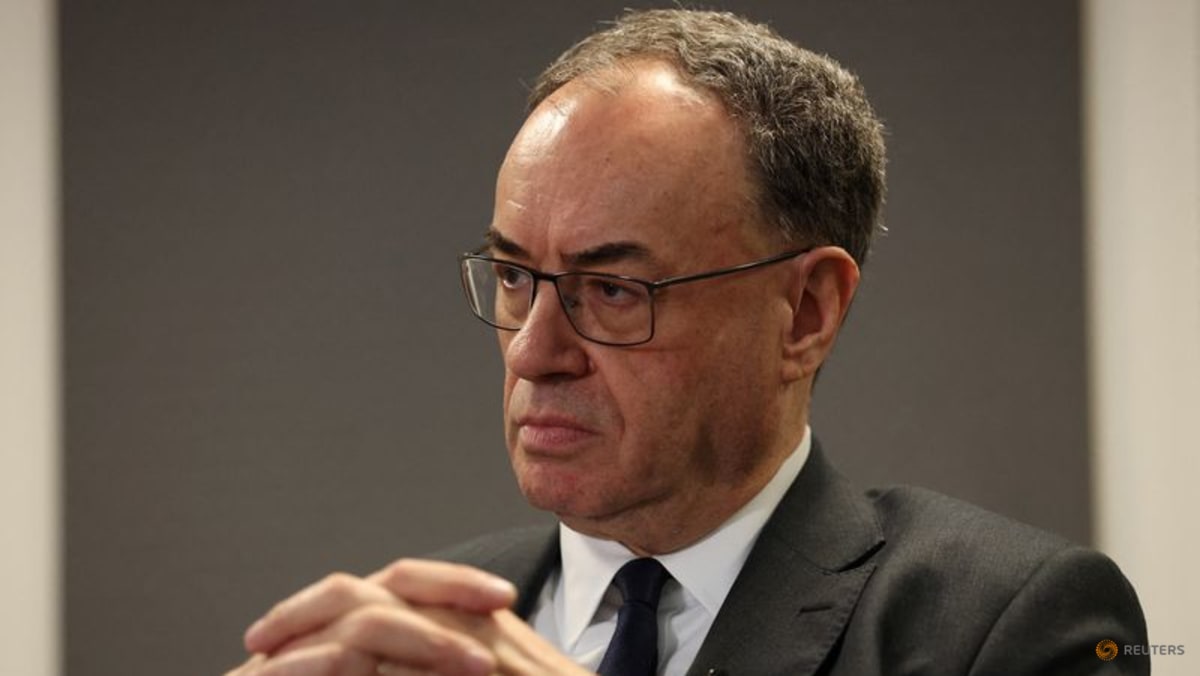
April 14 : Central banks and financial regulators must quickly understand the implications of a new artificial intelligence model that could pose major cybersecurity dangers, Bank of England Governor Andrew Bailey said on Tuesday. "It would be reasonable to think that the events in the Gulf are the most recent challenge to us in this world, until, I think it was last Friday, you wake up to find that Anthropic may have found a way to crack the whole cyber risk world open," Bailey said at an event at Columbia University in New York. Anthropic's Mythos product has drawn warnings from cyber experts about its potential to supercharge complex cyberattacks, which could challenge the banking industry and its existing technology systems. Regulators wanted to "work out what this actually means," Bailey said. "The issue is: to what extent is this new version of the product going to be able to, in a sense, identify vulnerabilities in other systems which can be exploited for cyberattack purposes." He said cyber risks had risen up the list of concerns of regulators most rapidly in recent years. "It's the one that never goes away. You have to keep mitigating it, but the threat actors will move on, so we have to deal with it," Bailey said. He dedicated most of Tuesday's event to discussing the issue of central banks' operational independence, which was "not robust enough" when it came to matters of financial stability. Bailey argued that monetary and financial stability policy - often depicted as separate issues or sometimes even at odds with each other - should be viewed together within an overarching objective of protecting the value of money. While monetary policy is defined by numerical inflation targets, financial stability is harder to grasp, leading to a distinction between the two, Bailey said. "This is important because independence in respect of financial stability is otherwise not as robust, and I would argue not robust enough," Bailey said in his speech. His remarks come as central banks on both sides of the Atlantic face increasing levels of political pressure, albeit to differing degrees. In the United States, U.S. President Donald Trump has called for lower interest rates and has repeatedly chastised Fed Chair Jerome Powell. In Britain, finance minister Rachel Reeves has pushed regulators including the BoE to give greater weight to economic growth when making decisions. Bailey said financial stability cuts across private interests in the financial system, as well as governments seeking to boost economic growth by loosening regulation to increase lending - particularly when memories of past crises fade. Much as monetary policy aims to protect the real value of money, Bailey said financial stability policy protects trust in money and that the two should be seen as complementary. "I see merit in creating a single overarching narrative with a strong focus on the value of money. It would remove descriptions of financial stability such as 'tangential' or 'in conflict'," Bailey said. (Additional reporting by Suban Abdulla; Editing by Andrea Ricci )
Anthropic quietly targets Microsoft's most popular app
A quiet shift in workplace software could have bigger implications than it first appears. Anthropic just made a massive move that goes directly at Microsoft's (MSFT) home turf. The AI bellwether just launched a beta version of Claude for Word, layering its robust model onto arguably the most popular piece of software in history, according to Business Insider. Word isn't just another app. Having personally used the product for decades, I know it has been the go-to for negotiating contracts, writing memos, and shaping deals. With Claude inside the software's workflow, Anthropic's goal is to effectively remove the friction, sitting exactly where the work is happening. As a result, Anthropic is becoming a critical intelligence layer within software, especially after it recently outperformed many major large language models. And that's a much more serious challenge to Microsoft than might be obvious. Anthropic takes aim at Microsoft's moat Anthropic's move into Word has everything to do with control. Office work has been synonymous with Microsoft's Word processor over the years, particularly for consultants, students, finance teams, and lawyers. Now with the add-in, the dynamic switched up in a big way. Users don't need to leave the platform, where Anthropic meets them at the exact point of work. So it then stops being an outside assistant and becomes more like a native document layer. Also, there's a unique sales pitch layered in the agreement. Essentially, if users can run the plug-in through Bedrock, Vertex AI, or any internal LLM gateway, they can sidestep the need to buy into Microsoft's AI stack. For lawyers in particular, the development could be a game-changer, enabling them to flag risks, preserve formatting, and survive tracked changes. Here are some of the prompts that can potentially be used. Setting up Claude for Word * Works with Microsoft Word on the web, Word for Windows with Microsoft 365, and Word for Mac on supported versions. * Individuals can install Claude for Word from the Microsoft Marketplace by selecting Get it now. * Following the installation, open Word, launch the add-in, and sign in with your Claude account. * Admins can deploy it through the Microsoft 365 Admin Center, enabling Office Store access, adding the app, and assigning it to users or teams. Claude's bigger workflow grab * Word is the newest entry in Claude's Microsoft foothold, currently in beta for Team and Enterprise users. * Before that, Claude spread its tentacles into Excel for spreadsheet work and PowerPoint for slide creation and editing. * It connects to Microsoft 365 and pulls context from SharePoint, OneDrive, Outlook, and Teams. * Anthropic went deeper into Microsoft's stack through Copilot Studio, the Researcher agent, and Agent Mode in Excel. * Outside Microsoft, Claude is embedded in Slack workflows. * It can also plug into Google Workspace (Gmail, Calendar, and Drive). * New enterprise plug-ins extend Claude into DocuSign, FactSet, and LSEG workflows, too. What Claude does better than the average chatbot Anthropic's Claude is a family of AI models, and from the start, its edge has been clear. Instead of being all flashy, it has always aimed to be a reliable coworker who actually understands the brief. It debuted on March 14, 2023, and since then has quickly risen in the ranks to become a major work platform, offering quick-response modes, deeper adaptive thinking for tougher problems, and Projects and Artifacts for drafting. In addition, its model Sonnet 4.6 now stretches to a whopping 1 million-token context window in beta, a massive flex that means Claude will offer far more organized and context-specific responses for some of the most challenging tasks. "I've only subscribed to it for a week or so now, but so far I like the tone way better," said Reddit commenter tulobanana, responding to a Claude versus ChatGPT debate in the r/ChatGPT subreddit. "It's night and day. Claude sounds a lot more natural and most importantly, doesn't do any of the 'let's look at this calmly' and 'you're not overreacting, you're not being dramatic' and 'it's nothing mystical' type of s**t. At least not yet, knock on wood." Here are some standout benchmark stats. * Coding is Claude's biggest selling point. Claude Opus 4.1 posted a head-turning 74.5% on SWE-bench Verified (its best published score on software-engineering benchmark). * Claude stood out in complicated "research and finish the task" work. Outside group Artificial Analysis reported that Claude Opus 4.6 scored 1606 Elo on these tasks, roughly 150 points higher than GPT-5.2 (xhigh). Put simply, Claude beats its rival seven out of 10 times in head-to-head tests. * Claude stands apart when workloads get huge. In a particular Anthropic test, Opus 4.6 scored 76% on a task that was essentially about how effective AI was finding the correct information that's buried inside 1 million tokens of text. Why Anthropic is suddenly everywhere Claude has had a noisy stretch of late. In the past few weeks, it has been at the heart of a Pentagon blow-up, Washington sounding the alarm over its latest model, and a growing tussle on who controls the next layer of enterprise AI.
Anthropic Mythos: Separating Signal from Hype - IT Security News
The technical storage or access is necessary for the legitimate purpose of storing preferences that are not requested by the subscriber or user. The technical storage or access that is used exclusively for statistical purposes. The technical storage or access that is used exclusively for anonymous statistical purposes. Without a subpoena, voluntary compliance on the part of your Internet Service Provider, or additional records from a third party, information stored or retrieved for this purpose alone cannot usually be used to identify you.

BoE's Bailey sees major cybersecurity risks in new Anthropic model
April 14 (Reuters) - Central banks and financial regulators must quickly understand the implications of a new artificial intelligence model that could pose major cybersecurity dangers, Bank of England Governor Andrew Bailey said on Tuesday. "It would be reasonable to think that the events in the Gulf are the most recent challenge to us in this world, until, I think it was last Friday, you wake up to find that Anthropic may have found a way to crack the whole cyber risk world open," Bailey said at an event at Columbia University in New York. Anthropic's Mythos product has drawn warnings from cyber experts about its potential to supercharge complex cyberattacks, which could challenge the banking industry and its existing technology systems. Regulators wanted to "work out what this actually means," Bailey said. "The issue is: to what extent is this new version of the product going to be able to, in a sense, identify vulnerabilities in other systems which can be exploited for cyberattack purposes." He said cyber risks had risen up the list of concerns of regulators most rapidly in recent years. "It's the one that never goes away. You have to keep mitigating it, but the threat actors will move on, so we have to deal with it," Bailey said. He dedicated most of Tuesday's event to discussing the issue of central banks' operational independence, which was "not robust enough" when it came to matters of financial stability. Bailey argued that monetary and financial stability policy - often depicted as separate issues or sometimes even at odds with each other - should be viewed together within an overarching objective of protecting the value of money. While monetary policy is defined by numerical inflation targets, financial stability is harder to grasp, leading to a distinction between the two, Bailey said. "This is important because independence in respect of financial stability is otherwise not as robust, and I would argue not robust enough," Bailey said in his speech. His remarks come as central banks on both sides of the Atlantic face increasing levels of political pressure, albeit to differing degrees. In the United States, U.S. President Donald Trump has called for lower interest rates and has repeatedly chastised Fed Chair Jerome Powell. In Britain, finance minister Rachel Reeves has pushed regulators including the BoE to give greater weight to economic growth when making decisions. Bailey said financial stability cuts across private interests in the financial system, as well as governments seeking to boost economic growth by loosening regulation to increase lending - particularly when memories of past crises fade. Much as monetary policy aims to protect the real value of money, Bailey said financial stability policy protects trust in money and that the two should be seen as complementary. "I see merit in creating a single overarching narrative with a strong focus on the value of money. It would remove descriptions of financial stability such as 'tangential' or 'in conflict'," Bailey said. (Additional reporting by Suban Abdulla; Editing by Andrea Ricci )

Anthropic co-founder confirms the company briefed the Trump administration on Mythos - IT Security News
The technical storage or access is necessary for the legitimate purpose of storing preferences that are not requested by the subscriber or user. The technical storage or access that is used exclusively for statistical purposes. The technical storage or access that is used exclusively for anonymous statistical purposes. Without a subpoena, voluntary compliance on the part of your Internet Service Provider, or additional records from a third party, information stored or retrieved for this purpose alone cannot usually be used to identify you.
BoEs Bailey sees major cybersecurity risks in new Anthropic model | Company Business News
April 14 (Reuters) - Central banks and financial regulators must quickly understand the implications of a new artificial intelligence model that could pose major cybersecurity dangers, Bank of England Governor Andrew Bailey said on Tuesday. "It would be reasonable to think that the events in the Gulf are the most recent challenge to us in this world, until, I think it was last Friday, you wake up to find that Anthropic may have found a way to crack the whole cyber risk world open," Bailey said at an event at Columbia University in New York. Anthropic's Mythos product has drawn warnings from cyber experts about its potential to supercharge complex cyberattacks, which could challenge the banking industry and its existing technology systems. Regulators wanted to "work out what this actually means," Bailey said. "The issue is: to what extent is this new version of the product going to be able to, in a sense, identify vulnerabilities in other systems which can be exploited for cyberattack purposes." He said cyber risks had risen up the list of concerns of regulators most rapidly in recent years. "It's the one that never goes away. You have to keep mitigating it, but the threat actors will move on, so we have to deal with it," Bailey said. He dedicated most of Tuesday's event to discussing the issue of central banks' operational independence, which was "not robust enough" when it came to matters of financial stability. Bailey argued that monetary and financial stability policy - often depicted as separate issues or sometimes even at odds with each other - should be viewed together within an overarching objective of protecting the value of money. While monetary policy is defined by numerical inflation targets, financial stability is harder to grasp, leading to a distinction between the two, Bailey said. "This is important because independence in respect of financial stability is otherwise not as robust, and I would argue not robust enough," Bailey said in his speech. His remarks come as central banks on both sides of the Atlantic face increasing levels of political pressure, albeit to differing degrees. In the United States, U.S. President Donald Trump has called for lower interest rates and has repeatedly chastised Fed Chair Jerome Powell. In Britain, finance minister Rachel Reeves has pushed regulators including the BoE to give greater weight to economic growth when making decisions. Bailey said financial stability cuts across private interests in the financial system, as well as governments seeking to boost economic growth by loosening regulation to increase lending - particularly when memories of past crises fade. Much as monetary policy aims to protect the real value of money, Bailey said financial stability policy protects trust in money and that the two should be seen as complementary. "I see merit in creating a single overarching narrative with a strong focus on the value of money. It would remove descriptions of financial stability such as 'tangential' or 'in conflict'," Bailey said. (Additional reporting by Suban Abdulla; Editing by Andrea Ricci )

Horrifying video shows scenes of chaos after car smashes into busy JD gym
Video footage has revealed scenes of chaos after a car smashed into a busy JD gym in Bury on Tuesday (April 14). Emergency services including paramedics and fire crews were called to the scene at the Angouleme retail park. Chaotic videos from inside and shared with the Manchester Evening News showed dust and bricks falling into the busy gym as customers were using the facilities. The bonnet of the car was wedged in the wall as customers quickly fled the area. People could be heard shouting "move, move!" moments after the collision, with an alarm also blaring in the background. The gym was forced to close following the major smash. Follow our blog LIVE here. One man, in his 60s, was using the facilities when the car struck and has been injured. He was rushed to hospital where his condition is not described as life-threatening. A large cordon was put in place, as the gym temporarily closed due to the damage. A scene could be seen surrounding the car park with the vehicle wedged into the external wall. The driver of the car, a woman in her 40s, was rescued from the car by fire crews and also injured. She remains in hospital and has also been arrested on suspicion of causing injury by dangerous driving, police have confirmed. A statement issued by Greater Manchester Police read: "Officers responded to an incident at 4.45pm today (14/04/2026) at JD Gym on George Street, Bury, with the assistance of NWAS and the Greater Manchester Fire Service. It was reported that a car had driven through the wall of JD Gym, resulting in structural damage of the building. "In the incident a man in his 60's has been struck by the car whilst inside the gym and has sustained non-life changing injuries. Woman in her 40s has been arrested on suspicion of causing injury by dangerous driving, she remains in hospital at this time. If you have any information, please contact officers on 101 or LiveChat quoting log 2424 of 14/04/2026." Click here to get the biggest stories straight to your inbox in our Daily Newsletter A scene remained in place for a number of hours with Rochdale Road cordoned off along with the retail park car park. The vehicle involved remained wedged into the wall and was being assesed by building surveyors. A spokesperson for Greater Manchester Fire and Rescue Service (GMFRS) said: "At around 5pm on Tuesday 14 April, fire crews were called to reports of a road traffic collision on George Street, Bury. "Two fire engines from Bury and Whitefield stations, as well as the technical rescue unit from Ashton, were quickly mobilised to the incident, which involved a car colliding with a commercial building. "Firefighters extricated a woman from the car, while another man inside the building was injured in the collision. Both were treated at the scene by paramedics and then taken to hospital by North West Ambulance Service. "Fire crews remain in attendance, working with Greater Manchester Police and the local council's building inspection team to make the area safe."

Kraken's Success Attracts Institutional Investment, Cyber Threats
Deutsche Boerse is deepening its push into digital assets with a $200 million investment in Kraken, expanding its partnership with the crypto exchange and underscoring Wall Street-style interest in crypto infrastructure. The investment represents a strengthening of the partnership the two firms established late last year. The objective was to collaborate on areas like regulated crypto ventures and tokenized equities, as well as to improve cross-border liquidity for institutional clients. This partnership exemplifies one of the key trends in the payments industry in recent years: traditional financial companies investing in digital assets technologies. That trend has shown no signs of slowing, as evidenced by Charles Schwab's recent foray into crypto trading and Mastercard's acquisition of stablecoin firm BVNK. Growing institutional confidence in the crypto industry is also one of the main reasons Kraken secured a landmark "skinny" master account with the U.S. Federal Reserve. "These stories show Kraken is moving closer to the center of institutional market structure," said Joel Hugentobler, Cryptocurrency Analyst at Javelin Strategy & Research. "Deutsche Boerse's investment says major financial infrastructure players view crypto exchanges as strategic distribution and liquidity partners -- not just a side bet." "Crypto and Kraken is entering a new spotlight here," he said. "They must prove they can plug into traditional and sovereign infrastructure, such as Kraken's tier 3 skinny account, while also proving they can withstand risks that come with scale." An Unwelcome Trend Alongside this surge in institutional interest, however, has come another, far more unwelcome trend -- a spike in cyberattacks. Kraken recently said it is being extorted by a group of bad actors who gained access to proprietary data by tricking two of the company's staff members. The firm said it received videos purportedly showing Kraken's internal systems with customer information visible. The crypto exchange confirmed two instances of inappropriate access but noted that its core systems were never breached and customer funds were never at risk. Roughly 2,000 accounts may have been viewed. The Human Layer The decentralized and often anonymous nature of digital assets has made exchanges and users frequent targets for cybercriminals, include everything from crypto investment scams to credential theft. The incident at Kraken also reflects another concerning trend where bad actors target an organization's employees or contractors and attempt to bribe or manipulate them into sharing proprietary data. Coinbase faced a similar attack last year that resulted in stolen customer data and roughly $400 million in damages. The incident occurred after a criminal ring bribed the crypto exchange's overseas contractors into releasing customer information. "The extortion incident is a reminder that as crypto moves up-market, the real test is the human layer," Hugentobler said. "The custody, trading, and tech has proven itself to work, so the question becomes, 'Are there systems and procedures in place to limit damage caused by any human, whether it is internal or external, so they can gain institutional trust?"

Design tool stocks fall on Anthropic AI product rumor By Investing.com
Risk Disclosure: Trading in financial instruments and/or cryptocurrencies involves high risks including the risk of losing some, or all, of your investment amount, and may not be suitable for all investors. Prices of cryptocurrencies are extremely volatile and may be affected by external factors such as financial, regulatory or political events. Trading on margin increases the financial risks. Before deciding to trade in financial instrument or cryptocurrencies you should be fully informed of the risks and costs associated with trading the financial markets, carefully consider your investment objectives, level of experience, and risk appetite, and seek professional advice where needed. Fusion Media would like to remind you that the data contained in this website is not necessarily real-time nor accurate. The data and prices on the website are not necessarily provided by any market or exchange, but may be provided by market makers, and so prices may not be accurate and may differ from the actual price at any given market, meaning prices are indicative and not appropriate for trading purposes. Fusion Media and any provider of the data contained in this website will not accept liability for any loss or damage as a result of your trading, or your reliance on the information contained within this website. It is prohibited to use, store, reproduce, display, modify, transmit or distribute the data contained in this website without the explicit prior written permission of Fusion Media and/or the data provider. All intellectual property rights are reserved by the providers and/or the exchange providing the data contained in this website. Fusion Media may be compensated by the advertisers that appear on the website, based on your interaction with the advertisements or advertisers.

Report: US Treasury wants to get a look at Anthropic's Mythos model
But since Anthropic's unusual announcement of its next model Mythos, other parts of the US government want to get their hands on it. Bloomberg reports that the US Treasury is interested in getting access to Mythos for its own security testing. Last week Treasury Secretary Scott Bessent summoned top Wall Street CEOs to Washington to discuss the cybersecurity implications of the new model. Mythos has not yet been released to the public, as Anthropic has deemed its potential offensive cybersecurity capabilities to be too dangerous for wide release, and has opted to only share the powerful new model with a group of leading tech companies. Anthropic wants these early-access partners to test out the model, hoping to secure any major vulnerabilities before a public release. OpenAI also shared a forthcoming AI-powered cybersecurity tool with a select group of partners to shore up defenses in light of advances in detecting vulnerabilities. European regulators were apparently left out of the loop from the Mythos announcement, and are also eager to test the new model.
SpaceX, Blue Origin moon landers in focus after NASA's Artemis success
COLORADO SPRINGS, Colorado, April 14 (Reuters) - After the safe return of four astronauts from a historic flyby of the moon last week, NASA is shifting focus to its next challenge: putting competing lunar landers from Elon Musk's SpaceX and Jeff Bezos's Blue Origin through a series of rigorous tests ahead of future crewed landings. NASA's nearly 10-day Artemis II mission marked the first crewed flight of the agency's multibillion-dollar return-to-the-moon program and sent astronauts farther from Earth than ever before. The mission was designed as a dress rehearsal for later flights, validating the systems needed to carry crews into deep space. But the milestone has also sharpened attention on what many officials see as one of the program's biggest remaining risks. The commercial lunar landers must demonstrate that they can perform a complex final descent to the moon and bring astronauts safely home, a feat NASA has not attempted since 1972. NASA aims to put astronauts back on the moon by 2028 as it faces growing competition from China, which plans a crewed lunar landing by 2030. To hedge against delays, the agency selected both SpaceX and Blue Origin to develop competing landers, hoping competition and private investment would accelerate progress. "They both look at this as a competition, and that's a great thing," NASA Administrator Jared Isaacman said in an interview on Monday. Isaacman spoke days after welcoming back the Artemis II astronauts, who splashed down on Friday following their mission around the moon. The flight marked the first crewed launch of NASA's Space Launch System rocket, built by Boeing and Northrop Grumman, and the Orion capsule, built by Lockheed Martin. While SLS and Orion are traditional, government-owned vehicles designed to ferry astronauts from Earth to lunar orbit, NASA has turned to commercial companies for the final leg of the journey: landing on the moon's surface. MUSK VS BEZOS IN BILLIONAIRES' MOON RACE SpaceX is developing a Human Landing System based on its massive Starship rocket, a stainless-steel vehicle far larger than any moon lander built before. Blue Origin is building its own Blue Moon lander, relying on a more traditional design philosophy. Blue Origin aims to land an uncrewed version of Blue Moon on the moon this summer, according to two people familiar with the plan, marking the company's first attempt at a soft lunar landing. The test, known as Mark 1, would be a critical milestone after years of development. "I will just say that this Mark 1 landing is going to be very important," Isaacman said. SpaceX, meanwhile, is preparing to launch a new iteration of Starship, known as Version 3, as soon as May, following a months-long hiatus. The rocket, first unveiled by Musk in 2016, has suffered repeated delays and test failures as SpaceX pushes the limits of launch, landing and reusability. After 11 test flights since 2023, some ending in explosions, SpaceX says the new version incorporates dozens of upgrades requested by NASA. "That's the version that HLS is going to be based on," said Kent Chojnacki, NASA's deputy manager for the Human Landing System program. "That's going to become the workhorse version." Before Starship can land astronauts on the moon, SpaceX must first put the vehicle into orbit and demonstrate controlled reentry of its upper stage, a step it has not yet achieved. The company must then show that two Starships can dock in space and transfer propellant, a capability NASA considers essential for lunar missions. NASA has pressed both companies to accelerate their work, though officials acknowledge the challenges are formidable. MOON LANDER DESIGNS CHANGING Unlike Apollo, which landed six crews on the moon within a few years, Artemis is designed to be a long-term program, with landers that can be reused and adapted for sustained exploration. That ambition has added complexity and increased testing demands. Asked whether SpaceX had proposed an accelerated plan that avoids Starship's demanding in-space refueling sequence, Isaacman said both companies "have taken an approach that brings down the technical risks significantly." NASA officials say they expect the designs to further evolve. "I don't have any faith that the design today is going to be the design that lands on the moon," Chojnacki said. Blue Origin has reworked parts of its original architecture after NASA pushed for faster progress. People familiar with the company's plans said it has simplified early missions, shelving more complex refueling concepts for its initial moon landings in favor of designs that reduce near-term risk. Despite the uncertainty, NASA insists the dual-provider strategy gives it the best chance of success. "I don't think it's lost on either one of them the importance of getting to the moon and doing so before our big rival," Isaacman said, an apparent reference to China. (Reporting by Joey Roulette; Editing by Joe Brock and Bill Berkrot)

Anthropic co-founder confirms the company briefed the Trump administration on Mythos | TechCrunch
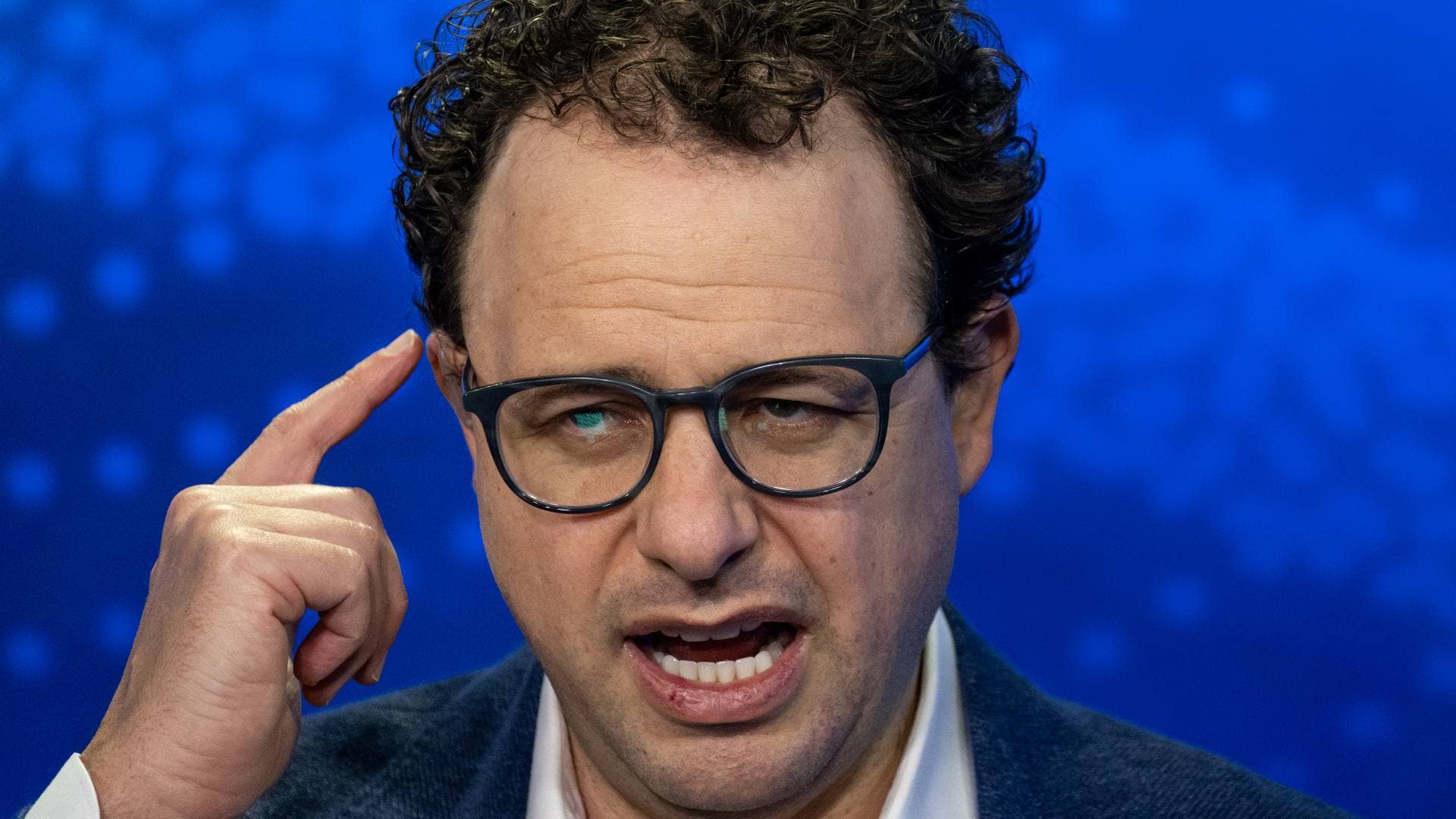
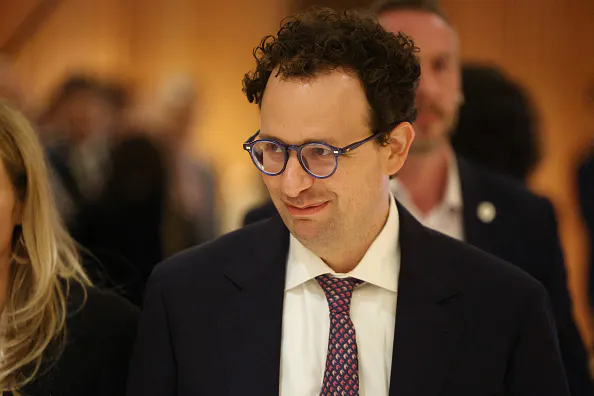
Jack Clark, one of Anthropic's co-founders who also serves as Head of Public Benefit for Anthropic PBC, confirmed that the AI company had briefed the Trump administration about its new Mythos model. The model, announced last week, is so dangerous that it's not being released to the public, largely due to its alleged powerful cybersecurity capabilities. In an interview at the Semafor World Economy summit this week, Clark explained why the company was still engaged with the U.S. government while simultaneously suing them. This March, Anthropic filed a lawsuit against Trump's Department of Defense (DOD) after the agency labeled the company a supply chain risk. Anthropic had clashed with the Pentagon over whether the military should have unrestricted access to Anthropic's AI systems for use cases that included mass surveillance of Americans and fully autonomous weapons. (OpenAI ended up winning the deal instead.) At the conference, Clark downplayed the administration's labeling of its business as supply chain risk, saying it was merely a "narrow contracting dispute" and that Anthropic didn't want it to get in the way of the fact that the company cares about national security. "Our position is the government has to know about this stuff, and we have to find new ways for the government to partner with a private sector that is making things that are truly revolutionizing the economy, but are going to have aspects to them which hit National Security, equities, and other ones," said Clark. "So absolutely, we talked to them about Mythos, and we'll talk to them about the next models as well." His confirmation comes after reports last week that Trump officials were encouraging banks to test Mythos, including JPMorgan Chase, Goldman Sachs, Citigroup, Bank of America, and Morgan Stanley. Clark also addressed other aspects of AI's impact on society during the interview, including things like unemployment and higher education. Previously, Anthropic CEO Dario Amodei has warned that AI's advances could bring unemployment to Depression-era-like numbers, but Clark slightly disagrees. He explained in the interview that Amodei believes that AI will get much more powerful than people expect very quickly, so he's using that as the basis of his estimations. Clark, who leads a team of economists at Anthropic, said that the company is so far only seeing "some potential weakness in early graduate employment" across select industries. He noted that Anthropic is ready in case there are major employment shifts, however. Pushed to say what majors college students today should be pursuing or avoiding, as a result of AI's impacts, Clark would only broadly suggest that the most important majors are those that "involve synthesis across a whole variety of subjects and analytical thinking about that." "That's because what AI allows us to do is it allows you to have access to sort of an arbitrary amount of subject matter experts in different domains," Clark said. "But the really important thing is knowing the right questions to ask and having intuitions about what would be interesting if you collided different insights from many different disciplines."

Anthropic Co-founder Confirms The Company Briefed The Trump Adminstration On Mythos
Anthropic co-founder confirms the company briefed the Trump adminstration on Mythos - BERITAJA is one of the most discussed topics today. In this article, you will find a clear explanation, key facts, and the latest updates related to this topic, presented in a concise and easy-to-understand way. Read more news on Beritaja. Jack Clark, 1 of Anthropic's co-founders who besides serves arsenic Head of Public Benefit for Anthropic PBC, confirmed that the AI institution had briefed the Trump management about its caller Mythos model. The model, announced past week, is truthful vulnerable that it's not being released to the public, mostly owed to its alleged powerful cybersecurity capabilities. In an question and reply astatine Semafor's World Economy summit this week, Clark explained why the institution was still engaged pinch the U.S. authorities while simultaneously suing them. This March, Anthropic filed a lawsuit against Trump's Department of Defense (DOD) aft the agency branded the institution a proviso concatenation risk. Anthropic had fought pinch the Pentagon complete whether the subject should person unrestricted entree to Anthropic's AI systems for usage cases that included wide surveillance of Americans and afloat autonomous weapons. (OpenAI ended up winning the deal instead.) At the conference, Clark downplayed the administration's labeling of its business arsenic proviso concatenation risk, saying it was simply a "narrow contracting dispute" and that Anthropic didn't want it to get successful the measurement of the truth that the institution cares about nationalist security. "Our position is the authorities has to cognize about this stuff, and we person to find caller ways for the authorities to partner pinch a backstage assemblage that is making things that are genuinely revolutionizing the economy, but are going to person aspects to them which deed National Security, equities, and different ones," said Clark. "So absolutely, we talked to them about Mythos, and we'll talk to them about the adjacent models arsenic well." His confirmation comes aft reports past week that Trump officials were encouraging banks to trial Mythos, including JPMorgan Chase, Goldman Sachs, Citigroup, Bank of America, and Morgan Stanley. Clark besides addressed different aspects of AI's effect connected nine during the interview, including things for illustration unemployment and higher education. Previously, Anthropic CEO Dario Amodei has warned that AI's advances could bring unemployment to Depression-era-like numbers, but Clark somewhat disagrees. He explained successful the question and reply that Amodei believes that AI will get overmuch much powerful than group expect very quickly, truthful he's utilizing that arsenic the ground of his estimations. Clark, who leads a squad of economists astatine Anthropic, said that the institution is truthful acold only seeing "some imaginable weakness successful early postgraduate employment" crossed prime industries. He noted that Anthropic is fresh successful lawsuit location are awesome employment shifts, however. Pushed to opportunity what fields assemblage students coming should beryllium pursuing aliases avoiding, arsenic a consequence of AI's impacts, Clark would only broadly propose that the about important fields are those that "involve synthesis crossed a full assortment of subjects and analytical reasoning about that." "That's because what AI allows america to do is it allows you to person entree to benignant of an arbitrary magnitude of taxable matter experts successful different domains," Clark said. "But the really important point is knowing the correct questions to inquire and having intuitions about what would beryllium absorbing if you collided different insights from galore different disciplines."
Anthropic Co-founder Confirms The Company Briefed The Trump Administration On Mythos
Anthropic co-founder confirms the company briefed the Trump administration on Mythos - BERITAJA is one of the most discussed topics today. In this article, you will find a clear explanation, key facts, and the latest updates related to this topic, presented in a concise and easy-to-understand way. Read more news on Beritaja. Jack Clark, 1 of Anthropic's co-founders who besides serves arsenic Head of Public Benefit for Anthropic PBC, confirmed that the AI institution had briefed the Trump management about its caller Mythos model. The model, announced past week, is truthful vulnerable that it's not being released to the public, mostly owed to its alleged powerful cybersecurity capabilities. In an question and reply astatine Semafor's World Economy summit this week, Clark explained why the institution was still engaged pinch the U.S. authorities while simultaneously suing them. This March, Anthropic filed a lawsuit against Trump's Department of Defense (DOD) aft the agency branded the institution a proviso concatenation risk. Anthropic had fought pinch the Pentagon complete whether the subject should person unrestricted entree to Anthropic's AI systems for usage cases that included wide surveillance of Americans and afloat autonomous weapons. (OpenAI ended up winning the deal instead.) At the conference, Clark downplayed the administration's labeling of its business arsenic proviso concatenation risk, saying it was simply a "narrow contracting dispute" and that Anthropic didn't want it to get successful the measurement of the truth that the institution cares about nationalist security. "Our position is the authorities has to cognize about this stuff, and we person to find caller ways for the authorities to partner pinch a backstage assemblage that is making things that are genuinely revolutionizing the economy, but are going to person aspects to them which deed National Security, equities, and different ones," said Clark. "So absolutely, we talked to them about Mythos, and we'll talk to them about the adjacent models arsenic well." His confirmation comes aft reports past week that Trump officials were encouraging banks to trial Mythos, including JPMorgan Chase, Goldman Sachs, Citigroup, Bank of America, and Morgan Stanley. Clark besides addressed different aspects of AI's effect connected nine during the interview, including things for illustration unemployment and higher education. Previously, Anthropic CEO Dario Amodei has warned that AI's advances could bring unemployment to Depression-era-like numbers, but Clark somewhat disagrees. He explained successful the question and reply that Amodei believes that AI will get overmuch much powerful than group expect very quickly, truthful he's utilizing that arsenic the ground of his estimations. Clark, who leads a squad of economists astatine Anthropic, said that the institution is truthful acold only seeing "some imaginable weakness successful early postgraduate employment" crossed prime industries. He noted that Anthropic is fresh successful lawsuit location are awesome employment shifts, however. Pushed to opportunity what fields assemblage students coming should beryllium pursuing aliases avoiding, arsenic a consequence of AI's impacts, Clark would only broadly propose that the about important fields are those that "involve synthesis crossed a full assortment of subjects and analytical reasoning about that." "That's because what AI allows america to do is it allows you to person entree to benignant of an arbitrary magnitude of taxable matter experts successful different domains," Clark said. "But the really important point is knowing the correct questions to inquire and having intuitions about what would beryllium absorbing if you collided different insights from galore different disciplines."
'God of chaos' asteroid will be visible with the naked eye, NASA says
A rare asteroid will soon be visible to the naked eye in a rare celestial event, according to astronomers. Asteroid 99942 Apophis - named after the Egyptian deity of chaos, darkness and fire - is expected to safely pass close to Earth on April 13, 2029, according to NASA. The asteroid will pass within roughly 20,000 miles of Earth - nearly 12 times closer than the moon's average distance from Earth, and closer than many satellites in geosynchronous orbit - making it one one of the closest approaches ever recorded for an object if its size and a "very rare event," according to NASA. The approach will be visible to observers on the ground in the Eastern Hemisphere, weather permitting, according to NASA. It will be close enough that sky-watchers won't need a telescope or binoculars to see it, astronomers say. MORE: Asteroid just flew closer to Earth than many satellites, space agencies say When Apophis was first discovered in 2004, it was labeled a potentially hazardous asteroid because of the possibility that it could impact Earth in 2029, 2036 or 2068, according to NASA. After closely tracking the asteroid and its orbit using optical telescopes and ground-based radar, astronomers are now confident that there is no risk of Apophis impacting Earth for at least 100 years. The Earth's gravitational pull could change the asteroid's orbit around the sun as it passes in 2029, making the orbit slightly larger or the orbital period slightly longer, but the risk of impact with Earth will remain the same, NASA says. Its close passage will also afford astronomers around the world the opportunity to learn more about the asteroid. MORE: Astronomers spot 'interstellar object' speeding through solar system Apophis is the Greek name for the Egyptian god known as Apep. The name was proposed by the astronomers who discovered the asteroid: Roy Tucker, David Tholen and Fabrizio Bernardi of the Kitt Peak National Observatory near Tucson, Arizona. The asteroid is a relic of the early solar system from about 4.6 billion years ago, made of leftover raw material that was never part of a planet or moon, according to NASA. Though its exact size and shape is unknown, it has a mean diameter of about 1,115 feet and a long axis of at least 1,480 feet. MORE: 3I/ATLAS, comet hurtling toward solar system, much bigger than previously thought, astronomers say Apophis' surface is weathered due to eons of exposure to space weather, including solar wind and cosmic rays, according to the Massachusetts Institute of Technology. Observatories around the world and in space will observe the asteroid's historic approach to Earth in order to better understand its physical properties. NASA has redirected a spacecraft to rendezvous with Apophis shortly after its close approach in 2029, while the European Space Agency is sending a spacecraft to study it. When the April 2029 flyby occurs, Apophis will become a member of the "Apollo" group, the family of asteroids that cross Earth's orbit but that themselves have orbits around the sun that are wider than the Earth's, according to the ESA.

XAI Octagon Floating Rate & Alternative Income Tr (XFLT) Discusses Trust Developments, CLO and Loan Market Conditions, and Reverse Stock Split Transcript
XAI Octagon Floating Rate & Alternative Income Tr (XFLT) Discusses Trust Developments, CLO and Loan Market Conditions, and Reverse Stock Split April 14, 2026 11:00 AM EDT Company Participants Kevin Davis Kimberly Flynn - Partner & President Lauren Law Presentation Kevin Davis Good morning. Welcome to the XFLT webinar update. Thank you so much for joining us today. We thought it would be helpful to host a call outside of our normally scheduled quarterly call cadence in order to provide you with some updates. We have a number of topics to address. But before we do, I do have a few housekeeping items we need to cover. Let me first begin with some introductions. I'm Kevin Davis with XA Investments. I head up Sales and Distribution for the firm. I'm happy to be joined today by Lauren Law from Octagon Credit, who is the Senior Portfolio Manager. She joined the firm in 2004 and oversees Octagon structured credit investment strategies. She'll be covering the current state of spreads within CLOs and the broader market -- the broader loan market as well. And she'll also touch on the impact that we've seen from the software disruption. We're also joined by my colleague, Kim Flynn, who's the President of XA Investments. Kim will be walking us through new developments in the space, the recent reverse stock split announcement and the historical premium discount that we've seen over time with the fund. Before we get into the presentation, we do have a few important disclosures that we want to address. We will be talking about performance throughout the presentation. Certainly, past performance does not guarantee future results and current performance may be higher or lower than the performance that quoted. We will also be discussing market outlook, and the materials do contain forward-looking statements. Investors should not place undue reliance on

Anthropic co-founder confirms the company briefed the Trump adminstration on Mythos | TechCrunch
Jack Clark, one of Anthropic's co-founders who also serves as Head of Public Benefit for Anthropic PBC, confirmed that the AI company had briefed the Trump administration about its new Mythos model. The model, announced last week, is so dangerous that it's not being released to the public, largely due to its alleged powerful cybersecurity capabilities. In an interview at Semafor's World Economy summit this week, Clark explained why the company was still engaged with the U.S. government while simultaneously suing them. This March, Anthropic filed a lawsuit against Trump's Department of Defense (DOD) after the agency labeled the company a supply chain risk. Anthropic had clashed with the Pentagon over whether the military should have unrestricted access to Anthropic's AI systems for use cases that included mass surveillance of Americans and fully autonomous weapons. (OpenAI ended up winning the deal instead.) At the conference, Clark downplayed the administration's labeling of its business as supply chain risk, saying it was merely a "narrow contracting dispute" and that Anthropic didn't want it to get in the way of the fact that the company cares about national security. "Our position is the government has to know about this stuff, and we have to find new ways for the government to partner with a private sector that is making things that are truly revolutionizing the economy, but are going to have aspects to them which hit National Security, equities, and other ones," said Clark. "So absolutely, we talked to them about Mythos, and we'll talk to them about the next models as well." His confirmation comes after reports last week that Trump officials were encouraging banks to test Mythos, including JPMorgan Chase, Goldman Sachs, Citigroup, Bank of America, and Morgan Stanley. Clark also addressed other aspects of AI's impact on society during the interview, including things like unemployment and higher education. Previously, Anthropic CEO Dario Amodei has warned that AI's advances could bring unemployment to Depression-era-like numbers, but Clark slightly disagrees. He explained in the interview that Amodei believes that AI will get much more powerful than people expect very quickly, so he's using that as the basis of his estimations. Clark, who leads a team of economists at Anthropic, said that the company is so far only seeing "some potential weakness in early graduate employment" across select industries. He noted that Anthropic is ready in case there are major employment shifts, however. Pushed to say what majors college students today should be pursuing or avoiding, as a result of AI's impacts, Clark would only broadly suggest that the most important majors are those that "involve synthesis across a whole variety of subjects and analytical thinking about that." "That's because what AI allows us to do is it allows you to have access to sort of an arbitrary amount of subject matter experts in different domains," Clark said. "But the really important thing is knowing the right questions to ask and having intuitions about what would be interesting if you collided different insights from many different disciplines."
Amazon Rises 5%, Globalstar Jumps 10% as $11.57 Billion Acquisition Ignites a Satellite War With SpaceX
Amazon (NASDAQ:AMZN | AMZN Price Prediction) stock is up 5% today, rising from $239.89 to $252, after the company announced a blockbuster $11.57 billion acquisition of Globalstar (NASDAQ:GSAT). The deal is designed to turbocharge Amazon's Project Kuiper satellite broadband initiative and put it in direct competition with SpaceX's Starlink. So, let's break down what's moving these stocks and why it matters. Globalstar stock is surging 10% on the news, climbing from $72.89 to $80. That's on top of a 273% gain over the past year, making today's pop feel less like a surprise and more like a confirmation of what the market has been pricing in for months. The acquisition validates Globalstar's spectrum and satellite assets at a premium investors had long suspected was coming. Amazon's Project Kuiper aims to deliver high-speed internet to remote areas globally, competing head-to-head with SpaceX's Starlink constellation. CEO Andy Jassy has called low earth orbit satellites one of the "seminal opportunities" alongside AI, chips, and robotics. Acquiring Globalstar hands Amazon a functioning satellite network, licensed spectrum, and critical infrastructure that would take years to build from scratch. Globalstar's globally harmonized Band 53/n53 spectrum is widely considered the crown jewel here. That spectrum is uniquely valuable because it's licensed across markets worldwide, something that's nearly impossible to replicate. It's the kind of asset that makes a deal look cheap even at $11.57 billion. The timing is notable. Amazon had already signaled aggressive infrastructure ambitions, with $200 billion in capex planned for 2026, primarily AI-related. Folding Globalstar's assets into that spending plan accelerates the Kuiper roadmap considerably. For more on Amazon's earlier moves tying Globalstar and AWS AI revenue together, this April 9 analysis laid out the strategic groundwork well. Globalstar isn't just a satellite company anymore. Its XCOM RAN private 5G platform is in early commercialization, with Boingo completing a proof-of-concept trial for private 5G deployments. That technology adds an industrial connectivity layer that fits neatly into Amazon's broader ambitions around AI-led logistics and warehouse automation. There's a notable complexity in the deal worth flagging. Apple (NASDAQ:AAPL) holds a 20% stake in Globalstar and has allocated 85% of its network capacity, powering the emergency SOS feature on iPhones. How Amazon navigates that existing relationship with a major competitor will be one of the first questions analysts ask. Granted, the capacity arrangement could continue under new ownership, but it introduces a layer of deal complexity that regulators and investors will watch closely. On the financial side, Globalstar posted $71.96 million in revenue for Q1 2026, up 18% year over year, with Wholesale Capacity Services rising 28% to $46.29 million. Full-year 2026 guidance calls for revenue of $280 to $305 million with an adjusted EBITDA margin of approximately 50%. Those are solid fundamentals for a company being absorbed into a $2.7 trillion enterprise. The competitive stakes become clear when you look at who else wanted these assets. SpaceX had previously explored its own acquisition of Globalstar in November 2025, which means Amazon effectively outbid Tesla (NASDAQ:TSLA) CEO Elon Musk's space company for these assets. That context reframes this deal as less of a strategic choice and more of a defensive necessity. Amazon couldn't afford to let Starlink absorb Globalstar's spectrum. Amazon's Q4 results already showed momentum heading into this deal. AWS revenue hit $35.58 billion in Q4, up 24% year over year, the fastest growth in 13 quarters. Advertising services added another $21.32 billion, up 23%. The cash generation engine is running hot, and that gives Amazon the financial firepower to absorb a deal of this scale without breaking stride. Watch for whether the Apple capacity arrangement becomes a sticking point in regulatory review, and whether SpaceX responds with a countermove in the spectrum or satellite M&A space. The prediction market for AMZN stock closing up today sits at 99.1% probability, so the market has already made its call on today's session. No matter how you slice it, this deal reshapes the satellite internet landscape. Amazon stock was up 4% year-to-date heading into today, and this acquisition gives the bull case a concrete infrastructure catalyst to point to through the rest of 2026.
SpaceX, Blue Origin moon landers in focus after NASA's Artemis success - RocketNews
By Joey RouletteCOLORADO SPRINGS, Colorado, April 14 (Reuters) - After the safe return of four astronauts from a historic flyby of the moon last week, NASA is shifting focus to its next challenge: putting competing lunar landers from Elon Musk's SpaceX and Jeff Bezos's Blue Origin through a series of rigorous tests ahead of future crewed landings.NASA's nearly 10-day Artemis II mission marked the first crewed flight of the agency's multibillion-dollar return-to-the-moon program and sent astronauts farther from Earth than ever before. The mission was designed as a dress rehearsal for later flights, validating the systems needed to carry crews into deep space.AdvertisementAdvertisementBut the milestone has also sharpened attention on what many officials see as one of the program's biggest remaining risks. The commercial lunar landers must demonstrate that they can perform a complex final descent to the moon and bring astronauts safely home, a feat NASA has not attempted since 1972.NASA aims to put astronauts back on the moon by 2028 as it faces growing competition from China, which plans a crewed lunar landing by 2030. To hedge against delays, the agency selected both SpaceX and Blue Origin to develop competing landers, hoping competition and private investment would accelerate progress."They both look at this as a competition, and that's a great thing," NASA Administrator Jared Isaacman said in an interview on Monday.Isaacman spoke days after welcoming back the Artemis II astronauts, who splashed down on Friday following their mission around the moon. The flight marked the first crewed launch of NASA's Space Launch System rocket, built by Boeing and Northrop Grumman, and the Orion capsule, built by Lockheed Martin.AdvertisementAdvertisementWhile SLS and Orion are tr ...
Experts throw cold water on Anthropic's new AI model
* Key insight: Anthropic's new Claude Mythos Preview model drastically collapses the timeline for finding cybersecurity vulnerabilities from months to mere seconds. * What's at stake: If third-party AI vendors are compromised, they could expose a bank's nonpublic data and become a gateway for broader network attacks. * Forward look: Federal agencies are urging financial institutions to strategically embed AI system assessments into their existing risk evaluation and monitoring frameworks. Overview bullets generated by AI with editorial review A week after artificial intelligence company Anthropic claimed its new model was too dangerous for the general public, the initial shock is wearing off for U.S. financial institutions. The arrival of the Claude Mythos Preview model does not mean the sky is falling on the financial system, but it is an escalation in the cyber arms race between banks and threat actors. For bank executives, the development underscores an urgent need to update data governance, join defensive security consortiums and prepare for a world where cyberattacks move much more quickly than they have in the past. The hype surrounding Mythos prompted an immediate response in Washington. Treasury Secretary Scott Bessent and Federal Reserve Chair Jerome Powell summoned Wall Street bank chief executives to an urgent meeting last week to discuss the potential systemic cyber risks the new AI model poses. The regulators arranged the meeting to ensure banks take precautions to defend their systems. "Those bankers were in town for meetings that day, and it was appropriate (for) the Secretary Bessent to do what he did," and the two officials "went through the cyber risks to make sure that they were aware of them," according to Kevin Hassett, the White House national economic adviser. Hassett spoke to Reuters, which first reported on the meeting. Anthropic opted not to broadly release the Mythos model, citing concerns that the technology could expose previously unknown cybersecurity vulnerabilities. The company claims the model can identify and exploit weaknesses across every major operating system and web browser, according to Anthropic. Outside cybersecurity experts urge institutions to view the development practically; the model's capabilities represent a broader, structural shift in how quickly threats emerge and get resolved. "The timeline for finding and fixing vulnerabilities collapses to seconds, minutes and hours, rather than days, months or years," Ciaran Martin, the former head of the U.K.'s National Cyber Security Centre, told news wire AFP. While this compression of time presents challenges, it also gives defenders a "real opportunity here to fix a lot of the internet's hidden bugs," Martin said. Separating the hype from the threat The regulators summoned Citigroup's Jane Fraser, Morgan Stanley's Ted Pick, Bank of America's Brian Moynihan, Wells Fargo's Charlie Scharf, and Goldman Sachs's David Solomon to discuss the cyber risks posed by the Mythos model. The meeting aimed to ensure the institutions take precautions to defend their networks. Following the meeting, bank executives sought to reassure markets that they are preparing for the evolving threat. Solomon told analysts on a Monday earnings call that the bank is "hyper-aware" of the new model's enhanced capabilities. "We are very focused on supplementing our cyber and infrastructure resilience," and the bank is "accelerating our investment in" these protections, according to Solomon. Despite the high-level regulatory response, commentators have been more measured and skeptical about the model's danger. Alex Stamos, an expert at the AI safety startup Corridor, dismissed Anthropic's apocalyptic framing as a "marketing schtick" in an interview with AFP. Anthropic's approach is akin to "if the Manhattan Project announced the nuclear bomb within a cute little Calvin and Hobbes cartoon," Stamos said. Similarly, tech investor Ramez Naam characterized the development on social media platform X as a "relatively normal LLM release, advancing capabilities but not bending the curve." Independent testing indicates that these advanced cybersecurity capabilities are not entirely exclusive to Anthropic's proprietary technology. Cybersecurity firm Aisle tested the specific vulnerabilities Anthropic showcased using small, cheap, open-weights models and found that the cheaper alternatives "recovered much of the same analysis." Rather than scaling smoothly with a model's size or price, AI cybersecurity capability forms a "jagged" frontier, according to Stanislav Fort, Aisle's founder and chief scientist. Ultimately, the true defensive moat in AI cybersecurity "is the system, not the model," Fort wrote. Project Glasswing offers a defender's advantage Anthropic restricted access to the Mythos Preview model, sharing it instead with a consortium of more than 40 technology and critical infrastructure companies, according to a Tuesday announcement from the company. The group, dubbed Project Glasswing, includes major tech companies like Amazon, Apple, and Microsoft, as well as Wall Street giant JPMorgan Chase. JPMorgan Chase views the initiative as a way to collaborate on shared challenges facing the financial system. "Project Glasswing provides a unique, early stage opportunity to evaluate next-generation AI tools for defensive cybersecurity across critical infrastructure both on our own terms and alongside respected technology leaders," Pat Opet, the bank's chief information security officer, said in Anthropic's announcement about the coalition. The restricted release gives banks and other partners a head start to rewrite insecure legacy code and fix hidden bugs before malicious actors can exploit them. "Over 99% of Mythos's findings are still unpatched by design, so the early-access partners supporting critical software can identify and fix things before disclosure runs its course," according to Jake Scheetz, a technical architect at the cybersecurity firm NetSPI. "That's a rare example of a capability reaching defenders meaningfully ahead of attackers, and it'd be a real shame to squander it by either panicking or shrugging." This creates a "rare example of a capability reaching defenders meaningfully ahead of attackers," according to Scheetz. Because Anthropic limited the release, "the early-access partners supporting critical software can identify and fix things before disclosure runs its course," Scheetz wrote. Adapting bank risk and control frameworks To safely harness these new AI tools, the Financial Services Information Sharing and Analysis Center recently published step-by-step guidance to help firms understand and mitigate the risks of implementing generative AI. "GenAI presents enormous opportunities for financial firms to improve business operations, provide better customer service, and even improve their cybersecurity posture," according to Michael Silverman, chief strategy and innovation officer at the consortium. But the technology also "increases security risks when it's not leveraged in a safe and compliant manner," Silverman said. While AI can augment the cybersecurity workforce and increase efficiency, banks must train employees to mitigate internal risks. "Blind acceptance of AI outputs" is unwise because the systems can produce errors and hallucinations, according to a recent FS-ISAC report. The models can "fabricate a plausible, but false, response or data," which provides operators with incorrect information for decision-making, according to guidelines from the Cybersecurity and Infrastructure Security Agency. To counteract this, experts recommend "human-in-the-loop" validation, ensuring AI outputs serve as recommendations rather than direct, autonomous actions. The proliferation of AI also exacerbates supply chain vulnerabilities. AI-powered tools depend heavily on vast amounts of data, and the process of gathering that information frequently involves working with third-party vendors. If a cyberattack compromises any of these outside suppliers, the breached vendor could expose a bank's nonpublic information and "become a gateway for broader attacks on that entity's network," according to guidance from the New York State Department of Financial Services. Federal agencies and other experts encourage institutions to embed AI system assessments into their existing risk evaluation, mitigation, and monitoring processes. Specifically, agencies encourage companies to follow established standards to do this, such as the National Institute of Standards and Technology's new Cyber AI Profile. NIST's framework provides guidelines that help organizations "strategically adopt AI while addressing and prioritizing cybersecurity risks," according to the agency. By integrating AI into existing control sets, banks can safeguard their networks against evolving threats.
