News & Updates
The latest news and updates from companies in the WLTH portfolio.
Anthropic's Mythos finds software flaws faster than companies can fix them | Fortune
Hello and welcome to Eye on AI, this is Sharon Goldman subbing for Jeremy Kahn today. In this edition...Suspect in attack at Sam Altman's house aimed to kill OpenAI CEO, warned of humanity's extinction from AI...Anthropic hires Trump-linked lobbying firm Ballard Partners...the AI revolution in math has arrived. As my colleague Beatrice Nolan has reported, Anthropic's new AI model, Mythos, has caused a stir among cybersecurity experts and policymakers by saying its new model is so skilled at finding and exploiting software vulnerabilities that it's too dangerous to release. Instead, it is limiting access to a small group of major technology companies whose software is the foundation for many other digital services, hoping to give defenders time to strengthen their systems. But this announcement also revealed a growing concern for those defenders: AI is finding flaws far faster than companies could ever hope to patch them. According to Anthropic, Mythos has already found thousands of high-severity vulnerabilities, including some in every major operating system and web browser. "Vulnerability discovery is outpacing patching," Shane Fry, CTO and RunSafe Security, told me by email yesterday. AI is accelerating exploit discovery beyond what organizations, especially in operational technology environments (think manufacturing, building systems, industrial control systems and power grids) can realistically remediate, he said. Critically, Anthropic says over 99% of what they found has not yet been patched. "Organizations are already struggling to keep up with patching across both IT and OT environments, and AI is only accelerating that gap," Fry said. "As vulnerability discovery and exploit development move faster, the idea that you can remediate everything in time just doesn't hold. The focus has to shift to protections built into the software itself that prevent vulnerabilities from being reliably exploited." In a way, an AI tool like Mythos that can find thousands of cybersecurity vulnerabilities a minute is really an "incredibly expensive alarm," said Tal Kollender, a former hacker and founder of cybersecurity platform Remedio. Finding risk faster than you can fix it, she told me, does not make companies more secure. "Don't get me wrong, what Anthropic is doing is amazing, it's a wow," she said, pointing to its game-changing speed of detection. But now companies also need an equal game-changer as far as remediation - that is, fixing the problem once it has been discovered. That's because fixing vulnerabilities is still a slow, manual process. Teams have to file tickets, patch different systems one by one, track how everything is connected, and make sure they don't accidentally disrupt the business. Kollender said she began immediately hearing from clients after the Mythos news was released. "They were panicking," she said. The likely path forward, she explained, is AI-driven systems that don't just find vulnerabilities, but prioritize, fix, and validate them automatically. For now, though, the uncomfortable reality is that AI is making it far easier to find weaknesses than to fix them. At least for the next year, Kollender warned, defenders are finding themselves in a race they're not yet equipped to win. With that, here's more AI news. Sharon Goldman [email protected] @sharongoldman Anthropic is facing a wave of user backlash over reports of performance issues with its Claude AI chatbot - By Beatrice Nolan American Express releases tools to build AI payments -- and pledges to pay the price if agents go awry - by Jack Kubinec After growing up on a dairy farm, this Peter Thiel-backed founder is using AI to save cattle ranching - by Jake Angelo Suspect in attack at Sam Altman's house aimed to kill OpenAI CEO, warned of humanity's extinction from AI. CNBC reported that the man accused of throwing a Molotov cocktail at the home of Sam Altman last week has been charged with attempted murder, with prosecutors alleging the attack was planned and motivated by hostility toward AI development. The suspect, Daniel Moreno-Gama, also faces federal explosives and weapons charges after authorities said he targeted Altman's residence and carried a document outlining his intent to kill the CEO and warning of humanity's "impending extinction" from AI. Investigators say the document referenced additional AI executives and framed the attack as part of a broader ideological stance against the technology. Anthropic hires Trump-linked lobbying firm Ballard Partners. According to Bloomberg, Anthropic has hired the politically connected lobbying firm Ballard Partners amid the company's dispute with the U.S. Department of Defense, which recently designated Anthropic a supply chain risk -- a label typically reserved for foreign adversaries. The move came just days after the designation, as Anthropic also mounted a legal challenge and sought to push back on Pentagon demands for broad access to its AI tools. Negotiations reportedly broke down over the company's insistence on limits, including preventing use of its systems for autonomous weapons or mass surveillance, highlighting growing tensions between AI firms and national security agencies over control and use of advanced models. The AI revolution in math has arrived. This is a great feature from Quanta Magazine, which argues that AI has crossed a real threshold in mathematics, shifting from a curiosity to a genuinely useful research partner. Systems are now solving competition-level problems, contributing incremental advances on open questions, and helping mathematicians explore large solution spaces far faster than before. High-profile mathematicians like Terence Tao say the field may soon "look and feel" fundamentally different, even as others warn of tradeoffs, including overreliance on AI and a potential loss of deep human intuition. The striking disconnect between optimistic AI experts and a skeptical public. The 2026 AI Index from the Stanford Institute for Human-Centered Artificial Intelligence highlights a widening gap: AI capabilities and adoption are accelerating rapidly, while governance, infrastructure, and public trust struggle to keep up. Industry now produces more than 90% of leading models, many reaching PhD-level performance, and adoption is widespread, with over half the global population using generative AI and nearly 90% of organizations deploying it. But the U.S. no longer holds a clear lead in performance, with China at parity, even as American firms dominate investment -- an advantage that may erode as global talent inflows decline. At the same time, the costs of AI are rising, from energy and water demands to increasing safety incidents and inconsistent safety standards. Perhaps most striking is the growing disconnect: experts remain optimistic about AI's impact, while the public is far more skeptical, especially around jobs and trust -- suggesting the technology is scaling faster than the systems meant to support it. July 6-11: International Conference on Machine Learning (ICML), Seoul, South Korea. July 7-10: AI for Good Summit, Geneva, Switzerland. Could AI transform quantum? Nvidia's new "Ising" models, released today, are an early glimpse of how AI could help make quantum computing actually useful. Today's quantum computers are extremely fragile -- constantly making errors and requiring painstaking manual tuning -- so much so that they still struggle to solve real-world problems. Nvidia's idea is to use AI to automate those bottlenecks: its open-source Ising models can help calibrate quantum processors and correct errors in real time, tasks that currently take huge amounts of compute and human effort. The bigger picture is that quantum computing may not arrive as a standalone breakthrough, but as a hybrid system -- where classical AI systems help stabilize and scale quantum machines. In other words, before quantum transforms AI, AI may first be what makes quantum work at all.

Travel Chaos Strikes Jorge Chávez International as Sky Airline, LATAM, Arajet, and Star Peru Face 7 Delays and 4 Cancellations Across Lima, Bogotá, and Quito - Travel And Tour World
Jorge Chávez International Airport in Lima, Peru, has faced the COVID-19 Pandemic aftermath. Cancellations and delays of International Flights from and to the airport peaked this week as the airport was receiving two major International Flights. As of April 12, 2026, International Flights (arrivals and departures) were still delayed and/or cancelled and, for many, unresolved. Of the latest delays and cancellations, 7 International Flights (and potentially more) were delayed and/or cancelled. Most of the delays and cancellations were spread across numerous and significant domestic and International Carriers of Peru. Even though the delays and cancellations were spread across the numerous and significant domestic and International Carriers of Peru (i.e., LATAM and all their subsections, Sky Airline, Star Peru, Arajet, etc.), the delays and, especially, the cancellations have tremendously affected the airline industry in Peru. Most of the International Flights delayed and/or cancelled this week have resulted in the largest fluctuation in domestic and International Airport Operations at the Airport of Peru. The distribution of delays and cancellations reflects an uneven but concerning picture of airport operations. Sky Airline, for example, reported an overall 7 % cancellation rate in its scheduled services at Jorge Chávez Int'l today, while other carriers such as LATAM Colombia, Arajet, LATAM Ecuador, and Star Peru faced assorted delays. There was at least one cancellation or delay for each airline category in the airport's daily operation manifest. Specific route-level data shows that both domestic and international flights were touched by these disruptions, implying that passengers were affected regardless of their itinerary plans. Although detailed dispatch information per flight number has not yet been disclosed by official authorities, the aggregated incident counts point to operational pressures on the airport's departure and arrival schedules. With multiple scheduled flights affected, the cumulative impact on travellers is non-trivial. Airports typically process thousands of passengers daily, and even a handful of cancellations or delays can cascade into hundreds of people contending with missed connections, extended layovers, or complete itinerary changes. As of today's tally, hundreds of passengers are likely to be experiencing travel disruption - from extended wait times at check‑in halls to re‑booking queues at airline counters. In many cases, passengers left unaware of sudden cancellations or postponements are forced to make last‑minute arrangements for accommodation or alternative flights, increasing both travel costs and stress. Local travel forums, airline customer service centres, and airport information desks have all reported higher traffic from travellers seeking help to adjust plans for later departures or re‑routing options. Jorge Chávez International Airport is Peru's busiest aviation gateway, serving as the principal hub for international connections into and out of the country. Its operational stability is therefore critically linked to Peru's tourism health. Interruptions like today's inevitably carry wider implications: inbound tourists arriving late or cancelling onward connections may change their tour bookings, hotel stays, or local transportation plans, affecting the hospitality value chain from Lima to other popular destinations such as Cusco and the Sacred Valley. Hotels, tour operators, and ground transport services rely heavily on predictable flight schedules. Extended delays and cancellations can lead to lower occupancy, increased customer service claims, and reputational issues for travel partners. Local tourism authorities and industry bodies often cite stable airport operations as essential to meeting visitor targets and supporting rural tourism economies throughout Peru's diverse regions. While the root cause of today's flight disruptions remains under review by airport authorities and individual airlines, transportation operations experts point to a range of common pressures that can trigger such incidents - from air traffic control constraints to weather variability and staffing shortages. Official airport flight status platforms list conditions and realtime delays, taxying travellers toward contact with airlines for specific re‑booking information. Jorge Chávez Int'l operates under strict aviation safety frameworks and relies on real‑time coordination with airlines and air navigation services. Disruptions inevitably strain these systems and compel emergency dispatch procedures, making contingency planning an essential part of daily airport management. Passengers affected by these disruptions are advised to check official flight status boards on the Lima Airport Partners website or directly contact their airline customer service for the most updated information. Arriving at the terminal well in advance and monitoring digital notifications will remain crucial as airlines work through backlogs and reschedule missed connections. Delays and cancellations at Lima's Jorge Chávez International Airport highlight how interconnected Global Networks are for Operations and Air Travel for Impacted Traveling Peruvian Stakeholders and the Tourist - Peru Ecosystem. Since Travel and Tourism are fundamental to the Peruvian Economy, bolstering the Communication and Flight Operation Resilience is crucial for the Carriers and Authorities.

Ex-SpaceX engineers' construction tech company to move headquarters from Austin to Buda
AUSTIN (KXAN) -- Another technology company is moving out of Austin. Construction technology company TerraFirma, which was founded by former SpaceX engineers, will relocate its headquarters from Austin to Buda starting this month, according to an announcement from the Buda Economic Development Corporation. The company will move into a 40,000-square-foot "integrated HQ, R&D, and testing facility" at Tower Business Park in Buda, the announcement said. The Austin Business Journal reported that the company had previously been working out of a property in Southwest Austin that it called Robot Ranch. According to ABJ's reporting, Buda City Council approved $350,000 in incentives for TerraFirma last month, which includes $100,000 in funds to help with the tenant finish out and $312,500 in grants based on creating 25 jobs. The company currently has around 20 employees and plans to add another 25 by the end of the year, per ABJ. The Buda Economic Development Corporation said in its announcement that the new headquarters will include a dedicated outdoor testing space for the company's robotic and AI-driven construction equipment, "providing a controlled environment to advance and refine its technology." The corporation also said in the announcement that TerraFirma's combination of software, robotics, and field operations will help teams complete more work in less time, something that will help ease pressure caused by the construction industry's labor shortages, rising costs, and growing demand for new infrastructure. The corp said the result would be "faster project delivery, more supply entering the market, and the creation of new, high-quality roles across engineering, operations, and skilled equipment management." "This project brings hundreds of high-tech, in-demand jobs to our community and directly supports our strategic plan," Buda Mayor Lee Urbanovsky said in the announcement. "It is exactly the type of innovation-focused, high-wage employer we aim to recruit to Buda, strengthening our reputation as a location for advanced industrial and robotics-focused businesses and helping attract complementary employers and investment over time. This move reinforces Buda's position as an emerging hub for technology and innovation." Noah Schochet, CEO and Co-founder of TerraFirma, shared the following statement: "Buda is the ideal location for our headquarters. The region's strong workforce, proximity to major metropolitan markets, and growing tech and AI community create the right environment for us to scale both our technology and our mission." Noah McGuinness, CTO and Co-founder, continued, "Our team is deeply grateful to the Buda EDC for helping us secure the right home to accelerate our technology development. We are focused on building tools that remove bottlenecks in construction and ultimately make the industry faster, safer, and more cost-effective."

OpenTelemetry LLM Tracing with Vercel AI SDK and Pydantic Logfire
Vercel has done some genuinely nice work with OpenTelemetry. Next.js ships with built-in OTel instrumentation for route handlers, server components, and fetch calls. The package makes the setup a one-liner, and it handles both Node.js and Edge runtimes. You get request-level visibility into your Next.js app without writing any instrumentation code. But the fascinating part is the AI SDK. Enable on a or call, and the SDK emits rich OTel spans with the full prompt, the model's response, token counts, streaming latency, and tool call details. It follows the OpenTelemetry Semantic Conventions for GenAI ( attributes) alongside a richer set of AI SDK-specific ones (). That's a lot of useful data, just sitting there waiting for a backend to pick it up. On our end, Pydantic Logfire is built around these same conventions. When GenAI spans come in from the Vercel AI SDK, Pydantic AI, OpenAI instrumentation, LangChain, or anything else that follows the standard, the LLM Panel picks them up and renders them as readable conversations with token usage, cost, and latency metrics. No integration to configure. Point your OTel exporter at Logfire, and the data lands in the right views.

Deutsche Börse Invests $200M in Kraken Parent Payward Ahead of IPO Plans - FinanceFeeds
German exchange operator Deutsche Börse has taken a strategic step deeper into the digital asset space by investing $200 million in Payward Inc., the parent company of crypto exchange Kraken, as the firm positions itself ahead of a potential public listing. The deal gives Deutsche Börse a 1.5% fully diluted stake in the company, showing growing institutional alignment between traditional finance and crypto markets. The investment, made through a secondary share purchase, values Kraken at approximately $13.3 billion, a notable drop from the $20 billion valuation it carried during earlier initial public offering (IPO) discussions. The deal builds on an existing partnership between Deutsche Börse and Kraken announced in late 2025, aimed at bridging traditional financial markets with digital asset ecosystems. With this capital commitment, the relationship moves beyond collaboration into direct financial alignment. For Deutsche Börse, the investment is part of a broader strategy to expand its presence in digital assets. The exchange operator has already launched a crypto trading platform for institutional clients and introduced custody and settlement services through its Clearstream unit. The Kraken investment extends that strategy into equity exposure to a major crypto platform, giving Deutsche Börse a stake in the growth of digital asset trading, tokenized markets, and related financial services. More importantly, the partnership is designed to create an integrated infrastructure for institutional clients across trading, custody, derivatives, and liquidity in both traditional and crypto markets. This reflects a broader adjustment in the strategy among traditional exchanges, which are increasingly moving from indirect exposure to direct participation in crypto ecosystems. The timing of the investment is closely tied to Kraken's long-anticipated IPO plans. The company had previously filed confidentially for a US listing, but the public debut has been delayed due to market conditions. Despite the delay, Kraken's fundamentals remain strong. The company reported $2.2 billion in adjusted revenue for 2025, driven by expansion beyond spot trading into a broader suite of financial services. Deutsche Börse's investment can be seen as both a vote of confidence and a strategic foothold ahead of that eventual listing. By entering at the pre-IPO stage, the exchange operator gains exposure to potential upside while also strengthening its role in shaping the infrastructure around digital assets. Moreover, the deal isn't in isolation. Global exchange operators, including Nasdaq and Intercontinental Exchange, have recently expanded their crypto-related activities through partnerships and investments. Deutsche Börse's move fits squarely within this pattern, reinforcing the idea that crypto is becoming a core extension of capital markets infrastructure rather than a separate financial system. For Kraken, the partnership provides more capital and strengthens its institutional positioning, especially in Europe, enhancing its ability to offer regulated products and services across jurisdictions. For now, Kraken's IPO timeline remains uncertain, but major financial players are positioning early for a future where crypto platforms sit alongside traditional exchanges.

Anthropic names Indian-origin Novartis chief Vas Narasimhan to board- Moneycontrol.com
Trust-appointed directors now control Anthropic's board majority AI startup Anthropic on Tuesday added India-origin Vas Narasimhan, Chief Executive Officer of Novartis, to its board of directors, making him the first executive from the pharmaceutical industry to join the company's governing body. Vas Narasimhan joins Dario Amodei, Daniela Amodei, Jay Kreps, Reed Hastings and others on the board. This marks the second new board addition after the Claude chatbot developer inducted Chris Liddell in February. Narasimhan has been appointed to Anthropic's board by the Anthropic Long-Term Benefit Trust, an independent body whose members have no financial stake in the company. Anthropic is reportedly weighing an initial public offering that could take place as early as this year. Vas Narasimhan has been appointed to Anthropic's Board of Directors by the Anthropic Long-Term Benefit Trust. He is a physician-scientist and the Chief Executive Officer of Novartis -- one of the world's leading innovative medicines companies -- and shares Anthropic's conviction that healthcare and life sciences are among the areas where AI has the greatest potential to improve the quality of human life. "Vas brings something rare to our board. He's overseen the development and approval of more than 35 novel medicines for the benefit of patients around the world in one of the most regulated industries," said Daniela Amodei, Co-founder and President of Anthropic. "Getting powerful new technology to people safely and at scale is what we think about every day at Anthropic. Vas has been doing exactly that for years, and I'm grateful he's joining us." The Trust is an independent body whose members have no financial stake in Anthropic, and it exists to keep the company's governance aligned in a responsible balance between financial success and the company's public benefit mission of developing AI for the long-term benefit of humanity. With Narasimhan's appointment, Trust-appointed directors now make up a majority of the Board. Narasimhan joins Dario Amodei, Daniela Amodei, Yasmin Razavi, Jay Kreps, Reed Hastings, and Chris Liddell on the Board of Directors. "The Long-Term Benefit Trust's role is to appoint directors who will ensure Anthropic responsibly balances its commitment to stockholders and its public benefit mission as the company grows. Vas has spent his career stewarding breakthrough science responsibly -- exactly the perspective we are excited to have on the board as we develop consequential technology. We're excited for what he'll bring to the table," said Neil Shah, Chair of Anthropic's Long-Term Benefit Trust. "Working across medicine, innovation, and global health has shown me the transformative potential of technology when deployed responsibly. In healthcare, AI is accelerating solutions to some of the hardest scientific challenges, from deepening our understanding of disease biology to designing better medicines," said Narasimhan. "Anthropic is setting the standard for how AI should be developed to benefit humanity, and I'm honored to join the Board and contribute to its mission." Early in his career, Narasimhan worked on HIV/AIDS, malaria, and tuberculosis programmes in India, Africa, and South America, and continues to champion access and global health priorities. He is an elected member of the US National Academy of Medicine and a member of the Council on Foreign Relations. He serves on the University of Chicago board of trustees and the board of fellows at Harvard Medical School, and previously chaired the Pharmaceutical Research and Manufacturers of America, where he remains on the board of directors

HumanX reveals threat Anthropic and OpenAI pose to software firms: UBS
The introduction of more capable models by frontier AI firms such as Anthropic (ANTHRO) and OpenAI (OPENAI) poses a real threat to seizing more enterprise wallet share from traditional software companies, according to UBS analysts after attending last They are seen as serious threats, potentially taking enterprise wallet share from traditional software companies, and are considered best-in-class application software firms by some attendees. Data management and security firms like Snowflake, Palantir, and Databricks are regarded as safer, with little evidence that Claude/GPT models currently threaten them. Opinions are divided; some view Microsoft as lagging behind with Copilot, while others believe Microsoft retains key advantages in enterprise trust, security, and governance.

Fed Chair Nominee Kevin Warsh Discloses Vast Wealth, Investments in Polymarket and SpaceX - Decrypt
Despite support, his nomination faces delays tied to a DOJ investigation of current Fed Chair Jerome Powell. President Donald Trump's nominee to lead the Federal Reserve disclosed a vast fortune Tuesday worth well over $100 million, which includes numerous investments in the crypto sector and other emerging tech startups. Kevin Warsh, a former Fed governor with deep Wall Street ties, was required to disclose his personal finances as part of his Senate confirmation process. His filing reveals a significant net worth. Warsh has $100 million parked in a single investment fund, for instance -- one of dozens of investments and income streams the former banker was required to make public. In his previous stint at the Fed, Warsh played a key role in the historic bank bailouts that followed the 2008 financial crisis. His current investments run the gamut from traditional finance to emerging technology firms, including several in the crypto sector. Among Warsh's listed investments, for instance: blockchain network Solana, yield-focused Ethereum layer-2 network Blast and Optimism, Ethereum DeFi lending protocol dYdX, NFT company Dapper Labs, and Polychain, a crypto venture firm. His other crypto investments include Bitcoin trading platform Flashnet, Ethereum developer platform Tenderly, and DeSo, an on-chain social media startup. The Fed Chair nominee has also invested in a slew of emerging tech ventures, including Contraline (a "reversible male contraceptive solution"), Cionic ("bionic movement-enhancing wearable clothing"), and Arc Boats, an electric boating company. Warsh further disclosed a slew of investments in AI-focused companies -- plus exposure to crypto-fueled prediction market juggernaut Polymarket, and Elon Musk's SpaceX, which is gearing up to launch a potential record-breaking IPO. Though Warsh appears to enjoy support on Capitol Hill, his path back to the Fed is far from simple. The Trump Justice Department is currently pursuing a criminal investigation of sitting Fed Chair Jerome Powell -- a longtime thorn in the side of the president -- and key senators have signaled they will refuse to advance Warsh's nomination until that investigation is resolved.

Tech stocks today: Amazon to acquire satellite company Globalstar, OpenAI memo lashes out at rival Anthropic
Tech stocks rose on Tuesday as hopes of deescalation in Iran buoyed markets. The hostilities in the Middle East have weighed on tech stocks for weeks, clouding the picture of whether investors are pulling back because of the war or because of sentiment toward Big Tech more generally. Beyond the war, Amazon (AMZN) agreed to acquire satellite company Globalstar (GSAT) for $11.57 billion, which was seen as a direct challenge to SpaceX's (SPAX.PVT) Starlink. Amazon has ambitions to deploy 3,200 satellites in the next three years and launch its own internet service. Meanwhile, Oracle (ORCL) led a rally in software stocks on Monday, and its shares climbed another 7% on Tuesday after the company expanded its power agreement with Bloom Energy (BE). News in the artificial intelligence industry took a dark turn over the weekend, as OpenAI (OPAI.PVT) CEO Sam Altman's home was targeted in two apparent attacks, an attempted shooting and a Molotov cocktail attack that caused a fire. No one was injured in either attack. Altman addressed the Molotov cocktail attack in a blog post on Friday evening, saying, "we should de-escalate the rhetoric" around AI amid rising uncertainty about the technology's power.

Users Say Anthropic's Claude Is Getting Worse. A Quiet Change May Be to Blame
Across online platforms like Reddit, X, and GitHub, longtime users are describing a noticeable shift in Claude's performance. Many have argued that Claude is now more likely to ignore instructions, take shortcuts, or make mistakes on complex tasks that it previously handled well. Claude Code, Anthropic's AI-powered coding assistant, is central to the complaints. The tool, launched in early 2025, quickly became popular among developers because it could handle multi-step programming workflows with relatively little supervision. Now, many of those same users say it feels less reliable.

Polymarket Audits Copy-Trading Apps Over Insider Concerns - Blockonomi
The app flags large or unusual bets that may rely on nonpublic information. Polymarket has started auditing several app startups over insider trading concerns, according to The Information. The review targets copy-trading apps built through its developers program. The move follows rising scrutiny of insider trading activity on prediction markets. Polymarket launched an audit of startups that track high-performing traders, The Information reported Tuesday. The company seeks a valuation near $20 billion. It began reviewing apps that may help users copy trades tied to nonpublic information. The report said Polymarket faced pressure to curb insider trading before launching its Builders Program last November. The program supports outside developers who send trades to its platform. However, some startups later shared suspected insider accounts with their own customers. These startups operate copy-trading apps that monitor trader activity on Polymarket. They provide lists of accounts with strong winning streaks. They also flag large or unusually timed bets that may rely on confidential information. Customers can then use bots to mirror those trades in real time. They can also receive alerts about specific market moves. The apps charge subscription fees for these services. The Information said these apps boosted Polymarket trading volume by hundreds of millions of dollars. As a result, trading activity increased sharply across several markets. However, concerns over insider trading activity also grew. Polymarket introduced clearer rules on insider trading last month. The company outlined enforcement measures to address suspicious behavior. It did not immediately respond to requests for comment. One startup in the Builders Program, Polycool, promotes insider trading strategies on its website. Polycool offers what it calls a "guide to Polymarket insider trading." The site states, "This isn't the stock market, where using nonpublic information will land you in jail." Polycool also says, "The rules for decentralized prediction markets are a completely different game." The statements appear on its public website. The Information cited those comments in its report. Another startup, Kreo, markets tools to identify potential insider accounts early. Kreo advertises services that help users "find insiders before the rest." The app tracks trading patterns and highlights specific wallets. Both Polycool and Kreo participated in Polymarket's Builders Program. Developers in the program create applications on top of Polymarket's technology stack. These apps connect directly to Polymarket markets. The copy-trading apps compile trader rankings based on win rates and profit history. They also analyze trade timing and bet size. Users can then follow selected accounts through automated systems. Polymarket and its rival Kalshi have both faced insider trading scrutiny. Regulators and observers have questioned market integrity on prediction platforms. Polymarket responded last month by clarifying its insider trading policies and enforcement framework.
NASA's Artemis III will pit SpaceX against Blue Origin
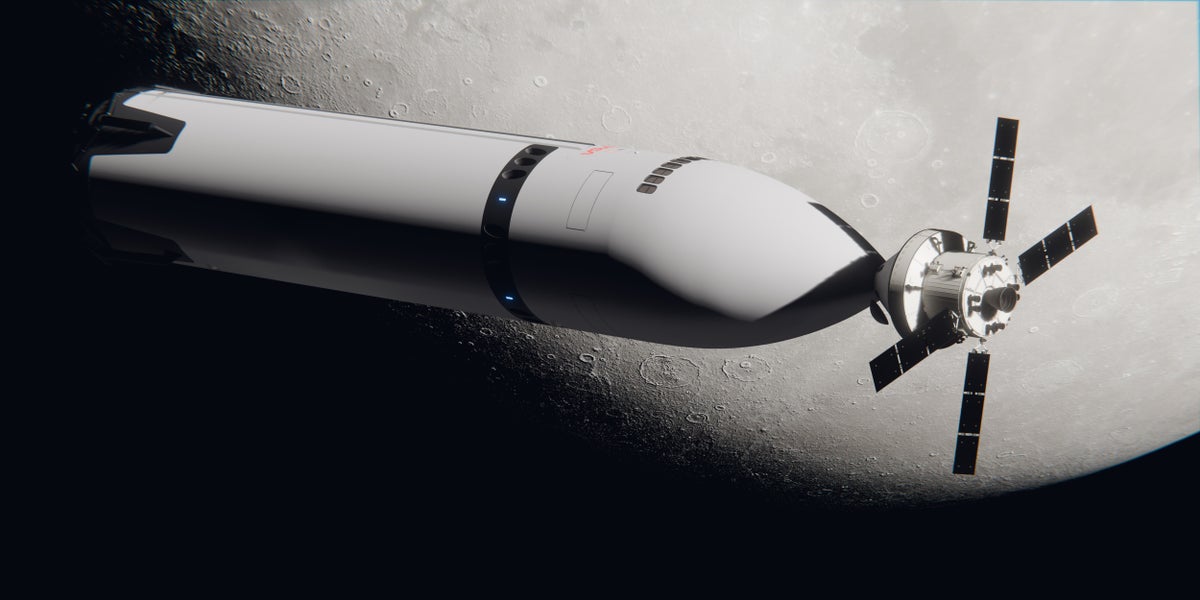
NASA launched four astronauts on a pioneering journey around the moon -- the Artemis II mission. Follow our coverage here. The Artemis II mission's splashdown on Friday was a milestone in the new space race unfolding between the U.S and China. But NASA's next leg of this race -- Artemis III, now scheduled for 2027 -- will see a different, more homegrown competition between SpaceX and Blue Origin. Announced only in March, this next Artemis mission pits the two aerospace companies head-to-head as they vie to be first to flight-test their in-development crewed lunar landers. The mission would involve a crewed Orion capsule launching into Earth orbit, where if all goes to plan the Artemis III astronauts would attempt to rendezvous and dock Orion with a moon-lander variant of SpaceX's Starship vehicle and, separately, Blue Origin's Blue Moon Mark 2 lunar lander. The plan shifts an actual crewed moon landing to the Artemis IV mission in 2028, according to NASA administrator Jared Isaacman. That should help shore up the space agency's extremely ambitious scheduling, which culminates with a proposed $30-billion moon base by 2036. Artemis III, Isaacman has said, is modeled after the test flights of the 1960s Apollo program, especially the Apollo 9 mission of 1969. During Apollo 9, which occurred just five months ahead of the historic Apollo 11 crewed lunar landing, astronauts stayed in Earth orbit, where they moved into and maneuvered a lunar module before returning to a command capsule and then to Earth. If you're enjoying this article, consider supporting our award-winning journalism by subscribing. By purchasing a subscription you are helping to ensure the future of impactful stories about the discoveries and ideas shaping our world today. Slow and steady simply won't win the 21st-century moon race with China, Isaacman indicated when he unveiled Artemis III during the space agency's March event. "We are long past the time for Word and PowerPoint," he said, bemoaning "billions wasted, years lost, nonconforming hardware delivered, programs that never launched [and] fewer flagship science missions" in NASA's recent decades because of the space agency's standard, very cautious approach. But the need for speed doesn't mean NASA's replan isn't methodical or needlessly risky, says Lori Glaze, acting associate administrator for the agency's Exploration Systems Development Mission Directorate. Artemis III's demonstration of Orion docking with SpaceX's or Blue Origin's lunar landers (or even both if they're ready on time) is "absolutely key to bring down some of the risk" of later moon landings, she says. "Whichever lander is ready to go, we'll go with." And although Artemis II's triumphant lunar flyby captivated the world, keeping its successor nearer to our planet is the sensible thing to do. "In Earth orbit, where we're closer to home, if there's any issues, we can get back quickly, as opposed to doing that first docking maneuver at the moon," she says. Representatives of neither Blue Origin nor SpaceX responded to Scientific American's requests for comment on the current status of their respective landers. Making Artemis III an Earth orbit test mission of the lunar landers "is an excellent idea," says Scott Pace, director of the Space Policy Institute at George Washington University. "NASA is wisely looking to create more options in the lunar architecture." That's not just to create competition, he says, but to ensure safe, redundant capabilities by having two dissimilar lunar landers. And they are dissimilar. The incumbent lander, SpaceX's Starship Human Landing System (Starship HLS), will be built on the upper stage of the rocket firm's Starship spacecraft, a reusable, 172-foot-tall tower intended to land upright on the moon. According to SpaceX, it might carry as much as 100 tons of moon-bound cargo. Astronauts would descend to the lunar surface via a side-mounted elevator platform. Last October SpaceX said it had reached 49 milestones in its Starship HLS design, including testing the airlock, rockets and elevator. But the company has not since updated its progress. In February Musk said that SpaceX has "shifted focus to building a self-growing city on the Moon" instead of on Mars, his longtime goal. Blue Origin's Mark 2 human lander, a 52-foot-tall canister on four legs, is also reusable but outwardly more resembles Apollo-era hardware. It would carry up to 22 tons of cargo, less than what the SpaceX lander could transport. In October 2025 the company presented some updates at an American Astronautical Society meeting, revealing that it is building the life-support systems in-house. Getting either lander to the moon will require refueling in Earth orbit, a scarcely tested procedure performed across a dozen or so additional flights of fuel-filled orbital tankers. Only after overcoming this significant hurdle could either lander travel to the moon to meet and dock with the astronauts, who would get there in an Orion capsule much like Artemis II's. In lunar orbit, Orion would rendezvous with the lander, with two of four crew members boarding to descend to the lunar surface. For now, all eyes will be on SpaceX's next test launch of its jumbo Starship rocket from Texas, which was recently delayed to May. This would be the inaugural flight of a new and improved Version 3 model and the first attempt to place Starship's upper stage in Earth orbit. The decision to delay the test launch came soon after SpaceX announced plans to sell its stock to the public, with an estimated valuation on $1.75 trillion, making the launch event very high stakes for Wall Street as well as NASA. Meanwhile Blue Origin's "Pathfinder" mission, a test landing of the cargo-only Mark 1 version of its lander on the moon, has been proposed for later this year. That lander is wrapping up vacuum chamber testing at NASA's Johnson Space Center, Isaacman said during the space agency's March event. According to NASA, if the mission is successful, another Mark 1 lander will, by late 2027, carry the agency's science rover VIPER (Volatiles Investigating Polar Exploration Rover) to the lunar south pole, where it will prospect for water ice. In-house, the space agency itself is now carefully watching repairs to the mobile launcher needed for liftoff of its massive Space Launch System rocket for Artemis III. Even after Artemis III, both or either of the competing space firms must also demonstrate a successful uncrewed landing and return of their lander before astronauts can use it in 2028. The prep needed before NASA's human landing on the moon also would include two dozen launches of precursor rovers and other equipment. Hitting that rapid cadence of lunar launches will be the key to whether NASA can achieve its moon base timeline, said the agency's Carlos Garcia-Galan in an interview with Scientific American during the March event. "The thing we need to address head on from the beginning is the cadence -- the number of assets, launches and landers we will need to develop," he added. Another milestone to watch is the development of an Axiom Space space suit that had been meant for the original Artemis III mission on the moon and recently passed a technical review at the space agency. NASA expects to have more details on the Artemis III mission once SpaceX and Blue Origin alike have had time to officially respond to the new moon base plan, according to Glaze. Exactly what Earth orbit the mission will target is one question: a lower orbit around our planet might save a booster rocket needed for later missions, Ars Technica reported in April, whereas a higher one might more closely mimic a lunar orbit. "So part of what we're doing right now is trying to accelerate and get them absolutely ready in 2028" for human landings on the moon, Glaze says. "What's quite clear is that the imperative is to land in 2028. They've taken it very seriously, both [SpaceX] and Blue Origin."
SpaceX, Blue Origin moon landers in focus after NASA's Artemis success
The Boeing Company is the worldwide leader in aeronautical construction. Net sales (including intragroup) break down by market as follows: - defense, space and security (46.3%): military aircraft and mobility systems (warplanes, helicopters, and air defense missiles), support services (logistics, engineering, maintenance and training services) and space equipment (satellites, launch pads, etc.); - commercial aviation (30.4%). In addition to commercial aircraft, the group supplies spare parts and offers technical support, maintenance and engineering services. The remaining sales (23.3%) are from services (logistics and supply management, engineering, maintenance, modification and training services, etc.), and commercial and private aircraft financing as well as aircraft equipment leasing activities. Net sales are distributed geographically as follows: the United States (53.8%), Asia (18.4%), Europe (12.8%), Middle East (7.8%), Canada (2%), Oceania (1.8%), Africa (1.8%) and other (1.6%).

NASA accelerates Artemis III mission: a crucial challenge for SpaceX and Blue Origin
Dopo il successo di Artemis II, la NASA prepara Artemis III mentre cresce l'attesa per i lander lunari di SpaceX e Blue Origin, ancora in fase di sviluppo. Artemis III mission enters the operational phase after the successful return of the crew Artemis II, which marked a historic step in space exploration. La capsula Orion è ammarata nelle prime ore di sabato 11 aprile, riportando sulla Terra quattro astronauti dopo un viaggio di dieci giorni intorno alla Luna. Un risultato che ha rilanciato con forza il programma Artemis. Il successo di Artemis II L'equipaggio di Artemis II ha raggiunto un traguardo senza precedenti: ha volato più lontano dalla Terra di qualsiasi altro essere umano prima d'ora. Second Jared Isaacman, this result represents only the beginning of a long-term strategy aimed at returning humans to the Moon on a permanent basis. La missione Artemis III è già in preparazione e si concentrerà su una serie di test in orbita terrestre. There NASA has started work on the powerful rocket Space Launch System (SLS), with several components already arrived at the Kennedy Space Center. The new Orion and the service module are also in an advanced stage of development. The heat shield has already been assembled, while the launch tower will soon be operational again after maintenance. Technical issues, such as the previously detected helium leaks, do not appear to jeopardize the schedule. The goal remains a launch by mid-2027. The lunar lander node The real critical point of the Artemis III mission, however, concerns the lunar landers. The vehicles, developed by SpaceX And Blue Origin, are still under development and represent the main unknown of the program. Their role will be crucial: they will have to transport astronauts from the orbital spacecraft to the lunar surface on subsequent missions, starting with Artemis IV. SpaceX is working on the new version of the Starship, but he still has to demonstrate some fundamental skills. Among these, the completion of a stable orbital flight and in-space refueling operations, essential for reaching the Moon and returning to Earth. The first test of the new generation could take place as early as the next few weeks, marking a key step for the entire Artemis program. A race against time The Artemis III mission represents a crucial step towards the human return to the Moon. While NASA is proceeding according to plan, lander development remains an ongoing challenge. The success of the entire program will depend on the ability to coordinate complex technologies and meet increasingly tight deadlines.

'God of chaos' asteroid to pass close to Earth in 2029
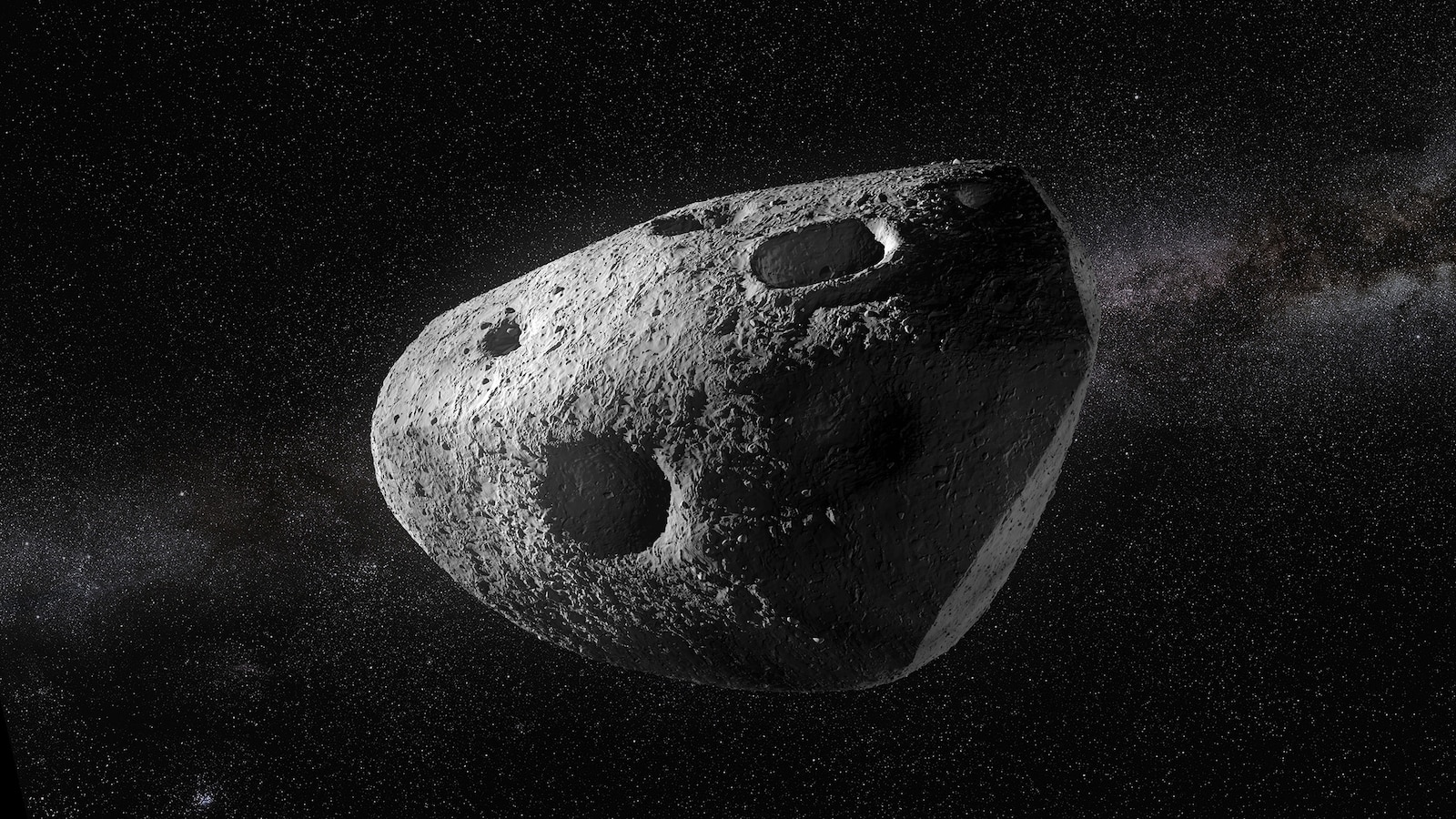
A rare asteroid will soon be visible to the naked eye in a rare celestial event, according to astronomers. Asteroid 99942 Apophis - named after the Egyptian deity of chaos, darkness and fire - is expected to safely pass close to Earth on April 13, 2029, according to NASA. The asteroid will pass within roughly 20,000 miles of Earth - nearly 12 times closer than the moon's average distance from Earth, and closer than many satellites in geosynchronous orbit - making it one one of the closest approaches ever recorded for an object if its size and a "very rare event," according to NASA. The approach will be visible to observers on the ground in the Eastern Hemisphere, weather permitting, according to NASA. It will be close enough that sky-watchers won't need a telescope or binoculars to see it, astronomers say. When Apophis was first discovered in 2004, it was labeled a potentially hazardous asteroid because of the possibility that it could impact Earth in 2029, 2036 or 2068, according to NASA. After closely tracking the asteroid and its orbit using optical telescopes and ground-based radar, astronomers are now confident that there is no risk of Apophis impacting Earth for at least 100 years. The Earth's gravitational pull could change the asteroid's orbit around the sun as it passes in 2029, making the orbit slightly larger or the orbital period slightly longer, but the risk of impact with Earth will remain the same, NASA says. Its close passage will also afford astronomers around the world the opportunity to learn more about the asteroid. Apophis is the Greek name for the Egyptian god known as Apep. The name was proposed by the astronomers who discovered the asteroid: Roy Tucker, David Tholen and Fabrizio Bernardi of the Kitt Peak National Observatory near Tucson, Arizona. The asteroid is a relic of the early solar system from about 4.6 billion years ago, made of leftover raw material that was never part of a planet or moon, according to NASA. Though its exact size and shape is unknown, it has a mean diameter of about 1,115 feet and a long axis of at least 1,480 feet. Apophis' surface is weathered due to eons of exposure to space weather, including solar wind and cosmic rays, according to the Massachusetts Institute of Technology. Observatories around the world and in space will observe the asteroid's historic approach to Earth in order to better understand its physical properties. NASA has redirected a spacecraft to rendezvous with Apophis shortly after its close approach in 2029, while the European Space Agency is sending a spacecraft to study it. When the April 2029 flyby occurs, Apophis will become a member of the "Apollo" group, the family of asteroids that cross Earth's orbit but that themselves have orbits around the sun that are wider than the Earth's, according to the ESA.
German Financial Giant Invests $200M in Crypto Exchange Kraken
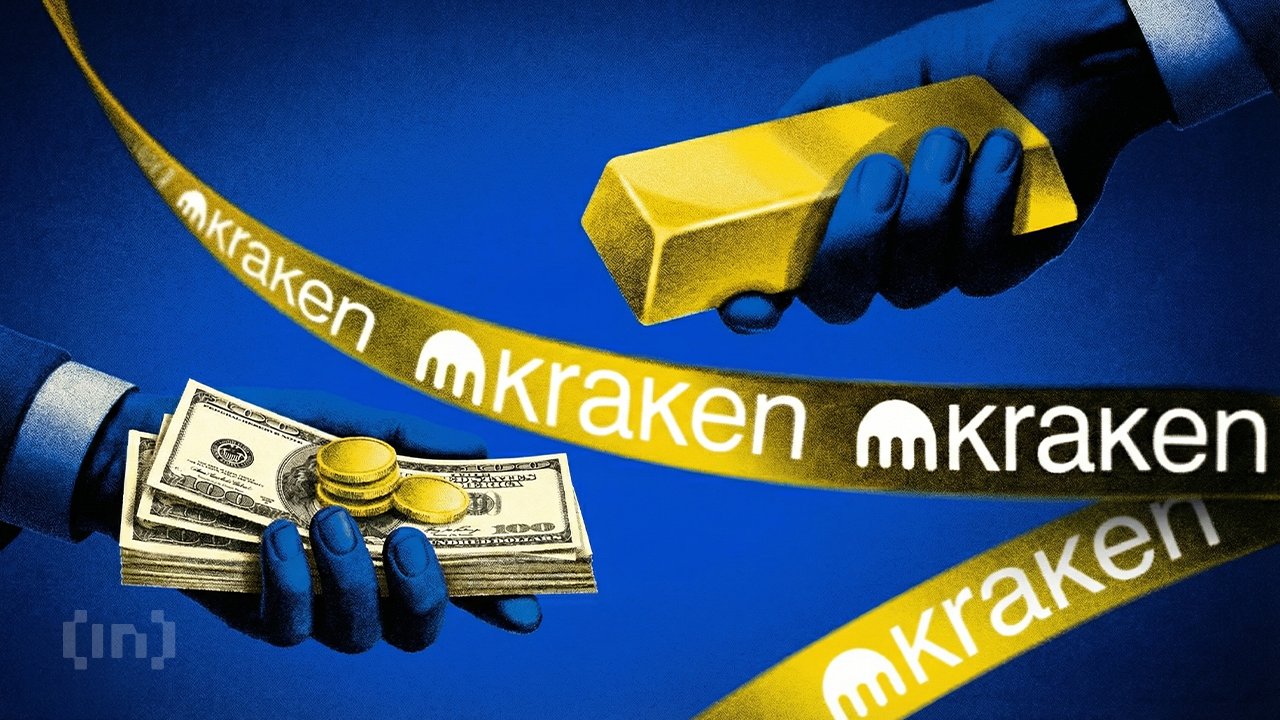
Both companies aim to bridge traditional finance and digital asset markets. Deutsche Börse Group has acquired a 1.5% stake in Kraken for $200 million, marking one of the largest investments by a traditional exchange operator into a crypto platform. The German exchange giant announced the strategic investment in Payward, Inc., the parent company behind crypto exchange Kraken. The transaction involves purchasing existing shares on the secondary market. Partnership Bridges Traditional Finance and Crypto The investment deepens a strategic partnership that both companies announced in December 2025. Deutsche Börse and Kraken agreed to combine their capabilities to bridge traditional financial markets and the digital asset ecosystem. The partnership covers trading, custody, settlement, collateral management, and tokenized assets. Both companies aim to develop products that provide institutional clients with integrated access to both ecosystems. For Deutsche Börse, the investment represents a significant step in its digital asset strategy. The company is building what it calls a comprehensive hybrid market infrastructure designed to process traditional securities and blockchain native tokens within a unified liquidity pool. Traditional Finance Accelerates Crypto Integration The deal highlights the growing convergence between traditional financial infrastructure and crypto markets. Deutsche Börse operates one of Europe's largest exchange ecosystems, including the Frankfurt Stock Exchange, Eurex derivatives exchange, and Clearstream post trade services. Kraken ranks among the largest crypto exchanges globally and has been expanding its institutional services. The exchange has also been preparing for a potential public listing, making strategic investments from established financial institutions particularly valuable. The partnership positions both companies to compete for institutional clients who increasingly want exposure to digital assets through regulated channels. As MiCA regulation takes effect across Europe, demand for compliant crypto infrastructure continues to grow. Transaction Expected to Close in Q2 2026 The $200 million investment gives Deutsche Börse a 1.5% fully diluted ownership stake. The transaction is structured as a secondary market purchase, meaning Deutsche Börse is buying existing shares rather than providing new capital. Closing is expected in the second quarter of 2026, subject to regulatory approvals. What This Means for European Crypto Markets The investment signals continued institutional interest in crypto infrastructure despite market volatility. Deutsche Börse joins a growing list of traditional financial institutions making strategic bets on digital assets. For European crypto markets, the partnership could accelerate institutional grade services. Deutsche Börse's existing relationships with banks and asset managers provide a distribution channel for crypto products. As traditional finance and crypto infrastructure continue merging, partnerships like this are becoming more common. The question is no longer whether institutions will engage with digital assets, but how quickly infrastructure can scale to meet demand.
Astro Agility Course | Mission X
For the best possible video quality and to enable the sharing functionality, please accept all cookies. To adjust your cookie settings, click here. Join ESA reserve astronaut John McFall in this agility activity to improve fast, dynamic movement and directional changes. #missionx #astronauttraining #agility #stemlearning #exercise Download the activity pdf here: https://trainlikeanastronaut.org/agility-astro-course/ This activity can be done anytime, anywhere! Try it at home, in a classroom, or after-school with friends. Mission X: Train like an astronaut is a hands-on project that engages young learners with STEM, health and nutrition activities in the inspiring context of space.

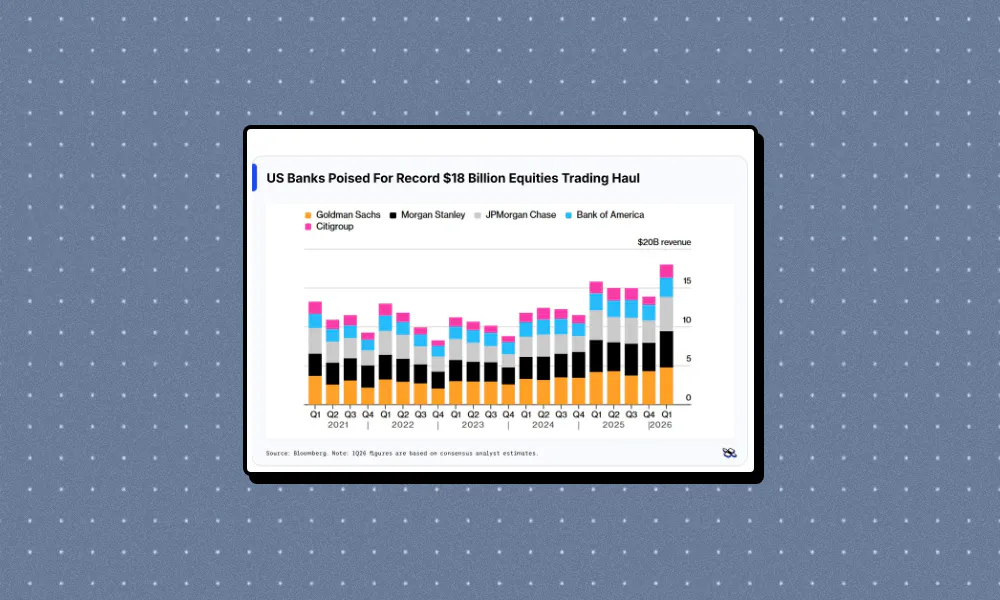
A Little Market Chaos Is Good... For Banks
Join the newsletter that everyone in finance secretly reads. 1M+ subscribers, 100% free. Wall Street's biggest banks are heading for a record $18 billion quarter in stock-trading revenue, as market turmoil keeps investors busy. A mix of geopolitical tension - notably the US-Iran conflict - and rapid shifts around AI and private credit has sparked heavy repositioning across markets. That's boosted trading desks at firms like Goldman Sachs, Morgan Stanley, and JPMorgan, with fixed-income units also set for standout results. Still, attention is shifting beyond the numbers: investors are watching for clues on private credit risks, consumer resilience amid rising oil prices, and whether volatility starts to weigh on dealmaking...
SpaceX, Blue Origin moon landers in focus after NASA's Artemis success
Add Yahoo as a preferred source to see more of our stories on Google. COLORADO SPRINGS, Colorado, April 14 (Reuters) - After the safe return of four astronauts from a historic flyby of the moon last week, NASA is shifting focus to its next challenge: putting competing lunar landers from Elon Musk's SpaceX and Jeff Bezos's Blue Origin through a series of rigorous tests ahead of future crewed landings. NASA's nearly 10-day Artemis II mission marked the first crewed flight of the agency's multibillion-dollar return-to-the-moon program and sent astronauts farther from Earth than ever before. The mission was designed as a dress rehearsal for later flights, validating the systems needed to carry crews into deep space. But the milestone has also sharpened attention on what many officials see as one of the program's biggest remaining risks. The commercial lunar landers must demonstrate that they can perform a complex final descent to the moon and bring astronauts safely home, a feat NASA has not attempted since 1972. NASA aims to put astronauts back on the moon by 2028 as it faces growing competition from China, which plans a crewed lunar landing by 2030. To hedge against delays, the agency selected both SpaceX and Blue Origin to develop competing landers, hoping competition and private investment would accelerate progress. "They both look at this as a competition, and that's a great thing," NASA Administrator Jared Isaacman said in an interview on Monday. Isaacman spoke days after welcoming back the Artemis II astronauts, who splashed down on Friday following their mission around the moon. The flight marked the first crewed launch of NASA's Space Launch System rocket, built by Boeing and Northrop Grumman, and the Orion capsule, built by Lockheed Martin. While SLS and Orion are traditional, government-owned vehicles designed to ferry astronauts from Earth to lunar orbit, NASA has turned to commercial companies for the final leg of the journey: landing on the moon's surface. MUSK VS BEZOS IN BILLIONAIRES' MOON RACE SpaceX is developing a Human Landing System based on its massive Starship rocket, a stainless-steel vehicle far larger than any moon lander built before. Blue Origin is building its own Blue Moon lander, relying on a more traditional design philosophy. Blue Origin aims to land an uncrewed version of Blue Moon on the moon this summer, according to two people familiar with the plan, marking the company's first attempt at a soft lunar landing. The test, known as Mark 1, would be a critical milestone after years of development. "I will just say that this Mark 1 landing is going to be very important," Isaacman said. SpaceX, meanwhile, is preparing to launch a new iteration of Starship, known as Version 3, as soon as May, following a months-long hiatus. The rocket, first unveiled by Musk in 2016, has suffered repeated delays and test failures as SpaceX pushes the limits of launch, landing and reusability. After 11 test flights since 2023, some ending in explosions, SpaceX says the new version incorporates dozens of upgrades requested by NASA. "That's the version that HLS is going to be based on," said Kent Chojnacki, NASA's deputy manager for the Human Landing System program. "That's going to become the workhorse version." Before Starship can land astronauts on the moon, SpaceX must first put the vehicle into orbit and demonstrate controlled reentry of its upper stage, a step it has not yet achieved. The company must then show that two Starships can dock in space and transfer propellant, a capability NASA considers essential for lunar missions. NASA has pressed both companies to accelerate their work, though officials acknowledge the challenges are formidable. MOON LANDER DESIGNS CHANGING Unlike Apollo, which landed six crews on the moon within a few years, Artemis is designed to be a long-term program, with landers that can be reused and adapted for sustained exploration. That ambition has added complexity and increased testing demands. Asked whether SpaceX had proposed an accelerated plan that avoids Starship's demanding in-space refueling sequence, Isaacman said both companies "have taken an approach that brings down the technical risks significantly." NASA officials say they expect the designs to further evolve. "I don't have any faith that the design today is going to be the design that lands on the moon," Chojnacki said. Blue Origin has reworked parts of its original architecture after NASA pushed for faster progress. People familiar with the company's plans said it has simplified early missions, shelving more complex refueling concepts for its initial moon landings in favor of designs that reduce near-term risk. Despite the uncertainty, NASA insists the dual-provider strategy gives it the best chance of success. "I don't think it's lost on either one of them the importance of getting to the moon and doing so before our big rival," Isaacman said, an apparent reference to China. (Reporting by Joey Roulette; Editing by Joe Brock and Bill Berkrot)
SpaceX, Blue Origin moon landers in focus after NASA's Artemis success
After the safe return of four astronauts from a historic flyby of the moon last week, NASA is shifting focus to its next challenge: putting competing lunar landers from Elon Musk's SpaceX and Jeff Bezos's Blue Origin through a series of rigorous tests ahead of future crewed landings. NASA's nearly 10-day Artemis II mission marked the first crewed flight of the agency's multibillion-dollar return-to-the-moon program and sent astronauts farther from Earth than ever before. The mission was designed as a dress rehearsal for later flights, validating the systems needed to carry crews into deep space. But the milestone has also sharpened attention on what many officials see as one of the program's biggest remaining risks. The commercial lunar landers must demonstrate that they can perform a complex final descent to the moon and bring astronauts safely home, a feat NASA has not attempted since 1972. NASA aims to put astronauts back on the moon by 2028 as it faces growing competition from China, which plans a crewed lunar landing by 2030. To hedge against delays, the agency selected both SpaceX and Blue Origin to develop competing landers, hoping competition and private investment would accelerate progress. "They both look at this as a competition, and that's a great thing," NASA Administrator Jared Isaacman said in an interview on Monday. Isaacman spoke days after welcoming back the Artemis II astronauts, who splashed down on Friday following their mission around the moon. The flight marked the first crewed launch of NASA's Space Launch System rocket, built by Boeing BA.N and Northrop Grumman NOC.N, and the Orion capsule, built by Lockheed Martin LMT.N. While SLS and Orion are traditional, government-owned vehicles designed to ferry astronauts from Earth to lunar orbit, NASA has turned to commercial companies for the final leg of the journey: landing on the moon's surface. SpaceX is developing a Human Landing System based on its massive Starship rocket, a stainless-steel vehicle far larger than any moon lander built before. Blue Origin is building its own Blue Moon lander, relying on a more traditional design philosophy. Blue Origin aims to land an uncrewed version of Blue Moon on the moon this summer, according to two people familiar with the plan, marking the company's first attempt at a soft lunar landing. The test, known as Mark 1, would be a critical milestone after years of development. "I will just say that this Mark 1 landing is going to be very important," Isaacman said. SpaceX, meanwhile, is preparing to launch a new iteration of Starship, known as Version 3, as soon as May, following a months-long hiatus. The rocket, first unveiled by Musk in 2016, has suffered repeated delays and test failures as SpaceX pushes the limits of launch, landing and reusability. After 11 test flights since 2023, some ending in explosions, SpaceX says the new version incorporates dozens of upgrades requested by NASA. "That's the version that HLS is going to be based on," said Kent Chojnacki, NASA's deputy manager for the Human Landing System program. "That's going to become the workhorse version." Before Starship can land astronauts on the moon, SpaceX must first put the vehicle into orbit and demonstrate controlled reentry of its upper stage, a step it has not yet achieved. The company must then show that two Starships can dock in space and transfer propellant, a capability NASA considers essential for lunar missions. NASA has pressed both companies to accelerate their work, though officials acknowledge the challenges are formidable. Unlike Apollo, which landed six crews on the moon within a few years, Artemis is designed to be a long-term program, with landers that can be reused and adapted for sustained exploration. That ambition has added complexity and increased testing demands. Asked whether SpaceX had proposed an accelerated plan that avoids Starship's demanding in-space refueling sequence, Isaacman said both companies "have taken an approach that brings down the technical risks significantly." NASA officials say they expect the designs to further evolve. "I don't have any faith that the design today is going to be the design that lands on the moon," Chojnacki said. Blue Origin has reworked parts of its original architecture after NASA pushed for faster progress. People familiar with the company's plans said it has simplified early missions, shelving more complex refueling concepts for its initial moon landings in favor of designs that reduce near-term risk. Despite the uncertainty, NASA insists the dual-provider strategy gives it the best chance of success. "I don't think it's lost on either one of them the importance of getting to the moon and doing so before our big rival," Isaacman said, an apparent reference to China.
