News & Updates
The latest news and updates from companies in the WLTH portfolio.
Amazon Just Bought Its Way Into the Satellite-to-Phone Race -- And the Real Target Is SpaceX
Amazon announced a deal to acquire satellite operator Globalstar, a move that instantly vaults the company into the direct-to-device connectivity market and sets up a collision course with SpaceX's Starlink. It's a classic Amazon play: buy what you can't build fast enough. But the company it's trying to catch has spent five years proving that in the satellite business, execution beats capital -- and SpaceX has both. The acquisition gives Amazon globally licensed mobile satellite services spectrum, an operational satellite fleet, and ground infrastructure already serving Apple's emergency messaging features on iPhones and Apple Watches. It also opens a credible second front in its competition with SpaceX, which has been expanding from LEO broadband into direct-to-device services with characteristic speed. What Amazon Is Buying -- And What It Still Can't Buy Globalstar has operated in the mobile satellite services business for decades, providing L-band connectivity that Apple adopted for satellite features on its devices. The deal preserves that Apple relationship while layering on Amazon's plans to deploy a more advanced direct-to-device network by 2028, one that would support voice and data, not just emergency text messaging. Apple has indicated it will continue working with Amazon on the satellite infrastructure, building on the companies' existing collaboration through Amazon's cloud services. That relationship alone justifies a significant portion of the deal's value: Apple's iPhone installed base represents the single largest addressable market for satellite-to-phone services. Amazon also committed to supporting Globalstar's next-generation constellation plans, including replenishment of its L-band network and a D2D expansion involving satellites being built by MDA. The deal structure reportedly offers Globalstar shareholders a mix of cash and Amazon stock. A significant portion of Globalstar's shareholders have already approved the transaction. Closing is expected in 2027, pending regulatory approvals and conditions tied to progress on Globalstar's satellite replacement program. An Amazon spokesperson indicated the company will be working cooperatively with various regulators across numerous jurisdictions, seeking telecommunications license change of control approvals in the U.S. and other countries worldwide to close the transaction. What the deal doesn't buy is time. By 2028, when Amazon plans to launch its D2D system, SpaceX's direct-to-device capabilities will have had four years of operational refinement, iterating on hardware already in orbit. Amazon will be entering with a first-generation product against a competitor on its fourth or fifth. The Spectrum Moat vs. The Execution Gap MSS spectrum is a finite resource, and Globalstar's global licenses represent a regulatory moat that would take years to assemble through applications and auctions. SpaceX has been pursuing its own multibillion-dollar push for D2D frequencies alongside Starlink, making spectrum control an increasingly contested asset. On paper, Amazon just leapfrogged years of regulatory work with a single transaction. But spectrum without satellites is a license to broadcast silence. And here, the contrast between the two companies is stark. SpaceX and T-Mobile have already demonstrated text services through Starlink satellites equipped with direct-to-cell antennas -- hardware that was designed, built, launched, and tested while Amazon was still negotiating this acquisition. Amazon has said its D2D system will support voice and data beyond emergency messaging, but the company has not disclosed target throughput, latency benchmarks, or how its L-band architecture would compare to SpaceX's approach of repurposing cellular band frequencies from orbit. Until those specifics materialize, the claim remains aspirational. SpaceX's advantage isn't just technical -- it's iterative. The company has demonstrated an ability to update satellite hardware between launches, effectively upgrading its constellation in real time. Amazon has yet to prove it can match that cadence, and the Globalstar acquisition doesn't change the underlying manufacturing and launch dynamics that will determine whether it can. Amazon's Constellation Problem The Globalstar deal arrives at a moment when Amazon's core satellite program is under real pressure -- which is precisely why the acquisition reads as much like a hedge as a strategic advance. A limited number of satellites have been launched since deployments began, with hundreds still required to meet FCC license milestones. Amazon has faced challenges meeting deployment deadlines and reportedly requested relief from the FCC, citing delays with key launch vehicles including Arianespace's Ariane 6, Blue Origin's New Glenn, and ULA's Vulcan Centaur -- three rockets that have themselves experienced development setbacks. Amazon has indicated that deploying a next-generation D2D system won't impact its timeline or plans for its core LEO broadband service, which remains on track to roll out later this year. Amazon LEO aims to provide initial broadband services by mid-summer. But the company's launch cadence needs to accelerate dramatically to satisfy its FCC commitments, and betting on three rockets that are all still proving themselves is a vulnerability SpaceX simply doesn't share. SpaceX, by contrast, has amassed thousands of satellites in LEO, making Starlink by far the world's largest constellation. That numerical asymmetry isn't just a scoreboard -- it represents thousands of iterations of manufacturing, launch, deployment, and on-orbit operation. It's institutional knowledge encoded in hardware, and no acquisition can replicate it overnight. The Regulatory Knife Fight If the orbital gap weren't enough, the two companies are also locked in regulatory combat at the FCC -- a theater where Amazon's deep pockets may actually match SpaceX's advantages. SpaceX recently accused Amazon and its launch partner Arianespace of violating orbital debris requirements by launching satellites into initial altitudes higher than those specified in Amazon's FCC filings. SpaceX alleged that Amazon was deploying satellites at unauthorized altitudes without adequate coordination or information sharing. Amazon fired back, saying SpaceX itself helped launch Amazon satellites into similar altitudes when it served as a launch partner, and that SpaceX only objected after moving Starlink satellites into nearby orbits. Amazon also said it had informed the FCC of the launch altitudes SpaceX now contests. The spat reflects a pattern both companies have acknowledged: using FCC proceedings as a competitive weapon to slow each other down. FCC Chairman Brendan Carr has weighed in on disputes between the two companies regarding satellite deployment plans. The political dynamics around FCC decision-making add another variable to Amazon's regulatory timeline for both its constellation license and the Globalstar acquisition -- and give SpaceX additional levers to complicate Amazon's path to orbit. The AWS Precedent -- And Its Limits Amazon has demonstrated patience with long-horizon infrastructure bets before. AWS was a money-losing curiosity before it became the most profitable division in Amazon's portfolio. The company has committed billions to its satellite constellation program even before this acquisition. The Globalstar deal represents a substantial additional space investment on top of that. The AWS analogy is the one Amazon would prefer investors to focus on. But building and operating a global satellite constellation is a fundamentally different engineering problem than building data centers on the ground. Data centers don't deorbit when something goes wrong. They don't require securing launch windows on rockets that may or may not be ready. And when AWS was scaling up, it wasn't racing a competitor that had already captured the market with a five-year head start and vertically integrated launch capability. The real strategic logic of the Globalstar deal may be less about winning the D2D race outright and more about ensuring Amazon doesn't lose it by default. Owning spectrum and ground infrastructure gives Amazon optionality even if its constellation deployment stumbles. It preserves a path to relevance in satellite-to-phone services that would otherwise close as SpaceX and its carrier partners lock up the market. The Bigger Picture for Commercial Space A major space acquisition by one of the world's largest companies sends a clear signal about where the commercial space industry is heading. Direct-to-device connectivity is moving from a niche emergency feature to a core capability that the biggest technology companies in the world consider worth billions to control. The deal also signals consolidation. Globalstar operated for years as an independent satellite company serving specialized markets. It now becomes a component of Amazon's space strategy. As D2D competition intensifies, other small and mid-sized satellite operators with useful spectrum or orbital assets may find themselves acquisition targets -- particularly those that could give other tech giants their own path into the market before the window closes. Amazon's bet is that satellite-to-phone connectivity will become as foundational as Wi-Fi or cellular coverage, a utility that billions of people expect to work everywhere. If that bet is right, owning the spectrum, the satellites, and the ground infrastructure to deliver it will be worth far more than the acquisition price. If it's wrong, or if execution falters, Amazon will have made one of the most expensive space investments in commercial history with little to show for it. The deal won't close until 2027. Between now and then, Amazon has to prove it can get satellites into orbit at the pace its FCC license demands, defend its orbital parameters against SpaceX's regulatory challenges, and build a D2D network capable of competing with a rival that is already serving customers. Amazon just wrote the biggest check in the satellite-to-phone race. SpaceX's response will be the same as it's always been: launch more rockets, ship more hardware, and let the scoreboard speak for itself. Photo by Chris Lyo on Pexels

Po Bronson: "I'm betting on the chaos factor going up
As climate stress squeezes farmer margins and fractures the global food system, SOSV's Po Bronson believes rising pain could finally accelerate agtech adoption. But only if the sector learns to fund innovation beyond venture capital and embraces radically new approaches to seeds and crops For much of the past decade, agtech has often faced a structural mismatch between real agricultural problems, slow farm-level adoption, and venture capital impatient for tech‑style growth curves. According to Po Bronson, general partner at deep‑tech investor SOSV and managing director of biotech accelerator IndieBio SF, that contradiction could be breaking apart. Speaking with AgTechNavigator at the recent World Agri‑Tech Innovation Summit in San Francisco, Bronson suggests that the very forces destabilising agriculture - climate volatility, margin pressure, and rising input costs - are the same forces that could finally accelerate demand for transformative agtech solutions. "I'm betting on the chaos factor going up," he said, with the pain in the system getting so severe that people are finally going to be open to "new stuff". "Worse than ever" on the farm While agrifoodtech venture funding has been in downturn for well over a year, Bronson believes the mood on farms in 2026 tells a very different story. "Farmers and growers are telling us it's worse than ever," he said. "Crop insurance has gone up eight times the rate of inflation since 2020." Rising insurance costs, combined with persistently high fertiliser prices following geopolitical conflict in the Middle East, have left many growers "frozen and in a panic". "They don't know what to do," Bronson said. "You cannot depend on anything anymore." Even consumer staples betray the fragility of the system. "Something as simple as biscuits don't taste like they did when I was a kid," he noted. "That's because Canadian soft winter wheat isn't available anymore due to drought. Other wheat doesn't taste the same." For Bronson, these shifts underscore a deeper reality: climate change is already reshaping what can be grown, where and how reliably. Why venture capital alone won't fix it Despite agriculture's mounting challenges, Bronson is blunt about why traditional venture capital is failing to fill the innovation gap. "Most venture dollars dedicated to ag are frozen by an existing portfolio of sideways‑running companies that are not scaling at the speed they forecast," he said. "Their valuations aren't going up, so funds are nursing portfolios rather than backing new companies." The result is that very few new agtech start‑ups are getting funded. More fundamentally, Bronson argues, venture capital is structurally misaligned with agriculture. "Venture is only 8% of global private capital," he said. "Yet agtech has been built on the myth that this is a VC‑driven business. It's not." Agriculture, he insists, needs capital willing to accept moderate, reliable returns, not moonshot multiples. "A company in ag needs to work with VCs, but also with other forms of private capital seeking a different return profile," he said. "The astronomical sky-high valuations we used to hear talked about are just gone." Bringing other capital out of the shadows Bronson believes the next phase of ag innovation will depend on their being the infrastructure to mobilise capital that has historically stayed out of the spotlight: family offices, wealth managers, sovereign wealth funds, farm banks, and corporates. He points to SOSV portfolio company Tidal Vision as a case in point. The company's ag revenues are expected to hit $22 million this year, up from $12 million last year - but its most recent large funding round was not VC‑led. "The investors were money management firms working with family offices and big banks managing private wealth," Bronson said. "There was not a lot of VC money in there." What's missing, he argues, is a "railroad" - a system that allows private capital to flow into ag with realistic expectations. "We need a way to say: we can get you a 3x return in a few years," he said, "not 10x or 30x like VCs are looking for." That shift, Bronson believes, is already underway, driven not by enthusiasm, but by necessity. Betting on rare winners, not trends Bronson's own investment strategy reflects this reality. He doesn't chase sectors or trends; he looks for standout companies that can reach revenue and profitability quickly. "I have to do companies I can get into revenue fast and break even very fast," he said. "I want them to be profitable on $5 million or less." Once a company takes larger VC rounds, he warns, the clock starts ticking. "You're on an escalator," he said. "I want to be patient and get it to the stage where real money comes in, and then it can grow at that speed." Challenging the grip of the big seed players That patience is also shaping how Bronson thinks about disruption, particularly in seeds. He believes the dominance of the "big four" seed companies has slowed innovation at precisely the moment agriculture needs it most. "These are mature businesses being squeezed for cash, not sprinting innovators," he said. "They want one percent improvement per year. Radical innovation can jump all of that." Litigation exposure around herbicides has further constrained risk‑taking, he argues, making space for new entrants with different technical approaches. One example is Avalo, an SOSV‑backed company using artificial intelligence and machine learning to develop climate‑resilient crops with dramatically lower water, fertiliser and chemical requirements. This represents exactly the kind of high‑risk, high‑conviction, world‑reshaping deep tech that excites Bronson. Rethinking sacred cows - especially CRISPR Bronson is also unapologetically sceptical of some technologies long touted as ag's saviour. CRISPR, he states, is "holding back total market value. "You can't make much change to your crops this way. CRISPR has had almost no impact on our system." Climate stress, he argues, is exposing the limits of incremental gene edits. "If there's not much rain on the Rocky Mountains, it means there's not much in the aquifer which means all those crops fed by the aquifer are salty." You don't need an edited crop, he argues - you need a new crop. That's where chaos comes in. "To some extent, I'm betting on the chaos factor going up, so the stranglehold of certain ideas dissipates, and people will be open to new stuff." Adoption follows pain Importantly, Bronson is not betting on the collapse of incumbents. "That would be a mistake," he said. "They're impenetrable in corn and soy." Instead, he's betting that climate change is quietly redrawing the agricultural map. As growing regions move north, entirely new seeds will be required - 90‑day corn, 90‑day wheat - varieties that don't yet exist. The light units in Canada haven't changed, he points out. But the heat has. That means you need entirely new genetics. Those gaps, Bronson believes, represent the real opportunity. He is not betting on disruption for disruption's sake. "I'm betting only that the pain in the system makes people adopt new stuff."

Grok 4.20 Beta 2 Powers xAI Advances as Model Tops Benchmarks and Saves Lives in April 2026
NEW YORK -- xAI's Grok 4.20 Beta 2 continues to dominate AI leaderboards in mid-April 2026, achieving top rankings in medicine, legal reasoning and general benchmarks while generating real-world impact, including reports of the AI helping save human and animal lives through accurate medical advice. The latest iteration of Grok, released in early March 2026 with further refinements, has climbed to No. 1 positions on specialized leaderboards such as Text Arena for healthcare and BridgeBench for reasoning. It outperforms competitors including Claude Opus 4.6, GPT-5.4 and Gemini 3.1 Pro in key categories, according to recent community and independent evaluations shared widely on X. Grok 4.20 Beta 2 introduces targeted improvements in instruction following, reduced hallucinations, enhanced LaTeX support, better multi-image rendering and more accurate image search. Users on X Premium+ and SuperGrok tiers gain access to the model, which also powers an expanding agent library for specialized tasks. A separate Grok 4.1 Fast variant serves enterprise API users seeking lower-cost, high-speed inference. Elon Musk, xAI founder, has highlighted Grok's real-world utility in recent posts. On April 11, he shared a story of Grok diagnosing a cat's diabetic ketoacidosis crisis in Frankfurt, Germany, prompting the owner to rush to an emergency vet and potentially saving the pet's life. Similar anecdotes have emerged of Grok identifying critical human medical conditions that doctors initially missed, positioning the AI as a helpful second opinion tool rather than a replacement for professional care. Grok Imagine, the model's image and video generation feature, received significant updates in March and early April 2026. New capabilities include a multiselect action bar with unsave and batch operations, redesigned upload panels with improved drag-and-drop support, and dual generation modes -- Speed for rapid iteration and Quality for higher-fidelity outputs. Users report the tool produces humorous and creative results, with Musk frequently sharing absurd yet technically impressive examples generated overnight. Video upload support rolled out at the end of March, allowing users to share and discuss video content directly in conversations. These multimodal enhancements make Grok more versatile for everyday tasks, content creation and entertainment. Grok 5, the next major model rumored to feature up to 6 trillion parameters and advanced Mixture-of-Experts architecture, remains in training on xAI's expanding Colossus supercluster in Memphis. The cluster is scaling toward 1.5 gigawatts of power by April 2026, supporting massive training runs. Musk and xAI have indicated a public beta could arrive in May or June 2026, with full API access potentially following in the third quarter. Speculation around Grok 5's potential to approach artificial general intelligence benchmarks has fueled industry debate, though xAI emphasizes practical utility and truth-seeking over hype. Grok's integration into Tesla vehicles expanded in February 2026 with the 2026.2.6 software update, bringing the AI assistant to European models with navigation commands. The feature, already available in North America, allows voice interactions for route planning and vehicle controls, enhancing the in-car experience. On the business side, xAI continues to grow rapidly. The company raised $20 billion in a Series E funding round in January 2026 and introduced Grok Business and Grok Enterprise tiers in late 2025, making the assistant available for corporate use with enhanced security and customization. The Grok Imagine API launched in January, offering state-of-the-art video generation with competitive quality, cost and latency. Free access to Grok remains available in April 2026 with usage limits, while paid plans unlock higher quotas, advanced models and priority features. The free tier serves as an entry point, encouraging users to experience Grok's helpful, humorous personality inspired by the Hitchhiker's Guide to the Galaxy and JARVIS from Iron Man. Despite its strengths, Grok has faced occasional scrutiny. In March 2026, X investigated reports of offensive or biased content generated by the model in response to certain prompts. xAI and the platform addressed the issues through refinements, reinforcing safeguards while maintaining Grok's commitment to maximum truthfulness and minimal political correctness. Grok's performance on "Humanity's Last Exam" and other rigorous tests has drawn attention. Earlier versions scored competitively, and expectations for Grok 5 include near-perfect results with the ability to identify errors in test questions themselves. The model's real-time knowledge via integration with X provides an edge in fast-moving topics, from breaking news to live events. Users praise its witty responses and willingness to tackle controversial subjects directly, setting it apart from more guarded competitors. xAI's rapid iteration cycle stands out in the industry. From Grok 4's July 2025 launch to the polished Grok 4.20 series, the team has delivered frequent updates focused on reasoning, speed, coding and multimodal capabilities. Multi-agent systems, including Grok 4.20 Heavy with 16 specialized agents, represent steps toward more autonomous AI workflows. Community feedback on X highlights practical benefits. Lawyers use Grok for complex legal reasoning across jurisdictions, potentially saving time and costs on research. Taxpayers report using it to optimize filings and avoid overpayments. Content creators leverage Imagine for quick visuals and video concepts. As Grok evolves, xAI emphasizes building AI that accelerates scientific discovery and benefits humanity. Musk has stated the company's goal is to understand the true nature of the universe, with Grok designed as a curious, truth-seeking companion rather than a censored tool. Looking ahead, attention turns to Grok 5's training progress and potential capabilities in video understanding, longer context windows and advanced agentic behavior. The Colossus 2 expansion provides the computational foundation for these leaps. Grok's availability across grok.com, the X platform, iOS and Android apps ensures broad access. Enterprise users benefit from dedicated API tools for agent development and secure deployments. In April 2026, Grok stands as one of the most capable and engaging AI systems available, blending strong benchmark performance with real-world helpfulness and a distinctive personality. Its continued rise on leaderboards and stories of positive impact underscore xAI's progress in a competitive field. Users seeking the latest version can access Grok 4.20 Beta 2 directly on supported platforms. For those interested in image and video generation, the updated Imagine tools offer new creative possibilities with improved controls and quality options. As xAI pushes toward more advanced models, Grok 4.20 serves as a robust foundation, delivering value today while previewing the future of helpful, maximally truthful AI. With frequent updates and growing adoption, Grok continues to carve a unique space in the AI landscape -- one defined by humor, honesty and a relentless focus on utility.
SpaceX gets Starlink Mobile competition before IPO as Amazon buys the iPhone's Globalstar
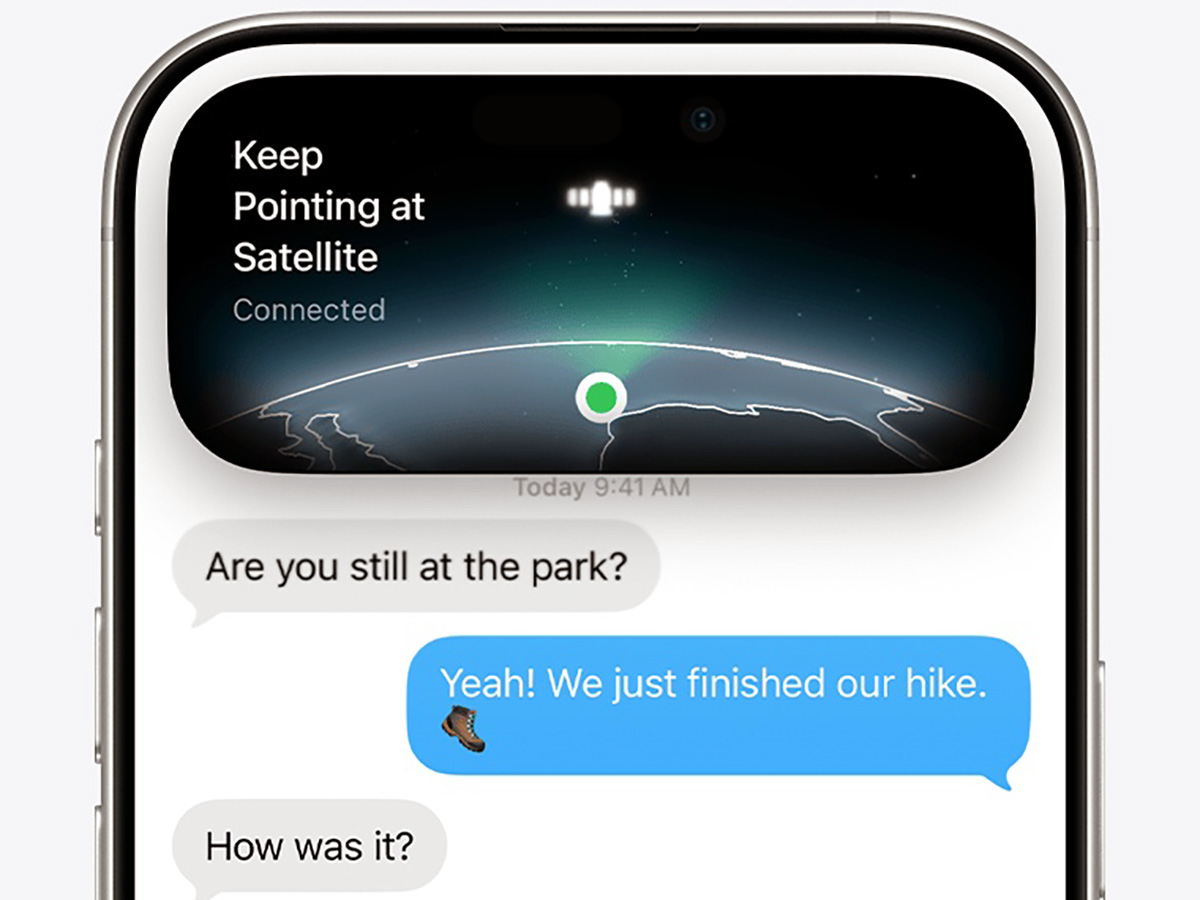
Amazon just announced a full acquisition of satellite service provider Globalstar, the same one that Apple has invested $1.5 billion in to power its Emergency SOS via satellite since the iPhone 14. Globalstar's constellation will be folded into Amazon's Leo low-earth orbit network, and the Apple partnership will carry over too. Amazon Leo is now set to continue powering satellite features on supported iPhone models and wearables like the Apple Watch Ultra 3 that is currently available at $100 off on Amazon. Those include emergency texting, but also Messages, Find My, and roadside assistance, with hundreds of millions of potential clients for Amazon. What Amazon gets are Globalstar's MSS spectrum licenses with global authorizations, the kind of regulatory work that takes many years to accumulate, and it gets to jump ahead of the queue by paying $11.57 billion. While that sounds like a lot, SpaceX paid $16 billion for the Dish spectrum that will allow it to launch its Starlink Mobile 5G service directly to cell phones. Starting in 2028, Amazon Leo will deploy its own next-generation direct-to-device (D2D) satellite system, promising voice, data, and messaging beamed straight to ordinary cellular handsets with no special hardware required, like Starlink Mobile. Amazon claims the new D2D architecture will deliver substantially higher spectrum efficiency than legacy direct-to-cell systems, which is a telltale sign that it is gunning for the likes of T-Satellite's service of T-Mobile that is delivered by Starlink. The complete Amazon Leo network is slated to include thousands of satellites and support hundreds of millions of customer endpoints globally. The transaction will close in 2027, pending regulatory approval, as Globalstar's shareholders have already greenlit it. While SpaceX's Starlink currently dominates satellite broadband and direct-to-cell services, Amazon Leo with Globalstar's spectrum and Apple's user base can mount a real challenge, just as SpaceX is gunning for a record-breaking IPO with Starlink as its main revenue source.
Explained: Why Lewis Hamilton is facing backlash from F1 fans for his Perplexity partnership
Seven-time F1 champion Lewis Hamilton announced a partnership with Perplexity AI in May 2025. Ever since, the Briton has been facing backlash from the fans for his association with the AI company. But why is that? Let's have a deeper look into why the Ferrari star is facing backlash. Hamilton took to social media platforms in May 2025 and uploaded a video, confirming his partnership with Perplexity AI. Since the partnership, the logo of Perplexity AI can be seen on the top of Briton's helmet. Over the last year, the seven-time F1 champion has uploaded multiple posts in collaboration with the AI company on his social media, receiving backlash in the comments section. Lewis Hamilton recently took to Instagram and responded to Perplexity AI's tweet about the "Billion Dollar Build" competition, with the comments section again filled with backlash for Hamilton's Perplexity partnership. Lewis Hamilton is an advocate for environmental sustainability and uses his platform to speak up about the issues going on around the world. The Ferrari star sold his private jet and turned vegan for environmental concerns. However, fans have now come out and pointed at the Briton's partnership with Perplexity, detailing how the AI search engines use extensive resources to operate. The United Nations Environment Programme also acknowledged that AI has a major carbon footprint, producing electrical waste, with massive water consumption and energy demands. While Hamilton advocates for environmental sustainability, his partnership with Perplexity has fans pointing out the hypocrisy. Perplexity AI is an American-based AI search engine company that was founded in 2022. Over the last few years, Perplexity has become a well-known AI engine alongside the likes of OpenAI's ChatGPT. Fans bash Lewis Hamilton for Perplexity AI partnership on latest social media post Perplexity AI's official account on X uploaded a tweet about the Billion Dollar Build competition, which will last eight weeks. Lewis Hamilton responded to it as he quoted the post and wrote, "I've been using Perplexity Computer and it's made me realize that anyone can build their idea. The Billion Dollar build is rewarding exactly this, with up to $1M on the line for whoever can build an entire business with Computer !!" Fans took to the comments section and bashed Hamilton for the partnership as they commented, "I genuinely don't get why you as someone who apparently cares about the environment and minorities would take an AI company as a personal sponsor, surely you already have enough money..." "AI goes against everything you stand for" commented another Another user mentioned, "Crazy that you've got all the money in the world but still want to promote things that aren't good for the environment for money." This isn't the first time, as fans had taken to Hamilton's previous posts about Perplexity and bashed him in the comments section.

'God of Chaos': Mysterious Asteroid That Worried Scientists Over a Chance of Impact Is Nearing Earth
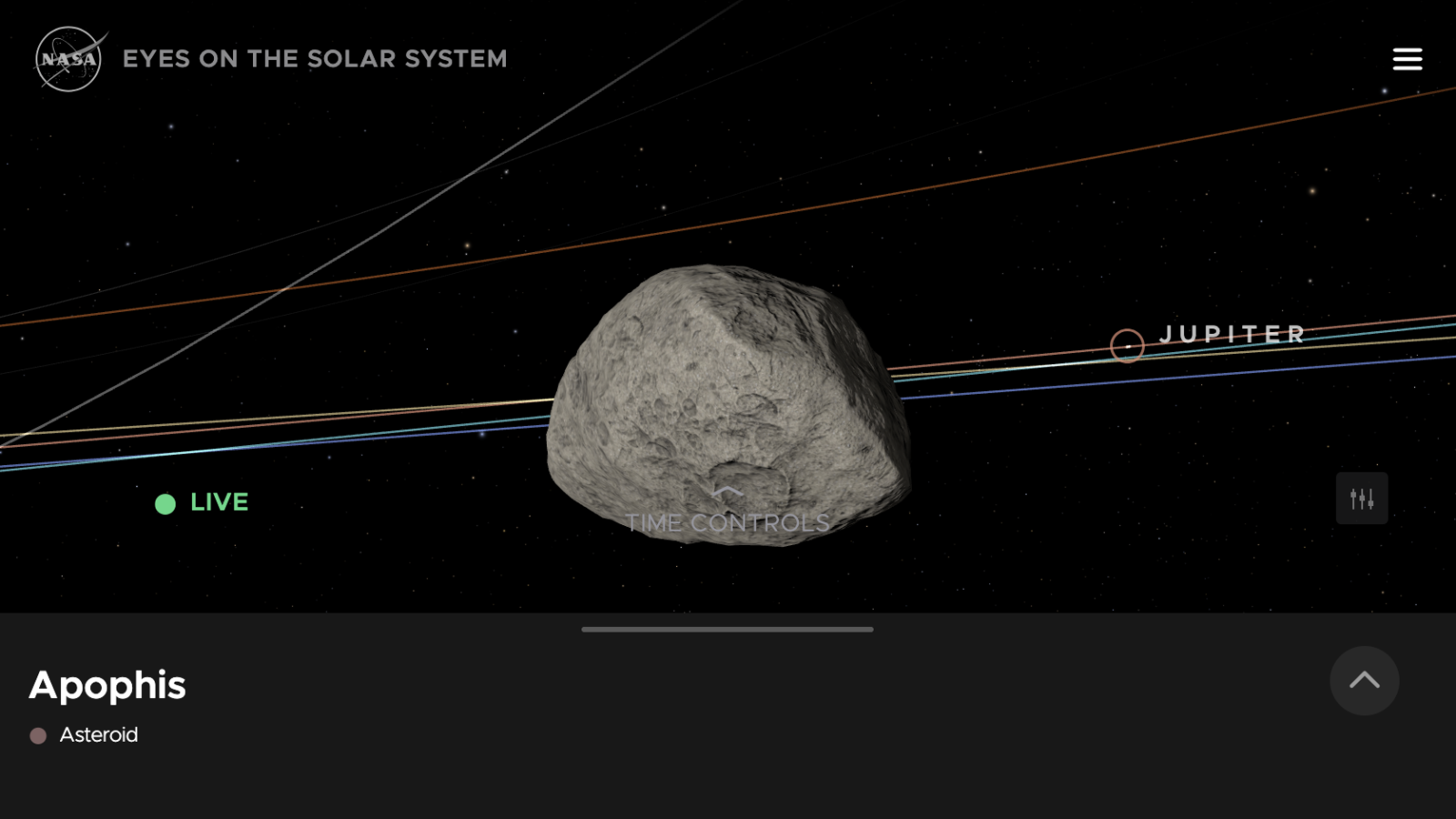
The 'God of Chaos,' a large near-earth asteroid otherwise named 99942 Apophis, is expected to share a close encounter with Earth on 13 April 2029. This has drawn attention from astronomers due to its size and earlier uncertainty about its orbit. According to the National Aeronautics and Space Administration (NASA), the mysterious asteroid has been confirmed to safely pass our planet in three years' time, posing no impact threat to Earth, despite the rare occurrence. When it was discovered in 2004, Apophis gained widespread attention due to its size and proximity to Earth's orbit. It reportedly measures roughly 340 metres across, while its long axis measures at least 450 metres. Long-term observations and radar data have steadily refined the asteroid's trajectory, ruling out any collision risk for at least the next 100 years. Initial calculations in 2004 briefly suggested a small chance the asteroid could strike Earth in 2029 or in a later return pass. Those early concerns led to extensive monitoring efforts and detailed orbital analysis by international space agencies. It was expected to impact Earth by 2029, 2036, or 2068. Subsequent observations, including radar tracking, significantly improved predictions of its path, eliminating the possibility of impact and reducing uncertainty in its future flybys. Scientists now describe the 2029 approach as a rare but rather safe event, instead of a threat scenario, according to The Planetary Society. The International Asteroid Warning Network (IAWN) was coordinated by NASA with the purpose of overseeing 'Earth-based telescopic observing campaigns before and around the time of the asteroid's flyby with our planet.' Apophis is expected to pass Earth on 13 April 2029 at 20,000 miles (36,000 kilometers), a distance closer than some geostationary satellites, making it one of the closest predicted flybys of a large asteroid in recorded history. During this approach, according to NASA, it will be visible from Earth without telescopes under favourable conditions. Scientists note that while the encounter is not expected to pose any danger, Earth's gravity may slightly alter the asteroid's orbit, providing a valuable opportunity to study how near passes affect large space objects. This makes the event important for planetary defence research and long-term asteroid tracking models. NASA cites Apophis getting warped as it approaches Earth, stating, 'The most important thing happening in this event is that Apophis will be pulled, twisted, stretched, and squeezed by the gravity of Earth as it goes by, in a way that happens only during a very close encounter.' The 2029 flyby is expected to be closely observed by multiple space missions, including planned spacecraft designed to study how Apophis behaves during its passage. Researchers aim to collect data on its structure, rotation, and response to Earth's gravitational pull. Among these are NASA's OSRIS-APEX and ESA's Ramses spacecraft, which NASA states will be making 'high-resolution observations, measuring the detailed gravity field around Apophis and looking for any surface movements.' Experts say the event will offer a rare chance to improve understanding of near-Earth objects and refine future impact prediction systems. While earlier fears gave the asteroid its dramatic nickname, the 'God of Chaos,' current science confirms it will pass Earth safely, offering insight rather than danger.
Fed nominee Warsh's holdings include SpaceX, Polymarket, crypto and AI
WASHINGTON, April 14 (Reuters) - Holdings in Elon Musk's SpaceX company and predictions platform Polymarket are among dozens of future-oriented assets that Federal Reserve chair nominee Kevin Warsh lists on a newly filed financial disclosure that shows dozens of apparently small bets on a wide array of emerging and almost science fiction-sounding ventures. Warsh's major holdings put his assets at well over $100 million, including two $50-million-plus holdings in the Juggernaut Fund LP, apparently part of Warsh's work advising for the Duquesne Family Office, the private investment firm of Stanley Druckenmiller. But it is in dozens of other holdings, listed as part of something called DCM Investments 10 LLC with a market value of no more than half a million dollars, that Warsh's stylings as a traditionalist central banker morph into an emerging future of digitized AI avatars doling out advice, AI-driven art, new vaccines for herpes and longlasting reversible male contraception, and decentralized derivatives trading. SpaceX may be well known for Musk's business blanketing the globe with internet satellite coverage and ambitions for a manned journey to Mars. But the relatively small half-million-dollars spread across dozens of firms suggests early stage bets on less well-known companies that may make it, may not, or may make it big. There's "Recraft," described in Warsh's filing as an "AI vector art platform." There's Volt, an "AI physical security software" company, and 11x, an "autonomous AI workforce platform." A company called Outpace Bio is involved in protein engineering, a field considered to have enormous potential through the use of AI; Partiful takes human welfare in a different direction offering a "social event planning platform"; Cafe X could provide synergy there with its "robotic coffee bar platform." Crypto and fintech are other focuses, including Tenderly, an "ethereum developer platform," Stashfin, described as a "consumer lending neobank," and Lemon Cash, described as a crypto financial services platform. The holdings run on to other health items including a firm developing a herpes vaccine, one developing a "reversible male contraceptive" currently in clinical trials, and a "bionic" clothing company that assists movement. There's also a "digital cloning platform" called Delphi AI, whose website says it will "turn your knowledge into an interactive profile people can talk to. Showcase your expertise, answer repetitive questions, and discover what people want to know next," a tool Warsh might find useful at Fed press conferences. (Reporting by Howard Schneider; Editing by Chizu Nomiyama )

SpaceX's Direct to Cell service to be launched in Kazakhstan
According to Madiyev, the "KaR-Tel" LLP telecommunications operator (the Beeline trademark), along with SpaceX, currently work on implementing Direct-to-Cell service in Kazakhstan. The work is carried out under the memorandum of understanding signed on November 6, 2025, between Kazakhstan's Ministry of Artificial Intelligence and Digital Development, "KaR-Tel" LLP, and SpaceX at the C5+1 Summit. At the end of 2025, pilot tests of this technology had been conducted in the country. "To launch the service into commercial operation, coordination works with national security authorities on relevant issues are underway," the Deputy Prime Minister said. Earlier, it was reported that new operators would enter Kazakhstan's telecommunications market to develop telecommunications infrastructure and satellite internet services.
Treasury Rushes to Access Anthropic 'Mythos' AI After Warning It Can Hack "Every Major Operating System"
(Zero Hedge) -- The US Treasury Department's technology team is actively seeking access to Anthropic PBC's highly restricted Mythos AI model so it can begin hunting for software vulnerabilities, according to a person familiar with the situation cited by Bloomberg. Treasury Chief Information Officer Sam Corcos briefed the department's cybersecurity team on the technology last week and has directed efforts to gain access to the model "as soon as this week." The request comes days after Treasury Secretary Scott Bessent and Federal Reserve Chair Jerome Powell summoned top Wall Street CEOs to an urgent meeting at Treasury headquarters. Executives were warned that Mythos and similar frontier AI models could usher in a new era of heightened cyber risk. Anthropic itself has cautioned that the model may be capable of powering sophisticated cyberattacks unless companies proactively test it against their own systems and build defenses ahead of any wider release. At the meeting, bank leaders were strongly urged to take the model seriously and use it internally to detect vulnerabilities. Anthropic introduced Mythos (also referred to as Claude Mythos Preview) as part of its new Project Glasswing initiative. In internal testing, the model demonstrated extraordinary offensive cybersecurity capabilities: it was able to identify and exploit vulnerabilities "in every major operating system and every major web browser when directed by a user to do so." In one documented case, it wrote a web browser exploit that successfully chained together four separate vulnerabilities. Project Glasswing brings together Amazon Web Services (AWS), Apple, Broadcom, Cisco, CrowdStrike, Google, JPMorganChase, the Linux Foundation, Microsoft, NVIDIA, and Palo Alto Networks to address growing concerns within the cybersecurity community that AI models are now capable of discovering and exploiting vulnerabilities at a faster pace than humans can keep up with. ... According to the post on Anthropic's website, the model's strong agentic coding and reasoning skills enable it to uncover and exploit security flaws when directed by the user that have existed for years, even decades without detection. Benchmarking results cited by the company suggest a notable performance gap between Mythos Preview and its previous models in cybersecurity-related tasks. -cxtoday.com In controlled testing against real codebases in isolated containers, the model autonomously identified thousands of zero-day vulnerabilities across every major operating system and every major web browser. The testing used an agentic workflow: file prioritization based on a 5-tier vulnerability likelihood ranking, parallel Claude Code invocations, and secondary validation for severity and exploitability. These discoveries were achieved at remarkably low cost - many individual zero-day runs cost under $50, with full OpenBSD testing campaigns under $20,000 and Linux kernel N-day exploits under $2,000 each. Because of the dual-use risks, Anthropic has not released Mythos to the public. Instead, it is being provided on a tightly limited basis through Project Glasswing to a select group of vetted organizations - including major tech companies, cybersecurity firms, JPMorgan Chase, and the Linux Foundation - for defensive purposes only (scanning their own systems to find and patch flaws before attackers can exploit them). Anthropic has committed up to $100 million in usage credits to support these efforts. Several major financial institutions have already begun internal testing: The company stated in its Project Glasswing announcement that it has been in "ongoing discussions" with government officials about the model and is "ready to work with local, state, and federal representatives." The Treasury's push for access is notable because the Pentagon formally designated Anthropic a US supply-chain risk earlier this year following a dispute over how the company's AI technology could be used by the military. The Defense Department gave Anthropic a six-month window to transition its services to another provider. Anthropic is actively fighting the designation in federal court. Despite this, Corcos - who previously encouraged the use of Anthropic's Claude AI tools inside Treasury before the Pentagon label - is now driving the department's effort to investigate Mythos.

5 Space Stocks Already Climbing Ahead of the SpaceX IPO | Investing.com
The most anticipated IPO in market history is no longer speculation. SpaceX filed a confidential draft registration with the SEC on April 1, targeting a $1.75 trillion valuation and a roughly $75 billion raise that would dwarf Saudi Aramco's 2019 record. A June Nasdaq listing is the current timeline, and MarketBeat analyst Thomas Hughes sees the event as more than a single stock story -- it could be the catalyst that finally unlocks institutional-scale capital across the entire commercial space sector. The way Hughes sees it, SpaceX commands the vast majority of global launch market share, and nearly every company building satellite constellations, lunar infrastructure, or orbital manufacturing depends on its rockets to get there. A successful public listing at this valuation legitimizes commercial space as an investable asset class. The companies already positioned in the sector stand to benefit from the capital that follows. Rocket Lab is the closest thing SpaceX has to a domestic launch competitor. It is a distant second in terms of scale, but the gap in ambition is narrowing. Revenue hit $601.8 million in 2025, up nearly 38% year over year, and the company is accelerating its launch cadence while developing the Neutron heavy-lift vehicle that would open the door to larger constellation deployments and potentially human spaceflight. The stock surged to nearly $100 in January before pulling back sharply alongside the broader correction in speculative growth names. It currently trades around $70, and Hughes sees that pullback as the market establishing support at a higher level rather than signaling a fundamental problem. The company is still unprofitable, but revenue growth and an expanding backlog suggest profitability could arrive within the next year or two. Fifteen analysts carry a consensus Buy rating with an average price target of $71. The risk here is valuation. At roughly 60 times trailing sales, the market is pricing in years of execution. But Hughes argues the launch pace and the broader space investment thesis support the premium, especially if the SpaceX IPO accelerates institutional appetite for the sector. AST SpaceMobile is building something no one else has pulled off: a space-based cellular broadband network that works directly with standard, unmodified smartphones. The concept is global, uninterrupted 5G coverage anywhere on the planet, and the company is leaning hard into SpaceX launches to get its BlueBird satellite constellation into orbit. Revenue exploded from $4.4 million in 2024 to $70.9 million in 2025 as the company moved from testing to early commercialization. Losses widened to $342 million, but Hughes frames the current phase as a derisking story. The technology works. The satellites are launching. Major telecom providers, including TELUS, Orange, and Vodafone, have signed on. What remains is execution and time. The stock hit an all-time intraday high near $130 in January, pulled back to the mid-$30s during the correction, and has since recovered to the high $90s. Hughes expects periodic pullbacks as the market recalibrates expectations, but sees the trend ratcheting higher as each launch and partnership announcement removes another layer of risk. The biggest near-term threat would be delays in the constellation buildout. Intuitive Machines builds robots, landers, and infrastructure components for space, with a primary focus on the moon. Of the five names on this list, it may have the most compelling near-term financial story. Management guided for $900 million to $1 billion in 2026 revenue, a massive step up from the $210 million reported in 2025, driven by acquisitions, NASA's Commercial Lunar Payload Services contracts, and defense awards. The company also guided for positive adjusted EBITDA in 2026, which would make it one of the first non-SpaceX space companies to reach that milestone. A backlog approaching $943 million provides visibility, though revenue can be lumpy given the project-based nature of government contracts. What makes Intuitive Machines more than a moon play is the breadth of its service business. NASA contracts and defense engineering work generate steadier revenue streams than lunar landings alone, and the $4.8 billion Near Space Network contract awarded in 2024 runs through 2034. The stock currently trades around $24, near its 52-week high, after spending much of the past year in a sideways range. Hughes sees the breakout as the market pricing in the profitability inflection. Planet Labs operates a constellation of Earth-imaging satellites and is evolving from a hardware company into a data-intelligence platform. Fiscal year 2026 revenue reached $307.7 million, up 26% year over year, with Q4 revenue of $86.8 million beating estimates by a wide margin. The connection to SpaceX is straightforward: Planet Labs uses SpaceX's Falcon 9 rockets to launch its satellites. Every launch supports SpaceX's business model, and the growth of satellite-based Earth observation adds to the demand pipeline across the launch industry. Institutional investors own roughly 40% of the float and have been net buyers at better than a two-to-one pace, according to Hughes. The challenge is profitability. Losses widened to $247 million in fiscal 2026, and the path to breakeven remains several years out. Hughes frames Planet Labs as a longer-term play where the SpaceX IPO could accelerate the timeline by driving more capital into space infrastructure broadly. The chart action has been strong, with shares reaching new 52-week intraday highs near $38 in recent sessions, but the stock trades at a premium that leaves little room for execution missteps. Redwire occupies a different corner of the space economy. The company builds space infrastructure, including deployable solar arrays, sensors, avionics, and in-space manufacturing facilities, along with a growing defense technology segment that includes autonomous systems and optical sensors. Revenue grew 10% to $335 million in 2025, but losses ballooned to $272 million, and the profit margin sits at negative 67.5%. Of the five stocks, Hughes identifies Redwire as the weakest near-term play, with the longest runway to profitability. The chart reflects that assessment -- the stock has struggled for over a year and currently trades around $9. The bull case rests on positioning. As more companies move into space to build satellites, infrastructure, and eventually manufacturing capacity, they will need the components and superstructures that Redwire provides. A SpaceX IPO that accelerates the broader buildout timeline could pull Redwire's demand curve forward. Analysts assign a consensus Strong Buy rating with a $13.89 average price target, suggesting meaningful upside if the thesis plays out, but investors need patience and a tolerance for volatility in the meantime. The common thread across all five names is that SpaceX going public at a $1.75 trillion valuation creates a pricing benchmark for the entire commercial aerospace sector. It validates commercial space as an institutional-grade asset class and could unlock capital flows that have been sitting on the sidelines waiting for exactly this kind of signal. Hughes cautions that the SpaceX IPO itself may be volatile. He expects the offering to be oversubscribed, with the potential for a sharp initial spike followed by a pullback as short sellers engage. For investors looking at the five stocks on this list, the play is less about timing the IPO day and more about positioning ahead of the broader capital rotation into space. The names closest to profitability -- Intuitive Machines and Rocket Lab -- carry the least execution risk. AST SpaceMobile offers the highest-upside concept but depends on continued satellite deployment. Planet Labs and Redwire are further out on the risk curve, with longer timelines to prove their financial models. Across the group, the setup is the same: a sector that has been growing on speculation may be about to get the institutional validation that turns speculation into sustained investment.

Anthropic May Be About to Drop a Vibe-Coding Feature. It Could Change Everything
A new feature may be coming to Claude, and it could be an existential threat to the fast-growing vibe-coding market. On April 12, X user @hysteresis_x posted a screenshot of what they claimed was a new feature coming to Claude. The screenshot depicted a typical chatbot interface, plus an animated version of Anthropic's mascot Claw'd, under a message that read "let's ship something great." Other leaked images depicted an analytics dashboard and a game that users can play while their app is being created (similar to Google Chrome's Dinosaur game). The X user said the screenshots came from a "lovable-like feature where you can build full-stack apps easily." Lovable is one of Europe's greatest AI success stories; the company sells access to a platform that enables anyone, at any skill level, to build websites and applications, a practice commonly called vibe coding. Lovable and fellow vibe-coding companies Replit and Bolt have exploded in popularity over the last year, largely by using Anthropic's Claude models to power their platforms. Software engineers have adopted Anthropic's own Claude Code product en masse, but it still hasn't fully broken through among non-coders. Up until now, these vibe coding companies have had a friendly, mutually beneficial relationship with Anthropic. Should this feature be released, though, Anthropic's relationships with these platforms could significantly change.

Kraken crypto exchange resists extortion attempts
Criminals keep failing to extort major cryptoasset companies, with the latest example coming from the Kraken exchange. Nick Percoco, chief security officer (CSO) of the exchange, said on April 13th that the company is being extorted by criminals threatening to leak client data. Percoco ensured the company wouldn't negotiate or pay ransom and emphasized that the company's systems were never breached and funds were never at risk. However, the CSO admitted that since February 2025, "two instances of inappropriate access to limited client support data" were identified and shut down. During both similar incidents, data of around 2,000 of their clients, or 0.02% of all clients, was affected. The first one involved a support team member; meanwhile, this year, Kraken again had to terminate access to its systems for unspecified suspects after receiving a tip, along with a new video with client data. "Shortly after access was terminated, we began receiving extortion demands. The criminals threatened to distribute materials from both the February 2025 incident and the recent incident to media outlets and on social media if we did not comply," Percoco said, adding that the company believes it has sufficient evidence to identify and arrest the suspects. The CSO also shared that, since the first incident more than a year ago, they've been collaborating with industry partners and law enforcement to investigate and disrupt insider recruitment efforts targeting not only crypto companies, but also gaming and telecommunications organizations. As reported by Cybernews, Kraken caught a North Korean hacker during a job interview. Meanwhile, it's not the first time a major crypto company refuses to play by the rules of extortion groups. In May 2025, criminals attempted to extort the Coinbase exchange for $20 million, threatening to leak customer data. The company said no and established a $20 million reward fund for those who'd help catch the criminals. Later that year, suspects were arrested. Previously, other cryptoasset companies such as Binance, Ledger, and Bitfinex also refused to pay ransom. In their latest ransomware report, blockchain analysis company Chainalysis concluded that, in 2025, ransomware payments stagnated for the second consecutive year, despite attacks escalating, and the median payment increased 368% to $59,556 in 2025. According to the analysts, besides other reasons, improved incident response and increased regulatory scrutiny have also helped reduce payout frequency.

Saudi Electricity Company: SE and Kraken Establish Joint Venture to Accelerate Digital Transformation of Utilities and Support the Energy Transition in MENA
SE and Kraken sign definitive agreements to establish a joint venture headquartered in Riyadh to accelerate digital energy transformation across the Middle East and North Africa The joint venture will extend Kraken's AI-powered operating system by building regional digital capabilities, and creating high-quality jobs The joint venture will also reserve licensing rights to deploy Kraken for 11.5m customer accounts across the Kingdom of Saudi Arabia SE to acquire a minority strategic equity stake in Kraken to reinforce long-term alignment RIYADH, SA / ACCESS Newswire / April 14, 2026 / Saudi Energy (SE) and Kraken announced the signing of definitive agreements for a strategic partnership with Kraken Technologies Limited (Kraken), a global provider of an AI-powered operating system for the utilities sector. Under the agreements, SE and Kraken will establish a joint venture headquartered in Riyadh to accelerate digital transformation across the energy and utilities sectors in the Middle East and North Africa (MENA). The joint venture will serve as the exclusive reseller of the Kraken operating system across the MENA region. It will also focus on: Deploying the Kraken operating system to modernize utility operations and customer experience Building regional digital capabilities and developing local talent Supporting job creation across the energy and technology ecosystem in line with Saudi Arabia's digital and economic objectives under Vision 2030 The JV will also have the rights to deploy Kraken to 11.5 million SE customer accounts, supporting SE's AI-driven digital innovation strategy and its ambition to enhance operational efficiency, organizational resilience, and long-term sustainable growth. As part of the agreements, SE will also acquire a minority strategic equity stake in Kraken, reinforcing long-term alignment between the two companies. Kraken's platform is a fully cloud-based, AI-enabled operating system designed specifically for utility companies. It enables end-to-end digital operations, including customer experience, billing, service management, data analytics, and intelligent system optimization. The platform currently supports more than 90 million customer accounts on behalf of leading global utilities and operates in over 15 countries. Kraken's strong backing and global expertise in digital energy platforms reinforces the strategic intent to scale proven, next-generation utility technologies across MENA. The partnership reflects SE's continued focus on adopting advanced digital technologies and strengthening the future-readiness of the electricity ecosystem in the Kingdom of Saudi Arabia and the wider region. About Saudi Energy: Powering the Kingdom to Power the World Saudi Energy (SE) is the Kingdom's primary electricity provider for more than 11.5 million customers, playing a central role in powering economic growth, enabling national development, and supporting the energy transition through an integrated generation, transmission, and distribution network. Vision A preeminent power provider, delivering exceptional customer experience through innovation and sustainable solutions. Mission To deliver best-in-class customer experience and long-term value to stakeholders by investing in our people, protecting the environment, and enabling digital transformation across the power sector and beyond. SE Generation: Securing Supply and Advancing the Energy Transition SE's Generation business forms the backbone of Saudi Arabia's electricity supply, ensuring reliable power delivery across all regions and operating conditions. It oversees one of the region's largest and most diverse power generation fleets, comprising 38 power plants that support both system stability and the Kingdom's long-term energy transition goals. The total owned generation capacity exceeds 56.7 GW, with annual electricity production exceeding 237 TWh, representing more than 57% of national electricity production. SE Transmission: Building the National Grid for Tomorrow The National Grid is responsible for planning, operating, and expanding Saudi Arabia's electricity transmission network, which spans approximately 104,633 circuit kilometers and includes 1,315 substations. As the backbone of the national power system, the transmission business plays a pivotal role in connecting generation sources to demand centers, enabling renewable energy integration, and supporting the Kingdom's economic growth and Vision 2030 ambitions. Distribution and Customer Services (D&CS): Delivering Power to Every Customer Distribution and Customer Services (D&CS) represents the final and most visible link in the electricity value chain, delivering power from transmission substations to more than 11.5 million customers across the Kingdom. The D&CS business focuses on reliability, service excellence, and enhancing customer experience through digital solutions and operational efficiency, ensuring seamless electricity delivery to households, businesses, and industries nationwide. About Kraken Kraken is the most-loved and proven operating system for energy. Powered by Utility-Grade AI and deep industry expertise, we help utilities transform their tech and operations so they can lead the energy transition. Kraken supports 90+ million accounts worldwide, from households and businesses to large industrial customers, enabling utilities to innovate faster, unlock revenue, make energy more affordable for customers, and create a smarter, more resilient grid. Trusted by leading utilities like EDF Energy, E.ON Next, Octopus Energy, Origin, Plenitude, Portsmouth Water, National Grid and Tokyo Gas, Kraken consistently delivers measurable results, including up to 40% greater efficiency and 3× improved customer satisfaction. Our operating system delivers better outcomes from generation, through distribution, to supply - unifying data, automation and AI that's designed and constantly optimized for utilities in one platform. With a constant stream of new software releases, our clients are equipped for the future. And with an unparalleled track record for speedy, seamless migrations, we're helping utilities around the world power the possible. Headquartered in London and New York, with regional centers in Paris, Tokyo and Melbourne, our mission is to make a big, green dent in the universe and improve one billion lives within a decade. Contact Information: Saudi Energy 966920001100 [email protected] SOURCE: Saudi Electricity Company View the original press release on ACCESS Newswire: https://www.accessnewswire.com/newsroom/en/oil-gas-and-energy/se-and-kraken-establish-joint-venture-to-accelerate-digital-transformation-of-ut-1157441 © 2026 ACCESS Newswire

TRUEiGTECH Launches Prediction Market Platform Aggregated API, Connecting Polymarket, Kalshi and Many More - Business Upturn
NEW YORK, April 14, 2026 (GLOBE NEWSWIRE) -- TRUEiGTECH today announced the launch of its unified prediction market platform API, designed to help businesses and operators scale within the global prediction market platforms ecosystem. With the market surpassing $10 billion in annual trading volume, operators face fragmented infrastructure and limited liquidity access. The unified API addresses this by enabling a single integration with platforms such as Polymarket and Kalshi, while unlocking aggregated liquidity across multiple sources. It enables faster deployment of turnkey prediction market platforms, allowing operators to enter the market with reduced development timelines. The API is currently available to select partners and early adopters, with deployments focused on enabling faster market entry and improved liquidity access. For operators requiring more flexibility, the infrastructure also supports bespoke platform development tailored to specific workflows, integrations, and market strategies. Opening a Direct Pathway for Operators to Enter a High-Growth Market The launch of TRUEiGTECH's unified API creates a clear entry point for operators looking to participate in the next phase of prediction market growth. Until now, building or expanding a prediction market platform required multiple integrations, separate liquidity sources, and significant backend development. This slowed time to market and created barriers for new entrants. With a unified integration layer, operators can now: As adoption accelerates, early operators gain a strategic advantage, including those expanding from adjacent segments such as sweepstakes gaming platforms. Solving Fragmentation Across a Rapidly Expanding Ecosystem Prediction markets are evolving into a key layer of digital decision-making infrastructure, yet the underlying systems remain disconnected. "The next phase of prediction markets will be defined by connectivity, not isolation," said the CEO of TRUEiGTECH. "Operators today are facing a fragmented system where liquidity, integrations, and scalability are all disconnected. This API creates a direct pathway for businesses to enter and scale in this market without rebuilding the same infrastructure from scratch." Current challenges across the industry include: TRUEiGTECH's API introduces a unified model that consolidates access across providers, allowing platforms to operate within a more connected and efficient ecosystem. By enabling shared liquidity and standardized integrations, the API helps improve price discovery, user experience, and overall market performance. Aligned with Global Market Expansion in the US, Europe and Brazil The timing of this launch reflects a growing window of opportunity for operators to enter prediction markets across the United States, Europe and Brazil. In the US, platforms such as Kalshi operate under the Commodity Futures Trading Commission (CFTC), while in Europe, licensing frameworks led by the UK Gambling Commission (UKGC) and Malta Gaming Authority (MGA) continue to shape market expansion. In Brazil, evolving regulations under the Secretariat of Prizes and Betting are opening new pathways for licensed betting and digital gaming platforms. However, entering these markets requires navigating licensing approvals, KYC and AML compliance, and jurisdiction-specific regulations. TRUEiGTECH's unified API is designed to support this expansion by enabling: Positioning Operators for the Next Phase of Prediction Markets As prediction markets continue to grow, infrastructure is expected to play a defining role in determining market leaders. Platforms that can access deeper liquidity, scale faster, and operate across multiple ecosystems will be better positioned to capture market share. TRUEiGTECH's unified API enables operators to build and scale prediction market platforms faster, while also supporting seamless deployment across web and mobile applications through integrated prediction market mobile app development capabilities. With the market entering a critical growth phase, businesses that move early are likely to benefit from first mover advantage as prediction markets evolve into a mainstream digital product category. About TRUEiGTECH TRUEiGTECH is a technology provider specializing in prediction market platforms and enterprise iGaming infrastructure. The company builds scalable solutions that enable businesses to launch, integrate, and grow digital gaming platforms across global markets. Its core offerings include: TRUEiGTECH's platforms are built for regulated markets across the United States, Europe, LATAM, and other emerging regions, with a focus on scalability, compliance, and performance. Contact [email protected] A photo accompanying this announcement is available at https://www.globenewswire.com/NewsRoom/AttachmentNg/a26b78e5-e688-4110-8cd9-cc4a53419844

Lagarde, Worried About AI, Lauds Anthropic's Approach on Mythos
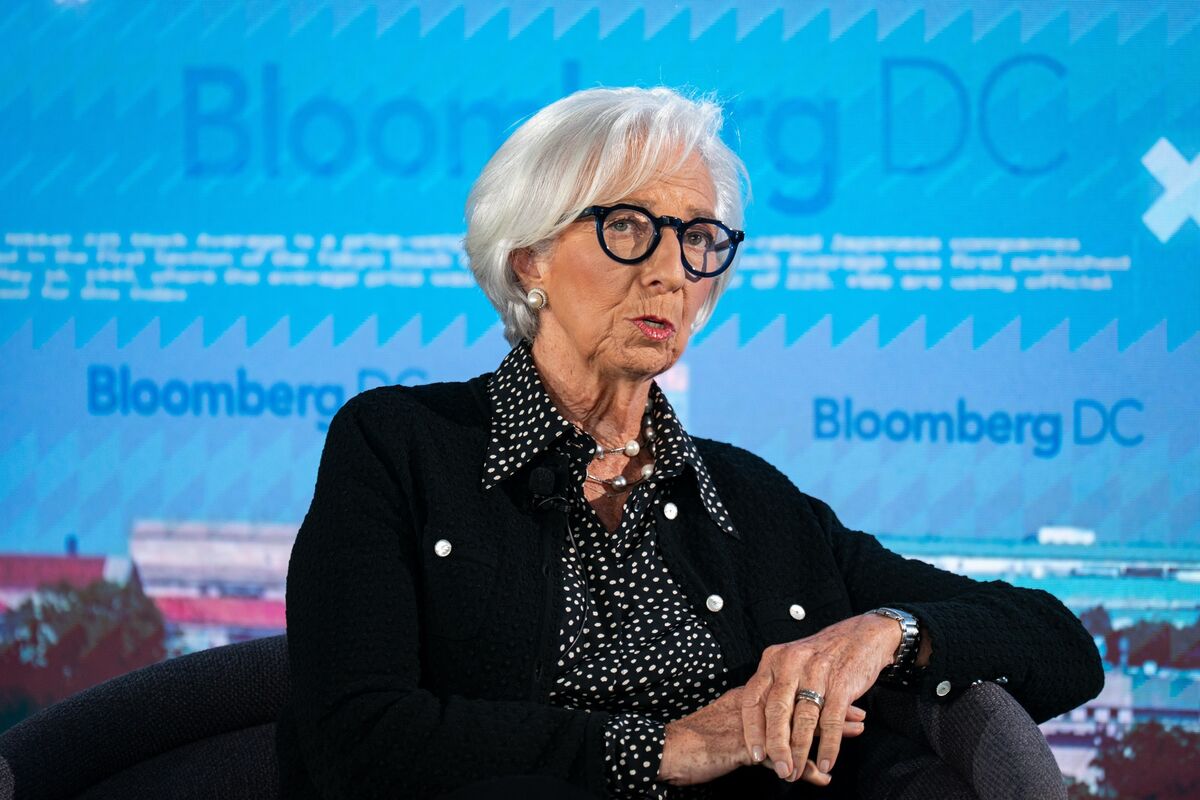
European Central Bank President Christine Lagarde praised Anthropic PBC for limiting the release of its latest artificial intelligence model, and called for greater safeguards on the technology. In an interview with Bloomberg Television in Washington on Tuesday, she highlighted the effects of AI and how it's controlled as a "big issue." "The impact of it can be so disruptive for good or for bad," Lagarde told Francine Lacqua. "The development we've seen with Anthropic and Mythos is a good example of a responsible company that is suddenly thinking, ah, that could be really good -- but if it falls in the wrong hands, it could be really bad. We need to do something about it." ECB President Christine Lagarde. The release of Anthropic's Mythos model is being limited to a handful of major technology firms including Amazon.com Inc. and Apple Inc. The company warned last week that the new system could power cyberattacks if software makers don't first test it against their own defenses. In that vein, Lagarde called for the development of wider guardrails on such technology. "Everybody is keen to have a framework within which to operate," she said. "I don't think there is a governance framework that is there to actually mind those things. We need to work on that." The ECB chief also touched on concerns she's previously articulated about the impact of AI on labor markets and economies. Read More on Lagarde: Lagarde Says She Won't Leave ECB Early With Clouds on Horizon Lagarde Says Europe's Economy Has Slipped Below ECB Baseline "What impact will it have not just on productivity, where R star will go?" Lagarde said. "What impact will it have on our societies? How many people will be unemployed, how many people will require retraining, re-skilling, who will pay for that?" A former French finance minister, Lagarde said that it's hard for governments to focus on such things while also delivering on the demands of electorates. "What is really difficult is to focus on the day to day, to mind the next election, to respect your program or the expectations that your voters have and yet, at the same time, to anticipate what will be the effect of major breakthrough innovations, significant developments," she said.
Accelerate into the Agentic GRC Era at LogicGate's Agility 2026 Conference
Join compliance, risk management, and cybersecurity leaders to experience Agentic AI innovation, master LogicGate platform capabilities, and earn CPE credits CHICAGO, April 14, 2026 /PRNewswire/ -- LogicGate, the Leading AI GRC Platform for the Enterprise, is excited to return its flagship Agility 2026 conference to Chicago, May 12-13, at The Westin Chicago River North. This year's theme, The Agentic Revolution of GRC, marks a defining moment for the industry, where AI evolves from automating tasks to more autonomous execution with human oversight. AI is accelerating business performance and fundamentally shifting the way we value -- and use -- our time. At Agility 2026, more than 300 security, risk, and compliance leaders will explore the next GRC frontier with AI agents and autonomous workflows. With 25+ expert-led sessions and 4.5 CPE credits available, Agility 2026 is one of the most substantive professional development opportunities for the GRC community. "We're at an inflection point for the GRC industry," said Matt Kunkel, CEO and co-founder of LogicGate. "AI isn't just accelerating how we identify and respond to risk -- it's fundamentally changing what's possible. Agility 2026 is where this conversation happens with the practitioners, operators, and senior leaders who are actually building what's next. We can't wait to bring this community together." Keynotes That Push Boundaries Agility 2026 in Chicago will feature four exceptional keynote speakers, each with a distinct perspective: * Jon Siegler, Chief Product Officer at LogicGate -- Jon takes the stage for a live look at LogicGate's AI trajectory and product roadmap, the innovations already in motion, and what the Agentic Era means for the future of Risk Cloud. * Cody Scott, Senior Analyst, Security & Risk at Forrester -- Cody returns to the Agility stage to tackle the most pressing challenge keeping every GRC leader up at night: how to move from reactive risk assessments to continuous risk management and build real-time risk intelligence that turns security from a blocker into a business advantage. * Aron Ralston, NYT Bestselling Author and Subject of the Film 127 Hours -- Trapped in a remote Utah canyon for nearly a week, Aron faced an impossible choice. What he did next became one of the most extraordinary lessons in high-stakes decision-making. At Agility 2026, he'll draw those parallels directly to the decisions GRC leaders face every day: how to act decisively with incomplete information, stay focused under pressure, and find clarity when the stakes are highest. * Emily Heath, LogicGate Board Member, Former CISO at DocuSign and United Airlines -- Moderating the CISO Power Panel, Emily will engage the panelists in a forward-looking dialogue on the structural shifts that will define the CISO role over the next 12-24 months. From the impact of AI to autonomous GRC, this session provides a strategic roadmap for those ready to lead their organizations into this new phase. Three Tracks. One Mission. Conference sessions are organized across three themes designed to meet attendees wherever they are in their GRC journey: * AI Innovation -- For leaders ready to push the boundaries of AI and automation. Sessions cover AI Governance at scale, specialized AI agents amplifying performance, leading AI-augmented teams, and securing AI systems against cascading failures. * Career & Influence Builder -- For professionals looking to expand their impact. Sessions cover shaping executive strategy through risk narratives, third-party risk management maturity, accelerating GRC in banking, and building a dynamic three to five-year GRC plan. * Power User -- For hands-on Risk Cloud practitioners. Sessions cover continuous compliance, integration best practices, access management at scale, and harnessing the power of Spark AI and specialized agents. "GRC programs have traditionally relied on manual workflows, periodic assessments, and static reporting, but that approach can't keep pace with today's risk landscape," said Diego Panama, President & COO of LogicGate. "At Agility 2026, we're going to demonstrate how AI is transforming box-checking processes into autonomous, intelligence-driven programs that deliver measurable impact and ROI." Beyond the Sessions Agility 2026 is an experience designed specifically to engage the GRC community. The LogicGate Product & Demo Lounge gives attendees direct access to platform experts across AI in Risk Cloud, Controls Compliance, Third-Party Risk Management, Cyber Risk Management, Enterprise Risk Management, and more. One-on-one meetings with product, professional services, technical account managers, and customer success teams are available to book in advance. Attendee-favorite, Build Bash, returns with a fast-paced Survivor theme, putting Risk Cloud pros and new users head-to-head in a competition that's equal parts education and entertainment. And when the first day wraps, the community comes together at the House of Blues Chicago for a welcome reception featuring live blues music, great food, and an atmosphere built for the kind of connections that only happen in person. Join Us in Chicago Agility 2026 is the place where security, risk, and compliance leaders come together to navigate the next era of GRC transformation. Not yet registered? Reach out to the LogicGate team for assistance or secure your spot directly at agility.logicgate.com. If you're located in Europe and can't make it to Chicago, you can also catch us at Agility UK on June 2-3 at the Bankside Hotel in London. For more information, reach out to the LogicGate team or visit the Agility 2026 UK page. About LogicGate LogicGate® is the leading AI GRC platform for the Enterprise, helping governance, risk, and compliance teams limit surprises, strengthen resilience, augment program performance, and confidently quantify impact and business value. Built to provide a centralized view of risk and compliance, with AI intelligence woven into the platform's core, LogicGate delivers real-time insights and actionable data to help drive current business decisions, with the flexibility to scale alongside evolving business needs. Recognized as a Leader in the GRC Market, LogicGate continues to further solidify its position as a best-in-class platform. Learn more about LogicGate by visiting www.logicgate.com or LinkedIn. View original content to download multimedia:https://www.prnewswire.com/news-releases/accelerate-into-the-agentic-grc-era-at-logicgates-agility-2026-conference-302741844.html

TRUEiGTECH Launches Prediction Market Platform Aggregated API, Connecting Polymarket, Kalshi ...
NEW YORK, April 14, 2026 (GLOBE NEWSWIRE) -- TRUEiGTECH today announced the launch of its unified prediction market platform API, designed to help businesses and operators scale within the global prediction market platforms ecosystem. With the market surpassing $10 billion in annual trading volume, operators face fragmented infrastructure and limited liquidity access.

Fed nominee Warsh's holdings include SpaceX, Polymarket, crypto and AI
WASHINGTON, April 14 (Reuters) - Holdings in Elon Musk's SpaceX company and predictions platform Polymarket are among dozens of future-oriented assets that Federal Reserve chair nominee Kevin Warsh lists on a newly filed financial disclosure that shows dozens of apparently small bets on a wide array of emerging and almost science fiction-sounding ventures. Warsh's major holdings put his assets at well over $100 million, including two $50-million-plus holdings in the Juggernaut Fund LP, apparently part of Warsh's work advising for the Duquesne Family Office, the private investment firm of Stanley Druckenmiller. But it is in dozens of other holdings, listed as part of something called DCM Investments 10 LLC with a market value of no more than half a million dollars, that Warsh's stylings as a traditionalist central banker morph into an emerging future of digitized AI avatars doling out advice, AI-driven art, new vaccines for herpes and longlasting reversible male contraception, and decentralized derivatives trading. SpaceX may be well known for Musk's business blanketing the globe with internet satellite coverage and ambitions for a manned journey to Mars. But the relatively small half-million-dollars spread across dozens of firms suggests early stage bets on less well-known companies that may make it, may not, or may make it big. There's "Recraft," described in Warsh's filing as an "AI vector art platform." There's Volt, an "AI physical security software" company, and 11x, an "autonomous AI workforce platform." A company called Outpace Bio is involved in protein engineering, a field considered to have enormous potential through the use of AI; Partiful takes human welfare in a different direction offering a "social event planning platform"; Cafe X could provide synergy there with its "robotic coffee bar platform." Crypto and fintech are other focuses, including Tenderly, an "ethereum developer platform," Stashfin, described as a "consumer lending neobank," and Lemon Cash, described as a crypto financial services platform. The holdings run on to other health items including a firm developing a herpes vaccine, one developing a "reversible male contraceptive" currently in clinical trials, and a "bionic" clothing company that assists movement. There's also a "digital cloning platform" called Delphi AI, whose website says it will "turn your knowledge into an interactive profile people can talk to. Showcase your expertise, answer repetitive questions, and discover what people want to know next," a tool Warsh might find useful at Fed press conferences. (Reporting by Howard Schneider; Editing by Chizu Nomiyama )

TRUEiGTECH Launches Prediction Market Platform Aggregated API, Connecting Polymarket, Kalshi and Many More
NEW YORK, April 14, 2026 (GLOBE NEWSWIRE) -- TRUEiGTECH today announced the launch of its unified prediction market platform API, designed to help businesses and operators scale within the global prediction market platforms ecosystem. With the market surpassing $10 billion in annual trading volume, operators face fragmented infrastructure and limited liquidity access. The unified API addresses this by enabling a single integration with platforms such as Polymarket and Kalshi, while unlocking aggregated liquidity across multiple sources. It enables faster deployment of turnkey prediction market platforms, allowing operators to enter the market with reduced development timelines. The API is currently available to select partners and early adopters, with deployments focused on enabling faster market entry and improved liquidity access. For operators requiring more flexibility, the infrastructure also supports bespoke platform development tailored to specific workflows, integrations, and market strategies. Opening a Direct Pathway for Operators to Enter a High-Growth Market The launch of TRUEiGTECH's unified API creates a clear entry point for operators looking to participate in the next phase of prediction market growth. Until now, building or expanding a prediction market platform required multiple integrations, separate liquidity sources, and significant backend development. This slowed time to market and created barriers for new entrants. With a unified integration layer, operators can now: As adoption accelerates, early operators gain a strategic advantage, including those expanding from adjacent segments such as sweepstakes gaming platforms. Solving Fragmentation Across a Rapidly Expanding Ecosystem Prediction markets are evolving into a key layer of digital decision-making infrastructure, yet the underlying systems remain disconnected. "The next phase of prediction markets will be defined by connectivity, not isolation," said the CEO of TRUEiGTECH. "Operators today are facing a fragmented system where liquidity, integrations, and scalability are all disconnected. This API creates a direct pathway for businesses to enter and scale in this market without rebuilding the same infrastructure from scratch." Current challenges across the industry include: TRUEiGTECH's API introduces a unified model that consolidates access across providers, allowing platforms to operate within a more connected and efficient ecosystem. By enabling shared liquidity and standardized integrations, the API helps improve price discovery, user experience, and overall market performance. Aligned with Global Market Expansion in the US, Europe and Brazil The timing of this launch reflects a growing window of opportunity for operators to enter prediction markets across the United States, Europe and Brazil. In the US, platforms such as Kalshi operate under the Commodity Futures Trading Commission (CFTC), while in Europe, licensing frameworks led by the UK Gambling Commission (UKGC) and Malta Gaming Authority (MGA) continue to shape market expansion. In Brazil, evolving regulations under the Secretariat of Prizes and Betting are opening new pathways for licensed betting and digital gaming platforms. However, entering these markets requires navigating licensing approvals, KYC and AML compliance, and jurisdiction-specific regulations. TRUEiGTECH's unified API is designed to support this expansion by enabling: Positioning Operators for the Next Phase of Prediction Markets As prediction markets continue to grow, infrastructure is expected to play a defining role in determining market leaders. Platforms that can access deeper liquidity, scale faster, and operate across multiple ecosystems will be better positioned to capture market share. TRUEiGTECH's unified API enables operators to build and scale prediction market platforms faster, while also supporting seamless deployment across web and mobile applications through integrated prediction market mobile app development capabilities. With the market entering a critical growth phase, businesses that move early are likely to benefit from first mover advantage as prediction markets evolve into a mainstream digital product category. About TRUEiGTECH TRUEiGTECH is a technology provider specializing in prediction market platforms and enterprise iGaming infrastructure. The company builds scalable solutions that enable businesses to launch, integrate, and grow digital gaming platforms across global markets. Its core offerings include: TRUEiGTECH's platforms are built for regulated markets across the United States, Europe, LATAM, and other emerging regions, with a focus on scalability, compliance, and performance. Contact [email protected] A photo accompanying this announcement is available at https://www.globenewswire.com/NewsRoom/AttachmentNg/a26b78e5-e688-4110-8cd9-cc4a53419844

Hormuz chaos sparks warning: China could strangle Taiwan without firing a shot
Stanford fellow Eyck Freymann says Beijing may trigger market shock targeting semiconductors, putting Americans' 401(k)s and the global economy at risk. China may not need to launch a military invasion of Taiwan to trigger a global economic crisis, according to a new analysis that draws lessons from recent disruptions in the Strait of Hormuz. As Iran showed earlier in 2026, even limited interference with a key shipping choke point can rattle global markets: spiking prices, disrupting supply chains and shaking investor confidence. Analysts warn Beijing could apply a similar strategy to Taiwan, the world's most critical hub for advanced semiconductors. If China moved to choke off Taiwan tomorrow, "Americans with 401(k)s would feel it right away," Stanford Hoover Institution fellow Eyck Freymann told Fox News Digital. TAIWAN OPPOSITION LEADER MEETS XI IN BEIJING AS TAIWAN DEFENSE FIGHT INTENSIFIES A disruption to Taiwan's semiconductor supply could trigger a sharp sell-off in global markets, hitting major U.S. technology stocks that make up a significant share of retirement portfolios. While much of Washington's focus has long centered on deterring a Chinese invasion of Taiwan, Freymann argues the greater risk may be a more ambiguous strategy -- using economic pressure, military signaling and market panic to isolate the island without triggering a full-scale war. He expands on that argument in his new book, "Defending Taiwan: A Strategy to Prevent War with China," published Tuesday, warning Beijing could "squeeze, isolate, and coerce Taiwan into submission without firing a shot." China significantly has increased military activity around Taiwan in recent years, conducting large-scale exercises that simulate encirclement and blockade scenarios. Analysts say those drills reflect a growing emphasis on options short of invasion. That analysis comes as a new Annual Threat Assessment released by the Office of the Director of National Intelligence found that Chinese leaders "do not currently plan to execute an invasion of Taiwan" and "do not have a fixed timeline for achieving unification." The finding has fueled debate in Washington over whether the United States is too focused on deterring a traditional amphibious assault while overlooking more gradual forms of coercion. Chinese military doctrine has long included what it calls a "joint blockade campaign," and analysts note Beijing has increasingly signaled its ability to isolate Taiwan through a combination of naval, air and coast guard operations. China has significantly increased military activity around Taiwan in recent years, conducting large-scale exercises that simulate encirclement and blockade scenarios. Analysts say those drills reflect a growing emphasis on options short of invasion. Analysts at the Institute for the Study of War and the American Enterprise Institute have similarly warned that China is actively rehearsing elements of a blockade, with recent exercises simulating efforts to cut off Taiwan's major ports and restrict access to energy and trade routes. Freymann said the intelligence assessment aligns with his view that Beijing's preferred strategy may fall short of outright war. "China's Plan A is to take Taiwan without a fight," he said. US LAWMAKERS WARN TAIWAN TO 'MEET THE MOMENT' AS CHINA STAGES INVASION-STYLE DRILLS Analysts say China would not necessarily need to impose a full blockade. Instead, Beijing could rely on military drills, maritime inspections and restricted zones to raise the risk of operating in the Taiwan Strait. That uncertainty alone could be enough to drive insurers and shipping companies out of the region, effectively cutting off Taiwan's trade. With roughly half of the world's container ships passing through the strait, even limited disruption could ripple across global supply chains. A recent Center for Strategic and International Studies report, based on 26 war game simulations, examined scenarios in which Chinese forces board and interdict commercial ships bound for Taiwan, triggering widespread disruption to global trade and raising the risk of escalation. The same analysis found that while China could inflict serious economic harm, a blockade would not be a low-risk option and could quickly spiral into a broader military conflict involving the United States and its allies. Iran's actions in the Strait of Hormuz temporarily disrupted roughly 20% of global oil supply, triggering immediate volatility in energy and financial markets. A similar disruption in Taiwan, he argued, would have even broader consequences. Taiwan produces roughly 90% of the world's most advanced semiconductors, including the cutting-edge chips that power artificial intelligence systems, consumer electronics and U.S. military technology. CHINA SAYS IT WILL RESUME SOME TIES WITH TAIWAN AFTER VISIT BY OPPOSITION LEADER The stakes extend far beyond Taiwan itself. A disruption in semiconductor supply could ripple across the global economy, affecting everything from artificial intelligence development and U.S. defense systems to consumer electronics and automotive manufacturing. Analysts warn that even a temporary shutdown of Taiwan's chip industry could trigger widespread economic disruption, given the lack of viable alternatives at the most advanced level. That concentration has long been referred to as Taiwan's "silicon shield," the idea that the island's central role in the global economy helps deter conflict by raising the stakes for any disruption. But that same dominance also creates a vulnerability. Unlike oil, there is no strategic reserve to offset a sudden semiconductor supply shock. "If you take away the United States' access to advanced compute, there goes the whole AI trade," Freymann said. "It risks the possibility of a Lehman Brothers-style cascading event." Such a shock could ripple through financial markets, hit major U.S. technology companies and push the global economy toward recession, he said. Freymann also warned that China may not even need to impose a full blockade to achieve its goals, instead relying on incremental "gray zone" tactics already in use. CHINESE FISHING 'MILITIA' FORMATIONS SIGNAL RISING GRAY-ZONE PRESSURE ON TAIWAN "The danger is that they're already doing it," he said. Those tactics could include harassment of commercial shipping and air traffic, regulatory pressure on companies operating in the region, and other measures designed to increase risk without triggering a direct military response. Over time, he argued, such pressure could force private companies, particularly insurers, shipping firms and airlines, to scale back operations around Taiwan. That dynamic could allow Beijing to effectively isolate the island without firing a shot, as market actors move to avoid risk. Still, analysts caution that the Taiwan Strait presents a more complex and heavily militarized environment than the Strait of Hormuz, where U.S. naval operations and regional dynamics differ significantly. Taiwan is also taking the threat seriously. Officials have begun planning exercises aimed at maintaining access to critical supplies, including energy, in the event of a blockade scenario, underscoring growing concern that such a disruption is plausible. Freymann said the United States must adapt its strategy to account for these risks, warning that traditional military deterrence alone may not be sufficient as tensions with China continue to play out at the highest levels of diplomacy. The issue is expected to loom over a high-stakes meeting between President Donald Trump and Chinese President Xi Jinping scheduled for May in Beijing, where Taiwan, trade tensions and U.S. arms sales to the island are likely to be key points of discussion. At the same time, he cautioned that any shift in strategy must be paired with a steady diplomatic posture to avoid signaling weakness or escalation. CLICK HERE TO DOWNLOAD THE FOX NEWS APP Freymann urged U.S. leaders to maintain a consistent and measured approach, warning that even subtle shifts in language or policy could be interpreted as weakness. "We have a long-standing one-China policy. It shows that we are resolved if our principal position is tested, but that we're also restrained," he said. "We want China and Taiwan to resolve their disputes through negotiation without force or coercion." The Chinese embassy and Taiwan foreign ministry could not immediately be reached for comment.