News & Updates
The latest news and updates from companies in the WLTH portfolio.
Anthropic appoints Novartis CEO Vas Narasimhan to Board - The Economic Times
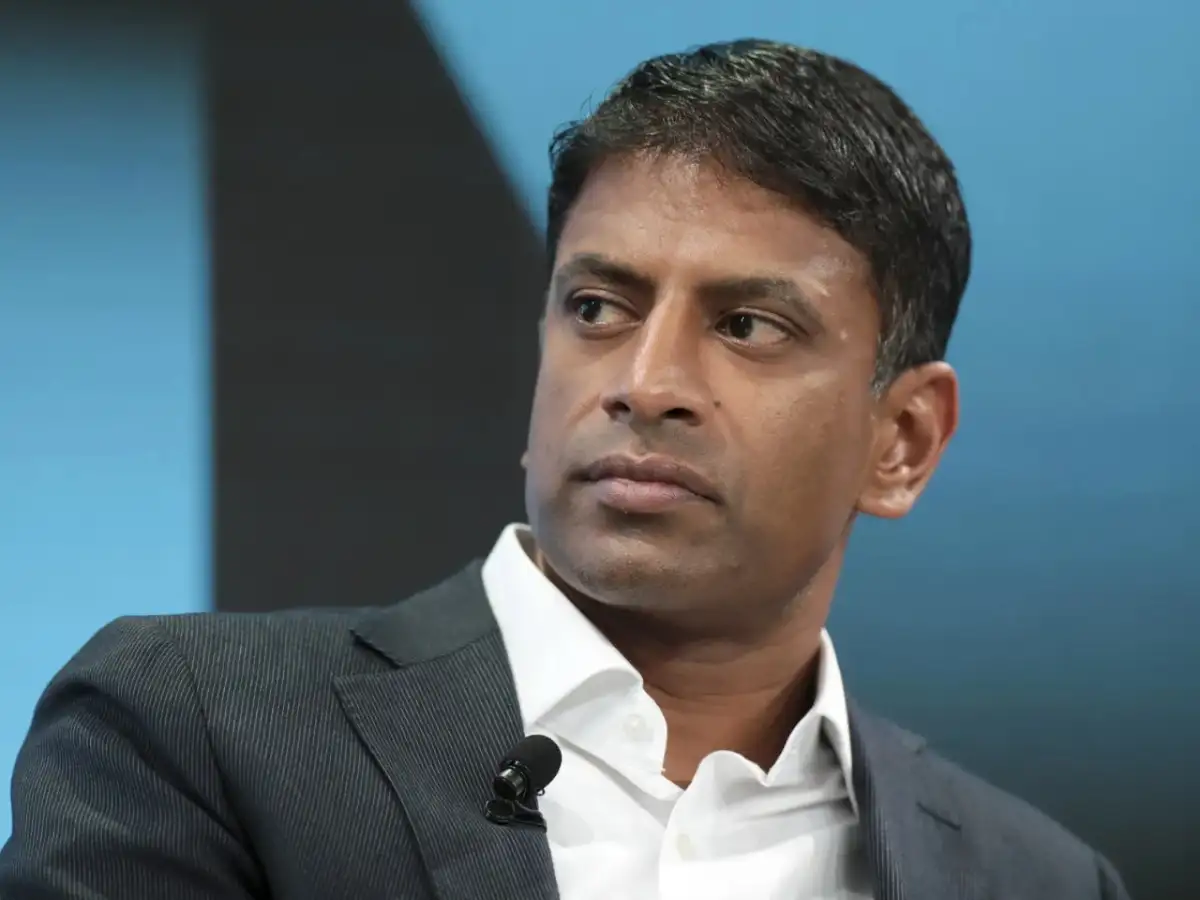
AI major Anthropic has appointed Vas Narasimhan to its Board of Directors, in a move that further elevates the company's emphasis on responsible deployment of advanced artificial intelligence (AI) in healthcare and life sciences. The appointment was made by Anthropic's independent Long-Term Benefit Trust, a governance body designed to preserve alignment between the company's commercial success and its public-benefit mission of ensuring AI is developed for the long-term benefit of humanity. Narasimhan is the chief executive officer of Novartis, one of the world's largest and most influential innovative medicines companies, where he has overseen the development and regulatory approval of more than 35 novel therapies. "Vas brings something rare to our board," said Daniela Amodei, cofounder and President of Anthropic in a blog post. "Getting powerful new technology to people safely and at scale is what we think about every day at Anthropic. Vas has been doing exactly that for years."
What is Mythos? Anthropic's new AI model explained simply
Anthropic's Mythos AI model focuses on coding and autonomous tasks, but its ability to detect and exploit vulnerabilities has raised both interest and concerns in cybersecurity and government circles. Anthropic recently introduced a new AI model called Mythos, and it's already being discussed in serious circles, from cybersecurity experts to government officials. At a basic level, Mythos is designed to handle coding and autonomous tasks, meaning it can perform certain actions on its own without constant human input. But what's making headlines isn't just what it can do; it's how far it can go. Also Read: Google Gemini brings free full length NEET UG practice tests for aspirants Unlike regular AI tools that respond to prompts, Mythos is built to work more independently. It can analyse systems, identify issues, and even connect multiple steps together to solve a problem. One area where it stands out is software vulnerability detection. The model can scan code, find weak points, and suggest ways those weaknesses could be exploited or fixed. Also Read: Anthropic's Claude AI comes to Microsoft Word: What it can do inside documents According to the company, even users without deep technical knowledge could use it to uncover complex issues, something that usually requires experienced developers or security experts. Also Read: Confused By AI Terms? From LLMs to Deep learning - list of top 10 common AI terms Why is it raising concerns? This is where things get complicated. While Mythos can help improve security by identifying bugs, the same capability could also be misused. Experts have pointed out that such tools could make it easier to find and exploit vulnerabilities at scale, especially in sensitive sectors like banking. There are also concerns about how autonomous AI systems behave when they are given more control. If a system can act on its own, the question becomes, how much oversight is enough? Because of these risks, Anthropic is not making Mythos widely available yet. Access is currently restricted to a small group of organisations, mainly to test and understand how the model behaves in real-world scenarios. Some financial institutions are already exploring how it can be used to detect weaknesses in their own systems before attackers do. Ongoing discussions with governments Interestingly, Mythos is also part of ongoing discussions between Anthropic and US authorities. Despite some disagreements around how AI should be used in defence and security, the company has been sharing details about the model with officials. The idea seems to be clear, governments need to understand these tools before they become widely available. Mythos is not just another AI model. It shows where AI is heading, towards systems that can act, analyse, and adapt with less human involvement. That also means the conversation is shifting. It's no longer just about what AI can do, but how safely it should be used.
Deutsche Börse Group Acquires a Stake in Kraken for $200 Million
- Deutsche Börse Group is deepening its partnership with Kraken (Payward, Inc.) through a strategic investment of $200 million. - The partnership encompasses regulated crypto, tokenized markets, and derivatives, as well as enhanced liquidity for institutional clients across geographies. Deutsche Börse Group today announced a strategic investment of $200 million in Payward, Inc., the unified infrastructure layer behind global cryptocurrency platform Kraken. The investment is made through the acquisition of shares in a secondary transaction, resulting in a 1.5 percent fully diluted stake in the company. This investment deepens the strategic partnership between Deutsche Börse Group and Kraken. As announced in December 2025, the two firms will leverage their complementary capabilities to bridge traditional financial markets and the digital asset economy. Spanning trading, custody, settlement, collateral management, and tokenized assets, the partnership will unlock a new range of enhanced products and services that deliver frictionless access to both ecosystems, creating a holistic experience for institutional clients. This investment highlights Deutsche Börse Group's commitment to its digital asset strategy, which involves the development of a comprehensive, hybrid market infrastructure. This infrastructure will be capable of processing assets of any technical form, including traditional securities and blockchain-native tokens, within a unified liquidity pool. The completion of the transaction is subject to customary closing conditions, including applicable regulatory approvals. Closing is expected in Q2. About Deutsche Börse Group As an international exchange organization and innovative market infrastructure provider, Deutsche Börse Group ensures that capital markets are fair, transparent, reliable, and stable. With its wide range of products, services, and technologies, the Group organizes safe and efficient markets for sustainable economies. Its business areas cover the entire financial market transaction process chain. This includes the provision of indices, data, software, SaaS, and analytical solutions, as well as admission, trading, and clearing. Additionally, it comprises services for funds, the settlement and custody of financial instruments, and the management of collateral and liquidity. As a technology company, the Group develops state-of-the-art IT solutions and offers IT systems worldwide. With over 16,000 employees, the Group is headquartered in the financial center of Frankfurt/Rhine-Main and has a strong global presence in locations such as Luxembourg, Prague, Cork, London, Copenhagen, New York, Chicago, Hong Kong, Singapore, Beijing, Tokyo, and Sydney. Disclaimer This is a press release. The information provided in this article is for informational purposes only and does not constitute financial advice. DeFi Planet does not endorse or recommend any specific investment decisions and reminds readers to conduct their own research and due diligence before taking any financial actions. DeFi Planet is not responsible, directly or indirectly, for any damage or loss caused or alleged to be caused by or in connection with the use of or reliance on any content, goods or services mentioned in the press release.

TRUEiGTECH Launches Prediction Market Platform Aggregated API, Connecting Polymarket, Kalshi and Many More
NEW YORK, April 14, 2026 (GLOBE NEWSWIRE) -- TRUEiGTECH today announced the launch of its unified prediction market platform API, designed to help businesses and operators scale within the global prediction market platforms ecosystem. With the market surpassing $10 billion in annual trading volume, operators face fragmented infrastructure and limited liquidity access. The unified API addresses this by enabling a single integration with platforms such as Polymarket and Kalshi, while unlocking aggregated liquidity across multiple sources. Get the latest news delivered to your inbox Sign up for The Manila Times newsletters By signing up with an email address, I acknowledge that I have read and agree to the Terms of Service and Privacy Policy. It enables faster deployment of turnkey prediction market platforms, allowing operators to enter the market with reduced development timelines. The API is currently available to select partners and early adopters, with deployments focused on enabling faster market entry and improved liquidity access. Advertisement For operators requiring more flexibility, the infrastructure also supports bespoke platform development tailored to specific workflows, integrations, and market strategies. Opening a Direct Pathway for Operators to Enter a High-Growth Market The launch of TRUEiGTECH's unified API creates a clear entry point for operators looking to participate in the next phase of prediction market growth. Until now, building or expanding a prediction market platform required multiple integrations, separate liquidity sources, and significant backend development. This slowed time to market and created barriers for new entrants. Advertisement With a unified integration layer, operators can now: * Access multiple prediction market providers through a single integration, eliminating the need for parallel API builds * Unlock a broader range of markets and liquidity pools within one system, improving depth and pricing efficiency * Reduce development timelines by up to 70 percent while simplifying infrastructure complexity * Scale across global markets with a unified and flexible deployment framework As adoption accelerates, early operators gain a strategic advantage, including those expanding from adjacent segments such as sweepstakes gaming platforms. Solving Fragmentation Across a Rapidly Expanding Ecosystem Prediction markets are evolving into a key layer of digital decision-making infrastructure, yet the underlying systems remain disconnected. "The next phase of prediction markets will be defined by connectivity, not isolation," said the CEO of TRUEiGTECH. "Operators today are facing a fragmented system where liquidity, integrations, and scalability are all disconnected. This API creates a direct pathway for businesses to enter and scale in this market without rebuilding the same infrastructure from scratch." Current challenges across the industry include: Advertisement * Fragmented liquidity across independent platforms * Redundant integrations for each provider * Inconsistent pricing and shallow market depth * Delayed platform launches due to technical complexity TRUEiGTECH's API introduces a unified model that consolidates access across providers, allowing platforms to operate within a more connected and efficient ecosystem. By enabling shared liquidity and standardized integrations, the API helps improve price discovery, user experience, and overall market performance. Advertisement Aligned with Global Market Expansion in the US, Europe and Brazil The timing of this launch reflects a growing window of opportunity for operators to enter prediction markets across the United States, Europe and Brazil. In the US, platforms such as Kalshi operate under the Commodity Futures Trading Commission (CFTC), while in Europe, licensing frameworks led by the UK Gambling Commission (UKGC) and Malta Gaming Authority (MGA) continue to shape market expansion. In Brazil, evolving regulations under the Secretariat of Prizes and Betting are opening new pathways for licensed betting and digital gaming platforms. However, entering these markets requires navigating licensing approvals, KYC and AML compliance, and jurisdiction-specific regulations. Advertisement TRUEiGTECH's unified API is designed to support this expansion by enabling: * Multi-region platform deployment aligned with US, European, and Brazilian market structures * Integration across both regulated and decentralized ecosystems * Flexible infrastructure that can adapt to jurisdiction-specific compliance and licensing requirements * Expansion into new verticals including financial forecasting and media-driven event marketsPositioning Operators for the Next Phase of Prediction Markets As prediction markets continue to grow, infrastructure is expected to play a defining role in determining market leaders. Platforms that can access deeper liquidity, scale faster, and operate across multiple ecosystems will be better positioned to capture market share. TRUEiGTECH's unified API enables operators to build and scale prediction market platforms faster, while also supporting seamless deployment across web and mobile applications through integrated prediction market mobile app development capabilities. With the market entering a critical growth phase, businesses that move early are likely to benefit from first mover advantage as prediction markets evolve into a mainstream digital product category. About TRUEiGTECH TRUEiGTECH is a technology provider specializing in prediction market platforms and enterprise iGaming infrastructure. The company builds scalable solutions that enable businesses to launch, integrate, and grow digital gaming platforms across global markets. Its core offerings include: * Casino Software: Flexible online casino infrastructure with multi-game aggregation across slots, live dealer, table games, and other digital formats * Sweepstakes Gaming Platforms: Legally structured platforms designed for compliant, engagement-driven gaming models * Sportsbook Solutions: End-to-end sportsbook platforms with real-time betting, odds management, and multi-market support * Casino Games: Custom and ready-to-integrate games including slots, table games, and interactive formats, optimized for performance and player retention TRUEiGTECH's platforms are built for regulated markets across the United States, Europe, LATAM, and other emerging regions, with a focus on scalability, compliance, and performance. Contact [email protected] A photo accompanying this announcement is available at https://www.globenewswire.com/NewsRoom/AttachmentNg/a26b78e5-e688-4110-8cd9-cc4a53419844

TRUEiGTECH Launches Prediction Market Platform Aggregated API, Connecting Polymarket, Kalshi and Many Mor
NEW YORK, April 14, 2026 (GLOBE NEWSWIRE) -- TRUEiGTECH today announced the launch of its unified prediction market platform API, designed to help businesses and operators scale within the global prediction market platforms ecosystem. With the market surpassing $10 billion in annual trading volume, operators face fragmented infrastructure and limited liquidity access. The unified API addresses this by enabling a single integration with platforms such as Polymarket and Kalshi, while unlocking aggregated liquidity across multiple sources. It enables faster deployment of turnkey prediction market platforms, allowing operators to enter the market with reduced development timelines. The API is currently available to select partners and early adopters, with deployments focused on enabling faster market entry and improved liquidity access. Opening a Direct Pathway for Operators to Enter a High-Growth Market The launch of TRUEiGTECH's unified API creates a clear entry point for operators looking to participate in the next phase of prediction market growth. Until now, building or expanding a prediction market platform required multiple integrations, separate liquidity sources, and significant backend development. This slowed time to market and created barriers for new entrants. With a unified integration layer, operators can now: As adoption accelerates, early operators gain a strategic advantage, including those expanding from adjacent segments such as sweepstakes gaming platforms. Solving Fragmentation Across a Rapidly Expanding Ecosystem Prediction markets are evolving into a key layer of digital decision-making infrastructure, yet the underlying systems remain disconnected. "The next phase of prediction markets will be defined by connectivity, not isolation," said the CEO of TRUEiGTECH. "Operators today are facing a fragmented system where liquidity, integrations, and scalability are all disconnected. This API creates a direct pathway for businesses to enter and scale in this market without rebuilding the same infrastructure from scratch." Current challenges across the industry include: Fragmented liquidity across independent platformsRedundant integrations for each providerInconsistent pricing and shallow market depthDelayed platform launches due to technical complexity TRUEiGTECH's API introduces a unified model that consolidates access across providers, allowing platforms to operate within a more connected and efficient ecosystem. By enabling shared liquidity and standardized integrations, the API helps improve price discovery, user experience, and overall market performance. Aligned with Global Market Expansion in the US, Europe and Brazil The timing of this launch reflects a growing window of opportunity for operators to enter prediction markets across the United States, Europe and Brazil. In the US, platforms such as Kalshi operate under the Commodity Futures Trading Commission (CFTC), while in Europe, licensing frameworks led by the UK Gambling Commission (UKGC) and Malta Gaming Authority (MGA) continue to shape market expansion. In Brazil, evolving regulations under the Secretariat of Prizes and Betting are opening new pathways for licensed betting and digital gaming platforms. However, entering these markets requires navigating licensing approvals, KYC and AML compliance, and jurisdiction-specific regulations. TRUEiGTECH's unified API is designed to support this expansion by enabling: Multi-region platform deployment aligned with US, European, and Brazilian market structuresIntegration across both regulated and decentralized ecosystemsFlexible infrastructure that can adapt to jurisdiction-specific compliance and licensing requirementsExpansion into new verticals including financial forecasting and media-driven event markets Positioning Operators for the Next Phase of Prediction Markets As prediction markets continue to grow, infrastructure is expected to play a defining role in determining market leaders. Platforms that can access deeper liquidity, scale faster, and operate across multiple ecosystems will be better positioned to capture market share. TRUEiGTECH's unified API enables operators to build and scale prediction market platforms faster, while also supporting seamless deployment across web and mobile applications through integrated prediction market mobile app development capabilities. With the market entering a critical growth phase, businesses that move early are likely to benefit from first mover advantage as prediction markets evolve into a mainstream digital product category. About TRUEiGTECH TRUEiGTECH is a technology provider specializing in prediction market platforms and enterprise iGaming infrastructure. The company builds scalable solutions that enable businesses to launch, integrate, and grow digital gaming platforms across global markets. Its core offerings include: TRUEiGTECH's platforms are built for regulated markets across the United States, Europe, LATAM, and other emerging regions, with a focus on scalability, compliance, and performance. Contact [email protected] Market News and Data brought to you by Benzinga APIs To add Benzinga News as your preferred source on Google, click here.

Anthropic adds Novartis CEO to board ahead of potential IPO, WSJ reports By Investing.com
Investing.com -- Anthropic has appointed Vas Narasimhan, chief executive of Swiss pharmaceutical company Novartis, to its board of directors, the Wall Street Journal reported Tuesday. The move marks the second board addition in recent months for the Claude chatbot developer, which added former Microsoft and General Motors executive Chris Liddell to its board in February. The company is strengthening its board as it considers an initial public offering, potentially as soon as this year, and expands its enterprise push into healthcare. The healthcare sector is a priority for Anthropic. The company has partnered with Eli Lilly, Novo Nordisk and Genmab with the aim of shortening drug development life cycles. Anthropic co-founder Daniela Amodei said in a statement that Narasimhan had overseen the development and approval of more than 35 novel medicines in "one of the most regulated industries." This article was generated with the support of AI and reviewed by an editor. For more information see our T&C.
Deutsche Börse Buys $200M Stake in Kraken Parent Payward Ahead of Potential U.S. Listing - Crypto Economy
The investment formalizes and deepens a partnership announced in December 2025, under which Kraken would be integrated with 360T, Deutsche Börse's foreign exchange trading platform. The goal of both companies is to build a unified infrastructure for institutional clients that operates across both traditional and crypto assets, without the need to maintain parallel systems. Thomas Book, member of the Deutsche Börse executive board, summed up the alliance's vision: "We want to create an integrated value chain, regardless of whether the asset is tokenized or fully digital." Direct institutional participation in the crypto industry continues to deepen. This year also saw the disclosure of an approximately $200 million investment by the owner of the New York Stock Exchange, Intercontinental Exchange, in the exchange OKX, valued at the time at $25 billion. Kraken, one of the world's oldest crypto exchanges, reported $2.2 billion in adjusted revenue during 2025, growth the company attributed to an expansion beyond spot trading and into a broader range of financial services. In March, Kraken became the first crypto company to gain access to the Federal Reserve's core payment system, a milestone that underscores the advancing integration between digital finance and the traditional financial system.

TRUEiGTECH Launches Prediction Market Platform Aggregated API, Connecting Polymarket, Kalshi and Many More
NEW YORK, April 14, 2026 (GLOBE NEWSWIRE) -- TRUEiGTECH today announced the launch of its unified prediction market platform API, designed to help businesses and operators scale within the global prediction market platforms ecosystem. With the market surpassing $10 billion in annual trading volume, operators face fragmented infrastructure and limited liquidity access. The unified API addresses this by enabling a single integration with platforms such as Polymarket and Kalshi, while unlocking aggregated liquidity across multiple sources. It enables faster deployment of turnkey prediction market platforms, allowing operators to enter the market with reduced development timelines. The API is currently available to select partners and early adopters, with deployments focused on enabling faster market entry and improved liquidity access. For operators requiring more flexibility, the infrastructure also supports bespoke platform development tailored to specific workflows, integrations, and market strategies. Opening a Direct Pathway for Operators to Enter a High-Growth Market The launch of TRUEiGTECH's unified API creates a clear entry point for operators looking to participate in the next phase of prediction market growth. Until now, building or expanding a prediction market platform required multiple integrations, separate liquidity sources, and significant backend development. This slowed time to market and created barriers for new entrants. With a unified integration layer, operators can now: * Access multiple prediction market providers through a single integration, eliminating the need for parallel API builds * Unlock a broader range of markets and liquidity pools within one system, improving depth and pricing efficiency * Reduce development timelines by up to 70 percent while simplifying infrastructure complexity * Scale across global markets with a unified and flexible deployment framework As adoption accelerates, early operators gain a strategic advantage, including those expanding from adjacent segments such as sweepstakes gaming platforms. Solving Fragmentation Across a Rapidly Expanding Ecosystem Prediction markets are evolving into a key layer of digital decision-making infrastructure, yet the underlying systems remain disconnected. "The next phase of prediction markets will be defined by connectivity, not isolation," said the CEO of TRUEiGTECH. "Operators today are facing a fragmented system where liquidity, integrations, and scalability are all disconnected. This API creates a direct pathway for businesses to enter and scale in this market without rebuilding the same infrastructure from scratch." Current challenges across the industry include: * Fragmented liquidity across independent platforms * Redundant integrations for each provider * Inconsistent pricing and shallow market depth * Delayed platform launches due to technical complexity TRUEiGTECH's API introduces a unified model that consolidates access across providers, allowing platforms to operate within a more connected and efficient ecosystem. By enabling shared liquidity and standardized integrations, the API helps improve price discovery, user experience, and overall market performance. Aligned with Global Market Expansion in the US, Europe and Brazil The timing of this launch reflects a growing window of opportunity for operators to enter prediction markets across the United States, Europe and Brazil. In the US, platforms such as Kalshi operate under the Commodity Futures Trading Commission (CFTC), while in Europe, licensing frameworks led by the UK Gambling Commission (UKGC) and Malta Gaming Authority (MGA) continue to shape market expansion. In Brazil, evolving regulations under the Secretariat of Prizes and Betting are opening new pathways for licensed betting and digital gaming platforms. However, entering these markets requires navigating licensing approvals, KYC and AML compliance, and jurisdiction-specific regulations. TRUEiGTECH's unified API is designed to support this expansion by enabling: * Multi-region platform deployment aligned with US, European, and Brazilian market structures * Integration across both regulated and decentralized ecosystems * Flexible infrastructure that can adapt to jurisdiction-specific compliance and licensing requirements * Expansion into new verticals including financial forecasting and media-driven event markets Positioning Operators for the Next Phase of Prediction Markets As prediction markets continue to grow, infrastructure is expected to play a defining role in determining market leaders. Platforms that can access deeper liquidity, scale faster, and operate across multiple ecosystems will be better positioned to capture market share. TRUEiGTECH's unified API enables operators to build and scale prediction market platforms faster, while also supporting seamless deployment across web and mobile applications through integrated prediction market mobile app development capabilities. With the market entering a critical growth phase, businesses that move early are likely to benefit from first mover advantage as prediction markets evolve into a mainstream digital product category. About TRUEiGTECH TRUEiGTECH is a technology provider specializing in prediction market platforms and enterprise iGaming infrastructure. The company builds scalable solutions that enable businesses to launch, integrate, and grow digital gaming platforms across global markets. Its core offerings include: * Casino Software: Flexible online casino infrastructure with multi-game aggregation across slots, live dealer, table games, and other digital formats * Sweepstakes Gaming Platforms: Legally structured platforms designed for compliant, engagement-driven gaming models * Sportsbook Solutions: End-to-end sportsbook platforms with real-time betting, odds management, and multi-market support * Casino Games: Custom and ready-to-integrate games including slots, table games, and interactive formats, optimized for performance and player retention TRUEiGTECH's platforms are built for regulated markets across the United States, Europe, LATAM, and other emerging regions, with a focus on scalability, compliance, and performance. Contact [email protected] A photo accompanying this announcement is available at https://www.globenewswire.com/NewsRoom/AttachmentNg/a26b78e5-e688-4110-8cd9-cc4a53419844

Fed nominee Warsh's holdings include SpaceX, Polymarket, crypto and AI
Ai Holdings Corporation is a holding company engaged in manufacturing and sales of information equipment and security equipment businesses. The Company operates through seven business segments. Security Equipment segment engages in development, manufacturing and sales of security equipment. Card Equipment and Other Office Equipment segment provides card issuance equipment for hospitals and financial institutions. Information Equipment segment engages in development, manufacturing, sales and maintenance of computer peripheral equipment, including plotters and scanners. Measuring Device and Environmental Testing Equipment segment provides measuring devices and environmental testing equipment. Design segment engages in the structural and architectural design with a focus on seismic diagnosis. Leasing and Installment segment engages in the brokerage of installment and leasing businesses. The other business engages in development and sales of software.

Xi Jinping: The world today is plunged into chaos
Chinese President Xi Jinping said on Tuesday that the world is currently mired in chaos and facing a struggle between justice and power. During a meeting with the Spanish Prime Minister, Pedro Sánchez, at the Great Hall of the People in Beijing, both sides addressed the complex and volatile international situation. "Xi Jinping emphasized that the world today is mired in chaos and faces a struggle between justice and power. The way a nation treats international law and the international order reflects its worldview, its concept of order, its values, and its sense of responsibility," he asserted, as quoted in a press release from the Chinese Foreign Ministry. Defending genuine multilateralism The Chinese head of state urged both nations to strengthen communication, consolidate mutual trust, and cooperate closely to oppose the global backsliding towards the law of the jungle and jointly uphold genuine multilateralism. Furthermore, to maintain the international system with the United Nations as its central axis and the world order based on international law, to promote an equitable and orderly multipolar world, inclusive economic globalization and the building of a community with a shared future for humanity. A strategically sound relationship Xi also expressed that relations between Beijing and Madrid have maintained steady development, forging a strategically sound relationship, and stressed the importance of making sound decisions based on common interests. "Events have shown that deepening cooperation benefits both peoples, aligns with current trends, and strengthens mutual capacity and trust to pursue independent paths. Both sides should prioritize the development of China-Spain relations in their respective foreign policies and support each other in safeguarding national sovereignty and territorial integrity," he said. He also stated that the two countries should jointly promote innovative development, strengthen cooperation in trade, renewable energy and the smart economy, foster cultural, educational, scientific research and sports exchanges, and promote a comprehensive strategic partnership to achieve better results and greater benefits for their people. Strengthening bilateral relations For his part, Sánchez highlighted that Chinese investment and cooperation in Spain have significantly boosted the country's economic development. He affirmed that Spain firmly adheres to the one China principle, values the Asian country's position as a great power, and is committed to developing a strong strategic partnership between Madrid and Beijing. He asserted that Spain aspires to strengthen cooperation in trade, investment, renewable energy and other areas, as well as to promote cultural exchanges. Regarding the complex and challenging international situation, he stated that only through multilateralism and the promotion of a multipolar world can lasting peace for humanity be achieved. He expressed support for the four global initiatives proposed by President Xi, and stressed his willingness to maintain close communication and cooperation with China to jointly address the challenges of international geopolitics, trade protectionism and climate change, and uphold international law and multilateralism.

Anthropic adds Novartis CEO to board ahead of potential IPO, WSJ reports By Investing.com
Investing.com -- Anthropic has appointed Vas Narasimhan, chief executive of Swiss pharmaceutical company Novartis, to its board of directors, the Wall Street Journal reported Tuesday. The move marks the second board addition in recent months for the Claude chatbot developer, which added former Microsoft and General Motors executive Chris Liddell to its board in February. The company is strengthening its board as it considers an initial public offering, potentially as soon as this year, and expands its enterprise push into healthcare. The healthcare sector is a priority for Anthropic. The company has partnered with Eli Lilly, Novo Nordisk and Genmab with the aim of shortening drug development life cycles. Anthropic co-founder Daniela Amodei said in a statement that Narasimhan had overseen the development and approval of more than 35 novel medicines in "one of the most regulated industries." This article was generated with the support of AI and reviewed by an editor. For more information see our T&C.
Deutsche Börse's $200M Kraken bet underscores TradFi's crypto ambitions
Deutsche Börse's $200M stake in Kraken signals deepening TradFi consolidation around regulated crypto exchanges and accelerates Wall Street's migration into digital asset infrastructure. Deutsche Börse, the German stock exchange operator behind Xetra and Eurex, has taken a $200 million stake in Kraken, marking one of the most significant institutional bets yet on a global crypto exchange. The investment, first highlighted by market watcher WatcherGuru on X, is being framed as a landmark step in the consolidation of crypto trading venues and the deepening integration of digital assets into traditional market infrastructure. In a post on X, @WatcherGuru told followers that "German stock exchange operator Deutsche Börse acquired a $200 million stake in Kraken crypto exchange," calling it "one of the most significant institutional moves in crypto exchange consolidation in recent memory." The deal expands Deutsche Börse's footprint beyond derivatives and securities trading into spot and derivatives crypto markets, while giving Kraken a powerful ally in Europe's tightly regulated financial ecosystem. The investment comes as global exchanges and clearing houses increasingly treat regulated crypto venues as extensions of their core infrastructure rather than speculative side bets. For Deutsche Börse, a stake in Kraken offers access to a growing base of retail and institutional crypto traders, plus technology and market data that can feed into existing futures, options and index businesses. For Kraken, the partnership with a blue‑chip European exchange operator strengthens its regulatory and institutional credentials at a time when compliance, licensing and capital standards are tightening across the U.S. and EU. The $200 million injection also sends a signal to competitors and investors that large, well‑capitalized TradFi players are willing to back established exchanges rather than build from scratch, accelerating consolidation around a handful of global platforms. Market commentators point out that such cross‑ownership deals can pave the way for joint products, cross‑listed crypto instruments and shared custody or clearing solutions that bridge on‑chain and traditional capital markets. With Deutsche Börse now on its cap table, Kraken is positioned to play a larger role in Europe's regulated digital asset landscape, as institutional demand for transparent, well‑supervised trading venues continues to grow. Deutsche Börse, the German stock exchange operator behind Xetra and Eurex, has taken a $200 million stake in Kraken, marking one of the most significant institutional bets yet on a global crypto exchange. The investment, first highlighted by market watcher WatcherGuru on X, is being framed as a landmark step in the consolidation of crypto trading venues and the deepening integration of digital assets into traditional market infrastructure. In a post on X, @WatcherGuru told followers that "German stock exchange operator Deutsche Börse acquired a $200 million stake in Kraken crypto exchange," calling it "one of the most significant institutional moves in crypto exchange consolidation in recent memory." The deal expands Deutsche Börse's footprint beyond derivatives and securities trading into spot and derivatives crypto markets, while giving Kraken a powerful ally in Europe's tightly regulated financial ecosystem. The investment comes as global exchanges and clearing houses increasingly treat regulated crypto venues as extensions of their core infrastructure rather than speculative side bets. For Deutsche Börse, a stake in Kraken offers access to a growing base of retail and institutional crypto traders, plus technology and market data that can feed into existing futures, options and index businesses. For Kraken, the partnership with a blue‑chip European exchange operator strengthens its regulatory and institutional credentials at a time when compliance, licensing and capital standards are tightening across the U.S. and EU. The $200 million injection also sends a signal to competitors and investors that large, well‑capitalized TradFi players are willing to back established exchanges rather than build from scratch, accelerating consolidation around a handful of global platforms. Market commentators point out that such cross‑ownership deals can pave the way for joint products, cross‑listed crypto instruments and shared custody or clearing solutions that bridge on‑chain and traditional capital markets. With Deutsche Börse now on its cap table, Kraken is positioned to play a larger role in Europe's regulated digital asset landscape, as institutional demand for transparent, well‑supervised trading venues continues to grow.

TrueiGTech: TRUEiGTECH Launches Prediction Market Platform Aggregated API, Connecting Polymarket, Kalshi and Many More
NEW YORK, April 14, 2026 (GLOBE NEWSWIRE) -- TRUEiGTECH today announced the launch of its unified prediction market platform API, designed to help businesses and operators scale within the global prediction market platforms ecosystem. With the market surpassing $10 billion in annual trading volume, operators face fragmented infrastructure and limited liquidity access. The unified API addresses this by enabling a single integration with platforms such as Polymarket and Kalshi, while unlocking aggregated liquidity across multiple sources. It enables faster deployment of turnkey prediction market platforms, allowing operators to enter the market with reduced development timelines. The API is currently available to select partners and early adopters, with deployments focused on enabling faster market entry and improved liquidity access. For operators requiring more flexibility, the infrastructure also supports bespoke platform development tailored to specific workflows, integrations, and market strategies. Opening a Direct Pathway for Operators to Enter a High-Growth Market The launch of TRUEiGTECH's unified API creates a clear entry point for operators looking to participate in the next phase of prediction market growth. Until now, building or expanding a prediction market platform required multiple integrations, separate liquidity sources, and significant backend development. This slowed time to market and created barriers for new entrants. With a unified integration layer, operators can now: Access multiple prediction market providers through a single integration, eliminating the need for parallel API buildsUnlock a broader range of markets and liquidity pools within one system, improving depth and pricing efficiencyReduce development timelines by up to 70 percent while simplifying infrastructure complexityScale across global markets with a unified and flexible deployment framework As adoption accelerates, early operators gain a strategic advantage, including those expanding from adjacent segments such as sweepstakes gaming platforms. Solving Fragmentation Across a Rapidly Expanding Ecosystem Prediction markets are evolving into a key layer of digital decision-making infrastructure, yet the underlying systems remain disconnected. "The next phase of prediction markets will be defined by connectivity, not isolation," said the CEO of TRUEiGTECH. "Operators today are facing a fragmented system where liquidity, integrations, and scalability are all disconnected. This API creates a direct pathway for businesses to enter and scale in this market without rebuilding the same infrastructure from scratch." Current challenges across the industry include: Fragmented liquidity across independent platformsRedundant integrations for each providerInconsistent pricing and shallow market depthDelayed platform launches due to technical complexity TRUEiGTECH's API introduces a unified model that consolidates access across providers, allowing platforms to operate within a more connected and efficient ecosystem. By enabling shared liquidity and standardized integrations, the API helps improve price discovery, user experience, and overall market performance. Aligned with Global Market Expansion in the US, Europe and Brazil The timing of this launch reflects a growing window of opportunity for operators to enter prediction markets across the United States, Europe and Brazil. In the US, platforms such as Kalshi operate under the Commodity Futures Trading Commission (CFTC), while in Europe, licensing frameworks led by the UK Gambling Commission (UKGC) and Malta Gaming Authority (MGA) continue to shape market expansion. In Brazil, evolving regulations under the Secretariat of Prizes and Betting are opening new pathways for licensed betting and digital gaming platforms. However, entering these markets requires navigating licensing approvals, KYC and AML compliance, and jurisdiction-specific regulations. TRUEiGTECH's unified API is designed to support this expansion by enabling: Multi-region platform deployment aligned with US, European, and Brazilian market structuresIntegration across both regulated and decentralized ecosystemsFlexible infrastructure that can adapt to jurisdiction-specific compliance and licensing requirementsExpansion into new verticals including financial forecasting and media-driven event markets Positioning Operators for the Next Phase of Prediction Markets As prediction markets continue to grow, infrastructure is expected to play a defining role in determining market leaders. Platforms that can access deeper liquidity, scale faster, and operate across multiple ecosystems will be better positioned to capture market share. TRUEiGTECH's unified API enables operators to build and scale prediction market platforms faster, while also supporting seamless deployment across web and mobile applications through integrated prediction market mobile app development capabilities. With the market entering a critical growth phase, businesses that move early are likely to benefit from first mover advantage as prediction markets evolve into a mainstream digital product category. About TRUEiGTECH TRUEiGTECH is a technology provider specializing in prediction market platforms and enterprise iGaming infrastructure. The company builds scalable solutions that enable businesses to launch, integrate, and grow digital gaming platforms across global markets. Its core offerings include: Casino Software: Flexible online casino infrastructure with multi-game aggregation across slots, live dealer, table games, and other digital formatsSweepstakes Gaming Platforms: Legally structured platforms designed for compliant, engagement-driven gaming modelsSportsbook Solutions: End-to-end sportsbook platforms with real-time betting, odds management, and multi-market supportCasino Games: Custom and ready-to-integrate games including slots, table games, and interactive formats, optimized for performance and player retention TRUEiGTECH's platforms are built for regulated markets across the United States, Europe, LATAM, and other emerging regions, with a focus on scalability, compliance, and performance. Contact [email protected] A photo accompanying this announcement is available at https://www.globenewswire.com/NewsRoom/AttachmentNg/a26b78e5-e688-4110-8cd9-cc4a53419844 © 2026 GlobeNewswire (Europe)

Trump's Fed chair pick Kevin Warsh discloses holdings in SpaceX, Polymarket, and Ethereum dev platform
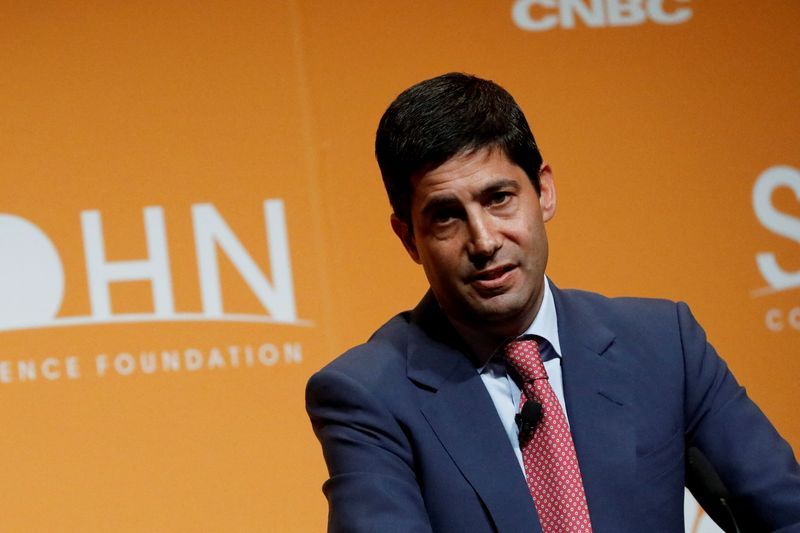
Kevin Warsh's diverse investment portfolio reflects a strong interest in emerging technologies and digital finance. President Donald Trump's Federal Reserve chair nominee Kevin Warsh disclosed a net worth between $131 million and $209 million, with a portfolio spanning space, crypto infrastructure, artificial intelligence, biotech, and fintech startups, according to a new financial disclosure. The filing shows a combination of institutional fund positions and an extensive set of early-stage startup investments held through affiliated vehicles. The statement lists more than $100 million in exposure through Juggernaut Fund LP positions tied to advisory work with the Duquesne Family Office. It also includes a direct stake in SpaceX and exposure to Polymarket, extending into private markets and digital assets. DCM Investments 10 LLC accounts for dozens of smaller positions, each valued at under $500,000. These include fintech, crypto infrastructure, biotech, and consumer startups such as Tenderly, an Ethereum and web3 development platform, Recraft, Volt, 11x, Outpace Bio, Partiful, Cafe X, Stashfin, Lemon Cash, and Delphi AI. Michael Saylor has predicted that Warsh could become the first pro-Bitcoin Fed chair. Trump has signaled strong support for Warsh, though his historical commentary on Bitcoin reflects a balanced and at times cautious position. Warsh previously described Bitcoin as comparable to gold in its potential role as a store of value, while emphasizing that it is not a substitute for the US dollar. He also suggested that it may function as a useful signal for monetary policymakers, helping indicate when policy adjustments are needed. His engagement with crypto dates back to early exposure through Marc Andreessen and investments in firms such as Basis and Bitwise.

Anthropic adds Novartis CEO to board ahead of potential IPO, WSJ reports By Investing.com
Investing.com -- Anthropic has appointed Vas Narasimhan, chief executive of Swiss pharmaceutical company Novartis, to its board of directors, the Wall Street Journal reported Tuesday. The move marks the second board addition in recent months for the Claude chatbot developer, which added former Microsoft and General Motors executive Chris Liddell to its board in February. The company is strengthening its board as it considers an initial public offering, potentially as soon as this year, and expands its enterprise push into healthcare. The healthcare sector is a priority for Anthropic. The company has partnered with Eli Lilly, Novo Nordisk and Genmab with the aim of shortening drug development life cycles. Anthropic co-founder Daniela Amodei said in a statement that Narasimhan had overseen the development and approval of more than 35 novel medicines in "one of the most regulated industries." This article was generated with the support of AI and reviewed by an editor. For more information see our T&C.
Anthropic Has Wiped Out Trillions From the Software Sector. 2 Things Can Happen Next
The value that's been erased in software should appear elsewhere in the stock market. Software stocks jumped on Monday, but the trend in the sector this year has been clear. Year-to-date, the iShares Expanded Tech-Software Sector ETF (NYSEMKT: IGV), which tracks top software stocks like Microsoft (NASDAQ: MSFT), Palantir, and Oracle, is down 26.4% for the year. Will AI create the world's first trillionaire? Our team just released a report on the one little-known company, called an "Indispensable Monopoly" providing the critical technology Nvidia and Intel both need. Continue " While sky-high valuations in the sector coming into the year may be partially to blame, the biggest explanation for the collapse in software stocks is Anthropic. The AI start-up has made rapid advances in its AI models and plug-ins, designed to compete with entrenched enterprise software companies. Many of the software-as-a-service (SaaS) sector's worst days were triggered by product announcements from Anthropic. For example, Mythos, its latest model, is so powerful, posing serious risks to banks and cybersecurity, that the company chose not to release it to the public. CrowdStrike, the leading cybersecurity firm, fell 8% on the day it was announced. All told, software stocks have lost trillions in market value this year. Microsoft, alone, has given up $700 billion, and Palantir and Oracle are each down about $100 billion. Anthropic isn't entirely to blame for the sell-off in the software sector, but it looks like the primary culprit at this point. There are two scenarios that can unfold from here, and both represent opportunities for investors. Image source: Getty Images. The underlying premise for the software sell-off is that AI agents and "vibecoding" platforms from Anthropic and peers like OpenAI will make software much cheaper to make and more customizable, alleviating the need for enterprises to spend tens of millions of dollars on massive per-seat contracts with the likes of Salesforce and ServiceNow. While there is some anecdotal evidence that businesses are starting to do this, the notion that Anthropic will kill individual software companies has received substantial pushback. Nvidia CEO Jensen Huang said in February that "markets got it wrong" on the software sell-off, arguing that agentic AI will use existing software programs, rather than disrupting them. There's also little evidence in these companies' earnings reports that they are experiencing any disruption. In fact, most of them continue to post strong growth and guidance, and are incorporating AI tools into their products. In this scenario, software stocks continue to deliver solid growth, and the market eventually gives up on the AI disruption trade, leading to a recovery. Investing in the IGV ETF or its individual components is the best way to profit in this scenario. Alternatively, Anthropic and other agentic AI tools could successfully disrupt the software sector, much like the internet disrupted pre-digital forms of media. If that happens, it's likely to take years, but the value being destroyed in the software sector should show up elsewhere. Anthropic is an obvious candidate, but the company is still privately held, making it difficult to invest directly in the company. Another option is to invest in Anthropic's biggest customers, as those companies are likely to benefit from the productivity and cost-savings from agentic AI. Of the publicly traded companies using Anthropic, one of the biggest, surprisingly, is Microsoft. Though the Windows-maker is known for its partnership with OpenAI, it's now on pace to spend around $500 million on Anthropic this year, according to The Information. Cognizant Technology Solutions also recently became one of Anthropic's three largest customers by seats, with plans to make Claude available for its 350,000 employees. Additionally, Amazon and Alphabet are both major investors and partners of Anthropic, though it's unclear how much they actually spend on Anthropic products. Anthropic is growing rapidly, meaning its customer list is too, which should provide more potential targets for investors. The opportunity to buy shares of Anthropic could also soon be a possibility as the company is aiming to go public by the end of the year. Overall, investors may want to consider hedging into both scenarios here. Investing in software stocks is the easiest and most direct option, but if Anthropic is truly disruptive enough to crush the enterprise software industry, then the companies leveraging its power should benefit. Notably, Microsoft appears on both lists, making it a good candidate for investors. While its software business might be at risk of disruption, its cloud infrastructure division is seeing surging growth from AI, and the stock is as cheap as it's been in years. The Motley Fool Stock Advisor analyst team just identified what they believe are the 10 best stocks for investors to buy now... and Microsoft wasn't one of them. The 10 stocks that made the cut could produce monster returns in the coming years. Consider when Netflix made this list on December 17, 2004... if you invested $1,000 at the time of our recommendation, you'd have $556,335!* Or when Nvidia made this list on April 15, 2005... if you invested $1,000 at the time of our recommendation, you'd have $1,160,572!* Now, it's worth noting Stock Advisor's total average return is 975% -- a market-crushing outperformance compared to 193% for the S&P 500. Don't miss the latest top 10 list, available with Stock Advisor, and join an investing community built by individual investors for individual investors. Jeremy Bowman has positions in Amazon, CrowdStrike, and Nvidia. The Motley Fool has positions in and recommends Alphabet, Amazon, CrowdStrike, Microsoft, Nvidia, Oracle, Palantir Technologies, Salesforce, and ServiceNow. The Motley Fool recommends Cognizant Technology Solutions. The Motley Fool has a disclosure policy.

SpaceX IPO: 5 space stocks already climbing fast
SpaceX's planned $1.75T IPO could reshape commercial space and lift these 5 stocks with it The most anticipated stock market debut in recent memory is taking shape. SpaceX filed a confidential draft registration with the Securities and Exchange Commission on April 1, targeting a $1.75 trillion valuation and a raise of roughly $75 billion that would surpass Saudi Aramco's 2019 record. A June Nasdaq listing is the current timeline, and analysts believe the event could be the catalyst that finally unlocks institutional-scale capital across the entire commercial space sector. Here are the five stocks already positioned to benefit. The SpaceX effect: why this IPO matters beyond one stock SpaceX controls the vast majority of global launch market share, and nearly every company building satellite constellations, orbital infrastructure or space-based manufacturing depends on its rockets. A successful public listing at a $1.75 trillion valuation would legitimize commercial space as an institutional-grade asset class, potentially directing capital toward names that have been growing on momentum alone and waiting for this kind of industry benchmark. Rocket Lab (NASDAQ: RKLB) Rocket Lab is the closest domestic competitor SpaceX has in the launch market, though it remains a distant second in scale. Revenue reached $601.8 million in 2025, up nearly 38% year over year, and the company is developing its Neutron heavy-lift rocket to pursue larger constellation and human spaceflight contracts. The stock surged to nearly $100 in January before pulling back to around $70. Fifteen analysts carry a consensus Buy rating with an average price target of $79.85. The company remains unprofitable, but revenue growth and an expanding launch backlog suggest profitability could arrive within the next two years. AST SpaceMobile (NASDAQ: ASTS) AST SpaceMobile is building a space-based cellular broadband network that works directly with standard smartphones, targeting uninterrupted global 5G coverage. Revenue surged from $4.4 million in 2024 to $70.9 million in 2025, beating analyst expectations by roughly 30%. Partners including TELUS, Orange and Vodafone have already signed on, and management reiterated a 2027 commercial revenue goal of approximately $1 billion while targeting 45 to 60 satellites in orbit by end of 2026. Losses widened to $342 million, and timely satellite deployment remains the defining execution risk. Intuitive Machines (NASDAQ: LUNR) Intuitive Machines builds robots, landers and space infrastructure with a primary focus on the moon, but its near-term financial story is the most compelling of the group. Management guided for $900 million to $1 billion in 2026 revenue, up sharply from $210 million in 2025, driven by NASA commercial lunar contracts, defense awards and acquisitions. A backlog approaching $943 million provides visibility, and the company guided for positive adjusted EBITDA in 2026, a milestone that would make it one of the first non-SpaceX space companies to reach it. Shares trade near their 52-week high of $26.24. Planet Labs (NYSE: PL) Planet Labs operates a constellation of Earth-imaging satellites and is transitioning from a hardware business into a data-intelligence platform. Fiscal year 2026 revenue reached $307.7 million, up 26% year over year, with a fourth quarter that beat estimates by a wide margin. Institutional investors own roughly 40% of the float and have been net buyers at better than a two-to-one pace. Losses widened to $247 million and the path to profitability remains several years out, but a successful SpaceX IPO could accelerate broader capital flows into the sector and support Planet Labs' growth timeline. Redwire (NYSE: RDW) Redwire builds space infrastructure including deployable solar arrays, sensors, avionics and in-space manufacturing facilities, alongside a defense technology segment covering autonomous systems and optical sensors. Revenue grew 10% to $335 million in 2025, but losses reached $272 million and the profit margin sits at negative 67.5%. Of the five, Redwire carries the longest runway to profitability and the most volatility risk. Analysts assign a consensus Strong Buy rating with an average price target of $13.89 against a current share price near $9.80, implying meaningful upside if the broader space buildout accelerates as the SpaceX listing approaches.

Fed nominee Warsh's holdings include SpaceX, Polymarket, crypto and AI
WASHINGTON, April 14 (Reuters) - Holdings in Elon Musk's SpaceX company and predictions platform Polymarket are among dozens of future-oriented assets that Federal Reserve chair nominee Kevin Warsh lists on a newly filed financial disclosure that shows dozens of apparently small bets on a wide array of emerging and almost science fiction-sounding ventures. Warsh's major holdings put his assets at well over $100 million, including two $50-million-plus holdings in the Juggernaut Fund LP, apparently part of Warsh's work advising for the Duquesne Family Office, the private investment firm of Stanley Druckenmiller. But it is in dozens of other holdings, listed as part of something called DCM Investments 10 LLC with a market value of no more than half a million dollars, that Warsh's stylings as a traditionalist central banker morph into an emerging future of digitized AI avatars doling out advice, AI-driven art, new vaccines for herpes and longlasting reversible male contraception, and decentralized derivatives trading. SpaceX may be well known for Musk's business blanketing the globe with internet satellite coverage and ambitions for a manned journey to Mars. But the relatively small half-million-dollars spread across dozens of firms suggests early stage bets on less well-known companies that may make it, may not, or may make it big. There's "Recraft," described in Warsh's filing as an "AI vector art platform." There's Volt, an "AI physical security software" company, and 11x, an "autonomous AI workforce platform." A company called Outpace Bio is involved in protein engineering, a field considered to have enormous potential through the use of AI; Partiful takes human welfare in a different direction offering a "social event planning platform"; Cafe X could provide synergy there with its "robotic coffee bar platform." Crypto and fintech are other focuses, including Tenderly, an "ethereum developer platform," Stashfin, described as a "consumer lending neobank," and Lemon Cash, described as a crypto financial services platform. The holdings run on to other health items including a firm developing a herpes vaccine, one developing a "reversible male contraceptive" currently in clinical trials, and a "bionic" clothing company that assists movement. There's also a "digital cloning platform" called Delphi AI, whose website says it will "turn your knowledge into an interactive profile people can talk to. Showcase your expertise, answer repetitive questions, and discover what people want to know next," a tool Warsh might find useful at Fed press conferences. (Reporting by Howard Schneider; Editing by Chizu Nomiyama )
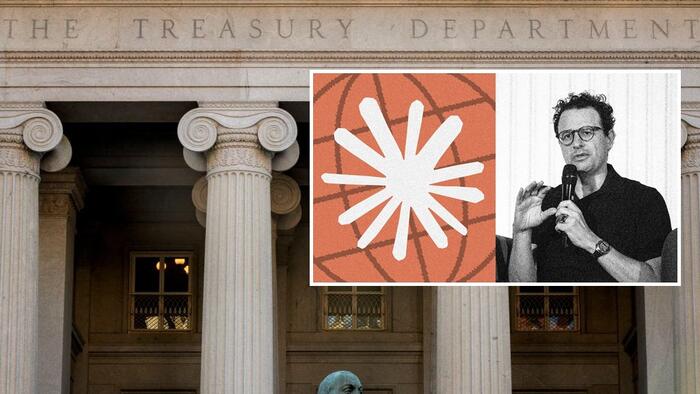
Treasury Rushes To Access Anthropic 'Mythos' AI After Warning It Can Hack "Every Major Operating System"
The US Treasury Department's technology team is actively seeking access to Anthropic PBC's highly restricted Mythos AI model so it can begin hunting for software vulnerabilities, according to a person familiar with the situation cited by Bloomberg. Treasury Chief Information Officer Sam Corcos briefed the department's cybersecurity team on the technology last week and has directed efforts to gain access to the model "as soon as this week." The request comes days after Treasury Secretary Scott Bessent and Federal Reserve Chair Jerome Powell summoned top Wall Street CEOs to an urgent meeting at Treasury headquarters. Executives were warned that Mythos and similar frontier AI models could usher in a new era of heightened cyber risk. Anthropic itself has cautioned that the model may be capable of powering sophisticated cyberattacks unless companies proactively test it against their own systems and build defenses ahead of any wider release. At the meeting, bank leaders were strongly urged to take the model seriously and use it internally to detect vulnerabilities. Anthropic introduced Mythos (also referred to as Claude Mythos Preview) as part of its new Project Glasswing initiative. In internal testing, the model demonstrated extraordinary offensive cybersecurity capabilities: it was able to identify and exploit vulnerabilities "in every major operating system and every major web browser when directed by a user to do so." In one documented case, it wrote a web browser exploit that successfully chained together four separate vulnerabilities. Project Glasswing brings together Amazon Web Services (AWS), Apple, Broadcom, Cisco, CrowdStrike, Google, JPMorganChase, the Linux Foundation, Microsoft, NVIDIA, and Palo Alto Networks to address growing concerns within the cybersecurity community that AI models are now capable of discovering and exploiting vulnerabilities at a faster pace than humans can keep up with. ... According to the post on Anthropic's website, the model's strong agentic coding and reasoning skills enable it to uncover and exploit security flaws when directed by the user that have existed for years, even decades without detection. Benchmarking results cited by the company suggest a notable performance gap between Mythos Preview and its previous models in cybersecurity-related tasks. -cxtoday.com In controlled testing against real codebases in isolated containers, the model autonomously identified thousands of zero-day vulnerabilities across every major operating system and every major web browser. The testing used an agentic workflow: file prioritization based on a 5-tier vulnerability likelihood ranking, parallel Claude Code invocations, and secondary validation for severity and exploitability. These discoveries were achieved at remarkably low cost - many individual zero-day runs cost under $50, with full OpenBSD testing campaigns under $20,000 and Linux kernel N-day exploits under $2,000 each. Because of the dual-use risks, Anthropic has not released Mythos to the public. Instead, it is being provided on a tightly limited basis through Project Glasswing to a select group of vetted organizations - including major tech companies, cybersecurity firms, JPMorgan Chase, and the Linux Foundation - for defensive purposes only (scanning their own systems to find and patch flaws before attackers can exploit them). Anthropic has committed up to $100 million in usage credits to support these efforts. Several major financial institutions have already begun internal testing: The company stated in its Project Glasswing announcement that it has been in "ongoing discussions" with government officials about the model and is "ready to work with local, state, and federal representatives." The Treasury's push for access is notable because the Pentagon formally designated Anthropic a US supply-chain risk earlier this year following a dispute over how the company's AI technology could be used by the military. The Defense Department gave Anthropic a six-month window to transition its services to another provider. Anthropic is actively fighting the designation in federal court. Despite this, Corcos - who previously encouraged the use of Anthropic's Claude AI tools inside Treasury before the Pentagon label - is now driving the department's effort to investigate Mythos.
Video captures SpaceX launch as seen from Coastal Georgia
If you were up early on Tuesday, you had a great view in Coastal Georgia and the South Carolina Lowcountry of the latest SpaceX launch.Watch video aboveSpaceX successfully launched a Falcon 9 rocket to deliver 29 Starlink broadband internet satellites into low Earth orbit. Liftoff occurred at 5:33 a.m. from Cape Canaveral Space Force Station in Florida, marking the 1,000th Starlink satellite launched in 2026.Did you capture photos or videos? Share them with us here. TRENDING STORIESSuspect charged with murder after shooting at Beaufort shopping centerHigh-speed chase from Effingham County leads to crashes in PoolerTroopers seek SUV after Hilton Head hit-and-run seriously injures pedestrian
