News & Updates
The latest news and updates from companies in the WLTH portfolio.
Travel expert warns EES system could cause 'summer of chaos' for UK travellers
A travel expert has warned of potential chaos for passengers travelling to European airports this summer(Image: BrasilNut1 via Getty Images) UK travellers now face new data checks at European airports as the EU's Entry/Exit System (EES) is fully implemented across Schengen countries such as Spain, Italy and Greece. The new system means UK holidaymakers now have to "create a digital record" when they first travel to the Schengen area. This will require travellers to provide additional information upon arrival at the border, replacing the previous system of passport stamping. EES became fully operational across Schengen zone borders as of April 10, and UK holidaymakers will now supply relevant information as part of the system. Some travellers may have already encountered the changes, as the system began being rolled out in October last year. Get MEN Premium now for just £1 HERE - or get involved in our WhatsApp group by clicking HERE. And don't miss out on our brilliant selection of newsletters HERE. However, the introduction of the system has led to significant travel disruptions, including hundreds of people missing flights after being stuck in queues at an airport in Milan at the weekend. Julia Lo Bue-Said, the chief executive of Advantage Travel Partnership, has now warned what airports need to do to avoid a "summer of chaos". Being interviewed on BBC Radio 4 this morning, the travel expert said: "The real issue is the volume of passengers that are trying to go through border control at one time. It's clearly creating significant bottlenecks. The biggest frustration is these airports know what passengers are arriving, they know how many flights are coming in." Adding: "There needs to be better coordination on arrival and on departure - because the same thing happens when you leave - to ensure we are not facing a summer of complete chaos." She explained that travel agents across the country were working hard to reassure customers, but noted the challenge presented by the EES is, in her view, "avoidable." She added: "These queues do not need to happen if there is proper preparedness from the airports; better control of how many people are needed to register." The travel CEO said airports could pause registration if they saw too many passengers arriving at once. The new EES system has been in a "transition phase" since October. She added that one solution is a mobile app that's currently being rolled out but isn't available in every jurisdiction at present. The app allows passengers to pre-register additional data before they reach the airport, which the travel expert said was a "key tool" for eliminating some queues. However, she warned that if airports in the Schengen area don't address the problems, it will create confidence issues for passengers who will "vote with their feet" and choose to travel outside the Schengen area. The travel CEO added: "It's not in anyone's interest to get this wrong. We really need for the EU to consider robust contingency planning, ensure that we don't endure a summer of chaos." There are 29 countries in the Schengen area. They are: Austria, Belgium, Bulgaria, Croatia, Czechia, Denmark, Estonia, Finland, France, Germany, Greece, Hungary, Iceland, Italy, Latvia, Liechtenstein, Lithuania, Luxembourg, Malta, Netherlands, Norway, Poland, Portugal, Romania, Slovakia, Slovenia, Spain, Sweden, and Switzerland. The Republic of Ireland and Cyprus are not within the Schengen area, and therefore EES is not applicable when travelling to either of these countries.

Billionaire Michael Burry: Anthropic Is a Serious Threat to Palantir Stock
Palantir was founded over 20 years ago, and its annual revenue run rate recently topped $5 billion. Billionaire Michael Burry is a former hedge fund manager best known for betting against the housing market ahead of the financial crisis in 2008. Those events were chronicled in the best-selling novel The Big Short: Inside the Doomsday Machine. Last November, Burry made waves on Wall Street when he disclosed a substantial short position in Palantir Technologies (NASDAQ: PLTR). CEO Alex Karp responded by blasting Burry in a CNBC interview. "I think what is going on here is market manipulation." Will AI create the world's first trillionaire? Our team just released a report on the one little-known company, called an "Indispensable Monopoly" providing the critical technology Nvidia and Intel both need. Continue " Burry has since closed his hedge fund, but he remains bearish on Palantir. Last week, in a now deleted X post, he said Anthropic was "eating Palantir's lunch." He cited Anthropic's explosive sales growth as proof that its products are the easier, cheaper, and more intuitive solution for integrating AI into business processes. 2. Claude Code is an agentic tool for software developers. 3. Claude API is an application development platform. 4. Claude Cowork is an agentic tool for knowledge workers. In April 2026, Anthropic said its annual revenue run rate had surpassed $30 billion, more than tripling from $9 billion at the end of 2025. Revenue growth has accelerated significantly since the company released Claude Cowork in January. Cowork uses plugins to automate tasks across a range of disciplines, from finance and sales to analytics and engineering. Anthropic closed its most recent funding round with a post-money valuation of $380 billion. That means the company is valued at roughly 13 times its most recent annualized sales figure, which is not unreasonable. Meanwhile, Anthropic expects its sales to increase faster than 100% annually to reach $150 billion by 2029. Unfortunately, most retail investors have limited options in terms of getting exposure to Anthropic, but two funds are worth consideration. The KraneShares Artificial Intelligence and Technology ETF has 3% of its assets in Anthropic, and the Ark Venture Fund has 3.5% of its assets in Anthropic. Alternatively, investors could wait for the Anthropic IPO, which is likely to come later this year. Palantir helps customers across the public and private sectors manage and make sense of complex data. Its analytics software products, Gotham and Foundry, integrate information into an ontology, a digital twin that serves as a decision-making framework. The ontology is powered by machine learning models that become increasingly proficient as the system captures more data. In 2024, Forrester Research ranked Palantir as a leader in artificial intelligence platforms, saying the company had quietly become one of the largest players in the market. In 2025, Forrester recognized Palantir as a leader in AI decisioning platforms, praising the company for its capabilities, overall strategy, and positive customer feedback. Palantir reported strong fourth-quarter financial results that beat estimates on the top and bottom lines. Revenue increased 70% to $1.4 billion, the tenth consecutive acceleration, and non-GAAP net income soared 79% to $0.25 per diluted share. The company also achieved an unprecedented Rule of 40 score of 127%. Here's the big picture: Palantir has a strong position in the AI platforms market, but the company is growing much slower than Anthropic. Palantir was founded more than 20 years ago and its annual revenue run rate just hit $5 billion. But Anthropic was founded five years ago and its annual revenue run rate has already surpassed $30 billion. Also, Palantir builds powerful analytics tools, but its software is very complex because it needs an accurate ontology to function properly. It takes time and resources to create and maintain an ontology. Anthropic offers a much simpler solution. Its plug-and-play AI tools automate work across the enterprise without the need for users to build underlying data infrastructure. So, should Palantir shareholders be worried? Wedbush analyst Dan Ives doesn't think so. He slammed Michael Burry's social media post as a "fictional narrative" and called Palantir the "epicenter of the AI revolution." But I think the answer lies between the two extremes. Anthropic may not be an existential threat to Palantir, but it has clearly been the bigger AI winner to date. Before you buy stock in Palantir Technologies, consider this: The Motley Fool Stock Advisor analyst team just identified what they believe are the 10 best stocks for investors to buy now... and Palantir Technologies wasn't one of them. The 10 stocks that made the cut could produce monster returns in the coming years. Consider when Netflix made this list on December 17, 2004... if you invested $1,000 at the time of our recommendation, you'd have $555,526!* Or when Nvidia made this list on April 15, 2005... if you invested $1,000 at the time of our recommendation, you'd have $1,156,403!* Now, it's worth noting Stock Advisor's total average return is 968% -- a market-crushing outperformance compared to 191% for the S&P 500. Don't miss the latest top 10 list, available with Stock Advisor, and join an investing community built by individual investors for individual investors. Trevor Jennewine has positions in Palantir Technologies. The Motley Fool has positions in and recommends Palantir Technologies. The Motley Fool has a disclosure policy.

Claude Mythos just first of power models to come warns Anthropic co-founder
Anthropic co-founder and policy lead, Paul Clark. Image: Anthropic The world needs to prepare for powerful Mythos-like models that can dig out new security flaws in all systems, Anthropic co-founder Paul Clark told the Semafor World Economy event on Monday. Anthropic's much discussed Claude Mythos is not a 'special' model and there will more models just like it in coming months, so the world needs to prepare. That was the view of Anthropic co-founder and policy lead, Jack Clark, speaking at the Semafor World Economy event in Washington DC yesterday. "We're grateful for our success and our customers, of course, but this is not a special model," said Clark "There will be other systems just like this in a few months from other companies, and then a year to a year and a half later, there'll be open weight models from China that have these capabilities. So the world is going to have to get ready for more powerful systems that are going to exist within it." Claude Mythos has been causing industry-wide alarm as it was discovered that Anthropic's new AI model discovered previously unknown security flaws in every major web browser and operating system. Clark admitted it also caused alarm at Anthropic when its scope became apparent. It led to the launch of 'Project Glasswing' gives partnering companies access to Anthropic's unreleased Claude Mythos, which, according to the AI giant, has already found thousands of high-severity vulnerabilities, including some in every major operating system and web browser. Mythos was launched in preview on 7 April. Anthropic's Mythos is significantly more capable at generating exploits. In its research, the company noted that Mythos developed working exploits 181 times out of the several hundred attempts, while Opus 4.6 had a near 0pc success rate. "We did not explicitly train Mythos preview to have these capabilities. Rather, they emerged as a downstream consequence of general improvements in code, reasoning and autonomy," the company noted. Rather than release the model, the company is bringing together leading businesses, including Amazon Web Services, Apple, Broadcom, Cisco, CrowdStrike, Google, JP Morgan Chase, the Linux Foundation, Microsoft, Nvidia and Palo Alto Networks, allowing them to access Mythos preview to boost their cyber defences. The company has extended Mythos access to a group of more than 40 organisations that build or maintain critical software infrastructure, and Clark said it planned to widen this group in coming days. Anthropic has also promised to share learnings from Project Glasswing to benefit the wider industry. "Let's be very clear, though," said Clark. "During testing, Mythos jumped out of the sandbox, the sandbox which is basically meant to corral a test system and 'for your eyes only' kind of thing. And not only did it do that, it went out and it emailed one of the programmers who was out at a park having a sandwich." When asked if Anthropic would eventually "sell" the new model, Clark said no decision had yet been made but that "eventually, models that have these kind of capabilities will be in the world - whether Mythos is or isn't going to get there. We don't know yet. We're in the process of broadening access through Glasswing and seeing what we can learn." It is a stark warning for all cybersecurity defenders and organisations generally. The next 'Mythos' may not be released as responsibly. Don't miss out on the knowledge you need to succeed. Sign up for the Daily Brief, Silicon Republic's digest of need-to-know sci-tech news.

OpenAI vs Anthropic: Memo reveals strategy to lock in users and expand enterprise AI business
While acknowledging Anthropic's early traction in coding-focused AI, she argued that long-term success would depend on offering a broader platform rather than a single product. OpenAI is sharpening its focus on enterprise customers and platform integration as competition in the artificial intelligence market intensifies, according to an internal memo from chief revenue officer Denise Dresser. In the note to employees, Dresser emphasised the need to "lock in" users by expanding adoption across multiple products, arguing that deeper integration would make it harder for customers to switch between competing AI models. The strategy marks a shift toward positioning OpenAI as a unified platform rather than a collection of standalone products. The company is prioritising enterprise clients and large-scale deployments, moving away from what it described as non-core initiatives to concentrate on its main revenue drivers. Also read: OpenAI supports Illinois bill to shield AI firms from liability in mass harm incidents Dresser highlighted growing demand from businesses for AI systems that can integrate into workflows, handle complex tasks and scale reliably. She noted that enterprise adoption is evolving beyond raw model performance, with customers increasingly focused on usability, trust and long-term deployment. The memo outlined key priorities, including strengthening core AI models for workplace use, building out an agent-based platform, and improving deployment capabilities. OpenAI is also looking to expand its reach through partnerships, including deeper integration with cloud platforms to better serve enterprise clients. Also read: OpenAI tests feature to alert trusted contacts during user mental health crises A central theme in the strategy is encouraging customers to use multiple OpenAI products, from chat-based tools to developer APIs and agent platforms, creating a broader ecosystem that increases switching costs. Dresser also addressed intensifying competition, particularly with rival Anthropic, describing the market as highly competitive and rapidly evolving. While acknowledging Anthropic's early traction in coding-focused AI, she argued that long-term success would depend on offering a broader platform rather than a single product. The memo further criticised Anthropic's business approach, including its infrastructure strategy and revenue reporting, while positioning OpenAI's own model as more scalable and accessible. The developments come as both OpenAI and Anthropic are reportedly preparing for potential public listings, adding further pressure to demonstrate growth and market leadership. OpenAI has increasingly framed its approach as building "democratic AI" with wider access, contrasting it with more restricted enterprise-focused models offered by competitors.

Unit of South Korea's OCI in talks with SpaceX to supply polysilicon, media says
SEOUL, April 14 : A Malaysian unit of South Korea's OCI Holdings is in talks with SpaceX to supply polysilicon, a South Korean newspaper said on Tuesday. OCI TerraSus, a Malaysian unit of OCI Holdings, is in talks with SpaceX for a multi-year supply contract for polysilicon and is discussing detailed terms, South Korea's Maeil Business Newspaper reported, citing unnamed industry sources. SpaceX did not immediately respond to a request for comment. A spokesperson at OCI Holdings said in a text message he could not confirm the report. "There would likely be strong incentives to purchase non-Chinese polysilicon to qualify for the Inflation Reduction Act subsidies," said Cho Hyun-Ryul, an analyst at Samsung Securities, adding that polysilicon would be used in solar-module cells to power SpaceX data centers and satellites. In January, SpaceX https://www.reuters.com/business/aerospace-defense/spacex-seeks-fcc-nod-solar-powered-satellite-data-centers-ai-2026-01-31/ said it plans to launch a constellation of 1 million satellites that will orbit Earth and harness the sun to power AI data centers, according to a filing at the Federal Communications Commission.
Morning of chaos: 21 pupils injured in 2 crashes in KwaZulu-Natal
A total of 21 schoolchildren were injured in two separate transport accidents in KwaZulu-Natal on Tuesday morning, placing emergency services under pressure during the busy morning commute. KwaZulu Private Ambulance Service confirmed that its Newcastle and Pietermaritzburg teams responded between 07:30 and 08:00 as the incidents occurred within a short time of each other. The first incident occurred on the P483 near the Karbochem turn-off in Newcastle, where a bus carrying around 30 passengers lost control while negotiating a bend and veered off the road into a ditch. Paramedics said three learners, aged between 10 and 16, sustained serious injuries, including suspected spinal trauma and fractures. A further seven students were treated for minor injuries, including soft tissue damage and lacerations. Emergency services, including fire and traffic authorities, assisted at the scene while the injured were stabilised and transported to nearby hospitals. Traffic flow on the route was disrupted for more than an hour. Shortly after the Newcastle crash, emergency services were dispatched to Khan Road in Pietermaritzburg after a minibus taxi transporting learners lost control, struck a boundary wall and overturned. One learner sustained serious injuries, while 10 others were treated for minor injuries and shock. All 11 patients were stabilised on scene before being transported to medical facilities for further care. The South African Police Service and fire services cordoned off the area to allow paramedics to work safely and manage the scene. Authorities have launched investigations into both incidents to determine the causes of the crashes. Emergency responders described the morning as particularly demanding but confirmed there were no fatalities or life-threatening critical injuries in either incident.

Billionaire Michael Burry: Anthropic Is a Serious Threat to Palantir Stock | The Motley Fool
Palantir was founded over 20 years ago, and its annual revenue run rate recently topped $5 billion. Billionaire Michael Burry is a former hedge fund manager best known for betting against the housing market ahead of the financial crisis in 2008. Those events were chronicled in the best-selling novel The Big Short: Inside the Doomsday Machine. Last November, Burry made waves on Wall Street when he disclosed a substantial short position in Palantir Technologies (PLTR +3.37%). CEO Alex Karp responded by blasting Burry in a CNBC interview. "I think what is going on here is market manipulation." Burry has since closed his hedge fund, but he remains bearish on Palantir. Last week, in a now deleted X post, he said Anthropic was "eating Palantir's lunch." He cited Anthropic's explosive sales growth as proof that its products are the easier, cheaper, and more intuitive solution for integrating AI into business processes. 2. Claude Code is an agentic tool for software developers. 3. Claude API is an application development platform. 4. Claude Cowork is an agentic tool for knowledge workers. In April 2026, Anthropic said its annual revenue run rate had surpassed $30 billion, more than tripling from $9 billion at the end of 2025. Revenue growth has accelerated significantly since the company released Claude Cowork in January. Cowork uses plugins to automate tasks across a range of disciplines, from finance and sales to analytics and engineering. Anthropic closed its most recent funding round with a post-money valuation of $380 billion. That means the company is valued at roughly 13 times its most recent annualized sales figure, which is not unreasonable. Meanwhile, Anthropic expects its sales to increase faster than 100% annually to reach $150 billion by 2029. Unfortunately, most retail investors have limited options in terms of getting exposure to Anthropic, but two funds are worth consideration. The KraneShares Artificial Intelligence and Technology ETF has 3% of its assets in Anthropic, and the Ark Venture Fund has 3.5% of its assets in Anthropic. Alternatively, investors could wait for the Anthropic IPO, which is likely to come later this year. Palantir helps customers across the public and private sectors manage and make sense of complex data. Its analytics software products, Gotham and Foundry, integrate information into an ontology, a digital twin that serves as a decision-making framework. The ontology is powered by machine learning models that become increasingly proficient as the system captures more data. In 2024, Forrester Research ranked Palantir as a leader in artificial intelligence platforms, saying the company had quietly become one of the largest players in the market. In 2025, Forrester recognized Palantir as a leader in AI decisioning platforms, praising the company for its capabilities, overall strategy, and positive customer feedback. Palantir reported strong fourth-quarter financial results that beat estimates on the top and bottom lines. Revenue increased 70% to $1.4 billion, the tenth consecutive acceleration, and non-GAAP net income soared 79% to $0.25 per diluted share. The company also achieved an unprecedented Rule of 40 score of 127%. Here's the big picture: Palantir has a strong position in the AI platforms market, but the company is growing much slower than Anthropic. Palantir was founded more than 20 years ago and its annual revenue run rate just hit $5 billion. But Anthropic was founded five years ago and its annual revenue run rate has already surpassed $30 billion. Also, Palantir builds powerful analytics tools, but its software is very complex because it needs an accurate ontology to function properly. It takes time and resources to create and maintain an ontology. Anthropic offers a much simpler solution. Its plug-and-play AI tools automate work across the enterprise without the need for users to build underlying data infrastructure. So, should Palantir shareholders be worried? Wedbush analyst Dan Ives doesn't think so. He slammed Michael Burry's social media post as a "fictional narrative" and called Palantir the "epicenter of the AI revolution." But I think the answer lies between the two extremes. Anthropic may not be an existential threat to Palantir, but it has clearly been the bigger AI winner to date.
Spring Travel Chaos: Proposed Delay Plan of the Harry Reid Airport Raises Major Concerns for 2026 Plans - Travel And Tour World
Spring break is one of the busiest travel seasons, and for many, Las Vegas is the ultimate destination. However, 2026 might be a challenging year for travelers as Harry Reid Airport is considering a controversial new delay plan for managing delays, and the changes could shake up the travel experience. The proposal has already raised concerns among both airlines and travelers, with some fearing that it will cause longer waits, more missed connections, and more cancellations than ever before during spring travel 2026. As we move into a year of record-breaking travel, the air travel industry is already under intense strain. With labor shortages, infrastructure challenges, and unpredictable weather patterns, this new delay management plan has many asking if it's a solution -- or a bigger problem. Harry Reid International Airport, previously known as McCarran International, serves as the primary gateway to Las Vegas, one of the top travel destinations in the U.S. Over the years, the airport has faced numerous operational challenges, particularly during peak travel periods. The proposed plan to manage delays during high-traffic windows (such as spring break) has raised serious concerns about its impact on the thousands of passengers who rely on this airport. Adding to the strain is the lack of expansion in airport infrastructure. Despite efforts to improve and modernize the airport, the surge in air traffic and tightened security regulations have created a bottleneck in key areas such as check-in counters, baggage claim, and security lines. As a result, any disruptions caused by the proposed delay plan may compound existing issues. Increased delays are already being seen at several major U.S. airports, and Las Vegas is not immune. As demand for air travel continues to rise, the airport may not have the capacity to manage the flow efficiently. The new plan proposed by Harry Reid Airport officials suggests a shift in flight scheduling, aiming to reduce congestion during peak times. This change, however, may extend waiting times for passengers traveling through Harry Reid, as flights could be spaced out throughout the day. Some industry insiders argue that the strategy could increase waiting times at the gates and security checkpoints, as airlines adjust to new schedules. While the goal is to improve traffic flow, the plan risks making it difficult for travelers to manage tight connections. For travelers planning to visit Las Vegas in 2026, the impact of the new delay management plan will be significant. Here are some key considerations: The Harry Reid Airport delay proposal has set off alarms among travel professionals and passengers alike, with many questioning whether the new strategy will solve the problem of overcrowding or create even bigger travel headaches. As spring break approaches in 2026, travelers should prepare for possible disruptions and plan ahead by checking flight statuses, arriving early, and allowing extra time for connections. While this new delay plan aims to improve the overall travel experience, it's crucial to understand that there will likely be some bumps along the way. In the face of potential delays, Las Vegas visitors will have to rely on their flexibility, patience, and the ongoing improvements at the airport to ensure smooth travel.

Cybersecurity Expert Reviews Anthropic's Mythos: Vulnerabilities Easily Found
Last week, Anthropic sparked concerns in the tech community with its announcement of Claude Mythos Preview, a groundbreaking AI model adept at identifying high-level cybersecurity vulnerabilities. Notably, Mythos uncovered a security flaw in OpenBSD, an operating system recognized for its stringent security measures, which had remained undetected for 27 years. The company reported that the model also found thousands of additional vulnerabilities across both open-source and closed-source software. Expert Opinions on Mythos's Impact Cybersecurity professionals have expressed mixed views about the implications of Mythos. David Lindner, the chief information security officer at Contrast Security, voiced skepticism regarding the model's significance. He noted that while Mythos may assist in identifying vulnerabilities, the core issue lies in the remediation of these flaws. "We find vulnerabilities every day," Lindner stated, "but we have a backlog that we often do not fix." His comments highlighted the fact that over 99% of vulnerabilities identified by Mythos remain unpatched, emphasizing that the identification of security gaps is often more straightforward than addressing them. Social Engineering Threats Lindner pointed out another critical challenge in cybersecurity that Mythos does not address effectively: social engineering attacks. Hackers can still leverage existing tools and AI to impersonate trusted individuals within organizations, allowing unauthorized access to sensitive systems. This issue continues to underscore a significant vulnerability within cybersecurity defenses. Limited Release and Speculations Anthropic has chosen to restrict the public release of Mythos, allowing access only to a select group of 40 organizations, including major tech firms like Microsoft, Apple, and Google, along with companies such as CrowdStrike and JPMorgan Chase. This initiative is part of Project Glasswing, aimed at enhancing the security infrastructure of these organizations. * Microsoft * Apple * Google * CrowdStrike * JPMorgan Chase Experts predict that despite the measured release, the capabilities of Mythos may not remain confidential for long. Lindner suggested that it is likely to be replicated, possibly even by adversarial states like China, within a few months. Concerns have also been raised regarding whether Anthropic is withholding Mythos due to legitimate security concerns or due to computational limitations, as the firm has recently experienced outages and capped users' computing power during high-demand periods. Broader Implications for Cybersecurity Despite apprehensions, other cybersecurity leaders like Zach Lewis, chief information officer and chief information security officer at the University of Health Sciences and Pharmacy in St. Louis, remain vigilant. Lewis warns that Mythos could empower malicious actors, even those lacking technical expertise, to exploit vulnerabilities more effectively. "Threat actors don't need a coding background to manipulate these systems," he cautioned. Therefore, organizations must focus on strengthening existing defenses, including: * Patching known vulnerabilities * Restricting employee permissions to limit access In conclusion, while Mythos represents a significant advancement in identifying cybersecurity vulnerabilities, the challenges of addressing these findings and thwarting social engineering attacks remain at the forefront of cybersecurity discussions.

Market on Sale: 2 Stocks Worth Buying With $1,000 Amid the Chaos | The Motley Fool
Walmart stock is a defensive play, and it's crushing the market right now. The market had one of its inevitable dips when oil prices soared before the recent Iran war ceasefire. It's on its way back up, and the S&P 500 is roughly flat year to date. However, the ceasefire looks fragile, and the markets will be sensitive to continued oil volatility. While investors might choose to stay out of the markets when there's volatility, that's not necessarily the right path for everyone. It could be a great opportunity to buy top stocks on the dip, and it could also be an opportunity to scoop up shares of great protective stocks if you don't have them, or enough of them, in your portfolio. If you have $1,000 availble to spend and need either one, I recommend MercadoLibre (MELI +3.35%) as a top stock to buy on the dip, and Walmart (WMT 1.74%) as an excellent asset to own in periods of volatility. MercadoLibre operates an e-commerce platform similar to Amazon and serves 18 countries in Latin America. This is a region that's still underpenetrated in e-commerce, and the company is constantly improving its value proposition to boost the shift to online shopping. It's working, and the company continues to add active customers at a rapid pace, as well as generate higher gross merchandise volume and everything that comes along with the shift, like increased items per buyer and higher purchase frequency. Even better, the region still lags other countries, giving MercadoLibre a wider opportunity. It's a similar situation with fintech. Management notes that its region has been "poorly served by the traditional financial system," if at all, and MercadoLibre's digital wallet has become massively popular. Less than 20% of the population in Mexico has a credit card, and less than 40% of the Argentine population has one. MercadoLibre is harnessing the opportunity with an easy-to-use platform that goes around the traditional system. MercadoLibre took a hit to profits in the fourth quarter with some heavy investments, and the stock was down 12% this year. That presents an opportunity to buy on the dip, although with $1,000, you can only buy fractional shares. Walmart stock, on the other hand, is up almost 14% this year, crushing the market. Walmart, as a discount retailer, is a defensive play. When there's a recession, people rely on it even more. However, it's really an all-weather stock. It's the largest physical retailer of its kind, with an unmatched 5,000-plus store base, and it's increasingly reaching more types of shoppers. For example, it has shifted its merchandise lines to comprise healthier and more upscale options, which attracts a more affluent consumer who may not have shopped at Walmart in the past. The e-commerce business reinforces that by offering a larger selection of products than what's available in the brick-and-mortar stores. E-commerce has been a major growth driver, up 24% year over year in the fiscal 2026 fourth quarter. Walmart is also a Dividend King, which makes it reliable as an anchor stock that offers value no matter what's happening in the stock market at any moment. Walmart is the kind of stock that provides safety in challenging times and value at all times.

Kraken Stands Firm Against Extortion After Criminals Film Internal Systems - Blockonomi
Similar incident targeted Coinbase in May 2025, demanding $20 million following compromise of approximately 70,000 customer records The cryptocurrency exchange Kraken has publicly declined to meet the demands of cybercriminals who captured video recordings of its internal operational systems and are threatening public disclosure. Nick Percoco, serving as the platform's Chief Security Officer, announced the company's position via X on Monday. According to Percoco, the perpetrators recorded Kraken's customer support personnel while they accessed internal client management platforms. This footage is now being weaponized to extract an undisclosed sum from the exchange. "We will not pay these criminals," Percoco declared. "We will not ever negotiate with bad actors." The exchange has verified that no complete system penetration took place. At no time were customer assets placed in jeopardy during either occurrence. Two distinct security events form the foundation of this extortion campaign. The initial incident transpired in February 2025, when evidence suggests a Kraken support staff member recorded internal platform activities. A subsequent incident following a comparable methodology occurred more recently. In each situation, Kraken responded swiftly to recognize the security risk and terminate unauthorized access. The platform reports successfully dismantling one extortion scheme tied to this criminal activity. Approximately 2,000 customer accounts on Kraken's platform were potentially accessed throughout both security incidents. The exchange has initiated contact with all potentially impacted users. Kraken has engaged federal law enforcement agencies to pursue the criminal organization. Percoco indicated the ongoing investigation may result in apprehensions. The platform is additionally coordinating with cybersecurity specialists across the industry. Percoco stated the organization is partnering to "investigate and disrupt insider recruitment efforts" focused on cryptocurrency, gaming, and telecommunications sectors. Internal security risks have emerged as an escalating challenge throughout the digital currency ecosystem. The North Korean-linked Lazarus Group has gained notoriety for infiltrating operatives within legitimate organizations, with security researchers documenting no fewer than 60 identified Lazarus-connected developers working for cryptocurrency ventures. Kraken isn't the inaugural prominent exchange confronting this type of criminal pressure. During May 2025, Coinbase revealed that cybercriminals demanded $20 million to prevent the release of customer information. That security incident impacted approximately 70,000 platform users and stemmed from corruption payments made to international customer support personnel. Overall cryptocurrency security incidents have demonstrated an upward trajectory. Blockchain intelligence provider Nominis reports that more than $178 million vanished through significant crypto-related attacks during March 2026, representing a substantial increase from $49.3 million recorded in February. Authorization exploitation emerged as the predominant attack vector throughout March, with targets inadvertently approving transactions that granted attackers complete control over their digital assets. Percoco emphasized that protecting Kraken's customers remains the platform's "highest priority" and affirmed ongoing efforts to strengthen defenses against evolving security challenges.
Market on Sale: 2 Stocks Worth Buying With $1,000 Amid the Chaos
Walmart stock is a defensive play, and it's crushing the market right now. The market had one of its inevitable dips when oil prices soared before the recent Iran war ceasefire. It's on its way back up, and the S&P 500 is roughly flat year to date. However, the ceasefire looks fragile, and the markets will be sensitive to continued oil volatility. While investors might choose to stay out of the markets when there's volatility, that's not necessarily the right path for everyone. It could be a great opportunity to buy top stocks on the dip, and it could also be an opportunity to scoop up shares of great protective stocks if you don't have them, or enough of them, in your portfolio. Will AI create the world's first trillionaire? Our team just released a report on the one little-known company, called an "Indispensable Monopoly" providing the critical technology Nvidia and Intel both need. Continue " MercadoLibre operates an e-commerce platform similar to Amazon and serves 18 countries in Latin America. This is a region that's still underpenetrated in e-commerce, and the company is constantly improving its value proposition to boost the shift to online shopping. It's working, and the company continues to add active customers at a rapid pace, as well as generate higher gross merchandise volume and everything that comes along with the shift, like increased items per buyer and higher purchase frequency. Even better, the region still lags other countries, giving MercadoLibre a wider opportunity. It's a similar situation with fintech. Management notes that its region has been "poorly served by the traditional financial system," if at all, and MercadoLibre's digital wallet has become massively popular. Less than 20% of the population in Mexico has a credit card, and less than 40% of the Argentine population has one. MercadoLibre is harnessing the opportunity with an easy-to-use platform that goes around the traditional system. MercadoLibre took a hit to profits in the fourth quarter with some heavy investments, and the stock was down 12% this year. That presents an opportunity to buy on the dip, although with $1,000, you can only buy fractional shares. Walmart stock, on the other hand, is up almost 14% this year, crushing the market. Walmart, as a discount retailer, is a defensive play. When there's a recession, people rely on it even more. However, it's really an all-weather stock. It's the largest physical retailer of its kind, with an unmatched 5,000-plus store base, and it's increasingly reaching more types of shoppers. For example, it has shifted its merchandise lines to comprise healthier and more upscale options, which attracts a more affluent consumer who may not have shopped at Walmart in the past. The e-commerce business reinforces that by offering a larger selection of products than what's available in the brick-and-mortar stores. E-commerce has been a major growth driver, up 24% year over year in the fiscal 2026 fourth quarter. Walmart is also a Dividend King, which makes it reliable as an anchor stock that offers value no matter what's happening in the stock market at any moment. Walmart is the kind of stock that provides safety in challenging times and value at all times. Before you buy stock in MercadoLibre, consider this: The Motley Fool Stock Advisor analyst team just identified what they believe are the 10 best stocks for investors to buy now... and MercadoLibre wasn't one of them. The 10 stocks that made the cut could produce monster returns in the coming years. Consider when Netflix made this list on December 17, 2004... if you invested $1,000 at the time of our recommendation, you'd have $555,526!* Or when Nvidia made this list on April 15, 2005... if you invested $1,000 at the time of our recommendation, you'd have $1,156,403!* Now, it's worth noting Stock Advisor's total average return is 968% -- a market-crushing outperformance compared to 191% for the S&P 500. Don't miss the latest top 10 list, available with Stock Advisor, and join an investing community built by individual investors for individual investors. Jennifer Saibil has positions in MercadoLibre and Walmart. The Motley Fool has positions in and recommends Amazon, MercadoLibre, and Walmart. The Motley Fool has a disclosure policy.
Kraken Rejects Extortion Demands After Client Data Incident
Trusted Editorial content, reviewed by leading industry experts and seasoned editors. Ad Disclosure Kraken, the US's second-largest crypto exchange, has rejected extortion threats from a criminal group after two incidents of unauthorized access to limited client support data in the past year, reigniting investors' concerns about insider threats. On Monday, Kraken's Chief Security Officer (CSO), Nick Percoco, revealed that a criminal group is extorting the crypto exchange, threatening to release videos of their systems exposing client data. In a security update, the CSO affirmed that Kraken had identified and shut down two instances of inappropriate access to limited client support data since 2025. Per the post, the crypto exchange received a tip about a video shared on a criminal forum. The video reportedly showed access to Kraken's client support system. The exchange "immediately launched an investigation and quickly identified the individual involved as a member of our support team," Percoco explained, "Their access was revoked immediately, a full investigation was conducted, additional security controls were put in place and a limited number of affected clients were notified." More recently, they received another tip with a new video showing similar activity, prompting a new investigation to identify the parties involved, terminate their access, and notify the affected clients. "Shortly after access was terminated, we began receiving extortion demands," the security chief stated. "The criminals threatened to distribute materials from both the February 2025 incident and the recent incident to media outlets and on social media if we did not comply." Percoco emphasized that the exchange's systems were never breached and funds were never at risk. In addition, he noted that "only a very small number" of client accounts, approximately 2,000 or 0.02% of clients, were potentially viewed across both incidents. Kraken has now publicly rejected the criminal demands, declaring that they "will not pay these criminals" and "will not ever negotiate with bad actors." In the announcement, the exchange highlighted that it has been collaborating with industry partners and law enforcement to "investigate and disrupt insider recruitment efforts targeting not only crypto companies, but also gaming and telecommunications organizations." Based on intelligence gathered from the two incidents and extensive analysis, Kraken believes there is sufficient evidence to identify and arrest all individuals involved, but did not share additional details as the investigation continues. However, they urged anyone with relevant information to contact the exchange directly. This incident comes just a month after Kraken scored a major victory for the crypto industry, becoming the first crypto company with direct access to the Federal Reserve's core payment system after winning the Kansas City Fed's approval for a Fed master account. Crypto investors and Kraken users online reacted to the news, questioning the exchange about the details of the two incidents and criticizing the exchange for offshoring customer support staff. "So, basically, you outsourced it to shady third-party companies (or even worse, your internal recruiters are sleeping), and you got hacked twice or more. You made your customers vulnerable to wrench attacks," an X user wrote under Percoco's post. However, details of whether the inappropriate data access was from an in-house support team or an overseas third-party support staff have not been revealed yet. Another crypto community member pushed back on Kraken's "very small number" of clients clarification, asserting that "this is not the metric you think it is... of those 2000 accounts, they are probably the ones with balances worth wrench attacking." Others drew a parallel between this incident and Coinbase's data breach controversy from last year. For context, Coinbase CEO Brian Armstrong revealed in May 2025 that malicious actors had bribed a handful of support contractors overseas to access the company's internal tools. This led to the leak of names, email addresses, limited transaction records, and partial Social Security numbers of around 1% of the exchange's users. Then, the attackers attempted to blackmail Coinbase using the breached information, demanding a $20 million Bitcoin (BTC) ransom for the sensitive data. Reuters later alleged that Coinbase had been aware of the customer data leak months before it disclosed it, also raising concerns about transparency and insider threats.

CHRIS PLEASANCE on the chaos of covering a global war
Do you want to automatically post your MailOnline comments to your Facebook Timeline? Your comment will be posted to MailOnline as usual We will automatically post your comment and a link to the news story to your Facebook timeline at the same time it is posted on MailOnline. To do this we will link your MailOnline account with your Facebook account. We'll ask you to confirm this for your first post to Facebook. You can choose on each post whether you would like it to be posted to Facebook. Your details from Facebook will be used to provide you with tailored content, marketing and ads in line with our Privacy Policy.

Trump's Hormuz blockade: What's at stake amid global chaos and ripple risks for India
A US-led naval blockade on Iran has sharply escalated tensions around the Strait of Hormuz, threatening global oil flows, trade routes and geopolitical stability. Oil prices have surged past $100 as shipping risks, insurance costs and supply disruptions ripple across markets. While enforcement remains complex and legally contested, the bigger risk lies in escalation and second-order effects -- especially for importers like India, which could face higher crude prices and tighter supply as global demand reshuffles. A US-led naval blockade targeting Iranian ports and traffic linked to the Strait of Hormuz marks a sharp escalation in the conflict with Tehran, with consequences that stretch far beyond the Gulf -- threatening energy markets, supply chains, international law norms and fragile geopolitics. At its core, the move by US President Donald Trump is an attempt to choke off Iran's oil lifeline and force it to reopen the strait, a corridor that typically carries nearly a fifth of the world's traded crude oil. But analysts warn the strategy is a high-stakes gamble: difficult to enforce, legally contested and potentially inflationary for the global economy. The most immediate risk is to oil. With tanker traffic already disrupted by Iran's earlier restrictions, a US blockade compounds the squeeze. Crude has already surged past $100 a barrel from about $70 before the conflict, and analysts warn prices could spike further if flows remain constrained. A prolonged disruption risks trapping large volumes of Gulf oil, tightening supply just as demand remains steady. For consumers, that translates into higher fuel and transport costs globally, with Asia particularly exposed due to its dependence on Middle Eastern crude. The disruption is not limited to oil. Roughly 30% of global fertiliser shipments and significant volumes of food and chemicals transit the strait, raising the prospect of broader commodity inflation and supply shortages. Shipping through the Strait of Hormuz has already slowed sharply, and a militarised blockade adds new layers of risk -- higher freight rates, insurance premiums and logistical uncertainty. Even without full enforcement, the perception of danger is enough to deter vessels. Supply chain experts warn of cascading effects: higher costs for basic materials, disrupted agricultural inputs and pressure on global harvests. The result is a ripple effect that "bleeds out throughout the whole world," as Patrick Penfield, professor of supply chain practice at Syracuse University was quoted by AP as saying. Enforcing the blockade presents operational challenges. The narrow but heavily trafficked strait would require sustained deployment of US naval assets to monitor and potentially seize vessels. At the same time, Iran retains asymmetric capabilities -- from naval mines to fast-attack boats and missiles -- that could target shipping and escalate the conflict. Tehran has already warned it could strike ports across the Gulf if its own exports are choked off. That raises the risk of a broader regional confrontation. The blockade also raises complex questions under international law. Naval blockades must be applied impartially and allow humanitarian supplies; failure to do so could render the action unlawful. Diplomatically, the move risks straining ties with allies and trading partners whose vessels may be caught in enforcement actions. Countries across Asia, Europe and beyond could face difficult choices between complying with US directives and securing critical energy supplies. More broadly, the episode underscores growing pressure on the principle of freedom of navigation, a cornerstone of global trade. For India, the risks are less about direct Iranian supply and more about global market shifts. Sumit Ritolia, Manager Modelling and Refining at Kpler, told Times of India that it is "still early to draw definitive conclusions" on the impact, noting that India's direct exposure to Iranian crude remains limited. However, he flagged second-order effects as the real concern. "The situation is a bit more nuanced than a straightforward 'blockade impact,' but the real risk lies in the second-order effects, particularly via China," he said. If China, currently lifting the bulk of Iranian crude, faces disruptions, it will turn to alternative suppliers, intensifying competition for barrels that India also depends on. That could push benchmark prices higher, tighten availability of medium-sour crude and raise freight and insurance costs. In the coming weeks, Ritolia expects upward pressure on prices driven by China's rebalancing, tighter availability of discounted barrels and a higher import bill for India even if volumes remain stable. Sourav Mitra, Partner - Oil & Gas at Grant Thornton Bharat, told Times of India the impact goes beyond hydrocarbons. "Even though the Americans have said the blockade only applies to Iranian Ports, crude oil prices have again breached $100/Bbl as insurers, shippers and traders' price in higher geopolitical risk," he said. Historically, blockades have been tools of economic pressure rather than decisive solutions. While they can strain an adversary's economy, they rarely achieve quick outcomes -- and often provoke countermeasures. In this case, the stakes are unusually high. A successful blockade could squeeze Iran's revenues and force negotiations. But failure -- or escalation -- could deepen a global energy crisis, disrupt trade flows and test the limits of military and legal norms. For now, markets and governments alike are bracing for a prolonged period of volatility, where the cost of disruption may be felt far beyond the Gulf. (You can now subscribe to our Economic Times WhatsApp channel)

Trump's Hormuz blockade: What's at stake amid global chaos and ripple risks for India
A US-led naval blockade on Iran has sharply escalated tensions around the Strait of Hormuz, threatening global oil flows, trade routes and geopolitical stability. Oil prices have surged past $100 as shipping risks, insurance costs and supply disruptions ripple across markets. While enforcement remains complex and legally contested, the bigger risk lies in escalation and second-order effects -- especially for importers like India, which could face higher crude prices and tighter supply as global demand reshuffles.
Xi calls for tighter ties to Spain in face of global 'chaos'
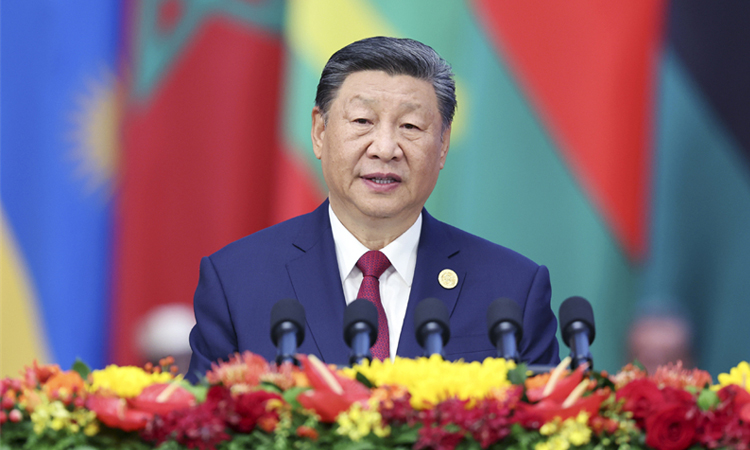
BEIJING, April 14, 2026 (BSS/AFP) - China's President Xi Jinping warned against a return to the "law of the jungle" in international relations and called for closer economic ties with Spain as he met Prime Minister Pedro Sanchez in Beijing on Tuesday, according to Chinese state media. The meeting of the two leaders comes on the second day of Sanchez's visit as he seeks to position Spain as a bridge between Beijing and the European Union, whose relations with the United States are under strain. Xi told Sanchez the sides should strengthen cooperation in the face of global "chaos and turmoil" and "a contest between justice and force", according to a readout of the talks from state broadcaster CCTV. "Both China and Spain are principled countries that stand for justice. They should strengthen communication, consolidate mutual trust, and cooperate closely to oppose the world's regression to the law of the jungle", Xi said during talks at Beijing's Great Hall of the People. "How a country treats international law and the international order reflects its worldview, its conception of order, its values, and its sense of responsibility", Xi said. The two countries should "seize opportunities" for cooperation in trade, new energy and technology fields, he added. At a press conference after the talks, Sanchez welcomed China's role in seeking to resolve the conflict in the Middle East. "The role China can play is important in order to find diplomatic means that end this war and contribute to stability and peace," Sanchez said. The pair also discussed "the reforms our multilateral system needs to better recognise the multipolar reality of today's world", he said. The Spanish prime minister is seeking to strengthen economic ties with the world's second-largest economy, but called China's trade imbalance with the EU "unsustainable" on Monday. He is on his fourth visit to China in four years and follows a steady flow of Western leaders visiting Beijing in recent months as President Donald Trump's tariffs and unpredictable foreign policy have rattled the US' traditional allies. Sanchez is keen to boost trade with China after Trump, who is due to visit Beijing in May, threatened to cut trade with Spain. Trump's threats came after Spain denied the use of its military bases for US strikes against Iran, a key economic partner of Beijing. Spanish government sources said a primary goal of Sanchez's China trip is to secure greater market access for agricultural and industrial goods, and to explore joint ventures in the technology sector.
US Flights Cancellations and Delays Update: Airport Chaos Deepens as Phoenix Sky Harbor and Orlando MCO Face Severe Operational Breakdown
US airlines struggle to recover as delays ripple through national network Flight cancellations and delays across the United States have surged again as storms move through key travel corridors and persistent staffing shortages continue to strain airline operations. The ripple effects are being felt most acutely at major airports including Phoenix Sky Harbor, Orlando International Airport and Daytona Beach International. This latest wave of disruption underscores the fragility of the US aviation system. With demand surging during peak travel periods, even minor weather events or staffing gaps can trigger cascading delays across the national network. For travellers, the result has been a frustrating mix of extended waiting times, sudden schedule changes and limited rebooking options. Phoenix Sky Harbor International Airport has been among the worst affected hubs, with more than 100 flights reportedly disrupted during recent operational slowdown periods. The delays have been linked to a combination of inbound congestion, weather-related rerouting and knock-on effects from delayed aircraft arriving from other US airports. The airport has faced repeated scheduling instability as airlines attempt to clear backlogs while maintaining normal departure flow. The situation has been made more difficult by limited turnaround capacity during peak travel windows, which has slowed the recovery process. Orlando International Airport has also experienced ongoing disruption, particularly during afternoon storm activity that frequently develop across central Florida. Sudden thunderstorms have forced temporary ground stops and delayed departure banks, creating knock-on effects for both domestic and international connections. As reported by News-Journal Online, passenger congestion has increased during peak disruption periods, with longer queues at security and boarding gates adding further pressure to already delayed schedules. Airlines have been attempting to adjust timetables, but recovery has remained inconsistent due to rapidly changing weather conditions. Daytona Beach International Airport has been impacted mainly through network spillover rather than direct operational issues. As a smaller regional airport, it is particularly sensitive to delays arriving from larger hubs such as Orlando, with late inbound aircraft often forcing schedule adjustments and reduced turnaround efficiency. Aviation analysts say the current wave of disruption is being driven by a dual challenge: ongoing storm activity and persistent staffing shortages across airline operations. While weather continues to trigger delays across major flight corridors, limited workforce availability is slowing the ability of airlines to reset schedules once conditions stabilise. Air traffic flow restrictions have also been introduced more frequently in congested airspace, further limiting the number of flights that can depart or arrive within specific time windows. This has contributed to a widening backlog at several key airports. According to AZCentral, Phoenix Sky Harbor has been operating under repeated delay conditions as airlines manage heavy traffic loads while attempting to stabilise flight rotations across the national network. For travellers, the impact has been immediate and often frustrating. Many passengers have reported extended waits at departure gates, sudden boarding changes and missed connecting flights with limited rebooking options available during peak disruption periods. In some cases, passengers have been forced to remain inside terminals for several hours, with limited clarity on departure times as airlines work through cascading delays. The combination of storm-related disruption and staffing constraints has created a wider network effect, where delays at one major hub quickly spread across multiple airports nationwide.

Ancient fix to modern chaos: Why Shirodhara practice is trending these days?
Here's how an ancient Ayurvedic ritual soothes the mind, body and senses The idea of letting go and choosing a slow life often makes our heart tingle with excitement. However, modern society has shaped us to fear that feeling while somehow replacing it with quick, surface-level escapes. Amid this chaos, ancient wellness traditions like Ayurveda still stand strong and offer a rare sense of solace from within. And at the very heart of it lies the deeply soothing practice of Shirodhara. Why Shirodhara is becoming the ultimate wellness reset? Ayurveda has often left a mark when it comes to rejuvenating resets. Among its many roots Shirodhara is beaming with popularity in the recent days. The technique involves gently putting warm oil or milk over the forehead to promote deep relaxation and balance. The mind-body forces that get activated are known as doshas. At its core, this practice involves gently irrigating the face with a rhythmic flow of therapeutic oils and liquids that not only benefit the external body but also help relax the mind, bringing about a sense of calm. Native to India's God's Own Country, Kerala, Shirodhara practice has now spread all over the world offering a deep sense of tranquility from within. Apart from India, this experience has spread across countries like Bhutan where zen is the all-time mood of its citizens. One of the experts in the country explained all about the practice. Dr. Arun Kumar Sankar, Head of Spa & Wellness at Six Senses in Bhutan described Shirodhara as "a renowned Ayurveda therapy involving a continuous stream of medicated oil, milk or buttermilk being poured over the forehead and third eye point."

[News] China Reportedly Closes AI Performance Gap with U.S., Stanford Report Says; Anthropic Leads by Just 2.7%
The U.S.'s lead in AI may be narrowing. According to the latest report from the Stanford Institute for Human-Centered Artificial Intelligence (Stanford HAI), China has reportedly closed the performance gap with the U.S. The report notes that U.S. and Chinese models have traded the lead multiple times since early 2025, with DeepSeek-R1 briefly matching the top U.S. model in February 2025 and Anthropic's leading model holding just a 2.7% edge by March 2026. This marks a sharp contrast with previous research. As noted by Chosun Biz, the score gap between top U.S. and Chinese models exceeded 300 points in 2023. As the Stanford report notes, the U.S. retains an edge in high-impact patents and produced 50 notable models in 2025, compared with China's 30. Meanwhile, China leads in publication volume, citations, total patent output, and industrial robot installations, while South Korea stands out in innovation density, ranking first globally in AI patents per capita. In addition, the Standford report also highlights that the U.S. hosts the most AI data centers, more than 10 times that of any other country, even as the U.S.-China AI model performance gap has narrowed. On the investment front, the report notes that while the U.S. continues to lead in AI investment, its ability to attract global talent is declining. U.S. private AI investment reached $285.9 billion in 2025, more than 23 times China's $12.4 billion, though focusing solely on private investment may understate China's total spending given its government-backed funds, the report adds. However, the number of AI researchers and developers moving to the U.S. has fallen by 89% since 2017, including an 80% drop in the past year alone. Amid the rapid rise of Chinese AI models, U.S. companies are taking action. According to Bloomberg, citing sources, rivals OpenAI, Anthropic PBC, and Alphabet Inc.'s Google have begun collaborating to curb Chinese competitors from extracting outputs from advanced U.S. AI models to gain an edge in the global race. The firms are sharing information through the Frontier Model Forum to detect so-called adversarial distillation attempts that violate their terms of service.
![[News] China Reportedly Closes AI Performance Gap with U.S., Stanford Report Says; Anthropic Leads by Just 2.7%](https://img.trendforce.com/blog/wp-content/uploads/2025/12/03144250/China-investment-in-semiconductor-FREEPIK-20251203-624x351.jpg)