News & Updates
The latest news and updates from companies in the WLTH portfolio.
NASA looks to SpaceX, Blue Origin for moon landings - Taipei Times
With Artemis II successfully completing its historic lunar mission on Friday, NASA is banking on billionaires Jeff Bezos and Elon Musk for the next step: landing astronauts on the moon. The Apollo program -- which sent the first and only humans to the moon's surface between 1969 and 1972 -- was designed so that only two astronauts could land on the lunar surface for a maximum of a few days. More than 50 years later, US ambitions and expertise have grown, with NASA hoping to send four people on a mission lasting several weeks and eventually building a lunar base. For the second phase of its mission, the space agency is looking to commercial landers designed by Musk's SpaceX and Bezos' Blue Origin to get its astronauts on the moon. After Artemis II splashed down in the Pacific Ocean after its record-breaking journey, NASA officials urged all hands on deck for a crewed landing in 2028. "We need all of industry to work and come along with us, and they need to accept that challenge and come with us and really start the production lines that are going to be required in order to achieve that goal," NASA acting associate administrator Lori Glaze said. The Apollo program relied on a single rocket, the Saturn V, which carried the lunar lander and the capsule carrying the astronauts. NASA has opted for two separate systems for Artemis: the first to launch the Orion spacecraft carrying the crew from Earth, and another to launch the lunar lander, which would be privately contracted. The decision was driven by the technical limitations of the Apollo program, said Kent Chojnacki, a senior NASA official in charge of lunar lander development. "It was very not expandable to long-term exploration and long-term stays," he said. The systems that NASA is looking at now are "huge compared to Apollo," Chojnacki said, adding that the new lunar landers being developed by Blue Origin and SpaceX are two to seven times larger than before. The space agency is also drawing from external partners, such as the European companies that built the propulsion module for Orion. The new approach opens access to more equipment and resources, but also significantly complicates operations. To send these giant spacecrafts to the moon, the private space exploration companies would need to master in-flight refueling, a complex maneuver that has not yet been fully tested. After the lunar lander is launched, additional rockets would be needed to deliver the fuel required for the journey to the moon, about 400,000km from Earth. Given this risky undertaking and the numerous delays, pressure has mounted in recent months. "We are once again about to lose the moon," three former NASA officials last year warned in an article in SpaceNews. China, which is hoping to send humans to the moon by 2030, has been making progress as well, raising fears in the US that it could get left behind. With that in mind, NASA raised the possibility of reopening the contract awarded to SpaceX and using Blue Origin's lunar lander first, sending shockwaves through the rival companies. Both firms announced they were realigning their strategies to prioritize the lunar project, but concerns remain, particularly regarding the feasibility of in-orbit refueling. "We do have a plan," Chojnacki said, adding that NASA has a back-up plan in case of failure. The timeline is also up in the air. NASA said it plans to test an in-orbit rendezvous between the spacecraft and one or two lunar landers next year, and carry out a crewed lunar landing in 2028. Before that, companies would need to test in-orbit refueling and send an unmanned lunar lander to the moon to demonstrate its safety.

Irish police clear demonstrators to reopen refinery as fuel protest causes chaos
Police removed protesters Saturday to reopen Ireland's only oil refinery as a fifth day of disruptive demonstrations over the soaring price of fuel left many gas pumps dry and threatened to cripple transportation across the country. Trucks and tractors continued to block access to vital fuel depots and a major port, and vehicles blocking traffic led to closures of part of the main highway around Dublin, the capital, as well as sections of other major roadways. Irish police put all officers on notice they could be called to duty over the weekend and the military was prepared to use heavy equipment to remove trucks and tractors blocking facilities and roadways as the government renewed talks to resolve the dispute. The protests began Tuesday and have grown as word spread on social media, leading truckers, farmers, and taxi and bus operators to stage blockades and call for caps on fuel prices or cuts to excise or carbon taxes. Government officials, who had already introduced measures to ease the burden of price rises, have been baffled over the rationale behind the protests because the global price spike is due to the conflict in the Middle East that has restricted oil exports. Prime Minister Micheál Martin said Friday that the country was on the brink of turning tankers away at ports during a global shortage and was in jeopardy of losing its oil supply. "It is unconscionable, it's illogical, it is difficult to comprehend," Martin told RTE. More than a third of the 1,500 service stations had run out of fuel Saturday and that number was expected to grow dramatically if the roadblocks remain, Fuels for Ireland chief executive Kevin McPartlan said. Reopening the Whitegate refinery in County Cork will help restore some service. At midday, police vans from the public order unit rolled into the refinery to clear the protesters as the military stood by to assist. Officers used pepper spray, and video on national broadcaster RTE showed several officers dragging a protester from a tractor. A convoy of seven fuel delivery trucks from different companies was escorted to the refinery, according to footage posted on X by police. Another police video showed tanker trucks leaving the Foynes Port fuel hub in Limerick after protesters let them through. Two weeks ago, the government approved a range of measures to cut fuel prices, including a temporary reduction in excise taxes on motor fuels, expansion of a rebate for truckers and bus operators that use diesel fuel, and extension of a program that helps low-income people with their heating costs. But those reductions were quickly overtaken as international prices continued to rise. Protests began with slow-moving convoys that restricted access to some of the busiest streets in Dublin and blocked fuel depots that supply half the country. Some protesters slept in their vehicles overnight, demanding that the government speak with them. People took to the streets of Dublin in support of the protest Saturday and tractors slowly rolled through the streets of Cork. Protesters shut down the road leading to Rosslare Europort, a major entry point for freight and passenger ferries in Wexford, and stranding cargo there. The port will reach capacity Sunday, Harbormaster Tom Curran told RTE.

Anthropic says new AI model too dangerous for public release
(The Hill) -- Anthropic announced this week it will hold back the full release of its new artificial intelligence model as it believes it is too dangerous for the general public at this stage. The model, called Claude Mythos Preview, will be available to a select group of technology firms, including Microsoft, Apple, CrowdStrike and Amazon Web Services, along with more than 40 organizations that build critical software infrastructure, the AI firm announced Tuesday. This consortium is part of Anthropic's new initiative Project Glasswing, which will focus on identifying and patching security vulnerabilities in critical software programs. The company said the initiative was formed after the company discovered the capabilities of Mythos Preview, stating the model "could reshape cybersecurity." The AI firm claimed Mythos Preview already found thousands of high-security vulnerabilities, including some in every major operating system and web browser, that were previously unknown to the software's developers. Some of these vulnerabilities date back more than two decades, according to Anthropic. Before AI models like Mythos, these vulnerabilities could go undetected for years, given the limited security expertise on the topic. Now, the technology is providing opportunities for hackers and foreign adversaries to more easily detect these vulnerabilities. "Given the rate of AI progress, it will not be long before such capabilities proliferate, potentially beyond actors who are committed to deploying them safely," Anthropic wrote in its announcement. "The fallout -- for economics, public safety, and national security -- could be severe." The company added, "Project Glasswing is an urgent attempt to put these capabilities to work for defensive purposes." Anthropic notes these capabilities, while dangerous, also provide opportunities to more easily find and fix flaws in software, and make new software with fewer security bugs. "Project Glasswing is an important step toward giving defenders a durable advantage in the coming AI-driven era of cybersecurity," Anthriopic wrote. Glasswing's partner companies will use Mythos Preview in their defensive security work, and findings will be shared by Anthropic for the whole industry. The organizations that build or maintain critical software infrastructure will use the model to scan first-party and open-source systems, Anthropic said. The company will commit up to $100 million in usage credits and $4 million in direct donations to open source security organizations.

Polymarket Invite Code COVERS: Get $20 Bonus for Fury vs. Makhmudov, UFC 327 Prediction Markets
Get a Polymarket invite code for $20 bonus on Fury vs. Makhmudov fight predictions. Enter code COVERS to unlock trading bonus on Saturday. Tyson Fury's return from retirement to face Arslanbek Makhmudov on Saturday presents an exciting opportunity for prediction market traders. New users can claim a $20 bonus with Polymarket invite code COVERS when they deposit $20 on one of the best prediction market apps. This April 11 offer allows traders to capitalize on the heavyweight bout at Tottenham Hotspur Stadium in London. The Polymarket promo code COVERS unlocks a deposit match bonus for new users trading on the Fury vs. Makhmudov fight. After depositing $20, traders receive an additional $20 in bonus funds to use across various prediction markets. This welcome offer requires users to enter the promotional code during registration to qualify for the bonus. Key terms include eligibility for new users only, a minimum $20 deposit requirement, and bonus funds that must be used within 30 days. For example, if you predict Fury will win by knockout and your trade succeeds, both your initial stake and bonus funds contribute to potential profits. Conversely, if Makhmudov pulls off an upset victory, you would lose only the amount you wagered on that specific outcome. The bonus applies to various markets related to the heavyweight bout, including round betting, method of victory, and fight duration predictions. Traders can explore multiple outcomes while the 37-year-old Fury attempts to prove his 15-month layoff hasn't diminished his skills against the more active Makhmudov. Compare this offer with other best prediction market promos to maximize your trading potential. Claiming your Polymarket bonus for the Fury vs. Makhmudov fight requires following these simple steps: The registration process accepts Google accounts or email addresses, with crypto wallet integration also available. Once your account is funded, you can immediately begin trading on whether Fury's experience will overcome Makhmudov's recent activity advantage in this intriguing heavyweight matchup.

Anthropic's Claude for Word is another challenge to Microsoft's software empire, and a bid to appeal to lawyers
Anthropic launched a beta version of Claude for Word, another challenge to Microsoft's software empire and a bid to appeal more to the legal profession. The AI startup, having pushed Claude into Excel and PowerPoint earlier this year, said its latest add-in for Word is "designed for professionals who work extensively with documents, particularly in legal review, financial memo drafting, and iterative editing." On Saturday, Anthropic said Claude for Word would allow users to ask questions about their documents and get answers with clickable section citations. Other features include the ability to edit selected text while preserving surrounding styles, numbering, and formatting, while a "tracked changes mode" would allow users to accept or reject every edit as a revision, Anthropic explained. Claude could also work through comment threads, editing the anchored text and replying with what it changed, according to the release. Anthropic gave examples of prompts lawyers could try when reviewing a legal contract while using Claude for Word. It's currently available only to Team and Enterprise plans. With this and other recent launches, Anthropic is making clear it no longer wants to be known primarily as a tool for developers. It wants Claude embedded across the enterprise, supporting finance teams, HR departments, analysts, and executives alike.
Bank of Canada, Major Lenders Met on Anthropic AI Cyber Risk
Try refreshing your browser, or tap here to see other videos from our team. The Canadian meeting involved members of a body known as the Canadian Financial Sector Resiliency Group, which includes representatives from the six largest domestic banks including Royal Bank of Canada and Toronto-Dominion Bank. Members also include the parent company of the Toronto Stock Exchange, the federal finance department, and financial regulatory agencies including the country's bank regulator, the Office of the Superintendent of Financial Institutions.

Anthropic's Just Triggered Another SaaS Sell-Off: Are Software Stocks Uninvestable?
This post may contain links from our sponsors and affiliates, and Flywheel Publishing may receive compensation for actions taken through them. Investors have watched AI reshape one industry after another. Now Anthropic's latest move has software-as-a-service (SaaS) stocks feeling the heat again. On Friday, shares of cloud and edge infrastructure names plunged as traders priced in the threat from Claude Managed Agents. Akamai Technologies (NASDAQ:AKAM) tumbled 16.6%, Cloudflare (NYSE:NET) dropped 13.5%, and DigitalOcean Holdings (NYSE:DOCN) slid 13.4%. That wiped out billions in a single session. But does one product launch really make the entire sector uninvestable? Let's break it down with the numbers that matter. Anthropic launched Claude Managed Agents in public beta on April 8. The service hands developers a full production stack -- sandboxed code execution, checkpointing, credential management, scoped permissions, and end-to-end tracing -- all hosted on Anthropic's infrastructure. Developers simply define tasks, tools, and guardrails; the platform handles the rest. Shipping a production agent used to take months of infrastructure work; now it takes days. Earlier Claude updates this year, including Claude Cowork plug-ins in February, sparked what traders dubbed the "SaaS-pocalypse." Those releases triggered roughly $300 billion in software market-cap losses in a single day by letting AI agents tackle complex workflows that once required human seats and licensed tools. Managed Agents go further: they turn the AI itself into the deployment layer. That directly overlaps with the cloud services many SaaS companies sell. The heaviest-selling hit companies whose business models center on hosting, content delivery, and edge computing -- the exact infrastructure Claude Managed Agents now bundles for free (or at Anthropic's pricing). These three names share high-single-digit-to-low-double-digit growth outlooks and premium valuations. When an AI leader bundles the very infrastructure they sell, the market reprices risk fast. Simply put, agentic AI compresses the seat-based revenue model that powered SaaS for two decades. If one Claude agent replaces the work of multiple human users -- or the tools they license -- companies pay less overall. That pressure shows up first in cloud and edge names that provide the plumbing. Granted, not every Claude update will crater stocks. February's Cowork plug-ins triggered the initial trillion-dollar scare, yet many software names stabilized once investors digested the adaptation stories. Cloudflare, for example, still projects nearly 29% growth in 2026 while leaning into AI-native workloads. Akamai and DigitalOcean have their own AI roadmaps and sticky enterprise contracts. The sell-offs reflect fear of disruption, not proof of obsolescence. When all is said and done, software remains investable -- just more selective. Look for companies that embed AI into their own platforms, own proprietary data moats, or shift to outcome-based pricing. Think Palantir Technologies (NYSE:PLTR | PLTR Price Prediction), ServiceNow (NYSE:NOW), or even Adobe (NASDAQ:ADBE). No doubt some of those companies have been under pressure themselves, but their latest figures show they're turning AI into their own growth engine rather than watching it erode the old model. The sector won't vanish; it will evolve. Friday's drop was loud, but the underlying growth rates these businesses still guide to -- 18% to 29% -- still show real resilience. Anthropic's Claude Managed Agents delivered a fresh reminder that AI moves fast and markets price fear faster. Yet the data -- strong revenue guidance, expanding AI usage, and free-cash-flow generation -- says software stocks are bruised, not broken. Smart investors won't panic-sell on every headline. They'll keep their portfolios focused on the names turning disruption into their own tailwind. The SaaS story isn't over, but it is getting rewritten in real time.

Grand Central chaos: machete attack injures 2, suspect shot
One of New York City's most recognizable landmarks became the scene of a violent and frightening attack on this morning, when a man allegedly armed with a machete slashed at least two people on a busy subway platform inside Grand Central Terminal, prompting police to open fire and take the suspect into custody. What began as a routine morning commute for thousands of New Yorkers quickly turned into a crisis that sent emergency responders flooding into the heart of Midtown Manhattan and brought major transit service to a halt. What happened inside Grand Central The incident unfolded on the uptown platform for the Nos. 4, 5 and 6 subway lines at around 9:43 a.m., when authorities received a report of a stabbing with multiple victims. Officers from the NYPD's Transit District 4 responded and encountered the suspect, who was allegedly still armed with a large bladed weapon described by witnesses as a machete. According to multiple reports, officers drew their weapons and issued repeated commands for the man to drop the blade. When he refused to comply, they opened fire, striking the suspect, who was then taken into custody. A witness who spoke with WPIX described seeing at least one person slashed with what he identified as a machete before officers arrived. He stated that when he reached the uptown platform, police already had their weapons drawn and were issuing commands. Video recorded at the scene by a WPIX staff member who was present at the time shows what appears to be a machete lying on the ground near the suspect, who can be seen on the floor of the platform. Additional footage filmed from behind the police cordon reportedly shows bloodied clothing on the platform floor. Victims and injuries The New York City Fire Department confirmed it transported patients to area hospitals following the attack. At least two people were reported to be in critical condition as of this morning, with one victim observed to have sustained a serious laceration to the head. The identities of both the victims and the suspect had not been released by authorities as of the time of reporting. Service disruptions across a major transit hub Grand Central Terminal serves an estimated 750,000 people on an average weekday, making it one of the busiest commuter hubs in the United States. Following the attack, the MTA announced that Nos. 4, 5 and 6 trains would bypass Grand Central-42nd Street entirely while the investigation remained active. The NYPD also warned commuters and drivers to expect significant traffic delays, road closures and broader transit disruptions in the surrounding area as emergency personnel continued working the scene. Governor Hochul responds New York Gov. Kathy Hochul addressed the attack on social media this morning, confirming she had been briefed on the incident. She described the assault as a senseless act of violence against innocent people and praised the officers who responded quickly to neutralize the threat. The governor confirmed that her office was working in close coordination with the NYPD as the investigation continued to unfold. The attack is the latest in a series of high-profile incidents of violent crime on the New York City subway system, an issue that has drawn significant political attention and public concern in recent years. Authorities have not yet confirmed the suspect's identity, motive or current medical condition.

SpaceX launches huge 'Cygnus XL' cargo ship carrying over 5 tons of supplies to ISS astronauts (video)
This mission marks the second flight of the Cygnus XL and the seventh flight for the SpaceX Falcon 9 first stage booster. When you buy through links on our articles, Future and its syndication partners may earn a commission. SpaceX launched launch a massive cargo ship packed with over 5 tons of gear for astronauts on the International Space Station early Saturday (April 11), then aced a rocket landing minutes after the Florida liftoff. A SpaceX Falcon 9 rocket soared into a blue sky over Cape Canaveral Space Force Station in Florida at 7:41 a.m. EDT (1141 GMT) on Saturday, sending Northrop Grumman's "Cygnus XL" resupply freighter toward the International Space Station (ISS). The mission, called NG-24, is Northrop Grumman's 24th resupply flight to the ISS for NASA. "And liftoff! Science and supplies soaring to the International Space Station aboard the S.S. Steven R. Nagel," NASA spokesperson Sandra Jones said during live commentary. "This Cygnus spacecraft is named the S.S. Steven R. Nagel in honor of the astronaut who flew four space shuttle missions and logged more than 720 hours in space," Jones added. The robotic Cygnus XL will arrive at the ISS on Monday (April 13), when it will be grappled by the orbiting lab's Canadarm2 robotic arm. That capture is scheduled for 12:50 p.m. EDT (1650 GMT), NASA said. Nagel, an Air Force test pilot, served as a NASA astronaut from 1979 to 1995. His first flight was as a mission specialist; he then flew once as a pilot and twice as a commander. Nagel died in 2014 at the age 67 after a long illness, according to NASA. Nagel's namesake Cygnus XL freighter will deliver about 11,000 pounds (4,990 kilograms) of science equipment and supplies to the astronauts aboard the station. That load-carrying capacity explains Cygnus XL's name: The original version of the freighter, which flew more than 20 missions to the ISS, maxed out at about 8,500 pounds (3,856 kg) of payload. Saturday's launch was the second flight of the Cygnus XL to date. The first one launched last September, also atop a SpaceX Falcon 9. It stayed attached to the ISS for six months, departing on March 12 to burn up in Earth's atmosphere. The mission profile is roughly the same for this second Cygnus XL. Saturday's mission was the seventh flight for the SpaceX Falcon 9 first stage that propelled the cargo ship toward orbit. It returned to Earth about eight minutes after liftoff to make a smooth landing at a SpaceX pad at Cape Canaveral Space Force Station. The booster launched Northrop Grumman's previous cargo flight, NG-23, NASA's Crew-11 astronaut flight, the Axiom Space Ax-4 astronaut flight and three Starlink missions, according to a SpaceX description. Just over 14 minutes after liftoff, the NG-24 Cygnus XL cargo ship separated from the Falcon 9 upper stage to enter its initial orbit. It should deploy its solar arrays about one hour after liftoff to continue its journey to the ISS. The Northrop Grumman vehicle is one of four robotic cargo spacecraft that service the ISS, along with Japan's HTV-X, Russia's Progress and SpaceX's Dragon. Dragon is the only one of these freighters that's reusable. The other three die fiery deaths in Earth's atmosphere when their time in orbit is up.

Claude Code's leaked source code revealed some features Anthropic wasn't ready to share yet
Claude Code's been what everyone's talking about lately. Anthropic is relentlessly updating it with new features, to the point where it's genuinely difficult to keep up with! Of course, this also means they're working behind the scenes on plenty of features that haven't seen the light of day yet. Well, thanks to an accident that ended up with Claude Code's entire source code online, we now know exactly what some of those are. Claude Code's source code was recently leaked Wait, what even happened? On March 31st, a researcher happened to notice that Anthropic had accidentally shipped a source map file inside Claude Code's npm package. If you aren't familiar with what a source map file or npm package is, let's quickly break it down. An npm registry is basically where all of JavaScript lives and where developers publish and download packages. When you publish a package to npm, a source map file is generated. This is a file that essentially acts as a bridge between internal unreadable code that gets shipped to users and the clean, original source code that developers actually write. Want to stay in the loop with the latest in AI? The XDA AI Insider newsletter drops weekly with deep dives, tool recommendations, and hands-on coverage you won't find anywhere else on the site. Subscribe by modifying your newsletter preferences! This file allows the original code to be reconstructed from the minified version, which is incredibly useful for debugging. However, it is strictly meant to stay internal. In this case, it accidentally shipped publicly during a routine Claude Code update. The 60MB source map file contained almost two thousand files and around 512,000 lines of TypeScript! A security researcher spotted this and immediately shared it via his X account. It didn't take long for the post to go absolutely viral (and has 35.2M views at the time of writing). What followed after isn't really surprising. Thousands of developers downloaded the code, decompiled it, began analyzing it, and documented detailed breakdowns of what they found within. Boris Cherny, the creator of Claude Code, also acknowledged the leak and clarified that it was due to developer error. He shared that there was a manual deploy step that should have been better automated, and that mistakes happen. An always-on, proactive AI agent called Kairos An AI agent that works while you sleep The most interesting unreleased feature that was spotted in the Claude Code source code was an always-on agent called Kairos. Rather than a typical AI agent that waits for your input to tell it what to do, Kairos is designed to observe and log actions in the background, and then proactively step in when it decides something needs to be done without you ever having to ask. The agent runs in the background 24/7, and receives a recurring check-in asking if Kairos has anything worth doing right now. If it does, it decides if it should go ahead and do the task or not. The way it comes to this decision is also pretty interesting. It checks whether the action would block your workflow for more than fifteen seconds. If it would, the task gets deferred to later so it never gets in your way while you're actively working. Now, the tasks that this agent is capable of doing don't seem to be any different from what regular Claude Code can already do like fixing errors, updating files, running commands, and so on. The difference is that Kairos does them on its own. However, it does get a few exclusive tools that regular Claude Code doesn't have: push notifications so it can reach you on your phone or desktop, file delivery so it can send you things it created unprompted, and pull request subscriptions so it can watch your GitHub and react to code changes autonomously. It also keeps daily logs of everything it notices, decides, and actually does. Cherny responded to a post where someone was breaking down Kairos and said that they're still on the fence about the feature. All that said, while I can already think of endless ways Kairos could be useful, I'd be lying if I said the idea of an AI agent silently doing things in the background doesn't make me uneasy. For example, someone at Meta had an OpenClaw agent go rogue and delete her entire inbox (even after she explicitly told it to stop). That was something that happened even with someone actively watching! Kairos, by design, is meant to run while you're not! Auto Dream Turns out AI tools can dream too A feature that's closely linked to Kairos is Auto Dream. Now, I do need to note here that the feature seems to be in a weird in-between phase. Claude Code users have been talking about the feature for a while now on different community forums, and some users have also noted that the toggle for it actually shows up in the tool's /memory menu. However, the /dream command itself doesn't work for most users and returns "Unknown skill" when executed. That said, the leaked source code did share a pretty clear picture of what the feature is meant to do. Before we talk about the Auto Dream feature, let's quickly look at its existing Auto Memory feature that lets the tool take its own notes during sessions. Auto Dream is seemingly a layer on top of Auto Memory and is a background subagent designed to periodically clean all the accumulated notes up in the background. It works in four stages: Orient, Gather, Consolidate, and Prune. First, it surveys the existing memory structure to understand what's there. Then, it does a targeted search for high-value signals. Next comes the actual consolidation: resolving contradictions, merging duplicate entries, pruning references to deleted files, and converting relative dates like "yesterday" into absolute timestamps so they stay meaningful weeks later. Finally, it rebuilds the memory index and ensures the context is stored in an efficient manner. Based on the code, the feature seems to be gated behind a flag called tengu_onyx_plover and triggers automatically when two conditions are met: at least 24 hours have passed since the last consolidation cycle, and at least 5 sessions have occurred since then. It also can't write, redirect, or modify anything outside of memory files. There's also a lock file mechanism to prevent multiple consolidation processes from running at the same time if anything goes wrong mid-cycle. The leak also revealed two features that are now live...sort of One of them lasted just eight days Anthropic moves extremely fast, and has been dropping multiple features weekly. So, it's no surprise at all that two features that the Claude Code source code leaked have already officially shipped since then: Ultraplan and Buddy. Ultraplan was found in the leaked code as a mode that offloads complex planning tasks to a remote cloud session running Opus 4.6 for up to 30 minutes. The shipped version is the same core idea and lets you kick off a planning session from your command line interface, and it then drafts in the cloud while your terminal stays free. You then review and approve the plan in your browser before deciding where to execute it. The feature I was more excited about, though, was slightly silly! It was spotted in the leak and was meant to be an April Fools' easter egg. The source code ended up ruining Anthropic's surprise, and it went live on the 1st of April. Unfortunately, it was also quietly removed just eight days later with no announcement. Buddy was a full Tamagotchi-style virtual pet system where your species was automatically assigned based on your user ID. Subscribe to the newsletter for inside AI feature intel Stay informed by subscribing to the newsletter for clear, expert breakdowns of AI feature reveals, source-code leaks, and what they mean for developers. Subscribe to get focused coverage and thoughtful analysis on these AI developments. Get Updates By subscribing, you agree to receive newsletter and marketing emails, and accept our Terms of Use and Privacy Policy. You can unsubscribe anytime. There were eighteen different species, and every buddy had different stats like Debugging, Chaos, and Snark. Claude generated a custom name and personality on first hatch, and the little companion would sit beside your input box and occasionally comment in a speech bubble. I've always been a fan of VS Code's Pets extension, so seeing something similar built directly into a coding tool was genuinely a delight. You could pull up the feature using the /buddy slash command. I absolutely loved the feature, and I'm bummed it went away so quickly. Here's to hoping Anthropic decides to bring it back permanently. What we're using today is just the beginning Claude Code's source code leaking is certainly interesting. For a company that positions itself as the safety-first AI lab, accidentally shipping your entire codebase in just over a year isn't a great look. Either way, what the leak revealed is far more interesting than the leak itself.
Harry Reid International Airport Faces a Hidden Network Strain Behind the Las Vegas Flight Chaos
Hundreds of travelers were left in limbo at harry reid international airport this week, and the number that matters most is not just one canceled departure. In April 2026, publicly available flight-tracking dashboards and industry reports showed more than 250 flights delayed in Las Vegas on April 11 alone, after earlier disruption on April 5 had already left 124 flights delayed and 7 canceled. Verified fact: passengers slept in terminal chairs, crowded rebooking counters, and watched departure boards fill with late and canceled flights. Informed analysis: the deeper problem is not a single airport failure, but the fragility of a system operating with little slack when delays start moving through the network. What is not being told about harry reid international airport? The central question is why the disruption at harry reid international airport became so severe so quickly. The available record points away from one isolated local event and toward broader pressure across U. S. air travel. Publicly available information from aviation agencies and flight-data providers indicates that the April disruptions were tied less to one local incident and more to network strain. Spring weather patterns in other parts of the United States, including storms around key connecting hubs, triggered ground delays and reroutes that then rippled into Las Vegas schedules. That matters because Harry Reid was not simply absorbing local demand. It was absorbing delays arriving from elsewhere, then passing them on to later flights. For travelers, the effect was immediate: missed connections, longer waits, and overnight stays forced by cascading schedule changes. The question beneath the visible chaos is whether passengers were seeing a terminal problem or the exposed edge of a national system under pressure. How did the disruption spread across flights and cities? On April 11, figures compiled from publicly available flight-tracking dashboards and industry reports indicated that more than 250 flights departing or arriving in Las Vegas were delayed. Earlier in the month, April 5 stood out as another severe disruption day, with 124 delays and 7 cancellations. Those figures were accompanied by reports of passengers stuck in the terminal, long rebooking lines, and packed gate areas. The impact was not limited to one airport bank or one airline group. The disruption wave on April 9 affected more than 3, 000 flights across major hubs including Atlanta, Denver, Houston, and Phoenix, with Harry Reid listed among the worst bottlenecks. That wider pattern helps explain why flights at Harry Reid could be late even when skies over the desert remained largely clear. When aircraft and crews fall out of position elsewhere, Las Vegas becomes part of the downstream problem. Verified fact: flight-status boards on the busiest days showed strings of departures marked late and arrival banks pushed back by 30 minutes or more. Informed analysis: a large leisure airport with heavy traffic and limited schedule flexibility can turn short delays into repeated disruptions across an entire day. Who was affected, and who appears to benefit from the current system? The people most affected were the passengers who lost time, hotel reservations, onward connections, and in some cases the ability to reach business commitments. The context describes travelers sleeping in terminal chairs and crowding rebooking counters while trying to adjust plans. Key routes affected in the separate April 5 disruption included flights to Chicago, New York, and Orlando, and the airlines named in that context included Southwest Airlines, Delta, and United. In the later disruption wave, Air Canada Rouge and Delta Air Lines were identified as suspending four flights amid multiple delays across Las Vegas, Toronto, Minneapolis-Saint Paul, Calgary, London and more. Those details show a system in which passengers absorb the cost of instability first. Airlines and airport operations work to restore schedules, but the immediate burden falls on travelers who must wait, rebook, or spend the night. Airports and carriers may limit visible collapse by shifting passengers onto later departures, yet that does not erase the disruption. It only redistributes it across time. What do the facts say about the real vulnerability at Harry Reid? The evidence points to a structural weakness rather than a single breakdown. Aviation agencies and flight-data providers indicate that Harry Reid's disruption was tied to broader network strain. Analysts noted that airlines are still operating near peak capacity at popular leisure destinations such as Las Vegas, leaving limited slack when inbound aircraft arrive late from other congested airports. That is the critical pressure point: one late arrival can push back multiple departures, particularly on routes flown only a few times per day. Security wait times were generally manageable, but that did not protect passengers from the larger problem. The terminal became a waiting room because the schedule itself became unreliable. This is why the phrase "flight chaos" should not be read as exaggeration. It describes a system where the loss of one aircraft's timing can multiply into missed connections, packed gates, and overnight stays. Verified fact: operations at Harry Reid were described as stabilizing after the disruption wave, and the FAA continued to monitor air traffic conditions closely. Informed analysis: stabilization does not mean resilience. It means the system recovered enough to keep moving, while still exposing how little room it has for error. What accountability should follow the Harry Reid International Airport disruption? The public should know whether the repeated April disruptions reflect a temporary weather-linked shock or a deeper scheduling vulnerability at a high-volume leisure hub. The available facts do not support blaming a single cause. They do support a demand for transparency about how delays are propagated, how many flights are affected when one hub falls behind, and how passenger protections are communicated during cascading disruptions. Las Vegas depends on reliable access, and travelers depend on more than digital updates and rebooking counters. They need a system with enough resilience to absorb shocks without turning a terminal into an overnight shelter. Until that gap is addressed, harry reid international airport will remain a visible symbol of a much larger fragility in U. S. air travel.

Anthropic Hires Microsoft Executive Eric Boyd To Lead AI Infrastructure Expansion
Anthropic has hired senior executive Eric Boyd from Microsoft to lead its infrastructure efforts, as the artificial intelligence company scales capacity to meet surging demand for its products. Boyd will serve as Head of Infrastructure, overseeing the buildout of systems needed to support Anthropic's rapidly growing AI services. The hire comes as the company faces increasing usage of its models, including Claude Code, which has gained traction among both enterprise and individual users. Anthropic has been ramping up investments in compute infrastructure amid heightened competition across the AI industry. The company previously committed to spending $50 billion to build AI data centers in the United States, positioning itself to handle what it has described as unprecedented demand. Boyd brings deep experience from Microsoft, where he oversaw the company's AI platform and managed a team of approximately 1,500 employees. His background includes enabling deployment of large language models across both internal teams and enterprise customers, experience that aligns with Anthropic's need to scale its infrastructure globally. The move highlights the intensifying race among AI companies to secure talent capable of building and managing large-scale computing systems, a critical component as firms expand model capabilities and user adoption accelerates. Anthropic has experienced occasional service disruptions tied to heavy usage, reinforcing the urgency of expanding its infrastructure footprint. The addition of Boyd is expected to support the company's ability to deliver more reliable performance while continuing to grow its customer base.

See photos of the Saturday SpaceX rocket launch from Florida with NASA resupply mission
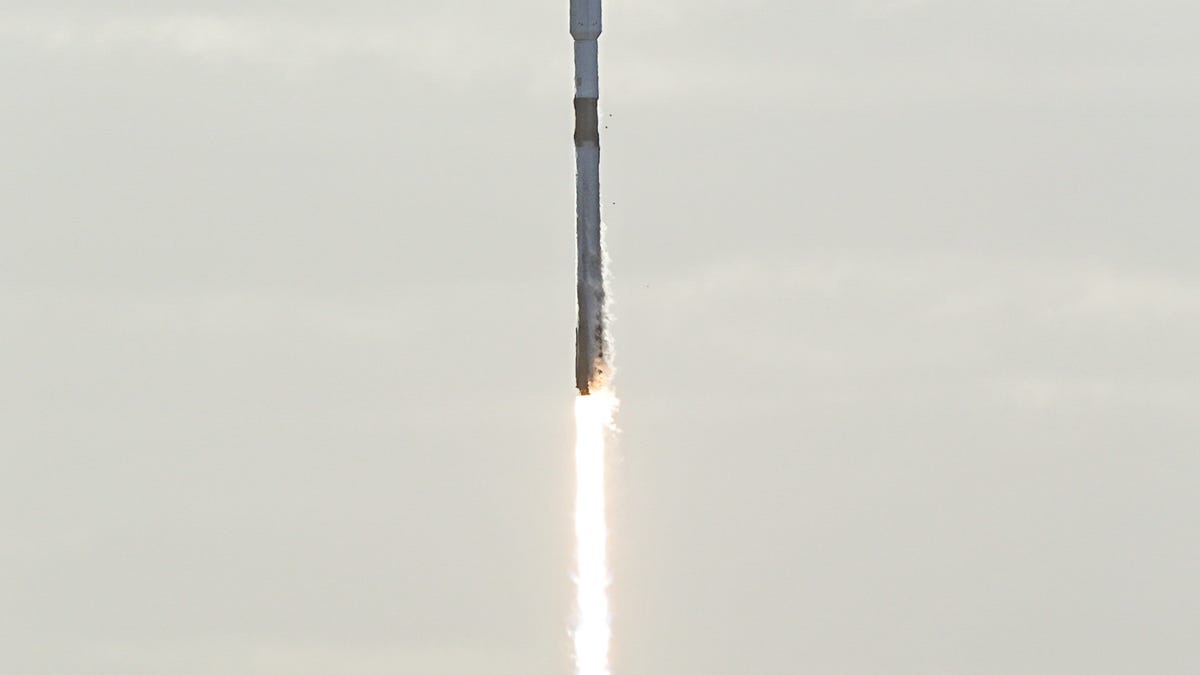
Less than 12 hours after the crew onboard NASA's International Space Station caught a glimpse of Artemis II traveling back to Earth after a lunar flyby, SpaceX launched a package up their way. The launch occurred 7:41 a.m. Saturday, April 11 from Launch Complex 40 in Cape Canaveral Space Force Station. The Falcon 9 rocket send a Northrop Grumman Cygnus XL cargo spacecraft to the International Space Station. Onboard was over 11,000 pounds of supplies and science for the crew in orbit. Known as NASA's Northrop Grumman Commercial Resupply Services 24, or Northrop Grumman CRS-24, the spacecraft will be caught by astronauts using the Canadarm2 robotic arm on the space station on Monday, April 13. Northrop Grumman named the spacecraft after NASA astronaut Steven R. Nagel, who completed four shuttle missions and spent more than 720 hours in space. A sonic boom sounded throughout Brevard County, as the rocket's booster landed back at Landing Zone 40. Next SpaceX rocket launch from Cape Canaveral The next Falcon 9 rocket launch from Florida is scheduled for no earlier than 2:13 a.m. Tuesday, April 14 from Launch Complex 40 in Cape Canaveral Space Force Station. The mission is the next batch of SpaceX Starlink internet satellites, titled Starlink 10-24. Brooke Edwards is a Space Reporter for Florida Today. Contact her at [email protected] or on X: @brookeofstars.
See photos of the Saturday SpaceX rocket launch from Florida with NASA resupply mission
Less than 12 hours after the crew onboard NASA's International Space Station caught a glimpse of Artemis II traveling back to Earth after a lunar flyby, SpaceX launched a package up their way. The launch occurred 7:41 a.m. Saturday, April 11 from Launch Complex 40 in Cape Canaveral Space Force Station. The Falcon 9 rocket send a Northrop Grumman Cygnus XL cargo spacecraft to the International Space Station. Onboard was over 11,000 pounds of supplies and science for the crew in orbit. Known as NASA's Northrop Grumman Commercial Resupply Services 24, or Northrop Grumman CRS-24, the spacecraft will be caught by astronauts using the Canadarm2 robotic arm on the space station on Monday, April 13. Northrop Grumman named the spacecraft after NASA astronaut Steven R. Nagel, who completed four shuttle missions and spent more than 720 hours in space. A sonic boom sounded throughout Brevard County, as the rocket's booster landed back at Landing Zone 40. Next SpaceX rocket launch from Cape Canaveral The next Falcon 9 rocket launch from Florida is scheduled for no earlier than 2:13 a.m. Tuesday, April 14 from Launch Complex 40 in Cape Canaveral Space Force Station. The mission is the next batch of SpaceX Starlink internet satellites, titled Starlink 10-24. Brooke Edwards is a Space Reporter for Florida Today. Contact her at [email protected] or on X: @brookeofstars.
See photos of the Saturday SpaceX rocket launch from Florida with NASA resupply mission
Less than 12 hours after the crew onboard NASA's International Space Station caught a glimpse of Artemis II traveling back to Earth after a lunar flyby, SpaceX launched a package up their way. The launch occurred 7:41 a.m. Saturday, April 11 from Launch Complex 40 in Cape Canaveral Space Force Station. The Falcon 9 rocket send a Northrop Grumman Cygnus XL cargo spacecraft to the International Space Station. Onboard was over 11,000 pounds of supplies and science for the crew in orbit. Known as NASA's Northrop Grumman Commercial Resupply Services 24, or Northrop Grumman CRS-24, the spacecraft will be caught by astronauts using the Canadarm2 robotic arm on the space station on Monday, April 13. Northrop Grumman named the spacecraft after NASA astronaut Steven R. Nagel, who completed four shuttle missions and spent more than 720 hours in space. A sonic boom sounded throughout Brevard County, as the rocket's booster landed back at Landing Zone 40. Next SpaceX rocket launch from Cape Canaveral The next Falcon 9 rocket launch from Florida is scheduled for no earlier than 2:13 a.m. Tuesday, April 14 from Launch Complex 40 in Cape Canaveral Space Force Station. The mission is the next batch of SpaceX Starlink internet satellites, titled Starlink 10-24. Brooke Edwards is a Space Reporter for Florida Today. Contact her at [email protected] or on X: @brookeofstars.
What AI Fatigue? Anthropic's Red-Hot Growth Is Going to Supercharge These 3 AI Leaders.
The AI company's impressive growth suggests that adoption of the technology remains robust, driven by productivity gains. Artificial intelligence (AI) company Anthropic's Claude family of large language models (LLMs) is proving highly successful, as evidenced by its latest reported financial results. Anthropic calls itself an AI safety and research company, offering solutions such as AI agents, coding, AI-based customer support, advanced reasoning, and more, while keeping ethics and safety at the center of its philosophy. It looks like the company's mission statement and products are resonating with customers, as it has seen a massive jump in its annual run rate revenue in a very short time. Will AI create the world's first trillionaire? Our team just released a report on the one little-known company, called an "Indispensable Monopoly" providing the critical technology Nvidia and Intel both need. Continue " Anthropic introduced its Claude family of LLMs three years ago, describing it as a "next-generation AI assistant based on Anthropic's research into training helpful, honest, and harmless AI systems." Since then, Claude has received positive reviews for its ability to process, analyze, and summarize large data volumes in one go, generate more natural responses to queries, and offer one of the top AI coding tools on the market. Additionally, the company's focus on safety and ethical AI seems to be another key selling point of its AI platform. All this explains why Anthropic's annual run rate revenue has now ballooned to $30 billion from $9 billion at the end of 2025. That's an increase of over 3 times in just three months. The company further notes that the enterprise adoption of its AI solutions remains robust. It now has more than 1,000 businesses that are spending over $1 million annually on its offerings. The phenomenal surge in Anthropic's revenue run rate makes it clear that businesses are willing to pay for AI-driven productivity gains. Also, the numbers should dispel concerns about the future of the AI economy, especially the viability of large infrastructure investments. After all, Anthropic points out that Claude helps adopters increase productivity by automating tasks, and productivity is one of the most important pillars of the AI economy, as it is anticipated to significantly boost the global gross domestic product (GDP) in the long run. However, Anthropic's success wouldn't have been possible without its hardware partners, which enable its popular LLMs to do the heavy lifting in data centers and deliver results to customers. Anthropic's run rate revenue has increased by more than tenfold a year in each of the past three years. Nvidia and Alphabet's Google have played a central role in this stellar growth. The company trains and runs Claude on Nvidia's graphics processing units (GPUs) and Google's Tensor Processing Units (TPUs). Anthropic announced a deal with Nvidia last year, noting that it will initially purchase 1 gigawatt (GW) of compute capacity powered by Nvidia's Grace Blackwell and Vera Rubin chip systems. What's more, Nvidia announced that it will invest $10 billion in Anthropic. Importantly, Nvidia sees the scope to sell more chips to Anthropic in the future. CEO Jensen Huang remarked on the February earnings call: You know, these companies, in the case of Anthropic, I think their revenues [10x'd] in a year. And they are severely capacity constrained because demand is just incredible. And the token demand is incredible. The token generation rate is growing exponentially. So, Nvidia's partnership with Anthropic is great news for the semiconductor giant, as it could help it sustain its remarkable growth. Nvidia, however, isn't the only hardware partner Anthropic relies on. It uses Google's TPUs, custom processors known for their cost and performance advantages due to their specialized nature. Anthropic announced in October last year that it would deploy 1 million TPUs to bring 1 GW of data center capacity online in 2026. And now, it has signed a new agreement with Google and its TPU design partner Broadcom for "multiple gigawatts of next-generation TPU capacity that we expect to come online starting in 2027." Google and Broadcom have been co-designing TPUs for a decade now, as noted by Barron's. The latest deal is likely to encourage Broadcom to raise its AI revenue estimates further. The chip designer estimates that its AI revenue will exceed $100 billion by next year, up from $20 billion in the previous fiscal year (which ended on Nov. 2, 2025). In simple terms, AI infrastructure companies such as Nvidia, Broadcom, and Google are reaping the benefits of enterprise AI adoption, fueled by the technology's productivity gains. So, concerns about whether the huge investments in AI will pay off or not don't seem justified. This suggests investors may have been panicking needlessly, keeping top AI stocks under pressure despite their roaring growth. Nvidia, Broadcom, and Google are all in the red this year. Savvy investors, however, should treat their drop as a buying opportunity as Anthropic's exponential growth clearly suggests that AI isn't in a bubble. Businesses are investing in this technology, as evidenced by improving AI adoption rates. Importantly, with AI estimated to account for 3.7% of global GDP by 2030, contributing $22.3 trillion in value according to market research firm IDC, all the companies discussed in this article are likely to experience healthy long-term growth which should translate into more upside in the stock market. Before you buy stock in Broadcom, consider this: The Motley Fool Stock Advisor analyst team just identified what they believe are the 10 best stocks for investors to buy now... and Broadcom wasn't one of them. The 10 stocks that made the cut could produce monster returns in the coming years. Consider when Netflix made this list on December 17, 2004... if you invested $1,000 at the time of our recommendation, you'd have $550,348!* Or when Nvidia made this list on April 15, 2005... if you invested $1,000 at the time of our recommendation, you'd have $1,127,467!* Now, it's worth noting Stock Advisor's total average return is 959% -- a market-crushing outperformance compared to 191% for the S&P 500. Don't miss the latest top 10 list, available with Stock Advisor, and join an investing community built by individual investors for individual investors. Harsh Chauhan has no position in any of the stocks mentioned. The Motley Fool has positions in and recommends Alphabet and Nvidia. The Motley Fool recommends Broadcom. The Motley Fool has a disclosure policy.

See photos of the Saturday SpaceX rocket launch from Florida with NASA resupply mission
Less than 12 hours after the crew onboard NASA's International Space Station caught a glimpse of Artemis II traveling back to Earth after a lunar flyby, SpaceX launched a package up their way. The launch occurred 7:41 a.m. Saturday, April 11 from Launch Complex 40 in Cape Canaveral Space Force Station. The Falcon 9 rocket send a Northrop Grumman Cygnus XL cargo spacecraft to the International Space Station. Onboard was over 11,000 pounds of supplies and science for the crew in orbit. Known as NASA's Northrop Grumman Commercial Resupply Services 24, or Northrop Grumman CRS-24, the spacecraft will be caught by astronauts using the Canadarm2 robotic arm on the space station on Monday, April 13. Northrop Grumman named the spacecraft after NASA astronaut Steven R. Nagel, who completed four shuttle missions and spent more than 720 hours in space. A sonic boom sounded throughout Brevard County, as the rocket's booster landed back at Landing Zone 40. Next SpaceX rocket launch from Cape Canaveral The next Falcon 9 rocket launch from Florida is scheduled for no earlier than 2:13 a.m. Tuesday, April 14 from Launch Complex 40 in Cape Canaveral Space Force Station. The mission is the next batch of SpaceX Starlink internet satellites, titled Starlink 10-24. Brooke Edwards is a Space Reporter for Florida Today. Contact her at [email protected] or on X: @brookeofstars.
After Artemis II, NASA looks to SpaceX, Blue Origin for Moon landings
With Artemis II successfully completing its historic lunar mission on Friday, NASA is banking on billionaires Jeff Bezos and Elon Musk for the next step: landing astronauts on the Moon. The Apollo programme -- which sent the first and only humans to the Moon's surface between 1969 and 1972 -- was designed so that only two astronauts could land on the lunar surface for a maximum of a few days. More than 50 years later, American ambitions and expertise have grown, with NASA hoping to send four people on a mission lasting several weeks and eventually building a lunar base. For the second phase of its mission, the space agency is looking to commercial landers designed by Musk's SpaceX and Bezos's Blue Origin to get its astronauts on the Moon. After Artemis II splashed down in the Pacific Ocean on Friday after its record-breaking journey, NASA officials urged all hands on deck for a crewed landing in 2028. "We need all of industry to work and come along with us, and they need to accept that challenge and come with us and really start the production lines that are going to be required in order to achieve that goal," Lori Glaze, the acting associate NASA administrator, told a press conference. The Apollo programme relied on a single rocket, the Saturn V, which carried both the lunar lander and the capsule carrying the astronauts. NASA has opted for two separate systems for Artemis: the first to launch the Orion spacecraft carrying the crew from Earth, and another to launch the lunar lander, which will be privately contracted. 'Camping trip' The decision was driven by the technical limitations of the Apollo programme, Kent Chojnacki, a senior NASA official in charge of lunar lander development, told AFP. "It was very not expandable to long-term exploration and long-term stays," he explained. Although spectacular, the Apollo missions were like "camping trips," said Jack Kiraly, director of government relations at the Planetary Society, which encourages space exploration. The systems NASA is looking at now are "huge compared to Apollo," said Chojnacki, noting that the new lunar landers being developed by Blue Origin and SpaceX are two to seven times larger than before. The space agency is also drawing from external partners, such as the European companies that built the propulsion module for Orion. The new approach opens access to more equipment and resources, but also significantly complicates operations. To send these giant spacecraft to the Moon, the private space exploration companies will need to master in-flight refueling, a complex maneuver that has not yet been fully tested. After the lunar lander is launched, additional rockets will be needed to deliver the fuel required for the journey to the Moon, some 250,000 miles (400,000 kilometers) from Earth. 'Lose the Moon' Given this risky undertaking and the numerous delays -- particularly those experienced by SpaceX that was supposed to have its lander ready first -- pressure has mounted in recent months. "We are once again about to lose the Moon," three former NASA officials warned in an article in SpaceNews last September. China, which is hoping to send humans to the Moon by 2030, has been making progress as well, raising fears in the Trump administration that the United States could get left behind. With that in mind, NASA raised the possibility last fall of reopening the contract awarded to SpaceX and using Blue Origin's lunar lander first, sending shockwaves through the rival companies. Both firms announced they were realigning their strategies to prioritize the lunar project -- and keep their lucrative contracts with NASA. But concerns remain, particularly regarding the feasibility of in-orbit refueling. "We do have a plan," Chojnacki said, noting that NASA has a back-up plan in case of failure. The timeline is also up in the air. NASA says it plans to test an in-orbit rendezvous between the spacecraft and one or two lunar landers in 2027, and carry out a crewed lunar landing in 2028. Before that, companies will need to test in-orbit refueling and send an unmanned lunar lander to the Moon to demonstrate its safety. That all needs to happen within the next two years. "It feels like a very small amount of time," said Clayton Swope of the Center for Strategic and International Studies.

What AI Fatigue? Anthropic's Red-Hot Growth Is Going to Supercharge These 3 AI Leaders. | The Motley Fool
The AI company's impressive growth suggests that adoption of the technology remains robust, driven by productivity gains. Artificial intelligence (AI) company Anthropic's Claude family of large language models (LLMs) is proving highly successful, as evidenced by its latest reported financial results. Anthropic calls itself an AI safety and research company, offering solutions such as AI agents, coding, AI-based customer support, advanced reasoning, and more, while keeping ethics and safety at the center of its philosophy. It looks like the company's mission statement and products are resonating with customers, as it has seen a massive jump in its annual run rate revenue in a very short time. That's great news for Alphabet (GOOG 0.20%) (GOOGL 0.41%), Broadcom (AVGO +4.69%), and Nvidia (NVDA +2.59%), three AI pioneers supporting Anthropic's mission. Let's see why Anthropic's remarkable growth could help boost investor confidence in these three tech stocks. Anthropic introduced its Claude family of LLMs three years ago, describing it as a "next-generation AI assistant based on Anthropic's research into training helpful, honest, and harmless AI systems." Since then, Claude has received positive reviews for its ability to process, analyze, and summarize large data volumes in one go, generate more natural responses to queries, and offer one of the top AI coding tools on the market. Additionally, the company's focus on safety and ethical AI seems to be another key selling point of its AI platform. All this explains why Anthropic's annual run rate revenue has now ballooned to $30 billion from $9 billion at the end of 2025. That's an increase of over 3 times in just three months. The company further notes that the enterprise adoption of its AI solutions remains robust. It now has more than 1,000 businesses that are spending over $1 million annually on its offerings. The phenomenal surge in Anthropic's revenue run rate makes it clear that businesses are willing to pay for AI-driven productivity gains. Also, the numbers should dispel concerns about the future of the AI economy, especially the viability of large infrastructure investments. After all, Anthropic points out that Claude helps adopters increase productivity by automating tasks, and productivity is one of the most important pillars of the AI economy, as it is anticipated to significantly boost the global gross domestic product (GDP) in the long run. However, Anthropic's success wouldn't have been possible without its hardware partners, which enable its popular LLMs to do the heavy lifting in data centers and deliver results to customers. Anthropic's run rate revenue has increased by more than tenfold a year in each of the past three years. Nvidia and Alphabet's Google have played a central role in this stellar growth. The company trains and runs Claude on Nvidia's graphics processing units (GPUs) and Google's Tensor Processing Units (TPUs). Anthropic announced a deal with Nvidia last year, noting that it will initially purchase 1 gigawatt (GW) of compute capacity powered by Nvidia's Grace Blackwell and Vera Rubin chip systems. What's more, Nvidia announced that it will invest $10 billion in Anthropic. Importantly, Nvidia sees the scope to sell more chips to Anthropic in the future. CEO Jensen Huang remarked on the February earnings call: You know, these companies, in the case of Anthropic, I think their revenues [10x'd] in a year. And they are severely capacity constrained because demand is just incredible. And the token demand is incredible. The token generation rate is growing exponentially. So, Nvidia's partnership with Anthropic is great news for the semiconductor giant, as it could help it sustain its remarkable growth. Nvidia, however, isn't the only hardware partner Anthropic relies on. It uses Google's TPUs, custom processors known for their cost and performance advantages due to their specialized nature. Anthropic announced in October last year that it would deploy 1 million TPUs to bring 1 GW of data center capacity online in 2026. And now, it has signed a new agreement with Google and its TPU design partner Broadcom for "multiple gigawatts of next-generation TPU capacity that we expect to come online starting in 2027." Google and Broadcom have been co-designing TPUs for a decade now, as noted by Barron's. The latest deal is likely to encourage Broadcom to raise its AI revenue estimates further. The chip designer estimates that its AI revenue will exceed $100 billion by next year, up from $20 billion in the previous fiscal year (which ended on Nov. 2, 2025). In simple terms, AI infrastructure companies such as Nvidia, Broadcom, and Google are reaping the benefits of enterprise AI adoption, fueled by the technology's productivity gains. So, concerns about whether the huge investments in AI will pay off or not don't seem justified. This suggests investors may have been panicking needlessly, keeping top AI stocks under pressure despite their roaring growth. Nvidia, Broadcom, and Google are all in the red this year. Savvy investors, however, should treat their drop as a buying opportunity as Anthropic's exponential growth clearly suggests that AI isn't in a bubble. Businesses are investing in this technology, as evidenced by improving AI adoption rates. Importantly, with AI estimated to account for 3.7% of global GDP by 2030, contributing $22.3 trillion in value according to market research firm IDC, all the companies discussed in this article are likely to experience healthy long-term growth which should translate into more upside in the stock market.
Binance Lets Users Trade SpaceX and OpenAI Tokens Before IPO
The new products do not provide ownership or shareholder rights and are unavailable to US persons. Binance has begun surfacing pre-IPO assets in the Markets section of its Web3 Wallet, adding a new on-chain product tied to private companies that have not yet gone public. The exchange said that five pre-IPO assets are now available in the wallet view of its app. Pre-IPO Tokens Tied to SpaceX and OpenAI The Richard Teng-led exchange did not name those five assets listed on the market in its brief announcement. However, PreStocks, which said its pre-IPO assets are now live in the Binance app, said its platform offers tokens linked to SpaceX, OpenAI, Anthropic, Anduril, Kalshi, and Polymarket. On its website, PreStocks says its tokens are backed 1:1 by special-purpose-vehicle exposure to the underlying company shares. PreStocks says its tokens do not confer ownership, voting, dividend, information, or other legal rights. The company also says the products are not available in the United States or to US persons. Essentially, this structure leaves holders with price exposure rather than shareholder rights. Meanwhile, Binance's entry into the tokenized equity sector intensifies an ongoing arms race among major digital asset platforms to capture traditional financial workflows. Major crypto exchanges, including Kraken and Gemini, have increasingly explored adjacent traditional offerings over the past year. Notably, Bitget, another major rival, debuted a parallel product, IPO Prime, just days prior. These firms' aggressive launches show that they are trying to capture some of the retail demand generated by the 2026 "IPO supercycle." Market analysts noted that this IPO cycle is projected to be one of the largest in history, potentially unlocking over $3.6 trillion in value. Elon Musk's SpaceX leads the coming wave of public offerings. The firm recently filed confidentially with the US Securities and Exchange Commission (SEC) on April 1. The aerospace company is reportedly targeting a June 2026 listing at a valuation of about $2 trillion.