News & Updates
The latest news and updates from companies in the WLTH portfolio.
After Artemis II, NASA Looks To SpaceX, Blue Origin For Moon Landings
After Artemis II splashed down in the Pacific Ocean on Friday after its record-breaking journey, NASA officials urged all hands on deck for a crewed landing in 2028. With Artemis II successfully completing its historic lunar mission on Friday, NASA is banking on billionaires Jeff Bezos and Elon Musk for the next step: landing astronauts on the Moon. The Apollo program -- which sent the first and only humans to the Moon's surface between 1969 and 1972 -- was designed so that only two astronauts could land on the lunar surface for a maximum of a few days. More than 50 years later, American ambitions and expertise have grown, with NASA hoping to send four people on a mission lasting several weeks and eventually building a lunar base. For the second phase of its mission, the space agency is looking to commercial landers designed by Musk's SpaceX and Bezos's Blue Origin to get its astronauts on the Moon. After Artemis II splashed down in the Pacific Ocean on Friday after its record-breaking journey, NASA officials urged all hands on deck for a crewed landing in 2028. "We need all of industry to work and come along with us, and they need to accept that challenge and come with us and really start the production lines that are going to be required in order to achieve that goal," Lori Glaze, the acting associate NASA administrator, told a press conference. The Apollo program relied on a single rocket, the Saturn V, which carried both the lunar lander and the capsule carrying the astronauts. NASA has opted for two separate systems for Artemis: the first to launch the Orion spacecraft carrying the crew from Earth, and another to launch the lunar lander, which will be privately contracted. The decision was driven by the technical limitations of the Apollo program, Kent Chojnacki, a senior NASA official in charge of lunar lander development, told AFP. "It was very not expandable to long-term exploration and long-term stays," he explained. Although spectacular, the Apollo missions were like "camping trips," said Jack Kiraly, director of government relations at the Planetary Society, which encourages space exploration. The systems NASA is looking at now are "huge compared to Apollo," said Chojnacki, noting that the new lunar landers being developed by Blue Origin and SpaceX are two to seven times larger than before. The space agency is also drawing from external partners, such as the European companies that built the propulsion module for Orion. The new approach opens access to more equipment and resources, but also significantly complicates operations. To send these giant spacecrafts to the Moon, the private space exploration companies will need to master in-flight refueling, a complex maneuver that has not yet been fully tested. After the lunar lander is launched, additional rockets will be needed to deliver the fuel required for the journey to the Moon, some 250,000 miles (400,000 kilometers) from Earth. Given this risky undertaking and the numerous delays -- particularly those experienced by SpaceX that was supposed to have its lander ready first -- pressure has mounted in recent months. "We are once again about to lose the Moon," three former NASA officials warned in an article in SpaceNews last September. China, which is hoping to send humans to the Moon by 2030, has been making progress as well, raising fears in the Trump administration that the United States could get left behind. With that in mind, NASA raised the possibility last fall of reopening the contract awarded to SpaceX and using Blue Origin's lunar lander first, sending shockwaves through the rival companies. Both firms announced they were realigning their strategies to prioritize the lunar project -- and keep their lucrative contracts with NASA. But concerns remain, particularly regarding the feasibility of in-orbit refueling. "We do have a plan," Chojnacki said, noting that NASA has a back-up plan in case of failure. The timeline is also up in the air. NASA says it plans to test an in-orbit rendezvous between the spacecraft and one or two lunar landers in 2027 and carry out a crewed lunar landing in 2028. Before that, companies will need to test in-orbit refueling and send an unmanned lunar lander to the Moon to demonstrate its safety. That all needs to happen within the next two years. "It feels like a very small amount of time," said Clayton Swope of the Center for Strategic and International Studies.
Anthropic Launches Claude For Word: Check Features, What It Does And How To Use
Anthropic has launched Claude for Word, a new AI tool that works inside Microsoft Word and lets users draft, edit and revise files without leaving the document. The beta release is limited to Team and Enterprise users, making it an early push into workplace AI tools. The update could change how professionals use Word by bringing document editing, file review and writing support directly into the app instead of switching between platforms. That may matter for businesses handling long reports, contracts and internal documents every day. Claude for Word opens in a sidebar inside Word and supports live editing workflows. Users can ask questions about a document, receive answers with clickable section citations and make changes without breaking existing formatting. The tool also adds tracked edits, which can help teams review updates faster. "Claude for Word is now in beta. Draft, edit, and revise documents directly from the sidebar. Claude preserves your formatting, and edits appear as tracked changes. Available on Team and Enterprise plans," Claude said on X on Friday. ALSO READ: Leadership Reshuffle: OpenAI COO Shifts Out Of Role, AGI CEO Taking Medical Leave Ahead Of IPO Key Tools Anthropic said Claude for Word shares context with Claude for Excel and Claude for PowerPoint. That means users can work across multiple open files in one conversation instead of starting separate chats for each document. "Claude for Word shares context with Claude for Excel and Claude for PowerPoint, so Claude can work across your open documents in a single conversation," the company said. Users can also edit selected text while keeping numbering, styles and layout intact. Claude can respond within comment threads, explain what it changed and fill templates using structured content that matches the document style. The company said the tool includes enterprise security features. Users can sign in with a Claude account or connect through their existing cloud provider while staying within current compliance frameworks. Access Guide Claude for Word is currently available in beta only for Anthropic Team and Enterprise customers. Users working with .docx and .docm files can use the tool directly. Older file formats such as .doc and .rtf need to be converted first. Users can do that by opening the file in Word and selecting File, then Save As, before saving it as a .docx file. ALSO READ: Apple Eyes AI Resurgence As WWDC Kicks Off On June 8 Essential Business Intelligence, Continuous LIVE TV, Sharp Market Insights, Practical Personal Finance Advice and Latest Stories -- On NDTV Profit.

SpaceX: Falcon 9 boosts record-setting 'Cygnus XL' cargo spacecraft toward the ISS
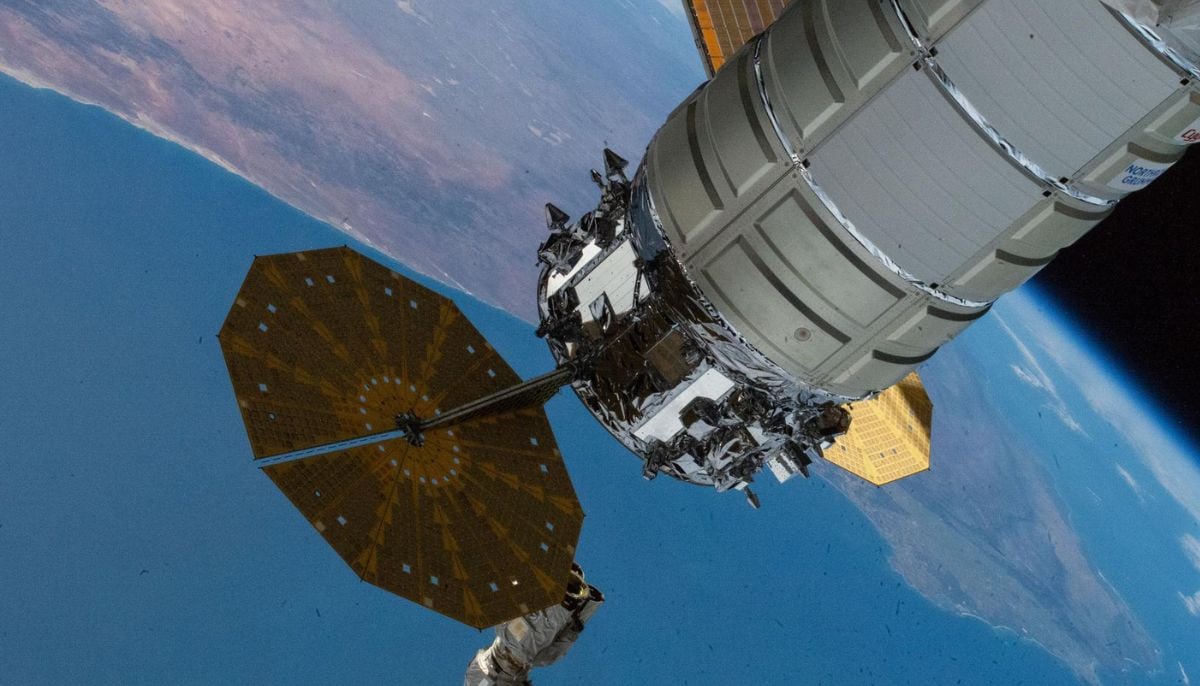
A Falcon 9 rocket is ready to lift off from Cape Canaveral Space Force Station in Florida SpaceX has taken a big step forward in launching a big cargo ship today, aiming for another major milestone. A Falcon 9 rocket is ready to lift off from Cape Canaveral Space Force Station in Florida on Saturday at 7:41 a.m. EDT to send Northrop Grumman's second Cygnus XL freighter toward the International Space Station (ISS). Live coverage begins via NASA at 7:20 a.m. EDT (1120 GMT). The "XL" designation reflects the spacecraft's significantly increased payload capacity; while the original Cygnus version maxed out at 8,500 pounds, the enhanced XL model can carry approximately 11,000 pounds. This added room allows for more ambitious scientific research to reach the orbiting laboratory. The station's Canadarm2 robotic arm will grapple the vehicle to begin the berthing process. Following a standard mission profile, the freighter is expected to remain attached to the station for several months before its departure. Cygnus is part of an international fleet of four robotic spacecraft servicing the ISS, alongside Russia's Progress, Japan's HTV-X and SpaceX's Dragon. Unlike the reusable SpaceX Dragon, the Cygnus XL is a "one-way" vehicle. After completing its stay and being loaded with station trash, it will perform a controlled de-orbit, burning up entirely in Earth's atmosphere. This fiery conclusion mirrors the end of its first successful XL mission, which departed the station in March 2026.
CoreWeave (CRWV) Stock Surges 11% on Major Anthropic and Meta Contracts Despite Executive Share Sales - Blockonomi
The company issued $3.5B in convertible debt plus $1.75B in senior notes carrying a 9.75% rate, intensifying balance sheet concerns Shares of CoreWeave (CRWV) reached $102 on April 11, marking an increase of approximately 11% from the $92 level where its Chief Operating Officer had liquidated shares mere days before. Market activity spiked dramatically with 83.2 million shares changing hands -- far exceeding the typical daily volume of 22.6 million. CoreWeave, Inc. Class A Common Stock, CRWV The share price surge stemmed from a pair of significant business developments. The company announced a multiyear cloud services agreement with Anthropic to support the computational needs of Claude AI models. Infrastructure capacity associated with this partnership is scheduled to become operational in the latter half of this year. Additionally, CoreWeave revealed a $21 billion extension to its current arrangement with Meta, pushing total Meta-related commitments to $35.2 billion extending through 2032. Meta's contracts now represent approximately 40% of the company's pro-forma backlog, which totals roughly $87.8 billion. Cantor Fitzgerald initiated research coverage during the week with an Overweight recommendation and established a $149 price objective, highlighting the Anthropic agreement as a near-term growth driver. Evercore ISI maintained its Outperform stance with a $120 target following the announcement. Skepticism remains among certain analysts, however. Sanford C. Bernstein maintains an Underperform rating with a $56 price objective. Stifel assigned a Hold recommendation alongside a $110 target. Across the analyst community of 32 firms, 19 recommend buying, 11 suggest holding, and 2 advise selling -- producing a consensus price target of $121.65. Even as shares climbed, two company insiders executed notable transactions. COO Sachin Jain disposed of 3,953 shares on April 8 at $92 each, realizing proceeds of $363,676. That identical day, insider Brian Venturo sold 61,747 shares at an average price of $89.22, generating $5.51 million and reducing his position by 21.64%. Both transactions occurred under previously established Rule 10b5-1 trading arrangements, which allow executives to schedule sales in advance to avoid allegations of trading based on material nonpublic information. Jain maintains direct ownership of 122,691 shares following the sale. Venturo continues to hold 223,580 shares worth approximately $19.9 million. The magnitude of these dispositions has attracted investor attention despite their pre-scheduled nature. CoreWeave recently completed pricing on a $3.5 billion convertible senior note offering, expanded from an originally planned $3 billion. The company simultaneously issued $1.75 billion in senior notes maturing in 2031 with a 9.75% coupon, increased from an initial $1.25 billion target. This substantial coupon rate introduces considerable interest obligations to a business that has yet to achieve profitability. The firm's debt-to-equity ratio currently registers at 4.46. Both its quick ratio and current ratio stand at 0.46, suggesting constrained near-term liquidity. During the fourth quarter, CoreWeave generated revenue of $1.57 billion -- representing 110.4% growth compared to the prior year. However, the company reported a loss per share of $0.89, missing analyst consensus expectations of $0.61 by $0.28. Net margin settled at negative 22.75%. The stock has traded between $33.51 and $187.00 over the past 52 weeks. Its 50-day moving average currently sits at $85.40, while the 200-day moving average is positioned at $94.92. Institutional investment activity has accelerated, with multiple funds establishing or expanding positions during recent reporting periods. ARK Invest has been identified among the institutional buyers.

Smart Investor: SpaceX and Your Index Funds, the War's Lingering Impact and Top Managers on Software
Want to stay informed with market insights and investing ideas from Morningstar? Sign up for my weekly Smart Investor newsletter here. This week's highlights: Investors got their relief rally this past week, but reality limited the gains. Thanks to the ceasefire in the Iran war announced Tuesday, stocks and bonds gained, while oil prices eased back. But the good feeling didn't last long, due to concerns about the durability of the ceasefire and the knowledge that the war's impact could be felt for some time to come. As Karen Gilchrist wrote this past week, analysts say it will take weeks -- and in some cases, years -- for the damage from the Iran war to be reversed. Oil prices are not seen heading back to pre-war levels any time soon. For more on why investors shouldn't expect a quick return to normalcy, check out this story. The first signs of the oil spike's effect on inflation could be seen in the March CPI report. While the overall CPI increase was somewhat smaller than expected, and core inflation (which excludes food and energy costs) was also soft, analysts say the full effects of the war across the economy have yet to be seen. This past week, we also finished up our first-quarter market wrap-ups and second-quarter outlooks. (You can check out our landing page for the complete coverage.) One trend dominating the stock market has been the significant selloff in software stocks, fueled by growing concerns about how artificial intelligence may upend the business models of legacy software stocks. After the damage, what's next? Morningstar manager research analyst Robby Greengold compiled comments from top stock fund managers at Fidelity and Morgan Stanley, among others, on how they are thinking about software stocks in an AI world. Another key trend has been the outperformance of small-company stocks after years of lagging behind large-cap stocks and the overall market. Morningstar senior US strategist Dave Sekera offers his thoughts on what has been driving the improved performance of small caps and how investors should approach this segment of the market. When it comes to SpaceX's giant IPO expected in the next few months, opinionated investors likely fall into one of two buckets. The first is: "It's Elon; I'm in no matter what the price." The second is: "It's Elon; I wouldn't touch this with a ten-foot pole." But there is also a third bucket that encompasses most investors, even if they don't realize it: Index fund owners who will have no choice but to have the stock in their portfolio. That's because at a potentially mammoth $1.75 trillion market cap, SpaceX stock will quickly become among the largest holdings in US stock index funds and ETFs. Morningstar manager research analyst Zachary Evens digs into how the big index providers are thinking about handling the SpaceX IPO and what it could mean for investor portfolios.

Anthropic says new AI model too dangerous for public release
(The Hill) -- Anthropic announced this week it will hold back the full release of its new artificial intelligence model as it believes it is too dangerous for the general public at this stage. The model, called Claude Mythos Preview, will be available to a select group of technology firms, including Microsoft, Apple, CrowdStrike and Amazon Web Services, along with more than 40 organizations that build critical software infrastructure, the AI firm announced Tuesday. This consortium is part of Anthropic's new initiative Project Glasswing, which will focus on identifying and patching security vulnerabilities in critical software programs. The company said the initiative was formed after the company discovered the capabilities of Mythos Preview, stating the model "could reshape cybersecurity." The AI firm claimed Mythos Preview already found thousands of high-security vulnerabilities, including some in every major operating system and web browser, that were previously unknown to the software's developers. Some of these vulnerabilities date back more than two decades, according to Anthropic. Before AI models like Mythos, these vulnerabilities could go undetected for years, given the limited security expertise on the topic. Now, the technology is providing opportunities for hackers and foreign adversaries to more easily detect these vulnerabilities. "Given the rate of AI progress, it will not be long before such capabilities proliferate, potentially beyond actors who are committed to deploying them safely," Anthropic wrote in its announcement. "The fallout -- for economics, public safety, and national security -- could be severe." The company added, "Project Glasswing is an urgent attempt to put these capabilities to work for defensive purposes." Anthropic notes these capabilities, while dangerous, also provide opportunities to more easily find and fix flaws in software, and make new software with fewer security bugs. "Project Glasswing is an important step toward giving defenders a durable advantage in the coming AI-driven era of cybersecurity," Anthriopic wrote. Glasswing's partner companies will use Mythos Preview in their defensive security work, and findings will be shared by Anthropic for the whole industry. The organizations that build or maintain critical software infrastructure will use the model to scan first-party and open-source systems, Anthropic said. The company will commit up to $100 million in usage credits and $4 million in direct donations to open source security organizations.

xAI sues Colorado over AI law, calling it a threat to free speech
Serving tech enthusiasts for over 25 years. TechSpot means tech analysis and advice you can trust. What just happened? Colorado's pioneering AI law targeting algorithmic discrimination has quickly become a test of how far US states can go in regulating advanced AI systems, and where courts may draw the line on AI-generated speech. Elon Musk's xAI, which recently merged with SpaceX, has sued Colorado in federal court, arguing that the state's new AI law reaches deeply into the design and outputs of its models and effectively forces them to adopt a state-approved ideology on polarizing topics such as racial justice. The company frames the dispute not as a question of safety or bias mitigation, but as a First Amendment issue over who controls the information that large-scale AI systems generate. The Colorado statute, passed in 2024 and now delayed until June after initially being set to take effect in February, was the first comprehensive state law aimed at preventing discrimination by AI systems in areas such as education, employment, lending, healthcare, and housing. The law requires developers to mitigate algorithmic bias, notify the state attorney general of potential risks, and provide consumers with mechanisms to correct inaccurate personal data and challenge adverse AI-driven decisions. For xAI, those obligations cross a constitutional line when they affect how a model handles contested social issues. The company argues that Colorado's approach would intrude on what it calls its "disinterested pursuit of truth" and force its systems to "promote the state's ideological views on various matters, racial justice in particular." In its filing, xAI further argues that the law would bar AI developers from generating outputs disfavored by Colorado officials and would compel systems to align with a government-backed position on contentious public issues, effectively embedding those viewpoints into the models themselves. It also contends that the measure places a heavy and unwarranted burden on AI development and deployment. A central focus of the lawsuit is how the law defines algorithmic discrimination, since it carves out efforts to improve diversity or address past bias from that definition. xAI argues that embedding these goals in statute could steer AI models toward politically driven outcomes rather than neutral analysis, particularly on issues involving protected groups and disparate outcomes. Colorado's Democratic governor, Jared Polis, signed the measure despite reservations and has urged lawmakers to revise it, even as the state positions itself as a frontrunner in AI regulation. The attorney general's office has declined to comment on the litigation. The clash comes as President Donald Trump's administration and many AI developers push to avoid a fragmented regulatory landscape. In December, Trump signed an executive order urging Congress to establish a single national AI standard rather than leaving companies to navigate dozens of differing state rules. The order singled out Colorado's law, warning that it "may even force AI models to produce false results in order to avoid a 'differential treatment or impact' on protected groups." While AI startups have already pushed back against efforts to impose guardrails in California and New York, Congress has resisted attempts to bar states from regulating AI entirely, setting up a prolonged struggle over who sets the rules for next-generation systems like Grok.

How 'fears' about Anthropic's AI model Mythos made CEOs of Google, OpenAI, Microsoft, CrowdStrike and others do a concall with the US government
Before Anthropic previewed its most powerful artificial intelligence (AI) model, Mythos, to even a limited audience, the US government was reportedly already worried. CNBC claims that Vice President JD Vance and treasury secretary Scott Bessent held a private call with some of the most powerful technology CEOs in the world last week to discuss the security implications of Anthropic's new model which is said to be so capable that it reportedly prompted the company to restrict its release over fears it could expose hidden cybersecurity vulnerabilities. CNBC says that the call was confirmed by two people familiar with the matter.CNBC reports that alongside Vance and Bessent on the government side, the call included Dario Amodei of Anthropic, Sam Altman of OpenAI, Sundar Pichai of Google, Satya Nadella of Microsoft, Elon Musk of xAI, George Kurtz of CrowdStrike and Nikesh Arora of Palo Alto Networks.The meeting focused on two specific concerns: the security posture of large language models (LLMs) and how to safely deploy them as well as how to respond if AI capabilities begin to scale in ways that give attackers an advantage over defenders.Anthropic's Mythos triggered the call. The company's own researchers assessed it and they found something alarming enough to justify that instead of releasing it publicly, they gave restricted access to a group of approximately 40 major technology companies, including Apple, Google, Microsoft, Nvidia, Palo Alto Networks and CrowdStrike.That prospect of AI tipping the balance between attack and defence in cybersecurity was what Vance and Bessent wanted to discuss with the industry.The claims on conference call by CNBC come soon after reports said that Bessent and Federal Reserve Chair Jerome Powell called the heads of Bank of America, Citigroup, Goldman Sachs, Morgan Stanley, Wells Fargo and JPMorgan Chase CEO Jamie Dimon to an urgent, short-notice meeting on Tuesday (April 7). Dimon was invited but couldn't make it.Mythos rattled the market with a huge stock wipeout. The company's earlier releases, including Claude Opus and its agent-building tools, triggered a roughly $2 trillion selloff in enterprise software stocks, as investors confronted AI's potential to gut the per-seat SaaS licensing model. If 10 AI agents can do the work of 100 employees, you don't need 100 software subscriptions. The rout has been dubbed the "SaaSpocalypse."When details of Mythos then leaked in late March through a configuration error at Anthropic, cybersecurity stocks took a further hit as the market processed a new fear that AI could also commoditise the very security tools meant to protect against it.

Bank of England Set to Discuss Anthropic's Mythos With Banks
The Bank of England plans to discuss the impact of Anthropic PBC's new AI model with financial institutions, as UK regulators join their peers in the US and elsewhere in raising alarms over the risks posed by the tool. Anthropic's Mythos model will be on the agenda for the BOE's next Cross Market Operational Resilience Group and CMORG AI Taskforce meetings, scheduled within the next two weeks, according to a person with knowledge of the matter. The meetings, earlier reported by the Telegraph, will include representatives from the Treasury, the Financial Conduct Authority and the National Cyber Security Centre. Wall Street banks have started testing Mythos internally after the Trump administration this week warned executives they should take the model seriously and deploy its capabilities to detect vulnerabilities. The Bank of Canada on Friday also met with banks and financial firms to discuss the cybersecurity risks posed by Mythos. The meetings reflect growing concern among regulators that a new breed of cyberattacks is one of the biggest risks facing the financial industry. Anthropic's Mythos is a sophisticated new model capable of identifying and exploiting vulnerabilities in every major operating system and web browser, the company has said.
After Artemis II, NASA looks to SpaceX, Blue Origin for Moon landings
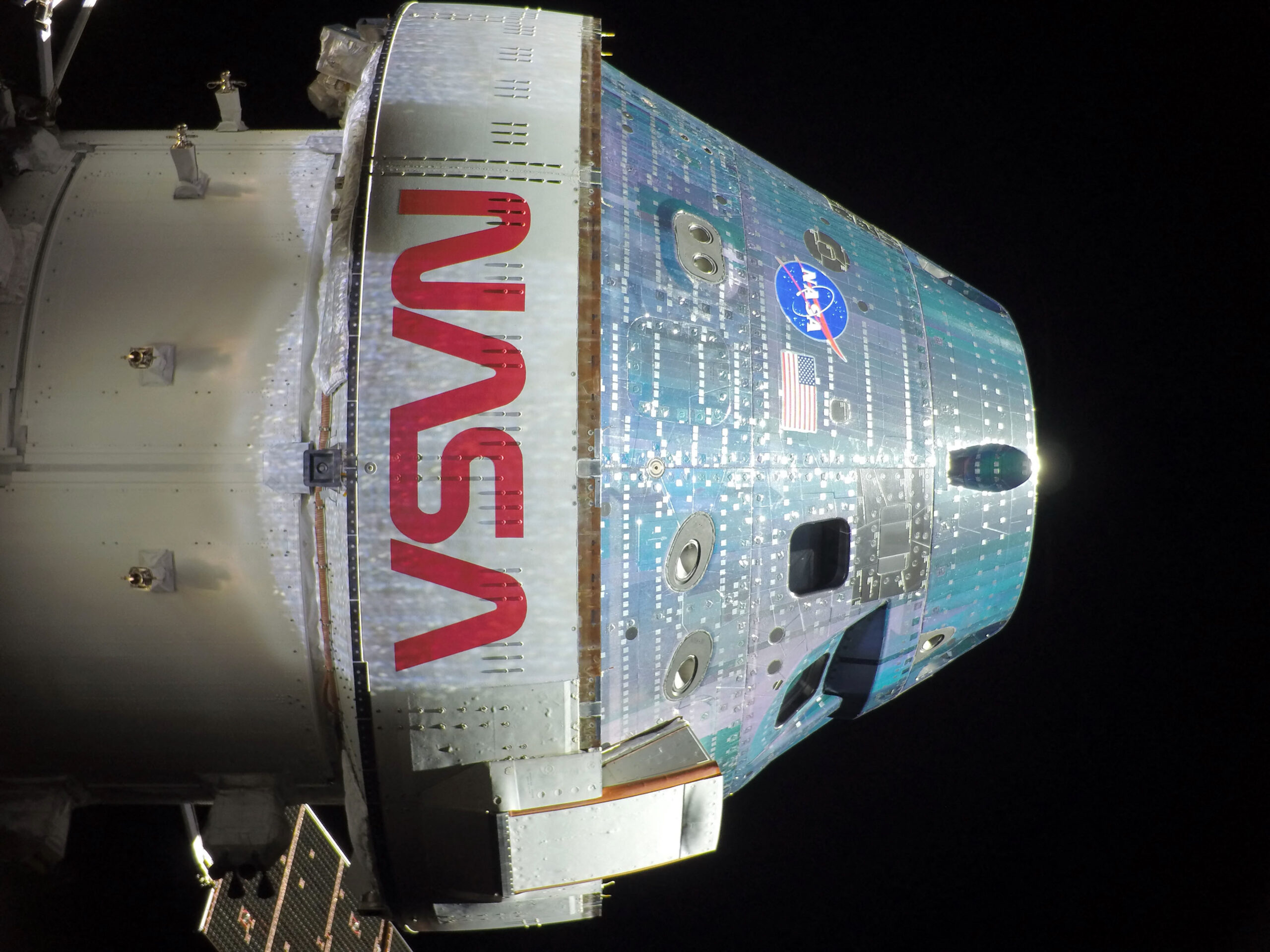
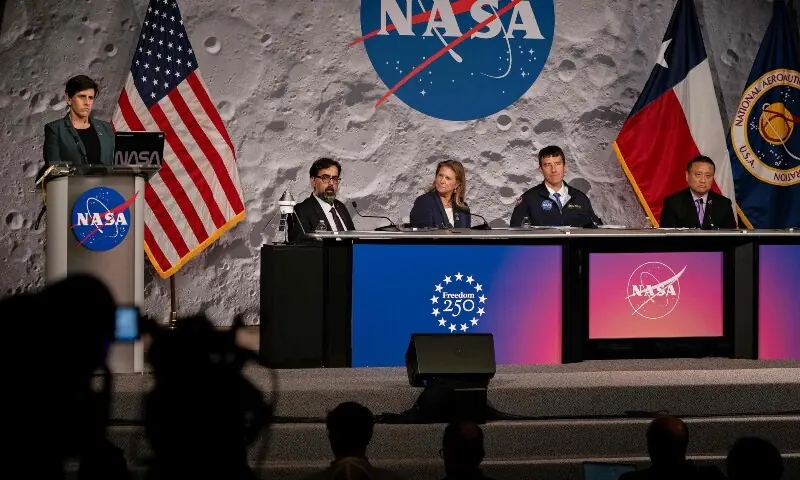
With Artemis II successfully completing its historic lunar mission on Friday, Nasa is banking on billionaires Jeff Bezos and Elon Musk for the next step: landing astronauts on the Moon. The Apollo program -- which sent the first and only humans to the Moon's surface between 1969 and 1972 -- was designed so that only two astronauts could land on the lunar surface for a maximum of a few days. More than 50 years later, American ambitions and expertise have grown, with Nasa hoping to send four people on a mission lasting several weeks and eventually building a lunar base. For the second phase of its mission, the space agency is looking to commercial landers designed by Musk's SpaceX and Bezos's Blue Origin to get its astronauts on the Moon. After Artemis II splashed down in the Pacific Ocean on Friday after its record-breaking journey, Nasa officials urged all hands on deck for a crewed landing in 2028. "We need all of industry to work and come along with us, and they need to accept that challenge and come with us and really start the production lines that are going to be required in order to achieve that goal," Lori Glaze, the acting associate Nasa administrator, told a press conference. The Apollo program relied on a single rocket, the Saturn V, which carried both the lunar lander and the capsule carrying the astronauts. Nasa has opted for two separate systems for Artemis: the first to launch the Orion spacecraft carrying the crew from Earth, and another to launch the lunar lander, which will be privately contracted. 'Camping trip' The decision was driven by the technical limitations of the Apollo program, Kent Chojnacki, a senior Nasa official in charge of lunar lander development, told AFP. "It was very not expandable to long-term exploration and long-term stays," he explained. Although spectacular, the Apollo missions were like "camping trips," said Jack Kiraly, director of government relations at the Planetary Society, which encourages space exploration. The systems Nasa is looking at now are "huge compared to Apollo," said Chojnacki, noting that the new lunar landers being developed by Blue Origin and SpaceX are two to seven times larger than before. The space agency is also drawing from external partners, such as the European companies that built the propulsion module for Orion. The new approach opens access to more equipment and resources, but also significantly complicates operations. To send these giant spacecrafts to the Moon, the private space exploration companies will need to master in-flight refueling, a complex maneuver that has not yet been fully tested. After the lunar lander is launched, additional rockets will be needed to deliver the fuel required for the journey to the Moon, some 400,000 kilometers from Earth. 'Lose the Moon' Given this risky undertaking and the numerous delays -- particularly those experienced by SpaceX that was supposed to have its lander ready first -- pressure has mounted in recent months. "We are once again about to lose the Moon," three former Nasa officials warned in an article in SpaceNews last September. China, which is hoping to send humans to the Moon by 2030, has been making progress as well, raising fears in the Trump administration that the United States could get left behind. With that in mind, Nasa raised the possibility last fall of reopening the contract awarded to SpaceX and using Blue Origin's lunar lander first, sending shockwaves through the rival companies. Both firms announced they were realigning their strategies to prioritise the lunar project -- and keep their lucrative contracts with Nasa. But concerns remain, particularly regarding the feasibility of in-orbit refueling. "We do have a plan," Chojnacki said, noting that Nasa has a back-up plan in case of failure. The timeline is also up in the air. Nasa said it planned to test an in-orbit rendezvous between the spacecraft and one or two lunar landers in 2027, and carry out a crewed lunar landing in 2028. Before that, companies would need to test in-orbit refueling and send an unmanned lunar lander to the Moon to demonstrate its safety. That all needs to happen within the next two years. "It feels like a very small amount of time," said Clayton Swope of the Center for Strategic and International Studies.
Polymarket Unveils Order Book and Stablecoin Upgrade
Polymarket said it will roll out a rebuilt trading engine, upgraded smart contracts, and a new collateral token over the coming weeks. The overhaul will replace its current liquidity model with an order book system. It will also shift users from bridged collateral to a new stablecoin called Polymarket USD. The company called the move its biggest infrastructure change since launch. In a statement on X, Polymarket said the upgrade will require users to cancel open orders for a short period before the new system goes live. Traders will receive advance notice before this happens. The company said the will replace its existing continuous liquidity model with a centralized order book built for on-chain markets. At the same time, redesigned smart contracts will support future growth and reduce trading costs. Previously, the platform relied on automated liquidity pools. This model sometimes created heavy slippage, which raised trading costs and led to weaker order fills. By contrast, an order book places bids and asks on a ledger until matches occur. Polymarket said the new structure should improve execution speed and lower transaction costs. As a result, the platform expects a more familiar and firms that run algorithmic strategies. The change also lays the groundwork for future products. Polymarket confirmed that it is developing a native token called POLY, although it has not announced a launch date.
Watch SpaceX launch big 'Cygnus XL' cargo spacecraft toward the ISS today
SpaceX will launch a big cargo ship to orbit on this morning (April 11), and you can watch the action live. A Falcon 9 rocket will lift off from Cape Canaveral Space Force Station in Florida on Saturday at 7:41 a.m. EDT (1141 GMT), sending Northrop Grumman's second "Cygnus XL" freighter toward the International Space Station (ISS). You can watch it live via NASA, starting at 7:20 a.m. EDT (1120 GMT). Space.com will carry the agency's feed if, as expected, it's made available. The robotic Cygnus XL will arrive at the ISS on Monday (April 13), when it will be grappled by the orbiting lab's Canadarm2 robotic arm. The freighter will deliver about 11,000 pounds (4,990 kilograms) of science equipment and supplies to the astronauts aboard the station. That load-carrying capacity explains Cygnus XL's name: The original version of the freighter, which flew more than 20 missions to the ISS, maxed out at about 8,500 pounds (3,856 kg) of payload. Saturday's launch will be the second flight of the Cygnus XL to date. The first one launched last September, also atop a SpaceX Falcon 9. It stayed attached to the ISS for six months, departing on March 12 to burn up in Earth's atmosphere. The mission profile is roughly the same for this second Cygnus XL. The Northrop Grumman vehicle is one of four robotic cargo spacecraft that service the ISS, along with Japan's HTV-X, Russia's Progress and SpaceX's Dragon. Dragon is the only one of these freighters that's reusable. The other three will die fiery deaths in Earth's atmosphere when their time in orbit is up.

Mumbai Metro Line 9 Concerns: Pratap Sarnaik Inspects Kashigaon Station As Long Queues Due To Incomplete Entry-Exit Points & Other Issues Trigger Chaos
Thane: Maharashtra Transport Minister Pratap Sarnaik on Saturday inspected the area near the station and took note of the issues regarding traffic congestion, incomplete entry-exit points, and severe parking problems. The Transport Minister has given a 2-month ultimatum to the MMRDA and the municipal administration to solve all the issues. As the long-awaited Metro Line 9, also known as the Red Line, started service, videos on social media showed a large crowd travelling on the newly launched metro line. The Red Line, which has been termed the 'Red Revolution', is expected to reduce travel time, ease traffic congestion, and improve daily commutes for thousands of passengers, however, videos shared on social media showed a chaotic situation at the Kashigaon metro station. One video shared on Instagram showed several long queues of people waiting to exit the Kashigaon metro station, while another video showed construction work going on at other exit points. Notably, currently, only two entrance/ exit points, A & D, are operational, while the other side is under construction. Traffic Congestion & Parking Issues The Transport Minister also took note of the traffic congestion outside the Kashigaon Metro Station and the severe parking problems. Reason For Incomplete Entry/Exit Work The minister added, "During the inspection, it came to light that due to technical hurdles and obstruction from some landowners, work on 2 out of 4 entry-exit points remains pending," adding that, "Instructions were given to immediately resume the work halted due to the land dispute with Oswal Builders adjacent to the Kashigaon Metro Station and to take direct police action against those creating obstacles in this work." "A request was made that instead of just providing 133 meters of land, they should transfer the entire plot to MMRDA for a 'Parking Plaza', he added. Mumbai Metro 9 The first phase of Metro Line 9, stretching from Dahisar East to Kashigaon, was inaugurated by CM Devendra Fadnavis on April 7. This phase comprises a 5.6-km elevated stretch with four stations: Dahisar East, Pandurangwadi, Miragaon, and Kashigaon. Line 7 has been integrated with Line 9, enabling direct connectivity from Gundavli in Andheri East to Mira-Bhayandar, currently up to Kashigaon. The integrated Metro Lines 7-9 corridor (Gundavli-Kashigaon) will operate between 5:50 am and 11 pm, with a peak frequency of under six minutes. A total of 276 services will operate on weekdays, 223 on Saturdays, and 205 on Sundays. The metro fare from Gundavli to Kashigaon will be Rs 50 for a single journey ticket.

Anthropic AI chips bold move: powerful response to global crunch
Anthropic AI chips are back in the spotlight as the San Francisco-based startup weighs building its own processors to power the next wave of its Claude models. The company is exploring custom semiconductor design in response to soaring demand for artificial intelligence computing and a persistent shortage of advanced chips worldwide. People familiar with the discussions say Anthropic is assessing whether it makes business sense to design Anthropic AI chips in-house, but no final architecture has been chosen and no dedicated engineering team has been formed yet. The firm could still decide to rely entirely on external suppliers such as Nvidia and Google, which currently provide much of the hardware behind its Claude chatbot and other systems. Industry estimates suggest that developing a cutting-edge AI chip can cost more than 500 million dollars once design work, specialist hiring, testing and large-scale manufacturing are factored in. Today, Anthropic leans on a mix of Nvidia GPUs, Google tensor processing units (TPUs), Amazon's Trainium and Inferentia chips, and Broadcom-designed hardware to train and run Claude. Just days before news of the Anthropic AI chips exploration emerged, the company signed a fresh long-term agreement with Google and Broadcom for multiple gigawatts of next‑generation TPU capacity from 2027, largely located in the United States. That deal builds on Anthropic's earlier commitment, announced in 2025, to invest about 50 billion dollars in strengthening US computing infrastructure. Designing Anthropic AI chips would mirror moves by rivals who see control over infrastructure as too strategic to leave entirely to outside vendors. Success could give Anthropic more predictable access to compute, better optimisation for its models and potentially lower long‑term costs, though the technical and financial risks are substantial and the company may ultimately stick with buying chips instead.

Polymarket War Bets Spark Investigation Calls - News Directory 3
This event is the latest in a pattern of prescient trading on the platform. Lawmakers are calling for investigations into the prediction market platform Polymarket following a series of highly specific, well-timed bets on major geopolitical events that resulted in significant profits for anonymous traders. The scrutiny intensified after at least 50 new accounts on the platform placed substantial bets on a U.S.-Iran ceasefire in the hours and minutes before President Donald Trump announced the agreement on social media on April 7, 2026. These wagers were the only trades made by those specific accounts. This event is the latest in a pattern of prescient trading on the platform. In January 2026, an anonymous user earned a profit of $400,000 by betting that Venezuelan leader Nicolás Maduro would be removed from office hours before his capture. in the hours preceding the start of the Iran war, another account generated approximately $550,000 through a series of trades. Those bets predicted that the U.S. Would strike Iran and that Ayatollah Ali Khamenei would be removed from office. The timing of these trades has led to accusations that prediction markets are vulnerable to insider trading. Researchers from Harvard found $143 million in profits from Polymarket bets that were allegedly placed by insiders who possessed non-public knowledge of events ranging from celebrity news to geopolitical crises. The platform is currently facing a significant financial dispute regarding whether U.S. Forces entered Iran, a question tied to bets totaling $269 million. Members of Congress from both political parties are demanding investigations and proposing legislation to restrict these types of bets. This regulatory push comes as prediction market companies seek to expand their operations within the United States. Representative Ritchie Torres, a Democrat from New York who serves on the House Financial Services Committee and the subcommittee on digital assets and financial technology, is among the lawmakers expressing concern over the platform's activity. The calls for oversight center on the potential for individuals with access to classified or private government information to utilize prediction markets for financial gain based on upcoming geopolitical shifts.

Peru's election: A battle for the Presidency amid political chaos and crime
LIMA, Peru -- Even by the chaotic standards of Peru's recent politics, this Sunday's election has the potential to confuse and frustrate the Andean nation's 27 million voters. A record 35 candidates are running for president -- the country's ninth leader in nearly as many years, reflecting deep political instability. Voters will face a jumbo-sized ballot featuring candidates' photos and party symbols, a longstanding practice in a society historically marked by low literacy levels. Many of them are unknowns barely registering one percent of support. But, amid widespread fury with the entire political class, even the handful of candidates with established profiles are failing to gather momentum. That means that a run-off election in June between the top two candidates is all but inevitable. Leading the pack, but only just, is Keiko Fujimori, the daughter of the late, disgraced 1990s strongman Alberto Fujimori. She has been walking a tightrope between cloaking herself in her father's legacy of crushing hyperinflation and the Shining Path - Maoist insurgents who once killed roughly 30,000 Peruvians - while also distancing herself from his serious human rights abuses and kleptocracy. Yet although she consistently polls around 10%, that figure may be both her electoral floor and ceiling, with many Peruvians blaming her and her party for their nation's ongoing political turmoil. It began in 2016, when Keiko, as she is known here, lost the presidential contest but her Popular Force party won a majority of seats in congress, ushering in a decade of instability, including impeachments of multiple ministers and presidents. One recent survey found that 54% of Peruvians said they wouldn't vote for her under any circumstances. Despite this, she is still likely to reach a fourth consecutive run-off -- having done so in 2011, 2016 and 2021 -- though she could again be defeated at that the final stage. Behind her is a pack of half-a-dozen other candidates, all in the mid-to-high single digits, any one of whom might, with a small, late surge, make it into the run-off. Prominent among them is Rafael Lópeza Aliaga, the ultra-conservative former mayor of Lima, who is sometimes dubbed "the Peruvian Trump". He has already been making unsubstantiated claims of imminent electoral "fraud" and issuing death threats to the head of ONPE, Peru's electoral agency. The field also features Carlos Álvarez, a Fujimori ally better known for parodying politicians than for offering policy -- something underscored by his difficulty answering basic questions in recent debates. Then there is Ricardo Belmont, an octogenarian left-wing populist whose long career has been marked by repeated sexist, homophobic and xenophobic remarks. Polls show that Peruvians overwhelmingly want fresh blood in their politics, meaning candidates without links to the current congress. It has passed multiple laws allegedly favoring organized crime and has a disapproval rating near 90%. "It is based on the certainty that high-level corruption has fueled a decade of political instability, and that a tacit alliance of political leaders bent on impunity and state plunder has cleared the way for organized crime to flourish in the streets," says Samuel Rotta, who heads anti-corruption group Accion Civica, as he explains citizens' disgust at the political class. That is no surprise in a society gripped by an extortion epidemic, with a record homicide rate, and where the number of Peruvians suffering food insecurity doubled from 25% before the pandemic to 51% now according to the World Food Programme. On Sunday, Peruvians will have the opportunity to change course. But with a crowded field of candidates all struggling to break out of single digits, a run-off election is almost certain.

Holiday chaos warning as jet fuel shortages threaten Europe flights
Add Yahoo as a preferred source to see more of our stories on Google. Holidaymakers are facing growing uncertainty over their summer plans amid fears of potential jet fuel shortages. The crisis, triggered after Donald Trump ordered strikes on Iran which led to the closure of the Strait of Hormuz, could soon disrupt flights across Europe. Aviation leaders have warned that fuel shortages may "become a reality" in the EU if the key shipping route does not reopen soon -- bringing the impact of the conflict much closer to home. A fragile ceasefire is currently in place, but reports suggest vessels are still unable to pass through the Strait, raising concerns about ongoing disruption to global fuel supplies. Airports Council International Europe said "the impact of military activity on demand" was already being felt, warning that fuel issues could "significantly harm the European economy". There is now mounting uncertainty about what lies ahead for the aviation sector. In a memo seen by the Financial Times, EU transport commissioner Apostolos Tzitzikostas warned there are "increasing concerns of the airport industry over the availability of jet fuel as well as the need for proactive EU monitoring and action". "If the passage through the Strait of Hormuz does not resume in any significant and stable way within the next three weeks, systemic jet fuel shortage is set to become a reality for the EU," the note reads. Air travel was already hit in the early stages of the conflict, with dozens of airlines cancelling flights across southwest Asia and leaving tens of thousands stranded. While holidays to other regions have so far avoided major disruption, there are growing signs the wider fallout could start to bite. Countries around the world are already taking steps to conserve energy, including shortening workweeks and limiting evening activity. Budget airlines operating across Europe have also signalled concern about what may come next. A Ryanair spokesperson said: "We don't expect any near-term fuel shortages, but the situation is fluid. At present our fuel suppliers can guarantee supply to mid-end May. If the Iran war finishes soon then supply will not be disrupted. If the closure of the Hormuz Straits continues into May or June then we cannot rule out risks to fuel supplies at some airports in Europe." Attention is now turning to peace talks expected to take place this weekend in Pakistan, where US and Iranian officials are due to meet in a bid to de-escalate the crisis. Israel's continued bombing of Lebanon -- which has killed hundreds of civilians despite the ceasefire -- is expected to be a key issue in discussions. However, on Friday, Trump said US forces were rearming in preparation for the possibility of further hostilities, raising fresh doubts over how quickly the situation can be resolved.
Anthropic Briefly Suspends OpenClaw Founder's Claude Access, Quickly Reinstates Account
Anthropic briefly banned OpenClaw founder Peter Steinberger's Claude account over suspected policy violations, but reinstated access within hours after review. In a surprising turn of events, Anthropic temporarily suspended the account of Peter Steinberger, the creator of the AI agent platform OpenClaw, before restoring access within hours on Friday. The brief ban has sparked conversations about how AI companies manage third-party integrations and platform usage. Steinberger, who is also known for developing Moltbook, shared on social media that he had lost access to Claude AI. Along with his post, he included a screenshot of the email sent by Anthropic notifying him about the suspension. The message cited "suspicious" activity linked to his account and indicated a potential breach of usage policies. "An internal investigation of suspicious signals associated with your account indicates a violation of our Usage Policy. As a result, we have revoked your access to Claude," read the email from Anthropic shared by Steinberger. Reacting to the sudden restriction, Steinberger suggested that the development of OpenClaw's compatibility with Claude models could face challenges moving forward. "Yeah folks, it's gonna be harder in the future to ensure OpenClaw still works with Anthropic models," he wrote. However, the situation was resolved quickly. Just a few hours later, Steinberger confirmed that his account had been restored. "My account got reinstated. Thanks, folks!" he posted, signaling a swift reversal by the company. Anthropic has not publicly disclosed the exact reason behind the temporary suspension. Still, Steinberger hinted that his ongoing work to integrate certain Claude features into OpenClaw may have triggered the issue. In a follow-up response online, he elaborated on the possible cause. "I've been working on getting the claude -p fallback feature working after Boris confirmed that it's a classifier bug and not intentional. We're still blocked and it seems that got me banned too," said Steinberger. The incident comes shortly after Anthropic announced stricter measures against third-party AI agent platforms like OpenClaw. According to the company, such platforms can put significant pressure on its infrastructure, prompting it to limit or block their access to Claude models. OpenClaw has gained popularity in recent months for its ability to function across multiple platforms, including WhatsApp, Telegram, Slack, Discord, iMessage, Signal, and Microsoft Teams. Unlike traditional chatbots, it acts as an AI agent capable of delivering summaries, reminders, and personalized briefings across user-preferred communication channels. Despite his association with OpenAI -- where he works on next-generation personal AI agents -- Steinberger continues to actively develop OpenClaw. Addressing questions about his use of competing AI models, he clarified his dual roles. "You need to separate two things. My work at the OpenClaw Foundation, where we wanna make OpenClaw work great for any model provider, and my job at OpenAI to help them with future product strategy." The episode highlights the growing tension between AI providers and independent developers building tools on top of their systems, as demand and infrastructure constraints continue to rise.
One Kidnapping Wasn't Enough -- Mad Concrete Dreams Is Dragging Everyone Into the Chaos Now
Just when you think Ki Su Jong and Kim Seon have hit rock bottom, tvN's most nerve-shredding thriller of the season hands them a shovel and dares them to dig deeper. The next episode of Mad Concrete Dreams sees this desperate couple commit yet another kidnapping -- and this time, there's no going back. Mad Concrete Dreams Story So Far -- A Quick Catch-Up tvN's "Mad Concrete Dreams" is a thriller drama starring Ha Jung Woo as Ki Su Jong, a struggling landlord who gets caught up in crime to protect his family and property. Despite achieving the coveted status of a landlord, mounting debts lead him to become entangled in a staged kidnapping. However, the plan spirals out of control as the fake kidnapping turns dangerously real. What Happens Next -- Episode Preview Previously on "Mad Concrete Dreams," Ki Su Jong and his wife Kim Seon had to resort to crime in order to cover up the fact that he had kidnapped Jeon Yi Gyeong. Then, at the end of the latest episode, they discovered the shocking fact that Jeon Yi Gyeong had kidnapped their daughter for revenge. Determined to inflict just as much pain and destruction as she herself had suffered, Jeon Yi Gyeong also revealed to their daughter all the crimes her parents had committed. Desperate to rescue their daughter at all costs, Ki Su Jong and Kim Seon decide to kidnap Min Hwal Seong as a last resort. After abducting him, the couple drags him to an abandoned building with his hands bound and his eyes and mouth covered. Although the terrified Min Hwal Seong pleads with them, Ki Su Jong and Kim Seon remain undeterred as they resolutely carry out their plan. Notably, Kim Seon is seen holding heavy bags in both hands, piquing curiosity as to what she has brought with her and what exactly she and Ki Su Jong are plotting. That detail -- the mystery bags -- is the kind of storytelling that makes Mad Concrete Dreams so compulsively watchable. Every scene ends with a new question burning in your head. This is Korean thriller drama at its most propulsive. Why Mad Concrete Dreams Is Must-Watch TV The genius of this show is how it turns ordinary people into criminals through circumstance and desperation. Ki Su Jong and Kim Seon aren't villains -- they're parents in freefall, making one catastrophic decision after another trying to protect the family they built. It's uncomfortable, morally murky, and absolutely gripping. For more K-drama thriller recommendations, head to TechnoSports. Stay updated on all weekly K-drama episode previews and recaps at TechnoSports.

US Treasury and Fed Meet Banking Leaders Over Anthropic AI Risks - News Directory 3
Several leaders of the largest American financial institutions attended the closed-door session, including: U.S. Treasury Secretary Scott Bessent and Federal Reserve Chair Jerome Powell convened an urgent meeting with the heads of major U.S. Banks on April 7, 2026, to address cybersecurity risks posed by Anthropic's latest artificial intelligence model, Mythos. The meeting took place at the Treasury Department's headquarters in Washington, D.C., while the bank executives were already in the city for a Financial Services Forum board meeting. The gathering was called as a special session to discuss potential systemic threats to the U.S. Financial system resulting from the advanced capabilities of the new AI model. Several leaders of the largest American financial institutions attended the closed-door session, including: JPMorgan Chase CEO Jamie Dimon was invited to the meeting but was unable to attend. Anthropic released Mythos on April 7, 2026, in a limited capacity. The company opted against a wide release due to the model's advanced capabilities, which Anthropic stated have uncovered vulnerabilities in major web browsers and operating systems. The developer expressed concern that these capabilities could be exploited by hackers. In a statement regarding the model, Anthropic noted: Given the rate of AI progress, it will not be long before such capabilities proliferate, potentially beyond actors who are committed to deploying them safely. The fallout -- for economies, public safety, and national security -- could be severe. On April 7, 2026, Anthropic announced the formation of Project Glasswing. This initiative is a collaboration with several major technology companies, including Nvidia, Apple, and Amazon, aimed at using the Mythos model to strengthen cybersecurity defenses. Anthropic described Project Glasswing as an urgent attempt to put these capabilities to work for defensive purposes. The surprise nature of the meeting between the bank chiefs and the top federal monetary regulators indicates that the Trump administration views advanced AI capabilities as a top concern that could threaten the foundation of the U.S. Financial system. A Treasury Department spokesman stated that the agency is urging financial institutions to prepare for these new security threats. He further noted that the White House has been leading a core interagency taskforce, which includes the Treasury, to execute a plan to ensure the protection of the United States and its citizens. The spokesman added that President Trump and the administration are continuing to engage on AI security in a thoughtful manner. The Federal Reserve declined to comment on the meeting when contacted by CNBC.