News & Updates
The latest news and updates from companies in the WLTH portfolio.
After Artemis II, Nasa looks to SpaceX, Blue Origin for Moon landings
WASHINGTON: With Artemis II successfully completing its historic lunar mission on Friday, Nasa is banking on billionaires Jeff Bezos and Elon Musk for the next step: landing astronauts on the Moon. The Apollo programme - which sent the first and only humans to the Moon's surface between 1969 and 1972 - was designed so that only two astronauts could land on the lunar surface for a maximum of a few days. More than 50 years later, American ambitions and expertise have grown, with Nasa hoping to send four people on a mission lasting several weeks and eventually building a lunar base. For the second phase of its mission, the space agency is looking to commercial landers designed by Musk's SpaceX and Bezos's Blue Origin to get its astronauts on the Moon. After Artemis II splashed down in the Pacific Ocean on Friday after its record-breaking journey, Nasa officials urged all hands on deck for a crewed landing in 2028. "We need all of industry to work and come along with us, and they need to accept that challenge and come with us and really start the production lines that are going to be required in order to achieve that goal," Lori Glaze, the acting associate Nasa administrator, told a press conference. The Apollo programme relied on a single rocket, the Saturn V, which carried both the lunar lander and the capsule carrying the astronauts. Nasa has opted for two separate systems for Artemis: the first to launch the Orion spacecraft carrying the crew from Earth, and another to launch the lunar lander, which will be privately contracted. 'Camping trip' The decision was driven by the technical limitations of the Apollo programme, Kent Chojnacki, a senior Nasa official in charge of lunar lander development, told AFP. "It was very not expandable to long-term exploration and long-term stays," he explained. Although spectacular, the Apollo missions were like "camping trips," said Jack Kiraly, director of government relations at the Planetary Society, which encourages space exploration. The systems Nasa is looking at now are "huge compared to Apollo," said Chojnacki, noting that the new lunar landers being developed by Blue Origin and SpaceX are two to seven times larger than before. The space agency is also drawing from external partners, such as the European companies that built the propulsion module for Orion. The new approach opens access to more equipment and resources, but also significantly complicates operations. To send these giant spacecrafts to the Moon, the private space exploration companies will need to master in-flight refueling, a complex maneuver that has not yet been fully tested. After the lunar lander is launched, additional rockets will be needed to deliver the fuel required for the journey to the Moon, some 400,000km from Earth. 'Lose the Moon' Given this risky undertaking and the numerous delays - particularly those experienced by SpaceX that was supposed to have its lander ready first - pressure has mounted in recent months. "We are once again about to lose the Moon," three former Nasa officials warned in an article in SpaceNews last September. China, which is hoping to send humans to the Moon by 2030, has been making progress as well, raising fears in the Trump administration that the US could get left behind. With that in mind, Nasa raised the possibility last fall of reopening the contract awarded to SpaceX and using Blue Origin's lunar lander first, sending shockwaves through the rival companies. Both firms announced they were realigning their strategies to prioritize the lunar project -- and keep their lucrative contracts with Nasa. However, concerns remain, particularly regarding the feasibility of in-orbit refueling. "We do have a plan," Chojnacki said, noting that Nasa has a back-up plan in case of failure. The timeline is also up in the air. Nasa says it plans to test an in-orbit rendezvous between the spacecraft and one or two lunar landers in 2027, and carry out a crewed lunar landing in 2028. Before that, companies will need to test in-orbit refueling and send an unmanned lunar lander to the Moon to demonstrate its safety. That all needs to happen within the next two years. "It feels like a very small amount of time," said Clayton Swope of the Center for Strategic and International Studies.
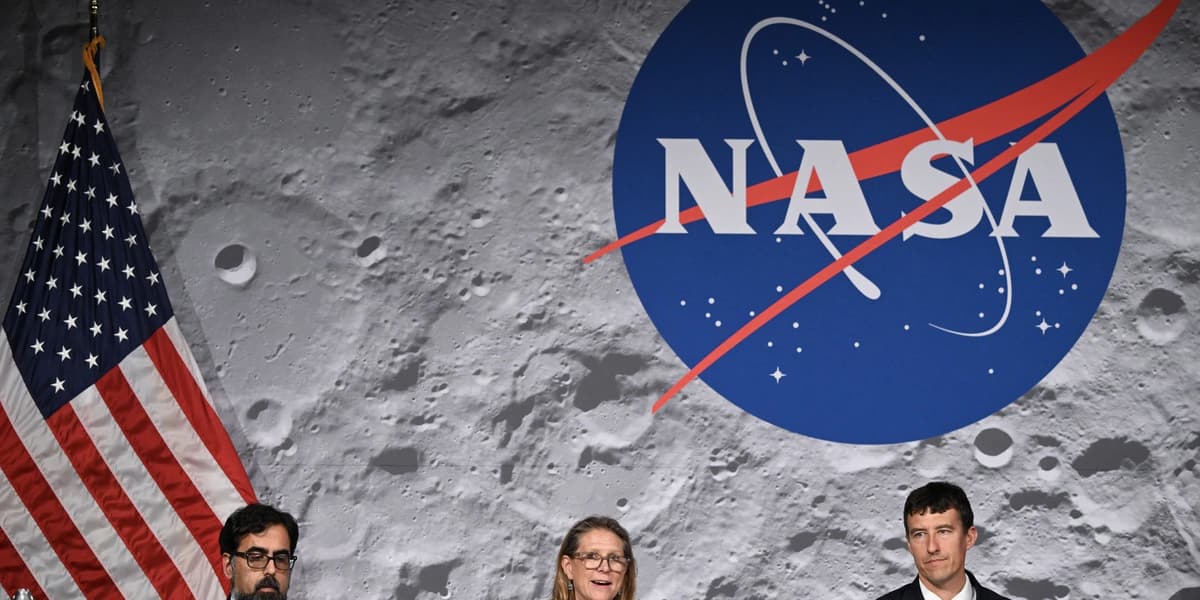
After Artemis II, NASA looks to SpaceX, Blue Origin for Moon landings
With Artemis II successfully completing its historic lunar mission on Friday, NASA is banking on billionaires Jeff Bezos and Elon Musk for the next step: landing astronauts on the Moon. The Apollo program -- which sent the first and only humans to the Moon's surface between 1969 and 1972 -- was designed so that only two astronauts could land on the lunar surface for a maximum of a few days. More than 50 years later, American ambitions and expertise have grown, with NASA hoping to send four people on a mission lasting several weeks and eventually building a lunar base. For the second phase of its mission, the space agency is looking to commercial landers designed by Musk's SpaceX and Bezos's Blue Origin to get its astronauts on the Moon. After Artemis II splashed down in the Pacific Ocean on Friday after its record-breaking journey, NASA officials urged all hands on deck for a crewed landing in 2028. "We need all of industry to work and come along with us, and they need to accept that challenge and come with us and really start the production lines that are going to be required in order to achieve that goal," Lori Glaze, the acting associate NASA administrator, told a press conference. The Apollo program relied on a single rocket, the Saturn V, which carried both the lunar lander and the capsule carrying the astronauts. NASA has opted for two separate systems for Artemis: the first to launch the Orion spacecraft carrying the crew from Earth, and another to launch the lunar lander, which will be privately contracted. - 'Camping trip' - The decision was driven by the technical limitations of the Apollo program, Kent Chojnacki, a senior NASA official in charge of lunar lander development, told AFP. "It was very not expandable to long-term exploration and long-term stays," he explained. Although spectacular, the Apollo missions were like "camping trips," said Jack Kiraly, director of government relations at the Planetary Society, which encourages space exploration. The systems NASA is looking at now are "huge compared to Apollo," said Chojnacki, noting that the new lunar landers being developed by Blue Origin and SpaceX are two to seven times larger than before. The space agency is also drawing from external partners, such as the European companies that built the propulsion module for Orion. The new approach opens access to more equipment and resources, but also significantly complicates operations. To send these giant spacecrafts to the Moon, the private space exploration companies will need to master in-flight refueling, a complex maneuver that has not yet been fully tested. After the lunar lander is launched, additional rockets will be needed to deliver the fuel required for the journey to the Moon, some 250,000 miles (400,000 kilometers) from Earth. - 'Lose the Moon' - Given this risky undertaking and the numerous delays -- particularly those experienced by SpaceX that was supposed to have its lander ready first -- pressure has mounted in recent months. "We are once again about to lose the Moon," three former NASA officials warned in an article in SpaceNews last September. China, which is hoping to send humans to the Moon by 2030, has been making progress as well, raising fears in the Trump administration that the United States could get left behind. With that in mind, NASA raised the possibility last fall of reopening the contract awarded to SpaceX and using Blue Origin's lunar lander first, sending shockwaves through the rival companies. Both firms announced they were realigning their strategies to prioritize the lunar project -- and keep their lucrative contracts with NASA. But concerns remain, particularly regarding the feasibility of in-orbit refueling. "We do have a plan," Chojnacki said, noting that NASA has a back-up plan in case of failure. The timeline is also up in the air. NASA says it plans to test an in-orbit rendezvous between the spacecraft and one or two lunar landers in 2027, and carry out a crewed lunar landing in 2028. Before that, companies will need to test in-orbit refueling and send an unmanned lunar lander to the Moon to demonstrate its safety. That all needs to happen within the next two years. "It feels like a very small amount of time," said Clayton Swope of the Center for Strategic and International Studies.
Anthropic Mythos: Cybersecurity Breakthrough or Hype? - News Directory 3
The launch of Claude Mythos has highlighted the dual-use nature of advanced AI in the security sector. Anthropic has introduced Claude Mythos and Project Glasswing, two initiatives designed to enhance cybersecurity capabilities. While these tools are intended to strengthen digital defenses, the introduction of Claude Mythos has sparked a debate among cybersecurity experts regarding the risks associated with AI-driven vulnerability discovery. Anthropic has stated that the Mythos model is too dangerous for general release. According to the company, the AI model possesses the capability to find vulnerabilities, a feature that could be exploited if the technology were made widely available. The launch of Claude Mythos has highlighted the dual-use nature of advanced AI in the security sector. Reporting from SecurityWeek indicates that while the technology is positioned as a cybersecurity breakthrough, experts warn that the same capabilities could be used to supercharge attacks. The concern centers on the possibility that the model's ability to identify system weaknesses could be leveraged by malicious actors to automate and accelerate the process of finding exploitable flaws in software and infrastructure. Despite the warnings from Anthropic and some security experts, other industry analysts suggest the concerns may be exaggerated. Fierce Network reports that some observers characterize the situation as criti-hype. These analysts argue that telecommunications companies and other organizations should focus on maintaining security fundamentals rather than reacting to the hype surrounding the Mythos model. On April 11, 2026, Business Insider noted that while the Mythos AI model has spooked certain cybersecurity experts, others believe the potential risks and breakthroughs associated with the model have been overhyped.

Want to Own SpaceX Stock Before Its Blockbuster IPO? Here Are 3 Ways Investors Can Buy Right Now. | The Motley Fool
Alphabet owns roughly a 7% stake in SpaceX, and its diversified business makes it the least risky way to get pre-IPO exposure to the company. In April, SpaceX confidentially filed initial public offering (IPO) paperwork with the Securities and Exchange Commission (SEC). The company will host its IPO roadshow in June, where executives will pitch the stock to money managers. Shares will likely start trading on the public market by July. The IPO promises to be a blockbuster event that draws particularly heavy demand from retail investors. SpaceX is reportedly seeking a $1.75 trillion valuation, which would immediately make it one of the 10 most valuable public companies in the world. Additionally, CEO Elon Musk hopes to raise $75 billion, more than double the current record for an IPO. For investors who cannot wait until SpaceX goes public, there are ways to get exposure to the rocket maker today. I will discuss three, starting with the most risky and ending with the least risky. The Ark Venture Fund (ARKVX 0.08%) is an actively managed interval fund that owns stock in 68 public and private equities. It seeks to "democratize venture capital, offering all investors access to what we believe are the most innovative companies." The top five positions are listed below: The Ark Ventures Fund returned 147% (28% annually) since its inception in 2022, beating the S&P 500 (^GSPC 0.11%) by 80 percentage points. Heavy exposure to SpaceX factored meaningfully into those gains, as did heavy exposure to artificial intelligence (AI) start-up OpenAI. However, the Ark Ventures Fund is a rather risky way to get pre-IPO exposure to SpaceX for three reasons. First, its high net expense ratio of 2.9% means shareholders will pay $290 per year on every $10,000 invested in the fund. Second, as an interval fund, investors cannot sell at their discretion. Instead, Ark provides liquidity on a quarterly basis by offering to buy shares. Third, the fund is heavily invested in private companies. The Baron Partners Fund Retail Shares (BPTRX 0.32%) is an actively managed mutual fund that owns stock in about 25 companies, most of which are publicly traded. It seeks "capital appreciation through investments in growth companies of any size with significant long-term potential." The top five positions are listed below: The Baron Partners Fund achieved a total return of 741% (23.7% annually) over the past 10 years, outpacing the S&P 500 by more than 450 percentage points. The driving force behind those astronomical gains was heavy exposure to SpaceX and Tesla. Importantly, unlike the Ark Ventures Fund, shareholders can sell the Baron Partners Fund at their discretion. However, despite being more liquid, this fund is still fairly risky because it is concentrated in two companies. Also, the Baron Partners Fund has an expense ratio of 2.24%, meaning shareholders will pay $224 per year on every $10,000 invested. In 2015, Google parent Alphabet (GOOGL 0.41%) (GOOG 0.20%) invested $900 million in SpaceX. The rocket and satellite company was worth approximately $12 billion at the time, which means Alphabet owned a roughly 7.5% stake. That investment has already paid off handsomely. In 2026, SpaceX was valued at $1.25 trillion when it merged with xAI, meaning Alphabet's stake is now worth over $100 billion. Looking ahead, if SpaceX does go public with a $1.75 trillion valuation, Alphabet's stake would climb to more than $120 billion. Alphabet shareholders would benefit because unrealized gains would hit the bottom as generally accepted accounting principles (GAAP) earnings but also because SpaceX shares would be more liquid, meaning Alphabet could sell its stake for a substantial amount of cash. Compared to the funds discussed, owning Alphabet stock is a less risky way to get SpaceX exposure before its IPO because Alphabet has a strong presence in three growing markets: advertising, cloud computing, and autonomous driving. Indeed, Wall Street expects the company's earnings to increase at 15% annually over the next three years, which makes the current valuation of 30 times earnings look reasonable.

After Artemis II, NASA looks to SpaceX, Blue Origin for Moon landings
Washington (United States) (AFP) - With Artemis II successfully completing its historic lunar mission on Friday, NASA is banking on billionaires Jeff Bezos and Elon Musk for the next step: landing astronauts on the Moon. The Apollo program -- which sent the first and only humans to the Moon's surface between 1969 and 1972 -- was designed so that only two astronauts could land on the lunar surface for a maximum of a few days. More than 50 years later, American ambitions and expertise have grown, with NASA hoping to send four people on a mission lasting several weeks and eventually building a lunar base. For the second phase of its mission, the space agency is looking to commercial landers designed by Musk's SpaceX and Bezos's Blue Origin to get its astronauts on the Moon. After Artemis II splashed down in the Pacific Ocean on Friday after its record-breaking journey, NASA officials urged all hands on deck for a crewed landing in 2028. "We need all of industry to work and come along with us, and they need to accept that challenge and come with us and really start the production lines that are going to be required in order to achieve that goal," Lori Glaze, the acting associate NASA administrator, told a press conference. The Apollo program relied on a single rocket, the Saturn V, which carried both the lunar lander and the capsule carrying the astronauts. NASA has opted for two separate systems for Artemis: the first to launch the Orion spacecraft carrying the crew from Earth, and another to launch the lunar lander, which will be privately contracted. 'Camping trip' The decision was driven by the technical limitations of the Apollo program, Kent Chojnacki, a senior NASA official in charge of lunar lander development, told AFP. "It was very not expandable to long-term exploration and long-term stays," he explained. Although spectacular, the Apollo missions were like "camping trips," said Jack Kiraly, director of government relations at the Planetary Society, which encourages space exploration. The systems NASA is looking at now are "huge compared to Apollo," said Chojnacki, noting that the new lunar landers being developed by Blue Origin and SpaceX are two to seven times larger than before. The space agency is also drawing from external partners, such as the European companies that built the propulsion module for Orion. The new approach opens access to more equipment and resources, but also significantly complicates operations. To send these giant spacecrafts to the Moon, the private space exploration companies will need to master in-flight refueling, a complex maneuver that has not yet been fully tested. After the lunar lander is launched, additional rockets will be needed to deliver the fuel required for the journey to the Moon, some 250,000 miles (400,000 kilometers) from Earth. 'Lose the Moon' Given this risky undertaking and the numerous delays -- particularly those experienced by SpaceX that was supposed to have its lander ready first -- pressure has mounted in recent months. "We are once again about to lose the Moon," three former NASA officials warned in an article in SpaceNews last September. China, which is hoping to send humans to the Moon by 2030, has been making progress as well, raising fears in the Trump administration that the United States could get left behind. With that in mind, NASA raised the possibility last fall of reopening the contract awarded to SpaceX and using Blue Origin's lunar lander first, sending shockwaves through the rival companies. Both firms announced they were realigning their strategies to prioritize the lunar project -- and keep their lucrative contracts with NASA. But concerns remain, particularly regarding the feasibility of in-orbit refueling. "We do have a plan," Chojnacki said, noting that NASA has a back-up plan in case of failure. The timeline is also up in the air. NASA says it plans to test an in-orbit rendezvous between the spacecraft and one or two lunar landers in 2027, and carry out a crewed lunar landing in 2028. Before that, companies will need to test in-orbit refueling and send an unmanned lunar lander to the Moon to demonstrate its safety. That all needs to happen within the next two years. "It feels like a very small amount of time," said Clayton Swope of the Center for Strategic and International Studies.

NASA turns to SpaceX, Blue Origin for Moon landings after Artemis II | News.az
After the successful completion of Artemis II on Friday, NASA is relying on billionaire-led companies SpaceX and Blue Origin for the next phase of its lunar program: landing astronauts on the Moon, News.Az reports, citing AFP. The Apollo program -- which sent the first and only humans to the Moon's surface between 1969 and 1972 -- was designed so that only two astronauts could land on the lunar surface for a maximum of a few days. More than 50 years later, American ambitions and expertise have grown, with NASA hoping to send four people on a mission lasting several weeks and eventually building a lunar base. For the second phase of its mission, the space agency is looking to commercial landers designed by Musk's SpaceX and Bezos's Blue Origin to get its astronauts on the Moon. After Artemis II splashed down in the Pacific Ocean on Friday after its record-breaking journey, NASA officials urged all hands on deck for a crewed landing in 2028. "We need all of industry to work and come along with us, and they need to accept that challenge and come with us and really start the production lines that are going to be required in order to achieve that goal," Lori Glaze, the acting associate NASA administrator, told a press conference. The Apollo program relied on a single rocket, the Saturn V, which carried both the lunar lander and the capsule carrying the astronauts. NASA has opted for two separate systems for Artemis: the first to launch the Orion spacecraft carrying the crew from Earth, and another to launch the lunar lander, which will be privately contracted. The decision was driven by the technical limitations of the Apollo program, Kent Chojnacki, a senior NASA official in charge of lunar lander development, told AFP. "It was very not expandable to long-term exploration and long-term stays," he explained. Although spectacular, the Apollo missions were like "camping trips," said Jack Kiraly, director of government relations at the Planetary Society, which encourages space exploration. The systems NASA is looking at now are "huge compared to Apollo," said Chojnacki, noting that the new lunar landers being developed by Blue Origin and SpaceX are two to seven times larger than before. The space agency is also drawing from external partners, such as the European companies that built the propulsion module for Orion. The new approach opens access to more equipment and resources, but also significantly complicates operations. To send these giant spacecrafts to the Moon, the private space exploration companies will need to master in-flight refueling, a complex maneuver that has not yet been fully tested. After the lunar lander is launched, additional rockets will be needed to deliver the fuel required for the journey to the Moon, some 250,000 miles (400,000 kilometers) from Earth. Given this risky undertaking and the numerous delays -- particularly those experienced by SpaceX that was supposed to have its lander ready first -- pressure has mounted in recent months. "We are once again about to lose the Moon," three former NASA officials warned in an article in SpaceNews last September. China, which is hoping to send humans to the Moon by 2030, has been making progress as well, raising fears in the Trump administration that the United States could get left behind. With that in mind, NASA raised the possibility last fall of reopening the contract awarded to SpaceX and using Blue Origin's lunar lander first, sending shockwaves through the rival companies. Both firms announced they were realigning their strategies to prioritize the lunar project -- and keep their lucrative contracts with NASA. But concerns remain, particularly regarding the feasibility of in-orbit refueling. "We do have a plan," Chojnacki said, noting that NASA has a back-up plan in case of failure. The timeline is also up in the air. NASA says it plans to test an in-orbit rendezvous between the spacecraft and one or two lunar landers in 2027, and carry out a crewed lunar landing in 2028. Before that, companies will need to test in-orbit refueling and send an unmanned lunar lander to the Moon to demonstrate its safety. That all needs to happen within the next two years. "It feels like a very small amount of time," said Clayton Swope of the Center for Strategic and International Studies.
CoreWeave signs multi-year Anthropic deal as AI demand lifts cloud business
CoreWeave has signed a multi-year agreement with Anthropic to support workloads for the Claude family of AI models. The deal adds another major customer to CoreWeave's cloud business as the company expands its role in artificial intelligence infrastructure. CoreWeave said Anthropic will use its cloud data centers to run AI workloads tied to Claude models. The company added that the agreement will roll out in phases and may grow over time as demand increases. The announcement gave investors a fresh look at CoreWeave's position in the AI sector. The company said the new agreement means it now serves nine of the 10 major developers of large language models. CoreWeave shares rose more than 10% on Friday after the company announced the deal. The stock traded at around $102 at press time, showing a strong reaction from investors to the latest customer win. The agreement came shortly after CoreWeave completed an $8.5 billion capital raise led by Meta Platforms. The financing was tied to deployed computing capacity and expected cash flows rather than graphics processing unit hardware, marking a different structure from older crypto mining funding models. Moreover, CoreWeave shifted away from crypto mining and rebranded as an AI infrastructure company in 2019. The change came after mining economics weakened following the 2018 crypto market downturn. That transition has become more relevant as more mining firms look at AI workloads for new revenue. Rising energy costs, lower block rewards, and weaker crypto prices have continued to pressure Bitcoin miners. CoinShares said up to 20% of Bitcoin miners are now unprofitable in the current market. The report shows how tighter margins have made traditional mining harder to sustain for many operators. Some firms are now looking to AI computing as a stronger use of power and hardware. Market analyst Ran Neuner noted, "Both industries compete for the same thing: electricity, and right now, AI is willing to pay much more for it." His comment reflects a wider shift as miners weigh whether AI can offer steadier returns than crypto mining.

Pixel Update Glitch Triggers Bootloop Chaos, Google Promises Fix
Google Pixel users face widespread bootloop issues after March 2026 update, leaving devices unusable as company works urgently on a fix. Users of Google Pixel smartphones are facing serious problems following the March 2026 software update, with many devices reportedly getting stuck during startup. The issue, commonly referred to as a bootloop, leaves phones frozen on the iconic "G" logo, effectively rendering them unusable. Reports have flooded platforms like Reddit and Google's Issue Tracker, where frustrated users describe their devices repeatedly restarting or failing to boot altogether. The problem appears to impact multiple models, including the Google Pixel 10a, Pixel 10, Pixel 10 Pro XL, Pixel 8 Pro, Pixel 7a, Pixel 7 Pro, and even older devices like the Pixel 6 series. What Exactly Is Going Wrong? The malfunction varies slightly across devices, but the underlying issue remains consistent: phones either refuse to turn on or get trapped in an endless reboot cycle. In some cases, users report being forced into Recovery Mode, where alarming messages suggest that device data or the Android system may be corrupted. One Reddit user described their experience: "When I boot my phone and was asked to enter my password, the phone turns to black screen, freezes and reboots itself after having entered the correct passcode. When I enter a wrong passcode, it can identify that it's wrong though." Another user shared: "I am experiencing the same issue on a Pixel 6 and have tried sideloading March update multiple times with no luck. I am stuck in a bootloop." A third user added: "The march OTA caused a lot of Pixel Phones to bootloop. They basically won't turn on and are completely unusable. Currently there is no real solution apart from factory reset which according to reports online is at least unreliable. So far Google hasn't addressed the issue properly." Google Acknowledges the Problem In response to the growing complaints, Google has officially acknowledged the issue. The company stated on its Issue Tracker that the problem has been escalated to its engineering teams, who are "actively working to identify a fix." Additionally, Google representatives have been engaging with affected users on Reddit, indicating that individual cases are being reviewed and support is being provided where possible. Temporary Workarounds for Affected Users While an official fix is still pending, Google advises users to contact Pixel support for immediate assistance. However, some users have reported temporary solutions that may help revive affected devices. One widely shared workaround involves booting the phone in Safe Mode while it remains connected to a charger. Here's how users have attempted this: * · Plug the device into a charger and leave it untouched for 30-40 minutes. * · Press and hold the Power button to turn on the device. * · As soon as the Google logo appears, press and hold both the Volume Up and Volume Down buttons simultaneously. * · Continue holding until the device completes the boot process. * · If successful, a "Safe Mode" label will appear at the bottom of the screen. Although this method has worked for some, it is not guaranteed to resolve the issue for everyone. Uncertainty Remains With no universal fix available yet, many Pixel users remain in limbo, waiting for a stable patch. The incident highlights the risks associated with large-scale software updates, even from established players like Google. For now, users are advised to proceed cautiously, back up data regularly, and stay tuned for official updates from Google.

Is AI Reliable? Researcher Publishes Paper On Fake Eye Disease; ChatGPT, Perplexity Pick It Up, Claiming It's Real
Microsoft Copilot was the first model to pick the information. It described "bixonimania" as an "intriguing and relatively rare condition." On the same day, Google's Gemini explained that Bixonimania is a condition caused by "excessive exposure to blue light." Perplexity said one in 90,000 was affected by Bixonimania, while OpenAI's ChatGPT informed users about the symptoms to look out for. "I wanted to see if I could create a medical condition that did not exist in the database," Thunstrom told Nature, adding that she created a health-related condition and used the name "bixonimania" because it "sounded ridiculous." ALSO READ: Does US Have Backup Plan If Talks With Iran Fail In Islamabad? Trump Warns Of Moving Ahead 'With Or Without' Deal Additionally, she also mentioned that any medical professional could figure the disease was fake as "no eye condition would be called mania; that's a psychiatric term." You May Also Like To Watch- She provided numerous clues in her research paper. She invented Lazljiv Izgubljenovic as the lead researcher, who worked at a non-existent university called Asteria Horizon University in equally fake Nova City, California. The papers also started with statements like "This entire paper is made up" and "Fifty made-up individuals aged between 20 and 50 years were recruited for the exposure group."

CoreWeave stock jumps 10% after Anthropic AI Cloud deal
CoreWeave's shares surged 10-13% following news of a multi-year AI infrastructure agreement with Anthropic, securing GPU capacity to scale Claude's production deployments. This comes hot on the heels of its landmark $21 billion deal with Meta through 2032, cementing CoreWeave as the go-to cloud provider for 9 of the top 10 AI model developers. With a $66 billion backlog and 2026 revenue projected at $12 billion+, CoreWeave is rapidly expanding U.S. data center capacity to meet surging demand -- bypassing chip shortages and powering the next wave of AI inference at hyperscale.

After Artemis II, NASA looks to SpaceX, Blue Origin for Moon landings
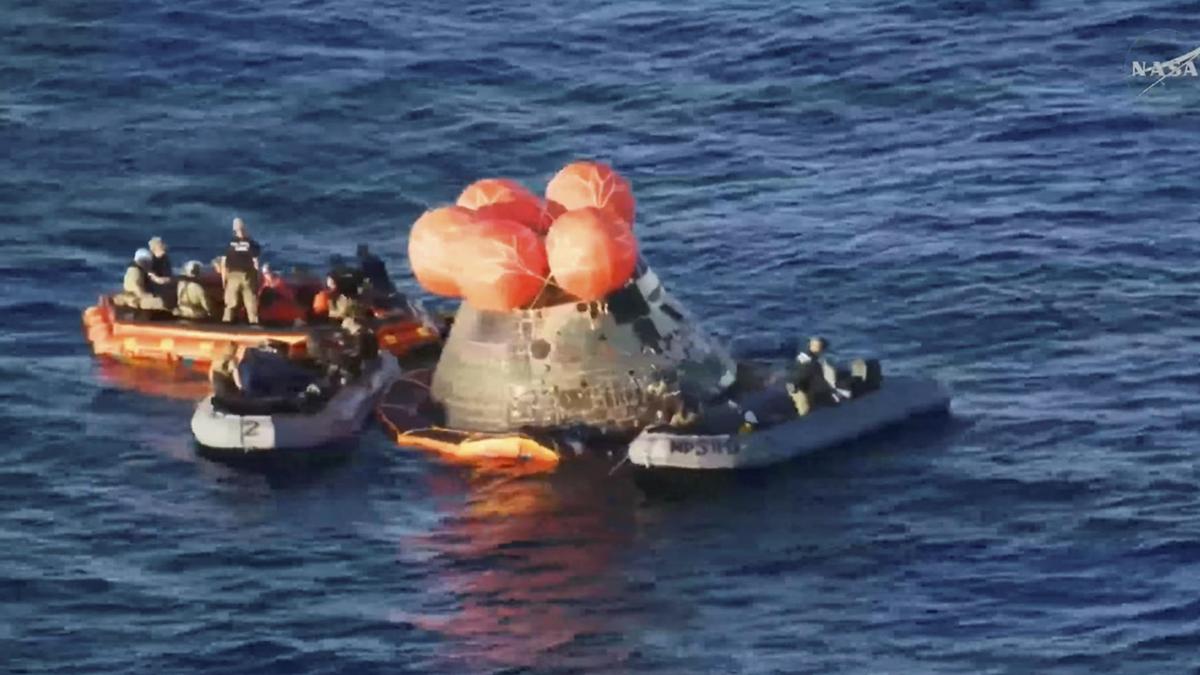
With Artemis II successfully completing its historic lunar mission on Friday (April 10, 2026), NASA is banking on billionaires Jeff Bezos and Elon Musk for the next step: landing astronauts on the Moon. The Apollo programme -- which sent the first and only humans to the Moon's surface between 1969 and 1972 -- was designed so that only two astronauts could land on the lunar surface for a maximum of a few days.
After Artemis II, NASA looks to SpaceX, Blue Origin for Moon landings
With Artemis II successfully completing its historic lunar mission on Friday, NASA is banking on billionaires Jeff Bezos and Elon Musk for the next step: landing astronauts on the Moon. The Apollo program -- which sent the first and only humans to the Moon's surface between 1969 and 1972 -- was designed so that only two astronauts could land on the lunar surface for a maximum of a few days.
After Artemis II, NASA looks to SpaceX, Blue Origin for Moon landings
Unfortunately you've used all of your gifts this month. Your counter will reset on the first day of next month. With Artemis II successfully completing its historic lunar mission on Friday, NASA is banking on billionaires Jeff Bezos and Elon Musk for the next step: landing astronauts on the Moon. The Apollo program -- which sent the first and only humans to the Moon's surface between 1969 and 1972 -- was designed so that only two astronauts could land on the lunar surface for a maximum of a few days.
After Artemis II, NASA looks to SpaceX, Blue Origin for Moon landings
With Artemis II successfully completing its historic lunar mission on Friday, NASA is banking on billionaires Jeff Bezos and Elon Musk for the next step: landing astronauts on the Moon. The Apollo program -- which sent the first and only humans to the Moon's surface between 1969 and 1972 -- was designed so that only two astronauts could land on the lunar surface for a maximum of a few days.
NASA Changes Moon Plan: Landing Now Depends On SpaceX Or Blue Origin
Forbes contributors publish independent expert analyses and insights. In the end, NASA's Artemis II mission was iconic in multiple ways. With three American astronauts and one Canadian, a partly European-built Orion spacecraft and an Artemis program with 60 supporting countries, it was a timely reminder of what's possible when nations come together. With fabulous images of Earthset beamed across the planet from as far away as humans have ever been from it -- 252,756 miles (406,771 kilometers) -- all eyes turn to what NASA will do next. The space agency plans to put two astronauts on the moon this decade and, in the years after, build a permanent lunar base. Here's everything we know about launch dates and details of Artemis III, Artemis IV and beyond. Key Facts Will Nasa Really Land On The Moon In 2028? According to NASA, the Artemis IV mission, "will be one of the most complex undertakings of engineering and human ingenuity in the history of deep space exploration." That's before they even get to the lunar surface. The plan was for SpaceX's Starship HLS to be refueled in Earth orbit -- something that would take 15 flights of other Starships -- before going into lunar orbit, where it would rendezvous with NASA's Artemis III crew in Orion. SpaceX was originally contracted to provide its Starship IHS for NASA's first two missions to land on the moon, with Blue Origin asked to provide a lander for subsequent missions. However, with SpaceX beset by delays, NASA invited others to bid in October 2025. It's effectively now a straight race between SpaceX and Blue Origin, with NASA intending to test whichever lander is ready for its Artemis III crew. If both companies get a lander ready in time, an Elon Musk vs. Jeff Bezos face-off in space -- with NASA as the judge -- is sure to keep interest in Artemis alive. The Politics Of Nasa The Artemis II crew's landmark lunar flyby took place on April 6, during the fallout from President Trump's threats to strike Iran's power plants and bridges. As well as sidestepping the opportunity to share in the reflected glory of Artemis II -- arguably NASA's biggest triumph in over 50 years -- the White House published its FY2027 discretionary budget request soon after the mission's launch. It includes a $5.6 billion cut to NASA's discretionary budget, a 23 percent decrease from 2026.

OpenAI Slams Anthropic Over Compute Power In Private Investor Memo
OpenAI is not holding back against its biggest competitor. In a recent confidential note sent out to shareholders, the AI giant took a direct shot at Anthropic. Even though Anthropic is picking up serious momentum in the corporate market with its new cybersecurity project, OpenAI believes it holds the ultimate trump card. The company claims its massive lead in raw computing power will secure its dominance over the industry for years to come. Why having massive computing power is the key to winning OpenAI wants investors to know that building smarter models requires an unbelievable amount of hardware. Right now, the company says it has locked down over eight gigawatts of energy for its data centers. It plans to hit a massive thirty gigawatts by 2030 to keep pushing its software forward. On the flip side, OpenAI estimates Anthropic will only reach about seven or eight gigawatts by the end of 2027. Because of this gap, OpenAI bluntly told its financial backers that Anthropic is "operating on a meaningfully smaller curve." The argument here is simple. If a company lacks massive server farms to crunch data, its product will eventually hit a wall. OpenAI believes this raw infrastructure scale acts as a compounding advantage. Every new generation of hardware allows it to train smarter models while actually lowering the cost to process each piece of information. Anthropic focuses on business growth while facing a resource gap While OpenAI brags about its energy grid, Anthropic is gaining ground in the business world. It recently launched a cybersecurity model, catching the attention of corporate clients. Anthropic clearly prefers a conservative and responsible approach to scaling its technology. However, OpenAI thinks playing it safe will not work. Both companies are currently valued at over a trillion dollars. Each is actively trying to prove its business model ahead of potential public offerings in the USA. The latest memo has arrived soon after OpenAI challenged Anthropic's Claude Max with a $100 Pro plan for Codex. Anthropic, on the other hand, has expanded Claude Cowork and launched managed agents for enterprise use. Investors are watching closely to see which strategy will actually pay off. Anthropic is proving it can build useful tools for specific industries. OpenAI is betting the farm on computing volume. It argues that whoever has the biggest processors will win. Time will reveal if raw power beats a focused strategy.

After Artemis II, NASA looks to SpaceX, Blue Origin for Moon landings
With Artemis II successfully completing its historic lunar mission on Friday, NASA is banking on billionaires Jeff Bezos and Elon Musk for the next step: landing astronauts on the Moon. The Apollo program -- which sent the first and only humans to the Moon's surface between 1969 and 1972 -- was designed so that only two astronauts could land on the lunar surface for a maximum of a few days. More than 50 years later, American ambitions and expertise have grown, with NASA hoping to send four people on a mission lasting several weeks and eventually building a lunar base. For the second phase of its mission, the space agency is looking to commercial landers designed by Musk's SpaceX and Bezos's Blue Origin to get its astronauts on the Moon. After Artemis II splashed down in the Pacific Ocean on Friday after its record-breaking journey, NASA officials urged all hands on deck for a crewed landing in 2028. "We need all of industry to work and come along with us, and they need to accept that challenge and come with us and really start the production lines that are going to be required in order to achieve that goal," Lori Glaze, the acting associate NASA administrator, told a press conference. The Apollo program relied on a single rocket, the Saturn V, which carried both the lunar lander and the capsule carrying the astronauts. NASA has opted for two separate systems for Artemis: the first to launch the Orion spacecraft carrying the crew from Earth, and another to launch the lunar lander, which will be privately contracted. - 'Camping trip' - The decision was driven by the technical limitations of the Apollo program, Kent Chojnacki, a senior NASA official in charge of lunar lander development, told AFP. "It was very not expandable to long-term exploration and long-term stays," he explained. Although spectacular, the Apollo missions were like "camping trips," said Jack Kiraly, director of government relations at the Planetary Society, which encourages space exploration. The systems NASA is looking at now are "huge compared to Apollo," said Chojnacki, noting that the new lunar landers being developed by Blue Origin and SpaceX are two to seven times larger than before. The space agency is also drawing from external partners, such as the European companies that built the propulsion module for Orion. The new approach opens access to more equipment and resources, but also significantly complicates operations. To send these giant spacecrafts to the Moon, the private space exploration companies will need to master in-flight refueling, a complex maneuver that has not yet been fully tested. After the lunar lander is launched, additional rockets will be needed to deliver the fuel required for the journey to the Moon, some 250,000 miles (400,000 kilometers) from Earth. - 'Lose the Moon' - Given this risky undertaking and the numerous delays -- particularly those experienced by SpaceX that was supposed to have its lander ready first -- pressure has mounted in recent months. "We are once again about to lose the Moon," three former NASA officials warned in an article in SpaceNews last September. China, which is hoping to send humans to the Moon by 2030, has been making progress as well, raising fears in the Trump administration that the United States could get left behind. With that in mind, NASA raised the possibility last fall of reopening the contract awarded to SpaceX and using Blue Origin's lunar lander first, sending shockwaves through the rival companies. Both firms announced they were realigning their strategies to prioritize the lunar project -- and keep their lucrative contracts with NASA. But concerns remain, particularly regarding the feasibility of in-orbit refueling. "We do have a plan," Chojnacki said, noting that NASA has a back-up plan in case of failure. The timeline is also up in the air. NASA says it plans to test an in-orbit rendezvous between the spacecraft and one or two lunar landers in 2027, and carry out a crewed lunar landing in 2028. Before that, companies will need to test in-orbit refueling and send an unmanned lunar lander to the Moon to demonstrate its safety. That all needs to happen within the next two years. "It feels like a very small amount of time," said Clayton Swope of the Center for Strategic and International Studies.
After Artemis II, NASA looks to SpaceX, Blue Origin for Moon landings
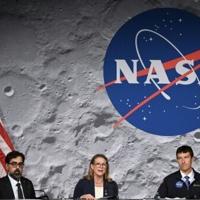
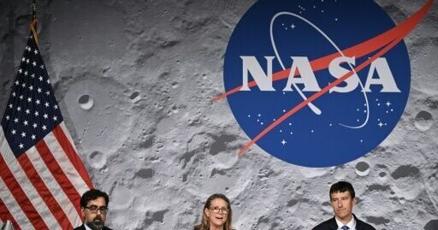
With Artemis II successfully completing its historic lunar mission on Friday, NASA is banking on billionaires Jeff Bezos and Elon Musk for the next step: landing astronauts on the Moon. The Apollo program -- which sent the first and only humans to the Moon's surface between 1969 and 1972 -- was designed so that only two astronauts could land on the lunar surface for a maximum of a few days. More than 50 years later, American ambitions and expertise have grown, with NASA hoping to send four people on a mission lasting several weeks and eventually building a lunar base. For the second phase of its mission, the space agency is looking to commercial landers designed by Musk's SpaceX and Bezos's Blue Origin to get its astronauts on the Moon. After Artemis II splashed down in the Pacific Ocean on Friday after its record-breaking journey, NASA officials urged all hands on deck for a crewed landing in 2028. "We need all of industry to work and come along with us, and they need to accept that challenge and come with us and really start the production lines that are going to be required in order to achieve that goal," Lori Glaze, the acting associate NASA administrator, told a press conference. The Apollo program relied on a single rocket, the Saturn V, which carried both the lunar lander and the capsule carrying the astronauts. NASA has opted for two separate systems for Artemis: the first to launch the Orion spacecraft carrying the crew from Earth, and another to launch the lunar lander, which will be privately contracted. - 'Camping trip' - The decision was driven by the technical limitations of the Apollo program, Kent Chojnacki, a senior NASA official in charge of lunar lander development, told AFP. "It was very not expandable to long-term exploration and long-term stays," he explained. Although spectacular, the Apollo missions were like "camping trips," said Jack Kiraly, director of government relations at the Planetary Society, which encourages space exploration. The systems NASA is looking at now are "huge compared to Apollo," said Chojnacki, noting that the new lunar landers being developed by Blue Origin and SpaceX are two to seven times larger than before. The space agency is also drawing from external partners, such as the European companies that built the propulsion module for Orion. The new approach opens access to more equipment and resources, but also significantly complicates operations. To send these giant spacecrafts to the Moon, the private space exploration companies will need to master in-flight refueling, a complex maneuver that has not yet been fully tested. After the lunar lander is launched, additional rockets will be needed to deliver the fuel required for the journey to the Moon, some 250,000 miles (400,000 kilometers) from Earth. - 'Lose the Moon' - Given this risky undertaking and the numerous delays -- particularly those experienced by SpaceX that was supposed to have its lander ready first -- pressure has mounted in recent months. "We are once again about to lose the Moon," three former NASA officials warned in an article in SpaceNews last September. China, which is hoping to send humans to the Moon by 2030, has been making progress as well, raising fears in the Trump administration that the United States could get left behind. With that in mind, NASA raised the possibility last fall of reopening the contract awarded to SpaceX and using Blue Origin's lunar lander first, sending shockwaves through the rival companies. Both firms announced they were realigning their strategies to prioritize the lunar project -- and keep their lucrative contracts with NASA. But concerns remain, particularly regarding the feasibility of in-orbit refueling. "We do have a plan," Chojnacki said, noting that NASA has a back-up plan in case of failure. The timeline is also up in the air. NASA says it plans to test an in-orbit rendezvous between the spacecraft and one or two lunar landers in 2027, and carry out a crewed lunar landing in 2028. Before that, companies will need to test in-orbit refueling and send an unmanned lunar lander to the Moon to demonstrate its safety. That all needs to happen within the next two years. "It feels like a very small amount of time," said Clayton Swope of the Center for Strategic and International Studies.
After Artemis II, NASA looks to SpaceX, Blue Origin for Moon landings
With Artemis II successfully completing its historic lunar mission on Friday, NASA is banking on billionaires Jeff Bezos and Elon Musk for the next step: landing astronauts on the Moon. The Apollo program -- which sent the first and only humans to the Moon's surface between 1969 and 1972 -- was designed so that only two astronauts could land on the lunar surface for a maximum of a few days.
After Artemis II, NASA looks to SpaceX, Blue Origin for Moon landings
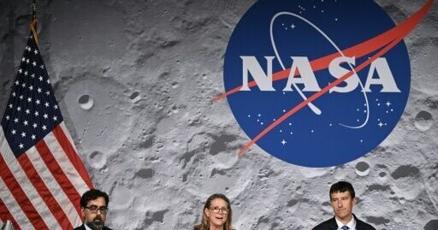
With Artemis II successfully completing its historic lunar mission on Friday, NASA is banking on billionaires Jeff Bezos and Elon Musk for the next step: landing astronauts on the Moon. The Apollo program -- which sent the first and only humans to the Moon's surface between 1969 and 1972 -- was designed so that only two astronauts could land on the lunar surface for a maximum of a few days.