News & Updates
The latest news and updates from companies in the WLTH portfolio.
After Artemis II, NASA looks to SpaceX, Blue Origin for Moon landings
With Artemis II successfully completing its historic lunar mission on Friday, NASA is banking on billionaires Jeff Bezos and Elon Musk for the next step: landing astronauts on the Moon. The Apollo program -- which sent the first and only humans to the Moon's surface between 1969 and 1972 -- was designed so that only two astronauts could land on the lunar surface for a maximum of a few days. More than 50 years later, American ambitions and expertise have grown, with NASA hoping to send four people on a mission lasting several weeks and eventually building a lunar base. For the second phase of its mission, the space agency is looking to commercial landers designed by Musk's SpaceX and Bezos's Blue Origin to get its astronauts on the Moon. After Artemis II splashed down in the Pacific Ocean on Friday after its record-breaking journey, NASA officials urged all hands on deck for a crewed landing in 2028. "We need all of industry to work and come along with us, and they need to accept that challenge and come with us and really start the production lines that are going to be required in order to achieve that goal," Lori Glaze, the acting associate NASA administrator, told a press conference. The Apollo program relied on a single rocket, the Saturn V, which carried both the lunar lander and the capsule carrying the astronauts. NASA has opted for two separate systems for Artemis: the first to launch the Orion spacecraft carrying the crew from Earth, and another to launch the lunar lander, which will be privately contracted. - 'Camping trip' - The decision was driven by the technical limitations of the Apollo program, Kent Chojnacki, a senior NASA official in charge of lunar lander development, told AFP. "It was very not expandable to long-term exploration and long-term stays," he explained. Although spectacular, the Apollo missions were like "camping trips," said Jack Kiraly, director of government relations at the Planetary Society, which encourages space exploration. The systems NASA is looking at now are "huge compared to Apollo," said Chojnacki, noting that the new lunar landers being developed by Blue Origin and SpaceX are two to seven times larger than before. The space agency is also drawing from external partners, such as the European companies that built the propulsion module for Orion. The new approach opens access to more equipment and resources, but also significantly complicates operations. To send these giant spacecrafts to the Moon, the private space exploration companies will need to master in-flight refueling, a complex maneuver that has not yet been fully tested. After the lunar lander is launched, additional rockets will be needed to deliver the fuel required for the journey to the Moon, some 250,000 miles (400,000 kilometers) from Earth. - 'Lose the Moon' - Given this risky undertaking and the numerous delays -- particularly those experienced by SpaceX that was supposed to have its lander ready first -- pressure has mounted in recent months. "We are once again about to lose the Moon," three former NASA officials warned in an article in SpaceNews last September. China, which is hoping to send humans to the Moon by 2030, has been making progress as well, raising fears in the Trump administration that the United States could get left behind. With that in mind, NASA raised the possibility last fall of reopening the contract awarded to SpaceX and using Blue Origin's lunar lander first, sending shockwaves through the rival companies. Both firms announced they were realigning their strategies to prioritize the lunar project -- and keep their lucrative contracts with NASA. But concerns remain, particularly regarding the feasibility of in-orbit refueling. "We do have a plan," Chojnacki said, noting that NASA has a back-up plan in case of failure. The timeline is also up in the air. NASA says it plans to test an in-orbit rendezvous between the spacecraft and one or two lunar landers in 2027, and carry out a crewed lunar landing in 2028. Before that, companies will need to test in-orbit refueling and send an unmanned lunar lander to the Moon to demonstrate its safety. That all needs to happen within the next two years. "It feels like a very small amount of time," said Clayton Swope of the Center for Strategic and International Studies.
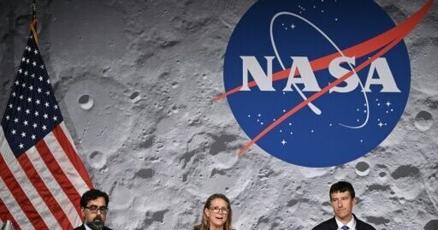
After Artemis II, NASA looks to SpaceX, Blue Origin for Moon landings
With Artemis II successfully completing its historic lunar mission on Friday, NASA is banking on billionaires Jeff Bezos and Elon Musk for the next step: landing astronauts on the Moon. The Apollo program -- which sent the first and only humans to the Moon's surface between 1969 and 1972 -- was designed so that only two astronauts could land on the lunar surface for a maximum of a few days.
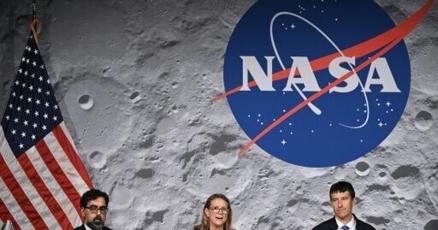
After Artemis II, NASA looks to SpaceX, Blue Origin for Moon landings
With Artemis II successfully completing its historic lunar mission on Friday, NASA is banking on billionaires Jeff Bezos and Elon Musk for the next step: landing astronauts on the Moon. The Apollo program -- which sent the first and only humans to the Moon's surface between 1969 and 1972 -- was designed so that only two astronauts could land on the lunar surface for a maximum of a few days. More than 50 years later, American ambitions and expertise have grown, with NASA hoping to send four people on a mission lasting several weeks and eventually building a lunar base. For the second phase of its mission, the space agency is looking to commercial landers designed by Musk's SpaceX and Bezos's Blue Origin to get its astronauts on the Moon. After Artemis II splashed down in the Pacific Ocean on Friday after its record-breaking journey, NASA officials urged all hands on deck for a crewed landing in 2028. "We need all of industry to work and come along with us, and they need to accept that challenge and come with us and really start the production lines that are going to be required in order to achieve that goal," Lori Glaze, the acting associate NASA administrator, told a press conference. The Apollo program relied on a single rocket, the Saturn V, which carried both the lunar lander and the capsule carrying the astronauts. NASA has opted for two separate systems for Artemis: the first to launch the Orion spacecraft carrying the crew from Earth, and another to launch the lunar lander, which will be privately contracted. - 'Camping trip' - The decision was driven by the technical limitations of the Apollo program, Kent Chojnacki, a senior NASA official in charge of lunar lander development, told AFP. "It was very not expandable to long-term exploration and long-term stays," he explained. Although spectacular, the Apollo missions were like "camping trips," said Jack Kiraly, director of government relations at the Planetary Society, which encourages space exploration. The systems NASA is looking at now are "huge compared to Apollo," said Chojnacki, noting that the new lunar landers being developed by Blue Origin and SpaceX are two to seven times larger than before. The space agency is also drawing from external partners, such as the European companies that built the propulsion module for Orion. The new approach opens access to more equipment and resources, but also significantly complicates operations. To send these giant spacecrafts to the Moon, the private space exploration companies will need to master in-flight refueling, a complex maneuver that has not yet been fully tested. After the lunar lander is launched, additional rockets will be needed to deliver the fuel required for the journey to the Moon, some 250,000 miles (400,000 kilometers) from Earth. - 'Lose the Moon' - Given this risky undertaking and the numerous delays -- particularly those experienced by SpaceX that was supposed to have its lander ready first -- pressure has mounted in recent months. "We are once again about to lose the Moon," three former NASA officials warned in an article in SpaceNews last September. China, which is hoping to send humans to the Moon by 2030, has been making progress as well, raising fears in the Trump administration that the United States could get left behind. With that in mind, NASA raised the possibility last fall of reopening the contract awarded to SpaceX and using Blue Origin's lunar lander first, sending shockwaves through the rival companies. Both firms announced they were realigning their strategies to prioritize the lunar project -- and keep their lucrative contracts with NASA. But concerns remain, particularly regarding the feasibility of in-orbit refueling. "We do have a plan," Chojnacki said, noting that NASA has a back-up plan in case of failure. The timeline is also up in the air. NASA says it plans to test an in-orbit rendezvous between the spacecraft and one or two lunar landers in 2027, and carry out a crewed lunar landing in 2028. Before that, companies will need to test in-orbit refueling and send an unmanned lunar lander to the Moon to demonstrate its safety. That all needs to happen within the next two years. "It feels like a very small amount of time," said Clayton Swope of the Center for Strategic and International Studies.
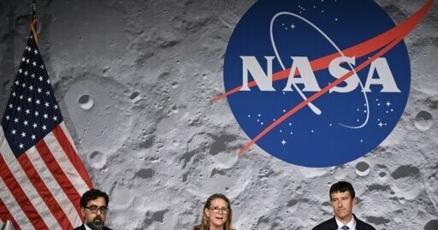
After Artemis II, NASA looks to SpaceX, Blue Origin for Moon landings - kuwaitTimes
WASHINGTON: With Artemis II successfully completing its historic lunar mission on Friday, NASA is banking on billionaires Jeff Bezos and Elon Musk for the next step: landing astronauts on the Moon. The Apollo program -- which sent the first and only humans to the Moon's surface between 1969 and 1972 -- was designed so that only two astronauts could land on the lunar surface for a maximum of a few days. More than 50 years later, American ambitions and expertise have grown, with NASA hoping to send four people on a mission lasting several weeks and eventually building a lunar base. For the second phase of its mission, the space agency is looking to commercial landers designed by Musk's SpaceX and Bezos's Blue Origin to get its astronauts on the Moon. After Artemis II splashed down in the Pacific Ocean on Friday after its record-breaking journey, NASA officials urged all hands on deck for a crewed landing in 2028. "We need all of industry to work and come along with us, and they need to accept that challenge and come with us and really start the production lines that are going to be required in order to achieve that goal," Lori Glaze, the acting associate NASA administrator, told a press conference. The Apollo program relied on a single rocket, the Saturn V, which carried both the lunar lander and the capsule carrying the astronauts. NASA has opted for two separate systems for Artemis: the first to launch the Orion spacecraft carrying the crew from Earth, and another to launch the lunar lander, which will be privately contracted. 'Camping trip' The decision was driven by the technical limitations of the Apollo program, Kent Chojnacki, a senior NASA official in charge of lunar lander development, told AFP. "It was very not expandable to long-term exploration and long-term stays," he explained. Although spectacular, the Apollo missions were like "camping trips," said Jack Kiraly, director of government relations at the Planetary Society, which encourages space exploration. The systems NASA is looking at now are "huge compared to Apollo," said Chojnacki, noting that the new lunar landers being developed by Blue Origin and SpaceX are two to seven times larger than before. The space agency is also drawing from external partners, such as the European companies that built the propulsion module for Orion. The new approach opens access to more equipment and resources, but also significantly complicates operations. To send these giant spacecrafts to the Moon, the private space exploration companies will need to master in-flight refueling, a complex maneuver that has not yet been fully tested. After the lunar lander is launched, additional rockets will be needed to deliver the fuel required for the journey to the Moon, some 250,000 miles (400,000 kilometers) from Earth. 'Lose the Moon' Given this risky undertaking and the numerous delays -- particularly those experienced by SpaceX that was supposed to have its lander ready first -- pressure has mounted in recent months. "We are once again about to lose the Moon," three former NASA officials warned in an article in SpaceNews last September. China, which is hoping to send humans to the Moon by 2030, has been making progress as well, raising fears in the Trump administration that the United States could get left behind. With that in mind, NASA raised the possibility last fall of reopening the contract awarded to SpaceX and using Blue Origin's lunar lander first, sending shockwaves through the rival companies. Both firms announced they were realigning their strategies to prioritize the lunar project -- and keep their lucrative contracts with NASA. But concerns remain, particularly regarding the feasibility of in-orbit refueling. "We do have a plan," Chojnacki said, noting that NASA has a back-up plan in case of failure. The timeline is also up in the air. NASA says it plans to test an in-orbit rendezvous between the spacecraft and one or two lunar landers in 2027, and carry out a crewed lunar landing in 2028. Before that, companies will need to test in-orbit refueling and send an unmanned lunar lander to the Moon to demonstrate its safety. That all needs to happen within the next two years. "It feels like a very small amount of time," said Clayton Swope of the Center for Strategic and International Studies. -- AFP

OpenAI MYTHOS, Gemini Agents & Anthropic's New Strategy Explained
OpenAI's latest advancements, as highlighted by Universe of AI, showcase a growing emphasis on security and integrated functionality in artificial intelligence. Among these developments is the MYTHOS model, a restricted AI system designed exclusively for cybersecurity applications. Built on the GPT-5.3 Codex framework, MYTHOS focuses on detecting and mitigating cyber threats while being available only to trusted partners under a controlled access program. This approach reflects OpenAI's commitment to responsible deployment, addressing the risks of AI misuse in critical infrastructure. Dive into this analysis to explore how OpenAI's Codex is evolving into a comprehensive "super app" with features like task-specific model routing and native multimedia rendering, aimed at streamlining workflows. You'll also learn about Google's Gemini platform, which integrates interactive 3D visualizations and autonomous task management and Anthropic's dual-model strategy that balances performance with cost efficiency. This breakdown offers a closer look at how these innovations are shaping the future of AI across industries. OpenAI's MYTHOS Model: A New Standard in Cybersecurity OpenAI has unveiled the MYTHOS model, a restricted AI system specifically designed for cybersecurity applications. This model is available exclusively to trusted partners under the "trusted access for cyber" program, making sure controlled deployment. MYTHOS builds upon the advanced capabilities of GPT-5.3 Codex, aiming to address the increasing risks of AI misuse, particularly in exploiting vulnerabilities within critical infrastructure. By restricting access, OpenAI ensures that MYTHOS is deployed responsibly, using its capabilities to detect and mitigate cyber threats effectively. This approach reflects a broader industry trend of prioritizing security in AI development. The model offers advanced threat detection and response capabilities, positioning it as a critical tool for safeguarding digital systems. OpenAI's focus on responsible deployment underscores its commitment to balancing innovation with security. Codex Super App: OpenAI's Vision for Integrated AI Platforms OpenAI is transforming its Codex platform by transforming it into a "super app" that integrates multiple functionalities into a single, user-friendly interface. This enhanced platform combines chat, automation and agent-based features, making it more versatile and accessible. Key upgrades include: * Native image and video rendering for seamless multimedia integration * Background task monitoring to streamline multitasking * Task-specific model routing for optimized performance These improvements aim to transition Codex from a developer-centric tool to a comprehensive platform suitable for a wide range of applications. By consolidating functionalities, OpenAI is setting a new benchmark for AI usability and efficiency. This integrated approach not only enhances productivity but also simplifies workflows, making advanced AI tools more accessible to users across various industries. Expand your understanding of OpenAI with additional resources from our extensive library of articles. Google's Gemini: Pioneering Autonomy and Visualization Google's Gemini platform continues to push boundaries with its latest updates, introducing features that enhance both autonomy and interactivity. One of the standout additions is the "agent mode," which enables users to schedule tasks and manage skills through dedicated tabs. This feature enhances user control and streamlines task execution, making Gemini a more autonomous and efficient tool. Another significant update is the inclusion of interactive 3D visualizations, allowing users to explore data and make real-time adjustments directly within chats. These visualizations provide a more dynamic and engaging way to interact with information, catering to the growing demand for intuitive AI tools. By using its extensive data ecosystem, Google ensures that Gemini offers personalized, multi-source task management, solidifying its position as a leader in the AI landscape. Anthropic's Dual-Model Strategy: Balancing Power and Cost Anthropic has adopted a dual-model strategy to achieve cost efficiency without compromising performance. This approach combines the lightweight Sonnet model with the more advanced Opus model. Sonnet handles routine tasks independently, while complex issues are escalated to Opus. This division of labor significantly reduces operational costs while maintaining high-quality outputs. Benchmarks indicate that this strategy improves efficiency by optimizing resource allocation. By demonstrating how AI can be both powerful and cost-effective, Anthropic provides scalable solutions for businesses and organizations. This approach highlights the potential for AI to deliver value while remaining accessible to a broader audience, emphasizing the importance of cost-efficient innovation in the industry. The Growing Importance of AI Visualization Interactive visualizations are emerging as a key focus in the AI industry, transforming how users interact with AI systems. Google's Gemini leads the way with native 3D rendering capabilities, offering a more immersive and intuitive user experience. In contrast, competitors like OpenAI and Anthropic rely on web-based visual tools to enhance their platforms. This shift toward visually intuitive AI solutions reflects the industry's response to the growing demand for accessible and user-friendly technologies. By integrating dynamic visual elements, AI systems are evolving from text-based interfaces into engaging, explanatory tools that cater to a wider range of users and applications. Security and Ethical Considerations in AI Development As AI technologies advance, concerns about security and ethical implications are becoming increasingly prominent. Companies are adopting strategies such as "responsible vulnerability disclosure" to restrict public access to advanced models, minimizing the risk of misuse. This approach is particularly critical for protecting critical infrastructure from potential exploitation by AI systems. Experts emphasize the importance of controlled deployment to mitigate risks while maximizing the benefits of AI. By prioritizing security and ethical considerations, the industry aims to build trust and ensure that AI technologies are used responsibly. These measures are essential for fostering a sustainable and secure AI ecosystem. Balancing Innovation with Responsibility The latest advancements from OpenAI, Google and Anthropic highlight the dynamic and competitive nature of the AI industry. From restricted cybersecurity models to cost-efficient strategies and interactive visualizations, these innovations are shaping the future of AI. By focusing on security, accessibility and efficiency, these companies are paving the way for a technological landscape that is not only advanced but also responsible and user-friendly. This balance between innovation and responsibility will be crucial as AI continues to evolve and integrate into everyday life. Media Credit: Universe of AI Disclosure: Some of our articles include affiliate links. If you buy something through one of these links, Geeky Gadgets may earn an affiliate commission. Learn about our Disclosure Policy.
After Artemis II, NASA looks to SpaceX, Blue Origin for Moon landings
With Artemis II successfully completing its historic lunar mission on Friday, NASA is banking on billionaires Jeff Bezos and Elon Musk for the next step: landing astronauts on the Moon. The Apollo program -- which sent the first and only humans to the Moon's surface between 1969 and 1972 -- was designed so that only two astronauts could land on the lunar surface for a maximum of a few days. More than 50 years later, American ambitions and expertise have grown, with NASA hoping to send four people on a mission lasting several weeks and eventually building a lunar base. For the second phase of its mission, the space agency is looking to commercial landers designed by Musk's SpaceX and Bezos's Blue Origin to get its astronauts on the Moon. After Artemis II splashed down in the Pacific Ocean on Friday after its record-breaking journey, NASA officials urged all hands on deck for a crewed landing in 2028. "We need all of industry to work and come along with us, and they need to accept that challenge and come with us and really start the production lines that are going to be required in order to achieve that goal," Lori Glaze, the acting associate NASA administrator, told a press conference. The Apollo program relied on a single rocket, the Saturn V, which carried both the lunar lander and the capsule carrying the astronauts. NASA has opted for two separate systems for Artemis: the first to launch the Orion spacecraft carrying the crew from Earth, and another to launch the lunar lander, which will be privately contracted. - 'Camping trip' - The decision was driven by the technical limitations of the Apollo program, Kent Chojnacki, a senior NASA official in charge of lunar lander development, told AFP. "It was very not expandable to long-term exploration and long-term stays," he explained. Although spectacular, the Apollo missions were like "camping trips," said Jack Kiraly, director of government relations at the Planetary Society, which encourages space exploration. The systems NASA is looking at now are "huge compared to Apollo," said Chojnacki, noting that the new lunar landers being developed by Blue Origin and SpaceX are two to seven times larger than before. The space agency is also drawing from external partners, such as the European companies that built the propulsion module for Orion. The new approach opens access to more equipment and resources, but also significantly complicates operations. To send these giant spacecrafts to the Moon, the private space exploration companies will need to master in-flight refueling, a complex maneuver that has not yet been fully tested. After the lunar lander is launched, additional rockets will be needed to deliver the fuel required for the journey to the Moon, some 250,000 miles (400,000 kilometers) from Earth. - 'Lose the Moon' - Given this risky undertaking and the numerous delays -- particularly those experienced by SpaceX that was supposed to have its lander ready first -- pressure has mounted in recent months. "We are once again about to lose the Moon," three former NASA officials warned in an article in SpaceNews last September. China, which is hoping to send humans to the Moon by 2030, has been making progress as well, raising fears in the Trump administration that the United States could get left behind. With that in mind, NASA raised the possibility last fall of reopening the contract awarded to SpaceX and using Blue Origin's lunar lander first, sending shockwaves through the rival companies. Both firms announced they were realigning their strategies to prioritize the lunar project -- and keep their lucrative contracts with NASA. But concerns remain, particularly regarding the feasibility of in-orbit refueling. "We do have a plan," Chojnacki said, noting that NASA has a back-up plan in case of failure. The timeline is also up in the air. NASA says it plans to test an in-orbit rendezvous between the spacecraft and one or two lunar landers in 2027, and carry out a crewed lunar landing in 2028. Before that, companies will need to test in-orbit refueling and send an unmanned lunar lander to the Moon to demonstrate its safety. That all needs to happen within the next two years. "It feels like a very small amount of time," said Clayton Swope of the Center for Strategic and International Studies. cha/ico/eml/aks/hol
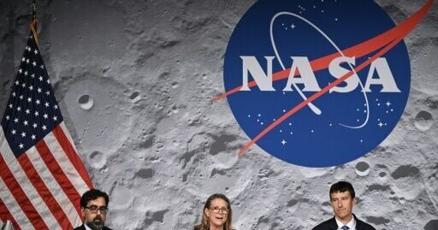
After Artemis II, NASA looks to SpaceX, Blue Origin for Moon landings
With Artemis II successfully completing its historic lunar mission on Friday, NASA is banking on billionaires Jeff Bezos and Elon Musk for the next step: landing astronauts on the Moon. The Apollo program -- which sent the first and only humans to the Moon's surface between 1969 and 1972 -- was designed so that only two astronauts could land on the lunar surface for a maximum of a few days.
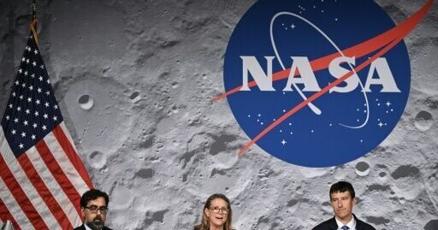
After Artemis II, NASA looks to SpaceX, Blue Origin for Moon landings
With Artemis II successfully completing its historic lunar mission on Friday, NASA is banking on billionaires Jeff Bezos and Elon Musk for the next step: landing astronauts on the Moon. The Apollo program -- which sent the first and only humans to the Moon's surface between 1969 and 1972 -- was designed so that only two astronauts could land on the lunar surface for a maximum of a few days. More than 50 years later, American ambitions and expertise have grown, with NASA hoping to send four people on a mission lasting several weeks and eventually building a lunar base. For the second phase of its mission, the space agency is looking to commercial landers designed by Musk's SpaceX and Bezos's Blue Origin to get its astronauts on the Moon. After Artemis II splashed down in the Pacific Ocean on Friday after its record-breaking journey, NASA officials urged all hands on deck for a crewed landing in 2028. "We need all of industry to work and come along with us, and they need to accept that challenge and come with us and really start the production lines that are going to be required in order to achieve that goal," Lori Glaze, the acting associate NASA administrator, told a press conference. The Apollo program relied on a single rocket, the Saturn V, which carried both the lunar lander and the capsule carrying the astronauts. NASA has opted for two separate systems for Artemis: the first to launch the Orion spacecraft carrying the crew from Earth, and another to launch the lunar lander, which will be privately contracted. - 'Camping trip' - The decision was driven by the technical limitations of the Apollo program, Kent Chojnacki, a senior NASA official in charge of lunar lander development, told AFP. "It was very not expandable to long-term exploration and long-term stays," he explained. Although spectacular, the Apollo missions were like "camping trips," said Jack Kiraly, director of government relations at the Planetary Society, which encourages space exploration. The systems NASA is looking at now are "huge compared to Apollo," said Chojnacki, noting that the new lunar landers being developed by Blue Origin and SpaceX are two to seven times larger than before. The space agency is also drawing from external partners, such as the European companies that built the propulsion module for Orion. The new approach opens access to more equipment and resources, but also significantly complicates operations. To send these giant spacecrafts to the Moon, the private space exploration companies will need to master in-flight refueling, a complex maneuver that has not yet been fully tested. After the lunar lander is launched, additional rockets will be needed to deliver the fuel required for the journey to the Moon, some 250,000 miles (400,000 kilometers) from Earth. - 'Lose the Moon' - Given this risky undertaking and the numerous delays -- particularly those experienced by SpaceX that was supposed to have its lander ready first -- pressure has mounted in recent months. "We are once again about to lose the Moon," three former NASA officials warned in an article in SpaceNews last September. China, which is hoping to send humans to the Moon by 2030, has been making progress as well, raising fears in the Trump administration that the United States could get left behind. With that in mind, NASA raised the possibility last fall of reopening the contract awarded to SpaceX and using Blue Origin's lunar lander first, sending shockwaves through the rival companies. Both firms announced they were realigning their strategies to prioritize the lunar project -- and keep their lucrative contracts with NASA. But concerns remain, particularly regarding the feasibility of in-orbit refueling. "We do have a plan," Chojnacki said, noting that NASA has a back-up plan in case of failure. The timeline is also up in the air. NASA says it plans to test an in-orbit rendezvous between the spacecraft and one or two lunar landers in 2027, and carry out a crewed lunar landing in 2028. Before that, companies will need to test in-orbit refueling and send an unmanned lunar lander to the Moon to demonstrate its safety. That all needs to happen within the next two years. "It feels like a very small amount of time," said Clayton Swope of the Center for Strategic and International Studies. cha/ico/eml/aks/hol
Anthropic is postponing its new AI model, Mythos: Is the decision all hype?
Rumours about Mythos have sparked fears it will empower hackers like never before Anthropic postponing the release of its new AI model Claude Mythos, said to be so skilled at coding it could be a wicked weapon for hackers, has encountered a mix of alarm and scepticism. The company is among several contenders in a fierce artificial intelligence race. Promoting the awe of Anthropic's own technology boosts business and enhances its allure in the event it soon goes public, as is rumoured. "The world has no choice but to take the cyber threat associated with Mythos seriously," said David Sacks, an entrepreneur and investor who heads President Donald Trump's council of advisors on technology. "But it's hard to ignore that Anthropic has a history of scare tactics." Mythos has sparked fears of hackers commanding armies of AI agents able to break through computer defences with ease. At this week's HumanX AI conference in San Francisco, Alex Stamos of startup Corridor, which addresses AI safety, acknowledged a real threat from agentic hackers. And Stamos quipped about what he referred to as Anthropic's "marketing schtick." "They have these adorable cutesy cartoons about these products that are so incredibly dangerous that they won't even let people use them," Stamos said of the San Francisco-based startup. "It's like if the Manhattan Project announced the nuclear bomb within a cute little Calvin and Hobbes cartoon." The heads of America's biggest banks met this week with Federal Reserve Chairman Jerome Powell and Treasury Secretary Scott Bessent to weigh the security implications of the yet-to-be-released Claude Mythos, according to reports Friday. "Mythos model points to something far more consequential than another leap in artificial intelligence," Cato Networks co-founder and chief executive Shlomo Kramer said in a blog post. "It signals a shift that could redefine the balance between attackers and defenders in cyberspace." A tightly restricted preview of Mythos was shared with partner organisations this week, under an initiative called Project Glasswing. They include Amazon, Apple, Microsoft, Google, Cisco, CrowdStrike and JPMorgan Chase. According to Anthropic and partners, Mythos can autonomously scan vast amounts of code to find and chain together previously unknown security vulnerabilities in all kinds of software, from operating systems to web browsers. Crucially, they warn, this can be done at a speed and scale no human could match, meaning it could be used to bring down banks, hospitals or national infrastructure within hours. "What once required elite specialists can now be performed by software agents," Shlomo said. "The immediate consequences will be a surge in vulnerability discovery, a true tsunami" of exploiting known and unknown vulnerabilities. At HumanX, the apparent consensus was that it makes sense that AI agents already adept at coding will excel at finding weaknesses in software. "We're not in an era where human beings can write code when we have superhuman (AI models) that are then going to find bugs in it," Stamos contended. "It's just not possible." He predicted the coming dynamic will involve humans supervising AI agents to protect networks against hackers using that same technology to attack. Stamos referred to it as "agent-to-agent war," with humans on the sidelines giving advice. Wendy Whitmore, of cybersecurity firm Palo Alto Networks, expects "some sort of catastrophic attack" this year connected to AI agent capabilities. "The thing that keeps me up at night is that we're staring down the barrel of a massive influx of new vulnerabilities that are going to be found by AI," said Adam Meyers of CrowdStrike. Meyers saw embedding a tiny AI model directly into malicious code infecting networks as a natural tactic to be explored by hackers. "The ultimate weapon would be malware that has no pre-programming," Meyers said.

After Artemis II, NASA looks to SpaceX, Blue Origin for Moon landings
With Artemis II successfully completing its historic lunar mission on Friday, NASA is banking on billionaires Jeff Bezos and Elon Musk for the next step: landing astronauts on the Moon. The Apollo program -- which sent the first and only humans to the Moon's surface between 1969 and 1972 -- was designed so that only two astronauts could land on the lunar surface for a maximum of a few days. More than 50 years later, American ambitions and expertise have grown, with NASA hoping to send four people on a mission lasting several weeks and eventually building a lunar base. For the second phase of its mission, the space agency is looking to commercial landers designed by Musk's SpaceX and Bezos's Blue Origin to get its astronauts on the Moon. After Artemis II splashed down in the Pacific Ocean on Friday after its record-breaking journey, NASA officials urged all hands on deck for a crewed landing in 2028. "We need all of industry to work and come along with us, and they need to accept that challenge and come with us and really start the production lines that are going to be required in order to achieve that goal," Lori Glaze, the acting associate NASA administrator, told a press conference. The Apollo program relied on a single rocket, the Saturn V, which carried both the lunar lander and the capsule carrying the astronauts. NASA has opted for two separate systems for Artemis: the first to launch the Orion spacecraft carrying the crew from Earth, and another to launch the lunar lander, which will be privately contracted. - 'Camping trip' - The decision was driven by the technical limitations of the Apollo program, Kent Chojnacki, a senior NASA official in charge of lunar lander development, told AFP. "It was very not expandable to long-term exploration and long-term stays," he explained. Although spectacular, the Apollo missions were like "camping trips," said Jack Kiraly, director of government relations at the Planetary Society, which encourages space exploration. The systems NASA is looking at now are "huge compared to Apollo," said Chojnacki, noting that the new lunar landers being developed by Blue Origin and SpaceX are two to seven times larger than before. The space agency is also drawing from external partners, such as the European companies that built the propulsion module for Orion. The new approach opens access to more equipment and resources, but also significantly complicates operations. To send these giant spacecrafts to the Moon, the private space exploration companies will need to master in-flight refueling, a complex maneuver that has not yet been fully tested. After the lunar lander is launched, additional rockets will be needed to deliver the fuel required for the journey to the Moon, some 250,000 miles (400,000 kilometers) from Earth. - 'Lose the Moon' - Given this risky undertaking and the numerous delays -- particularly those experienced by SpaceX that was supposed to have its lander ready first -- pressure has mounted in recent months. "We are once again about to lose the Moon," three former NASA officials warned in an article in SpaceNews last September. China, which is hoping to send humans to the Moon by 2030, has been making progress as well, raising fears in the Trump administration that the United States could get left behind. With that in mind, NASA raised the possibility last fall of reopening the contract awarded to SpaceX and using Blue Origin's lunar lander first, sending shockwaves through the rival companies. Both firms announced they were realigning their strategies to prioritize the lunar project -- and keep their lucrative contracts with NASA. But concerns remain, particularly regarding the feasibility of in-orbit refueling. "We do have a plan," Chojnacki said, noting that NASA has a back-up plan in case of failure. The timeline is also up in the air. NASA says it plans to test an in-orbit rendezvous between the spacecraft and one or two lunar landers in 2027, and carry out a crewed lunar landing in 2028. Before that, companies will need to test in-orbit refueling and send an unmanned lunar lander to the Moon to demonstrate its safety. That all needs to happen within the next two years. "It feels like a very small amount of time," said Clayton Swope of the Center for Strategic and International Studies. cha/ico/eml/aks/hol
(VIDEO) SpaceX Falcon 9 Successfully Launches 25 Starlink Satellites from California in Historic 32nd Flight
VANDENBERG SPACE FORCE BASE, Calif. -- SpaceX launched a Falcon 9 rocket carrying 25 Starlink satellites into low-Earth orbit Friday night from California's Vandenberg Space Force Base, marking the reusable booster's 32nd flight and underscoring the company's relentless pace in expanding its global satellite internet constellation. Liftoff from Space Launch Complex 4 East (SLC-4E) occurred at 10:04 p.m. PDT on April 10, 2026 -- shortly after sunset, creating a dazzling nighttime spectacle visible across Southern California despite patchy cloud cover. The mission, designated Starlink 17-21, deployed the V2 Mini satellites successfully, continuing SpaceX's rapid buildup of its broadband network that now serves millions worldwide. The first-stage booster, B1063, performed flawlessly before separating and executing a pinpoint landing on the droneship "Of Course I Still Love You" stationed in the Pacific Ocean. It was the booster's 32nd mission, a new personal record that highlights Falcon 9's maturing reusability technology. SpaceX confirmed the satellites were healthy and beginning their deployment sequence shortly after stage separation. "Another successful Starlink mission from California," SpaceX posted on X shortly after liftoff, linking to live broadcast footage that drew tens of thousands of viewers. The launch marked the 24th from Vandenberg this year alone, part of a cadence that has made orbital flights routine yet still awe-inspiring for spectators from Los Angeles to Santa Barbara. Launch unfolds under California skies The Falcon 9 roared off the pad on a southerly trajectory, its nine Merlin engines lighting up the night sky in a signature orange glow. Residents reported hearing sonic booms as the booster returned, a common occurrence during Vandenberg polar launches that sent shockwaves across coastal communities. Despite earlier clouds that had threatened visibility, clear windows allowed thousands to witness the event in person or via livestream. SpaceX livestreamed the entire flight, from engine ignition through fairing separation and satellite deployment. The second stage inserted the 25 satellites into their target orbit approximately one hour after liftoff. Each satellite, equipped with advanced laser inter-satellite links, will join the growing Starlink mesh to provide high-speed, low-latency internet to underserved regions, including remote areas in the U.S., maritime routes and international partners. This was the first Falcon 9 launch from Vandenberg following recent high-profile NASA events, including the Artemis II lunar flyby, further cementing SpaceX's dual role as both a commercial powerhouse and key government partner. The mission's timing also came amid heightened global demand for satellite connectivity driven by expanding broadband needs in aviation, disaster response and rural education. Record reusability powers Starlink expansion Falcon 9's reusability remains the cornerstone of SpaceX's cost advantage. Booster B1063 has now flown more times than many entire rocket families from competing nations. After landing, the booster will be inspected, refurbished and likely returned to flight within weeks -- a turnaround that has enabled SpaceX to average nearly one launch per week in 2026. To date, Starlink has deployed thousands of satellites, with the constellation approaching full operational capacity for global coverage. Friday's batch brings the year's total Starlink launches from Vandenberg to double digits, accelerating deployment toward Elon Musk's vision of 42,000 satellites. The V2 Mini satellites feature improved bandwidth and longer lifespans compared to earlier generations, promising faster speeds and greater reliability for users. SpaceX officials have said the network already provides service in over 100 countries and to ships at sea, with ongoing regulatory approvals expanding access in new markets. The company's vertical integration -- designing, manufacturing and launching its own satellites -- has slashed costs that once made satellite internet prohibitively expensive. Broader impact on space industry and connectivity The launch comes as SpaceX continues to dominate the commercial launch market. Falcon 9 has logged hundreds of successful missions, with a reliability rate exceeding 98 percent. Rivals like Blue Origin, ULA and international players are racing to catch up, but none match SpaceX's flight frequency or recovery rate. Economists note Starlink's potential to bridge the digital divide. In rural America and developing nations, the service offers speeds comparable to urban fiber without costly ground infrastructure. During natural disasters, Starlink has provided critical communications when terrestrial networks failed, earning praise from emergency responders. Friday's mission also advances national security interests. Vandenberg's polar launches place satellites in sun-synchronous orbits ideal for Earth observation and communications. The U.S. Space Force, which operates the base, has increasingly relied on commercial partners like SpaceX for rapid constellation replenishment. Environmental considerations remain a point of discussion. While reusable rockets reduce manufacturing waste, the growing number of satellites raises concerns about orbital debris and light pollution for astronomers. SpaceX has incorporated design changes, including darker coatings on newer satellites, to mitigate visibility issues. Looking ahead: More launches, more connectivity SpaceX's launch manifest shows no signs of slowing. Additional Starlink missions are scheduled from both Vandenberg and Florida in the coming weeks, alongside crewed flights to the International Space Station and potential NASA Artemis support. The company is also preparing Starship for more ambitious deep-space goals, but Falcon 9 remains the workhorse powering today's orbital economy. For Southern California residents, the launch provided a free celestial show. Photos and videos shared on social media captured the rocket's plume streaking across the sky, with some observers in Los Angeles posting clear shots from beaches and hillsides. One local noted the event coincided with clear enough skies for safe viewing despite earlier forecasts. Space Force Guardians and Airmen at Vandenberg supported range operations, ensuring public safety and mission success. Their work enables the high-tempo operations that have made the West Coast a vital hub for polar-orbit missions. As the satellites drift into their operational slots and begin beaming signals, the mission's true measure will unfold over the coming months: more households connected, more data flowing, and another step toward ubiquitous global internet. For SpaceX, it was simply another day at the office -- but one that continues to redefine what's possible in spaceflight. Friday night's flawless execution reinforces SpaceX's position at the forefront of the new space age. With Falcon 9's proven track record and Starlink's expanding footprint, the company shows no signs of easing its breakneck innovation pace. Key Mission Facts * Mission: Starlink 17-21 * Payload: 25 Starlink V2 Mini satellites * Launch Site: SLC-4E, Vandenberg Space Force Base, Calif. * Liftoff: 10:04 p.m. PDT, April 10, 2026 * Booster: B1063 (32nd flight) * Landing: "Of Course I Still Love You" droneship, Pacific Ocean * Outcome: Satellites deployed successfully; booster recovered The next Vandenberg Starlink flight is already on the calendar, promising yet another luminous display over the California coast in the weeks ahead.
After Artemis II, NASA looks to SpaceX, Blue Origin for Moon landings
With Artemis II successfully completing its historic lunar mission on Friday, NASA is banking on billionaires Jeff Bezos and Elon Musk for the next step: landing astronauts on the Moon. The Apollo program -- which sent the first and only humans to the Moon's surface between 1969 and 1972 -- was designed so that only two astronauts could land on the lunar surface for a maximum of a few days.
After Artemis II, NASA looks to SpaceX, Blue Origin for Moon landings
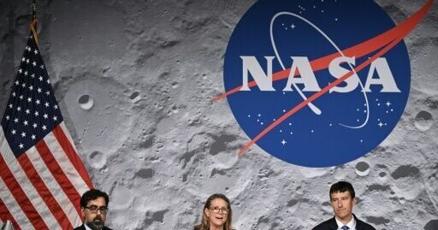
NASA official Lori Glaze says after Artemis II returns to Earth that 'all of industry' needs to work toward Moon landing With Artemis II successfully completing its historic lunar mission on Friday, NASA is banking on billionaires Jeff Bezos and Elon Musk for the next step: landing astronauts on the Moon. The Apollo program -- which sent the first and only humans to the Moon's surface between 1969 and 1972 -- was designed so that only two astronauts could land on the lunar surface for a maximum of a few days. More than 50 years later, American ambitions and expertise have grown, with NASA hoping to send four people on a mission lasting several weeks and eventually building a lunar base. For the second phase of its mission, the space agency is looking to commercial landers designed by Musk's SpaceX and Bezos's Blue Origin to get its astronauts on the Moon. After Artemis II splashed down in the Pacific Ocean on Friday after its record-breaking journey, NASA officials urged all hands on deck for a crewed landing in 2028. "We need all of industry to work and come along with us, and they need to accept that challenge and come with us and really start the production lines that are going to be required in order to achieve that goal," Lori Glaze, the acting associate NASA administrator, told a press conference. The Apollo program relied on a single rocket, the Saturn V, which carried both the lunar lander and the capsule carrying the astronauts. NASA has opted for two separate systems for Artemis: the first to launch the Orion spacecraft carrying the crew from Earth, and another to launch the lunar lander, which will be privately contracted. - 'Camping trip' - The decision was driven by the technical limitations of the Apollo program, Kent Chojnacki, a senior NASA official in charge of lunar lander development, told AFP. "It was very not expandable to long-term exploration and long-term stays," he explained. Although spectacular, the Apollo missions were like "camping trips," said Jack Kiraly, director of government relations at the Planetary Society, which encourages space exploration. The systems NASA is looking at now are "huge compared to Apollo," said Chojnacki, noting that the new lunar landers being developed by Blue Origin and SpaceX are two to seven times larger than before. The space agency is also drawing from external partners, such as the European companies that built the propulsion module for Orion. The new approach opens access to more equipment and resources, but also significantly complicates operations. To send these giant spacecrafts to the Moon, the private space exploration companies will need to master in-flight refueling, a complex maneuver that has not yet been fully tested. After the lunar lander is launched, additional rockets will be needed to deliver the fuel required for the journey to the Moon, some 250,000 miles (400,000 kilometers) from Earth. - 'Lose the Moon' - Given this risky undertaking and the numerous delays -- particularly those experienced by SpaceX that was supposed to have its lander ready first -- pressure has mounted in recent months. "We are once again about to lose the Moon," three former NASA officials warned in an article in SpaceNews last September. China, which is hoping to send humans to the Moon by 2030, has been making progress as well, raising fears in the Trump administration that the United States could get left behind. With that in mind, NASA raised the possibility last fall of reopening the contract awarded to SpaceX and using Blue Origin's lunar lander first, sending shockwaves through the rival companies. Both firms announced they were realigning their strategies to prioritize the lunar project -- and keep their lucrative contracts with NASA. But concerns remain, particularly regarding the feasibility of in-orbit refueling. "We do have a plan," Chojnacki said, noting that NASA has a back-up plan in case of failure. The timeline is also up in the air. NASA says it plans to test an in-orbit rendezvous between the spacecraft and one or two lunar landers in 2027, and carry out a crewed lunar landing in 2028. Before that, companies will need to test in-orbit refueling and send an unmanned lunar lander to the Moon to demonstrate its safety. That all needs to happen within the next two years. "It feels like a very small amount of time," said Clayton Swope of the Center for Strategic and International Studies.

After Artemis II, NASA Looks To SpaceX, Blue Origin For Moon Landings
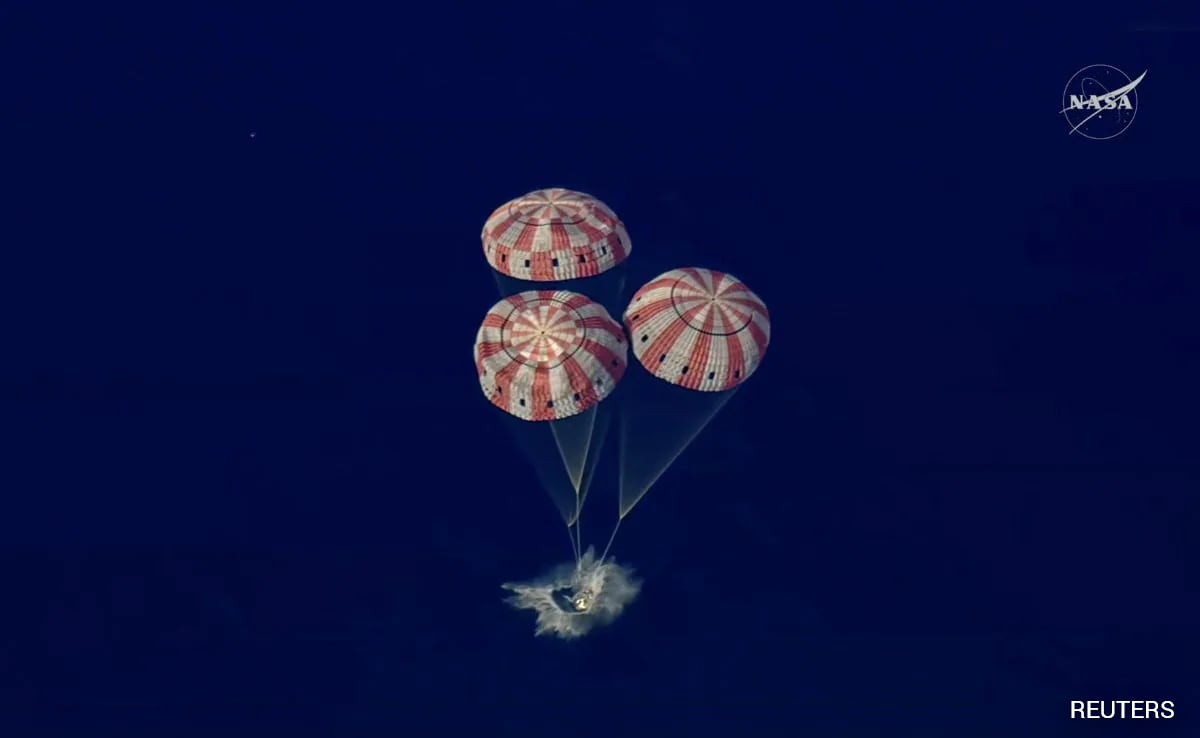
NASA's Orion spacecraft carrying Artemis II astronauts splashed down in Pacific Ocean. United States: With Artemis II successfully completing its historic lunar mission on Friday, NASA is banking on billionaires Jeff Bezos and Elon Musk for the next step: landing astronauts on the Moon. The Apollo program -- which sent the first and only humans to the Moon's surface between 1969 and 1972 -- was designed so that only two astronauts could land on the lunar surface for a maximum of a few days. More than 50 years later, American ambitions and expertise have grown, with NASA hoping to send four people on a mission lasting several weeks and eventually building a lunar base. For the second phase of its mission, the space agency is looking to commercial landers designed by Musk's SpaceX and Bezos's Blue Origin to get its astronauts on the Moon. After Artemis II splashed down in the Pacific Ocean on Friday after its record-breaking journey, NASA officials urged all hands on deck for a crewed landing in 2028. "We need all of industry to work and come along with us, and they need to accept that challenge and come with us and really start the production lines that are going to be required in order to achieve that goal," Lori Glaze, the acting associate NASA administrator, told a press conference. The Apollo program relied on a single rocket, the Saturn V, which carried both the lunar lander and the capsule carrying the astronauts. NASA has opted for two separate systems for Artemis: the first to launch the Orion spacecraft carrying the crew from Earth, and another to launch the lunar lander, which will be privately contracted. 'Camping trip' The decision was driven by the technical limitations of the Apollo program, Kent Chojnacki, a senior NASA official in charge of lunar lander development, told AFP. "It was very not expandable to long-term exploration and long-term stays," he explained. Although spectacular, the Apollo missions were like "camping trips," said Jack Kiraly, director of government relations at the Planetary Society, which encourages space exploration. The systems NASA is looking at now are "huge compared to Apollo," said Chojnacki, noting that the new lunar landers being developed by Blue Origin and SpaceX are two to seven times larger than before. The space agency is also drawing from external partners, such as the European companies that built the propulsion module for Orion. The new approach opens access to more equipment and resources, but also significantly complicates operations. To send these giant spacecrafts to the Moon, the private space exploration companies will need to master in-flight refueling, a complex maneuver that has not yet been fully tested. After the lunar lander is launched, additional rockets will be needed to deliver the fuel required for the journey to the Moon, some 250,000 miles (400,000 kilometers) from Earth. 'Lose the Moon' Given this risky undertaking and the numerous delays -- particularly those experienced by SpaceX that was supposed to have its lander ready first -- pressure has mounted in recent months. "We are once again about to lose the Moon," three former NASA officials warned in an article in SpaceNews last September. China, which is hoping to send humans to the Moon by 2030, has been making progress as well, raising fears in the Trump administration that the United States could get left behind. With that in mind, NASA raised the possibility last fall of reopening the contract awarded to SpaceX and using Blue Origin's lunar lander first, sending shockwaves through the rival companies. Both firms announced they were realigning their strategies to prioritize the lunar project -- and keep their lucrative contracts with NASA. But concerns remain, particularly regarding the feasibility of in-orbit refueling. "We do have a plan," Chojnacki said, noting that NASA has a back-up plan in case of failure. The timeline is also up in the air. NASA says it plans to test an in-orbit rendezvous between the spacecraft and one or two lunar landers in 2027, and carry out a crewed lunar landing in 2028. Before that, companies will need to test in-orbit refueling and send an unmanned lunar lander to the Moon to demonstrate its safety. That all needs to happen within the next two years. "It feels like a very small amount of time," said Clayton Swope of the Center for Strategic and International Studies. (This story has not been edited by NDTV staff and is auto-generated from a syndicated feed.) Show full article Track Latest News Live on NDTV.com and get news updates from India and around the world
Trump administration unveils plans for colossal triumphal arch in Washington
US President Donald Trump stands near models for a proposed "Independence Arch" as he speaks during a dinner with ballroom donors in the East Room of the White House in Washington, DC. (File/AFP) Donald Trump's administration on Friday unveiled renderings for a large triumphal arch proposed for construction in Washington near several of the nation's most prominent monuments. The structure is planned to stand 250 feet (76.2 metres) tall, surpassing Monument to the Revolution by 30 feet and making it the largest of its kind globally, ahead of Arch of Triumph. Design and location details The gold-accented arch would rise higher than the 99-foot-tall Lincoln Memorial and is proposed to be located across the Potomac River at the far end of Arlington Memorial Bridge. It would also be visible from Arlington National Cemetery, where many of the country's military personnel are buried. Renderings show a large winged Lady Liberty, flanked by two gilded eagles, positioned atop a white arch. The structure features gold inscriptions reading "One Nation Under God" and "Liberty and Justice for All" on opposite sides. The proposed design resembles the Arc de Triomphe and would be situated on Columbia Island in the Potomac River. Trump highlights project significance "The structure "will be the GREATEST and MOST BEAUTIFUL Triumphal Arch, anywhere in the World," Trump wrote on his social media platform on Friday. "This will be a wonderful addition to the Washington D.C. area for all Americans to enjoy for many decades to come!" Trump has said the arch would commemorate the 250th anniversary of the US founding and the 1776 declaration of independence from Britain. Part of broader architectural plans The project is among several initiatives undertaken during Trump's second term, including a large White House ballroom and renovations to the Kennedy Center for the Performing Arts. The plans have been submitted to the US Commission of Fine Arts for review, an agency responsible for advising the President on design matters. Trump replaced all members of the commission in October and appointed allies as part of broader development plans across the US capital. Last month, the same body approved the design of a commemorative gold coin bearing Trump's likeness to be minted for the 250th anniversary.
)
Pink bus to e-ticket: Why Dhaka's bus chaos persists
Dhaka's longstanding struggle to bring order to its chaotic public transport system has all along exposed the gap between policy ambition and on-the-ground reality. Over the past decade, successive governments have launched multiple initiatives to rationalise bus routes and streamline operations. All those initiatives fell apart due to policy inconsistencies among relevant government agencies and strong opposition from transport owners' and workers' lobbies, sector insiders pointed out. Against this grim background, the new government is once again signalling urgency of improving the city's public transport in line with its election manifesto. At a secretariat meeting on 2 March, Prime Minister Tarique Rahman prioritised restoring discipline in Dhaka's public transport and expressed interest in introducing electric buses within 180 days. Series of failures Around a decade ago, the then Awami League government had introduced plans including circular bus services between Dhanmondi and Azimpur, and city bus operations between Ghatarchar and Kanchpur. None delivered lasting results. Instead, disorder on Dhaka's roads has only intensified. In a renewed attempt to restore order, the Dhaka Road Transport Owners' Association introduced a counter-based ticketing system and e-ticketing on 6 February 2025, starting with buses from Abdullahpur. All buses were painted pink to create a unified identity, but the plan quickly faltered due to resistance from transport workers, a lack of infrastructure, and disputes over wages that undermined implementation. Earlier, in 2015, the late Dhaka North City Corporation mayor Annisul Huq attempted to bring six companies under a unified system. A committee was formed under his leadership to rationalise routes. Following his death in 2017, leadership passed to then Dhaka South mayor Sayeed Khokon, who piloted a circular bus service. The initiative stalled during the Covid-19 pandemic and never resumed. In 2020, Dhaka South City Corporation mayor Sheikh Fazle Noor Taposh revived the effort, launching "Dhaka Nagar Paribahan" on route 21 from Keraniganj's Ghatarchar to Narayanganj's Kanchpur in December 2021. Additional routes were proposed in 2022. However, financial losses discouraged bus owners from participating, and expansion plans collapsed. After August 2024, even the limited Nagar Paribahan service shut down entirely. A brief revival attempt came on 25 February 2025, when the Dhaka Transport Coordination Authority launched 35 air-conditioned buses on the Gabtoli-Chashara route. That service, too, eventually ceased operations. The pink bus initiative suffered a similar fate. Despite deploying 2,610 buses from 21 companies, the absence of proper counters and incomplete e-ticketing infrastructure meant the system never functioned as intended. Labour dissatisfaction over wage structures further derailed the effort almost immediately. As a result, none of the key reforms - eliminating reckless competition, enforcing designated stops, implementing e-ticketing, or even using colour coding for easy identification - have taken hold. Route rationalisation remains incomplete and inconsistent. Even recent efforts under the interim government have struggled. Old, dilapidated buses were repainted pink and e-ticketing counters were installed. But many counters stopped operating within a week. Buses continue to pick up and drop off passengers mid-road, ignoring designated stops. The pink buses themselves have reverted to aggressive competition, their paint now faded and worn. Traffic signs indicating official stopping points remain largely ignored - symbolic of a system where rules exist but are rarely followed. According to data from the Bangladesh Road Transport Authority, nearly 9,027 buses operate across 291 routes in the capital. Yet enforcement remains weak. The traffic division of the Dhaka Metropolitan Police files between 1,800 and 2,000 cases on average, generating monthly fines of Tk13-14 crore for the state - an indication not of discipline but of persistent violations. Currently, more than 100 companies operate roughly 6,000 buses across the capital - a fragmentation that continues to fuel unhealthy competition. Acknowledging the failures of several initiatives to bring discipline to the routes, Dhaka Road Transport Owners' Association General Secretary Mohammad Saiful Alam told The Business Standard that while initiatives were taken, they were never effectively implemented due to the lack of cooperation from bus owners. Drivers face constant pressure to meet daily income targets, pushing them into dangerous competition on the streets, he said. Pointing to deeper structural issues, Dhruba Alam, transport planner of the Dhaka Transport Coordination Authority, said past initiatives lacked coordination among stakeholders and were often poorly planned. Some, like the pink bus project, were largely symbolic. Crucially, there was no strong political leadership to bring all parties to the table, he said. "Public transport is not just a technical issue; it is a political one," he said, adding that institutional conflicts - such as opposition from transport owners to DTCA-led initiatives-have repeatedly stalled progress. Dhruba cautioned that large-scale reforms like route rationalisation or franchising cannot be completed within such a short timeframe. However, short-term goals include finalising the legal framework for bus franchising, expanding digital ticketing through Rapid Pass and reintroducing dedicated bus services for women. Not a rocket science Transport expert Md Shamsul Haque, a professor at Bangladesh University of Engineering and Technology, said the government's renewed interest is encouraging but warned that past failures were largely due to resistance from vested interests at the operational level. Identifying those barriers will be key to future success. Highlighting institutional weaknesses within BRTA, he cited a lack of skilled professionals in transport planning. Without proper expertise, congestion and inefficiency will only worsen.

After Artemis II, NASA looks to SpaceX, Blue Origin for Moon landings
Add Yahoo as a preferred source to see more of our stories on Google. With Artemis II successfully completing its historic lunar mission on Friday, NASA is banking on billionaires Jeff Bezos and Elon Musk for the next step: landing astronauts on the Moon. The Apollo program -- which sent the first and only humans to the Moon's surface between 1969 and 1972 -- was designed so that only two astronauts could land on the lunar surface for a maximum of a few days. More than 50 years later, American ambitions and expertise have grown, with NASA hoping to send four people on a mission lasting several weeks and eventually building a lunar base. For the second phase of its mission, the space agency is looking to commercial landers designed by Musk's SpaceX and Bezos's Blue Origin to get its astronauts on the Moon. After Artemis II splashed down in the Pacific Ocean on Friday after its record-breaking journey, NASA officials urged all hands on deck for a crewed landing in 2028. "We need all of industry to work and come along with us, and they need to accept that challenge and come with us and really start the production lines that are going to be required in order to achieve that goal," Lori Glaze, the acting associate NASA administrator, told a press conference. The Apollo program relied on a single rocket, the Saturn V, which carried both the lunar lander and the capsule carrying the astronauts. NASA has opted for two separate systems for Artemis: the first to launch the Orion spacecraft carrying the crew from Earth, and another to launch the lunar lander, which will be privately contracted. - 'Camping trip' - The decision was driven by the technical limitations of the Apollo program, Kent Chojnacki, a senior NASA official in charge of lunar lander development, told AFP. "It was very not expandable to long-term exploration and long-term stays," he explained. Although spectacular, the Apollo missions were like "camping trips," said Jack Kiraly, director of government relations at the Planetary Society, which encourages space exploration. The systems NASA is looking at now are "huge compared to Apollo," said Chojnacki, noting that the new lunar landers being developed by Blue Origin and SpaceX are two to seven times larger than before. The space agency is also drawing from external partners, such as the European companies that built the propulsion module for Orion. The new approach opens access to more equipment and resources, but also significantly complicates operations. To send these giant spacecrafts to the Moon, the private space exploration companies will need to master in-flight refueling, a complex maneuver that has not yet been fully tested. After the lunar lander is launched, additional rockets will be needed to deliver the fuel required for the journey to the Moon, some 250,000 miles (400,000 kilometers) from Earth. - 'Lose the Moon' - Given this risky undertaking and the numerous delays -- particularly those experienced by SpaceX that was supposed to have its lander ready first -- pressure has mounted in recent months. "We are once again about to lose the Moon," three former NASA officials warned in an article in SpaceNews last September. China, which is hoping to send humans to the Moon by 2030, has been making progress as well, raising fears in the Trump administration that the United States could get left behind. With that in mind, NASA raised the possibility last fall of reopening the contract awarded to SpaceX and using Blue Origin's lunar lander first, sending shockwaves through the rival companies. Both firms announced they were realigning their strategies to prioritize the lunar project -- and keep their lucrative contracts with NASA. But concerns remain, particularly regarding the feasibility of in-orbit refueling. "We do have a plan," Chojnacki said, noting that NASA has a back-up plan in case of failure. The timeline is also up in the air. NASA says it plans to test an in-orbit rendezvous between the spacecraft and one or two lunar landers in 2027, and carry out a crewed lunar landing in 2028. Before that, companies will need to test in-orbit refueling and send an unmanned lunar lander to the Moon to demonstrate its safety. That all needs to happen within the next two years. "It feels like a very small amount of time," said Clayton Swope of the Center for Strategic and International Studies.
IMF Chief Warns of Cybersecurity Risks from Anthropic's AI Model Mythos
The International Monetary Fund (IMF) has raised significant alarms regarding cybersecurity risks posed by Anthropic's new AI model, Mythos Preview. Kristalina Georgieva, the IMF Managing Director, emphasized the urgency of the situation, stating, "time is not our friend on this one." Concerns Over Cybersecurity Risks During an interview on "Face the Nation with Margaret Brennan," Georgieva outlined the escalating threat to the international monetary system. She claimed that there is currently a lack of resources to address massive cyber risks effectively. "The risks have been growing exponentially," Georgieva noted. She advocates for heightened attention to safety measures essential for global financial stability in the evolving world of AI. Federal Response to Risks On Tuesday, significant figures such as Federal Reserve Chair Jerome Powell and Treasury Secretary Scott Bessent convened with Wall Street leaders. Their aim was to evaluate the cybersecurity threats driven by Anthropic's AI model. According to a Treasury spokesperson, additional coordination meetings are forthcoming among various regulators and financial institutions. These discussions will focus on addressing these cybersecurity challenges and other pressing issues. Capabilities of Anthropic's Mythos Preview Anthropic has reported that the Mythos model shows a remarkable ability to identify cybersecurity vulnerabilities. The model can detect flaws, some of which have existed for decades, and exploit them. Anthropic plans to distribute the model only to selected partners tasked with fortifying their own systems. * Thousands of high-severity vulnerabilities have been identified by Mythos. * Vulnerabilities found include problems in all major operating systems and web browsers. * The proliferation of these capabilities could lead to severe implications for economies and national security. Call for Cooperation Among Financial Institutions Georgieva stressed the necessity for major financial institutions, particularly central banks, to collaborate closely. She highlighted the importance of vigilance in managing risks associated with cyberattacks. "This issue could arise in any part of the world, and that is why cooperation is essential," she remarked. As the dialogue around AI and cybersecurity continues, it is clear that immediate actions and strategies are crucial to safeguard financial systems globally. For more insights from the interview, be sure to tune into "Face the Nation with Margaret Brennan" this Sunday.

Banks Are Warned About Anthropic's New, Powerful A.I. Technology
The leaders of some of America's largest banks were warned by a top government official this week about a new artificial intelligence model from Anthropic that could lead to heightened risks of cyberattacks, according to three people briefed on the matter but not permitted to speak publicly. Treasury Secretary Scott Bessent delivered the stark message on Tuesday morning to a small group of chief executives, including those from Bank of America, Citi and Wells Fargo, in a hastily arranged meeting in Washington. Mr. Bessent, the people said, cautioned the banks that allowing the new A.I. software to run through their internal computer systems could pose a serious risk to sensitive customer data. The Federal Reserve chair, Jerome H. Powell, who has spoken publicly in recent weeks about the threat of cyberattacks against the financial system, also attended Tuesday's meeting. The warnings relate to a new intelligence model that Anthropic named Claude Mythos Preview. Anthropic has said the model is particularly good at identifying security vulnerabilities in software that human developers could not find. At Tuesday's meeting, the people briefed on the matter said, the bank executives were told that the new model might be so effective at finding security weaknesses inside banks that hackers or other so-called third-party bad actors could get their hands on the information and exploit it. Anthropic itself has warned about the risks. The company said this week that the model's advancements were so powerful and potentially dangerous that they could not safely be released to the public yet and would instead be contained to a coalition of 40 companies that it called "Project Glasswing." That group includes at least one bank, JPMorgan Chase, the nation's largest, which earlier said it would use the software "to evaluate next-generation A.I. tools for defensive cybersecurity across critical infrastructure." Jamie Dimon, JPMorgan's chief executive, was invited to Tuesday's briefing but skipped it for previously arranged travel plans, according to a person familiar with the matter. The Trump administration and Anthropic are locked in a legal battle over the Defense Department's recent designation of the company as a "supply chain risk." The government issued that designation after Anthropic insisted on putting limits on the use of its A.I. technology in war. In a statement, a Treasury spokesperson said, "This week's meeting was convened by Secretary Bessent to initiate a process for planning and coordination of our approach to the rapid developments taking place in A.I." The existence of the meeting was reported earlier by Bloomberg News. The Fed declined to comment. "We're taking every step we can to make sure that everybody is safe from these potential risks, including Anthropic agreeing to hold back the public release of the model until our officials have figured everything out," Kevin A. Hassett, director of the National Economic Council, told Fox News on Friday. "There's definitely a sense of urgency." Logan Graham, an Anthropic executive, said in a statement that the new technology would help "secure infrastructure that is critical for global security and economic stability." Rob Copeland is a finance reporter for The Times, writing about Wall Street and the banking industry.

After Artemis II, NASA looks to SpaceX, Blue Origin for Moon landings
The Apollo program -- which sent the first and only humans to the Moon's surface between 1969 and 1972 -- was designed so that only two astronauts could land on the lunar surface for a maximum of a few days. More than 50 years later, American ambitions and expertise have grown, with NASA hoping to send four people on a mission lasting several weeks and eventually building a lunar base. For the second phase of its mission, the space agency is looking to commercial landers designed by Musk's SpaceX and Bezos's Blue Origin to get its astronauts on the Moon. After Artemis II splashed down in the Pacific Ocean on Friday after its record-breaking journey, NASA officials urged all hands on deck for a crewed landing in 2028. "We need all of industry to work and come along with us, and they need to accept that challenge and come with us and really start the production lines that are going to be required in order to achieve that goal," Lori Glaze, the acting associate NASA administrator, told a press conference. The Apollo program relied on a single rocket, the Saturn V, which carried both the lunar lander and the capsule carrying the astronauts. NASA has opted for two separate systems for Artemis: the first to launch the Orion spacecraft carrying the crew from Earth, and another to launch the lunar lander, which will be privately contracted. The decision was driven by the technical limitations of the Apollo program, Kent Chojnacki, a senior NASA official in charge of lunar lander development, told AFP. "It was very not expandable to long-term exploration and long-term stays," he explained. Although spectacular, the Apollo missions were like "camping trips," said Jack Kiraly, director of government relations at the Planetary Society, which encourages space exploration. The systems NASA is looking at now are "huge compared to Apollo," said Chojnacki, noting that the new lunar landers being developed by Blue Origin and SpaceX are two to seven times larger than before. The space agency is also drawing from external partners, such as the European companies that built the propulsion module for Orion. The new approach opens access to more equipment and resources, but also significantly complicates operations. To send these giant spacecrafts to the Moon, the private space exploration companies will need to master in-flight refueling, a complex maneuver that has not yet been fully tested. After the lunar lander is launched, additional rockets will be needed to deliver the fuel required for the journey to the Moon, some 250,000 miles (400,000 kilometers) from Earth. Given this risky undertaking and the numerous delays -- particularly those experienced by SpaceX that was supposed to have its lander ready first -- pressure has mounted in recent months. "We are once again about to lose the Moon," three former NASA officials warned in an article in SpaceNews last September. China, which is hoping to send humans to the Moon by 2030, has been making progress as well, raising fears in the Trump administration that the United States could get left behind. With that in mind, NASA raised the possibility last fall of reopening the contract awarded to SpaceX and using Blue Origin's lunar lander first, sending shockwaves through the rival companies. Both firms announced they were realigning their strategies to prioritize the lunar project -- and keep their lucrative contracts with NASA. But concerns remain, particularly regarding the feasibility of in-orbit refueling. "We do have a plan," Chojnacki said, noting that NASA has a back-up plan in case of failure. The timeline is also up in the air. NASA says it plans to test an in-orbit rendezvous between the spacecraft and one or two lunar landers in 2027, and carry out a crewed lunar landing in 2028. Before that, companies will need to test in-orbit refueling and send an unmanned lunar lander to the Moon to demonstrate its safety. That all needs to happen within the next two years. "It feels like a very small amount of time," said Clayton Swope of the Center for Strategic and International Studies.