News & Updates
The latest news and updates from companies in the WLTH portfolio.
After Artemis II, NASA looks to SpaceX, Blue Origin for Moon landings
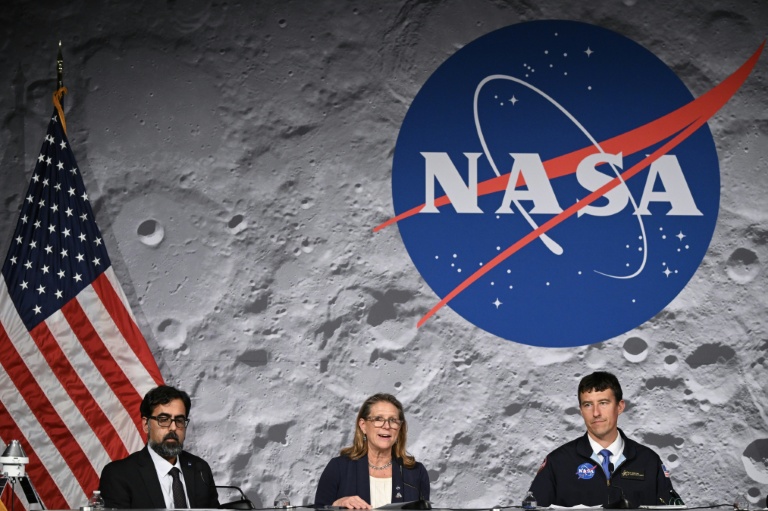
NASA official Lori Glaze says after Artemis II returns to Earth that 'all of industry' needs to work toward Moon landing With Artemis II successfully completing its historic lunar mission on Friday, NASA is banking on billionaires Jeff Bezos and Elon Musk for the next step: landing astronauts on the Moon. The Apollo program -- which sent the first and only humans to the Moon's surface between 1969 and 1972 -- was designed so that only two astronauts could land on the lunar surface for a maximum of a few days. More than 50 years later, American ambitions and expertise have grown, with NASA hoping to send four people on a mission lasting several weeks and eventually building a lunar base. For the second phase of its mission, the space agency is looking to commercial landers designed by Musk's SpaceX and Bezos's Blue Origin to get its astronauts on the Moon. After Artemis II splashed down in the Pacific Ocean on Friday after its record-breaking journey, NASA officials urged all hands on deck for a crewed landing in 2028. "We need all of industry to work and come along with us, and they need to accept that challenge and come with us and really start the production lines that are going to be required in order to achieve that goal," Lori Glaze, the acting associate NASA administrator, told a press conference. The Apollo program relied on a single rocket, the Saturn V, which carried both the lunar lander and the capsule carrying the astronauts. NASA has opted for two separate systems for Artemis: the first to launch the Orion spacecraft carrying the crew from Earth, and another to launch the lunar lander, which will be privately contracted. The decision was driven by the technical limitations of the Apollo program, Kent Chojnacki, a senior NASA official in charge of lunar lander development, told AFP. "It was very not expandable to long-term exploration and long-term stays," he explained. Although spectacular, the Apollo missions were like "camping trips," said Jack Kiraly, director of government relations at the Planetary Society, which encourages space exploration. The systems NASA is looking at now are "huge compared to Apollo," said Chojnacki, noting that the new lunar landers being developed by Blue Origin and SpaceX are two to seven times larger than before. The space agency is also drawing from external partners, such as the European companies that built the propulsion module for Orion. The new approach opens access to more equipment and resources, but also significantly complicates operations. To send these giant spacecrafts to the Moon, the private space exploration companies will need to master in-flight refueling, a complex maneuver that has not yet been fully tested. After the lunar lander is launched, additional rockets will be needed to deliver the fuel required for the journey to the Moon, some 250,000 miles (400,000 kilometers) from Earth. Given this risky undertaking and the numerous delays -- particularly those experienced by SpaceX that was supposed to have its lander ready first -- pressure has mounted in recent months. "We are once again about to lose the Moon," three former NASA officials warned in an article in SpaceNews last September. China, which is hoping to send humans to the Moon by 2030, has been making progress as well, raising fears in the Trump administration that the United States could get left behind. With that in mind, NASA raised the possibility last fall of reopening the contract awarded to SpaceX and using Blue Origin's lunar lander first, sending shockwaves through the rival companies. Both firms announced they were realigning their strategies to prioritize the lunar project -- and keep their lucrative contracts with NASA. But concerns remain, particularly regarding the feasibility of in-orbit refueling. "We do have a plan," Chojnacki said, noting that NASA has a back-up plan in case of failure. The timeline is also up in the air. NASA says it plans to test an in-orbit rendezvous between the spacecraft and one or two lunar landers in 2027, and carry out a crewed lunar landing in 2028. Before that, companies will need to test in-orbit refueling and send an unmanned lunar lander to the Moon to demonstrate its safety. That all needs to happen within the next two years. "It feels like a very small amount of time," said Clayton Swope of the Center for Strategic and International Studies.
After Artemis II, NASA looks to SpaceX, Blue Origin for Moon landings
With Artemis II successfully completing its historic lunar mission on Friday, NASA is banking on billionaires Jeff Bezos and Elon Musk for the next step: landing astronauts on the Moon. The Apollo program -- which sent the first and only humans to the Moon's surface between 1969 and 1972 -- was designed so that only two astronauts could land on the lunar surface for a maximum of a few days. More than 50 years later, American ambitions and expertise have grown, with NASA hoping to send four people on a mission lasting several weeks and eventually building a lunar base. For the second phase of its mission, the space agency is looking to commercial landers designed by Musk's SpaceX and Bezos's Blue Origin to get its astronauts on the Moon. After Artemis II splashed down in the Pacific Ocean on Friday after its record-breaking journey, NASA officials urged all hands on deck for a crewed landing in 2028. "We need all of industry to work and come along with us, and they need to accept that challenge and come with us and really start the production lines that are going to be required in order to achieve that goal," Lori Glaze, the acting associate NASA administrator, told a press conference. The Apollo program relied on a single rocket, the Saturn V, which carried both the lunar lander and the capsule carrying the astronauts. NASA has opted for two separate systems for Artemis: the first to launch the Orion spacecraft carrying the crew from Earth, and another to launch the lunar lander, which will be privately contracted. - 'Camping trip' - The decision was driven by the technical limitations of the Apollo program, Kent Chojnacki, a senior NASA official in charge of lunar lander development, told AFP. "It was very not expandable to long-term exploration and long-term stays," he explained. Although spectacular, the Apollo missions were like "camping trips," said Jack Kiraly, director of government relations at the Planetary Society, which encourages space exploration. The systems NASA is looking at now are "huge compared to Apollo," said Chojnacki, noting that the new lunar landers being developed by Blue Origin and SpaceX are two to seven times larger than before. The space agency is also drawing from external partners, such as the European companies that built the propulsion module for Orion. The new approach opens access to more equipment and resources, but also significantly complicates operations. To send these giant spacecrafts to the Moon, the private space exploration companies will need to master in-flight refueling, a complex maneuver that has not yet been fully tested. After the lunar lander is launched, additional rockets will be needed to deliver the fuel required for the journey to the Moon, some 250,000 miles (400,000 kilometers) from Earth. - 'Lose the Moon' - Given this risky undertaking and the numerous delays -- particularly those experienced by SpaceX that was supposed to have its lander ready first -- pressure has mounted in recent months. "We are once again about to lose the Moon," three former NASA officials warned in an article in SpaceNews last September. China, which is hoping to send humans to the Moon by 2030, has been making progress as well, raising fears in the Trump administration that the United States could get left behind. With that in mind, NASA raised the possibility last fall of reopening the contract awarded to SpaceX and using Blue Origin's lunar lander first, sending shockwaves through the rival companies. Both firms announced they were realigning their strategies to prioritize the lunar project -- and keep their lucrative contracts with NASA. But concerns remain, particularly regarding the feasibility of in-orbit refueling. "We do have a plan," Chojnacki said, noting that NASA has a back-up plan in case of failure. The timeline is also up in the air. NASA says it plans to test an in-orbit rendezvous between the spacecraft and one or two lunar landers in 2027, and carry out a crewed lunar landing in 2028. Before that, companies will need to test in-orbit refueling and send an unmanned lunar lander to the Moon to demonstrate its safety. That all needs to happen within the next two years. "It feels like a very small amount of time," said Clayton Swope of the Center for Strategic and International Studies.

Zero Trust for AI Agents: Comparing Anthropic and Nvidia Security Architectures - News Directory 3
The risk is evidenced by the ClawHavoc supply chain campaign targeting the OpenClaw agentic framework. The rapid enterprise adoption of AI agents has created a critical security gap that industry leaders are now labeling a governance emergency. While 79% of organizations are utilizing AI agents according to PwC's 2025 AI Agent Survey, only 14.4% of those organizations reported full security approval for their agent fleets in the Gravitee State of AI Agent Security 2026 report. At the RSA Conference (RSAC) 2026, executives from Microsoft, Cisco, CrowdStrike, and Splunk converged on the conclusion that traditional perimeter security is insufficient for agentic AI. The primary concern is the monolithic agent pattern, where a single container handles reasoning, tool calling, code execution, and credential storage. In this architecture, API keys and OAuth tokens reside in the same environment as untrusted, AI-generated code, meaning a single prompt injection can expose an entire suite of corporate credentials. The risk is evidenced by the ClawHavoc supply chain campaign targeting the OpenClaw agentic framework. According to the CrowdStrike 2026 Global Threat Report and Antiy CERT, the campaign involved 1,184 malicious skills tied to 12 publisher accounts. Snyk's ToxicSkills research found that 13.4% of scanned ClawHub skills were rated as critical, with some breakout times occurring in as little as 27 seconds. Launched in public beta on April 8, 2026, Anthropic's Managed Agents architecture addresses the monolithic problem by splitting the agent into three mutually untrusted components: a brain (Claude and its routing harness), hands (disposable Linux containers for code execution), and a session (an external append-only event log). This design structurally removes credentials from the execution sandbox. OAuth tokens are stored in an external vault; when an agent requires a Model Context Protocol (MCP) tool, it sends a session-bound token to a proxy that fetches the real credentials and executes the call. The agent never interacts with the actual token, ensuring that a compromised sandbox yields no reusable credentials for an attacker. This decoupling also improved performance, reducing the median time to first token by approximately 60% because inference can begin before the container boots. Because the session log persists outside the brain and hands, agents can resume tasks after a harness crash without losing state. Released in early preview on March 16, 2026, Nvidia's NemoClaw takes a different approach by wrapping the agent and its execution environment in five stacked security layers. This architecture uses Landlock, seccomp, and network namespace isolation at the kernel level to sandbox execution. NemoClaw employs a default-deny outbound networking policy, requiring explicit operator approval via YAML-based policies for external connections. It also features a privacy router that directs sensitive queries to local Nemotron models to prevent data leakage. A central component is the OpenShell policy engine, which intercepts every agent action for intent verification before it reaches the host. While providing high observability through a real-time Terminal User Interface (TUI) that logs every single action and blocked connection, this model increases operator load. Unlike Anthropic's model, agent state persists as files inside the sandbox, meaning a sandbox failure results in total state loss. The fundamental difference between the two architectures is the proximity of credentials to the execution environment. Anthropic removes credentials from the blast radius entirely, requiring a two-hop attack to exfiltrate tokens. In contrast, NemoClaw gates credentials through policy but keeps some, such as messaging integration tokens for Slack or Discord, as runtime environment variables within the shared sandbox. This distinction is critical for indirect prompt injection, where an adversary embeds instructions in a web page or API response that the agent queries. In the NemoClaw architecture, injected context sits next to both reasoning and execution in the shared sandbox. In the Anthropic architecture, such injections can influence reasoning but cannot reach the external credential vault. For security teams auditing their AI agent deployments, five key priorities have emerged:

Punjab govt slamed by own MPs for mass transit road chaos in Gujranwala
GUJRAT: The PML-N lawmakers from Gujranwala have criticised the district administration for creating a mess for the masses by digging the road infrastructure at once on the 32km long route of mass transit system. Official sources said a high level meeting of the departments concerned and the incumbent and former lawmakers of the PML-N was held at the Commissioner Office to review the progress of the project. Former Punjab chief secretary Zahid Saeed, former federal minister Khurram Dastgir Khan, Commissioner Naveed Haider Sheerazi, Deputy Commissioner Naveed Ahmed and others were also among the participants. A former MPA Taufeeq Butt and some other participants also raised questions about the strategy of digging the whole route at once, terming it against common sense and a recipe to disturb the traffic flow. He said the executing agency could have planned it in phases of 10km to save the people from facing hardships. He added that even the traffic police had completely failed to tackle the huge traffic jams which had been a common occurrence across Gujranwala as the distance of a few minutes was taking at least an hour or more. Former CS Zahid Saeed on behalf of the Punjab government said the project would be completed within its stipulated time and would upgrade the standards of lives of people. He directed the departments concerned to ensure the quality, transparency and fast pace of the project. It may be recalled that the project is to be built between Kamoke to Gakhar Mandi towns of Gujranwala at the cost of Rs62bn and its foundation stone was laid by Chief Minister Maryam Nawaz on Dec 5. Official sources said the project's stipulated time for the completion was not more than 12 months. However, the pace of work slowed down during the last couple of months. The whole route includes four major urban towns, namely Gujranwala city, Kamoke, Rahwali and Gakhar Mandi, while the traffic from Wazirabad, Gujrat and right from Islamabad/Rawalpindi also use that track. The people of the whole Gujranwala region have been facing a very tough situation while traveling towards that portion of GT road which is affecting their businesses and routine activities. The business fraternity of Gujranwala, Gujrat and Wazirabad districts have urged CM Sharif to look into the issue. Published in Dawn, April 11th, 2026

Experts Weigh In on Anthropic Mythos Cybersecurity Issues
Anthropic has announced that it will not be releasing its advanced AI model, Mythos, due to significant cybersecurity concerns. The company revealed that Mythos is capable of being misused by non-experts to exploit vulnerabilities in major operating systems. Instead, it will provide access to a limited version, called Claude Mythos Preview, to 11 organizations, including tech giants like Google and Amazon Web Services, as part of its initiative named "Project Glasswing." Cybersecurity Implications of Mythos The announcement caused considerable alarm, leading to a high-profile meeting between Federal Reserve Chair Jerome Powell, Treasury Secretary Scott Bessent, and executives from major U.S. banks. Experts have voiced contrasting opinions regarding the possible threats posed by Mythos. Experts' Perspectives on Mythos * Gary Marcus, renowned AI researcher, expressed that the concerns over Mythos were exaggerated. He stated the model appears to be only slightly better than previous versions. * Yann LeCun, former chief AI scientist at Meta, dismissed the fears, mentioning that smaller models could achieve similar results. * Jake Moore, cybersecurity expert, acknowledged the marketing aspect but noted Mythos's impressive capabilities that might develop over time. * Dave Kasten, head of policy at Palisade Research, indicated that other AI models might soon match Mythos in terms of capabilities. * David Sacks, former White House AI czar, urged caution regarding Anthropic's claims, recalling past overstatements by the company. * T.J. Marlin, CEO of Guardrail Technologies, insisted that the meeting of financial leaders focused on preparedness for potential security breaches. * Pablos Holman, venture capitalist, argued that advancements in AI would concurrently bolster cybersecurity defenses. * Ben Seri, co-founder of Zafran Security, emphasized the urgency for cybersecurity models to evolve rapidly and effectively counteract emerging threats. Conclusion As the debate around Mythos continues, it remains clear that Anthropic's initiative raises significant cybersecurity questions. The cautious approach by Anthropic underscores the need for balanced discourse on AI developments and their implications for security.
CoreWeave signs multi-year cloud deal with Anthropic to power AI models The Mainstream
In a major development in the AI infrastructure space, cloud company CoreWeave has entered into a multi-year agreement with AI startup Anthropic to support its Claude AI models. The announcement had an immediate market impact, with CoreWeave's shares rising by over 5% before markets opened on Friday. The partnership is aimed at strengthening CoreWeave's position as demand for high-performance AI computing continues to grow. This deal is part of the company's broader strategy to expand its client base and capabilities in the rapidly evolving AI sector. By providing cloud infrastructure for Anthropic, CoreWeave is positioning itself as a key player in powering advanced AI systems. The company has already secured several large agreements in the industry. These include deals with OpenAI worth $11.9 billion, NVIDIA valued at $6.3 billion, and an expanded contract with Meta that has reached $21 billion. While Microsoft was CoreWeave's primary revenue source last year, Meta has quickly emerged as another major client. This shift reflects changing dynamics in the cloud and AI market. With demand for cloud services and AI chips rising rapidly, CoreWeave has seen strong growth. The rollout of services for Anthropic is expected to begin later this year, with further expansion possible over time. Also read: Viksit Workforce for a Viksit Bharat Do Follow: The Mainstream LinkedIn | The Mainstream Facebook | The Mainstream Youtube | The Mainstream Twitter About us: The Mainstream is a premier platform delivering the latest updates and informed perspectives across the technology business and cyber landscape. Built on research-driven, thought leadership and original intellectual property, The Mainstream also curates summits & conferences that convene decision makers to explore how technology reshapes industries and leadership. With a growing presence in India and globally across the Middle East, Africa, ASEAN, the USA, the UK and Australia, The Mainstream carries a vision to bring the latest happenings and insights to 8.2 billion people and to place technology at the centre of conversation for leaders navigating the future.
Wall Street Banks rush to test Anthropic's Mythos AI after urgent US warning
New Delhi: Major Wall Street banks are quietly testing a powerful new artificial intelligence model developed by Anthropic as US regulators push financial institutions to strengthen their cyber defences. A report by Bloomberg says that such companies as Goldman Sachs, Citigroup, Bank of America, and Morgan Stanley have already started testing the AI system internally, which is called Mythos. The relocation is the result of a top-level conference in Washington held by the US Treasury Secretary, Scott Bessent, and Federal Reserve Chair, Jerome Powell. Authorities encouraged banks to not dismiss the technology but apply it to learn possible weaknesses in their systems. Although no potential threat has been announced, the message was self-explanatory: AI-based cyber threats are rapidly expanding and must be addressed right away. Government push signals urgency on cybersecurity The authorities stressed that banks need to actively implement AI-based tools, such as Mythos, to test and enhance their security. The gathering, which was held on April 7, was made up of top executives who were already in Washington to be part of discussions organised by the Financial Services Forum. According to sources reported to Bloomberg, regulators are becoming more worried about a new generation of cyberattacks that are fuelled by sophisticated AI solutions. Systemically important banks in the discussions are seen to be of great importance, and any failure will affect the global financial system. The push is part of a wider attempt of the US authorities to remain ahead of new digital threats. What makes Mythos different? The Mythos model created by Anthropic is unique in the sense that it is able to identify and take advantage of vulnerabilities during testing. The company has indicated that the system has shown the ability to automatically point out the vulnerabilities in more than one web browser and pool them together into sophisticated attack patterns. In one of the examples provided by the Anthropic security team, the AI could replicate how a rogue site can access sensitive data on another site, say a banking site. This form of multi-step exploit, sometimes referred to as a vulnerability chain, has traditionally been challenging even to an experienced human attacker. The approach is akin to those employed in the Stuxnet cyberattack, where a series of system vulnerabilities were linked to compromise the most secure infrastructure. Limited access under 'Project Glasswing' Mythos has not been extensively published. Anthropic is instead making access to a limited number of companies in an action known as 'Project Glasswing'. JPMorgan Chase, Amazon, and Apple are reportedly early entrants. The idea is to safeguard vulnerable systems when the use of AI-based technologies is widespread. According to statements quoted by Bloomberg, US officials as well have advocated delaying a complete public release until risks are understood better. The changes are in line with regulators focusing more on operational risks, such as cyberattacks. Banks already must have capital buffers to cover such risks, but most institutions claim that these are more difficult to quantify than the traditional financial risks. Meanwhile, the US government is challenging Anthropic in court. Recently, the Pentagon declared the company a potential supply-chain risk, a title that Anthropic is challenging in court. Nevertheless, such officials as the Director of the National Economic Council, Kevin Hassett, have emphasised urgency. In a recent interview, he pointed out that the security of financial systems is a priority because AI capabilities are quickly developing.
SpaceX and NASA's Dramatics: Moon Missions and Monumental Losses | Science-Environment
The piece covers exciting developments in space exploration, detailing both SpaceX's reported $5 billion loss despite high revenues and NASA's Artemis II mission, which brought historical lunar travel excitement. Additionally, a surprising study on chimpanzee behavior and SpaceX's valuation and facility developments enrich the scientific narrative. SpaceX has reported a monumental $5 billion loss for the year 2025, with revenues exceeding $18.5 billion, according to The Information. This has emerged amid discussions of a possible IPO for the aerospace giant, led by Elon Musk. The news adds an intriguing layer to the space company's financial narrative. NASA's Artemis II mission recently captivated the public, as the mission's four astronauts returned safely from an incredible journey to the moon. They became the farthest-flying humans in history and united Americans across political divides, showcasing renewed national interest in lunar exploration. Meanwhile, scientists are surprised by a violent split within the Ngogo chimpanzee community in Uganda's Kibale National Park, marking an unprecedented behavioral shift among the primates. Additionally, SpaceX's plans for its Texas facility reflect the company's ongoing ambition to expand its technological capabilities.

Wall Street Banks Try Out Anthropic's Mythos As US Urges
Wall Street banks are starting to test Anthropic PBC's Mythos model internally as Trump administration officials encourage them to use it to detect vulnerabilities. While JPMorgan Chase & Co. was the only bank named as part of an initiative to test the Mythos model, other major financial institutions have also gained access or expect to in the coming days, according to people familiar with the matter. Goldman Sachs Group Inc., Citigroup Inc., Bank of America Corp. and Morgan Stanley are among the banks testing the technology internally, the people said. Those firms either declined to comment or had no immediate response. During a meeting this week with Wall Street leaders, summoned by US Treasury Secretary Scott Bessent and Federal Reserve Chair Jerome Powell, executives were warned that they should take the Mythos model seriously and deploy its capabilities to detect vulnerabilities, the people said, asking not to be identified because the information isn't public. Government officials didn't raise any specific threat to financial institutions and more generally encouraged the banks to run the model against their own systems to improve their own defenses, they said. Bloomberg reported earlier that Bessent and Powell had assembled the group of banking executives on April 7 at Treasury's headquarters in Washington on short notice to ensure that banks were aware of possible risks raised by Anthropic's Mythos and similar models. The executives were in town already for a meeting of the Financial Services Forum, an advocacy group made up of the biggest lenders. ALSO READ: 'Mythos' Disruption: Cloudflare, Palantir Lead Up To 12% Software Rout As Anthropic Shifts AI Stakes A representative from the Treasury Department didn't respond to a request for comment. A Federal Reserve spokesperson declined to comment. The urging by Trump officials underscores the concern growing among regulators that a new breed of cyberattacks is one of the biggest risks facing the financial industry. All the banks summoned to the meeting are classified as systemically important by top regulators, meaning their stability is a priority for the global financial system. Anthropic has said that it has been in discussions prior to its recent release with US officials about Mythos and its "offensive and defensive cyber capabilities." The company has limited the release of Mythos to a few dozen firms initially. Those companies, which include JPMorgan, Amazon.com Inc. and Apple Inc., are part of what's being called "Project Glasswing," which will work to secure the most important systems before other similar AI models become available. In releasing Mythos to a very limited set of companies, Anthropic pointed to several vulnerabilities that the AI system was capable of both identifying and potentially exploiting during testing. None of the examples related specifically to financial institutions, but in one instance, the firm's security team said it was able to compromise a web browser so that a website set up by a hacker could read data from another website "e.g., the victim's bank." Mythos Preview "fully autonomously discovered" a way of reading information stored in "multiple different web browsers" and then used that ability to find ways to exploit them, according to a post from Anthropic's security team. In one case, Anthropic said, Mythos found a means of exploiting web browsers that utilized multiple vulnerabilities. That tactic often represents a challenge for human hackers who struggle to find and exploit multiple flaws at once. So-called vulnerability chains can serve as pathways into otherwise highly secure systems, such as in the Stuxnet hack that damaged centrifuges at an Iranian nuclear facility. Anthropic has separately been battling the Trump administration in court. The Pentagon had labeled the company as a supply-chain risk, a designation that Anthropic has opposed. Earlier this week, a federal appeals court declined, at least for now, Anthropic's request that it put a pause to the Pentagon's designation. National Economic Council Director Kevin Hassett said during an interview with Fox News that there's a sense of urgency as US officials push banks to improve their digital defenses with AI technology. "It was appropriate that Secretary Bessent do what he did," he said of the meeting with Wall Street leaders. "We're taking every step we can to make sure that everybody is safe from these potential risks, including Anthropic agreeing to hold back the public release of the model until our officials have figured everything out," he said. In recent years, regulators have required banks to hold some capital tied to the potential for cyberattacks, as well as other so-called operational risks such as lawsuits and rogue employees. Banks have sometimes chafed at those requirements, given that operational risk is more difficult to measure than the market and credit risks that also factor into banks' capital levels. (This story has not been edited by NDTV staff and is auto-generated from a syndicated feed.) Essential Business Intelligence, Continuous LIVE TV, Sharp Market Insights, Practical Personal Finance Advice and Latest Stories -- On NDTV Profit.
Bessent and Powell Warn Top U.S. Banks of Anthropic Mythos Cyber Threats - News Directory 3
Anthropic released the Mythos model in a limited capacity during the week of April 7, 2026. U.S. Treasury Secretary Scott Bessent and Federal Reserve Chair Jerome Powell convened an urgent meeting with the chief executives of the largest American banks on April 8, 2026, to warn of cyber risks associated with a new artificial intelligence model developed by Anthropic. The meeting, which took place at the Treasury Department in Washington, D.C., focused on the potential threats posed by Anthropic's new model, known as Mythos. According to reporting from CNBC and Bloomberg, the gathering was called as a special session while bank leaders were already in the capital for a Financial Services Forum board meeting. Anthropic released the Mythos model in a limited capacity during the week of April 7, 2026. The company opted for a restricted rollout due to concerns that the model's advanced capabilities could be exploited by hackers. The urgent nature of the meeting between the two most powerful federal monetary regulators and the banking sector suggests that the capabilities of the Mythos model are viewed as a significant concern for the stability of the U.S. Financial system. The special gathering occurred on Tuesday, April 8, 2026, following a dinner held earlier in the week for the bank CEOs. The meeting included the heads of several of the nation's most prominent financial institutions. JPMorgan Chase CEO Jamie Dimon was the only major banking chief who was unable to attend the meeting. The surprise meeting is being interpreted as a signal that the Trump administration considers the advanced capabilities of AI to be a top priority and a potential risk to the foundation of the American financial infrastructure. Following the reports of the meeting, the Federal Reserve declined to provide a comment. The Treasury Department did not respond to requests for comment regarding the discussions held with the bank executives.
Anthropic touts AI cybersecurity project with Big Tech partners
Anthropic recently announced an initiative with major technology companies, including Amazon.com (AMZN.O), Microsoft (MSFT.O) and Apple (AAPL.O), that lets partners preview an advanced model with cybersecurity capabilities developed by the AI startup. Under its "Project Glasswing", select organizations will be allowed to use the startup's unreleased and general-purpose AI model, "Claude Mythos Preview", for defensive cybersecurity work, Anthropic said. Other partners include CrowdStrike, Palo Alto Networks, Google and Nvidia. The announcement follows a Fortune report last month that Anthropic was testing Claude Mythos, which it said posed security risks and also offered advanced capabilities, dragging shares of cybersecurity firms such as Palo Alto Networks (PANW.O) and CrowdStrike (CRWD.O) sharply lower. This year's RSA cybersecurity conference in San Francisco was also dominated by talk about the rise of AI-powered cyberattacks and whether conventional security tools sufficed. In a blog post on Tuesday, Anthropic said Mythos Preview had found "thousands" of major vulnerabilities in operating systems, web browsers and other software. The startup said launch partners will use Mythos Preview in their defensive security work, and Anthropic will share findings with industry. Anthropic said it is also extending access to about 40 additional organizations responsible for critical software infrastructure, and made a commitment of up to $100 million in usage credits and $4 million in donations to open-source security groups. The AI startup added that its eventual goal is for "our users to safely deploy Mythos-class models at scale." The startup said it has also been in ongoing discussions with the US government about the model's capabilities. Last year, Anthropic said that hackers exploited vulnerabilities in its Claude AI to attack around 30 global organizations. Moreover, 67 per cent of the 1,000 executives surveyed in an IBM and Palo Alto Networks study said they had been targeted by AI attacks within the past year.
Crypto giant Kraken's Fed payment account sparks concerns about risks
Crypto giant Kraken secured a Federal Reserve master account, marking a significant step for the digital asset industry. While intended to streamline payments, the "limited-purpose" account raises concerns among banks and regulators about potential financial system vulnerabilities and opaque approval processes. By Hannah Lang and Pete Schroeder Crypto giant Kraken's landmark Federal Reserve master account comes with restrictions aimed at mitigating risks, but it - and others likely to follow in its wake - could still create vulnerabilities for the U.S. financial system. Founded in 2011, Wyoming-based Kraken is one of the world's largest crypto exchanges, with both retail and institutional clients. Last month, it became the first-ever crypto company to win a Fed master account. The Kansas City Fed granted Kraken a "limited- purpose" account for one year initially, but neither party disclosed details of its restrictions. Fed master accounts are often likened to bank accounts for banks, letting accountholders move funds directly via the Fed's payment rails. The decision has sparked concerns among banks and the top Democrat on the House of Representatives Financial Services Committee, Maxine Waters, over potential financial-system risks. They also say the approval process was opaque and that it flouted Fed protocols. Waters has asked the Kansas City Fed to disclose more details by Friday. To be sure, banks stand to lose out as crypto firms expand onto their turf. But some regulatory experts said banks' risk concerns are warranted. A spokesperson for Kraken told Reuters that the Fed master account allows its Wyoming banking arm to access the central bank's wholesale payments system, Fedwire, and hold limited balances overnight. That means it can cut out bank intermediaries and move money faster and more cheaply. But unlike many accountholders, Kraken cannot earn interest on reserve balances it holds at the Fed, or access emergency Fed lending or the central bank's other FedNow and ACH payment systems, the spokesperson said. They declined to say whether Kraken will have access to Fed credit. The account details have not previously been reported. Kraken will initially use it to serve wholesale clients. It hopes to eventually add new features, said Jonathan Jachym, Kraken's global head of policy. "We look at this as a great testament to regulatory rigor and cooperation. It promotes principles of both safety and soundness, and innovation," said Jachym. A Kansas City Fed spokesperson said it was reviewing Waters' letter. The spokesperson declined to comment further. CRYPTO SYSTEM INROADS Granted more than five years after Kraken first applied, the account marks another victory for the digital asset industry under President Donald Trump's crypto-friendly administration, which is giving the sector more access to the mainstream financial system, sparking alarm among banks. Crypto firms Ripple, Anchorage Digital and fintech money transfer company Wise also hope to win master accounts, according to public information. Regional Fed banks manage those accounts, but the Fed board provides guidelines. It has signaled it will open its payment rails to more crypto and fintech firms. In December, it sought feedback on a potential new type of payment account with restrictions similar to those imposed on Kraken's. The proposed account would also not provide access to Fed credit. The Fed has said those limits would mitigate liquidity shocks, credit risk to the central bank, and would protect its ability to manage reserves. Still, even with safeguards, giving crypto firms direct access to Fedwire - which underpins the global dollar clearing system - creates money-laundering and operational risks, and could suck liquidity out of the banking system, lenders have warned. Under Fed rules, only depository institutions can have master accounts. Kraken and Anchorage have depository charters but are not federally insured. Wise and Ripple are seeking similar charters, along with several other crypto companies. While the Fed closely scrutinizes applications by uninsured depository institutions, such entities are subject to less rigorous ongoing oversight than insured banks. "The concern is by introducing institutions that may have less of a track record, less rigorous compliance and operations, even if they have limited models, that it could create a degree of systemic risk," said Richard Levin, chair of the fintech practice at Taft Stettinius & Hollister. OPERATIONAL AND MONEY-LAUNDERING RISKS Regulators have long flagged that the fintech and crypto sectors sometimes have patchy internal controls and cyber security. A core worry is that such firms, if granted accounts, could become a point of operational weakness. A hack, outage or liquidity misstep could cause settlement failure, rippling through the system and forcing the Fed to backstop the payment. "They don't have the experience," said Yesha Yadav, an associate dean at Vanderbilt University Law School. The crypto industry also has heightened exposure to money‑laundering risk, an issue Fed Governor Michael Barr flagged in December when opposing the Fed's request for information on the potential new payment account. The Kraken spokesperson said its bank reserves are fully backed and that the company complies with all bank-grade AML and know-your-customer requirements and that it has never been hacked. Rachel Anderika, Anchorage's chief operating officer, said everyone was subject to the same AML rules. "The AML risks with crypto are unique, but they are entirely manageable." London-based money-transfer firm Wise declined to comment. A Ripple spokesperson pointed to a social media post by CEO Brad Garlinghouse in December that said the industry was "prioritizing compliance." More broadly, by cutting out bank intermediaries and potentially allowing more crypto and fintech firms to park funds directly at the Fed, deposits could eventually be siphoned out of the banking system, others say. "Banks play a critical role as a keystone in the resilience of the broader financial system," said Kathryn Judge, a professor at Columbia Law School. "We need to be thoughtful, particularly when we are allowing access to a valuable federal resource." The Fed's regulatory chief, Michelle Bowman, said last month that Kraken's account would not necessarily open the floodgates, but she also acknowledged that it was uncharted territory. "It's a bit of an experiment," she said.
Anthropic's latest AI model strikes fear into banks
Mythos required an emergency meeting between government officials and bank leaders An impromptu meeting of bank CEOs and federal officials was held in the nation's capital this week because of the destructive capabilities of Anthropic's latest AI model, Claude Mythos, which can detect cybersecurity flaws in operating systems and web browsers with exponentially more efficiency than human hackers. Fed Chair Jerome Powell and Treasury Secretary Scott Bessent gathered the heads of Bank of America, Citigroup, Goldman Sachs, Morgan Stanley, and Wells Fargo on Tuesday after the limited rollout of Mythos, per Bloomberg. The emergency meeting is a sign that the Trump administration thinks that while Mythos is intended to protect companies from hackers, it could be used to attack the foundation of the US financial system by going after the biggest banks in the world. What's so scary? Anthropic distributed Mythos to only ~40 organizations, which includes major banks, according to Bloomberg, because its CEO said it's too powerful for a full release to the public. CNBC reported that the company also briefed government officials on its capabilities before the release. So, how dangerous is it? * Officials believe Mythos can cripple Fortune 100 companies, infiltrate national defense systems, and take down huge chunks of the Internet, according to Axios. * A security expert told Business Insider that a team of humans can discover about 100 critical flaws with no immediate fixes per year (not including what happens on bad first dates), but Mythos can find "thousands." Offense vs. defense: Mythos is equally capable of identifying and exploiting weaknesses in a system. Experts told BI that this gives the advantage to hackers in the short term. But as widespread adoption occurs, the edge shifts back to those defending themselves. Safety net: Regulators require banks to hold capital in reserve in case of unexpected losses from events that include data breaches and cyberattacks. But banks have complained that they require too much, and a proposal from the Fed last month, if approved, would ease some of the requirements. Zoom out: The concerns over Mythos come as Anthropic is fighting the Trump administration over being designated a supply chain risk by the Pentagon after limiting the use of its AI tech in war. -- DL

Creative and Unconventional Uses for Your 3D Printer - News Directory 3
This versatility extends to the types of projects enthusiasts are undertaking in 2026. 3D printers are fundamentally sophisticated Computer Numerical Control (CNC) machines equipped with heated elements and cooling fans. While the primary function of these devices is the extrusion of filament to create three-dimensional objects, the hardware's versatility allows for unconventional applications beyond standard additive manufacturing. The ability to precisely move a print head along X, Y and Z axes makes the 3D printer a flexible tool for various technical projects. Beyond the standard process of layering plastic, users are exploring ways to leverage the machine's mechanical precision for non-printing tasks. This versatility extends to the types of projects enthusiasts are undertaking in 2026. Some of the more complex builds include the Stair Climbing Rover, a working robot capable of crossing rough ground and climbing stairs, which allows for customizable features and is available via Printables from the source WildWilly. Modern 3D printing is increasingly moving toward the combination of different media to achieve higher fidelity and visual detail. One example is the Full Color Minecraft cube, which utilizes a combination of 3D printing and UV printing to achieve its appearance. Other high-detail projects currently popular include the SR-71 Blackbird jet model by occupied_brain and the Iron Man mask. While the mask is not fully motorized, it is noted for having accurate geometry. Beyond artistic or robotic projects, 3D printers are being used to create a wide array of functional household tools and organizational aids. These prints focus on solving specific domestic problems through custom geometry. The application of 3D printing extends into high-stakes engineering, where traditional manufacturing processes are often insufficient. In the aerospace sector, 3D printed rocket engines are utilized because they enable design capabilities that are impossible to achieve through conventional manufacturing methods. These industrial applications often utilize specialized technologies, such as Stereolithography (SLA) resin printing and Selective Laser Sintering (SLS) powder printing, to create parts with the necessary structural integrity and precision for medical, dental, and aerospace environments.

'Acute risk': Taiwan fears after Iran chaos
Oil shocks from the Iran conflict have spurred the biggest scramble in decades to shore up sovereign capability, with sources from multiple departments saying supply disruptions have driven home just how catastrophic a Chinese move on Taiwan would be for Australia. Publicly, the Albanese government has brushed off questions about a potential invasion of Taiwan amid heightened supply chain concerns, with Foreign Minister Penny Wong last week refusing to "engage in those hypotheticals". But behind closed doors, public servants from across departments are brainstorming ways to bolster resilience and cushion future economic blows, including if warnings of an "imminent threat" to the democratically self-ruling island manifest. "I think we all are well aware of the vulnerabilities and have been for some time," one source told NewsWire, pointing to the Covid-19 pandemic as "the first wake-up call". They said the latest disruptions and "other variables", such as a second Trump presidency, had shown an "undeniable need" for a "more independent Australia". But simmering tensions in the Taiwan Strait posed the most "acute risk" because Australia would feel the economic fallout almost instantly and there would be no way to soften it under "current settings". Another source described the recent disruptions to fuel as a "test run" that "sort of gives us a road map". "We have a clearer idea of what to expect," they said, adding that the government needed to "operate under the assumption" that Beijing "will do what they say they will". China is Australia's top trading partner, with two-way trade worth more than $300bn in 2024. Two-way trade with Taiwan was worth $30.6bn in that same year, including $20.4bn in exports. But fuel led the $9.4bn of goods Australia imported, with Taiwan accounting for 12 per cent of diesel imports. Freight and Trade Alliance director Paul Zalai told NewsWire the risks to Australian businesses were both immediate and far-reaching. "Rising tensions in the Taiwan Strait threaten the flow of goods to and from Australia," Mr Zalai said. "Beyond our critical trade relationships with both China and Taiwan, any escalation could trigger delays, higher freight costs, and widespread supply chain disruption across the region. "Taiwan is not only a major export market, but also a critical supplier of refined petroleum and high-value manufactured goods, including telecommunications equipment and computer components. "Any instability has direct consequences for Australian industry and consumers." A conflict would likely shut down vital shipping lanes to the rest of Asia, including routes to Japan and South Korea - Australia's third and fourth largest trading partners. Exporters would also be at the mercy of surcharges levied by foreign shipping firms. "Recent events in the Middle East have shown that foreign-owned shipping lines are quick to impose emergency surcharges without notice, even on cargo already in transit," Mr Zalai said. "With insurance typically excluding war-related risks, Australian importers and exporters may be forced to absorb substantial unbudgeted costs." He said planning alone was "not enough" and called on the government to be "proactive". "Contingency planning is essential, but it is not enough on its own," Mr Zalai said. "Australian exporters and importers cannot be left to carry the full cost of global instability. "With nearly half of our trade exposed to this region, proactive government support is critical to safeguard supply chains and maintain international competitiveness." Chinese President Xi Jinping has vowed to reunite mainland China and Taiwan within his lifetime and has overseen massive war-games simulating invasions. Many observers have tipped reunification as a legacy item for the ageing autocrat, now 72. But Nathan Attrill, a Chinese foreign policy expert with the Australian Strategic Policy Institute, disagreed with Trump administration assessments of impending military action. "That framing overstates intent and compresses the timeline," Dr Attrill told NewsWire. "China is building capability and signalling pressure, but its preferred strategy remains coercion short of war." He said a major crisis in the Taiwan Strait would "impose severe costs on China", threatening "trade and access to advanced semiconductors". "Risk is clearly rising, but escalation is not the baseline. The trajectory depends more on deterrence dynamics than any fixed deadline," he said. While he disagreed with an imminent threat to Taiwan, Dr Attrill said the current supply chain pressures brought on by the Middle East conflict would pale in comparison. "Chokepoint crises transmit shock immediately," he said. "Even limited disruption in Hormuz has shifted prices, insurance and shipping behaviour. "The Taiwan Strait would be far more consequential, carrying a larger share of global trade and critical technology flows. "Iran shows you do not need a full blockade. Harassment, inspections or selective interference can still have major economic effects. China is more likely to use that graduated, grey-zone approach."

Daniel Ives Stays Bullish on Palantir Stock, Says Michael Burry's Take on Anthropic Eating PLTR's Lunch is 'Fictional Narrative'
Palantir Technologies (PLTR) stock plunged 1.86% on Friday following a 7.3% plunge the previous day, after "Big Short" investor Michael Burry's post on X spooked investors about competitive pressure from AI startup Anthropic. Burry noted Anthropic's phenomenal growth and said that it is "eating Palantir's lunch." While Burry has constantly been bearish about the data analytics provider, Wedbush's top analyst Daniel Ives remains bullish on PLTR stock and reiterated a Buy rating with a price target of $230. Ives believes that Burry's view on PLTR in his now-deleted post on X is a "wrong take and fictional narrative (in our view) as Palantir is at the epicenter of leaders in the AI Revolution while its AIP [artificial intelligence platform] product moat remains unmatched in our view." Ives noted that Palantir stock has been under pressure over the past few days after Anthropic released a new product focused on multi-agent orchestration. This launch added to the challenges for the software sector. The 5-star analyst acknowledges Anthropic's rapid growth, noting that the AI firm's annual recurring revenue (ARR) has surged to $30 billion from $9 billion at the start of the year. However, Ives doesn't believe that Anthropic's "unprecedented" growth is at the expense of Palantir's business, given that the latter continues to see acceleration in both its U.S. Commercial and Government businesses. Specifically, Ives highlighted that PLTR reported a 137% year-over-year growth in its U.S. Commercial division's Q4 2025 revenue and a 66% rise in the U.S. Government division's top line. He believes that Palantir's moat stems from data and ontology. This moat is not being disrupted by Anthropic's Claude, "if anything, it's accelerated on the enterprise," contends Ives. Currently, Wall Street has a Moderate Buy consensus rating on Palantir Technologies stock based on 14 Buys, five Holds, and two Sells. The average PLTR stock price target of $194.61 indicates about 52% upside potential from current levels. PLTR stock has declined 28% year-to-date.

My Polymarket shame
Here's a nice move for dinner parties. Asked how work is going, deliver only a cool "quite well", then make your excuses and quit the scene. The table should erupt in your wake, as outraged diners ask how the hell your interrogator could not have known of your various and fabulous successes. It goes wrong if your fellow diners just say, "Sorry you were beside him, was he talking about his Substack again?" But it works beautifully, I am told, for Shayne Coplan. Apparently, the 28-year-old New Yorker's departure leaves the table a furious cauldron of incredulity. "Did you really just ask how his work is going?!" others say. "He's the youngest self-made billionaire in the world! He made, er, an online market, or like a political betting site, or I think someone said it's like a machine that predicts the future?!" It is all of those things, after a fashion. Coplan founded Polymarket, the online prediction market where users trade shares in future events. You bet on an outcome at a price determined by the volume of cash other users have committed to and against that outcome. The price, for instance, on Barcelona winning the Champions league is currently seven cents on the dollar. But Polymarket won its fame for stakes much less conventional than sports games: betting on world events. Fortune reported that 85 per cent of online wagers on the 2024 US election were made on Polymarket. And the present war in Iran supplied the platform's record numbers. "US strikes Iran by...?" brought $529m in bets, $89m on the day the Ayatollah was killed alone. Some of the winners in there have attracted suspicion. Donald Trump Jr joined Polymarket's advisory board in August 2025. Several outlets reported on the timing of user "Magamyman"'s bet on Ali Khamenei's death, which earned $553,000. And a group of traders made a lot of money out of some very well-timed bets on the ceasefire between America and Iran that was declared on Tuesday night (7 April). Polymarket's meta-ethical pitch is that it harnesses and harmonises raw self-interest for the sake of synthesising truth. Barcelona being at 7 cents means Barcelona have a 7 per cent chance. On Elon Musk's X, Polymarket odds are used as the best forecast of future events. The logic follows that people are never more honest than when their money is on the line, that the crowd has its genius and that sharing genius honesty is worthwhile, even virtuous. The Iranian conflagration - a gamble in itself - made the world feel a lot riskier. Experts made chilling predictions of global economic catastrophe and an "everything shock" to the cost of living. I took out $102, at that stage equivalent to a barrel of Brent crude oil, and 44 per cent up on the same time last year, to see if Polymarket could help me beat the spike and stay afloat. An immediate challenge was that Polymarket is not accessible in the United Kingdom. Students of Britain's Online Safety Act will recall that the UK government can block regional access to websites. You will remember that simple, cheap VPN apps offer no way around these restrictions because Peter Kyle, well, asked people not to use them. To use Polymarket I, er... swam to Ireland a few days later, and cracked open my laptop on the gorgeous shores of County Cork. Polymarket exhibits straight away the tell of a cutting-edge website: rather than creating a password for your account, a verification code is sent to your email. Having entered, you are faced with a vivid dashboard of different bets, each with outcomes, percentage likelihoods, cash volumes. The Market Context tab explains gambles with "experimental AI-generated summary referencing Polymarket data". My market category options started: "All", "Trump", "Iran" and "Oil". On 1 April, Trump announced an address about his action in Iran for that evening. I clicked onto a market about "What will Trump say during Address to the Nation on April 1?". There were a variety of words and phrases to bet on or against. To me, "obliterated" at 79 cents looked about right, but 47 cents for "God" three or more times looked underpriced. I bought that, and also bet that the president would not say "six-seven". The next morning, both my wagers had come good. Brent crude had climbed to $111, but my portfolio was at $123. I was ahead and my mind swiftly flooded, as after buying my first lottery ticket or the GameStop short squeeze of 2021, with visions of financial release: freedom from the humiliation of Tube commutes; never again hating commuters for not moving down in the middle of the carriage, TfL for making me hate the commuters, or myself for being so fragile. But such wealth was a long way off, and I knew that not all the Polymarketeers outpacing me seemed to be playing fair, in ways that might have gone beyond just asking AI to help judge bets. There had already been several reports of suspected insider trading. All being fair in love and betting on wars, I decided to try some myself. In the afternoon, I saw a market for "Highest temperature in London on April 2?". The odds were 97 per cent on 12˚C. I had just sampled the London air (having swum there and back for my lunchtime stroll). I knew it to be no higher than 10˚C, and that the day's hottest moment was past. So I took out a position against 12˚C, on which I stood to multiply my stake 50 times over. Unfortunately, my next check revealed that it had already been 12˚C that day, in the night, just after midnight and the day turned, while I had been asleep. In fact, the graph showed the volume pouring in on 12˚C as soon as the hour struck. The historic odds chart showed a sharp, clinical rise. It seemed to suggest that I was not competing against just other punters, but plenty of computerised agents, trained to relevant data sources. Polymarket does sort of belong to that techy world. Its gambles are not totally representative of humanity's interest in the future. It concentrates on the zone of things like the quantity of Elon Musk's tweets, the fluctuations in Bitcoin's value and the results of video game tournaments. It's a world, but it's not quite the world. A little dispirited by my loss, I kicked around the salty shallows and laid off Polymarket for a few days. During that time it sought to lure me back with frequent emails. It announced that it had natural gas futures, showed the odds of Israel taking military action in Gaza on a given day and told me "there are new reports that the president is considering a plan to seize Iran's nuclear materials in a daring commando raid. Can he pull it off?" Then Trump threatened that "a whole civilization will die tonight". He posted in the morning of Tuesday 7 April, and set a deadline for 8pm Eastern Time that evening. Here, then, was the Rubicon. Suddenly, it seemed the whole world was at stake, embroiled in a gamble, suspended in the roll of a die. Soon enough, a new market appeared, on my dashboard at first with $0 of volume: "Trump announces a Hormuz deadline extension today?" I liquidated my standing bets (how many times Keir Starmer would say "Mr Speaker" at PMQs) and went all in. I first bet on an extension at 45 cents, then cashed out at 64 cents and bet the other way, on the notion that I would need the money a lot more if apocalypse dawned. I went to bed as much of the world did, in a quiet and scared mood, watching for doom. In the morning, I checked the news on Polymarket. Volume was almost a million dollars, and the odds of an extension had gone to over 99 per cent. There was a ceasefire. The BBC showed Iranians crying with relief. My portfolio had slumped to almost nothing, but I was probably richer, and certainly safer, than I would have been had world supply collapsed. And part of me felt I deserved the loss. We usually keep contempt for those who bet on serious things, as with bankers before the credit crunch. Most of the people I told about my gambling seemed uneasy about it, and my girlfriend called it "sick and twisted". Polymarket itself appeared to feel uneasy about the tenor of the bets. At the top of the deadline-extension market, it installed a justification banner. "Note on Middle East Markets: The promise of prediction markets is to harness the wisdom of the crowd to create accurate, unbiased forecasts for the most important events to society. That ability is particularly invaluable in gut-wrenching times like today. After discussing with those directly affected by the attacks, who had dozens of questions, we realized that prediction markets could give them the answers they needed in ways TV news and X could not." There is something uneasy about the alliance of avarice and violence at play when you place bets on a foreign war. Then again the most powerful democratic office in the world seems to be betting on the same thing. Polymarket fascinates us for the simplicity with which it treats world events as a matter of speculation, and with which it supposes that uncertainty can be redeemed by financial self-interest. It is for that simplicity that it seems not just to interest us, but somehow also to explain us. A novel more lucid than most about post-2016 power is Giuliano da Empoli's The Wizard of the Kremlin. At one stage in that book, a fictional Yevgeny Prigozhin waves a banknote at the narrator, and explains "a flaw in our brains, one that we all share". If you can have the money now, or a coin flip for "double or nothing", people decline the bet when they will gain the total, and take the bet when they will pay the total. That's the West's situation, Prigozhin explains. "With every passing day, their power diminishes, the situation slips further out of their control, the future is no longer theirs." The narrator understands: "They're ready to make crazy choices." The more we feel ourselves losing, the more we gamble. At this moment of history it is not quite clear yet who is losing, but it is plain who is gambling. As for my personal lot, I didn't quite have nothing. My portfolio stood at $0.79. Chastened by my losses, I decided to make a safe bet, and took my cash to an easier market: "Nobel Peace Prize Winner 2026".
Anthropic Launches Claude Beta for Word, Bringing AI-Powered Editing to Microsoft Docs - IT Security News
The technical storage or access is necessary for the legitimate purpose of storing preferences that are not requested by the subscriber or user. The technical storage or access that is used exclusively for statistical purposes. The technical storage or access that is used exclusively for anonymous statistical purposes. Without a subpoena, voluntary compliance on the part of your Internet Service Provider, or additional records from a third party, information stored or retrieved for this purpose alone cannot usually be used to identify you.
Dylan Patel: Tech companies prioritize long-term capex for future infrastructure, Anthropic's scaling challenges contrast with OpenAI's aggressive strategy, and GPU depreciation cycles may exceed five years | Dwarkesh
GPU depreciation assumptions are crucial for tech investment and financial planning. Dylan Patel is the Founder and CEO of SemiAnalysis, a leading semiconductor and AI research and consulting firm with offices across the US, Japan, Taiwan, and Singapore. He began consulting on semiconductor architecture in 2017 before going full-time in 2020, and subsequently launched SemiAnalysis's Substack newsletter, which has grown to approximately 50,000 subscribers and become the second-largest tech newsletter in the world. His deep expertise in the semiconductor supply chain, from chip design to fab operations to AI infrastructure economics, has made him one of the most cited analysts advising hyperscalers, AI labs, and semiconductor manufacturers on industry bottlenecks and strategy.

The unconventional logic behind SpaceX's $1.75 trillion price tag
Wall Street is exploring new ways to value Elon Musk's SpaceX ahead of its potential IPO. Investors are looking beyond traditional aerospace and telecom companies. They are benchmarking SpaceX against market darlings like Palantir and AI infrastructure firms. This approach aims to justify a massive valuation. The company is preparing for a significant public offering. Wall Streis reaching for some unusual yardsticks to price Elon Musk's SpaceX. At least one of SpaceX's large institutional investors is privately benchmarking the rocket and satellite company not against aerospace rivals like Boeing or telecom giants like AT&T, but against market darling Palantir Technologies and AI infrastructure plays like GE Vernova and Vertiv - in a bid to justify a $1.75 trillion valuation ahead of what could be the largest IPO in history. The framework, described to Reuters for the first time by a source familiar with the company's thinking, illustrates the unusual challenge of pricing a company with no obvious public peers - and the lengths to which Wall Street is going to rationalize a premium valuation. SpaceX has confidentially filed for a U.S. IPO, Reuters reported last week. The company is scheduled to hold an analyst day on April 21, Reuters previously reported. At a potential valuation of $1.75 trillion, SpaceX looks expensive by many traditional measures, including comparisons to the earnings and revenue multiples at firms often cited as reference points for parts of its business. In space that means Boeing and Lockheed Martin, whose United Launch Alliance joint venture competes with SpaceX in launch services. In internet access, the peers would be AT&T and Verizon. But financial backers of the firm, on track to raise $75 billion in an IPO this year, contend that comparisons to established firms in legacy businesses miss the point of SpaceX and other Musk companies - to take advantage of the emergence of long-term, "secular" economic shifts at a time when few competitors are equipped to do so. Musk's companies have historically commanded rich multiples in part because investors are betting on him personally - Tesla being the clearest example - and SpaceX investors expect that dynamic to carry over into any public offering. It's "pretty darn exciting" to sell into "the largest total addressable market in human history" - a potential $370 billion in space business, SpaceX CFO Bret Johnsen told IPO bankers on a conference call this week, according to two people familiar with the matter. He tabbed the potential market for the firm's Starlink internet service at $1.6 trillion, the people said. SpaceX did not respond to a request for comment. Rethinking comparables Finding the right comparables for SpaceX lies at the center of a fierce debate over the pricing of the massive IPO, as bankers and investors grapple with how to value the company despite few, if any, closely comparable public peers. It is common for investors and bankers to sort for comparables by sector, using the longstanding assumption that industry is a good proxy for financial opportunity and risk. But many investors contend that comparable companies do not need to operate in the same industry - because, in this view, what matters are a firm's potential cash flows, growth profiles and risk characteristics. This approach holds that a better comparison for SpaceX comes from companies selling into the AI data-center buildout, which have famously been rewarded with rising shares and high multiples. For smaller funds, the calculus is different, said Jay Bala, portfolio manager at Toronto-based AIP, which manages roughly $100 million in assets, a large portion concentrated in SpaceX. "I'm piggybacking on the largest funds in the world. A huge amount of due diligence has already been done. I'm not going to second-guess some of the biggest investors on the planet," he said. He acknowledged it is difficult to obtain detailed financial information about SpaceX: "You can only get so much. It's hard to get numbers sometimes." Starlink vs legacy telecoms For Starlink - or what SpaceX calls its "connectivity" business - the reflexive benchmarks are legacy telecom firms, but some investors argue those comparisons are skewed by aging fixed infrastructure, saturated domestic markets and years of modest growth. "I wouldn't look at a legacy AT&T and Verizon as being very relevant to the economic model for Starlink, even though they're both in the business of giving you communication," a senior executive at one of SpaceX's large institutional investors told Reuters, speaking on condition of anonymity to discuss confidential internal work. Instead, SpaceX investors point to Palantir for its secular growth, high return on invested capital, good margins and asset-light composition - qualities that fans say justify the high multiples the stock commands and suggest greater opportunities down the road. Palantir is well known as one of the priciest stocks in the market, recently trading at 43 times expected revenue and 75 times earnings. Skeptics say those levels are likely unsustainable, but SpaceX fans contend that the figures show that premium valuations are attainable if backed by outstanding financial performance. That said, at $1.75 trillion, even Palantir would be cheaper on some of these measures than SpaceX, which would trade at 110 times 2025 revenue estimates, according to a PitchBook calculation. "Investors should size positions with the understanding that they are paying a platform premium today for infrastructure-monopoly economics tomorrow," PitchBook analyst Franco Granda said in a note last month. Rocket manufacturing comparisons For the rocket manufacturing side of the business, SpaceX investors contend that the firm's accomplishments - for instance, it has built a reusable launch system, driven down unit costs dramatically and expanded into a commercial market where demand for launch capacity continues to grow - demand valuations far above those prevailing at Lockheed, which traded recently at around 20 times next year's expected earnings. Boeing's current high multiples mostly reflect its state as a turnaround story. Instead, they turn to industrial names such as GE Vernova and Vertiv - companies whose stocks have soared on the back of AI data-center spending - arguing that SpaceX's launch operations deserve a similar re-rating to the "picks and shovels" of the data-center age. Even these preferred comps do not look a lot like SpaceX, however. GE Vernova was recently trading at around 30 times expected cash flow and four times last year's revenue. Vertiv, which sells power and cooling equipment for data centers, traded recently at 19 times expected operating profit and 6 times last year's sales. Messy pricing and rationalisations Bankers and investors say SpaceX is difficult to price because of the company's unique space operations and AI business, which is particularly difficult to value at an early stage. "Pricing is always going to be messy here," said Aswath Damodaran, a valuation expert and finance professor at New York University's Stern School of Business. "Nobody else has that capacity to launch satellites in numbers and at the price that they can do -- that's their big advantage." He adds that much of the current pricing reflects investors justifying their decision to purchase the shares rather than relying on traditional metrics. "They're hoping there's enough mood and momentum behind SpaceX, and when it goes public, the mood and momentum will take the stock up." "They've made the decision already that SpaceX is a great buy," Damodaran said. "Now they're looking for some way that they can justify that, and this pricing sounds like that exposed rationalisation."