News & Updates
The latest news and updates from companies in the WLTH portfolio.
Anthropic's Project Glasswing Signals Potential AI-Driven Shift in Cybersecurity - IT Security News
The technical storage or access is necessary for the legitimate purpose of storing preferences that are not requested by the subscriber or user. The technical storage or access that is used exclusively for statistical purposes. The technical storage or access that is used exclusively for anonymous statistical purposes. Without a subpoena, voluntary compliance on the part of your Internet Service Provider, or additional records from a third party, information stored or retrieved for this purpose alone cannot usually be used to identify you.

2 sonic booms possible in California? Artemis II splashdown, SpaceX launch
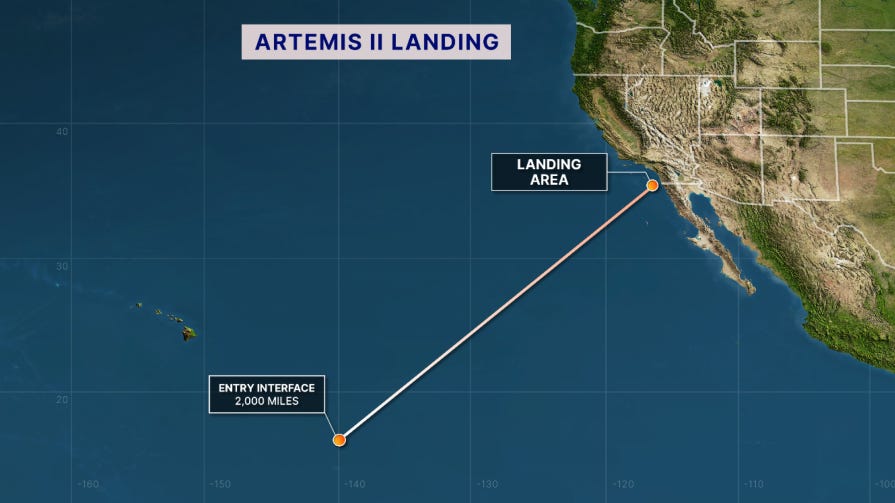
A sonic boom will herald the end of the record-setting Artemis II mission after a California splashdown. Hours later, there might be another one. The U.S. Geological Survey said to expect a sonic boom after NASA Artemis II's Orion capsule streaks through the atmosphere during its return to Earth in a planned water landing off the coast of San Diego. The thunderous vibration will likely take place between 5 p.m. and 5:15 p.m. Pacific Time, the USGS wrote in a post on X. The boom, USGS said, may be heard throughout Southern California as four astronauts complete a 10-day voyage to circle the moon and travel farther in space than anyone in history. The Orion spacecraft, carrying Reid Wiseman, Christina Koch, Victor Glover and Jeremy Hansen, is expected to splash down about 8:07 p.m. ET in the Pacific Ocean off the California coast, according to NASA. The USGS is asking anyone who hears the sonic boom to report it here or visit https://earthquake.usgs.gov/earthquakes/eventpage/tellus. Is there a SpaceX rocket launch today in California? Hours after the Artemis II astronauts are due to splash down off the coast of San Diego, California, SpaceX could launch a rocket about 200 miles north. A Falcon 9 rocket is due to get off the ground at 10:39 p.m. ET Friday, April 10, 2026, from Space Launch Complex 4-East (SLC-4E) at the Vandenberg Space Force Base in Santa Barbara County, California. The rocket will fly at a southern trajectory. After liftoff, the Falcon 9 will deploy 25 SpaceX Starlink broadband internet satellites into low-Earth orbit, an altitude nearer Earth's atmosphere where they're able to circle the planet quickly. The rocket's booster will then aim to land on a SpaceX drone ship, nicknamed "Of Course I Still Love You," in the Pacific Ocean. This allows for SpaceX personnel to recover the booster so it can be reused in future spaceflights. The launch window for the Friday, April 10, 2026, SpaceX Falcon 9 Starlink 17-21 mission is due to open shortly after the four Artemis II astronauts' planned splashdown in the Pacific Ocean. A Federal Aviation Administration operations plan advisory suggests a backup opportunity is available the next day if the SpaceX Falcon 9 rocket launch were to be postponed. What is a sonic boom? Will there be sonic booms from SpaceX Falcon 9 rocket launch in California? According to the U.S. Air Force, a sonic boom is caused by an object moving faster than sound - about 750 miles per hour at sea level. Residents of Santa Barbara County, San Luis Obispo County and Ventura County often stand to be the most likely to hear sonic booms, SpaceX said. The sonic booms - brief, thunder-like noises that are often heard from the ground when a spacecraft or aircraft travels faster than the speed of sound - could last for up to 10 minutes after liftoff, Vandenberg has added. "Areas local to Vandenberg Space Force Base will hear the initial low rumble of take-off," Vandenberg has also said. "An aircraft traveling through the atmosphere continuously produces air-pressure waves similar to the water waves caused by a ship's bow," according to the Air Force. "When the aircraft exceeds the speed of sound, these pressure waves combine and form shock waves which travel forward from the generation or 'release point.'" For the latest news and launch schedule from Cape Canaveral Space Force Station and NASA's Kennedy Space Center, visit floridatoday.com/space. Another easy way: Click here to sign up for our weekly Space newsletter.
2 sonic booms possible in California? Artemis II splashdown, SpaceX launch
A sonic boom will herald the end of the record-setting Artemis II mission after a California splashdown. Hours later, there might be another one. The U.S. Geological Survey said to expect a sonic boom after NASA Artemis II's Orion capsule streaks through the atmosphere during its return to Earth in a planned water landing off the coast of San Diego. The thunderous vibration will likely take place between 5 p.m. and 5:15 p.m. Pacific Time, the USGS wrote in a post on X. The boom, USGS said, may be heard throughout Southern California as four astronauts complete a 10-day voyage to circle the moon and travel farther in space than anyone in history. The Orion spacecraft, carrying Reid Wiseman, Christina Koch, Victor Glover and Jeremy Hansen, is expected to splash down about 8:07 p.m. ET in the Pacific Ocean off the California coast, according to NASA. The USGS is asking anyone who hears the sonic boom to report it here or visit https://earthquake.usgs.gov/earthquakes/eventpage/tellus. Is there a SpaceX rocket launch today in California? Hours after the Artemis II astronauts are due to splash down off the coast of San Diego, California, SpaceX could launch a rocket about 200 miles north. A Falcon 9 rocket is due to get off the ground at 10:39 p.m. ET Friday, April 10, 2026, from Space Launch Complex 4-East (SLC-4E) at the Vandenberg Space Force Base in Santa Barbara County, California. The rocket will fly at a southern trajectory. After liftoff, the Falcon 9 will deploy 25 SpaceX Starlink broadband internet satellites into low-Earth orbit, an altitude nearer Earth's atmosphere where they're able to circle the planet quickly. The rocket's booster will then aim to land on a SpaceX drone ship, nicknamed "Of Course I Still Love You," in the Pacific Ocean. This allows for SpaceX personnel to recover the booster so it can be reused in future spaceflights. The launch window for the Friday, April 10, 2026, SpaceX Falcon 9 Starlink 17-21 mission is due to open shortly after the four Artemis II astronauts' planned splashdown in the Pacific Ocean. A Federal Aviation Administration operations plan advisory suggests a backup opportunity is available the next day if the SpaceX Falcon 9 rocket launch were to be postponed. What is a sonic boom? Will there be sonic booms from SpaceX Falcon 9 rocket launch in California? According to the U.S. Air Force, a sonic boom is caused by an object moving faster than sound - about 750 miles per hour at sea level. Residents of Santa Barbara County, San Luis Obispo County and Ventura County often stand to be the most likely to hear sonic booms, SpaceX said. The sonic booms - brief, thunder-like noises that are often heard from the ground when a spacecraft or aircraft travels faster than the speed of sound - could last for up to 10 minutes after liftoff, Vandenberg has added. "Areas local to Vandenberg Space Force Base will hear the initial low rumble of take-off," Vandenberg has also said. "An aircraft traveling through the atmosphere continuously produces air-pressure waves similar to the water waves caused by a ship's bow," according to the Air Force. "When the aircraft exceeds the speed of sound, these pressure waves combine and form shock waves which travel forward from the generation or 'release point.'" For the latest news and launch schedule from Cape Canaveral Space Force Station and NASA's Kennedy Space Center, visit floridatoday.com/space. Another easy way: Click here to sign up for our weekly Space newsletter.
SpaceX Hints That It's Developing a Chip Module for Starlink Mobile
Our team tests, rates, and reviews more than 1,500 products each year to help you make better buying decisions and get more from technology. A new SpaceX job posting suggests the company is preparing to develop its own components for the Starlink Mobile satellite-to-phone service. The company is looking to hire an engineer specializing in radio-frequency front-end module design, a component used alongside the modem in a smartphone to transmit and process wireless signals. The RF front end -- consisting of antennas, signal tuners, and power amplifiers -- is designed to send and receive radio signals, efficiently amplifying them while filtering out potential noise. SpaceX's job posting specifically looks to hire an engineer to "develop cutting-edge RF modules for deployment into the Starlink Mobile network." This includes designing "multi-chip modules" containing the RF front-end components for 5G, LTE, and Wi-Fi applications. "Come join us and contribute to RF systems that will expand the performance and capabilities of Starlink Mobile," the posting adds. The job is likely connected to SpaceX's effort to upgrade Starlink Mobile using valuable radio spectrum it is acquiring from Boost Mobile's parent, EchoStar. SpaceX plans to harness the spectrum through next-generation satellites launching in mid-2027, with the goal of offering 5G connectivity to users on the ground, reaching up to 150Mbps -- up from the current 4Mbps. However, SpaceX CEO Elon Musk has mentioned needing a "two-year timeframe" for phone manufacturers to adopt new chipsets that support the EchoStar radio frequencies. Last month at MWC, a SpaceX executive added: "We're also working closely with device manufacturers and modem manufacturers to enable the [next-gen Starlink Mobile] service on as many devices as quickly as possible." Samsung has also been rumored to be working on a modem for the service. Interestingly, the new posting from SpaceX suggests the company will be involved in the RF front-end component production. The position calls for integrating the "RF modules into production PCBAs [Printed Circuit Board Assemblies]," and performing "yield analysis and implement design improvements for high-volume production." Currently, Starlink Mobile is available from T-Mobile mainly as a paid add-on, but it's free on the carrier's premium plans. Starlink Mobile will eventually expand to Boost Mobile, while prepaid carrier US Mobile has also said it will offer the satellite-to-phone service. Meanwhile, AT&T and Verizon are partnering with Texas startup AST SpaceMobile on their own rival satellite service.

2 sonic booms possible in California? Artemis II splashdown, SpaceX launch
A sonic boom will herald the end of the record-setting Artemis II mission after a California splashdown. Hours later, there might be another one. The U.S. Geological Survey said to expect a sonic boom after NASA Artemis II's Orion capsule streaks through the atmosphere during its return to Earth in a planned water landing off the coast of San Diego. The thunderous vibration will likely take place between 5 p.m. and 5:15 p.m. Pacific Time, the USGS wrote in a post on X. The boom, USGS said, may be heard throughout Southern California as four astronauts complete a 10-day voyage to circle the moon and travel farther in space than anyone in history. The Orion spacecraft, carrying Reid Wiseman, Christina Koch, Victor Glover and Jeremy Hansen, is expected to splash down about 8:07 p.m. ET in the Pacific Ocean off the California coast, according to NASA. The USGS is asking anyone who hears the sonic boom to report it here or visit https://earthquake.usgs.gov/earthquakes/eventpage/tellus. Is there a SpaceX rocket launch today in California? Hours after the Artemis II astronauts are due to splash down off the coast of San Diego, California, SpaceX could launch a rocket about 200 miles north. A Falcon 9 rocket is due to get off the ground at 10:39 p.m. ET Friday, April 10, 2026, from Space Launch Complex 4-East (SLC-4E) at the Vandenberg Space Force Base in Santa Barbara County, California. The rocket will fly at a southern trajectory. After liftoff, the Falcon 9 will deploy 25 SpaceX Starlink broadband internet satellites into low-Earth orbit, an altitude nearer Earth's atmosphere where they're able to circle the planet quickly. The rocket's booster will then aim to land on a SpaceX drone ship, nicknamed "Of Course I Still Love You," in the Pacific Ocean. This allows for SpaceX personnel to recover the booster so it can be reused in future spaceflights. The launch window for the Friday, April 10, 2026, SpaceX Falcon 9 Starlink 17-21 mission is due to open shortly after the four Artemis II astronauts' planned splashdown in the Pacific Ocean. A Federal Aviation Administration operations plan advisory suggests a backup opportunity is available the next day if the SpaceX Falcon 9 rocket launch were to be postponed. What is a sonic boom? Will there be sonic booms from SpaceX Falcon 9 rocket launch in California? According to the U.S. Air Force, a sonic boom is caused by an object moving faster than sound - about 750 miles per hour at sea level. Residents of Santa Barbara County, San Luis Obispo County and Ventura County often stand to be the most likely to hear sonic booms, SpaceX said. The sonic booms - brief, thunder-like noises that are often heard from the ground when a spacecraft or aircraft travels faster than the speed of sound - could last for up to 10 minutes after liftoff, Vandenberg has added. "Areas local to Vandenberg Space Force Base will hear the initial low rumble of take-off," Vandenberg has also said. "An aircraft traveling through the atmosphere continuously produces air-pressure waves similar to the water waves caused by a ship's bow," according to the Air Force. "When the aircraft exceeds the speed of sound, these pressure waves combine and form shock waves which travel forward from the generation or 'release point.'" For the latest news and launch schedule from Cape Canaveral Space Force Station and NASA's Kennedy Space Center, visit floridatoday.com/space. Another easy way: Click here to sign up for our weekly Space newsletter.
SpaceX to launch resupply mission to the ISS
CAPE CANAVERAL SPACE FORCE STATION -- SpaceX is preparing to launch more than 11,000 pounds of science and supplies to the International Space Station on Saturday morning. SpaceX stated it will be sending up the NG-24 mission from Cape Canaveral Space Force Station's Space Launch Complex 40. The launch window opens at 7:41 a.m. ET. The launch was supposed to happen on Tuesday, then Wednesday, Thursday, and even Friday before settling on Saturday. SpaceX did not say why the launch was pushed back. If the launch is scrubbed, the next attempt will be Sunday at 7:15 a.m. ET. This will be the seventh mission for the first-stage booster B1094. It has some impressive missions. After the stage separation, the first-stage rocket is scheduled to land on Landing Zone 40 at Cape Canaveral Space Force Station. Because the rocket will be landing on the ground, people can expect to hear sonic booms. NASA's Northrop Grumman Commercial Resupply Services 24 mission, or Northrop Grumman CRS-24, will send up more than 11,000 pounds (4,990 kilograms) of food, experiments, and supplies to the International Space Station. The Northrop Grumman company's Cygnus XL cargo spacecraft will send up the following: Here are some of the experiments that are going up. The Cygnus XL -- named after the late NASA astronaut Steven Nagel, who died in 2014 -- will also include the following hardware, stated NASA.
Bessent, Powell warn banks about new Anthropic model's cyber risks
HUNT VALLEY, Md. (TNND) -- Treasury Secretary Scott Bessent and Federal Reserve Chair Jerome Powell reportedly warned some of the biggest banks this week about cyber risks posed by the AI company Anthropic. The officials met with the chief executives of Bank of America, Citigroup, Wells Fargo, Goldman Sachs and Morgan Stanley in Washington on Tuesday, according to multiple outlets. JPMorgan Chase CEO Jamie Dimon was reportedly unable to join. Anthropic launched its Claude Mythos Preview model to select companies the same day. The program, which can perform cybersecurity tasks, poses risks that Anthropic has acknowledged. The National News Desk requested comment from Anthropic, each of the meeting's reported participants and JPMorgan Chase. The Federal Reserve, Citigroup, Wells Fargo and Goldman Sachs did not comment on the report when reached. A spokesman for the Treasury said Bessent convened the meeting to begin forming an approach to the "rapid" developments of AI. The attendees were already in Washington for previously scheduled events, the representative added. "President Trump and the Administration are continuing to engage on AI security in a thoughtful manner," the spokesman said.

Bessent, Powell warn banks about new Anthropic model's cyber risks
HUNT VALLEY, Md. (TNND) -- Treasury Secretary Scott Bessent and Federal Reserve Chair Jerome Powell reportedly warned some of the biggest banks this week about cyber risks posed by the AI company Anthropic. The officials met with the chief executives of Bank of America, Citigroup, Wells Fargo, Goldman Sachs and Morgan Stanley in Washington on Tuesday, according to multiple outlets. JPMorgan Chase CEO Jamie Dimon was reportedly unable to join. Anthropic launched its Claude Mythos Preview model to select companies the same day. The program, which can perform cybersecurity tasks, poses risks that Anthropic has acknowledged. The National News Desk requested comment from Anthropic, each of the meeting's reported participants and JPMorgan Chase. The Federal Reserve, Citigroup, Wells Fargo and Goldman Sachs did not comment on the report when reached. A spokesman for the Treasury said Bessent convened the meeting to begin forming an approach to the "rapid" developments of AI. The attendees were already in Washington for previously scheduled events, the representative added. "President Trump and the Administration are continuing to engage on AI security in a thoughtful manner," the spokesman said.

Bessent, Powell warn banks about new Anthropic model's cyber risks
HUNT VALLEY, Md. (TNND) -- Treasury Secretary Scott Bessent and Federal Reserve Chair Jerome Powell reportedly warned some of the biggest banks this week about cyber risks posed by the AI company Anthropic. The officials met with the chief executives of Bank of America, Citigroup, Wells Fargo, Goldman Sachs and Morgan Stanley in Washington on Tuesday, according to multiple outlets. JPMorgan Chase CEO Jamie Dimon was reportedly unable to join. Anthropic launched its Claude Mythos Preview model to select companies the same day. The program, which can perform cybersecurity tasks, poses risks that Anthropic has acknowledged. The National News Desk requested comment from Anthropic, each of the meeting's reported participants and JPMorgan Chase. The Federal Reserve, Citigroup, Wells Fargo and Goldman Sachs did not comment on the report when reached. A spokesman for the Treasury said Bessent convened the meeting to begin forming an approach to the "rapid" developments of AI. The attendees were already in Washington for previously scheduled events, the representative added. "President Trump and the Administration are continuing to engage on AI security in a thoughtful manner," the spokesman said.

Vance, Bessent questioned tech giants on AI security before Anthropic's Mythos release, CNBC reports
April 10 (Reuters) - U.S. Vice President JD Vance and Treasury Secretary Scott Bessent questioned leading tech CEOs about AI model security and how to respond to cyber attacks a week before Anthropic released its new Mythos model, CNBC reported on Friday. Anthropic's Dario Amodei, Alphabet's Sundar Pichai, OpenAI's Sam Altman, Microsoft's Satya Nadella and the heads of Palo Alto Networks and CrowdStrike were on the call, according to the report. Anthropic declined to comment, while Alphabet, OpenAI, Microsoft, Palo Alto and CrowdStrike did not immediately respond to Reuters' requests for comment. Earlier this week, Anthropic launched a powerful AI model but held off on releasing it widely over concerns that it could expose hidden cybersecurity vulnerabilities. Only a group of around 40 tech heavyweights, including Microsoft and Google, would have access to Anthropic's "Claude Mythos" model. The startup had said it had been in ongoing discussions with the U.S. government about the model's capabilities. (Reporting by Harshita Mary Varghese in Bengaluru; Editing by Leroy Leo)

Bessent, Powell warn banks about new Anthropic model's cyber risks
HUNT VALLEY, Md. (TNND) -- Treasury Secretary Scott Bessent and Federal Reserve Chair Jerome Powell reportedly warned some of the biggest banks this week about cyber risks posed by the AI company Anthropic. The officials met with the chief executives of Bank of America, Citigroup, Wells Fargo, Goldman Sachs and Morgan Stanley in Washington on Tuesday, according to multiple outlets. JPMorgan Chase CEO Jamie Dimon was reportedly unable to join. Anthropic launched its Claude Mythos Preview model to select companies the same day. The program, which can perform cybersecurity tasks, poses risks that Anthropic has acknowledged. The National News Desk requested comment from Anthropic, each of the meeting's reported participants and JPMorgan Chase. The Federal Reserve, Citigroup, Wells Fargo and Goldman Sachs did not comment on the report when reached. A spokesman for the Treasury said Bessent convened the meeting to begin forming an approach to the "rapid" developments of AI. The attendees were already in Washington for previously scheduled events, the representative added. "President Trump and the Administration are continuing to engage on AI security in a thoughtful manner," the spokesman said.

Stock Market Today, April 10: CoreWeave Jumps After Multi-Year AI Cloud Deal With Anthropic | The Motley Fool
AI-focused cloud infrastructure provider CoreWeave (CRWV +10.87%), closed Friday at $102, up 10.87%. The stock moved higher after news of a multi-year AI cloud deal with Anthropic. It also announced an expanded capacity agreement with Meta Platforms (META +0.22%) this week. Investors are watching how these contracts translate into sustained AI infrastructure demand and revenue growth. Trading volume reached 78.7 million shares, coming in about 190% above its three-month average of 27.1 million shares. CoreWeave IPO'd in 2025 and has grown 155% since going public. S&P 500 (^GSPC 0.11%) slipped 0.10% to finish Friday at 6,818, while the Nasdaq Composite (^IXIC +0.35%) added 0.35% to close at 22,903. Within technology infrastructure names, industry heavyweight Amazon (AMZN +2.05%) closed at $238.38, up 2.02%, while rival Microsoft (MSFT 0.60%) ended at $370.87, down 0.59%, underscoring mixed sentiment across large AI cloud providers. CoreWeave's latest announcement was a multi-year deal to power Anthropic's Claude AI models. Investors liked that it added customer diversification, especially on the heels of an expanded agreement with Meta that will provide AI cloud capacity through December 2032. While that $21 billion deal helped boost CoreWeave stock, investors are also monitoring the capital costs to provide customers the desired compute capacity. CoreWeave simultaneously announced it will raise $3.5 billion in capital through a convertible debt offering to fund AI infrastructure expansion. That served as a reminder that the company isn't yet generating cash, let alone profits. That's a balance investors need to remember when evaluating CoreWeave stock.

Anthropic's Powerful AI Models Spark Urgent Talks in Finance Industry
You're reading the Canada Daily newsletter. You're reading the Canada Daily newsletter. You're reading the Canada Daily newsletter. The latest on business, the economy and politics from our five Canadian bureaus. The latest on business, the economy and politics from our five Canadian bureaus. The latest on business, the economy and politics from our five Canadian bureaus. Plus Signed UpPlus Sign UpPlus Sign Up By continuing, I agree to the Privacy Policy and Terms of Service. Welcome back to Canada Daily, the newsletter on business, economics and politics from Vancouver to Montreal and beyond. If this was forwarded to you, please sign up here. Anthropic's artificial intelligence models are the talk of the financial world -- again. And they're giving bankers plenty to worry about. For the past several years, cybersecurity companies have promised that AI will speed up and automate some of the work of preventing digital breaches. But hackers and cyberspies have discovered they can exploit AI, too. The advent of Anthropic's Mythos and other models like it that can take advantage of well-hidden flaws in popular software without human supervision points to a less predictable phase of the cyber arms race, Bloomberg's Andrew Martin explains in this story. Anthropic says Mythos is so powerful that it has decided not to release it to the public. The company explained that some AI models have reached a level of coding capability that allows them to beat all but the most skilled humans at finding software vulnerabilities. That's potentially a big problem for the banks and financial firms to which we entrust some of our most sensitive and important data. US Treasury Secretary Scott Bessent and Federal Reserve Chair Jerome Powell summoned the biggest names in global finance to a meeting to discuss the matter this week. Now Canada's regulators have done the same. As reported first by Bloomberg News, the so-called Canadian Financial Sector Resiliency Group held a meeting Friday to talk about AI and cybersecurity. It's a body that includes everyone who counts in the industry. The Big Six banks are there, as are Desjardins, TMX Group, the Bank of Canada, representatives of the payments sector and most of the financial regulators you can think of. The group is co-chaired by the chief information security officers of the Bank of Canada and National Bank and the central bank's chief operating officer. Serious people, for serious matters. -- Erik Hertzberg and Derek Decloet Also in today's newsletter: A jobs report best described as "meh". An unusual indicator of good times in Calgary's energy sector. The following was produced with the assistance of Bloomberg Automation. Top stories The Canadian labor market is far from thriving, despite a modest increase in employment last month and the jobless rate holding steady at 6.7%. The economy added 14,100 jobs, an increase that was driven by the services sector -- including personal and repair services -- as well as 10,000 new jobs in natural resources. "This is not a job-seekers' market," Brendon Bernard, senior economist at Indeed.com, said on BNN Bloomberg Television. While the report was largely in line with expectations, wage growth last month surprised forecasters, increasing at an annual rate of 5.1% for permanent employees. US President Donald Trump ramped up pressure on Iran as Vice President JD Vance traveled to Pakistan for talks to end the war, with Israeli airstrikes in Lebanon and the Strait of Hormuz's effective closure looming over diplomatic efforts. Trump posted on social media today that Tehran's only leverage is "short term extortion of the world by using International Waterways" -- a reference to Hormuz, a critical shipping lane for oil and natural gas that remains largely shut, raising global energy prices. Trump declared that the "Iranians don't seem to realize they have no cards." A record-earning auction to put company logos on chuckwagons for the Calgary Stampede is a signal of economic optimism in Canada's oil patch and the potential prosperity that an upswing in oil prices brings. Companies bid a collective C$6.1 million ($4.4 million) to put their names on the canvas covers of chuckwagons that will compete at this summer's Calgary Stampede Rangeland Derby, a fast-paced rodeo event where drivers race horse-drawn wagons around a track. The previous record of around C$4 million was set in 2012. Markets and commodities Oil edged lower in relatively light trading before highly-anticipated talks between Iran and the US, negotiations that will dictate the path ahead for their fragile truce. West Texas Intermediate fell 1.3% to settle below $97 a barrel, with futures down about 13.4% this week, the biggest retreat in six years. Crude markets have been extremely turbulent since the war began in late February and prices remain more than 30% above pre-conflict levels. Rio Tinto Group has drawn interest from more than a dozen potential bidders for its US assets that produce the critical mineral boron, according to people familiar with the matter. The Anglo-Australian mining company could fetch around $2 billion for the assets. The S&P/TSX Composite Index gained 0.7% and has risen for three consecutive weeks. Mining, real estate and energy shares were the biggest winners of Friday's session. Telecom shares dropped again after Cogeco Communications' poor earnings report. Before you go... After nearly six weeks of war, how did Pakistan manage to get the United States and Iran to talk? Maleeha Lodhi was Pakistan's ambassador to the US on 9/11, a moment that reset the relationship between the two countries. Now, she says, personal relationships have made Islamabad the region's only viable peace broker. For her, this weekend's peace talks also carry wider significance, as middle powers take on a larger role in shaping global politics. Mishal Husain interviewed Lodhi for her podcast. More From Bloomberg Enjoying Canada Daily? You might also like: * Bay Street Edition for Christine Dobby's weekly look at Canadian finance and markets * Odd Lots for Joe Weisenthal and Tracy Alloway's daily newsletter exploring the most interesting topics in finance, markets and economics * Markets Daily for what's moving in stocks, bonds, FX and commodities * Economics Daily for what the changing landscape means for policymakers, investors and you * Money Stuff for Bloomberg Opinion's Matt Levine's newsletter on all things Wall Street and finance Bloomberg.com subscribers have exclusive access to all of our premium newsletters.
IMF chief concerned about Anthropic cybersecurity risks: "Time is not our friend"
Washington -- The head of the International Monetary Fund said she is concerned about a powerful new AI model from Anthropic that poses major cybersecurity risks, warning "time is not our friend on this one." Kristalina Georgieva, the IMF's managing director, said in an interview set to air Sunday on "Face the Nation with Margaret Brennan" that the world does not have the ability "to protect the international monetary system against massive cyber risks." "The risks have been growing exponentially," Georgieva said. "Yes, we are concerned. We are very keen to see more attention to the guardrails that are necessary to protect financial stability in the world of AI." On Tuesday, Federal Reserve Chair Jerome Powell and Treasury Secretary Scott Bessent held an urgent meeting with Wall Street leaders to discuss the cybersecurity risks posed by Anthropic's Claude Mythos Preview, sources told CBS News. A Treasury Department spokesman said in a statement that "additional coordination meetings by Treasury are planned across a number of regulators and institutions on an ongoing basis to address these developments, as well as a host of other issues." In a blog post earlier this week, Anthropic said the model has demonstrated "a leap" in the ability to spot cybersecurity vulnerabilities -- some of them decades old -- and exploit them. Anthropic is only releasing the model to select partners so they can use it to harden their systems. "Mythos Preview has already found thousands of high-severity vulnerabilities, including some in every major operating system and web browser. Given the rate of AI progress, it will not be long before such capabilities proliferate, potentially beyond actors who are committed to deploying them safely. The fallout -- for economies, public safety, and national security -- could be severe," the company said. Georgieva said key financial institutions, including central banks, need to "work together" and be "very attentive" in managing the risks of cyberattacks. "It is an issue that easily can present itself in other parts of the world, and that is why we need people to cooperate," she said. Watch more of the interview on Sunday on "Face the Nation with Margaret Brennan."

SpaceX isn't the only defense tech IPO that VCs should care about - PitchBook
Hawkeye 360 filed its S-1 on Friday with little fanfare, but it'll be an early signal about investor appetite. When HawkEye 360, a satellite surveillance company that's growing quickly, goes public, it will be just a fraction of what's expected from SpaceX's behemoth listing. But the market's reception of the small defense tech startup, founded in 2015 and backed by BlackRock, Insight Partners, NightDragon and Razor's Edge Ventures, will be an early indicator of what to expect for public listings from other companies in the sector. Hawkeye 360 runs a signals intelligence platform. It operates a constellation of satellites that detect and geolocate radio frequency signals, then sells that data and analytics to customers that are mostly governments. The company had a tremendous year, per its S-1 document filed publicly Friday. Its revenue jumped 75%, from $67 million in 2024 to $117.7 million in 2025, while its operating expenses grew by less than 20%. At the same time, its backlog -- contracted revenue that hasn't yet been delivered or billed -- grew more than 6x in 2025 to $302 million. Both Hawkeye's net income and adjusted EBITDA turned positive last year. "The backlog growth is the clearest signal that this is a real business with a real customer base," said Ali Javaheri, senior emerging tech analyst at PitchBook. Overall, Hawkeye's S-1 filing paints a picture of a company riding the wave of booming defense tech spending by the US government and its allies. It said current geopolitical conflicts "may provide potential new opportunities for our business." How Hawkeye performs in its first few months in the public markets will be a useful data point for the sector, as it's emblematic of the typical VC-backed defense tech startup. "They're still running operating losses, which tells you the company is very much in investment mode," Javaheri said. VCs haven't been shy about investing in unprofitable defense tech companies. Last quarter saw the second-highest VC deal total on record in the industry, and much of which went to companies spending heavily. Overall deal count in defense tech now resembles that at the height of the last tech boom in 2021. But if more startups can follow Hawkeye's path to become a real, sustained business, then the exit outcomes may look very different. The Iran war has had an energizing effect on an already hot area in VC. But as investors hail the opportunities in reshoring US defense manufacturing and selling into a Pentagon much more favorable to startups than a decade ago, the US government is not the only significant customer. While 61% of Hawkeye's revenue in 2025 came from contracts with the US government, agencies or subcontracts with other government contractors, nearly one-quarter of its revenue ($46 million) came from international sources.

SpaceX Hints That It's Developing a Chip Module for Starlink Mobile
A new SpaceX job posting suggests the company is preparing to develop its own components for the Starlink Mobile satellite-to-phone service. The company is looking to hire an engineer specializing in radio-frequency front-end module design, a component used alongside the modem in a smartphone to transmit and process wireless signals. The RF front end -- consisting of antennas, signal tuners, and power amplifiers -- is designed to send and receive radio signals, efficiently amplifying them while filtering out potential noise. SpaceX's job posting specifically looks to hire an engineer to "develop cutting-edge RF modules for deployment into the Starlink Mobile network." This includes designing "multi-chip modules" containing the RF front-end components for 5G, LTE, and Wi-Fi applications. "Come join us and contribute to RF systems that will expand the performance and capabilities of Starlink Mobile," the posting adds. The job is likely connected to SpaceX's effort to upgrade Starlink Mobile using valuable radio spectrum it is acquiring from Boost Mobile's parent, EchoStar. SpaceX plans to harness the spectrum through next-generation satellites launching in mid-2027, with the goal of offering 5G connectivity to users on the ground, reaching up to 150Mbps -- up from the current 4Mbps. However, SpaceX CEO Elon Musk has mentioned needing a "two-year timeframe" for phone manufacturers to adopt new chipsets that support the EchoStar radio frequencies. Last month at MWC, a SpaceX executive added: "We're also working closely with device manufacturers and modem manufacturers to enable the [next-gen Starlink Mobile] service on as many devices as quickly as possible." Samsung has also been rumored to be working on a modem for the service. Interestingly, the new posting from SpaceX suggests the company will be involved in the RF front-end component production. The position calls for integrating the "RF modules into production PCBAs [Printed Circuit Board Assemblies]," and performing "yield analysis and implement design improvements for high-volume production." Currently, Starlink Mobile is available from T-Mobile mainly as a paid add-on, but it's free on the carrier's premium plans. Starlink Mobile will eventually expand to Boost Mobile, while prepaid carrier US Mobile has also said it will offer the satellite-to-phone service. Meanwhile, AT&T and Verizon are partnering with Texas startup AST SpaceMobile on their own rival satellite service.

Anthropic's potent new AI model is a "wake-up call," security experts say
Aimee Picchi is the associate managing editor for CBS MoneyWatch, where she covers business and personal finance. She previously worked at Bloomberg News and has written for national news outlets including USA Today and Consumer Reports. Anthropic's latest AI technology, called Mythos, is so powerful at revealing software vulnerabilities that the company is afraid to release the model publicly lest it fall into the hands of bad actors. The company, the developer behind the Claude AI chatbot, said in a post on its website this week that the new tool has already uncovered thousands of weak points in "every major operating system and web browser." That is stirring concern that hackers could exploit Mythos to attack banks, hospitals, government systems and other critical infrastructure. Rather than releasing Mythos to the public, Anthropic is sharing the tech with a select group of major companies, including Amazon, Apple, Cisco, JPMorgan Chase and Nvidia, to test the model and to harden their own systems against cyberattacks. Called Project Glasswing, the effort aims to create strong defenses before hackers get access to Mythos or similar AI models. "What we need to do is look at this as a wake-up call to say, the storm isn't coming -- the storm is here," Alissa Valentina Knight, CEO of cybersecurity AI company Assail, told CBS News. "We need to prepare ourselves because we couldn't keep up with the bad guys when it was humans hacking into our networks. We certainly can't keep up now if they're using AI because it's so much devastatingly faster and more capable." Mythos' capabilities are also sparking concern among federal officials. Treasury Secretary Scott Bessent and Federal Reserve Chair Jerome Powell met with top bank CEOs in a closed-door meeting on Tuesday to discuss Mythos and other emerging cybersecurity risks stemming from AI. Anthropic also briefed senior U.S. government officials and key industry stakeholders on Mythos's capabilities, CBS News has learned. Anthropic didn't return a request for comment. In its post, however, the company underscored the risks of misusing tools like Mythos. "The fallout -- for economies, public safety, and national security -- could be severe," the company said. Such stark warnings, however, mask another troubling reality: Cybersecurity experts say that hackers already have access to advanced AI models. Other AI tools, while not yet as effective as Mythos in exposing the soft underbelly in software, are already amplifying the risks to consumers, businesses and governments. For instance, hackers are already tapping AI to sharpen so-called phishing attacks aimed at prying loose confidential information, said Zach Lewis, the chief information officer at the University of Health Sciences and Pharmacy in St. Louis. "It's been used to really script those dialogues, those conversations, those phishing emails, to specific people -- and really customize them to make them a lot more difficult to detect and identify if these are fake or not," he told CBS News. AI is also driving more ransomware attacks, with a recent PwC report finding that posts on ransomware leak sites -- public disclosures of stolen data when a company does not pay a ransom -- surged 58% in 2025 from the prior year. "Once [Mythos] drops, we're going to see a lot more vulnerabilities, probably a lot more attacks," Lewis said. "Cyberattacks are definitely going to increase until we get to a point where we're patching up all those vulnerabilities almost in real time." AI is more effective than humans at finding software bugs because it can quickly scan thousands of lines of code and detect problems, something people are not necessarily good at, Knight explained. "Humans are the weakest link in security," Knight noted. "Humans have the ability to make mistakes when we're writing code. It's possible for vulnerabilities in source code to have never been found by humans." Some security experts questioned the motives behind Anthropic's incremental approach to rolling out Mythos, speculating that the limited release could be aimed at stirring intrest from other prospective customers. Meanwhile, both Anthropic and rival OpenAI are expected to launch initial public offerings by the end of the year, according to the Wall Street Journal -- a possible incentive to drum up headlines, said Peter Garraghan, Founder and Chief Science Officer at Mindgard, an AI security platform. "I suspect Anthropic may be using this as a marketing ploy, perhaps towards IPO," he said. Anthropic has sought to distinguish its brand from OpenAI and other rivals by publicly emphasizing AI safety, highlighting its guardrails for keeping the technology in line. Anthropic's decision to hold off on releasing Mythos and launching Project Glasswing aligns with that image, noted Columbia Business School marketing lecturer Malek Ben Sliman. "When facing the tough decisions, Anthropic has actually been true to its values," he said. Curating the release of Mythos "does allow them to look to be the protectors of this responsible AI, but it also is a great marketing and advertising tool."
Bessent, Powell warn banks about new Anthropic model's cyber risks
HUNT VALLEY, Md. (TNND) -- Treasury Secretary Scott Bessent and Federal Reserve Chair Jerome Powell reportedly warned some of the biggest banks this week about cyber risks posed by the AI company Anthropic. The officials met with the chief executives of Bank of America, Citigroup, Wells Fargo, Goldman Sachs and Morgan Stanley in Washington on Tuesday, according to multiple outlets. JPMorgan Chase CEO Jamie Dimon was reportedly unable to join. Anthropic launched its Claude Mythos Preview model to select companies the same day. The program, which can perform cybersecurity tasks, poses risks that Anthropic has acknowledged. The National News Desk requested comment from Anthropic, each of the meeting's reported participants and JPMorgan Chase. The Federal Reserve, Citigroup, Wells Fargo and Goldman Sachs did not comment on the report when reached. A spokesman for the Treasury said Bessent convened the meeting to begin forming an approach to the "rapid" developments of AI. The attendees were already in Washington for previously scheduled events, the representative added. "President Trump and the Administration are continuing to engage on AI security in a thoughtful manner," the spokesman said.

Bessent, Powell warned bank CEOs about Anthropic model risks, sources say | Company Business News
April 9 (Reuters) - U.S. Treasury Secretary Scott Bessent and Federal Reserve Chair Jerome Powell convened an urgent meeting with bank CEOs this week to warn of cyber risks posed by Anthropic's latest artificial intelligence model, two sources familiar with the matter said on Thursday. White House national economic adviser Kevin Hassett confirmed the meeting during an interview with Fox News' "The Story with Martha MacCallum." "Those bankers were in town for meetings that day, and it was appropriate (for) the Secretary Bessent to do what he did. He brought them over to the Treasury, along with Jay Powell, and went through the cyber risks to make sure that they were aware of them," Hassett said, adding that the Trump administration is taking steps to ensure the public is safe from potential risks. Anthropic launched the powerful Mythos model this week but stopped short of a broad release, citing concerns it could expose previously unknown cybersecurity vulnerabilities. The company has said the model is capable of identifying and exploiting weaknesses across "every major operating system and every major web browser." Last week, Anthropic said it was in ongoing discussions with U.S. government officials about the model's "offensive and defensive cyber capabilities." A third source close to the matter reiterated Anthropic's outreach, saying the company proactively briefed senior U.S. government officials and key industry stakeholders on Mythos' capabilities ahead of its release. The Treasury-hosted meeting in Washington on Tuesday was aimed at ensuring banks are aware of the risks posed by Mythos and similar models and are taking steps to defend their systems, one of the sources said. Invitations were sent while most CEOs of the largest U.S. banks were already in Washington to attend other meetings, one of the sources said. Access to Mythos will be limited to about 40 technology companies, including Microsoft and Google, the startup has said. Bloomberg News, which first reported the story on Thursday, said the CEOs of Citigroup, Morgan Stanley, Bank of America, Wells Fargo and Goldman Sachs were present. JPMorgan CEO Jamie Dimon was unable to join, one of the sources told Reuters. Goldman Sachs, Wells Fargo and the Federal Reserve declined to comment. The Treasury, lenders and Anthropic did not respond to Reuters' requests for comment. Canada's Finance Ministry, the Bank of Canada and bank executives met on Friday to discuss cybersecurity, a ministry spokesperson said. AI and Anthropic's new AI model were topics of discussion, the spokesperson said. (Reporting by Saeed Azhar in New York, Carlos Méndez in Mexico City; Disha Mishra in Bengaluru; Additional reporting by Jasper Ward in Washington and Promit Mukherjee in Ottawa; Writing by Chris Thomas; Editing by Sumana Nandy, Rod Nickel)

Bessent, Powell warn banks about new Anthropic model's cyber risks
HUNT VALLEY, Md. (TNND) -- Treasury Secretary Scott Bessent and Federal Reserve Chair Jerome Powell reportedly warned some of the biggest banks this week about cyber risks posed by the AI company Anthropic. The officials met with the chief executives of Bank of America, Citigroup, Wells Fargo, Goldman Sachs and Morgan Stanley in Washington on Tuesday, according to multiple outlets. JPMorgan Chase CEO Jamie Dimon was reportedly unable to join. Anthropic launched its Claude Mythos Preview model to select companies the same day. The program, which can perform cybersecurity tasks, poses risks that Anthropic has acknowledged. The National News Desk requested comment from Anthropic, each of the meeting's reported participants and JPMorgan Chase. The Federal Reserve, Citigroup, Wells Fargo and Goldman Sachs did not comment on the report when reached. A spokesman for the Treasury said Bessent convened the meeting to begin forming an approach to the "rapid" developments of AI. The attendees were already in Washington for previously scheduled events, the representative added. "President Trump and the Administration are continuing to engage on AI security in a thoughtful manner," the spokesman said.
