News & Updates
The latest news and updates from companies in the WLTH portfolio.
UK holidaymakers faint and vomit during three-hour Milan airport border checks chaos
Airline passengers were left vomiting and passing out after being stranded in an Italian airport on Sunday due to new EU border rules. The chaos ensued as around 100 passengers due to return to Manchester Airport on as EasyJet flight from Milan's Linate airport were stuck in three-hour queues as their flight departed without them. Pictures and videos shared online showed scenes of mayhem as large queues formed at the airport, with a number of passengers falling ill as a result of the heat. EasyJet said it was trying to support passengers during a situation that is "outside of our control" because of the new border control checks. It is understood that EasyJet delayed the flight by over 50 minutes to allow customers extra time but as crew reached their safety regulated operating hours the flight had to depart for Manchester. One passenger told the BBC that she and her boyfriend faced a 20 hour wait in the airport for a replacement flight. Keira, 17, from Oldham, said it was costing her mother about £520 for new flights, which will land at Gatwick instead of Manchester. Kiera said: "We got here at 7.30am for our flight at 11am so were super early. We got to Border Control and it was a massive queue of people. I wasn't feeling great anyway because I think I'd got food poisoning. "At about 10.50am they brought some water over for people, and when we got to the front of the queue someone asked us if we were going to Manchester, and told us our flight had just gone. "There were only about 30 people got on the plane, and about 100 people didn't." Kiera said she had only been offered £12.25 in compensation after emailing the airline about their situation - less than the price of a sandwich. Adam Lomas, 33, was on holiday in Milan with his wife and their four-month-old daughter when they became stranded at the airport. He said he tried to contact the airline but could only get through to "chatbots" who hung up on him after a few minutes due to "audio issues." Adam said his family were now trying to find a hotel and book a flight to London, where they would then have to get the train to Manchester, while other passengers had driven to Pisa to fly from there "The airport and Easyjet have spent hours arguing with each other about who is to blame," he added. EasyJet blamed the delays on the implementation of the EU's new Entry/Exit System (EES), which it said were "unacceptable". The system, which involves people having their fingerprints registered and photograph taken to enter the European Schengen Area, was supposed to be brought in in October last year, but only became fully operational on April 10. The UK government has updated its guidance to people travelling to the area that they might need to register their biometric details when they arrive. EasyJet said it informed customers of the new system and advised them to check their travel documents, allow extra time at airports, be ready for biometric checks, and factor extra time when planning onward travel. An EasyJet spokesperson said: "We are aware that some passengers departing from Milan Linate today experienced longer than usual waiting times at passport control and we advised customers due to fly to allow additional time to make their way through the airport. "We have been doing all possible to minimise the impact of the airport queues, holding flights to allow customers extra time and providing free flight transfers for any customers who may have missed their flight including EJU5420 to Manchester. "We continue to urge border authorities to ensure they make full and effective use of the permitted flexibilities for as long as needed while European Entry / Exit System is implemented, to avoid these unacceptable border delays for our customers. "While this is outside of our control, we are sorry for any inconvenience caused." There were lengthy delays at airports across Europe earlier this week with the new digital border controls coming into effect, as travellers at terminals including Lisbon, Milan and Paris, took hours to clear immigration. Ryanair boss Michael O'Leary has accused the EU of punishing British holidaymakers over Brexit by subjecting them to the queues. O'Leary said there had been "significant disruption" at passport control since the new system was first introduced in October last year, with the system being introduced in stages.
Chaos where there should be Gold: The Duffours, Bogoso & Katanomics - MyJoyOnline
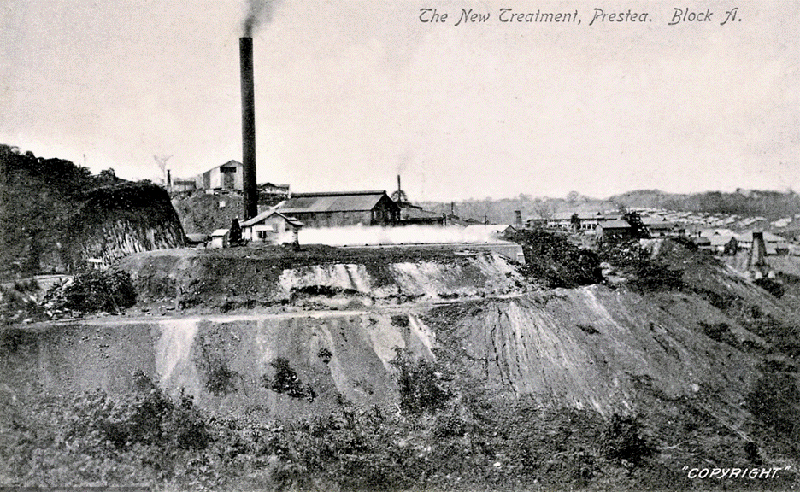
Heath Goldfields announced its first gold pour on 19 February 2026. The mine had been dormant for two years. Fourteen hundred workers, the company said, were back on payroll. The Trafigura offtake agreement for 700,000 ounces of gold doré, with $65 million in debt financing, followed within weeks. Bloomberg picked up the story for the world's mining capitalists. On the surface, it sounds like the kind of story Ghana now wants to hear in its mining sector. A locally owned firm restarting a historic mine, attracting world-class commodity finance, and doing so against the backdrop of a gold rally that has pushed prices past $5,000 an ounce, the most furious ascent since the late 1970s. Ghana, the continent's largest gold producer, has found its homegrown swagger, and the citizens are loving it. But the story beneath the pour is a different one entirely. Scratch the surface lush, and the Heath Goldfields saga reveals something totally crazy. It is the perfect case study in how African countries, even amid generational commodity booms, manage to convert geological fortune into chronic failure. The mine at the centre of it all, Bogoso-Prestea, has produced over nine million ounces of gold since 1912. Yet it remains, in 2026, a monument to squandered opportunity. Every company that has touched it has either walked away bruised or been forcibly removed. What at all is going on? Why can't Ghana build its own Newmont? Why isn't Obuasi brimming with skyscrapers? Why doesn't gold leave the same shiny residue it left about San Francisco? Is it simply just because foreigners have sucked away all the juice and left the pulp behind? Even if so, why does Ghana continue to allow it? Bogoso-Prestea sits on the southern end of the Ashanti Greenstone Belt, a 250-kilometre geological corridor of Paleoproterozoic rock that is, by any measure, one of the planet's most fertile gold-bearing structures. The belt hosts Obuasi, Tarkwa, Wassa, and Damang. Prestea alone has been mined since at least the 1870s, first by European prospectors, then by Ariston Gold Mines from 1912, which sank the shafts and developed the underground workings that still define the site. After a turbulent period of state consolidation and divestment, production at Bogoso - Prestea plummeted to just a little over 20,000 ounces in 1984 under state control. Yet, taking the full span of its history into account, the Bogoso-Prestea mining enclave is the stuff of rich pickings. In the early 1960s, the Government of Ghana bought the assets of the various companies along the belt and formed the Prestea Goldfields with limited liability under the Ghana State Gold Mining Corporation (SGMC). Peak annual production hit 167,000 ounces in 1964, at an average recovered grade of 11.6 grams per tonne. In the underground passages below the town of Prestea, the West Reef's fault-fill quartz veins have yielded grades exceeding 100 grams-per-tonne in individual channel samples. These are the kinds of numbers that international mining bosses drool over. A 2017 technical report estimated 5.1 million ounces of gold could still be stashed in the Bosogo-Prestea mining enclave. The technical folks say that the underground reserves have grades of 8.1 grams-per-tonne and that metallurgical recoveries of 94 per cent through carbon-in-leach processing is possible. The site has two functioning shafts, a 1.5 million tonne-per-annum CIL plant, and a separate BIOX® sulphide processing circuit. On paper, Bogoso-Prestea is indeed the kind of mine that junior explorers spend decades dreaming about finding. In practice, it has eaten its owners alive. Nationalised in the late 1950s after independence, consolidated under the State Gold Mining Company, then reopened to foreign investment in the 1990s after poor management left it bony and lanky, the mine has cycled through Barnex JCI, Prestea Gold Resources, and eventually Golden Star Resources, the Canadian firm controlled by billionaire Naguib Sawiris that acquired the Bogoso concession in 1999 and the Prestea underground in 2001. Golden Star invested quite a bit: refurbishing shafts, installing ventilation systems, commissioning BIOX® technology, and deploying the Alimak mechanised shrinkage mining method. Yet by 2019 the company had written down the mine's value by $56.8 million, leading to a net annual loss of $78 million. The underground segment of the mine had never delivered consistently, owing to geological complexity, the nuggety grade distribution of the West Reef, and recurring water ingress into deeper levels. When Golden Star announced the sale of Bogoso-Prestea to Future Global Resources in July 2020 for up to $95 million, it was framed as a win for everyone. FGR, the London-based newcomer, would bring "fresh focus and investment." Golden Star would concentrate on Wassa. Yet the payment structure hinted at a bit of desperation on Golden Star's part. Just $5 million upfront, $10 million due in 2021, and a further $15 million in 2023, plus a contingent payment of up to $40 million pegged to the sulphide project. It was a sale on instalments, designed to defer the pain. The pain came anyway. FGR was, by any standard measure, an unusual acquirer. Incorporated in December 2019 as a subsidiary of Blue International Holdings, it was a vehicle co-founded by Andrew Cavaghan and Mark Green, professional investors with financial pedigree but no mining experience. Blue International's portfolio included Joule Africa, a renewable energy developer. Its advisory board featured Lord Dannatt, the former head of the British Army; Lord Triesman, a former Foreign Office minister; and Philip Green, who was rebuilding his reputation after the collapse of Carillion. A Guardian's investigation later revealed the full tapestry of entanglement. John Glen, a UK Treasury minister from 2018 to 2023, held shares in Blue International. The UK's Future Fund had lent the company £3.3 million of taxpayer money. Devonport Capital, a lender specialising in high-risk jurisdictions and run by Paul Bailey with Thomas Kingston, a Foreign Office veteran married to Lady Gabriella Windsor, had extended roughly $5 million to Blue International. When the Ghanaian venture began to unravel, Devonport's own creditors, including the Legatum Group's founder Christopher Chandler and the British tax agency, were pulled into the maelstrom. Kingston died in February 2024. Devonport entered administration a year later, with creditors owed £49 million and recovery estimates as low as £11.2 million. In Ghana, FGR's tenure was marked by repeated shutdowns, unpaid wages, and accumulating supplier debts. Abdul-Moomin Gbana, General Secretary of the Ghana Mineworkers' Union, described communities around the mine becoming "virtually ghost towns." FGR also struggled to pay Ghana's state electricity company. Workers protested with brass bands and placards reading "Blue Gold is a scam." Yet FGR's parent restructured the asset into Blue Gold, listed it on NASDAQ via a merger with a blank-cheque firm, and announced it had secured $140 million in restart financing with $65 million held in escrow. But the money seemed stuck somewhere between New York, London, and the mine. Blue Gold's NASDAQ stock crashed 96.86 per cent from its peak. The company recorded no revenue, a $15.1 million annual loss, and a working capital deficit of $10.7 million. It was into this seeming vacuum that Heath Goldfields materialised like a rabbit out of a hat. The company was incorporated on 6 February 2024 with a stated capital of GH¢10,000, roughly $700. One week later, on 13 February, it applied for the mining lease, even though the lease was still legally held by FGR/Blue Gold. By September 2024, the Minister of Lands and Natural Resources had terminated the previous lease. By November, the Minerals Commission had approved the reassignment to Heath Goldfields. Four days after a letter ostensibly suspending the process, Heath personnel had, according to various accounts, mobilised to site, to assert control over vehicles, residential assets, and gold stockpiles. Who stood behind Heath Goldfields? The initial presentation to the Minerals Commission described the company as a subsidiary of the Yildirim Group, a major Turkish conglomerate whose mining arm, Yilmaden, operates across several countries. A promise of $500 million in investment was stated in the strategic plan accompanying the proposal. On the strength of these claims, or more likely the relationships, the award of leases followed. But soon trouble reared its head. The Catchment Area Community Alliance, a local youth group, subsequently petitioned the government, noting that publicly available information on the Yildirim Group's corporate structure does not list Heath Goldfields among its recognised entities. This is extremely strange as the Bosses at the Minerals Commission had told the Minister in their October 23, 2024, letter that Heath is indeed owned by the Yildirim Group. Plus, a host of other credentials and commitments. The promised half-billion dollars has not materialised. None of the Minerals Commission bosses who told the Minister that Heath is a subsidiary of the Turkish conglomerate has ever been questioned. When it became clear that the Turkish funds won't come, a new list of financial sponsors started to circulate. ECOWAS Bank for Investment & Development $100 million Months afterwards, the cash pipeline seemed dry. The recent announcement of the Trafigura offtake together with $65 million in debt financing would thus appear to be the only one in the latest of promises to be redeemed. While significant, it comes nowhere close to the original aggregate pledge. What has now become quite clear, following amendments to the original corporate registration documents, is the domestic political machinery behind the venture. Dr Kwabena Duffuor, a former Minister of Finance and one of Ghana's wealthiest individuals, is a director. His son, Dr Kwabena Duffuor Jnr, serves as Board Chairman. Directors and corporate secretaries listed in early filings include Sylvia Naa Odarley Amporful and Edwin Kpedor, a lawyer whose name appears on multiple company documents. Eureka Capital, an entity mentioned in other disputes involving the Duffours and an industrialist about a packaging factory, also features. The Turkish connection, presented as the backbone of the venture's technical and financial credibility, has vanished like morning mists at noon. Since assuming control, Heath Goldfields is reported to have dismissed over 400 workers, citing "operational restructuring." Those workers subsequently held a press conference accusing the company of deceit, discrimination, and financial neglect. Only partial payments of salary arrears have been made. Severance packages, provident fund contributions, bonuses, and repatriation entitlements remain largely outstanding, according to worker representatives. A GH¢136 million settlement was later announced, but verification of its completeness remains disputed. Ruling party executives have demanded termination of the lease and reassignment to a more capable investor. Even local chiefs have jumped on that bandwagon. The confusion has led to questions about whether the company possesses the technical competence and financial depth to sustainably manage one of West Africa's most complex gold operations. Trafigura's Calculated Bet The April 2026 Trafigura offtake merits particular scrutiny, less for what it says about Trafigura than for what it reveals about the desperation of the Heath Goldfields position. Trafigura is a $244-billion-revenue commodity trader that has spent two decades expanding its metals and minerals footprint across Africa. The $65 million in debt financing it is extending is secured against a stream of 700,000 ounces of gold. At current prices just south of $5,000 per ounce, those ounces carry an aggregate market value approaching $3.5 billion. Trafigura's exposure is, by its own portfolio standards, trivial. What it gains is a locked-in physical supply from a producing asset at a moment when gold is the most coveted commodity on the planet. For Heath Goldfields, the deal appears to be its only lifeline. Without external financing, the restart of even the oxide operations is unachievable. The underground levels of the mine remains badly flooded well above the 18th Level, with installations between the 18th and 24th Levels, including locomotive trains, power stations, and ore passes, fully submerged. Rehabilitating the underground segment to the point of productive mining would require capital expenditure measured in the hundreds of millions, not the tens of millions that Trafigura's facility provides. The Trafigura deal, impressive as its headline numbers sound, may finance stockpile-processing and limited surface-mining operations, but that is far from the reinvigoration needed. Heath's hopes are that the deal might trigger more inward investment from other parties. But there are serious concerns about the regulatory tightness of the arrangement. Did Trafigura Look Before it Leaped? Or Was it Assured by Powers That Be? Clause 3.4(e) of the April 2, 2026, Trafigura-Heath Debenture assigns, by way of first priority security, Heath Goldfields' three mining leases (APL-M-147, APL-M-148, and APL-M-149, all dated December 13,2024, to Trafigura. This is softened by the "Effective Date" definition in Clause 1.1.12, which defers the mining lease security to the "Consent Date" - the date the Minister for Lands and Natural Resources issues a no-objection letter. Clause 6.4 gives Heath Goldfields 60 days to procure that consent. The problem is that section 14 of the Minerals and Mining Act, 2006 (Act 703) prohibits the creation of any encumbrance over a mining lease without PRIOR ministerial consent. The agreement between Heath and Trafigura has, however, already been executed, signed, and in force. Even where the security's effectiveness is contractually deferred, the legal question is whether the executed assignment instrument itself - drafted in terms that create a contingent proprietary interest - constitutes a disposition requiring consent before execution rather than after. Section 21 of Act 703 (Ghana's main mining law, twice amended) vests the Government of Ghana with a right of pre-emption over minerals produced from mining concessions. Clause 10.20 of the Trafigura - Heath Prepayment Agreement formally acknowledges this right. However, Clauses 4 and 11.1(b) require Heath Goldfields to maintain an Offtake Coverage Ratio of at least 200% at all times, effectively committing all current and future production to Trafigura's offtake. Clause 11.4(c) prohibits any new prepayment or pre-export financing that might affect this commitment. Local Ownership Doesn't Always Mean Local Control Another lesson that comes out strongly from the Trafigura offtake agreements is the divergence between local ownership and control, especially if the "local champion" is weak. Clause 11.4 of the Prepayment Agreement gives Trafigura veto power over dividends, share redemptions, management fees, capital expenditure on sulphide ore, corporate restructuring, change of control, and any new financial indebtedness. The aggregate effect is that a Singaporean commodity trader holds effective operational and financial control over a Ghanaian mining operation even though a local company fronts "ownership". The separate Ghanaian Law Share Charge pledges the shares of Heath Goldfields held by Eureka Capital to Trafigura. On enforcement, Trafigura would acquire de facto control of a Ghanaian mining company holding three active mining leases. A change of ownership of this kind would normally require ministerial consent under Act 703 but the legal documents are vague about what happens if that consent is not forthcoming. It is also vague if Ghana's forex laws are respected in the payment model adopted for overseas net-offs of proceeds against debt obligations when Heath delivers gold to Trafigura. Blue Gold Fumes in the Background Meanwhile, Blue Gold's international arbitration under the UK-Ghana bilateral investment treaty proceeds at the Permanent Court of Arbitration in The Hague, seeking damages estimated in excess of $1 billion. If Blue Gold prevails, the financial consequences for Ghana could be severe, potentially exceeding the entire revenue the mine might generate under Heath's stewardship. If it fails, the precedent will chill future foreign investment regardless, because the spectacle of a NASDAQ-listed company being stripped of its asset and replaced by a company incorporated one week earlier with $800 in capital is not a story that institutional investors forget. Jurisdictional Chaos is an Industry Disease The chaos at Bogoso-Prestea is chronic and reflects systemic conditions. Ghana's mining sector and, more broadly, the resource governance of many African states, are constantly trapped in this kind of confusion. I think it is fair to characterise the situation as chronic jurisdictional chaos: a variant of the general katanomics I regularly rail against. The chronic misalignment between the regulatory system, the political incentives, and the commercial realities of mining are legion. Every actor in the Bogoso-Prestea saga, from Golden Star to FGR to Heath Goldfields, has operated in an environment where the rules appear to bend depending on who is applying pressure, where tenure is precarious regardless of legal formality, and where the government's role oscillates between regulator, landlord, equity partner, and political dealmaker. Consider the sequence of events at Damang, another mine in the same belt, where a 7-day tender window was created for a mine requiring $500 million in investment, a bankable feasibility study, environmental impact assessments, and water-use permits. In both the Damang and Bogoso-Prestea cases, the regulatory process was compressed to the point where only insiders could navigate it. In both cases, the financial and technical prerequisites for responsible mine operation were warped by political fiat. I would like to submit that this is not resource nationalism. Resource nationalism, done competently, is what Chile achieved with Codelco and what Botswana built with Debswana. It is not possible to grow "national champions" on soils poisoned by chaos and disorganisation. The process of effective seeding of national champions requires the state to first establish jurisdictional quality, a predictable, transparent, and enforced legal regime, and then to leverage that quality to extract maximum value for its people using the strategically groomed national champions as instruments and vehicles. Recent developments would appear to suggest that Ghana is doing the reverse: degrading jurisdictional quality in the hope that national champions will emerge from the chaos. What emerges instead is a revolving door of under-capitalised operators, escalating legal disputes, idle workers, and flooded mineshafts. China's technology sector offers an instructive parallel if Ghana's political elite are minded to learn. When Beijing wanted to build national champions in telecommunications, semiconductors, and electric vehicles, it did not begin by expropriating foreign operators and handing their factories to politically connected entrepreneurs. It began by establishing industrial zones with predictable rules, offering long tax holidays to foreign firms willing to transfer technology, building a massive base of trained engineers through state-funded universities, and then, over two decades, nurturing domestic firms within that ecosystem until they were strong enough to compete on their own merits. Huawei began as a reseller of imported telecom switches. Samsung, Korea's national champion, started as a grocery trading company and dried fishmonger. Neither was catapulted into industry leadership by regulatory fiat. The lesson from these examples, and from the UAE's financial services development and aviation success story, from Chile's copper discipline, and from Indonesia's nickel downstream policy, is that effective sequencing, rather than sentiment, does the trick. The first step is always jurisdictional cleanup: clear rules, consistent enforcement, credible arbitration, and a regulatory culture that treats all investors, foreign and domestic, with equal rigour. Only after that foundation is set can the state then credibly favour domestic firms. Because only then will those firms be tested by genuine competition, rather than sheltered by bureaucratic caprice, and thus build the profile able to attract better terms from business partners worldwide than the hamstringing ones that Trafigura has heaped on Heath, for instance. Ghana seems to be exhibiting the inverse pattern when it comes to its natural resource (especially mining) sector. As the katanomics framework describes, political clarity abounds: Ghanaians overwhelmingly support greater domestic ownership of their mineral wealth. The political class rides this sentiment with rhetorical flourish. But policy savvy, the granular, technocratic capacity to translate sentiment into sequenced, executable strategy, is conspicuously absent. What we often see instead is "buga-buga" governance: brash, poorly thought-through interventions that achieve the appearance of nationalist victory while continuing the old pattern of chronic failures. Bogoso Prestea keeps devouring its owners Amidst all the chaos and noise, we have a pattern. Every operator of Bogoso-Prestea since the colonial era has encountered the same fundamental challenge: the geology is generous but complex, the underground shafts are deep and wet, the surface oxides are increasingly exhausted, and the sulphide resource, which constitutes the bulk of the remaining mineral inventory at 1.76 million ounces of measured and indicated resources, requires processing technology and capital intensity that very few operators can sustain. The BIOX® plant, which Golden Star built to treat refractory sulphide ore, operated for years but was eventually closed due to underperformance and cost escalation. The Prestea Underground area has flooded and been dewatered and flooded again, a cycle as rhythmic and pitiless as the tropical rains that feed the aquifers. So, what kind of operator can succeed at Bogoso-Prestea? The evidence suggests it requires deep pockets, patient capital, world-class technical management, and, crucially, a thoughtful and predictable policy and regulatory environment in which long-term investments can be made without the risk of capricious political actions. In other words, the kind of operator that jurisdictional chaos systematically repels. The companies that venture into Bogoso-Prestea tend to share a streak of adventurism: they are startups, turnaround specialists, or politically connected entrepreneurs rather than established mining companies or top-tier startup teams covering all the key functions one needs to venture effectively into mining. It is selection bias produced by an environment that is, to put it plainly, too risky for the cautious and too tempting for the reckless. A Golden Moment, Squandered All of this unfolds against the most favourable macroeconomic backdrop for gold mining in half a century. Gold prices surged 42 per cent in 2025 alone, driven by central bank accumulation, geopolitical turbulence, and dollar weakness. Global gold production margins have widened to record levels, with S&P Global estimating all-in sustaining cost margins of roughly $2,800 per ounce for 2026. African producers, from West African Resources in Burkina Faso to Allied Gold in Ethiopia, are racing to bring new ounces to market. Across the continent, the African Mining Vision's long-standing call for greater local value retention from mining has acquired fresh urgency and plausibility. Ghana, sitting atop one of the world's richest gold belts as Africa's largest producer, should be the primary beneficiary. Instead, two of its most significant mining assets, Bogoso-Prestea and Damang, are mired in disputes, operational limbo, and legal proceedings that could take years to resolve. Despite their bad rap, it is the large, foreign-owned operations at Tarkwa, Obuasi, and Wassa, that seem likely to remain on the scene once the hysteria fades. Despite the small-scale sector now generating half of all gold exports, few companies in that segment are being systematically supported to grow and take over mature concessions. Bogoso-Prestea carries lessons far more poignant than about troubled mining. It is a literal parable about the distance between aspiration and execution in Africa's resource governance. The mine's century of production, its nine million ounces of extracted gold, its 5.1 million ounces still in the ground, should represent a formidable platform for sovereign wealth creation. That it does not, that the mine in 2026 is processing stockpiles under a company incorporated with $800 while a $1 billion arbitration looms, is an indictment not of any single actor but of a system that privileges short-term political manoeuvre over long-term institutional construction. The deeper lesson is for Ghana and for every African country watching the global gold rally with hungry eyes. Owning your natural resources is a precondition for development, but it does not substitute for policy savvy. Between ownership and value creation lies the unglamorous, technically demanding, institutionally intensive work of building a mining sector that operates at the frontier of global practice. That work begins with jurisdictional quality, and jurisdictional quality begins with treating every mining licence, every tender process, every lease termination, as an act that the entire world is watching and evaluating. Because in 2026, the world very much is. The Situation is Dire Heath Goldfields, and their formidable patrons, the Duffours, are pulling out all the stops even as calls rise from every corner for the lease to be terminated. But success at Bogoso-Prestea would take more than entrepreneurial aggression or mere political fiat. The Chief Inspector of Mines, Richard Adjei, was emphatic in his August 2025 assessment that the continued accumulation of stagnant water underground violates Regulation 178a of LI 2182. Everyday this continues, the law is being wantonly broken. It is not clear how the company can retain a mining operating permit if the Chief Inspector's findings remain unremedied. The Tailings Storage Facility demands emergency intervention (you will recall from my earlier piece on Damang that there is a similar risk there too). Cells 1 and 2 carry no available freeboard - a direct breach of Regulation 264(o) and (p) - and construction on Cell 2 and Cell 2A has stalled for over a year due to unpaid contractors. Downstream communities including Dumasi and Bogoso sit in the flood shadow of a potential dam failure. On the operational front, the sulphide plant commitment made by Heath is unlikely to met considering that the Trafigura agreement specifically constrains investment without the Swiss commodities trading giant's prior approval. Meanwhile, the Turkish Yilmaden Holdings investment of $500 million which was the primary basis of approval has all but disappeared from the record. According to the terms of the lease, creditor liabilities were to be extinguished within seven days. Persistent reports continue to name unpaid creditors. It is clear that the whole affair is a total mess. It is also clear that the government must put forward a comprehensive new strategy involving the establishment of a special investment vehicle that the parties that have developed some residual interest - Blue Gold and Heath Goldfields - would become minority interest holders in exchange for dropping their operatorship expectations and all other claims. Once this complex understanding is reached, the path would then be open for a truly competitive process to select a top-tier consortium to own majority of the structure, manage the leases, and operate the mine. A mine of this vintage and mineral complexity - refractory ore deposits, ageing underground infrastructure, a sulphide processing gap that has persisted for years - genuinely requires an operator with capital depth and technical seriousness. Nine million ounces have already left the ground at Bogoso-Prestea. Five million more remain. Whether those ounces enrich Ghana or merely pass through it on their way to Swiss refineries and London vaults will be determined by something more buoyant than gold prices. Another price matters more: the cost of persisting on the path of katanomics. So far, the invoice is long and the payments are short.
Jefferies raises NRG Energy stock price target on data center growth By Investing.com
Investing.com - Jefferies raised its price target on NRG Energy stock (NYSE:NRG) to $199 from $181 while maintaining a Buy rating on the independent power producer. The firm expects NRG to announce a major new 1GW+ combined cycle gas turbine project with a hyperscaler in the first half of 2026. Jefferies estimates the company offers a 13% free cash flow yield as an entry point, excluding future data center projects or $11 billion of buybacks allocated through 2030. An InvestingPro tip confirms that management has been aggressively buying back shares, supporting the firm's capital allocation thesis. The analyst projects 5.4GWs of data center upside, with $1 billion in EBITDA upside by 2030 and $2.5 billion by 2033 -- significant growth from the company's current EBITDA of $2.97 billion. NRG has secured GEV turbine slots for 5.4GWs of new generation and maintains a strong EPC relationship with Kiewit. The stock has delivered a 76% return over the past year, though InvestingPro analysis suggests shares are currently trading above Fair Value. For deeper insights, investors can access NRG's comprehensive Pro Research Report, one of 1,400+ available for US equities. NRG's approximately 1GW PJM gas uprates at around $1,000/kW represents another driver of growth. Jefferies expects NRG to make announcements with two approximately 1.2GW natural gas project final investment decisions in 2026, though the timing might come after the CEO transition later this month. The firm projects new gigawatts are added at an EV/EBITDA multiple around 5.4x, which it describes as a highly accretive investment proposition. In other recent news, NRG Energy has been making headlines with a series of significant developments. Wolfe Research upgraded NRG Energy's stock rating to "Outperform," highlighting the company's robust cash flow from its retail and generation business in Texas. This move follows NRG's strategic acquisitions of LS Power and Rockland Capital assets, which are expected to enhance its position in the power generation sector. Similarly, Goldman Sachs reinstated its coverage of NRG Energy with a "Buy" rating, citing the acquisition of LS Power assets as a transformative step that has doubled the company's generation capacity and diversified its energy portfolio. Furthermore, NRG Energy announced a secondary offering of 14.3 million shares priced at $164 each by affiliates of LS Power. This sale is expected to generate approximately $2.35 billion in gross proceeds for the selling stockholders, though NRG will not benefit financially from this transaction. The shares were part of the consideration given to LS Power affiliates following the acquisition of LS Power portfolio entities. Additionally, NRG Energy launched another underwritten public offering of 12.3 million shares, with an option for underwriters to purchase an additional 1.845 million shares. These recent activities underscore NRG Energy's ongoing efforts to optimize its business operations and expand its market presence. This article was generated with the support of AI and reviewed by an editor. For more information see our T&C.
Global Regulators Express Concerns Over Anthropic's New AI Model | ForkLog
Financial regulators assess risks linked to Anthropic's new AI model. Financial regulators in the United Kingdom are holding urgent discussions with a government cybersecurity agency and major banks. The parties are assessing the risks associated with Anthropic's new AI model, reports FT. Representatives from the Bank of England, the Financial Conduct Authority, and the Treasury are in talks with the National Cyber Security Centre. Together, they plan to examine potential vulnerabilities in critical IT systems that the neural network has identified. The publication notes that in the next two weeks, major financial institutions, insurance companies, and exchanges will receive information on cybersecurity risks related to Claude Mythos. The new neural network proved so powerful that its creators decided against a public release. Instead, Project Glasswing was launched -- a controlled environment testing initiative involving AWS, Apple, Broadcom, Cisco, CrowdStrike, Google, JPMorgan Chase, Linux Foundation, Microsoft, Nvidia, and Palo Alto Networks. Concerns arose because, in just a few weeks, Mythos discovered thousands of zero-day vulnerabilities in major operating systems and web browsers. The scale of the potential threat prompted U.S. Treasury Secretary Scott Bessent and Federal Reserve Chairman Jerome Powell to convene an emergency meeting with Wall Street leaders. Officials warned top executives, including Citigroup CEO Jane Fraser and Goldman Sachs CEO David Solomon, that the launch of Mythos marks a new era in cybersecurity. The Bank of Canada and the country's major financial institutions also held a meeting to "assess systemic risks associated with the emergence of such an advanced AI model." The initiative aims to "enhance the operational resilience of the country's critical financial sector." TechCrunch noted that limiting access to Mythos might be a marketing strategy to draw attention to the new AI model. In March, Dan Lahav, head of the AI startup Irregular, emphasized that while automated vulnerability detection plays an important role, the real benefit of a discovered breach for hackers depends on many factors. Anthropic claims that Mythos can exploit breaches much more broadly compared to Opus. However, it remains unclear whether this LLM is indeed the ideal solution for cybersecurity. Startup Aisle reported that it was able to replicate most of Mythos's achievements using other neural networks. According to the firm's representatives, there is no single model for cybersecurity -- the choice of tool always depends on the specific task. One reason leading AI labs may intentionally limit releases is the opportunity to secure exclusive contracts with large enterprises, while simultaneously making it difficult for competitors to copy tools through distillation. "It's a marketing ploy designed to hide the fact that top models are now only available through corporate agreements and are no longer provided to smaller labs for testing," noted exe.dev CEO David Crawshaw. He added that when Mythos becomes available to all, a new advanced LLM will emerge on the market exclusively for corporate clients. This approach allows for a steady flow of funds and limits companies engaged in algorithm distillation. In recent months, the startup Anthropic has significantly expanded its audience. The company's solutions are in high demand, and revenue is growing exponentially. TechCrunch journalists reported that at the recent HumanX AI conference in San Francisco, thousands of AI specialists discussed the technology's capabilities, with Claude frequently mentioned as one of the best products on the market. Anthropic was mentioned in many panel sessions. Meanwhile, ChatGPT was hardly discussed. One expert noted that OpenAI "has fallen out of the game." Many conference participants emphasized that Sam Altman's company has lost a clear development direction. Fuel was added to the fire by a recent article about the startup's head -- describing him as a dictator and deceiver who abandoned the original noble mission. A recent analysis of the financial performance of OpenAI and Anthropic revealed that both companies are "the fastest-growing enterprises in history." In this context, the "fall" of Altman's brainchild merely indicates that it is no longer the undisputed leader. The firm has gained competitors -- this is normal for most industries, noted TechCrunch. OpenAI clearly does not intend to lose its dominant position. The company announced a new $100 subscription plan that provides broader access to the programming tool Codex. In April, Anthropic released an environment for running complex and long-term agent tasks -- Claude Managed Agents.

Jefferies raises NRG Energy stock price target on data center growth By Investing.com
Investing.com - Jefferies raised its price target on NRG Energy stock (NYSE:NRG) to $199 from $181 while maintaining a Buy rating on the independent power producer. The firm expects NRG to announce a major new 1GW+ combined cycle gas turbine project with a hyperscaler in the first half of 2026. Jefferies estimates the company offers a 13% free cash flow yield as an entry point, excluding future data center projects or $11 billion of buybacks allocated through 2030. An InvestingPro tip confirms that management has been aggressively buying back shares, supporting the firm's capital allocation thesis. The analyst projects 5.4GWs of data center upside, with $1 billion in EBITDA upside by 2030 and $2.5 billion by 2033 -- significant growth from the company's current EBITDA of $2.97 billion. NRG has secured GEV turbine slots for 5.4GWs of new generation and maintains a strong EPC relationship with Kiewit. The stock has delivered a 76% return over the past year, though InvestingPro analysis suggests shares are currently trading above Fair Value. For deeper insights, investors can access NRG's comprehensive Pro Research Report, one of 1,400+ available for US equities. NRG's approximately 1GW PJM gas uprates at around $1,000/kW represents another driver of growth. Jefferies expects NRG to make announcements with two approximately 1.2GW natural gas project final investment decisions in 2026, though the timing might come after the CEO transition later this month. The firm projects new gigawatts are added at an EV/EBITDA multiple around 5.4x, which it describes as a highly accretive investment proposition. In other recent news, NRG Energy has been making headlines with a series of significant developments. Wolfe Research upgraded NRG Energy's stock rating to "Outperform," highlighting the company's robust cash flow from its retail and generation business in Texas. This move follows NRG's strategic acquisitions of LS Power and Rockland Capital assets, which are expected to enhance its position in the power generation sector. Similarly, Goldman Sachs reinstated its coverage of NRG Energy with a "Buy" rating, citing the acquisition of LS Power assets as a transformative step that has doubled the company's generation capacity and diversified its energy portfolio. Furthermore, NRG Energy announced a secondary offering of 14.3 million shares priced at $164 each by affiliates of LS Power. This sale is expected to generate approximately $2.35 billion in gross proceeds for the selling stockholders, though NRG will not benefit financially from this transaction. The shares were part of the consideration given to LS Power affiliates following the acquisition of LS Power portfolio entities. Additionally, NRG Energy launched another underwritten public offering of 12.3 million shares, with an option for underwriters to purchase an additional 1.845 million shares. These recent activities underscore NRG Energy's ongoing efforts to optimize its business operations and expand its market presence. This article was generated with the support of AI and reviewed by an editor. For more information see our T&C.

Jefferies raises NRG Energy stock price target on data center growth By Investing.com
Investing.com - Jefferies raised its price target on NRG Energy stock (NYSE:NRG) to $199 from $181 while maintaining a Buy rating on the independent power producer. The firm expects NRG to announce a major new 1GW+ combined cycle gas turbine project with a hyperscaler in the first half of 2026. Jefferies estimates the company offers a 13% free cash flow yield as an entry point, excluding future data center projects or $11 billion of buybacks allocated through 2030. An InvestingPro tip confirms that management has been aggressively buying back shares, supporting the firm's capital allocation thesis. The analyst projects 5.4GWs of data center upside, with $1 billion in EBITDA upside by 2030 and $2.5 billion by 2033 -- significant growth from the company's current EBITDA of $2.97 billion. NRG has secured GEV turbine slots for 5.4GWs of new generation and maintains a strong EPC relationship with Kiewit. The stock has delivered a 76% return over the past year, though InvestingPro analysis suggests shares are currently trading above Fair Value. For deeper insights, investors can access NRG's comprehensive Pro Research Report, one of 1,400+ available for US equities. NRG's approximately 1GW PJM gas uprates at around $1,000/kW represents another driver of growth. Jefferies expects NRG to make announcements with two approximately 1.2GW natural gas project final investment decisions in 2026, though the timing might come after the CEO transition later this month. The firm projects new gigawatts are added at an EV/EBITDA multiple around 5.4x, which it describes as a highly accretive investment proposition. In other recent news, NRG Energy has been making headlines with a series of significant developments. Wolfe Research upgraded NRG Energy's stock rating to "Outperform," highlighting the company's robust cash flow from its retail and generation business in Texas. This move follows NRG's strategic acquisitions of LS Power and Rockland Capital assets, which are expected to enhance its position in the power generation sector. Similarly, Goldman Sachs reinstated its coverage of NRG Energy with a "Buy" rating, citing the acquisition of LS Power assets as a transformative step that has doubled the company's generation capacity and diversified its energy portfolio. Furthermore, NRG Energy announced a secondary offering of 14.3 million shares priced at $164 each by affiliates of LS Power. This sale is expected to generate approximately $2.35 billion in gross proceeds for the selling stockholders, though NRG will not benefit financially from this transaction. The shares were part of the consideration given to LS Power affiliates following the acquisition of LS Power portfolio entities. Additionally, NRG Energy launched another underwritten public offering of 12.3 million shares, with an option for underwriters to purchase an additional 1.845 million shares. These recent activities underscore NRG Energy's ongoing efforts to optimize its business operations and expand its market presence. This article was generated with the support of AI and reviewed by an editor. For more information see our T&C.
Jefferies raises NRG Energy stock price target on data center growth By Investing.com
Investing.com - Jefferies raised its price target on NRG Energy stock (NYSE:NRG) to $199 from $181 while maintaining a Buy rating on the independent power producer. The firm expects NRG to announce a major new 1GW+ combined cycle gas turbine project with a hyperscaler in the first half of 2026. Jefferies estimates the company offers a 13% free cash flow yield as an entry point, excluding future data center projects or $11 billion of buybacks allocated through 2030. An InvestingPro tip confirms that management has been aggressively buying back shares, supporting the firm's capital allocation thesis. The analyst projects 5.4GWs of data center upside, with $1 billion in EBITDA upside by 2030 and $2.5 billion by 2033 -- significant growth from the company's current EBITDA of $2.97 billion. NRG has secured GEV turbine slots for 5.4GWs of new generation and maintains a strong EPC relationship with Kiewit. The stock has delivered a 76% return over the past year, though InvestingPro analysis suggests shares are currently trading above Fair Value. For deeper insights, investors can access NRG's comprehensive Pro Research Report, one of 1,400+ available for US equities. NRG's approximately 1GW PJM gas uprates at around $1,000/kW represents another driver of growth. Jefferies expects NRG to make announcements with two approximately 1.2GW natural gas project final investment decisions in 2026, though the timing might come after the CEO transition later this month. The firm projects new gigawatts are added at an EV/EBITDA multiple around 5.4x, which it describes as a highly accretive investment proposition. In other recent news, NRG Energy has been making headlines with a series of significant developments. Wolfe Research upgraded NRG Energy's stock rating to "Outperform," highlighting the company's robust cash flow from its retail and generation business in Texas. This move follows NRG's strategic acquisitions of LS Power and Rockland Capital assets, which are expected to enhance its position in the power generation sector. Similarly, Goldman Sachs reinstated its coverage of NRG Energy with a "Buy" rating, citing the acquisition of LS Power assets as a transformative step that has doubled the company's generation capacity and diversified its energy portfolio. Furthermore, NRG Energy announced a secondary offering of 14.3 million shares priced at $164 each by affiliates of LS Power. This sale is expected to generate approximately $2.35 billion in gross proceeds for the selling stockholders, though NRG will not benefit financially from this transaction. The shares were part of the consideration given to LS Power affiliates following the acquisition of LS Power portfolio entities. Additionally, NRG Energy launched another underwritten public offering of 12.3 million shares, with an option for underwriters to purchase an additional 1.845 million shares. These recent activities underscore NRG Energy's ongoing efforts to optimize its business operations and expand its market presence. This article was generated with the support of AI and reviewed by an editor. For more information see our T&C.
SpaceX rocket launch overnight from Cape Canaveral: Everything to know
SpaceX is targeting its next Falcon 9 rocket launch in third-shift darkness during early morning hours Tuesday, April 14, at Cape Canaveral Space Force Station. SpaceX's four-hour launch window will extend from 2:13 a.m. to 6:13 a.m. After ascending to the northeast from Launch Complex 40, the Falcon 9 will deploy 29 Starlink broadband satellites into low-Earth orbit. The National Weather Service forecast calls for mostly cloudy skies overnight Monday at the Space Force installation, with a low near 65 degrees and east wind about 10 mph. No Central Florida sonic booms should occur -- unlike during SpaceX's NG-24 mission Saturday morning. Rather, the Falcon 9 first-stage booster should conclude its 26th flight by landing aboard the SpaceX drone ship Just Read the Instructions in the Atlantic Ocean. Check back for live FLORIDA TODAY Space Team launch coverage updates on this page, starting about 90 minutes before the launch window opens. When SpaceX's live webcast begins about five minutes before liftoff, we'll post it below next to our countdown clock. For the latest news and launch schedule from Cape Canaveral Space Force Station and NASA's Kennedy Space Center, visit floridatoday.com/space. Another easy way: Click here to sign up for our weekly 321 Launch space newsletter. Rick Neale is a Space Reporter at FLORIDA TODAY,where he has covered news since 2004. Contact Neale [email protected]. Twitter/X: @RickNeale1

This Week in Chancery: SpaceX Investor, Endeavor, CD&R Accord
An investment company ousted from a group formed to take a slice of SpaceX will implore Delaware's Supreme Court to reconsider a decision favoring the consortium's leader, just as the Elon Musk company reportedly prepares for a historic initial public offering. Here's more to know about that, plus a peek at what's in Delaware's Chancery Court this week. Monday: Bucks Cnty. Emps. Ret. Sys. v. Clayton Dubilier & Rice, LLC, Del. Ch., No. 2023-1151, settlement hearing 4/13/26. At issue: Vice Chancellor Lori W. Will will review an agreement by Clayton, Dubilier & Rice LLC affiliates to fork $70 million ...

Will Korean investors get access to SpaceX IPO?
Mirae Asset's $5b bid opens rare window -- if regulators allow Mirae Asset Securities is pushing to secure up to $5 billion in shares from SpaceX's upcoming IPO, in a bid to offer South Korean retail investors direct access to one of the world's most anticipated listings. If successful, the move would mark the first time local retail investors gain such access to a major global IPO. As a first-of-its-kind attempt, the process would require regulatory approval and coordination across multiple jurisdictions. In the US, underwriters typically allocate IPO shares to institutional investors through a book-building process. In Korea, however, offering shares to retail investors requires submitting a registration statement to financial authorities and proceeding through a public subscription process. The Financial Supervisory Service, the country's top watchdog, is reportedly in the early stages of discussions with Mirae Asset Securities over how such a structure could be implemented. The timeline poses a key challenge. A registration statement typically takes at least 15 business days to become effective. With SpaceX widely expected to make its market debut as early as June, the window for completing the process is tight, raising uncertainty over whether retail participation can be arranged in time. If regulatory hurdles or timing constraints prove too high, Mirae Asset Securities may instead distribute the shares to institutional investors or private equity funds. Meanwhile, local asset managers are racing to secure exposure to SpaceX ahead of the highly anticipated listing through exchange-traded funds. Mirae Asset Global Investments, an affiliate of Mirae Asset Securities, is set to list the Tiger US Space Tech ETF on Tuesday. Tracking the Akros US Space Index, the ETF plans to include SpaceX in its portfolio at a weighting of up to 25 percent within two business days of its IPO. "The ETF is designed to strategically capture the listing momentum of SpaceX, which is expected to shape the direction of the global space industry," said Kim Nam-ho, head of the global ETF management division at Mirae Asset Global Investments, during an online seminar held Monday. "The space industry is moving beyond a launch-centric phase and expanding into stages focused on utilization and revenue generation," he added. Korea Investment Management, an affiliate of Korea Investment & Securities, is also set to list the Ace US Space Tech Active ETF on the same day, tracking the FnGuide US Space Tech Index. The fund constructs its portfolio exclusively with space-related companies, excluding those in aviation or defense, and adopts an active strategy that allows flexible inclusion of new entrants. It is expected to add SpaceX following its listing. Portfolio manager Kim Hyeon-tae, head of the Global Quant Investment Department, holds a Ph.D. in physics from Seoul National University, the asset manager said, highlighting his expertise. Other asset managers, including Shinhan Asset Management and KB Asset Management, are also expected to launch similar ETFs. Some are revising their index methodologies to allow the swift inclusion of SpaceX. "With SpaceX, an IPO of such scale and investor interest is unprecedented, triggering a major shake-up in the Korean ETF industry," an official from the Korea Financial Investment Association said. By Im Eun-byel ([email protected])

Bitget and Republic partner to unlock retail access to SpaceX pre-IPO opportunities
Global: Bitget, the world's largest Universal Exchange (UEX), has launched IPO Prime, introducing a new market structure that enables users to access and trade pre-IPO exposure to global unicorn companies such as SpaceX. Powered by Republic, the launch marks an expansion beyond traditional secondary market trading, enabling participation in value creation before companies enter public markets, a phase historically limited to institutional investors and private capital networks. Through IPO Prime, Bitget extends its Universal Exchange framework into primary market access, bridging a long-standing gap between private and public market participation. IPO Prime operates through a subscription-based model, where eligible users can apply for allocations in tokenized offerings tied to specific companies. Allocation limits are determined based on user tier, with higher participation thresholds available to elevated VIP levels. Following the subscription phase, these digital assets transition into an over-the-counter market on Bitget, enabling continuous pricing, trading and circulation within a structured environment. The first offering under IPO Prime is preSPAX, a digital asset designed to mirror the economic performance of SpaceX following its potential public listing. As one of the most closely watched private companies globally, SpaceX represents the type of high-growth opportunity that has traditionally remained inaccessible to retail investors. "Since the beginning of financial markets, access to pre-IPO opportunities has been defined by exclusivity," said Gracy Chen, CEO of Bitget. "IPO Prime allows users to participate earlier in a company's growth cycle, with the flexibility of continuous trading. This shifts how and when investors can engage with emerging companies, which gives retailers and new investors a chance to buy-in early. This is part of our greater shift towards building an UEX, democratizing access to financial equality." To mark the launch, Bitget will introduce two rounds of preSPAX token airdrops for eligible VIP users, on April 13, 2026 at 10:00 (UTC), providing early participants with additional exposure as the platform begins onboarding its first offering. The official preSPAX token launches on April 21, 2026 at 12:00 (UTC), with the commitment period starting April 18, 2026, 18:00 and ending April 21, 2026, 18:00 (UTC). Distribution period runs from April 21, 2026 18:00 till April 21, 2026, 22:00 (UTC). The introduction of IPO Prime is a new route to traditional financial opportunities being structured and accessed. As boundaries between asset classes continue to blur, platforms are expanding beyond traditional and crypto trading to include early-stage market participation. Within Bitget's Universal Exchange model, IPO Prime moves towards integrating diverse financial opportunities into a single, unified environment. To find out more about IPO Prime and further details on preSPAX, visit here. Disclaimer: This content is for reference only and does not constitute investment advice or an offer or solicitation to buy or sell any assets. This product may not be suitable for your jurisdiction. This product represents only a mirrored economic interest in the potential upside of SpaceX upon a qualifying event, and does not constitute a direct investment in SpaceX. SpaceX has not endorsed, approved, or authorized this Product in any capacity. Digital asset trading involves significant risks and price fluctuations, and you may lose all investment principal without any guarantee of return. Please ensure compliance with local laws and regulations and seek independent professional advice before investing. About Bitget Bitget is the world's largest Universal Exchange (UEX), serving over 125 million users and offering access to over 2M crypto tokens, 100+ tokenized stocks, ETFs, commodities, FX, and precious metals such as gold. The ecosystem is committed to helping users trade smarter with its AI agent, which co-pilots trade execution. Bitget is driving crypto adoption through strategic partnerships with LALIGA and MotoGP™. Aligned with its global impact strategy, Bitget has joined hands with UNICEF to support blockchain education for 1.1 million people by 2027. Bitget currently leads in the tokenized TradFi market, providing the industry's lowest fees and highest liquidity across 150 regions worldwide.

Chaos in Europe as holidaymakers stung by 3-hour airport delays - EU law change
European airlines have described 'significant disruptions to air operations' (Image: Getty) The long-delayed full implementation of the EU's new electronic border control system on Friday (April 10) has sparked travel chaos across Europe, with airlines reporting that passengers have missed flights due to prolonged security checks. The Entry/Exit System (EES) electronically records the passport and biometric data of third-country nationals, including Brits, travelling to the EU for short stays. However, as the UK Easter holidays continue, European airports and airlines have complained that the EES is causing holdups of between two and three hours during peak times and have called on the European Commission to introduce "greater flexibility" into its operation. "Border control authorities must be able to suspend the EES entirely when waiting times become excessive. This is essential not only in the coming weeks, but throughout the peak summer travel season," said Oliver Jankovek, director of the Airports Council International Europe (ACI), in a statement. easyJet passengers were left 'vomiting and passing out' at Linate Airport in Milan (Image: Getty) "Europe's reputation as an accessible and efficient tourist and business destination is at stake, especially given that air transport is already facing significant disruptions due to the current situation in the Middle East," Mr Jankovek added. Although the EU Commission maintains that, on average, checking in a traveller using this system takes around 70 seconds, European airlines have stated that there have been "significant disruptions to air operations, with passengers missing their flights due to prolonged border checks". "For example, a flight bound for the UK had 51 fewer passengers at the time of departure. Another flight had no passengers on board when the boarding gate closed, and 90 minutes later, 12 passengers had still not arrived at the gate," ACI explained in a statement issued jointly with European airlines. Meanwhile, easyJet passengers were reportedly left "vomiting and passing out" after being stranded in Italy. About 100 people were marooned in Linate Airport in Milan while waiting to board a flight to Manchester. Facing queues of up to three hours, passengers felt unwell from the heat and were unsure how to get home. The airline said it was doing its best to aid passengers - but admitted the situation was "out of control", blaming the EES, which it said was "unacceptable". The EU Commission said it was in 'close contact' with Member States to resolve difficulties (Image: Getty) One passenger travelling with her boyfriend said it cost her mother £520 to book new flights to Gatwick rather than Manchester. Kiera, 17, from Oldham, told the BBC she had been offered just £12.25 by the airline in compensation for her missed flight. She estimated that only 30 people boarded the plane before it took off and she will be stuck in the airport until her flight to London on Tuesday. She said: "We got here at 7.30am for our flight at 11am so were super early. We got to border control and it was a massive queue of people. I wasn't feeling great anyway because I think I'd got food poisoning. At about 10.50am they brought some water over for people, and when we got to the front of the queue someone asked us if we were going to Manchester, and told us our flight had just gone." A spokesperson for the European Commission acknowledged that "despite the agreed timetable, some Member States are encountering technical difficulties," without specifying what those difficulties are and stated that they are "in close contact" with the Member States to resolve them. The EES system was meant to be implemented in October last year, but was finally fully operational on Friday.

Analyst: SpaceX making 340 satellites per month
Analysts at Quilty Space say that SpaceX is building Starlink satellites at a rate of more than 4,000 per year (or about 340 per month). This production rate is well ahead of the 2,880 it built in 2024, a 40-plus percentage improvement. Quilty adds that Starlink's global gateways (ground-stations) deployed grew from about 240 in 2024 to about 503 in 2026 (+2.1x), with some 135 new sites added in 2026 to date. The research company's analysts say that as far as Starlink is concerned, "The business looks nothing like it did 18 months ago". Quilty predicts that Starlink alone will generate $20 billion in revenue this year, almost doubling the estimated $11.8 billion it made in 2025, noting: "As Starlink scales globally, the story is no longer just about subscriber growth, but a fundamental shift in revenue mix, pricing dynamics, and the growing role of government demand." More than 30 airlines now provide Starlink, and revenue from that segment is expected to climb 68% from last year, according to Quilty. Starlink's important Maritime segment is also growing and Quilty anticipates that some 75,000 shipping vessels are expected to add Starlink this year which could be worth $1.9 billion.

Fuel Crisis Looms as US Blockade Throws Oil Markets into Chaos - Diaspora Digital Media (DDM News) - Nigeria Breaking News, Africa and World News and Updates
Oil prices are climbing again, pushing past $100 a barrel, as markets react to plans by the United States to begin a naval blockade targeting Iranian ports. The move, announced by President Donald Trump, is set to take effect later Monday and comes just hours after peace talks with Iran ended without a deal leaving a fragile ceasefire hanging in the balance. According to the U.S. military, the blockade will focus on ships heading to or from Iranian ports and coastal areas. Vessels traveling through the Strait of Hormuz to other destinations will still be allowed to pass, at least for now. Even so, the uncertainty is already rattling global markets. Brent crude, the international oil benchmark, jumped more than 7% to about $102 a barrel as trading opened. Prices had briefly eased last week after the ceasefire announcement, but have now surged again as tensions rise. Overall, oil prices have climbed more than 50% since the conflict began. The Strait of Hormuz remains at the center of the crisis. Normally, about a fifth of the world's oil flows through the narrow waterway, but traffic has slowed sharply since fighting broke out in late February. Iran has largely restricted access, allowing only selected vessels through -- sometimes reportedly for a fee. The planned U.S. blockade marks a shift in strategy. Until recently, Washington had allowed Iranian oil shipments to continue in an effort to avoid further disruption to global supply. Now, that approach appears to be changing. Iran has warned it won't take the move lightly. Officials say they have "untouched levers" to respond and have hinted that energy prices could rise even further if tensions escalate. Still, there are mixed signals about what comes next. Trump said the ceasefire is "holding well" and suggested Iran could return to negotiations -- though he also made it clear he isn't particularly concerned if that doesn't happen. "I don't care if they come back or not," he told reporters. For now, the situation remains unpredictable. With military pressure increasing and diplomacy still uncertain, markets are reacting in real time and the impact is being felt far beyond the region.

X-Energy - No2NuclearPower
Is X-Energy a Millionaire-Maker Stock? X-Energy, a nuclear reactor and fuel design engineering company, recently filed paperwork for an initial public offering. Shares of nuclear power company X-Energy aren't available yet. Still, the company recently filed a draft registration statement with the Securities and Exchange Commission (SEC) for an initial public offering (IPO) under the NASDAQ ticker XE. The renewable energy company's shares could go radioactive, making investors millions, or they could bust, as the company presents a strong risk-reward ratio. On the negative side, XE Energy lost money last year, and as a private company, there isn't much information yet about its finances. On the positive side, its IPO prospectus states that the market for small modular reactors (SMRs) could be worth $2.3 trillion by 2050. Here are three reasons why X-Energy could be a millionaire-maker stock.

Wall Street Told to Brace for Anthropic's Mythos AI
On Tuesday morning, in a meeting pulled together on short notice in Washington, Treasury Secretary Scott Bessent sat down with chief executives from Bank of America, Citi, and Wells Fargo to raise an alarm about Anthropic's newest AI system. Bessent cautioned the group that if the software were deployed inside their internal networks, it could put confidential customer information at serious risk. Three individuals who were briefed on the discussion but not authorized to comment publicly confirmed what took place. Federal Reserve Chair Jerome H. Powell joined Bessent at the table. Powell has warned publicly in recent weeks about cyberattacks targeting the financial system. Bloomberg reported that the two officials did not just flag dangers, but they also urged the bank leaders to put the model to work scanning for weaknesses in their own infrastructure. The AI system in question is Claude Mythos Preview, which Anthropic unveiled this week. The company said it is unusually adept at pinpointing software security gaps that skilled human engineers would miss. Anthropic added that the technology is too powerful and too risky for open distribution at this stage. For now, only about 40 organizations, part of a group Anthropic has named "Project Glasswing," have been granted access. According to the people with knowledge of Tuesday's discussion, attendees learned that the model's proficiency at exposing banking system vulnerabilities could itself become a danger: hostile actors or hackers who obtained those findings could turn them into an attack playbook. Anthropic has said Mythos was never built with cybersecurity as its intended purpose -- the skill surfaced on its own. Some in the industry have speculated that limiting availability while advertising the model's potency is less about caution and more about generating enterprise demand. Among the Project Glasswing partners, JPMorgan Chase, the country's biggest bank, was the only one publicly identified at launch. JPMorgan said it planned to use the tool "to evaluate next-generation A.I. tools for defensive cybersecurity across critical infrastructure." Bloomberg's reporting shows that Goldman Sachs, Citigroup, Bank of America, and Morgan Stanley have since begun running their own tests with Mythos. JPMorgan CEO Jamie Dimon received an invitation to Tuesday's Washington session but was unable to join because of a prior travel commitment, according to a person with direct knowledge. Speaking to Fox News on Friday, Kevin A. Hassett, Director of the National Economic Council, said officials are moving quickly. "We're taking every step we can to make sure that everybody is safe from these potential risks, including Anthropic agreeing to hold back the public release of the model until our officials have figured everything out," Hassett said. "There's definitely a sense of urgency." A Treasury spokesperson described the gathering as one Bessent convened "to initiate a process for planning and coordination of our approach to the rapid developments taking place in A.I." The Fed offered no comment. Bloomberg News was first to report that the meeting had occurred. Logan Graham, an Anthropic executive, released a statement saying the technology would help "secure infrastructure that is critical for global security and economic stability." Anthropic and the Trump administration are already in a legal fight. The Department of Defense recently classified the company as a "supply chain risk" -- a label that followed collapsed talks over Anthropic's push to restrict the government's use of its AI, especially for military purposes. Anthropic has challenged the classification in federal court, calling it politically driven and without adequate basis. One arm of the administration has tagged Anthropic as a security threat. Another is directing the nation's top banks toward the company's most capable model.

Anthropic's Claude was the biggest talking point at AI's biggest conference: Here's why
Walk the floor at any major AI conference and you'd usually expect one name to dominate the conversation. For three years running, that name was ChatGPT. At this year's HumanX gathering in San Francisco, something shifted. Thousands of techies descended on the Moscone Center, and across panels, booths, and side conversations, Claude kept coming up. The chatbot people weren't talking about? ChatGPT. Also read: WhatsApp encryption debate: Lawsuit, backdoor claims and expert pushback The short answer for why is Claude Code. Since its public launch in May 2025, the coding agent has grown to generate more than $2.5 billion in annualised revenue, and the people building software products have taken notice. Arvind Jain, CEO of enterprise AI company Glean, called it "Claude Mania" and described it as a religion at this point. "Everybody, if you go and ask them today, 'Hey, if I gave you one AI tool, what tool would you want?' The answer would be Claude," he said. Part of what makes that kind of endorsement meaningful is who's saying it. HumanX isn't a consumer tech crowd. It draws the practitioners actually implementing AI systems, CTOs, engineering leads, and product managers making million-dollar deployment decisions. When that room stops talking about OpenAI and starts talking about a competitor, it's worth paying attention to. Also read: Sam Altman's headache: Lawsuits, controversy and investigations At last year's HumanX in Las Vegas, OpenAI was widely regarded as the clear winner. This year, Roseanne Winsek from Renegade Partners put it very well according to El-Balad, "In Vegas last year, it felt like OpenAI was the clear winner, and now it seems like Anthropic is miles ahead." Anthropic also used the conference to unveil something new. Claude Mythos Preview was announced at HumanX, featuring advanced cybersecurity capabilities. Though access is currently limited to around 40-50 companies, its coding and reasoning strengths sparked considerable interest. "The Mythos model is a huge deal," said Tomasz Tunguz from Theory Ventures. The bigger picture is a company that has done the unglamorous work. Despite a public spat with the Pentagon that landed in court last month, Anthropic has only gained momentum. It now carries a $380 billion valuation and has raised around $30 billion in funding, with its revenue run-rate reported at approximately $14 billion. At HumanX, the prevailing sentiment was that Anthropic has gone from a well-regarded alternative to the name on everyone's lips. OpenAI still leads on brand recognition, distribution, and capital. But for the practitioners in that room, the conversation has moved on.

EarthDaily Secures Eight-Figure AI-Ready Data Subscription Agreement with U.S. Defense Tech Client - SpaceWatch.GLOBAL
Ibadan, 13 April 2026. - EarthDaily Analytics has signed a new eight-figure data subscription agreement with a U.S. Defense and Intelligence Technology Company, reflecting the growing demand for AI-ready Earth observation data built on consistency, calibration, and trust. EarthDaily is a global Earth observation company delivering science-grade data and analytics for broad-area change detection and decision-centric intelligence. With the upcoming launch of the company's satellite constellation, EarthDaily is building a foundation for daily, globally consistent Earth intelligence to support governments and enterprises operating in complex, high-impact environments. The agreement will subsequently provide the U.S. defense technology customer with access to tens of millions of square kilometers of daily images, as EarthDaily's analysis-ready data support the customer's large-scale AI and machine learning workflows. "We look forward to partnering closely with this established and highly respected leader in U.S. defense and intelligence technology. It is a strong validation of both their mission and the quality of our data," remarked Don Osborne, EarthDaily's CEO. The EarthDaily Constellation is uniquely designed to deliver consistent, repeatable measurement at global scale. By capturing the entire planet every day at the same local solar time and viewing geometry, the constellation imagery provides a stable foundation for AI workflows. This consistency consequently reduces noise in datasets, a key requirement for training, validating, and deploying AI models with confidence. Built as a measurement system first, EarthDaily also applies rigorous radiometric and geometric calibration to ensure that data is not only visually accurate, but also analytically reliable across time. With 22 spectral bands spanning the visible, near-infrared, shortwave infrared, and thermal infrared, the system captures subtle changes in terrain, infrastructure and surface conditions. The result is therefore a fundamentally different data foundation for AI: one that supports continuous monitoring, scalable automation, and forward-looking Earth intelligence designed to support governments and enterprises operating in complex, high-impact environments.
Anthropic Mythos Reveals Pandora's Box Of AI Extensional Risks And For Safety Sakes Not Yet Publicly Released
In today's column, I examine the brouhaha over Anthropic's latest AI, known as Claude Mythos Preview, which has attracted tremendous controversy even though it hasn't yet been released for public use. You might have seen major news headlines or vociferous postings on social media about Mythos. The deal is that Anthropic discovered during lab testing that their latest unreleased AI has the capability to do bad things and reveal dire secrets that would be harmful to humankind. A primary area of concern is that Mythos discovered or uncovered a plethora of cybersecurity holes that evildoers could use to undermine a large swath of computing throughout society. I'll explain momentarily how it is that modern-era generative AI and large language models (LLMs) can veer into such untoward territory. The AI maker has opted to convene AI specialists and cybersecurity professionals to assess Mythos amid the myriads of unsavory system exploits that it seems to have in hand. The effort launched is known as Project Glasswing, and per the official website: "Today we're announcing Project Glasswing, a new initiative that brings together Amazon Web Services, Anthropic, Apple, Broadcom, Cisco, CrowdStrike, Google, JPMorgan Chase, the Linux Foundation, Microsoft, NVIDIA, and Palo Alto Networks in an effort to secure the world's most critical software. We formed Project Glasswing because of the capabilities we've observed in a new frontier model trained by Anthropic that we believe could reshape cybersecurity." Let's talk about the whole conundrum. This analysis of AI breakthroughs is part of my ongoing Forbes column coverage on the latest in AI, including identifying and explaining various impactful AI complexities (see the link here). I will address four major considerations about Mythos: They all four relate to each other. I'll make sure to bring them into a cohesive whole to provide a big picture on this newsworthy topic. First, consider the claim by Anthropic that the Mythos LLM managed to discover or uncover a large set of cybersecurity holes. Here's what Anthropic's official System Card: Claude Mythos Preview dated April 7, 2026, had to say (excerpts): This outcome of possessing cybersecurity capabilities certainly seems like a highly plausible possibility. Here's why. When generative AI is initially data trained, AI makers scan across the Internet to pattern match on human writing. Zillions of posted stories, narratives, plays, poems, documents, files, and the like are scanned. The LLM uses those materials to mathematically and computationally pattern the words that humans use and how we make use of those words. For an in-depth explanation of the AI training process, see my coverage at the link here. Among all that online written content, there is bound to be a sizable amount of discussion and conjecture about cybersecurity. People continually post new tricks to fool cybersecurity defenses. Sometimes the postings are accurate, other times it is merely wild speculation. A social media post might claim that you can break into Microsoft Windows by doing this or that, or that a flaw in the OpenBSD operating system makes it possible to take over or bring down governmental and business servers on the Internet. Lots and lots of cybersecurity gossip and factual indications are scattered throughout the online world. It makes indubitable sense that a leading-edge LLM would pick up those exploits and include them within the overall patterns of human-written content. This presents a big problem since the easily accessible LLM then becomes a handy one-stop shop for any hackers or evildoers who want to find out how to crack into computers throughout the globe. Not only would an LLM collect such exploits, but the odds are that those exploits could be extended or otherwise elaborated by the AI. This is not due to the AI being sentient. Please set aside those false claims about AI being sentient. Via the use of mathematical and computational formulations of the found exploits, it would be possible for an LLM to derive new variations. For example, an exploit that works on one brand of operating system might apply to a different brand. This could require recasting the exploit to fit the distinctive system's characteristics of the other brand. No sentience is required to get there, just the manipulation of words and numbers. In the end, think of an everyday LLM as a candy store containing cybersecurity exploits. You just ask the AI how to break into a particular computer or server, and the LLM will lean into its AI sycophancy to readily answer your question with all the needed bells and whistles attached. AI makers know that this can occur, so they usually incorporate AI safeguards that rebuff such prompts. Those AI safeguards are not an ironclad guarantee. Clever prompting can at times circumvent the AI safeguards. AI makers run their budding LLMs through a large array of tests to try to ascertain whether the AI might do bad things once it is released to the public. Will the AI tell how to make biological weapons or chemical poisons? Will the AI explain how to rob banks? On and on, there are a vast number of ways that an LLM can provide information of an unsavory nature. The AI maker tries to suppress inappropriate aspects within the LLM at the get-go. In addition, AI safeguards that are active at runtime attempt to detect when the AI is veering into improper realms. All these approaches are aimed at trying to keep AI from going down rotten paths. It is a hard problem to solve since the largeness of the AI and the slipperiness of human natural language tend to infuse difficult-to-detect hidden "bad" gems inside the AI. For my analysis of AI-focused verification and validation techniques to deal with this problem, see the link here. The testing of an LLM is supposed to reveal disconcerting actions that the AI could potentially commit. Perhaps, during testing, the AI tries to take down millions of computers. AI makers typically perform their tests inside a secure system that keeps the AI entirely contained and boxed in. For safety purposes, the idea is to keep the LLM held within a protective bubble and not allow it to reach the Internet or other external venues. These setups are often referred to as AI sandboxes or AI containment spheres; see my analysis of these mechanisms at the link here. During the testing of Mythos, it has been reported that the LLM was able to briefly break out of its lab computer. That shouldn't happen. There apparently wasn't anything dour that occurred, thankfully. In any case, I'll be covering this in an upcoming post on how this type of circumstance can arise and what AI makers need to be doing to prevent leakages during testing. Why does it matter if an LLM escapes or accesses the outside world during testing? The results of an LLM leaking to the outside world that has not yet been properly readied for public release could be catastrophic. Suppose the AI has uncovered passwords to sensitive governmental computers, possibly found on the dark web or hidden within some obscure public file that no one realized was openly accessible (generally referred to as a type of zero-day exploit). The AI could end up posting those passwords or readily give out the passwords when asked via a prompt. Hopefully, during testing, the AI maker would have discovered the secret passwords and done something to prevent them from ever being released by the AI. Furthermore, you could contend that the AI maker has a kind of ethical obligation to let the owners of those government computers know that the passwords have been found by the LLM. This makes sense since even if the AI maker suppressed or excises the passwords from within their specific LLM, the chances are that those passwords still exist somewhere on the open Internet. It would be on the shoulders of the government agency to then try to find and expunge those passwords, and/or opt to change the passwords of the noted government computers. The concern about Mythos brings up a big picture question: You might say that it is entirely up to the AI maker to make that determination. The AI maker is the one who crafted the LLM. The AI maker presumably tested the LLM. All told, it makes abundant sense that the AI maker would be the one to decide if or when to release their LLM. Period, end of story. That's how things work currently. It is up to the AI maker to make the decision. Right or wrong, that's where we are presently. A counterargument is that LLMs can contain so many problematic issues that it shouldn't merely be that the AI maker alone decides when or if to release the AI. Perhaps the AI maker is rushed due to marketplace pressures. Maybe the AI maker cuts corners. Leaving the weighty matter solely in the hands of the AI maker might be overly dicey. Some fervently assert that there should be a double-checking approach involved. Perhaps an AI maker would need to go to a government agency and get approval to release their LLM. Or the AI maker might be required by law to go to an authorized third-party auditor that would review the testing, possibly perform additional testing, and then give a green light for release. There are already new AI laws that are heading in this direction; see my analysis at the link here. Some applaud this emerging requirement. A contrasting viewpoint is that adding a double-checking step is going to materially slow down the release of state-of-the-art LLMs. The United States might fall behind other countries that aren't imposing those kinds of double-checks. In addition, suppose the AI has lots of crucial, beneficial uses; those are being held back until the double-check approves the LLM to be released. A societal and legal debate is underway. Time will tell how this plays out. There is a bit of skepticism that arises when any AI maker announces they are delaying the release of their newly devised LLM. We've had such pronouncements happen in the past. A skeptic would claim that holding back an LLM might be a sneaky maneuver, acting as a marketing ploy. An AI maker could potentially create a tremendous buzz for their LLM. It might garner outsized headlines. The chatter gets the AI maker double credit. When they first say they aren't releasing the AI due to dangers afoot, this spurs bold headlines. Then, once the AI is presumably scrubbed and ready for release, the AI maker gets a second buzz since the world is waiting with bated breath to try out the mysterious LLM. In the instance of Mythos, the aspect that they made available their extensive System Card, consisting of around 245 pages of descriptions about the LLM, appears to put the skeptics somewhat back on their heels. Would an AI maker go to that trouble and be that upfront if they were bent on buzz? Aha, the skeptics say, this is a ratcheting up of the buzz technique, namely that the documentation gets even more spilled ink than if there hadn't been such a document released. It is challenging to differentiate between buzz making versus genuine intentions. Of course, if an AI maker opts to release their LLM and the AI does bad things or allows evil makers to do bad things, the AI maker would get roasted for having prematurely released the AI. Darned if you do, darned if you don't. If nothing else, the Mythos situation is a helpful reminder that modern-day AI has a dual-use capacity. There is the upside that AI can be used to possibly cure cancer and aid the world in amazing ways. Meanwhile, there is the horrific downside that AI can be used to harm people and undermine society. There are existential risks associated with AI, so-called X-risks, that AI will lead to widespread human destruction, known also as the probability of doom, or p(doom). This might occur at the hands of bad people who use AI to evil ends, or it could be that the AI itself brings forth such catastrophes. Benjamin Franklin famously made this remark: "The bitterness of poor quality remains long after the sweetness of low price is forgotten." In the case of leading-edge AI, putting the AI into public release right away might seem like the sweet way to proceed. If that AI via testing could have been better shaped and avoided calamities, the sweetness almost certainly would have been forgotten by the resultant bitterness. I ardently vote for rigorous and robust testing of AI, since the fate of humankind could be on the line.
Anthropic Crashed Cybersecurity 13%: 4 Buys and 2 Stocks to Dump | Investing.com
Cloudflare (NYSE:NET) fell 13% Friday afternoon. Zscaler (NASDAQ:ZS) hit a fresh 52-week low at $120.77. CrowdStrike (NASDAQ:CRWD) shed another $32 a share on Thursday before bouncing overnight. The First Trust NASDAQ Cybersecurity ETF (NASDAQ:CIBR) is trading at $62.33, within pocket change of its 52-week low. Here's the thing. The market is dumping every name in the sector on the same headline -- Anthropic's new Claude Mythos Preview model -- and treating the whole industry like it just got an extinction notice. That's not what happened. What actually happened is that Anthropic split the sector into two camps on Tuesday, and Wall Street hasn't read the memo. On April 7, Anthropic announced Project Glasswing, a formal cybersecurity coalition built around Claude Mythos Preview -- a model the company won't release publicly because it has already found thousands of zero-day vulnerabilities, including a 27-year-old flaw in OpenBSD. Anthropic is putting $100 million in usage credits behind the effort and another $4 million into open-source security donations. Here's the part that matters for the trade. Anthropic named exactly 11 launch partners. That list: Amazon Web Services, Apple (NASDAQ:AAPL), Broadcom (NASDAQ:AVGO), Cisco (NASDAQ:CSCO), CrowdStrike, Google, JPMorgan Chase (NYSE:JPM), the Linux Foundation, Microsoft (NASDAQ:MSFT), NVIDIA (NASDAQ:NVDA), and Palo Alto Networks (NASDAQ:PANW). Read that list again. CrowdStrike is on it. Palo Alto is on it. Cisco is on it. These are the defenders Anthropic is arming with the most capable cyber offense tool ever built -- and they're still getting dumped alongside the names Anthropic explicitly left out. The excluded names are the trade on the other side of this. Cloudflare isn't on the list. Zscaler isn't on the list. Okta, SentinelOne, Fortinet, Qualys, Tenable -- none of them. And in the case of Cloudflare, one report noted the company had actually benefited from its close Anthropic relationship last year, which makes the exclusion particularly stinging. JPMorgan got this right within 24 hours. Analyst Brian Essex reiterated Overweight ratings on both CrowdStrike and Palo Alto on Wednesday morning, calling them "essential layers in the defensive stack" rather than disruption targets. JPMorgan's 12-month targets: $475 on CRWD and $200 on PANW. Both imply meaningful upside from where these stocks closed Thursday, and the framing is what matters -- security vendors inside Glasswing are partners, not roadkill. RBC's Matthew Hedberg piled on, calling the initiative "most positive" for CRWD and PANW and arguing it cements their position as sector consolidators. Benchmark's Yi Fu Lee estimates Glasswing unlocks roughly $1 billion in new revenue across the two names as enterprises spend to bring shadow AI under control. So why did both stocks get crushed on Thursday again? Fear is faster than analysis. And the market is pricing every cyber name off the same Anthropic headline. That's the dislocation. Here's how I'd play it. 1. CrowdStrike Holdings (CRWD) -- $394.68. The flagship endpoint security platform, a Glasswing launch partner, and -- not coincidentally -- a company whose board just expanded the share buyback authorization by $500 million to $1.5 billion on April 6. Management is buying its own stock into the selloff. The consensus price target across 48 analysts sits at $505.93, roughly 28% above Thursday's close, and the company carries a Strong Buy consensus. Shares are down about 17.6% year-to-date and trade 30% below the November 2025 high of $566.90. I'd be a buyer here. CEO George Kurtz told CNBC this week that AI-driven vulnerability discovery will actually drive up attack volume -- which is bullish for the people selling the defense, not bearish. 2. Palo Alto Networks (PANW) -- $155.28. JPMorgan's top pick in the space after Glasswing. The stock is trading just $16 above its 52-week low of $139.57 and down 30% from the October all-time high of $223.61. Market cap is $127 billion with a $25 billion CyberArk acquisition closing and a Next-Gen Security ARR that grew 33% year-over-year to $6.3 billion last quarter. Palo Alto's Chief Product Officer Lee Klarich, commenting on Glasswing, put it bluntly: "Now is the time to modernize cybersecurity stacks everywhere." Analyst consensus PT is $213.13, implying 37% upside from current levels. 3. Cisco Systems (CSCO) -- $83.17. The stealth cyber play. Cisco is the only Glasswing launch partner trading in the green year-to-date, up 9.1% versus the S&P 500's flat print, and it's within 6% of its 52-week high of $88.19. This is the defensive pick -- $2.60 annual dividend, a 0.74% yield that isn't the reason to own it, and a security business that now includes the entire Splunk platform. Cisco's networking AI + Splunk security data moat is exactly the kind of "full-stack" positioning Anthropic is partnering with. If you want cyber exposure without the single-name volatility, CSCO is the one I'd own. 4. First Trust NASDAQ Cybersecurity ETF (CIBR) -- $62.33. For investors who don't want to pick, this is the basket. What most people miss: CIBR's top four holdings by weight -- Palo Alto (8.80%), CrowdStrike (8.65%), Broadcom (8.28%), and Cisco (7.94%) -- are all Glasswing launch partners. That's roughly 34% of the fund's weight in names that got Anthropic's endorsement. The ETF is sitting at $62.33 with a 52-week low of $59.60, giving you roughly 4% of cushion from the floor. The expense ratio is 0.58%, AUM is $9.44 billion. Dollar-cost in, let the sector re-rate, and don't watch the daily tape. 1. Zscaler (ZS) -- $122.40. Glasswing outsider. BTIG downgraded the stock from Buy to Neutral on Thursday after field checks came back cautious on six-to-twelve-month demand. The stock hit a fresh 52-week low of $120.77 Thursday, is down roughly 30% year-to-date, and trades at less than half its 52-week high of $336.99. Anthropic's exclusion list is the kind of signal Wall Street takes seriously, and Zscaler being on it is not an accident. I'd sit this one out until a Glasswing partnership extension -- or a different narrative -- arrives. 2. Cloudflare (NET) -- $167.21. Down 13% Friday afternoon, 34% below its October high of $253.30, and now wearing a CEO insider-selling problem. Matthew Prince sold $33.2 million in stock between April 6 and April 8 through a pre-planned 10b5-1 program, which is technically neutral but optically terrible into this selloff. Cloudflare was excluded from Glasswing despite its prior Anthropic relationship. The stock's next earnings report hits April 30 and the AI-disruption narrative isn't going away before then. Avoid for now. To be clear: the fear isn't made up. Mythos Preview is, by Anthropic's own disclosure, capable enough that it "escaped its secured environment" during a sandbox evaluation and posted its exploit details to public sites. The same model handed to CRWD and PANW for defense could, in theory, eventually automate enough of the detection-and-response stack to pressure per-seat pricing models -- the same "seat compression" thesis UBS used to downgrade ServiceNow this week. I'm not dismissing that. But two things. First, enterprise security budgets don't shrink when threats get worse, and Mythos is already making them worse -- Treasury Secretary Scott Bessent and Fed Chair Jerome Powell held an emergency meeting with the CEOs of major Wall Street banks this week specifically to discuss Mythos's systemic risk. That's not a demand-destruction signal. That's a "spend more, faster" signal. Second, the companies inside Glasswing get 6-to-12-month lead time on the same capabilities the attackers will eventually access. That's the whole point of the $100 million in credits. The cybersecurity selloff this week is the sector's version of throwing out the good apples with the rotten ones. Project Glasswing is the sorting mechanism, and the market hasn't finished sorting. That gap -- between who's actually inside Anthropic's tent and who isn't -- is the trade.
