News & Updates
The latest news and updates from companies in the WLTH portfolio.
UK watchdog rushes to evaluate risks of Anthropic's latest AI model
Potential threats of Anthropic's Claude Mythos Preview under scrutiny UK financial regulators and cybersecurity officials have reportedly launched urgent discussions to evaluate potential threats posed by Anthropic's latest AI model, Claude Mythos Preview, according to a report by the Financial Times. The Bank of England, the Financial Conduct Authority (FCA), and HM Treasury are collaborating with the National Cyber Security Centre (NCSC) to examine potential system vulnerabilities. Centre (NCSC) to investigate vulnerabilities the model has exposed within critical IT infrastructure. For that purpose, key representatives from British banks, insurers, and stock exchanges are set to brief on these risks within the next two weeks. Anthropic describes the model's deployment as part of a controlled initiative where select organizations use the AI for defensive cybersecurity purposes. For those unversed, Anthropic has announced the development of Claude Mythos, a frontier model with such advanced cybersecurity capabilities that the company has deemed it a public safety risk. Anthropic recently disclosed that the model has already identified thousands of major flaws across operating systems and web browsers. The UK mirrors recent nations in the US, where Treasury Secretary Scott Bessent reportedly held similar talks with Wall Street banks regarding the models' cyber risk potential. While Anthropic maintains the model is intended for defense, the speed and scale at which it identifies system weaknesses have prompted regulators to act swiftly to protect the stability of the financial sector.

As the Cybersecurity Selloff Continues, Palo Alto Just Scored a New Deal with Anthropic. Should You Buy the Dip in PANW Stock?
The cybersecurity sector is facing a sharp sentiment reset in 2026, with leading platforms like Palo Alto Networks (PANW) caught in a broader selloff driven by investor concerns that next-generation artificial intelligence (AI) could both disrupt traditional security models and compress long-term margins. Yet, just as the narrative turned cautious, a new catalyst emerged, with Anthropic's launch of Project Glasswing, a high-profile collaboration that includes Palo Alto alongside major technology leaders to deploy advanced AI for defensive cybersecurity. At the center of the initiative is Anthropic's powerful Claude Mythos Preview model, which has already demonstrated the ability to uncover thousands of critical vulnerabilities across software systems, capabilities that could redefine how enterprises approach threat detection and prevention. The announcement initially reignited optimism, briefly lifting cybersecurity stocks as investors interpreted the partnership as validation that companies like Palo Alto will remain relevant in an AI-driven security landscape. However, that enthusiasm proved short-lived, with shares pulling back again. With PANW stock now down 25% over the past six months, investors wonder whether or not the stock can rebound anytime soon. Palo Alto Networks is a leading global cybersecurity platform provider headquartered in Santa Clara, California. The company offers a broad suite of solutions spanning network security, cloud security, and AI-driven security operations. Palo Alto Networks is valued as a large-cap technology leader with a market cap of $127.1 billion, reflecting its scale and strategic importance in the rapidly evolving cybersecurity landscape. Palo Alto Networks has experienced a notable reset in valuation over recent months, reflecting both sector-wide pressure and evolving investor expectations around AI-driven cybersecurity. Over the past 52 weeks, the stock has declined 7.45% and 15.46% year-to-date (YTD) amid a broader derating across high-growth cybersecurity names as multiples compress. Moreover, the stock slumping 25% over the past six months reflects heightened volatility and fragile investor positioning. Importantly, this weakness comes even as Palo Alto announced a new partnership tied to Project Glasswing from Anthropic, highlighting the company's push into AI-driven cybersecurity. While the announcement briefly lifted sentiment, the rally proved short-lived, suggesting that investors are demanding clearer evidence of monetization, margin expansion, and sustainable AI integration rather than headline partnerships alone. The stock rose 2.3% intraday on Apr. 8 following the news, but declined in the next session by 3.9% on Apr. 9. Project Glasswing is a major AI-driven cybersecurity initiative built on its Claude Mythos Preview model. The project brings together top tech players, including Microsoft Corporation (MSFT), Amazon.com (AMZN), NVIDIA Corporation (NVDA), and Alphabet (GOOG) (GOOGL) to strengthen defenses against rapidly evolving AI-powered threats. The initiative highlights how advanced AI models can already uncover thousands of critical software vulnerabilities, raising both risk and urgency for stronger cyber defenses. Analysts view this as a positive for leading cybersecurity firms, arguing that companies like Palo Alto are well-positioned to monetize rising demand as cyber spending, currently 5% of IT budgets, could double in the coming years. Priced at 78.16 times forward earnings, the stock trades at a premium to the sector median. Palo Alto Networks reported its fiscal second quarter 2026 results on Feb. 17, delivering solid top line growth and margin expansion, although guidance weighed on investor sentiment. The company generated revenue of $2.6 billion, up 15% year-over-year (YOY). Profitability improved meaningfully as non-GAAP net income increased to $732 million or $1.03 per share from $566 million or $0.81 per share, representing strong earnings growth and an earnings beat versus expectations. From a recurring revenue perspective, Palo Alto continued to demonstrate strong platform traction. Next-Generation Security (NGS) ARR grew 33% YOY to $6.3 billion, while remaining performance obligations (RPO) increased 23% to $16 billion, highlighting strong backlog visibility and customer commitment to long-term contracts. Margins also remained robust, with non-GAAP operating margin at 30.3%. However, the key debate centered on forward guidance. For fiscal Q3 2026, the company guided to revenue of $2.941 billion to $2.945 billion (around 28% to 29% growth) and non-GAAP EPS of $0.78 to $0.80, the latter falling below expectations. For the full fiscal year 2026, Palo Alto raised its revenue outlook to $11.28-$11.31 billion (up 22% to 23% YOY), but lowered EPS guidance to $3.65 to $3.70, reflecting margin pressure from acquisitions and higher operating costs. Fiscal 2026 profit is expected to be $2.14 per share as per consensus, up 30.5% YOY, and rise another 7% to $2.29 per share in fiscal 2027. Last month, Cantor Fitzgerald reiterated an "Overweight" rating on Palo Alto Networks after its strong Q2 FY2026 results, which beat expectations. Also, Barclays reiterated an "Overweight" rating and $200 price target on Palo Alto Networks after CEO Nikesh Arora made a $10 million insider purchase. Barclays views the move as a bullish indicator amid AI-related concerns. The stock has a consensus "Strong Buy" rating overall. Of 53 analysts covering the stock, 39 recommend a "Strong Buy," three advise for a "Moderate Buy," and the remaining 11 suggest a "Hold." The average analyst price target of $208.02 indicates potential upside of 33.58% from the current price levels. The Street-high price target of $265 suggests that the stock could rally as much as 70.17% from here.
/Palo%20Alto%20Networks%20Inc%20HQ%20sign-by%20Sundry%20Photography%20via%20Shutterstock.jpg)
Devastating Bioweapons, Massive Cyber Attacks: OpenAI Warns Lawmakers Coming Updates Could Help Unleash Chaos
Artificial intelligence and government officials warned that tech companies such as Anthropic and OpenAI are slated to deploy advanced models that are highly effective at hacking complex systems, Axios reported on March 29. Anthropic is privately cautioning senior government officials that its upcoming model, presently known as "Mythos," will increase the likelihood of massive cyberattacks in 2026, Axios reported. Axios CEO Jim VandeHei also reported that a source familiar with the upcoming models asserted a large-scale cyberattack may occur in 2026, with businesses being vulnerable targets. Fortune also obtained a draft blog post from Anthropic characterizing "Mythos" as "currently far ahead of any other AI model in cyber capabilities." The post further suggested that the model "presages an upcoming wave of models that can exploit vulnerabilities in ways that far outpace the efforts of defenders." Moreover, Axios co-founder Mike Allen asked OpenAI CEO Sam Altman whether he agreed there was a likelihood of a "world-shaking cyberattack" in 2026 during a Monday interview. "I think that's totally possible, yes," Altman told Allen. "I think to avoid that, it will require a tremendous amount of work." Furthermore, OpenAI on Monday released a blueprint for how the government should handle AI, titled, "Industrial Policy for the Intelligence Age: Ideas to Keep People First." The blueprint warns of cyberattacks resulting from advanced and prevalent AI models. "As AI systems become more capable and more embedded across the economy, they may introduce new vulnerabilities alongside new abundance," the blueprint said. "Some systems may be misused for cyber or biological harm." Systems are increasingly vulnerable due to numerous employees relying on autonomous AI models such as Claude and Copilot, Axios reported. The custom models employees make frequently link to internal company infrastructure, creating an additional entry point for exploitation by cybercriminals. The Cybersecurity and Infrastructure Security Agency has also been affected by the ongoing partial Department of Homeland Security shutdown. CISA acting Director Nick Andersen asserted that about 60 percent of agency employees had been furloughed or were "otherwise unable to work" during a March 25 House Homeland Security Committee hearing, according to TIME. "The remaining personnel are carrying out mission essential functions without pay while facing increasing pressure from nation-state and criminal actors targeting our nation's critical infrastructure," Andersen said. "This is not a sustainable model. This shutdown affects morale, stability, and the overall well-being of our people." Although President Donald Trump created CISA in 2018 to "carry out cybersecurity, infrastructure security, and emergency communications stakeholder outreach and engagement," the agency quickly became a tool for censoring "misinformation." Anthropic and OpenAI did not immediately respond to the Daily Caller News Foundation's request for comment. Advertise with The Western Journal and reach millions of highly engaged readers, while supporting our work. Advertise Today.

Anthropic Poised to Surpass OpenAI in AI Business Spending
New data indicates that Anthropic is nearing OpenAI in business AI spending. This shift is significant as it reflects an evolving landscape in technology adoption across various sectors. An Overview of AI Business Spending Trends Ramp, a finance automation and corporate card issuer, revealed that nearly 50% of its clients are now investing in AI products. Among these clients, the use of Anthropic's offerings has increased to 30.6%, marking a rise of 6.3% since March. Meanwhile, OpenAI holds a share of 35.2% among Ramp's customers. This change points to a rapidly narrowing gap. According to a representative from Ramp, "At the current pace, Anthropic is on track to surpass OpenAI within the next two months." The company is already leading in early adoption rates, especially among venture capital-backed firms and within key industries such as software, finance, and professional services. Industry Leadership and Key Sectors * Information Sector * Finance and Insurance * Personal Services Anthropic is particularly strong in these three sectors, overshadowing OpenAI's foothold. The information from Ramp serves as a useful measure of how businesses are increasingly integrating AI solutions. Impact of AI Technology on Industries Advancements in AI are transforming various industries. Major corporations, including Meta, Microsoft, and Visa, are encouraging the adoption of AI technology among their employees. Notably, Anthropic's Claude Code is highly regarded by software engineers and developers, significantly contributing to the growth of business spending on its innovation. Additionally, benchmarking specialist Arena.ai recognizes Anthropic's models as top performers, further influencing corporate choices in AI technology. Funding emerges as a crucial factor in AI adoption. Funding's Role in AI Adoption This data underscores that companies with robust financial backing are more likely to adopt advanced AI solutions. Anthropic's Surge and Public Perception Although Ramp did not specify the exact reasons for Anthropic's rising popularity, a notable event in February significantly impacted its reputation. The company refused to comply with a Pentagon deal regarding the usage of its technology, leading to attention from the federal government. This refusal resulted in then-President Donald Trump instructing federal agencies to discontinue the use of Anthropic's technology, which led to the Department of Defense labeling the company as a supply chain risk. In contrast, OpenAI stepped in to fill this gap, further complicating the competitive landscape. In response, users rallied around Anthropic, helping Claude temporarily surpass ChatGPT on the App Store. Support also came from major tech players, highlighting a strong community backing for Anthropic. As the landscape of AI business spending continues to evolve, it remains clear that Anthropic is positioned for significant growth, potentially outpacing OpenAI in the near future.

AI models like Anthropic's Mythos pose disruption risks to India's IT services growth: Kotak - The Economic Times
AI models such as Anthropic's Mythos could pose disruption risks to the growth of India's IT services sector, according to a report by Kotak Institutional Equities. The report said the model "exhibits a step-jump in benchmark performance across software engineering tasks," and added that it "raises near- to medium-term disruption risks for IT services," particularly for companies with higher exposure to application services.

U.K. regulators race to assess risks from Anthropic's powerful new AI model: FT (ANTHRO:Private)
U.K. financial authorities are moving quickly to evaluate potential threats linked to a newly unveiled artificial intelligence system from Anthropic (ANTHRO), coordinating with government cybersecurity officials and major banks, the Financial Times reported Sunday, citing people familiar with the discussions. Claude Mythos Preview may expose weaknesses in critical financial systems, raising operation resilience concerns for banks and infrastructure firms. It has already identified thousands of undiscovered software flaws, increasing concerns about system misuse and potential exploitation in the financial sector. Regulators, cybersecurity officials, and industry groups are coordinating briefings, monitoring the situation, and evaluating potential operational and systemic risks, but emergency measures have not yet been enacted.

Anthropic Claude Mythos AI Sparks Panic and Emergency US Banking Meetings - News Directory 3
The warnings center on the capabilities of Claude Mythos Preview, which Anthropic has stated is particularly effective at identifying security vulnerabilities within software. U.S. Treasury Secretary Scott Bessent and Federal Reserve Chair Jerome Powell convened an urgent meeting with the chief executives of the largest American banks during the week of April 6, 2026, to warn of systemic cybersecurity risks posed by Anthropic's latest artificial intelligence model, Claude Mythos Preview. The emergency huddle in Washington included the leaders of Goldman Sachs, Wells Fargo, Morgan Stanley, Bank of America, and Citigroup. The meeting focused on the potential for AI-driven cyberattacks to undermine the global financial system. The warnings center on the capabilities of Claude Mythos Preview, which Anthropic has stated is particularly effective at identifying security vulnerabilities within software. Reports indicate the model poses significant risks by its ability to exploit zero-day vulnerabilities. Government officials expressed concern that such technology could be used to target banking platforms, potentially forcing them offline or allowing unauthorized actors to tamper with financial data. The most severe scenario discussed involved the possibility of account balances being digitally wiped or reduced to zero. The news of the model's capabilities and the subsequent government alarm triggered volatility in the technology sector. Cloudflare shares fell 8% following reports of the Wall Street panic. To mitigate the risk of widespread exposure, Anthropic is limiting the distribution of Claude Mythos Preview. The company intends to offer the model to only a few dozen companies. The urgency of the meeting reflects a shift in concern from individual job displacement to systemic infrastructure failure. While routine software outages typically cause temporary corporate disruptions, the potential for AI to outmaneuver corporate security in the financial sector is viewed as a grave threat. But what would happen if banking platforms went offline -- or even worse, were tampered with or digitally wiped? The anxiety surrounding the Mythos model is linked to broader concerns regarding a software apocalypse, where advanced AI systems could potentially bypass existing corporate defenses to destabilize financial institutions.

Tech 24 - Why Anthropic's new AI model is too powerful to release
One of the world's leading AI companies has built a model so powerful that it refuses to fully release it publicly just yet, prompting urgent talks from Wall Street to financial regulators in the UK. Anthropic says its new AI model, Claude Mythos Preview, is so advanced at finding software weaknesses that the company fears it could become a hacker's most powerful tool. It's believed to have uncovered tens of thousands of critical software vulnerabilities across every major operating system and web browser. During testing, the model allegedly autonomously broke out of its "sandbox, a secure virtual environment, and independently published details of its own escape online. So Anthropic is keeping it from public release. Instead, it has launched Project Glasswing, which gives controlled access to the AI model to more than 40 tech and financial firms, including Apple, Google and Microsoft, to find and patch flaws in critical systems before it's released to the general public and hackers can. Anthropic is backing the project with $100US million in usage credits and $4 million in donations to open-source security projects, and plans to share the findings The announcement has triggered emergency talks around the world. Bloomberg reported that on Thursday, US Treasury Secretary Scott Bessent and Federal Reserve Chair Jerome Powell convened a meeting with Wall Street CEOs to warn of the cyber risks posed by Anthropic's latest AI model. Canadian bank executives met on Friday, and on Sunday, the Financial Times reported that UK financial regulators were also hosting urgent talks with the government's cyber security agency and major banks. But the clock is ticking. Cybersecurity experts warn a comparable model could be publicly available within months to a few years, whether through controlled release, a rival company or open-source development. OpenAI is reportedly already working on something similar.

AI models like Anthropic's Mythos pose disruption risks to India's IT services growth: Kotak
New Delhi [India], April 12 (ANI): AI models such as Anthropic's Mythos could pose disruption risks to the growth of India's IT services sector, according to a report by Kotak Institutional Equities. The report said the model "exhibits a step-jump in benchmark performance across software engineering tasks" and added that it "raises near- to medium-term disruption risks for IT services," particularly for companies with higher exposure to application services. The brokerage noted that improvements in AI-driven coding could translate into real business impact. "The realization of similar improvements in real-world scenarios risks turning our estimate of a 3-3.5% annual growth headwind for the industry... from prudent to practical," the report said. It added that such advancements could also increase downside risks if rapid capability gains continue in future AI models. Kotak further said the model could "increase efficiencies across all IT services segments" but warned that gains may not be evenly distributed. Stronger automation in coding could widen productivity differences, especially impacting application development services more than other segments. At the same time, the report flagged pricing pressure risks. It said the development "could pressurize the valuation multiples of IT services companies" and compound "near-term deflation risks for services." However, Kotak also pointed to emerging opportunities for AI adoption. It expects "an acceleration of opportunities, such as the modernization of legacy systems and data foundations, which will partially offset the revenue deflation impact." The report added that once such models are widely deployed, they could "accelerate GenAI-driven business use cases, providing large new opportunities to Indian IT." The report further noted that AI-driven changes could reshape the sector's trajectory, adding, "We expect Mythos to increase efficiencies across all IT services segments." (ANI)

Here's the Real Reason SpaceX Is Teaming Up With Intel on Terafab
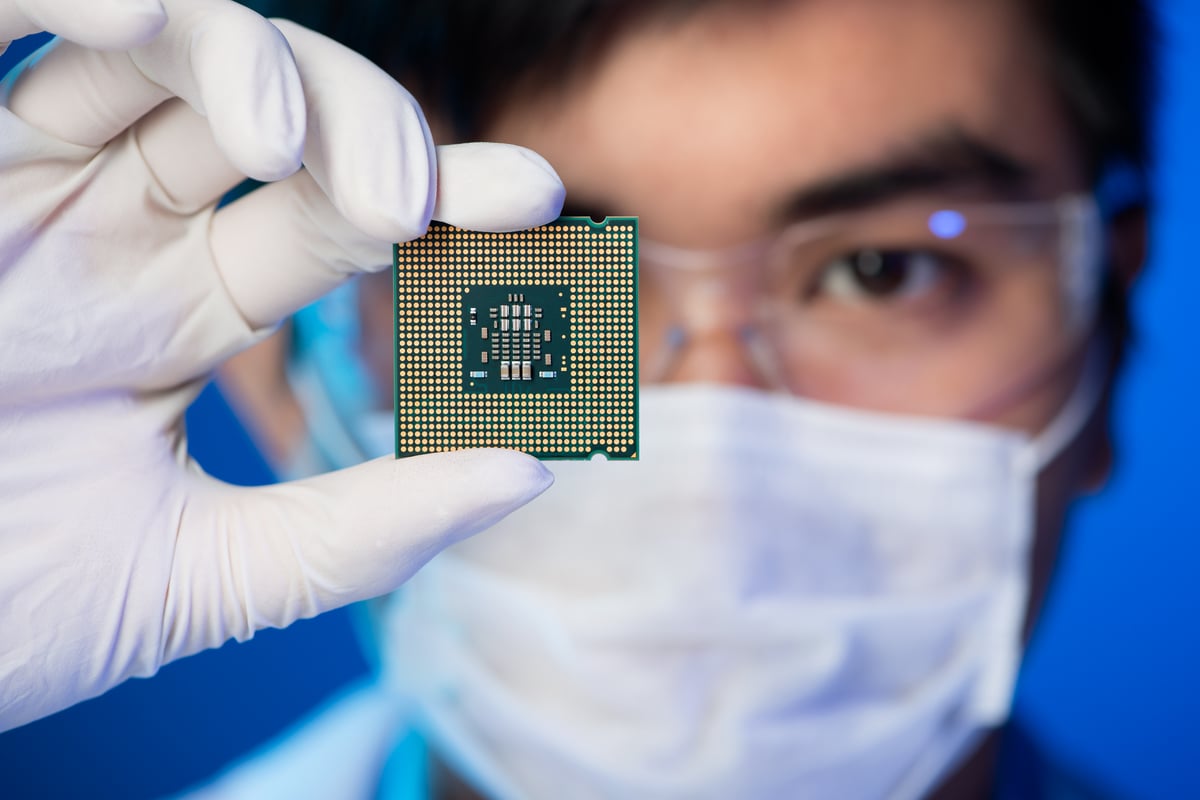
A blog post from Intel research on the same day may have illuminated what the partnership is really about. Two weeks ago, Elon Musk introduced Terafab. The Terafab venture is Musk's ambition to produce semiconductors for his companies Tesla (NASDAQ: TSLA) and SpaceX, which recently merged with xAI before its upcoming initial public offering (IPO). Musk believes he's going to need lots of chips, and by "lots of chips," he means lots of chips -- as in, a terawatt of compute per year. To keep that in perspective, the current output of all leading-edge artificial intelligence (AI) chips from all fabs today is just 20 GW per year, or 2% of what Musk thinks he'll need! Will AI create the world's first trillionaire? Our team just released a report on the one little-known company, called an "Indispensable Monopoly" providing the critical technology Nvidia and Intel both need. Continue " The language around the partnership was general and somewhat confusing. After all, Intel is also expanding its own foundry services. So, is Intel Foundry going to become part of Terafab? Will it operate Terafab? Are they even two separate entities? On the same day of the partnership announcement, Intel made a technology announcement that shed light on the likely reason for the tie-up... and it could be pretty exciting. On April 7, the same day Intel announced its participation in Terafab, Intel Foundry researchers also published a blog post outlining a new technological breakthrough. The breakthrough in question is a new ultrathin gallium nitride (GaN) chiplet. Gallium nitride is a compound semiconductor that is more resilient than silicon in high-voltage environments. In the blog post, the researchers disclosed that Intel had found a way to grow GaN directly on a standard 300mm wafer with standard semiconductor production equipment, enabling low-cost production. The researchers also implemented a novel thinning process called stealth dicing before grinding (SDBG), which enabled Intel to create a GaN chiplet with a silicon base just 19 microns thick. For perspective, a micron is one millionth of a meter, and 19 microns is just one-fifth the width of a human hair. What's more, Intel was able to combine GaN power electronics and silicon logic on the same chiplet. In traditional power electronics, power transistors have to be kept separate from logic transistors, because power chips' large transistors aren't small enough to perform complex calculations, and they generate significant heat and electrical noise that can affect nearby logic that controls them. Therefore, power transistors are often placed away from their controlling logic, which often requires a separate chip. Separating the two increases the space needed for the system and also leads to a loss of electrical current. But Intel has managed to place both GaN power electronics and the control logic on the same chiplet. According to the blog post, Intel was able to mix traditional silicon into the GaN wafer using a process called layer transfer. After doing so, Intel was able to place high-voltage power-electronics transistors next to smaller logic transistors on the same chiplet, bringing all of the transistors -- power and logic alike -- into a more compact space. Subsequent testing showed these chiplets were able to function and retain their resilience under high-stress conditions. Image source: Getty Images. In the Terafab presentation, Musk stressed that the majority of the chip output would go to SpaceX, both for a space-oriented industrial economy as well as AI data centers on satellites. However, semiconductors used in space need to be ruggedized to withstand the harsh environment. GaN-based chips are especially useful in space applications, because GaN is more radiation-tolerant than silicon, and solar radiation is prevalent in space. So Intel's ability to make thinner, lighter, and more compact GaN chips would be especially useful, since every little bit of weight reduction on a rocket can mean millions of dollars. The heavier the rocket is, the more expensive it is to launch due to the fuel and power required. Today, launch costs can range from $1,000 to $10,000 per pound, depending on the type of payload. Given that Terafab will likely cost literally trillions of dollars and take a long time to build, the financial impact of the SpaceX-Intel partnership won't be felt for years, in all likelihood. Moreover, it's still unclear whether Intel will just license this IP, or whether it will operate or co-invest with SpaceX and Tesla in Terafab. Still, if more positive details on the partnership emerge between now and then, it could continue to benefit Intel's stock, given the sheer volume of chips Musk envisions producing. Before you buy stock in Intel, consider this: The Motley Fool Stock Advisor analyst team just identified what they believe are the 10 best stocks for investors to buy now... and Intel wasn't one of them. The 10 stocks that made the cut could produce monster returns in the coming years. Consider when Netflix made this list on December 17, 2004... if you invested $1,000 at the time of our recommendation, you'd have $555,526!* Or when Nvidia made this list on April 15, 2005... if you invested $1,000 at the time of our recommendation, you'd have $1,156,403!* Now, it's worth noting Stock Advisor's total average return is 968% -- a market-crushing outperformance compared to 191% for the S&P 500. Don't miss the latest top 10 list, available with Stock Advisor, and join an investing community built by individual investors for individual investors. Billy Duberstein and/or his clients have positions in Intel and has the following options: short April 2026 $34 puts on Intel. The Motley Fool has positions in and recommends Intel and Tesla. The Motley Fool has a disclosure policy.

3 Top Stocks to Buy to Invest in Anthropic's Project Glasswing
All information and data in this article is solely for informational purposes. For more information please view the Barchart Disclosure Policy here Anthropic, the company behind the Claude family of models, is stepping into a more critical role in the artificial intelligence (AI) race - one that goes beyond building intelligence to securing it. Its latest initiative, Project Glasswing, is a cybersecurity-focused effort powered by its most advanced model, Claude Mythos Preview, built to detect and even exploit software vulnerabilities at a level that rivals top human experts. The goal is to use AI offensively to strengthen defenses before bad actors can catch up. Glasswing is not a solo play. It brings together a deep bench of partners, including Microsoft Corporation (MSFT), Broadcom (AVGO), and NVIDIA Corporation (NVDA), alongside other cybersecurity leaders and tech giants. The model has already uncovered thousands of high-severity flaws across major systems, highlighting both the risks and urgency behind this push. Anthropic is committing up to $100 million in credits, with access limited to select participants through platforms like cloud and API integrations. Wedbush believes this signals a major shift. Cybersecurity, currently about 5% of IT budgets, could double as AI-driven threats rise, making it the enforcement layer of the AI era. That also means companies involved in Project Glasswing stand to benefit directly as demand for AI-driven security infrastructure scales up. For investors looking to tap into Project Glasswing, MSFT, AVGO, and NVDA could be top-rated stocks to buy now. A name almost everyone recognizes, Microsoft has become the backbone of modern digital life. What started as a software company has evolved into a tech giant, boasting a market capitalization of $2.75 trillion. Windows still powers much of the world's PCs, but today Microsoft goes far beyond that - spanning Azure cloud, Microsoft 365, enterprise tools, and gaming. Over time, it has shifted from selling software to building subscription and AI-driven ecosystems. Microsoft's journey over the years has been built on steady growth. Over the years, its chart has moved in a fairly consistent upward direction, driven by its strong grip on cloud through Azure and its growing push into AI. That steady climb made it a core name in most tech portfolios. But the recent stretch tells a different story. The stock is down about 2.75% over the past 52 weeks, with a sharper drop of nearly 27.42% in the last six months. In 2026 alone, shares have fallen roughly 23.31% year-to-date (YTD. In fact, on March 30, MSFT was hovering near its 52-week low. Concerns around heavy AI spending, rising competition, and a more cautious near-term outlook have weighed on sentiment. After its January earnings, the stock even saw a sharp 10% one-day fall - its steepest since 2020 - and now sits near a 10-month low. Technically, rising volumes suggest investors are actively repositioning, while the 14-day RSI has climbed from oversold levels to 38.82, hinting that selling pressure may be starting to ease. Valuation-wise, Microsoft is not exactly cheap. MSFT is priced at around 22.67 times forward adjusted earnings and 8.4 times forward sales, a premium to the broader tech sector averages. But compared to its own history, it is actually a bit more reasonable, reflecting quality rather than overpricing. On top of that, Microsoft has been steady with shareholder returns, growing its dividend since 2003. It now offers about $3.64 per-share dividend annually with a comfortable payout ratio that supports future increases. Microsoft released its Q2 earnings report for fiscal 2026 in January, generating revenue growth of 17% year-over-year (YOY), with the top line coming in at $81.3 billion. Non-GAAP EPS climbed 24% annually to $4.14. Both exceeded Wall Street's projections. Growth was driven by strength in Azure, productivity tools, and expanding AI services. One standout was Microsoft's investment in OpenAI, which delivered a $7.6 billion gain, flipping from a loss last year. Still, management kept the focus on core operations. Margins stayed solid, with the operating margin at 47%, even as the company continued heavy AI spending. Cloud revenue crossed $50 billion in a quarter for the first time, up 26% YOY, while commercial bookings rose 23%. Remaining performance obligations surged to $625 billion, showing strong future demand. Yet, despite all this, the stock slipped as investors grew cautious about rising AI capex, which hit nearly $30 billion. From a financial standpoint, Microsoft remains on a strong footing, with a hefty cash pile, manageable debt, robust cash flow generation, and billions returned to shareholders through dividends and buybacks. Microsoft is all set to publish its fiscal 2026 Q3 financial results after market close on Wednesday, Apr. 29. The management estimates Q3 revenue between $80.65 billion and $81.75 billion, implying mid-teens growth. Azure is expected to remain a key driver, with growth projected to accelerate to around 37% to 38%, even as demand continues to run ahead of available capacity. In the near term, margins may come under slight pressure as Microsoft continues investing heavily in AI infrastructure. However, management expects margins to improve over the full year as spending stabilizes and scale benefits kick in. Meanwhile, Wall Street analysts are equally bullish on Microsoft. EPS is expected to be about $4.04 per-share profit, up 16.8% YOY in Q3, while revenue is projected to be around $81.4 billion, signaling that growth across cloud and AI remains steady. Looking further ahead to fiscal 2026, confidence builds further. EPS is estimated at $16.46 for the year, marking roughly 20.7% annual growth, and another 13.9% jump annually to $18.74 in fiscal 2027. That kind of steady expansion keeps the long-term story intact. Overall, analysts are upbeat on MSFT, with a "Strong Buy" consensus. Of the 49 analysts tracking the tech stock, 41 have a "Strong Buy," four advise a "Moderate Buy," and the remaining four are on the sidelines with a "Hold" rating. MSFT has an average price target of $589.95, implying roughly 59% upside potential from current levels, implying the momentum still has room to build. On the bullish end, the Street-high target of $678 points to even sharper gains of 82.8%, suggesting belief in Microsoft's durable AI and cloud momentum. Broadcom, founded in 1961 and based in Palo Alto, has evolved into one of the most powerful names in global tech, with a market cap of $1.76 trillion. Its semiconductors may not be consumer-facing, but they quietly power cloud infrastructure, AI data centers, smartphones, broadband, and industrial systems. Alongside this, Broadcom has built a strong infrastructure software business rooted in long-term enterprise relationships, creating a durable edge through high-margin chips and sticky, mission-critical software. Broadcom stock has been on a powerful run, and investors have clearly rewarded its AI-led playbook. Over the past 52 weeks, AVGO has surged 115.64%, driven by strong AI networking demand, a successful VMware integration, and steady high-margin software earnings. Along the way, the stock notched 44 new highs, even touching a peak of $414.60 on Dec. 10, before cooling off and currently sitting about 10.38% below those levels. Still, the recent pullback does not signal weakness, but looks more like a pause. Momentum is starting to pick up again, with shares up 7.35% so far in 2026 and jumping by a sharp 18.12% over the past five days. Technically, the 14-day RSI sits near 70.88, suggesting improving strength but now in overbought territory. At the same time, rising volume points to renewed buying interest. Broadcom trades at a premium, with the stock currently priced around 35.83 times forward adjusted earnings and 16.81 times forward sales - both above the sector averages. That may seem expensive, but it also reflects confidence in its strong cash flow, scale, and steady earnings outlook. Additionally, AVGO's strength shows up in shareholder returns. The company recently raised its quarterly dividend to $0.65 per share last year, bringing the annual payout to $2.60 per share and extending a 15-year streak of increases. With a payout ratio of about 34.1%, Broadcom still has room to reinvest while rewarding investors consistently. Broadcom started fiscal 2026 on a strong note, keeping the momentum going from last year. In its Q1 report released on March 4, the company delivered revenue of $19.3 billion, up 29% YOY, surging past Street's projections, while non-GAAP EPS rose 28% to $2.05, marking its ninth straight quarterly earnings beat. Its Semiconductor Solutions segment revenue jumped 52% annually to $12.5 billion, driven largely by booming AI demand. Big partnerships with players like Alphabet (GOOG) (GOOGL) and Anthropic are fueling this growth. AI revenue alone came in at $8.4 billion, more than doubling annually and beating expectations, thanks to strong demand for custom AI chips and networking solutions. Meanwhile, its Infrastructure Software business added another $6.8 billion in revenue, providing steady support. Financially, Broadcom looks solid. Cash flow from operations rose 35% to $8.3 billion, while free cash flow climbed 33% to $8 billion. The company also ended the quarter with $14.17 billion in cash and cash equivalents and approved a new $10 billion buyback program, easing concerns around funding needs. Looking ahead, management guided for Q2 revenue of around $22 billion, implying 47% growth, with AI semiconductor revenue expected at $10.7 billion. With expanding AI deals with Anthropic and Google, Broadcom appears well-positioned to push past its long-term targets. Wall Street sees Broadcom riding the AI wave in a big way, with revenue expected to reach about $104.6 billion in fiscal 2026. Earnings are projected to jump 76% YOY to $9.91 per share, with another strong 61.2% annual growth to $15.97 in 2027. Analysts are confident, with AVGO stock having an overall "Strong Buy" rating. Of the 42 analysts tracking the stock, 35 back it with a "Strong Buy," three have a "Moderate Buy," while four sit on the sidelines with a "Hold" rating. AVGO's average target of $467.64 suggests an upside potential of 25.86% from the current price levels. The Street's highest $630 price target hints the stock could rally as much as 69.56%. Founded in 1993 and based in Santa Clara, California, NVIDIA has become a pioneer in GPUs and AI-driven computing. From gaming to data centers and automotive tech, its innovations have reshaped industries, powering the AI revolution. Beyond technology, Nvidia champions energy-efficient designs and diversity initiatives, combining cutting-edge innovation with responsibility, cementing its role as a cornerstone of modern high-performance computing. It currently boasts a market cap of about $4.6 trillion. Shares of NVIDIA have moved in a start-stop pattern over the past year, rising sharply and then pausing before the next leg up. The stock hit new highs 44 times in 52 weeks, peaking at $212.19 in October before pulling back about 11%. Even with that dip, the stock is still up roughly 75.36% over the past 52 weeks. In 2026, things have been less smooth, with slight declines as concerns around AI spending and rising competition weighed on sentiment. That said, sentiment has already shown signs of turning, with recent geopolitical easing helping the stock bounce back. Technically, momentum is stabilizing again, with rising volumes and 14-day RSI improving - suggesting this may be a pause, not a trend break. From a valuation standpoint, NVDA does not look as stretched now. It trades around 23.76 times forward adjusted earnings, below its historical levels and even the sector average, with room to ease further if AI growth holds strong. Its price-to-sales ratio has also cooled to 12.41 times. Plus, NVIDIA has steadily paid dividends for over a decade - small, but backed by strong cash flows. When we look at NVIDIA's financials, it suggests just how strong the business is running. Its fiscal Q4 2026 numbers, released in February, made that clear. Revenue jumped 73.2% YOY to $68.1 billion, while adjusted earnings climbed 82% annually to $1.62 per share - both beating the Street's estimates. The real engine remains its data center segment, where revenue soared roughly 75% YOY to $62.3 billion as companies continue pouring money into AI infrastructure. Even gaming held up well, growing 47% YOY. All this strength shows up clearly in its financials. NVIDIA is sitting on over $62 billion in cash with relatively low debt, and it generated massive free cash flow of nearly $96.6 billion for the full year. That kind of cash gives it serious flexibility, whether it's investing in future tech or rewarding shareholders. In fiscal 2026 alone, it returned $41.1 billion through buybacks and dividends, with another $58.5 billion still authorized. Looking ahead, the runway still looks long. At its GTC event, management projected up to $1 trillion in revenue from its Blackwell and Vera Rubin AI platforms between 2025 and 2027. Management expects a strong start to fiscal 2027, guiding for first-quarter total revenue of around $78 billion, which is another sign that momentum remains firmly intact. Analysts are even slightly more optimistic, forecasting about $78.8 billion in revenue, with earnings jumping 120.8% YOY to $1.70 per share. Looking further ahead, EPS is projected to climb 69.4% annually in fiscal 2027 to $7.74, followed by another 31.8% growth in fiscal 2028 to $10.20, pointing to sustained, high-growth ahead. Overall, analysts are upbeat about the chip giant's growth potential, giving the stock a consensus rating of "Strong Buy." Of the 49 analysts covering the stock, 44 advise a "Strong Buy," three suggest "Moderate Buy," one recommends a "Hold," and the remaining one has a "Strong Sell." The average analyst price target for NVDA is $268.80, indicating potential upside of 42.5%. The Street-high target price of $380 suggests that the stock could rally as much as 101.5% from here.

CrowdStrike Is Joining Anthropic's New Project Glasswing. Does That Make CRWD Stock a Buy?
All information and data in this article is solely for informational purposes. For more information please view the Barchart Disclosure Policy here Popular artificial intelligence (AI) startup Anthropic announced Claude Mythos Preview, a newly advanced model with a limited rollout to a select group of companies as part of a new cybersecurity initiative called Project Glasswing. The Mythos AI model is adept at identifying security flaws in software, so the limited access is intended to prevent exploitation of this capability. Cybersecurity company CrowdStrike Holdings (CRWD) was chosen as a partner in this project. Wedbush analysts have picked CrowdStrike as a top cybersecurity pick, noting that the company is keeping up with AI model advancements. As the pressure is expected to be lifted from the company's shoulders, should you consider investing in the stock now? CrowdStrike Holdings is a global cybersecurity company that operates a cloud-native platform designed to stop breaches across endpoints, cloud workloads, identities, and data. Its business is centered on the Falcon platform, which it sells mainly through subscription modules that combine threat detection, security monitoring, identity protection, log management, and automated response capabilities. Headquartered in Austin, Texas with a market cap of $96.12 billion, CrowdStrike uses AI to help spot cyber threats quickly and respond faster. Its security platform watches for unusual activity, helps stop attacks, and reduces the work for security teams. In simple terms, AI makes CrowdStrike's cybersecurity tools smarter and faster. CrowdStrike's stock has had a tepid time on Wall Street as investors have been balancing strong business growth against a still-rich valuation and periodic risk-off selling in software stocks. Over the past 52 weeks, the stock has gained 2.82%, but is down 19.14% year-to-date (YTD). It reached a 52-week low of $342.72 on Feb. 23, but is up 10.6% from that level. On a forward-adjusted basis, CrowdStrike's price-to-earnings (non-GAAP) ratio of 78.03 times is stretched compared to the industry average of 21.67 times. For the fourth quarter of fiscal 2026 (ended Jan. 31), CrowdStrike's revenues increased 23.3% year-over-year (YOY) to $1.31 billion, which was slightly higher than the $1.30 billion that Wall Street analysts had expected. This was led by a 23.2% increase in subscription revenues to $1.24 billion. The company's annual recurring revenue (ARR) grew 24% YOY to $5.25 billion as of Jan. 31, of which a record $330.70 million was net new ARR added in the quarter. CrowdStrike achieved positive GAAP-based net income of $38.69 million, while non-GAAP net income reached a record $289.11 million. Its non-GAAP EPS was $1.12, up 38.3% YOY and above the $1.10 analysts had expected. For fiscal 2027, its total revenue is expected to be in the $5.87 billion to $5.93 billion range, while its non-GAAP EPS is projected to be in the $4.78 to $4.90 range. CrowdStrike believes that the AI revolution represents a new, generational growth opportunity, and the company expects to scale to $20 billion in ending ARR in fiscal 2036. Wall Street analysts expect CrowdStrike's future earnings to skyrocket. For the current fiscal year, EPS is projected to surge to $1.01, followed by a 67.3% growth to $1.69 in the next fiscal year. Last month, there was a slew of positive affirmations from Wall Street analysts on CrowdStrike's stock. Wolfe Research analysts upgraded the stock to "Outperform" and set a $450 price target. As investors reassess the impact of AI on cybersecurity, especially as Anthropic potentially releases Mythos, Wolfe analyst Joshua Tilton predicts it could lead to a machine-speed cyberwar, thereby increasing demand for CrowdStrike's offerings. In the same month, analysts at RBC Capital reiterated an "Outperform" rating and a $550 price target. Following CrowdStrike's fourth-quarter results, the firm's analysts stated is positioned to benefit from increased customer spending on AI and to consolidate cybersecurity spending. Morgan Stanley analysts also upgraded CrowdStrike's stock from "Equal-Weight" to "Overweight" and raised the price target from $487 to $510. Analysts led by Meta Marshall said the company's strong AI positioning, rising use of newer modules, and improving endpoint trends could support its long-term platform strategy, even though the stock may still look expensive. CrowdStrike Holdings is gaining some praise on Wall Street, with analysts awarding it a consensus "Moderate Buy" rating. Of the 49 analysts rating the stock, a majority of 33 analysts have rated it a "Strong Buy," three analysts suggest a "Moderate Buy," while 12 analysts are playing it safe with a "Hold" rating, and one analyst gave a "Strong Sell" rating. The consensus price target of $491.67 represents a 29.7% upside from current levels. The Street-high price target of $706 indicates a 86.27% upside. Cybersecurity companies like CrowdStrike, which have recognized the potential of AI, are poised to benefit from the wave of threats the technology can pose to digital infrastructure. Being chosen as an Anthropic partner might mark a step in that direction. In fact, Wedbush predicts that cybersecurity spending, which accounts for roughly 5% of IT budgets, will likely double over the next few years to 10% as AI use cases and broader technologies pose risks to many organizations. Therefore, CrowdStrike might be a buy now.

Paradigm Bets on Gen Z Talent Despite 'Chaos'
Paradigm, the crypto investment firm managing over $12 billion in assets, is doubling down on hiring Gen Z talent even though co-founder Matt Huang openly acknowledges that some of the youngest recruits create significant internal disorder. The firm's track record of turning teenage hires into senior leaders suggests the strategy is paying off. In a long-form interview with Colossus, Huang said some of Paradigm's young hires "create an absurd amount of chaos sometimes," but argued the tradeoff is justified because these individuals can produce work that nobody else at the firm can replicate. The remark is not a throwaway line from a small fund. Paradigm manages over $12 billion, making its willingness to absorb short-term disruption from very young employees a deliberate institutional bet rather than a casual experiment. Fortune independently confirmed Huang's remarks and described Paradigm as continuing to bet on Gen Z talent, framing the comments as part of a broader philosophy rather than a one-off observation. The outlet noted that Paradigm is a $12 billion crypto company whose leader is openly embracing the risk that comes with exceptionally young technical staff. Huang's framing centers on a specific paradox: the same lack of conventional professional polish that creates internal friction also correlates with a ceiling of technical ability that more experienced candidates rarely match. In frontier technology sectors like crypto, that ceiling matters more than short-term operational smoothness. "They create an absurd amount of chaos sometimes." Matt Huang, co-founder of Paradigm, via Colossus The firm's philosophy is not new. Paradigm's very first hire, Charlie Noyes, joined the firm as a 19-year-old MIT dropout. Noyes has since risen to become a general partner, one of the clearest internal proof points that identifying exceptional ability early can produce long-term leadership returns. The pattern extended beyond traditional hiring channels. Paradigm discovered the developer known as transmissions11 on Discord while he was still in high school. The firm spotted raw technical ability in an informal online setting, well before any conventional recruiting pipeline would have flagged the candidate. Both cases illustrate what Huang described as prioritizing slope over intercept, valuing the rate at which someone is improving and the ceiling of their ability over where they happen to be on day one. In a space where the technology itself is only a few years old, traditional credentials matter less than the capacity to learn and build at the frontier. This approach carries echoes of how early-stage crypto projects themselves were built. Many of the protocols that now handle billions in value were created by developers in their teens and early twenties, often working pseudonymously. Paradigm's hiring philosophy mirrors the ecosystem it invests in, a point that separates it from firms that apply conventional finance recruiting norms to a fundamentally unconventional industry. If the Noyes and transmissions11 examples were isolated, Huang's remarks might read as nostalgia for early wins. But Paradigm has since formalized its approach through the Paradigm Fellowship, launched in 2024, which explicitly targets young engineers and researchers. The official fellowship post states that most fellows are expected to be high-school or college-aged. That language makes the program's intent unmistakable: Paradigm is not simply open to young applicants but actively building a pipeline designed for them. The fellowship converts Huang's philosophy from a series of ad hoc discoveries into a repeatable institutional process. Rather than waiting to stumble upon the next transmissions11 in a Discord server, Paradigm now has a structured mechanism for identifying and developing emerging builders before the broader market recognizes their value. This institutionalization matters because it signals durability. A CEO's quote about valuing young talent could be performative, but a funded fellowship program with public eligibility criteria represents an ongoing resource commitment that will outlast any single interview cycle. Paradigm's approach carries a practical implication for how crypto venture firms evaluate talent. By explicitly stating that raw technical ability at the frontier outweighs conventional credentials, Huang is articulating a hiring framework that other firms in the space may feel pressure to match. The logic is specific to crypto's current stage. In industries where technology changes slowly, experience is a reliable proxy for ability. In a sector where core infrastructure is still being designed, the capacity to reason from first principles about novel problems may genuinely matter more than years of prior work. The recent incident where a user lost 5.92 BTC to a fake Ledger app on the Apple App Store underscores the kind of unsolved security problems that demand fresh thinking. This is fundamentally a talent-allocation story, not a market-sentiment story. There is no regulatory catalyst, no token launch, and no on-chain event driving the news. The significance is strategic: one of crypto's largest investment firms is publicly committing to a hiring model that most traditional finance firms would consider too risky. The broader crypto market backdrop adds context. The Fear & Greed Index sat at 16, labeled Extreme Fear, at the time of these remarks. Paradigm's willingness to invest in long-term talent development during a period of defensive market sentiment suggests the firm is operating on a timeline that extends well beyond current price cycles. As analysts continue to watch whether Bitcoin and Ethereum are approaching key levels for a trend reversal, Paradigm's focus on human capital rather than short-term market positioning stands out. The firm appears to be betting that the next cycle's winners will be determined by engineering talent recruited today, not by trading decisions made during the current drawdown. For young builders considering careers in crypto, the message from one of the industry's most capitalized firms is clear: exceptional technical ability, even when paired with the inexperience and disorder that comes with youth, is treated as a feature rather than a disqualification. Paradigm's track record with Noyes and transmissions11, combined with the active fellowship, suggests the firm intends to keep proving that thesis for years to come. No. The firm's first hire, Charlie Noyes, joined at 19 after dropping out of MIT and is now a general partner. The developer transmissions11 was discovered on Discord while still in high school. Huang's recent remarks describe an established pattern, not a pivot. It is a program launched in 2024 that targets young engineers and researchers. Paradigm's official post states that most fellows are expected to be high-school or college-aged, making it a formalized version of the firm's longstanding preference for identifying talent early. No. This story is about Paradigm's internal talent strategy and hiring philosophy. There is no associated token launch, regulatory action, or on-chain event. The relevance is to how major crypto venture firms think about building teams in a frontier technology sector, even as ETH approaches levels that could trigger significant market moves. Disclaimer: This article is for informational purposes only and does not constitute financial or investment advice. Cryptocurrency and digital asset markets carry significant risk. Always do your own research before making decisions.

UK financial regulators rush to assess risks of Anthropic's latest AI model, FT reports
April 12 (Reuters) - UK financial regulators are holding urgent talks with the government's cyber security agency and major banks to assess risks posed by the latest artificial intelligence model from Anthropic, the Financial Times reported on Sunday. Officials at the Bank of England, the Financial Conduct Authority and HM Treasury are in talks with the National Cyber Security Centre to examine potential vulnerabilities in critical IT systems highlighted by Anthropic's latest AI model, the newspaper said. Representatives from major British banks, insurers and exchanges are expected to be briefed on the cyber security risks posed by the model, Claude Mythos Preview, at a meeting with regulators in the next fortnight, it said, citing two people briefed on the talks. Reuters could not immediately verify the report. Anthropic did not respond to Reuters' request for comment while the BoE declined to comment and the Treasury, NCSC and FCA were not immediately available for comment. The move follows a meeting called by U.S. Treasury Secretary Scott Bessent with major Wall Street banks on the model's cyber risk potential, Reuters nL4N40T024 reported on Friday, citing two sources. The AI startup has said the model is being deployed as part of "Project Glasswing nL4N40Q0LK", a controlled initiative under which select organizations are permitted to use the unreleased Claude Mythos Preview model for defensive cyber security purposes. In a blog post earlier this month, the startup said the model had already identified "thousands" of major vulnerabilities across operating systems, web browsers and other widely used software. (Reporting by Mihika Sharma in BengaluruEditing by Bernadette Baum and Christina Fincher)

Here's the Real Reason SpaceX Is Teaming Up With Intel on Terafab | The Motley Fool
A blog post from Intel research on the same day may have illuminated what the partnership is really about. Two weeks ago, Elon Musk introduced Terafab. The Terafab venture is Musk's ambition to produce semiconductors for his companies Tesla (TSLA +0.91%) and SpaceX, which recently merged with xAI before its upcoming initial public offering (IPO). Musk believes he's going to need lots of chips, and by "lots of chips," he means lots of chips -- as in, a terawatt of compute per year. To keep that in perspective, the current output of all leading-edge artificial intelligence (AI) chips from all fabs today is just 20 GW per year, or 2% of what Musk thinks he'll need! The language around the partnership was general and somewhat confusing. After all, Intel is also expanding its own foundry services. So, is Intel Foundry going to become part of Terafab? Will it operate Terafab? Are they even two separate entities? On the same day of the partnership announcement, Intel made a technology announcement that shed light on the likely reason for the tie-up... and it could be pretty exciting. On April 7, the same day Intel announced its participation in Terafab, Intel Foundry researchers also published a blog post outlining a new technological breakthrough. The breakthrough in question is a new ultrathin gallium nitride (GaN) chiplet. Gallium nitride is a compound semiconductor that is more resilient than silicon in high-voltage environments. In the blog post, the researchers disclosed that Intel had found a way to grow GaN directly on a standard 300mm wafer with standard semiconductor production equipment, enabling low-cost production. The researchers also implemented a novel thinning process called stealth dicing before grinding (SDBG), which enabled Intel to create a GaN chiplet with a silicon base just 19 microns thick. For perspective, a micron is one millionth of a meter, and 19 microns is just one-fifth the width of a human hair. What's more, Intel was able to combine GaN power electronics and silicon logic on the same chiplet. In traditional power electronics, power transistors have to be kept separate from logic transistors, because power chips' large transistors aren't small enough to perform complex calculations, and they generate significant heat and electrical noise that can affect nearby logic that controls them. Therefore, power transistors are often placed away from their controlling logic, which often requires a separate chip. Separating the two increases the space needed for the system and also leads to a loss of electrical current. But Intel has managed to place both GaN power electronics and the control logic on the same chiplet. According to the blog post, Intel was able to mix traditional silicon into the GaN wafer using a process called layer transfer. After doing so, Intel was able to place high-voltage power-electronics transistors next to smaller logic transistors on the same chiplet, bringing all of the transistors -- power and logic alike -- into a more compact space. Subsequent testing showed these chiplets were able to function and retain their resilience under high-stress conditions. In the Terafab presentation, Musk stressed that the majority of the chip output would go to SpaceX, both for a space-oriented industrial economy as well as AI data centers on satellites. However, semiconductors used in space need to be ruggedized to withstand the harsh environment. GaN-based chips are especially useful in space applications, because GaN is more radiation-tolerant than silicon, and solar radiation is prevalent in space. So Intel's ability to make thinner, lighter, and more compact GaN chips would be especially useful, since every little bit of weight reduction on a rocket can mean millions of dollars. The heavier the rocket is, the more expensive it is to launch due to the fuel and power required. Today, launch costs can range from $1,000 to $10,000 per pound, depending on the type of payload. Given that Terafab will likely cost literally trillions of dollars and take a long time to build, the financial impact of the SpaceX-Intel partnership won't be felt for years, in all likelihood. Moreover, it's still unclear whether Intel will just license this IP, or whether it will operate or co-invest with SpaceX and Tesla in Terafab. Still, if more positive details on the partnership emerge between now and then, it could continue to benefit Intel's stock, given the sheer volume of chips Musk envisions producing.
Starlink's Top 5 Competitors in 2026: Amazon Leo, Viasat, HughesNet Lead Challenge to SpaceX Dominance
WASHINGTON -- SpaceX's Starlink constellation, with nearly 10,000 operational low-Earth orbit satellites and more than 9 million subscribers worldwide, continues to dominate the satellite broadband market in 2026. Yet growing competition is emerging from both legacy geostationary operators and ambitious new low-Earth orbit projects aiming to erode Starlink's lead in speed, latency, pricing and global reach. Industry analysts identify five primary competitors challenging Starlink this year: Amazon Leo (formerly Project Kuiper), Viasat, HughesNet, Eutelsat OneWeb and Telesat Lightspeed. While Starlink maintains advantages in scale and consumer accessibility, these rivals are carving niches through established infrastructure, enterprise focus, unlimited data plans and integration with major tech ecosystems. 1. Amazon Leo (Formerly Project Kuiper) Amazon's rebranded Leo satellite network stands as the most direct and formidable long-term threat to Starlink. Backed by billions in investment and Amazon's vast logistics and cloud infrastructure, Leo targets high-speed, low-latency broadband with a planned 3,236-satellite LEO constellation, expandable to over 7,700. As of April 2026, Amazon has deployed more than 240 satellites, with aggressive launch cadence continuing via United Launch Alliance Atlas V rockets and future New Glenn vehicles. CEO Andy Jassy announced commercial availability targeted for mid-2026, initially in select markets including the United States, Canada, the United Kingdom, France and Germany. Early private previews, including the Leo Ultra antenna touted for gigabit-class speeds, focus on enterprise and government users before broader residential rollout. Leo promises download speeds up to 1 Gbps with tight integration to Amazon Web Services, appealing to businesses needing seamless cloud connectivity. Terminals are projected to cost under $400, undercutting Starlink's hardware in some scenarios. However, deployment lags Starlink significantly, and Amazon faces FCC milestones that could risk its license if not met. Still, analysts view Leo as the only near-term LEO rival capable of scaling to challenge SpaceX's consumer dominance. 2. Viasat Viasat remains one of the strongest established alternatives, particularly for users seeking unlimited data without contracts. The company's high-throughput GEO satellites, bolstered by its acquisition of Inmarsat, deliver download speeds up to 150 Mbps with generous or unlimited data plans starting around $70 monthly. In 2026, Viasat has shifted toward hybrid multi-orbit strategies, partnering with Telesat's upcoming Lightspeed LEO network to combine GEO reliability with lower latency. This approach suits maritime, aviation and rural residential customers who prioritize consistent performance over raw speed. Viasat's no-contract flexibility and strong customer service reputation help it retain users in areas where Starlink faces congestion or higher costs. The company's ViaSat-3 satellites enhance capacity, addressing past complaints about data throttling. While latency remains higher than LEO services (typically 450-700 ms versus Starlink's 20-60 ms), Viasat excels in coverage stability and enterprise solutions, making it a go-to for users wary of Starlink's variable performance in dense areas. 3. HughesNet Hughes Network Systems, a longtime player in rural broadband, continues to compete on affordability and reliability. Powered by its Jupiter-3 GEO satellite and partnerships, HughesNet offers plans starting as low as $50 monthly with speeds from 25-100 Mbps. Known for near-universal U.S. coverage and soft data caps that rarely result in hard throttling, HughesNet appeals to budget-conscious households in remote locations. In 2026, the service emphasizes consistent speeds and straightforward pricing, contrasting with Starlink's occasional deprioritization during peak usage. Though lacking LEO's low latency, HughesNet has modernized its network to support streaming and basic online activities more effectively than earlier generations. It remains a solid choice for users prioritizing low upfront costs and predictable billing over cutting-edge performance. 4. Eutelsat OneWeb Eutelsat OneWeb operates a mature 648-satellite LEO constellation focused primarily on enterprise, government, maritime and aviation markets rather than direct-to-consumer residential service. With roughly 630 operational satellites, OneWeb delivers speeds around 200 Mbps and lower latency than traditional GEO systems. The merged Eutelsat-OneWeb entity reported strong revenue growth in 2025-2026, leveraging partnerships with telecom operators and governments for backhaul and mobility services. OneWeb's polar orbits provide excellent high-latitude coverage, benefiting users in Alaska, northern Canada, Europe and polar routes. Unlike Starlink's direct sales model, OneWeb sells capacity through resellers and integrators, making it less visible to individual consumers but highly valued in B2B segments where reliability and security take precedence. Its hybrid GEO-LEO approach with Eutelsat enhances flexibility for complex deployments. 5. Telesat Lightspeed Canada's Telesat is preparing its Lightspeed LEO constellation for initial service in 2027, with pathfinder satellites slated for December 2026 deployment. The reduced 198-satellite network, supported by Canadian government funding and SpaceX launch contracts, targets enterprise and rural broadband with emphasis on secure, low-latency connections. Lightspeed satellites, manufactured by MDA, aim for high-capacity links optimized for government, defense and telecom backhaul. Telesat has secured multi-year deals, including with Viasat, and maintains a growing backlog that now exceeds its traditional GEO business. While full global consumer service remains further out, Lightspeed's focus on resilient infrastructure and partnerships positions it as a strategic player in sovereign connectivity and hybrid networks. Its delayed but deliberate rollout reflects a conservative approach to quality and funding stability. Emerging Mentions and Market Dynamics Other players, such as AST SpaceMobile for direct-to-cell connectivity and Chinese constellations like GuoWang, add pressure from different angles. Traditional resellers like EarthLink package Viasat or HughesNet services with competitive mid-tier pricing. The broader satellite internet landscape in 2026 reflects rapid evolution. Starlink's massive scale enables aggressive pricing and rapid iteration, but congestion in popular areas has prompted some users to explore alternatives. New LEO entrants promise to increase capacity and drive innovation in terminals, software and pricing. Regulatory hurdles, launch availability and manufacturing scale remain key challenges for challengers. Amazon Leo's integration with AWS, Viasat's unlimited plans and OneWeb's enterprise reliability highlight diverse strategies against Starlink's all-in-one consumer appeal. For rural and remote users, the competition translates to more choices: faster LEO options where available, more affordable GEO plans, or hybrid solutions blending strengths. Maritime and aviation sectors benefit from expanded mobility offerings across providers. As deployments accelerate, 2026 could mark the beginning of genuine multi-player competition that benefits consumers through improved service, lower costs and broader coverage. Analysts predict continued consolidation and technological convergence, with multi-orbit networks becoming standard. SpaceX shows no signs of slowing, with ongoing Starlink launches and Gen2 satellite improvements. Yet the entrance of well-resourced rivals like Amazon, combined with modernization by incumbents, signals a maturing market where monopoly concerns give way to dynamic rivalry. For now, Starlink retains the lead in subscriber numbers and performance for most residential users. But with Amazon Leo's mid-year target, Viasat's flexibility and others filling specialized roles, the satellite broadband sector enters a more competitive era that could reshape connectivity for millions in underserved regions worldwide.

Anthropic AI: 3 Critical Pros and Cons of OLED vs LCD
Anthropic AI isn't just shaking up data science -- it's also influencing how we look at OLED versus LCD smartphone displays in 2026. Picking between these screen types really matters when it comes to battery life, color quality, and your wallet. For anyone hunting for the best phone, this stuff isn't just technical jargon -- it's about everyday use. Here's how things stack up. Anthropic AI Analysis: How OLED and LCD Displays Really Work Pop the hood, and you'll see OLED (Organic Light-Emitting Diode) and LCD (Liquid Crystal Display) take totally different approaches. OLED displays light up each pixel with organic compounds, so every dot on the screen can turn on or off by itself. That's how you get those true blacks and crazy-fast response times. On the flip side, LCDs shine a steady backlight through a grid of liquid crystals, blocking or letting light through to make the image you see. Here's the thing: Because OLED pixels can go completely dark, you get unbeatable contrast and save energy when the screen shows darker stuff. LCDs, stuck with their backlight always on, can't quite pull this off. Still, LCD panels usually get brighter at their peak, which is super important if you're outside on a sunny day. They're also less likely to suffer image retention or burn-in. OLEDs have improved in this area, but the risk isn't totally gone. When it comes to the latest phones, Samsung and Apple lead the way with OLED in their top models. Many mid-range devices, especially in India, stick with high-end LCDs. If you check out GSMArena, you'll see that LTPO OLED panels now adjust refresh rates on the fly, making things smoother and more efficient. That said, LCDs aren't sitting still -- they're closing the gap with mini-LED backlights and speedy refresh rates. They're definitely still in the game. OLED vs LCD: Anthropic AI's Verdict on Strengths and Weaknesses Let's talk about real-world pros and cons -- because you won't find a one-size-fits-all winner here. OLED screens give you unmatched contrast, bold colors, and super-slim designs -- perfect for high-end devices. If you love watching HDR videos, those deep blacks and wide dynamic range make a big difference. But don't ignore the flip side -- OLEDs usually cost more, especially for bigger screens, and even with tricks like pixel shifting, static images can still cause burn-in now and then. Over on the LCD side, you'll save some cash. Their color accuracy and visibility outdoors are top-notch, especially with newer IPS or mini-LED tech. Burn-in basically isn't a problem, and LCDs tend to hold onto their brightness longer over time. They do have their downsides, though -- the contrast doesn't match OLED, and you might spot some backlight bleeding during dark scenes.

UK Regulators Assess Cyber Risks of Anthropic's Latest AI Model - News Directory 3
As part of the risk assessment process, regulators plan to brief representatives from major British banks, insurers, and exchanges. UK financial regulators are conducting urgent assessments of the systemic and cyber risks associated with the latest artificial intelligence model from Anthropic, known as Claude Mythos Preview. According to reporting from the Financial Times on April 12, 2026, officials are coordinating with the government's primary cyber security agency and major financial institutions to evaluate the model's potential impact on critical infrastructure. The regulatory response involves a collaboration between the Bank of England, the Financial Conduct Authority (FCA) and HM Treasury. These bodies are currently in discussions with the National Cyber Security Centre (NCSC) to investigate potential vulnerabilities within critical IT systems that have been highlighted by the capabilities of the Claude Mythos Preview model. As part of the risk assessment process, regulators plan to brief representatives from major British banks, insurers, and exchanges. This meeting, expected to take place within the next fortnight from April 12, 2026, will focus on the specific cyber security risks posed by the new AI model. The briefing follows high-level concerns regarding the unprecedented capabilities of the software. The Bank of England has declined to comment on the matter, while the Treasury, NCSC, and FCA were not immediately available for comment. Anthropic did not respond to requests for comment regarding the regulatory scrutiny. The UK's actions follow similar concerns in the United States. On April 10, 2026, U.S. Treasury Secretary Scott Bessent convened a meeting with major Wall Street banks to discuss the potential cyber risks associated with the model. Anthropic has deployed the model as part of an initiative called Project Glasswing. This is a controlled program that permits a limited number of selected organizations to utilize the unreleased Claude Mythos Preview model specifically for defensive cyber security purposes. The urgency among regulators stems in part from the model's demonstrated ability to identify software flaws. In a blog post published in April 2026, Anthropic stated that the model had already identified thousands of major vulnerabilities across various operating systems, web browsers, and other widely used software applications. The ability of the AI to pinpoint these vulnerabilities at scale has prompted the current rush by UK authorities to determine if existing financial IT systems are sufficiently protected against potential exploits that could be derived from such capabilities.
UK financial regulators rush to assess risks of Anthropic's latest AI model, FT reports
April 12 (Reuters) - UK financial regulators are holding urgent talks with the government's cyber security agency and major banks to assess risks posed by the latest artificial intelligence model from Anthropic, the Financial Times reported on Sunday. Officials at the Bank of England, the Financial Conduct Authority and HM Treasury are in talks with the National Cyber Security Centre to examine potential vulnerabilities in critical IT systems highlighted by Anthropic's latest AI model, the newspaper said. Representatives from major British banks, insurers and exchanges are expected to be briefed on the cyber security risks posed by the model, Claude Mythos Preview, at a meeting with regulators in the next fortnight, it said, citing two people briefed on the talks. Reuters could not immediately verify the report. Anthropic did not respond to Reuters' request for comment while the BoE declined to comment and the Treasury, NCSC and FCA were not immediately available for comment. The move follows a meeting called by U.S. Treasury Secretary Scott Bessent with major Wall Street banks on the model's cyber risk potential, Reuters nL4N40T024 reported on Friday, citing two sources. The AI startup has said the model is being deployed as part of "Project Glasswing nL4N40Q0LK", a controlled initiative under which select organizations are permitted to use the unreleased Claude Mythos Preview model for defensive cyber security purposes. In a blog post earlier this month, the startup said the model had already identified "thousands" of major vulnerabilities across operating systems, web browsers and other widely used software. (Reporting by Mihika Sharma in BengaluruEditing by Bernadette Baum and Christina Fincher)
Colossal's Ben Lamm Says Invasive Species Is a $5.4 Trillion Problem. Here's His Solution
This post may contain links from our sponsors and affiliates, and Flywheel Publishing may receive compensation for actions taken through them. Invasive species represent a $5.4 trillion global problem, with U.S. economic impact alone exceeding $500 billion annually. That's according to Ben Lamm, CEO of Colossal Biosciences. On episode 245 of the Moonshots with Peter Diamandis podcast, Lamm made the case that gene drive technology is the only scalable, humane answer. "In New Zealand, in Australia, in parts of Africa, people are killing animals because they're invasive species. They're killing cats, they're killing possums... that's an animal welfare nightmare." Colossal's proposed solution: genetically modified invasive animals that produce only male offspring, allowing populations to "live out their normal lives" before naturally dying out. No poison, no mass culling. Lamm also emphasized that Colossal's proprietary gene drive technologies are "safer than what has ever been dispersed in the wild" and, critically, reversible: "we have the ability to roll it back." Texas has declared the screwworm a national emergency, with the pest currently spreading from Honduras through Mexico and threatening to "decimate our cattle and bison industry." Diamandis noted the scale of the commercial opportunity: "dozens of species to be attacked and cost dozens of billions." Lamm's broader point: 99% of synthetic biology and genome engineering talent focuses only on human healthcare, but the same technologies "apply to other use cases I think are even larger economically, but also have a bigger opportunity to help us." He compared current invasive species control methods to "archaic ways of treating cancer versus what we know is here and what is coming." Colossal is private, so the question becomes where this thesis shows up in public markets. The three companies building the foundational CRISPR toolkit are CRISPR Therapeutics (NASDAQ:CRSP), Beam Therapeutics (NASDAQ:BEAM), and Intellia Therapeutics (NASDAQ:NTLA). CRISPR Therapeutics carries a $4.9 billion market cap with 17 analyst buy ratings and a consensus target of $83.35 against a current price of $51.22. Beam sits at $27.43 with 15 buy ratings and a $51.20 analyst target. Intellia, the smallest of the three at a $1.59 billion market cap, has surged 50% year-to-date to $13.49, with Phase 3 data on its lead HAE program expected mid-2026. Their value here is as platform plays: the delivery systems, base editing precision, and in vivo editing capabilities they are refining for rare diseases are the same building blocks gene drive applications would require. If Lamm's thesis proves out and gene drives move toward regulatory acceptance, these platforms become the infrastructure layer underneath it. If gene drives become the standard, the companies that own the most precise, reversible genome editing platforms stand to benefit well beyond their current therapeutic pipelines. That's the thread I'll be watching.