News & Updates
The latest news and updates from companies in the WLTH portfolio.
Why did Google show Polymarket bets as news?
Google briefly displayed prediction-market bets from Polymarket alongside traditional news content in Google News. After the change drew attention, Google said the appearance was a mistake -- bets were never intended to be shown as part of news results. In tests and reports, Polymarket entries appeared in prominent "For you" style placements in Google News, sometimes as large blocks with links to multiple ways to view bets. The key issue for users was that the bet content looked adjacent to legitimate reporting, blurring the line between editorial news and trading-style information. Google told reporters that the inclusion was an "error" and that the bets were not supposed to appear in News. Following that, the bets reportedly stopped appearing in those results. For prediction markets, search visibility can function like distribution: it can increase reach beyond users who already know where to find Polymarket. But it also raises credibility and product-integrity questions -- especially when "bets on real world events" may be interpreted as news rather than as wagering or market-implied predictions. For Google, it underscores the risk of recommender or feed-mixing logic pulling in structured content that doesn't align with how a product like News is expected to behave. Overall, the episode highlights how small feed-formatting issues can have outsized effects when platforms mix different content types (editorial vs. market surfaces) in a single user interface.

UK financial regulators rush to assess risks of Anthropic's latest AI model, FT reports
April 12 (Reuters) - UK financial regulators are holding urgent talks with the government's cyber security agency and major banks to assess risks posed by the latest artificial intelligence model from Anthropic, the Financial Times reported on Sunday. Officials at the Bank of England, the Financial Conduct Authority and HM Treasury are in talks with the National Cyber Security Centre to examine potential vulnerabilities in critical IT systems highlighted by Anthropic's latest AI model, the newspaper said. Representatives from major British banks, insurers and exchanges are expected to be briefed on the cyber security risks posed by the model, Claude Mythos Preview, at a meeting with regulators in the next fortnight, it said, citing two people briefed on the talks. Reuters could not immediately verify the report. Anthropic did not respond to Reuters' request for comment while the BoE declined to comment and the Treasury, NCSC and FCA were not immediately available for comment. The move follows a meeting called by U.S. Treasury Secretary Scott Bessent with major Wall Street banks on the model's cyber risk potential, Reuters nL4N40T024 reported on Friday, citing two sources. The AI startup has said the model is being deployed as part of "Project Glasswing nL4N40Q0LK", a controlled initiative under which select organizations are permitted to use the unreleased Claude Mythos Preview model for defensive cyber security purposes. In a blog post earlier this month, the startup said the model had already identified "thousands" of major vulnerabilities across operating systems, web browsers and other widely used software. (Reporting by Mihika Sharma in BengaluruEditing by Bernadette Baum and Christina Fincher)

Snapped Overhead Wire On Western Railway Throws Mumbai Local Services Into Chaos, Strands Thousands For Five Hours
Mumbai: A snapped overhead wire on the Western Railway's down fast line between Bhayandar and Naigaon stations threw Mumbai's suburban rail network into chaos on Sunday morning, disrupting services for nearly five hours and stranding thousands of daily commuters during peak hours. Two Locals and One MEMU Train Held Up Immediately The break was reported at around 7.52 am. Two locals and one MEMU train were immediately held up at the site. Railway officials rushed diesel engines to move the stranded rakes while a tower wagon was dispatched from Vasai Road to begin emergency repairs. At its peak, the restoration effort involved nearly 50 traction staff, 20 electrical rolling stock personnel, three tower wagons, and two diesel engines. The Divisional Railway Manager and senior electrical engineers were present on site, while operations officials monitored the situation from the control room. The fault believed to have been triggered by a pantograph snagging the wire damaged approximately 700 to 800 metres of overhead equipment, necessitating a lengthy block. Services on the Bhayandar-Naigaon down fast line were restored at 12.47 pm, with the first AC local towards Virar departing at 12.52 pm. The disruption hit weekend travellers especially hard. Sundays are typically a busy travel day for passengers heading to Dahanu and Palghar popular weekend getaway destinations north of Mumbai many of whom had planned early morning trips. With 20 trains cancelled and 50 running significantly late, commuters were left crowding platforms with no clear information on when their trains would arrive. For those travelling with families or on day trips, the five-hour breakdown turned a leisure outing into an ordeal. Western Railway has not yet issued an official statement on the root cause of the wire failure.

Callao delays add pressure as Peru vote faces chaos in Lima
The keyword callao is part of a day already marked by delays, long lines, and frustration as Peruvians vote on Sunday, April 12, 2026, in one of the country's most complex election days in recent memory. The main problem has been the late installation of polling stations in Lima, while the National Office of Electoral Processes, or ONPE, says the voting schedule will not be extended. The first polling table was installed at 4: 45 a. m. in Huanuhuanu, Arequipa, but in several districts of Lima, voters faced waiting times and disorganization. Late setup and growing frustration In Lima, the delays have been tied to the arrival of electoral material, leaving some polling places unable to open on time at 7: 00 a. m. The most visible impact has been on voters who arrived early and found long lines, confusion, and no clear solution at several centers. The problem has been reported in districts including Surco, San Borja, Miraflores, Villa el Salvador, and other parts of the city. The callao keyword captures the broader atmosphere of strain around this electoral day, even as officials stress that the interruption is limited to a small share of voting sites. ONPE said the affected locations represent 0. 72% of the 10, 336 polling places nationwide. The agency also said it has activated a contingency plan to move missing materials to the sites that still need them. ONPE points to the transport company Cledy Gutiérrez, electoral training specialist at ONPE, said the delay came from a breach by the company responsible for transporting the materials, Servicios Generales Galaga. She said the agency had everything ready in its main warehouse, but the contractor failed to meet the terms of the agreement. "There has been noncompliance by the company in charge of transporting the materials, " Gutiérrez said, adding that the shortage involved vehicles needed to move a large volume of supplies. She also said the issue appeared mainly in Lima Sur and not across the country. In the same statement, ONPE said the process in the regions was moving without setbacks and that the remaining materials would still arrive. No extension of voting hours ONPE also ruled out extending the voting schedule beyond 5: 00 p. m. Gutiérrez made clear that the closing time would remain unchanged even in locations that received materials late. That decision is central for voters still waiting in line as the day advances. In earlier elections, she noted, some tables opened late because members of mesa failed to show up, and the law allows installation until noon. This time, however, the problem has centered on transport and logistics, not just staffing. What remains uncertain The immediate question is how quickly the delayed materials can reach the affected polling places and how many voters will still be able to cast ballots before the 5: 00 p. m. cutoff. For now, ONPE says the election is moving forward nationwide, even as the pressure in Lima remains high and the callao keyword reflects the tension around a vote that is still unfolding under heavy logistical strain.

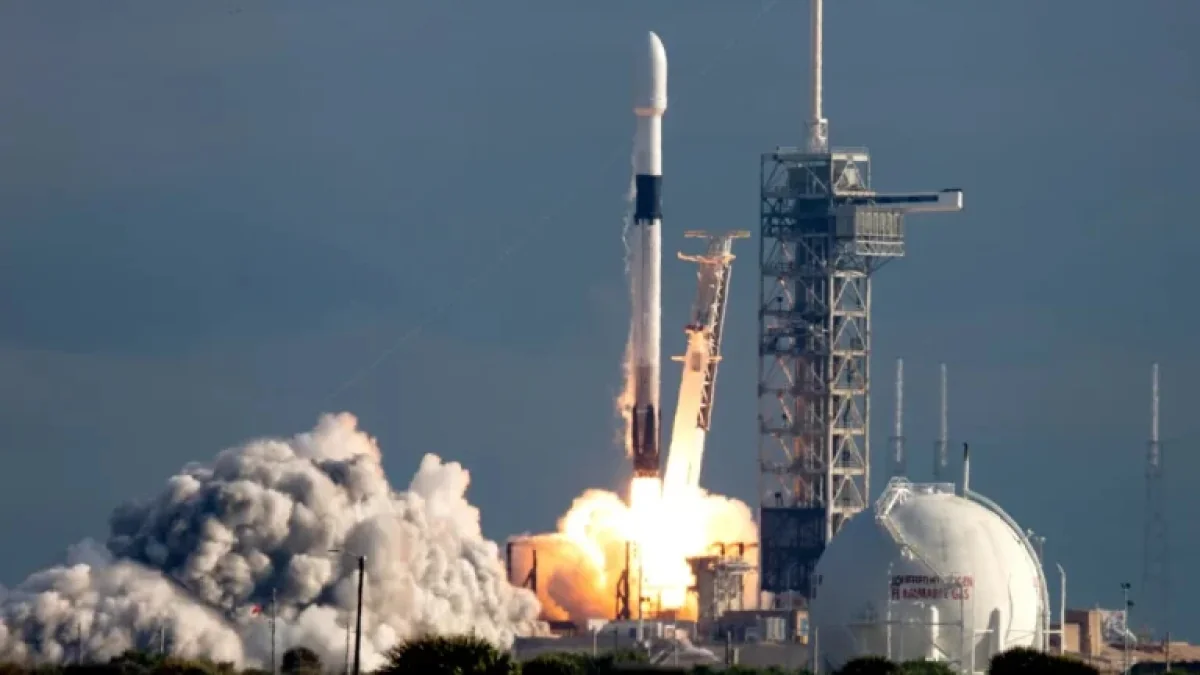
Avoid SpaceX's Unprecedented IPO: Potential Ultimate Meme Stock Warning
The anticipated initial public offering (IPO) of SpaceX is generating significant buzz. Reports indicate that the company has filed confidentially, aiming to raise roughly $75 billion. This valuation could place SpaceX between $1.75 trillion and $2 trillion, marking it as the largest IPO ever. Such a valuation would elevate it among elite stocks with market capitalizations exceeding $1 trillion. Understanding SpaceX's Unique Position SpaceX, founded by Elon Musk, revolutionizes space travel through reusable rockets. It also operates the Starlink satellite network, providing high-speed internet globally. Despite its groundbreaking advancements, the company's IPO could unravel as the ultimate meme stock, influenced heavily by retail investors. The Meme Stock Phenomenon Meme stocks are typically characterized by inflated valuations and trading patterns detached from fundamentals. This phenomenon surged during the pandemic, propelled by the GameStop incident. Investors have increasingly driven these stocks, spurred by the prospect of artificial intelligence enhancing market performance. Potential IPO Details Recent reports suggest that SpaceX could report an $8 billion profit in 2025, with an estimated revenue of around $16 billion. At a $1.75 trillion valuation, this would equate to a staggering 219 times its trailing earnings and over 109 times its revenue. Such metrics highlight the volatility associated with SpaceX's potential public debut. Retail Investor Opportunities * SpaceX plans to dedicate up to 30% of its IPO to retail investors. * This figure is significantly higher than the typical allocation of around 10%. * This strategy may amplify trading activity and complicate conditions for short sellers. Warnings for Investors As the IPO date approaches, the excitement surrounding SpaceX is palpable. Many investors might be tempted to buy shares regardless of price. It's crucial to proceed with caution. The space sector is uncharted territory, and while SpaceX may capture a significant market share, the future remains uncertain. The Impact of Lock-Up Provisions Most IPOs include lock-up provisions, preventing insiders from selling shares for a designated period, usually ranging from 90 to 180 days. This means early investors could see substantial returns after years of holding their stakes. Historical trends from 2025 suggest that many prominent IPOs experienced price drops following their initial surge. SpaceX's scenario might be even more pronounced due to its high valuation and intense excitement. In summary, while SpaceX's upcoming IPO holds immense potential, investors should approach it with caution. The landscape of modern stock trading, especially concerning meme stocks, may lead to unpredictable outcomes. Patience may prove to be a wiser strategy for those considering a stake in this unprecedented offering.
U.K. financial regulators urgently assess risks of Anthropic's latest AI model, report says
U.K. financial regulators are holding urgent talks with the government's cyber security agency and major banks to assess risks posed by the latest artificial intelligence model from Anthropic, the Financial Times reported on Sunday. Officials at the Bank of England, the Financial Conduct Authority and HM Treasury are in talks with the National Cyber Security Centre to examine potential vulnerabilities in critical IT systems highlighted by Anthropic's latest AI model, the newspaper said. Representatives from major British banks, insurers and exchanges are expected to be briefed on the cyber security risks posed by the model, Claude Mythos Preview, at a meeting with regulators in the next fortnight, it said, citing two people briefed on the talks. Reuters could not immediately verify the report. Anthropic did not respond to Reuters' request for comment while the BoE declined to comment and the Treasury, NCSC and FCA were not immediately available for comment. Anthropic claims its new AI model, Mythos, is a cybersecurity 'reckoning' The move follows a meeting called by U.S. Treasury Secretary Scott Bessent with major Wall Street banks on the model's cyber risk potential, Reuters reported on Friday, citing two sources. The AI startup has said the model is being deployed as part of "Project Glasswing," a controlled initiative under which select organizations are permitted to use the unreleased Claude Mythos Preview model for defensive cyber security purposes. In a blog post earlier this month, the startup said the model had already identified "thousands" of major vulnerabilities across operating systems, web browsers and other widely used software.

SpaceX to land in your 401(k) no matter what. Michael Burry flags retirement savings are 'exit liquidity' for insiders
Elon Musk's SpaceX confidentially filed for what could be the largest IPO in financial history on April 1, targeting a $1.75 trillion valuation and a raise of up to $75 billion -- more than triple the record for the largest U.S. IPO, set by Alibaba in 2014 (1). If the company lists on Nasdaq this June as expected, the stock could land in your retirement portfolio within weeks. And some of Wall Street's loudest skeptics think that's a problem. Must Read * Thanks to Jeff Bezos, you can now become a landlord for as little as $100 -- and no, you don't have to deal with tenants or fix freezers. Here's how * Robert Kiyosaki this 1 asset will surge 400% in a year and begs investors not to miss this 'explosion' * Taxes are going to change for retirees under Trump's 'big beautiful bill' -- here are 4 reasons you can't afford to waste time How it ends up in your 401(k) in 15 days That's thanks to Nasdaq's new "Fast Entry" rule, approved March 30, which slashes the index inclusion waiting period from three months to just 15 trading days for any newly listed company whose market cap ranks in the top 40 of the Nasdaq-100 (2). The rule also waives the existing requirement that at least 10% of shares be available for public trading (3). SpaceX clears those hurdles by a wide margin. At $1.75 trillion, it would be a top-10 company from day one -- meaning every ETF and index fund tracking the Nasdaq-100, including the roughly $400 billion Invesco QQQ (NASDAQ:QQQ), would be required to buy SpaceX shares almost immediately after the IPO, at whatever price the market dictates. 'Your 401(k) is the exit liquidity' George Noble, a former Fidelity fund manager with more than four decades on Wall Street, called the proposal "the most SHAMELESS structural manipulation of a major index I've ever seen" in a viral Substack post in March. Michael Burry, the investor behind The Big Short, shared Noble's critique with his more than one million followers on X, calling it a "must read" (4). The concern: with a float potentially as low as 5%, that $1.75 trillion valuation translates to roughly $87.5 billion in publicly tradable stock. The full Nasdaq-100 ecosystem represents more than $1.4 trillion in exposure across ETFs, mutual funds and derivatives (5). The rules, Noble wrote, are "being rewritten to benefit IPO issuers and early-stage insiders." When lockup periods expire 90 to 180 days later, insiders holding the vast majority of shares can sell into artificially supported passive demand.
UK financial regulators rush to assess risks of Anthropic's latest AI model, FT reports
British financial regulators are holding urgent talks with the government's cybersecurity agency and major banks to assess risks posed by the latest artificial intelligence model from Anthropic, the Financial Times reported on Sunday. Officials at the Bank of England (BoE), the Financial Conduct Authority (FCA) and HM Treasury are in talks with the National Cyber Security Centre (NCSC) to examine potential vulnerabilities in critical IT systems highlighted by Anthropic's latest AI model, the newspaper said. Representatives from major British banks, insurers and exchanges are expected to be briefed on the cybersecurity risks posed by the model, Claude Mythos Preview, at a meeting with regulators in the next fortnight, it said, citing two people briefed on the talks. Reuters could not immediately verify the report. Anthropic did not respond to Reuters' request for comment, while the BoE declined to comment, and the Treasury, NCSC and FCA were not immediately available for comment. Read More: IBM to pay $17 million to settle US government probe over DEI The move follows a meeting called by US Treasury Secretary Scott Bessent with major Wall Street banks on the model's cyber risk potential, Reuters reported on Friday, citing two sources. The AI startup has said the model is being deployed as part of "Project Glasswing", a controlled initiative under which select organisations are permitted to use the unreleased Claude Mythos Preview model for defensive cybersecurity purposes. In a blog post earlier this month, the startup said the model had already identified "thousands" of major vulnerabilities across operating systems, web browsers and other widely used software.

Weekend Round-Up: Microsoft Azure's Growth, Broadcom's New Deals, Meta's AI Launch And The Anthropic-Pala
This week in the tech world was a rollercoaster ride, with major players like Microsoft Corporation, Broadcom Inc. and Meta Platforms Inc. making headlines. Let's dive in the details: Microsoft Azure's Growth Outlook Remains Strong Despite concerns over a $150 billion in spending, Microsoft Azure is still expected to outperform estimates, according to analyst Slowinski. He anticipates Azure's growth to be around 39% in constant currency for the fiscal third quarter, slightly above consensus. He also expects mid-teens growth for Microsoft 365 Commercial Cloud. Read the full article here. Broadcom Climbs On New Deals With Google, Anthropic Broadcom revealed in an SEC filing an expanded long-term partnership with Google to power the tech giant's future AI infrastructure. Additionally, Broadcom, Google and Anthropic have deepened their strategic collaboration. Read the full article here. Meta Launches Muse Spark, Betting Big On Superintelligence Meta Superintelligence Labs has launched Muse Spark, the first in the new Muse series. The AI model offers competitive performance in multimodal perception, reasoning, health, and agentic tasks. Read the full article here. SpaceX Reports $5 Billion Loss Despite High Revenue Elon Musk's SpaceX reportedly recorded a loss of nearly $5 billion last year, despite generating over $18.5 billion in revenue. The loss includes figures from xAI, an AI firm founded by Musk and acquired by SpaceX in February 2026. Read the full article here. Anthropic vs. Palantir: The Debate Continues Read the full article here. Disclaimer: This content was partially produced with the help of AI tools and was reviewed and published by Benzinga editors. Image via Shutterstock Market News and Data brought to you by Benzinga APIs To add Benzinga News as your preferred source on Google, click here.

Wall Street strains to justify SpaceX's $1.75-trillion price tag
Wall Street is reaching for some unusual yardsticks to price Elon Musk's SpaceX. At least one of SpaceX's large institutional investors is privately benchmarking the rocket and satellite company not against aerospace rivals like Boeing or telecommunications giants like AT&T, but against market darling Palantir Technologies and AI infrastructure plays like GE Vernova and Vertiv. This is in a bid to justify a US$1.75-trillion valuation ahead of what could be the largest IPO in history. The framework, described to Reuters for the first time by a source familiar with the company's thinking, illustrates the unusual challenge of pricing a company with no obvious public peers -- and the lengths to which Wall Street is going to rationalise a premium valuation. SpaceX has confidentially filed for a US IPO. The company is scheduled to hold an analyst day on 21 April. At a potential valuation of $1.75-trillion, SpaceX looks expensive by many traditional measures, including comparisons to the earnings and revenue multiples at firms often cited as reference points for parts of its business. In space that means Boeing and Lockheed Martin, whose United Launch Alliance joint venture competes with SpaceX in launch services. In internet access, the peers would be AT&T and Verizon. But financial backers of the firm, on track to raise $75-billion in an IPO this year, contend that comparisons to established firms in legacy businesses miss the point of SpaceX and other Musk companies -- to take advantage of the emergence of long-term, "secular" economic shifts at a time when few competitors are equipped to do so. Musk's companies have historically commanded rich multiples in part because investors are betting on him personally -- Tesla being the clearest example -- and SpaceX investors expect that dynamic to carry over into any public offering. It's "pretty darn exciting" to sell into "the largest total addressable market in human history" -- a potential $370-billion in space business, SpaceX chief financial officer Bret Johnsen told IPO bankers on a conference call last week, according to two people familiar with the matter. He tabbed the potential market for the firm's Starlink internet service at $1.6-trillion, the people said. SpaceX did not respond to a request for comment. Finding the right comparables for SpaceX lies at the centre of a fierce debate over the pricing of the massive IPO, as bankers and investors grapple with how to value the company despite few, if any, closely comparable public peers. It is common for investors and bankers to sort for comparables by sector, using the longstanding assumption that industry is a good proxy for financial opportunity and risk. But many investors contend that comparable companies do not need to operate in the same industry -- because, in this view, what matters are a firm's potential cash flows, growth profiles and risk characteristics. This approach holds that a better comparison for SpaceX comes from companies selling into the AI data centre buildout, which have famously been rewarded with rising shares and high multiples. For smaller funds, the calculus is different, said Jay Bala, portfolio manager at Toronto-based AIP, which manages roughly $100-million in assets, a large portion concentrated in SpaceX. "I'm piggybacking on the largest funds in the world. A huge amount of due diligence has already been done. I'm not going to second-guess some of the biggest investors on the planet," he said. He acknowledged it is difficult to obtain detailed financial information about SpaceX: "You can only get so much. It's hard to get numbers sometimes." For Starlink -- or what SpaceX calls its "connectivity" business -- the reflexive benchmarks are legacy telecoms firms, but some investors argue those comparisons are skewed by ageing fixed infrastructure, saturated domestic markets and years of modest growth. "I wouldn't look at a legacy AT&T and Verizon as being very relevant to the economic model for Starlink, even though they're both in the business of giving you communication," a senior executive at one of SpaceX's large institutional investors said, speaking on condition of anonymity to discuss confidential internal work. Instead, SpaceX investors point to Palantir for its secular growth, high return on invested capital, good margins and asset-light composition -- qualities that fans say justify the high multiples the stock commands and suggest greater opportunities down the road. Palantir is well known as one of the priciest stocks in the market, recently trading at 43x expected revenue and 75x earnings. Sceptics say those levels are likely unsustainable, but SpaceX fans contend that the figures show that premium valuations are attainable if backed by outstanding financial performance. That said, at $1.75-trillion, even Palantir would be cheaper on some of these measures than SpaceX, which would trade at 110x 2025 revenue estimates, according to a PitchBook calculation. "Investors should size positions with the understanding that they are paying a platform premium today for infrastructure monopoly economics tomorrow," PitchBook analyst Franco Granda said in a note last month. For the rocket manufacturing side of the business, SpaceX investors contend that the firm's accomplishments - for instance, it has built a reusable launch system, driven down unit costs dramatically and expanded into a commercial market where demand for launch capacity continues to grow -- demand valuations far above those prevailing at Lockheed, which traded recently at around 20x next year's expected earnings. Boeing's current high multiples mostly reflect its state as a turnaround story. Instead, they turn to industrial names such as GE Vernova and Vertiv -- companies whose stocks have soared on the back of AI data centre spending -- arguing that SpaceX's launch operations deserve a similar re-rating to the "picks and shovels" of the data centre age. Even these preferred comparisons do not look a lot like SpaceX, however. GE Vernova was recently trading at around 30x expected cash flow and 4x last year's revenue. Vertiv, which sells power and cooling equipment for data centres, traded recently at 19x expected operating profit and 6x last year's sales. Bankers and investors say SpaceX is difficult to price because of the company's unique space operations and AI business, which is particularly difficult to value at an early stage. "Pricing is always going to be messy here," said Aswath Damodaran, a valuation expert and finance professor at New York University's Stern School of Business. "Nobody else has that capacity to launch satellites in numbers and at the price that they can do -- that's their big advantage." He adds that much of the current pricing reflects investors justifying their decision to purchase the shares rather than relying on traditional metrics. "They're hoping there's enough mood and momentum behind SpaceX, and when it goes public, the mood and momentum will take the stock up. "They've made the decision already that SpaceX is a great buy," Damodaran said. "Now they're looking for some way that they can justify that, and this pricing sounds like that exposed rationalisation." -- Echo Wang, with Joey Roulette, (c) 2026 Reuters
NASA Changes Moon Plan: Landing Now Depends On SpaceX Or Blue Origin
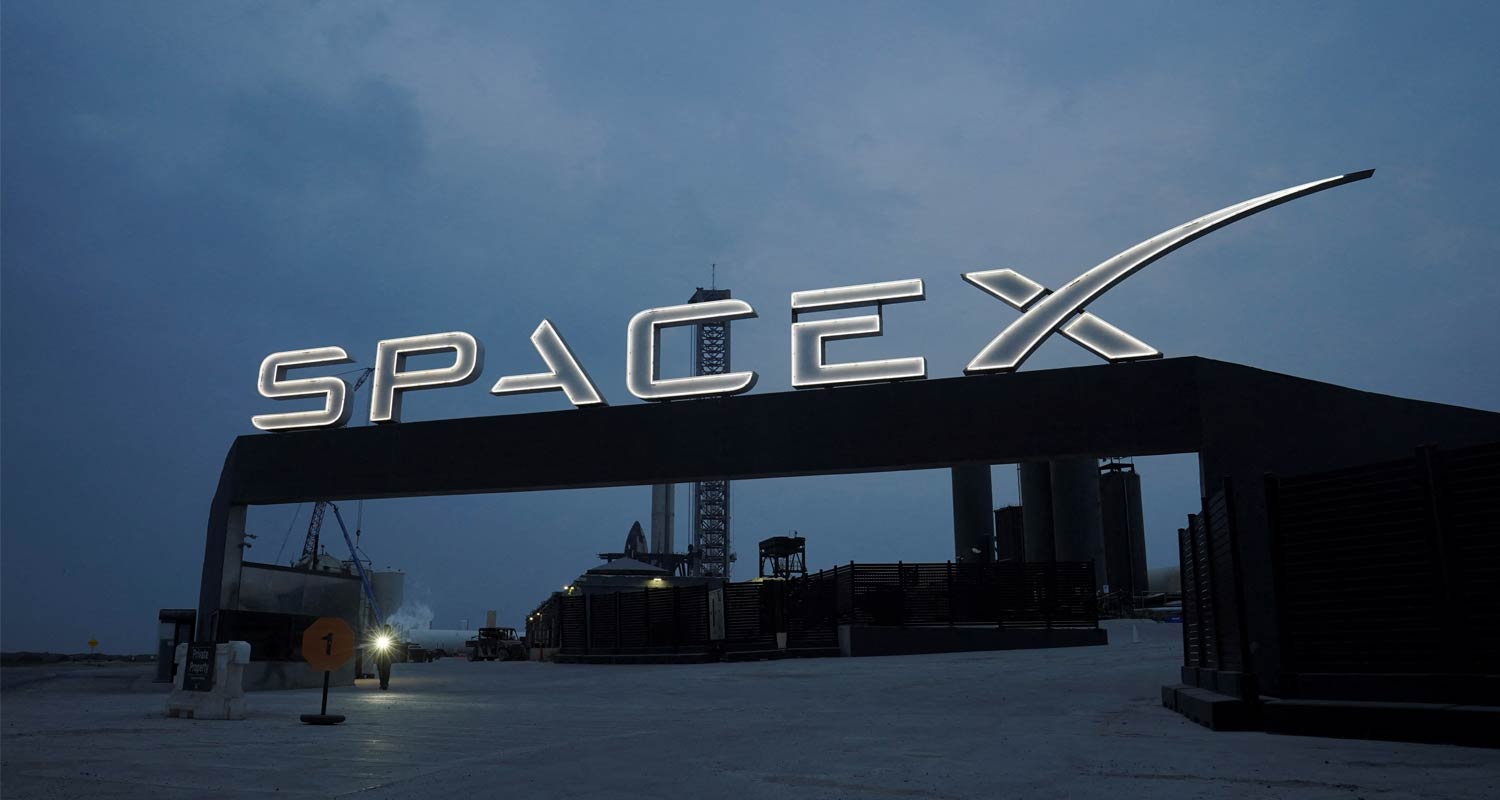
Add Yahoo as a preferred source to see more of our stories on Google. In the end, NASA's Artemis II mission was iconic in multiple ways. With three American astronauts and one Canadian, a partly European-built Orion spacecraft and an Artemis program with 60 supporting countries, it was a timely reminder of what's possible when nations come together. With fabulous images of Earthset beamed across the planet from as far away as humans have ever been from it -- 252,756 miles (406,771 kilometers) -- all eyes turn to what NASA will do next. The space agency plans to put two astronauts on the moon this decade and, in the years after, build a permanent lunar base. Here's everything we know about launch dates and details of Artemis III, Artemis IV and beyond. Key Facts The Artemis program was officially named and announced by NASA in May 2019, when Artemis III was intended to land "the first woman and next man" on the lunar South Pole in 2024. Since then, the uncrewed Artemis I test flight launched in 2022, and Artemis II is complete. On March 3, NASA revealed a revision in the Artemis program. Artemis III has now been re-classified as a test mission during which the Orion spacecraft will rendezvous and dock in low Earth orbit with commercial lunar landers -- the SpaceX Starship Human Landing System (HLS) and Blue Origin's Blue Moon. It is scheduled for launch in mid-2027. NASA's Artemis IV mission has now become the moon landing mission. In a complex mission, a crew will travel to lunar orbit in an Orion capsule and rendezvous with a commercial lunar lander. Two crew members will descend to the surface and spend about a week near the moon's south pole before returning to lunar orbit to join their crew for the journey back to Earth. It's tentatively scheduled for early 2028. Beyond Artemis IV, frequent moon landings are planned -- Artemis V in late 2028 and further landings each year -- as NASA attempts to create a permanent presence on the moon by building a moonbase close to the lunar South Pole. Will Nasa Really Land On The Moon In 2028? According to NASA, the Artemis IV mission, "will be one of the most complex undertakings of engineering and human ingenuity in the history of deep space exploration." That's before they even get to the lunar surface. The plan was for SpaceX's Starship HLS to be refueled in Earth orbit -- something that would take 15 flights of other Starships -- before going into lunar orbit, where it would rendezvous with NASA's Artemis III crew in Orion. SpaceX was originally contracted to provide its Starship IHS for NASA's first two missions to land on the moon, with Blue Origin asked to provide a lander for subsequent missions. However, with SpaceX beset by delays, NASA invited others to bid in October 2025. It's effectively now a straight race between SpaceX and Blue Origin, with NASA intending to test whichever lander is ready for its Artemis III crew. If both companies get a lander ready in time, an Elon Musk vs. Jeff Bezos face-off in space -- with NASA as the judge -- is sure to keep interest in Artemis alive. The Politics Of Nasa The Artemis II crew's landmark lunar flyby took place on April 6, during the fallout from President Trump's threats to strike Iran's power plants and bridges. As well as sidestepping the opportunity to share in the reflected glory of Artemis II -- arguably NASA's biggest triumph in over 50 years -- the White House published its FY2027 discretionary budget request soon after the mission's launch. It includes a $5.6 billion cut to NASA's discretionary budget, a 23 percent decrease from 2026. Further Reading MORE FROM FORBESNASA's New Moon Base Plan Explains Why It's Going Back To The Moon MORE FROM FORBESArtemis Astronauts See Earthrise, Earthset And A Total Solar Eclipse MORE FROM FORBESAstronauts Share Spectacular Earth Images From Halfway To The Moon MORE FROM FORBESIn Photos: Artemis II Launches Orion Moonship On Iconic Mission MORE FROM FORBESNASA's Artemis 2 Launches: 4 Astronauts Begin Moon Mission This article was originally published on Forbes.com
Spotlight - Iran believes they hold the cards amid 'dysfunction & chaos in US national security decision-making'
One of your browser extensions seems to be blocking the video player from loading. To watch this content, you may need to disable it on this site. François Picard is pleased to welcome Aaron David Miller, former State Department Middle East negotiator, and Senior Fellow at the Carnegie Endowment for International Peace. Miller has spent decades working in diplomacy, and he does not see a coherent strategy playing out here, just improvisation shaped by pressure, personality, and shifting leverage. The negotiations surrounding Iran, Israel, and Lebanon are not driven by trust or a shared vision of resolution, but by tactical necessity and asymmetric perceptions of advantage. According to Miller, the United States is seeking an exit from a conflict it chose to enter, while Iran perceives itself as strategically ascendant and therefore in no rush to compromise, despite widespread damage from relentless airstrikes. The diplomatic architecture being assembled, through intermediaries, informal envoys, and unclear mandates, reflects not strength, but fragmentation within decision-making processes. Progress will not emerge, Miller argues, from symbolic gestures or improvised channels, but from direct, disciplined negotiation grounded in an understanding of history, geography, and the legitimate interests of all actors involved.

Lufthansa Pilots To Go On 2-Day Strike Over Pay, Pensions; 800 Flights Cancelled, Travel Chaos Across Europe
Flights to a variety of locations in West Asia, including Azerbaijan, Egypt, Bahrain, Iraq, Israel, Yemen, Jordan, Qatar, Kuwait, Lebanon, Oman, Saudi Arabia and the United Arab Emirates, are not likely to be affected by this strike, according to reports. Additionally, the Cockpit Association initiated the strike due to failure of the airline to conduct meaningful negotiations during this period. "The Cockpit Union feels compelled to take this step after the employers showed no discernible willingness to reach a solution in several collective bargaining disputes," NDTV quoted the organisation. Cockpit Union President Andreas Pinheiro stated that this action followed a lengthy period of unsuccessful negotiations, and the decision to strike was withheld through the Easter holiday to allow time for negotiations to create contracts. "Despite a deliberate decision not to take strike action over the Easter holidays, no serious offers were forthcoming. During this period, there was neither a response nor any discernible willingness to engage in talks on the part of the employers," union President Andreas Pinheiro said.

Chaos strikes Sydney Airport as dozens of flights canceled due to weather
Australian travelers are facing widespread disruption after dozens of scheduled flights to and from Sydney Airport on Sunday were canceled due to high winds. The chaos has left the plans of hundreds of travelers up in the air, with Sydney Airport's online flight board showing a flurry of cancellations impacting Virgin Australia, Qantas and Jetstar. As of 5:30 p.m. on Sunday, there were 33 cancelled flights that were previously scheduled to arrive at Sydney Airport, and 24 cancelled departures from the airport, along with dozens of delayed flights showing on its website. The nation's air navigation service provider, Airservices Australia, enacted single runway operations at Sydney Airport on Sunday morning. It's expected that operations will soon return to normal with dual runway use, as winds have eased as of Sunday night. Earlier, the move was made to reduce to a single runway in order to "manage strong westerly winds affecting the parallel north-south runways," an Airservices Australia spokesperson told news.com.au. "The decision to move to single runway operations was made in co-operation with our airline customers and the Bureau of Meteorology and was in line with international safety regulations for runway crosswinds." Airservices said it issued an advance notice of the conditions to airlines last night in order to assist them in making any necessary changes to flight schedules. However, there will be delays. "Delays are expected," the spokesperson said. "We will continue to work closely with industry to minimise impacts for the traveling public. "Decisions regarding flight cancellations are a matter for individual airlines and it is recommended that passengers check with their airline carrier for possible changes to their travel arrangements." A spokesperson from Virgin Australia told news.com.au: "Some services on Virgin Australia's network have been impacted by adverse weather in Sydney today, Sunday 12 April 2026. "The safety of our guests and crew is our top priority, and our meteorologists continue to closely monitor the weather system. "We regret the impact of this on guests' travel plans and are working hard to ensure they reach their destination as soon as possible." Meanwhile, Qantas and Jetstar consolidated a number of flights to help minimize delays and have been contacting customers directly if there are any changes to their flights. Most Qantas and Jetstar passengers impacted by cancellations are being offered alternative flights within the next 24 hours.

Myths, phobia, Anthropic Mythos
Not too long ago, before the Iran war, the Claude versions of the AI-giant, Anthropic, wiped out a couple of trillion dollars from tech firms. The Tsunami waves hit the Indian shores, as IT firms lost valuations that were unbelievable, despite the rapid declines in 2025. Now, the main competitor of ChatGPT has frightened major banks, and stocks of leading cybersecurity firms. The details about the mythical 'Claude Mythos Preview' prompted an urgent, emergency meeting between the Federal Reserve Chair, US treasury secretary, and CEOs from leading names such as Bank of America, Goldman Sachs, and Citigroup. Mythos, like a mythological virtual tool, can find flaws in software, operating systems, and web browsers that may be hidden for decades. It found one that was 27 years old, and another, which was 16 years old, and had evaded detection in five million automated tests. In a jiffy, the new, experimental AI model questioned the cybersecurity measures across sectors, systems, and especially financial networks. Big banks have consistently highlighted this area as the biggest risk, as AI emerges as a huge threat that will require better defense. Although Mythos may do the latter work, it points to former dangers. The scare is potent despite Claude's stance that the project or tool will not be made public, access will be strictly controlled, and through Project Glasswing, it will collaborate with tech giants such as Amazon, Google, Apple, Cisco, Microsoft, Nvidia, and Linux. The project will quietly, and mostly invisibly, scan critical software, and secure them against possible cyber attacks in the future. But no one is getting fooled. If Anthropic can develop it, so can others. In fact, there is a chat that competitor ChatGPT has a similar model. An AI security firm claimed smaller, cheaper models with the same capabilities can crop up. Experts feel that the threat is overblown. Yann LeCun, former chief AI scientist, Meta, dismissed the panic as an "overblown theatrics." His non-technical equation is, 'Mythos drama = BS from self-delusion.' Another AI researcher wrote that "we were played." Such experts think that the Mythos version is only 'incrementally better' than its predecessors, and is not a breakthrough. While they agree with the risks, they cannot "ignore that Anthropic has a history of scare tactics." The AI giant is a "little ahead" of competition, but not "overwhelmingly ahead." But how much time before the latter turns out to be true? However, this is aided with the financial incentives, and goodies that may land in Anthropic's lap because of the Mythos exposure. According to media reports, the AI firm has tripled annual revenues to more than $30 billion, and is ready for a massive IPO (Initial Public Offering). So is OpenAI with its ChatGPT tools. Hence, there is an investment, stock-listing race between the two. Although it will not matter, egos will tussle to get bigger and better valuations, and list early. "A model too dangerous to release, available only to the world's largest corporations, that reads as easily as a safety decision as it does a sales pitch," states a tongue-in-cheek, sarcastic, and cheeky media report. Like it or not, the debate will continue until the next major cyberattack on a network or browser under Mythos' radar, or until the fear recedes, and then dies down as most scares do. Still, many tech firms are willing to treat the new Claude version as the real thing, or "genuine inflexion point." One of the CEOs, whose firm is a part of Project Glasswing, said that "what once took months now happens in minutes with AI." A chief security officer dubbed it a "threshold moment with 'no going back.'" Obviously, these firms are running scared. Their systems, defensive measures, and cybersecurity tools may be in disarray. They have reputations to protect. They will not take chances, and leave no stone unturned, especially when the tool developer is willing to cooperate and collaborate. If Mythos can spot something, let us go with it. If it cannot, so be it, and it does not matter. It is a small investment compared to what it claims to protect. It is worth the while. As we mentioned earlier, there is no guarantee of what the other firms may do in the future, what they may develop, and sell publicly. At present, experts are still trying to assess the contours of reality. "The gap between what Anthropic has shown, and what independent observers can verify is the central tension.... A model that can autonomously generate exploits for hardened systems... would represent a genuine shift in the balance between attackers and defenders. If the capability is as described, the decision to withhold public release is defensible on safety grounds. But the AI industry has a pattern of making dramatic capability claims that later prove narrower than initially presented, and the absence of third-party validation leaves room for skepticism," states a media report. For many observers, as we mentioned, it depends on what will happen if the same capability lands in different hands. If the attackers gain access via leaks, thefts, mistakes, insiders, and what not, how will one assess the future damage, and who will one blame. In essence, attackers can develop their own versions which, even if not this successful, may be able to spot weak points in some systems and browsers. In fact, Mythos may enthuse and encourage them to work harder. They know that someone has done it, and so it can be done. "Several developments will determine how this story evolves. First, independent validation: If trusted third-party security teams are finally allowed to publish... results from their own testing of Mythos Preview, that could either bolster or temper Anthropic's claims. Second, partner transparency: Statements... would clarify how tightly access is controlled, and what oversight mechanisms are in place. Third, policy response bears watching. Governments and standard bodies may use cases like Mythos Preview to argue for mandatory disclosure regimes, licensing frameworks, or safety evaluations for AI systems with significant cyber capabilities," explains a media report. These will need to balance innovation with extreme risk mitigation. Hence, there are several sides and angles to the story. It is not a simple case of a tool that may or will shatter a specific segment of the tech business universe, as was the case with the decimation of the values of enterprise software firms not too long ago. This includes notions about hype, seclusion, sharing, access, and abilities.

Iran believes they hold the cards amid 'dysfunction & chaos in US national security decision-making'
François Picard is pleased to welcome Aaron David Miller, former State Department Middle East negotiator, and Senior Fellow at the Carnegie Endowment for International Peace. Miller has spent decades working in diplomacy, and he does not see a coherent strategy playing out here, just improvisation shaped by pressure, personality, and shifting leverage. The current negotiations surrounding Iran, Israel, and Lebanon are not driven by trust or a shared vision of resolution, but by tactical necessity and asymmetric perceptions of advantage. According to Miller, the United States is seeking an exit from a conflict it chose to enter, while Iran perceives itself as strategically ascendant and therefore in no rush to compromise, despite widespread damage from relentless airstrikes. The diplomatic architecture being assembled, through intermediaries, informal envoys, and unclear mandates, reflects not strength, but fragmentation within decision-making processes. Progress will not emerge, Miller argues, from symbolic gestures or improvised channels, but from direct, disciplined negotiation grounded in an understanding of history, geography, and the legitimate interests of all actors involved.

Middle East crisis triggers big chaos in crude oil market, traders and refineries globally rush to store as much as possible
The shortfall in oil supplies originating from the Middle East is now being acutely felt. New Delhi: While the situation in West Asia may appear calm on the surface, a distinct sense of unease prevails within the inner corridors of the oil market. In the crude oil sector, a fierce battle has erupted over immediate supply. Traders and refineries across the globe have scrambled to stockpile crude oil available for immediate delivery -- at any cost. Crude Falls Over Ceasefire Talks According to a report by The Economic Times, a significant and startling divergence is currently evident between the futures market and the actual physical market for crude oil. Driven by hopes of a ceasefire, the price of crude oil for June delivery in the futures market plummeted by 13 percent, settling at approximately $95 per barrel. However, the reality on the ground presents a starkly different picture. Dated Brent Too Fluctuates In the North Sea -- the most critical market for crude oil -- traders placed 40 bids for supply last week, yet only four were successful in securing oil. The situation is such that deals for oil deliveries scheduled for the coming weeks have surged past the unprecedented level of $140 per barrel. "Dated Brent" (the benchmark for the physical market) -- which was already at record highs prior to the conflict -- had touched $144 just before the ceasefire announcement. Although it has since retreated to $126, this figure still stands nearly $30 higher than futures prices. Traders are currently willing to pay a hefty premium of $22 to $25 above the benchmark price to secure immediate delivery. Shortfall in Oil Supply Is Now Being Felt The shortfall in oil supplies originating from the Middle East is now being acutely felt. The number of ships passing through the Strait of Hormuz remains significantly below pre-war levels. According to Sultan Al Jaber, CEO of the Abu Dhabi National Oil Company, vessels that departed prior to the conflict are now finally reaching their destinations. The world is now truly beginning to feel the impact of that 40-day hiatus during which energy supplies were disrupted. India, China, and Japan Make Separate Arrangements To mitigate this shortage, Asian nations -- which are most heavily reliant on the Middle East for their energy needs -- are now sourcing oil from other corners of the globe. India has ramped up its oil purchases from Venezuela. In just the first week of April, 6 million barrels of oil were loaded for India -- double the volume recorded during the corresponding period in March. Japan is importing oil from the United States and is utilizing smaller vessels transiting through the Panama Canal to ensure expedited delivery. Meanwhile, China has increased its oil purchases from Canada to record-high levels. For refineries, the primary concern has now shifted from pricing to "energy security."

From AI to everything: How Anthropic is taking on tech's old guard - The Economic Times
AI firm Anthropic is disrupting the software market. It launched tools for legal, financial, and HR tasks, impacting partner companies. Anthropic also introduced a cybersecurity tool that scans code for vulnerabilities. This move challenges existing security vendors. Anthropic's strategy focuses on areas where its AI reasoning excels, driving enterprise productivity.
Polymarket Briefly Appears in Google News Results Before Sudden Removal - FinanceFeeds
Polymarket prediction markets briefly appeared within Google News search results alongside established publishers before being removed. The listings surfaced under event-driven queries, placing market-based forecasts next to coverage from outlets such as Reuters and The Guardian. A Google spokesperson confirmed the inclusion was not intentional. "This site briefly appeared in Google News in error, and it is no longer surfacing in News," spokesperson Ned Adriance said in a statement. The incident highlights how structured data from prediction markets can intersect with traditional news distribution systems, particularly when queries are tied to real-world events. In one example cited by Futurism, a search related to the Strait of Hormuz displayed a Polymarket contract predicting vessel transit outcomes alongside standard news reporting. The temporary inclusion points to a growing overlap between news, data platforms, and prediction markets. These markets aggregate user-driven probabilities on future events, offering a form of real-time sentiment that differs from traditional reporting. However, the removal reinforces a key distinction. News platforms are curated around verified reporting, while prediction markets reflect speculative positioning. Blurring these categories introduces editorial and regulatory questions, particularly around reliability, accountability, and user interpretation. The episode also shows how search infrastructure may struggle to differentiate between informational content and market-based forecasts when both are structured around the same underlying events. Despite the removal, Polymarket has been expanding its integration footprint across major platforms. Google previously partnered with Polymarket and Kalshi to incorporate their data into Google Finance, indicating ongoing interest in structured prediction data outside of news surfaces. Other partnerships point to a broader distribution strategy. Elon Musk's X named Polymarket as its official prediction market partner, aiming to embed event-based forecasting within social media. MetaMask has also integrated Polymarket as part of its expansion beyond wallet services, while World App added the platform within its digital identity ecosystem. These integrations reflect a push to position prediction markets as embedded financial tools rather than standalone platforms, increasing accessibility while tying usage to existing user bases. Data on trader performance suggests that profitability remains concentrated among a small group of participants. According to an analysis, only around 1% of traders generate more than $5,000 in monthly profits, and just 0.015% sustain that level over four consecutive months. The distribution becomes even narrower at higher thresholds. Only 0.033% of wallets have exceeded $100,000 in total profits, with some of these likely linked to professional or institutional trading strategies rather than retail participation. These figures indicate that while prediction markets are gaining attention as a new crypto use case, consistent returns remain difficult to achieve for most users. The structure of binary contracts and the presence of sophisticated liquidity providers create conditions where edge is limited for casual participants.

Travel Shock in Dublin as Fuel Protest Chaos Disrupts Over 70 Bus Routes and Leaves City Mobility in Crisis
Published on April 10, 2026 Dublin's public transport network has been thrown into severe disruption as fuel protests entered their fourth consecutive day, triggering widespread changes across the city's bus system. According to official government transport updates, more than 70 Dublin Bus routes have been impacted, with diversions, cancellations, and temporary route terminations creating confusion for both residents and visitors. The unfolding situation has rapidly evolved into a major travel crisis, affecting daily commutes, airport transfers, and tourism mobility across Ireland's capital.Authorities have confirmed that the protests, primarily targeting fuel supply and pricing concerns, have led to road blockades, restricted access zones, and operational safety challenges. As a result, Dublin Bus services have been forced to adapt dynamically, with routes shortened or redirected at short notice. The situation remains fluid, and transport officials are urging passengers to stay updated through official government travel advisories. Over 70 routes affected as emergency transport measures reshape city movement The scale of disruption has been described by officials as one of the most extensive public transport interruptions in recent months. Key arterial routes across Dublin have been either partially suspended or rerouted, with buses unable to access central corridors and major interchanges.Temporary termini have been established on the outskirts of affected zones, forcing passengers to disembark earlier than planned and seek alternative transport. This has particularly impacted tourists unfamiliar with the city layout, many of whom rely heavily on Dublin Bus services for sightseeing and airport connectivity.Government transport updates indicate that route diversions are being implemented in real time, depending on protest activity and road accessibility. Commuters are facing longer travel times, missed connections, and overcrowding on unaffected routes. Tourism movement hit as visitors struggle with sudden route changes The disruption has had a direct impact on Dublin's tourism sector, especially during a period when the city continues to attract international visitors. Popular tourist areas, including central districts and cultural landmarks, have become harder to access due to restricted bus movement.Visitors relying on public transport to explore Dublin are encountering unexpected delays and navigation challenges, with some forced to switch to taxis or walking routes. Airport-bound passengers have also reported difficulties reaching departure terminals on time, raising concerns about missed flights and travel stress.Tourism officials have acknowledged the situation, advising visitors to plan journeys in advance, allow extra travel time, and use verified government sources for updates. The disruption highlights the vulnerability of urban tourism systems to external protest-driven events. Government response focuses on safety and real-time communication Irish transport authorities have emphasized that passenger safety remains the top priority, guiding all operational decisions during the protests. Emergency response teams are working closely with law enforcement to monitor protest activity and ensure safe passage wherever possible.Official government platforms are continuously updating route information, providing real-time alerts on diversions, cancellations, and service resumptions. Travelers are being encouraged to rely solely on government-verified transport channels to avoid misinformation and confusion.Efforts are also underway to coordinate alternative mobility solutions, although officials acknowledge that restoring normal service levels will depend on the resolution of ongoing protests. Travel uncertainty grows as protests continue without clear resolution As the protests show no immediate signs of ending, uncertainty continues to loom over Dublin's transport network. Authorities have warned that further disruptions are likely, with additional routes potentially affected if protest activity expands.The ongoing situation underscores the broader impact of fuel-related demonstrations on urban infrastructure, particularly in cities heavily dependent on bus networks. For travelers, the crisis serves as a reminder of the importance of flexibility, contingency planning, and access to reliable information.Local businesses and tourism operators are also feeling the ripple effects, as reduced mobility limits visitor access and impacts foot traffic in key areas. Travel advisory urges caution as Dublin navigates transport crisis Government-issued travel advisories are urging both residents and visitors to exercise caution while navigating the city. Passengers are advised to check routes before departure, expect delays, and consider alternative modes of transport where possible.The advisory also highlights the importance of staying informed through official updates, as conditions can change rapidly. For tourists, this means adjusting itineraries and allowing extra time for travel between attractions.Despite the challenges, authorities remain committed to restoring normal operations as soon as conditions permit. Until then, Dublin continues to grapple with a high-impact transport disruption that has reshaped travel across the city.
