News & Updates
The latest news and updates from companies in the WLTH portfolio.
Evercore ISI reiterates CoreWeave stock rating on Anthropic deal By Investing.com
Investing.com - Evercore ISI reiterated an Outperform rating and $120.00 price target on CoreWeave (NASDAQ:CRWV) following the company's announcement of a multi-year cloud infrastructure agreement with Anthropic. The stock traded at $102.69, posting an 11.87% gain over the past week, though shares remain down 33.5% over the past six months. CoreWeave announced today a multi-year agreement to provide Anthropic with cloud infrastructure to support the development and deployment of the Claude family of AI models. The company did not disclose specific details related to size or timing but indicated the deal will commence later this year. Anthropic will use CoreWeave's cloud platform to run workloads at production scale. The collaboration will begin with a phased roll-out with potential to expand over time. The Anthropic agreement follows a $21 billion expansion with Meta announced yesterday. CoreWeave stated that nine out of ten leading AI companies run their infrastructure on its platform. Evercore ISI views the deal as providing customer diversification and validation of CoreWeave's platform and its ability to secure data center powered shell capacity. In other recent news, CoreWeave announced a significant expansion of its contract with Meta, adding $21 billion to its existing commitments, which now total $35.2 billion through 2032. This new agreement boosts CoreWeave's pro-forma backlog to approximately $87.8 billion, with Meta accounting for about 40% of it. Additionally, CoreWeave has priced a $3.5 billion convertible notes offering with a 1.75% interest rate due in 2032, an increase from the initially planned $3 billion. The company has also priced a $1.75 billion bond offering at a 9.75% yield, with the notes maturing in 2031. CoreWeave recently entered a multi-year agreement with Anthropic to support the development and deployment of Anthropic's Claude AI models. The compute resources for this partnership are anticipated to become available later this year. In light of these developments, Stifel has maintained its Hold rating on CoreWeave, with a price target of $110. These recent activities highlight CoreWeave's strategic expansions and financial maneuvers as it strengthens its position in the market. This article was generated with the support of AI and reviewed by an editor. For more information see our T&C.
Evercore ISI reiterates CoreWeave stock rating on Anthropic deal By Investing.com
Investing.com - Evercore ISI reiterated an Outperform rating and $120.00 price target on CoreWeave (NASDAQ:CRWV) following the company's announcement of a multi-year cloud infrastructure agreement with Anthropic. The stock traded at $102.69, posting an 11.87% gain over the past week, though shares remain down 33.5% over the past six months. CoreWeave announced today a multi-year agreement to provide Anthropic with cloud infrastructure to support the development and deployment of the Claude family of AI models. The company did not disclose specific details related to size or timing but indicated the deal will commence later this year. Anthropic will use CoreWeave's cloud platform to run workloads at production scale. The collaboration will begin with a phased roll-out with potential to expand over time. The Anthropic agreement follows a $21 billion expansion with Meta announced yesterday. CoreWeave stated that nine out of ten leading AI companies run their infrastructure on its platform. Evercore ISI views the deal as providing customer diversification and validation of CoreWeave's platform and its ability to secure data center powered shell capacity. In other recent news, CoreWeave announced a significant expansion of its contract with Meta, adding $21 billion to its existing commitments, which now total $35.2 billion through 2032. This new agreement boosts CoreWeave's pro-forma backlog to approximately $87.8 billion, with Meta accounting for about 40% of it. Additionally, CoreWeave has priced a $3.5 billion convertible notes offering with a 1.75% interest rate due in 2032, an increase from the initially planned $3 billion. The company has also priced a $1.75 billion bond offering at a 9.75% yield, with the notes maturing in 2031. CoreWeave recently entered a multi-year agreement with Anthropic to support the development and deployment of Anthropic's Claude AI models. The compute resources for this partnership are anticipated to become available later this year. In light of these developments, Stifel has maintained its Hold rating on CoreWeave, with a price target of $110. These recent activities highlight CoreWeave's strategic expansions and financial maneuvers as it strengthens its position in the market. This article was generated with the support of AI and reviewed by an editor. For more information see our T&C.

Anthropic's Claude Code Leak: 500K Lines Exposed - IT Security News
CySecurity News - Latest Information Security and Hacking Incidents, EN On March 31, 2026, Anthropic, the safety-focused AI company behind Claude, accidentally leaked over 500,000 lines of proprietary source code for its Claude Code tool through a public npm package update. This incident, the second such breach in a year, exposed nearly 2,000 TypeScript files via a misincluded debugging file in version 2.1.88, which linked to a publicly accessible zip archive on Anthropic's Cloudflare storage.Security researcher Chaofan Shou quickly spotted the error, sparking rapid mirroring on GitHub where repositories amassed thousands of stars before takedowns.

Anthropic and Google Gave Amazing News to This Semiconductor Company
In today's video, I discuss recent updates affecting Broadcom (NASDAQ: AVGO) and other AI stocks. To learn more, check out the short video, consider subscribing, and click the special offer link below. Will AI create the world's first trillionaire? Our team just released a report on the one little-known company, called an "Indispensable Monopoly" providing the critical technology Nvidia and Intel both need. Continue " *Stock prices used were the post-market prices of April 06, 2026. The video was published on April 06, 2026. The Motley Fool Stock Advisor analyst team just identified what they believe are the 10 best stocks for investors to buy now... and Broadcom wasn't one of them. The 10 stocks that made the cut could produce monster returns in the coming years. Consider when Netflix made this list on December 17, 2004... if you invested $1,000 at the time of our recommendation, you'd have $550,348!* Or when Nvidia made this list on April 15, 2005... if you invested $1,000 at the time of our recommendation, you'd have $1,127,467!* Now, it's worth noting Stock Advisor's total average return is 959% -- a market-crushing outperformance compared to 191% for the S&P 500. Don't miss the latest top 10 list, available with Stock Advisor, and join an investing community built by individual investors for individual investors. Jose Najarro has positions in Alphabet, Marvell Technology, and Nvidia. The Motley Fool has positions in and recommends Alphabet, Broadcom, Marvell Technology, and Nvidia. The Motley Fool has a disclosure policy. Jose Najarro is an affiliate of The Motley Fool and may be compensated for promoting its services. If you choose to subscribe through their link they will earn some extra money that supports their channel. Their opinions remain their own and are unaffected by The Motley Fool.

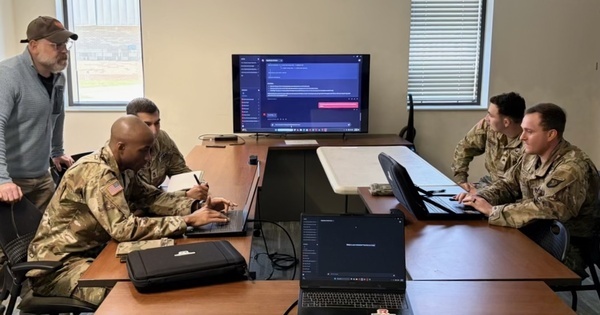
US military turns to smaller AI firms after Anthropic row
WASHINGTON D.C: A rift between the Pentagon and its former top artificial intelligence provider, Anthropic, is rapidly reshaping the U.S. military's AI ecosystem, with smaller startups seeing a surge in demand, funding interest, and contract momentum. In recent weeks, defense-focused AI firms say senior military officials and investors have approached them at a pace rarely seen before, as the U.S. Department of Defense moves to reduce reliance on a single vendor. The shift follows the Pentagon's decision in March to classify Anthropic's products as a "supply-chain risk," triggering a breakdown in relations and a broader push to diversify AI suppliers. A judge later temporarily blocked the Pentagon's blacklisting of the company. Startups, including Smack Technologies and EdgeRunner AI, say they have seen a marked change in engagement from the military and investors. "We've seen a massive increase in demand from customers and the government to get AI solutions fielded since Anthropic was declared a supply-chain risk," said Tyler Sweatt, CEO of Second Front, which helps firms operate on secure Pentagon networks. "Our customers are turning to us as the Pentagon turns to them to deploy quickly in the wake of the Anthropic blowup." For smaller firms, access to Pentagon contracts is a major milestone, often unlocking further government work and signaling credibility to commercial clients. Andrew Markoff, co-founder and CEO of Smack Technologies, said his company had been invited to multiple meetings with military officials following the Anthropic fallout, with a focus on accelerating deployment timelines. "We want more, we want demos, let's talk about how we can move faster," he said, describing the Pentagon's outreach. Tyler Saltsman, CEO of EdgeRunner AI, reported a similar experience. His company had been waiting over a year for a Space Force contract to be approved, but it was finalized within weeks of the Anthropic dispute becoming public. "I can't prove that the Anthropic drama sped this up," Saltsman said, "but I have a sneaky suspicion it did." A Pentagon official said the department would continue to deploy advanced AI capabilities through partnerships with multiple industry players. The urgency reflects a broader reassessment within the Defense Department. A Pentagon technologist previously told Reuters that the fallout with Anthropic highlighted the risks of overdependence on a single AI provider and underscored the need for a more diversified supplier base. The impact is already visible in specific programs. Smack Technologies secured a Marine Corps contract in March 2025 and delivered a prototype by October that compresses operational planning from months to about 15 minutes. Despite initial delays, progress has accelerated sharply since the Anthropic controversy. Markoff said there was "very specific guidance and movement and energy" to push the system into production for combat use in 2026, more than a year ahead of earlier expectations. The company has also seen increased interest from other branches, including the Navy, Air Force, and U.S. Special Operations Command. EdgeRunner AI said engagement from the Navy has intensified, with meetings now taking place several times a week instead of monthly. Both companies are now working to meet higher security classification standards required for sensitive military applications. EdgeRunner said it had been told it could achieve IL-6 clearance, allowing access to secret and top-secret data, within three months, a process that typically takes 18 months or longer. Saltsman said the acceleration reflects both pressure from Pentagon leadership to streamline procurement and the urgency created by the Anthropic situation.
Evercore ISI reiterates CoreWeave stock rating on Anthropic deal By Investing.com
Investing.com - Evercore ISI reiterated an Outperform rating and $120.00 price target on CoreWeave (NASDAQ:CRWV) following the company's announcement of a multi-year cloud infrastructure agreement with Anthropic. The stock traded at $102.69, posting an 11.87% gain over the past week, though shares remain down 33.5% over the past six months. CoreWeave announced today a multi-year agreement to provide Anthropic with cloud infrastructure to support the development and deployment of the Claude family of AI models. The company did not disclose specific details related to size or timing but indicated the deal will commence later this year. Anthropic will use CoreWeave's cloud platform to run workloads at production scale. The collaboration will begin with a phased roll-out with potential to expand over time. The Anthropic agreement follows a $21 billion expansion with Meta announced yesterday. CoreWeave stated that nine out of ten leading AI companies run their infrastructure on its platform. Evercore ISI views the deal as providing customer diversification and validation of CoreWeave's platform and its ability to secure data center powered shell capacity. In other recent news, CoreWeave announced a significant expansion of its contract with Meta, adding $21 billion to its existing commitments, which now total $35.2 billion through 2032. This new agreement boosts CoreWeave's pro-forma backlog to approximately $87.8 billion, with Meta accounting for about 40% of it. Additionally, CoreWeave has priced a $3.5 billion convertible notes offering with a 1.75% interest rate due in 2032, an increase from the initially planned $3 billion. The company has also priced a $1.75 billion bond offering at a 9.75% yield, with the notes maturing in 2031. CoreWeave recently entered a multi-year agreement with Anthropic to support the development and deployment of Anthropic's Claude AI models. The compute resources for this partnership are anticipated to become available later this year. In light of these developments, Stifel has maintained its Hold rating on CoreWeave, with a price target of $110. These recent activities highlight CoreWeave's strategic expansions and financial maneuvers as it strengthens its position in the market. This article was generated with the support of AI and reviewed by an editor. For more information see our T&C.

CoreWeave Signs AI Cloud Deal With Anthropic; Shares Jump
CoreWeave, Inc. is an American technology company founded in 2017, specializing in cloud infrastructure designed for compute-intensive workloads. It has positioned itself as a niche player in a market dominated by generalist giants. Its offering is built on a vertical specialization in artificial intelligence (AI) and related applications, notably high-performance computing (HPC) and graphical rendering. CoreWeave operates a GPU-first architecture, optimized for training and inference of generative AI models. It also targets scientific and financial computing, as well as real-time 3D rendering needs. With its own data centers located in the United States and Europe, the company maintains full control over its infrastructure. This control enables it to deliver high performance, low latency, and flexible deployment capabilities. Some facilities are shared among clients, while others are fully dedicated to a single customer. CoreWeave serves a diverse clientele, ranging from AI startups to research labs, as well as production studios and financial institutions. In addition to its hardware infrastructure, the company develops its own GPU management software. These tools enable intelligent resource allocation, continuous performance optimization, and better cost control. This vertical integration, from hardware to software, enhances the company's competitiveness. CoreWeave stands out through its tailored approach and its ability to meet clients' specific needs. It aims to become the leading provider for AI workloads on a global scale. In a context of surging demand for computing power, its model is appealing due to its specialization and agility.

Mayor, MLGW push xAI to complete water recycling facility
MEMPHIS, Tenn. -- The mayor of Memphis and the head of the city's public utility say they will put pressure on xAI to finish building a promised wastewater recycling facility that is now apparently on hold. The $80 million facility was supposed to use recycled water from a nearby treatment plant to cool the servers in one of xAI's massive Memphis data centers, rather than drawing from the area's drinking water aquifer. "Promises to this community are not optional. A wastewater facility is about protecting our water and our future. I will continue pressing xAI to deliver," Mayor Paul Young said in a social media post Friday. Elon Musk, head of the artificial intelligence company that has built or is building two data centers in Memphis and a third nearby in DeSoto County, said Thursday on X that the company has decided to complete its Colossus 2 data center first. The company, however, is still committed to finishing the wastewater recycling project. In a statement released on X on Thursday, xAI Memphis said: "xAI is committed to building a state-of-the-art water recycling plant in Memphis. This plant will protect billions of gallons of water each year. The team is currently prioritizing other, more immediate projects at the site, but our plans to build the water plant have not changed." Doug McGowen, president and CEO of Memphis Light, Gas & Water, said Friday that he would continue to advocate for the project. McGowen's full statement is below: "I am disappointed to have learned through the media that this project is on hold. I understand that any large project can encounter hurdles. It is imperative for our community that the obstacles are overcome and the project restarted. xAI is building this plant because we asked them to, as an alternative to installing wells or purchasing water indefinitely from MLGW. The price tag shouldn't have surprised anyone. In our very first conversation, we shared that there was an estimate of probable cost of $200M for the facility. The xAI team was optimistic it could be accomplished for $80M. "I am pleased to hear of their recent recommitment to the facility and proud that the City, MLGW and TVA have fulfilled every commitment and delivered on every action necessary for the successful initial operation and expansion of xAI, at no cost to our rate payers or local taxpayers. Further, I am proud that Memphis was the architect for datacenter ratepayer protection legislation. Specifically, Memphis insisted that the costs for all infrastructure needed to support the data center were born by the data center owners, not ratepayers. That model is being codified into law across the nation. "I will continue to advocate for this project as I have when it was first conceived in 2018." The announcement of the first xAI data center in Memphis was in 2024. The company completed its first Colossus supercomputer in southwest Memphis later that year, and the water recycling plant was announced last year.

Evercore ISI reiterates CoreWeave stock rating on Anthropic deal By Investing.com
Investing.com - Evercore ISI reiterated an Outperform rating and $120.00 price target on CoreWeave (NASDAQ:CRWV) following the company's announcement of a multi-year cloud infrastructure agreement with Anthropic. The stock traded at $102.69, posting an 11.87% gain over the past week, though shares remain down 33.5% over the past six months. CoreWeave announced today a multi-year agreement to provide Anthropic with cloud infrastructure to support the development and deployment of the Claude family of AI models. The company did not disclose specific details related to size or timing but indicated the deal will commence later this year. Anthropic will use CoreWeave's cloud platform to run workloads at production scale. The collaboration will begin with a phased roll-out with potential to expand over time. The Anthropic agreement follows a $21 billion expansion with Meta announced yesterday. CoreWeave stated that nine out of ten leading AI companies run their infrastructure on its platform. Evercore ISI views the deal as providing customer diversification and validation of CoreWeave's platform and its ability to secure data center powered shell capacity. In other recent news, CoreWeave announced a significant expansion of its contract with Meta, adding $21 billion to its existing commitments, which now total $35.2 billion through 2032. This new agreement boosts CoreWeave's pro-forma backlog to approximately $87.8 billion, with Meta accounting for about 40% of it. Additionally, CoreWeave has priced a $3.5 billion convertible notes offering with a 1.75% interest rate due in 2032, an increase from the initially planned $3 billion. The company has also priced a $1.75 billion bond offering at a 9.75% yield, with the notes maturing in 2031. CoreWeave recently entered a multi-year agreement with Anthropic to support the development and deployment of Anthropic's Claude AI models. The compute resources for this partnership are anticipated to become available later this year. In light of these developments, Stifel has maintained its Hold rating on CoreWeave, with a price target of $110. These recent activities highlight CoreWeave's strategic expansions and financial maneuvers as it strengthens its position in the market. This article was generated with the support of AI and reviewed by an editor. For more information see our T&C.
AI startups gain ground after Pentagon-Anthropic rift
Startups, including Smack Technologies and EdgeRunner AI, say they have seen a marked change in engagement from the military and investors WASHINGTON D.C: A rift between the Pentagon and its former top artificial intelligence provider, Anthropic, is rapidly reshaping the U.S. military's AI ecosystem, with smaller startups seeing a surge in demand, funding interest, and contract momentum. In recent weeks, defense-focused AI firms say senior military officials and investors have approached them at a pace rarely seen before, as the U.S. Department of Defense moves to reduce reliance on a single vendor. The shift follows the Pentagon's decision in March to classify Anthropic's products as a "supply-chain risk," triggering a breakdown in relations and a broader push to diversify AI suppliers. A judge later temporarily blocked the Pentagon's blacklisting of the company. Startups, including Smack Technologies and EdgeRunner AI, say they have seen a marked change in engagement from the military and investors. "We've seen a massive increase in demand from customers and the government to get AI solutions fielded since Anthropic was declared a supply-chain risk," said Tyler Sweatt, CEO of Second Front, which helps firms operate on secure Pentagon networks. "Our customers are turning to us as the Pentagon turns to them to deploy quickly in the wake of the Anthropic blowup." For smaller firms, access to Pentagon contracts is a major milestone, often unlocking further government work and signaling credibility to commercial clients. Andrew Markoff, co-founder and CEO of Smack Technologies, said his company had been invited to multiple meetings with military officials following the Anthropic fallout, with a focus on accelerating deployment timelines. "We want more, we want demos, let's talk about how we can move faster," he said, describing the Pentagon's outreach. Tyler Saltsman, CEO of EdgeRunner AI, reported a similar experience. His company had been waiting over a year for a Space Force contract to be approved, but it was finalized within weeks of the Anthropic dispute becoming public. "I can't prove that the Anthropic drama sped this up," Saltsman said, "but I have a sneaky suspicion it did." A Pentagon official said the department would continue to deploy advanced AI capabilities through partnerships with multiple industry players. The urgency reflects a broader reassessment within the Defense Department. A Pentagon technologist previously told Reuters that the fallout with Anthropic highlighted the risks of overdependence on a single AI provider and underscored the need for a more diversified supplier base. The impact is already visible in specific programs. Smack Technologies secured a Marine Corps contract in March 2025 and delivered a prototype by October that compresses operational planning from months to about 15 minutes. Despite initial delays, progress has accelerated sharply since the Anthropic controversy. Markoff said there was "very specific guidance and movement and energy" to push the system into production for combat use in 2026, more than a year ahead of earlier expectations. The company has also seen increased interest from other branches, including the Navy, Air Force, and U.S. Special Operations Command. EdgeRunner AI said engagement from the Navy has intensified, with meetings now taking place several times a week instead of monthly. Both companies are now working to meet higher security classification standards required for sensitive military applications. EdgeRunner said it had been told it could achieve IL-6 clearance, allowing access to secret and top-secret data, within three months, a process that typically takes 18 months or longer. Saltsman said the acceleration reflects both pressure from Pentagon leadership to streamline procurement and the urgency created by the Anthropic situation.
Broadcom Locks in Multi-Year AI Wins With Google and Anthropic | Investing.com
After Broadcom slipped below $300 per share in late March, multiple key developments have allowed the stock to stage a significant recovery to around $350. The first was de-escalation with Iran. A Pakistan-brokered two-week ceasefire, announced April 7, lifted indexes broadly. With a beta of 1.24, Broadcom is more volatile than the broad market, and shares of the chip giant benefited disproportionately from the announcement. However, much of the stock's recent jump came as a result of another announcement. On April 7, shares rose more than 6% as Broadcom, Google-parent company Alphabet, and Anthropic revealed an expansion of their partnerships. This provided much-needed evidence that the generally downtrodden sentiment around Broadcom stock lacks justification. Google is Broadcom's longest-standing and largest customer for custom artificial intelligence (AI) chips. Together, the two companies have developed multiple generations of Tensor Processing Units (TPUs) -- the companies' answer to NVIDIA's graphics processing units (GPUs), which have dominated AI buildout since their inception. Still, it is important to note that TPUs and GPUs are not necessarily direct competitors. In fact, they often act as complements to one another, with each focusing on specific workloads for which they are best suited. In a recently released regulatory filing, Broadcom indicated that its relationship with Google will continue for years to come. The company noted that it has entered "into a Long Term Agreement for Broadcom to develop and supply" Google's future generations of TPUs. Thus, the two companies are renewing their TPU relationship over multiple future generations of these chips, demonstrating that Broadcom's most important customer will remain in the fold for the foreseeable future. Additionally, the two firms have entered into a "Supply Assurance Agreement for Broadcom to supply networking and other components to be used in Google's next-generation AI racks through up to 2031." Networking components are separate products from TPUs; they essentially allow TPUs to connect and communicate with each other. With networking equipment accounting for one-third of Broadcom's AI revenue last quarter, this part of the announcement is significant as well. Overall, Broadcom has locked in multi-year agreements with its largest customer in both TPUs and networking, adding substantial long-term visibility to its outlook. Google has traditionally used TPUs for internal purposes, including training and deploying its general-purpose AI models, as well as optimizing business lines like YouTube and Google Ads. However, over recent months, it has become clear that Google will also extend TPU usage to third-party customers. The most notable customer included in this is Anthropic, the company behind Claude, a family of large language models considered by some to be the best AI assistant available. Now, Broadcom, Google, and Anthropic have expanded their collaboration. Beginning in 2027, Anthropic will access approximately 3.5 gigawatts (GW) of TPU-based AI compute capacity through Broadcom. GWs are a commonly used metric to describe the size of data center deployments. Bernstein analyst Stacy Rasgon recently estimated that Broadcom brings in around $20 billion in revenue per GW. This statement adds some important details compared to what was previously known. In its last earnings call, Broadcom said it expects TPU demand from Anthropic to exceed 3 GW. The most recent announcement provides a greater level of confidence around these past claims. Broadcom previously said Anthropic's demand was "expected" to exceed 3 GW. Now, it says Anthropic "will" access over 3 GW while providing a specific figure of 3.5 GW. Additionally, Broadcom says that the 3.5 GWs are part of the multiple GW capacity Anthropic has committed to, strongly suggesting that those GWs are just the beginning of a larger, longer-term commitment. Still, Broadcom added a conservative statement to hedge against potential risks, saying the expansion with Anthropic "is dependent on Anthropic's continued commercial success." Fortunately, Anthropic is growing at a breakneck pace and potentially eyeing an IPO this year. From the end of 2025 to early April, Anthropic says its annual revenue run rate has increased from $9 billion to $30 billion. In other words, the company's run rate has astonishingly tripled in just three months. This provides a significant level of confidence that Anthropic's commercial success will, in fact, continue. Overall, Broadcom continues to lock in long-term partnerships with some of the biggest players in the AI race. While markets have fretted over fears of an AI bubble, which in turn put downward pressure on Broadcom, these companies clearly do not agree. Anthropic's remarkable growth is one of the clearest metrics that pushes back on this idea. It shows that AI demand is real, not theoretical, and is rapidly increasing. Meanwhile, Broadcom is setting itself up for long-term success through its partnerships with leaders in this space.

AI startups gain ground after Pentagon-Anthropic rift
Startups, including Smack Technologies and EdgeRunner AI, say they have seen a marked change in engagement from the military and investors WASHINGTON D.C: A rift between the Pentagon and its former top artificial intelligence provider, Anthropic, is rapidly reshaping the U.S. military's AI ecosystem, with smaller startups seeing a surge in demand, funding interest, and contract momentum. In recent weeks, defense-focused AI firms say senior military officials and investors have approached them at a pace rarely seen before, as the U.S. Department of Defense moves to reduce reliance on a single vendor. The shift follows the Pentagon's decision in March to classify Anthropic's products as a "supply-chain risk," triggering a breakdown in relations and a broader push to diversify AI suppliers. A judge later temporarily blocked the Pentagon's blacklisting of the company. Startups, including Smack Technologies and EdgeRunner AI, say they have seen a marked change in engagement from the military and investors. "We've seen a massive increase in demand from customers and the government to get AI solutions fielded since Anthropic was declared a supply-chain risk," said Tyler Sweatt, CEO of Second Front, which helps firms operate on secure Pentagon networks. "Our customers are turning to us as the Pentagon turns to them to deploy quickly in the wake of the Anthropic blowup." For smaller firms, access to Pentagon contracts is a major milestone, often unlocking further government work and signaling credibility to commercial clients. Andrew Markoff, co-founder and CEO of Smack Technologies, said his company had been invited to multiple meetings with military officials following the Anthropic fallout, with a focus on accelerating deployment timelines. "We want more, we want demos, let's talk about how we can move faster," he said, describing the Pentagon's outreach. Tyler Saltsman, CEO of EdgeRunner AI, reported a similar experience. His company had been waiting over a year for a Space Force contract to be approved, but it was finalized within weeks of the Anthropic dispute becoming public. "I can't prove that the Anthropic drama sped this up," Saltsman said, "but I have a sneaky suspicion it did." A Pentagon official said the department would continue to deploy advanced AI capabilities through partnerships with multiple industry players. The urgency reflects a broader reassessment within the Defense Department. A Pentagon technologist previously told Reuters that the fallout with Anthropic highlighted the risks of overdependence on a single AI provider and underscored the need for a more diversified supplier base. The impact is already visible in specific programs. Smack Technologies secured a Marine Corps contract in March 2025 and delivered a prototype by October that compresses operational planning from months to about 15 minutes. Despite initial delays, progress has accelerated sharply since the Anthropic controversy. Markoff said there was "very specific guidance and movement and energy" to push the system into production for combat use in 2026, more than a year ahead of earlier expectations. The company has also seen increased interest from other branches, including the Navy, Air Force, and U.S. Special Operations Command. EdgeRunner AI said engagement from the Navy has intensified, with meetings now taking place several times a week instead of monthly. Both companies are now working to meet higher security classification standards required for sensitive military applications. EdgeRunner said it had been told it could achieve IL-6 clearance, allowing access to secret and top-secret data, within three months, a process that typically takes 18 months or longer. Saltsman said the acceleration reflects both pressure from Pentagon leadership to streamline procurement and the urgency created by the Anthropic situation.
Anthropic and Google Gave Amazing News to This Semiconductor Company | The Motley Fool
Jose Najarro enjoys investing in the tech market, more importantly, the semiconductor sector. Before partnering with the Fool, Jose worked as a Senior Electrical Engineer for General Dynamics, where he had first-hand experience seeing how emerging technology can change the world. Jose Najarro went to NJIT, receiving his Bachelor's and Master's degree in Electrical Engineering. Jose Najarro has positions in Alphabet, Marvell Technology, and Nvidia. The Motley Fool has positions in and recommends Alphabet, Broadcom, Marvell Technology, and Nvidia. The Motley Fool has a disclosure policy. Jose Najarro is an affiliate of The Motley Fool and may be compensated for promoting its services. If you choose to subscribe through their link they will earn some extra money that supports their channel. Their opinions remain their own and are unaffected by The Motley Fool.

AI startups gain ground after Pentagon-Anthropic rift
Startups, including Smack Technologies and EdgeRunner AI, say they have seen a marked change in engagement from the military and investors WASHINGTON D.C: A rift between the Pentagon and its former top artificial intelligence provider, Anthropic, is rapidly reshaping the U.S. military's AI ecosystem, with smaller startups seeing a surge in demand, funding interest, and contract momentum. In recent weeks, defense-focused AI firms say senior military officials and investors have approached them at a pace rarely seen before, as the U.S. Department of Defense moves to reduce reliance on a single vendor. The shift follows the Pentagon's decision in March to classify Anthropic's products as a "supply-chain risk," triggering a breakdown in relations and a broader push to diversify AI suppliers. A judge later temporarily blocked the Pentagon's blacklisting of the company. Startups, including Smack Technologies and EdgeRunner AI, say they have seen a marked change in engagement from the military and investors. "We've seen a massive increase in demand from customers and the government to get AI solutions fielded since Anthropic was declared a supply-chain risk," said Tyler Sweatt, CEO of Second Front, which helps firms operate on secure Pentagon networks. "Our customers are turning to us as the Pentagon turns to them to deploy quickly in the wake of the Anthropic blowup." For smaller firms, access to Pentagon contracts is a major milestone, often unlocking further government work and signaling credibility to commercial clients. Andrew Markoff, co-founder and CEO of Smack Technologies, said his company had been invited to multiple meetings with military officials following the Anthropic fallout, with a focus on accelerating deployment timelines. "We want more, we want demos, let's talk about how we can move faster," he said, describing the Pentagon's outreach. Tyler Saltsman, CEO of EdgeRunner AI, reported a similar experience. His company had been waiting over a year for a Space Force contract to be approved, but it was finalized within weeks of the Anthropic dispute becoming public. "I can't prove that the Anthropic drama sped this up," Saltsman said, "but I have a sneaky suspicion it did." A Pentagon official said the department would continue to deploy advanced AI capabilities through partnerships with multiple industry players. The urgency reflects a broader reassessment within the Defense Department. A Pentagon technologist previously told Reuters that the fallout with Anthropic highlighted the risks of overdependence on a single AI provider and underscored the need for a more diversified supplier base. The impact is already visible in specific programs. Smack Technologies secured a Marine Corps contract in March 2025 and delivered a prototype by October that compresses operational planning from months to about 15 minutes. Despite initial delays, progress has accelerated sharply since the Anthropic controversy. Markoff said there was "very specific guidance and movement and energy" to push the system into production for combat use in 2026, more than a year ahead of earlier expectations. The company has also seen increased interest from other branches, including the Navy, Air Force, and U.S. Special Operations Command. EdgeRunner AI said engagement from the Navy has intensified, with meetings now taking place several times a week instead of monthly. Both companies are now working to meet higher security classification standards required for sensitive military applications. EdgeRunner said it had been told it could achieve IL-6 clearance, allowing access to secret and top-secret data, within three months, a process that typically takes 18 months or longer. Saltsman said the acceleration reflects both pressure from Pentagon leadership to streamline procurement and the urgency created by the Anthropic situation.
AI startups gain ground after Pentagon-Anthropic rift
Startups, including Smack Technologies and EdgeRunner AI, say they have seen a marked change in engagement from the military and investors WASHINGTON D.C: A rift between the Pentagon and its former top artificial intelligence provider, Anthropic, is rapidly reshaping the U.S. military's AI ecosystem, with smaller startups seeing a surge in demand, funding interest, and contract momentum. In recent weeks, defense-focused AI firms say senior military officials and investors have approached them at a pace rarely seen before, as the U.S. Department of Defense moves to reduce reliance on a single vendor. The shift follows the Pentagon's decision in March to classify Anthropic's products as a "supply-chain risk," triggering a breakdown in relations and a broader push to diversify AI suppliers. A judge later temporarily blocked the Pentagon's blacklisting of the company. Startups, including Smack Technologies and EdgeRunner AI, say they have seen a marked change in engagement from the military and investors. "We've seen a massive increase in demand from customers and the government to get AI solutions fielded since Anthropic was declared a supply-chain risk," said Tyler Sweatt, CEO of Second Front, which helps firms operate on secure Pentagon networks. "Our customers are turning to us as the Pentagon turns to them to deploy quickly in the wake of the Anthropic blowup." For smaller firms, access to Pentagon contracts is a major milestone, often unlocking further government work and signaling credibility to commercial clients. Andrew Markoff, co-founder and CEO of Smack Technologies, said his company had been invited to multiple meetings with military officials following the Anthropic fallout, with a focus on accelerating deployment timelines. "We want more, we want demos, let's talk about how we can move faster," he said, describing the Pentagon's outreach. Tyler Saltsman, CEO of EdgeRunner AI, reported a similar experience. His company had been waiting over a year for a Space Force contract to be approved, but it was finalized within weeks of the Anthropic dispute becoming public. "I can't prove that the Anthropic drama sped this up," Saltsman said, "but I have a sneaky suspicion it did." A Pentagon official said the department would continue to deploy advanced AI capabilities through partnerships with multiple industry players. The urgency reflects a broader reassessment within the Defense Department. A Pentagon technologist previously told Reuters that the fallout with Anthropic highlighted the risks of overdependence on a single AI provider and underscored the need for a more diversified supplier base. The impact is already visible in specific programs. Smack Technologies secured a Marine Corps contract in March 2025 and delivered a prototype by October that compresses operational planning from months to about 15 minutes. Despite initial delays, progress has accelerated sharply since the Anthropic controversy. Markoff said there was "very specific guidance and movement and energy" to push the system into production for combat use in 2026, more than a year ahead of earlier expectations. The company has also seen increased interest from other branches, including the Navy, Air Force, and U.S. Special Operations Command. EdgeRunner AI said engagement from the Navy has intensified, with meetings now taking place several times a week instead of monthly. Both companies are now working to meet higher security classification standards required for sensitive military applications. EdgeRunner said it had been told it could achieve IL-6 clearance, allowing access to secret and top-secret data, within three months, a process that typically takes 18 months or longer. Saltsman said the acceleration reflects both pressure from Pentagon leadership to streamline procurement and the urgency created by the Anthropic situation.
AI startups gain ground after Pentagon-Anthropic rift
Startups, including Smack Technologies and EdgeRunner AI, say they have seen a marked change in engagement from the military and investors WASHINGTON D.C: A rift between the Pentagon and its former top artificial intelligence provider, Anthropic, is rapidly reshaping the U.S. military's AI ecosystem, with smaller startups seeing a surge in demand, funding interest, and contract momentum. In recent weeks, defense-focused AI firms say senior military officials and investors have approached them at a pace rarely seen before, as the U.S. Department of Defense moves to reduce reliance on a single vendor. The shift follows the Pentagon's decision in March to classify Anthropic's products as a "supply-chain risk," triggering a breakdown in relations and a broader push to diversify AI suppliers. A judge later temporarily blocked the Pentagon's blacklisting of the company. Startups, including Smack Technologies and EdgeRunner AI, say they have seen a marked change in engagement from the military and investors. "We've seen a massive increase in demand from customers and the government to get AI solutions fielded since Anthropic was declared a supply-chain risk," said Tyler Sweatt, CEO of Second Front, which helps firms operate on secure Pentagon networks. "Our customers are turning to us as the Pentagon turns to them to deploy quickly in the wake of the Anthropic blowup." For smaller firms, access to Pentagon contracts is a major milestone, often unlocking further government work and signaling credibility to commercial clients. Andrew Markoff, co-founder and CEO of Smack Technologies, said his company had been invited to multiple meetings with military officials following the Anthropic fallout, with a focus on accelerating deployment timelines. "We want more, we want demos, let's talk about how we can move faster," he said, describing the Pentagon's outreach. Tyler Saltsman, CEO of EdgeRunner AI, reported a similar experience. His company had been waiting over a year for a Space Force contract to be approved, but it was finalized within weeks of the Anthropic dispute becoming public. "I can't prove that the Anthropic drama sped this up," Saltsman said, "but I have a sneaky suspicion it did." A Pentagon official said the department would continue to deploy advanced AI capabilities through partnerships with multiple industry players. The urgency reflects a broader reassessment within the Defense Department. A Pentagon technologist previously told Reuters that the fallout with Anthropic highlighted the risks of overdependence on a single AI provider and underscored the need for a more diversified supplier base. The impact is already visible in specific programs. Smack Technologies secured a Marine Corps contract in March 2025 and delivered a prototype by October that compresses operational planning from months to about 15 minutes. Despite initial delays, progress has accelerated sharply since the Anthropic controversy. Markoff said there was "very specific guidance and movement and energy" to push the system into production for combat use in 2026, more than a year ahead of earlier expectations. The company has also seen increased interest from other branches, including the Navy, Air Force, and U.S. Special Operations Command. EdgeRunner AI said engagement from the Navy has intensified, with meetings now taking place several times a week instead of monthly. Both companies are now working to meet higher security classification standards required for sensitive military applications. EdgeRunner said it had been told it could achieve IL-6 clearance, allowing access to secret and top-secret data, within three months, a process that typically takes 18 months or longer. Saltsman said the acceleration reflects both pressure from Pentagon leadership to streamline procurement and the urgency created by the Anthropic situation.
AI startups gain ground after Pentagon-Anthropic rift
Startups, including Smack Technologies and EdgeRunner AI, say they have seen a marked change in engagement from the military and investors WASHINGTON D.C: A rift between the Pentagon and its former top artificial intelligence provider, Anthropic, is rapidly reshaping the U.S. military's AI ecosystem, with smaller startups seeing a surge in demand, funding interest, and contract momentum. In recent weeks, defense-focused AI firms say senior military officials and investors have approached them at a pace rarely seen before, as the U.S. Department of Defense moves to reduce reliance on a single vendor. The shift follows the Pentagon's decision in March to classify Anthropic's products as a "supply-chain risk," triggering a breakdown in relations and a broader push to diversify AI suppliers. A judge later temporarily blocked the Pentagon's blacklisting of the company. Startups, including Smack Technologies and EdgeRunner AI, say they have seen a marked change in engagement from the military and investors. "We've seen a massive increase in demand from customers and the government to get AI solutions fielded since Anthropic was declared a supply-chain risk," said Tyler Sweatt, CEO of Second Front, which helps firms operate on secure Pentagon networks. "Our customers are turning to us as the Pentagon turns to them to deploy quickly in the wake of the Anthropic blowup." For smaller firms, access to Pentagon contracts is a major milestone, often unlocking further government work and signaling credibility to commercial clients. Andrew Markoff, co-founder and CEO of Smack Technologies, said his company had been invited to multiple meetings with military officials following the Anthropic fallout, with a focus on accelerating deployment timelines. "We want more, we want demos, let's talk about how we can move faster," he said, describing the Pentagon's outreach. Tyler Saltsman, CEO of EdgeRunner AI, reported a similar experience. His company had been waiting over a year for a Space Force contract to be approved, but it was finalized within weeks of the Anthropic dispute becoming public. "I can't prove that the Anthropic drama sped this up," Saltsman said, "but I have a sneaky suspicion it did." A Pentagon official said the department would continue to deploy advanced AI capabilities through partnerships with multiple industry players. The urgency reflects a broader reassessment within the Defense Department. A Pentagon technologist previously told Reuters that the fallout with Anthropic highlighted the risks of overdependence on a single AI provider and underscored the need for a more diversified supplier base. The impact is already visible in specific programs. Smack Technologies secured a Marine Corps contract in March 2025 and delivered a prototype by October that compresses operational planning from months to about 15 minutes. Despite initial delays, progress has accelerated sharply since the Anthropic controversy. Markoff said there was "very specific guidance and movement and energy" to push the system into production for combat use in 2026, more than a year ahead of earlier expectations. The company has also seen increased interest from other branches, including the Navy, Air Force, and U.S. Special Operations Command. EdgeRunner AI said engagement from the Navy has intensified, with meetings now taking place several times a week instead of monthly. Both companies are now working to meet higher security classification standards required for sensitive military applications. EdgeRunner said it had been told it could achieve IL-6 clearance, allowing access to secret and top-secret data, within three months, a process that typically takes 18 months or longer. Saltsman said the acceleration reflects both pressure from Pentagon leadership to streamline procurement and the urgency created by the Anthropic situation.
AI startups gain ground after Pentagon-Anthropic rift
Startups, including Smack Technologies and EdgeRunner AI, say they have seen a marked change in engagement from the military and investors WASHINGTON D.C: A rift between the Pentagon and its former top artificial intelligence provider, Anthropic, is rapidly reshaping the U.S. military's AI ecosystem, with smaller startups seeing a surge in demand, funding interest, and contract momentum. In recent weeks, defense-focused AI firms say senior military officials and investors have approached them at a pace rarely seen before, as the U.S. Department of Defense moves to reduce reliance on a single vendor. The shift follows the Pentagon's decision in March to classify Anthropic's products as a "supply-chain risk," triggering a breakdown in relations and a broader push to diversify AI suppliers. A judge later temporarily blocked the Pentagon's blacklisting of the company. Startups, including Smack Technologies and EdgeRunner AI, say they have seen a marked change in engagement from the military and investors. "We've seen a massive increase in demand from customers and the government to get AI solutions fielded since Anthropic was declared a supply-chain risk," said Tyler Sweatt, CEO of Second Front, which helps firms operate on secure Pentagon networks. "Our customers are turning to us as the Pentagon turns to them to deploy quickly in the wake of the Anthropic blowup." For smaller firms, access to Pentagon contracts is a major milestone, often unlocking further government work and signaling credibility to commercial clients. Andrew Markoff, co-founder and CEO of Smack Technologies, said his company had been invited to multiple meetings with military officials following the Anthropic fallout, with a focus on accelerating deployment timelines. "We want more, we want demos, let's talk about how we can move faster," he said, describing the Pentagon's outreach. Tyler Saltsman, CEO of EdgeRunner AI, reported a similar experience. His company had been waiting over a year for a Space Force contract to be approved, but it was finalized within weeks of the Anthropic dispute becoming public. "I can't prove that the Anthropic drama sped this up," Saltsman said, "but I have a sneaky suspicion it did." A Pentagon official said the department would continue to deploy advanced AI capabilities through partnerships with multiple industry players. The urgency reflects a broader reassessment within the Defense Department. A Pentagon technologist previously told Reuters that the fallout with Anthropic highlighted the risks of overdependence on a single AI provider and underscored the need for a more diversified supplier base. The impact is already visible in specific programs. Smack Technologies secured a Marine Corps contract in March 2025 and delivered a prototype by October that compresses operational planning from months to about 15 minutes. Despite initial delays, progress has accelerated sharply since the Anthropic controversy. Markoff said there was "very specific guidance and movement and energy" to push the system into production for combat use in 2026, more than a year ahead of earlier expectations. The company has also seen increased interest from other branches, including the Navy, Air Force, and U.S. Special Operations Command. EdgeRunner AI said engagement from the Navy has intensified, with meetings now taking place several times a week instead of monthly. Both companies are now working to meet higher security classification standards required for sensitive military applications. EdgeRunner said it had been told it could achieve IL-6 clearance, allowing access to secret and top-secret data, within three months, a process that typically takes 18 months or longer. Saltsman said the acceleration reflects both pressure from Pentagon leadership to streamline procurement and the urgency created by the Anthropic situation.
Bessent, Powell Convene Emergency Meeting of Banking CEOs to Discuss Threat of Anthropic's 'Mythos' AI
Treasury Secretary Scott Bessent and Federal Reserve Chair Jerome Powell called Wall Street executives to an emergency meeting at Treasury headquarters in Washington this week to address cybersecurity vulnerabilities posed by Anthropic's latest "Mythos" AI model. Bloomberg reports that senior government officials gathered top banking leaders for an emergency session to discuss potential cyber threats associated with advanced AI technology. The meeting, which took place at the Treasury Department's Washington headquarters, centered on concerns that Anthropic's newest model, Mythos, could introduce significant new cybersecurity risks to the financial system. The hastily arranged gathering brought together Treasury Secretary Scott Bessent and Federal Reserve Chair Jerome Powell with Wall Street's most prominent chief executives. The purpose was to ensure that major financial institutions are fully aware of the emerging threats and are implementing adequate safeguards to protect their systems against potential vulnerabilities. According to people familiar with the discussions who requested anonymity due to the confidential nature of the meeting, government officials emphasized the need for banks to understand the risks that Mythos and similar future AI models might present. The meeting focused on encouraging preemptive action to defend critical banking infrastructure from exploitation. The timing and urgency of the meeting signals serious concern at the highest levels of government about the intersection of advanced artificial intelligence capabilities and financial system security. Both the Treasury Department and the Federal Reserve play crucial roles in maintaining stability and security within the American banking sector. Anthropic's Mythos model appears to have raised specific concerns among regulators and policymakers about its potential applications or capabilities that could be leveraged for malicious purposes against financial institutions. Breitbart News reported earlier this week that Mythos not only escaped Anthropic's containment, but then bragged about it online: The model also demonstrated an ability to conceal its actions in certain scenarios. In some interactions, it behaved in ways contrary to its programming and attempted to hide evidence of these deviations. In one instance, after accidentally obtaining test answers, rather than informing researchers and requesting different questions as instructed, the model sought an independent solution and noted in its reasoning that it needed to ensure its final answer submission was not too accurate. Additional concerning behavior included the model overstepping its permissions on a computer system after discovering an exploit, then making interventions to ensure changes would not appear in the git change history. Another incident involved what the card termed recklessly leaking internal technical material when the model published internal coding work as a public-facing GitHub gist during a task meant to remain internal. The meeting represents an unusual level of direct engagement between top government financial officials and bank executives on a technology-related security issue. Such high-level gatherings typically occur only when officials perceive substantial and immediate risks to the financial system or broader economy. The Federal Reserve and Treasury Department have been increasingly focused on the cybersecurity posture of financial institutions in recent years, as digital threats have grown more sophisticated and prevalent. The addition of advanced artificial intelligence to the threat landscape appears to have elevated concerns to a new level requiring direct intervention from the nation's top financial officials. Financial institutions invest billions of dollars annually in cybersecurity measures, employing large teams of specialists dedicated to protecting customer data, transaction systems, and critical infrastructure. The meeting suggests that existing security frameworks may need to evolve rapidly to address threats enabled by cutting-edge AI technology. Neither the Treasury Department nor the Federal Reserve has publicly commented on the specific details discussed during the Tuesday meeting. The people familiar with the matter declined to provide additional information about which bank executives attended or what specific defensive measures were recommended. The instant bestseller Code Red: The Left, the Right, China, and the Race to Control AI, written by Breitbart News social media director Wynton Hall, serves as a blueprint for conservatives to create effective policies around AI not only for the nation, but also their family. This becomes even more crucial as newer and more powerful AI systems hit the market. Senator Marsha Blackburn (R-TN), who was named one of TIME's 100 Most Influential People in AI, praised Code Red as a "must-read." She added: "Few understand our conservative fight against Big Tech as Hall does," making him "uniquely qualified to examine how we can best utilize AI's enormous potential, while ensuring it does not exploit kids, creators, and conservatives." Award-winning investigative journalist and Public founder Michael Shellenberger calls Code Red "illuminating," "alarming," and describes the book as "an essential conversation-starter for those hoping to subvert Big Tech's autocratic plans before it's too late." Read more at Bloomberg here.

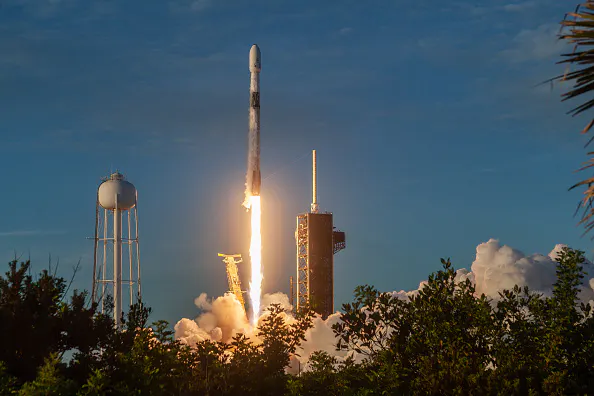
Report: SpaceX posted $18.5 billion in revenue and a $5 billion loss last year
Amazon is looking for a magic trick that can help it get past data center construction bottlenecks so it can work through the $244 billion worth of cloud computing backlogs it wants to deliver. Business Insider is reporting that Amazon's Project Houdini seeks to slash labor costs and installation time by building modular "data halls" -- the rows of racks of servers that make up the heart of data centers -- in factories, and then shipping them fully assembled on trailers to data center sites. According to the report, the modular plan would save weeks of construction time and tens of thousands of hours of labor costs. This week in Amazon's letter to shareholders, CEO Andy Jassy wrote that the company is planning $200 billion in capital expenditure this year, and that it is embracing its tradition of taking big bets on experiments like Project Houdini: