News & Updates
The latest news and updates from companies in the WLTH portfolio.
SpaceX plans Vandenberg rocket launch today. How to watch live stream
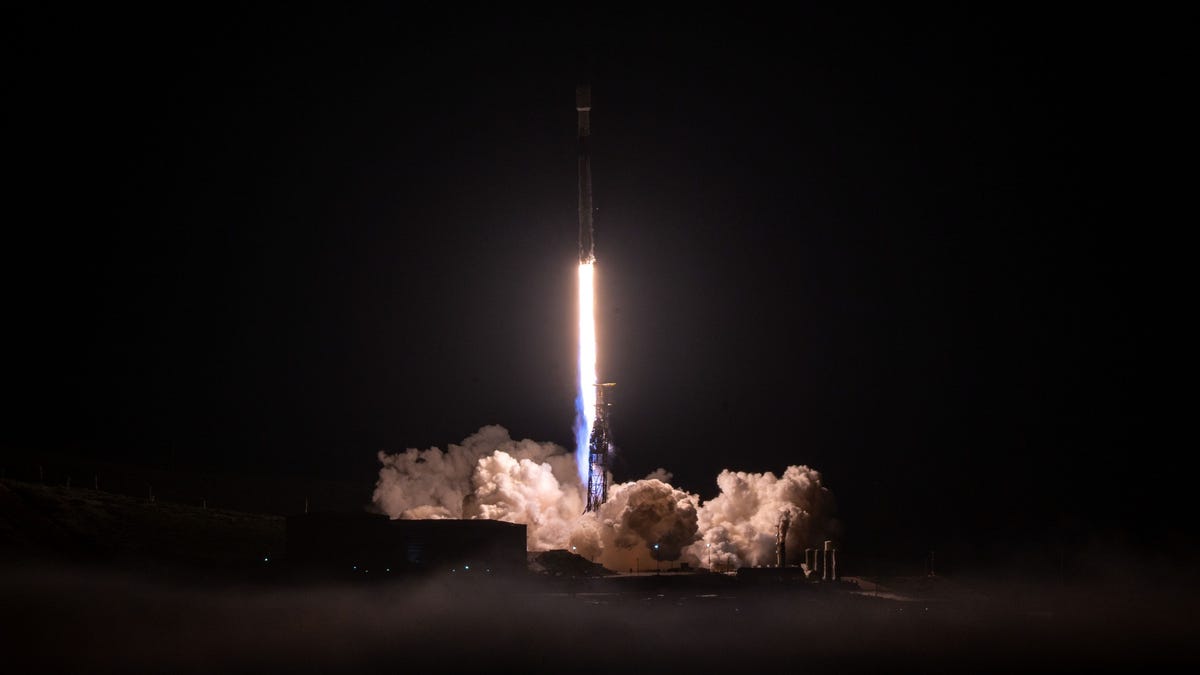
Less than an hour before the Artemis II astronauts are due to land near California, SpaceX could launch a rocket about 200 miles north. Hours after the Artemis II astronauts are due to splash down off the coast of San Diego, California, SpaceX could launch a rocket about 200 miles north. A Falcon 9 rocket is due to get off the ground Friday, April 10 from the Vandenberg Space Force Base in Santa Barbara County. Its mission? Deploy SpaceX's Starlink broadband internet satellites into low-Earth orbit. The launch window is due to open shortly after the four Artemis II astronauts are due to return from a 10-day mission around the moon and make a water landing in the Pacific Ocean. And both will have a livestream available for those who want to watch. Here's everything to know about the latest SpaceX mission, and how to watch a webcast of the Falcon 9 launching in Santa Barbara County. Is there a rocket launch today? Next liftoff from California SpaceX is working toward a Friday, April 10, launch from Southern California, with a four-hour launch window opening at 7:39 p.m. PT, according to a launch alert. The launch will take place from the Vandenberg Space Force Base in Santa Barbara County. A Federal Aviation Administration operations plan advisory suggests a backup opportunity is available the next day if the launch were to be postponed. What is launching from Vandenberg? Falcon 9 to deploy Starlink satellites SpaceX will launch its famous two-stage 230-foot Falcon 9 rocket, one of the world's most active, to deliver 25 Starlink satellites into low-Earth orbit, an altitude nearer Earth's atmosphere where they're able to circle the planet quickly. How to watch SpaceX launch livestream Californians, of course, have plenty of opportunities to see a rocket in person both near the launch site as it lifts off, and further away as it soars overhead. But SpaceX also provides a live webcast of its missions for those who prefer to watch from home or for those viewing the launch locally and looking for updates in real-time. As with most SpaceX missions, the launch will be available to stream on the company's website and its new X TV mobile app, beginning about five minutes before liftoff. SpaceX may also provide updates on social media site X. Does Elon Musk own SpaceX? What to know about rocket company SpaceX is the commercial spaceflight company that billionaire Elon Musk, the world's richest man, founded in 2002 and leads as the CEO. SpaceX is headquartered at Starbase in South Texas near the U.S.-Mexico border. The site, which is where SpaceX has been conducting routine flight tests of its 400-foot megarocket known as Starship, was recently voted by residents to become its own city. As a major government contractor, SpaceX serves as the launch service provider for a variety of government missions both civil and military. For the Department of Defense, SpaceX's Falcon 9 helps launch classified satellites and other payloads into space. And for NASA, Falcon 9 most often helps propel astronauts to the International Space Station on SpaceX's Dragon crew capsule - the only U.S vehicle capable of carrying NASA astronauts to orbit. What is Starlink? Starlink is SpaceX's internet satellite business. With more than 10,000 satellites in its growing orbital constellation, Starlink has become a lucrative part of Musk's business empire, serving millions of customers around the world. Eric Lagatta is the Space Connect reporter for the USA TODAY Network. Reach him at [email protected]
SpaceX plans Vandenberg rocket launch today. How to watch live stream
Less than an hour before the Artemis II astronauts are due to land near California, SpaceX could launch a rocket about 200 miles north. Hours after the Artemis II astronauts are due to splash down off the coast of San Diego, California, SpaceX could launch a rocket about 200 miles north. A Falcon 9 rocket is due to get off the ground Friday, April 10 from the Vandenberg Space Force Base in Santa Barbara County. Its mission? Deploy SpaceX's Starlink broadband internet satellites into low-Earth orbit. The launch window is due to open shortly after the four Artemis II astronauts are due to return from a 10-day mission around the moon and make a water landing in the Pacific Ocean. And both will have a livestream available for those who want to watch. Here's everything to know about the latest SpaceX mission, and how to watch a webcast of the Falcon 9 launching in Santa Barbara County. Is there a rocket launch today? Next liftoff from California SpaceX is working toward a Friday, April 10, launch from Southern California, with a four-hour launch window opening at 7:39 p.m. PT, according to a launch alert. The launch will take place from the Vandenberg Space Force Base in Santa Barbara County. A Federal Aviation Administration operations plan advisory suggests a backup opportunity is available the next day if the launch were to be postponed. What is launching from Vandenberg? Falcon 9 to deploy Starlink satellites SpaceX will launch its famous two-stage 230-foot Falcon 9 rocket, one of the world's most active, to deliver 25 Starlink satellites into low-Earth orbit, an altitude nearer Earth's atmosphere where they're able to circle the planet quickly. How to watch SpaceX launch livestream Californians, of course, have plenty of opportunities to see a rocket in person both near the launch site as it lifts off, and further away as it soars overhead. But SpaceX also provides a live webcast of its missions for those who prefer to watch from home or for those viewing the launch locally and looking for updates in real-time. As with most SpaceX missions, the launch will be available to stream on the company's website and its new X TV mobile app, beginning about five minutes before liftoff. SpaceX may also provide updates on social media site X. Does Elon Musk own SpaceX? What to know about rocket company SpaceX is the commercial spaceflight company that billionaire Elon Musk, the world's richest man, founded in 2002 and leads as the CEO. SpaceX is headquartered at Starbase in South Texas near the U.S.-Mexico border. The site, which is where SpaceX has been conducting routine flight tests of its 400-foot megarocket known as Starship, was recently voted by residents to become its own city. As a major government contractor, SpaceX serves as the launch service provider for a variety of government missions both civil and military. For the Department of Defense, SpaceX's Falcon 9 helps launch classified satellites and other payloads into space. And for NASA, Falcon 9 most often helps propel astronauts to the International Space Station on SpaceX's Dragon crew capsule - the only U.S vehicle capable of carrying NASA astronauts to orbit. What is Starlink? Starlink is SpaceX's internet satellite business. With more than 10,000 satellites in its growing orbital constellation, Starlink has become a lucrative part of Musk's business empire, serving millions of customers around the world. Eric Lagatta is the Space Connect reporter for the USA TODAY Network. Reach him at [email protected]
Piper Sandler says software faces pressure from Anthropic agents By Investing.com
Investing.com - Software stocks fell today following Anthropic's announcement of Claude Managed Agents, a pre-built, configurable agent harness for long-running tasks and asynchronous work, according to Piper Sandler analyst Billy Fitzsimmons. The announcement intensifies concerns that Anthropic's agents will compete directly with those of incumbent software companies. Fitzsimmons said the firm expects continued software pessimism through at least year-end and has downgraded names in the sector. The analyst noted that if Anthropic lowers barriers to building agents on its platform, it contributes to seat deflation concerns and creates competition for incumbents' own AI agents. Piper Sandler recommends hyperscalers monetizing AI compute, including Microsoft (NASDAQ:MSFT) and Oracle (NYSE:ORCL), which directly monetize frontier model growth through their Azure and OCI lines. The firm prefers MSFT, which trades at a CY27 P/E of 20x estimates, as its capex is funded with cash flow rather than debt or equity. The stock currently trades at a P/E of 23.24 with a moderate debt-to-equity ratio of 0.32, generating $77.4 billion in levered free cash flow over the last twelve months. Despite a 27% decline over the past six months, InvestingPro analysis suggests the stock is undervalued, with subscribers accessing detailed Fair Value calculations and 10 additional ProTips for the $2.78 trillion tech giant on the platform's comprehensive most undervalued stocks list. The firm also favors Titan Machinery (NASDAQ:TTAN), citing Bureau of Labor Statistics estimates showing strong employment growth in the company's customer base, with electricians growing at a 15.4% CAGR and plumbing, heating, and AC contractors growing at a 10.1% CAGR from 2024-2034. TTAN trades at 43x CY27 EV/FCF. Piper Sandler highlighted Global-e Online (NASDAQ:GLBE), which is tied to ecommerce GMV volumes rather than software seats and trades at FY27 14x EV/FCF ex-SBC while guiding to 29% revenue growth this year. The Middle East represents less than 5% of revenue, though the war with Iran has impacted GMV near-term, particularly in the UAE. In other recent news, Microsoft Corp. achieved its ambitious sales targets for the Copilot AI tool in the fiscal third quarter by shifting its strategy to focus on paid subscriptions, according to company executives. The company is also working on developing advanced AI models by 2027, aiming to create in-house alternatives to tools from OpenAI and Anthropic. In a strategic partnership, Microsoft has teamed up with Chevron and Engine No. 1 to develop natural gas-powered plants in Texas, which will supply electricity directly to Microsoft's AI data centers. Furthermore, UBS has reiterated a Buy rating on Chevron following this partnership with Microsoft, highlighting the potential benefits of the collaboration. Piper Sandler has also reiterated an Overweight stock rating on Microsoft, noting the expansion of its Researcher capabilities with new features like Critique and Council. These developments reflect Microsoft's ongoing efforts to enhance its AI capabilities and infrastructure. This article was generated with the support of AI and reviewed by an editor. For more information see our T&C.

SpaceX plans Vandenberg rocket launch today. How to watch live stream
Less than an hour before the Artemis II astronauts are due to land near California, SpaceX could launch a rocket about 200 miles north. Hours after the Artemis II astronauts are due to splash down off the coast of San Diego, California, SpaceX could launch a rocket about 200 miles north. A Falcon 9 rocket is due to get off the ground Friday, April 10 from the Vandenberg Space Force Base in Santa Barbara County. Its mission? Deploy SpaceX's Starlink broadband internet satellites into low-Earth orbit. The launch window is due to open shortly after the four Artemis II astronauts are due to return from a 10-day mission around the moon and make a water landing in the Pacific Ocean. And both will have a livestream available for those who want to watch. Here's everything to know about the latest SpaceX mission, and how to watch a webcast of the Falcon 9 launching in Santa Barbara County. Is there a rocket launch today? Next liftoff from California SpaceX is working toward a Friday, April 10, launch from Southern California, with a four-hour launch window opening at 7:39 p.m. PT, according to a launch alert. The launch will take place from the Vandenberg Space Force Base in Santa Barbara County. A Federal Aviation Administration operations plan advisory suggests a backup opportunity is available the next day if the launch were to be postponed. What is launching from Vandenberg? Falcon 9 to deploy Starlink satellites SpaceX will launch its famous two-stage 230-foot Falcon 9 rocket, one of the world's most active, to deliver 25 Starlink satellites into low-Earth orbit, an altitude nearer Earth's atmosphere where they're able to circle the planet quickly. How to watch SpaceX launch livestream Californians, of course, have plenty of opportunities to see a rocket in person both near the launch site as it lifts off, and further away as it soars overhead. But SpaceX also provides a live webcast of its missions for those who prefer to watch from home or for those viewing the launch locally and looking for updates in real-time. As with most SpaceX missions, the launch will be available to stream on the company's website and its new X TV mobile app, beginning about five minutes before liftoff. SpaceX may also provide updates on social media site X. Does Elon Musk own SpaceX? What to know about rocket company SpaceX is the commercial spaceflight company that billionaire Elon Musk, the world's richest man, founded in 2002 and leads as the CEO. SpaceX is headquartered at Starbase in South Texas near the U.S.-Mexico border. The site, which is where SpaceX has been conducting routine flight tests of its 400-foot megarocket known as Starship, was recently voted by residents to become its own city. As a major government contractor, SpaceX serves as the launch service provider for a variety of government missions both civil and military. For the Department of Defense, SpaceX's Falcon 9 helps launch classified satellites and other payloads into space. And for NASA, Falcon 9 most often helps propel astronauts to the International Space Station on SpaceX's Dragon crew capsule - the only U.S vehicle capable of carrying NASA astronauts to orbit. What is Starlink? Starlink is SpaceX's internet satellite business. With more than 10,000 satellites in its growing orbital constellation, Starlink has become a lucrative part of Musk's business empire, serving millions of customers around the world. Eric Lagatta is the Space Connect reporter for the USA TODAY Network. Reach him at [email protected]
SpaceX plans Vandenberg rocket launch today. How to watch live stream
Less than an hour before the Artemis II astronauts are due to land near California, SpaceX could launch a rocket about 200 miles north. Hours after the Artemis II astronauts are due to splash down off the coast of San Diego, California, SpaceX could launch a rocket about 200 miles north. A Falcon 9 rocket is due to get off the ground Friday, April 10 from the Vandenberg Space Force Base in Santa Barbara County. Its mission? Deploy SpaceX's Starlink broadband internet satellites into low-Earth orbit. The launch window is due to open shortly after the four Artemis II astronauts are due to return from a 10-day mission around the moon and make a water landing in the Pacific Ocean. And both will have a livestream available for those who want to watch. Here's everything to know about the latest SpaceX mission, and how to watch a webcast of the Falcon 9 launching in Santa Barbara County. Is there a rocket launch today? Next liftoff from California SpaceX is working toward a Friday, April 10, launch from Southern California, with a four-hour launch window opening at 7:39 p.m. PT, according to a launch alert. The launch will take place from the Vandenberg Space Force Base in Santa Barbara County. A Federal Aviation Administration operations plan advisory suggests a backup opportunity is available the next day if the launch were to be postponed. What is launching from Vandenberg? Falcon 9 to deploy Starlink satellites SpaceX will launch its famous two-stage 230-foot Falcon 9 rocket, one of the world's most active, to deliver 25 Starlink satellites into low-Earth orbit, an altitude nearer Earth's atmosphere where they're able to circle the planet quickly. How to watch SpaceX launch livestream Californians, of course, have plenty of opportunities to see a rocket in person both near the launch site as it lifts off, and further away as it soars overhead. But SpaceX also provides a live webcast of its missions for those who prefer to watch from home or for those viewing the launch locally and looking for updates in real-time. As with most SpaceX missions, the launch will be available to stream on the company's website and its new X TV mobile app, beginning about five minutes before liftoff. SpaceX may also provide updates on social media site X. Does Elon Musk own SpaceX? What to know about rocket company SpaceX is the commercial spaceflight company that billionaire Elon Musk, the world's richest man, founded in 2002 and leads as the CEO. SpaceX is headquartered at Starbase in South Texas near the U.S.-Mexico border. The site, which is where SpaceX has been conducting routine flight tests of its 400-foot megarocket known as Starship, was recently voted by residents to become its own city. As a major government contractor, SpaceX serves as the launch service provider for a variety of government missions both civil and military. For the Department of Defense, SpaceX's Falcon 9 helps launch classified satellites and other payloads into space. And for NASA, Falcon 9 most often helps propel astronauts to the International Space Station on SpaceX's Dragon crew capsule - the only U.S vehicle capable of carrying NASA astronauts to orbit. What is Starlink? Starlink is SpaceX's internet satellite business. With more than 10,000 satellites in its growing orbital constellation, Starlink has become a lucrative part of Musk's business empire, serving millions of customers around the world. Eric Lagatta is the Space Connect reporter for the USA TODAY Network. Reach him at [email protected]
Anthropic's Mythos AI model scare sparks urgent Bessent, Powell warning to bank CEOs- Moneycontrol.com
Anthropic's Mythos AI model flagged for potential vulnerabilities Treasury Secretary Scott Bessent and Federal Reserve Chair Jerome Powell summoned Wall Street leaders to an urgent meeting on concerns that the latest artificial intelligence model from Anthropic PBC will usher in an era of greater cyber risk. Bessent and Powell assembled the group at Treasury's headquarters in Washington on Tuesday to make sure banks are aware of possible future risks raised by Anthropic's Mythos and potential similar models, and are taking precautions to defend their systems, according to people familiar with the matter who asked not to be identified citing the private discussions. Many of the executives were in town already for a meeting of the Financial Services Forum, an advocacy group made up of the biggest lenders. A representative for the Treasury didn't immediately respond to a request for comment. A spokesperson for the Fed declined to comment. The previously unreported meeting, arranged on short notice, is another sign that regulators consider the possibility of a new breed of cyber attacks as one of the biggest risks facing the financial industry. All the banks summoned to the meeting are classified as systemically important by top regulators, meaning their stability is a priority for the global financial system. Powell's participation in the meeting signaled that the concern was one of systemic risk, and not tied to the Trump administration's previous clashes with Anthropic, said some of the people. The Fed, with its network of examiners, is also deeply familiar with banking operations. Anthropic's Mythos is a more powerful system that the AI firm has said is capable of identifying and then exploiting vulnerabilities in every major operating system and web browser when directed by a user to do so. Regulators' caution about the power of the model in hackers' hands echoes Anthropic's own prudence. Anthropic has limited the release of it to just a few major technology and finance firms at first. Those companies, which include Amazon.com Inc. and Apple Inc. as well as JPMorgan Chase & Co., are part of "Project Glasswing," which will work to secure the most important systems before other similar AI models become available. Anthropic has said that it has been in discussions prior to its recent release with US officials about Mythos and its "offensive and defensive cyber capabilities." In releasing Mythos to a very limited set of companies, Anthropic pointed to several vulnerabilities that the AI system was capable of both identifying and potentially exploiting during testing. None of the examples related specifically to financial institutions, but in one instance, the firm's security team said it was able to compromise a web browser so that a website set up by a hacker could read data from another website "e.g., the victim's bank." Mythos Preview "fully autonomously discovered" a way of reading information stored in "multiple different web browsers" and then used that ability to find ways to exploit them, according to a post from Anthropic's security team. Anthropic has separately been battling the Trump administration in court. The Pentagon had labeled the company as a supply-chain risk, a designation that Anthropic has opposed. Earlier this week, a federal appeals court declined, at least for now, Anthropic's request that it put a pause to the Pentagon's designation. Chief executive officers summoned to the meeting with the Fed and Treasury include Citigroup Inc.'s Jane Fraser, Morgan Stanley's Ted Pick, Bank of America Corp.'s Brian Moynihan, Wells Fargo & Co.'s Charlie Scharf, and Goldman Sachs Group Inc.'s David Solomon, said the people. JPMorgan's Jamie Dimon was unable to attend, the people said. Spokespeople for the banks declined to comment. A representative for Anthropic had no immediate comment. In recent years, regulators have required banks to hold some capital tied to the potential for cyber attacks, as well as other so-called operational risks such as lawsuits and rogue employees. Banks have sometimes chafed at those requirements, given that operational risk is more difficult to measure than the market and credit risks that also factor into banks' capital levels.
Piper Sandler says software faces pressure from Anthropic agents By Investing.com
Investing.com - Software stocks fell today following Anthropic's announcement of Claude Managed Agents, a pre-built, configurable agent harness for long-running tasks and asynchronous work, according to Piper Sandler analyst Billy Fitzsimmons. The announcement intensifies concerns that Anthropic's agents will compete directly with those of incumbent software companies. Fitzsimmons said the firm expects continued software pessimism through at least year-end and has downgraded names in the sector. The analyst noted that if Anthropic lowers barriers to building agents on its platform, it contributes to seat deflation concerns and creates competition for incumbents' own AI agents. Piper Sandler recommends hyperscalers monetizing AI compute, including Microsoft (NASDAQ:MSFT) and Oracle (NYSE:ORCL), which directly monetize frontier model growth through their Azure and OCI lines. The firm prefers MSFT, which trades at a CY27 P/E of 20x estimates, as its capex is funded with cash flow rather than debt or equity. The stock currently trades at a P/E of 23.24 with a moderate debt-to-equity ratio of 0.32, generating $77.4 billion in levered free cash flow over the last twelve months. Despite a 27% decline over the past six months, InvestingPro analysis suggests the stock is undervalued, with subscribers accessing detailed Fair Value calculations and 10 additional ProTips for the $2.78 trillion tech giant on the platform's comprehensive most undervalued stocks list. The firm also favors Titan Machinery (NASDAQ:TTAN), citing Bureau of Labor Statistics estimates showing strong employment growth in the company's customer base, with electricians growing at a 15.4% CAGR and plumbing, heating, and AC contractors growing at a 10.1% CAGR from 2024-2034. TTAN trades at 43x CY27 EV/FCF. Piper Sandler highlighted Global-e Online (NASDAQ:GLBE), which is tied to ecommerce GMV volumes rather than software seats and trades at FY27 14x EV/FCF ex-SBC while guiding to 29% revenue growth this year. The Middle East represents less than 5% of revenue, though the war with Iran has impacted GMV near-term, particularly in the UAE. In other recent news, Microsoft Corp. achieved its ambitious sales targets for the Copilot AI tool in the fiscal third quarter by shifting its strategy to focus on paid subscriptions, according to company executives. The company is also working on developing advanced AI models by 2027, aiming to create in-house alternatives to tools from OpenAI and Anthropic. In a strategic partnership, Microsoft has teamed up with Chevron and Engine No. 1 to develop natural gas-powered plants in Texas, which will supply electricity directly to Microsoft's AI data centers. Furthermore, UBS has reiterated a Buy rating on Chevron following this partnership with Microsoft, highlighting the potential benefits of the collaboration. Piper Sandler has also reiterated an Overweight stock rating on Microsoft, noting the expansion of its Researcher capabilities with new features like Critique and Council. These developments reflect Microsoft's ongoing efforts to enhance its AI capabilities and infrastructure. This article was generated with the support of AI and reviewed by an editor. For more information see our T&C.
CoreWeave, Anthropic Form AI Cloud Agreement -- Update
CoreWeave will use its cloud infrastructure to help run Anthropic's Claude artificial-intelligence models as part of a new partnership between the two companies that gives CoreWeave another frontier AI-model customer. CoreWeave shares were up 5.1% to $96.73 in premarket trading. The collaboration will initially focus on a "phased infrastructure roll-out with the potential to expand over time," CoreWeave said. With the addition of Anthropic, nine of the leading 10 AI-model providers now use CoreWeave's cloud platform, said CoreWeave. Separately, CoreWeave said Friday it was increasing the size of its previously announced private offering of 1.75% convertible senior notes due 2032 to $3.5 billion from $3 billion. Late Thursday, the company increased the size of a separate offering of 9.75% senior notes due 2031 by $500 million to $1.75 billion. The increased debt offerings come as the company attempts to finance the data-center build-out required to fulfill its cloud-capacity commitments. CoreWeave on Thursday said it secured a roughly $21 billion expanded agreement with Meta Platforms to provide AI cloud capacity through December 2032. And in September, CoreWeave said it was expanding its previous agreement with OpenAI to supply data-center capacity by up to $6.5 billion, bringing the total contract value with OpenAI to about $22.4 billion. CoreWeave's shares fell sharply late last year, with some critics concerned the company is taking on high levels of debt to fund its infrastructure expansion and is dependent on just a handful of large customers, The Wall Street Journal reported. Write to Nicholas G. Miller at [email protected].

CoreWeave's stock pops as new Anthropic deal highlights intense scramble for AI compute
The deal follows an expanded arrangement with Meta that was announced on Thursday CoreWeave now provides infrastructure for nine of the ten leading AI model providers following its multi-year agreement with Anthropic, according to the press release. Closing off a momentous week for both companies, CoreWeave and Anthropic announced a multi-year compute agreement on Friday that's scheduled to go online later this year. The deal marks the first time Anthropic has tapped CoreWeave (CRWV), an artificial-intelligence infrastructure provider, for compute. "With the addition of Anthropic, nine of the leading ten AI model providers now leverage CoreWeave's platform, reflecting the growing demand for infrastructure that can support AI at scale," CoreWeave said in the press release. According to CoreWeave, the deal "will initially focus on a phased infrastructure rollout with the potential to expand over time." The agreement is the latest sign that the AI infrastructure boom is far from over. Shares of CoreWeave are up 5% in pre-market trading Friday morning. They've risen nearly 12% since the beginning of the week. As demand for AI compute far outpaces supply, hyperscalers and leading AI labs have sought out neolabs like CoreWeave to bring capacity online quickly. On Thursday, CoreWeave and Meta Platforms (META) expanded their existing relationship, with Meta committing to an incremental $21 billion of compute on top of an initial $14.2 billion agreement last September. Read: CoreWeave's stock bounces back. Why investors are cheering the new Meta deal. Shares of CoreWeave have fluctuated over the last few months, shedding over 30% since October as investors have wondered if the business model of renting out AI infrastructure is sustainable. Big Tech companies are planning to bring their own data centers online in the coming years, and that may pose a risk of cannibalization. However, the recent flurry of dealmaking activity has eased those fears, showing investors that demand for compute has only gotten bigger in recent months. Anthropic in particular has experienced a surge in popularity this year, leading the company to rapidly secure more compute. With demand for its Claude Code and Cowork products soaring, the company has grown its run-rate revenue to $30 billion, up from just $9 billion at the end of 2025. On Monday, Anthropic announced an expanded deal with Google (GOOGL) (GOOG) and Broadcom (AVGO) for roughly 3.5 gigawatts of compute capacity starting next year. According to a Reuters report on Thursday, Anthropic is also exploring the possibility of designing its own chips. A representative from Anthropic declined to comment on the company's chip-making ambitions. Jefferies analyst Brent Thill wrote in a Tuesday note that the Google-Broadcom agreement was likely the first of many for Anthropic as the company seeks out more compute to continue its expansion. More: Anthropic appears to have overtaken OpenAI on this key financial metric -Christine Ji This content was created by MarketWatch, which is operated by Dow Jones & Co. MarketWatch is published independently from Dow Jones Newswires and The Wall Street Journal.
Canadians won't be able to trust weather forecasts anymore. FFS. AI lies, makes endless mistakes and is stupid and stolen, and its creators deny global warming and climate chaos.
Environment Canada to use AI in new weather forecasting model, Department will continue to rely on meteorologists, whose is judgment is 'critical' to interpreting results by Anja Karadeglija · The Canadian Press · Apr 09, 2026, CBC New Environment and Climate Change Canada will use artificial intelligence to make its weather forecasts more accurateRoaring laughter. AI will make them stupid and wrong!, the federal department said Thursday. It plans to launch a hybrid model this spring that uses both AI and traditional forecasting and says the combination of the two will lead to more accurate predictions.I bet people will be killed with this idiot plan. "The new hybrid model relies on AI to better predict future weather conditions, as well as relying on the traditional physics-based model to bring in our knowledge of unique local factors like wind, temperature and precipitation," it said in a news release. AI can analyze decades of historical data covering a whole continent in minutes, the department but AI creators deny global warming and climate chaos and lie - often, so how the hell will AI predict by ignoring what's most important?, adding AI models "identify relationships between temperature, wind and pressure and use those learned patterns to estimate the future atmosphere, especially for major weather events like heat waves, or for tracking hurricanes." The hybrid model is better at predicting extreme weather, such as strong winds or heat waves, because the traditional model "keeps the small-scale details that AI models tend to miss," the release said. With the new model, Environment Canada said its six-day forecast will be as accurate as its five-day forecast. It said that's "particularly significant because previous improvements to forecasting were only possible after several years of research and development." It said the hybrid system will also be faster at predicting major systems such as winter storms, heat waves and atmospheric rivers.I bet not. This is an irresponsible, stupid idea. Environment Canada said that over the past year, its "scientists and meteorologists have been carrying out extensive testing on the hybrid model, running it in parallel with our traditional model to evaluate its performance for predicting weather conditions in Canada." The department added it will continue to rely on its meteorologists, whose is judgment is "critical" to interpreting results and communicating them to the public. "The fact that that much climate data can be analyzed so quickly and incorporated into a product that we can use is exciting," said Halifax-based Cindy Day, who has been a meteorologist for more than 40 years. Day added that being able to identify systems earlier will benefit public safety by giving people more warning of big storms.And with AI often vicious and wrong, I bet people will die. But she questioned how helpful historical data can be, given the effects of climate change.so why the fuck put people at risk by using AI FFS? "The rate at which our temperatures are changing and our climate is changing is significant. And so I'm not sure that the analysis of so much data going back so much time so very quickly is going to make a big difference into producing a forecast for the next five, six, seven days," Day said.

Unlocked in London | Unconventional Connections & Brand Potential
Potential is rarely found in the centre of a discipline. It lives at the edges, where specialisms, cultures and technologies collide. We call these Unconventional Connections. It was the theme of our inaugural Unlocked dinner in Covent Garden, where we invited a group of clients to step out of the "marketing bubble" and into a space of positive friction. That idea sits at the heart of Partners in Possibility - our new proposition built on a simple belief: every brand has potential waiting to be released. And increasingly, unlocking it means bringing together different kinds of expertise, perspective and thinking in ways that create something new. We weren't interested in polished corporate keynotes. Instead, we heard from two people whose journeys have been anything but linear. Cheryl Calverley (Founder of Moot) challenged the room on how we've systematically digitised serendipity out of our lives. Her point was sharp: creativity isn't something you can putin a calendar. You can only create the conditions where it might happen. Andthose conditions are social, human and, crucially, physical. It was a timelyr eminder that as we move towards machine precision, we risk losing the humanmessiness that often sparks the best ideas. Stu Macdonald (Founder of ManiLife) shared the chaotic, honest reality of building a brand that started with a sack of Argentinian peanuts and a blender. Strategy matters, but Stu's story proved that luck, persistence and openness matter too. His mantra, that serendipity favours those who "keep buggering on", is essentially the antithesis of an AI prompt. It's about being out in the world, making human connections, and choosing people over product. AI is already changing how we work at Brand Potential. It's making us faster and sharper. But as the evening in London proved, it isn't a replacement for the "unconventional" bit. The strongest brands aren't built by automation alone. They are built by people who can connect dots others don't see, across data and intuition, machine precision and human warmth, strategy and execution. That's the thinking behind Partners in Possibility. Our model brings together specialists across insight and innovation, strategy and design, PR and activation, content and advertising, digital and technology, combining different perspectives to help unlock new possibilities for brands. The Unlocked series is one way we make that thinking real: creating space for the kinds of conversations that don'tusually happen in a standard meeting room but often lead somewhere more interesting. To everyone who joined us: thank you for the candour and the energy. To everyone else: we'd love to see you at the next one. We are Brand Potential. Partners in Possibility.

US lawmakers demand federal probe into Polymarket trades related to Iran war | Yogonet International
Lawmakers in Congress are calling for a federal review of trades on Polymarket following a series of strategic bets placed shortly before major geopolitical announcements tied to the Iran war. Rep. Ritchie Torres, a member of the House Financial Services Committee and its panel on digital assets, sent a letter Thursday to the Commodity Futures Trading Commission requesting an investigation into the timing of recent trades. The agency oversees derivatives markets, including prediction platforms. "This pattern raises serious concerns that certain market participants may have had access to material nonpublic information regarding a market-moving geopolitical event," Torres wrote. In an interview with The Associated Press, he said: "What is the statistical likelihood of anyone other than an insider trader placing a winning bet 12 minutes before a market-moving presidential announcement? There are two answers: God or an insider trader. And something tells me that God is not placing bets around Donald Trump's posts on Truth Social. " Sen. Richard Blumenthal also sent a letter to Polymarket seeking information on trades tied to war and violence and measures to prevent insider participation. "Polymarket has become an illicit market to sell and exploit national security secrets unlike any in history, and by extension a potential honeypot for foreign intelligence services watching for those same suspicious bets and wagers," Blumenthal wrote. At least 50 newly created accounts placed large bets on a US-Iran ceasefire shortly before President Donald Trump announced the development late Tuesday on social media. These accounts made no other trades on the platform. Other instances have drawn similar attention. In January, an anonymous user generated $400,000 in profit by wagering that Nicolas Maduro would be out of office hours before he was captured. Prior to the start of the Iran conflict, another account recorded roughly $550,000 in gains through trades tied to expectations that the US would strike Iran and that Ali Khamenei would be removed. A study by Harvard University estimated that $143 million in profits on Polymarket may be linked to individuals with access to nonpublic information. The research relied on public blockchain data and covered events ranging from Taylor Swift's engagement to the Nobel Peace Prize. Concerns over prediction markets extend across party lines. Republican lawmakers have raised objections to event-based betting tied to geopolitical outcomes and have supported restrictions. "We don't want to imagine a world where America's adversaries use prediction markets to anticipate our next move," said Rep. Blake Moore. At least two bipartisan bills, one in the House and one in the Senate, are under consideration. Prediction platforms such as Kalshi and Polymarket allow users to trade on outcomes ranging from weather conditions to interest rate decisions. Polymarket has limited availability in the US after a 2022 ban. The company is pursuing reentry through the acquisition of a CFTC-licensed exchange and clearinghouse, which would provide a pathway to offer contracts domestically. A limited rollout has begun. The company also operates a crypto-based platform offshore that remains outside US jurisdiction and accounts for most activity. The developments come at a time when prediction market operators are seeking a larger presence in the US, including in the sports segment. Kalshi, which operates under US regulation, has outlined plans to become a leading prediction market. The company has introduced contracts tied to sports outcomes, drawing comparisons to traditional wagering. Both companies have announced partnerships with sports organizations and media entities to extend distribution. The competitive environment also includes political connections. Donald Trump Jr. is an investor in Polymarket through 1789 Capital and serves as a paid strategic adviser to Kalshi.

Harvard Study Estimates $143 Million in Polymarket Profits May Have Been Generated Through Insider Information
Unusual timing in war-linked bets and a $143 million profit estimate fuel growing scrutiny of crypto prediction markets and their safeguards. A Harvard-linked research analysis estimates that around $143 million (£106.17 million) in profits across prediction markets may be linked to unusually accurate or well-informed trading patterns, a Harvard-linked research analysis estimates. The study does not say this is insider trading. Instead, it highlights statistical anomalies where some traders consistently outperform expectations during major real-world events. These findings have fuelled ongoing questions about whether crypto prediction markets may sometimes reward access to better information, or simply reflect highly skilled forecasting by experienced traders. The Polymarket insider trading investigation concerns have grown after unusual betting activity tied to Iran-related events and a major political announcement involving Donald Trump. While nothing illegal has been proven, the timing of some trades has raised questions among researchers, journalists, and US lawmakers looking into how prediction markets react to breaking world news. The issue has sparked a wider debate about whether crypto prediction platforms can stay fair when people are betting on sensitive political and military developments. Interest in the issue grew after reports highlighted trades that appeared shortly before major geopolitical developments, including a US-Iran ceasefire-related announcement involving Donald Trump. Coverage referenced by KPBS and Associated Press reported that multiple newly created accounts placed bets that matched the eventual outcome just before the news became public. Some of these trades reportedly led to significant profits after the event. However, there is no evidence showing whether this was based on private information or simply fast reactions to public signals. What stood out most was how close the timing was between the trades and the announcement, raising questions about how information moves through fast-paced prediction markets. The unusual trading patterns have led US lawmakers to take a closer look at whether platforms like Polymarket could be vulnerable to manipulation or trades based on non-public information. No individuals or organisations have been accused of wrongdoing, but concerns are growing about the risks of anonymous trading in markets linked to war, diplomacy, and national security. This has added to a wider push to review well-timed political betting activity, especially when trades seem to line up closely with major breaking news events. A lot of attention has focused on Iran war prediction market bets, especially those tied to changing expectations around conflict developments in the region. KPBS-referenced reporting describes cases where traders appeared to anticipate geopolitical outcomes shortly before they were publicly confirmed. In some instances, multiple accounts moved around the same time, prompting questions about whether the activity was coordinated or simply coincidental. At the same time, experts point out that prediction markets are built to react quickly, so sudden moves can also reflect fast reactions to public information rather than access to anything private. Polymarket and similar platforms let users trade on the likelihood of future events, from elections and economic trends to major geopolitical developments. Supporters say these markets can quickly combine public information and sometimes even outperform traditional forecasts. But the controversy also highlights a deeper concern. When bets involve war or political crises, critics argue that the ethical and regulatory questions become much harder to ignore. This has fuelled talk of a possible Polymarket war betting scandal narrative, even though no official findings of wrongdoing have been made. At this stage, there is no confirmed evidence of insider trading or any illegal activity linked to the trades under review. What does exist is a mix of unusual timing patterns, academic research pointing to statistical anomalies, and growing attention from policymakers. As lawmakers continue to look into Polymarket trading activity, one key question remains unanswered: how can prediction markets stay open and fast, while making sure they aren't shaped by private or sensitive information? The growing attention around Polymarket highlights a bigger tension between innovation in decentralised finance and the regulatory challenges that come with it. Prediction markets are built to process information quickly, but when trades line up closely with major geopolitical announcements, they naturally draw scrutiny. For now, the debate is far from settled. Researchers, journalists, and lawmakers are still circling the same urgent question: are today's safeguards strong enough to handle prediction markets operating at a global scale, where billions can move in seconds on breaking geopolitical news, or are we watching a system evolve faster than the rules meant to contain it?
SpaceX plans Vandenberg rocket launch today. How to watch live stream
Less than an hour before the Artemis II astronauts are due to land near California, SpaceX could launch a rocket about 200 miles north. Hours after the Artemis II astronauts are due to splash down off the coast of San Diego, California, SpaceX could launch a rocket about 200 miles north. A Falcon 9 rocket is due to get off the ground Friday, April 10 from the Vandenberg Space Force Base in Santa Barbara County. Its mission? Deploy SpaceX's Starlink broadband internet satellites into low-Earth orbit. The launch window is due to open shortly after the four Artemis II astronauts are due to return from a 10-day mission around the moon and make a water landing in the Pacific Ocean. And both will have a livestream available for those who want to watch. Here's everything to know about the latest SpaceX mission, and how to watch a webcast of the Falcon 9 launching in Santa Barbara County. Is there a rocket launch today? Next liftoff from California SpaceX is working toward a Friday, April 10, launch from Southern California, with a four-hour launch window opening at 7:39 p.m. PT, according to a launch alert. The launch will take place from the Vandenberg Space Force Base in Santa Barbara County. A Federal Aviation Administration operations plan advisory suggests a backup opportunity is available the next day if the launch were to be postponed. What is launching from Vandenberg? Falcon 9 to deploy Starlink satellites SpaceX will launch its famous two-stage 230-foot Falcon 9 rocket, one of the world's most active, to deliver 25 Starlink satellites into low-Earth orbit, an altitude nearer Earth's atmosphere where they're able to circle the planet quickly. How to watch SpaceX launch livestream Californians, of course, have plenty of opportunities to see a rocket in person both near the launch site as it lifts off, and further away as it soars overhead. But SpaceX also provides a live webcast of its missions for those who prefer to watch from home or for those viewing the launch locally and looking for updates in real-time. As with most SpaceX missions, the launch will be available to stream on the company's website and its new X TV mobile app, beginning about five minutes before liftoff. SpaceX may also provide updates on social media site X. Does Elon Musk own SpaceX? What to know about rocket company SpaceX is the commercial spaceflight company that billionaire Elon Musk, the world's richest man, founded in 2002 and leads as the CEO. SpaceX is headquartered at Starbase in South Texas near the U.S.-Mexico border. The site, which is where SpaceX has been conducting routine flight tests of its 400-foot megarocket known as Starship, was recently voted by residents to become its own city. As a major government contractor, SpaceX serves as the launch service provider for a variety of government missions both civil and military. For the Department of Defense, SpaceX's Falcon 9 helps launch classified satellites and other payloads into space. And for NASA, Falcon 9 most often helps propel astronauts to the International Space Station on SpaceX's Dragon crew capsule - the only U.S vehicle capable of carrying NASA astronauts to orbit. What is Starlink? Starlink is SpaceX's internet satellite business. With more than 10,000 satellites in its growing orbital constellation, Starlink has become a lucrative part of Musk's business empire, serving millions of customers around the world. Eric Lagatta is the Space Connect reporter for the USA TODAY Network. Reach him at [email protected]
SpaceX posted nearly $5 billion loss in 2025, The Information reports
April 9 (Reuters) - Elon Musk's IPO-bound SpaceX posted a loss of nearly $5 billion in 2025 on revenue of more than $18.5 billion, The Information reported on Thursday, citing sources. Reuters could not immediately verify the report. SpaceX did not immediately respond to a Reuters' request for comment outside regular business hours. (Reporting by Mrinmay Dey in Mexico City; Editing by Sumana Nandy and Subhranshu Sahu)

Bitget launches new pre-IPO product with SpaceX as first listing - Cryptopolitan
The exchange is also preparing to provide early participants with additional exposure as the platform begins onboarding its first offering. Bitget has introduced a new market structure that enables users to access and trade pre-IPO exposure to global unicorn companies such as SpaceX. The launch is powered by Republic and marks an expansion beyond traditional secondary market trading, enabling participation in pre-IPO value creation. According to Bitget, the move represents a phase historically limited to institutional investors and private capital networks. The exchange extends its Universal Exchange framework into primary market access through IPO Prime, bridging a long-standing gap between private and public market participation. Notably, IPO Prime operates through a subscription-based model. Eligible users can apply for allocations in tokenized offerings tied to specific companies. Meanwhile, allocation limits are determined by user tier, with higher participation thresholds available at elevated VIP levels. Following the subscription phase, these digital assets transition into an over-the-counter market on Bitget, enabling continuous pricing, trading, and circulation within a structured environment. Bitget CEO says exclusivity defines pre-IPO opportunities According to Bitget's CEO, Gracy Chen, access to pre-IPO opportunities has been defined by exclusivity since the beginning of financial markets. She adds that IPO Prime allows users to participate earlier in a company's growth cycle, with the flexibility of continuous trading. Chen also notes that this shifts how and when investors can engage with emerging companies, which gives retailers and new investors a chance to buy in early. The first offering under IPO Prime is preSPAX, a digital asset designed to mirror SpaceX's economic performance following its potential public listing. As one of the most closely watched private companies globally, SpaceX represents the type of high-growth opportunity that has traditionally remained inaccessible to retail investors. Bitget will introduce two rounds of preSPAX token airdrops for eligible VIP users on April 13, 2026, at 10:00 (UTC) to mark the launch. Bitget provides early participants with additional exposure The Bitget UEX is also preparing to provide early participants with additional exposure as the platform begins onboarding its first offering. The official preSPAX token launches on April 21, 2026, at 12:00 (UTC), with the commitment period starting April 18, 2026, 18:00. It will end on April 21, 2026, 18:00 (UTC), and the distribution period will run from April 21, 2026, 18:00 till April 21, 2026, 22:00 (UTC). The introduction of IPO Prime is a new route to traditional financial opportunities, structured and accessed in new ways. As boundaries between asset classes continue to blur, platforms are expanding beyond traditional and crypto trading to include early-stage market participation. Within Bitget's Universal Exchange model, IPO Prime aims to integrate diverse financial opportunities into a single, unified environment. To find out more about IPO Prime and preSPAX, visit the official website to join the over 125 million Bitget users worldwide. The exchange currently offers access to over 2 million crypto tokens, 100+ tokenized stocks, ETFs, commodities, FX, and precious metals, including gold. The Bitget ecosystem is also committed to helping users trade smarter with its AI agent, which co-pilots trade execution. The exchange is further driving crypto adoption through strategic partnerships with LALIGA and MotoGP™. It has also joined hands with UNICEF to support blockchain education for 1.1 million people across 150 regions worldwide by 2027.
CoreWeave, Anthropic Form AI Cloud Agreement
CoreWeave partnered with Anthropic to run its Claude AI models, adding another frontier AI-model provider to its cloud platform. CoreWeave CRWV 2.99%increase; green up pointing triangle will use its cloud infrastructure to help run Anthropic's Claude artificial-intelligence models as part of a new partnership between the two companies that gives CoreWeave another frontier AI-model customer. CoreWeave shares were up 5.1% to $96.73 in premarket trading. The collaboration will initially focus on a "phased infrastructure roll-out with the potential to expand over time," CoreWeave said. With the addition of Anthropic, nine of the leading 10 AI-model providers now use CoreWeave's cloud platform, said CoreWeave. Separately, CoreWeave said Friday it was increasing the size of its previously announced private offering of 1.75% convertible senior notes due 2032 to $3.5 billion from $3 billion. Late Thursday, the company increased the size of a separate offering of 9.75% senior notes due 2031 by $500 million to $1.75 billion. The increased debt offerings come as the company attempts to finance the data-center build-out required to fulfill its cloud-capacity commitments. CoreWeave on Thursday said it secured a roughly $21 billion expanded agreement with Meta Platforms to provide AI cloud capacity through December 2032. And in September, CoreWeave said it was expanding its previous agreement with OpenAI to supply data-center capacity by up to $6.5 billion, bringing the total contract value with OpenAI to about $22.4 billion. CoreWeave's shares fell sharply late last year, with some critics concerned the company is taking on high levels of debt to fund its infrastructure expansion and is dependent on just a handful of large customers, The Wall Street Journal reported.

Anthropic Warns Its New AI Could Enable 'Weapons We Can't Even Envision.' Skeptics Aren't Buying It.
Anthropic says its new model, Claude Mythos, has such catastrophic potential that the company doesn't want to release it to the general public, reports CNN. Mythos has found thousands of major security vulnerabilities and could exploit critical infrastructure like power grids and hospitals. AI researcher Roman Yampolskiy warned the model could enable "biological weapons, chemical weapons, novel weapons we can't even envision." For this reason, Anthropic is limiting access to about 40 handpicked companies -- including Amazon, Google, Apple, Nvidia and CrowdStrike. But critics, including President Trump's AI adviser David Sacks, accuse Anthropic of "regulatory capture" -- using safety warnings as a marketing strategy. Perry Metzger, chairman of AI policy group Alliance for the Future, said the hype has "spread like wildfire" as a result of the warning.
Handicapping the SpaceX IPO - Cautious Optimism
Friday. The national argument about AI regulation is not over, though it has receded from headlines in recent weeks (more below on whether or not the Strait of Hormuz is open or not). The White House is leaning on Republican states to can efforts to regulate the burgeoning artificial intelligence industry, while OpenAI is supporting an Illinois law that would, per Wired, "shield AI labs from liability in cases where AI models are used to cause serious societal harms." If the OpenAI move raises your hackles, relax. We want AI labs to release their new technology with reasonable alacrity, so limiting usage risk by third-parties is critical. Either we continue to accelerate, or the next Mythos-level breakthrough may not be ours to hold back. Don't worry, we're not only talking about AI today. Coming up: Why the market is still discounting the value of software, corporate spend on tokens, the Strait of Hormuz (and CPI data!), and we'll close with notes on SpaceX's post-merger profitability. To work! -- Alex Software pessimism: One cloud ETF is off 50.0% over the last five years (and 20.3% lower than its year-ago price) while a different, broader software ETF is at its lowest ebb since late 2023. Concerns about the future of many software companies in the AI era continue to weigh on the value of many public and still-private software concerns. The new bad news for software stocks is another wave of analyst downgrades, this time with Citibank tossing demerits at Veeva, DocuSign, SimilarWeb, and others. From Yahoo Finance's Brian Sozzi, Citi sees rather poor vibes continuing in the SaaS space (emphasis original): As we look ahead to Q1 earnings-and-beyond, amidst parabolic AI revenue inflections at foundational model leaders, we outline updated views on software. Put simply, we see risk that concerns around software application architecture, business model durability and terminal value intensify in the months ahead. Privately held AI companies are on track to add $100 billion+ of net-new revenue in the years ahead, materially eclipsing the $50 billion of traditional application software NNACV. While AI budgets may be mostly additive vs. replacement to software, checks indicate an uptick in software optimization costs/vendor consolidation Related food for thought (concern) from venture capitalist Nichole Wischoff: Tokenmaxxing: Ramp, the popular corporate spend and banking unicorn, has a new product out that helps companies track their AI spend. Given model subscriptions, API spend, tool testing, and more, companies may not know how much they are spending on AI. Ramp wants to help, naturally. More salient for our purposes, the following chart shows the rate at which Ramp customers (lots of startups, sure, but the company is big enough now to sweep a portion of Main Street under its data-wings, too) spend on tokens: Something fascinating in the above chart is that you can see the late-2025/early 2026 model improvement zone (GPT-5.2-Codex, Opus 4.5) clearly. Hell, even the end-of-year holiday period could only blunt token spend growth, not reduce it. Perhaps Nvidia's 'AI Factory' pitch was more correct, and ahead of its time, than many thought (though CO was generally bullish).

CoreWeave strikes AI cloud deal with Anthropic, shares rise - The Economic Times
Cloud infrastructure firm CoreWeave has secured a significant deal with AI startup Anthropic. This multi-year agreement will provide Anthropic with crucial cloud computing power later this year. The partnership aims to support Anthropic's advanced AI models. This latest deal follows other major agreements CoreWeave has made recently, highlighting strong demand for AI computing resources.