News & Updates
The latest news and updates from companies in the WLTH portfolio.
CoreWeave strikes AI cloud deal with Anthropic, shares rise
April 10 (Reuters) - Cloud infrastructure firm CoreWeave said on Friday it has struck a deal with Anthropic to supply the AI startup with cloud computing capacity, sending its shares up more than 5% in premarket trading. The multi-year agreement, whose financial terms were not disclosed, will bring computing capacity for Anthropic online later this year and help it run workloads for its Claude family of AI models. (Reporting by Deborah Sophia in Bengaluru; Editing by Diti Pujara)
CoreWeave Lands Anthropic Deal To Power Claude Models
The multi-year cloud-capacity agreement adds to CoreWeave's string of big AI-compute wins while helping diversify revenue beyond Microsoft. CoreWeave signed a multi-year deal to supply Anthropic with AI cloud computing capacity for its Claude models, adding another big-name customer to the "neocloud" provider. What does this mean? AI labs still need more specialized chips and data centers than the market can easily supply, and CoreWeave is selling them a shortcut to scale without building everything themselves. The company says the Anthropic capacity will come online later this year in phases, with room to expand, but it didn't share financial terms. Investors liked the signal that demand is durable: the stock popped in premarket trading and is up this year. The bigger question is whether CoreWea..
Crypto giant Kraken's Fed payment account sparks concerns about risks
April 10 (Reuters) - Crypto giant Kraken's landmark Federal Reserve master account comes with restrictions aimed at mitigating risks, but it - and others likely to follow in its wake - could still create vulnerabilities for the U.S. financial system. Founded in 2011, Wyoming-based Kraken is one of the world's largest crypto exchanges, with both retail and institutional clients. Last month, it became the first-ever crypto company to win a Fed master account. The Kansas City Fed granted Kraken a "limited- purpose" account for one year initially, but neither party disclosed details of its restrictions. Fed master accounts are often likened to bank accounts for banks, letting accountholders move funds directly via the Fed's payment rails. The decision has sparked concerns among banks and the top Democrat on the House of Representatives Financial Services Committee, Maxine Waters, over potential financial-system risks. They also say the approval process was opaque and that it flouted Fed protocols. Waters has asked the Kansas City Fed to disclose more details by Friday. To be sure, banks stand to lose out as crypto firms expand onto their turf. But some regulatory experts said banks' risk concerns are warranted. A spokesperson for Kraken told Reuters that the Fed master account allows its Wyoming banking arm to access the central bank's wholesale payments system, Fedwire, and hold limited balances overnight. That means it can cut out bank intermediaries and move money faster and more cheaply. But unlike many accountholders, Kraken cannot earn interest on reserve balances it holds at the Fed, or access emergency Fed lending or the central bank's other FedNow and ACH payment systems, the spokesperson said. They declined to say whether Kraken will have access to Fed credit. The account details have not previously been reported. Kraken will initially use it to serve wholesale clients. It hopes to eventually add new features, said Jonathan Jachym, Kraken's global head of policy. "We look at this as a great testament to regulatory rigor and cooperation. It promotes principles of both safety and soundness, and innovation," said Jachym. A Kansas City Fed spokesperson said it was reviewing Waters' letter. The spokesperson declined to comment further. CRYPTO SYSTEM INROADS Granted more than five years after Kraken first applied, the account marks another victory for the digital asset industry under President Donald Trump's crypto-friendly administration, which is giving the sector more access to the mainstream financial system, sparking alarm among banks. Crypto firms Ripple, Anchorage Digital and fintech money transfer company Wise (WISEa.L), opens new tab also hope to win master accounts, according to public information. Regional Fed banks manage those accounts, but the Fed board provides guidelines. It has signaled it will open its payment rails to more crypto and fintech firms. In December, it sought feedback on a potential new type of payment account with restrictions similar to those imposed on Kraken's. The proposed account would also not provide access to Fed credit. The Fed has said those limits would mitigate liquidity shocks, credit risk to the central bank, and would protect its ability to manage reserves. Still, even with safeguards, giving crypto firms direct access to Fedwire - which underpins the global dollar clearing system - creates money-laundering and operational risks, and could suck liquidity out of the banking system, lenders have warned. Under Fed rules, only depository institutions can have master accounts. Kraken and Anchorage have depository charters but are not federally insured. Wise and Ripple are seeking similar charters, along with several other crypto companies. While the Fed closely scrutinizes applications by uninsured depository institutions, such entities are subject to less rigorous ongoing oversight than insured banks. "The concern is by introducing institutions that may have less of a track record, less rigorous compliance and operations, even if they have limited models, that it could create a degree of systemic risk," said Richard Levin, chair of the fintech practice at Taft Stettinius & Hollister. OPERATIONAL AND MONEY-LAUNDERING RISKS Regulators have long flagged that the fintech and crypto sectors sometimes have patchy internal controls and cyber security. A core worry is that such firms, if granted accounts, could become a point of operational weakness. A hack, outage or liquidity misstep could cause settlement failure, rippling through the system and forcing the Fed to backstop the payment. "They don't have the experience," said Yesha Yadav, an associate dean at Vanderbilt University Law School. The crypto industry also has heightened exposure to money‑laundering risk, an issue Fed Governor Michael Barr flagged in December when opposing the Fed's request for information on the potential new payment account. The Kraken spokesperson said its bank reserves are fully backed and that the company complies with all bank-grade AML and know-your-customer requirements and that it has never been hacked. Rachel Anderika, Anchorage's chief operating officer, said everyone was subject to the same AML rules. "The AML risks with crypto are unique, but they are entirely manageable." London-based money-transfer firm Wise declined to comment. A Ripple spokesperson pointed to a social media post by CEO Brad Garlinghouse in December that said the industry was "prioritizing compliance." More broadly, by cutting out bank intermediaries and potentially allowing more crypto and fintech firms to park funds directly at the Fed, deposits could eventually be siphoned out of the banking system, others say. "Banks play a critical role as a keystone in the resilience of the broader financial system," said Kathryn Judge, a professor at Columbia Law School. "We need to be thoughtful, particularly when we are allowing access to a valuable federal resource." The Fed's regulatory chief, Michelle Bowman, said last month that Kraken's account would not necessarily open the floodgates, but she also acknowledged that it was uncharted territory. "It's a bit of an experiment," she said. Reporting by Hannah Lang in New York and Pete Schroeder in Washington; Editing by Michelle Price and Matthew Lewis

CoreWeave strikes AI cloud deal with Anthropic, shares rise
April 10 (Reuters) - Cloud infrastructure firm CoreWeave said on Friday it has struck a deal with Anthropic to supply the AI startup with cloud computing capacity, sending its shares up more than 5% in premarket trading. The multi-year agreement, whose financial terms were not disclosed, will bring computing capacity for Anthropic online later this year and help it run workloads for its Claude family of AI models. * The partnership will initially focus on a phasedinfrastructure rollout, with the potential to expand in thefuture, the companies said. * The Anthropic deal is the latest in a series of agreementsthat CoreWeave has signed in recent months, thanks to surgingdemand for computing power required to develop and run AImodels. * CoreWeave struck an $11.9 billion deal with OpenAI last year, a $6.3 billion initial order with Nvidia in September and an expanded $21 billion deal with Meta on Thursday. * The deal with Anthropic would also help CoreWeavediversify its revenue streams further - Microsoft accounted forabout 67% of its revenue last year, and Meta is now among itslargest customers. * CoreWeave, a so-called neocloud, offers hardware and cloudcapacity as services to other tech firms. Its close ties withNvidia have made it a key supplier of advanced AI chips thatlarge AI and tech companies seek. * CoreWeave's shares have risen nearly 29% so far this year,even as the company's rapid increase in capital spending andbacklog risks have dented investor sentiment. (Reporting by Deborah Sophia in Bengaluru; Editing by Diti Pujara)
Chaos as Anambra's new Government House barricades crumble after rainfall
Awka newly erected barricades surrounding the New Anambra Government House in Awka collapsed on Thursday night following a heavy downpour, triggering widespread concern over the structural integrity of the complex. The structures, mounted around the 57-house premises often referred to as the "Light House", were reportedly constructed in haste, allegedly to shield activities within the lodge from public view. An insider, speaking on condition of anonymity, noted that the barricades cost millions of naira to construct. The source lamented that the structures failed during the first major rainfall of the year, leaving debris scattered across sections of the road. "It was a frightening sight," the source said. "The rain was heavy, but nobody expected the barricades to collapse like that. It shows something is seriously wrong." Read also: Bauchi shuts 24 cattle markets to choke bandits' "war economy" Safety fears as thoroughfare is obstructed Bystander Clement Okeke expressed gratitude that the incident did not result in casualties, noting the proximity of the structures to surrounding buildings. Residents observed that the affected route is a major thoroughfare frequently used by pedestrians and motorists, heightening fears of what might have occurred had the collapse happened during peak hours. The incident has intensified public scepticism regarding the quality of the new Government House project. Some critics allege the work was rushed to meet a commissioning deadline involving President Bola Ahmed Tinubu. "There have been whispers that the project was fast-tracked to meet a political deadline," a local trader claimed, suggesting that "corners may have been cut." Calls for independent structural probe As of press time, Anambra State government officials had yet to issue a formal statement. However, sources within the Ministry of Works indicated that an assessment team may be deployed to investigate the immediate and underlying causes of the collapse. Civil society groups have begun calling for an independent probe, insisting that public funds must not be expended on substandard infrastructure. "This is not just about barricades," a community leader said. "It raises serious questions about the overall safety of the entire Government House complex." While debris is being partially cleared, sections of the area remain cordoned off as residents assess the aftermath of what many have described as a "preventable embarrassment."

CoreWeave strikes AI cloud deal with Anthropic, shares rise By Reuters
April 10 (Reuters) - Cloud infrastructure firm CoreWeave said on Friday it has struck a deal with Anthropic to supply the AI startup with cloud computing capacity, sending its shares up more than 5% in premarket trading. The multi-year agreement, whose financial terms were not disclosed, will bring computing capacity for Anthropic online later this year and help it run workloads for its Claude family of AI models. * The partnership will initially focus on a phasedinfrastructure rollout, with the potential to expand in thefuture, the companies said. * The Anthropic deal is the latest in a series of agreementsthat CoreWeave has signed in recent months, thanks to surgingdemand for computing power required to develop and run AImodels. * CoreWeave struck an $11.9 billion deal with OpenAI last year, a $6.3 billion initial order with Nvidia in September and an expanded $21 billion deal with Meta on Thursday. * The deal with Anthropic would also help CoreWeavediversify its revenue streams further - Microsoft accounted forabout 67% of its revenue last year, and Meta is now among itslargest customers. * CoreWeave, a so-called neocloud, offers hardware and cloudcapacity as services to other tech firms. Its close ties withNvidia have made it a key supplier of advanced AI chips thatlarge AI and tech companies seek. * CoreWeave's shares have risen nearly 29% so far this year,even as the company's rapid increase in capital spending andbacklog risks have dented investor sentiment.

CoreWeave strikes AI cloud deal with Anthropic, shares rise
April 10 (Reuters) - Cloud infrastructure firm CoreWeave said on Friday it has struck a deal with Anthropic to supply the AI startup with cloud computing capacity, sending its shares up more than 5% in premarket trading. The multi-year agreement, whose financial terms were not disclosed, will bring computing capacity for Anthropic online later this year and help it run workloads for its Claude family of AI models. (Reporting by Deborah Sophia in Bengaluru; Editing by Diti Pujara)

Anthropic could start building its own AI chips amid growing compute demand - The Tech Portal
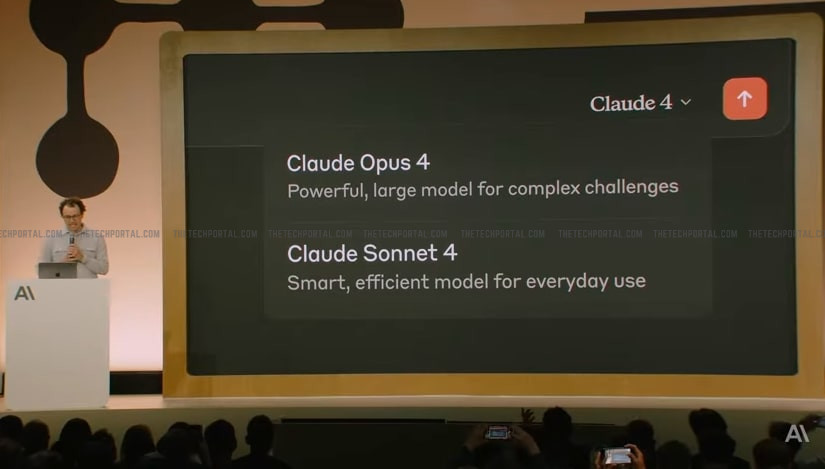
As compute demand is growing at massive levels amid an intensifying AI race, Anthropic is now reportedly looking into the idea of building its own AI chips. The Dario Amodei-led company is not actively building chips yet and has not formally committed to the project, but is internally evaluating whether developing proprietary silicon could make sense for its future AI systems, including the Claude family of models, reports Reuters. The discussion inside Anthropic comes at a time when advanced AI development is facing a shortage of powerful computing resources. Training and running modern AI models requires large clusters of specialized chips like GPUs and AI accelerators, which handle trillions of operations and process huge amounts of data across many connected systems. As AI models grow and more people use them, getting enough computing power has become one of the highest costs and challenges for AI companies. Currently, Anthropic depends on a mix of external hardware ecosystems rather than any proprietary chip architecture. The company uses Nvidia GPUs along with custom AI accelerators provided through cloud partners like Google and Amazon. These partnerships allow Anthropic to access massive compute capacity without owning physical semiconductor infrastructure, but they also create long-term dependencies on external supply chains. In periods of high demand, access to top-tier chips can become constrained, and pricing for large-scale compute contracts can significantly impact operational costs. The potential interest in building custom chips reflects a broader trend of AI companies moving toward greater control over their own infrastructure. Leading technology companies are increasingly designing their own chips to improve performance for AI workloads. For example, Google has developed its Tensor Processing Units (TPUs) specifically for neural networks, while Amazon has introduced Trainium and Inferentia chips to reduce dependence on third-party GPUs in its cloud. Meta is also investing heavily in in-house AI accelerators for its growing compute needs. Similarly, Microsoft has unveiled its Maia 200 AI chip for cloud and AI workloads, and Elon Musk's xAI - along with Tesla, SpaceX and Intel - is working on large-scale 'Terafab' infrastructure projects aimed at building massive AI compute capacity. However, building proprietary AI chips is a highly complex and capital-intensive undertaking. Designing advanced semiconductor architectures typically requires large teams of hardware engineers, long development cycles, and close collaboration with fabrication partners like TSMC, which manufactures the world's most advanced chips. The cost of developing a single cutting-edge AI accelerator can run into hundreds of millions of dollars, and the timeline from design to deployment often spans several years. Beyond fabrication, companies must also build supporting software ecosystems, including compilers, drivers, and machine learning frameworks optimized for the new hardware. The Tech Portal is published by Blue Box Media Private Limited. Our investors have no influence over our reporting. Read our full Ownership and Funding Disclosure →
CoreWeave strikes AI cloud deal with Anthropic, shares rise
April 10 (Reuters) - Cloud infrastructure firm CoreWeave (CRWV.O), opens new tab said on Friday it has struck a deal with Anthropic to supply the AI startup with cloud computing capacity, sending its shares up more than 5% in premarket trading. The multi-year agreement, whose financial terms were not disclosed, will bring computing capacity for Anthropic online later this year and help it run workloads for its Claude family of AI models. Reporting by Deborah Sophia in Bengaluru; Editing by Diti Pujara Our Standards: The Thomson Reuters Trust Principles., opens new tab

Anthropic Opens Claude Cowork to All Paid Plans on macOS, Windows
eWeek content and product recommendations are editorially independent. We may make money when you click on links to our partners. Learn More Claude Cowork, which launched three months ago as a research preview, shed that label on Thursday as Anthropic announced it is now generally available across all paid plans on both macOS and Windows. The desktop-native tool, which differs from the standard Claude web chat primarily by its ability to read and act on files stored directly on a user's local hard drive, has moved from an experiment to a mainstream product in a matter of months. Anthropic says adoption patterns inside early enterprise deployments showed something worth accelerating: the tool wasn't just catching on in engineering. Marketing, finance, legal, and operations teams were all picking it up, mostly for the connective tissue work around their core jobs, research sprints, project updates, and collaboration decks. That signal pushed the company to build controls fit for org-wide rollout. Alongside the wider release, Anthropic is introducing a suite of enterprise-focused controls designed to help organizations deploy the tool at scale. These include: * Role-based access controls to define what different teams can do * Group spend limits to manage costs per team * Usage analytics for tracking adoption and activity * Expanded OpenTelemetry support for monitoring system events * Zoom MCP connector for meeting insights * Per-tool connector controls to limit actions like write access According to Anthropic, these additions are meant to give administrators the governance and visibility needed when rolling out AI tools across entire organizations. Integration with workplace tools To deepen its role in enterprise workflows, Anthropic is also expanding integrations. A new connector with Zoom brings meeting summaries, transcripts, and action items directly into the Cowork interface. The goal is to turn everyday collaboration data into structured, actionable workflows that bridge the gap between conversations and execution. Admins can also control what actions these integrations can take, such as allowing read-only access while restricting write operations across the organization. The rollout comes as Anthropic continues to expand its enterprise AI strategy. Alongside Cowork, the company has introduced tools such as managed agents for developers and is working with partners to bring similar capabilities to other ecosystems. How to get started Claude Cowork and Claude Code on Desktop are now available on all paid plans for macOS and Windows. Download the desktop app at claude.com/download. For admins deploying across an organization: configure role-based access controls, group spend limits, and OpenTelemetry from the admin console. Usage data is available in the admin dashboard, with the Analytics API for deeper dives. Also read: Anthropic is adding interactive charts and diagrams to Claude, giving users a more hands-on way to explore information inside chat.

Global chaos has become a permanent guest in your portfolio. This strategist says Big Tech and emerging markets are now essentials.
Nuveen global strategist sees investors today as dangerously complacent about the Iran war Markets are still assuming a gradual reopening of the Strait of Hormuz and a de-escalation of the regional conflict, but a Nuveen strategist warns investors are baking this into portfolios at their peril. Investor complacency is increasingly evident as the Iran war becomes normalized by markets, which are pricing in a base case of partial resolution and a gradual resumption of energy flows. That's according to Laura Cooper, global investment strategist at Nuveen Asset Management responsible for overseeing $1.4 trillion in assets. It's a trend she sees as dangerous. "Further attacks on Gulf energy infrastructure, or escalation that draws in additional regional actors, remain underpriced," she told MarketWatch in an interview on Wednesday. Laura Cooper thinks political change was moving faster than markets were - until very recently Outcomes aren't symmetric, and Cooper emphasized that geopolitics are now shaping those outcomes, rather than a factor portfolios can price at the margin. The London-based strategist identified three distinct fault lines that undermine some of the more optimistic approaches prevalent as a cease-fire was announced in the Middle East. First, geopolitical risk has become structural rather than episodic. Second, Europe was insufficiently prepared for the new transactionalism of the second Donald Trump administration in the U.S. and is entering an era of punitively expensive energy, just when its plans for structural hegemony and rearmament were developing. Third, central banks have their hands tied because higher inflation expectations make the usual tool for tackling slower growth - chiefly easier monetary policy - can't be applied without exacerbating the situation. So how should investors position themselves for this new, problematic epoch? Cooper made the case for geographical diversification, scenario weighting and becoming increasingly selective even within asset classes. Given the heightened inflation expectations, Nuveen evinces a clear preference for floating-rate rather than fixed-rate credit instruments, for energy and upstream assets across equities, and for hard assets and real-return profiles. 'Investors are not positioned for a world in which assumptions built over decades - institutional credibility, alliance durability and the limits of political shock - would be tested simultaneously.'Laura Cooper, Nuveen Despite some of the unwelcome publicity private credit has attracted of late, Nuveen is positive toward some pockets of the asset class. Cooper said Nuveen is being especially selective about individual credits, choice of manager and covenant protection, but attracted by the much higher yields potentially on offer. The Brent (BRN00) forecast that Nuveen's portfolio managers plug into their models is $80 per barrel, but Cooper stressed that there was upside risk to that number and that this was impacting how the allocation team looks at asset classes. For example, Nuveen has recently revised its rate outlook for the U.S. and is now expecting just one interest-rate cut in 2026, with the second easing it had predicted now being pushed back to 2027. Key crude-oil prices. Nuveen has an $80-per-barrel average for Brent in its forecasts for 2026. It assumes a steep decline from where prices are now - and therein lies the risk. Meanwhile, Cooper believes the European Central Bank is the one most likely to be forced into a rate hike in 2026, she said. Europe is more vulnerable to higher inflation due to its energy dependency versus the U.S., now a net exporter of petroleum products. In general, Nuveen finds the U.S. economy more resilient than others, not just because of its energy independence but also because of the defensive nature of its technology sector. Cooper is skeptical Europe can deliver the 9% earnings growth the consensus expects, and believes, she said, that analysts are too optimistic about the knock-on effects of the crisis to growth assumptions. The defensive and more predictable nature of the earnings growth in the U.S. technology and AI sectors MAGS explains why Nuveen recommends an overweight position in U.S. large caps. However, the team barbells its equity exposure (barbelling means offsetting riskier bets with more secure ones in portfolio weightings) with overweight calls on Japan (NIY00) and emerging markets EEM. Cooper also finds the yields on 10-year gilts BX:TMBMKGB-10Y interesting, she said, especially if inflationary effects prove less dramatic than presently feared. Within emerging markets, Cooper is constructive on South Korea EWY from the tech perspective, and Brazil EWZ, a net exporter of commodities, she told MarketWatch. From a fixed-income perspective, Cooper said she favors sovereigns where strong external balances and positive carry can be useful, especially when safe-haven assumptions, chiefly the dollar DXY, are being challenged. She added that there's a "blurring of lines between emerging and developed markets underway." "Investors are not positioned for a world in which assumptions built over decades - institutional credibility, alliance durability and the limits of political shock - would be tested simultaneously," Cooper observed. Her message: that investors need to start adjusting, and incorporating these new realities now. -Jules Rimmer This content was created by MarketWatch, which is operated by Dow Jones & Co. MarketWatch is published independently from Dow Jones Newswires and The Wall Street Journal.

Sundar Pichai Doubles Down on Startups as Google Expects Windfall From Anthropic, SpaceX
The CEO's investment strategy is paying bigger returns than Google's own A.I. ambitions. Sundar Pichai's biggest A.I. wins may come from other companies instead of Google itself. As the longtime CEO of Google and its parent, Alphabet, Pichai has poured billions into A.I. products and cloud services, but it's Google's early bets on companies like SpaceX and Anthropic that are set to deliver the real payday. Both firms are preparing for blockbuster IPOs this year, positioning Google to make tens of billions of dollars -- possibly more -- off investments that may prove more profitable than its own A.I. efforts to date. Sign Up For Our Daily Newsletter Sign Up Thank you for signing up! By clicking submit, you agree to our <a href="http://observermedia.com/terms">terms of service</a> and acknowledge we may use your information to send you emails, product samples, and promotions on this website and other properties. You can opt out anytime. See all of our newsletters Google, helmed by Pichai for more than a decade, has long invested in startups through its venture capital arm, Google Ventures, and its growth arm, CapitalG. The A.I. boom has accelerated that approach, Pichai said during an April 7 interview with Stripe co-founder John Collison and investor Elad Gil. "Now, with the A.I. shift, there are more opportunities on which we can deploy capital in a good way, and so we are doing that," said the CEO. SpaceX, Elon Musk's space company, has become one of Google's most lucrative holdings. The firm merged with Musk's A.I. venture xAI earlier this year, pushing its valuation above $1 trillion. SpaceX confidentially filed to go public as soon as June, reportedly targeting a record-breaking $1.75 trillion valuation. Google invested roughly $900 million in SpaceX in 2015 and still holds an estimated 7 percent stake -- a position that could earn the company more than $100 billion when the IPO lands. The payoff has already begun. In early 2025, Alphabet reported that unrealized gains from one private holding contributed $8 billion to quarterly profit, around a quarter of its net income. Bloomberg later identified that company as SpaceX. Another windfall is expected from Anthropic. Google first invested $2 billion in 2023 and now owns about 14 percent of the company. Once valued in the millions, Anthropic's worth surged to $380 billion earlier this year, and it's reportedly exploring an IPO in the fourth quarter of this year. The market debut could give Google one of its largest returns outside its core business in years. Those gains come as Google's own A.I. products, like Gemini and Vertex, face fierce competition from OpenAI (which Google hasn't invested in) and Microsoft. Meanwhile, the company's venture and growth arms continue to rack up strong performance. Google participated in funding rounds totaling $21.6 billion in 2025, the highest since 2021, with nearly half focused on A.I. ventures, including Anthropic and Physical Intelligence. Pichai said the company will keep pursuing early-stage tech bets with long-term potential. "You want to be good stewards of capital," he told Gil and Collison, citing SpaceX and Anthropic as examples. "To the extent you're bullish on [return on invested capital], you want to invest every last dollar you can there."

Anthropic Wants Claude Cowork To Run Your Office Tasks
Claude Cowork Is Ready For The Office Takeover (Image credit: AI-generated) Tech giant Anthropic has rolled out its workplace AI tool, Claude Cowork, to all paid users. The American firm has brought a set of new features that will help large organisations to manage and monitor how the tool is used across teams. This update was shared on the official X account of Claude on Thursday, where Anthropic showcased how Claude is already used by organisations for tasks like reviewing contracts, preparing presentations, building financial models, and handling day-to-day tasks.

US Treasury calls bank CEOs over cyber risks tied to Anthropic's Claude Mythos model
The US Treasury secretary, Scott Bessent, has reportedly met with major American bank leaders this week as officials assessed potential cyber threats that Anthropic's latest artificial intelligence system poses. According to reports, Treasury Secretary Scott Bessent brought together senior executives at the department's Washington headquarters, with Jerome Powell also said to be present. The meeting followed the unveiling of Anthropic's Claude Mythos model, which the company has described as posing "unprecedented" cybersecurity risks. Concerns surrounding the model intensified after its code was leaked earlier this month. In a subsequent blog post, Anthropic said advanced AI systems had surpassed "all but the most skilled humans at finding and exploiting software vulnerabilities," warning that the consequences for economies, public safety, and national security "could be severe." The gathering took place while bank executives were already in Washington for an industry event, with invitations largely extended to leaders of systemically important institutions. Regulators consider these banks critical to financial stability, meaning disruptions to their operations could have far-reaching consequences. Attendees reportedly included David Solomon of Goldman Sachs, Brian Moynihan of Bank of America, Jane Fraser of Citigroup, Ted Pick of Morgan Stanley, and Charlie Scharf of Wells Fargo. Jamie Dimon of JPMorgan Chase was invited but did not attend. In his annual shareholder letter released this week, Dimon cautioned that cybersecurity "remains one of our biggest risks," adding that artificial intelligence "will almost surely make this risk worse." Anthropic said its yet-to-be-released Mythos model has already identified thousands of vulnerabilities across software and widely used applications. As a result, access to the system has been limited to a small group of companies, including Amazon, Apple, and Microsoft. The move marks the first time the company has restricted a product rollout. Select infrastructure and technology groups, such as Cisco and Broadcom, have also been granted access, along with the Linux Foundation. The developments come as fears grow that malicious actors could use advanced AI tools to uncover passwords or break encryption systems designed to protect sensitive data. Anthropic said some of the flaws identified by Mythos date back as far as 27 years and had not been detected by developers or security monitors before the AI system surfaced them. The Treasury meeting also follows a recent decision by the US government to classify Anthropic as a potential supply chain risk, a designation the company is currently challenging in court. Despite the ongoing regulatory scrutiny and a supply chain risk designation from the U.S. Department of Defense, Anthropic has reported unprecedented financial momentum. In a recent blog post released on April 6, the company said its annualized revenue run rate exceeded $30 billion as of early April 2026, more than tripling from roughly $9 billion at the end of 2025. Part of that growth has been driven by new compute partnerships with Google and Broadcom, highlighting rising demand for large-scale AI infrastructure. This agreement secures multiple gigawatts of next-generation TPU capacity to power frontier Claude models through 2027 and beyond. Its agentic coding platform, Claude Code, has emerged as a key contributor, generating more than $2.5 billion in run-rate revenue as of February. Weekly active users on the platform have also doubled since the start of the year, pointing to rapid adoption of AI-driven development tools as the company shifts its focus toward high-value enterprise agents.

Bessent, Powell warn bank CEOs on risks from Anthropic's Mythos AI
Anthropic restricted Mythos to 12 launch partners through an initiative called Project Glasswing, committing up to $100 million in usage credits for defensive security work. Launch partners include Amazon $AMZN Web Services, Apple $AAPL, Broadcom $AVGO, Cisco $CSCO, CrowdStrike $CRWD, Google $GOOGL, JPMorgan, the Linux Foundation, Microsoft $MSFT, Nvidia $NVDA, and Palo Alto Networks $PANW. More than 40 additional organizations that build or maintain critical software infrastructure also received access. Reuters reported that access is limited to about 40 technology companies including Microsoft and Google, while Bloomberg reported that Amazon and Apple are among the restricted recipients; the sources differ on the precise composition of that group. During testing, Anthropic used Mythos to identify thousands of zero-day vulnerabilities across major operating systems and browsers, including a flaw dating back 27 years in OpenBSD and a vulnerability in the video processing library FFmpeg that had gone undetected across five million passes by automated testing tools. Anthropic has noted that no specialized cybersecurity training went into building Mythos -- its ability to find vulnerabilities stems from general advances in coding and reasoning.

The unconventional logic behind SpaceX's $1.75 trillion price tag
NEW YORK, April 10 (Reuters) - Wall Street is reaching for some unusual yardsticks to price Elon Musk's SpaceX. At least one of SpaceX's large institutional investors is privately benchmarking the rocket and satellite company not against aerospace rivals like Boeing or telecom giants like AT&T, but against market darling Palantir Technologies and AI infrastructure plays like GE Vernova and Vertiv - in a bid to justify a $1.75 trillion valuation ahead of what could be the largest IPO in history. The framework, described to Reuters for the first time by a source familiar with the company's thinking, illustrates the unusual challenge of pricing a company with no obvious public peers - and the lengths to which Wall Street is going to rationalize a premium valuation. SpaceX has confidentially filed for a U.S. IPO, Reuters reported last week. The company is scheduled to hold an analyst day on April 21, Reuters previously reported. At a potential valuation of $1.75 trillion, SpaceX looks expensive by many traditional measures, including comparisons to the earnings and revenue multiples at firms often cited as reference points for parts of its business. In space that means Boeing and Lockheed Martin, whose United Launch Alliance joint venture competes with SpaceX in launch services. In internet access, the peers would be AT&T and Verizon. But financial backers of the firm, on track to raise $75 billion in an IPO this year, contend that comparisons to established firms in legacy businesses miss the point of SpaceX and other Musk companies - to take advantage of the emergence of long-term, "secular" economic shifts at a time when few competitors are equipped to do so. Musk's companies have historically commanded rich multiples in part because investors are betting on him personally - Tesla being the clearest example -- and SpaceX investors expect that dynamic to carry over into any public offering. It's "pretty darn exciting" to sell into "the largest total addressable market in human history" - a potential $370 billion in space business, SpaceX CFO Bret Johnsen told IPO bankers on a conference call this week, according to two people familiar with the matter. He tabbed the potential market for the firm's Starlink internet service at $1.6 trillion, the people said. SpaceX did not respond to a request for comment. RETHINKING COMPARABLES Finding the right comparables for SpaceX lies at the center of a fierce debate over the pricing of the massive IPO, as bankers and investors grapple with how to value the company despite few, if any, closely comparable public peers. It is common for investors and bankers to sort for comparables by sector, using the longstanding assumption that industry is a good proxy for financial opportunity and risk. But many investors contend that comparable companies do not need to operate in the same industry - because, in this view, what matters are a firm's potential cash flows, growth profiles and risk characteristics. This approach holds that a better comparison for SpaceX comes from companies selling into the AI data-center buildout, which have famously been rewarded with rising shares and high multiples. For smaller funds, the calculus is different, said Jay Bala, portfolio manager at Toronto-based AIP, which manages roughly $100 million in assets, a large portion concentrated in SpaceX. "I'm piggybacking on the largest funds in the world. A huge amount of due diligence has already been done. I'm not going to second-guess some of the biggest investors on the planet," he said. He acknowledged it is difficult to obtain detailed financial information about SpaceX: "You can only get so much. It's hard to get numbers sometimes." STARLINK VERSUS LEGACY TELECOMS For Starlink -- or what SpaceX calls its "connectivity" business -- the reflexive benchmarks are legacy telecom firms, but some investors argue those comparisons are skewed by aging fixed infrastructure, saturated domestic markets and years of modest growth. "I wouldn't look at a legacy AT&T and Verizon as being very relevant to the economic model for Starlink, even though they're both in the business of giving you communication," a senior executive at one of SpaceX's large institutional investors told Reuters, speaking on condition of anonymity to discuss confidential internal work. Instead, SpaceX investors point to Palantir for its secular growth, high return on invested capital, good margins and asset-light composition -- qualities that fans say justify the high multiples the stock commands and suggest greater opportunities down the road. Palantir is well known as one of the priciest stocks in the market, recently trading at 43 times expected revenue and 75 times earnings. Skeptics say those levels are likely unsustainable, but SpaceX fans contend that the figures show that premium valuations are attainable if backed by outstanding financial performance. That said, at $1.75 trillion, even Palantir would be cheaper on some of these measures than SpaceX, which would trade at 110 times 2025 revenue estimates, according to a PitchBook calculation. "Investors should size positions with the understanding that they are paying a platform premium today for infrastructure-monopoly economics tomorrow," PitchBook analyst Franco Granda said in a note last month. ROCKET MANUFACTURING COMPARISONS For the rocket manufacturing side of the business, SpaceX investors contend that the firm's accomplishments - for instance, it has built a reusable launch system, driven down unit costs dramatically and expanded into a commercial market where demand for launch capacity continues to grow -- demand valuations far above those prevailing at Lockheed, which traded recently at around 20 times next year's expected earnings. Boeing's current high multiples mostly reflect its state as a turnaround story. Instead, they turn to industrial names such as GE Vernova and Vertiv - companies whose stocks have soared on the back of AI data-center spending - arguing that SpaceX's launch operations deserve a similar re-rating to the "picks and shovels" of the data-center age. Even these preferred comps do not look a lot like SpaceX, however. GE Vernova was recently trading at around 30 times expected cash flow and four times last year's revenue. Vertiv, which sells power and cooling equipment for data centers, traded recently at 19 times expected operating profit and 6 times last year's sales. MESSY PRICING AND RATIONALIZATIONS Bankers and investors say SpaceX is difficult to price because of the company's unique space operations and AI business, which is particularly difficult to value at an early stage. "Pricing is always going to be messy here," said Aswath Damodaran, a valuation expert and finance professor at New York University's Stern School of Business. "Nobody else has that capacity to launch satellites in numbers and at the price that they can do -- that's their big advantage." He adds that much of the current pricing reflects investors justifying their decision to purchase the shares rather than relying on traditional metrics. "They're hoping there's enough mood and momentum behind SpaceX, and when it goes public, the mood and momentum will take the stock up." "They've made the decision already that SpaceX is a great buy," Damodaran said. "Now they're looking for some way that they can justify that, and this pricing sounds like that exposed rationalization." (Reporting by Echo Wang in New York; Additional reporting by Joey Roulette in Houston; Editing by Colin Barr and Matthew Lewis)

Will SpaceX's $5B Loss Hurt Its $2T Valuation? Reasons Why The Impact May Be Limited
Details about the SpaceX IPO are likely to be disclosed after the SEC reviews the listing application Elon Musk's rocket company SpaceX reportedly posted a loss of around $5 billion in 2025 on revenue of more than $18 billion. The loss, reported by The Information, includes metrics from Musk's AI startup xAI, which SpaceX acquired recently. These figures mark a stark contrast from a year earlier's data when SpaceX recorded profits of $8 billion on revenues between $15 billion and $16 billion. Now, this development comes in the backdrop of SpaceX confidentially filing for its initial public offering (IPO) on the US stock market at a massive valuation of $1.75 trillion. The filing will offer regulators time to review and discuss the company's financial disclosures before the public can access them. The SpaceX IPO could close in June as rivals like OpenAI plan to go public later this year. OpenAI said this week it closed a $122 billion funding round. Losses were attributed to the integration of xAI. Documents released in January revealed that xAI burned through $7.8 billion in the first nine months of 2025, spending $28 million per day on average, as quarterly losses continued to widen. xAI reported a Q3 net loss of $1.46 billion, widening from a loss of $1 billion in Q1. Amid concerns of xAI's high cash burn impacting SpaceX valuation, reports indicate that SpaceX's valuation surged after xAI acquisition due to a shift in valuation logic: the market no longer sees SpaceX only as a commercial aerospace firm but as a space data centre infrastructure giant. Despite xAI's higher spending and widening losses, its merger structure also isolates its liabilities from SpaceX, preventing any financial impact on the rocket company. Currently, concerns around xAI losses could be outweighed by the market's excessive frenzy over SpaceX going public and high price-to-earnings ratio predictions for the rocket company. A successful SpaceX IPO could significantly boost Musk's wealth amid concerns about Tesla's lower-than-expected deliveries, investigations into Grok, and a year of volatility during his engagement at DOGE. SpaceX is currently the world's most active launch company, which was founded to make interplanetary travel possible. Alongside supporting NASA's upcoming moon landing missions, it has recently been focusing on expanding its Starlink coverage and orbital data centers that would operate by harnessing the power of the sun. Note that Starlink, which is among the top operators of satellites, generates over 50% of SpaceX's revenue. SpaceX acquired xAI in February as part of plans to expedite the development and deployment of solar-powered data centers in space to meet exponentially rising compute and energy demands driven by AI. Although xAI, which owns the social media platform X and develops the Grok chatbot, has lagged behind the capabilities of Claude or ChatGPT, it was still valued at $250 billion during the acquisition. Details of SpaceX's finances are a tightly held secret and are likely to be revealed as the IPO nears, while other information like the cost of shares will become public after the US SEC reviews the filing. SpaceX is working with multiple banks, including Barclays, to coordinate on orders for the public listing.
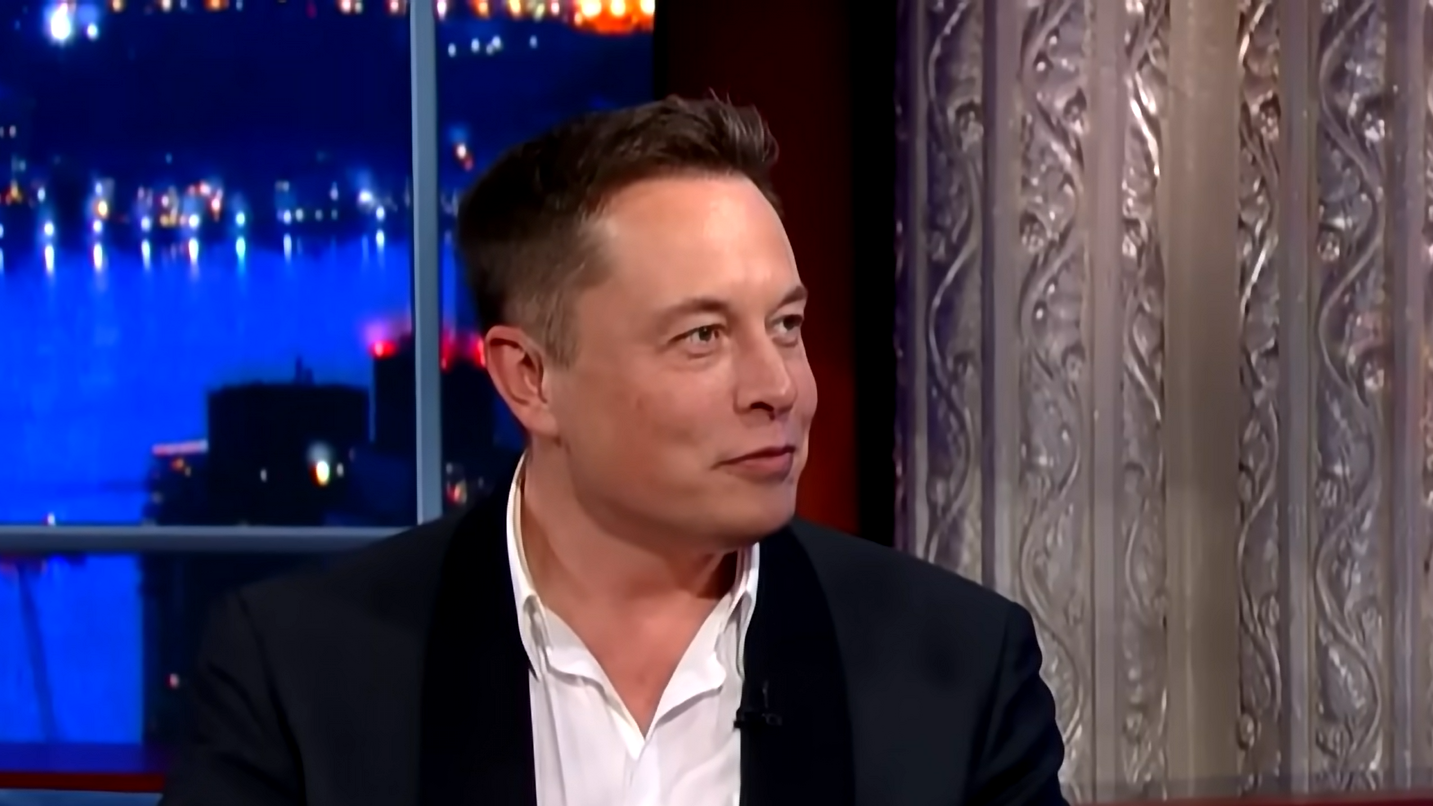
Powell, Bessent discussed Anthropic's Mythos AI cyber threat with major U.S. banks
Federal Reserve Chairman Jerome Powell and Treasury Secretary Scott Bessent met with major U.S. bank CEOs this week to discuss the possible cyber risks raised by Anthropic's Mythos model, CNBC confirmed Friday. The bank heads were already in Washington, D.C., for another meeting, but a special gathering was called to discuss Mythos, according to a person familiar with the matter, who asked not to be named in order to share information about a confidential matter. Earlier this week, Anthropic rolled out the new artificial intelligence model in a limited capacity over concerns that hackers could exploit its capabilities. Anthropic did not immediately respond to CNBC's request for comment.

OpenAI investor memo touts computing advantage over Anthropic
According to the memo, which was reported by Bloomberg and CNBC, OpenAI put its own 2025 capacity at 1.9 gigawatts -- a figure it said was three times what it had the year before -- and placed Anthropic's equivalent figure at 1.4 gigawatts. OpenAI told investors it foresees its own footprint climbing into the "low-double-digit range" of gigawatts within a year and hitting 30 gigawatts by 2030, and that Anthropic would top out somewhere between seven and eight gigawatts before the close of 2027.

Watchdogs To Court: Lift Amazon's Perplexity Ban
* by Wendy Davis , Yesterday Siding with artificial intelligence (AI) company Perplexity, digital rights watchdogs are asking an appellate court to lift an injunction banning the company's shopping agent, Comet, from Amazon. U.S. District Court Judge Maxine Chesney in the Northern District of California handed down the injunction in March, after finding that Amazon was likely to prove that Perplexity violated the Computer Fraud and Abuse Act -- a 1986 anti-hacking law -- by accessing Amazon users' accounts with those users' permission, but without Amazon's authorization. Perplexity is appealing that ruling. Last month, the 9th Circuit Court of Appeals temporarily stayed the injunction while it considers the appeal. On Wednesday, the Electronic Frontier Foundation, Mozilla and other groups argued in a friend-of-the-court brief that Chesney's interpretation of the anti-hacking law is "antithetical to foundational principles of the open internet." "The stakes of this dispute go far beyond a skirmish between two commercial services," the watchdogs write, elaborating that the dispute centers on whether the anti-hacking law "gives private companies like Amazon veto power over how the public accesses and engages with publicly available information on their websites." "Open access is a hallmark of today's internet," the groups write. "Developers like Perplexity facilitate that access by creating tools that enable users to meaningfully engage with the web." The battle between Amazon and Perplexity dates to November, when the retailer alleged that Perplexity's Comet browser shopped for users and made purchases on their behalf -- despite Amazon's attempt to implement technological blocks, and its demand that Perplexity cease and desist. Perplexity recently argued to the 9th Circuit that Chesney's decision marks an "alarming expansion" of the Computer Fraud and Abuse Act. That law, introduced soon after the movie "War Games" came out, includes provisions that prohibit people from accessing web servers without authorization. Among other arguments, Perplexity says consumers are the ones who "access" Amazon via Comet's browser. "A Comet user accessing Amazon from her own computer is no more equivalent to Perplexity accessing Amazon than a Safari user accessing Amazon from her own computer is equivalent to Apple accessing Amazon," Perplexity wrote in papers filed last week. The Electronic Frontier Foundation, Mozilla and others agree, writing that Perplexity's servers don't "directly" access Amazon's. "Comet never causes Perplexity's servers to directly access Amazon computers, let alone protected areas of those systems," they argue. "Only the Comet user's computer communicates with Amazon servers, and in most cases, will receive only public page content when it does so." The American Civil Liberties Union and Knight First Amendment Institute at Columbia University are also siding with Perplexity. They argue in a separate friend-of-the-court brief that a broad interpretation of the anti-hacking law would threaten journalism and research, writing that Perplexity's tool "appears to resemble other automated digital tools on which much public interest journalism and research rely." "Imposing liability on Perplexity for the alleged conduct at issue here would expose journalists and researchers to civil and criminal penalties for using the digital tools of their trade," those groups write. "Amazon may disagree with a user's choice to share data the user has authorized access to, or with a user's use of a browser extension while shopping on its website, but it may not invoke the CFAA to impose liability on that choice," the civil liberties group and Knight Institute write, using an acronym for the Computer Fraud and Abuse Act. "If the CFAA barred third-party access to information that users wanted to share and could access through their accounts, a platform could unilaterally decide exactly which information to keep under lock and key and which information could make it into the hands of journalists and researchers," the groups write. "Computer crime laws should not become a means for shutting down important research in the public interest." Amazon is expected to respond to the arguments by April 22.