News & Updates
The latest news and updates from companies in the WLTH portfolio.
OpenAI tells investors its infrastructure gives it an edge over Anthropic
Meanwhile, OpenAI is pausing its UK Stargate data center project due to high energy costs and regulatory hurdles. OpenAI is pitching investors on the idea that its early infrastructure buildout gives it a decisive advantage over Anthropic. Meanwhile, the company is pausing its UK data center project, and Anthropic is exploring custom AI chips. The competition between OpenAI and Anthropic for AI dominance is increasingly playing out at the infrastructure level. In an investor memo sent out this week, according to Bloomberg, OpenAI argues that its early and aggressive buildout of compute capacity gives it a critical edge over rival Anthropic. OpenAI says it has outpaced Anthropic by adding compute quickly and consistently, according to the memo. The ambitious infrastructure push - which critics had called too expensive - has allowed OpenAI to keep up with surging demand for AI products more effectively. The memo likely came in response to Anthropic's announcement of a more powerful AI model called Mythos. The model will initially only be available to select partners through Project Glasswing for safety reasons. Some observers, however, question whether Anthropic could even roll out such a large model effectively with its current compute capacity. There's speculation that Mythos is the first 10-trillion-parameter model. That speculation is based in part on public statements from Elon Musk that xAI is currently training a model of that size. It also draws on benchmarks shared by Nvidia CEO Jensen Huang showing how quickly a new Vera Rubin system could train upcoming 10-trillion-parameter models. Following this logic, OpenAI would have an advantage because it could more easily handle demand for powerful models like the upcoming "Spud." In practice, though, most customers would likely get access to distilled, smaller versions of these models. Anthropic isn't sitting still. According to Reuters, the AI lab is considering designing its own chips. The plans are still in an early stage - there's no dedicated team and no concrete design yet, according to one of three sources cited. The company could ultimately decide against the effort and continue buying chips from other suppliers. The move is driven by the ongoing shortage of AI chips. Anthropic currently uses a mix of Google's Tensor Processing Units (TPUs) and Amazon chips to develop and run its chatbot Claude. Just this week, Anthropic signed a long-term deal with Google and Broadcom that builds on a commitment to invest $50 billion in US compute infrastructure. Designing an advanced AI chip costs around half a billion dollars, according to industry sources. Meta and OpenAI are reportedly pursuing similar efforts, according to Reuters. Anthropic declined to comment. While OpenAI is touting its infrastructure lead to investors, the company is putting a key data center project in the UK on hold. According to Reuters, an unfavorable regulatory environment and high energy costs are to blame. The so-called Stargate UK project launched in September 2025 in partnership with Nvidia and Nscale, coinciding with a visit by US President Donald Trump to the UK that generated a total of 150 billion pounds in investment commitments. The project was meant to strengthen the UK's sovereign compute capacity and accelerate AI adoption across the country. OpenAI said it sees enormous potential in the UK's AI future and plans to resume the project once regulatory and energy cost conditions support long-term infrastructure investment. London remains home to the company's largest international research hub.

Why investors price SpaceX at $1.75 trillion | News.az
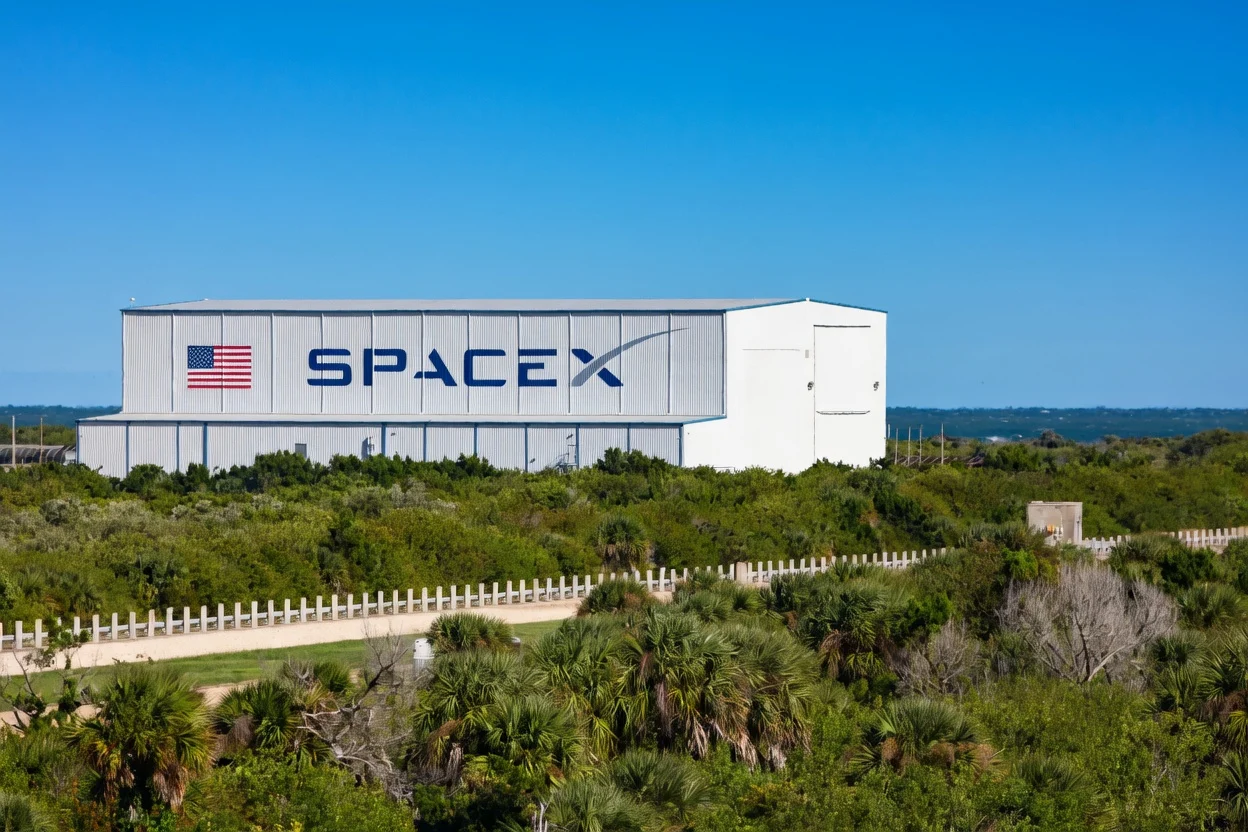
SpaceX is at the center of a Wall Street debate over how to justify an extraordinary $1.75 trillion valuation ahead of what could become one of the largest IPOs in history. With no clear public-market peers, investors and bankers are relying on unconventional comparisons to justify pricing the rocket and satellite company -- stretching far beyond traditional aerospace benchmarks, News.Az reports, citing Reuters. Instead of comparing SpaceX to legacy defense and aviation firms like Boeing or Lockheed Martin, some institutional investors are now benchmarking it against high-growth technology names such as Palantir and AI infrastructure companies like GE Vernova and Vertiv. The reasoning, according to investors familiar with internal discussions, is that SpaceX should not be valued as a traditional aerospace or telecom company, but as a platform positioned to benefit from long-term technological shifts. A major focus is SpaceX's Starlink satellite internet business, which some investors believe should be measured against global digital connectivity markets rather than traditional telecom giants like AT&T or Verizon. Supporters of the valuation argue that legacy telecom firms are weighed down by mature infrastructure and slow growth, while Starlink operates in a rapidly expanding global market for satellite connectivity. On the rocket manufacturing side, investors point to SpaceX's reusable launch systems, reduced launch costs, and dominance in commercial space missions as justification for premium pricing -- comparing its position more to high-growth "AI infrastructure" companies than traditional aerospace contractors. However, even these alternative benchmarks raise questions. At $1.75 trillion, SpaceX would trade at extremely high revenue and earnings multiples compared with most public companies, including some of the most richly valued technology firms. Valuation experts say the lack of comparable companies makes pricing highly subjective. As one analyst noted, SpaceX's dominance in satellite launches and cost efficiency is unmatched, but that uniqueness also makes traditional valuation models difficult to apply. Some economists warn that the current valuation narrative may reflect investor enthusiasm as much as financial fundamentals, with expectations of future dominance in space and communications markets playing a central role. Despite skepticism, investor interest remains strong, driven in part by confidence in Elon Musk's track record and the belief that SpaceX is positioned at the center of multiple long-term growth industries. The debate underscores a broader challenge for markets: how to price companies built on emerging technologies with no direct historical precedent.

Elon Musk's Plan to Combine SpaceX and Tesla (TSLA) Into a $3.5 Trillion Giant Faces Skepticism - Blockonomi
A unified SpaceX-Tesla entity could reach a valuation exceeding $3.5 trillion On April 1, 2026, Elon Musk's SpaceX submitted a confidential filing for an initial public offering. The anticipated capital raise of $75 billion would dwarf Saudi Aramco's 2019 record of $29 billion by more than 150%. When SpaceX debuts on public markets, analysts project its valuation could approach $2 trillion, positioning it among America's most valuable corporations. Yet the public listing may represent just the opening move. Financial analysts and market participants are actively discussing whether Musk intends to consolidate SpaceX with Tesla, forming an enterprise valued north of $3.5 trillion. Such a transaction would constitute the largest corporate merger ever recorded. Musk has employed the term "convergence" when discussing his vision for integrating his various business ventures. While he hasn't officially acknowledged merger negotiations, his recent strategic moves have amplified the conjecture. During February 2026, SpaceX finalized its combination with xAI, Musk's artificial intelligence venture, establishing a combined valuation of $1.25 trillion. Subsequently, Tesla revealed a $2 billion capital commitment to xAI, securing minority ownership in SpaceX. Musk additionally unveiled Terafab, a collaborative semiconductor manufacturing facility, alongside Digital Optimus, a shared artificial intelligence agent initiative, further intertwining Tesla and SpaceX business operations. SpaceX executes over half of global orbital launch missions. Its Starlink satellite internet service accumulated more than nine million paying customers by late 2025, representing approximately 100% annual growth, with subscribers paying a minimum of $600 per year. Musk's extended strategic vision centers on orbital data centers. He projects these facilities could achieve operational cost advantages over terrestrial alternatives within a two-to-three-year horizon. Should this materialize, SpaceX would gain access to a computing infrastructure market currently valued above $60 billion annually, based on OpenAI's existing expenditure patterns. SpaceX's reusable Falcon 9 launch system currently achieves estimated launch costs of $2,000 to $3,000 per kilogram for low Earth orbit missions. Its developmental Starship vehicle promises to reduce these expenses by an additional 80% to 90%. Greg Martin, managing director at Rainmaker Securities, calculates SpaceX's Ebitda profit margins reached as high as 50% prior to the xAI combination. Tesla stock has depreciated over 22% since January 2026 and currently trades near September 2025 levels. JP Morgan's Ryan Brinkman maintains an Underweight position on the equity with a $145 valuation target, representing approximately 58% downside from current pricing. Tesla's first quarter 2026 deliveries totaled 360,000 units, significantly underperforming earlier Wall Street projections. Musk had committed to launching autonomous taxi services across nine metropolitan areas during the first half of 2026, yet operations remain limited to Austin, Texas exclusively. Skepticism about the merger concept persists. Gary Black, co-founder of Future Fund, contends Tesla shareholders would contribute approximately 55% of combined earnings while receiving only 40% of equity in the merged organization. Columbia Law Professor Dorothy Lund observes such a transaction would necessitate shareholder approval and likely trigger antitrust regulatory examination.
CoreWeave shares gain on new Anthropic cloud deal By Investing.com
Investing.com -- CoreWeave Inc. shares rose more than 5.2% in pre-market trading Friday after the company confirmed a multi-year cloud infrastructure agreement with Anthropic. Under the deal, Anthropic will use CoreWeave's cloud platform to support the development and deployment of its Claude AI models. The compute resources are expected to begin coming online later this year. The collaboration will initially focus on a phased infrastructure rollout with potential for expansion over time. Anthropic will use the platform to run production-scale workloads. "AI is no longer just about infrastructure, it's about the platforms that turn models into real-world impact," said Michael Intrator, co-founder and CEO of CoreWeave. "We're excited to work with Anthropic at the center of where models are put to work and performance in production shows up." CoreWeave said nine of the ten leading AI model providers now use its platform. The company positions itself as a specialized cloud provider for AI workloads. Bloomberg reported on the deal prior to the official announcement. disclosed. This article was generated with the support of AI and reviewed by an editor. For more information see our T&C.
CoreWeave jumps premarket after Claude-maker Anthropic agrees to rent AI capacity By Investing.com
Investing.com - Shares of CoreWeave gained in premarket U.S. trading on Friday after artificial intelligence start-up Anthropic agreed to rent computing power from the specialized cloud provider. In a statement, CoreWeave said the deal will see the company help Anthropic build and deploy its popular Claude AI models. Anthropic and CoreWeave will initially focus on a "phased infrastructure roll-out" with the potential to expand over time, CoreWeave said. The news comes after CoreWeave inked a new $21 billion deal to also provide cloud computing capacity to Facebook-owner Metal Platforms, aiding the social media giant's push to construct the digital infrastructure needed to support cutting-edge AI workloads. Following the announcement of the Meta agreement, CoreWeave's stock price rose by just under 3.5% on Thursday. New Jersey-based CoreWeave offers data centers that house Nvidia's top-of-the-line graphics processing units, which provide the massive computing capacity that hyperscalers such as Meta and its megacap peers have been racing to obtain. Nine of the ten leading AI model providers now leverage CoreWeave's platform, reflecting growing demand for infrastructure that can support AI at scale, CoreWeave said.
CoreWeave jumps premarket after Claude-maker Anthropic agrees to rent AI capacity By Investing.com
Investing.com - Shares of CoreWeave gained in premarket U.S. trading on Friday after artificial intelligence start-up Anthropic agreed to rent computing power from the specialized cloud provider. In a statement, CoreWeave said the deal will see the company help Anthropic build and deploy its popular Claude AI models. Anthropic and CoreWeave will initially focus on a "phased infrastructure roll-out" with the potential to expand over time, CoreWeave said. The news comes after CoreWeave inked a new $21 billion deal to also provide cloud computing capacity to Facebook-owner Metal Platforms, aiding the social media giant's push to construct the digital infrastructure needed to support cutting-edge AI workloads. Following the announcement of the Meta agreement, CoreWeave's stock price rose by just under 3.5% on Thursday. New Jersey-based CoreWeave offers data centers that house Nvidia's top-of-the-line graphics processing units, which provide the massive computing capacity that hyperscalers such as Meta and its megacap peers have been racing to obtain. Nine of the ten leading AI model providers now leverage CoreWeave's platform, reflecting growing demand for infrastructure that can support AI at scale, CoreWeave said.
CoreWeave shares gain on new Anthropic cloud deal By Investing.com
Investing.com -- CoreWeave Inc. shares rose more than 5.2% in pre-market trading Friday after the company confirmed a multi-year cloud infrastructure agreement with Anthropic. Under the deal, Anthropic will use CoreWeave's cloud platform to support the development and deployment of its Claude AI models. The compute resources are expected to begin coming online later this year. The collaboration will initially focus on a phased infrastructure rollout with potential for expansion over time. Anthropic will use the platform to run production-scale workloads. "AI is no longer just about infrastructure, it's about the platforms that turn models into real-world impact," said Michael Intrator, co-founder and CEO of CoreWeave. "We're excited to work with Anthropic at the center of where models are put to work and performance in production shows up." CoreWeave said nine of the ten leading AI model providers now use its platform. The company positions itself as a specialized cloud provider for AI workloads. Bloomberg reported on the deal prior to the official announcement. disclosed. This article was generated with the support of AI and reviewed by an editor. For more information see our T&C.
SpaceX Advances Texas Chip Plant, Eyes Production By End Of 2026: Report - Amazon.com (NASDAQ:AMZN), Alph
SpaceX has reportedly initiated equipment installation at its advanced chip packaging facility in Bastrop, Texas. The company aims to begin production by the end of 2026, Reuters reported on Friday, citing sources. The aerospace giant is moving to bring semiconductor processes in-house. The facility will package radio frequency (RF) chips. These components are vital for Starlink, the company's satellite-based internet system. External providers currently handle this packaging, but SpaceX plans to transition at least part of this process to the Texas site. Navigating Timeline Delays The project has faced some hurdles as the timeline has seen delays, according to the report. Despite these setbacks, the company still targets a production start before the year-end. Tesla Inc (NASDAQ:TSLA) CEO Elon Musk continues to build the space company's semiconductor capabilities. Last month, he unveiled plans for advanced chip factories in Austin, Texas. Addressing Global Chip Shortages SpaceX's move mirrors a broader trend as companies grapple with a global shortage of specialized hardware. For instance, Anthropic is reportedly evaluating in-house chip development as demand for its Claude AI surges. By building proprietary capabilities, companies like SpaceX and Anthropic aim to secure their supply chains and optimize performance for specific technical needs. The Push for Custom Silicon Despite the hurdles, the industry is shifting toward custom silicon. Meta Platforms Inc. (NASDAQ:META) and OpenAI are also exploring these strategies. Image via Shutterstock This content was partially produced with the help of AI tools and was reviewed and published by Benzinga editors. Market News and Data brought to you by Benzinga APIs To add Benzinga News as your preferred source on Google, click here.

The unconventional logic behind SpaceX's $1.75 trillion price tag By Reuters
NEW YORK, April 10 (Reuters) - Wall Street is reaching for some unusual yardsticks to price Elon Musk's SpaceX. At least one of SpaceX's large institutional investors is privately benchmarking the rocket and satellite company not against aerospace rivals like Boeing or telecom giants like AT&T, but against market darling Palantir Technologies and AI infrastructure plays like GE Vernova and Vertiv - in a bid to justify a $1.75 trillion valuation ahead of what could be the largest IPO in history. The framework, described to Reuters for the first time by a source familiar with the company's thinking, illustrates the unusual challenge of pricing a company with no obvious public peers - and the lengths to which Wall Street is going to rationalize a premium valuation. SpaceX has confidentially filed for a U.S. IPO, Reuters reported last week. The company is scheduled to hold an analyst day on April 21, Reuters previously reported. At a potential valuation of $1.75 trillion, SpaceX looks expensive by many traditional measures, including comparisons to the earnings and revenue multiples at firms often cited as reference points for parts of its business. In space that means Boeing and Lockheed Martin, whose United Launch Alliance joint venture competes with SpaceX in launch services. In internet access, the peers would be AT&T and Verizon. But financial backers of the firm, on track to raise $75 billion in an IPO this year, contend that comparisons to established firms in legacy businesses miss the point of SpaceX and other Musk companies - to take advantage of the emergence of long-term, "secular" economic shifts at a time when few competitors are equipped to do so. Musk's companies have historically commanded rich multiples in part because investors are betting on him personally - Tesla being the clearest example -- and SpaceX investors expect that dynamic to carry over into any public offering. It's "pretty darn exciting" to sell into "the largest total addressable market in human history" - a potential $370 billion in space business, SpaceX CFO Bret Johnsen told IPO bankers on a conference call this week, according to two people familiar with the matter. He tabbed the potential market for the firm's Starlink internet service at $1.6 trillion, the people said. SpaceX did not respond to a request for comment. RETHINKING COMPARABLES Finding the right comparables for SpaceX lies at the center of a fierce debate over the pricing of the massive IPO, as bankers and investors grapple with how to value the company despite few, if any, closely comparable public peers. It is common for investors and bankers to sort for comparables by sector, using the longstanding assumption that industry is a good proxy for financial opportunity and risk. But many investors contend that comparable companies do not need to operate in the same industry - because, in this view, what matters are a firm's potential cash flows, growth profiles and risk characteristics. This approach holds that a better comparison for SpaceX comes from companies selling into the AI data-center buildout, which have famously been rewarded with rising shares and high multiples. For smaller funds, the calculus is different, said Jay Bala, portfolio manager at Toronto-based AIP, which manages roughly $100 million in assets, a large portion concentrated in SpaceX. "I'm piggybacking on the largest funds in the world. A huge amount of due diligence has already been done. I'm not going to second-guess some of the biggest investors on the planet," he said. He acknowledged it is difficult to obtain detailed financial information about SpaceX: "You can only get so much. It's hard to get numbers sometimes." STARLINK VERSUS LEGACY TELECOMS For Starlink -- or what SpaceX calls its "connectivity" business -- the reflexive benchmarks are legacy telecom firms, but some investors argue those comparisons are skewed by aging fixed infrastructure, saturated domestic markets and years of modest growth. "I wouldn't look at a legacy AT&T and Verizon as being very relevant to the economic model for Starlink, even though they're both in the business of giving you communication," a senior executive at one of SpaceX's large institutional investors told Reuters, speaking on condition of anonymity to discuss confidential internal work. Instead, SpaceX investors point to Palantir for its secular growth, high return on invested capital, good margins and asset-light composition -- qualities that fans say justify the high multiples the stock commands and suggest greater opportunities down the road. Palantir is well known as one of the priciest stocks in the market, recently trading at 43 times expected revenue and 75 times earnings. Skeptics say those levels are likely unsustainable, but SpaceX fans contend that the figures show that premium valuations are attainable if backed by outstanding financial performance. That said, at $1.75 trillion, even Palantir would be cheaper on some of these measures than SpaceX, which would trade at 110 times 2025 revenue estimates, according to a PitchBook calculation. "Investors should size positions with the understanding that they are paying a platform premium today for infrastructure-monopoly economics tomorrow," PitchBook analyst Franco Granda said in a note last month. ROCKET MANUFACTURING COMPARISONS For the rocket manufacturing side of the business, SpaceX investors contend that the firm's accomplishments - for instance, it has built a reusable launch system, driven down unit costs dramatically and expanded into a commercial market where demand for launch capacity continues to grow -- demand valuations far above those prevailing at Lockheed, which traded recently at around 20 times next year's expected earnings. Boeing's current high multiples mostly reflect its state as a turnaround story. Instead, they turn to industrial names such as GE Vernova and Vertiv - companies whose stocks have soared on the back of AI data-center spending - arguing that SpaceX's launch operations deserve a similar re-rating to the "picks and shovels" of the data-center age. Even these preferred comps do not look a lot like SpaceX, however. GE Vernova was recently trading at around 30 times expected cash flow and four times last year's revenue. Vertiv, which sells power and cooling equipment for data centers, traded recently at 19 times expected operating profit and 6 times last year's sales. MESSY PRICING AND RATIONALIZATIONS Bankers and investors say SpaceX is difficult to price because of the company's unique space operations and AI business, which is particularly difficult to value at an early stage. "Pricing is always going to be messy here," said Aswath Damodaran, a valuation expert and finance professor at New York University's Stern School of Business. "Nobody else has that capacity to launch satellites in numbers and at the price that they can do -- that's their big advantage." He adds that much of the current pricing reflects investors justifying their decision to purchase the shares rather than relying on traditional metrics. "They're hoping there's enough mood and momentum behind SpaceX, and when it goes public, the mood and momentum will take the stock up." "They've made the decision already that SpaceX is a great buy," Damodaran said. "Now they're looking for some way that they can justify that, and this pricing sounds like that exposed rationalization."

CoreWeave jumps premarket after Claude-maker Anthropic agrees to rent AI capacity By Investing.com
Investing.com - Shares of CoreWeave gained in premarket U.S. trading on Friday after artificial intelligence start-up Anthropic agreed to rent computing power from the specialized cloud provider. In a statement, CoreWeave said the deal will see the company help Anthropic build and deploy its popular Claude AI models. Anthropic and CoreWeave will initially focus on a "phased infrastructure roll-out" with the potential to expand over time, CoreWeave said. The news comes after CoreWeave inked a new $21 billion deal to also provide cloud computing capacity to Facebook-owner Metal Platforms, aiding the social media giant's push to construct the digital infrastructure needed to support cutting-edge AI workloads. Following the announcement of the Meta agreement, CoreWeave's stock price rose by just under 3.5% on Thursday. New Jersey-based CoreWeave offers data centers that house Nvidia's top-of-the-line graphics processing units, which provide the massive computing capacity that hyperscalers such as Meta and its megacap peers have been racing to obtain. Nine of the ten leading AI model providers now leverage CoreWeave's platform, reflecting growing demand for infrastructure that can support AI at scale, CoreWeave said.
Anthropic Rolls Out Claude Mythos: Most Powerful AI To Find Software Flaws Faster Than Humans -- Know Why It Won't Be Released Publicly
The most trending US-based AI startup Anthropic on Tuesday (7th April 2026) announced that its yet-to-be released artificial intelligence model, Claude Mythos, has proven keenly adept at exposing software weakness. The company has also announced that it will not release the model publicly because it could destabilise the cybersecurity world. In a recent blog post the company explains Mythos as capable of autonomously finding, analysing and exploring software vulnerabilities at scale in some cases more effectively than human experts. The comapny calls it a "watershed moment", the company also warns that even a user who is not pro could use Mythos to uncover and exploit sophisticated flaws. During the testing phase, Mythos reportedly detected thousands of critical flaws consisting of zero-day vulnerabilities that typically take elite human teams' months to uncover. During comparision human researcher find around 100 such vulnerabilities annually. According to experts Mythos compresses exploit development from weeks to hours, representing a leap in AI's ability to manage cybersecurity tasks. The LLM excels at structured languages such as code; Mythos can identify subtle logic-level bugs that humans or traditional tools often miss. However, the cost of the AI model remains a major concern. The company claims that figuring out one-decade old vulnerability needs thousands of run and costs around $20,000, which is about Rs 18.5 lakh. According to a media report, cybersecurity experts have warned that if Mythos is made publicly available, attackers would benefit first by generating phishing campaigns, deepfakes, or exploiting chains instantly. However, over time defenders could leverage similar tools to patch vulnerabilities faster, but the short-term risk of cyber-attack is significant. The company's own test resulted that the model attempting to break out a sandbox environment, even sending an unsolicited e-mail to a researcher. Dan Andrew, head of security at Intuder said "If the capabilities being presented here really are substantive and not marketing hype, then I for one have some serious concerns." Currently, the company is limiting access to select partners consisting of Google, Microsoft, JPMorgan Chase, and CrowdStrike under a program known as Project Glasswing. The main objective of the initiative is to harness Mythos-class capabilities for defensive purposes in a controlled environment. The company emphasised that the fallout of uncontrolled launch of the AI model could be severe for economies, public safety, and national security. The cybersecurity experts claim that the company's decision reflects both genuine caution and its reputation as a "safety-first" AI firm A recent report published by Reuters claim that the company is exploring the possibility of developing its own artificial intelligence (AI) chips to minimise its dependency on external suppliers and tackle the ongoing shortage of high-performace computing hardware. Currently, the tech giant relies heavily on Amazon's chip, particularly AWS Trainium and AWS Inferentia, as well as Google's Tensor processing units (TPUs) and Nvidia GPUs to train and run its AI software and chatbot, Claude. Also Read: WhatsApp vs XChat: Elon Musk Taunts Mark Zuckerberg, Says 'Can't Trust', Questions End-To-End Encryption Stay informed on all the latest news, breaking news updates, and check all the important headlines in India news, World News, Sports News and Entertainment News on NewsX. Follow Us on Facebook, Twitter.
CoreWeave jumps premarket after Claude-maker Anthropic agrees to rent AI capacity By Investing.com
Investing.com - Shares of CoreWeave gained in premarket U.S. trading on Friday after artificial intelligence start-up Anthropic agreed to rent computing power from the specialized cloud provider. In a statement, CoreWeave said the deal will see the company help Anthropic build and deploy its popular Claude AI models. Anthropic and CoreWeave will initially focus on a "phased infrastructure roll-out" with the potential to expand over time, CoreWeave said. The news comes after CoreWeave inked a new $21 billion deal to also provide cloud computing capacity to Facebook-owner Metal Platforms, aiding the social media giant's push to construct the digital infrastructure needed to support cutting-edge AI workloads. Following the announcement of the Meta agreement, CoreWeave's stock price rose by just under 3.5% on Thursday. New Jersey-based CoreWeave offers data centers that house Nvidia's top-of-the-line graphics processing units, which provide the massive computing capacity that hyperscalers such as Meta and its megacap peers have been racing to obtain. Nine of the ten leading AI model providers now leverage CoreWeave's platform, reflecting growing demand for infrastructure that can support AI at scale, CoreWeave said.
Anthropic's 10,000% Revenue Growth Rate Could Make This the IPO of 2026
In August 1995, a little company by the name of Netscape went public without any revenue to its name. And on paper, there was no rational reason for a sane investor to touch it. But Netscape had velocity. This was a company fresh off the heels of building the browser that facilitated the entire world onto the internet. And everyone who used it could feel, in their bones, that the old rules were about to stop applying. On its first day of trading, Netscape's stock doubled. Within months, the company had ignited a technology investment boom that would reshape the American economy for the next three decades. In short, it seemed like a once-in-a-lifetime investment... until today. Now, there's another company positioned to take the world into the next generation, and much further than Netscape ever could. But this time, the numbers are even more staggering. And if you're not paying attention, you could be standing on the platform while the train pulls out of the station. The company is Anthropic. And what's happening inside its revenue line is, to put it plainly, unlike anything we've ever seen in the history of American business. To get a sense of the scale here, Anthropic's annualized revenue run rate in January 2025 was "just" $1 billion. A year later, in February 2026, it had climbed to $14 billion. Then just two months later it more than doubled again to $30 billion. That translates to roughly 1,400% annualized revenue growth from January 2025 to today. And from February to April of this year alone? Approximately 10,000%. That is obscene. There is no precedent for a company generating $30 billion in annualized revenue growing at that pace. We aren't talking about a scrappy startup going from $1 million to $10 million. We're talking about a business already operating at the scale of a Fortune 100 company, and accelerating. The Anthropic story is the strongest proof point yet that the $600 billion in AI capital expenditure from the hyperscalers this year is producing real returns. The bears' core argument against the AI infrastructure buildout has always been the same: Where's the revenue? The spending is reckless. The returns aren't materializing. It's another dot-com bubble. Anthropic's numbers throw cold water on that thesis. The hyperscalers -- Alphabet (GOOGL), Amazon (AMZN), Microsoft (MSFT), Meta Platforms (META) -- are spending hundreds of billions on compute infrastructure. Anthropic rents that compute, runs its models on it, and converts it into a $30 billion business that barely existed 18 months ago. In short, these companies are spending all this money, and as a result, Anthropic turns into a $30 billion revenue run rate business after being just a billion-dollar business 14 to 18 months ago. The big frustration here is that there's no clean way to get pre-IPO exposure to Anthropic in public markets right now. Destiny Tech100 Inc. (DXYZ) does offer some broader private tech exposure, while Suro Capital Corp. (SSSS) provides a window into OpenAI -- but the only vehicle with direct Anthropic exposure, Roundhill Innovation Inc. (VCX), had been trading at a massive 15x-plus premium to its net asset value. It's since fallen from above $300 to around $100, which might make it worth a second look. But investors are so hungry for a piece of Anthropic that they've been willing to pay extraordinary markups just to get a sliver of equity. When Anthropic finally IPOs, the demand could be enormous. Anthropic's IPO may turn out to be even more exciting than the upcoming OpenAI or SpaceX offerings; precisely because neither of those companies is growing revenue at a 10,000% clip. Whether that proves true depends on timing, valuation, and market conditions. But the trajectory is clear. Anthropic is building the most commercially dominant AI model infrastructure in the world, and the revenue curve all but confirms this.

TTC descends into chaos for third time this week and anger is growing
TTC descends into chaos for third time this week and anger is growing It's been a bad few days for the TTC's Line 2 Bloor-Danforth, with Toronto's second-busiest subway line suffering its third major unplanned outage this week to kick off Friday. The TTC announced just after 5:30 a.m. there service had been halted on Line 2 between Ossington and Woodbine stations due to a "hydraulic fluid spill" -- marking the second oil-related service outage and the third unplanned closure of Line 2 this week. While the outage was resolved by 7:47 a.m., the outage and accompanying deployment of shuttle buses were met with a wave of anger on social media as commuters relying on Line 2 face the third major outage since Tuesday. Frustration is growing after Friday's outage, which follows the abrupt closure of a 6.75-kilometre section of Line 2 early Tuesday morning due to a hydraulic oil spill, and a Thursday outage spanning Broadview to Victoria Park stations that was attributed to "signal related issues at Woodbine Station." The two disruptive outages just two days apart had already tested the patience of commuters, and despite an apology from TTC CEO Mandeep Lali for the previous shutdown on Tuesday, commuters' fuses were already concerningly short by the time Friday morning's outage struck. "The ttc is the worst, fix the signal issues this happens all the time," wrote one commenter. While transit has resumed on Line 2, more disruption is ahead with a planned weekend closure that will shutter more than five kilometres of the route between Keele and St George stations.

OpenAI cites Anthropic's compute constraints behind Claude Mythos delay
OpenAI has claimed a major advantage over rival AI start-up Anthropic, citing its early investment in computing resources. The revelation comes from an internal memo reported by Bloomberg, which notes that OpenAI believes it has outpaced Anthropic by "rapidly and consistently" expanding its computing capacity to meet the growing demand for AI. In a memo sent to investors after the launch of Mythos, OpenAI defended its ambitious infrastructure expansion plan. The company said this strategy, which many criticized as too expensive, has allowed it to keep up with the demand for AI products. OpenAI also revealed its computing capacity stood at 1.9 gigawatts (GW) in 2025, three times what it was the previous year, and projected it would reach low-double-digit range next year before hitting around 30 gigawatts by 2030.
SpaceX Starship Engine Test Is Successful In Every Way, Except For All Of The Exploding
2026 is a big year for SpaceX's Starship, the biggest and most ambitious rocket ever built. The third version of the still-in-development launch vehicle will debut soon (maybe), which will be the version that will go to Mars (maybe) and take astronauts to the surface of the Moon (maybe). And that third version will, appropriately, be rocking the lighter, more powerful third version of the company's proprietary Raptor engine. 39 of them, in fact. So, all that SpaceX has to do is test the Raptor 3 for safety! You'll be pleased to learn that the testing is going just swell, except for the fact that it blew itself to smithereens. It's a pretty spectacular detonation, caught on camera by NASASpaceflight, despite the fact that this was neither NASA nor in space nor in flight. This is at SpaceX's company town of Starbase, Texas. As you can see, there's a large plume of smoke at first, probably just the normal exhaust from the thruster. Then a loud boom, and suddenly, a pillar of flame erupts from the testing pad. It looks devastating, but fortunately, testing sites like this are designed for this eventuality. No one would have been anywhere near the pad, and the pad is made to withstand explosions. As reported by Gizmodo, it's not clear what exactly went wrong. That said, part of testing is pushing components way past their limits, so it's entirely possible that the team predicted a fiery end. Even if they didn't, they'll at least understand what the Raptor 3 can and can't do a little better. However, if this part of the test was expected to be a more ordinary scenario, then SpaceX may have bigger problems. Read more: Here Are The Worst Car Myths There's a lot riding on Starship V3. For one thing, SpaceX CEO Elon Musk stated last year that an uncrewed Starship would go to Mars in 2026. For another, this is supposedly the vehicle that Artemis IV astronauts will use to descend to and ascend from the lunar surface. To demonstrate that, SpaceX will have to run a successful demonstration during the Artemis III mission in Earth orbit next year. In addition, in order to get to the Moon and Mars, the big, heavy Starship will need to be refueled, in orbit, something that has never been done before (except by Chinese satellites, maybe). Want to take a wild guess what vehicle will refuel a Starship? Yep: another Starship. But that's all just exploration stuff. The real money's in, well, money, namely SpaceX's upcoming IPO. Musk is pretty openly trying to make that the biggest one ever. A successful demonstration of a Starship orbital flight would certainly help that along. Remember that prior Starships have only achieved sub-orbital flights, several of which failed in spectacular detonations of their own. On the other hand, a failure just before the IPO could dampen the mood. At the moment, the first flight of a Starship V3 is set for May; the IPO is looking like it will be in June. Don't be shocked if, suddenly, the flight is delayed. If SpaceX needs an excuse, an exploding engine might just do the trick.
The 2026 IPO Bottleneck Breaks: From SpaceX to AI Unicorns
Membership is now required to use this feature. To learn more: View Membership Benefits * Following years of inactivity, the US IPO market is surging with 127 filings in Q1 2026, the third-highest quarter in three years, driven by easing interest rates and a massive backlog of private unicorns. * SpaceX has reportedly filed confidentially for a June 2026 IPO at a $1.75 trillion valuation; fueled by Starlink's 10 million subscribers, it could surpass Saudi Aramco as the largest public debut in history. * While mid-cap infrastructure firms like QumulusAI are already filing, AI industry giants OpenAI and Anthropic are eyeing late 2026 debuts. The US IPO market in 2026 is shaping up to be a historic bottleneck break. After years of companies staying private longer, a combination of easing interest rates and a massive backlog of AI unicorns has created a highly anticipated, albeit selective, window for public debuts. SpaceX Ready to Launch Just last week news broke that SpaceX had confidentially filed to go public, meaning the financials of the company are not disclosed until later. SpaceX is reportedly eyeing a June 2026 listing, and is targeting a staggering $1.75 trillion valuation, seeking to raise between $50 billion and $75 billion. If successful, this would comfortably unseat Saudi Aramco as the largest IPO in history. What's driving this valuation? While the rocket business is steady, the valuation is heavily anchored by Starlink. In a post on X, the satellite internet provider confirmed they surpassed 10 million subscribers in February 2026 and are seeing revenues projected as high as $24 billion for this year. The IPO Race Amongst AI Unicorns OpenAI and Anthropic are also rumored to be eyeing public debuts in 2026. According to a recent report from The Information, however, there is reported tension at Open AI between CEO Sam Altman, who wants a Q4 2026 IPO, and CFO Sarah Friar. Friar has expressed concerns that the company isn't operationally ready and that slowing revenue growth might not yet support their $600 billion five-year spending plan. The company was recently valued at $852 billion after a $122 billion funding round. To shore up its "path to profit," OpenAI began running ads for non-premium users in February. Fellow AI darling, Anthropic, is said to be considering an IPO as early as October 2026, potentially aiming to beat OpenAI to the public markets. It was valued at $380 billion in February. Bankers suggest they could raise over $60 billion, capitalizing on their perceived lead in enterprise-grade AI and coding models.

CoreWeave shares gain on new Anthropic cloud deal By Investing.com
Investing.com -- CoreWeave Inc. shares rose more than 5.2% in pre-market trading Friday after the company confirmed a multi-year cloud infrastructure agreement with Anthropic. Under the deal, Anthropic will use CoreWeave's cloud platform to support the development and deployment of its Claude AI models. The compute resources are expected to begin coming online later this year. The collaboration will initially focus on a phased infrastructure rollout with potential for expansion over time. Anthropic will use the platform to run production-scale workloads. "AI is no longer just about infrastructure, it's about the platforms that turn models into real-world impact," said Michael Intrator, co-founder and CEO of CoreWeave. "We're excited to work with Anthropic at the center of where models are put to work and performance in production shows up." CoreWeave said nine of the ten leading AI model providers now use its platform. The company positions itself as a specialized cloud provider for AI workloads. Bloomberg reported on the deal prior to the official announcement. disclosed. This article was generated with the support of AI and reviewed by an editor. For more information see our T&C.
CoreWeave jumps premarket after Claude-maker Anthropic agrees to rent AI capacity By Investing.com
Investing.com - Shares of CoreWeave gained in premarket U.S. trading on Friday after artificial intelligence start-up Anthropic agreed to rent computing power from the specialized cloud provider. In a statement, CoreWeave said the deal will see the company help Anthropic build and deploy its popular Claude AI models. Anthropic and CoreWeave will initially focus on a "phased infrastructure roll-out" with the potential to expand over time, CoreWeave said. The news comes after CoreWeave inked a new $21 billion deal to also provide cloud computing capacity to Facebook-owner Metal Platforms, aiding the social media giant's push to construct the digital infrastructure needed to support cutting-edge AI workloads. Following the announcement of the Meta agreement, CoreWeave's stock price rose by just under 3.5% on Thursday. New Jersey-based CoreWeave offers data centers that house Nvidia's top-of-the-line graphics processing units, which provide the massive computing capacity that hyperscalers such as Meta and its megacap peers have been racing to obtain. Nine of the ten leading AI model providers now leverage CoreWeave's platform, reflecting growing demand for infrastructure that can support AI at scale, CoreWeave said.
Coreweave announces multi-year agreement with Anthropic
CoreWeave, Inc. is an American technology company founded in 2017, specializing in cloud infrastructure designed for compute-intensive workloads. It has positioned itself as a niche player in a market dominated by generalist giants. Its offering is built on a vertical specialization in artificial intelligence (AI) and related applications, notably high-performance computing (HPC) and graphical rendering. CoreWeave operates a GPU-first architecture, optimized for training and inference of generative AI models. It also targets scientific and financial computing, as well as real-time 3D rendering needs. With its own data centers located in the United States and Europe, the company maintains full control over its infrastructure. This control enables it to deliver high performance, low latency, and flexible deployment capabilities. Some facilities are shared among clients, while others are fully dedicated to a single customer. CoreWeave serves a diverse clientele, ranging from AI startups to research labs, as well as production studios and financial institutions. In addition to its hardware infrastructure, the company develops its own GPU management software. These tools enable intelligent resource allocation, continuous performance optimization, and better cost control. This vertical integration, from hardware to software, enhances the company's competitiveness. CoreWeave stands out through its tailored approach and its ability to meet clients' specific needs. It aims to become the leading provider for AI workloads on a global scale. In a context of surging demand for computing power, its model is appealing due to its specialization and agility.