News & Updates
The latest news and updates from companies in the WLTH portfolio.
The unconventional logic behind SpaceX's $1.75 trillion price tag By Reuters
NEW YORK, April 10 (Reuters) - Wall Street is reaching for some unusual yardsticks to price Elon Musk's SpaceX. At least one of SpaceX's large institutional investors is privately benchmarking the rocket and satellite company not against aerospace rivals like Boeing or telecom giants like AT&T, but against market darling Palantir Technologies and AI infrastructure plays like GE Vernova and Vertiv - in a bid to justify a $1.75 trillion valuation ahead of what could be the largest IPO in history. The framework, described to Reuters for the first time by a source familiar with the company's thinking, illustrates the unusual challenge of pricing a company with no obvious public peers - and the lengths to which Wall Street is going to rationalize a premium valuation. SpaceX has confidentially filed for a U.S. IPO, Reuters reported last week. The company is scheduled to hold an analyst day on April 21, Reuters previously reported. At a potential valuation of $1.75 trillion, SpaceX looks expensive by many traditional measures, including comparisons to the earnings and revenue multiples at firms often cited as reference points for parts of its business. In space that means Boeing and Lockheed Martin, whose United Launch Alliance joint venture competes with SpaceX in launch services. In internet access, the peers would be AT&T and Verizon. But financial backers of the firm, on track to raise $75 billion in an IPO this year, contend that comparisons to established firms in legacy businesses miss the point of SpaceX and other Musk companies - to take advantage of the emergence of long-term, "secular" economic shifts at a time when few competitors are equipped to do so. Musk's companies have historically commanded rich multiples in part because investors are betting on him personally - Tesla being the clearest example -- and SpaceX investors expect that dynamic to carry over into any public offering. It's "pretty darn exciting" to sell into "the largest total addressable market in human history" - a potential $370 billion in space business, SpaceX CFO Bret Johnsen told IPO bankers on a conference call this week, according to two people familiar with the matter. He tabbed the potential market for the firm's Starlink internet service at $1.6 trillion, the people said. SpaceX did not respond to a request for comment. RETHINKING COMPARABLES Finding the right comparables for SpaceX lies at the center of a fierce debate over the pricing of the massive IPO, as bankers and investors grapple with how to value the company despite few, if any, closely comparable public peers. It is common for investors and bankers to sort for comparables by sector, using the longstanding assumption that industry is a good proxy for financial opportunity and risk. But many investors contend that comparable companies do not need to operate in the same industry - because, in this view, what matters are a firm's potential cash flows, growth profiles and risk characteristics. This approach holds that a better comparison for SpaceX comes from companies selling into the AI data-center buildout, which have famously been rewarded with rising shares and high multiples. For smaller funds, the calculus is different, said Jay Bala, portfolio manager at Toronto-based AIP, which manages roughly $100 million in assets, a large portion concentrated in SpaceX. "I'm piggybacking on the largest funds in the world. A huge amount of due diligence has already been done. I'm not going to second-guess some of the biggest investors on the planet," he said. He acknowledged it is difficult to obtain detailed financial information about SpaceX: "You can only get so much. It's hard to get numbers sometimes." STARLINK VERSUS LEGACY TELECOMS For Starlink -- or what SpaceX calls its "connectivity" business -- the reflexive benchmarks are legacy telecom firms, but some investors argue those comparisons are skewed by aging fixed infrastructure, saturated domestic markets and years of modest growth. "I wouldn't look at a legacy AT&T and Verizon as being very relevant to the economic model for Starlink, even though they're both in the business of giving you communication," a senior executive at one of SpaceX's large institutional investors told Reuters, speaking on condition of anonymity to discuss confidential internal work. Instead, SpaceX investors point to Palantir for its secular growth, high return on invested capital, good margins and asset-light composition -- qualities that fans say justify the high multiples the stock commands and suggest greater opportunities down the road. Palantir is well known as one of the priciest stocks in the market, recently trading at 43 times expected revenue and 75 times earnings. Skeptics say those levels are likely unsustainable, but SpaceX fans contend that the figures show that premium valuations are attainable if backed by outstanding financial performance. That said, at $1.75 trillion, even Palantir would be cheaper on some of these measures than SpaceX, which would trade at 110 times 2025 revenue estimates, according to a PitchBook calculation. "Investors should size positions with the understanding that they are paying a platform premium today for infrastructure-monopoly economics tomorrow," PitchBook analyst Franco Granda said in a note last month. ROCKET MANUFACTURING COMPARISONS For the rocket manufacturing side of the business, SpaceX investors contend that the firm's accomplishments - for instance, it has built a reusable launch system, driven down unit costs dramatically and expanded into a commercial market where demand for launch capacity continues to grow -- demand valuations far above those prevailing at Lockheed, which traded recently at around 20 times next year's expected earnings. Boeing's current high multiples mostly reflect its state as a turnaround story. Instead, they turn to industrial names such as GE Vernova and Vertiv - companies whose stocks have soared on the back of AI data-center spending - arguing that SpaceX's launch operations deserve a similar re-rating to the "picks and shovels" of the data-center age. Even these preferred comps do not look a lot like SpaceX, however. GE Vernova was recently trading at around 30 times expected cash flow and four times last year's revenue. Vertiv, which sells power and cooling equipment for data centers, traded recently at 19 times expected operating profit and 6 times last year's sales. MESSY PRICING AND RATIONALIZATIONS Bankers and investors say SpaceX is difficult to price because of the company's unique space operations and AI business, which is particularly difficult to value at an early stage. "Pricing is always going to be messy here," said Aswath Damodaran, a valuation expert and finance professor at New York University's Stern School of Business. "Nobody else has that capacity to launch satellites in numbers and at the price that they can do -- that's their big advantage." He adds that much of the current pricing reflects investors justifying their decision to purchase the shares rather than relying on traditional metrics. "They're hoping there's enough mood and momentum behind SpaceX, and when it goes public, the mood and momentum will take the stock up." "They've made the decision already that SpaceX is a great buy," Damodaran said. "Now they're looking for some way that they can justify that, and this pricing sounds like that exposed rationalization."

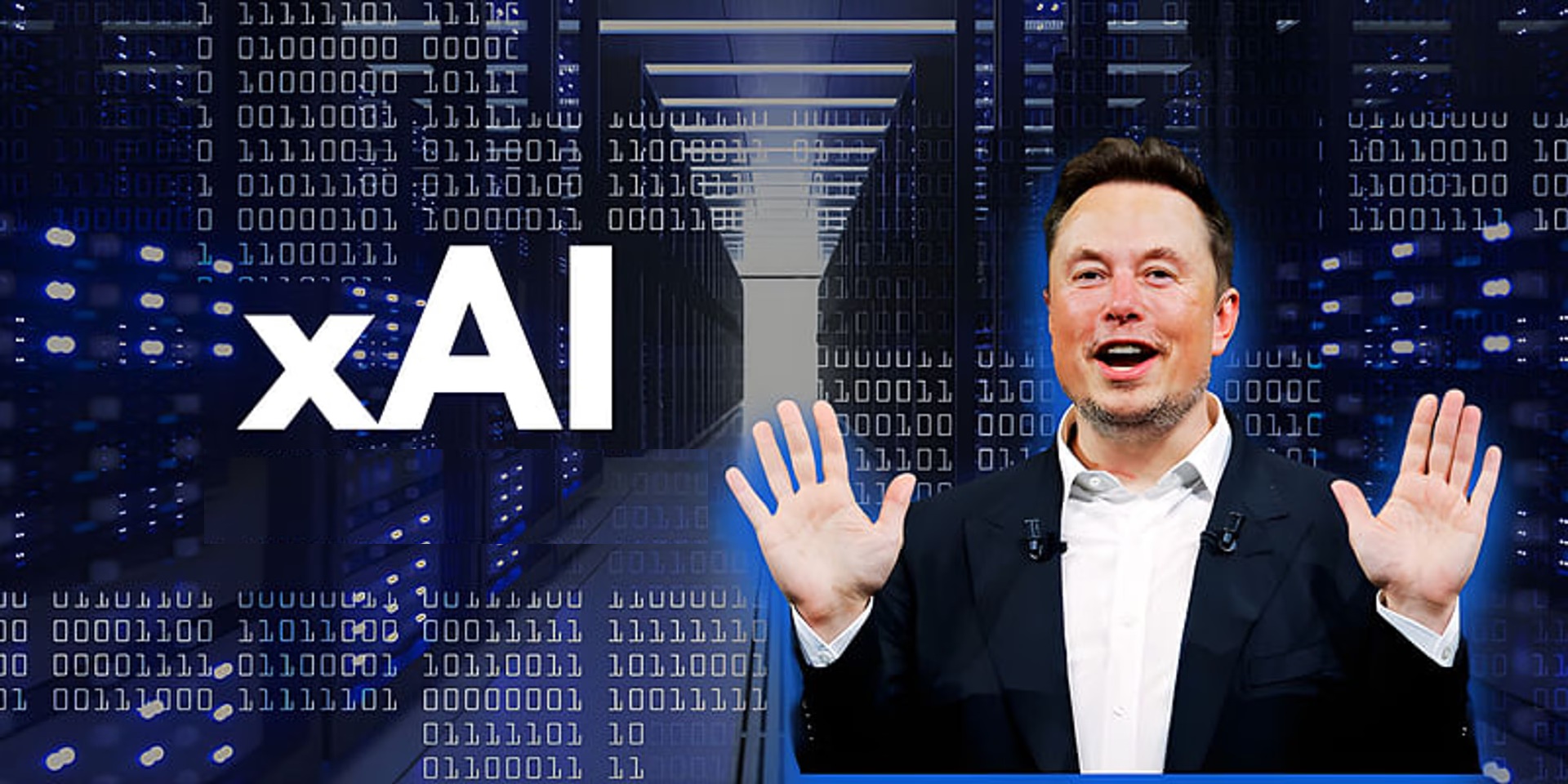
Musk Tightens Grip on xAI as SpaceX IPO Nears, Sweeping Overhaul Signals Pressure to Close AI Gap - Tekedia
Elon Musk has launched another sweeping overhaul of xAI's engineering ranks as the company is folded deeper into SpaceX ahead of a record-setting IPO, which underscores intense pressure to close the gap with OpenAI and Google while stabilizing a company hit by departures, layoffs, and mounting questions over execution. According to an internal memo reviewed by Business Insider, SpaceX executive Michael Nicolls, the senior vice president of Starlink, has now assumed the role of xAI president as the AI company is integrated more closely into SpaceX's structure. In the memo, Nicolls told staff that xAI is "clearly behind" competitors and that the company is moving urgently to close the gap. On the compute side, he reportedly described xAI's training performance as "embarrassingly low," adding that management intends to improve it significantly within the next two months. For a company central to a potential $1.75 trillion to $2 trillion SpaceX IPO narrative, that internal assessment is a revealing signal of how much execution risk still sits beneath the valuation story. SpaceX, which earlier this year absorbed xAI in a transaction valuing the combined group at about $1.25 trillion, has already filed confidentially for an initial public offering, according to reports. That means xAI is no longer simply a startup fighting for relevance in the generative AI race; it has become a key growth pillar inside the investment case for what could be the largest listing ever brought to market. The urgency behind the overhaul reflects a widening competitive gulf. OpenAI, Anthropic, and Google have moved aggressively in model performance, enterprise adoption, coding tools, multimodal systems, and developer ecosystems. By contrast, xAI's flagship Grok platform remains under pressure to demonstrate that it can compete not only in consumer-facing chatbot products but also in enterprise-grade coding, reasoning, voice, and multimodal workloads. This helps explain the scale of the internal reset. The company has reassigned leadership across nearly every core layer of model development. Devendra Chaplot will now lead pre-training, the foundational phase where models absorb broad statistical patterns from massive datasets. Aman Madaan takes charge of model factory and tooling, overseeing the infrastructure and pipelines that determine how quickly models can be iterated. Aditya Gupta now leads post-training and reinforcement learning, the crucial final stage where models are aligned with human preferences and refined for deployment. On the product side, former Cursor engineers Andrew Milich and Jason Ginsburg are now leading Grok Main, Grok Voice, and Grok Imagine, the company's multimedia generation suite. Once again, SpaceX talent was imported. Daniel Dueri, a senior SpaceX software engineering leader, is now overseeing compute infrastructure, while Matt Monson, Starlink's software director, has taken over data operations at xAI. This mirrors a familiar Musk management pattern. At Tesla and SpaceX, Musk has often responded to execution bottlenecks with rapid centralization, flattening reporting structures, and bringing in trusted lieutenants from adjacent companies. Here, he appears to be applying the same playbook to AI, treating xAI less as a standalone lab and more as an engineering division inside a much larger industrial and infrastructure machine. The reorganization also comes against a backdrop of significant instability. Since January, eight founding engineers have exited, including senior figures such as Ross Nordeen, Guodong Zhang, Manuel Kroiss, and Toby Pohlen. xAI has also reportedly shed dozens of employees since February, including cuts to Grok Imagine, Macrohard, and, more recently, parts of its recruiting function. That level of churn is unusual for a company approaching a public-market debut through its parent. Executive departures at this pace inevitably raise questions about culture, strategic clarity, and whether the company's internal trajectory matches the valuation expectations being built into the SpaceX offering. Musk himself has acknowledged the scale of the rebuild. In March, he wrote on X that "xAI was not built right first time around, so is being rebuilt from the foundations up." He later added that "many talented people over the past few years were declined an offer or even an interview @xAI," signaling that the company is now revisiting earlier candidates as it attempts to replenish its technical bench. Those remarks are notable because they suggest that the restructuring is not merely cosmetic. This is a foundational rebuild of architecture, talent, and product direction at a time when the economics of AI are increasingly defined by scale. Model quality today depends as much on compute utilization and training efficiency as on research talent. If, as Nicolls wrote, the compute performance is "embarrassingly low," then the issue directly affects development speed, inference costs, and eventually profit margins. But it comes with more central bearing for IPO investors. A SpaceX listing will likely be marketed not only on launch services and Starlink's subscription cash flows, but also on AI-driven future growth. Yet xAI remains a capital-intensive business with heavy burn rates and a still-unproven commercial moat. That tension makes the overhaul strategically important as Musk is effectively trying to ensure that by the time SpaceX's prospectus is fully public, xAI looks less like a company in crisis and more like a scalable strategic engine capable of supporting a trillion-dollar valuation. How quickly that transformation happens is expected to determine how much of the SpaceX IPO premium markets are willing to attribute to AI rather than rockets and satellites.
Scott Bessent, Jerome Powell Quietly Warn Top Wall Street CEOs About Cyber Risks From Anthropic's New AI
The meeting took place on Tuesday at the Treasury Department in Washington, according to a Bloomberg report published Thursday. Who Was In The Room?What Is Mythos? Anthropic launched a preview of Mythos on Tuesday alongside a new cybersecurity initiative called Project Glasswing, in which 12 partner organizations will deploy the model for defensive security work and to scan critical software for vulnerabilities. The company said the model identified thousands of zero-day vulnerabilities, many of them one to two decades old, across major operating systems and web browsers. According to a Reuters report, Anthropic briefed senior U.S. government officials about Mythos' capabilities -- both offensive and defensive -- before launching Project Glasswing, including the Cybersecurity and Infrastructure Security Agency. The Pentagon Backdrop Anthropic is currently embroiled in a legal controversy with the Pentagon. Earlier this week, a federal appeals court in Washington, D.C., declined to temporarily block the Pentagon's decision to label Anthropic a national security risk. The Donald Trump administration classified the company as a supply-chain concern after it refused to ease safeguards on its Claude chatbot for uses such as surveillance or autonomous weapons. Benzinga reached out to the Treasury Department, the Federal Reserve, Anthropic, Citigroup, Morgan Stanley, Bank of America, Wells Fargo and JPMorgan for comment and had not received a response at the time of publication. Goldman Sachs declined to comment. Image via Shutterstock Market News and Data brought to you by Benzinga APIs To add Benzinga News as your preferred source on Google, click here.

The Unconventional Logic Behind SpaceX's $1.75 Trillion Valuation
Wall Street is valuing SpaceX at an extraordinary ~$1.75 trillion by benchmarking it to high‑growth AI and infrastructure plays instead of traditional aerospace peers, reflecting a "platform premium" tied to Musk's vision and structural innovation. How Wall Street Rationalizes SpaceX's $1.75 Trillion Valuation Ahead of IPO By Echo Wang Wall Street's Valuation Strategies for SpaceX's IPO NEW YORK, April 10 (Reuters) - Wall Street is reaching for some unusual yardsticks to price Elon Musk's SpaceX. At least one of SpaceX's large institutional investors is privately benchmarking the rocket and satellite company not against aerospace rivals like Boeing or telecom giants like AT&T, but against market darling Palantir Technologies and AI infrastructure plays like GE Vernova and Vertiv - in a bid to justify a $1.75 trillion valuation ahead of what could be the largest IPO in history. The framework, described to Reuters for the first time by a source familiar with the company's thinking, illustrates the unusual challenge of pricing a company with no obvious public peers - and the lengths to which Wall Street is going to rationalize a premium valuation. SpaceX has confidentially filed for a U.S. IPO, Reuters reported last week. The company is scheduled to hold an analyst day on April 21, Reuters previously reported. Traditional Valuation Metrics and Their Limitations At a potential valuation of $1.75 trillion, SpaceX looks expensive by many traditional measures, including comparisons to the earnings and revenue multiples at firms often cited as reference points for parts of its business. In space that means Boeing and Lockheed Martin, whose United Launch Alliance joint venture competes with SpaceX in launch services. In internet access, the peers would be AT&T and Verizon. But financial backers of the firm, on track to raise $75 billion in an IPO this year, contend that comparisons to established firms in legacy businesses miss the point of SpaceX and other Musk companies - to take advantage of the emergence of long-term, "secular" economic shifts at a time when few competitors are equipped to do so. Musk's companies have historically commanded rich multiples in part because investors are betting on him personally - Tesla being the clearest example -- and SpaceX investors expect that dynamic to carry over into any public offering. The Musk Premium It's "pretty darn exciting" to sell into "the largest total addressable market in human history" - a potential $370 billion in space business, SpaceX CFO Bret Johnsen told IPO bankers on a conference call this week, according to two people familiar with the matter. He tabbed the potential market for the firm's Starlink internet service at $1.6 trillion, the people said. SpaceX did not respond to a request for comment. Rethinking Comparables: Beyond Aerospace and Telecom RETHINKING COMPARABLES Finding the right comparables for SpaceX lies at the center of a fierce debate over the pricing of the massive IPO, as bankers and investors grapple with how to value the company despite few, if any, closely comparable public peers. It is common for investors and bankers to sort for comparables by sector, using the longstanding assumption that industry is a good proxy for financial opportunity and risk. But many investors contend that comparable companies do not need to operate in the same industry - because, in this view, what matters are a firm's potential cash flows, growth profiles and risk characteristics. This approach holds that a better comparison for SpaceX comes from companies selling into the AI data-center buildout, which have famously been rewarded with rising shares and high multiples. Institutional and Smaller Fund Perspectives For smaller funds, the calculus is different, said Jay Bala, portfolio manager at Toronto-based AIP, which manages roughly $100 million in assets, a large portion concentrated in SpaceX. "I'm piggybacking on the largest funds in the world. A huge amount of due diligence has already been done. I'm not going to second-guess some of the biggest investors on the planet," he said. He acknowledged it is difficult to obtain detailed financial information about SpaceX: "You can only get so much. It's hard to get numbers sometimes." Starlink Versus Legacy Telecoms STARLINK VERSUS LEGACY TELECOMS For Starlink -- or what SpaceX calls its "connectivity" business -- the reflexive benchmarks are legacy telecom firms, but some investors argue those comparisons are skewed by aging fixed infrastructure, saturated domestic markets and years of modest growth. Challenging the Telecom Comparison "I wouldn't look at a legacy AT&T and Verizon as being very relevant to the economic model for Starlink, even though they're both in the business of giving you communication," a senior executive at one of SpaceX's large institutional investors told Reuters, speaking on condition of anonymity to discuss confidential internal work. Palantir as a Benchmark Instead, SpaceX investors point to Palantir for its secular growth, high return on invested capital, good margins and asset-light composition -- qualities that fans say justify the high multiples the stock commands and suggest greater opportunities down the road. Palantir is well known as one of the priciest stocks in the market, recently trading at 43 times expected revenue and 75 times earnings. Skeptics say those levels are likely unsustainable, but SpaceX fans contend that the figures show that premium valuations are attainable if backed by outstanding financial performance. That said, at $1.75 trillion, even Palantir would be cheaper on some of these measures than SpaceX, which would trade at 110 times 2025 revenue estimates, according to a PitchBook calculation. "Investors should size positions with the understanding that they are paying a platform premium today for infrastructure-monopoly economics tomorrow," PitchBook analyst Franco Granda said in a note last month. Rocket Manufacturing Comparisons ROCKET MANUFACTURING COMPARISONS For the rocket manufacturing side of the business, SpaceX investors contend that the firm's accomplishments - for instance, it has built a reusable launch system, driven down unit costs dramatically and expanded into a commercial market where demand for launch capacity continues to grow -- demand valuations far above those prevailing at Lockheed, which traded recently at around 20 times next year's expected earning
8 free AI courses from Anthropic to boost your skills right now
Artificial intelligence (AI) is progressing by leaps and bounds. Anyone who is not upgrading their skills risks being left behind. While fears of AI displacing jobs persist, numerous new roles are being introduced by tech companies worldwide. For the curious, there is a trove of resources on the internet. And for those looking to upgrade their skills, Anthropic, widely known for its chatbot Claude, has introduced a structured learning platform offering free AI courses with certificates. These courses are suitable for developers, professionals, and students. The said courses are hosted on Anthropic's official training portal and cover everything from AI fundamentals to prompt engineering to APIs and agent systems. These courses are self-paced, meaning they can be completed at your convenience. They include quizzes and assessments and come with certificates upon completion. Here's a quick look at the courses. Claude 101 This is a beginner-friendly course that serves as an entry point into Anthropic's ecosystem. The course is about a few hours and covers 12 lessons. It is ideal for someone who wants to have a quick introduction to Claude. When it comes to topics, users will get acquainted with concepts like prompting, summarisation, document analysis, everyday productivity workflows using Claude, etc. One will be able to understand how to structure their queries, refine outputs, and even apply Claude to real-world tasks like writing, research, and brainstorming. It also includes short exercises and quizzes to reinforce concepts. The course is free and offers certification when completed. Also Read | Too powerful to release? Claude Mythos triggers debate across tech world AI Fluency: Framework & Foundations This is a foundational course that spans 1.1 hours and runs across 14 lessons and focuses on building AI literacy beyond tools. The course touches on how to collaborate with AI systems efficiently and includes prompt design, critical evaluation of outputs, and ethical usage. This is not tool-specific training but emphasises transferable skills that are applicable across all AI platforms. Learners get to know about safety, bias, and responsible deployment, which is key to modern AI adoption. The course comprises quizzes and structured modules, and learners get a certificate after completion. This is ideal for beginners, managers, and non-technical users who want to use AI responsibly. Introduction to Agent Skills This is one of the shortest courses that introduces AI agent workflows using Claude Code. It has 30 minutes of content across six lessons. The focus here is on building and using skills that are essentially reusable instructions that Claude can automatically apply to tasks. Students will get to learn how to set up agents, automate workflows, and improve efficiency in routine tasks. Learners will also get to explore advanced configuration options like restricting tool access with allowed tools and using scripts that execute without missing context. Although the course is concise, it offers hands-on and practical solutions, especially for developers who are exploring automation. This course also includes assessments and provides certificates. Essentially, this course is a window into understanding agent-based AI systems. Building with the Claude API This is a comprehensive course meant for developers. It has 8.1 hours of video, 84 lectures, and 10 quizzes. One of the most in-depth offerings, the course comes with a certificate upon completion. The course teaches one how to integrate Claude into applications using application programming interfaces (APIs) and also includes prompt engineering, streaming responses, tool usage, and error handling. The course also gives the opportunity to build real-world AI apps and workflows. The course can be valuable for developers building AI-powered products or working in AI engineering roles. Also Read | Anthropic launches Project Glasswing to test advanced AI for cybersecurity Claude Code in Action This one-hour course focuses on using Claude as a coding assistant within development workflows through structured lessons. The course teaches users how to read, edit, and generate code using Claude Code and integrate it with projects. It also teaches how to automate repetitive programming tasks. The course also covers real-world development scenarios rather than theoretical examples. It lets learners understand how Clade Code reads files, executes commands, and modifies code through its tool system. One can also learn techniques for managing context and creating custom workflows. The course has been designed for developers and includes quizzes and practical exercises. Moreover, learners receive a certificate upon completion, making it useful for those looking to boost productivity using AI coding tools. Story continues below this ad Introduction to Model Context Protocol (MCP) If you are looking towards building modular AI applications using Model Context Protocol (MCP), then this is the right course for you. It introduces MCP, which is a system for connecting Claude with external tools and data sources. The course includes 1 hour of video lessons with structured modules. As part of the course, students will get to learn how to build MCP servers and clients and understand the core tools, resources, and prompts, allowing them to integrate AI into real-world systems. Since this is a technical course, it is ideal for developers who are interested in building advanced AI workflows or agent systems. It includes quizzes and offers a certificate of completion, validating skills in AI system integration. Also Read | Anthropic's Claude can now use your computer like a human: Will it replace OpenClaw? Model Context Protocol: Advanced Topics This is essentially a deep dive into the advanced features of MCPs, including sampling, notifications, and transport implementations. Simply put, this is an advanced follow-up course with over one hour of content and multiple quizzes. Those enrolled in this course gain practical knowledge that is required to deploy scalable AI systems and integrate Claude into complex infrastructure. It is free and comes with a certificate and is ideal for experienced developers who want to work on enterprise-grade AI systems. AI fluency for students AI fluency is simply the ability to confidently apply AI thoughtfully and innovatively. This course is designed for students, and it runs for about 30 minutes with five lessons. It teaches learners how to use AI responsibly for research, assignments, studying, career planning, etc. The course emphasises avoiding misuse, maintaining academic integrity, and fostering critical thinking alongside AI use. This light course comes with quizzes and real-world examples. Once completed, students will receive a certificate making it a useful addition to their portfolios. To access the above-mentioned courses from Anthropic, visit the official training portal on Claude's website and sign in or create a free account. Next, browse the course catalogue, enrol in any course, and start learning instantly.

Anthropic's Claude Mythos is So Good the Company Won't Let You Use It
Anthropic has begun testing a new advanced AI model, Claude Mythos Preview, but is restricting access to a limited group of partners due to cybersecurity concerns. The model, described as a general-purpose frontier system, was first revealed through a misconfiguration in the company's internal content system in late March. The unpublished material indicated that Claude Mythos would be a new tier of models more capable than its current flagship, Opus. Rather than releasing the model publicly, Anthropic is providing access through an initiative called Project Glasswing. Under this program, a small group of organizations will use the model for defensive security work. Launch partners include Amazon, Apple, Broadcom, Cisco, CrowdStrike, Linux Foundation, Microsoft, and Palo Alto Networks, along with around 40 additional organizations. These participants will use the model to scan and secure their systems as well as open-source tools. Although not specifically designed for cybersecurity, Claude Mythos shows strong performance in coding and reasoning tasks. On the CyberGym benchmark for vulnerability analysis, the model scored 83.1%, compared with 66.6% for Opus 4.6, which previously led the rankings. Anthropic said the model has already identified thousands of zero-day vulnerabilities, including critical issues. One example cited was a previously unknown bug in OpenBSD that had remained unpatched for 27 years. The model also demonstrated the ability to combine multiple vulnerabilities in the Linux kernel to gain superuser access. Anthropic said it is taking a cautious approach to releasing the model, citing potential near-term cybersecurity risks. The company aims to give defenders time to strengthen systems before similar capabilities become widely available. CrowdStrike CTO Elia Zaitsev said the time between discovering and exploiting vulnerabilities has significantly shortened with AI, noting that such tools can operate at scale. The initiative also targets open-source ecosystems, where security resources are often limited. According to Jim Zemlin, the use of AI could help maintainers identify and fix vulnerabilities more efficiently. Anthropic is supporting the effort with $100 million in usage credits for participating organizations and $4 million in donations to open-source security groups. Anthropic said it plans to release Mythos-class models more broadly in the future. For now, access remains limited to Project Glasswing participants as the company evaluates risks and potential impacts.

Anthropic AI raises cybersecurity concerns, US summons bank leaders
US officials met major bank leaders to discuss cybersecurity risks linked to Anthropic's new AI model, which may identify and exploit system vulnerabilities at an advanced level. Concerns around AI and cybersecurity just got more serious. US officials recently called a meeting with top banking leaders to discuss potential risks linked to a new AI model from Anthropic. The discussion reportedly took place in Washington, where regulators wanted to make sure banks are prepared for what could be a new wave of cyber threats - this time powered by AI. Also Read: Claude down in India: Hundreds of users face chat and coding issues But the main question that you must be having in your mind is -- why is this AI model raising concerns? At the centre of this is Anthropic's latest model, often referred to as "Mythos" in reports. The company itself has hinted that its system is capable of finding and exploiting software vulnerabilities at a very advanced level. Also Read: Anthropic launches Project Glasswing: New AI model aims to stop cyberattacks before they happen That's where the concern comes in. If a model can identify weaknesses in systems faster than humans, it could also be misused by attackers to break into networks, crack protections, or automate cyberattacks. Interestingly, Anthropic has already taken a cautious approach. The model hasn't been released widely and is currently limited to a small set of companies. Also Read: Claude can control your computer for browsing, editing, more: Here's how it works Why are banks being involved? The meeting wasn't just with any companies, it involved leaders from some of the biggest banks in the US. These are institutions considered critical to financial stability. The logic is simple: if cyber risks increase, banks are among the first places that could be targeted. And any disruption there doesn't stay isolated, which can affect the wider economy. Even banking leaders have been acknowledging this shift. There's already a growing view that AI could make cyber risks more complex, not less. What stands out here is how early regulators are stepping in. This isn't a reaction to a breach -- it's more about preparing for what could happen next. Authorities seem to be treating advanced AI models as dual-use technology. They can help improve security, but at the same time, they can also be used to find gaps faster than ever. That's likely why discussions are happening now, before such tools become more widely available.

The unconventional logic behind SpaceX's $1.75 trillion price tag
NEW YORK, April 10 : Wall Street is reaching for some unusual yardsticks to price Elon Musk's SpaceX. At least one of SpaceX's large institutional investors is privately benchmarking the rocket and satellite company not against aerospace rivals like Boeing or telecom giants like AT&T, but against market darling Palantir Technologies and AI infrastructure plays like GE Vernova and Vertiv - in a bid to justify a $1.75 trillion valuation ahead of what could be the largest IPO in history. The framework, described to Reuters for the first time by a source familiar with the company's thinking, illustrates the unusual challenge of pricing a company with no obvious public peers - and the lengths to which Wall Street is going to rationalize a premium valuation. SpaceX has confidentially filed for a U.S. IPO, Reuters reported last week. The company is scheduled to hold an analyst day on April 21, Reuters previously reported. At a potential valuation of $1.75 trillion, SpaceX looks expensive by many traditional measures, including comparisons to the earnings and revenue multiples at firms often cited as reference points for parts of its business. In space that means Boeing and Lockheed Martin, whose United Launch Alliance joint venture competes with SpaceX in launch services. In internet access, the peers would be AT&T and Verizon. But financial backers of the firm, on track to raise $75 billion in an IPO this year, contend that comparisons to established firms in legacy businesses miss the point of SpaceX and other Musk companies - to take advantage of the emergence of long-term, "secular" economic shifts at a time when few competitors are equipped to do so. Musk's companies have historically commanded rich multiples in part because investors are betting on him personally - Tesla being the clearest example -- and SpaceX investors expect that dynamic to carry over into any public offering. It's "pretty darn exciting" to sell into "the largest total addressable market in human history" - a potential $370 billion in space business, SpaceX CFO Bret Johnsen told IPO bankers on a conference call this week, according to two people familiar with the matter. He tabbed the potential market for the firm's Starlink internet service at $1.6 trillion, the people said. Finding the right comparables for SpaceX lies at the center of a fierce debate over the pricing of the massive IPO, as bankers and investors grapple with how to value the company despite few, if any, closely comparable public peers. It is common for investors and bankers to sort for comparables by sector, using the longstanding assumption that industry is a good proxy for financial opportunity and risk. But many investors contend that comparable companies do not need to operate in the same industry - because, in this view, what matters are a firm's potential cash flows, growth profiles and risk characteristics. This approach holds that a better comparison for SpaceX comes from companies selling into the AI data-center buildout, which have famously been rewarded with rising shares and high multiples. For smaller funds, the calculus is different, said Jay Bala, portfolio manager at Toronto-based AIP, which manages roughly $100 million in assets, a large portion concentrated in SpaceX. "I'm piggybacking on the largest funds in the world. A huge amount of due diligence has already been done. I'm not going to second-guess some of the biggest investors on the planet," he said. He acknowledged it is difficult to obtain detailed financial information about SpaceX: "You can only get so much. It's hard to get numbers sometimes." STARLINK VERSUS LEGACY TELECOMS For Starlink -- or what SpaceX calls its "connectivity" business -- the reflexive benchmarks are legacy telecom firms, but some investors argue those comparisons are skewed by aging fixed infrastructure, saturated domestic markets and years of modest growth. "I wouldn't look at a legacy AT&T and Verizon as being very relevant to the economic model for Starlink, even though they're both in the business of giving you communication," a senior executive at one of SpaceX's large institutional investors told Reuters, speaking on condition of anonymity to discuss confidential internal work. Instead, SpaceX investors point to Palantir for its secular growth, high return on invested capital, good margins and asset-light composition -- qualities that fans say justify the high multiples the stock commands and suggest greater opportunities down the road. Palantir is well known as one of the priciest stocks in the market, recently trading at 43 times expected revenue and 75 times earnings. Skeptics say those levels are likely unsustainable, but SpaceX fans contend that the figures show that premium valuations are attainable if backed by outstanding financial performance. That said, at $1.75 trillion, even Palantir would be cheaper on some of these measures than SpaceX, which would trade at 110 times 2025 revenue estimates, according to a PitchBook calculation. "Investors should size positions with the understanding that they are paying a platform premium today for infrastructure-monopoly economics tomorrow," PitchBook analyst Franco Granda said in a note last month. ROCKET MANUFACTURING COMPARISONS For the rocket manufacturing side of the business, SpaceX investors contend that the firm's accomplishments - for instance, it has built a reusable launch system, driven down unit costs dramatically and expanded into a commercial market where demand for launch capacity continues to grow -- demand valuations far above those prevailing at Lockheed, which traded recently at around 20 times next year's expected earnings. Boeing's current high multiples mostly reflect its state as a turnaround story. Instead, they turn to industrial names such as GE Vernova and Vertiv - companies whose stocks have soared on the back of AI data-center spending - arguing that SpaceX's launch operations deserve a similar re-rating to the "picks and shovels" of the data-center age. Even these preferred comps do not look a lot like SpaceX, however. GE Vernova was recently trading at around 30 times expected cash flow and four times last year's revenue. Vertiv, which sells power and cooling equipment for data centers, traded recently at 19 times expected operating profit and 6 times last year's sales. MESSY PRICING AND RATIONALIZATIONS Bankers and investors say SpaceX is difficult to price because of the company's unique space operations and AI business, which is particularly difficult to value at an early stage. "Pricing is always going to be messy here," said Aswath Damodaran, a valuation expert and finance professor at New York University's Stern School of Business. "Nobody else has that capacity to launch satellites in numbers and at the price that they can do - that's their big advantage." He adds that much of the current pricing reflects investors justifying their decision to purchase the shares rather than relying on traditional metrics. "They're hoping there's enough mood and momentum behind SpaceX, and when it goes public, the mood and momentum will take the stock up." "They've made the decision already that SpaceX is a great buy," Damodaran said. "Now they're looking for some way that they can justify that, and this pricing sounds like that exposed rationalization."

The unconventional logic behind SpaceX's $1.75 trillion price tag
NEW YORK, April 10 (Reuters) - Wall Street is reaching for some unusual yardsticks to price Elon Musk's SpaceX. At least one of SpaceX's large institutional investors is privately benchmarking the rocket and satellite company not against aerospace rivals like Boeing (BA.N), opens new tab or telecom giants like AT&T (T.N), opens new tab, but against market darling Palantir Technologies (PLTR.O), opens new tab and AI infrastructure plays like GE Vernova (GEV.N), opens new tab and Vertiv (VRT.N), opens new tab - in a bid to justify a $1.75 trillion valuation ahead of what could be the largest IPO in history. The framework, described to Reuters for the first time by a source familiar with the company's thinking, illustrates the unusual challenge of pricing a company with no obvious public peers - and the lengths to which Wall Street is going to rationalize a premium valuation. SpaceX has confidentially filed for a U.S. IPO, Reuters reported last week. The company is scheduled to hold an analyst day on April 21, Reuters previously reported. At a potential valuation of $1.75 trillion, SpaceX looks expensive by many traditional measures, including comparisons to the earnings and revenue multiples at firms often cited as reference points for parts of its business. In space that means Boeing and Lockheed Martin (LMT.N), opens new tab, whose United Launch Alliance joint venture competes with SpaceX in launch services. In internet access, the peers would be AT&T and Verizon (VZ.N), opens new tab. But financial backers of the firm, on track to raise $75 billion in an IPO this year, contend that comparisons to established firms in legacy businesses miss the point of SpaceX and other Musk companies - to take advantage of the emergence of long-term, "secular" economic shifts at a time when few competitors are equipped to do so. Musk's companies have historically commanded rich multiples in part because investors are betting on him personally - Tesla (TSLA.O), opens new tab being the clearest example -- and SpaceX investors expect that dynamic to carry over into any public offering. It's "pretty darn exciting" to sell into "the largest total addressable market in human history" - a potential $370 billion in space business, SpaceX CFO Bret Johnsen told IPO bankers on a conference call this week, according to two people familiar with the matter. He tabbed the potential market for the firm's Starlink internet service at $1.6 trillion, the people said. SpaceX did not respond to a request for comment. RETHINKING COMPARABLES Finding the right comparables for SpaceX lies at the center of a fierce debate over the pricing of the massive IPO, as bankers and investors grapple with how to value the company despite few, if any, closely comparable public peers. It is common for investors and bankers to sort for comparables by sector, using the longstanding assumption that industry is a good proxy for financial opportunity and risk. But many investors contend that comparable companies do not need to operate in the same industry - because, in this view, what matters are a firm's potential cash flows, growth profiles and risk characteristics. This approach holds that a better comparison for SpaceX comes from companies selling into the AI data-center buildout, which have famously been rewarded with rising shares and high multiples. For smaller funds, the calculus is different, said Jay Bala, portfolio manager at Toronto-based AIP, which manages roughly $100 million in assets, a large portion concentrated in SpaceX. "I'm piggybacking on the largest funds in the world. A huge amount of due diligence has already been done. I'm not going to second-guess some of the biggest investors on the planet," he said. He acknowledged it is difficult to obtain detailed financial information about SpaceX: "You can only get so much. It's hard to get numbers sometimes." STARLINK VERSUS LEGACY TELECOMS For Starlink -- or what SpaceX calls its "connectivity" business -- the reflexive benchmarks are legacy telecom firms, but some investors argue those comparisons are skewed by aging fixed infrastructure, saturated domestic markets and years of modest growth. "I wouldn't look at a legacy AT&T and Verizon as being very relevant to the economic model for Starlink, even though they're both in the business of giving you communication," a senior executive at one of SpaceX's large institutional investors told Reuters, speaking on condition of anonymity to discuss confidential internal work. Instead, SpaceX investors point to Palantir for its secular growth, high return on invested capital, good margins and asset-light composition -- qualities that fans say justify the high multiples the stock commands and suggest greater opportunities down the road. Palantir is well known as one of the priciest stocks in the market, recently trading at 43 times expected revenue and 75 times earnings. Skeptics say those levels are likely unsustainable, but SpaceX fans contend that the figures show that premium valuations are attainable if backed by outstanding financial performance. That said, at $1.75 trillion, even Palantir would be cheaper on some of these measures than SpaceX, which would trade at 110 times 2025 revenue estimates, according to a PitchBook calculation. "Investors should size positions with the understanding that they are paying a platform premium today for infrastructure-monopoly economics tomorrow," PitchBook analyst Franco Granda said in a note last month. ROCKET MANUFACTURING COMPARISONS For the rocket manufacturing side of the business, SpaceX investors contend that the firm's accomplishments - for instance, it has built a reusable launch system, driven down unit costs dramatically and expanded into a commercial market where demand for launch capacity continues to grow -- demand valuations far above those prevailing at Lockheed, which traded recently at around 20 times next year's expected earnings. Boeing's current high multiples mostly reflect its state as a turnaround story. Instead, they turn to industrial names such as GE Vernova and Vertiv - companies whose stocks have soared on the back of AI data-center spending - arguing that SpaceX's launch operations deserve a similar re-rating to the "picks and shovels" of the data-center age. Even these preferred comps do not look a lot like SpaceX, however. GE Vernova was recently trading at around 30 times expected cash flow and four times last year's revenue. Vertiv, which sells power and cooling equipment for data centers, traded recently at 19 times expected operating profit and 6 times last year's sales. MESSY PRICING AND RATIONALIZATIONS Bankers and investors say SpaceX is difficult to price because of the company's unique space operations and AI business, which is particularly difficult to value at an early stage. "Pricing is always going to be messy here," said Aswath Damodaran, a valuation expert and finance professor at New York University's Stern School of Business. "Nobody else has that capacity to launch satellites in numbers and at the price that they can do -- that's their big advantage." He adds that much of the current pricing reflects investors justifying their decision to purchase the shares rather than relying on traditional metrics. "They're hoping there's enough mood and momentum behind SpaceX, and when it goes public, the mood and momentum will take the stock up." "They've made the decision already that SpaceX is a great buy," Damodaran said. "Now they're looking for some way that they can justify that, and this pricing sounds like that exposed rationalization." Reporting by Echo Wang in New York; Additional reporting by Joey Roulette in Houston; Editing by Colin Barr and Matthew Lewis Our Standards: The Thomson Reuters Trust Principles., opens new tab * Suggested Topics: * Artificial Intelligence * Securities Enforcement * ADAS, AV & Safety * Software-Defined Vehicle * Sustainable & EV Supply Chain Echo Wang Thomson Reuters Echo Wang is a correspondent at Reuters covering U.S. equity capital markets, and the intersection of Chinese business in the U.S, breaking news from U.S. crackdown on TikTok and Grindr, to restrictions Chinese companies face in listing in New York. She was the Reuters' Reporter of the Year in 2020.

Bitget IPO Prime Sells Synthetic SpaceX Token via Republic
Bitget frames the launch as the next step in its Universal Exchange expansion beyond pure crypto. Bitget has launched IPO Prime, a new market offering tokenized pre-IPO exposure, with its first product being preSPAX, a synthetic asset tied to SpaceX post-listing economic performance. The Seychelles-based exchange announced the product on Friday. Republic, a regulated platform specializing in tokenized private market access, powers the offering. How preSPAX Works and What It Does Not Offer preSPAX mirrors the economic upside of SpaceX upon a qualifying event such as an IPO or acquisition. It does not grant equity, voting rights, or ownership in SpaceX. Neither Elon Musk nor the company (SpaceX) has endorsed or authorized the product. Republic previously launched its own rSPAX Mirror Tokens on Solana in June 2025, offering retail investors exposure to SpaceX for as little as $50. That product similarly functions as a debt instrument issued by RepublicX, not direct shares. The subscription window for preSPAX on Bitget runs from April 18 at 18:00 UTC to April 21 at 18:00 UTC. Allocations depend on VIP tier, with higher levels receiving larger limits. Two exclusive airdrop rounds for eligible VIP users begin April 13. The token launches April 21 at 12:00 UTC, with distribution between 18:00 and 22:00 UTC. After distribution, preSPAX moves to an over-the-counter market on Bitget for continuous trading. Timing Meets SpaceX IPO Speculation The launch arrives as SpaceX IPO speculation intensifies. The company confidentially filed with the SEC on April 1, targeting a June 2026 listing that could raise over $75 billion at a valuation between $1.5 trillion and $2 trillion. Bitget CEO Gracy Chen framed IPO Prime as part of the exchange broader Universal Exchange (UEX) strategy. IPO Prime allows users to participate earlier in a company growth cycle, with the flexibility of continuous trading," said Chen. Bitget claims 125 million users and already offers tokenized stocks, ETFs, commodities, and forex alongside crypto. Whether synthetic pre-IPO tokens deliver meaningful value or simply add new layers of counterparty risk remains an open question as more exchanges explore similar products.
U.S. Ally Says He's Completely 'Fed Up' With Trump and Putin's Chaos
Britain's Prime Minister Keir Starmer said he is "fed up" with the actions of Donald Trump and Vladimir Putin causing energy bills to rise in other countries. Speaking on ITV News' Talking Politics podcast, Starmer blasted the Russian and U.S. presidents for starting wars in Ukraine and Iran, respectively, which have resulted in U.K. families facing increased financial hardship. Energy prices in the U.K. rose rapidly in the wake of Russia's 2022 invasion of Ukraine. Four years later, Trump started his deeply unpopular conflict in the Middle East, triggering a global gas and oil crisis with the closure of the Strait of Hormuz.
London Stansted to face travel chaos as airport workers strike
READ MORE: EU's new digital border is officially rolled out today - but British tourists face 'hours and hours' in queues because airports are still 'not ready' Holidaymakers jetting off from London Stansted should brace themselves for travel chaos as strike action is expected to take place soon. A whopping 97 per cent of ABM airport staff have voted in favour for industrial action after receiving a pay rise 'worth just a tin of beans a week to workers', according to Unite. It works out at just one pence more on their hourly rates in the first year, and two or three pence more in the second year. Members of the union have rejected the pay offer and many earn below the London Living Wage of £14.80 - some of the lowest paid at the airport. Much of the company's pay rises have been a result of nationwide minimum wage increases brought in by the government, according to Unite. Over 100 workers, including those who look after passengers with disabilities, will be participating in the strike and it is due to take place from April 17 to 20. Staff members also argue they feel they are working under more pressure due to Stansted handling more flights and passengers. Unite general secretary Sharon Graham slammed the pay rise and said: 'This is one of the meanest so-called pay rises imaginable. London Stansted could be hit by travel chaos as over 100 airport workers prepare to strike on April 17 'Dedicated workers will have to work for an entire week just to buy a tin of beans. 'It is beyond contempt that a profitable company such as ABM is choosing to prioritise greed and exposing its workers to a real-terms pay cut. 'Our members at ABM will be fully supported by Unite throughout this dispute.' Meanwhile, Unite regional officer Steve Edwards added: 'Any strike action and the resulting disruption is entirely the fault of ABM for putting profits over people. 'ABM could avoid this disruption but it relies on management coming back with a realistic pay offer that reflects the hard work our members do.' An ABM spokesperson told the Daily Mail: 'We are disappointed that industrial action is to be taken given our constructive engagement with Unite the Union. 'We appreciate the dedication our team members put in every day to provide an outstanding travel experience for those with special assistance requirements. 'For that reason, we continue to negotiate in good faith with Unite the Union toward an agreement that's fair for our team members, clients, and stakeholders. It is not accurate to describe the proposal as a "pennies" increase. The offer we have proposed is a structured, staged pay increase over time, designed to provide an uplift to hourly rates. The staff members voted in favour for the industrial action after receiving a pay rise 'worth one tin of beans' 'Our immediate priority is to limit disruption to the thousands of passengers with special assistance requirements who use our service every day at Stansted Airport. 'Through comprehensive contingency planning, we intend to continue delivering services throughout this period, with measures in place to maintain safety, operational resilience, and service continuity as far as possible.' Holidaymakers heading to Spain may find themselves impacted by strike action too, and on the same date as Unite's. A whopping 14 hubs in Spain and the Canary Islands will be hit by air traffic controller industrial action. The strikes are expected to begin at midnight on April 17 and have been arranged by Union Sindical de Reguladores Aereos and Comisiones Obreras. The action is against SAERCO, a private firm that operates many control towers at airports across the country. Working conditions, stress and shift pattern changes have led to a point that 'aeronautical safety cannot be sustained,' according to a statement by the unions. The action is expected to continue indefinitely. Hubs in busy holiday destinations including La Palma, Lanzarote, Fuerteventura and Madrid are set to be impacted. Various issues have been highlighted by the unions including failure to provide breaks and SAERCO cancelling previously approved holidays. EuroWeekly reports the problems have been building up for several years.

OpenAI Says It Holds Computing Lead Over Anthropic
Microsoft Corporation is the world's leader in the design, development and marketing of operating systems and software programs for PC's and servers. The group also builds and sells computer equipment. Net sales break down by activity as follows: - sale of operating systems and application development tools (42.9%): primarily for servers (Azure, SQL Server, Windows Server, Visual Studio, System Center, GitHub, etc.) and (Windows); - development of cloud-based software applications (37.7%): programs for productivity (Microsoft 365; Word, Excel, PowerPoint, Outlook, OneNote, Publisher and Access), integrated management and customer relationship management (Dynamics 365), online file sharing and management (OneDrive), and unified and collaborative communications (Microsoft Teams); - other (19.4%): primarily sale of software licenses (Windows), tablets (Microsoft Surface), video game consoles and software (Xbox), computer accessories, etc. The United States accounts for 51.3% of net sales.

Anthropic's Cybersecurity Shock Wave + Ronan Farrow and Andrew Marantz on Their Sam Altman Investigation + One Good Thing
Hosted by Kevin Roose and Casey Newton Produced by Rachel Cohn and Whitney Jones Edited by Vjeran Pavic Engineered by Chris Wood Original music by Dan PowellMarion LozanoRowan NiemistoDiane Wong and Alyssa Moxley This week, we look at the cybersecurity threats that a new unreleased model from Anthropic are posing to software everywhere. And we ask whether Project Glasswing, the company's bold new defense initiative, will give tech companies enough of a head start to secure the web. Then, we're joined by Ronan Farrow and Andrew Marantz of The New Yorker to discuss their blockbuster new profile of Sam Altman. And finally, we look to the skies for this edition of One Good Thing. Guests * Ronan Farrow, investigative reporter and a contributing writer to The New Yorker. * Andrew Marantz, staff writer at The New Yorker. Additional Reading Listen to and Follow 'Hard Fork' Apple | Spotify | Amazon | YouTube | iHeartRadio Unlock full access to New York Times podcasts and explore everything from politics to pop culture. Subscribe today at nytimes.com/podcasts or on Apple Podcasts and Spotify. Feedback We want to hear from you. Email us at [email protected]. Find "Hard Fork" on YouTube and TikTok. Credits "Hard Fork" is hosted by Kevin Roose and Casey Newton and produced by Rachel Cohn and Whitney Jones. This episode was edited by Vjeran Pavic. Engineering by Chris Wood and original music by Dan Powell, Marion Lozano, Rowan Niemisto, Diane Wong and Alyssa Moxley. Fact-checking by Caitlin Love. Special thanks to Paula Szuchman, Pui-Wing Tam and Dahlia Haddad.

Anthropic Hits $30 Billion Revenue, Edges Past OpenAI
Anthropic has surpassed OpenAI in annual revenue. It signals a major shift in the AI market and intensifies global competition among leading AI companies. Earlier in 2025, OpenAI had a wider revenue gap; however, Anthropic's expansion into business-focused applications appears to have narrowed and reversed that lead. reported annualized revenue exceeding $30 billion. The AI startup has overtaken OpenAI's reported $2 billion in monthly revenue, or about $24 billion annually, as disclosed during its recent fundraising. The AI startup had reported approximately $9 billion at the end of 2025. The company said that in February, over 500 business customers were spending more than $1 million annually. That number has now exceeded 1,000, doubling in less than two months. The development reflects Anthropic's rapid growth, driven in part by demand for its enterprise-focused AI tools, including coding products. "We shared that over 500 business customers were each spending over $1 million on an annualized basis. Today that number exceeds 1,000, doubling in less than two months," the latest Anthropic blog read. In an earlier post, the company attributed the rising run-rate revenue to the number of customers spending over $100,000 annually on Claude (as represented by run-rate revenue), which has grown 7x in the past year. And businesses that start with Claude for a single use case, API, Claude Code, or Claude for Work, are expanding their integrations across their organizations. "Two years ago, a dozen customers spent over $1 million with us on an annualized basis. Today that number exceeds 500. Eight of the Fortune 10 are now Claude customers," the blog post read. Anthropic has recently raised $30 billion in Series G funding, led by GIC and Coatue, valuing the Company at $380 billion post-money. The round was co-led by D. E. Shaw Ventures, Dragoneer, Founders Fund, ICONIQ, and MGX.

Anthropic CEO Dario Amodei may be wanting to follow Mark Zuckerberg and Sam Altman on their chip idea
Anthropic wants to build its own AI chips. At least, it's thinking about it. Reuters reported Thursday, citing three sources, that the Claude-maker is exploring custom chip design -- though the plans are early enough that the company hasn't locked in a specific design or put together a dedicated team. It could still walk away and keep buying chips from Nvidia, Google, and Amazon like it does today. Anthropic declined to comment.What's pushing this? Revenue, mostly. Anthropic said earlier this week that its annualised run rate has crossed $30 billion -- up from $9 billion at the end of 2025. That's a lot of AI inference to run, and at that scale, owning your silicon starts looking attractive.Just before the Reuters report dropped, Anthropic announced a long-term agreement with Google and Broadcom for around 3.5 gigawatts of TPU capacity, coming online from 2027. That's three times what it was using earlier this year. AWS CEO meanwhile confirmed to CNBC that Anthropic's newest models -- including Mythos, its most capable to date -- are training on Amazon's Trainium chips.So Anthropic is not exactly starved for compute. It runs Claude across Google TPUs, Amazon Trainium, and Nvidia GPUs, and says it deliberately picks whichever chip fits the workload best. Custom chips would be an addition to that mix, not a replacement.The broader trend here is hard to ignore. Meta has been quietly building out its MTIA chip line for training and inference. OpenAI struck a 10-gigawatt custom accelerator deal with Broadcom in October 2025. Google has its TPUs, Amazon has Trainium, and both have been using those chips to power their own AI workloads for years. Broadcom is now a design partner for multiple players, plus a fifth customer it hasn't named publicly.Every major name in AI is moving toward owning at least some of its silicon stack -- and that's a problem Nvidia will eventually have to reckon with.Reuters puts the cost of designing an advanced AI chip at around $500 million. Anthropic is still unprofitable, but tripling revenue in four months changes the conversation.

The Year Without a Summer: The chaos of 1816
1816 was The Year Without a Summer The summer of 1816 became known by those who survived it as The Year Without a Summer. The temperatures, particularly in Europe and the northeastern U.S., hit record lows. Snow and frost caused crops to fail, and riots and famine followed. People didn't know what was causing their suffering, because the culprit behind this frigid summer was located half a world away. More than a year earlier - on today's date (April 10) in 1815 - Mount Tambora, located in present-day Indonesia, had exploded violently. It was the most powerful volcanic eruption in recorded human history. The volcano had been rumbling off and on since 1812, culminating in the big event on April 10, 1815. Tambora erupted with a volcanic explosivity index (VEI) of 7. That's the 2nd-highest possible category for volcanoes, and the most recent VEI of 7 in history. It was so violent that people reported hearing the explosion more than a thousand miles away and mistook it for cannon fire. Tambora spewed some 25 cubic miles (100 cubic km) of debris - ash, pumice and aerosols - into the atmosphere, plus some 60 megatons of sulfur. The initial eruption killed roughly 10,000 people. But as the debris blocked out the sun and circled around the Northern Hemisphere, deaths from starvation and disease soon followed. The average global temperature following the explosion dropped about 5.4 degrees Fahrenheit (3 C). Estimates are that the lingering climatic change from the volcano killed an additional 80,000 people. Sunspots visible with the eye alone Although people had likely read about the volcano in 1815, the science of volcanology and meteorology wasn't yet able to connect the previous year's eruption to the "dry fog" people were seeing in northern skies. Therefore, many people understandably blamed the sun for the cold weather. Plus, the thick haze in the atmosphere allowed people to look at the sun directly, without optical aid. And what they saw were many dark blemishes on the sun's surface. In fact, the peak of Solar Cycle 6 was in May of 1816, so sunspots would have been numerous. While Galileo first documented sunspots back in 1611 in Starry Messenger (read here), most people had not seen them for themselves. But now the sun was so dim from particles in Earth's atmosphere that it filtered the sun's strong light. So they could look directly at the sun without harming their eyes. They blamed these dark spots for blocking the sun's light and warmth. Donald R. Prothero wrote about Tambora in his book about another Indonesian volcano, Toba, titled When Humans Nearly Vanished. Prothero described the chaos in society that the Tambora eruption caused: The London Chronicle wrote, 'The large spots which may now be seen upon the sun's disk have given rise to ridiculous apprehensions and absurd predictions. These spots are said to be the cause of the remarkable and wet weather we have had this summer; and the increase of these spots is represented to announce a general removal of heat from the globe, the extinction of nature, and the end of the world.' Even some scientists thought that the sudden visibility of these spots meant that the sun would soon go out. One prediction, claiming that the world would end on July 18, 1816, caused riots, suicides and religious craziness all over Europe. Documenting the Year Without a Summer A Harvard-educated minister in Maine, Jonathan Fisher, began sketching the sunspots that summer, and was able to continue sketching them into 1817. The cold, dark days that followed the eruption inspired more fanciful works as well. These include Lord Byron's poem Darkness, along with Mary Shelley's Frankenstein. The poem "Darkness" begins: I had a dream, which was not all a dream. The bright sun was extinguish'd, and the stars Did wander darkling in the eternal space, Rayless, and pathless, and the icy earth Swung blind and blackening in the moonless air; Morn came and went - and came, and brought no day ... Bottom line: 1816 was The Year Without a Summer. Following the eruption of Mount Tambora in 1815, Earth's atmosphere was filled with particles, darkening the day and causing crops to fail. The haze was so thick, people could see sunspots with their eyes alone.

Analysis-Crypto giant Kraken's Fed payment account sparks concerns about risks
April 10 (Reuters) - Crypto giant Kraken's landmark Federal Reserve master account comes with restrictions aimed at mitigating risks, but it - and others likely to follow in its wake - could still create vulnerabilities for the U.S. financial system. Founded in 2011, Wyoming-based Kraken is one of the world's largest crypto exchanges, with both retail and institutional clients. Last month, it became the first-ever crypto company to win a Fed master account. The Kansas City Fed granted Kraken a "limited- purpose" account for one year initially, but neither party disclosed details of its restrictions. Fed master accounts are often likened to bank accounts for banks, letting accountholders move funds directly via the Fed's payment rails. The decision has sparked concerns among banks and the top Democrat on the House of Representatives Financial Services Committee, Maxine Waters, over potential financial-system risks. They also say the approval process was opaque and that it flouted Fed protocols. Waters has asked the Kansas City Fed to disclose more details by Friday. To be sure, banks stand to lose out as crypto firms expand onto their turf. But some regulatory experts said banks' risk concerns are warranted. A spokesperson for Kraken told Reuters that the Fed master account allows its Wyoming banking arm to access the central bank's wholesale payments system, Fedwire, and hold limited balances overnight. That means it can cut out bank intermediaries and move money faster and more cheaply. But unlike many accountholders, Kraken cannot earn interest on reserve balances it holds at the Fed, or access emergency Fed lending or the central bank's other FedNow and ACH payment systems, the spokesperson said. They declined to say whether Kraken will have access to Fed credit. The account details have not previously been reported. Kraken will initially use it to serve wholesale clients. It hopes to eventually add new features, said Jonathan Jachym, Kraken's global head of policy. "We look at this as a great testament to regulatory rigor and cooperation. It promotes principles of both safety and soundness, and innovation," said Jachym. A Kansas City Fed spokesperson said it was reviewing Waters' letter. The spokesperson declined to comment further. CRYPTO SYSTEM INROADS Granted more than five years after Kraken first applied, the account marks another victory for the digital asset industry under President Donald Trump's crypto-friendly administration, which is giving the sector more access to the mainstream financial system, sparking alarm among banks. Crypto firms Ripple, Anchorage Digital and fintech money transfer company Wisealso hope to win master accounts, according to public information. Regional Fed banks manage those accounts, but the Fed board provides guidelines. It has signaled it will open its payment rails to more crypto and fintech firms. In December, it sought feedback on a potential new type of payment account with restrictions similar to those imposed on Kraken's. The proposed account would also not provide access to Fed credit. The Fed has said those limits would mitigate liquidity shocks, credit risk to the central bank, and would protect its ability to manage reserves. Still, even with safeguards, giving crypto firms direct access to Fedwire - which underpins the global dollar clearing system - creates money-laundering and operational risks, and could suck liquidity out of the banking system, lenders have warned. Under Fed rules, only depository institutions can have master accounts. Kraken and Anchorage have depository charters but are not federally insured. Wise and Ripple are seeking similar charters, along with several other crypto companies. While the Fed closely scrutinizes applications by uninsured depository institutions, such entities are subject to less rigorous ongoing oversight than insured banks. "The concern is by introducing institutions that may have less of a track record, less rigorous compliance and operations, even if they have limited models, that it could create a degree of systemic risk," said Richard Levin, chair of the fintech practice at Taft Stettinius & Hollister. OPERATIONAL AND MONEY-LAUNDERING RISKS Regulators have long flagged that the fintech and crypto sectors sometimes have patchy internal controls and cyber security. A core worry is that such firms, if granted accounts, could become a point of operational weakness. A hack, outage or liquidity misstep could cause settlement failure, rippling through the system and forcing the Fed to backstop the payment. "They don't have the experience," said Yesha Yadav, an associate dean at Vanderbilt University Law School. The crypto industry also has heightened exposure to money‑laundering risk, an issue Fed Governor Michael Barr flagged in December when opposing the Fed's request for information on the potential new payment account. The Kraken spokesperson said its bank reserves are fully backed and that the company complies with all bank-grade AML and know-your-customer requirements and that it has never been hacked. Rachel Anderika, Anchorage's chief operating officer, said everyone was subject to the same AML rules. "The AML risks with crypto are unique, but they are entirely manageable." London-based money-transfer firm Wise declined to comment. A Ripple spokesperson pointed to a social media post by CEO Brad Garlinghouse in December that said the industry was "prioritizing compliance." More broadly, by cutting out bank intermediaries and potentially allowing more crypto and fintech firms to park funds directly at the Fed, deposits could eventually be siphoned out of the banking system, others say. "Banks play a critical role as a keystone in the resilience of the broader financial system," said Kathryn Judge, a professor at Columbia Law School. "We need to be thoughtful, particularlywhen we are allowing access to a valuable federal resource." The Fed's regulatory chief, Michelle Bowman, said last month that Kraken's account would not necessarily open the floodgates, but she also acknowledged that it was uncharted territory. "It's a bit of an experiment," she said. (Reporting by Hannah Lang in New York and Pete Schroeder in Washington; Editing by Michelle Price and Matthew Lewis)
Orbán warns of chaos before election, Péter Magyar hits back
Prime Minister Viktor Orbán escalated the tone of Hungary's election campaign on Friday morning with a highly choreographed video address, warning voters that the country's future, stability and even the legitimacy of Sunday's result could come under threat. After teasing an "important message" late on Thursday night, Orbán appeared in front of Hungarian flags at 7:30 AM with a direct appeal to the nation. In the speech, he listed what he described as the shared achievements of the past 16 years, from expelling the IMF and taxing banks to raising wages, introducing extra pension payments, cutting household utility bills and halting illegal migration. But the core of his message was a stark warning: Orbán claimed that Hungary now faced not only the fallout of wars abroad and a looming European energy and financial crisis, but also domestic political opponents who, he alleged, would stop at nothing to seize power. He accused unnamed rivals of coordinating with foreign intelligence services, threatening Fidesz supporters with violence, and preparing to challenge the result before ballots are even counted. The prime minister described it as "an organised attempt" to cast doubt on the Hungarian people's democratic decision through "chaos, pressure and international smears". The intervention comes as multiple recent polls suggest Péter Magyar's Tisza party is running ahead of Fidesz before Sunday's vote. Independent and international polling has pointed to a difficult race for Fidesz, with Tisza holding a notable lead among decided voters in several surveys. Reuters reported this week that Tisza stood at 50% among decided voters, compared with 37% for Fidesz, intensifying speculation that Orbán could face his first electoral defeat since returning to power in 2010. Against that backdrop, Orbán's speech leaned heavily into one of the central Fidesz campaign narratives of recent weeks: that the opposition may seek to dispute the outcome if it loses. The prime minister urged supporters to speak with friends, family and neighbours, framing Sunday's ballot as a choice between "dangerous change" and the "safe choice" represented by Fidesz-KDNP. Tisza leader Péter Magyar responded within hours, turning Orbán's call for unity back on the government. In a sharply worded statement, Magyar said he agreed with "one thing" from what he called the outgoing prime minister's farewell speech: that Hungary indeed needs unity, security and national cohesion. He then accused Fidesz of carrying out a "permanent series of election frauds", intelligence operations, disinformation campaigns and fake news efforts over recent months, insisting that none of it would change what he claimed was now inevitable: a Tisza victory on Sunday. Magyar argued that the same Hungarian voters who had handed Orbán four two-thirds victories since 2010 would now be the ones to remove him from office. He also called on the prime minister to accept the people's verdict "with calm and dignity" and urged supporters not to fall for provocations, describing election day as a peaceful, system-changing democratic moment. This exchange captures the defining atmosphere of the final stretch: both camps are already speaking not just about winning, but about the legitimacy and interpretation of the result itself.

Wall Street chiefs summoned over 'nightmare' Anthropic cyber threat
US regulators have summoned top Wall Street bosses to an urgent meeting over fears that a powerful new AI tool could turbocharge a haunting new wave of cyber attacks. Scott Bessent, the US Treasury Secretary, and Federal Reserve chair Jerome Powell urged top banking chiefs to be prudent risks raised by Anthropic's Mythos. The hastily arranged meeting - as first reported by Bloomberg - was convened to address potential risks to the financial system. All banks in attendance are classified as systemically important by regulators, meaning a hit to the lender could provide a shock to the global financial system. The chief executives of Citigroup, Morgan Stanley, Bank of America, Wells Fargo and Goldman Sachs were all a part of the meeting. Officials are understood to have urged banks to strengthen their cyber defences in response to emerging risks linked to Anthropic's latest model, known as Claude Mythos. AI 'mythos' sparks cyber alarm The main concern centres around the model's ability to actively exploit software weaknesses - a capacity that could dramatically shift the balance between cyber attackers and defenders. Anthropic has said the system can find vulnerabilities across "every major operating system and every major web browser", raising fears that bad actors could use such tools to crack encryption, uncover hidden flaws or automate sophisticated attacks at scale. The tech titan has already identified thousands of previously unknown vulnerabilities using the model, including some dating back decades. In one case, a bug more than 25 years old was discovered. In its own warning, Anthropic said AI systems are now outperforming "all but the most skilled humans" at finding and exploiting software flaws, adding that the potential fallout for economies and national security "could be severe". Crisis risk The scale of the threat led Anthropic to limit access to the model, restricting it to a handful of tech firms as part of a controlled rollout known as project Glasswing. The initiative, involving companies such as Apple, Microsoft and Amazon, aims to use the tech defensively to shore up critical systems before similar tools become widely available. Regulators are increasingly worried that once that happens, the tool could enable faster, more scalable cyber attacks targeting critical infrastructure, including banks. By convening systemically important lenders, US authorities appear to be seeking a coordinated response to mitigate risks before they escalate. JP Morgan's Jamie Dimon - often considered the world's most influential banker - is understood to have been unable to attend. Dimon has been one of the loudest sceptics of the AI boom on Wall Street and has warned a bursting of the ever-ballooning AI bubble could cause economic havoc. "The rising tide lifts all boats, everyone was making a lot of money... my own view is people are getting a little comfortable that this is real," he said in February. The American banker, who took home a $43m pay packet last year, has warned most people involved in the soaring prices of tech equities "won't do well". During JP Morgan's annual investor, Dimon said: "There will be a cycle one day, I don't know when [there] is going to be a cycle, I don't know what events will cause that cycle. "My anxiety is high over it."