News & Updates
The latest news and updates from companies in the WLTH portfolio.
Is Your BYOD Strategy Creating Collaboration Chaos? - UC Today
Enterprise BYOD Policy: How to Stop Hybrid Workplace Devices Causing Collaboration Chaos Personal devices can be a productivity superpower. Yet a weak BYOD policy enterprise approach often creates the exact opposite: inconsistent audio, random camera behavior, app glitches, and "Why can't I join?" moments that drain time and patience. That is how hybrid workplace devices become a hidden tax on meetings, support tickets, and trust. The fix is not banning BYOD. The fix is clarity. You need collaboration device standards that protect meeting quality, plus enterprise device management that secures company data without turning IT into the phone police. Finally, you need secure workplace hardware rules that set a minimum bar for microphones, cameras, and OS versions, so hybrid collaboration feels predictable again. This matters because hybrid meetings already feel hard for many employees, even before you add device chaos. Read More BYOD means employees use personal phones, tablets, or laptops for work tasks. Sometimes it is full access. Sometimes it is limited access through approved apps. Either way, BYOD is popular because it feels convenient and familiar. It can also reduce hardware spend in some roles. There is another reason, too. Hybrid work pushed enterprises to move faster. BYOD often looks like the quickest path to "everyone can work from anywhere." Microsoft calls out that BYOD is now mainstream, driven by remote and hybrid work patterns and SaaS adoption. BYOD risk usually shows up in two places: collaboration performance and security. On the performance side, inconsistent devices create inconsistent meetings. One user has a certified headset. Another uses cheap earbuds. One laptop runs an older OS build. Another blocks drivers. The result is uneven audio, video, and reliability. It also harms "meeting equity," because the loudest and clearest voice often wins. Barco's research has highlighted how many employees struggle with hybrid meetings already. Device inconsistency pours gasoline on that fire. On the security side, BYOD expands the "attack surface." That sounds scary, but it is simple. More device types means more patch levels, more app stores, more risky configurations, and more chances for sensitive data to land in the wrong place. NIST's mobile device security guidance warns that mobile endpoints often access sensitive systems and data, so organizations need strong management and security controls across the lifecycle. Standardization does not mean everyone gets the same laptop model. It means everyone hits the same baseline for quality and compatibility. A practical approach is to set collaboration device standards around certification programs and minimum specs: This is the real mindset shift: BYOD can exist, but meetings still need a "known good" standard. If your collaboration experience depends on luck, it is not a strategy. A strong BYOD program protects company data while respecting personal privacy. That usually means controlling access and data flows, not owning the whole device. Here are the controls that show up in most mature programs: 1) Conditional access and identity controls Use identity as the gate. Require MFA. Block risky sign-ins. Enforce device or app conditions before granting access. 2) App-level protection for unmanaged devices If employees will not enroll personal phones into full MDM, app protection is the compromise. Microsoft Intune app protection policies, also called MAM, are designed to protect corporate data on unmanaged "bring-your-own" devices. 3) Patch and update expectations Outdated OS builds are a silent risk. Microsoft provides guidance for managing software updates on BYOD and personally owned devices with Intune, especially for mobile platforms. 4) Clear rules for storage, sharing, and copy/paste Prevent work content from drifting into personal apps. Restrict exports. Use encryption. Apply data loss prevention where possible. 5) Remote wipe of corporate data, not family photos Many organizations use selective wipe so IT can remove corporate data without touching personal content. That improves adoption and trust. Public-sector style guidance makes the same point in a different way: set enterprise-wide policies for securely configuring and updating corporate and personal devices used for work. For more guidance on deploying and scaling workspace tech, read our guide. This is where most BYOD programs either become elegant or become exhausting. A useful mental model is "freedom inside guardrails." Employees can choose devices, but only within a clear governance framework that protects experience and risk. Then create a "meeting quality baseline." Require certified headsets for frequent meeting participants. Standardize room kit models by room size. Publish a short compatibility list. Make it easy to follow. Finally, align governance to risk. A call center supervisor should not have the same BYOD permissions as a finance approver. Risk-based access keeps flexibility where it helps most. A successful BYOD policy reads like a promise, not a threat. It answers three questions in plain English: 1) What is allowed? Which device types and OS versions are supported? Which collaboration apps are approved? 2) What must be true for access? MFA, screen lock, encryption, and update levels. Plus rules for app protection and data handling. 3) What will IT do, and what will IT not do? Be explicit about privacy. State what telemetry you collect. Explain selective wipe. The best policies also include "experience governance." That means collaboration device standards, certification requirements, and clear exceptions. It also means saying no sometimes. A BYOD program that supports every device supports none well. Bold take: BYOD does not create chaos. Ambiguity does. Want to go deeper on hybrid meeting room strategy and the hardware layer that makes BYOD less painful? Keep going with Hybrid Meeting Room Technology in 2026. A BYOD policy enterprise teams follow is short, clear, and enforceable. It defines access rules, privacy boundaries, and support limits. Hybrid workplace devices vary in drivers, microphones, cameras, and OS versions. That inconsistency causes unreliable audio, video, and joining behavior. Collaboration device standards are the minimum requirements for headsets, cameras, and room kits. They often rely on platform certification lists. Enterprise device management means controlling access, updates, and data protections. It can be full device management or app-level protection. Use secure workplace hardware baselines for rooms and frequent meeting users. Pair that with conditional access and app protection for personal devices.

AMD's AI director is not happy with Anthropic's Claude code; issue raised on Github reads: Claude cannot be trusted to perform complex engineering tasks, every senior engineer in my team ...
Claude Code's performance isn't impressing Stella Laurenzo anymore. AMD's AI chief took to her "stellaraccident" GitHub account to write, "has regressed to the point it cannot be trusted to perform complex engineering." Her comments are based on internal analysis of more than 6,800 coding sessions, nearly 235,000 tool calls, and close to 18,000 reasoning blocks. She said multiple engineers on her team have reported similar issues, pointing to a rise in "stop-hook violations," where the model exits tasks early or requests unnecessary permissions.Laurenzo said that "Every senior engineer on my team has reported similar experiences/anecdotes," adding that stop-hook violations increased from zero to around 10 per day last month. She linked the decline to the rollout of thinking redaction (redact-thinking-2026-02-12), arguing that extended reasoning can be "load-bearing" for complex engineering workflows.She also noted a behavioural shift in Claude Code, from a research-first to an edit-first approach, which she said led to lower-quality code, weaker adherence to conventions, and reduced reliability during longer sessions.Anthropic responded to the claims, with the company's engineer, Boris Cherny, stating that the redact-thinking setting only hides reasoning from the interface and does not reduce the model's actual reasoning. The company also pointed to the introduction of adaptive thinking in Claude Opus 4.6, where the system determines how long to think depending on the task."Some people want the model to think for longer, even if it takes more time and tokens. To improve intelligence more, set effort=high via '/effort' or in your settings.json," he wrote.Anthropic added that while the default medium effort setting (effort=85) balances performance and efficiency, it is testing higher effort configurations for Teams and Enterprise users so they can "benefit from extended thinking even if it comes at the cost of additional tokens & latency.""I appreciate the depth of thinking & care that went into this," Boris also noted, responding to Laurenzo's analysis.

Analysis-Crypto giant Kraken's Fed payment account sparks concerns about risks
April 10 (Reuters) - Crypto giant Kraken's landmark Federal Reserve master account comes with restrictions aimed at mitigating risks, but it - and others likely to follow in its wake - could still create vulnerabilities for the U.S. financial system. Founded in 2011, Wyoming-based Kraken is one of the world's largest crypto exchanges, with both retail and institutional clients. Last month, it became the first-ever crypto company to win a Fed master account. The Kansas City Fed granted Kraken a "limited- purpose" account for one year initially, but neither party disclosed details of its restrictions. Fed master accounts are often likened to bank accounts for banks, letting accountholders move funds directly via the Fed's payment rails. The decision has sparked concerns among banks and the top Democrat on the House of Representatives Financial Services Committee, Maxine Waters, over potential financial-system risks. They also say the approval process was opaque and that it flouted Fed protocols. Waters has asked the Kansas City Fed to disclose more details by Friday. To be sure, banks stand to lose out as crypto firms expand onto their turf. But some regulatory experts said banks' risk concerns are warranted. A spokesperson for Kraken told Reuters that the Fed master account allows its Wyoming banking arm to access the central bank's wholesale payments system, Fedwire, and hold limited balances overnight. That means it can cut out bank intermediaries and move money faster and more cheaply. But unlike many accountholders, Kraken cannot earn interest on reserve balances it holds at the Fed, or access emergency Fed lending or the central bank's other FedNow and ACH payment systems, the spokesperson said. They declined to say whether Kraken will have access to Fed credit. The account details have not previously been reported. Kraken will initially use it to serve wholesale clients. It hopes to eventually add new features, said Jonathan Jachym, Kraken's global head of policy. "We look at this as a great testament to regulatory rigor and cooperation. It promotes principles of both safety and soundness, and innovation," said Jachym. A Kansas City Fed spokesperson said it was reviewing Waters' letter. The spokesperson declined to comment further. CRYPTO SYSTEM INROADS Granted more than five years after Kraken first applied, the account marks another victory for the digital asset industry under President Donald Trump's crypto-friendly administration, which is giving the sector more access to the mainstream financial system, sparking alarm among banks.
ServiceNow (NOW) Stock Plunges Nearly 8% Amid Geopolitical Chaos and AI Disruption Concerns - Blockonomi
ServiceNow (NOW) faced a brutal trading session Friday, with shares collapsing nearly 8% to close around $89.81 as twin headwinds slammed the enterprise software provider in an already shaky market environment. ServiceNow, Inc., NOW SaaS investors endured a particularly punishing day across the board. The initial pressure originated from geopolitical developments. News emerged of a ceasefire violation in the Middle East, sparking renewed investor anxiety and triggering broad risk-off sentiment. This stood in stark contrast to the situation just ten days prior, when NOW had rallied 6.2% following President Trump's comments about constructive diplomatic engagement with Iran. Friday's session wiped away most of those gains. The second blow struck more directly at ServiceNow's core business model. Anthropic rolled out Managed Agents, a new class of autonomous artificial intelligence systems designed to execute sophisticated, multi-stage workflows independently. Market participants viewed this development as potentially disruptive to conventional SaaS platforms that rely on human operators to manage business processes. Michael Burry, the prominent investor famous for prescient contrarian positions, briefly published and subsequently removed a social media statement asserting that Anthropic was "eating Palantir's lunch." Though fleeting, the remark highlighted growing investor concerns about established SaaS companies' exposure to emerging AI-native competitors and added momentum to Friday's downturn. While Burry's quickly-deleted commentary offered no new hard data about ServiceNow's operations, it resonated in an already nervous trading environment. NOW shares have now surrendered 38.3% of their value year-to-date. Trading at $89.81, the stock languishes more than 56% below its 52-week high of $211.48 achieved in mid-2025. An investor who purchased $1,000 of NOW stock five years ago would currently hold approximately $858 in value. The stock has experienced 11 single-day moves exceeding 5% over the past twelve months, indicating Friday's sharp decline, while severe, fits within recent volatility patterns. Despite the stock's punishing performance this year, ServiceNow's core business metrics continue showing strength. The company reported full-year 2025 revenue of $13.3 billion, representing 21% growth versus the prior year. Subscription revenue, which provides stable recurring cash flows, contributed $12.9 billion to that figure. ServiceNow closed 2025 with $28.2 billion in remaining performance obligations -- a forward-looking indicator of committed future revenue -- reflecting 27% year-over-year expansion. The company has also taken proactive steps to counter the AI competitive threat. ServiceNow has established partnerships with both Anthropic and OpenAI, and earlier this year completed the acquisition of Moveworks, an AI agent technology provider serving major enterprises including Toyota and Unilever. That acquisition's technology has been integrated into Autonomous Workforce, a product introduced in February that ServiceNow claims can autonomously handle 90% of routine IT support requests. Shares last changed hands at $89.81, having touched a session low of $88.66.

Analysis-Crypto giant Kraken's Fed payment account sparks concerns about risks
April 10 (Reuters) - Crypto giant Kraken's landmark Federal Reserve master account comes with restrictions aimed at mitigating risks, but it - and others likely to follow in its wake - could still create vulnerabilities for the U.S. financial system. Founded in 2011, Wyoming-based Kraken is one of the world's largest crypto exchanges, with both retail and institutional clients. Last month, it became the first-ever crypto company to win a Fed master account. The Kansas City Fed granted Kraken a "limited- purpose" account for one year initially, but neither party disclosed details of its restrictions. Fed master accounts are often likened to bank accounts for banks, letting accountholders move funds directly via the Fed's payment rails. The decision has sparked concerns among banks and the top Democrat on the House of Representatives Financial Services Committee, Maxine Waters, over potential financial-system risks. They also say the approval process was opaque and that it flouted Fed protocols. Waters has asked the Kansas City Fed to disclose more details by Friday. To be sure, banks stand to lose out as crypto firms expand onto their turf. But some regulatory experts said banks' risk concerns are warranted. A spokesperson for Kraken told Reuters that the Fed master account allows its Wyoming banking arm to access the central bank's wholesale payments system, Fedwire, and hold limited balances overnight. That means it can cut out bank intermediaries and move money faster and more cheaply. But unlike many accountholders, Kraken cannot earn interest on reserve balances it holds at the Fed, or access emergency Fed lending or the central bank's other FedNow and ACH payment systems, the spokesperson said. They declined to say whether Kraken will have access to Fed credit. The account details have not previously been reported. Kraken will initially use it to serve wholesale clients. It hopes to eventually add new features, said Jonathan Jachym, Kraken's global head of policy. "We look at this as a great testament to regulatory rigor and cooperation. It promotes principles of both safety and soundness, and innovation," said Jachym. A Kansas City Fed spokesperson said it was reviewing Waters' letter. The spokesperson declined to comment further. CRYPTO SYSTEM INROADS Granted more than five years after Kraken first applied, the account marks another victory for the digital asset industry under President Donald Trump's crypto-friendly administration, which is giving the sector more access to the mainstream financial system, sparking alarm among banks.
Anthropic may build its own AI chips amid rising demand and supply crunch
In-house chip plans are still early-stage with no final design or dedicated team yet Anthropic is again making headlines and this time it is for something new. As per the reports, the AI startup is reportedly considering designing its own AI chips. The company is reportedly aiming to reduce its dependence on third-party hardware providers and address growing shortages. This comes at a time when demand for high-performance AI infrastructure continues to surge globally. According to a report by Reuters and The Information, the company is evaluating the feasibility of developing in-house chips, although the effort is still in its early stages with no final design or dedicated engineering team in place yet. At present, Anthropic relies on a mix of hardware from big players like Nvidia, Google and Broadcom. It also uses cloud-based chips such as Amazon's Trainium and Inferentia processors, along with Google's tensor processing units (TPUs) for training and running its AI models, including the Claude chatbot. However, with AI adoption, access to such resources is getting difficult. Also read: Apple iOS 26.4.1 update is here and it fixes a critical iCloud issue Anthropic has already partnered with Google and Broadcom to co-develop the TPU infrastructure to expand its AI computing capacity in the United States. While the company is expanding its strategic partnerships, this new in-house chip development shows the pressure on AI firms to secure dedicated resources. And for established chipmakers like Nvidia, this can be a gradual shift as customers look to reduce reliance on external suppliers. As per the reports, the industry estimates suggest that development costs can exceed $500 million. Not only that, but the company will also need specialised talent and long timelines for design, testing and large-scale manufacturing. But for now, these ambitions remain exploratory.

US summons banks over cyber risks from Anthropic's AI model
US Treasury Secretary Scott Bessent and Federal Reserve Chair Jerome Powell have summoned top bank executives to a meeting this week. The high-level meeting was called to discuss the cybersecurity threats posed by Anthropic's latest artificial intelligence (AI) model, Mythos. The gathering took place at the Treasury headquarters in Washington after Anthropic unveiled its Claude Mythos AI model, which it claims poses unprecedented cybersecurity risks.

xAI CFO Anthony Armstrong Steps Down Amid Leadership Churn - BW CFO World
Exit adds to executive turnover as firm navigates cash burn and growth challenges Anthony Armstrong, the chief financial officer of Elon Musk's artificial intelligence venture xAI, has left the company, according to reports citing people familiar with the matter. His exit is part of a larger trend of high-profile exits at the startup, with multiple top executives and technical leaders leaving the company over the past few months. Armstrong became the CFO of xAI in October 2025, having been a senior banker at Morgan Stanley and an adviser to Musk when buying the social media platform X. He was managing the financial activities of both xAI and X, and was instrumental in attempting to stabilise the financial structure of the combined entity and dealing with the high cash burn of a fast-growing AI business. xAI has not announced why Armstrong left the company and the company did not respond to media inquiries on his departure immediately. His departure from the position coincides with the company experiencing stiff competition in the AI industry and being pressured to prove its high valuation and continue spending heavily on projects like Grok. The most recent departure is part of the turnover in leadership at xAI, which has already lost its previous CFO Mike Liberatore and some of its co-founders, highlighting the volatility within the AI company in its quest to grow and attract new funding.

US Treasury Secretary warns bank CEOs on Anthropic's new AI model
This content has been selected, created and edited by the Finextra editorial team based upon its relevance and interest to our community. The US government was briefed on the Mythos model ahead of its public launch last week, on its "offensive and defensive cyber capabilities". On Tuesday, US Treasury Secretary Scott Bessent and Federal Reserve Chair Jerome Powell met with bank CEOs in Washington DC to discuss the dangers of the new model, sources reported to Bloomberg. The meeting was convened to warn banks on the risks posed by Mythos. The CEOs that were reportedly present at the meeting were Citigroup, Morgan Stanley, Bank of America, Wells Fargo, and Goldman Sachs. Enterprises using Claude's agentic AI are running into challenges such as coordinating multistep workflows, maintaining compliance, and integrating into CRM and database systems. In February 2026, Anthropic launches Claude Cowork, a software designed to automate work in financial services.

Crypto giant Kraken's Fed payment account sparks concerns about risks
April 10 (Reuters) - Crypto giant Kraken's landmark Federal Reserve master account comes with restrictions aimed at mitigating risks, but it - and others likely to follow in its wake - could still create vulnerabilities for the U.S. financial system. Founded in 2011, Wyoming-based Kraken is one of the world's largest crypto exchanges, with both retail and institutional clients. Last month, it became the first-ever crypto company to win a Fed master account. The Kansas City Fed granted Kraken a "limited- purpose" account for one year initially, but neither party disclosed details of its restrictions. Fed master accounts are often likened to bank accounts for banks, letting accountholders move funds directly via the Fed's payment rails. The decision has sparked concerns among banks and the top Democrat on the House of Representatives Financial Services Committee, Maxine Waters, over potential financial-system risks. They also say the approval process was opaque and that it flouted Fed protocols. Waters has asked the Kansas City Fed to disclose more details by Friday. To be sure, banks stand to lose out as crypto firms expand onto their turf. But some regulatory experts said banks' risk concerns are warranted. A spokesperson for Kraken told Reuters that the Fed master account allows its Wyoming banking arm to access the central bank's wholesale payments system, Fedwire, and hold limited balances overnight. That means it can cut out bank intermediaries and move money faster and more cheaply. But unlike many accountholders, Kraken cannot earn interest on reserve balances it holds at the Fed, or access emergency Fed lending or the central bank's other FedNow and ACH payment systems, the spokesperson said. They declined to say whether Kraken will have access to Fed credit. The account details have not previously been reported. Kraken will initially use it to serve wholesale clients. It hopes to eventually add new features, said Jonathan Jachym, Kraken's global head of policy. "We look at this as a great testament to regulatory rigor and cooperation. It promotes principles of both safety and soundness, and innovation," said Jachym. A Kansas City Fed spokesperson said it was reviewing Waters' letter. The spokesperson declined to comment further. CRYPTO SYSTEM INROADS Granted more than five years after Kraken first applied, the account marks another victory for the digital asset industry under President Donald Trump's crypto-friendly administration, which is giving the sector more access to the mainstream financial system, sparking alarm among banks. Crypto firms Ripple, Anchorage Digital and fintech money transfer company Wise (WISEa.L), opens new tab also hope to win master accounts, according to public information. Regional Fed banks manage those accounts, but the Fed board provides guidelines. It has signaled it will open its payment rails to more crypto and fintech firms. In December, it sought feedback on a potential new type of payment account with restrictions similar to those imposed on Kraken's. The proposed account would also not provide access to Fed credit. The Fed has said those limits would mitigate liquidity shocks, credit risk to the central bank, and would protect its ability to manage reserves. Still, even with safeguards, giving crypto firms direct access to Fedwire - which underpins the global dollar clearing system - creates money-laundering and operational risks, and could suck liquidity out of the banking system, lenders have warned. Under Fed rules, only depository institutions can have master accounts. Kraken and Anchorage have depository charters but are not federally insured. Wise and Ripple are seeking similar charters, along with several other crypto companies. While the Fed closely scrutinizes applications by uninsured depository institutions, such entities are subject to less rigorous ongoing oversight than insured banks. "The concern is by introducing institutions that may have less of a track record, less rigorous compliance and operations, even if they have limited models, that it could create a degree of systemic risk," said Richard Levin, chair of the fintech practice at Taft Stettinius & Hollister. OPERATIONAL AND MONEY-LAUNDERING RISKS Regulators have long flagged that the fintech and crypto sectors sometimes have patchy internal controls and cyber security. A core worry is that such firms, if granted accounts, could become a point of operational weakness. A hack, outage or liquidity misstep could cause settlement failure, rippling through the system and forcing the Fed to backstop the payment. "They don't have the experience," said Yesha Yadav, an associate dean at Vanderbilt University Law School. The crypto industry also has heightened exposure to money‑laundering risk, an issue Fed Governor Michael Barr flagged in December when opposing the Fed's request for information on the potential new payment account. The Kraken spokesperson said its bank reserves are fully backed and that the company complies with all bank-grade AML and know-your-customer requirements and that it has never been hacked. Rachel Anderika, Anchorage's chief operating officer, said everyone was subject to the same AML rules. "The AML risks with crypto are unique, but they are entirely manageable." London-based money-transfer firm Wise declined to comment. A Ripple spokesperson pointed to a social media post by CEO Brad Garlinghouse in December that said the industry was "prioritizing compliance." More broadly, by cutting out bank intermediaries and potentially allowing more crypto and fintech firms to park funds directly at the Fed, deposits could eventually be siphoned out of the banking system, others say. "Banks play a critical role as a keystone in the resilience of the broader financial system," said Kathryn Judge, a professor at Columbia Law School. "We need to be thoughtful, particularly when we are allowing access to a valuable federal resource." The Fed's regulatory chief, Michelle Bowman, said last month that Kraken's account would not necessarily open the floodgates, but she also acknowledged that it was uncharted territory. "It's a bit of an experiment," she said. Reporting by Hannah Lang in New York and Pete Schroeder in Washington; Editing by Michelle Price and Matthew Lewis Our Standards: The Thomson Reuters Trust Principles., opens new tab * Suggested Topics: * Boards, Policy & Regulation * Finance & Banking * Regulatory Oversight * Securities Enforcement * Capital Markets Hannah Lang Thomson Reuters Hannah Lang covers financial technology and cryptocurrency, including the businesses that drive the industry and policy developments that govern the sector. Hannah previously worked at American Banker where she covered bank regulation and the Federal Reserve. She graduated from the University of Maryland, College Park and lives in Washington, DC. Pete Schroeder Thomson Reuters Covers financial regulation and policy out of the Reuters Washington bureau, with a specific focus on banking regulators. Has covered economic and financial policy in the U.S. capital for 15 years. Previous experience includes roles at The Hill newspaper and The Wall Street Journal. Received a Master's degree in journalism from Georgetown University, and an undergraduate degree from the University of Notre Dame.

Analysis-Crypto giant Kraken's Fed payment account sparks concerns about risks By Reuters
By Hannah Lang and Pete Schroeder April 10 (Reuters) - Crypto giant Kraken's landmark Federal Reserve master account comes with restrictions aimed at mitigating risks, but it - and others likely to follow in its wake - could still create vulnerabilities for the U.S. financial system. Founded in 2011, Wyoming-based Kraken is one of the world's largest crypto exchanges, with both retail and institutional clients. Last month, it became the first-ever crypto company to win a Fed master account. The Kansas City Fed granted Kraken a "limited- purpose" account for one year initially, but neither party disclosed details of its restrictions. Fed master accounts are often likened to bank accounts for banks, letting accountholders move funds directly via the Fed's payment rails. The decision has sparked concerns among banks and the top Democrat on the House of Representatives Financial Services Committee, Maxine Waters, over potential financial-system risks. They also say the approval process was opaque and that it flouted Fed protocols. Waters has asked the Kansas City Fed to disclose more details by Friday. To be sure, banks stand to lose out as crypto firms expand onto their turf. But some regulatory experts said banks' risk concerns are warranted. A spokesperson for Kraken told Reuters that the Fed master account allows its Wyoming banking arm to access the central bank's wholesale payments system, Fedwire, and hold limited balances overnight. That means it can cut out bank intermediaries and move money faster and more cheaply. But unlike many accountholders, Kraken cannot earn interest on reserve balances it holds at the Fed, or access emergency Fed lending or the central bank's other FedNow and ACH payment systems, the spokesperson said. They declined to say whether Kraken will have access to Fed credit. The account details have not previously been reported. Kraken will initially use it to serve wholesale clients. It hopes to eventually add new features, said Jonathan Jachym, Kraken's global head of policy. "We look at this as a great testament to regulatory rigor and cooperation. It promotes principles of both safety and soundness, and innovation," said Jachym. A Kansas City Fed spokesperson said it was reviewing Waters' letter. The spokesperson declined to comment further. CRYPTO SYSTEM INROADS Granted more than five years after Kraken first applied, the account marks another victory for the digital asset industry under President Donald Trump's crypto-friendly administration, which is giving the sector more access to the mainstream financial system, sparking alarm among banks. Crypto firms Ripple, Anchorage Digital and fintech money transfer company Wise also hope to win master accounts, according to public information. Regional Fed banks manage those accounts, but the Fed board provides guidelines. It has signaled it will open its payment rails to more crypto and fintech firms. In December, it sought feedback on a potential new type of payment account with restrictions similar to those imposed on Kraken's. The proposed account would also not provide access to Fed credit. The Fed has said those limits would mitigate liquidity shocks, credit risk to the central bank, and would protect its ability to manage reserves. Still, even with safeguards, giving crypto firms direct access to Fedwire - which underpins the global dollar clearing system - creates money-laundering and operational risks, and could suck liquidity out of the banking system, lenders have warned. Under Fed rules, only depository institutions can have master accounts. Kraken and Anchorage have depository charters but are not federally insured. Wise and Ripple are seeking similar charters, along with several other crypto companies. While the Fed closely scrutinizes applications by uninsured depository institutions, such entities are subject to less rigorous ongoing oversight than insured banks. "The concern is by introducing institutions that may have less of a track record, less rigorous compliance and operations, even if they have limited models, that it could create a degree of systemic risk," said Richard Levin, chair of the fintech practice at Taft Stettinius & Hollister. OPERATIONAL AND MONEY-LAUNDERING RISKS Regulators have long flagged that the fintech and crypto sectors sometimes have patchy internal controls and cyber security. A core worry is that such firms, if granted accounts, could become a point of operational weakness. A hack, outage or liquidity misstep could cause settlement failure, rippling through the system and forcing the Fed to backstop the payment. "They don't have the experience," said Yesha Yadav, an associate dean at Vanderbilt University Law School. The crypto industry also has heightened exposure to money‑laundering risk, an issue Fed Governor Michael Barr flagged in December when opposing the Fed's request for information on the potential new payment account. The Kraken spokesperson said its bank reserves are fully backed and that the company complies with all bank-grade AML and know-your-customer requirements and that it has never been hacked. Rachel Anderika, Anchorage's chief operating officer, said everyone was subject to the same AML rules. "The AML risks with crypto are unique, but they are entirely manageable." London-based money-transfer firm Wise declined to comment. A Ripple spokesperson pointed to a social media post by CEO Brad Garlinghouse in December that said the industry was "prioritizing compliance." More broadly, by cutting out bank intermediaries and potentially allowing more crypto and fintech firms to park funds directly at the Fed, deposits could eventually be siphoned out of the banking system, others say. "Banks play a critical role as a keystone in the resilience of the broader financial system," said Kathryn Judge, a professor at Columbia Law School. "We need to be thoughtful, particularly when we are allowing access to a valuable federal resource." The Fed's regulatory chief, Michelle Bowman, said last month that Kraken's account would not necessarily open the floodgates, but she also acknowledged that it was uncharted territory. "It's a bit of an experiment," she said.

Crypto giant Kraken's Fed payment account sparks concerns about risks
April 10 (Reuters) - Crypto giant Kraken's landmark Federal Reserve master account comes with restrictions aimed at mitigating risks, but it - and others likely to follow in its wake - could still create vulnerabilities for the U.S. financial system. Founded in 2011, Wyoming-based Kraken is one of the world's largest crypto exchanges, with both retail and institutional clients. Last month, it became the first-ever crypto company to win a Fed master account. The Kansas City Fed granted Kraken a "limited- purpose" account for one year initially, but neither party disclosed details of its restrictions. Fed master accounts are often likened to bank accounts for banks, letting accountholders move funds directly via the Fed's payment rails. The decision has sparked concerns among banks and the top Democrat on the House of Representatives Financial Services Committee, Maxine Waters, over potential financial-system risks. They also say the approval process was opaque and that it flouted Fed protocols. Waters has asked the Kansas City Fed to disclose more details by Friday. To be sure, banks stand to lose out as crypto firms expand onto their turf. But some regulatory experts said banks' risk concerns are warranted. A spokesperson for Kraken told Reuters that the Fed master account allows its Wyoming banking arm to access the central bank's wholesale payments system, Fedwire, and hold limited balances overnight. That means it can cut out bank intermediaries and move money faster and more cheaply. But unlike many accountholders, Kraken cannot earn interest on reserve balances it holds at the Fed, or access emergency Fed lending or the central bank's other FedNow and ACH payment systems, the spokesperson said. They declined to say whether Kraken will have access to Fed credit. The account details have not previously been reported. Kraken will initially use it to serve wholesale clients. It hopes to eventually add new features, said Jonathan Jachym, Kraken's global head of policy. "We look at this as a great testament to regulatory rigor and cooperation. It promotes principles of both safety and soundness, and innovation," said Jachym. A Kansas City Fed spokesperson said it was reviewing Waters' letter. The spokesperson declined to comment further. CRYPTO SYSTEM INROADS Granted more than five years after Kraken first applied, the account marks another victory for the digital asset industry under President Donald Trump's crypto-friendly administration, which is giving the sector more access to the mainstream financial system, sparking alarm among banks. Crypto firms Ripple, Anchorage Digital and fintech money transfer company Wise also hope to win master accounts, according to public information. Regional Fed banks manage those accounts, but the Fed board provides guidelines. It has signaled it will open its payment rails to more crypto and fintech firms. In December, it sought feedback on a potential new type of payment account with restrictions similar to those imposed on Kraken's. The proposed account would also not provide access to Fed credit. The Fed has said those limits would mitigate liquidity shocks, credit risk to the central bank, and would protect its ability to manage reserves. Still, even with safeguards, giving crypto firms direct access to Fedwire - which underpins the global dollar clearing system - creates money-laundering and operational risks, and could suck liquidity out of the banking system, lenders have warned. Under Fed rules, only depository institutions can have master accounts. Kraken and Anchorage have depository charters but are not federally insured. Wise and Ripple are seeking similar charters, along with several other crypto companies. While the Fed closely scrutinizes applications by uninsured depository institutions, such entities are subject to less rigorous ongoing oversight than insured banks. "The concern is by introducing institutions that may have less of a track record, less rigorous compliance and operations, even if they have limited models, that it could create a degree of systemic risk," said Richard Levin, chair of the fintech practice at Taft Stettinius & Hollister. OPERATIONAL AND MONEY-LAUNDERING RISKS Regulators have long flagged that the fintech and crypto sectors sometimes have patchy internal controls and cyber security. A core worry is that such firms, if granted accounts, could become a point of operational weakness. A hack, outage or liquidity misstep could cause settlement failure, rippling through the system and forcing the Fed to backstop the payment. "They don't have the experience," said Yesha Yadav, an associate dean at Vanderbilt University Law School. The crypto industry also has heightened exposure to money-laundering risk, an issue Fed Governor Michael Barr flagged in December when opposing the Fed's request for information on the potential new payment account. The Kraken spokesperson said its bank reserves are fully backed and that the company complies with all bank-grade AML and know-your-customer requirements and that it has never been hacked. Rachel Anderika, Anchorage's chief operating officer, said everyone was subject to the same AML rules. "The AML risks with crypto are unique, but they are entirely manageable." London-based money-transfer firm Wise declined to comment. A Ripple spokesperson pointed to a social media post by CEO Brad Garlinghouse in December that said the industry was "prioritizing compliance." More broadly, by cutting out bank intermediaries and potentially allowing more crypto and fintech firms to park funds directly at the Fed, deposits could eventually be siphoned out of the banking system, others say. "Banks play a critical role as a keystone in the resilience of the broader financial system," said Kathryn Judge, a professor at Columbia Law School. "We need to be thoughtful, particularly when we are allowing access to a valuable federal resource." The Fed's regulatory chief, Michelle Bowman, said last month that Kraken's account would not necessarily open the floodgates, but she also acknowledged that it was uncharted territory. (Reporting by Hannah Lang in New York and Pete Schroeder in Washington; Editing by Michelle Price and Matthew Lewis)

Bessent and Powell held meeting with US bank CEOs to discuss Anthropic cyber risks; NLB launches €565mn bid for Addiko
US Treasury secretary Scott Bessent and Federal Reserve chair Jerome Powell held a meeting on Tuesday with senior executives from Bank of America, Citigroup, Goldman Sachs, Morgan Stanley and Wells Fargo to discuss cyber risks linked to Anthropic's latest AI model, Mythos. Anthropic launched its Mythos model earlier this week but held back from a full release, due to concerns that it could expose previously unknown cyber security vulnerabilities.
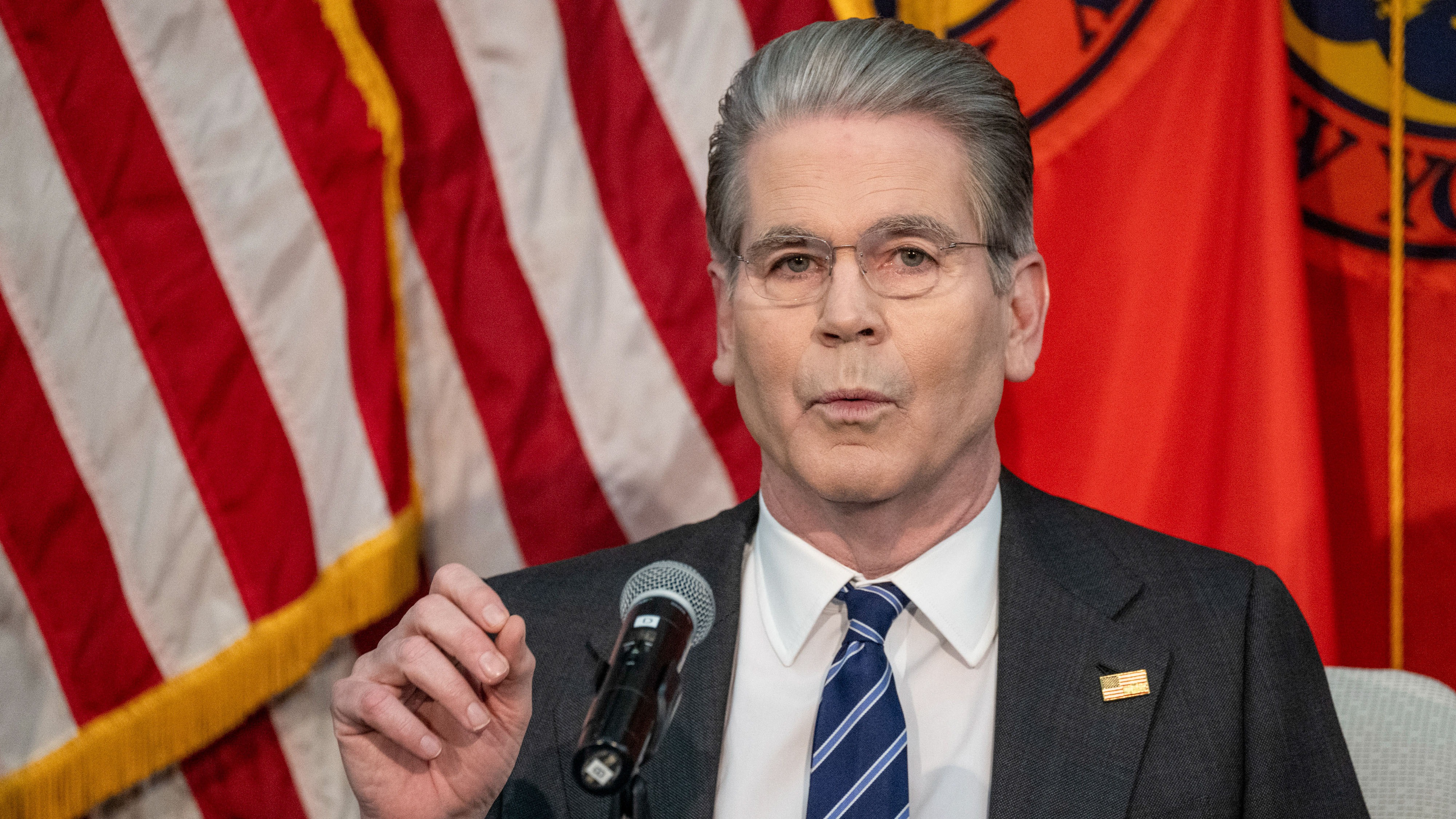
Protesters add new demands as over 100 forecourts out of fuel and traffic chaos continues
It comes after forecourts across the country ran low on fuel as protests and blockades continued to cause widespread traffic disruption on Thursday. Ellen O'Donoghue and Sarah Slater * Protests against fuel prices are entering their fourth day * Fuel supplies at forecourts are under threat of running dry, with over 100 out * More traffic chaos is underway, with Dublin Bus and Luas reporting disruption * Multiple closures in place on the M50 and delays reported on other roads nationwide * A protest spokesman said some participants may attend a meeting with Government * Protesters add new demands to lift their disruptive demonstrations across the country * Dublin Airport issue passenger advisory * The Defence Forces "remain on standby" to assist gardaí in clearing heavy vehicles from blockades 10.32am The government is due to announce a package of measures on Friday to reduce inflation, a minister has said. Enterprise minister Peter Burke was speaking on RTÉ radio's Today With David McCullagh on Friday morning. He said there would be a "response" from the government to rising prices since the outset of the war in Iran. Burke said: "Hopefully today we will have news on that. "I do believe we will have news on that, in terms of an intervention that will reduce inflation, that will try and reduce the price of groceries on the shelves for our consumers, for vulnerable people buying them". Burke also said the Tánaiste and Minister for Finance Simon Harris is working with EU colleagues for "flexibility" on excise duty rules. He said European directives limit how much excise duty can be reduced and Ireland would need permission to go below those thresholds. He also said there may be "state aid implications" for other measures the government is looking at to help the haulage and agriculture sectors and said the Tánaiste is "working, navigating through those barriers, trying to ensure that we do get a package". 10.24am Nursing Homes Ireland has been invited by Minister of State for Older People and Housing Kieran O'Donnell to a meeting to discuss ongoing issues facing nursing home staff caused by fuel shortages reported around the country. "NHI appreciates the Minister's invitation and will continue to engage cooperatively with the Government, and all relevant Stakeholders, to ensure there is no disruption to the continuum of care provided to nursing home residents nationwide," a Nursing Homes Ireland statement said. The organisation called on the government to implement "more immediate measures to support all essential workers' access to fuel, espcially areas of the country where public transport is limited and fuel shortages are most acute. "As the current energy and fuel crisis continues, it is vital to ensure the inclusion of all nursing homes (public, private, and voluntary) in the development of the emergency plans and additional energy supports currently being developed by Government and the Office of Emergency Planning," it said. 10.11am Fuels for Ireland chief executive Kevin McPartlan has welcomed findings of a report published by the CCPC on Friday which found no breach of competition or consumer protection law on how fuel prices have been set in Ireland. The CCPC examined fuel prices in light of "recent geopolitical developments," namely the war in Iran and the wider Middle East. The report directly addresses concerns around price gouging or anti-competitive behaviour, McPartlan said. "The report also confirms that the recent increases in fuel prices were driven by significant rises in international wholesale costs, rather than decisions taken by companies operating in Ireland. "In fact, the report makes clear that prices at Irish forecourts rose by less than the increases observed on global markets," he added. "Ireland is part of a global fuels market - we are a price taker, not a price setter. "We recognise the very real pressure this has placed on households and businesses. As acknowledged by the CCPC, there is a level of distress and concern among consumers, and we absolutely recognise that. "The cause of high prices is global market conditions, which are outside of the control of Irish fuel retailers." 10.04am Fuel protesters have added to their demands to lift disruptive demonstrations across the country amid confusion over a crucial government meeting. A spokesman for the demonstrators said that protests would continue, but they are letting "more fuel" out on Friday, as some forecourts risked running dry after days-long blockades of major supply depots. The protesters want the Government to commit to further action to combat rising fuel prices triggered by the war in Iran. Government leaders have condemned the protests as "wrong" and "not in our national interest", and said the fuel blockades were holding the country to "ransom". Government ministers have said they cannot engage with disparate groups carrying out protests, and encouraged them to engage with existing representative groups. A meeting between several ministers and 10 farming, haulier and business groups is to take place on Friday afternoon. Although it is understood there are no fuel protesters on the list of attendees, protesters have suggested they were invited to the "breakthrough" meeting. Fuel protest spokesman James Geoghegan said Fianna Fáil TD for Galway West John Connelly invited them to attend on Friday, and that he, another fuel protester spokesman, John Dallon, and a group of protesters from Galway would attend. Connelly rang into Newstalk while on a train to say he had not invited him to the meeting, and that he had advised them to talk to the Irish Road Haulage Association (IRHA), which is among the groups meeting with government on Friday. Geoghegan said that even if a meeting is held, the protest would continue on Friday despite their pledge to call off demonstrations if the government agreed to meet them. The protesters had also added to their list of demands: along with the removal of the carbon tax from green diesel and the price of fuel to be capped, they want oil exploration off the west coast of Ireland to begin, and the Dáil to be recalled on Friday. He said: "We will be looking for the Dáil to be recalled this evening or tonight. It has to be rubber stamped." 9.40am A number of new protests are after kicking off on a number of mainline motorways through Co Kildare, according to Sarah Slater. The M4 new protest has left Kilcock heading for Dublin, approaching Intel Junction. The M7 new protest has left Junction 9a Millennium Naas heading for Dublin, a queue rapidly building with this one approaching Johnstown Junction 8. The M9 new protest is at a crawl northbound after Castledermot, approaching Athy Junction, while the N81 is also suffering tailbacks after Blessington heading for Tallaght. 9.22am Director of Services with Waterford City and County Council for Roads Gabriel Hynes confirmed that the council is already feeling the effects of the fuel crisis, Sarah Slater reports. He said the local authority currently has between a week and ten days of fuel supply available, with demand at its highest due to peak roadworks season. "In relation to fuel... we roughly have a week, maybe 10 days supply," he said. "We're at the peak of our roadworks programme, so demand at this time of the year is at its peak as well." Hynes also revealed that fuel prices have increased by around 30 per cent since January, significantly affecting operational costs. "We have 250 vehicles approximately operating, so we have a significant fuel demand," he said. 9am A spokesperson for protesters at Foynes Port in Co Limerick has said they would open the port today for feed and for five loads of fuel for frontline workers and hospitals. Speaking on RTÉ's Morning Ireland, Neilus O'Connor said protesters had let chemicals needed by Uisce Éireann through their blockade on Thursday. Asked if the protest would end if they had a meeting with Government, he said: "We will wait until we see the results of that meeting, and then we'll decide where we go from there." 8.44am Representatives of fuel protesters said they will join a meeting of farmers' groups with government on Friday afternoon. Despite the protesters saying the demonstrations would be lifted once government met with them, spokesman James Geoghegan said they would continue. Geoghegan said they want the carbon tax on green diesel to be removed and the price of fuel to be capped. He said Fianna Fáil TD for Galway West John Connelly invited them to attend Leinster House on Friday, and that he, spokesman John Dallon and a group of protesters from Galway would attend. Connelly said he had not invited him to the meeting and that he instead had advised them to talk to the Irish Road Haulage Association (IRHA), which is attending the meeting with government on Friday. "It's not over yet for the simple reason we don't trust the government at this stage," Geoghegan said. "We had several meetings yesterday, we had several meetings during the night, we had several meetings this morning - I got, I think, two hours sleep last night - and the word coming back from the ground is after the way Micheál Martin disrespected everyone, he is not to be trusted ever again. "We have actually reduced the protest, we are allowing out more fuel today, we have lifted some of the blockades off the ports." 8.22am Gardaí have said that "critical deliveries" left Rosslare Europort overnight after "positive and constructive engagement with local protestors" during the fuel demonstrations. An Garda Síochána posted on social media showing a number of trucks and lorries being escorted from the port by a Garda car. The force wrote: "An Garda Síochána has and continues to engage extensively with those taking part in fuel protests across the country to facilitate peaceful protest while protecting public safety." 8.18am The Irish Road Haulage Association (IRHA) has offered to act as "an honest broker" between fuel protesters and the Government, its president has said. Ger Hyland was speaking on RTÉ radio's Morning Ireland on Friday morning as widespread disruption caused by the demonstrations continued into a fourth day. On Thursday night, a spokesperson for the Dublin city blockade appeared on RTÉ's Prime Time and claimed protest participants would be attending a meeting with Government on Friday that was originally scheduled for official national representative bodies. Later a Government spokesman said it had agreed to meet official representatives, adding, "Who these nationally and democratically constituted bodies choose to bring along with them is a matter for them." On Friday morning, Hyland said the Government had "extended two places at that table to our association". He said he had put forward two people from the IRHA but "it is up to the Government who goes to a Government meeting, I can't decide who I bring in, who I want". Hyland said he had contact with the protesters "through intermediaries" and is available to meet demonstrators before the meeting, and "if the protesters are happy" he would "bring their concerns with us into Government". 8.11am Over 100 filling stations have now run out of fuel, and that number could multiply rapidly today if blockades continue. The head of Fuels for Ireland has said it is a significant number, and it could reach up to 500 if there is no improvement by the end of the day. It comes as blockades at the country's main depots and only oil refinery in Co Cork continues on Friday morning. Fuels for Ireland chief executive Kevin McPartlan told Newstalk that panic buying is making things worse, and is encouraging people to "keep their heads. "I know that last night we were around about the 100 forecourts figure, which bare in mind that we have 1,600 forecourts in the country, it's a fairly significant number, and also it's quite regional, so there are kind of black spots in parts of Munster and in the west, where it's particularly difficult just because that's where the fuel depots that have been blockaded are based," McPartlan said. 8.05am Fuel protests are causing disruption for motorists on a number of national roads on Friday morning. The M7 remains closed at Portlaoise in both directions, while the M8 northbound from Cashel to Cahir is also blocked by protests. In Limerick, the M7 is blocked at Annacotty in both directions, and the traffic delays are backing up to the Limerick tunnel, while the M18 in Co Clare is blocked at Dromoland. Sections of the M9 northbound also remain blocked. 8am Dublin Airport have issued a passenger advisory for those travelling to and from the airport on Friday due to the protests. Passengers have been advised to allow extra time for their journeys due to the protests causing traffic disruption on roads approaching the airport, and have been asked to use live traffic apps to identify the quickest and best routes. It comes after people were photographed with luggage walking alongside heavy traffic on the M50 on Thursday as they tried to make it to the airport. 7.53am There are two full road closures along the M50. The road is closed northbound at Blanchardstown after Junction 6, as is the Southbound route between Junction 3 at the M1/M50 Interchange and Junction 4 Ballymun. For more information on road closures, visit here. 7.41am Dubin Bus has warned on Friday morning that due to the ongoing fuel price protests, it is "experiencing ongoing severe service disruptions and delays" resulting in a number of services being cancelled or diverted. A full list is available on the Dublin Bus website. Meanwhile, Dublin's north and south quays are open for traffic as normal, but O'Connell Street bridge remains closed to traffic. The Luas Green Line is still not operating between St Stephen's Green and Dominick. Services are only operating between Broombridge and Dominick, and between St Stephen's Green and Brides Glen, due to the protest. 7.35am Protesters close to Rosslare Europort were served with a Section 8 of the Public Order Act by gardaí on Thursday night. Gardaí in the village of Kilrane over a loudspeaker issued a warning to protestors that they had to leave the area and failure to do so "in a peaceful and orderly manner" would lead them to "possibly" being arrested and conviction liable to a €1,000 fine or a six-month prison sentence. The garda added: "I would just urge you all to please peacefully remove yourselves from the area," Sarah Slater reports. Many of the protesters retorted by saying: "The people of Ireland say no." The incident was recorded by scores of those gathered. Local Aountú councillor Jim Codd said "there were extraordinary scenes" in Rosslare. "The Government has it in their power to stop this now," Codd said. Meanwhile, in Co Kilkenny numerous filling stations have reported that they have no fuel left following a surge in motorists panic buying. Service station locations include Thomastown, Goresbridge, Slieverue and Kilkenny city. 6.50am Fuel supplies at more forecourts are under threat of running dry as a days-long blockade of major supply depots continues. They want the Government to commit to further action on fuel costs. A spokesman for the protesters said some participants may attend a meeting with Government on Friday that was originally scheduled for national representative bodies, with a coalition spokesman saying who the official groups bring is a matter for them. Their widespread action enters a fourth day on Friday with demonstrators facing a reaction from An Garda Síochána, which said it was entering an "enforcement" phase of its response - accompanied by support from the military. Social media footage late on Thursday showed gardaí warning protesters they could be arrested if they did not peacefully disperse from an area near Rosslare Europort in Co Wexford. The Government's intolerance of the action escalated on Thursday, with Justice Minister Jim O'Callaghan and Defence Minister Helen McEntee stating that the Defence Forces "remain on standby" to assist gardaí in clearing heavy vehicles from the blockades. Protesters have restricted access to a major oil refinery in Whitegate, Co Cork, as well as fuel depots in Galway City and Foynes, Co Limerick. It has raised concern over panic buying at forecourts, some of which have run out of fuel, as well as impacts on emergency services and deliveries of key supplies for animal welfare on farms. A leading industry representative warned that the number of forecourts running dry would get "much, much worse" from Thursday evening's position of affected service stations being in the "low double digits". Fuels For Ireland chief executive Kevin McPartlan said "panic buying has absolutely taken hold" and warned that "real significant life-death problems are going to be caused" with fuel supplies to emergency service vehicles under threat. Ireland's emergency planning group echoed the comments with "serious concern", saying there may be an impact on availability for some vital services, supply chains and public transport. The National Emergency Co-ordination Group (NECG) said Ireland's overall fuel supplies remain "robust and resilient" but said the obstruction of key routes from ports is threatening the provision of animal feed supplies, fertiliser and other vital materials, resulting in potential animal welfare issues and a threat to livelihoods in the agriculture sector. The Health Service Executive (HSE) said the disruption is causing people to miss medical appointments and is impacting the provision of home care and critical care, such as dialysis and cancer treatment. The HSE also warned that the blockades could disrupt the time-sensitive delivery of key medicines and medical devices. 6.35am Fuel price protesters have secured a meeting with Government Ministers, according to an organiser of the demonstrations, who pledged to continue disruptions for a fourth day on Friday. One of the organisers, James Geoghegan, claimed negotiators will join a meeting at Government Buildings on Friday afternoon, alongside the Irish Road Haulage Association and the Irish Farmers' Association. It comes after forecourts across the country ran low on fuel as protests and blockades continued to cause widespread traffic disruption on Thursday. Speaking on RTÉ's Prime Time on Thursday night, Geoghegan described the meeting as a "breakthrough". He said the protest had been "pulled in off O'Connell Bridge" and "word had gone down" to release kerosene from fuel depots. But he said there would continue to be disruption. "We have a list of demands going into Government tomorrow." A Government spokesman said late on Thursday that it had agreed to meet official representative bodies. However, the spokesman said: "Who these nationally and democratically constituted bodies choose to bring along with them is a matter for them." The spokesman said Government had already introduced the "most substantive measures anywhere in the EU" on a per capita basis, but added: "We have been clear that these measures were introduced with flexibility to adapt our response, if required. "That work remains ongoing and will continue tomorrow as we engage with the national representative organisations. "Government respects the rights of groups to take part in a peaceful protest but cannot stand by when blockades are (taking) place at our country's refineries and fuel depots. "It is not helpful to working people, their families and is harmful to our economy."

Analysis:Crypto giant Kraken's Fed payment account sparks concerns about risks
April 10 : Crypto giant Kraken's landmark Federal Reserve master account comes with restrictions aimed at mitigating risks, but it - and others likely to follow in its wake - could still create vulnerabilities for the U.S. financial system. Founded in 2011, Wyoming-based Kraken is one of the world's largest crypto exchanges, with both retail and institutional clients. Last month, it became the first-ever crypto company to win a Fed master account. The Kansas City Fed granted Kraken a "limited- purpose" account for one year initially, but neither party disclosed details of its restrictions. Fed master accounts are often likened to bank accounts for banks, letting accountholders move funds directly via the Fed's payment rails. The decision has sparked concerns among banks and the top Democrat on the House of Representatives Financial Services Committee, Maxine Waters, over potential financial-system risks. They also say the approval process was opaque and that it flouted Fed protocols. Waters has asked the Kansas City Fed to disclose more details by Friday. To be sure, banks stand to lose out as crypto firms expand onto their turf. But some regulatory experts said banks' risk concerns are warranted. A spokesperson for Kraken told Reuters that the Fed master account allows its Wyoming banking arm to access the central bank's wholesale payments system, Fedwire, and hold limited balances overnight. That means it can cut out bank intermediaries and move money faster and more cheaply. But unlike many accountholders, Kraken cannot earn interest on reserve balances it holds at the Fed, or access emergency Fed lending or the central bank's other FedNow and ACH payment systems, the spokesperson said. They declined to say whether Kraken will have access to Fed credit. The account details have not previously been reported. Kraken will initially use it to serve wholesale clients. It hopes to eventually add new features, said Jonathan Jachym, Kraken's global head of policy. "We look at this as a great testament to regulatory rigor and cooperation. It promotes principles of both safety and soundness, and innovation," said Jachym. A Kansas City Fed spokesperson said it was reviewing Waters' letter. The spokesperson declined to comment further. CRYPTO SYSTEM INROADS Granted more than five years after Kraken first applied, the account marks another victory for the digital asset industry under President Donald Trump's crypto-friendly administration, which is giving the sector more access to the mainstream financial system, sparking alarm among banks. Crypto firms Ripple, Anchorage Digital and fintech money transfer company Wise also hope to win master accounts, according to public information. Regional Fed banks manage those accounts, but the Fed board provides guidelines. It has signaled it will open its payment rails to more crypto and fintech firms. In December, it sought feedback on a potential new type of payment account with restrictions similar to those imposed on Kraken's. The proposed account would also not provide access to Fed credit. The Fed has said those limits would mitigate liquidity shocks, credit risk to the central bank, and would protect its ability to manage reserves. Still, even with safeguards, giving crypto firms direct access to Fedwire - which underpins the global dollar clearing system - creates money-laundering and operational risks, and could suck liquidity out of the banking system, lenders have warned. Under Fed rules, only depository institutions can have master accounts. Kraken and Anchorage have depository charters but are not federally insured. Wise and Ripple are seeking similar charters, along with several other crypto companies. While the Fed closely scrutinizes applications by uninsured depository institutions, such entities are subject to less rigorous ongoing oversight than insured banks. "The concern is by introducing institutions that may have less of a track record, less rigorous compliance and operations, even if they have limited models, that it could create a degree of systemic risk," said Richard Levin, chair of the fintech practice at Taft Stettinius & Hollister. OPERATIONAL AND MONEY-LAUNDERING RISKS Regulators have long flagged that the fintech and crypto sectors sometimes have patchy internal controls and cyber security. A core worry is that such firms, if granted accounts, could become a point of operational weakness. A hack, outage or liquidity misstep could cause settlement failure, rippling through the system and forcing the Fed to backstop the payment. "They don't have the experience," said Yesha Yadav, an associate dean at Vanderbilt University Law School. The crypto industry also has heightened exposure to money‑laundering risk, an issue Fed Governor Michael Barr flagged in December when opposing the Fed's request for information on the potential new payment account. The Kraken spokesperson said its bank reserves are fully backed and that the company complies with all bank-grade AML and know-your-customer requirements and that it has never been hacked. Rachel Anderika, Anchorage's chief operating officer, said everyone was subject to the same AML rules. "The AML risks with crypto are unique, but they are entirely manageable." London-based money-transfer firm Wise declined to comment. A Ripple spokesperson pointed to a social media post by CEO Brad Garlinghouse in December that said the industry was "prioritizing compliance." More broadly, by cutting out bank intermediaries and potentially allowing more crypto and fintech firms to park funds directly at the Fed, deposits could eventually be siphoned out of the banking system, others say. "Banks play a critical role as a keystone in the resilience of the broader financial system," said Kathryn Judge, a professor at Columbia Law School. "We need to be thoughtful, particularly when we are allowing access to a valuable federal resource." The Fed's regulatory chief, Michelle Bowman, said last month that Kraken's account would not necessarily open the floodgates, but she also acknowledged that it was uncharted territory.
Bitget debuts IPO Prime market with SpaceX pre-IPO exposure token
We'd love your feedback. Take a 30-second survey to help improve The Block. Bitget, a Seychelles-based exchange, has launched IPO Prime, a new market providing access to pre-IPO tokenized exposure. According to a company statement released Friday, the first offering under the product will be preSPAX, a digital asset tied to the economic performance of SpaceX, a private rocket company valued at $1.54 trillion on secondary trading venue Nasdaq Private Market. Powered by Republic, IPO Prime operates on a subscription model where eligible users can apply for allocations in tokenized offerings. Allocation limits depend on user tier, with higher thresholds for more advanced VIP levels, according to the statement. After the subscription phase, the digital assets move to an over-the-counter market on Bitget for continuous trading. Gracy Chen, CEO of Bitget, said the product shifts access to pre-IPO opportunities beyond institutional investors. "IPO Prime allows users to participate earlier in a company's growth cycle, with the flexibility of continuous trading," Chen said in the statement. "This shifts how and when investors can engage with emerging companies, which gives retailers and new investors a chance to buy-in early. This is part of our greater shift towards building an UEX, democratizing access to financial equality." Per the statement, the preSPAX token is expected to launch April 21 at 12:00 UTC. The commitment period will run from April 18 at 18:00 UTC to April 21 at 18:00 UTC, with distribution scheduled between April 21 at 18:00 UTC and 22:00 UTC. Two rounds of preSPAX airdrops will be available to eligible VIP users before the launch, Bitget said. In a disclaimer, the company said that preSPAX represents a mirrored economic interest in SpaceX's potential upside upon a qualifying event and does not constitute a direct investment in SpaceX. SpaceX has not endorsed or authorized the product, according to the disclaimer. Bitget serves 125 million users and offers access to over 2 million crypto tokens, more than 100 tokenized stocks, ETFs, commodities, FX, and gold, per the statement.
Thriller in Pakistan: Historic compromise or chaos scenario as critical US-Iran talks loom
The weekend meeting, if it ultimately takes place, is expected to be the first in a series of intensive negotiations regarding a long-term agreement to end the war. The lives of millions of people across the Middle East -- and the fate of the global economy -- will depend on the outcome of the critical talks scheduled to take place tomorrow, Saturday, April 11, in Pakistan between the US and Iranian delegations. The streets of the Pakistani capital, Islamabad, have been emptied due to a surprise two-day public holiday declared to ensure security during the arrival of the American and Iranian delegations for their first talks since the start of the war. The fragile two-week ceasefire that paved the way for the talks is currently holding. However, massive and deadly Israeli strikes against Hezbollah and disputes over whether Lebanon is included in the truce could derail the talks, which may even be canceled before they begin. Officially, Iran maintains that its delegation has not yet traveled to Islamabad, implying it will not attend if America does not uphold the ceasefire terms regarding Lebanon. Who will participate in the talks? The talks between Iran and the United States are expected to begin on Saturday morning local time in Islamabad, according to the White House. The American delegation will be led by Vice President JD Vance, special envoy Steve Witkoff, and Jared Kushner, son-in-law of President Donald Trump. Tehran has not officially announced its delegation, but some local media report it will be led by the Speaker of the Iranian Parliament, Mohammad Bagher Ghalibaf. A regime insider states that Ghalibaf has emerged as a key interlocutor with the Trump administration throughout the war. However, the Wall Street Journal claims the Iranian delegation will be led by Foreign Minister Abbas Araghchi and Ghalibaf. Although the Wall Street Journal report asserts the Iranian delegation is already in Pakistan, Tehran officially denies this. Meanwhile, no details are known regarding how these talks will be conducted -- whether directly between delegations or through third-party mediators. What will they discuss? Given that the two sides do not even seem to agree on what is included in the ceasefire, coordinating the agenda of the talks may prove difficult. Trump has referred to a "10-point proposal from Iran," which he characterized as a "basis for negotiation." However, Iran subsequently began circulating its own 10-point list containing demands that the US could never accept, such as recognition of its control over the Strait of Hormuz, war reparations, and the lifting of all sanctions. Other versions published in state media included the recognition of the country's right to uranium enrichment. White House Press Secretary Karoline Leavitt stated that Trump was referring to a different 10-point plan that was "more reasonable." Simultaneously, Trump and his team have their own 15-point proposal. The plan has not been fully publicized, but it reportedly includes an Iran commitment not to acquire nuclear weapons, the handover of highly enriched uranium, limits on Tehran's defensive capabilities, and the reopening of the Strait of Hormuz. The fundamental question now is whether the talks will lead to a compromise or if they will collapse, restarting a war that has already devastated parts of the Middle East and triggered a historic global oil crisis. What is happening in Lebanon? The inclusion of Lebanon in the ceasefire is a persistent point of contention that also threatens to upend the weekend talks. Iran has repeatedly stated that the truce covers attacks against Hezbollah, a position mirrored by Pakistan, which helped mediate the deal. However, Israel and the US have stated that the ceasefire does not include Lebanon. On Wednesday, just hours after the ceasefire began, Israel launched the largest wave of strikes on Lebanon since the war started, hitting crowded neighborhoods without warning and killing at least 303 people, according to the Lebanese Ministry of Health. The attacks drew immediate global condemnation and fury from Iran. Mohammad Bagher Ghalibafstated on Thursday that Lebanon and Iranian proxies are an "integral part of the ceasefire" and that "time is running out." Criticism of Israel was voiced worldwide, including by European and Gulf nations fearing the truce might collapse before talks even begin. Vance stated there was a "reasonable misunderstanding" regarding Lebanon's inclusion but noted that the Israelis might "need to restrain themselves a bit." What about the Strait of Hormuz? The reopening of the critical maritime passage, the Strait of Hormuz, which has been effectively closed by Iran for weeks causing chaos in global oil markets, was another part of the deal according to the White House. Yet since the start of the ceasefire, only a few ships have managed to pass through this strategic point. Hundreds of vessels remain trapped in the Persian Gulf with thousands of crew members. Iran halted the transit of tankers through the Strait of Hormuzfollowing Israeli strikes in Lebanon, according to the Fars news agency. Mohammad Bagher Ghalibaf reiterated this stance, saying that "ceasefire violations entail clear costs and STRONG responses." Vance reiterated Thursday that if Iran does not fulfill its commitments to reopen the Strait, the ceasefire will end. Trump also warned Iran against imposing tolls on tankers in the critical waterway. Will the talks achieve anything? Despite the confusion, US officials on Thursday were moving quickly to prepare for negotiations, according to sources familiar with the matter. If Iran chooses to walk away, "it would be foolish, but it's their choice," Vance said. Despite the disagreements, Trump told NBC he is "very optimistic" about a peace deal from the Islamabad talks, saying Iranian leaders seem eager for peace in private conversations. "They're being much more reasonable," he said. "They're agreeing to everything they have to agree to. Remember, they've been defeated. They don't have an army." Iran's public rhetoric is markedly different, with many state media outlets claiming a resounding victory for surviving the US and Israeli assault and bringing Washington to the table. Even if the talks occur, it is difficult to say if the gap can be bridged in a single weekend. According to sources, the weekend meeting is intended to be the first in a series of intensive negotiationsregarding a long-term agreement to end the war.

Retail Investors Defy Market Chaos; Equity MF Inflows Jump 56% In March, SIPs At Record-high - BW Businessworld
SIP inflows also touch a record high of nearly Rs 32,100 crore during the month Inflows into Indian equity mutual funds rose 56 per cent month-on-month to an eight-month high of Rs 40,450 crore in March even as markets witnessed sharp volatility amid escalating tensions in the Middle East, according to data released by the Association of Mutual Funds in India (AMFI). The surge was largely driven by sustained retail participation through systematic investment plans (SIPs). The number of contributing SIP accounts increased to 97.2 million in March, up from 94.4 million in February, reflecting continued investor confidence despite market swings. SIP inflows also touched a record high of nearly Rs 32,100 crore during the month, underlining the resilience of disciplined, long-term investing behaviour among domestic investors. "The mutual fund industry continues to witness steady investor participation. Equity inflows extended their 61st consecutive month of positive net inflows, reflecting sustained investor confidence in long-term wealth creation through mutual funds," said Venkat Chalasani, Chief Executive. AUM Declines The mutual fund industry witnessed a sequential decline in assets under management (AUM) in March 2026, reflecting market volatility during the month. According to data, the industry's net (AUM) stood at Rs 73.73 lakh crore in March, down from Rs 82.02 lakh crore in February. "While the headline numbers for March 2026, a net outflow of Rs 2,39,910 crore and AUM declining to Rs 73.73 lakh crore from Rs 82.03 lakh crore in February, may spook investors, both are misleading in isolation. The AUM decline is a mark-to-market story driven by a sharp equity market correction during the month, not a confidence story," said Nitin Agrawal, CEO, Mutual Funds, InCred Money. The net outflow is almost entirely driven by debt fund redemptions, which is a well-established quarter-end phenomenon in March. Equity net inflows at Rs 40,450 crore signal conviction buying, he added. Mid- and Small-Cap Funds Attract Strong Buying Interest Category-wise, inflows remained robust across segments. Investments into large-cap funds rose 42 per cent month-on-month to Rs 2,998 crore. Mid-cap funds saw inflows jump to a record Rs 6,064 crore, while small-cap funds attracted Rs 6,264 crore, up 61 per cent from the previous month. Analysts attribute this to improved valuations following recent corrections in broader markets, which have renewed investor interest in these segments. However, the strong domestic flows contrasted sharply with continued foreign selling. Foreign portfolio investors (FPIs) offloaded a record USD 12.7 billion worth of Indian equities in March, amid concerns over elevated crude oil prices and potential economic slowdown linked to the Iran conflict. Markets Correct Sharply; Gold ETF Demand Cools Benchmark indices reflected the broader risk-off sentiment. The Nifty 50 and BSE Sensex declined 11.3 per cent and 11.5 per cent, respectively, marking their steepest monthly fall in six years and confirming a technical correction. The broader markets were also under pressure, with mid-cap and small-cap indices falling 10.9 per cent and 10.2 per cent, respectively. Meanwhile, inflows into gold exchange-traded funds (ETFs), which had surged to a record Rs 24,040 crore in January, moderated sharply to Rs 2,300 crore in March, suggesting a shift back towards equities as valuations became more attractive. "Gold ETFs cooled after three extraordinary months, while other ETFs had their best March ever at Rs 19,800 crore, driven also by institutional year-end rebalancing," said Suranjana Borthakur, Head of Distribution & Strategic Alliances, Mirae Asset Investment Managers. Borthakur also highlighted a nearly 5 times jump in Gold ETFs where it went from Rs 15,000 crore last year to Rs 74,000 crore in a single year. Other ETFs also crossed Rs 1 lakh crore for the first time. "SIPs held firm through every bout of volatility. FY26 was not the loudest year for Indian mutual funds but it may have been the most consequential," she said.

Global chaos is now a permanent guest in your portfolio. Why big tech and emerging markets are essential, says this strategist
Nuveen sees investors dangerously complacent about Iran war Markets are still assuming a gradual reopening of the Strait of Hormuz and a de-escalation of the regional conflict, but Nuveen's strategist warns investors bake this into portfolios at their peril. Investor complacency is increasingly evident as the Iran war gets normalized by markets, which are pricing in a base case of partial resolution and a gradual resumption of energy flows. That's according to Laura Cooper, global investment strategist at Nuveen Asset Management and responsible for overseeing $1.4 trillion in assets. It's a trend she sees as dangerous. "Further attacks on Gulf energy infrastructure, or escalation that draws in additional regional actors, remain underpriced," she told MarketWatch in an interview on Wednesday. Laura Cooper thinks political change was moving faster than markets were - until very recently Outcomes aren't symmetric and Cooper emphasizes that geopolitics are now shaping those outcomes, rather than a factor portfolios can price at the margin. The London-based strategist identified three distinct fault lines that undermine some of the more optimistic approaches prevalent as a cease-fire was announced in the Middle East. First, geopolitical risk has become structural rather than episodic. Second, Europe was insufficiently prepared for the new transactionalism of the U.S. administration, and is entering an era of punitively expensive energy, just when its plans for structural hegemony and rearmament were developing. Third, central banks have their hands tied because higher inflation expectations make the usual tool for tackling slower growth - chiefly easier monetary policy - can't be applied without exacerbating the situation. So how should investors position themselves for this new, problematic epoch? Cooper made the case for geographical diversification, scenario weighting and becoming increasingly selective even within asset classes themselves. Given the heightened inflation expectations, Nuveen evinces a clear preference for floating rate rather than fixed-credit instruments, energy and upstream assets across equities, and for hard assets and real return profiles. Despite some of the unwelcome publicity private credit has attracted of late, Nuveen is positive toward some pockets of the asset class. Cooper said they are being especially selective about individual credits, choice of manager and covenant protection, but attracted by much higher yields potentially on offer. The Brent (BRN00) forecast that Nuveen's portfolio managers plug into their models is $80 per barrel, but Cooper stressed there was upside risk to that number and this was impacting how the allocation team looks at asset classes. For example, Nuveen has recently revised its rate outlook for the U.S., and is now expecting just one interest rate cut in 2026, with the second easing they had predicted now being pushed back to 2027. Key crude oil prices. Nuveen has $80 per barrel average for Brent in their forecasts for 2026. It assumes a steep decline from where they are now and therein lies the risk. Meanwhile, Cooper believes the European Central Bank is the one most likely to be forced into a rate hike in 2026. Europe is more vulnerable to higher inflation due to its energy dependency versus the U.S., a net exporter of petroleum products. In general, Nuveen finds the U.S. economy more resilient than others, not just because of its energy independence, but also because of the defensive nature of its technology sector. Cooper is skeptical Europe can deliver the 9% earnings growth consensus expects, and believes analysts are too optimistic about the knock-on effects of the crisis to growth assumptions. The defensive and more predictable nature of the earnings growth in the U.S. technology and AI sectors MAGS explains why Nuveen recommends an overweight position in U.S. large caps. However, the team barbells its equity exposure (barbelling means offsetting riskier bets with more secure ones in portfolio weightings) with overweight calls on Japan (NIY00) and emerging markets EEM. Cooper also finds the yields on 10-year gilts BX:TMBMKGB-10Y interesting, especially if inflationary effects prove less dramatic than presently feared. Within emerging markets, Cooper is constructive on South Korea EWY from the tech perspective, and Brazil EWZ, a net exporter of commodities. From a fixed-income perspective, Cooper favors these sovereigns where strong external balances and positive carry can be useful, especially when safe-haven assumptions, chiefly the dollar DXY, are being challenged. She adds there's a "blurring of lines between emerging and developed markets underway." "Investors are not positioned for a world in which assumptions built over decades - institutional credibility, alliance durability and the limits of political shock - would be tested simultaneously," Cooper observes. Her message: investors need to start adjusting, and incorporating these new realities now. -Jules Rimmer This content was created by MarketWatch, which is operated by Dow Jones & Co. MarketWatch is published independently from Dow Jones Newswires and The Wall Street Journal.
The SpaceX IPO Will Be an Epic Disappointment, Based on What History Tells Us
Additionally, SpaceX is being priced for perfection amid imperfect and unpredictable industries. This year may go down as one of the greatest for initial public offerings (IPO) in history. Toward the latter half of 2026, artificial intelligence (AI) large language model developers OpenAI and Anthropic are considering going public. But likely beating these two companies to the punch is space and AI conglomerate SpaceX. On April 1, the company run by Tesla's (NASDAQ: TSLA) CEO, Elon Musk, confidentially filed for an IPO. SpaceX is seeking a $1.75 trillion valuation, which would make it the seventh-largest public company in the U.S., ahead of Tesla, and aims to raise around $75 billion. Will AI create the world's first trillionaire? Our team just released a report on the one little-known company, called an "Indispensable Monopoly" providing the critical technology Nvidia and Intel both need. Continue " Image source: Getty Images. The excitement among investors regarding SpaceX has to do with the sky-high addressable markets for the space and AI industries. Fortune Business Insights foresees the space economy growing to $1 trillion by 2034, while PwC's analysts believe artificial intelligence can add $15.7 trillion to the global economy by 2030. While SpaceX is set up to become the largest IPO in Wall Street history by a long shot, historical precedent also suggests it may be one of the stock market's most epic disappointments. Over the last 27 years, we've witnessed some truly game-changing IPOs in the U.S. and abroad. At home, we saw Alibaba Group, Visa, Meta Platforms (formerly Facebook), General Motors, and United Parcel Service go public between November 1999 and September 2014, with IPO raises ranging from $5.5 billion to $21.8 billion. Overseas, oil titan Saudi Aramco currently holds the title of the largest IPO in history, with a capital raise of $29.4 billion. While investor interest in these IPOs was off the charts -- just as it is with SpaceX ahead of its eventual debut -- the performance of these stocks once public left a lot to be desired. With the exception of Visa, which rose 23% in the six months following its IPO, each of the aforementioned largest IPOs traded lower six months after their initial-day close: Although the past can't guarantee what's to come on Wall Street, this return data strongly suggests that investors allow their emotions to get in the way of their better judgment when it comes to IPOs. In addition to history offering a cautionary tale for prospective SpaceX investors, its valuation -- SpaceX sports a price-to-sales ratio above 60 -- looks borderline unjustifiable. Like Tesla, SpaceX's valuation has received the "Musk bump." CEO Elon Musk is known for aggressive investments in high-tech/large-dollar addressable markets. Once SpaceX debuts, he'll likely be heading two trillion-dollar companies. But something else Musk brings to the table is a steady stream of empty promises. At Tesla, he's promised Level 5 full self-driving capabilities for more than a decade to no avail. He also opined that his company would have 1 million robotaxis on public roadways by the end of 2020. Many of Musk's promises are built into the valuations of his companies. However, these visions often go unfulfilled. SpaceX, like Tesla, is being priced for perfection in industries (space and AI) that are anything but perfect or predictable. Ever feel like you missed the boat in buying the most successful stocks? Then you'll want to hear this. On rare occasions, our expert team of analysts issues a "Double Down" stock recommendation for companies that they think are about to pop. If you're worried you've already missed your chance to invest, now is the best time to buy before it's too late. And the numbers speak for themselves: Right now, we're issuing "Double Down" alerts for three incredible companies, available when you join Stock Advisor, and there may not be another chance like this anytime soon. Sean Williams has positions in Meta Platforms and Visa. The Motley Fool has positions in and recommends Meta Platforms, Tesla, United Parcel Service, and Visa. The Motley Fool recommends Alibaba Group and General Motors. The Motley Fool has a disclosure policy.
