News & Updates
The latest news and updates from companies in the WLTH portfolio.
Anthropic planning to design its own chips? Here's all you need to know
Artificial intelligence lab Anthropic is considering designing its own AI chips, according to a Reuters report citing three sources familiar with the matter. The discussions are said to be in the early stages, and the company may still decide to continue purchasing chips from third parties instead of building its own. Anthropic's interest in custom silicon is a result of growing demand for its AI model Claude. The company recently disclosed that its annualised revenue run rate has surpassed $30 billion, up from about $9 billion at the end of 2025. This rapid growth has created massive computing needs, making the economics of proprietary chips increasingly attractive. Currently, Anthropic uses a mix of hardware, including Google's TPUs designed with Broadcom, Amazon's custom chips, and Nvidia GPUs. Just days before the Reuters report, Anthropic signed a long-term deal with Google and Broadcom to secure access to 3.5 gigawatts of TPU-based compute capacity from 2027, tripling its current usage. The deal builds on Anthropic's earlier commitment to invest $50 billion in U.S. computing infrastructure. The move isn't surprising at all, given its rival company Meta has been developing its own AI training chips, while OpenAI is also working on custom silicon. Industry sources estimate that designing an advanced AI chip can cost around $500 million. While such costs are significant, Anthropic's revenue growth makes the idea more feasible. Still, the company remains unprofitable, and whether it will commit to building chips remains uncertain. READ MORE: IPL 2026 LSG VS KKR Highlights: Mukul Choudhary's power performance help Lucknow win by 3 wickets

The SpaceX IPO Will Be an Epic Disappointment, Based on What History Tells Us | The Motley Fool
Additionally, SpaceX is being priced for perfection amid imperfect and unpredictable industries. This year may go down as one of the greatest for initial public offerings (IPO) in history. Toward the latter half of 2026, artificial intelligence (AI) large language model developers OpenAI and Anthropic are considering going public. But likely beating these two companies to the punch is space and AI conglomerate SpaceX. On April 1, the company run by Tesla's (TSLA +0.63%) CEO, Elon Musk, confidentially filed for an IPO. SpaceX is seeking a $1.75 trillion valuation, which would make it the seventh-largest public company in the U.S., ahead of Tesla, and aims to raise around $75 billion. The excitement among investors regarding SpaceX has to do with the sky-high addressable markets for the space and AI industries. Fortune Business Insights foresees the space economy growing to $1 trillion by 2034, while PwC's analysts believe artificial intelligence can add $15.7 trillion to the global economy by 2030. While SpaceX is set up to become the largest IPO in Wall Street history by a long shot, historical precedent also suggests it may be one of the stock market's most epic disappointments. Over the last 27 years, we've witnessed some truly game-changing IPOs in the U.S. and abroad. At home, we saw Alibaba Group, Visa, Meta Platforms (formerly Facebook), General Motors, and United Parcel Service go public between November 1999 and September 2014, with IPO raises ranging from $5.5 billion to $21.8 billion. Overseas, oil titan Saudi Aramco currently holds the title of the largest IPO in history, with a capital raise of $29.4 billion. While investor interest in these IPOs was off the charts -- just as it is with SpaceX ahead of its eventual debut -- the performance of these stocks once public left a lot to be desired. With the exception of Visa, which rose 23% in the six months following its IPO, each of the aforementioned largest IPOs traded lower six months after their initial-day close: Although the past can't guarantee what's to come on Wall Street, this return data strongly suggests that investors allow their emotions to get in the way of their better judgment when it comes to IPOs. In addition to history offering a cautionary tale for prospective SpaceX investors, its valuation -- SpaceX sports a price-to-sales ratio above 60 -- looks borderline unjustifiable. Like Tesla, SpaceX's valuation has received the "Musk bump." CEO Elon Musk is known for aggressive investments in high-tech/large-dollar addressable markets. Once SpaceX debuts, he'll likely be heading two trillion-dollar companies. But something else Musk brings to the table is a steady stream of empty promises. At Tesla, he's promised Level 5 full self-driving capabilities for more than a decade to no avail. He also opined that his company would have 1 million robotaxis on public roadways by the end of 2020. Many of Musk's promises are built into the valuations of his companies. However, these visions often go unfulfilled. SpaceX, like Tesla, is being priced for perfection in industries (space and AI) that are anything but perfect or predictable.

OpenAI cites computing advantage over Anthropic to investors
OpenAI (OPENAI) told investors this week that its early efforts to increase computing resources give it a vital advantage over rival Anthropic (ANTHRO), Bloomberg News reported. OpenAI said it has outpaced Anthropic by "rapidly and consistently" adding computing capacity to support wider OpenAI states it has ramped up computing capacity faster than Anthropic, with projections to further widen the gap, giving it a key advantage in supporting broader AI adoption. OpenAI is investing heavily in data centers and chips, intending to spend about $600B by 2030, while Anthropic has pledged $50B on U.S. data centers and secured partners for additional computing resources. OpenAI's aggressive outlays enable it to meet rapid demand, though some criticize the spending; Anthropic is more cautious, which, according to OpenAI, may have led to underestimating demand for AI products.

SpaceX Posts Roughly $5 Billion Net Loss in 2025
Tesla, Inc. designs, builds, and sells electric vehicles. Net sales break down by activity as follows: - sale of automotive vehicles (69.4%); - sale of energy generation and storage systems (13.5%); - services (13.2%): primarily maintenance and repair services. The group also develops sale of power train assembly components for electric vehicles activity; - automotive credits (2.1%); - automotive leasing (1.8%). At the end of 2025, the group had 8 manufacturing sites located in the United States (5), China (2) and Germany. Net sales are distributed geographically as follows: the United States (50.2%), China (22.1%) and other (27.7%).
Michael Burry Targets Palantir (PLTR) with Anthropic Warning -- Analyst Fires Back - Blockonomi
Consensus rating for PLTR stands at Moderate Buy with a mean price objective of $194.61 across Wall Street Shares of Palantir experienced significant downward pressure on Thursday, sliding 7.3% following a social media warning from Michael Burry -- the legendary investor immortalized in "The Big Short" -- who claimed that Anthropic is "eating Palantir's lunch." The statement sent shockwaves through a market already anxious about competitive threats in the AI-powered enterprise software sector. Burry's bearish stance on Palantir has been a recurring theme. Palantir Technologies Inc., PLTR Although Burry removed the post shortly after publishing it, the market reaction had already occurred. The growth trajectory of Anthropic has been nothing short of remarkable. The artificial intelligence company saw its annual recurring revenue skyrocket from $9 billion at the beginning of 2026 to $30 billion -- figures that generated considerable industry buzz. Daniel Ives from Wedbush Securities offered a forceful rebuttal. He characterized Burry's perspective as "wrong take and fictional narrative," while reaffirming his Outperform rating alongside a $230 price objective for PLTR. According to Ives, the expansion of Anthropic and Palantir's momentum are not mutually exclusive. He referenced Palantir's fourth quarter 2025 performance as supporting evidence -- U.S. Commercial revenue surged 137% on a year-over-year basis, while U.S. Government revenue increased 66%. Total revenue expansion reached 56% over the trailing twelve-month period. Gross profit margins remained robust at 82%, a metric InvestingPro highlighted as a significant competitive strength. Ives contended that Palantir's genuine competitive advantage operates in a different sphere than Anthropic. The company's defensive moat centers on data infrastructure and ontology capabilities -- rather than large language model technology. According to his assessment, Anthropic's Claude doesn't threaten this foundational advantage. Ives actually views enterprise AI adoption as accelerating thanks to the overall artificial intelligence movement, which benefits rather than harms Palantir. Ives positioned Palantir as standing "at the epicenter of leaders in the AI Revolution," emphasizing that its AIP product advantage remains "unmatched." Thursday's selling pressure on PLTR extended beyond Burry's commentary alone. Anthropic had also unveiled a new solution centered on multi-agent orchestration capabilities, which contributed to broader nervousness throughout the software industry. The Street's overall rating on Palantir is Moderate Buy, derived from 14 Buy recommendations, 5 Hold ratings, and 2 Sell calls. The mean price objective stands at $194.61, suggesting approximately 49% potential appreciation from present trading levels. PLTR currently changes hands near $130.47, valuing the enterprise at $312 billion in market capitalization. Year-to-date, the stock has retreated approximately 27%. Rosenblatt maintains a Buy recommendation on Palantir as well, pointing to possible catalysts from the Golden Dome Missile Shield initiative, which according to Wall Street Journal reporting could require $185 billion in funding during just its initial phase. The company has also deepened its strategic alliance with Bain & Company and established a collaboration with Moder to develop an AI-driven mortgage operations platform, with Freedom Mortgage serving as the inaugural pilot partner.
US Summons Bank CEOs Over Cyber Risks of New Anthropic AI Model - News Directory 3
Anthropic has stated that the Mythos model, which has not yet been released to the public, has already identified thousands of vulnerabilities within popular applications, and software. United States Treasury Secretary Scott Bessent and Federal Reserve Chair Jerome Powell convened an urgent meeting on April 8, 2026, with the chief executives of the largest American banks to address cybersecurity risks associated with Anthropic's newest artificial intelligence model, Mythos. The meeting, held at the Treasury headquarters in Washington, focused on the potential for a new breed of cyber attacks targeting the financial industry. Regulators identified the capabilities of the Mythos model as a significant risk to the operational stability of systemically important banks, where a major disruption or collapse could threaten broader financial stability. Anthropic has stated that the Mythos model, which has not yet been released to the public, has already identified thousands of vulnerabilities within popular applications, and software. The company issued a warning in a blog post at the beginning of April 2026 following a leak of Claude's code. AI models had surpassed "all but the most skilled humans at finding and exploiting software vulnerabilities", adding: "The fallout - for economies, public safety, and national security - could be severe." Federal regulators and Treasury officials summoned Wall Street leaders to ensure that financial institutions are aware of these risks and are implementing necessary precautions to defend their systems against models capable of automating the discovery and exploitation of software flaws. The meeting was organized while several bank leaders were already in Washington for a lobby group gathering. The guest list specifically targeted heads of banks deemed systemically important by regulators. Confirmed attendees included: Jamie Dimon, the chief executive of JP Morgan, was invited to the session but was unable to attend. The urgency of the summons reflects a concern among U.S. Regulators that the Mythos model represents a more powerful system than previous AI iterations, potentially ushering in an era of heightened cyber risk for the global economy. By focusing on the largest U.S. Banks, Bessent and Powell aimed to mitigate the risk of a systemic failure. The ability of AI to find and exploit vulnerabilities at a scale and speed exceeding most human experts creates a vulnerability gap that regulators believe could be leveraged for large-scale attacks on financial infrastructure. The meeting served as a formal warning to bank CEOs regarding the necessity of updated cyber defenses in response to the evolving capabilities of generative AI models like Mythos.

Intel joins SpaceX and Tesla to build Texas semiconductor factory
Intel will participate with SpaceX and Tesla in building a new US semiconductor factory in Texas, US, although the extent of its role has not been detailed. Thank you for visiting S&P Global AutoTechInsight. *A subscription to News & Analysis includes four S&P Global-selected sector-specific analytical pieces per month. Access to all analytic pieces across all domains comes with a subscription to All Domains. Please click here to subscribe. To get access to the AutoTechInsight full suite of services, please contact a sales representative by clicking here. Already a subscriber? Please log in here

Meta and Anthropic's new AI models are so powerful that they are not available to the general public - ProtoThema English
At the heart of Anthropic's "Mythos" model that triggered an emergency meeting of the Fed and the US Treasury with Wall Street bankers on possible cyber risks - In the race to develop "superintelligence" and Meta with Muse Spark U.S. authorities have launched an emergency mobilization, convening top Wall Street bankers amid growing concerns that new, more powerful artificial intelligence models may amplify cyber risks. US Treasury Secretary Scott Bessent and Fed Chairman Jerome Powell convened an emergency meeting on 7 April in Washington, D.C., calling on major banks to assess the risks posed by new AI tools. The focus was on Anthropic's new model, known as Mythos, which reportedly has the ability to locate and exploit vulnerabilities in operating systems and browsers if properly directed by the user. The meeting, which was not previously made public, underscores that Washington sees a new generation of cyberattacks as one of the most significant risks to the financial system. The banks involved are described as "systemically important," meaning their stability is critical to the global financial system. The authorities have called for ensuring that these institutions take adequate measures to protect their infrastructures against potential attacks that leverage advanced AI models. Anthropic itself has shown caution, limiting the availability of the Mythos model to a limited number of large technology and financial services companies. The system, introduced as the Claude Mythos Preview, is considered by the company to be so powerful that a widespread release is not planned at this time. The goal is to be used primarily to identify and fix vulnerabilities in critical software before they can be exploited maliciously. As part of this, a consortium of more than 40 companies, known as Project Glasswing, is being formed, involving giants such as Apple, Amazon, Microsoft and Google, as well as organizations such as the Linux Foundation. Anthropic is committing up to $100 million in credits to use the model to enhance cybersecurity. Going on the offensive in the AI race is Meta, introducing its new Muse Spark model, the product of a costly investment to develop "superintelligence" i.e. AI that can outperform human cognitive abilities. The Muse Spark is the first model in a new series, known internally as Avocado. Unlike previous Llama models, Meta is not going full open sourcing, but is initially only offering limited access ("private preview") to selected partners. The model will initially be available through the Meta AI app and will gradually be integrated into platforms such as WhatsApp, Instagram, Facebook and the company's smart glasses. According to Meta, Muse Spark is designed to be "small and fast" but capable of handling complex queries in areas such as science, math and health. Independent evaluations show that the model approaches the performance of leading competitors in language and visual understanding, but lags in programming and abstract thinking. It was ranked fourth in an overall Artificial Analysis evaluation index. The company's CEO Mark Zuckerberg has already foreshadowed a gradual improvement in performance, noting that the first models will mainly show Meta's "rapid evolutionary trajectory."

OpenAI Unveils $100 ChatGPT Pro Tier as AI Coding Battle With Anthropic Intensifies - Tekedia
OpenAI has introduced a new $100-per-month ChatGPT Pro subscription tier, sharply escalating the competition in the fast-growing AI coding assistant market as it moves to capture professional developers and power users who have outgrown standard usage limits. The new plan, announced Wednesday, is designed primarily around heavier use of Codex, OpenAI's software engineering assistant, and comes as the company faces mounting competition from Anthropic's increasingly popular Claude Code. According to the company, the new tier offers five times more Codex usage than the $20-per-month Plus plan, targeting developers engaged in what it described as "longer, high-effort Codex sessions." "The Plus plan will continue to be the best offer at $20 for steady, day-to-day usage of Codex, and the new $100 Pro tier offers a more accessible upgrade path for heavier daily use," the company wrote in a post on X. This creates a new midpoint in OpenAI's consumer pricing stack. Until now, the jump from the $20 Plus plan to the existing $200 Pro tier was substantial, leaving advanced users with limited upgrade flexibility. The new $100 option effectively plugs that pricing gap and broadens the monetization ladder for developer-centric workloads. That matters because coding assistants have become one of the most commercially significant segments in generative AI. The coding assistant market is no longer an experimental category. It is rapidly becoming one of the most fiercely contested battlegrounds in enterprise and consumer AI. Codex can automate code generation, debugging, test execution, feature building, and bug fixes, dramatically compressing software development cycles. Since its rollout, adoption has accelerated at a pace that suggests AI-assisted coding is moving into mainstream developer workflows. OpenAI chief executive Sam Altman said this week that Codex has reached three million weekly users, underscoring the scale of demand. The growth trajectory has been particularly indicative of its accelerating adoption. Codex's annualized revenue run rate surpassed $2.5 billion in February, representing growth of more than 100% since the start of 2026, according to a CNBC report. That kind of expansion signals that coding agents are quickly becoming a major revenue engine for AI firms. This is precisely where the competitive pressure from Anthropic becomes most visible. Anthropic's Claude Code has emerged as one of the strongest rivals in the AI development tools space, particularly among engineers who value longer context windows, repository-scale reasoning, and sustained coding sessions. Its subscription structure already includes $100 and $200 premium tiers, branded as Max 5x and Max 20x, which offer elevated usage limits for heavy development workloads. OpenAI's move mirrors that framework almost directly. The AI coding market is beginning to resemble the early cloud-computing era, where vendors compete not only on model quality but on compute quotas, workflow integration, and pricing flexibility. In effect, usage limits are becoming a commercial weapon. The introduction of the $100 tier suggests OpenAI is responding to a growing class of users whose consumption patterns fall between casual usage and enterprise-grade heavy deployment. The $20 Plus tier remains positioned for routine coding assistance and everyday prompts. The $100 plan is aimed at serious developers running extended debugging sessions, codebase-wide refactors, and parallel task flows. The $200 plan remains the premium option for the heaviest users. This tiering strategy is also indicative of the economics of inference costs. Coding assistants tend to be computationally expensive because they require sustained reasoning over long contexts, multiple files, testing environments, and iterative revisions. Unlike simple chatbot interactions, software engineering tasks often involve multi-step execution loops that can run for minutes or longer. OpenAI itself has highlighted that Codex tasks can take anywhere from one minute to 30 minutes, depending on complexity. That makes granular pricing almost inevitable. The company has also been expanding Codex beyond subscriptions. Last week, OpenAI introduced pay-as-you-go Codex-only seats for ChatGPT Business and Enterprise customers, moving toward token-based pricing for teams and organizations. This signals a broader shift in business model. Rather than relying solely on fixed subscription fees, OpenAI is increasingly aligning pricing with actual compute usage, similar to cloud infrastructure providers such as AWS and Microsoft Azure. The logic is to monetize AI as infrastructure, which will likely intensify the competition with Anthropic. Claude Code has built strong traction among developers who value deep code comprehension and long-form reasoning. OpenAI, meanwhile, is leveraging ChatGPT's much larger installed user base and ecosystem familiarity. The result is an emerging two-horse race in AI-assisted software engineering. What began as a feature inside chatbots is evolving into a distinct software layer for coding productivity. However, AI coding tools are moving beyond autocomplete and into agentic software engineering, where systems can independently interpret technical documents, write code, run tests and suggest pull requests. This shifts AI from a passive assistant into an active participant in the development lifecycle. For OpenAI, the new $100 tier is a direct response to rising demand, rising compute intensity, and rising pressure from Anthropic. In short, the battle for the future of AI-assisted software development is increasingly being fought through quotas, workflow depth, and developer retention rather than headline model launches alone.

US Treasury chief, Fed chair warn banks over cyber risks tied to Anthropic AI model: Report
US Treasury Secretary Scott Bessent and Federal Reserve Chair Jerome Powell held an urgent meeting with leading Wall Street executives this week amid growing concerns that Anthropic PBC's latest artificial intelligence model could heighten cyber risks for the financial system, Bloomberg News reported Friday, citing people familiar with the matter. The meeting took place Tuesday at the Treasury Department in Washington and was organized on short notice to ensure major banks are aware of the potential risks posed by Anthropic's Mythos model and other similar systems, according to people familiar with the matter. Officials sought to assess whether the country's largest banks are taking sufficient precautions to protect their systems against emerging threats linked to increasingly capable AI models, according to the report. The previously undisclosed gathering underscores mounting regulatory concern that a new generation of AI tools could be exploited to carry out more sophisticated cyberattacks, posing a serious threat to financial stability. The banks invited to the meeting are all considered systemically important by regulators, meaning disruptions affecting them could have broader consequences for the global financial system. Anthropic has described Mythos as a significantly more powerful model with the ability, when prompted by users, to identify and exploit vulnerabilities across major operating systems and web browsers. The company has limited access to the model to a small number of major technology and financial firms, including Amazon, Apple, and JPMorgan Chase, under an initiative known as Project Glasswing, which is aimed at securing critical systems before similar models become more widely available. Anthropic has also said it held discussions with US officials before the model's release regarding its offensive and defensive cyber capabilities. Among the bank executives summoned to the meeting were Citigroup CEO Jane Fraser, Morgan Stanley CEO Ted Pick, Bank of America CEO Brian Moynihan, Wells Fargo CEO Charlie Scharf, and Goldman Sachs CEO David Solomon, the people said. JPMorgan CEO Jamie Dimon was unable to attend, according to the report. Separately, Anthropic has been challenging the Trump administration in court after the Pentagon designated the company as a supply-chain risk, a move the firm has opposed. Earlier this week, a federal appeals court declined, for now, Anthropic's request to pause that designation.

Anthropic Launches Claude Managed Agents for Enterprise AI
Market Position: Anthropic enters a crowded field including Amazon Bedrock, Azure AI, and Google Vertex AI, backed by over $7 billion in total funding. Anthropic unveiled Claude Managed Agents on April 8, launching a cloud service that handles the sandboxing, orchestration, and governance work enterprises need to ship production AI agents. Going public with this beta marks a strategic shift for a company that had previously focused on providing models for others to build upon. Before this launch, Anthropic made agent infrastructure available only through Claude Code and Claude Cowork, leaving developers to handle the scaffolding themselves. Moving into managed infrastructure signals Anthropic's ambition to capture not just model inference spend but the entire agent operational stack. Shipping a production agent requires far more than writing prompts. "Shipping a production agent requires sandboxed code execution, checkpointing, credential management, scoped permissions, and end-to-end tracing. That's months of infrastructure work before you ship anything users see." Deploying a production-grade agent requires software teams to build more than the agent itself. Notable scaffolding is also necessary, including configuring isolated containers, setting up infrastructure, and adding observability features. Anthropic claims the managed service cuts development time by 10x by providing the full stack of tooling for sandboxing agents, handling authentication, and managing tool execution. Several customers have already integrated agents built with the service into their products, suggesting the platform has been tested in real-world deployments before its public beta launch. Artificial Lawyer frames the offering as Anthropic providing a "fully managed agent harness", all the infrastructure needed to set up and develop agentic tools within the Claude ecosystem. By selling "the whole managed runtime for enterprise agents", Anthropic positions the service as the difference between managing your own database servers and using a managed cloud database. Developers set up a project by describing the tasks they want to automate in natural language or through a YAML file. They then specify which third-party tools the agent should access and can define cybersecurity rules, such as whether a tool requires user permission before activation. A company building a website design agent, for example, might equip its sandbox with a browser to enable web-based design tasks. Connections to external services run through MCP servers, the open standard Anthropic introduced in November 2024 and later donated to the Agentic AI Foundation under the Linux Foundation. State management handled by the service covers both non-sensitive data, such as programming advice from the public web incorporated into prompt responses, and sensitive data like login credentials agents use to sign into cloud-hosted tools. Error recovery is built in: if an outage interrupts an agent's operation, it can resume from where it left off rather than starting over. Production agents commonly make external API calls, wait for responses, and handle errors. Sometimes they run for minutes or hours, and the managed infrastructure handles all of these operational patterns without developer intervention. Claude Managed Agents provides managed hosting, automatic scaling, and built-in monitoring for Claude-powered agents, removing the need for teams to maintain their own orchestration layer. Automatic prompt refinement, currently in research preview, configures Claude to iteratively improve response quality. Anthropic says the feature improved task success by 10 points over a standard prompting loop. Advanced memory tooling, multi-agent orchestration, and agent self-evaluation are also in preview, signaling the roadmap toward more autonomous systems. Billing charges for active runtime measured in milliseconds, with idle time excluded when an agent waits for user input or a tool response. Web searches carry an additional cost of $10 per 1,000 queries. Granular pricing addresses a common enterprise concern about unpredictable API costs when running self-managed agents. Arriving after Anthropic blocked third-party tools like OpenClaw from accessing Claude models, the launch timing drew immediate attention. Boris Cherny, Head of Claude Code at Anthropic, detailed the crackdown on unauthorized Claude 'harnesses' and xAI access. He stated that Claude subscriptions were not designed for the usage patterns of third-party tools and that the company was prioritizing its own products and API customers. Anthropic had also imposed 5-hour session limits during business hours, affecting up to 7% of users. Users can still access Claude models via pay-as-you-go "extra usage" billing or the API, with Anthropic offering one-time credit equal to monthly plan price and up to 30% discount on extra usage bundles. Peter Steinberger, creator of OpenClaw (now at OpenAI), suggested the sequence was deliberate. He noted that Anthropic added OpenClaw-like features such as Discord and Telegram messaging to Claude Code before cutting off third-party access, as he detailed in his response. Observers characterized this as consistent with a common industry pattern: let the open-source community validate demand, absorb the most popular features, then redirect users to the first-party alternative. OpenClaw had grown rapidly since its November 2025 launch, accumulating over 100,000 GitHub stars by January 2026. Security challenges also emerged: researchers found hundreds of exposed instances with plaintext secrets, and hundreds of skills were laced with malware. Against this backdrop of ecosystem consolidation, Anthropic enters a crowded field. Amazon Bedrock Agents, Azure AI Agent Service, Google Vertex AI Agent Builder, CrewAI, and LangChain all compete for the same enterprise agent infrastructure spend. NVIDIA launched an open-source platform for AI agents, and LangChain announced an enterprise agentic AI platform built with NVIDIA. Meanwhile, the financial stakes continue to rise. OpenAI's enterprise business reported annualized revenue exceeding $2 billion as of early 2026. Anthropic now captures a majority share of spending among companies buying AI tools for the first time, while OpenAI's share has declined. Google holds a structural advantage through its deep integration with Google Cloud infrastructure. Anthropic runs Claude on Amazon Web Services Trainium, Google TPUs, and Nvidia GPUs, with Amazon as its primary cloud partner and training provider. Recent months show a pattern of Anthropic tightening control over its ecosystem. In January 2026, the company implemented technical safeguards preventing third-party applications from spoofing Claude Code. In December 2025, Anthropic signed a strategic partnership with Snowflake to embed agentic AI capabilities into enterprise data workflows. Claude Code had reached $1 billion in run-rate revenue within six months of its public release in May 2025, according to company reports. Enterprise customers include Netflix, Spotify, KPMG, L'Oreal, and Salesforce. The sub-agents feature introduced for Claude Code in mid-2025 laid groundwork for the multi-agent orchestration now available in Managed Agents. Anthropic's valuation trajectory underscores the scale of its ambitions, with a major funding round completed in early 2026. The company also committed to a substantial expansion of US computing infrastructure, including new compute capacity. Not everything is ready at launch. Multi-agent orchestration, advanced memory tooling, and agent self-evaluation remain in research preview. The Hacker News community has already raised questions about the distinction between genuinely autonomous agents and those that chain together API calls with human approval at each step, a spectrum that managed infrastructure needs to handle on both ends. Pricing and reliability metrics in the coming months will determine whether enterprises commit to the platform or stick with existing solutions from Amazon, Microsoft, and Google. Early adopters will be watching closely to see if the 10x development speed claim holds up under demanding production workloads.

Anthropic's AI restraint is a terrifying warning sign
Normally right now I would be writing about the geopolitical implications of the war with Iran, and I am sure I will again soon. But I want to interrupt that thought to highlight a stunning advance in artificial intelligence -- one that arrived sooner than expected and that will have equally profound geopolitical implications. The AI company Anthropic announced Tuesday that it was releasing the newest generation of its large language model, dubbed Claude Mythos Preview, but to only a limited consortium of roughly 40 technology companies, including Google, Broadcom, Nvidia, Cisco, Palo Alto Networks, Apple, JPMorganChase, Amazon and Microsoft. Some of its competitors are among these partners because this new AI model represents a "step change" in performance that has some critically important positive and negative implications for cybersecurity and America's national security. The good news is that Anthropic discovered in the process of developing Claude Mythos that the AI could not only write software code more easily and with greater complexity than any model currently available, but as a byproduct of that capability, it could also find vulnerabilities in virtually all of the world's most popular software systems more easily than before. The bad news is that if this tool falls into the hands of bad actors, they could hack pretty much every major software system in the world, including all those made by the companies in the consortium. This is not a publicity stunt. In the run-up to this announcement, representatives of leading tech companies have been in private conversation with the Trump administration about the implications for the security of the United States and all the other countries that use these now vulnerable software systems, technologists involved told me. For good reason. As Anthropic said in its written statement on Tuesday, in just the past month, "Mythos Preview has already found thousands of high-severity vulnerabilities, including some in every major operating system and web browser. Given the rate of AI progress, it will not be long before such capabilities proliferate, potentially beyond actors who committed to deploying them safely. The fallout -- economics, public safety and national security -- could be severe.'' Project Glasswing, Anthropic's name for the consortium, is an undertaking to work with the biggest and most trusted tech companies and critical infrastructure providers, including banks, "to put these capabilities to work for defensive purposes," the company added, and to give the leading technology firms a head start in finding and patching those vulnerabilities. "We do not plan to make Claude Mythos Preview generally available, but our eventual goal is to enable our users to safely deploy Mythos-class models at scale -- for cybersecurity purposes, but also for the myriad other benefits that such highly capable models will bring," Anthropic said. My translation: Holy cow! Superintelligent AI is arriving faster than anticipated, at least in this area. We knew it was getting amazingly good at enabling anyone, no matter how computer literate, to write software code. But even Anthropic reportedly did not anticipate that it would get this good, this fast, at finding ways to find and exploit flaws in existing code. Anthropic said it found critical exposures in every major operating system and Web browser, many of which run power grids, waterworks, airline reservation systems, retailing networks, military systems and hospitals all over the world. If this AI tool were, indeed, to become widely available, it would mean the ability to hack any major infrastructure system -- a hard and expensive effort that was once essentially the province only of private-sector experts and intelligence organizations -- will be available to every criminal actor, terrorist organization and country, no matter how small. I'm really not being hyperbolic when I say that kids could deploy this by accident. Mom and Dad, get ready for: "Honey, what did you do after school today?" "Well, Mom, my friends and I took down the power grid. What's for dinner?" That is why Anthropic is giving carefully controlled versions to key software providers so they can find and fix the vulnerabilities before the bad guys do -- or your kids. At moments like this I prefer to do a deep dive with my technology tutor, Craig Mundie, a former director of research and strategy at Microsoft, a member of President Barack Obama's President's Council of Advisors on Science and Technology and an author, with Henry Kissinger and Eric Schmidt, of a book on AI called "Genesis." In our view, no country in the world can solve this problem alone. The solution -- this may shock people -- must begin with the two AI superpowers, the U.S. and China. It is now urgent that they learn to collaborate to prevent bad actors from gaining access to this next level of cyber capability. Such a powerful tool would threaten them both, leaving them exposed to criminal actors inside their countries and terrorist groups and other adversaries outside. It could easily become a greater threat to each country than the two countries are to each other. Indeed, this is potentially as fundamental and significant a turning point as was the emergence of mutually assured destruction and the need for nuclear nonproliferation. The U.S. and China need to work together to protect themselves, as well the rest of the world, from humans and autonomous AIs using this technology -- a lot more than they need to worry about Russia. This is so important and urgent that it should be a top subject on the agenda for the summit between Trump and President Xi Jinping in Beijing next month. "What used to be the province of big countries, big militaries, big companies and big criminal organizations with big budgets -- this ability to develop sophisticated cyberhacking operations -- could become easily available to small actors," explained Mundie. "What we are about to see is nothing short of the complete democratization of cyberattack capabilities." It means that responsible governments, in concert with the companies that build these AI tools and software infrastructure, need to do three things urgently, Mundie argues. For starters, he says, we need to "carefully control the release of these new superintelligent models and make sure they only go to the most responsible governments and companies." Then we need to use the time this buys us to distribute defensive tools to the good actors "so that the software that runs their key infrastructure can have all their flaws found and fixed before hackers inevitably get these tools one way or another." (By the way, the cost of fixing the vulnerabilities that are sure to be discovered in legacy software systems, like those of telephone companies, will be significant. Then multiply that across our whole industrial base.) Finally, Mundie argues, we need to work with China and all responsible countries to build safe, protected working spaces, within all the key networks, both public and private, into which trusted companies and governments "can move all their critical services -- so they will be protected against future hacking attacks." It will be interesting to see what history remembers most about April 7, 2026 -- the postponed U.S. release of bombs over Iran or the carefully controlled release of the Claude Mythos Preview by Anthropic and its technical allies. This article originally appeared in The New York Times.
SpaceX begins installing equipment at Texas facility, eyes year-end production, sources say
TAIPEI, April 10 (Reuters) - SpaceX has begun installing equipment at its advanced chip packaging facility in Bastrop, Texas, as the satellite and rocket company aims to begin production there by the end of this year, two sources familiar with the matter told Reuters. One of the sources said the timeline had seen some delays, but the company was still targeting a start of production before the year-end. The facility will package radio frequency (RF) chips used in products related to SpaceX's satellite-based internet system Starlink, the sources said, declining to be named as the information is not public. The RF chips to be packaged in Bastrop are currently packaged by external providers, but SpaceX plans to bring at least part of the packaging process in-house once the facility is ready, according to one of the sources and a third source. SpaceX did not immediately respond to a request for comment. In 2025, Texas Governor Greg Abbott said that over the next three years, SpaceX's Bastrop facility would expand by 1 million square feet to produce Starlink kits and related components, including advanced packaged silicon products. The expansion is expected to cost more than $280 million, Abbott said. Elon Musk has been building up the space company's semiconductor capabilities and unveiled a plan last month to build advanced chip factories at a sprawling facility in Austin, Texas. (Reporting by Wen-Yee Lee; Editing by Janane Venkatraman)

What Anthropic's too-dangerous-to-release AI model means for its upcoming IPO
Anthropic has a new product with a major catch -- it's too powerful to be released. For a company valued at around $380 billion and reportedly preparing for an IPO this year, it's an unusual stance -- but one that could pay off in the long run. The new AI model is called Claude Mythos, and it's the first one Anthropic has publicly deemed too high-risk for public release. (If that name is familiar to you, it's probably because you heard it here first a few weeks ago when Fortune broke the story about blog posts referencing the model discovered on a publicly-accessible data trove.) Rival AI lab OpenAI once made a similar call back in 2019 by initially withholding GPT-2 over concerns it could be misused to generate convincing fake text -- a time when Anthropic CEO Dario Amodei was still working for Sam Altman. This time, Amodei is taking a different approach. The company said on Tuesday it was rolling out Mythos through an invitation-only initiative called Project Glasswing, restricted to defensive cybersecurity work and limited to around 40 organizations. It's aimed at giving cyber defenders a head start on securing some of the world's most critical software systems from the looming security risks posed by advanced AI models and includes partners such as Amazon, Apple, Microsoft, and Cisco. But what does all of this mean for Anthropic's standing in the AI race and its rumored upcoming IPO? A few things. As my colleague Jeremy Kahn notes, Anthropic has been on a bit of a tear recently. The company has hit a $30 billion annual revenue run rate -- a figure that implies a 58% revenue surge in March alone, and edges past the $25 billion run rate OpenAI reported in February. (The comparison isn't exact as the two companies calculate run rates differently, but the direction of both paths is clear.) Now, the company has developed a model that, according to its own benchmarks, significantly outperforms its competitors. It's also found a way to forge an even closer partnership with some of the biggest players in enterprise tech. This is all in spite of the company's very public fight with the Trump administration and two accidental, but high-profile, leaks. As well as being a responsible safety initiative, Project Glasswing is also just pretty great brand-building, according to Paulo Shakarian, a Professor of artificial intelligence at Syracuse University. By creating a tightly controlled consortium and working directly with industry partners, Anthropic is "taking a lead in the industry as to mitigating these new risks," he told Fortune. It's an approach that Shakarian says "plays really well with the chief security officers of the world." In a field that relies on regularly sharing threat intelligence, that kind of collaboration is likely to win Anthropic some favor and could strengthen the company's standing with enterprise customers. But Mythos' new and improved capabilities also come at a cost. According to Richard Whaling, lead researcher of cybersecurity startup Charlemagne Labs, Anthropic may have more than just safety concerns on its mind when it comes to the powerful AI model. "I share Anthropic's concerns around Mythos' potential misuse, but I think there is also a resource limitation at play," he said. "Anthropic has not announced how large Mythos is, but has implied that it is many times larger -- and more expensive -- than Claude Opus. I think it is likely that they simply do not have the GPU and other compute resources available to serve it at scale." In other words: Anthropic may have built something both too dangerous and potentially too expensive to commercialize at scale in its current state. How long Mythos stays out of reach for consumers and enterprise customers is unclear. Anthropic has said they are already working on safeguards for the model. AI models tend to become cheaper and more practical over time. Some customers might also be willing to pay a premium for the capabilities. The lab has already said it will cover the first $100 million in costs for Glasswing participants, and early estimates suggest it could charge participants roughly five times more to use Mythos than its predecessor, Opus. Not to be counted out quite yet, OpenAI is also reportedly on the verge of realizing a new model and is planning a similar rollout for a separate product with advanced cybersecurity capabilities. But for now, Anthropic is in an enviable position in the ever-changing AI race: ahead on capability and increasingly aligned with the kinds of enterprise and security customers it's trying to sell to.
Moody's Brings Credit and Compliance Workflows Directly into Anthropic's Claude
Moody's Corporation (NYSE: MCO) and Anthropic today announced that Moody's Agentic Solutions (MAS) will be available natively in Anthropic's Claude environment - including Claude Desktop, Claude.ai, and Claude Enterprise - through a purpose-built Model Context Protocol (MCP) application. Together, the companies are bringing Moody's decision-grade risk intelligence into Anthropic's frontier AI environment, delivering trusted, auditable outputs at the scale and speed regulated institutions demand. "The institutions that will lead in an AI-driven world are those that build on intelligence that can be trusted, defended, and acted upon," said Cristina Pieretti, Head of Digital Content and Innovation at Moody's. "Moody's provides that intelligent layer - connected, decision-grade, and now available directly in the Claude environment where our customers are already working." Separately, Moody's is deploying Claude Enterprise, Claude Code, and Claude Desktop in its own operations to accelerate the product development lifecycle that powers its AI roadmap. "Claude is built for work where the stakes are high and the outputs need to be defensible, and that's exactly what credit and compliance teams face every day," said Kate Jensen, Anthropic Head of Americas. "Moody's is going all in by bringing Moody's Agentic Solutions natively into Claude for their customers and deploying Claude in their own operations." At launch, Moody's purpose-built agents will support credit analysis for financial institutions - including memo generation, peer comparisons, and scorecard assessments - as well as compliance workflows spanning entity profiling, ownership structure mapping, adverse media screening, and sanctions checks. All will be rendered as interactive reports directly within Claude through a dedicated MCP integration that connects Moody's intelligence at the protocol level, enabling agents to run natively in the Claude environment and produce outputs inline without requiring customers to move between systems. For a credit analyst at a financial institution, workflows that previously required hours of data gathering across multiple platforms - assembling ratings, research, and financial data into a defensible memo - can now be executed conversationally inside Claude, with outputs that carry the same sourcing, explainability, and audit trail that regulated environments require. For KYC and compliance professionals, entity screening workflows that span ownership structure mapping, adverse media analysis, and sanctions checks are available as a single, integrated workflow rendered directly in the Claude interface. Today's launch is the first in a series of Moody's agentic workflows planned for the Claude environment, with additional capabilities across risk monitoring and portfolio intelligence to follow. Each agent is grounded in Moody's connected intelligence - a unified architecture spanning 600 million entities, 2 billion ownership links, and interconnected risk intelligence across credit, compliance, and operational domains. Outputs are valid, explainable, and auditable to meet the standard required for high-stakes decision-making in regulated environments. To learn more, visit http://moodys.com/agenticsolutions. About Moody's Corporation In a world shaped by increasingly interconnected risks, Moody's (NYSE:MCO) data, insights, and innovative technologies help customers develop a holistic view of their world and unlock opportunities. With a rich history of experience in global markets and a diverse workforce of approximately 16,000 across more than 40 countries, Moody's gives customers the comprehensive perspective needed to act with confidence and thrive. "Safe Harbor" statement under the Private Securities Litigation Reform Act of 1995 Certain statements contained in this document are forward-looking statements and are based on future expectations, plans and prospects for Moody's business and operations that involve a number of risks and uncertainties. Such statements involve estimates, projections, goals, forecasts, assumptions and uncertainties that could cause actual results or outcomes to differ materially from those contemplated, expressed, projected, anticipated or implied in the forward-looking statements. Stockholders and investors are cautioned not to place undue reliance on these forward-looking statements. The forward-looking statements and other information in this document are made as of the date hereof, and Moody's undertakes no obligation (nor does it intend) to publicly supplement, update or revise such statements on a going-forward basis, whether as a result of subsequent developments, changed expectations or otherwise, except as required by applicable law or regulation. Factors, risks and uncertainties as well as other risks and uncertainties that could cause Moody's actual results to differ materially from those contemplated, expressed, projected, anticipated or implied in the forward-looking statements are described in greater detail under "Risk Factors" in Part I, Item 1A of Moody's annual report on Form 10-K for the year ended December 31, 2025, and in other filings made by the Company from time to time with the SEC or in materials incorporated herein or therein. Stockholders and investors are cautioned that the occurrence of any of these factors, risks and uncertainties may cause the Company's actual results to differ materially from those contemplated, expressed, projected, anticipated or implied in the forward-looking statements, which could have a material and adverse effect on the Company's business, results of operations and financial condition. View source version on businesswire.com: https://www.businesswire.com/news/home/20260409047490/en/ Contact Joe Mielenhausen Moody's Corporation +1 212-553-1461 [email protected]
Don't gloss over chaos at OK
There are moments when silence becomes complicity. Ordinarily, the affairs of private companies are just that. They are private. Boards make decisions, shareholders absorb consequences and markets deliver their verdict. But this case is different. This is not merely about a struggling retailer, but about OK Zimbabwe Limited, the 73-year-old empire woven into the daily lives of Zimbabweans, from breakfast tables to family dinners. It is about an empire whose ownership structure places it squarely in the public interest. With significant stakes held by the National Social Security Authority through its Workers Compensation Fund and National Pension Scheme -- alongside Old Mutual, Datvest Nominees, QuantAfrica Wealth Management, and thousands of minority investors on the Zimbabwe Stock Exchange -- this is not a private playground. It is a repository of pensions, savings and national trust. That demands scrutiny and accountability. The revelations we exposed last week were troubling and staggering. A duplication error in the procurement of vehicles for the 2024 OK Grand Challenge resulted in the purchase of 62 cars instead of 31, costing the business US$560 000 in unnecessary expenditure. This was not a minor slip. It was a catastrophic governance failure at a time when the business was already gasping for survival. Such an error does not occur in isolation. We cannot bury our heads and dismiss this as a clerical mistake. It is a breakdown -- systemic, cultural and managerial. For a company with decades of experience running the same promotion, the explanation of "administrative breakdown" is not sufficient. It is an indictment. But my fear is that the vehicles saga may only scratch the surface. Information emerging after our publication suggests the need for a deeper forensic trail. The administrator would do well to revisit the paper trail -- because the full story behind those vehicles, including their final allocation and control, may not yet have been fully uncovered. Working capital was diverted into failed investments -- millions poured into ventures that yielded no returns. Strategic decisions were taken collectively, sanctioned at the highest levels, yet executed without discipline or foresight. This is how procurement systems faltered and inventory losses surged, as supplier relationships collapsed. As we reported last week, revenues plummeted. This was not a misfortune, but mismanagement at a shocking scale. The consequence was that a once-dominant retailer was brought to its knees, pushed into administration, its credibility shattered. Corporate rescue practitioner Bulisa Mbano has struck a measured tone, suggesting that not all failures are necessarily criminal. That may be so. Business is inherently risky and not every bad decision is a crime. But there is a threshold. When decisions of this magnitude, involving millions of dollars, repeated strategic missteps and glaring control failures converge to nearly destroy a national treasure, the question of accountability can no longer be deferred to internal boardroom deliberations. It must be confronted decisively. An investigation under Section 134 of the Insolvency Act is a necessary first step. But it must not become a procedural exercise designed to dilute responsibility. Zimbabwe has seen too many cases where inquiries produce reports, and reports produce silence. This cannot be one of them. If there was negligence, it must be exposed; if there was recklessness, it must be punished. If there was criminality, it must be prosecuted. Anything less will send a dangerous signal that those entrusted with safeguarding public-linked institutions and the savings of ordinary Zimbabweans, can preside over their collapse without consequence. The administrator now carries a burden that goes beyond corporate rescue. It is a test of governance in Zimbabwe's corporate sector. It is a test of whether accountability still has meaning in institutions that hold public wealth. To restore OK, capital will be required, suppliers will need reassurance and systems will need rebuilding. But above all, trust must be restored, not just with the market, but with shareholders whose faith has been shaken.

Europe's airport chaos: Where are flights most likely to be delayed?
Although late takeoffs are decreasing, aviation authorities warn that too many travellers are still experiencing delays. With summer approaching, late flights are still an issue across Europe. In its latest annual report, pan-European air traffic management coordinator Eurocontrol urged airports and airlines to tackle system congestion ahead of the summer peak, as air traffic continues to soar, with total flights now at 100.2% of pre-pandemic levels. In 2025, Lisbon, Zurich, and Nice topped the list for delayed departures, with the Portuguese capital also ranking among the worst-affected airports for late arrivals, alongside Athens and Luxembourg. How late are flight departures at Europe's top 20 airports? Lisbon's Humberto Delgado had a particularly rough 2025, with one of the sharpest drops in departure punctuality. The rate of planes leaving on time fell to 49%, the lowest rate not only among Europe's top 20 busiest hubs, but across the entire continent. What are the most punctual airports in Europe? While many passengers are quick to point the finger at the airport authorities, the Eurocontrol study suggests that a number of reasons are to blame for the delays. The agency said that Lisbon's take-off operations were severely hampered by adverse weather conditions, "en-route restrictions causing traffic bunching at airports", and several airports operating at near full capacity with little operational buffering. Nevertheless, some airports in Europe appear to deal with these issues better than others. At the other end of the table, the Norwegian cities of Bergen and Oslo, Sweden's Stockholm, Denmark's Copenhagen and Germany's Lipsia led the way for the number of flights taking off on time, all with a punctuality rate surpassing 80% at departure. When it comes to which airports have improved the most in this regard, Munich, Rome Fiumicino and London Heathrow showed the greatest gains. Why do flights depart late? Knock-on delays accumulated across the aviation network, also called reactionary delays, continued to be the main cause of disruption, costing an average of 6.5 minutes per flight, which is why flying in the morning is preferable to evening departures. But how common are these delays? According to Eurocontrol, a staggering 30% of aeroplanes experience late takeoffs, with an average delay of 15 minutes. Despite a 4% improvement in punctuality, the organisation stressed that, to keep up with growing traffic in the coming months and years, authorities must tackle the shortage of air traffic controllers, improve airspace design and route planning, and accelerate technological innovation. Which are the busiest airlines and airports? Istanbul's IGA Airport handled the highest number of flights in 2025 in the Eurocontrol monitored network, with 1,491 flights per day on average, followed by Amsterdam Schiphol (1,351), London Heathrow (1,315) and Paris Charles de Gaulle (1,314). All of Europe's top 20 airports, except London Gatwick, saw their air traffic rise between 2024 and 2025 -- particularly Istanbul Sabiha Gökçen, with a double-digit growth (+13.8%) compared to an average +4.3% in Europe. The continent's network saw around 30,000 flights per day -- 35,000 during the May -- August peak season. When it comes to airlines, Ryanair was the busiest, operating almost 3,192 flights a day, followed by EasyJet with 1,611, and Turkish trailing closely at 1,559, ahead of Germany's flag carrier Lufthansa (1,083) and France's Air France (1,061).

Protesters plan to meet with Government as over 100 forecourts out of fuel and traffic chaos continues - Homepage - Waterford News & Star
It comes after forecourts across the country ran low on fuel as protests and blockades continued to cause widespread traffic disruption on Thursday. Ellen O'Donoghue and Sarah Slater * Protests against fuel prices are entering their fourth day * Fuel supplies at forecourts are under threat of running dry, with over 100 out * More traffic chaos is underway, with Dublin Bus and Luas reporting disruption * Multiple closures in place on the M50 and delays reported on other roads nationwide * A protest spokesman said some participants may attend a meeting with Government * Dublin Airport issue passenger advisory * The Defence Forces "remain on standby" to assist gardaí in clearing heavy vehicles from blockades 9.22am Director of Services with Waterford City and County Council for Roads Gabriel Hynes confirmed that the council is already feeling the effects of the fuel crisis. He said the local authority currently has between a week and ten days of fuel supply available, with demand at its highest due to peak roadworks season. "In relation to fuel... we roughly have a week, maybe 10 days supply," he said. "We're at the peak of our roadworks programme, so demand at this time of the year is at its peak as well." Hynes also revealed that fuel prices have increased by around 30 per cent since January, significantly affecting operational costs. "We have 250 vehicles approximately operating, so we have a significant fuel demand," he said. 9am A spokesperson for protesters at Foynes Port in Co Limerick has said they would open the port today for feed and for five loads of fuel for frontline workers and hospitals. Speaking on RTÉ's Morning Ireland, Neilus O'Connor said protesters had let chemicals needed by Uisce Éireann through their blockade on Thursday. Asked if the protest would end if they had a meeting with Government, he said: "We will wait until we see the results of that meeting, and then we'll decide where we go from there." 8.44am Representatives of fuel protesters said they will join a meeting of farmers' groups with government on Friday afternoon. Despite the protesters saying the demonstrations would be lifted once government met with them, spokesman James Geoghegan said they would continue. Geoghegan said they want the carbon tax on green diesel to be removed and the price of fuel to be capped. He said Fianna Fáil TD for Galway West John Connelly invited them to attend Leinster House on Friday, and that he, spokesman John Dallon and a group of protesters from Galway would attend. Connelly said he had not invited him to the meeting and that he instead had advised them to talk to the Irish Road Haulage Association (IRHA), which is attending the meeting with government on Friday. "It's not over yet for the simple reason we don't trust the government at this stage," Geoghegan said. "We had several meetings yesterday, we had several meetings during the night, we had several meetings this morning - I got, I think, two hours sleep last night - and the word coming back from the ground is after the way Micheál Martin disrespected everyone, he is not to be trusted ever again. "We have actually reduced the protest, we are allowing out more fuel today, we have lifted some of the blockades off the ports." 8.22am Gardaí have said that "critical deliveries" left Rosslare Europort overnight after "positive and constructive engagement with local protestors" during the fuel demonstrations. An Garda Síochána posted on social media showing a number of trucks and lorries being escorted from the port by a Garda car. The force wrote: "An Garda Síochána has and continues to engage extensively with those taking part in fuel protests across the country to facilitate peaceful protest while protecting public safety." 8.18am The Irish Road Haulage Association (IRHA) has offered to act as "an honest broker" between fuel protesters and the Government, its president has said. Ger Hyland was speaking on RTÉ radio's Morning Ireland on Friday morning as widespread disruption caused by the demonstrations continued into a fourth day. On Thursday night, a spokesperson for the Dublin city blockade appeared on RTÉ's Prime Time and claimed protest participants would be attending a meeting with Government on Friday that was originally scheduled for official national representative bodies. Later a Government spokesman said it had agreed to meet official representatives, adding, "Who these nationally and democratically constituted bodies choose to bring along with them is a matter for them." On Friday morning, Hyland said the Government had "extended two places at that table to our association". He said he had put forward two people from the IRHA but "it is up to the Government who goes to a Government meeting, I can't decide who I bring in, who I want". Hyland said he had contact with the protesters "through intermediaries" and is available to meet demonstrators before the meeting, and "if the protesters are happy" he would "bring their concerns with us into Government". 8.11am Over 100 filling stations have now run out of fuel, and that number could multiply rapidly today if blockades continue. The head of Fuels for Ireland has said it is a significant number, and it could reach up to 500 if there is no improvement by the end of the day. It comes as blockades at the country's main depots and only oil refinery in Co Cork continues on Friday morning. Fuels for Ireland chief executive Kevin McParlan told Newstalk that panic buying is making things worse, and is encouraging people to "keep their heads. "I know that last night we were around about the 100 forecourts figure, which bare in mind that we have 1,600 forecourts in the country, it's a fairly significant number, and also it's quite regional, so there are kind of black spots in parts of Munster and in the west, where it's particularly difficult just because that's where the fuel depots that have been blockaded are based," McParlan said. 8.05am Fuel protests are causing disruption for motorists on a number of national roads on Friday morning. The M7 remains closed at Portlaoise in both directions, while the M8 northbound from Cashel to Cahir is also blocked by protests. In Limerick, the M7 is blocked at Annacotty in both directions, and the traffic delays are backing up to the Limerick tunnel, while the M18 in Co Clare is blocked at Dromoland. Sections of the M9 northbound also remain blocked. 8am Dublin Airport have issued a passenger advisory for those travelling to and from the airport on Friday due to the protests. Passengers have been advised to allow extra time for their journeys due to the protests causing traffic disruption on roads approaching the airport, and have been asked to use live traffic apps to identify the quickest and best routes. It comes after people were photographed with luggage walking alongside heavy traffic on the M50 on Thursday as they tried to make it to the airport. 7.53am There are two full road closures along the M50. The road is closed northbound at Blanchardstown after Junction 6, as is the Southbound route between Junction 3 at the M1/M50 Interchange and Junction 4 Ballymun. For more information on road closures, visit here. 7.41am Dubin Bus has warned on Friday morning that due to the ongoing fuel price protests, it is "experiencing ongoing severe service disruptions and delays" resulting in a number of services being cancelled or diverted. A full list is available on the Dublin Bus website. Meanwhile, Dublin's north and south quays are open for traffic as normal, but O'Connell Street bridge remains closed to traffic. The Luas Green Line is still not operating between St Stephen's Green and Dominick. Services are only operating between Broombridge and Dominick, and between St Stephen's Green and Brides Glen, due to the protest. 7.35am Protesters close to Rosslare Europort were served with a Section 8 of the Public Order Act by gardaí on Thursday night. Gardaí in the village of Kilrane over a loudspeaker issued a warning to protestors that they had to leave the area and failure to do so "in a peaceful and orderly manner" would lead them to "possibly" being arrested and conviction liable to a €1,000 fine or a six-month prison sentence. The garda added: "I would just urge you all to please peacefully remove yourselves from the area," Sarah Slater reports. Many of the protesters retorted by saying: "The people of Ireland say no." The incident was recorded by scores of those gathered. Local Aountú councillor Jim Codd said "there were extraordinary scenes" in Rosslare. "The Government has it in their power to stop this now," Codd said. Meanwhile, in Co Kilkenny numerous filling stations have reported that they have no fuel left following a surge in motorists panic buying. Service station locations include Thomastown, Goresbridge, Slieverue and Kilkenny city. 6.50am Fuel supplies at more forecourts are under threat of running dry as a days-long blockade of major supply depots continues. They want the Government to commit to further action on fuel costs. A spokesman for the protesters said some participants may attend a meeting with Government on Friday that was originally scheduled for national representative bodies, with a coalition spokesman saying who the official groups bring is a matter for them. Their widespread action enters a fourth day on Friday with demonstrators facing a reaction from An Garda Síochána, which said it was entering an "enforcement" phase of its response - accompanied by support from the military. Social media footage late on Thursday showed gardaí warning protesters they could be arrested if they did not peacefully disperse from an area near Rosslare Europort in Co Wexford. The Government's intolerance of the action escalated on Thursday, with Justice Minister Jim O'Callaghan and Defence Minister Helen McEntee stating that the Defence Forces "remain on standby" to assist gardaí in clearing heavy vehicles from the blockades. Protesters have restricted access to a major oil refinery in Whitegate, Co Cork, as well as fuel depots in Galway City and Foynes, Co Limerick. It has raised concern over panic buying at forecourts, some of which have run out of fuel, as well as impacts on emergency services and deliveries of key supplies for animal welfare on farms. A leading industry representative warned that the number of forecourts running dry would get "much, much worse" from Thursday evening's position of affected service stations being in the "low double digits". Fuels For Ireland chief executive Kevin McPartland said "panic buying has absolutely taken hold" and warned that "real significant life-death problems are going to be caused" with fuel supplies to emergency service vehicles under threat. Ireland's emergency planning group echoed the comments with "serious concern", saying there may be an impact on availability for some vital services, supply chains and public transport. The National Emergency Co-ordination Group (NECG) said Ireland's overall fuel supplies remain "robust and resilient" but said the obstruction of key routes from ports is threatening the provision of animal feed supplies, fertiliser and other vital materials, resulting in potential animal welfare issues and a threat to livelihoods in the agriculture sector. The Health Service Executive (HSE) said the disruption is causing people to miss medical appointments and is impacting the provision of home care and critical care, such as dialysis and cancer treatment. The HSE also warned that the blockades could disrupt the time-sensitive delivery of key medicines and medical devices. 6.35am Fuel price protesters have secured a meeting with Government Ministers, according to an organiser of the demonstrations, who pledged to continue disruptions for a fourth day on Friday. One of the organisers, James Geoghegan, claimed negotiators will join a meeting at Government Buildings on Friday afternoon, alongside the Irish Road Haulage Association and the Irish Farmers' Association. It comes after forecourts across the country ran low on fuel as protests and blockades continued to cause widespread traffic disruption on Thursday. Speaking on RTÉ's Prime Time on Thursday night, Geoghegan described the meeting as a "breakthrough". He said the protest had been "pulled in off O'Connell Bridge" and "word had gone down" to release kerosene from fuel depots. But he said there would continue to be disruption. "We have a list of demands going into Government tomorrow." A Government spokesman said late on Thursday that it had agreed to meet official representative bodies. However, the spokesman said: "Who these nationally and democratically constituted bodies choose to bring along with them is a matter for them." The spokesman said Government had already introduced the "most substantive measures anywhere in the EU" on a per capita basis, but added: "We have been clear that these measures were introduced with flexibility to adapt our response, if required. "That work remains ongoing and will continue tomorrow as we engage with the national representative organisations. "Government respects the rights of groups to take part in a peaceful protest but cannot stand by when blockades are (taking) place at our country's refineries and fuel depots. "It is not helpful to working people, their families and is harmful to our economy."

SpaceX Reports $5 Billion Loss Despite $18.5 Billion in Revenue for 2025 - Blockonomi
SpaceX aims for a public market valuation exceeding $1.75 trillion Elon Musk's aerospace venture SpaceX recorded a deficit approaching $5 billion throughout 2025, based on reporting from The Information, which cited individuals with knowledge of the financial data. Reuters was unable to independently confirm these numbers, and SpaceX declined to provide commentary. The aerospace firm generated sales surpassing $18.5 billion throughout 2025. This represents an increase compared to the $15 billion to $16 billion in sales documented during the previous year, a period when the company logged approximately $8 billion in earnings. The transition from profitability to deficit marks a dramatic financial shift. During 2024, SpaceX maintained robust earnings performance. The 2025 financial picture presents a contrasting narrative. A primary driver behind the deficit involves SpaceX's purchase of xAI, Elon Musk's artificial intelligence company. The transaction concluded in February 2025, and xAI's financial performance is now consolidated within SpaceX's comprehensive results. xAI was established by Musk during 2023. The company develops the Grok AI conversational platform. Integrating a venture of this magnitude into SpaceX's accounting would inevitably impact profitability metrics. SpaceX currently ranks as the planet's most prolific launch services provider. The firm operates both Falcon 9 and Falcon Heavy launch vehicles, while advancing development of the Starship platform designed for deep-space exploration. The organization has articulated objectives to enable interplanetary transportation. Additionally, it has revealed intentions to construct and operate artificial intelligence computing facilities in orbital space. SpaceX submitted confidential paperwork for a U.S. public market debut in March 2026. The company seeks a market capitalization surpassing $1.75 trillion should it move forward with the share offering. This would position it among the most substantial initial public offerings ever recorded if the listing proceeds at that valuation level. No specific timeline for the public market debut has been announced. Notwithstanding the net deficit, sales figures expanded on an annual basis. The $18.5 billion total for 2025 compares positively against the $15 billion to $16 billion documented during 2024. This revenue expansion demonstrates the underlying business operations are growing. Starlink, SpaceX's orbital internet connectivity platform, has served as a significant contributor to that revenue stream. SpaceX maintains tens of millions of Starlink customers worldwide. The network functions throughout more than 100 nations and persistently expands its user base. The firm's launch services division maintains robust activity levels. SpaceX executes more orbital missions than any competing commercial entity or governmental space agency globally. The 2025 deficit primarily stems from the xAI purchase rather than challenges within the core launch and satellite divisions. The Information's analysis did not separate xAI's specific impact on the aggregate loss calculation. SpaceX submitted its IPO documentation under confidential filing procedures, indicating complete financial disclosures have not yet been released through an official public prospectus.
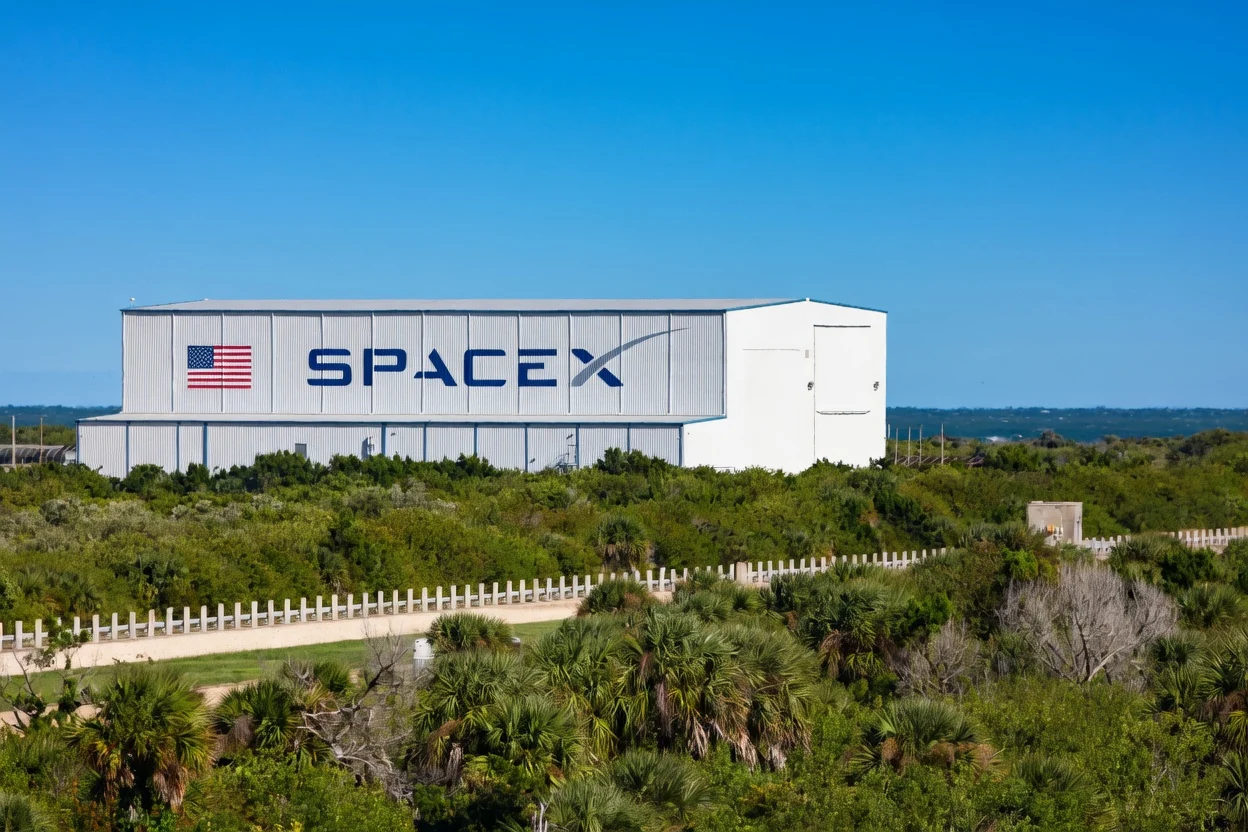
SpaceX Starts Fitting Out Its Texas Chip-Packaging Plant
The Bastrop site is gearing up to package Starlink RF chips in-house, a step toward Musk's bigger plan to expand SpaceX's semiconductor footprint in Texas. SpaceX is fitting out a chip-packaging facility in Bastrop, Texas, aiming to start packaging Starlink radio-frequency chips before the end of 2026. What does this mean? Chip packaging turns delicate silicon into durable components, and it's become a choke point as demand for specialized hardware rises. By doing more of this work in Bastrop, SpaceX can rely less on outside providers and gain tighter control over cost, quality, and timing for Starlink gear. The company still targets production by year-end 2026, though reports suggest the schedule has slipped and SpaceX hasn't commented. The project is part of a broader Texas push: the state says the Bastrop ope..