News & Updates
The latest news and updates from companies in the WLTH portfolio.
Wall Street CEOs reportedly "summoned" to DC by Scott Bessent and Jay Powell to discuss AI cyber risks after Anthropic's warning
Top officials are worried about left-tail cybersecurity risks from new AI tools, and making sure the most important American bankers are taking the threat seriously. The most powerful Americans in finance held an "urgent meeting" this week to discuss cybersecurity risks linked to new, powerful AI models -- in particular, Anthropic's Mythos. Bloomberg reports that US Treasury Secretary Scott Bessent and Federal Reserve Chair Jerome Powell "summoned" the leaders of the biggest US banks -- all of which are considered systemically important -- to DC on Tuesday "to make sure banks are aware of possible future risks " and ensure that they "are taking precautions to defend their systems," citing people familiar with the matter. On Wednesday, Anthropic announced that it was releasing a version of its Mythos model to a select group of companies in an initiative called "Project Glasswing." The hope is that these firms will get a head start on shoring up their defenses before malicious actors have the chance to strike with these new tools. "AI models have reached a level of coding capability where they can surpass all but the most skilled humans at finding and exploiting software vulnerabilities," warned Anthropic, which said it's "ound thousands of high-severity vulnerabilities, including some in every major operating system and web browser." Separately, OpenAI is also reportedly concerned that an upcoming cybersecurity tool is too dangerous to be released publicly, and has similarly allowed a small group of its partners to test it out. The CEOs of Citi, Morgan Stanley, Bank of America, Wells Fargo, and Goldman Sachs were said to be in attendance for this meeting at the Treasury Department. Jamie Dimon, CEO of JPMorgan (whose bank is a part of Project Glasswing), couldn't make it. Throughout 2026, we've discussed how the AI theme has become much more zero sum in the stock market. For instance, AI demand has been helping memory and optics stocks, but fears of disruption have pushed software stocks down to multi-year lows. The high degree of attention being paid to AI-fueled cybersecurity risks by top officials, with the same being demanded from their private-sector counterparts, suggests that a similar lens may be appropriate to judge AI's impact on the economy. That is, the potential for productivity benefits may need to be balanced against left-tail risks, particularly as agents are scaled and empowered to execute increasing workloads across companies. That little sigh of relief you hear over in the corner is the private credit industry, grateful that these cybersecurity concerns will mean there's one less question asked about their own travails during banks' quarterly conference calls when earnings season kicks off next week.

Perplexity says it will offer $1M funding if you can build a $1B startup using AI
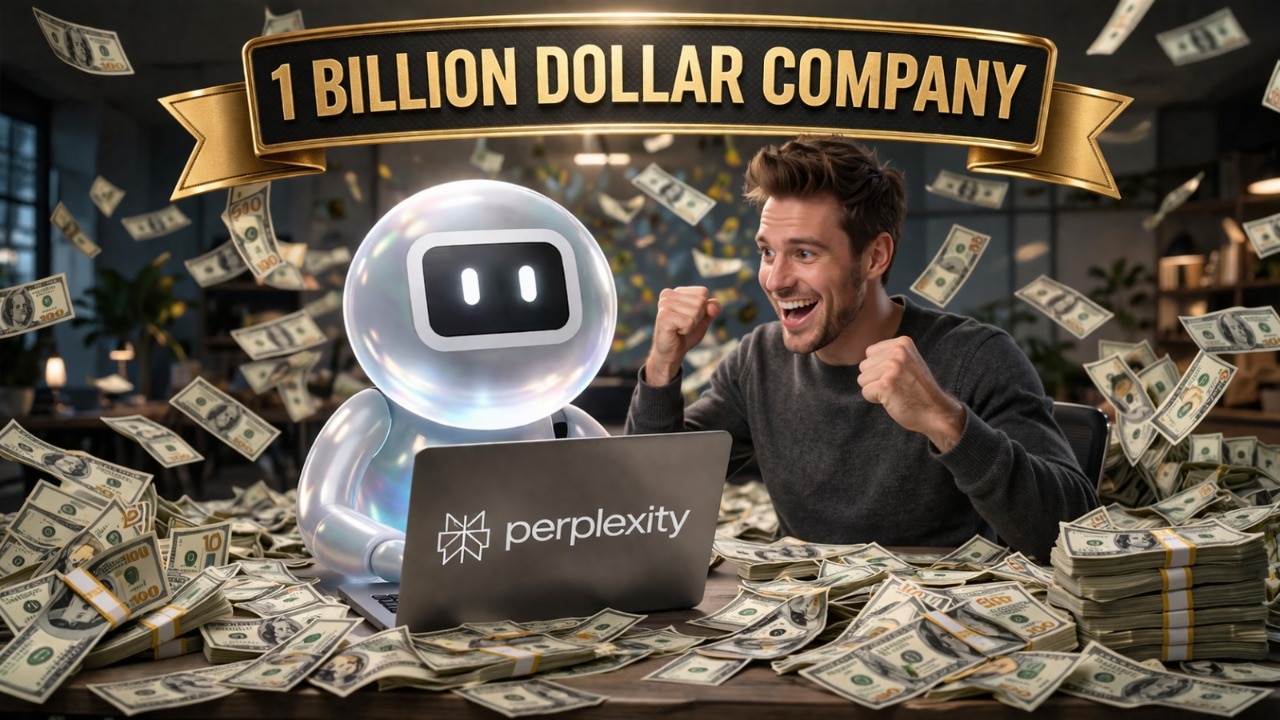
Perplexity will give you $1 million if you build a company with Perplexity Computer. (Representational image made with AI) AI is making it easier to do almost everything. Be it assignments, homework, coding, and apparently, starting companies. AI startup Perplexity is so confident that its AI agent, Perplexity Computer, can help build you a company, that it is offering to invest a million dollars (roughly over Rs 9 crore) if you succeed. On X, Perplexity announced a competition called the "Billion Dollar Build." The pitch is quite simple - create a company using Perplexity Computer that can reach a valuation of $1 billion. Here is all you need to know. The Billion Dollar Build is a competition open to Perplexity users. In this challenge, you must use Perplexity Computer as the primary tool to design, validate, and build a company with a "credible path" to a $1 billion valuation. Perplexity Computer is a multi-agent AI platform that can do tasks on your behalf. It works like an AI agent that can run multiple AI models, be it from Anthropic, OpenAI, or Google, based on the requirement. But to achieve this feat, you only have a period of 8 weeks. The company's official website states that the entire process must be completed within this period, be it shipping the product or onboarding users. The Perplexity website suggests startup such as personal relocation agents or a localisation platform for apps that can translate and localise a service for different regions. After 8 weeks, Perplexity will pick up to 3 winners who will get $1 million in seed funding from the Perplexity Fund and up to $1 million in Perplexity Computer credits to help build and scale their businesses. Do note people have created billion-dollar companies with AI in the past. US entrepreneur, Matthew Gallagher, used AI tools like Claude and ChatGPT to create a company called Medvi, which has a revenue of over $2 billion. To enter, participants must register starting April 14, 2026 with an active Perplexity Max or Pro subscription as of April 13. They must submit a product package including a video, application, and traction data such as users, revenue, or growth by June 2, 2026. The top ten finalists will present their products live on June 9, with a five-minute pitch followed by a five-minute question-and-answer session with judges. Winners will be announced on June 10, after which investment discussions will commence. Do note that only US residents over the age of 18 are eligible to participate. Though you may participate individually or in a team of 2.
Treasury Secretary Bessent and Fed Chair Powell meet bank CEOs on Anthropic AI risks By Investing.com
Investing.com -- U.S. Treasury Secretary Scott Bessent and Federal Reserve Chair Jerome Powell met with leaders of major American banks earlier this week to discuss cybersecurity risks posed by Anthropic's latest AI model, several reports showed on Thursday. The meeting included executives from Bank of America, Citigroup, Goldman Sachs, Morgan Stanley and Wells Fargo, who were already in Washington for a banking lobby group meeting. JPMorgan Chase CEO Jamie Dimon was invited but could not attend, reports from Bloomberg, the Financial Times, and Reuters showed. The news was first reported by Bloomberg on Thursday evening. The gathering centered on concerns about Anthropic's Claude Mythos Preview model and its advanced ability to detect cybersecurity vulnerabilities that could be exploited by bad actors. Anthropic released the model to a select group of partners earlier this week, including Amazon, Apple and Microsoft, to give them a head start on securing vulnerabilities. This marked the first time Anthropic had limited the launch of a new model. Antropic described Mythos as a general purpose model with capabilities extending beyond cybersecurity. This article was generated with the support of AI and reviewed by an editor. For more information see our T&C.
Ceasefire calm or chaos? 50 stocks that brokerages expect to rally after Iran truce
A two-week US-Iran ceasefire has sparked a relief rally in Indian equities, though its sustainability is questioned as oil prices rebound. Brokerages identify around 50 stocks across sectors, favoring those with strong fundamentals and domestic demand exposure, as markets shift to selective positioning amid ongoing geopolitical uncertainty. The announcement of a two-week ceasefire between the US and Iran has triggered a relief rally in Indian equities, but the recovery remains fragile as doubts persist over how long the truce will hold. Markets had earlier reacted sharply to the conflict, with rising crude prices fuelling inflation concerns, weakening risk appetite and dragging broader indices lower. The initial optimism after the ceasefire has already shown signs of strain, with oil prices rebounding and safe-haven demand holding firm, indicating that investors are not fully convinced the geopolitical risk has passed. Brokerages say the current environment reflects a shift from panic-driven selling to selective positioning. While the immediate escalation risk has eased, volatility tied to headlines is expected to continue, especially given the uncertainty around shipping flows through the Strait of Hormuz and the possibility of renewed tensions. Nomura said markets are now pricing in rapid swings between escalation and de-escalation scenarios, and advised maintaining balanced portfolios amid these binary risks. Against this backdrop, analysts have identified about 50 stocks across sectors as potential bets for the next phase of the market. The recent correction, combined with improving earnings visibility, has created opportunities in companies with strong balance sheets, pricing power and domestic demand exposure. Kotak Equities highlighted names such as DLF, Godrej Consumer, Info Edge, Aadhar Housing Finance, Eureka Forbes, Jubilant FoodWorks, Coforge, Dixon Technologies and Vishal Mega Mart as beneficiaries of a recovery in consumption and urban demand, while Embassy REIT offers stability through yield-backed returns. Motilal Oswal's picks include large, well-established names such as Bharti Airtel, SBI, ICICI Bank, M&M, Titan, Infosys, IndiGo and BEL, alongside broader plays like Tata Steel, TVS Motor, Indian Hotels, AU Small Finance Bank, Delhivery and Premier Energies. The brokerage sees the recent correction as a reset in valuations rather than a deterioration in long-term fundamentals. Elara Securities pointed to a mix of largecaps including HDFC Bank, L&T, Maruti Suzuki, Axis Bank and Polycab, along with midcaps such as United Spirits, GMR Airports, UNO Minda and IDFC First Bank. Smaller names like Gland Pharma, BEML and Safari Industries also feature in its recovery basket. Axis Securities and Emkay Global echoed similar themes, favouring financials, consumption and industrial cyclicals such as Bajaj Finance, Kotak Mahindra Bank, Avenue Supermarts, Nestle India, Kalpataru Projects and Ashok Leyland. UBS, meanwhile, identified a blend of defensives and commodity-linked names including Reliance Industries, NTPC, Sun Pharma and Adani Ports as relatively better placed in a volatile oil environment. The broader takeaway is that while the ceasefire has reduced immediate downside risks, markets are still trading with a geopolitical risk premium. Oil remains the key variable, with its trajectory influencing inflation, interest rates and corporate margins. For now, brokerages are positioning for a recovery that is conditional rather than assured. The next leg of the market will depend not just on the durability of the ceasefire, but also on how quickly global risk sentiment stabilises. Until then, stock-specific opportunities are likely to dominate over broad-based rallies. (Disclaimer: Recommendations, suggestions, views and opinions given by the experts are their own. These do not represent the views of Economic Times) (You can now subscribe to our ETMarkets WhatsApp channel)

AI Revolution: Is Perplexity Redefining the Future of Search and Software?
It aligns revenue with actual usage and reflects higher AI compute costs. The content, including but not limited to any articles, news, quotes, information, data, text, reports, ratings, opinions, images, photos, graphics, graphs, charts, animations and video (Content) is a service of Kalkine Media Pty Ltd (Kalkine Media, we or us), ACN 629 651 672 and is available for personal and non-commercial use only. The principal purpose of the Content is to educate and inform. The Content does not contain or imply any recommendation or opinion intended to influence your financial decisions and must not be relied upon by you as such. Some of the Content on this website may be sponsored/non-sponsored, as applicable, but is NOT a solicitation or recommendation to buy, sell or hold the stocks of the company(s) or engage in any investment activity under discussion. Kalkine Media is neither licensed nor qualified to provide investment advice through this platform. Users should make their own enquiries about any investments and Kalkine Media strongly suggests the users to seek advice from a financial adviser, stockbroker or other professional (including taxation and legal advice), as necessary. Kalkine Media hereby disclaims any and all the liabilities to any user for any direct, indirect, implied, punitive, special, incidental or other consequential damages arising from any use of the Content on this website, which is provided without warranties. The views expressed in the Content by the guests, if any, are their own and do not necessarily represent the views or opinions of Kalkine Media. Some of the images/music that may be used on this website are copyright to their respective owner(s). Kalkine Media does not claim ownership of any of the pictures displayed/music used on this website unless stated otherwise. The images/music that may be used on this website are taken from various sources on the internet, including paid subscriptions or are believed to be in public domain. We have used reasonable efforts to accredit the source wherever it was indicated as or found to be necessary.

SpaceX posted nearly $5 billion loss in 2025, The Information reports
Elon Musk's IPO-bound SpaceX posted a loss of nearly $5 billion in 2025 on revenue of more than $18.5 billion, The Information reported on Thursday, citing sources. Reuters could not immediately verify the report. SpaceX did not immediately respond to a Reuters' request for comment outside regular business hours. The loss includes Musk's artificial intelligence startup xAI, which SpaceX acquired in February, according to the report. SpaceX is the world's most active launch company and has set out ambitions to make interplanetary travel viable. It has also outlined plans to deploy artificial intelligence data centres in orbit. The company, which confidentially filed for a US listing in March, generated about $8 billion in profit last year on revenue of $15 billion to $16 billion, Reuters reported in January. SpaceX is seeking a public listing at a potential valuation of more than $1.75 trillion.

Anthropic Explores Custom AI Chip Development, Looks To Enter Hardware Segment Just Like OpenAI
AI lab Anthropic is exploring the possibility of designing its own chips, as the company responds to ongoing shortages of AI processors needed for advanced system development. The plans are in early stages and the company may still decide to only buy AI chips and not design any. Reuters reports that the company has yet to commit to a specific design or put together a dedicated team to work on the project, indicating the exploration remains preliminary. Revenue surge drives hardware needs The consideration comes as demand for Anthropic's AI model Claude has accelerated in 2026, with the startup's run-rate revenue now surpassing $30 billion, up from about $9 billion at the end of 2025. This dramatic growth has intensified the company's need for reliable chip access. Anthropic currently uses a range of chips, including tensor processing units (TPUs) designed by Alphabet's Google and Amazon's chips to develop and run its AI software and chatbot Claude. The company recently signed a long-term deal with Google and Broadcom, building on its $50 billion commitment to US computing infrastructure. Industry-wide trend toward custom silicon Anthropic's discussions mirror similar efforts underway at large tech companies that are seeking to design their own AI chips, including Meta and OpenAI. The move toward proprietary hardware reflects growing competition for scarce AI processing resources. However, the financial barriers remain substantial. Designing an advanced AI chip can cost roughly half a billion dollars, requiring skilled engineers and extensive quality assurance during manufacturing. This significant investment will factor heavily into Anthropic's ultimate decision on whether to proceed with custom chip development, joining rivals like OpenAI in the race toward hardware independence.
Anthropic weighs building its own AI chips: Report
Artificial intelligence lab Anthropic is exploring the possibility of designing its own chips, three sources said, as the company and its rivals respond to a shortage of AI chips needed to power and develop more advanced AI systems. The plans are in early stages and the company may still decide to only buy AI chips and not design any, according to two people with knowledge of the matter and one person briefed on Anthropic's plans. The company has yet to commit to a specific design or put together a dedicated team to work on the project, one of the sources said. A spokesperson for the San Francisco-based company declined to comment on the article. Demand for its AI model Claude has accelerated in 2026, with the startup's run-rate revenue now surpassing $30 billion, up from about $9 billion at the end of 2025, Anthropic said earlier this week. Anthropic uses a range of chips, including tensor processing units (TPUs) designed by Alphabet's Google and Amazon's chips to develop and run its AI software and chatbot Claude. Earlier this week, Anthropic signed a long-term deal with Google and Broadcom, which helps design the TPUs. That deal builds on the company's commitment to invest $50 billion in strengthening U.S. computing infrastructure. Anthropic's discussions mirror similar efforts underway at large tech companies that are seeking to design their own AI chips, including Meta and OpenAI. Story continues below this ad Designing an advanced AI chip can cost roughly half a billion dollars, according to industry sources, as companies need to employ skilled engineers and spend to make sure the manufacturing process has no defects.

Treasury Secretary Bessent and Fed Chair Powell meet bank CEOs on Anthropic AI risks By Investing.com
Investing.com -- U.S. Treasury Secretary Scott Bessent and Federal Reserve Chair Jerome Powell met with leaders of major American banks earlier this week to discuss cybersecurity risks posed by Anthropic's latest AI model, several reports showed on Thursday. The meeting included executives from Bank of America, Citigroup, Goldman Sachs, Morgan Stanley and Wells Fargo, who were already in Washington for a banking lobby group meeting. JPMorgan Chase CEO Jamie Dimon was invited but could not attend, reports from Bloomberg, the Financial Times, and Reuters showed. The news was first reported by Bloomberg on Thursday evening. The gathering centered on concerns about Anthropic's Claude Mythos Preview model and its advanced ability to detect cybersecurity vulnerabilities that could be exploited by bad actors. Anthropic released the model to a select group of partners earlier this week, including Amazon, Apple and Microsoft, to give them a head start on securing vulnerabilities. This marked the first time Anthropic had limited the launch of a new model. Antropic described Mythos as a general purpose model with capabilities extending beyond cybersecurity. This article was generated with the support of AI and reviewed by an editor. For more information see our T&C.
xAI CFO Anthony Armstrong leaves company: Report
Anthony Armstrong, named xAI's CFO in October, has departed the company as part of a broader wave of senior exits, the Information reported on Thursday, citing two people familiar with the matter. Armstrong, who previously worked as a Morgan Stanley banker and advised Elon Musk during the acquisition of social media platform X, was reporting to Bret Johnsen, the Information had reported in February.
Anthropic considers building its own AI chips
Anthropic, a leading artificial intelligence (AI) lab, is said to be considering the development of its own AI chips. The move comes as the company and others in the industry face a shortage of these critical components. The plans are still in their early stages and there's no guarantee that Anthropic will actually go through with them. Current chip usage and partnerships Anthropic currently uses a variety of chips, including Google's tensor processing units (TPUs) and Amazon's chips, to develop its AI software and chatbot, Claude. The company recently signed a long-term deal with Google and Broadcom for TPUs. Anthropic has seen a massive surge in demand for its AI tools. The company's run-rate revenue has now crossed $30 billion, up from about $9 billion at the end of 2025.
[News] Amazon Weighs In-House Chip Sales as Unit Set to Exceed $20B Annually; Anthropic Explores Custom Silicon
Major tech companies are stepping up efforts to develop in-house chips. Amazon is reportedly exploring the possibility of selling its chips to external customers, while Anthropic is said to be planning its own chip development. According to Bloomberg, Amazon is weighing the option of offering its chips to other companies. Chief Executive Officer Andy Jassy noted that demand remains strong, adding that the company could eventually sell entire racks of its chips to third parties. As noted in the report, Jassy said Amazon's in-house silicon business is on track to generate more than $20 billion in annual revenue. Looking beyond its current scale, the business could be significantly larger under a different model. As the report notes, Jassy added that if the chip unit operated as a standalone business supplying semiconductors to Amazon Web Services customers and other third parties, it could achieve an annual run rate of around $50 billion. Amazon currently leases this hardware to customers through Amazon Web Services, its cloud division. However, rising demand for AI training processors has tightened supply, prompting companies to seek alternatives to NVIDIA's offerings, the report adds. According to TrendForce, as CSPs such as Google and Amazon ramp up in-house chip development, ASIC-based AI servers are forecast to account for 27.8% of total AI server shipments in 2026, rising to nearly 40% by 2030. Anthropic Reportedly Explores Chip Design as AI Demand Accelerates Alongside Amazon's push to expand its AI chip business, Anthropic is also reportedly considering developing its own chips. According to Reuters, sources say the company is exploring in-house chip design as it responds to a shortage of AI chips needed to support and advance more sophisticated AI systems. Still, the company may ultimately choose to rely solely on purchasing AI chips rather than developing its own, as it has yet to commit to a specific design or assemble a dedicated team for the effort. Anthropic said it trains and runs Claude using a mix of AI hardware, including Trainium from Amazon Web Services, Google TPUs, and NVIDIA GPUs, Reuters notes. The push comes as demand for its AI products continues to surge. The report notes that demand for Claude has accelerated in 2026, with Anthropic's annualized revenue now exceeding $30 billion, up from around $9 billion at the end of 2025, the company said earlier this week. Meanwhile, according to Reuters, Broadcom has signed a deal with Anthropic to provide the startup with access to around 3.5 gigawatts of AI computing capacity using Google's AI processors starting in 2027. This comes as Broadcom has also entered into a long-term agreement with Google to develop and supply future generations of custom AI chips and related components for the company's next-generation AI racks through 2031, the report adds.
![[News] Amazon Weighs In-House Chip Sales as Unit Set to Exceed $20B Annually; Anthropic Explores Custom Silicon](https://img.trendforce.com/blog/wp-content/uploads/2026/04/10112317/AWS-Trainium-624x422.jpg)
Scott Bessent, Jerome Powell warn bank CEOs about Anthropic Mythos risks - CNBC TV18
US Treasury Secretary Scott Bessent and Federal Reserve Chair Jerome Powell convened an urgent meeting with bank CEOs this week to warn of cyber risks posed by Anthropic's latest AI model, two sources familiar with the matter said on Thursday. Anthropic launched the powerful Mythos model earlier this week but stopped short of a broad release, citing concerns it could expose previously unknown cybersecurity vulnerabilities. The company has said the model is capable of identifying and exploiting weaknesses across "every major operating system and every major web browser". Last week, Anthropic said it was in ongoing discussions with US government officials about the model's "offensive and defensive cyber capabilities." A third source close to the matter reiterated Anthropic's outreach, saying the company proactively briefed senior US government officials and key industry stakeholders on Mythos's capabilities ahead of its release. The Treasury-hosted meeting in Washington on Tuesday was aimed at ensuring banks are aware of the risks posed by Mythos and similar models and are taking steps to defend their systems, one of the sources said. Also Read: Royal Enfield just launched a new motorcycle, but Nomura wants some refinement Invitations were sent while most CEOs of the largest US banks were already in Washington to attend other meetings, one of the sources said. Access to Mythos will be limited to about 40 technology companies, including Microsoft and Google, the startup has said. Bloomberg News, which first reported the matter on Thursday, said the CEOs of Citigroup, Morgan Stanley, Bank of America, Wells Fargo and Goldman Sachs were present. JPMorgan CEO Jamie Dimon was unable to join, one of the sources told Reuters. Goldman Sachs and the Federal Reserve declined to comment. The Treasury, lenders and Anthropic did not immediately respond to Reuters' requests for comment.

Treasury Secretary Bessent and Fed Chair Powell meet bank CEOs on Anthropic AI risks By Investing.com
Investing.com -- U.S. Treasury Secretary Scott Bessent and Federal Reserve Chair Jerome Powell met with leaders of major American banks earlier this week to discuss cybersecurity risks posed by Anthropic's latest AI model, several reports showed on Thursday. The meeting included executives from Bank of America, Citigroup, Goldman Sachs, Morgan Stanley and Wells Fargo, who were already in Washington for a banking lobby group meeting. JPMorgan Chase CEO Jamie Dimon was invited but could not attend, reports from Bloomberg, the Financial Times, and Reuters showed. The news was first reported by Bloomberg on Thursday evening. The gathering centered on concerns about Anthropic's Claude Mythos Preview model and its advanced ability to detect cybersecurity vulnerabilities that could be exploited by bad actors. Anthropic released the model to a select group of partners earlier this week, including Amazon, Apple and Microsoft, to give them a head start on securing vulnerabilities. This marked the first time Anthropic had limited the launch of a new model. Antropic described Mythos as a general purpose model with capabilities extending beyond cybersecurity. This article was generated with the support of AI and reviewed by an editor. For more information see our T&C.
Anthropic weighs building its own AI chips: Reuters
Artificial intelligence lab Anthropic is exploring the possibility of designing its own chips, three sources said, as the company and its rivals respond to a shortage of AI chips needed to power and develop more advanced AI systems. Artificial intelligence lab Anthropic is exploring the possibility of designing its own chips, three sources said, as the company and its rivals respond to a shortage of AI chips needed to power and develop more advanced AI systems. The plans are in early stages and the company may still decide to only buy AI chips and not design any, according to two people with knowledge of the matter and one person briefed on Anthropic's plans. The company has yet to commit to a specific design or put together a dedicated team to work on the project, one of the sources said. A spokesperson for the San Francisco-based company declined to comment on the article. Demand for its AI model Claude has accelerated in 2026, with the startup's run-rate revenue now surpassing $30 billion, up from about $9 billion at the end of 2025, Anthropic said earlier this week. Anthropic uses a range of chips, including tensor processing units (TPUs) designed by Alphabet's Google and Amazon's chips to develop and run its AI software and chatbot Claude. Earlier this week, Anthropic signed a long-term deal with Google and Broadcom which helps design the TPUs. That deal builds on the company's commitment to invest $50 billion in strengthening U.S. computing infrastructure. Anthropic's discussions mirror similar efforts underway at large tech companies that are seeking to design their own AI chips, including Meta and OpenAI. Designing an advanced AI chip can cost roughly half a billion dollars, according to industry sources, as companies need to employ skilled engineers and spend to make sure the manufacturing process has no defects.

Treasury Secretary Bessent and Fed Chair Powell meet bank CEOs on Anthropic AI risks By Investing.com
Investing.com -- U.S. Treasury Secretary Scott Bessent and Federal Reserve Chair Jerome Powell met with leaders of major American banks earlier this week to discuss cybersecurity risks posed by Anthropic's latest AI model, several reports showed on Thursday. The meeting included executives from Bank of America, Citigroup, Goldman Sachs, Morgan Stanley and Wells Fargo, who were already in Washington for a banking lobby group meeting. JPMorgan Chase CEO Jamie Dimon was invited but could not attend, reports from Bloomberg, the Financial Times, and Reuters showed. The news was first reported by Bloomberg on Thursday evening. The gathering centered on concerns about Anthropic's Claude Mythos Preview model and its advanced ability to detect cybersecurity vulnerabilities that could be exploited by bad actors. Anthropic released the model to a select group of partners earlier this week, including Amazon, Apple and Microsoft, to give them a head start on securing vulnerabilities. This marked the first time Anthropic had limited the launch of a new model. Antropic described Mythos as a general purpose model with capabilities extending beyond cybersecurity. This article was generated with the support of AI and reviewed by an editor. For more information see our T&C.
Why Anthropic Might Build Its Own AI Chips And What It Means
Artificial intelligence firm Anthropic is weighing plans to design its own AI chips, signalling a potential strategic shift as the global race for computing power intensifies. According to a Reuters report, the San Francisco-based company is in early discussions about developing in-house semiconductor capabilities, although no final decision has been made yet. The move comes at a time when demand for high-performance chips has surged, driven by the rapid expansion of advanced AI systems and generative models. Sources familiar with the matter told Reuters that Anthropic is still in the exploratory phase and may ultimately choose not to pursue chip design. The company has not yet finalised a specific architecture or assembled a dedicated team for the project. This suggests that while the idea is under consideration, it remains a long-term strategic option rather than an immediate operational shift. The discussions reflect a broader trend across the artificial intelligence industry, where access to advanced computing infrastructure has become a critical bottleneck. Anthropic's flagship AI model, Claude, has seen a sharp rise in demand. The company recently indicated that its annualised revenue run-rate has crossed $30 billion in 2026, a significant jump from approximately $9 billion at the end of 2025, highlighting the rapid pace of growth in the sector. Such expansion requires massive computational resources, placing pressure on existing chip supply chains. At present, Anthropic depends on a mix of third-party chips to train and run its AI systems. These include tensor processing units (TPUs) developed by Google, as well as chips supplied by Amazon. Earlier this week, the company entered into a long-term agreement with Google and Broadcom, which are involved in designing and supplying TPUs. The partnership is part of a broader push to strengthen computing infrastructure, with commitments running into tens of billions of dollars. This reliance underscores the strategic importance of hardware partnerships, even as companies consider building internal capabilities. Anthropic is not alone in exploring this path. Several major technology companies, including Meta and OpenAI, are evaluating or actively developing their own AI chips to reduce dependence on external suppliers and optimise performance for specific workloads. Custom-designed chips can offer advantages such as improved efficiency, lower long-term costs and better alignment with proprietary AI models. However, the process is complex, resource-intensive and fraught with technical challenges. Designing advanced AI chips is an expensive undertaking. Industry estimates suggest that developing a single high-end chip can cost around $500 million. The process requires highly specialised engineering talent, extensive testing and coordination with semiconductor manufacturers to ensure defect-free production. These barriers mean that only well-funded companies with long-term strategic intent are able to pursue such initiatives. The exploration of in-house chip development highlights a key shift in the AI industry: control over computing infrastructure is becoming as important as advances in software. As competition intensifies and demand for AI capabilities continues to grow, companies are increasingly looking to secure their supply chains and build vertically integrated ecosystems.

AI as CFO? Perplexity Computer can manage your finances if you give it access to your bank account
Perplexity Computer can now act as your CFO and even go through your loans if you give access to it. (Representational image made with AI) Perplexity is giving its AI agent, Perplexity Computer, the capability to not just do the work for you, but even manage your finances. The Aravind Srinivas-led startup has announced that Computer now comes with deeper integration with fintech platform Plaid. Now, the AI agent can access your bank account data, and track your loans. Perplexity CEO Aravind Srinivas claimed that Perplexity Computer could now act as your own chief financial officer. He wrote on X, "Personal CFO." But how does this work? Here is everything you need to know. Perplexity Computer is an agentic AI that can do tasks on your behalf, similar to OpenClaw, but with a key difference. While OpenClaw works locally on any device, Perplexity Computer works entirely on the cloud, something that the company claims is better when it comes to cybersecurity. The Computer can understand the tasks it receives and then delegate it to different AI models. That is, it may use Anthropic's Claude for reasoning and coding tasks, Google's Gemini for research, and OpenAI models for long-context understanding. The new feature allows users to link their savings, credit card and loan accounts to Perplexity Computer through Plaid's network. Plaid is said to support over 12,000 financial institutions. The AI agent can then analyse your spending, liabilities, and even estimate your net worth in a single dashboard. You can also ask the AI to build a retirement dashboard based on your finances, or set up plans for settling debt. Previously, you could only link your portfolio to Perplexity Computer, which would allow the AI to give information related to the stock market. The expanded integration now allows Perplexity Computer to cover virtually every aspect of your finances. All users can link accounts via Plaid and access the portfolio page. Though only Perplexity Pro and Max subscribers get access to "advanced" Computer workflows. The company states that it also plans to bring crypto wallets and real estate to the dashboard in the future.

Elon Musk's xAI sues Colorado over state's new AI law
The lawsuit cites White House executive orders criticizing state-by-state AI regulation and federal warnings that patchwork state laws could undermine US AI leadership and national security. xAI filed a lawsuit on Thursday seeking to block Colorado from enforcing a new law regulating artificial intelligence systems, escalating a fight over whether oversight should be handled by states or by Washington. The lawsuit, filed in US District Court in Colorado, challenges Senate Bill 24-205, which is scheduled to take effect on June 30. The law imposes disclosure and risk-mitigation requirements on developers of so‑called "high‑risk" AI systems used in decisions involving employment, housing, education, health care and financial services. Elon Musk's artificial intelligence firm said the law violates the First Amendment by restricting how developers design AI systems and compelling speech on contentious public issues. The company says the law would force it to alter its flagship AI model, Grok, to reflect the state's views on diversity and discrimination rather than being objective. "Government regulation that is applied at the state level in a patchwork across the country can have the effect to hamper innovation and deter competition in an open market," xAI said. xAI, which recently merged with SpaceX, is seeking a court declaration that the law is unconstitutional and an injunction blocking its enforcement. The lawsuit also cites White House executive orders criticizing state-by-state AI regulation and federal warnings that patchwork state laws could undermine US AI leadership and national security. The Colorado Attorney General's Office declined to comment on the litigation. While some tech companies and Republican lawmakers want states to leave AI regulation to Washington, California's attorney general has warned against relying solely on Congress, pointing to years of delays on data privacy and technology laws. President Donald Trump's AI advisers favor federal oversight through a streamlined national framework instead of a patchwork of state-level rules.
)
Anthropic weighs building its own AI chips, sources say
Artificial intelligence lab Anthropic is exploring the possibility of designing its own chips, three sources said, as the company and its rivals respond to a shortage of AI chips needed to power and develop more advanced AI systems. The plans are in early stages and the company may still decide to only buy AI chips and not design any, according to two people with knowledge of the matter and one person briefed on Anthropic's plans. The company has yet to commit to a specific design or put together a dedicated team to work on the project, one of the sources said. A spokesperson for the San Francisco-based company declined to comment on the article. Demand for its AI model Claude has accelerated in 2026, with the startup's run-rate revenue now surpassing $30 billion, up from about $9 billion at the end of 2025, Anthropic said earlier this week. Anthropic uses a range of chips, including tensor processing units (TPUs) designed by Alphabet's Google and Amazon's chips to develop and run its AI software and chatbot Claude. Earlier this week, Anthropic signed a long-term deal with Google and Broadcom, which helps design the TPUs. That deal builds on the company's commitment to invest $50 billion in strengthening U.S. computing infrastructure. Anthropic's discussions mirror similar efforts underway at large tech companies that are seeking to design their own AI chips, including Meta and OpenAI. Designing an advanced AI chip can cost roughly half a billion dollars, according to industry sources, as companies need to employ skilled engineers and spend to make sure the manufacturing process has no defects.
)