News & Updates
The latest news and updates from companies in the WLTH portfolio.
Exclusive-Anthropic weighs building it own AI chips, sources say
SAN FRANCISCO, April 9 : Artificial intelligence lab Anthropic is exploring the possibility of designing its own chips, three sources said, as the company and its rivals respond to a shortage of AI chips needed to power and develop more advanced AI systems. The plans are in early stages and the company may still decide to only buy AI chips and not design any, according to two people with knowledge of the matter and one person briefed on Anthropic's plans. The company has yet to commit to a specific design or put together a dedicated team to work on the project, one of the sources said. A spokesperson for the San Francisco-based company declined to comment on the article. Demand for its AI model Claude has accelerated in 2026, with the startup's run-rate revenue now surpassing $30 billion, up from about $9 billion at the end of 2025, Anthropic said earlier this week. Anthropic uses a range of chips, including tensor processing units (TPUs) designed by Alphabet's Google and Amazon's chips to develop and run its AI software and chatbot Claude. Earlier this week, Anthropic signed a long-term deal with Google and Broadcom, which helps design the TPUs. That deal builds on the company's commitment to invest $50 billion in strengthening U.S. computing infrastructure. Anthropic's discussions mirror similar efforts underway at large tech companies that are seeking to design their own AI chips, including Meta and OpenAI. Designing an advanced AI chip can cost roughly half a billion dollars, according to industry sources, as companies need to employ skilled engineers and spend to make sure the manufacturing process has no defects.

Anthropic's New Agents Product Pressures a Crowded Startup Category | PYMNTS.com
By completing this form, you agree to receive marketing communications from PYMNTS and to the sharing of your information with our sponsor, if applicable, in accordance with our Privacy Policy and Terms and Conditions. That's proven harder than expected. Enterprises experimenting with agents have run into a familiar set of challenges, from maintaining context across sessions to coordinating multistep workflows, integrating with internal systems like CRMs and databases and staying within strict security and compliance guardrails. Most companies have not built that infrastructure themselves Instead, they have turned to a growing category of startups offering orchestration layers, workflow engines, and agent management tools, a category Claude Managed Agents is now taking on more directly. The offering is now in public beta. Early customers Notion, Rakuten and Asana have used the platform to deploy agents across functions including project management, HR, finance and software development. The shift reflects a broader transition in how AI systems are deployed internally. Early adoption centered on using large language models for chat interfaces, copilots and isolated automation tasks. The next phase is execution, where AI systems are expected to complete end-to-end workflows with minimal human input. That shift also introduces complexity. A single task, such as processing an insurance claim or handling a customer support escalation, can require multiple steps, decision points and system integrations. Agents must retrieve and update data, call external tools and adapt based on intermediate results. Maintaining consistency across those steps, especially over long-running tasks, has been one of the hardest problems to solve. Startups have emerged to address this gap. Many offer frameworks that allow developers to define workflows, manage memory and integrate models with enterprise systems. Others focus on reliability, adding guardrails, monitoring and retry mechanisms to reduce failure rates. Anthropic's approach is to bundle those capabilities into its own platform. Claude Managed Agents lets enterprises define tasks, connect tools and deploy agents without building a separate orchestration layer. The result: less need to stitch together multiple vendors or build custom infrastructure, while shifting more of the application logic closer to the model itself. The agent infrastructure market has been one of the busiest corners of enterprise AI over the past two years. Agentic AI startups attracted $2.8 billion in venture funding in the first half of 2025 alone. For example, Sierra, which builds customer service AI agents and was co-founded by former Salesforce co-CEO Bret Taylor and ex-Google VP Clay Bavor, raised $350 million at a $10 billion valuation in September 2025. The company reached $100 million in annual recurring revenue in under two years. As recently as last week, Sycamore raised a $65 million seed round led by Coatue and Lightspeed to build what its founder described as a full agentic orchestration layer for enterprise deployments. For enterprises, the calculus shifts from assembling multiple vendors to buying the capability in one place. For startups selling the missing pieces, that's a harder position to defend. The commercial logic is straightforward. Selling model access generates revenue, but it does not make Anthropic hard to replace. A managed platform does. Once a company's agents run on Anthropic's infrastructure, the workflows and operational setup become embedded in how the business runs, raising the cost of switching, according to Startup Fortune. Anthropic crossed a $30 billion annualized revenue run rate this month, up from roughly $9 billion at year-end 2025, driven largely by enterprise demand as reported by PYMNTS. Claude Managed Agents extends that relationship further up the stack, from model provider to execution environment. It's a familiar pattern in enterprise technology. Cloud providers spent a decade absorbing functions like database management, deployment pipelines and monitoring that had been handled by separate vendors. The companies that built those middle-layer tools either differentiated or got folded into the platform. AI infrastructure is following the same arc.

How Black Forest Labs, a 70-person startup based in Germany, became a top competitor in AI image generation; sources: it recently declined to partner with xAI
Hacker News: Study found that young adults have grown less hopeful and more angry about AIA gap in understanding AI is growing, as casual users cite flaws in old free models while power users point to new models' staggering gains in technical domains -- Judging by my tl there is a growing gap in understanding of AI capability. The first issue I think is around recency and tier of use. I think a lot of people tried the free tier of ChatGPT somewhere last year and allowed it to inform their views on AI a little too much. This is

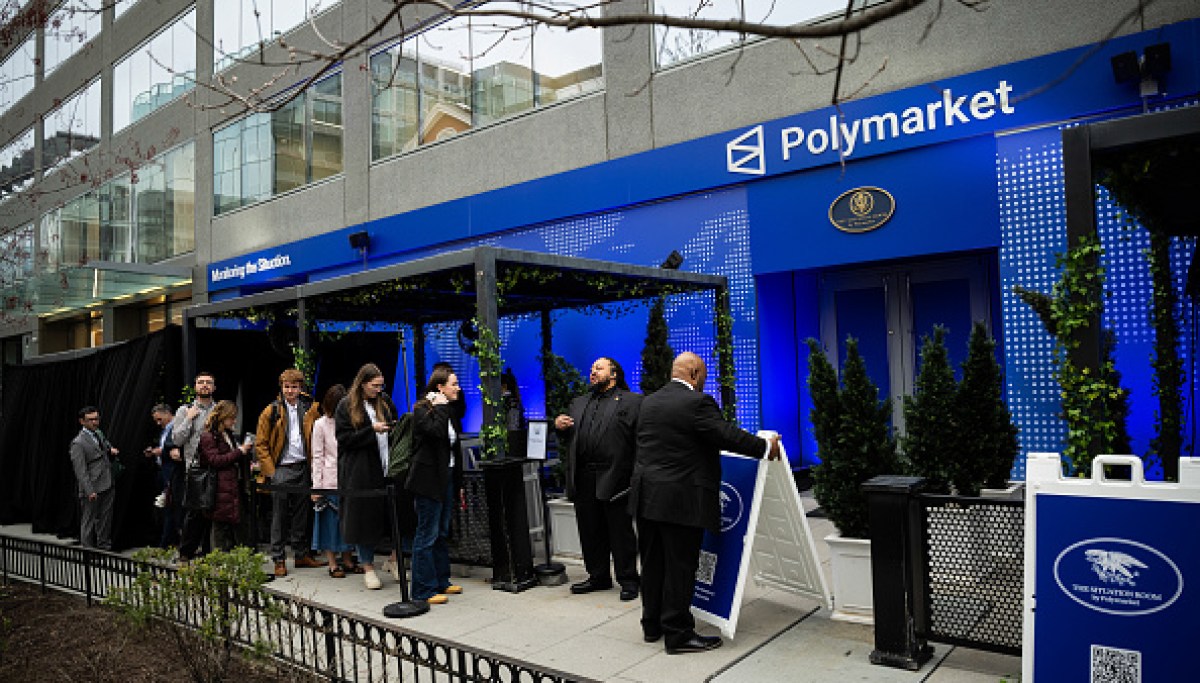
Why are states cracking down on Kalshi and Polymarket?
That overlap is at the heart of a growing legal fight: Are these markets federally regulated financial exchanges or gambling, which is regulated by state laws? Most gambling regulations, such as sports betting, are handed on the state level, with a few exceptions. In 2018, the Supreme Court paved the way for states to legalize and regulate sports betting. Since then, policies have varied widely, with some states permitting full online betting, while others, such as Utah, prohibit it altogether. At the federal level, the Unlawful Internet Gambling Enforcement Act bars gambling businesses from knowingly accepting payments tied to illegal online bets, while the Federal Wire Act governs interstate sports betting. The Indian Gaming Regulatory Act establishes a federal framework for overseeing gambling operations on tribal lands. What's the controversy? Many states have moved to crack down on prediction market platforms, issuing cease-and-desist orders and claiming they constitute illegal online gambling under state law. Arizona filed criminal charges against the prediction market platform Kalshi this year. Gov. Spencer Cox (R-UT) has argued that prediction markets are gambling and, in a February statement on X, promised to take legal action against them in his state. "We are putting a casino in the pocket of every single American, and they are targeting especially young people," Cox said in March. "It is really awful what they are doing, and we are going to make sure this doesn't happen in our state." Cox recently signed a bill banning wagers on specific players or events during sporting contests that are not directly connected to the outcome of a game, specifically targeted at prediction markets. Other critics argue the platforms are exploiting weak federal oversight. "This past year, emboldened by limp and overly permissive federal regulators like the Commodity Futures Trading Commission (CFTC), so-called 'prediction markets' have transformed themselves into illegal sportsbooks, offering their users illicit sports wagers," wrote Sen. Catherine Cortez Masto (D-NV) wrote in a March statement. "Prediction markets defy all of the commonsense and proven rules of the road that allow our gaming industry in Nevada and across the country to be socially responsible community partners," the senator added. At the same time, multiple lawmakers on Capitol Hill are drawing up legislation to rein in prediction markets. Rep. Jamie Raskin (D-MD), a co-sponsor of the STOP Corrupt Bets Act, argued that prediction markets spread "civic cynicism and distrust in our democratic institutions." A LOOK AT THE BILLS TO REIN IN PREDICTION MARKETS The federal response At the same time, federal regulators are pushing back on states' attempts to regulate their markets. The CFTC moved to block Arizona from enforcing state gambling laws Wednesday. "Arizona's decision to weaponize preempted state criminal law against companies that comply with a comprehensive federal regime sets a dangerous precedent," Chairman Michael S. Selig said. "The CFTC is committed to vigorously defending its exclusive authority over prediction markets." Last week, the CFTC also sued Arizona, Connecticut, and Illinois for their attempts to regulate prediction market companies. How are prediction markets regulated? The core of the dispute comes down to classification. The CFTC argues that prediction markets offer "event contracts," a type of derivative regulated under federal law. Prediction markets are regulated under federal law, not state gambling rules, because they are financial derivatives. Under that system, outcomes are priced by market participants, not set by a bookmaker. Regulators say that distinction separates them from gambling, where a "house" sets odds and takes bets. "State-regulated gambling includes traditional casino games, like roulette or blackjack, the lottery, and sports books," a spokesperson for the CFTC said in a statement to the Washington Examiner. "State-regulated gambling involves a house that hosts the games, or sets betting lines and odds." The spokesperson added that the CFTC conducts its own surveillance through technology platforms, seasoned career staff, and "frequent conversations" with exchanges about trades that raise red flags.
Anthropic's AI Expansion: Eyeing Custom Chip Design Amid Chip Shortage | Technology
Anthropic, a San Francisco-based artificial intelligence lab, is considering the possibility of designing its own chips, according to three sources. This move comes in response to a shortage of AI chips required for the development of more sophisticated AI systems. The company has not yet committed to a specific design or assembled a dedicated team for the project, and could still opt to purchase AI chips instead. Anthropic declined to comment further on these developments. Demand for Anthropic's AI model, Claude, has surged, boosting the company's run-rate revenue to over $30 billion. A notable partnership with Google and Broadcom highlights Anthropic's commitment to investing in U.S. computing infrastructure, reflecting a broader trend among tech companies like Meta and OpenAI in the AI chip domain.

Colossal Hospice Scheme Cost California Millions, Officials Say Amid Intensifying Trump Feud
Twenty-one group are facing charges arsenic portion of a monolithic hospice fraud strategy that prosecutors opportunity bilked California's aesculapian strategy retired of $267 million. Atty. Gen. Rob Bonta connected Thursday announced the results of an investigation called Operation Skip Trace. Five main conspirators were arrested connected suspicion of a big of felonies, including security fraud, money laundering, conspiracy and personality theft for their alleged domiciled successful a blase hospice scam operating crossed Southern California. If convicted, each could look astatine slightest a decade down bars. State prosecutors allege the defendants purchased connected the acheronian web the individual identifying accusation of non-California residents and, without their knowledge, enrolled them successful Medi-Cal done Covered California. The defendants past bought hospice companies and began billing the authorities for services they ne'er rendered, according to the criminal complaint. "Over the life of this fraud scheme, not a azygous morganatic hospice work was ever provided, yet millions were billed successful a brazen, calculated strategy that exploited the Medi-Cal system," Bonta said. "This wasn't a correction aliases a loophole; it was deliberate fraud. This benignant of maltreatment undermines trust, drains captious resources, and threatens attraction for those who genuinely dangle connected it." Prosecutors opportunity Robert Sabiron Rubillar and Liezyl Rubillar, the main executive serviceman and main financial serviceman of Legal Systems Billing Solutions, masterminded the scheme. The pair, on pinch the 3 others, were arrested Wednesday arsenic authorities investigators served hunt warrants astatine 10 locations crossed Southern California. They are charged pinch conspiracy and security fraud for allegedly submitting bogus claims to Medi-Cal for Cherish Hospice Inc., Emanuel Hospice and Azure Hospice Care Inc., according to a criminal complaint. In different criminal complaint, which besides names the couple, different 16 group are charged pinch security fraud, personality theft and conspiracy to perpetrate wellness security fraud. In that complaint, prosecutors opportunity Levon Darakchyan and Roberto Rubillar Jr. utilized clone patients to taxable for hospice payments from the national authorities for JTN Hospice, Medlight Hospice, LED Hospice, Beloved Hospice Care, Hope of LA Hospice, Sunset Hospice, Secured Hospice and TC Hospice. The group deposited authorities costs into slope accounts held by different conspirators charged successful the case, including $33 cardinal into a slope relationship held by Sarkis Ksachikyan, according to the criminal complaint. The conspiracy, prosecutors allege, utilized an elaborate bid of fronts, and the hospice locations were often not ceramic and mortar facilities. "Once the money was paid out," Bonta said, "it was funneled done a analyzable web of complete 130 ammunition companies and hidden crossed slope accounts, costs apps and cryptocurrency to evade detection." State officials person recovered much than $30 cardinal successful authorities costs from the scheme, the lawyer wide said. The charges are the latest successful a bid of high-profile moves made by authorities and national prosecutors arsenic some person ramped up their investigations into hospice operators. President Trump and his management person sought to represent California and peculiarly Los Angeles County arsenic the epicenter of hospice fraud. Last week, national authorities arrested 8 group and charged 15 successful an alleged strategy to bargain much than $50 cardinal successful healthcare costs by moving sham hospice accommodation crossed Southern California. Bonta connected Thursday said national authorities were besides cracking down successful Georgia, Texas and Ohio, noting that hospice fraud is happening crossed the country. "To declare this is simply a uniquely California problem is ludicrous," he said.

Elon Musk's xAI sues Colorado over state's new AI law
April 9 (Reuters) - xAI filed a lawsuit on Thursday seeking to block Colorado from enforcing a new law regulating artificial intelligence systems, escalating a fight over whether oversight should be handled by states or by Washington. The lawsuit, filed in U.S. District Court in Colorado, challenges Senate Bill 24-205, which is scheduled to take effect on June 30. The law imposes disclosure and risk-mitigation requirements on developers of so-called "high-risk" AI systems used in decisions involving employment, housing, education, health care and financial services. Elon Musk's artificial intelligence firm said the law violates the First Amendment by restricting how developers design AI systems and compelling speech on contentious public issues. The company says the law would force it to alter its flagship AI model, Grok, to reflect the state's views on diversity and discrimination rather than being objective. "Government regulation that is applied at the state level in a patchwork across the country can have the effect to hamper innovation and deter competition in an open market," xAI said. xAI, which recently merged with SpaceX, is seeking a court declaration that the law is unconstitutional and an injunction blocking its enforcement. The lawsuit also cites White House executive orders criticizing state-by-state AI regulation and federal warnings that patchwork state laws could undermine U.S. AI leadership and national security. The Colorado Attorney General's Office declined to comment on the litigation. While some tech companies and Republican lawmakers want states to leave AI regulation to Washington, California's attorney general has warned against relying solely on Congress, pointing to years of delays on data privacy and technology laws. President Donald Trump's AI advisers favor federal oversight through a streamlined national framework instead of a patchwork of state-level rules. (Reporting by Harshita Mary Varghese in Bengaluru, Juby Baby in Mexico City and Jonathan Stempel in New York; Editing by Leroy Leo)

Anthropic's powerful new AI model raises concerns about high-tech risks
Anthropic announced that it has started a very limited test of its newest AI model called Mythos. It's a model deemed so powerful that the company warned it could cause widespread disruption if it were released to the public. Anthropic is giving some companies access to Mythos to test and identify vulnerabilities, a move that is raising concerns. Geoff Bennett discussed more with Gerrit De Vynck.
Elon Musk's xAI sues Colorado over state's new AI law
April 9 (Reuters) - xAI filed a lawsuit on Thursday seeking to block Colorado from enforcing a new law regulating artificial intelligence systems, escalating a fight over whether oversight should be handled by states or by Washington. The lawsuit, filed in U.S. District Court in Colorado, challenges Senate Bill 24-205, which is scheduled to take effect on June 30. The law imposes disclosure and risk-mitigation requirements on developers of so‑called "high‑risk" AI systems used in decisions involving employment, housing, education, health care and financial services. Elon Musk's artificial intelligence firm said the law violates the First Amendment by restricting how developers design AI systems and compelling speech on contentious public issues. The company says the law would force it to alter its flagship AI model, Grok, to reflect the state's views on diversity and discrimination rather than being objective. "Government regulation that is applied at the state level in a patchwork across the country can have the effect to hamper innovation and deter competition in an open market," xAI said. xAI, which recently merged with SpaceX, is seeking a court declaration that the law is unconstitutional and an injunction blocking its enforcement. The lawsuit also cites White House executive orders criticizing state-by-state AI regulation and federal warnings that patchwork state laws could undermine U.S. AI leadership and national security. The Colorado Attorney General's Office declined to comment on the litigation. While some tech companies and Republican lawmakers want states to leave AI regulation to Washington, California's attorney general has warned against relying solely on Congress, pointing to years of delays on data privacy and technology laws. President Donald Trump's AI advisers favor federal oversight through a streamlined national framework instead of a patchwork of state-level rules. (Reporting by Harshita Mary Varghese in Bengaluru, Juby Baby in Mexico City and Jonathan Stempel in New York; Editing by Leroy Leo)
Anthropic and xAI Model Parameter Counts | NextBigFuture.com
Brian Wang is a Futurist Thought Leader and a popular Science blogger with 1 million readers per month. His blog Nextbigfuture.com is ranked #1 Science News Blog. It covers many disruptive technology and trends including Space, Robotics, Artificial Intelligence, Medicine, Anti-aging Biotechnology, and Nanotechnology. Known for identifying cutting edge technologies, he is currently a Co-Founder of a startup and fundraiser for high potential early-stage companies. He is the Head of Research for Allocations for deep technology investments and an Angel Investor at Space Angels. A frequent speaker at corporations, he has been a TEDx speaker, a Singularity University speaker and guest at numerous interviews for radio and podcasts. He is open to public speaking and advising engagements.
Groups appeal permit allowing xAI turbines in Southaven
Jason Haley of Southaven, MS, gave public comment against the Southaven turbines permit for xAI that MDEQ Permit Board approved later in the meeting. Environmental groups are pushing back against xAI's use of turbines at its Southaven power plant. On April 9, the NAACP, Young Gifted & Green and the Safe and Sound Coalition appealed the Mississippi Department of Environmental Quality (MDEQ) approval of an operations permit for 41 turbines at xAI's 2875 Stanton Road facility in Southaven. (The appeal was filed by the Southern Environmental Law Center on behalf of the aforementioned entities.) On March 10, the MDEQ Permit Board approved a Prevention of Significant Deterioration (PSD) permit for the use of 41 turbines at the Stanton Road site. The March 10 permit approval came after the Southern Environmental Law Center provided two emails between MDEQ and U.S. Environmental Protection Agency (EPA) staff that highlighted urgency between the state and federal institutions to rush finalization on the permit. In the April 9 appeal, the Southern Environmental Law Center alleges that there are "significant permit deficiencies that render the PSD Permit unlawful." Those allegations include a failure to implement standards that would mitigate major emissions and pollutants, inadequate air dispersion modeling and pollution impacts, a lack of consideration for clean turbines and emissions technology, and a violation of the Mississippi Open Meetings Act by "failing to describe with sufficient specificity the basis for going into executive session during deliberation." The appeal process will go through MDEQ's Permit Board. MDEQ did not immediately respond to a request for comment. "MDEQ's rushed approval of this flawed air permit raises serious concerns about transparency, regulatory accountability, and whether the public is truly being heard in decisions that directly affect our health and environment," Safe and Sound Coalition co-founder Shannon Samsa said in a statement. "Those with the authority to protect us had every opportunity to slow this process down, fully evaluate the risks, and ensure meaningful public involvement. Instead, they chose to push it forward." Samsa and the Safe and Sound Coalition have been a Southaven advocacy group voicing concerns over xAI's expansion in North Mississippi, including air and noise pollution concerns associated with the company's Stanton Road facility since summer 2025. The 41 turbines are intended to help power xAI's Colossus 2 data center, located across state lines in Memphis' Whitehaven neighborhood. According to the permit application approved by MDEQ, the turbines would produce up to 21.54 tons of hazardous air pollution (HAP) annually via uncontrolled emissions. That figure would be reduced to 19.07 tons of HAP annually. The turbines will emit 6.4 million tons of greenhouse gases. (The permit application was curated by Arkansas-based Trinity Consultants on behalf of MZX Tech LLC.) MZX Tech LLC purchased the former Duke Energy site at 2875 Stanton Road site in July 2025. That purchase included the surrounding 114 acres. In December 2025, MZX Tech acquired an adjacent 104-acre site including an 810,258-square-foot warehouse at 2400 Stateline Road. On Jan. 8, xAI and Mississippi officials formally announced plans for a third xAI data center at the Stateline Road warehouse called, Macrohardrr. The Stanton Road site is expected to provide power for xAI's data centers (both Colossus 2 and future data center sites within the area including Macrohardrr). The approved permit does not include 27 turbines that have been active at the Stanton Road site. In August 2025, MDEQ allowed the use of 16 unpermitted turbines at the Southaven site. That figure increased to 27 in December 2025, according to email correspondence between Trinity Consultants and MDEQ representatives. In January, the EPA updated the Clean Air Act, requiring permits for all combustion and stationary turbines, including temporary ones. Neil Strebig is a journalist with The Commercial Appeal. He can be reached at [email protected], 901-426-0679.

Elon Musk's xAI sues Colorado over state's new AI law
Add Yahoo as a preferred source to see more of our stories on Google. April 9 (Reuters) - xAI filed a lawsuit on Thursday seeking to block Colorado from enforcing a new law regulating artificial intelligence systems, escalating a fight over whether oversight should be handled by states or by Washington. The lawsuit, filed in U.S. District Court in Colorado, challenges Senate Bill 24-205, which is scheduled to take effect on June 30. The law imposes disclosure and risk-mitigation requirements on developers of so‑called "high‑risk" AI systems used in decisions involving employment, housing, education, health care and financial services. Elon Musk's artificial intelligence firm said the law violates the First Amendment by restricting how developers design AI systems and compelling speech on contentious public issues. The company says the law would force it to alter its flagship AI model, Grok, to reflect the state's views on diversity and discrimination rather than being objective. "Government regulation that is applied at the state level in a patchwork across the country can have the effect to hamper innovation and deter competition in an open market," xAI said. xAI, which recently merged with SpaceX, is seeking a court declaration that the law is unconstitutional and an injunction blocking its enforcement. The lawsuit also cites White House executive orders criticizing state-by-state AI regulation and federal warnings that patchwork state laws could undermine U.S. AI leadership and national security. The Colorado Attorney General's Office declined to comment on the litigation. While some tech companies and Republican lawmakers want states to leave AI regulation to Washington, California's attorney general has warned against relying solely on Congress, pointing to years of delays on data privacy and technology laws. President Donald Trump's AI advisers favor federal oversight through a streamlined national framework instead of a patchwork of state-level rules. (Reporting by Harshita Mary Varghese in Bengaluru, Juby Baby in Mexico City and Jonathan Stempel in New York; Editing by Leroy Leo)
Elon Musk's xAI sues Colorado over state's new AI law By Reuters
April 9 (Reuters) - xAI filed a lawsuit on Thursday seeking to block Colorado from enforcing a new law regulating artificial intelligence systems, escalating a fight over whether oversight should be handled by states or by Washington. The lawsuit, filed in U.S. District Court in Colorado, challenges Senate Bill 24-205, which is scheduled to take effect on June 30. The law imposes disclosure and risk-mitigation requirements on developers of so‑called "high‑risk" AI systems used in decisions involving employment, housing, education, health care and financial services. Elon Musk's artificial intelligence firm said the law violates the First Amendment by restricting how developers design AI systems and compelling speech on contentious public issues. The company says the law would force it to alter its flagship AI model, Grok, to reflect the state's views on diversity and discrimination rather than being objective. "Government regulation that is applied at the state level in a patchwork across the country can have the effect to hamper innovation and deter competition in an open market," xAI said. xAI, which recently merged with SpaceX, is seeking a court declaration that the law is unconstitutional and an injunction blocking its enforcement. The lawsuit also cites White House executive orders criticizing state-by-state AI regulation and federal warnings that patchwork state laws could undermine U.S. AI leadership and national security. The Colorado Attorney General's Office declined to comment on the litigation. While some tech companies and Republican lawmakers want states to leave AI regulation to Washington, California's attorney general has warned against relying solely on Congress, pointing to years of delays on data privacy and technology laws. President Donald Trump's AI advisers favor federal oversight through a streamlined national framework instead of a patchwork of state-level rules.

Wedbush reiterates Palantir stock rating amid Anthropic concerns By Investing.com
Investing.com - Wedbush maintained an Outperform rating and $230.00 price target on Palantir Technologies Inc. (NASDAQ:PLTR) stock following recent market pressure on the shares. The stock currently trades at $130.47, giving the company a market capitalization of $312 billion, though InvestingPro analysis suggests the stock is overvalued at current levels. The firm addressed concerns about competition from Anthropic, which released a new product around multi-agent orchestration. Palantir shares fell 7% on the day of the announcement. Wedbush stated the company continues to accelerate both its US commercial and government businesses. US Commercial grew 137% year-over-year and US government accelerated 66% year-over-year. Overall revenue growth reached 56% in the last twelve months, while the company maintains impressive gross profit margins of 82%, according to InvestingPro data. An InvestingPro Tip highlights these exceptional margins as a key competitive advantage. Anthropic reached $30 billion in annual recurring revenue, up from $9 billion at the start of the year. Wedbush said this growth is not at the expense of Palantir's business. The firm described Palantir as being at the epicenter of leaders in the AI Revolution. Wedbush stated the company's AIP product moat remains unmatched and its data-driven moat around data and ontology is not being disrupted by Claude. In other recent news, Palantir Technologies has expanded its partnership with Bain & Company to enhance access to artificial intelligence transformation services. This collaboration aims to provide Bain's clients with broader access to Palantir's enterprise AI technology, including its AIP and Foundry platforms. Additionally, Palantir has teamed up with Moder to develop an AI-powered mortgage operations platform, with Freedom Mortgage as the first pilot customer. This platform utilizes Palantir's Ontology to integrate with existing systems, translating guidelines and operational policies into configurable rules. Rosenblatt has reiterated a Buy rating on Palantir, citing potential from a major defense project involving the Golden Dome Missile Shield. The project's first phase is estimated to cost $185 billion, as reported by the Wall Street Journal. In further analyst updates, Wedbush has maintained an Outperform rating on Palantir, highlighting expectations for additional federal government contracts. Mizuho also reiterated an Outperform rating, noting Palantir's momentum in AI advancements. These developments reflect Palantir's strategic moves and ongoing analyst confidence in its future potential. This article was generated with the support of AI and reviewed by an editor. For more information see our T&C.
Could Anthropic's Managed Agents Quietly Reshape Workday's (WDAY) SaaS Moat and Pricing Power?
* Recently, Anthropic announced its Managed Agents service for long-running AI tasks, raising concerns that autonomous multi-step workflows could challenge traditional SaaS models used by enterprise software providers such as Workday. * This development spotlights a key question for Workday: how well its AI-enabled HR and finance platforms can adapt if customers shift away from seat-based software toward more usage-driven, automation-heavy tools. * Next, we'll examine how worries about Anthropic's Managed Agents potentially reshaping SaaS pricing and workflows could influence Workday's investment narrative. The future of work is here. Discover the 33 top robotics and automation stocks leading the charge in AI-driven automation and industrial transformation. Workday Investment Narrative Recap To own Workday, you need to believe its cloud-based HR and finance platform can keep adding value as AI reshapes how enterprises run workflows and pay for software. The key near term catalyst is how effectively Workday can shift from traditional seat-based pricing to more usage-driven, AI-infused models, while the biggest risk is that powerful agent-based tools like Anthropic's Managed Agents accelerate pricing pressure and raise questions about the long term role of conventional SaaS suites. For now, the stock reaction suggests the news is meaningful but not thesis-breaking. Against that backdrop, Workday's launch of Sana from Workday, an AI assistant that automates HR and finance tasks across hundreds of skills, looks particularly relevant. It shows Workday is not standing still as AI agents emerge, but embedding its own workflow automation inside the existing platform, which ties directly into the main catalyst of AI-driven expansion and usage based monetization, while also helping address concerns that third party agents could displace traditional software seats. Yet beneath the appeal of AI driven efficiency, investors should be aware that rising agent based automation could still compress pricing power and... Read the full narrative on Workday (it's free!) Workday's narrative projects $13.1 billion revenue and $2.0 billion earnings by 2029. This requires 11.1% yearly revenue growth and an earnings increase of about $1.3 billion from $693.0 million today. Uncover how Workday's forecasts yield a $181.31 fair value, a 60% upside to its current price. Exploring Other Perspectives Some of the lowest analysts were already cautious, assuming revenue of about US$13.3 billion and earnings of US$2.1 billion by 2029, and the Anthropic news could reinforce their concern that heavy AI spending and slower margin progress leave Workday more exposed than the consensus narrative suggests.
Employee describes 'chaos' inside burning Ontario paper products warehouse
One of the 20 employees inside an approximately 1 million-square-foot paper products warehouse in Ontario when it was consumed by flames earlier this week described the chaotic moments as the fire spread. The employee, who asked not to be identified, was outside a courthouse in Rancho Cucamonga Thursday, where suspect Chamel Abdul Karim, who also worked at the warehouse, was expected to make a first court appearance. Prosecutors said later Thursday that the case against the 29-year-old is pending review and an initial court appearance will be scheduled after charges are filed. "It was just a lot of chaos," the employee outside the courthouse said. "A lot of people running around everywhere, seeing what was happening because it was in different locations that the fire was being set off." In video posted on social media, someone appears to intentionally set several fires inside the Kimberly-Clark Corporation warehouse, including stacks of toilet paper. The person recording the video can be heard talking about their salary. "All you had to do was pay us enough to live," the person recording the video can be heard saying multiple times. Authorities have not provided details about a possible motive in the case, but said the video is part of the investigation. Colleagues relied on warehouse jobs for their livelihood, the employee in Rancho Cucamonga said. "You are ruining people's lives doing this," the man said. "There are things going on in the world right now, but you don't go burning a building down because your life is more important. You are just going to make others peoples lives worse." The Kimberly-Clark Corporation said the distribution center was operated by third party logistic partner NFI Industries, of which Karim was an employee. It housed paper products that firefighters said fueled the flames for hours. The company said it is working to relocate employees to other locations and minimize the impact to customers and consumers. Firefighters prevented flames from spreading to other buildings and a nearby neighborhood. Kimberly-Clark is a consumer goods and personal care business that produces mostly paper-based sanitary products. Its brands include Huggies, Kleenex, Depend, Kotex and others.

Trump touts oil flow recovery, but Hormuz chaos tells another story | investingLive
The disconnect between rhetoric and reality keeps risk premium elevated in oil. Conflicting diplomatic signals reduce confidence in de-escalation, supporting crude, volatility, and safe havens while limiting downside in energy prices. Mixed signals dominate as Trump talks up oil flows while diplomacy remains unclear. Summary: Conflicting signals continue to dominate the geopolitical backdrop surrounding the Iran conflict, with U.S. President Donald Trump projecting confidence on energy flows while reports of diplomatic progress remain disputed. In his latest remarks, Trump said that "very quickly, you'll see oil start flowing," suggesting a near-term normalisation in global energy supply. However, the comment sits uneasily alongside current market conditions, where shipping through the Strait of Hormuz remains well below normal levels, barely above zero, and insurers and operators continue to price in significant risk. The gap between rhetoric and on-the-ground reality underscores the uncertainty still embedded in global oil markets. At the same time, attention has turned to potential diplomatic efforts aimed at de-escalating the conflict. Reports emerged that an Iranian delegation had travelled to Islamabad for talks with U.S. officials, with Pakistan positioned as a mediator following the recently agreed two-week ceasefire. The delegation was said to include senior political figures, while U.S. representation was expected at a high level, pointing to what could have been a meaningful step toward formal negotiations. However, those reports were swiftly challenged. Iranian state-linked media denied that any such delegation had arrived or that negotiations with the United States were planned, particularly while hostilities involving Iran-aligned groups in the region persist. The denial highlights the fragmented and often contradictory messaging coming out of Tehran, where official positions can diverge across institutions and channels. Adding to the complexity, Iran's Revolutionary Guard, cited via domestic media, stated that no missiles have been launched during the ceasefire period. While this may indicate a degree of restraint, it does little to resolve broader concerns about the durability of the truce or the risk of renewed escalation. Taken together, the latest developments point to a highly fluid and uncertain situation. Trump's optimistic outlook on oil flows contrasts with continued operational disruptions, while reports of diplomatic engagement are clouded by outright denials. For markets, the key takeaway is that visibility remains low: the ceasefire may be holding for now, but the path to a durable agreement, and a sustained normalisation in energy markets, remains far from assured.

Anthropic launches Claude Cowork in General Availability
Anthropic has announced the general availability of Claude Cowork for all paid plans, expanding its reach to a broad spectrum of business teams beyond engineering. This rollout introduces new organization controls designed to give admins more oversight and flexibility. Key updates include: Claude Cowork is positioned for organizations seeking to automate routine tasks, manage project deliverables, and facilitate cross-team updates. Early enterprise adopters have leveraged the tool across departments such as operations, marketing, finance, and legal, primarily for workflow support surrounding their critical functions. The product is accessible on all paid Anthropic plans, with advanced controls and integrations available for Team and Enterprise tiers and deployment possible across various platforms and regions where Anthropic operates. Anthropic, the company behind Claude Cowork, is known for its focus on responsible AI development and enterprise-grade AI solutions. With this release, the company aims to address administrative concerns around governance, cost management, and data compliance, making it easier for organizations to adopt AI-powered collaboration tools at scale.

Anthropic Says Mythos Update Heralds Cybersecurity Reckoning as AI Finds Flaws 'In Every Major Operating System'
AI company Anthropic cast its new Claude Mythos Preview model as the start of a cybersecurity reckoning AI company Anthropic cast its new Claude Mythos Preview model as the start of a cybersecurity reckoning, arguing that artificial intelligence is now becoming powerful enough to transform both digital defense and digital attack at the same time. The company paired that warning with the launch of Project Glasswing, a tightly controlled initiative that gives select partners early access to the model for defensive security work. Anthropic said Mythos Preview marks a "watershed moment for security," saying the model has shown unusual strength in computer security tasks and can identify and exploit software weaknesses at a level that could reshape the balance between defenders and attackers. The company said that is precisely why it does not plan to make the model generally available right now. Instead, Anthropic is funneling access through Project Glasswing, which includes major partners such as Amazon Web Services, Apple, Broadcom, Cisco, CrowdStrike, Google, JPMorganChase, Microsoft, Nvidia, and Palo Alto Networks, along with broader access for about 40 additional organizations responsible for critical software infrastructure. The effort is meant to strengthen defensive cybersecurity operations at a moment when governments and companies are increasingly worried about AI-powered hacking. Anthropic says the stakes are high because Mythos Preview has already uncovered thousands of vulnerabilities in foundational software, including major operating systems and web browsers. Anthropic said the model found security problems "in every major operating system and web browser," and Anthropic's own materials say the project will focus on tasks such as local vulnerability detection, black-box testing of binaries, endpoint security, and penetration testing. The company is also putting real money behind the initiative, saying it commit $100 million in model usage credits for Project Glasswing and related participants. It also announced $4 million in donations to open-source security organizations, including support through the Linux Foundation and the Apache Software Foundation, a sign that it wants to shore up the often underfunded software projects that underpin much of the internet. The bigger message, though, is not just that AI can help fix bugs. It is the same systems that help defenders that may soon help adversaries move much faster. Anthropic said its long-term goal is to safely deploy "Mythos-class models" at scale, but only after improving safeguards that can detect and block the most dangerous outputs. Reuters also noted that Anthropic has been in discussions with the U.S. government about the model's capabilities, underscoring how seriously the company is treating the national security angle. That caution follows weeks of attention around Mythos after reports about a leaked draft page describing the model's advanced cybersecurity capabilities. The company has since said the leak stemmed from human error in its content management system, not from a software breach.

Anthropic claims its new AI model too risky to release to public
An artificial intelligence (AI) company says it has completed a new model that is so capable that the public cannot be allowed to use it. It's the same company that refused to let the U.S. government use its AI to target weapons. Anthropic's projected revenue has shot up from USD$9 billion to $30 billion this year. Nathaniel Dove looks at whether the announcement is marketing -- or a warning.
