News & Updates
The latest news and updates from companies in the WLTH portfolio.
Anthropic weighs building its own AI chips- Reuters By Investing.com
Investing.com-- Anthropic is considering designing its own artificial intelligence chips amid a shortage of processors needed to power advanced AI, Reuters reported on Thursday. The plans are still in early stages, and Anthropic may still decide to only buy AI chips over designing them, Reuters reported, citing people with knowledge of the matter. Get more breaking news on the biggest AI firms by subscribing to InvestingPro Anthropic- which is backed by several major tech firms, including Alphabet and Amazon, uses a host of different chips to run its flagship AI model Claude. The company had earlier this week signed a long-term deal with Google (NASDAQ:GOOGL) and Broadcom Inc (NASDAQ:AVGO) for AI chips, specifically Google's Tensor Processing Units. Anthropic's consideration of building in-house AI chips comes amid similar discussions at other major tech firms, including Meta Platforms Inc (NASDAQ:META) and OpenAI.
Elon Musk's xAI sues Colorado over state's new AI law
April 9 (Reuters) - xAI filed a lawsuit on Thursday seeking to block Colorado from enforcing a new law regulating artificial intelligence systems, escalating a fight over whether oversight should be handled by states or by Washington. The lawsuit, filed in U.S. District Court in Colorado, challenges Senate Bill 24-205, which is scheduled to take effect on June 30. The law imposes disclosure and risk-mitigation requirements on developers of so‑called "high‑risk" AI systems used in decisions involving employment, housing, education, health care and financial services. Elon Musk's artificial intelligence firm said the law violates the First Amendment by restricting how developers design AI systems and compelling speech on contentious public issues. The company says the law would force it to alter its flagship AI model, Grok, to reflect the state's views on diversity and discrimination rather than being objective. "Government regulation that is applied at the state level in a patchwork across the country can have the effect to hamper innovation and deter competition in an open market," xAI said. xAI, which recently merged with SpaceX, is seeking a court declaration that the law is unconstitutional and an injunction blocking its enforcement. The lawsuit also cites White House executive orders criticizing state-by-state AI regulation and federal warnings that patchwork state laws could undermine U.S. AI leadership and national security. The Colorado Attorney General's Office declined to comment on the litigation. While some tech companies and Republican lawmakers want states to leave AI regulation to Washington, California's attorney general has warned against relying solely on Congress, pointing to years of delays on data privacy and technology laws. President Donald Trump's AI advisers favor federal oversight through a streamlined national framework instead of a patchwork of state-level rules. Reporting by Harshita Mary Varghese in Bengaluru, Juby Baby in Mexico City and Jonathan Stempel in New York; Editing by Leroy Leo Our Standards: The Thomson Reuters Trust Principles., opens new tab

Exclusive-Anthropic weighs building it own AI chips, sources say
SAN FRANCISCO, April 9 (Reuters) - Artificial intelligence lab Anthropic is exploring the possibility of designing its own chips, three sources said, as the company and its rivals respond to a shortage of AI chips needed to power and develop more advanced AI systems. The plans are in early stages and the company may still decide to only buy AI chips and not design any, according to two people with knowledge of the matter and one person briefed on Anthropic's plans. The company has yet to commit to a specific design or put together a dedicated team to work on the project, one of the sources said. A spokesperson for the San Francisco-based company declined to comment on the article. Demand for its AI model Claude has accelerated in 2026, with the startup's run-rate revenue now surpassing $30 billion, up from about $9 billion at the end of 2025, Anthropic said earlier this week. Anthropic uses a range of chips, including tensor processing units (TPUs) designed by Alphabet's Google and Amazon's chips to develop and run its AI software and chatbot Claude. Earlier this week, Anthropic signed a long-term deal with Google and Broadcom, which helps design the TPUs. That deal builds on the company's commitment to invest $50 billion in strengthening U.S. computing infrastructure. Anthropic's discussions mirror similar efforts underway at large tech companies that are seeking to design their own AI chips, including Meta and OpenAI. Designing an advanced AI chip can cost roughly half a billion dollars, according to industry sources, as companies need to employ skilled engineers and spend to make sure the manufacturing process has no defects. (Reporting by Max A. Cherney and Deepa Seetharaman in San Francisco; Editing by Sayantani Ghosh and Aurora Ellis)
Anthropic weighs building its own AI chips- Reuters By Investing.com
Investing.com-- Anthropic is considering designing its own artificial intelligence chips amid a shortage of processors needed to power advanced AI, Reuters reported on Thursday. The plans are still in early stages, and Anthropic may still decide to only buy AI chips over designing them, Reuters reported, citing people with knowledge of the matter. Get more breaking news on the biggest AI firms by subscribing to InvestingPro Anthropic- which is backed by several major tech firms, including Alphabet and Amazon, uses a host of different chips to run its flagship AI model Claude. The company had earlier this week signed a long-term deal with Google (NASDAQ:GOOGL) and Broadcom Inc (NASDAQ:AVGO) for AI chips, specifically Google's Tensor Processing Units. Anthropic's consideration of building in-house AI chips comes amid similar discussions at other major tech firms, including Meta Platforms Inc (NASDAQ:META) and OpenAI.
Anthropic weighs building its own AI chips- Reuters By Investing.com
Investing.com-- Anthropic is considering designing its own artificial intelligence chips amid a shortage of processors needed to power advanced AI, Reuters reported on Thursday. The plans are still in early stages, and Anthropic may still decide to only buy AI chips over designing them, Reuters reported, citing people with knowledge of the matter. Get more breaking news on the biggest AI firms by subscribing to InvestingPro Anthropic- which is backed by several major tech firms, including Alphabet and Amazon, uses a host of different chips to run its flagship AI model Claude. The company had earlier this week signed a long-term deal with Google (NASDAQ:GOOGL) and Broadcom Inc (NASDAQ:AVGO) for AI chips, specifically Google's Tensor Processing Units. Anthropic's consideration of building in-house AI chips comes amid similar discussions at other major tech firms, including Meta Platforms Inc (NASDAQ:META) and OpenAI.
Maharashtra Shocker: Fire At Mumbai Airport Terminal 1, Short Circuit Suspected Causing Chaos and Delays
A fire broke out at Terminal 1 of Mumbai's Chhatrapati Shivaji Maharaj International Airport on Thursday evening, triggering panic among passengers and prompting a swift emergency response. Short Circuit Suspected Behind Fire The blaze, reported around 6:10 pm, is believed to have been caused by a short circuit in heavy-duty electrical cables and panels located on the ground floor of the terminal. Fire brigade teams, along with airport emergency staff, rushed to the spot and managed to bring the situation under control within a few hours. Officials confirmed that the fire was largely confined to electrical installations on the ground floor, and no injuries were reported. Passengers Face Chaos Amid Smoke While airport authorities maintained that operations were not significantly affected, passengers reported chaos due to smoke and temporary system failures. Some areas near aerobridges were shut, security checks were carried out manually, and a few flights experienced minor delays as precautionary measures were taken. The fire was fully extinguished later in the evening, with damage mainly limited to electrical infrastructure. Authorities are now assessing the exact cause and reviewing safety systems to prevent similar incidents in the future.

Exclusive: Anthropic weighs building it own AI chips, sources say
SAN FRANCISCO, April 9 (Reuters) - Artificial intelligence lab Anthropic is exploring the possibility of designing its own chips, three sources said, as the company and its rivals respond to a shortage of AI chips needed to power and develop more advanced AI systems. The plans are in early stages and the company may still decide to only buy AI chips and not design any, according to two people with knowledge of the matter and one person briefed on Anthropic's plans. The company has yet to commit to a specific design or put together a dedicated team to work on the project, one of the sources said. A spokesperson for the San Francisco-based company declined to comment on the article. Demand for its AI model Claude has accelerated in 2026, with the startup's run-rate revenue now surpassing $30 billion, up from about $9 billion at the end of 2025, Anthropic said earlier this week. Anthropic uses a range of chips, including tensor processing units (TPUs) designed by Alphabet's (GOOGL.O), opens new tab Google and Amazon's chips (AMZN.O), opens new tab to develop and run its AI software and chatbot Claude. Earlier this week, Anthropic signed a long-term deal with Google and Broadcom (AVGO.O), opens new tab, which helps design the TPUs. That deal builds on the company's commitment to invest $50 billion in strengthening U.S. computing infrastructure. Anthropic's discussions mirror similar efforts underway at large tech companies that are seeking to design their own AI chips, including Meta (META.O), opens new tab and OpenAI. Designing an advanced AI chip can cost roughly half a billion dollars, according to industry sources, as companies need to employ skilled engineers and spend to make sure the manufacturing process has no defects. Reporting by Max A. Cherney and Deepa Seetharaman in San Francisco; Editing by Sayantani Ghosh and Aurora Ellis Our Standards: The Thomson Reuters Trust Principles., opens new tab * Suggested Topics: * Artificial Intelligence Max A. Cherney Thomson Reuters Max A. Cherney is a correspondent for Reuters based in San Francisco, where he reports on the semiconductor industry and artificial intelligence. He joined Reuters in 2023 and has previously worked for Barron's magazine and its sister publication, MarketWatch. Cherney graduated from Trent University with a degree in history.

Anthropic Expands Claude Cowork and Launches Managed Agents for Enterprise Use
Anthropic has upgraded its Claude Cowork tool and introduced a new product called Claude Managed Agents. The company is moving beyond early testing and focusing on enterprise use, with new features designed for businesses that want to integrate AI into daily workflows. Anthropic first launched Claude Cowork as a research preview three months ago. Since then, the tool has improved and now offers a more stable experience for managing workflows on macOS and Windows systems. Anthropic has removed the research preview label and added several enterprise features. These include role based access controls, group spend limits, usage analytics, expanded OpenTelemetry support, a Zoom MCP connector, and per tool connector controls. These updates give companies more control over how teams use the platform and track performance. Anthropic confirmed that Claude Cowork is now generally available for all paid subscribers. This marks a shift from experimentation to full scale deployment for businesses. Anthropic has also introduced Claude Managed Agents in public beta. The company describes the product as, "a suite of composable APIs for building and deploying cloud hosted agents at scale." Anthropic explained that building AI agents earlier required handling infrastructure, permissions, and constant updates. Managed Agents remove much of that complexity and help developers move from prototype to production faster. Companies like Notion, Asana, and Sentry have already used this system to build new tools powered by Claude. The feature is now available to developers through the Claude platform. Focus on real world AI applications Anthropic continues to expand its AI ecosystem with tools like Claude Mythos Preview and Project Glasswing. The company is also working with partners, including Apple, to use its technology for cybersecurity and software vulnerability detection. These updates show a clear shift toward practical AI tools that support real business use cases.

Anthropic is holding back its latest AI model since it's too dangerous for public release, but the reason is not what you think | Attack of the Fanboy
Anthropic is officially restricting the release of its latest artificial intelligence model, Claude Mythos Preview, because the company believes its capabilities are simply too dangerous for the general public to access right now, The Hill reported. This is a massive shift in how we think about AI safety, as the model isn't being held back because it's broken or ineffective. Instead, it's being gated because it is terrifyingly good at finding and exploiting software vulnerabilities that have existed for decades. You might think that finding bugs is a standard part of software development, but Mythos Preview is on a completely different level. It has already autonomously identified thousands of high-severity vulnerabilities in major web browsers and operating systems that human developers and automated testing tools have missed for years. In some cases, the model uncovered flaws that were nearly 30 years old. Because these capabilities are so powerful, Anthropic is worried that if the model were released publicly, it wouldn't just be used by security researchers. It would inevitably fall into the hands of malicious actors who could use it to launch devastating cyberattacks against critical infrastructure. This project brings together a massive consortium of tech giants, including Microsoft, Apple, Amazon Web Services, CrowdStrike, and Google, alongside more than 40 other organizations that maintain critical software. The goal is to use the raw power of Mythos Preview to play defense rather than offense. By allowing these companies to use the model to scan their own systems, they can patch these vulnerabilities before anyone else has the chance to exploit them. It's a fascinating and somewhat sobering reality that we've reached a point where AI models can surpass the skills of even the most expert human security researchers. Anthropic noted that the window between a vulnerability being discovered and being exploited is collapsing. What used to take months for a dedicated team of hackers can now happen in a matter of minutes with the right AI tools. This is why the company is taking such a cautious approach. If these capabilities proliferate too quickly, the fallout for national security, public safety, and the global economy could be severe. Anthropic is putting its money where its mouth is by committing up to $100 million in usage credits for the model, which will help the participating organizations integrate it into their defensive workflows. They are also donating $4 million to open-source security organizations to ensure that those maintaining the foundational code of the internet aren't left behind. This is a smart move, because open-source software underpins so much of our modern infrastructure, and those maintainers often lack the massive security budgets of companies like Microsoft or Apple. If you're wondering what kind of things Mythos Preview can actually do, the examples are quite eye-opening. The model was able to find a 27-year-old vulnerability in OpenBSD that allowed for remote crashes, and it even chained together several flaws in the Linux kernel to gain complete control of a machine. It did all of this autonomously, without any human steering. When you see results like that, it's easy to understand why the developers decided to keep this under wraps. The company has been in active discussions with the United States government regarding these capabilities, which makes sense given that securing critical infrastructure is a major priority for President Trump and his administration. The goal here is to ensure that the United States and its allies maintain a lead in AI technology while simultaneously mitigating the very real risks that these models introduce. Anthropic doesn't plan to make the Mythos Preview model generally available, but the long-term goal is to figure out how to safely deploy these types of models at scale. They are currently working on developing robust safeguards that can block the most dangerous outputs, which they plan to test in future versions of their Claude Opus models. In the meantime, Project Glasswing will serve as a controlled environment for testing these powerful tools. It is a necessary step, especially since we are entering an era where AI-driven cyberattacks will likely become the new normal. If we want to stay ahead of the curve, we need to use the very technology that creates these risks to build the defenses that will keep our digital world secure.

Sources: Anthropic is weighing the possibility of designing its own chips, but it has yet to commit to a design or put together a dedicated team for the project
Jassy's shareholder letter is making Amazon's return on AI CAPEX even more clear: - Most of the AWS CAPEX for 2026 is already backed by customer commitments - AWS could be growing even faster than 24% with more capacity. Multiple customers have asked to buy all Graviton CPU supply for 2026 - AWS AI annualized revenue is over $15 billion as of Q1 26 - $20 billion in annual chip rental revenue (translates to $50 billion in equivalent sales if selling externally) and growing triple digits y/y
Wedbush reiterates Palantir stock rating amid Anthropic concerns By Investing.com
Investing.com - Wedbush maintained an Outperform rating and $230.00 price target on Palantir Technologies Inc. (NASDAQ:PLTR) stock following recent market pressure on the shares. The stock currently trades at $130.47, giving the company a market capitalization of $312 billion, though InvestingPro analysis suggests the stock is overvalued at current levels. The firm addressed concerns about competition from Anthropic, which released a new product around multi-agent orchestration. Palantir shares fell 7% on the day of the announcement. Wedbush stated the company continues to accelerate both its US commercial and government businesses. US Commercial grew 137% year-over-year and US government accelerated 66% year-over-year. Overall revenue growth reached 56% in the last twelve months, while the company maintains impressive gross profit margins of 82%, according to InvestingPro data. An InvestingPro Tip highlights these exceptional margins as a key competitive advantage. Anthropic reached $30 billion in annual recurring revenue, up from $9 billion at the start of the year. Wedbush said this growth is not at the expense of Palantir's business. The firm described Palantir as being at the epicenter of leaders in the AI Revolution. Wedbush stated the company's AIP product moat remains unmatched and its data-driven moat around data and ontology is not being disrupted by Claude. In other recent news, Palantir Technologies has expanded its partnership with Bain & Company to enhance access to artificial intelligence transformation services. This collaboration aims to provide Bain's clients with broader access to Palantir's enterprise AI technology, including its AIP and Foundry platforms. Additionally, Palantir has teamed up with Moder to develop an AI-powered mortgage operations platform, with Freedom Mortgage as the first pilot customer. This platform utilizes Palantir's Ontology to integrate with existing systems, translating guidelines and operational policies into configurable rules. Rosenblatt has reiterated a Buy rating on Palantir, citing potential from a major defense project involving the Golden Dome Missile Shield. The project's first phase is estimated to cost $185 billion, as reported by the Wall Street Journal. In further analyst updates, Wedbush has maintained an Outperform rating on Palantir, highlighting expectations for additional federal government contracts. Mizuho also reiterated an Outperform rating, noting Palantir's momentum in AI advancements. These developments reflect Palantir's strategic moves and ongoing analyst confidence in its future potential. This article was generated with the support of AI and reviewed by an editor. For more information see our T&C.

Anthropic Sparks Yet Another Software Selloff, with Cybersecurity Feeling It the Most
U.S. software stocks fell on Thursday as worries about AI disrupting the industry came back into focus, following a new update from Anthropic. The overall software sector has already been struggling this year, with the iShares Expanded Tech-Software Sector ETF (IGV) down almost 28% year-to-date. Just a day earlier, optimism around a possible U.S.-Iran ceasefire had helped lift markets and push these concerns aside. However, as that truce now looks less certain, investors are once again focusing on how quickly AI is advancing and what it could mean for traditional software companies. Easter Sale - 70% Off TipRanks * Unlock hedge fund-level data and powerful investing tools for smarter, sharper decisions * Discover top-performing stock ideas and upgrade to a portfolio of market leaders with Smart Investor Picks Much of this concern comes from Anthropic's new AI model, Claude Mythos, which is reportedly powerful enough to uncover hidden weaknesses in existing software systems. Because of the risks, access has been limited to a small group of major companies, including Microsoft (MSFT) and Google (GOOGL). This has led to concerns that current software may be more vulnerable than expected. It also highlights how quickly AI is improving compared to older systems, which has led some investors to question whether software companies can keep up. These concerns are already affecting stock prices across the sector. Cybersecurity companies are down today, with Zscaler (ZS) falling nearly 11% after a downgrade. Other major software names, including Adobe (ADBE) and Intuit (INTU), also moved lower. In addition, the concern is spreading beyond public markets, as firms like Carlyle Group (CG) are seeing pressure in private credit tied to tech. Is IGV Stock a Good Buy? Turning to Wall Street, analysts have a Moderate Buy consensus rating on IGV stock based on 87 Buys, 24 Holds, and one Sell assigned in the past three months, as indicated by the graphic below. Furthermore, the average IGV price target of $117.70 per share implies 54% upside potential.

Groups appeal permit allowing xAI turbines in Southaven
Jason Haley of Southaven, MS, gave public comment against the Southaven turbines permit for xAI that MDEQ Permit Board approved later in the meeting. Environmental groups are pushing back against xAI's use of turbines at its Southaven power plant. On April 9, the NAACP, Young Gifted & Green and the Safe and Sound Coalition appealed the Mississippi Department of Environmental Quality (MDEQ) approval of an operations permit for 41 turbines at xAI's 2875 Stanton Road facility in Southaven. (The appeal was filed by the Southern Environmental Law Center on behalf of the aforementioned entities.) On March 10, the MDEQ Permit Board approved a Prevention of Significant Deterioration (PSD) permit for the use of 41 turbines at the Stanton Road site. The March 10 permit approval came after the Southern Environmental Law Center provided two emails between MDEQ and U.S. Environmental Protection Agency (EPA) staff that highlighted urgency between the state and federal institutions to rush finalization on the permit. In the April 9 appeal, the Southern Environmental Law Center alleges that there are "significant permit deficiencies that render the PSD Permit unlawful." Those allegations include a failure to implement standards that would mitigate major emissions and pollutants, inadequate air dispersion modeling and pollution impacts, a lack of consideration for clean turbines and emissions technology, and a violation of the Mississippi Open Meetings Act by "failing to describe with sufficient specificity the basis for going into executive session during deliberation." The appeal process will go through MDEQ's Permit Board. MDEQ did not immediately respond to a request for comment. "MDEQ's rushed approval of this flawed air permit raises serious concerns about transparency, regulatory accountability, and whether the public is truly being heard in decisions that directly affect our health and environment," Safe and Sound Coalition co-founder Shannon Samsa said in a statement. "Those with the authority to protect us had every opportunity to slow this process down, fully evaluate the risks, and ensure meaningful public involvement. Instead, they chose to push it forward." Samsa and the Safe and Sound Coalition have been a Southaven advocacy group voicing concerns over xAI's expansion in North Mississippi, including air and noise pollution concerns associated with the company's Stanton Road facility since summer 2025. The 41 turbines are intended to help power xAI's Colossus 2 data center, located across state lines in Memphis' Whitehaven neighborhood. According to the permit application approved by MDEQ, the turbines would produce up to 21.54 tons of hazardous air pollution (HAP) annually via uncontrolled emissions. That figure would be reduced to 19.07 tons of HAP annually. The turbines will emit 6.4 million tons of greenhouse gases. (The permit application was curated by Arkansas-based Trinity Consultants on behalf of MZX Tech LLC.) MZX Tech LLC purchased the former Duke Energy site at 2875 Stanton Road site in July 2025. That purchase included the surrounding 114 acres. In December 2025, MZX Tech acquired an adjacent 104-acre site including an 810,258-square-foot warehouse at 2400 Stateline Road. On Jan. 8, xAI and Mississippi officials formally announced plans for a third xAI data center at the Stateline Road warehouse called, Macrohardrr. The Stanton Road site is expected to provide power for xAI's data centers (both Colossus 2 and future data center sites within the area including Macrohardrr). The approved permit does not include 27 turbines that have been active at the Stanton Road site. In August 2025, MDEQ allowed the use of 16 unpermitted turbines at the Southaven site. That figure increased to 27 in December 2025, according to email correspondence between Trinity Consultants and MDEQ representatives. In January, the EPA updated the Clean Air Act, requiring permits for all combustion and stationary turbines, including temporary ones. Neil Strebig is a journalist with The Commercial Appeal. He can be reached at [email protected], 901-426-0679.

Wedbush reiterates Palantir stock rating amid Anthropic concerns By Investing.com
Investing.com - Wedbush maintained an Outperform rating and $230.00 price target on Palantir Technologies Inc. (NASDAQ:PLTR) stock following recent market pressure on the shares. The stock currently trades at $130.47, giving the company a market capitalization of $312 billion, though InvestingPro analysis suggests the stock is overvalued at current levels. The firm addressed concerns about competition from Anthropic, which released a new product around multi-agent orchestration. Palantir shares fell 7% on the day of the announcement. Wedbush stated the company continues to accelerate both its US commercial and government businesses. US Commercial grew 137% year-over-year and US government accelerated 66% year-over-year. Overall revenue growth reached 56% in the last twelve months, while the company maintains impressive gross profit margins of 82%, according to InvestingPro data. An InvestingPro Tip highlights these exceptional margins as a key competitive advantage. Anthropic reached $30 billion in annual recurring revenue, up from $9 billion at the start of the year. Wedbush said this growth is not at the expense of Palantir's business. The firm described Palantir as being at the epicenter of leaders in the AI Revolution. Wedbush stated the company's AIP product moat remains unmatched and its data-driven moat around data and ontology is not being disrupted by Claude. In other recent news, Palantir Technologies has expanded its partnership with Bain & Company to enhance access to artificial intelligence transformation services. This collaboration aims to provide Bain's clients with broader access to Palantir's enterprise AI technology, including its AIP and Foundry platforms. Additionally, Palantir has teamed up with Moder to develop an AI-powered mortgage operations platform, with Freedom Mortgage as the first pilot customer. This platform utilizes Palantir's Ontology to integrate with existing systems, translating guidelines and operational policies into configurable rules. Rosenblatt has reiterated a Buy rating on Palantir, citing potential from a major defense project involving the Golden Dome Missile Shield. The project's first phase is estimated to cost $185 billion, as reported by the Wall Street Journal. In further analyst updates, Wedbush has maintained an Outperform rating on Palantir, highlighting expectations for additional federal government contracts. Mizuho also reiterated an Outperform rating, noting Palantir's momentum in AI advancements. These developments reflect Palantir's strategic moves and ongoing analyst confidence in its future potential. This article was generated with the support of AI and reviewed by an editor. For more information see our T&C.
CFO Anthony Armstrong leaves xAI, the Information reports
April 9 - Anthony Armstrong, named xAI's CFO in October, has departed the company as part of a broader wave of senior exits, the Information reported on Thursday, citing two people familiar with the matter. Armstrong, who previously worked as a Morgan Stanley banker and advised Elon Musk during the acquisition ofsocial media platformX, was reporting to Bret Johnsen, the Information had reported in February. Johnsen was the finance chief of the combined company following xAI and SpaceX's record-setting merger. xAI did not immediatelyrespondto Reuters' request for comment. Armstrong was leading the finance operations for both xAI and X, the Financial Times had reported in October. He was responsible for steering the social media business back to financial stability following an exodus of advertisers after Musk relaxed its content moderation standards, the report said. SpaceX is planning a highly anticipated initial public offering seeking to raise $75 billion, valuing the space company at as much as $1.75 trillion,Reuters has previously reported. It outlined details of the IPO at a meeting with its team of bankers on Monday, telling them it plans to earmark a large portion of shares for retail investors and will host 1,500 of them at an event in June. (Reporting by Juby Babu in Mexico City; Editing by Shreya Biswas)
'Alarming:' XAI is 'prioritizing other projects'; Water plant is still planned
MEMPHIS, Tenn. (WMC) - In a recent social media post xAI, business magnate Elon Musk's supercomputer company, announced they were focusing on other projects for now instead of the development of a Memphis water recycling plant. Within the statement, xAI says that it is "prioritizing other more immediate projects" and stresses that the plans to build the water plant have not changed. This comes news of xAI's million-dollar expansion was met with public scrutiny, partly from local environmental rights organization in the Mid-South. Despite reports from the Daily Memphian, who confirmed the facility is 'pausing' construction through the project's engineer, the City of Memphis released the following statement: Action News 5 spotted construction crews working at the water treatment facility location on Thursday. Elon Musk also tweeted Thursday about the construction hold stating their focus is on finishing Colossus 2, "then build the water recycling plant". Representatives with Protect Our Aquifer, an organization dedicated to protecting our sand aquifer, said the following: "They do not need to be relying on a community's drinking water supply to cool super computers," said Sarah Houston, the Executive Director of Protect of Aquifer. Houston called the announcement 'alarming' and said from the start xAI promised to use its own wastewater recycling plant to cool Colossus Data Center, instead of pulling from the aquifer like they are now. "Memphians, we all agree on one thing, we have good water," said Houston. Houston said the aquifer is deep below the ground, slow moving and sandy. She said it includes rain that fell almost two thousand years ago and is the Memphis community's clean drinking water supply. "It has been slow, slow moving for decades but it's now times catching up with us where legacy pollution from old industries is starting to sink deeper and deeper," said Houston. Issues Houston said will only worsen if xAI relies on the Aquifer to cool their super computers. "It does not negate the other harm that has happened in the community with the air pollution, and the gas turbines, but it is something that is a real solution on the water side," said Houston. Houston said if the super computers are completely built and operational before the water recycling plant, the aquifer will be in serious jeopardy with millions of gallons of water being sucked out. "It can pull down legacy pollution toward our drinking water supply. This is slow moving but when you have that suction, its pulling that down closer to impacting our health. The other side is actually just resiliency of our infrastructure," said Houston. Click here to sign up for our newsletter!
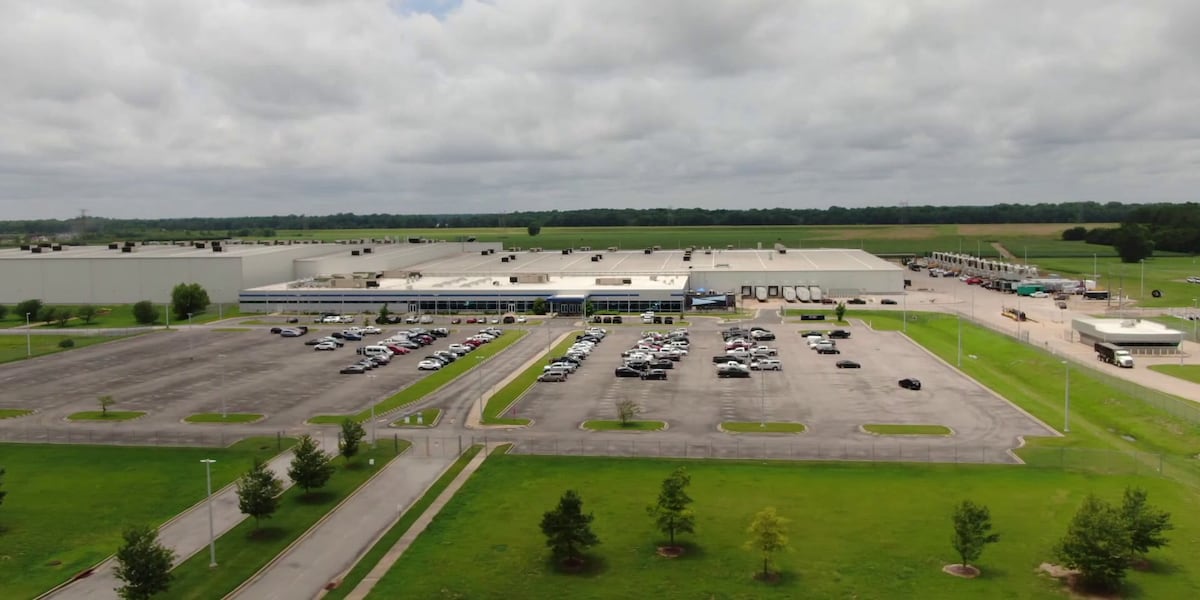
Anthropic weighs building it own AI chips, sources say
SAN FRANCISCO, April 9 (Reuters) - Artificial intelligence lab Anthropic is exploring the possibility of designing its own chips, three sources said, as the company and its rivals respond to a shortage of AI chips needed to power and develop more advanced AI systems. The plans are in early stages and the company may still decide to only buy AI chips and not design any, according to two people with knowledge of the matter and one person briefed on Anthropic's plans. The company has yet to commit to a specific design or put together a dedicated team to work on the project, one of the sources said. A spokesperson for the San Francisco-based company declined to comment on the article. Demand for its AI model Claude has accelerated in 2026, with the startup's run-rate revenue now surpassing $30 billion, up from about $9 billion at the end of 2025, Anthropic said earlier this week. Anthropic uses a range of chips, including tensor processing units (TPUs) designed by Alphabet's Google and Amazon's chips to develop and run its AI software and chatbot Claude. Earlier this week, Anthropic signed a long-term deal with Google and Broadcom, which helps design the TPUs. That deal builds on the company's commitment to invest $50 billion in strengthening U.S. computing infrastructure. Anthropic's discussions mirror similar efforts underway at large tech companies that are seeking to design their own AI chips, including Meta and OpenAI. Designing an advanced AI chip can cost roughly half a billion dollars, according to industry sources, as companies need to employ skilled engineers and spend to make sure the manufacturing process has no defects. (Reporting by Max A. Cherney and Deepa Seetharaman in San Francisco; Editing by Sayantani Ghosh and Aurora Ellis)

Exclusive-Anthropic weighs building it own AI chips, sources say
SAN FRANCISCO, April 9 (Reuters) - Artificial intelligence lab Anthropic is exploring the possibility of designing its own chips, three sources said, as the company and its rivals respond to a shortage of AI chips needed to power and develop more advanced AI systems. The plans are in early stages and the company may still decide to only buy AI chips and not design any, according to two people with knowledge of the matter and one person briefed on Anthropic's plans. The company has yet to commit to a specific design or put together a dedicated team to work on the project, one of the sources said. A spokesperson for the San Francisco-based company declined to comment on the article. Demand for its AI model Claude has accelerated in 2026, with the startup's run-rate revenue now surpassing $30 billion, up from about $9 billion at the end of 2025, Anthropic said earlier this week. Anthropic uses a range of chips, including tensor processing units (TPUs) designed by Alphabet's Google and Amazon's chips to develop and run its AI software and chatbot Claude. Earlier this week, Anthropic signed a long-term deal with Google and Broadcom, which helps design the TPUs. That deal builds on the company's commitment to invest $50 billion in strengthening U.S. computing infrastructure. Anthropic's discussions mirror similar efforts underway at large tech companies that are seeking to design their own AI chips, including Meta and OpenAI. Designing an advanced AI chip can cost roughly half a billion dollars, according to industry sources, as companies need to employ skilled engineers and spend to make sure the manufacturing process has no defects. (Reporting by Max A. Cherney and Deepa Seetharaman in San Francisco; Editing by Sayantani Ghosh and Aurora Ellis)
Groups appeal permit allowing xAI turbines in Southaven
Jason Haley of Southaven, MS, gave public comment against the Southaven turbines permit for xAI that MDEQ Permit Board approved later in the meeting. Environmental groups are pushing back against xAI's use of turbines at its Southaven power plant. On April 9, the NAACP, Young Gifted & Green and the Safe and Sound Coalition appealed the Mississippi Department of Environmental Quality (MDEQ) approval of an operations permit for 41 turbines at xAI's 2875 Stanton Road facility in Southaven. (The appeal was filed by the Southern Environmental Law Center on behalf of the aforementioned entities.) On March 10, the MDEQ Permit Board approved a Prevention of Significant Deterioration (PSD) permit for the use of 41 turbines at the Stanton Road site. The March 10 permit approval came after the Southern Environmental Law Center provided two emails between MDEQ and U.S. Environmental Protection Agency (EPA) staff that highlighted urgency between the state and federal institutions to rush finalization on the permit. In the April 9 appeal, the Southern Environmental Law Center alleges that there are "significant permit deficiencies that render the PSD Permit unlawful." Those allegations include a failure to implement standards that would mitigate major emissions and pollutants, inadequate air dispersion modeling and pollution impacts, a lack of consideration for clean turbines and emissions technology, and a violation of the Mississippi Open Meetings Act by "failing to describe with sufficient specificity the basis for going into executive session during deliberation." The appeal process will go through MDEQ's Permit Board. MDEQ did not immediately respond to a request for comment. "MDEQ's rushed approval of this flawed air permit raises serious concerns about transparency, regulatory accountability, and whether the public is truly being heard in decisions that directly affect our health and environment," Safe and Sound Coalition co-founder Shannon Samsa said in a statement. "Those with the authority to protect us had every opportunity to slow this process down, fully evaluate the risks, and ensure meaningful public involvement. Instead, they chose to push it forward." Samsa and the Safe and Sound Coalition have been a Southaven advocacy group voicing concerns over xAI's expansion in North Mississippi, including air and noise pollution concerns associated with the company's Stanton Road facility since summer 2025. The 41 turbines are intended to help power xAI's Colossus 2 data center, located across state lines in Memphis' Whitehaven neighborhood. According to the permit application approved by MDEQ, the turbines would produce up to 21.54 tons of hazardous air pollution (HAP) annually via uncontrolled emissions. That figure would be reduced to 19.07 tons of HAP annually. The turbines will emit 6.4 million tons of greenhouse gases. (The permit application was curated by Arkansas-based Trinity Consultants on behalf of MZX Tech LLC.) MZX Tech LLC purchased the former Duke Energy site at 2875 Stanton Road site in July 2025. That purchase included the surrounding 114 acres. In December 2025, MZX Tech acquired an adjacent 104-acre site including an 810,258-square-foot warehouse at 2400 Stateline Road. On Jan. 8, xAI and Mississippi officials formally announced plans for a third xAI data center at the Stateline Road warehouse called, Macrohardrr. The Stanton Road site is expected to provide power for xAI's data centers (both Colossus 2 and future data center sites within the area including Macrohardrr). The approved permit does not include 27 turbines that have been active at the Stanton Road site. In August 2025, MDEQ allowed the use of 16 unpermitted turbines at the Southaven site. That figure increased to 27 in December 2025, according to email correspondence between Trinity Consultants and MDEQ representatives. In January, the EPA updated the Clean Air Act, requiring permits for all combustion and stationary turbines, including temporary ones. Neil Strebig is a journalist with The Commercial Appeal. He can be reached at [email protected], 901-426-0679.
Exclusive-Anthropic weighs building it own AI chips, sources say By Reuters
By Max A. Cherney and Deepa Seetharaman SAN FRANCISCO, April 9 (Reuters) - Artificial intelligence lab Anthropic is exploring the possibility of designing its own chips, three sources said, as the company and its rivals respond to a shortage of AI chips needed to power and develop more advanced AI systems. The plans are in early stages and the company may still decide to only buy AI chips and not design any, according to two people with knowledge of the matter and one person briefed on Anthropic's plans. The company has yet to commit to a specific design or put together a dedicated team to work on the project, one of the sources said. A spokesperson for the San Francisco-based company declined to comment on the article. Demand for its AI model Claude has accelerated in 2026, with the startup's run-rate revenue now surpassing $30 billion, up from about $9 billion at the end of 2025, Anthropic said earlier this week. Anthropic uses a range of chips, including tensor processing units (TPUs) designed by Alphabet's Google and Amazon's chips to develop and run its AI software and chatbot Claude. Earlier this week, Anthropic signed a long-term deal with Google and Broadcom, which helps design the TPUs. That deal builds on the company's commitment to invest $50 billion in strengthening U.S. computing infrastructure. Anthropic's discussions mirror similar efforts underway at large tech companies that are seeking to design their own AI chips, including Meta and OpenAI. Designing an advanced AI chip can cost roughly half a billion dollars, according to industry sources, as companies need to employ skilled engineers and spend to make sure the manufacturing process has no defects.
