News & Updates
The latest news and updates from companies in the WLTH portfolio.
German Regulator Rules Google AI Overviews, Perplexity Subject To National Media Law
Germany's media regulator ruled Google AI Overviews and Perplexity are subject to national media law, increasing oversight of AI-generated content. Germany's media regulator has ruled that Google's AI Overviews and Perplexity AI are subject to the country's media laws, significantly expanding oversight of artificial intelligence-generated content following a recent court ruling against Google. The Commission for Licensing and Supervision (ZAK), which represents Germany's 14 state media authorities, said AI-generated search summaries and chatbot responses should be treated as content produced by the providers themselves rather than as a simple display of information from third-party websites. The decision follows a ruling by a Munich court that found Google could be held liable for allegedly false information generated by its AI Overview feature, concluding that the AI-generated summaries constitute the company's own content. ZAK Chairman Thorsten Schmiege said AI-powered search engines and chatbots are content providers and will henceforth be regulated under Germany's media laws. The regulator also said liability protections under the European Union's Digital Services Act, which generally shield online platforms from responsibility for unlawful user-generated content, do not apply to AI-generated responses because the content is created by the providers themselves. ZAK argued that Google's AI Overviews are displayed prominently in search results, reducing the visibility of traditional website links and potentially placing independent media organisations at a competitive disadvantage. It further said AI chatbots such as Perplexity influence how users access news by selecting and presenting sources, links and recommendations alongside AI-generated responses, potentially qualifying them as media intermediaries subject to regulations aimed at safeguarding media plurality. Google said it would appeal the ruling, arguing that the decision fails to recognise how people's search habits and the digital information ecosystem are evolving. The company maintained that its AI-powered summaries enhance users' search experience by helping them discover relevant content more efficiently and ask follow-up questions. Perplexity declined to comment on the decision, saying only that it complies with the European Union's General Data Protection Regulation (GDPR) and maintains SOC 2 Type II certification covering its security and privacy practices.

Cerebras (CBRS) Makes a Massive Bet on Europe's AI Boom
With an upside potential of 60.19%, Cerebras Systems Inc. (NASDAQ:CBRS) is among the 12 Strong Buy Stocks with High Upside According to Analysts. On July 9, Cerebras Systems Inc. (NASDAQ:CBRS) announced a major expansion of its European infrastructure footprint, revealing plans to bring its first European data center capacity online by the end of 2026. The company intends to rapidly scale operations across France and the Nordic region, targeting a total capacity of 200 megawatts by the end of 2027. A portion of this infrastructure is expected to support workloads from OpenAI under the company's existing partnership. According to management, the expansion will place Cerebras' high-speed AI inference capabilities closer to European customers, addressing growing demand for locally hosted artificial intelligence compute resources while strengthening the company's global presence. Earlier, on June 30, Freedom Capital initiated coverage of Cerebras Systems Inc. (NASDAQ:CBRS) with a Hold rating and a $209 price target. The firm noted that the stock experienced significant volatility following first-quarter results, declining sharply and trading as low as $161. Despite highlighting meaningful operational risks associated with the company's rapid expansion strategy, Freedom Capital stated that the recent selloff has created a more attractive entry point for investors. The analyst believes the market may now be underappreciating the company's long-term opportunities within the AI infrastructure sector. Founded in 2015 and headquartered in Sunnyvale, California, Cerebras Systems Inc. (NASDAQ:CBRS) develops wafer-scale processors and artificial intelligence supercomputers designed to dramatically accelerate AI training and inference workloads. Its proprietary architecture enables customers to process complex AI models more efficiently, positioning the company as a differentiated provider of next-generation computing infrastructure. While we acknowledge the potential of CBRS as an investment, we believe certain AI stocks offer greater upside potential and carry less downside risk. If you're looking for an extremely undervalued AI stock that also stands to benefit significantly from Trump-era tariffs and the onshoring trend, see our free report on the best short-term AI stock. Disclosure: None. Follow Insider Monkey on Google News.
Cerebras (CBRS) Makes a Massive Bet on Europe's AI Boom
With an upside potential of 60.19%, Cerebras Systems Inc. (NASDAQ:CBRS) is among the 12 Strong Buy Stocks with High Upside According to Analysts. On July 9, Cerebras Systems Inc. (NASDAQ:CBRS) announced a major expansion of its European infrastructure footprint, revealing plans to bring its first European data center capacity online by the end of 2026. The company intends to rapidly scale operations across France and the Nordic region, targeting a total capacity of 200 megawatts by the end of 2027. A portion of this infrastructure is expected to support workloads from OpenAI under the company's existing partnership. According to management, the expansion will place Cerebras' high-speed AI inference capabilities closer to European customers, addressing growing demand for locally hosted artificial intelligence compute resources while strengthening the company's global presence. Earlier, on June 30, Freedom Capital initiated coverage of Cerebras Systems Inc. (NASDAQ:CBRS) with a Hold rating and a $209 price target. The firm noted that the stock experienced significant volatility following first-quarter results, declining sharply and trading as low as $161. Despite highlighting meaningful operational risks associated with the company's rapid expansion strategy, Freedom Capital stated that the recent selloff has created a more attractive entry point for investors. The analyst believes the market may now be underappreciating the company's long-term opportunities within the AI infrastructure sector. Founded in 2015 and headquartered in Sunnyvale, California, Cerebras Systems Inc. (NASDAQ:CBRS) develops wafer-scale processors and artificial intelligence supercomputers designed to dramatically accelerate AI training and inference workloads. Its proprietary architecture enables customers to process complex AI models more efficiently, positioning the company as a differentiated provider of next-generation computing infrastructure. While we acknowledge the potential of CBRS as an investment, we believe certain AI stocks offer greater upside potential and carry less downside risk. If you're looking for an extremely undervalued AI stock that also stands to benefit significantly from Trump-era tariffs and the onshoring trend, see our free report on the best short-term AI stock. Disclosure: None. Follow Insider Monkey on Google News.
SpaceX (SPCX) Stock Receives Bullish Coverage from Morgan Stanley and Evercore After IPO Quiet Period
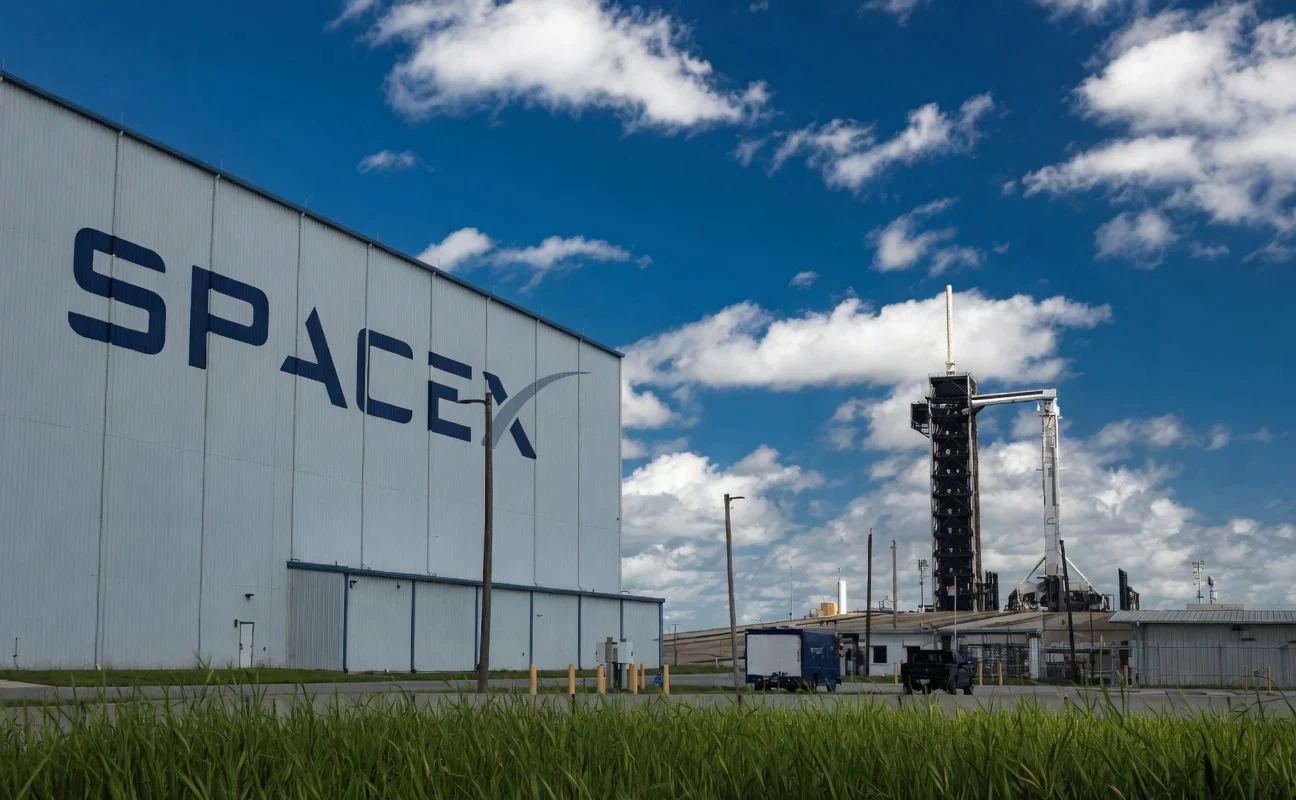
* Following the post-IPO quiet period, Morgan Stanley launched coverage on SpaceX with an Overweight rating and $300 price target * The company's shares currently trade 9.7% beneath their initial public offering closing price * The Starlink network encompasses more than 10,000 satellites, delivering broadband service to approximately 12 million customers worldwide across over 160 nations * Morgan Stanley projects revenue expansion from $45 billion in 2026 to a staggering $3.3 trillion by the year 2040 * Evercore ISI joined with an Outperform designation and established a $230 price objective Space Exploration Technologies Corp. (SPCX) captured significant attention from Wall Street analysts this week as the mandatory post-IPO quiet period concluded, allowing major financial institutions to publish their initial research reports. The company's shares currently sit 9.7% lower than where they closed on their first trading day. Space Exploration Technologies Corp., SPCX Morgan Stanley launched its coverage with an Overweight recommendation and established a $300 price objective, characterizing SpaceX as a vertically integrated enterprise that bridges space access, global connectivity, and artificial intelligence infrastructure. During a CNBC appearance, analyst Adam Jonas emphasized that SpaceX's launch capabilities deliver cost efficiencies that are twenty times superior to competitors when measured by cost-per-kilogram to orbit. The investment bank incorporated SpaceX into its Space 60 compilation -- a curated collection of publicly listed entities representing various segments of the space industry value chain. Joining SpaceX on the list this quarter were HawkEye 360, Applied Aerospace & Defense, and Satellogic. Meanwhile, Qorvo, Iridium, Globalstar, and Teck Resources were dropped from the index due to ongoing merger and acquisition transactions. With approximately 650 orbital missions completed through March 2026, SpaceX maintains an impressive 99% mission success rate. This exceptional operational record forms a fundamental pillar of the investment thesis. Jim Cramer offered his perspective on Morgan Stanley's analysis, observing that Jonas "likes SpaceX the company more than he likes SpaceX the stock." This represents an important nuance -- strong belief in the underlying business model doesn't necessarily equate to immediate stock price appreciation. Starlink Network Powers Revenue Projections The Starlink satellite constellation stands as SpaceX's primary revenue generator. With over 10,000 satellites in operation, Starlink accounts for approximately 75% of all operational maneuverable satellites currently orbiting Earth. The service delivers high-speed internet to roughly 12 million subscribers spanning more than 160 countries, while Starlink Mobile connects approximately 7.4 million unique devices each month. Morgan Stanley's revenue projections paint an ambitious picture: starting at $45 billion in 2026, climbing to $319 billion by 2030, and ultimately reaching $3.3 trillion by 2040. These growth expectations come with substantial infrastructure requirements, as the firm anticipates capital expenditure needs approaching $300 billion annually by 2031. ClearBridge Large Cap Growth Strategy, an IPO participant, identified SpaceX's reusable rocket technology as its fundamental competitive advantage. Their second-quarter investor communication highlighted how integrating launch services with Starlink creates opportunities to expand into AI infrastructure and space-based data center computing capabilities. Evercore Issues Outperform Rating Evercore ISI published its inaugural coverage report this week, assigning an Outperform rating alongside a $230 price target -- representing a more moderate valuation than Morgan Stanley's $300 assessment. While Evercore conceded that "the feasibility of certain ambitions and timelines can be debated," the firm stated emphatically that SpaceX qualifies as "an extraordinary company on a real path to reshaping the future of humanity." Their financial models project revenue and EBITDA growing at compound annual rates of 106% and 157% respectively through 2028, with acceleration expected as the decade advances. SpaceX shares currently trade 9.7% below their first-day IPO closing price, now supported by two significant analyst initiations -- one establishing a $300 target and another at $230.
Nvidia vs Cerebras: Which Is the Better Discount AI Buy Now?
Nvidia (NVDA +4.08%) and Cerebras Systems (CBRS 0.40%) both offer something in great need right now: the high-powered compute to fuel artificial intelligence (AI) workloads. Nvidia is the better-known of the two, having been in the chip space for more than 30 years, and today dominates the AI chip market. Cerebras is an exciting new player with a very powerful chip. Both of these companies could make an interesting investment, and they have seen their shares decline from highs in recent times. This presents a potential buying opportunity. But which is the better discount AI buy right now? Let's find out. The case for Nvidia Nvidia hardly needs an introduction these days. The company has made headlines since the start of the AI boom as its comments set the tone for what happens next in this market. Nvidia designs the world's most sought-after graphics processing units (GPUs), the key chips needed to power essential tasks like the training and inference of models. The company was first to enter this market and has made innovation a focus -- that's helped it stay ahead of rivals. In fact, Nvidia updates its GPUs on an annual basis, and the next update is right around the corner. The company aims to ship its Vera Rubin platform later this year, and it will offer an important new product: the stand-alone central processing unit (CPU). This opens up a new $200 billion market to Nvidia, and the company plans on conquering it. In its latest earnings report, it predicted $20 billion in stand-alone CPU sales this year and said it was on track to dominate this market. Meanwhile, Nvidia has proven its strength over time, and in recent years has delivered quarter after quarter of double- or triple-digit earnings gains. And earnings have reached record levels amid this AI boom. All of this is likely to continue, considering the sustained level of demand and the idea that AI is in its early days of real-world use. The case for Cerebras Cerebras may not be a household name like Nvidia, but the company's technology might quickly put it on the radar screens of many investors. This player has designed a giant chip, its wafer-scale engine (WSE), that it says delivers speeds faster than today's GPUs. How has Cerebras accomplished this? By making the WSE 58 times larger than Nvidia's B200 chip. Cerebras says that this size allows it to offer massive compute and memory bandwidth, and this results in tremendous speed. The company says that in inference, or the thinking AI goes through to solve a problem, it's delivered answers 15 times faster than today's top-selling GPUs. This has translated into growth for Cerebras, with first-quarter revenue soaring 92% to $193 million. And the company recently signed key deals with OpenAI for compute and with Amazon's cloud unit to make its WSE systems more broadly available. So this could be a major transition point for Cerebras, as more potential customers discover its chips and give them a try. It's important to note that, considering the high level of demand for compute, Cerebras doesn't have to unseat Nvidia in order to be highly successful and deliver strong growth. Analysts predict the AI market will reach beyond $3 trillion in the early part of the next decade, and this should create a strong revenue opportunity for many chip players. This young company, founded in 2015, went public in May, raising $5.5 billion in the biggest IPO of 2025 -- until Space Exploration Technologies launched its operation in June, for the largest IPO ever. The market leader or the young challenger? Cerebras isn't yet profitable, which isn't surprising at this stage of its growth story, but this adds to risk. The stock has slid 30% from its first day of trading, offering an interesting buying opportunity for aggressive investors. But for most investors, I consider Nvidia the best discount AI buy today. The AI giant is trading at 23x forward earnings estimates, which looks like a steal considering all of the company's strengths.

Video of colossal hornet nest shocks viewers, then commenters reveal it's from a hornet farm in Vietnam
Add Yahoo as a preferred source to see more of our stories on Google. A jaw-dropping video on Reddit showing workers handling an enormous hornet nest left viewers stunned -- at least at first. As the clip spread, commenters suggested the scene was likely something very different from a random pest-control emergency: a hornet farm in Vietnam built and maintained by people. What happened? The post on Reddit with the caption, "Pest controllers encounter a gigantic Asian hornets' nest," showed a massive hornets nest being interacted with by people. (Click here if the embedded video does not appear.) However, many of the comments explained that the people in the video are not pest controllers, but rather, they are hornet farmers. "This is a hornet larvae farm. These are not pest control specialists rather hornet specialists," one person wrote, explaining that "hornet larvae are considered a delicacy" in some regions. Another added, "This is not pest control, this is intentional farming. Specifically, the end process of harvesting. The developing brood and the hornets themselves are a very expensive local delicacy used both for food and traditional medicine." From there, the conversation widened into species background. Commenters said the Asian giant hornet, Vespa mandarinia, can reach over 2 inches long and is a concern as an invasive species in the United States and Canada. Why does it matter? If these commenters are correct, which it appears they are, this was not simply nature spilling into human space -- it was people intentionally cultivating hornets in a built environment. There is also a public-safety and ecological dimension to the conversation. Large hornets can deliver painful stings, and invasive species concerns are taken seriously because nonnative predators can disrupt local ecosystems, agriculture, and pollinator populations. Posts that blur the line between a wild infestation and farming can create confusion about what people are actually seeing. What's being done? Large wasp or hornet nests should not be approached or disturbed, whether they appear wild or managed. Unusually large hornets or suspected invasive species are better reported to local agriculture departments, extension offices, or wildlife agencies than left to social media speculation. So the viral footage, which earned 61,000 upvotes, may not have shown an accidental encounter with a giant wild nest at all, but rather a massive hornet farm, marked by "the structure of the hives that they 'seed' themselves" and the "tarps and wood planks they use to protect them." Get TCD's free newsletters for easy tips, smart advice, and a chance to earn $5,000 toward home upgrades. To see more stories like this one, change your Google preferences here.
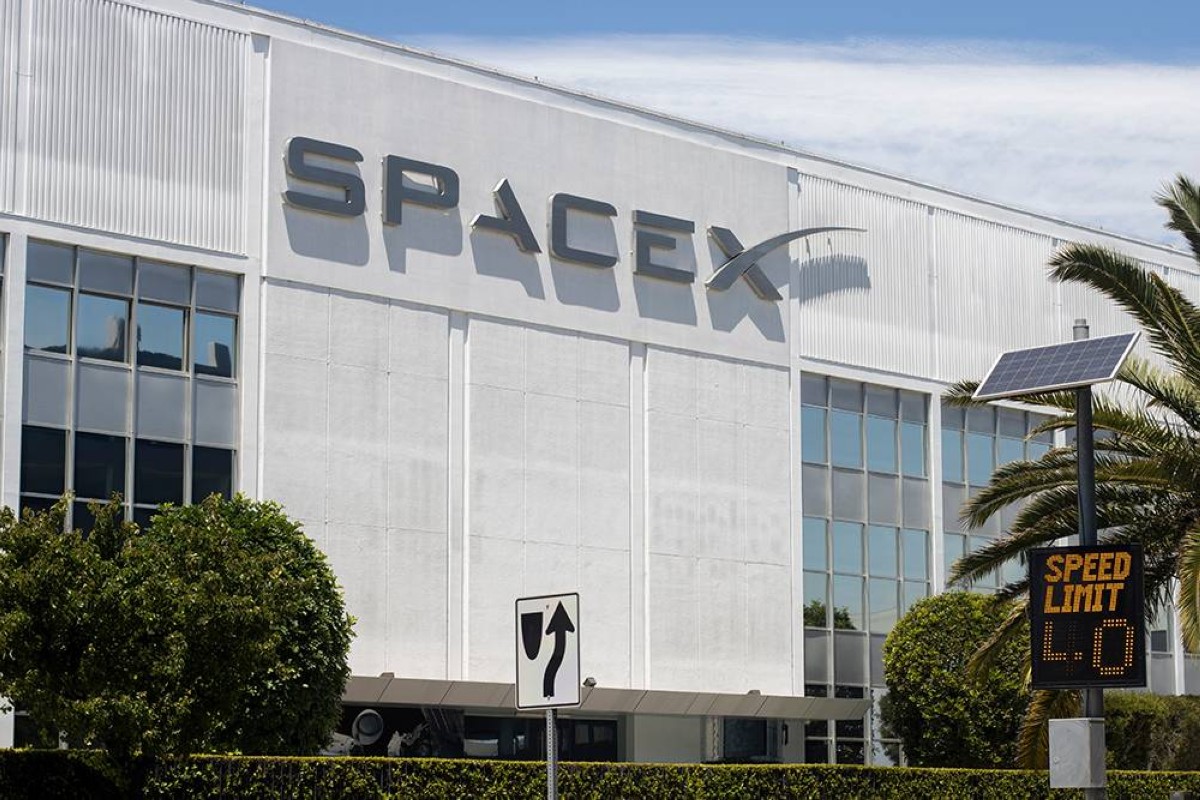
SCATMAN hack: SpaceX breach and brand-token crime
The whole operation took less than an hour, and the most valuable thing the attacker stole was not money. It was credibility. On Sunday, July 12, the verified X accounts of SpaceX and Starlink, with two million and 1.6 million followers between them, reposted promotional content for a memecoin called SCATMAN. The repost sat in the normal flow of the accounts' output, alongside routine posts about Grok model updates, with no defacement, no changed banner, none of the usual tells of a takeover. It simply looked like SpaceX had something to say about a token.Buyers responded the way buyers respond. In the first twenty minutes the token rose 575%. By the time the posts came down on Sunday evening and the accounts were restored, the attacker had minted ten trillion SCATMAN, sold the supply across two wallets for roughly 73.7 ether, and walked away with about $135,000. Everyone who bought on the strength of a SpaceX repost held a worthless token. The dollar figure is almost embarrassing. A hundred and thirty five thousand dollars is a rounding error next to the eight figure hacks that define crypto's security discourse, and it is nothing at all next to the $1.16 billion in bitcoin sitting on SpaceX's own balance sheet. That gap between the scale of the brand exploited and the size of the payday is the actual story, and it points at something the industry has not solved: the cheapest attack surface in crypto is not a smart contract or a bridge. It is a login. Every serious defense crypto has built assumes the attacker must beat cryptography, economics, or code. The July 12 attacker beat none of those. They beat a password, borrowed a decade of accumulated public trust for roughly forty minutes, and converted it directly into ether at the expense of anyone who believed what a verified account told them. What happened, in order The sequence, reconstructed from onchain analytics and screenshots circulated before the posts were deleted, is short enough to fit in a paragraph and repeatable enough to fit in a playbook.An account calling itself Sam Catman appeared, displaying an affiliation badge that falsely tied it to SpaceX's artificial intelligence work. The name was a pun on Sam Altman, timed to the ongoing public feud between Elon Musk and the OpenAI chief executive, a feud that had produced a $150 billion lawsuit and had Musk himself posting about scamming the day before the breach. The joke did work that the token itself could not: it made the promotion feel like something SpaceX might plausibly amplify. Musk's companies post irreverently. A crude swipe at a rival chief executive, delivered as a memecoin, sits within the observed behavior of the brand, and that plausibility was engineered rather than lucky. The SCATMAN token was deployed on Robinhood Chain, the trading platform's layer 2 network that had gone live eleven days earlier and permits anyone to deploy a token without approval. The SpaceX and Starlink accounts then reposted the Sam Catman promotion, complete with the contract address and ticker. Trading exploded. Reported peak market capitalization varies sharply by source and by measurement window, from roughly $800,000 in the first twenty minutes to $2 million on some trackers to $32 million at the high water mark reported by onchain analysts, with twenty four hour volume around $5.7 million. The spread itself tells you something about the quality of the market: on a token this thin, market capitalization is a number generated by the last trade, not a measure of anything real.The attacker sold. Onchain analytics firm Lookonchain traced ten trillion tokens dumped for 59 ether, worth about $108,000, from one wallet, and a further 59.28 million tokens sold for 14.7 ether, about $27,000, from a second wallet controlled by the same actor. Liquidity drained. The price collapsed. The posts were removed, the Sam Catman account was suspended, and control of the SpaceX and Starlink handles was restored the same evening. As of publication, neither SpaceX nor X has explained how the accounts were compromised. Robinhood has not commented on its chain hosting the token. Every figure in the paragraphs above comes from third party onchain analysis, not from any company disclosure, which is itself worth noticing: the only institution that produced a public account of what happened was the blockchain. Credibility arbitrage is the business model Strip away the specifics and the attack has one moving part. Attackers are not building audiences. They are borrowing them, for the length of a single post, and converting borrowed trust into ether before the loan comes due.The economics are brutal in their simplicity. A memecoin launched by an anonymous wallet reaches nobody. The same token, reposted by an account with two million followers that has spent a decade earning the right to be believed, reaches a market instantly. The attacker does not need the trust to last. They need it to survive for the length of a candle. This is why the payday size is misleading as a measure of severity. The constraint on the attacker's profit was not the audience or the credibility. Those were enormous. The constraint was market depth: there simply were not enough buyers with enough capital in the pool to absorb ten trillion tokens at a higher price. The attacker extracted essentially all the liquidity that existed. On a deeper chain, or with a slower response from Musk's security team, the same attack with the same inputs produces a much larger number. The record supports that reading. When attackers seized the dormant account of Keith Gill, better known as Roaring Kitty, in May, they launched a token on Solana and cleared more than $600,000 in half an hour. When the Pump.fun account was compromised in February 2025, one wallet made over $135,000 in under a minute. A hijacked account belonging to former Malaysian prime minister Mahathir Mohamad produced $1.7 million in losses. The pattern list is long and its membership is indiscriminate. The United States Securities and Exchange Commission's own account announced a fake bitcoin ETF approval in January 2024, moving the entire market. Scroll co-founder Ye Chen's account was taken over in January 2026. Pepe creator Matt Furie's account pushed a scam token months later. World Liberty Financial co-founder Zach Witkoff, the leader of Myanmar's junta, and a BBC presenter have all been used as unwitting distribution. What unites them is not an industry, a chain, or a security posture. It is a follower count. The defense industry has no product for this. There is no audit that certifies a chief executive's password manager. There is no bug bounty covering a social media platform's session token handling. The security spend that protects a protocol treasury, multisig thresholds, hardware wallets, timelocks, all of it terminates at the edge of the chain, and the attack originates one layer above, in a consumer product operated by a company with no stake in crypto's outcomes. The industry has outsourced its most important trust primitive to a social network and has no contractual relationship with it whatsoever. Why the defenses that exist do not cover this Crypto has spent years building defenses against a different threat model. Audits check contract code. Bug bounties surface protocol flaws. Formal verification proves that a program does what its specification says. Timelocks and multisigs guard treasuries, a lesson the industry learned expensively when a single vote drained a DAO, which crypto.news examined in its explainer on what a governance attack is. All of that machinery assumes the attack comes through the chain. The SCATMAN attack came through a social media account. There was no contract to audit, because the contract did exactly what it was written to do. There was no protocol to exploit, because no protocol was exploited. Robinhood Chain worked as designed: it let someone deploy a token permissionlessly, and it let that token trade. Every component behaved correctly, and buyers still lost their money, because the failure happened in the layer nobody in crypto controls and everybody depends on, the layer where reputation is stored. Consider what a diligent buyer could actually have done in the twenty minute window. Check the contract? It was a standard token; the exploit was the promotion, not the code. Check holder concentration? The attacker held everything, which describes most tokens in their first minutes and is not by itself proof of fraud. Check the liquidity lock? There was liquidity, briefly. Check the source? The source was SpaceX. That was the whole point. The honest conclusion is that the standard retail checklist offers close to zero protection against this specific attack, because the checklist assumes the promotion is the least trustworthy input and the chain data is the most trustworthy. Here the chain data looked ordinary and the promotion looked impeccable. The only defense that works is a rule rather than an inspection: no verified account's post, from any brand, is a reason to buy a token minted minutes earlier. That rule costs its holder every genuine celebrity token launch, which is a price most people should be delighted to pay. The Robinhood Chain problem The venue is not incidental. SCATMAN landed on a chain in its second week of life, and the chain's condition shaped the outcome.Robinhood Chain launched on July 1 as a permissionless layer 2 aimed at onchain finance and real world asset tokenization. What arrived instead, at least first, was memecoins: more than 75% of trading volume in the opening week, with the network's memecoin market capitalization briefly topping $244 million, more than $3 billion in cumulative decentralized exchange volume, and 19,586 new tokens created in a single day by July 13, second only to Solana. Cross chain interoperability provider Relay Protocol publicly warned about honeypot tokens proliferating on the network, coins hardcoded so buyers cannot sell or whose transfers route funds to an attacker, and said it was blocking them as they appeared. That is the environment SCATMAN exploited: a young chain with real retail attention, minimal mature tooling, and an inflow of tokens far exceeding anyone's ability to screen them. It is not a Robinhood specific failure. It is what permissionless launch infrastructure looks like at week two, and Solana's own history through the rise of memecoin launchpads documents the same arc. The difference is the brand on the door. A chain carrying the name of a mainstream retail brokerage, whose users skew toward people who have never evaluated a token contract in their lives, inherits a duty of care that a purely crypto native chain never had, and the network's design offers no obvious way to discharge it. Robinhood's silence on the incident is therefore the most interesting non-event of the week. The company did not deploy the token, did not promote it, and cannot in any technical sense prevent the next one. It also cannot escape the fact that a scam bearing SpaceX's stolen credibility used its chain to reach its users. The gap between what a chain operator controls and what a chain operator is blamed for is about to become a live commercial question, not a philosophical one. The tell that was there, and why it did not help There was one genuine signal available in real time, and almost nobody could use it.The Sam Catman account was new. Its affiliation badge, the marker that ties an account to a parent organization on the platform, was fraudulent, claiming a link to SpaceX's artificial intelligence work that did not exist. Someone who knew how badge inheritance works, who checked the account's age, and who understood that a legitimate SpaceX subsidiary would not announce itself through a pun account, could have identified the fraud before buying. That describes a vanishingly small population, and it describes them under conditions that made the knowledge useless. The window was twenty minutes. The signal required domain expertise in social media platform mechanics, not crypto. And the accounts amplifying the fraud were the exact accounts a user would check to verify it. The verification path led straight back to the attack. This is what makes brand token crime structurally different from the failure modes retail has been trained on. A rug pull on a random token asks a buyer to evaluate a stranger and get it wrong. A hijacked account asks a buyer to evaluate an institution and get it right, then punishes them for the institution's operational security failure. The buyer's diligence was not insufficient. It was aimed at the wrong entity, because the entity that failed was never one they could inspect. The generic advice to check holder distribution and creator history, sound guidance across the meme coins landscape, simply does not reach a case where the creator's history is a forged badge and the distribution looked normal for sixty seconds. The case that this does not matter much There is a serious argument that the industry should be relaxed about all of this, and it deserves a fair hearing.Start with the numbers. The total damage was $135,000, spread across an unknown number of buyers who chose to purchase a token named after a joke about a lawsuit, minted an hour earlier, on a chain eleven days old. Compare that to the $11 billion in crypto related losses the FBI's Internet Crime Complaint Center reported in 2025, or the industrial scale of romance and investment fraud operations. Account takeover memecoin scams are, in aggregate, a rounding error against the frauds that destroy people's lives. Continue with responsibility. Nobody was tricked into revealing a private key. No wallet was drained. Buyers made a voluntary purchase of a speculative asset in an unregulated market on the basis of a social media post, which is a decision the market is entitled to price. The permissionless systems performed exactly as advertised: anyone can create a token, anyone can buy it, nobody is protected. That is the deal, and it is disclosed in every interface. Add that the response worked. The accounts were recovered within hours. The posts were deleted. The fake account was suspended. Lookonchain published both wallet addresses, meaning the proceeds are now permanently marked and traceable, an outcome that traditional financial fraud rarely delivers. Exchanges can flag those addresses. Investigators have a starting point. Compare the transparency of that aftermath to a wire fraud of equivalent size, where the money simply disappears into correspondent banking. Upbit's freeze of proceeds after a recent onchain treasury attack shows that marked funds are not merely symbolic, and exchanges do act on published addresses when the trail is clean enough. Finish with proportion. The attack is self limiting. Its profit is capped by the depth of the pool it dumps into, and thin pools are thin precisely because the market has correctly assessed these tokens as worthless. The scam succeeds only against buyers who ignore every rule the industry has spent a decade writing down.None of that is wrong. It is also, taken together, an argument for doing nothing, which is why the counterargument matters more. The case that it matters a great deal The dismissive reading treats $135,000 as the measure of the harm. It is the measure of the attacker's revenue, which is a different quantity entirely.The harm is the erosion of the only verification mechanism retail actually uses. Ordinary people do not read contracts. They read who is saying it. That heuristic, trust the verified account of a company that builds rockets, is the single most reliable signal available to a non technical person on the internet, and each successful hijacking teaches the market that the signal is unreliable. A world in which no institutional account can be believed is a world in which every genuine announcement, every legitimate product launch, every real partnership arrives pre-discounted. The industry is spending down a shared reputational asset it did not build and cannot replenish, one $135,000 withdrawal at a time. Then consider the trajectory. This attack costs almost nothing to attempt, carries low apparent consequence, and produces a payday in minutes. The rate of attempts is a function of expected value, and expected value is rising as more mainstream brands acquire crypto surfaces. SpaceX now holds 18,712 bitcoin and trades as a Nasdaq-100 component whose price is discovered partly on crypto rails, a structural reality crypto.news examined when the stock joined the index. Every corporate account with a crypto adjacent story is now a live financial instrument, whether the company knows it or not, and the compromise of such an account is no longer a public relations incident. It is a market event. Notice too what the attacker actually needed: no capital, no code, no confederates, and roughly one hour. Meanwhile, the defenders needed exactly what they did not have, which is a way to un-say something to millions of people faster than a bot can buy. Deletion is not a remedy when the trade has already cleared. The asymmetry is total: the attack executes at the speed of a repost, and the correction executes at the speed of a corporate security team noticing, escalating, and regaining access. In the interval, an irreversible ledger records everything. And the regulatory exposure is asymmetric in an ugly way. Attackers face weak enforcement against pseudonymous wallets. The chains, the brokerages, and the exchanges hosting the activity face regulators who are actively deciding, this month, how much responsibility infrastructure operators bear for what runs on top of them. Every SCATMAN is evidence in that proceeding, and it is evidence that arrives conveniently packaged: a household brand, a retail brokerage's chain, an unsophisticated victim class, and a perpetrator who will probably never be identified. The industry's argument for permissionless infrastructure gets harder to make each time permissionless infrastructure is the medium through which a stolen brand robs retail buyers, and the regulatory window in which those arguments are being weighed is measured in weeks, not years. What would actually change the math Nothing in the current toolkit addresses the root cause, which is that a verified account's authority transfers instantly and totally to whoever controls the login at a given moment. The platform side is straightforward and unattempted. Hardware key enforcement for accounts above a follower threshold. Delay windows on posts containing contract addresses from accounts that have never posted one. Loss of affiliation badge inheritance for accounts created within a defined period. None of these is technically hard. All of them are commercially unattractive to a platform that monetizes velocity, and none has been implemented despite three years of nearly identical incidents. The absence is not a technology gap. It is a revealed preference about whose losses count. The chain side is more interesting because it cuts against the ideology. A permissionless chain cannot vet tokens, but the interfaces on top of it can, and increasingly do: Relay Protocol's honeypot blocking is exactly that, a voluntary screening layer occupying the gap between what the protocol permits and what users can survive. Expect more of it, and expect the resulting fight over whether interface level screening is prudent stewardship or the reintroduction of the gatekeepers the entire architecture was built to remove. The user side is the only one available today, and it is a single sentence: the credibility of the messenger tells you nothing about the token, because the messenger's credibility is exactly what is being stolen. A verified account promoting a token minted minutes ago is not evidence of legitimacy. Under current conditions it is closer to evidence of the opposite. The ledger nobody wants to read Here is the uncomfortable arithmetic of July 12. A brand worth over a trillion dollars in public market value was used, without consent, to sell a worthless asset. The theft netted about the price of a modest car. The proceeds are permanently visible on a public ledger. The victims have no recourse. The platform has said nothing. The chain has said nothing. The brand has said nothing. And the mechanism that made it all possible remains completely intact, available to anyone who compromises the next account. The scam economy has discovered that the most valuable asset in crypto is not any token. It is a moment of unearned belief, and belief is the one thing on this market with no smart contract protecting it, no audit verifying it, and no liquidity lock keeping it in place. Until that changes, $135,000 is not a measure of the damage. It is a receipt for the trial run. Disclaimer: This article is for informational purposes only and does not constitute investment advice. Figures on wallet activity, token supply, and market capitalization derive from third party onchain analytics reported by Lookonchain, GeckoTerminal, and DEX Screener, not from official company disclosures, and reported peaks vary between sources. No company involved has confirmed the breach mechanism. Details reflect information current as of July 14, 2026, and are subject to change. Always do your own research.

Help wanted: Anthropic hires to head off catastrophe
Why it matters: Anthropic has 32 very scary job openings for roles designed to prevent people from using AI to build everything from man-made explosives to nuclear weapons. Catch up quick: Anthropic is hiring analysts focused on chemicals and explosives, nuclear weapons, financial scams, cybercrime and more. * "As an Enforcement Analyst focused on Radiological & Nuclear Harms, you will play a critical role in protecting against the misuse of AI systems for radiological and nuclear harms," one job description reads. * Pay for these roles ranges in the mid- to upper-$200Ks. "Ensuring our models don't provide potentially harmful information is central to responsible development," an Anthropic spokesperson said. * "That's why we regularly hire experts in a wide range of sensitive fields -- people who understand these harms and how AI can advance them -- to stress-test our systems and bolster our defenses before a model ever goes live." * The spokesperson added that the specificity of the job descriptions and titles are meant to name the exact harm, which is necessary for recruiting the right candidates. Between the lines: More than any other AI lab, Anthropic has come under criticism for being too doomsday. * But the company is putting money behind its belief that the potential downsides of AI are all too real. Flashback: CEO Dario Amodei has long warned how bad actors could use AI for harm. In a January essay, he named biological attacks as the most worrisome scenario among many. * "I do not think biological attacks will necessarily be carried out the instant it becomes widely possible to do so -- in fact, I would bet against that," Amodei wrote. "But added up across millions of people and a few years of time, I think there is a serious risk of a major attack ... with casualties potentially in the millions or more." * Early this year, Anthropic broke with the Defense Department over the potential use of its technology for mass surveillance and autonomous weapons. How it works: As models become more powerful, AI labs are looking to bolster their safety teams. * OpenAI is hiring a researcher specializing in biological and chemical risks with an annual base salary of $295K to $445K. * Safety analyst roles at Anthropic require being able to think like someone trying to evade detection, the company says, adding that they employ hundreds who are dedicated to safety. They stress-test the models accordingly, fixing vulnerabilities. * The jobs require more than back-end coding. People need real-world expertise, whether in biology, explosives or other dangers. The bottom line: Talent is flocking to the private sector instead of government.

SpaceX's Blow-It-Up Testing Won't Fly on Starship
SpaceX's willingness to blow stuff up and learn from the failures has propelled it from a cash-strapped startup to one of the world's most valuable companies (and kick-started a commercial space revolution along the way). The development of the Falcon 9 rocket was achieved over a relatively short ...

U.S. Government Intervenes in xAI's Gas Turbine Clean Air Lawsuit
Court Checkpoint: A judge must decide whether plaintiffs can keep seeking a halt while federal rules for portable units remain unsettled. The U.S. Justice Department has filed a motion to intervene in and dismiss a Clean Air Act lawsuit over xAI's Southaven power operation. Federal lawyers argued that closing the AI facility would conflict with economic, military, national-security, and energy-policy interests. The private suit tests whether portable generating equipment used for on-site AI power remains subject to federal air-permit duties. Behind-the-meter generation lets a facility produce and consume electricity on site instead of relying on the public grid. Earlier plans put Colossus 2's power goal at gigawatt scale, an unusual target for a single computing site. The federal intervention neither grants xAI a Clean Air Act exemption nor resolves the plaintiffs' allegations. A judge must still consider the disputed mobile fleet, its potential emissions, and the consequences for nearby communities. xAI has provided no current response. What the Turbines Could Mean for Nearby Communities xAI has reportedly installed 59 mobile gas turbines for its Southaven AI data center, Colossus 2. Of those units, 57 have been at the unpermitted Southaven xAI power project, with two elsewhere. In January, xAI operated 27 turbines at the Colossus 2 natural-gas turbine installation while maintaining that temporary units were exempt from permits. Potential pollution rises with the number of active turbines and their operating intensity. That makes the gap between 27 units and the 59-unit allegation operationally material. The concentration of behind-the-meter gas generation at one location are unusually large. More active units can produce more electricity but also more emissions. Output from the 30 Southaven turbines could reach about 2,500 tons of nitrogen oxides, 4,000 tons of carbon monoxide, and 22 tons of formaldehyde annually. Nitrogen oxides help form smog. Figures for 30 turbines are not measurements from the full 59-unit allegation; operating schedules and the number of active units would change actual totals. Estimated asthma rates in the affected area exceeded countywide levels in 27 of 28 nearby census tracts, while chronic obstructive pulmonary disease rates were higher in 24 tracts. Victoria Nelson, an independent environmental engineer and former U.S. Environmental Protection Agency official, warned about the risk of added exposure: "Given this community struggles with high asthma rates, additional NOx exposure at such high rates could exacerbate public health issues in a community that is already seeing more than its fair share of exposure to toxic air pollution." Added nitrogen-oxide exposure can aggravate respiratory risks. However, existing disease estimates cannot establish a causal connection between the turbines and the area's health conditions. Independent reporting indicates that Shelby County and parts of DeSoto County previously failed federal ozone standards and remain under EPA-approved maintenance plans. The Permit Fight Now Runs Through Federal Court Mississippi regulators have approved 41 permanent turbines in March, while that earlier permit baseline excluded the mobile units. Permanent equipment is tied to a fixed site. xAI has classified 27 of the installed gas turbines as portable equipment intended to move within 364 days. At about 1.2 gigawatts, the permanent units could supply substantial power, but their capacity does not extend the permit to mobile equipment. By May, 46 turbines were operating in Southaven, up from 27 in January. U.S. Environmental Protection Agency rules may still require permits above emissions thresholds. Mississippi's environmental agency directs to a page where a public notice, draft permit, or Statement of Basis can be found. A federal judge's next ruling will decide whether the plaintiffs can continue seeking an order that halts xAI's Southaven turbines.

Anthropic official says stopping AI usage is 'the wrong' response to AI cost concerns
Top Anthropic officials are cautioning against companies cutting back on their AI use as costs increase. "Something that's really top of mind for us that we kind of try to spend some time with users on is what you don't want to do is stop AI usage. That's kind of the wrong move," Angela Jiang, head of product for the Claude Platform, recently told Sequoia Capital's "Training Data" podcast. "And we do actually see some of our customers do that." Katelyn Lesse, head of platform engineering at Anthropic, said the focus on costs was part of "a normal natural cycle for companies" as they figure out the best way to deploy AI. "The thing that gets dangerous is when you're kind of just like, here's a cap and you're stuck within your cap," said Lesse, who joined Jiang for the interview. Jiang said that Anthropic often finds that AI spending has "erupted" in companies where employees procure Anthropic's AI models themselves through "some kind of shadow IT." Instead of curtailing usage, she said companies can find ways to use AI more efficiently. "What we try to kind of encourage our customers is like, you don't want to stop the innovation," she said. "If you are getting returns on top of this, you are shipping faster than ever before, you can run more operationally efficient -- then those are gains." Lesse said it's about "encouraging innovation" while understanding the different ways to get the desired result. "One is like you take Opus and you run it all night and you do something crazy," she said. "And another is maybe to get a little bit smarter with the strategies that you put together in order to create that same outcome within a lower cost. And I think that's the next layer of thinking that everyone's going to start to do." AI companies are facing an increasingly skeptical Corporate America that sees rising AI bills without what some executives have said is an adequate ROI to justify the spending. In response, AI companies like Anthropic have emphasized the cost efficiency of their models and services, which can better tailor AI to specific enterprise needs. Cost concerns could weigh on the broader AI market as companies like Anthropic approach highly anticipated IPOs. A new kind of router. Companies like Vercel are seizing this cost-conscious moment by offering customers a way to route their AI usage to the best model suited for the task. Analysts have said that routing requests will remain in high demand so long as AI token costs remain high. Jiang said a router "within the Claude space" makes sense to Anthropic. "I think the bit that we do feel really strongly about on the model routing front is like we are designing our platform for Claude, and we want to make sure that Claude is great at solving all these things," she said. In the meantime, companies are likely to continue to jockey for position over price. OpenAI CEO Sam Altman has put that strategy into sharp relief since his company released a series of new advanced models under the GPT-5.6 banner to compete with Anthropic's Fable 5. "GPT-5.6 sol is half the price and ~twice as token efficient as fable in many cases for accomplishing the same task," Altman wrote on X on Tuesday. "happy to deliver at one-quarter of the price."
Claude AI Is Now Free for Teachers: Anthropic Rolls Out Powerful Classroom Assistant
The new platform connects Claude to state academic standards, trusted curricula and classroom apps, while offering educators free premium AI features with student data privacy protections. Anthropic has launched Claude for Teachers, a new artificial intelligence (AI) platform designed specifically for K-12 educators in the US, offering verified teachers free access to premium Claude features, curriculum-aligned lesson planning tools and classroom workflow automation. Anthropic said the programme connects educators directly to academic standards across all 50 US states and integrates with widely used educational platforms, marking one of the company's biggest pushes into the education sector. Verified teachers who sign up by June 30, 2027, will receive a full year of free access. Designed to Give Teachers More Time with Students Anthropic said Claude for Teachers was built to address longstanding challenges facing educators, particularly limited planning time, growing workloads and large class sizes. In its announcement, the company said, "Claude for Teachers is designed to close the gap between educational best practices and what a teacher's week allows." It added that while research on AI use by students has produced mixed findings, "AI tools for teachers can strengthen instructional practice and improve student outcomes". The company said the platform is intended to "support the craft behind great teaching and protect what teachers value most -- time with their students." AI-Powered Lesson Planning Linked to State Standards Claude for Teachers connects to Learning Commons, enabling the AI assistant to access academic standards and learning progressions for every US state. Anthropic said lesson plans generated through Claude are automatically scaffolded and aligned with state teaching requirements. Teachers can also integrate Claude with popular education platforms including Canva Education, Brisk Teaching, Diffit, ASSISTments, MagicSchool, TeachFX, Snorkl, Eedi and Coteach. These integrations allow educators to create classroom-ready activities, personalised learning materials, diagnostic assessments and interactive designs within seconds. Among its key capabilities, Claude can generate differentiated lesson plans for students with varying learning needs, analyse classroom data such as attendance and assessment results to recommend instructional strategies, and automate recurring administrative tasks. Anthropic said teachers can assign daily jobs, such as reviewing student exit tickets and adapting the following day's lesson plan, allowing Claude to complete the work automatically. Privacy and Safety Remain Central Anthropic emphasised that Claude for Teachers has been developed exclusively for educators and includes dedicated privacy protections for schools. The company said teacher and student data will not be used to train Claude's AI models, and the platform complies with the US Family Educational Rights and Privacy Act (FERPA) through a dedicated K-12 Data Processing Addendum. The company has also partnered with the American Federation of Teachers (AFT) to align the platform with emerging privacy and safety standards for education. "We've been working with Anthropic on a Gold Standard that sets out industry best practices for safety and privacy in K-12 education," AFT President Randi Weingarten said in Anthropic's announcement. She added that the tool is "designed by and for educators to assist them instructionally and hopefully give them more time for the human relationships at the heart of learning." Broader Education Strategy Beyond the product launch, Anthropic also introduced AI Fluency for K-12 Teachers, a free training programme developed with Teach For America and the American Federation of Teachers to help educators use AI responsibly in classrooms. The company said it will also release open-source teaching resources, expand educational connectors for developers and begin piloting Claude for Teachers in Detroit Public Schools Community District to study its impact on teacher wellbeing and instructional practice. Anthropic said these initiatives form part of its broader partnership with the Gates Foundation to develop AI tools that improve educational outcomes, while a dedicated version of Claude for schools and districts is expected to launch in the future.

Anthropic outlines state-by-state plan for AI regulations, and crypto should pay attention
The Claude maker wants tailored AI rules in every US state, a regulatory approach that could eventually reshape how digital assets intersect with artificial intelligence. Anthropic, the AI safety company behind the Claude model series, is developing a framework to push for AI regulations on a state-by-state basis rather than waiting for a single federal solution. What Anthropic is actually doing The company, co-founded by Dario Amodei and staffed by veterans of the AI research world, has signaled its intent to engage with policymakers across individual US states to craft AI oversight frameworks. The approach prioritizes localized regulation over a one-size-fits-all federal mandate. No specific states have been publicly identified as initial targets. No proposed rules, timelines, or quantitative benchmarks have been documented as of mid-2025. The initiative appears to still be in its formative stages, which means we're watching a company lay groundwork rather than break ground. Anthropic has positioned itself as the responsible adult in the AI room since its founding, regularly publishing research on AI alignment and engaging with Washington in ways that competitors sometimes treat as optional. This state-level push is an extension of that identity. The patchwork problem If California imposes strict disclosure requirements on AI model outputs while Texas takes a lighter touch, companies building AI-powered financial products will face a compliance maze. That maze gets even more interesting when you layer in crypto, an industry that already navigates a famously fragmented US regulatory landscape across the SEC, CFTC, FinCEN, and dozens of state-level money transmission laws. Anthropic's push doesn't currently touch crypto or digital assets directly. There are no indications the company is positioning itself to influence cryptocurrency regulatory frameworks. Why this matters for crypto investors The immediate market impact is minimal. Anthropic is a private company. There's no token, no public equity to trade, and no direct mechanism for crypto markets to price in this regulatory strategy. Anthropic's initiative is still early. The absence of concrete proposals or target states means we're evaluating a direction rather than a destination. Dario Amodei and his team have consistently emphasized safety and regulatory engagement, but translating that emphasis into 50 different legislative conversations is a multi-year undertaking at minimum.
Inside Anthropic's state-by-state plan to ratchet up AI rules
"While there are some in the industry that think of state policy as a way to create a ceiling for federal legislation, Anthropic is not just looking to support the same bill across the country in every single state," Cesar Fernandez, the company's head of U.S. state and local government relations, said in an interview with POLITICO on Tuesday. "We're looking for legislation that meaningfully raises the bar on safety for the most capable AI systems." Fernandez's comments came in response to questions from POLITICO about OpenAI's ongoing campaign to shape states' AI regulations. The ChatGPT maker's top lobbyist, Chris Lehane, has coined the term "reverse federalism" to describe its attempts to bypass a paralyzed Congress and build a national AI framework by mirroring bills state-by-state. The veiled jab at OpenAI is on-brand for Anthropic, whose executives left OpenAI in 2020 over concerns the company wasn't prioritizing safety. Anthropic has consistently pushed for stronger AI safety rules at both the federal and state level -- an effort that some critics, particularly those close to the Trump administration and in venture capital, frame as an attempt to hamstring regulators and lock out competitors. In a statement, OpenAI spokesperson Liz Bourgeois defended its approach, saying "reverse federalism, where effective state safeguards shape national standards, helps regulators enforce the law, gives the public clearer protections, and allows developers to focus resources on safety rather than conflicting requirements." The split between OpenAI and Anthropic's approach to statehouses comes at a critical time for AI regulation. With Congress reluctant to act and the White House flip-flopping between a light touch and a heavy hand, the AI industry is increasingly looking to states for regulatory clarity. Whether state legislators ultimately coalesce around a single AI safety framework or work to outdo each other over time will have a massive impact on the final shape of AI rules in the U.S. Similar to Lehane, Fernandez said he wants a federal framework, but that a government response to the risks posed by advanced AI models "can't wait for action in Washington." The Anthropic lobbyist also set his company apart by touting its early inroads into state policy debates. Anthropic was the only leading AI lab to endorse California's 2025 law to regulate advanced AI models, the first such law in the country.

Anthropic Unveils Free Premium Claude Access For US Teachers
Anthropic is rolling out a brand new initiative aimed directly at K-12 educators across the United States. It is now offering an entire year of premium access to its popular AI tools completely free of charge. This program gives individual teachers the ability to utilize advanced features without paying the usual subscription fees. It marks a significant push to bring better technology directly into classrooms. What the new education program brings to teachers and classrooms The new Claude for Teachers campaign provides educators with specific skills built just for them. The company worked directly with Learning Commons to develop tools based on actual classroom needs. These skills help with daily teaching tasks and are rooted in proven learning science. Educators who get verified will unlock access to Claude Cowork and Claude Code. This means teachers can use the most powerful tools it has to offer. The company also released a fluency guide for anyone wanting to learn how to integrate artificial intelligence into their daily lesson plans. Right now, this offer only applies to individual educators in the K-12 system. However, it plans to release larger packages designed for entire schools and districts in the future. Eligible teachers have until June 30, 2027, to sign up and claim their free year of premium access. This step gives educators a chance to experiment with premium tools without stretching their own budgets. Providing teachers with direct access to these resources might completely change how they prepare for the school week.

Anthropic launches Claude for Teachers: Features, privacy and eligibility
Anthropic has introduced Claude for Teachers, a version of its AI assistant built specifically for K-12 educators in the United States. The company said verified teachers will receive free access to premium Claude features, teaching skills and curriculum resources designed to support classroom instruction. According to Anthropic, the initiative is intended to reduce the time teachers spend on lesson planning, classroom preparation and other administrative work, allowing them to focus more on students. Verified K-12 educators who enrol by June 30, 2027, will receive one year of free access to the service. Claude for Teachers is connected to Learning Commons, enabling the AI assistant to work with academic standards from all 50 US states and the learning progressions associated with them. Anthropic said the platform also incorporates instructional resources from OpenSciEd and Illustrative Mathematics, helping teachers create standards-aligned lesson plans and classroom materials. The company said educators can also use the AI tool to adapt learning materials for students with different proficiency levels by generating differentiated classroom resources. Anthropic has integrated Claude for Teachers with several education platforms, including ASSISTments, Brisk Teaching, Canva Education, Coteach, Diffit, Eedi, MagicSchool, Snorkl and TeachFX. These integrations are intended to support tasks such as creating classroom activities, generating assessments, designing lesson materials, analysing student progress and producing instructional content. The service also includes Claude Code and Claude Cowork, allowing teachers to analyse classroom data, review student performance and automate recurring tasks such as evaluating daily exit tickets and preparing lesson adjustments for the next school day. Anthropic said users decide what information is shared and that data provided through the service will not be used to train its AI models. Anthropic said Claude for Teachers is available only to educators and comes with dedicated K-12 privacy terms. The company added that the platform complies with the US Family Educational Rights and Privacy Act (FERPA) through its K-12 Data Processing Addendum to safeguard student information. Alongside the product launch, Anthropic announced AI Fluency for K-12 Teachers, a training programme developed with Teach for America, as well as a train-the-trainer module created with the American Federation of Teachers. The company also said it will release open-source teaching skills and conduct a pilot evaluation of Claude for Teachers with the Detroit Public Schools Community District.

Inside Anthropic's state-by-state plan to ratchet up AI rules
"While there are some in the industry that think of state policy as a way to create a ceiling for federal legislation, Anthropic is not just looking to support the same bill across the country in every single state," Cesar Fernandez, the company's head of U.S. state and local government relations, said in an interview with POLITICO on Tuesday. "We're looking for legislation that meaningfully raises the bar on safety for the most capable AI systems." Fernandez's comments came in response to questions from POLITICO about OpenAI's ongoing campaign to shape states' AI regulations. The ChatGPT maker's top lobbyist, Chris Lehane, has coined the term "reverse federalism" to describe its attempts to bypass a paralyzed Congress and build a national AI framework by mirroring bills state-by-state. The veiled jab at OpenAI is on-brand for Anthropic, whose executives left OpenAI in 2020 over concerns the company wasn't prioritizing safety. Anthropic has consistently pushed for stronger AI safety rules at both the federal and state level -- an effort that some critics, particularly those close to the Trump administration and in venture capital, frame as an attempt to hamstring regulators and lock out competitors. In a statement, OpenAI spokesperson Liz Bourgeois defended its approach, saying "reverse federalism, where effective state safeguards shape national standards, helps regulators enforce the law, gives the public clearer protections, and allows developers to focus resources on safety rather than conflicting requirements." The split between OpenAI and Anthropic's approach to statehouses comes at a critical time for AI regulation. With Congress reluctant to act and the White House flip-flopping between a light touch and a heavy hand, the AI industry is increasingly looking to states for regulatory clarity. Whether state legislators ultimately coalesce around a single AI safety framework or work to outdo each other over time will have a massive impact on the final shape of AI rules in the U.S. Similar to Lehane, Fernandez said he wants a federal framework, but that a government response to the risks posed by advanced AI models "can't wait for action in Washington." The Anthropic lobbyist also set his company apart by touting its early inroads into state policy debates. Anthropic was the only leading AI lab to endorse California's 2025 law to regulate advanced AI models, the first such law in the country. OpenAI didn't take a position on the California proposal ahead of its passage. But it has since turned to the law, which aims to foster greater transparency into companies' safety plans, as an example for other states to replicate.
SpaceX Fell Below Its Debut Price. History Says a $10,000 Investment Will be Worth This Much in a Year.
Space Exploration Technologies (NASDAQ: SPCX) splashed onto the scene just a few weeks ago when it completed the world's biggest initial public offering, raising more than $85 billion after the exercise of an overallotment option. Of course, SpaceX wasn't new to investors -- the company had been making headlines for years, particularly for its rocket launches for NASA. But this was the first time investors, from retail to professional, could easily invest in the company. Demand was high during the IPO -- it was greatly oversubscribed -- and during the first days of trading. The stock soared 50% from its $150 debut price to a peak of $225 on June 16. In recent days, though, SpaceX has lost the positive momentum. In fact, the stock has slipped below its debut price. Missed Nvidia in 2009? This Rare Signal Is Flashing Again. In 2009, a "Double Down" signal flashed for a little-known chipmaker called Nvidia. For the first time in years, that same "Total Conviction" signal is flashing for a company 1/100th the size of Nvidia. Continue " If you had invested $10,000 in SpaceX's early days of trading, how much would this investment be worth in a year? History offers us a very clear answer. Image source: Getty Images. Exciting growth businesses First, though, let's take a quick look at the SpaceX story. The company has attracted investors thanks to its exciting growth businesses and its ambitious leader, Elon Musk. SpaceX operates in rocket launches, satellite-based internet, and artificial intelligence (AI), areas that each could drive significant revenue gains if they reach certain goals. And speaking of goals, many are ambitious, but if the company can accomplish them, they could be game changers. For example, SpaceX aims to develop data centers in space, and its most ambitious goal may be to colonize Mars. What's interesting about this mix of businesses is that they fit together nicely, with accomplishments of one driving gains in another. SpaceX's work to make reusable rockets and drive down the costs of launches will help it launch equipment more cheaply and quickly into space for its other businesses. Elon Musk is the chief executive officer behind these ambitions, and while some investors aren't fans of his strategies, others are -- and they generally rush to bet on Musk. The popularity of the SpaceX IPO is proof of this. $18 billion in revenue SpaceX has made progress in various areas -- it aims to launch its fully reusable rocket, Starship, with payloads later this year -- and is delivering growth. Revenue last year climbed more than 30% to $18 billion. But SpaceX needs to invest heavily to support the development of its technology, and this pushed the company to a $4.9 billion loss. This may continue, considering the complexity of the technology involved in the company's businesses. Now, let's consider the potential value of a $10,000 investment in SpaceX after the stock's first full year of trading. A look at some of the biggest IPOs, from Meta Platforms to Uber Technologies, shows that eight out of 10 fell in their first 12 months on the stock market. Seven of them delivered double-digit declines, and the average drop was 12%. We might consider SpaceX's performance as falling into the average, and here's why: On its first day of trading, it climbed nearly 20%. According to a study by Jay Ritter of the University of Florida, the average first-day return of more than 6,000 IPOs between 1990 and 2025 was just over 21%. So if we also apply the average drop seen in our look at 10 major IPOs to SpaceX, we come up with the following: History shows us that your $10,000 investment in SpaceX would be worth $8,800 after 12 months. Major IPOs in general haven't delivered gains after their first year on the market, and the greatly popular SpaceX could follow unless it breaks with this historical trend, which, of course, is possible. Still, all of this means that investors shouldn't necessarily rush to get in on IPO stocks, as there may be better entry points down the road. Should you buy stock in Space Exploration Technologies right now? Before you buy stock in Space Exploration Technologies, consider this: The Motley Fool Stock Advisor analyst team just identified what they believe are the 10 best stocks for investors to buy now... and Space Exploration Technologies wasn't one of them. The 10 stocks that made the cut could produce monster returns in the coming years. Consider when Netflix made this list on December 17, 2004... if you invested $1,000 at the time of our recommendation, you'd have $398,160!* Or when Nvidia made this list on April 15, 2005... if you invested $1,000 at the time of our recommendation, you'd have $1,249,202!* Now, it's worth noting Stock Advisor's total average return is 918% -- a market-crushing outperformance compared to 209% for the S&P 500. Don't miss the latest top 10 list, available with Stock Advisor, and join an investing community built by individual investors for individual investors. See the 10 stocks " *Stock Advisor returns as of July 15, 2026. Adria Cimino has no position in any of the stocks mentioned. The Motley Fool has positions in and recommends Meta Platforms and Uber Technologies. The Motley Fool has a disclosure policy. The views and opinions expressed herein are the views and opinions of the author and do not necessarily reflect those of Nasdaq, Inc.

Polymarket odds put Farage at 96% in Clacton by-election market
predict.info -- Premium Domain For Sale Domain only: USD 200,000. Prediction platform technology priced separately. predict.info Clacton By‑Election Winner Odds Drift Higher: Farage's 96.35% Implied Probability Moves Without a Direct News Catalyst Polymarket traders are pricing the Clacton by-election winner market as a near-lock for Nigel Farage at 96.35%, up 0.7 percentage points, on $2.13M in volume. The latest external news in the feed is unrelated to this contract, making the pricing move a clean read on market positioning rather than a direct headline reaction. Key Takeaways * Prediction: Nigel Farage leads the Polymarket Clacton by-election winner market at 96.35% implied odds (No 3.65%). * Basis: Despite an unrelated news item in the feed, the contract ticked up 0.7 pp to 96.35%, consistent with a high-consensus market rather than headline-driven repricing. * Timing: The market is scheduled to resolve by 2027-06-30T23:59:00Z; recent momentum is modest, with +0.4 pp over 24h and +0.4 pp over 7d. A separate news report says a fundraiser launched after Colombian national Joan Sebastián Guerrero was fatally shot by an ICE agent in Maine has raised nearly $300,000. The story describes multiple fatal incidents tied to federal immigration enforcement operations and says ICE agents were instructed to largely suspend vehicle stops while the shooting remains under investigation. Market Microstructure Check: $2.13M Volume as Farage Ticks +0.7pp (95.65%→96.35%) While Other Outcomes Sit at 50/50 This is a multi-outcome Polymarket contract: each candidate is an outcome, and the displayed percent is the implied probability that outcome wins at resolution, not a polling average. Nigel Farage is priced at 96.35% Yes / 3.65% No, which signals a tight consensus for the leader; by contrast, several other listed outcomes show 50% Yes / 50% No, suggesting they are not meaningfully price-discovered in the current snapshot. The market is active and has traded $2,128,072, with the latest move a modest +0.7 pp (95.65% to 96.35%) alongside a historical summary marked bullish with moderate momentum and moderate volatility. Even with that drift higher, the 24h and 7d changes are both only +0.4 pp, reinforcing that the contract is mostly trading as a settled view rather than swinging on each news cycle. Because settlement is set for 2027-06-30T23:59:00Z, the key mechanic for traders is whether the eventual official winner matches the selected outcome, not how close the race feels on any given day. Watch whether volume continues to accumulate without moving the leader much (a sign of deepening consensus), or whether the leader's price breaks materially below the low-to-mid 90s range seen in the historical snapshots, which would indicate renewed disagreement. Also monitor whether other outcomes begin to show non-50/50 pricing, signaling real two-sided interest beyond the current front-runner. What Traders Watch Next on Polymarket: Cross‑Contract Signals From UK Politics Markets to Macro and Crypto Event Contrac Beyond this UK politics tape, traders often cross-check conviction against Polymarket's other high-traffic contracts to see where risk is actually moving. On the deep-liquidity "Democratic Presidential Nominee 2028," Gavin Newsom leads at 20.15% on $1,235,941,392 in volume, while Europe focus stays hot with "Next French Presidential Election" pricing Marine Le Pen at 31.15% on $112,735,421. In Latin America, "Brazil Presidential Election" has Luiz Inácio Lula da Silva at 60.5% on $112,969,722 -- useful as a read on how quickly political odds can gap when flow shows up across markets. Odds Trend By the Numbers * Platform: Polymarket * Market: Clacton by-election Winner * Contract type: Price strike ladder: each rung has separate Yes/No; Yes means the spot price is above that USD strike at settlement. * Resolution window: Jun 30, 2027 (UTC) * Status: Active (open for trading) * Volume: ~$2,128,072 Top strike rungs +48 more strikes not shown

SpaceX makes Wall Street history with record $75bn IPO
SpaceX has made history with the world's largest initial public offering (IPO), raising $75 billion in a landmark stock market debut that values Elon Musk's space and satellite company at approximately $1.8 trillion. The company priced 555.6 million Class A shares at $135 each ahead of its June 12 debut on the Nasdaq Global Select Market and Nasdaq Texas under the ticker symbol, SPCX, surpassing every previous IPO in terms of capital raised. The offering marks a moment for the commercial space industry by opening one of the world's most closely watched private companies to public investors after more than two decades of remaining privately held. Investor appetite proved strong, with reports indicating demand exceeded $250 billion, which is approxately more than three times the size of the offering as institutional investors rushed to secure allocations. SpaceX subsequently increased the size of the deal after underwriters exercised their full overallotment option, bringing total gross proceeds to approximately $85.7 billion from the sale of 638.9 million shares. Founded in 2002 by Elon Musk, SpaceX has transformed the global space industry through reusable rockets, commercial satellite launches and its Starlink satellite internet network. The company has become a critical launch provider for NASA, the U.S. Department of Defense and commercial customers while expanding broadband access globally through Starlink. The IPO provides SpaceX with fresh capital to improve development of its next-generation Starship rocket programme, expand its Starlink constellation and invest in future technologies aimed at enabling interplanetary travel. At its IPO valuation, SpaceX joins the ranks of the world's most valuable publicly traded technology companies despite remaining unprofitable. The company generated roughly $19 billion in revenue last year, driven largely by Starlink subscriptions and launch services, according to its public filings. The listing is also expected to increase Musk's wealth, reinforcing his position among the world's richest individuals. A consortium of major investment banks led by Goldman Sachs, Morgan Stanley, BofA Securities, Citigroup and JPMorgan managed the offering. The transaction has already boosted underwriting revenues across Wall Street, with Goldman Sachs reporting a sharp increase in equity underwriting fees following the blockbuster listing. Since its market debut, however, SpaceX shares have experienced heightened volatility as investors reassess the company's premium valuation, future profitability and growing competition in the commercial space sector. The stock has retreated significantly from its post-IPO highs amid concerns over valuation and the potential increase in tradable shares after lock-up periods expire.