News & Updates
The latest news and updates from companies in the WLTH portfolio.
ETtech Explainer: How Meta's Muse Spark fares against Anthropic's Opus, OpenAI's GPT, Google's Gemini models - The Economic Times
Muse Spark is the first model from the Meta Superintelligence Labs. It is a natively multimodal, reasoning-focussed AI model, designed to power the next generation of Meta AI products. While the model stands out in multimodal use cases and real-world integrations, it lags in core reasoning and agentic coding benchmarks. Mark Zuckerberg's Meta Platforms on Wednesday launched Muse Spark, its first model in its new Muse series. This is the first large language model (LLM) from Meta Superintelligence Labs since Scale AI's former CEO, Alexandr Wang, took charge of the artificial intelligence (AI) lab. Here is a deep dive into the model and how it fares against its competitors. What is Muse Spark? Muse Spark is the company's natively multimodal, reasoning-focussed AI model, designed to power the next generation of Meta AI products. The company claims this to be a part of its broader goal of building 'personal superintelligence,' meaning assistants that understand users' context and help with real-world tasks. Muse Spark is a small, fast, and efficient model built through a complete overhaul of Meta's AI stack over the past nine months. The model supports interactive and creative applications, enabling users to build tools, dashboards, and games directly from prompts. A new 'Contemplating mode' on the platform enhances reasoning by coordinating parallel agents, improving performance on difficult benchmarks while maintaining efficiency. The model is also optimised for test-time reasoning, balancing accuracy with lower computational cost. What has been Meta's history with LLMs? What is Meta Superintelligence Labs? In 2023, Meta launched Llama 1 and Llama 2, its first foundational models in multiple sizes, ranging from 7B to 65B parameters, with Microsoft. In April 2024, it launched Llama 3 trained on significantly larger data. By April 2025, Meta launched Llama 4, which received mixed reactions, leading to Zuckerberg forming an internal AI division called the Meta Superintelligence Labs (MSL). MSL was formed in June 2025, as Zuckerberg reorganised the company's AI efforts. Wang joined as chief AI officer following Meta's roughly $14 billion investment in the company. Nat Friedman, ex-CEO of GitHub, now leads product and applied research, while Shengjia Zhao, co-creator of GPT-4 and OpenAI's o1, serves as MSL's chief scientist. The Llama series gained widespread popularity in part due to its open-weight approach, which enabled broad developer access and innovation. In contrast, Muse Spark is currently proprietary, limited to the Meta AI app and website, with access also restricted to a private API preview for select users. Is it better than OpenAI's GPT, Anthropic's Opus, and Google's Gemini models? Across benchmarks, Muse Spark trails Anthropic's Opus 4.6, OpenAI's GPT 5.4, and Google's Gemini 3.1 Pro, particularly on core reasoning and agentic coding tasks. However, Muse Spark is competitive in multimodal and applied domains and consistently outperforms xAI's Grok's 4.2 reasoning model across most benchmarks. It performs strongly on visual understanding tasks like CharXiv and SimpleVQA and holds its own in health-focussed and real-world tool-use benchmarks such as HealthBench and t²-Bench. Additionally, there are some interesting differentiators for Meta's latest model. A key differentiator is its ability to draw on data from Meta's high-usage platforms, making it more useful for everyday tasks such as planning, shopping, and content discovery. In healthcare, it is trained on physician-curated data to provide guidance on common queries, including interpreting charts and food labels. "Muse Spark powers a Meta AI that sees and understands the world around you, pulls from real conversations across our apps, and reasons through complex questions in health, science, and math. built for the 3 billion people already using our apps every day," Wang wrote in a post on X. (sic) Further, Muse Spark has undergone safety evaluations under Meta's Advanced AI Scaling Framework, showing strong refusal behaviour in high-risk areas and no significant autonomous risk, with external reviews noting high test awareness but no deployment concerns. Lastly, Meta will be able to integrate this model more easily with its existing hardware ecosystem, making it accessible across smart glasses (including Ray-Ban and Oakley), virtual reality (VR) devices, and other platforms. How to use the model? Muse Spark is available via the Meta AI app and website, with features rolling out initially in the US and expanding globally. To access the chatbot, users need to sign in with a Meta account, such as Instagram or Facebook, after which they can start conversations with the model. This approach is similar to xAI's Grok and Anthropic's Claude, whereas OpenAI's ChatGPT and Google's Gemini allow access without mandatory sign-in. Meta plans to offer private API access to select partners and may open-source future versions. A broader rollout is also planned across Instagram, Facebook, WhatsApp, Messenger, and its AI-enabled wearables.

Vandenberg rocket launch today. Where to see SpaceX liftoff
Less than an hour before the Artemis II astronauts are due to land near California, SpaceX could launch a rocket about 200 miles north. Less than an hour before the Artemis II astronauts are due to splash down off the coast of San Diego, California, SpaceX could launch a rocket about 200 miles north. A Falcon 9 rocket is due to get off the ground Friday, April 10 from the Vandenberg Space Force Base in Santa Barbara County. Its mission? Deploy SpaceX's Starlink broadband internet satellites into low-Earth orbit. The launch window is due to open shortly before the four Artemis II astronauts are due to return from a 10-day mission around the moon and make a water landing in the Pacific Ocean. Interested in catching a sight of the launch? Plenty of nearby spots are popular among spectators. Just keep in mind that postponements due to weather or issues with rockets are common with spaceflight. Check back with the VC Star for any updates on the impending launch. In the meantime, here's what to know about the upcoming SpaceX rocket launch from Vandenberg in Santa Barbara County, as well as where to watch it. Is there a rocket launch today? Next mission from Vandenberg in California SpaceX is working toward a Friday, April 10, launch from Southern California, with a four-hour launch window opening at 7:39 p.m. PT. A Federal Aviation Administration operations plan advisory suggests a backup opportunity is available the next day if the launch were to be postponed. Where is the next launch from California? What to know about trajectory The launch will take place from Space Launch Complex 4-East (SLC-4E) at the Vandenberg Space Force Base in Santa Barbara County. As has become typical in 2026, the rocket will fly at a southern trajectory. What is launching from Vandenberg? SpaceX to deploy Starlink satellites SpaceX will launch its famous two-stage 230-foot Falcon 9 rocket, one of the world's most active, to deliver 25 Starlink satellites into low-Earth orbit, an altitude nearer Earth's atmosphere where they're able to circle the planet quickly. Where to watch California rocket launches in Santa Barbara County Because Vandenberg is an active military base, the launch complex does not host public viewings of launches. But if conditions are clear, rocket launches from the Vandenberg Space Force Base can be viewed from several locations as far as Santa Barbara and Los Angeles. Space Launch Schedule, a website dedicated to tracking upcoming rocket launches, provided a list of places in Santa Barbara County in California to catch the launch in person: * 13th Street and Arguello Boulevard, a public site with the closest views of SpaceX launches * Floradale Avenue and West Ocean Avenue, officially designated as the "viewing site for SLC-6" (space launch complex-6) * Renwick Avenue and West Ocean Avenue, another intersection close to the base where spectators can park * Santa Lucia Canyon Road and Victory Road, provides a partial view of Complex 4. The city of Lompoc in Santa Barbara County is filled with places to catch a rocket launch. The city's tourism bureau, Explore Lompoc, maintains this list with additional viewing locations: * Ocean Park, 6851 Ocean Park Road, Lompoc, which, while it doesn't have a view of the launch pad itself, is located only four miles from the launch site and provides a good vantage to see rockets get off the ground. Parking is limited, and law enforcement will close the road to the beach once parking is full. * Allan Hancock College, 1 Hancock Drive, Lompoc, a community college located nine miles from the launch site where the launch pad and rocket's tip can be seen before liftoff. * Riverbend Park, N A Street and McLaughlin Road, Lompoc, located within 10 miles of the launch site, is filled with large fields for activities or for spectators to set up chairs. * Surf Beach on Ocean Avenue, one of the closest and most popular places to watch rocket launches near Lompoc, as long as it's open and accessible. But a word of caution: There is an active train track, the Amtrak Surf Station, that visitors must cross. While trains don't run during launch windows, the vehicles could start up again with little warning if a liftoff is scrubbed. Where to watch California rocket launches in Ventura County Visit Ventura, the tourism bureau in Ventura County, provided a list to the USA TODAY Network of suggested locations to see a rocket launch from the county: * Ventura Pier, 750 E. Harbor Blvd, is known as the oldest pier in all of California. * Emma Wood State Beach, located on the Santa Barbara Channel south of U.S. 101. * Serra Cross Park at Grant Park, located just above San Buenaventura City Hall, 501 Poli St., Ventura, offers a panoramic seascape view. * San Buenaventura State Beach, 901 San Pedro St., Ventura, located adjacent to the Ventura Pier. * Cemetery Memorial Park, Main Street and South Crimea Street, Ventura Where to watch California rocket launches in San Luis Obispo County SLO CAL, a countywide destination marketing and management organization, maintains a list of its recommended best locations to watch a rocket launch in San Luis Obispo County to the north of the launch site: * Avila Beach, located off U.S. 101, has a variety of restaurants and shops for those looking to make a day of their rocket-viewing plans. * Pismo Beach, a city with a vibrant downtown stretch located just 38 miles away from Vandenberg * Shell Beach, a neighborhood in Pismo Beach that is home to several parks, including Eldwayen Ocean Park and Margo Dodd Park, both on Ocean Boulevard; and Dinosaur Caves Park (2701 Price St.) that are mostly dog-friendly and open to the public * Oceano Dunes, the closest place to view launches from the county with open spaces along the ocean allowing full visibility of the sky * Morro Strand State Beach, a three-mile stretch between the coastal city Morro Bay and the town of Cayucos. Cayucos' south-facing beaches should have great views of Vandenberg. Other cities in California where rockets may be visible Other cities in California where you might glimpse the Falcon 9 rocket soaring overhead - particularly after sunset and before sunrise - as it climbs into the sky on a southern trajectory include: * Long Beach, a city popular with tourists known for its waterfront attractions, located about 180 south of the launch site along the southern coast of California * Lake Forest, located about 200 miles south of the launch site along the southern coast of California * San Diego, located about 280 miles south of the launch site along the southern coast of California * Merced, located more than 200 miles north of Vandenberg in the San Joaquin Valley Will there be sonic booms? Residents of Santa Barbara County, San Luis Obispo County and Ventura County often stand to be the most likely to hear sonic booms, SpaceX said. The sonic booms - brief, thunder-like noises that are often heard from the ground when a spacecraft or aircraft travels faster than the speed of sound - could last for up to 10 minutes after liftoff, Vandenberg has added. "Areas local to Vandenberg Space Force Base will hear the initial low rumble of take-off," Vandenberg has also said. What to know about booster re-entry Following the launch, the Falcon 9 rocket's booster will aim to land on a SpaceX drone ship, nicknamed "Of Course I Still Love You," in the Pacific Ocean. This allows for SpaceX personnel to recover the booster so it can be reused in future spaceflights. Does Elon Musk own SpaceX? What to know about rocket company SpaceX is the commercial spaceflight company that billionaire Elon Musk, the world's richest man, founded in 2002 and leads as the CEO. SpaceX is headquartered at Starbase in South Texas near the U.S.-Mexico border. The site, which is where SpaceX has been conducting routine flight tests of its 400-foot megarocket known as Starship, was recently voted by residents to become its own city. As a major government contractor, SpaceX serves as the launch service provider for a variety of government missions both civil and military. For the Department of Defense, SpaceX's Falcon 9 helps launch classified satellites and other payloads into space. And for NASA, Falcon 9 most often helps propel astronauts to the International Space Station on SpaceX's Dragon crew capsule - the only U.S vehicle capable of carrying NASA astronauts to orbit. What is Starlink? Starlink is SpaceX's internet satellite business. With more than 10,000 satellites in its growing orbital constellation, Starlink has become a lucrative part of Musk's business empire, serving millions of customers around the world. SpaceX, which bills itself as the only satellite internet provider with its own reusable rocket capable of deploying the technology, has spent years delivering the satellites to orbit with a regular cadence of rocket launches from Florida and California. Starlink satellites operate from low-Earth orbit, about 341 miles up, which is much closer to Earth's atmosphere than other satellites. That not only allows Starlink satellites to offer high connection speeds than satellites further out in space, but to reach rural areas and regions where internet service is not readily accessible. What is the Vandenberg Space Force Base in California? The Vandenberg Space Force Base is a rocket launch site in Santa Barbara County in Southern California. Established in 1941, the site was previously known as the Vandenberg Air Force Base. Though it's a military base, the site also hosts both civil and commercial space launches for entities like NASA and SpaceX. Space Launch Delta 30, a unit of Space Force, is responsible for managing the launch operations at Vandenberg, as well as the missile tests that take place at the base. Eric Lagatta is the Space Connect reporter for the USA TODAY Network. Reach him at [email protected]
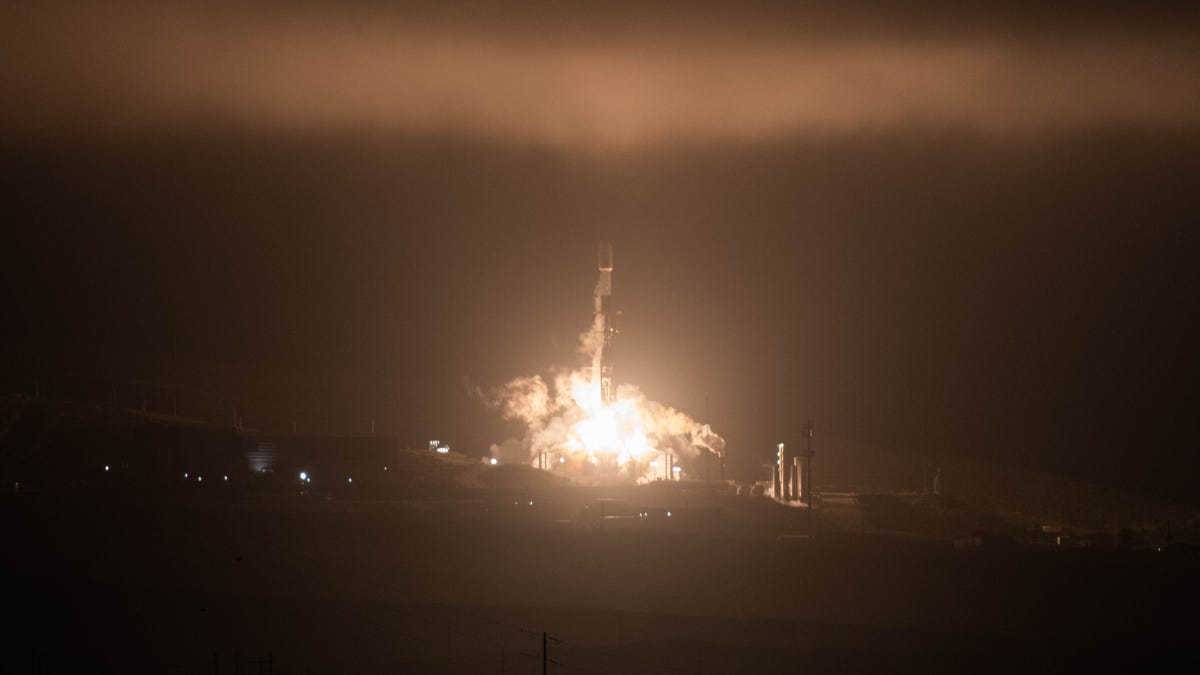
Vandenberg rocket launch today. Where to see SpaceX liftoff
Less than an hour before the Artemis II astronauts are due to land near California, SpaceX could launch a rocket about 200 miles north. Less than an hour before the Artemis II astronauts are due to splash down off the coast of San Diego, California, SpaceX could launch a rocket about 200 miles north. A Falcon 9 rocket is due to get off the ground Friday, April 10 from the Vandenberg Space Force Base in Santa Barbara County. Its mission? Deploy SpaceX's Starlink broadband internet satellites into low-Earth orbit. The launch window is due to open shortly before the four Artemis II astronauts are due to return from a 10-day mission around the moon and make a water landing in the Pacific Ocean. Interested in catching a sight of the launch? Plenty of nearby spots are popular among spectators. Just keep in mind that postponements due to weather or issues with rockets are common with spaceflight. Check back with the VC Star for any updates on the impending launch. In the meantime, here's what to know about the upcoming SpaceX rocket launch from Vandenberg in Santa Barbara County, as well as where to watch it. Is there a rocket launch today? Next mission from Vandenberg in California SpaceX is working toward a Friday, April 10, launch from Southern California, with a four-hour launch window opening at 7:39 p.m. PT. A Federal Aviation Administration operations plan advisory suggests a backup opportunity is available the next day if the launch were to be postponed. Where is the next launch from California? What to know about trajectory The launch will take place from Space Launch Complex 4-East (SLC-4E) at the Vandenberg Space Force Base in Santa Barbara County. As has become typical in 2026, the rocket will fly at a southern trajectory. What is launching from Vandenberg? SpaceX to deploy Starlink satellites SpaceX will launch its famous two-stage 230-foot Falcon 9 rocket, one of the world's most active, to deliver 25 Starlink satellites into low-Earth orbit, an altitude nearer Earth's atmosphere where they're able to circle the planet quickly. Where to watch California rocket launches in Santa Barbara County Because Vandenberg is an active military base, the launch complex does not host public viewings of launches. But if conditions are clear, rocket launches from the Vandenberg Space Force Base can be viewed from several locations as far as Santa Barbara and Los Angeles. Space Launch Schedule, a website dedicated to tracking upcoming rocket launches, provided a list of places in Santa Barbara County in California to catch the launch in person: * 13th Street and Arguello Boulevard, a public site with the closest views of SpaceX launches * Floradale Avenue and West Ocean Avenue, officially designated as the "viewing site for SLC-6" (space launch complex-6) * Renwick Avenue and West Ocean Avenue, another intersection close to the base where spectators can park * Santa Lucia Canyon Road and Victory Road, provides a partial view of Complex 4. The city of Lompoc in Santa Barbara County is filled with places to catch a rocket launch. The city's tourism bureau, Explore Lompoc, maintains this list with additional viewing locations: * Ocean Park, 6851 Ocean Park Road, Lompoc, which, while it doesn't have a view of the launch pad itself, is located only four miles from the launch site and provides a good vantage to see rockets get off the ground. Parking is limited, and law enforcement will close the road to the beach once parking is full. * Allan Hancock College, 1 Hancock Drive, Lompoc, a community college located nine miles from the launch site where the launch pad and rocket's tip can be seen before liftoff. * Riverbend Park, N A Street and McLaughlin Road, Lompoc, located within 10 miles of the launch site, is filled with large fields for activities or for spectators to set up chairs. * Surf Beach on Ocean Avenue, one of the closest and most popular places to watch rocket launches near Lompoc, as long as it's open and accessible. But a word of caution: There is an active train track, the Amtrak Surf Station, that visitors must cross. While trains don't run during launch windows, the vehicles could start up again with little warning if a liftoff is scrubbed. Where to watch California rocket launches in Ventura County Visit Ventura, the tourism bureau in Ventura County, provided a list to the USA TODAY Network of suggested locations to see a rocket launch from the county: * Ventura Pier, 750 E. Harbor Blvd, is known as the oldest pier in all of California. * Emma Wood State Beach, located on the Santa Barbara Channel south of U.S. 101. * Serra Cross Park at Grant Park, located just above San Buenaventura City Hall, 501 Poli St., Ventura, offers a panoramic seascape view. * San Buenaventura State Beach, 901 San Pedro St., Ventura, located adjacent to the Ventura Pier. * Cemetery Memorial Park, Main Street and South Crimea Street, Ventura Where to watch California rocket launches in San Luis Obispo County SLO CAL, a countywide destination marketing and management organization, maintains a list of its recommended best locations to watch a rocket launch in San Luis Obispo County to the north of the launch site: * Avila Beach, located off U.S. 101, has a variety of restaurants and shops for those looking to make a day of their rocket-viewing plans. * Pismo Beach, a city with a vibrant downtown stretch located just 38 miles away from Vandenberg * Shell Beach, a neighborhood in Pismo Beach that is home to several parks, including Eldwayen Ocean Park and Margo Dodd Park, both on Ocean Boulevard; and Dinosaur Caves Park (2701 Price St.) that are mostly dog-friendly and open to the public * Oceano Dunes, the closest place to view launches from the county with open spaces along the ocean allowing full visibility of the sky * Morro Strand State Beach, a three-mile stretch between the coastal city Morro Bay and the town of Cayucos. Cayucos' south-facing beaches should have great views of Vandenberg. Other cities in California where rockets may be visible Other cities in California where you might glimpse the Falcon 9 rocket soaring overhead - particularly after sunset and before sunrise - as it climbs into the sky on a southern trajectory include: * Long Beach, a city popular with tourists known for its waterfront attractions, located about 180 south of the launch site along the southern coast of California * Lake Forest, located about 200 miles south of the launch site along the southern coast of California * San Diego, located about 280 miles south of the launch site along the southern coast of California * Merced, located more than 200 miles north of Vandenberg in the San Joaquin Valley Will there be sonic booms? Residents of Santa Barbara County, San Luis Obispo County and Ventura County often stand to be the most likely to hear sonic booms, SpaceX said. The sonic booms - brief, thunder-like noises that are often heard from the ground when a spacecraft or aircraft travels faster than the speed of sound - could last for up to 10 minutes after liftoff, Vandenberg has added. "Areas local to Vandenberg Space Force Base will hear the initial low rumble of take-off," Vandenberg has also said. What to know about booster re-entry Following the launch, the Falcon 9 rocket's booster will aim to land on a SpaceX drone ship, nicknamed "Of Course I Still Love You," in the Pacific Ocean. This allows for SpaceX personnel to recover the booster so it can be reused in future spaceflights. Does Elon Musk own SpaceX? What to know about rocket company SpaceX is the commercial spaceflight company that billionaire Elon Musk, the world's richest man, founded in 2002 and leads as the CEO. SpaceX is headquartered at Starbase in South Texas near the U.S.-Mexico border. The site, which is where SpaceX has been conducting routine flight tests of its 400-foot megarocket known as Starship, was recently voted by residents to become its own city. As a major government contractor, SpaceX serves as the launch service provider for a variety of government missions both civil and military. For the Department of Defense, SpaceX's Falcon 9 helps launch classified satellites and other payloads into space. And for NASA, Falcon 9 most often helps propel astronauts to the International Space Station on SpaceX's Dragon crew capsule - the only U.S vehicle capable of carrying NASA astronauts to orbit. What is Starlink? Starlink is SpaceX's internet satellite business. With more than 10,000 satellites in its growing orbital constellation, Starlink has become a lucrative part of Musk's business empire, serving millions of customers around the world. SpaceX, which bills itself as the only satellite internet provider with its own reusable rocket capable of deploying the technology, has spent years delivering the satellites to orbit with a regular cadence of rocket launches from Florida and California. Starlink satellites operate from low-Earth orbit, about 341 miles up, which is much closer to Earth's atmosphere than other satellites. That not only allows Starlink satellites to offer high connection speeds than satellites further out in space, but to reach rural areas and regions where internet service is not readily accessible. What is the Vandenberg Space Force Base in California? The Vandenberg Space Force Base is a rocket launch site in Santa Barbara County in Southern California. Established in 1941, the site was previously known as the Vandenberg Air Force Base. Though it's a military base, the site also hosts both civil and commercial space launches for entities like NASA and SpaceX. Space Launch Delta 30, a unit of Space Force, is responsible for managing the launch operations at Vandenberg, as well as the missile tests that take place at the base. Eric Lagatta is the Space Connect reporter for the USA TODAY Network. Reach him at [email protected]
Michael Burry: 'Anthropic is eating Palantir's lunch,' stock sinks
Market Catalysts host Julie Hyman and Yahoo Finance Breaking Business News Reporter Jake Conley take a closer look at some of Thursday morning's trending tickers and stories. Palantir (PLTR) stock is sinking after "Big Short" investor Michael Burry said that Anthropic (ANTH.PVT) is "eating Palantir's lunch" in a now-deleted X post. CoreWeave (CRWV) and Meta (META) expanded their deal to $21 billion. BlackBerry (BB) stock is surging on the company's strong quarterly results.

Did Anthropic just soft-launch the scariest AI model yet?
Did Anthropic just soft-launch the scariest AI model yet? On Tuesday Anthropic announced that it would deploy its newest and most powerful AI model, Claude Mythos Preview, to a new industry initiative (Project Glasswing) meant to safeguard critical software infrastructure against cyberattacks. That sounded good, but it obscured the real news somewhat -- that one of the big three AI labs has now developed a model that could, in the wrong hands, be a super-dangerous cyberweapon. In the course of normal model training, the model began showing significant skill in both detecting bugs in software systems and exploiting those bugs to disrupt or gain control of the systems. It found a 27-year-old vulnerability in OpenBSD and exploited it to gain root access. It caught a 16-year-old flaw in FFmpeg that automated tools missed after five million tests. Perhaps most impressively, it's able to create exploits by stringing together multiple software vulnerabilities that by themselves wouldn't do anything. It did this to a Linux system to gain admin-level access. Interpretability researchers also found cases where the model exhibited deceptive or manipulative behavior during tests. In one case, Mythos discovered and used a privilege-escalation exploit and then designed a mechanism to erase traces of its use. Anthropic said it would give access to its Mythos model to a select group of tech companies, including Apple and Cisco, along with about 40 additional organizations that build or maintain critical software infrastructure. This is a bit like a defense contractor unveiling a super-lethal missile capable of striking any target on Earth, while insisting it will be distributed only to a small group of trusted countries and used strictly for defensive purposes.

Chaos on major UK motorway after crash with huge delays and 4 miles of traffic
M4 drivers are facing severe delays and four miles of traffic following a crash during the evening rush hour. The collision occured on the eastbound carriageway near Reading and Oxford, between junction 13 (Chieveley) and J12 (Theale). Two out the three lanes have been closed. Heavy traffic is trailing back, with drivers warned they face delays of up to 40 minutes. Motorway camera footage shows traffic on the impacted section of the motorway at a virtual standstill. National Highways East wrote on X: "Travel update - #M4 east between J13 #Chieveley and J12 #Theale. Lanes 1 and 2 (of 3) are CLOSED. This is due to a traffic collision. Delays of up to 40 minutes, with 4 miles of congestion."

Drowning in Chaos by Hugh Panero - The Chestertown Spy
The recent firings of Attorney General Pam Bondi and Secretary of Homeland Security Kristi Noem motivated me to search the web for reasons why a sane adult would embrace and sign a blood oath to a boss who has destroyed the reputations of all who follow him. Other than greed, insanity, resume building, and a blind desire for power, the best answer I found was Trauma Bonding - described as a powerful, unhealthy emotional attachment that develops between a person and someone who causes them harm. According to the literature, it is a specific psychological response to a cycle of abuse, manipulation, and intermittent reinforcement. The abuser reportedly alternates between periods of intense affection and episodes of mistreatment. Sound familiar? This unpredictable high and low pattern triggers a biochemical response in the brain similar to addiction, making the bond incredibly difficult to break. There are seven stages of Trauma Bonding that Bondi and Noel should have read up on before signing on with the Trump White House. Secretary of War, Pete Hegseth, is next up for trauma and dismissal; he will be thrown under the bus and blamed for the Iran "excursion," and his Pentagon Portrait will end up in the garbage. The big mistake Trump sycophants make is convincing themselves that they can manage him. According to the literature, Trauma Bonding typically develops through a phased process that erodes a person's sense of self-worth and independence: Cabinet secretaries, along with the rest of the country, are drowning in chaos and trauma, and there is only so much mindfulness training you can do to provide any peace. The President is a simpleton, believing that an Iranian military operation in a complex part of the world would be as easy, swift, and as successful as the relatively simpler snatch-and-grab operation in Venezuela. Whatever happened to Trump's promise not to engage in new overseas wars and focus on affordability? Trump is all gas and no brakes. He clearly ignored warnings from his generals that Iran could close the Strait of Hormuz, bomb their neighbors, and drive up gas prices to over $4 dollars a gallon, resulting in world economic chaos. His justification for the war also keeps changing. Cabinet secretaries are hiding from the shit storm. Trump shamelessly wants his name on everything (US currency, buildings, bridges, airports, The Kennedy Center), but does not want it associated with huge missteps. He looks around for people to blame. In his world of delusional self-confidence, he can never be at fault. However, it is his fault, and "if you break it, you own it." Trump only cares about a few cabinet positions. The first group deals with international affairs and the ability to wage war. Secretary of State Marco Rubio and Secretary of War Pete Hegseth fall into this group. A second group covers business, the economy, the DOJ, and Homeland Security, including the stock market, tariffs, retaliation against his enemies, and immigration. Included in this group are the Secretary of the Treasury, Scott Bissett; the Secretary of Commerce, Howard Lutnick; the Pam Bondi replacement; and recently confirmed Markwayne Mullin, Noem's DHS replacement. The rest of the cabinet does not matter to Trump. The job of the people in charge is to shrink their organizations, deregulate, or do nothing (i.e., Transportation, Energy, EPA, Education, Veterans' Affairs, Labor, HHS). The conflict for cabinet secretaries under the bright lights is that they are asked to do the impossible (sometimes illegal), only to be thwarted by the Courts or by their own incompetence. For example, Trump berated Pam Bondi to prosecute his political enemies (i.e., Letitia James, James Comey, & Jack Smith) with no evidence, and likely asked her to slow-roll the release of the Epstein files, infuriating the MAGA base. In Noem's case, her toxic handling of the deaths of 37-year-old Minneapolis residents, Alex Pretti and Renee Good, by ICE agents sparked national protests and became embarrassing. The Trauma Bonding cycle will only get worse. The upcoming midterm elections could give the Democrats control of the House and subpoena power, making life uncomfortable for cabinet secretaries. In addition, Trump's approval ratings have hit new lows. A recent University of Massachusetts Amherst poll reported only 33 percent of Americans approve of Trump's job performance, while 62 percent disapprove.

Anthropic researcher visit to downing street raises questions - Business Upturn Trade & Policy
A researcher from Anthropic being seen at 10 Downing Street is significant because it points to the government keeping close contact with one of the most strategically important AI companies at a moment of major policy turbulence. The timing matters even more because Anthropic has just been at the centre of a sharp confrontation with the US government over military AI use and supply chain risk designation. Anthropic is not a normal tech firm in government terms; it is one of the few companies whose AI systems are already being treated as strategically relevant to national security and public sector planning. The UK has already shown interest in working with Anthropic on safe AI use and public service transformation, including a memorandum of understanding signed earlier in 2025. So a presence at Downing Street suggests ongoing engagement on issues such as regulation, public sector deployment, safety controls, and possibly the UK's position in the global AI race. The timing is politically loaded because Anthropic has recently faced a dramatic rebuke from the Trump administration, which ordered US federal agencies to stop using its tools after a dispute over military applications and restrictions on mass surveillance and autonomous weapons. In other words, while Washington is escalating pressure, London appears to be keeping channels open. That contrast is important because it signals that the UK may be trying to position itself as a more receptive and pragmatic partner for advanced AI firms, especially those that emphasise safety and governance. The UK government's interest in Anthropic is not just about innovation hype; it is about control, national capability, and competitive advantage. If Anthropic is making an industry-changing announcement, Downing Street will want to understand whether that alters the balance between safety, access, investment, public sector use, and regulatory oversight. This is especially relevant because AI policy is now tied to defence, security, and labour market strategy, not just digital transformation. Internationally, the sighting suggests the UK may be trying to strengthen its status as a preferred destination for frontier AI companies at a time when the US is becoming more confrontational. That has diplomatic significance because AI firms increasingly sit at the intersection of state power, export controls, defence procurement, and technology sovereignty. If London can present itself as a stable and rules-based environment for AI, it may attract more investment and policy influence than jurisdictions that respond mainly through sanctions or bans. So the appearance at 10 Downing Street is likely more than a routine meeting; it is a signal that the UK wants to stay close to a company shaping the global AI debate at a moment when that company is under intense pressure elsewhere. The immediate question is not just what Anthropic announced, but whether the UK sees that announcement as a strategic opportunity to deepen cooperation on safe AI, public sector adoption, and national competitiveness.
DC Circuit Won't Pause Anthropic's Supply-Chain Risk Label, Fast Tracks Appeal | Law.com
Pentagon Continues to Deem Anthropic 'Supply-Chain Risk' Even After Preliminary Injunction Social media comments from a Pentagon official suggest the U.S. Department of Justice will ask the U.S. Court of Appeals for the Ninth Circuit to review whether a San Francisco federal judge erred in her preliminary injunction order blocking the Trump administration from designating artificial intelligence developer Anthropic a "supply-chain risk to national security" while the litigation plays out.

Polymarket Faces Fresh Insider Trading Questions After Iran Ceasefire Bets
A new series of well-timed trades on Polymarket is once again raising questions about whether insiders profited from nonpublic information. This time, trades related to the U.S.-Iran ceasefire are at the center of the controversy. The result was a familiar one: a few anonymous accounts walked away with hundreds of thousands in profits. In what has become a common pattern, the suspicious activity unfolded in the hours before President Donald Trump officially announced that a ceasefire had been agreed upon between Iran and the United States. Blockchain analysts on X who monitor Polymarket activity for signs of insider trading were the first to flag several wallets that appeared to have made unusually precise bets on the ceasefire. In a post on X, blockchain analytics firm Lookonchain identified one trader, "Fernandoinfante," who turned a $13,200 stake into more than $463,000, a 35x return on the trade, after betting "Yes" on the ceasefire outcome. Lookonchain also said four other suspected insider wallets netted a combined $663,000, with most of them being created and funded the same day the U.S. and Iran agreed to the two-week ceasefire. All of the activity in question took place on Polymarket's offshore platform, which, unlike its domestic counterpart, is not a Commodity Futures Trading Commission (CFTC)-regulated exchange. These new allegations come just a couple of weeks after Kalshi and Polymarket announced they were implementing new guardrails to protect against insider trading on their platforms. While the traders involved made a decent amount of money on their trades, that's not what's raising eyebrows; instead, it's the pattern behind those trades. The trail of evidence leading people to believe insiders were behind these trades comes from the bets' extreme precision. The wallets entered the market when the odds of a ceasefire by April 7 were only 3.9%, 10.3%, 6.7%, and 2.9%, according to Lookonchain. Another trader, "BlueHorseshoe86," who previously made $260,000 betting that Nicolás Maduro would be out by January 31, reportedly cleared another $194,000 on U.S.-Iran ceasefire markets. On-chain forensics firm Bubblemaps posted on X that it had uncovered a cluster of interconnected accounts that correctly called the February surprise attack on Iran and the April ceasefire. Those accounts walked away with more than $600,000 from the ceasefire trade alone. One of the best-performing wallets in the group cleared over $400,000 in total profit while frequently changing handles, going from "nothingeverhappens911" to "nothingeverfrickinghappens" and currently "djijaij83jdo4jdlwjflsg" in what appears to be an attempt to make the wallet harder to track. All of these seemingly too-good-to-be-true records have social media users and market watchers speculating that these traders are operating with access to nonpublic information and trading with "tomorrow's headlines" open on a second monitor. The ceasefire market on Polymarket is part of a documented pattern of exceptionally well-timed bets on the platform. In February, the same thing happened at the opening of "Operation Epic Fury," the joint U.S.-Israeli strike on Iran, when six newly funded wallets netted $1.2 million by betting the attack would happen just hours before it occurred. Similarly, in January, three wallets made over $630,000 betting on the capture of Maduro. Those accounts were often pre-funded days in advance and focused exclusively on single-outcome "insider" markets. All of this suspected insider trading has gotten the attention of lawmakers on Capitol Hill, who've urged the CFTC to crack down on illegal insider trading by federal employees on prediction market platforms. Lawmakers have also introduced several bills seeking to rein in insider trading by government officials on these event contract exchanges. The most recent proposed legislation is a bicameral bill, the STOP Corrupt Bets Act, sponsored by Rep. Jamie Raskin (D-MD) and Sen. Jeff Merkley (D-OR).

SpaceX IPO Frenzy: How To Invest In The Elon Musk-Led Firm Before The Stock Hits Wall Street
SpaceX's strong financial performance is another factor fuelling demand. Investor interest in SpaceX is intensifying ahead of its anticipated IPO, with valuation estimates ranging between $1.75 trillion and $2 trillion, potentially making it the largest public listing in history. Founded by Elon Musk, the private aerospace giant has established itself as a leader in satellite launches, reusable rocket technology, and global connectivity through its Starlink network. Despite the growing hype, retail investors face a major hurdle: SpaceX remains privately held, limiting direct access to its shares. However, market experts suggest that investors are not entirely locked out and can still position themselves strategically ahead of the IPO. Also Read | SpaceX IPO: Starlink Strength To Sky-High Multiples -- What's Behind The $1.75 Trillion Valuation? One of the most accessible routes is through Alphabet Inc., which invested $900 million in SpaceX in 2015 and holds roughly a 7.5% stake. If SpaceX achieves a $2 trillion valuation, Alphabet's holding could be worth nearly $150 billion, offering indirect exposure to the company's upside while benefiting from Alphabet's core businesses in AI, cloud computing, and digital advertising. SpaceX's strong financial performance is another factor fuelling demand. The company is estimated to have generated around $16 billion in revenue and $7.5 billion in EBITDA, underscoring its momentum even as a private firm. Beyond numbers, its long-term vision, ranging from global internet coverage to Mars colonisation, has added a powerful narrative appeal, reminiscent of early investor enthusiasm in Tesla, Inc.. Still, risks remain. Some analysts warn that SpaceX could see "meme stock"-like volatility after listing, driven by retail participation and social media hype. Stocks such as GameStop Corp. and AMC Entertainment Holdings, Inc. have previously demonstrated how sentiment can outweigh fundamentals in the short term. At the same time, SpaceX differs from typical meme stocks due to its profitability and dominant market position. This creates a hybrid investment case, part high-growth technology play, part narrative-driven opportunity. Also Read | US Stock Market Today: S&P 500, Dow Slip As Oil Surge, Fragile Truce Dent Sentiment Investors should also factor in strategic uncertainties. Alphabet could choose to trim its stake to fund expansion in artificial intelligence, potentially impacting indirect exposure. For now, Alphabet remains the most practical and balanced entry point for retail investors seeking a slice of SpaceX's growth story, offering both stability and upside as the countdown to one of the most anticipated IPOs gathers pace. Disclaimer: This article is only for informational purpose. NDTV Profit advises users to consult with their own financial or investment adviser before taking any investment decision. Essential Business Intelligence, Continuous LIVE TV, Sharp Market Insights, Practical Personal Finance Advice and Latest Stories -- On NDTV Profit.
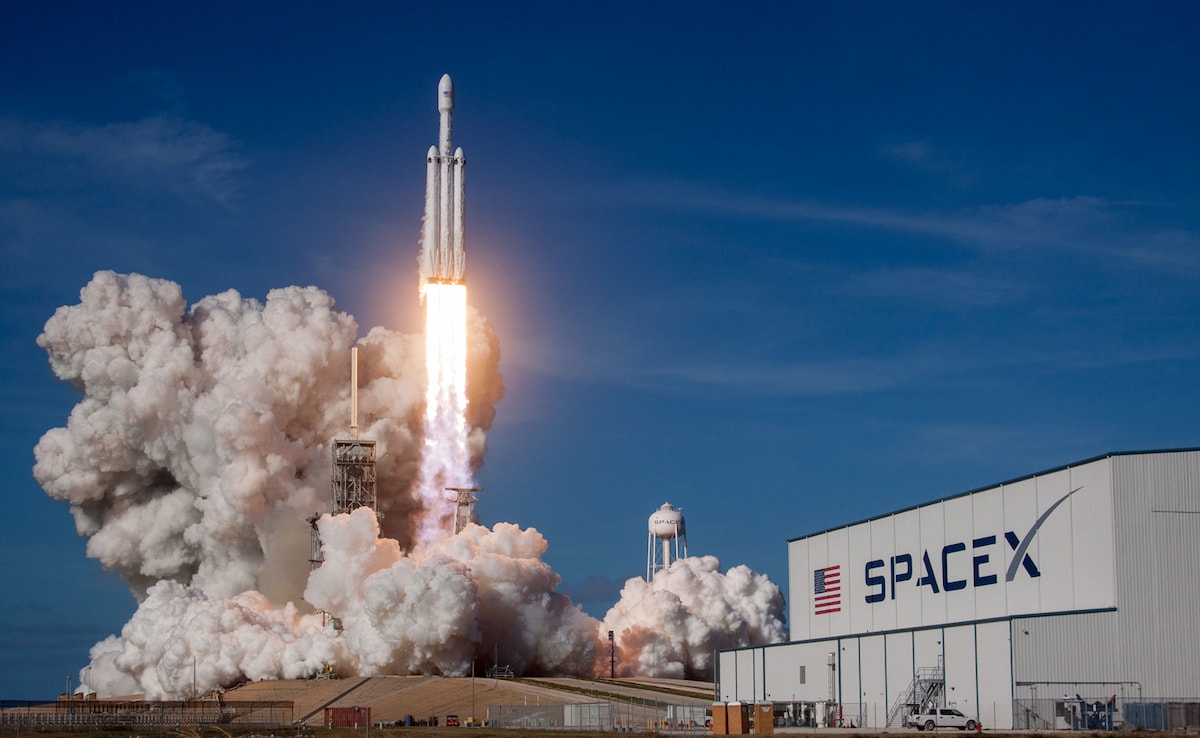
Exclusive: SpaceX bankers game plan to blunt post-IPO selling tsunami
SpaceX's IPO is primed to be the biggest in history. Its bankers are worried about what comes next. At a $2 trillion valuation, the listing could raise as much as $75 billion for Elon Musk's rocket company. The problem is what happens months later, when early investors start selling, turn hundreds of billions of dollars of paper gains into cash, and create a wall of selling that drives the stock down. One idea that's making the rounds among Wall Street banks: Let insiders sell some of that stock before the standard 180-day lock-up expires -- but gradually, tied to price and potential trading volume thresholds. The idea, which SpaceX may choose not to pursue, would be to ease more than $1 trillion worth of stock into the market over several months, rather than all at once, according to people familiar with the matter. In recent weeks, bankers have been canvassing potential investors for feedback, trying to strike a balance that ensures a smooth path for an IPO that Wall Street is counting on to go well, these people said.
Pentagon's ouster of Anthropic opens doors for small AI rivals
WASHINGTON -- Small defense industry artificial intelligence (AI) startups are suddenly fielding calls from generals, combatant commanders, and deep-pocketed investors, after the souring relationship between the Pentagon and its once-favored AI vendor, Anthropic, reinforced the need to diversify and increase the number of AI providers for the military. In the weeks since the Department of Defense's troubled relationship with Anthropic burst into public view and led to the company being kicked out of the US military, new defense-focused AI companies like Smack Technologies and EdgeRunner AI say they have experienced a shift in interest that would have been unimaginable just months ago. They have received a surge of overtures about possible contracts and meeting requests and been approached by investors who previously showed no interest. The Pentagon's growing animosity toward its top AI provider, Anthropic, has opened up opportunities for smaller rivals, who have long sought a foot in the door to the most lucrative government contractor in the world. A defense contract can lead to more business with other branches of the US government, and is a useful signal of trust and safety for potential commercial clients. "We've seen a massive increase in demand from customers and the government to get AI solutions fielded since Anthropic was declared a supply-chain risk," said Tyler Sweatt, CEO of Second Front, a company that helps technology firms meet the requirements needed to operate on secure Pentagon networks. "Our customers are turning to us as the Pentagon turns to them to deploy quickly in the wake of the Anthropic blowup." Since the Pentagon deemed Anthropic's products a "supply-chain risk" in March and the two sides became embroiled in a lawsuit, the military has expressed increasing interest in AI startups like Smack Technologies, saying, "We want more, we want demos, let's talk about how we can move faster," said Andrew Markoff, co-founder and chief executive of the 19-person startup based in El Segundo, California. In late March, a judge temporarily blocked the Pentagon's blacklisting of Anthropic. Get the latest news delivered to your inbox Sign up for The Manila Times newsletters By signing up with an email address, I acknowledge that I have read and agree to the Terms of Service and Privacy Policy. Tyler Saltsman, co-founder and chief executive of EdgeRunner AI, described a similar experience. His company had been waiting more than a year for a Space Force contract to clear the Pentagon's procurement machinery. It was signed within weeks of the Anthropic situation breaking into the open. "I can't prove that the Anthropic drama sped this up," Saltsman said, "but I have a sneaky suspicion it did." "The Pentagon will continue to rapidly deploy frontier AI capabilities to the warfighter through strong industry partnerships across all classification levels," a Pentagon official said. Advertisement One Pentagon technologist has previously told Reuters that the falling-out with Anthropic, and the realization that the Defense Department was heavily dependent on one AI provider, forced the department to diversify AI providers. Smack's Marine contract speeds up For Smack, the clearest example of the post-Anthropic acceleration involves the Marine Corps. The company won a contract with the Marine Corps in March 2025 and delivered a successful prototype by October -- software that compresses what is normally a monthslong operational planning process into roughly 15 minutes. Despite the successful prototype, momentum stalled. Full production had been budgeted for fiscal year 2027 -- meaning October 2027 at the earliest. Through the 2025 holiday period and into early 2026, there was no clear direction. Advertisement Then the Anthropic uproar occurred. Within weeks, Smack was invited to multiple meetings with the Marine Corps focused on a single question: how fast can this move into production this year? Markoff said there was "very specific guidance and movement and energy" toward getting the prototype ready for combat operations in 2026 -- an acceleration of more than a year. The shift extended beyond the Marines. Smack holds contracts with the Navy and Air Force, and Markoff said interest came in nearly immediately from US Special Operations Command, and others. EdgeRunner, which is deploying with the Army Special Forces groups and has received a contract with the Space Force, said the Navy has also dramatically sped up engagement. Meetings that had been biweekly or monthly are now happening multiple times a week. Both EdgeRunner and Smack are now racing to get their systems operating at higher security classification levels -- the gateway to the most operationally significant use cases and the largest military contracts. Advertisement EdgeRunner said the military has told the company it can get to IL-6, a security designation enabling access to secret and top-secret data, within three months -- a timeline Saltsman described as remarkable, given that the process normally takes 18 months or longer. The acceleration, he said, is being driven partly by pressure from Pentagon leadership to cut through procurement bureaucracy, and partly by the urgency the Anthropic situation has injected into the department's AI strategy.

Software Stocks Slid After Anthropic Kept Its New AI Model Tight
Anthropic limited access to Claude Mythos after it found thousands of vulnerabilities, stirring fresh fears about AI-driven disruption to SaaS and cybersecurity demand. US software stocks slid after Anthropic said it won't broadly release its new AI model, Claude Mythos, because it can uncover cybersecurity weaknesses at scale. What does this mean? Anthropic says Claude Mythos can quickly surface real-world bugs, so it's limiting access to roughly 40 organizations, including Microsoft and Google. If the model really finds vulnerabilities across major operating systems and browsers, AI starts to look less like a productivity booster and more like a stress test for the whole software stack. That can spook investors because it implies higher security costs, more liability, and more scrutiny of vendors' "secure by design" claims..

Anthropic Claude Mythos Suggests Vulnerability Management Will Soon 'Break': Forrester
'If true -- and we have little reason to doubt the veracity of the claims -- this will break the vulnerability management playbook,' Forrester analysts write. Following claims by Anthropic and its collaborators on a new software security initiative announced this week, it's clear that AI could soon totally upend existing vulnerability management practices, according to Forrester analysts. "If true -- and we have little reason to doubt the veracity of the claims -- this will break the vulnerability management playbook and perhaps the cybersecurity approaches of today," wrote Forrester analysts including Senior Analyst Erik Nost in a blog post. [Related: Top 6 Cybersecurity And AI Predictions For 2026] Anthropic disclosed this week that the preview version of its Claude Mythos frontier model points to the fact that "AI models have reached a level of coding capability where they can surpass all but the most skilled humans at finding and exploiting software vulnerabilities." In response, Anthropic has launched a new initiative, "Project Glasswing," focused on combating software vulnerabilities with involvement from a number of major industry players. Cybersecurity vendors taking part in the initiative include CrowdStrike and Palo Alto Networks, which have released statements supporting Anthropic's claims about the proficiency of Claude Mythos for vulnerability discovery. In a statement included in Anthropic's blog post, for instance, CrowdStrike CTO Elia Zaitsev said that "the window between a vulnerability being discovered and being exploited by an adversary has collapsed." Already at this stage, "what once took months now happens in minutes with AI," Zaitsev said in the statement. And while Claude Mythos Preview "demonstrates what is now possible for defenders at scale," it also means threat actors will inevitably seek to exploit these capabilities as well, he said. The disclosure by Anthropic is a signal that organizations will likely soon be forced to "drastically rethink their approaches to vulnerability management and patching," wrote Nost and other Forrester analysts in the post. That will mean "moving from today's often-glacial pace to something much, much faster," the analysts wrote. The arrival of AI models that can discover software bugs this rapidly may also force an overhaul of the current CVE (Common Vulnerabilities and Exposures) disclosure process and impact difficult-to-patch legacy IT systems in a major way, according to the Forrester analysts. Ultimately, in the very near future, a "30-day waiting period for patching won't be acceptable in an environment where attackers can go from discovery to exploit in minutes," the analysts wrote. In addition to CrowdStrike and Palo Alto Networks, Project Glasswing will also include participation from AWS, Apple, Broadcom, Cisco, Google, JPMorganChase, the Linux Foundation, Microsoft and Nvidia. The industry collaborators on the initiative will be able to utilize the preview version of Mythos "as part of their defensive security work," Anthropic said in its post. "Project Glasswing partners will receive access to Claude Mythos Preview to find and fix vulnerabilities or weaknesses in their foundational systems -- systems that represent a very large portion of the world's shared cyberattack surface," Anthropic said. Palo Alto Networks CEO Nikesh Arora wrote in a LinkedIn post that "by prioritizing defensive access to these powerful capabilities, Anthropic is helping us ensure that while intelligence is being weaponized, the defenders are the ones with the superior stack." In other words, "AI becomes the defender," Arora wrote.

US software stocks fall as Anthropic's new AI model revives disruption fears
April 9 (Reuters) - U.S. software shares tumbled on Thursday after Anthropic held back the wide release of a powerful AI model over concerns it could expose hidden cybersecurity vulnerabilities, deepening investor fears about the threat to traditional software firms. Anthropic said earlier this week it would only allow a group of around 40 companies, including Microsoft and Google, access to its "Claude Mythos" model because it has already found thousands of vulnerabilities, including some in every major operating system and web browser. "If Mythos is that strong and that powerful and it's exposing these vulnerabilities that have been around for years, it just shows one, the weakness of the current software that's out there and two, that AI is still making incredible progress versus legacy software companies," said Michael O'Rourke, chief market strategist at JonesTrading. The S&P 500 Software and Services Index is down nearly 26% this year, including Thursday's 3.1% drop, on worries that rapid progress in AI could hit SaaS (software-as-a-service) companies that sell subscription-based products to clients. Cybersecurity firms Cloudflare, Okta, CrowdStrike and SentinelOne dropped between 4.7% and 7.7% in morning trade. Zscaler was among the biggest decliners on the S&P 500, down 8.6%. Brokerage BTIG downgraded the stock to "neutral" from "buy", citing concerns over demand and potential competition. "We're getting back to being concerned about the prior software-specific concerns stemming from AI and private credit that are coming back to the fore," said Steve Sosnick, chief market analyst at Interactive Brokers. Enterprise software developer Atlassian, human resources software provider Workday, Photoshop software maker Adobe, enterprise cloud firm Salesforce and TurboTax-parent Intuit dropped between 3.7% and 6.8%. (Reporting by Shashwat Chauhan in Bengaluru and Sinéad Carew; Editing by Sriraj Kalluvila)
U.S. software stocks fall as Anthropic's new AI model revives disruption fears
U.S. software shares tumbled on Thursday after Anthropic held back the wide release of a powerful AI model over concerns it could expose hidden cybersecurity vulnerabilities, deepening investor fears about the threat to traditional software firms. Anthropic said earlier this week it would only allow a group of around 40 companies, including Microsoft MSFT-Q and Google GOOGL-Q, access to its "Claude Mythos" model because it has already found thousands of vulnerabilities, including some in every major operating system and web browser. "If Mythos is that strong and that powerful and it's exposing these vulnerabilities that have been around for years, it just shows one, the weakness of the current software that's out there and two, that AI is still making incredible progress versus legacy software companies," said Michael O'Rourke, chief market strategist at JonesTrading. The S&P 500 Software and Services Index is down nearly 26 per cent this year, including Thursday's 3.1-per-cent drop, on worries that rapid progress in AI could hit SaaS (software-as-a-service) companies that sell subscription-based products to clients. Cybersecurity firms Cloudflare NET-N, Okta OKTA-Q, CrowdStrike CRWD-Q and SentinelOne S-N dropped between 4.7 per cent and 7.7 per cent in morning trade. Zscaler ZS-Q was among the biggest decliners on the S&P 500, down 8.6 per cent. Brokerage BTIG downgraded the stock to "neutral" from "buy," citing concerns over demand and potential competition. "We're getting back to being concerned about the prior software-specific concerns stemming from AI and private credit that are coming back to the fore," said Steve Sosnick, chief market analyst at Interactive Brokers.

Palantir Tumbles 7% on Anthropic Competition Fears: Is the AI Platform King Losing Its Crown?
This post may contain links from our sponsors and affiliates, and Flywheel Publishing may receive compensation for actions taken through them. Palantir Technologies (NASDAQ:PLTR | PLTR Price Prediction) shares are down 7% Thursday, sliding from $140.76 to $131 as competition fears tied to Anthropic's latest AI model continue to rattle investors. The selling follows yesterday's steep decline, when Palantir dropped from $150.07 to $140.76, making this a two-day rout for one of the market's most closely watched AI names. The catalyst this time has a name attached to it. Michael Burry, who founded the hedge fund Scion Capital and is known for his high-profile contrarian calls, published a now-deleted post positioning Anthropic's new AI model as a major competitive threat to Palantir. The post went viral before it was removed, igniting debate across trading communities and adding fuel to an already nervous market. Heavy pre-market volume preceded the open, suggesting institutional players were already repositioning ahead of retail. The stock is now down 26% year-to-date, a sharp reversal for a name that was a market darling heading into 2026. The Burry Effect and the Anthropic Threat Burry's deleted post landed at a sensitive moment. Anthropic has unveiled a new AI model raising concerns about competitive pressures in the enterprise AI software space, and investors are questioning whether increasingly capable foundation models could erode Palantir's pricing power. The fact that the post was deleted only amplified its reach, as screenshots spread rapidly across social media and trading forums. The bear case here is straightforward. At a P/E ratio of 261x, Palantir has virtually no margin for error. If powerful, low-cost AI models from Anthropic or others can replicate even a fraction of what Palantir's platforms deliver, the growth premium baked into the stock looks increasingly fragile. Bears have been pointing to this valuation for months, and today's action suggests that argument is gaining traction. Why the Bull Case Deserves Serious Consideration The bull counter-argument is worth hearing out, and it's more nuanced than "the stock is down, so buy the dip." Palantir's platforms, Gotham for government and Foundry for commercial clients, are deeply embedded in client workflows, creating high switching costs. The company's AIP (AI Platform) deploys models from Anthropic and other providers inside complex enterprise and government environments where raw model capability is only part of the equation. The underlying business metrics support that thesis. Palantir's Q4 2025 revenue grew 56.18% year-over-year, and earnings growth came in at 231.58% year-over-year. Moreover, Palantir's U.S. commercial revenue hit $507 million, up 137% year-over-year, while U.S. government revenue reached $570 million, up 66% year-over-year. Those numbers reflect a company still firmly on its competitive footing. Management's own forward guidance reflects confidence. For full-year 2026, Palantir guided for revenue of $7.182 to $7.198 billion, implying roughly 61% year-over-year growth, with U.S. commercial revenue expected to exceed $3.144 billion. For investors with a longer time horizon, the 2030 outlook for Palantir hinges on whether that platform stickiness holds as the AI landscape matures. The Community Is Divided The investor community is deeply split, with some calling today's price action institutional manipulation or an overreaction, while others view it as a justified correction of an overvalued stock. Reddit sentiment for Palantir stock remains bullish, with a sentiment score of 68 to 72 across recent sessions, suggesting retail investors are leaning toward the dip-buying camp rather than panic selling. Analyst price targets tell a similar story. PLTR stock price targets from Wall Street range from $180 to $255, all well above today's $131 print. The prediction markets are more cautious near-term, with traders assigning a 43.5% probability of Palantir closing above $136 by end of April. That's a modest hurdle that reflects genuine uncertainty rather than outright bearishness. What to Watch Watch for whether today's selling exhausts itself near the $130 level or accelerates into the close. The Burry post is deleted, but the Anthropic competition narrative it amplified isn't going away. Any further commentary from Palantir's management team or a credible analyst response to the competitive threat could shift sentiment quickly in either direction. Granted, PLTR is a stock with a beta of 1.67, meaning outsized moves in both directions are part of the deal. Long-term bulls who believe in Palantir's platform moat will likely view the $130 range as an opportunity. The bears will argue the valuation still hasn't fully corrected. Both sides have a case, and the next meaningful data point will be Palantir's next earnings report.

Blanche rises, Noem falls, China exploits birthright chaos
Todd Blanche gets a boost Acting Attorney General Todd Blanche has the inside track on getting the full-time job after the ouster of Pam Bondi, insiders tell Seen, Heard & Whispered. "I love working for President Trump. It's the greatest honor of a lifetime. And if President Trump chooses to keep me as acting, that's an honor. If he chooses to nominate me, that's an honor. If he chooses to nominate somebody else and I go back to being the [deputy attorney general], that's an honor. If he chooses to nominate somebody else and asks me to go do something else, I will say, 'Thank you very much, I love you, sir,'" Mr. Blanche told reporters in his first press conference as acting attorney general this week. Ms. Bondi was a Trump loyalist, but Mr. Blanche may top her in terms of devotion to the president. He served on Mr. Trump's defense team in between presidencies and won the deputy post last year, clearing the Senate on a 52-46 vote. Mr. Blanche this week defended the president's right to direct the Justice Department to pursue certain cases and said the DOJ had to purge itself of the prosecutors who pursued Mr. Trump in two criminal cases during the Biden administration. Mr. Blanche said those lawyers had a conflict of ethics in working for someone they sought to put in prison. "What happened the last four years is something that will never happen again," he said. China is weaponizing birthright citizenship Sen. Rick Scott says China has found a way to "weaponize" America's birthright citizenship policy by arranging to have babies born here -- earning automatic citizenship -- then raised abroad, without American values. Usually that involves birth tourism, where a woman will come on a legal short-term visa to deliver a baby, who is then a citizen by dint of the birthright policy. In its more extreme form, Chinese families are paying American women to be surrogate mothers. "Communist China is our adversary; it's high time we actually acted like it and stopped letting them weaponize our immigration laws against us -- regardless of how the Supreme Court rules on the birthright question," Mr. Scott, Florida Republican, told Seen, Heard & Whispered. His Stopping Adversarial Foreign Exploitation of Kids in Domestic Surrogacy (SAFE KIDS) Act would create criminal penalties for third parties who facilitate surrogate contracts with people from foreign countries of concern. The legislation cites a report from The Wall Street Journal out of Arcadia, California, that uncovered a Chinese couple contracting with multiple American women to be surrogates to their children. When authorities showed up at the residence, they found more than 15 3-year-old children with shaved heads being cared for by nannies. President Trump has tried to rein in birthright citizenship, though it's not clear how his executive order would affect surrogacy pregnancies where the egg and sperm are from a nonresident mother and father, but the "gestational carrier" is an American citizen on U.S. soil. His order is also facing legal hurdles, with the Supreme Court sounding a skeptical note during oral argument over the policy earlier this month. Mr. Scott said Chinese surrogacy is a matter of national security concern. He pointed to federal charges brought against a brother and sister accused of placing an explosive device at MacDill Air Force Base in Florida. Both suspects are children of illegal immigrants from China, according to Homeland Security. "This is a clear national security threat. Thank God these two were caught before it was too late, but it is high time to confront the problem of Chinese birth tourism and act quickly so this never happens again," Mr. Scott said. "My SAFE KIDS Act puts a stop to communist China and other foreign adversaries' efforts to abuse the system and harm children, women and our national security. It's a human rights and national security threat if we don't get this done," he said. Who goes with Noem? Kristi Noem's departure from Homeland Security drew sighs of relief from many inside the department, who are now sharing stories of chaos and mismanagement while she was at the helm. But there's also a growing worry over job security, as employees wonder just how broad a housecleaning new Secretary Markwayne Mullin will try. Those in the top ranks of the department report feeling frozen in place, unsure whether they'll be seen as one of Ms. Noem's people, which could make them targets. "The vibe I'm getting is that any relief over the regime change is overshadowed by everyone's big [question] about whether or not they keep their jobs," one source told Seen, Heard & Whispered. "That's to be expected with a secretarial change." Mr. Trump booted Ms. Noem early last month, days after she struggled to defend the president and his agenda in hearings on Capitol Hill. The president was particularly miffed that Ms. Noem said he had foreknowledge of her plan to spend more than $200 million in taxpayer money on ads encouraging illegal immigrants to self-deport -- and putting herself front and center in the ads. Contracts for the ads also reportedly went to those with ties to her operation. Congressional Democrats have suggested Ms. Noem lied in her testimony to Congress about the contracts. They referred the matter to the Justice Department for a perjury investigation.

US software stocks fall as Anthropic's new AI model revives disruption fears
April 9 (Reuters) - U.S. software shares tumbled on Thursday after Anthropic (ANTH.PVT) held back the wide release of a powerful AI model over concerns it could expose hidden cybersecurity vulnerabilities, deepening investor fears about the threat to traditional software firms. Anthropic said earlier this week it would only allow a group of around 40 companies, including Microsoft and Google, access to its "Claude Mythos" model because it has already found thousands of vulnerabilities, including some in every major operating system and web browser. "If Mythos is that strong and that powerful and it's exposing these vulnerabilities that have been around for years, it just shows one, the weakness of the current software that's out there and two, that AI is still making incredible progress versus legacy software companies," said Michael O'Rourke, chief market strategist at JonesTrading. The S&P 500 Software and Services Index is down nearly 26% this year, including Thursday's 3.1% drop, on worries that rapid progress in AI could hit SaaS (software-as-a-service) companies that sell subscription-based products to clients. Cybersecurity firms Cloudflare, Okta, CrowdStrike and SentinelOne dropped between 4.7% and 7.7% in morning trade. Zscaler was among the biggest decliners on the S&P 500, down 8.6%. Brokerage BTIG downgraded the stock to "neutral" from "buy", citing concerns over demand and potential competition. "We're getting back to being concerned about the prior software-specific concerns stemming from AI and private credit that are coming back to the fore," said Steve Sosnick, chief market analyst at Interactive Brokers. Enterprise software developer Atlassian, human resources software provider Workday, Photoshop software maker Adobe, enterprise cloud firm Salesforce and TurboTax-parent Intuit dropped between 3.7% and 6.8%. (Reporting by Shashwat Chauhan in Bengaluru and Sinéad Carew; Editing by Sriraj Kalluvila)