News & Updates
The latest news and updates from companies in the WLTH portfolio.
The 2026 IPO Bottleneck Breaks: From SpaceX to AI Unicorns | Investing.com NG
* Following years of inactivity, the US IPO market is surging with 127 filings in Q1 2026, the third-highest quarter in three years, driven by easing interest rates and a massive backlog of private unicorns. * SpaceX has reportedly filed confidentially for a June 2026 IPO at a $1.75 trillion valuation; fueled by Starlink's 10 million subscribers, it could surpass Saudi Aramco as the largest public debut in history. * While mid-cap infrastructure firms like QumulusAI are already filing, AI industry giants OpenAI and Anthropic are eyeing late 2026 debuts. The US IPO market in 2026 is shaping up to be a historic bottleneck break. After years of companies staying private longer, a combination of easing interest rates and a massive backlog of AI unicorns has created a highly anticipated, albeit selective, window for public debuts. SpaceX Ready to Launch Just last week news broke that SpaceX had confidentially filed to go public, meaning the financials of the company are not disclosed until later. SpaceX is reportedly eyeing a June 2026 listing, and is targeting a staggering $1.75 trillion valuation, seeking to raise between $50 billion and $75 billion. If successful, this would comfortably unseat Saudi Aramco as the largest IPO in history. What's driving this valuation? While the rocket business is steady, the valuation is heavily anchored by Starlink. In a post on X, the satellite internet provider confirmed they surpassed 10 million subscribers in February 2026 and are seeing revenues projected as high as $24 billion for this year. The IPO Race Amongst AI Unicorns OpenAI and Anthropic are also rumored to be eyeing public debuts in 2026. According to a recent report from The Information, however, there is reported tension at Open AI between CEO Sam Altman, who wants a Q4 2026 IPO, and CFO Sarah Friar. Friar has expressed concerns that the company isn't operationally ready and that slowing revenue growth might not yet support their $600 billion five-year spending plan. The company was recently valued at $852 billion after a $122 billion funding round. To shore up its "path to profit," OpenAI began running ads for non-premium users in February. Fellow AI darling, Anthropic, is said to be considering an IPO as early as October 2026, potentially aiming to beat OpenAI to the public markets. It was valued at $380 billion in February. Bankers suggest they could raise over $60 billion, capitalizing on their perceived lead in enterprise-grade AI and coding models. Q1 2026 IPO Activity In Q1 2026, Wall Street Horizon tallied 127 IPO filings, this is the third-highest quarter in the last three years, surpassed only by the massive rush in late 2025 (Q3 and Q4). This suggests that despite geopolitical tensions, the backlog of companies waiting to go public is still being cleared at a record pace. While mega-cap AI names like those mentioned above are still rumored, mid-cap AI names are already filing. Notable Q1 2026 names include QumulusAI and SharonAI Holdings. These suggest that smaller AI infrastructure companies are moving to market faster than the giants. We're also seeing global fintech names file to IPO, with PayPay Corporation and PicPay showing up in the data for Q1. These massive fintech players from Japan and Brazil, respectively, are choosing the US markets (via ADRs or direct filings) to likely capitalize on higher valuations. And lastly, retailers such as Bob's Discount Furniture round out the list. This indicates that consumer-facing, private-equity-backed brands finally see a window to exit. This is often a sign that "soft landing" expectations are being priced into the IPO market. Source: Wall Street Horizon The Bottom Line While the IPO window is open, the 2026 market is selective. Investors are no longer buying growth at all costs. They are demanding a clear path to profitability (as seen with OpenAI's new ad model) and proven scale (like Starlink's subscriber base).

What Anthropic's Mythos and Project Glasswing Mean for Your Apple Devices - TidBITS
Anthropic, the company behind the Claude AI chatbot, made two security announcements that were shocking for many but seen as inevitable by those of us working in AI security. First, it announced Mythos Preview, a new, non-public AI model that turns out to be startlingly good at finding security flaws in software. The second was Project Glasswing, Anthropic's program for getting that capability into the hands of the companies best positioned to fix those flaws before anyone else can exploit them. Apple is one of those companies. As much as I'd like to downplay the announcements, Mythos and Project Glasswing are very big deals on their own, and harbingers for the future of digital security. Mythos was able to find and exploit new vulnerabilities in every major operating system, including a bug in OpenBSD, an operating system famous for its security, that had been sitting there unnoticed for 27 years. (If OpenBSD sounds familiar, it's because Apple's operating systems have roots in versions of BSD.) For now, the problem is contained. Only Anthropic has Mythos. But there's no reason others can't develop these capabilities, starting with nation states, and eventually filtering down to lower-resourced operations like criminal organizations. Mythos matters. And while, as consumers, there isn't a lot we can do, understanding the implications helps us prepare for the future and might even affect our buying decisions. Here's what happened, and more importantly, what it means for the devices on your desk and in your pocket. No. This is the single most important thing to understand before you read any of the louder headlines. Mythos isn't a program you can copy onto a laptop. "Frontier AI models" -- those at the cutting edge -- like this one run on massive, purpose-built computing infrastructure that costs a fortune to build and operate. Anthropic can see who is using it, control what they can ask it to do, and shut down abuse. That's exactly why Project Glasswing can work: Anthropic is handing Mythos to a small group of trusted partners, including Apple, so they can find and fix flaws in their own software before anyone hostile has a comparable tool. Over time, similar capabilities will appear in other AI models, and some version will eventually leak into the wild. But we aren't there today, and the defenders have a (temporary) advantage. Apple products have a structural advantage over other general-purpose consumer computing devices: Apple controls the entire stack, from the silicon in the chip to the operating system to the App Store to iCloud services. It's called vertical integration (and is also sometimes a source of consternation, since that means it's a closed ecosystem). When Apple decides to add a new security defense, it can build it into the chip, wire it into the operating system, and require its use in apps (in iOS, macOS is a different story). Most of the industry cannot do that. With Windows, Microsoft has to work with Intel and AMD and a thousand PC makers. With Android, Google has to coordinate with Qualcomm and Samsung and dozens of other phone manufacturers. Apple has been quietly using that advantage for years. The Apple Platform Security Guide documents the company's primary security controls, including how they tie hardware and software together. Defenses include tools such as the Secure Enclave, Pointer Authentication, Kernel Integrity Protection, and other esoterically named defenses that provide real-world benefits. Other ecosystems also leverage similar hardware-to-software security ties, but it's typically messier and less consistent. For example, Microsoft has Pluton, its own custom security processor designed in partnership with AMD, Qualcomm, and Intel. But Pluton is optional and sometimes disabled by PC manufacturers, whereas Apple consistently builds its protections into all its platforms. Apple's newest (and exciting for us security nerds) addition is Memory Integrity Enforcement, and Apple calls it "the most significant upgrade to memory safety in the history of consumer operating systems." That's a strong claim, but not unreasonable. It ships with the A19 and A19 Pro chips, which means every iPhone 17 and the iPhone Air got it at launch, and it's also coming to Macs with the M5 chip and later. Apple's own write-up describes it as the culmination of roughly five years of engineering work. Anthropic focused its Mythos testing on memory-related attacks. These are consistently one of the primary sources of serious security vulnerabilities. Apple's Memory Integrity Enforcement tags memory at the hardware level so the chip itself refuses to let a program read or write memory that doesn't belong to it. I have no idea if Mythos bypassed Memory Integrity Enforcement, but I suspect Apple's protections helped. Memory Integrity Enforcement is, however, limited to Apple's latest devices. And memory corruption attacks are only one of many families of security vulnerabilities. Mythos is concerning and will have implications across every technology you use. We are approaching a point where vulnerabilities and exploits are developed faster than humans can respond, and the tools find flaws humans miss. My advice is to be aware and be prepared to make changes to how you select and manage your personal technology. You'll want to prefer newer devices and services with good track records of staying up to date. Apple is already a Project Glasswing partner, alongside Google, Microsoft, Amazon, the Linux Foundation, and more than 45 other organizations. They get early access to Mythos-class tools to find and fix their own bugs before anyone else can use similar capabilities. iOS and iPadOS are relatively locked-down environments where every app must be reviewed, signed, and run inside a sandbox that limits what it can access. Combine that with Apple's new hardware protections, and the iPhone and iPad are in about as good a position as any consumer device on the planet right now. That is not the same as invulnerable. Nothing is invulnerable, as DarkSword shows (see "DarkSword Exploit Threatens iPhones Still Running iOS 18," 23 March 2026). But the combination of a controlled ecosystem, hardware protections, and a head start on Project Glasswing puts iOS in a much better spot than most platforms. The attack surface isn't infinite, and Project Glasswing (along with Apple's ongoing security efforts) will likely dramatically reduce the number of potential vulnerabilities across Apple's platforms. The primary objective of Project Glasswing is to find and fix as much as possible across major platforms, services, and vendors before adversaries gain these offensive capabilities. Then companies like Apple can include Mythos-level assessments into their process as they build new things, closing the vulnerabilities before they ever go out the door. The Mac is a more complicated story. Macs are designed to let you install and run a huge range of software from anywhere, not just the App Store. Macs need this versatility, but that same openness is what makes the Mac a tougher security problem than the iPhone. The more software you can run, and the more freely that software can interact with the rest of your system, the more surface area attackers can target. Apple has been quietly tightening the Mac for years, and modern Macs running recent versions of macOS are far more hardened than most people realize. Gatekeeper, System Integrity Protection, and the signed system volume all work to keep the core operating system from being tampered with. More importantly, every Mac with Apple silicon, meaning the M1 and every chip since, inherited a large chunk of the same hardware security architecture Apple built for the iPhone: the Secure Enclave, Pointer Authentication, Kernel Integrity Protection, the Page Protection Layer, secure boot anchored in hardware, and isolated execution for sensitive system code. An Apple silicon Mac is, at the hardware level, dramatically better protected than an Intel-based Mac ever was. And Memory Integrity Enforcement, the same protection I described above for the iPhone 17 lineup, is now landing on Macs with the M5 chip and later, extending that ladder one more rung on the Mac side of the house. But if you are thinking, "I should do something different on my Mac than on my iPhone," you're right. On your iPhone, the system is doing most of the work for you. On your Mac, you still need to be thoughtful about what you install and where it came from, because the Mac's openness means some of the protections iOS takes for granted are opt-in. Macs also allow you to turn off some of their defenses, and that isn't a good idea. First, and by a wide margin: keep your devices up to date. This is the single most important thing, and it is not new advice. The entire point of Project Glasswing is that fixes will start landing in Apple's updates. Those fixes only help you if you install them. An older iPhone that's being patched regularly is in much better shape than a brand-new one that isn't. Turn on automatic updates on your iPhone, iPad, and Mac, and actually reboot when asked. Second, understand that newer hardware gets you better protection than older hardware. One reason I upgraded to the iPhone Pro 17 was to get Memory Integrity Enforcement (I suspect I'm in the minority). This isn't mere marketing; it's how security works when protections are built into the chip. Every iPhone 17 and the iPhone Air already ship with Memory Integrity Enforcement, and Macs with the M5 chip and later are getting it too. If you're on an M1, M2, M3, or M4 Mac, or any iPhone older than the iPhone 17 series, you do not have Memory Integrity Enforcement, but you do have the rest of Apple's hardware security architecture that's been accumulating since 2018. You are not suddenly insecure overnight; you just don't have the latest tools. If you are already planning to upgrade in the next year or two, that upgrade will give you meaningfully better protection against the kinds of attacks Mythos makes easier to build. That said, if you are using old hardware that's no longer supported, it's time to upgrade. Being the tech guy for a family of five, I won't be able to get everyone on all the latest hardware, but I've already been deprecating any pre-Apple silicon devices, will upgrade to M5 Macs for myself over the next year, and will be upgrading the kids' iPhones more frequently than usual. Third, be thoughtful about which apps you install and, more importantly, what data you give them. Here is the part most people miss. Even with Apple's hardware protections and iOS sandboxing, the apps themselves are written by thousands of small developers, most of whom lack Apple's resources to find and fix their own bugs. The App Store review process catches some bad actors, but it is not designed to find subtle security flaws, and compromised code libraries have made their way into legitimate apps before. On top of that, most apps talk to cloud services run by small teams, and any data you give an app often ends up on those servers, too. Sandboxing on iOS does a good job of containing a misbehaving app so it can't take over your whole phone, but it can't protect data you have already handed to a company that then stores it on its own systems. So think twice before you give a random app access to your photos, contacts, health data, or financial information. Stick to well-known, reputable apps for anything sensitive. Use Apple's built-in privacy controls. When an app asks for permission to do something it doesn't obviously need, say no. And if you're not actively using an app, delete it. Every app you remove is one less thing for a future Mythos-class tool to find flaws in. We are at the start of a period in which finding software flaws that affect everyday users will become dramatically easier for both attackers and defenders. The situation for enterprises like banks, hospitals, and retailers is worrisome. These organizations have massive amounts of legacy code and software in their data centers that will be much harder to update and defend. This is why the Project Glasswing includes banks and other critical infrastructure companies, not just software and hardware vendors. As consumers, this is where we face our greatest risks, but it's up to those organizations to protect us. However, over the long run, I believe using AI to identify security vulnerabilities favors defenders, because developers can find and fix many more bugs before shipping software to the public. And AI coding tools may help us develop new defensive security techniques that eliminate entire attack categories, especially when those writing the software control the entire stack, as Apple does. With respect to our Apple devices, we're in a pretty good position. Apple is part of Project Glasswing and has quietly been building robust security protections for years. Keep your stuff updated, be thoughtful about who and what you trust with your data, and let Apple do what Apple is good at. This is a time to pay attention, not be afraid. Rich Mogull is the TidBITS Security Editor, the Chief Analyst at the Cloud Security Alliance, and has spent more than 25 years working in information security. He is not compensated by Apple or any other company mentioned in this article.

This founder helped build SpaceX's most powerful rocket engine. Now he's building a 'fighter jet for orbit' - RocketNews
Jeff Thornburg helped turn a government research project into SpaceX's most powerful rocket engine. Now, he's trying to do the same thing at his startup Portal Space Systems, which is taking an idea set aside by NASA and turning into high-powered propulsion for the next generation of spacecraft. Portal, founded in 2021, announced a $50 million Series A funding round Thursday that values the company at $250 million. The round was led by Geodesic Capital and Mach33, alongside Booz Allen Ventures, ARK Invest, AlleyCorp, and FUSE. The company is developing a technology called solar thermal propulsion. Today's standard satellite engines either burn chemical fuel, or convert the sun's energy to electricity, using that to power efficient but low-powered thrusters. Portal's engines would instead concentrate the heat of the sun, using that to heat propellant and move the spacecraft along at high speed. The technology has been the subject of investigation in government research labs since the 1960s, most recently as a concept for sending a probe into interstellar space, but has yet to make it into orbit. Thornburg, along with co-founders Ian Vorbach and Prashaanth Ravindran, plans to change that in the next two years. Thornburg began his career in the U.S. Air Force, where he worked on a program to develop an efficient, powerful next-generation kind of rocket engine that engineers call full-flow staged combustion. A decade later, he was wooed to SpaceX by Elon Musk to turn those concepts into the Raptor engine that now powers the company's massive Starship. After stints working at Stratolaunch and Amazon's Project Kuiper, he turned to propulsion once again. A new kind of rocket engine Solar thermal power is, in Thornburg's view, the next logical step in rocket tech. NASA had studied the tec ...

SpaceX Starship launch delayed again in Texas. Here's the latest
Here's everything to know about Starship's next mission, which SpaceX refers to as flight 12. SpaceX chief Elon Musk said the commercial spaceflight company is bumping the 2026 debut launch of its massive Starship rocket yet again. The delay marks the third time that Starship's 12th overall test flight has slipped this year amid preparations for SpaceX to roll out a larger and more advanced version of a rocket due to reach the moon and, perhaps, Mars. Musk, the billionaire who founded the company in 2002, first indicated in January that Starship was on track for a March liftoff from SpaceX's Starbase company town and headquarters in South Texas. But at the beginning of March, Musk indicated that projected test flight was now being targeted for April. In the latest update in April, the tech mogul and world's richest man announced that SpaceX was now working toward a Starship launch sometime in May. The news comes as SpaceX prepares for its first-ever public offering on the stock market later this summer, and as a race heats up between it and rival billionaire Jeff Bezos' Blue Origin to develop a lunar lander for NASA. Here's everything to know about Starship's next mission, which SpaceX refers to as flight 12. When is the next Starship launch? Elon Musk pushes date to May Musk, the CEO of SpaceX, said in an April 3 post on social media site X that Starship's next flight test was "4 to 6 weeks away." Considering the timing of the post, that would mean the launch is now being targeted for early to mid-May. Neither Musk nor SpaceX have disclosed reasons for the delays. Where is SpaceX based in Texas? What to know about Starbase As it has 11 times already, the Starship rocket would get off the ground from Starbase, SpaceX's company town and headquarters located about 180 miles south of Corpus Christi near the U.S.-Mexico border. In May 2025, Texas voters in Cameron County - most of whom are SpaceX employees - approved a measure to officially recognize the company's headquarters as its own town, complete with a mayor and city commissioners. What is SpaceX's Starship rocket? Standing at more than 400 feet tall when fully stacked, Starship is regarded as the largest and most powerful launch vehicle in the world. SpaceX is developing Starship to be a fully reusable transportation system that can carry huge satellites and other payloads to space, meaning the rocket and vehicle can return to the ground for additional missions. The fully integrated spacecraft is composed of both a lower-stage booster known as Super Heavy that provides the initial burst of thrust at liftoff, as well as an upper stage simply called Starship, which is the vehicle where crew and cargo would ride. How could Starship be used on Artemis moon missions? In the years ahead, Starship is due to help NASA astronauts land on the moon under the U.S. space agency's Artemis program. SpaceX is working on a lunar lander iteration of Starship known as the Human Landing System (HLS) that could ferry astronauts from lunar orbit down to the moon's surface. That mission, known as Artemis IV, is targeted for 2028 and would be the first time humans stepped on the moon since NASA's Apollo era ended more than 50 years ago. But amid concerns that development has lagged, NASA appears to now be considering using competitor Blue Origin's experimental lunar lander known as Blue Moon instead. Under the Artemis III planned for 2027, astronauts aboard NASA's Orion spacecraft are due to dock in Earth orbit with one or both the landers in a critical test that would precede a moon landing a year later. Musk also has dreams of Starship being the vehicle that transports the first humans to Mars, though in February he announced SpaceX's intentions of shifting its focus to building a lunar city first. What happened with Starship in 2025? SpaceX conducted five Starship flight tests in 2025, the first three of which ended in disaster when the vehicle met a premature fiery demise before completing many key objectives. But SpaceX ended 2025 on a high note, with its final two Starship launches of the year in August and October being considered inarguable successes. The most recent Starship test, taking place Oct. 13, was also the final flight for that iteration of the rocket, known as Version 2. What's next for SpaceX, Starship in 2026? Version 3 to make debut SpaceX's next prototype of Starship, known as Version 3, is expected to make its debut during flight 12 from Starbase. At about 408 feet tall, Version 3 is expected to not only be slightly larger than its predecessor, but considerably more powerful, according to Musk. If all goes to plan, Version 3 (V3) could be the Starship model to reach orbit and also refuel its upper stage midflight. The complex process, requiring two Starships equipped with docking adapters to meet up in orbit to transfer hundreds of tons of super-cooled propellant, is necessary for Starship to reach distant destinations like Mars. Eric Lagatta is the Space Connect reporter for the USA TODAY Network. Reach him at [email protected]

Anger grows over Polymarket bets on Iran war: 'Dystopian death market'
Prediction markets are sold as a way to harness the wisdom of crowds to more accurately forecast the future. But when it comes to the Iran war, winning cryptocurrency for correctly predicting outcomes that see civilians bombed and their homes destroyed makes some people concerned -- and others very angry. Case in point: earlier this week, Democrat congressman Seth Moulton forced Polymarket to pull markets that bet on when the US would confirm the rescue of Air Force service members shot down by Iran. "They could be your neighbor, a friend, a family member. And people are betting on whether or not they'll be saved. This is DISGUSTING," he said. He described Polymarket as a "dystopian death market." The platform backed down in the face of the controversy. It apologized and withdrew the market because it did not meet the company's usual high standards -- which incidentally include betting on whether Jesus Christ's second coming will occur before December. "It should not have been posted, and we are investigating how this slipped through our internal safeguards," the company said. University of New South Wales international law and relations researcher Karoline Thomsen argues that betting on outcomes that result in human misery is an ethical minefield. "I think it's an entirely different kettle of fish to bet on a footy game than it is to bet on war," she says. "There's a very obvious moral problem that you are directly benefiting from other people's suffering and other people's lives being lost." She says that war-related markets also risk tipping off targeted countries. Polymarket trader Magamyman bet big around 71 minutes before the strikes on Iran became public. They made over $195,000, and another $123,000 wagering Ayatollah Ali Khamenei would be ousted from power. "Then there is also the whole security question," says Thomsen. "If you are placing a lot of bets on these strikes going to happen you are also signaling to the countries that you might be striking that 'hey this is something that's going to happen." Thomsen notes that Polymarket allegedly sells its data to the highest bidder. It's not clear who buys this information, but there's always the possibility it may end up in the wrong hands. Polymarket declined to comment for this story. Kalshi's head of communications Elisabeth Diana tells Magazine that the platform's policies are stricter than Polymarket's when it comes to bets on the Iran war. "We don't allow markets on war or death -- directly tied to death or war or assassination," she explains. "We don't want to create perverse incentives so we don't have those markets. And that is unlike our competitors." Kalshi does offer markets less directly tied to the war, relating to questions on reopening the Strait of Hormuz, whether Reza Pahlavi will become leader, or if Iran will transform into a democracy. But Diana says that enabling bets on outcomes where people could directly get hurt inadvertently creates a financial incentive to bring about that outcome. "Let's say like wildfire markets. We don't allow those because let's say you traded on a wildfire market. And you said there's going to be a wildfire in California, well, you could start that wildfire." "Death, war, assassination, wildfires, anything related to war and violence and crime -- we don't allow those," she reiterated. Also read: Bitcoin may take 7 years to upgrade to post-quantum Betting markets can also convey an impression of corruption, as we saw in February when there was speculation White House Press Secretary Karoline Leavitt cut a press conference short due to a market wagering on its length. And this week, numerous posters on X suggested that President Trump's Easter message, "Praise be to Allah," was related to bets on Polymarket about "will Trump praise Allah on Easter." This was not a real market, however. Trump was just being Trump. Throughout 2025, Polymarket also allowed a market on whether there would be a "Nuclear weapon detonation in 2025?" The odds were around 15% to 20%, but obviously narrowed as December approached. But when the Iran war heated up, and 'World War 3' began trending, the 2026 Nukes market caused a big stink. Polymarket kicked things off with a since-deleted post highlighting the 22% chance of a nuclear detonation in 2026. Among many social media users who were outraged, Lever News founder David Sirota posted his opinion that the market monetizes a nuclear attack "amid increasing concerns that bets are happening among government insiders who can make military decisions." Mint Press News journalist Alan MacLeod claimed Polymarket is "literally a threat to the survival of the planet." The market had only seen $838,000 in trading volume, and it's hard to imagine anyone risking the fate of all life on Earth to win a few bucks, but Polymarket retired the market. While it seems unsavory to bet on such things, you could equally make the argument that a prediction market showing an increased risk of a nuclear exchange could incentivize diplomats and politicians to redouble efforts to avoid one. "It could," agrees Diana, carefully. "I think we just see it as something that we don't want to get involved in because we think it creates bad incentives. So if there is any chance of bad incentives, we're going to stay out of it." Thomsen says it's an open question as to how useful a prediction market in a nuclear detonation would be. If the market surfaced inside information, it might be more accurate, but would also be unethical and unlawful. But if it was just the best guess of a bunch of crypto degens having fun, it might not be useful at all. "It kind of goes back to how much do you believe in the group wisdom of people and an aggregated information score," says Thomsen. "And what is this group of people?" Kalshi, meanwhile, got itself in hot water after the Ayatollah was assassinated on the first day of the war. Kalshi had posted on March 1 that the odds of Khamenei being "out as Supreme Leader" by September 1 had risen to 68%. While some outsiders criticized the market's existence, the real furore came from Kalshi betters who were outraged they would not receive the $54 million they believed they'd won. Diana says that Kalshi doesn't resolve markets upon death, but concedes many users were not aware of the fine print. If the Ayatollah died, "the market would resolve to the last traded price. So whatever the price was then, that's how people would get paid out," she says. Their March 1 promotional tweet backs this up, and clearly stated: "Reminder: Kalshi does not offer markets that settle on death. "If Ali Khamenei dies, the market will resolve based on the last traded price prior to confirmed reporting of death." Diana says Kalshi has now gone out of its way to highlight the rule on similar markets. "I think we could have done a better job of making the rules more prominent. So now when you go to markets like that, you'll see there's a green box that clearly explains the rules. So people understand them better. But I think that was a case where people didn't know that we didn't allow war markets, right? Whereas I think with Polymarket, they did allow them."

Want a piece of SpaceX? Smart ways to invest before Elon Musk's company goes public
The SpaceX IPO hype is not just about Elon Musk's popularity. It is driven by real numbers and rapid business growth. SpaceX dominates the global launch market with reusable rockets and aggressive pricing. Its Starlink satellite internet business is also scaling quickly across continents. Recent estimates suggest Starlink alone could generate tens of billions in annual revenue within a few years. At the same time, institutional investors are valuing SpaceX at levels rarely seen for private companies. Some projections place its valuation between $1.5 trillion and $2 trillion. That would rival or exceed companies like Apple at certain points in history. This combination of innovation, revenue growth, and market dominance is fueling demand ahead of the SpaceX IPO.

The 2026 IPO Bottleneck Breaks: From SpaceX to AI Unicorns | Investing.com
While mid-cap infrastructure firms like QumulusAI are already filing, AI industry giants OpenAI and Anthropic are eyeing late 2026 debuts. The US IPO market in 2026 is shaping up to be a historic bottleneck break. After years of companies staying private longer, a combination of easing interest rates and a massive backlog of AI unicorns has created a highly anticipated, albeit selective, window for public debuts. Just last week news broke that SpaceX had confidentially filed to go public, meaning the financials of the company are not disclosed until later. SpaceX is reportedly eyeing a June 2026 listing, and is targeting a staggering $1.75 trillion valuation, seeking to raise between $50 billion and $75 billion. If successful, this would comfortably unseat Saudi Aramco as the largest IPO in history. What's driving this valuation? While the rocket business is steady, the valuation is heavily anchored by Starlink. In a post on X, the satellite internet provider confirmed they surpassed 10 million subscribers in February 2026 and are seeing revenues projected as high as $24 billion for this year. OpenAI and Anthropic are also rumored to be eyeing public debuts in 2026. According to a recent report from The Information, however, there is reported tension at Open AI between CEO Sam Altman, who wants a Q4 2026 IPO, and CFO Sarah Friar. Friar has expressed concerns that the company isn't operationally ready and that slowing revenue growth might not yet support their $600 billion five-year spending plan. The company was recently valued at $852 billion after a $122 billion funding round. To shore up its "path to profit," OpenAI began running ads for non-premium users in February. Fellow AI darling, Anthropic, is said to be considering an IPO as early as October 2026, potentially aiming to beat OpenAI to the public markets. It was valued at $380 billion in February. Bankers suggest they could raise over $60 billion, capitalizing on their perceived lead in enterprise-grade AI and coding models. In Q1 2026, Wall Street Horizon tallied 127 IPO filings, this is the third-highest quarter in the last three years, surpassed only by the massive rush in late 2025 (Q3 and Q4). This suggests that despite geopolitical tensions, the backlog of companies waiting to go public is still being cleared at a record pace. While mega-cap AI names like those mentioned above are still rumored, mid-cap AI names are already filing. Notable Q1 2026 names include QumulusAI and SharonAI Holdings. These suggest that smaller AI infrastructure companies are moving to market faster than the giants. We're also seeing global fintech names file to IPO, with PayPay Corporation and PicPay showing up in the data for Q1. These massive fintech players from Japan and Brazil, respectively, are choosing the US markets (via ADRs or direct filings) to likely capitalize on higher valuations. And lastly, retailers such as Bob's Discount Furniture round out the list. This indicates that consumer-facing, private-equity-backed brands finally see a window to exit. This is often a sign that "soft landing" expectations are being priced into the IPO market. While the IPO window is open, the 2026 market is selective. Investors are no longer buying growth at all costs. They are demanding a clear path to profitability (as seen with OpenAI's new ad model) and proven scale (like Starlink's subscriber base).
Accenture Invests in Replit to Advance AI-Driven Software Development for Enterprises
Accenture has invested, through Accenture Ventures, in Replit, an AI-powered software creation platform company, to help enterprises accelerate the creation of new digital platforms using AI-driven software development. As part of this investment, the two companies are also entering into a strategic partnership. As organizations across industries pursue AI-driven reinvention, the way software is built is beginning to shift. Traditional development cycles -- often slowed by complex environments, infrastructure setup, and lengthy coding processes -- are giving way to AI-native approaches that enable teams to move from idea to working application in significantly less time using natural language prompts and agentic AI -- an approach increasingly referred to as "vibe coding." Marketing Technology News: MarTech Interview With Fredrik Skantze, CEO and Co-founder of Funnel As part of this partnership, Accenture will collaborate with Replit to explore how AI-driven development can be applied to enterprise environments. The teams will work together to identify practical use cases and new development workflows that can be scaled to Accenture's clients globally. "Every enterprise wants to move faster -- from idea to working application, and from prototype to production," said Ram Ramalingam, global lead for Software and Platform Engineering at Accenture. "Our collaboration with Replit puts that capability in the hands of more teams, breaking down the barriers between business vision and technical execution." Marketing Technology News: The Death of Third-Party Cookies Was Just the Start. Are You Ready for Consent Orchestration? Replit provides a cloud-based platform that combines coding environments with AI-powered development assistance, collaboration tools, and hosting infrastructure in a single workspace. With AI agents capable of generating and modifying code from natural language prompts, teams can rapidly build prototypes, iterate ideas, and deploy applications without the traditional complexity of configuring development environments. "Our mission has always been to make software creation accessible to anyone with an idea," said Ghazi Masood, Chief Revenue Officer at Replit. "Partnering with Accenture will allow us to bring AI-driven software development to more enterprises and jointly help teams move from ideas to production faster than ever." By combining Accenture's expertise in scaling emerging technologies for large organizations with Replit's cloud-based software creation platform, this partnership aims to help enterprises adopt AI-driven development safely while integrating it into existing engineering practices and technology ecosystems.

JetAI Stock Tanks -- Can a Ticket To Elon Musk's SpaceX Save It? - Jet AI (NASDAQ:JTAI)
JetAI Stock Tanks -- Can A $5M Ticket To Elon Musk's SpaceX World Save It? The company pointed focus to a fresh $5 million investment in a special purpose vehicle tied to Elon Musk's SpaceX and xAI‑related entities. JTAI stock is moving. See the chart and price action here. On Wednesday, Jet.AI began trading split‑adjusted after converting roughly 129.4 million pre‑split shares into about 646,800 shares, significantly reducing the float. At the same time, the company announced an investment of $5 million into an outside special purpose vehicle (SPV) to provide exposure to SpaceX and xAI, tying Jet.AI's story to future events or re‑valuations in the Musk-led ecosystem. The reverse split lifted Jet.AI's stock price optics and its much tighter share count changed the trading profile, but it doesn't change the underlying dilution over the past year or the speculative nature of the new SpaceX/xAI investment angle. JTAI shares have fallen more than 33% since the reverse split Wednesday morning. High‑Beta Musk Proxy Supporters could argue that, post‑split, the combination of a tighter float and exposure -- albeit indirect -- to SpaceX and xAI could justify a premium to where the shares have been trading. Critics could point to the stock's steep decline over the past year, over-reliance on capital‑market mechanics and the possibility of further dilution. One critical retail investor pointed to JTAI's tiny float and SpaceX ties in a social media post: "So, after the 200-1 reverse split there are effectively like 680k shares ... I could buy them all for $3.8 million and get the $5 million in x.Musk? Or, better yet, I could buy them all and put these people out of their misery and shutter the damn thing," user CydoniaAnhedonia wrote on StockTwits. JTAI Price Action: Jet AI shares were down 6.48% at $5.34 at the time of publication on Thursday, according to Benzinga Pro data. Photo: TIMS13 / Shutterstock Market News and Data brought to you by Benzinga APIs To add Benzinga News as your preferred source on Google, click here.

SpaceX IPO Heats Up to $1.75T Valuation Amid Unprecedented Retail Interest
Image of Elon Musk by Frederic Legrand - COMEO via Shutterstock Tesla (TSLA) CEO Elon Musk is preparing to make history again, but this time the rocket he's launching is a financial one. SpaceX reportedly outlined details of its highly anticipated IPO at a meeting with its team of bankers Monday night, revealing plans to allocate an unprecedented portion of shares to retail investors and raise $75 billion at a valuation as high as $1.75 trillion. If successful, it would be the largest initial public offering ever recorded, dwarfing Saudi Arabia's Aramco, which raised $29 billion in 2019. "Retail is going to be a critical part of this and a bigger part than any IPO in history," Chief Financial Officer Bret Johnsen said during the virtual meeting, according to Reuters. "Those are folks that have been incredibly supportive of us and of Elon for a long time, and we want to make sure that we recognize that." Sources indicate that SpaceX plans to launch its roadshow the week of June 8, when executives and bankers will pitch the offering to investors. About 125 financial analysts from the 21 banks working on the deal are scheduled to meet with the company the day before. The company plans to make its IPO prospectus public in late May, with the structure of the deal and precise retail allocation expected to be finalized closer to launch. Morgan Stanley, Bank of America, Citigroup, JPMorgan, and Goldman Sachs are leading the deal as active bookrunners, with 16 other banks handling institutional, retail, and international channels. The reported $1.75 trillion target represents a significant step up from the $1.25 trillion combined valuation set when SpaceX merged with Musk's artificial intelligence (AI) startup xAI in February. The company's most recent tender offer in December 2025 valued it at $800 billion before the merger. According to Reuters' sources, one of SpaceX's lead underwriters predicted that the retail demand and allocation for the upcoming IPO will be something they've "never seen before." Reuters previously reported that Musk wanted to set aside up to 30% of the company's shares for smaller investors, compared with 5% to 10% for most companies. That would be triple the typical retail allocation for major IPOs. On June 11, SpaceX plans to host 1,500 retail investors at what sources described as a major investor event. In addition to the U.S., everyday retail investors in the UK, EU, Australia, Canada, Japan, and Korea would have the opportunity to participate in the offering. The retail-friendly strategy makes sense given Musk's cult-like following. Tesla is currently one of the most widely owned stocks on the popular retail brokerage Robinhood Markets (HOOD). Morgan Stanley's E*TRADE will reportedly handle smaller retail investors, Bank of America will handle U.S. high-net-worth individuals and family offices, and Citigroup will handle international retail investors. SpaceX is venturing into public markets with a valuation that would immediately place it among fewer than a dozen companies with market caps over $1 trillion. But unlike Saudi Aramco, which made over $106 billion in 2024 and over $121 billion in 2023, SpaceX reportedly generated only $8 billion in net income on as much as $16 billion in revenue in 2025. Investors would be buying SpaceX at an incredibly high growth valuation, betting that the company will venture into whole new markets and immediately snap up significant market share, similar to what Tesla initially did with electric vehicles. What's also interesting is that SpaceX now owns xAI, which includes Grok and the social media platform X (formerly Twitter). As noted above, the combined entity was valued at $1.25 trillion when that deal closed earlier this year. Many IPOs see immense trading surges driven by general hype, but Elon's social media habits have an even more intense effect on asset prices, which just may yield the heaviest IPO trading volume in history. A 2022 peer-reviewed study in the Ushus-Journal of Business Management measured exactly how much a single Musk tweet can move stock prices in real time. The findings are worth understanding before SpaceX reaches public markets. When Musk posted "Tesla stock price is too high IMO" on May 1, 2020, Tesla's share price dropped from $747.93 to $686.68 within 90 minutes, roughly 8.2%. Cumulative abnormal returns reached negative 426% at the five-hour mark. When he tweeted "I kinda love Etsy" on January 25, 2021, Etsy's share price jumped from roughly $208 to $225 within ten minutes. The company's market cap increased by nearly $2 billion in a matter of hours. The most explosive example: When Musk amplified the Reddit-fueled GameStop short squeeze with a single word ("Gamestonk!!"), the stock hit $350 within a minute from $145. Cumulative abnormal returns reached 127.8% within five minutes. The shares ultimately rose more than 92% that day. Even symbolic gestures work. When Musk simply added #bitcoin to his Twitter bio on January 29, 2021, Bitcoin's price climbed from $32,054 to $37,682 within a minute, an 18% surge. The researchers found a directional relationship between the emotional tone of Musk's tweets and the resulting price movements; authentically positive tweets moved stocks upward, and authentically negative ones drove them down. SpaceX seems to be in uncharted territory, and is not playing by traditional valuation rules. The company is a leader in the space sector with reusable rockets for astronaut launches and Starlink, a low-orbit satellite network providing high-speed internet globally. But patient investors should remember that getting in on day one often feels great while lock-up provisions keep insiders from selling. Once those expire and early investors can unload shares, opportunities to purchase at lower prices typically emerge. This IPO is so big that demand will likely be high across the board because of Musk's following and SpaceX's well-known status. The question is how long the excitement will last, and whether retail investors buying at a $1.75 trillion valuation will still be celebrating when the initial euphoria fades. Either way, the countdown has begun. Time will tell if this rocket reaches escape velocity or comes back to Earth faster than investors expect.
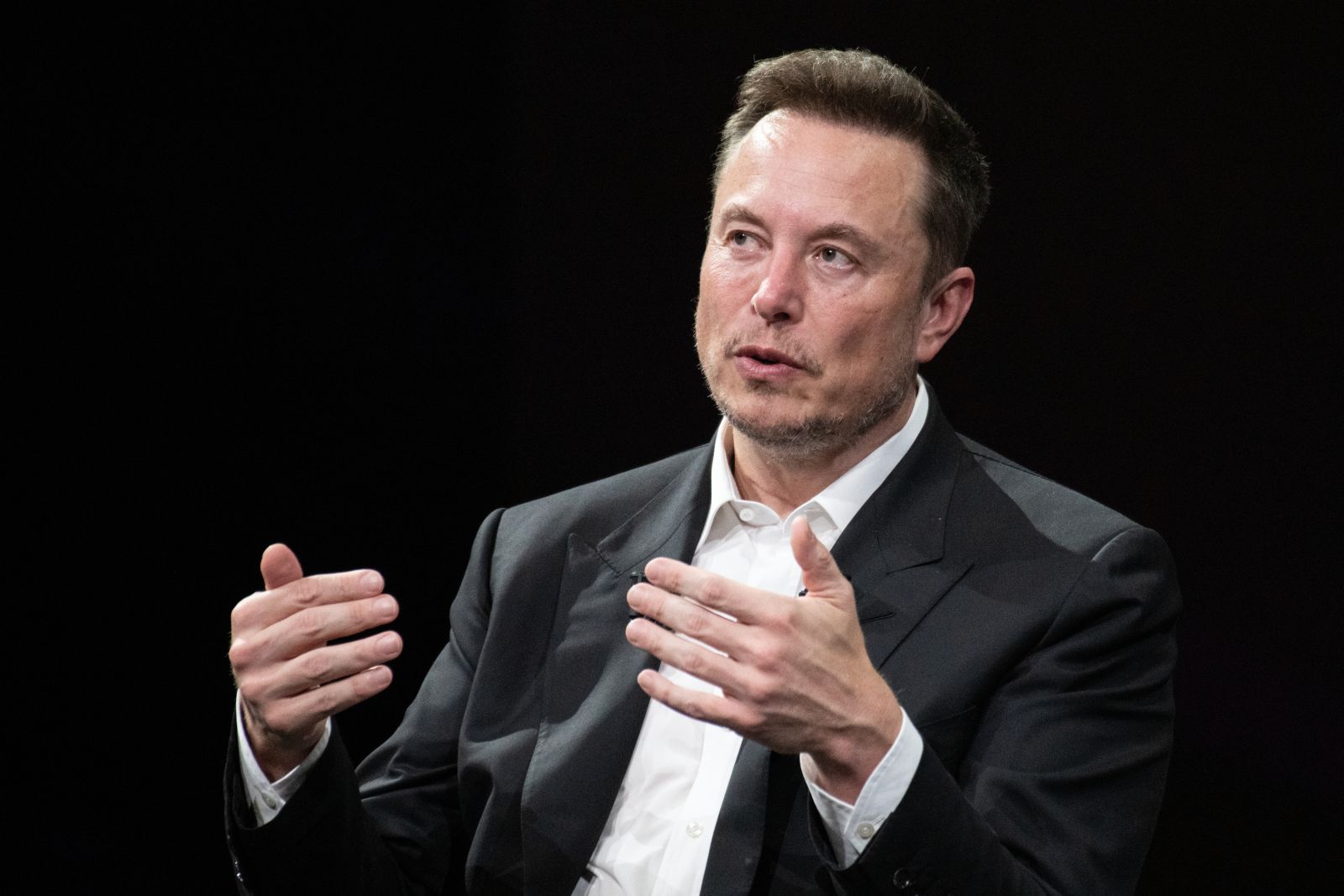
The 2026 IPO Bottleneck Breaks: From SpaceX to AI Unicorns | Investing.com India
* Following years of inactivity, the US IPO market is surging with 127 filings in Q1 2026, the third-highest quarter in three years, driven by easing interest rates and a massive backlog of private unicorns. * SpaceX has reportedly filed confidentially for a June 2026 IPO at a $1.75 trillion valuation; fueled by Starlink's 10 million subscribers, it could surpass Saudi Aramco as the largest public debut in history. * While mid-cap infrastructure firms like QumulusAI are already filing, AI industry giants OpenAI and Anthropic are eyeing late 2026 debuts. The US IPO market in 2026 is shaping up to be a historic bottleneck break. After years of companies staying private longer, a combination of easing interest rates and a massive backlog of AI unicorns has created a highly anticipated, albeit selective, window for public debuts. SpaceX Ready to Launch Just last week news broke that SpaceX had confidentially filed to go public, meaning the financials of the company are not disclosed until later. SpaceX is reportedly eyeing a June 2026 listing, and is targeting a staggering $1.75 trillion valuation, seeking to raise between $50 billion and $75 billion. If successful, this would comfortably unseat Saudi Aramco as the largest IPO in history. What's driving this valuation? While the rocket business is steady, the valuation is heavily anchored by Starlink. In a post on X, the satellite internet provider confirmed they surpassed 10 million subscribers in February 2026 and are seeing revenues projected as high as $24 billion for this year. The IPO Race Amongst AI Unicorns OpenAI and Anthropic are also rumored to be eyeing public debuts in 2026. According to a recent report from The Information, however, there is reported tension at Open AI between CEO Sam Altman, who wants a Q4 2026 IPO, and CFO Sarah Friar. Friar has expressed concerns that the company isn't operationally ready and that slowing revenue growth might not yet support their $600 billion five-year spending plan. The company was recently valued at $852 billion after a $122 billion funding round. To shore up its "path to profit," OpenAI began running ads for non-premium users in February. Fellow AI darling, Anthropic, is said to be considering an IPO as early as October 2026, potentially aiming to beat OpenAI to the public markets. It was valued at $380 billion in February. Bankers suggest they could raise over $60 billion, capitalizing on their perceived lead in enterprise-grade AI and coding models. Q1 2026 IPO Activity In Q1 2026, Wall Street Horizon tallied 127 IPO filings, this is the third-highest quarter in the last three years, surpassed only by the massive rush in late 2025 (Q3 and Q4). This suggests that despite geopolitical tensions, the backlog of companies waiting to go public is still being cleared at a record pace. While mega-cap AI names like those mentioned above are still rumored, mid-cap AI names are already filing. Notable Q1 2026 names include QumulusAI and SharonAI Holdings. These suggest that smaller AI infrastructure companies are moving to market faster than the giants. We're also seeing global fintech names file to IPO, with PayPay Corporation and PicPay showing up in the data for Q1. These massive fintech players from Japan and Brazil, respectively, are choosing the US markets (via ADRs or direct filings) to likely capitalize on higher valuations. And lastly, retailers such as Bob's Discount Furniture round out the list. This indicates that consumer-facing, private-equity-backed brands finally see a window to exit. This is often a sign that "soft landing" expectations are being priced into the IPO market. Source: Wall Street Horizon The Bottom Line While the IPO window is open, the 2026 market is selective. Investors are no longer buying growth at all costs. They are demanding a clear path to profitability (as seen with OpenAI's new ad model) and proven scale (like Starlink's subscriber base).
Anthropic keeps new AI model private after it finds thousands of external vulnerabilities
Anthropic's most capable AI model has already found thousands of AI cybersecurity vulnerabilities across every major operating system and web browser. The company's response was not to release it, but to quietly hand it to the organisations responsible for keeping the internet running. That model is Claude Mythos Preview, and the initiative is called Project Glasswing. The launch partners include Amazon Web Services, Apple, Broadcom, Cisco, CrowdStrike, Google, JPMorganChase, the Linux Foundation, Microsoft, Nvidia, and Palo Alto Networks. Beyond that core group, Anthropic has extended access to over 40 additional organisations that build or maintain critical software infrastructure. Anthropic is committing up to US$100 million in usage credits for Mythos Preview across the effort, along with US$4 million in direct donations to open-source security organisations. A model that outgrew its own benchmarks Mythos Preview was not specifically trained for cybersecurity work. Anthropic said the capabilities "emerged as a downstream consequence of general improvements in code, reasoning, and autonomy", and that the same improvements making the model better at patching vulnerabilities also make it better at exploiting them. That last part matters. Mythos Preview has improved to the extent that it mostly saturates existing security benchmarks, forcing Anthropic to shift its focus to novel real-world tasks-specifically, zero-day vulnerabilities. These flaws were previously unknown to the software's developers. Among the findings: a 27-year-old bug in OpenBSD, an operating system known for its strong security posture. In another case, the model fully autonomously identified and exploited a 17-year-old remote code execution vulnerability in FreeBSD-CVE-2026-4747-that allows an unauthenticated user anywhere on the internet to obtain complete control of a server running NFS. No human was involved in the discovery or exploitation after the initial prompt to find the bug. Nicholas Carlini from Anthropic's research team described the model's ability to chain together vulnerabilities: "This model can create exploits out of three, four, or sometimes five vulnerabilities that in sequence give you some kind of very sophisticated end outcome. I've found more bugs in the last couple of weeks than I found in the rest of my life combined." Why is it not being released? "We do not plan to make Claude Mythos Preview generally available due to its cybersecurity capabilities," Newton Cheng, Frontier Red Team Cyber Lead at Anthropic, said. "Given the rate of AI progress, it will not be long before such capabilities proliferate, potentially beyond actors who are committed to deploying them safely. The fallout-for economies, public safety, and national security-could be severe." This is not hypothetical. Anthropic had previously disclosed what it described as the first documented case of a cyberattack largely executed by AI-a Chinese state-sponsored group that used AI agents to autonomously infiltrate roughly 30 global targets, with AI handling the majority of tactical operations independently. The company has also privately briefed senior US government officials on Mythos Preview's full capabilities. The intelligence community is now actively weighing how the model could reshape both offensive and defensive hacking operations. The open-source problem One dimension of Project Glasswing that goes beyond the headline coalition: open-source software. Jim Zemlin, CEO of the Linux Foundation, put it plainly: "In the past, security expertise has been a luxury reserved for organisations with large security teams. Open-source maintainers, whose software underpins much of the world's critical infrastructure, have historically been left to figure out security on their own." Anthropic has donated US$2.5 million to Alpha-Omega and OpenSSF through the Linux Foundation, and US$1.5 million to the Apache Software Foundation-giving maintainers of critical open-source codebases access to AI cybersecurity vulnerability scanning at a scale that was previously out of reach. What comes next Anthropic says its eventual goal is to deploy Mythos-class models at scale, but only when new safeguards are in place. The company plans to launch new safeguards with an upcoming Claude Opus model first, allowing it to refine them with a model that does not pose the same level of risk as Mythos Preview. The competitive picture is already shifting around it. When OpenAI released GPT-5.3-Codex in February, the company called it the first model it had classified as high-capability for cybersecurity tasks under its Preparedness Framework. Anthropic's move with Glasswing signals that the frontier labs see controlled deployment-not open release-as the emerging standard for models at this capability level. Whether that standard holds as these capabilities spread further is, at this point, an open question that no single initiative can answer. See Also: Anthropic's refusal to arm AI is exactly why the UK wants it Want to learn more about AI and big data from industry leaders? Check out AI & Big Data Expo taking place in Amsterdam, California, and London. The comprehensive event is part of TechEx and is co-located with other leading technology events including the Cyber Security & Cloud Expo. Click here for more information. AI News is powered by TechForge Media. Explore other upcoming enterprise technology events and webinars here.

The 2026 IPO Bottleneck Breaks: From SpaceX to AI Unicorns | Investing.com UK
While mid-cap infrastructure firms like QumulusAI are already filing, AI industry giants OpenAI and Anthropic are eyeing late 2026 debuts. The US IPO market in 2026 is shaping up to be a historic bottleneck break. After years of companies staying private longer, a combination of easing interest rates and a massive backlog of AI unicorns has created a highly anticipated, albeit selective, window for public debuts. Just last week news broke that SpaceX had confidentially filed to go public, meaning the financials of the company are not disclosed until later. SpaceX is reportedly eyeing a June 2026 listing, and is targeting a staggering $1.75 trillion valuation, seeking to raise between $50 billion and $75 billion. If successful, this would comfortably unseat Saudi Aramco as the largest IPO in history. What's driving this valuation? While the rocket business is steady, the valuation is heavily anchored by Starlink. In a post on X, the satellite internet provider confirmed they surpassed 10 million subscribers in February 2026 and are seeing revenues projected as high as $24 billion for this year. OpenAI and Anthropic are also rumored to be eyeing public debuts in 2026. According to a recent report from The Information, however, there is reported tension at Open AI between CEO Sam Altman, who wants a Q4 2026 IPO, and CFO Sarah Friar. Friar has expressed concerns that the company isn't operationally ready and that slowing revenue growth might not yet support their $600 billion five-year spending plan. The company was recently valued at $852 billion after a $122 billion funding round. To shore up its "path to profit," OpenAI began running ads for non-premium users in February. Fellow AI darling, Anthropic, is said to be considering an IPO as early as October 2026, potentially aiming to beat OpenAI to the public markets. It was valued at $380 billion in February. Bankers suggest they could raise over $60 billion, capitalizing on their perceived lead in enterprise-grade AI and coding models. In Q1 2026, Wall Street Horizon tallied 127 IPO filings, this is the third-highest quarter in the last three years, surpassed only by the massive rush in late 2025 (Q3 and Q4). This suggests that despite geopolitical tensions, the backlog of companies waiting to go public is still being cleared at a record pace. While mega-cap AI names like those mentioned above are still rumored, mid-cap AI names are already filing. Notable Q1 2026 names include QumulusAI and SharonAI Holdings. These suggest that smaller AI infrastructure companies are moving to market faster than the giants. We're also seeing global fintech names file to IPO, with PayPay Corporation and PicPay showing up in the data for Q1. These massive fintech players from Japan and Brazil, respectively, are choosing the US markets (via ADRs or direct filings) to likely capitalize on higher valuations. And lastly, retailers such as Bob's Discount Furniture round out the list. This indicates that consumer-facing, private-equity-backed brands finally see a window to exit. This is often a sign that "soft landing" expectations are being priced into the IPO market. While the IPO window is open, the 2026 market is selective. Investors are no longer buying growth at all costs. They are demanding a clear path to profitability (as seen with OpenAI's new ad model) and proven scale (like Starlink's subscriber base).
Accenture invests in Replit to advance AI-driven software development for enterprises
This super composite rating is the result of a weighted average of the rankings based on the following ratings: Fundamentals (Composite), Global Valuation (Composite), EPS Revisions (1 year), and Visibility (Composite). We recommend that you carefully review the associated descriptions. This composite rating is the result of an average of the rankings based on the following ratings: Fundamentals (Composite), Valuation (Composite), Financial Estimates Revisions (Composite), Consensus (Composite), and Visibility (Composite). The company must be covered by at least 4 of these 5 ratings for the calculation to be performed. We recommend that you carefully review the associated descriptions.

Locked Down & Undecided: Inside Islamabad's Critical US-Iran Summit Chaos | Exclusive Details
Despite the massive security deployment in Islamabad, a thick cloud of confusion remains regarding the exact location of the talks As of the evening of Thursday, CNN-News18 has learnt that Islamabad has been transformed into a fortress as Pakistan prepares to host one of the most significant diplomatic summits in recent history. With the arrival of high-level delegations from the United States and Iran imminent, the Pakistani capital has implemented an unprecedented seven-layer security blanket to safeguard the "Islamabad Accord" negotiations scheduled for Saturday. A City Under Siege: Seven Layers of Security The Pakistan military and local law enforcement have effectively sealed the capital's Red Zone. According to top security sources, the security apparatus includes a sophisticated coordination of SSG Commandos, air surveillance units, and specialised wings of the Pakistan Army, Rangers, and Frontier Corps (FC). The takeover of PAF Base Nur Khan by special forces marks a critical escalation in precautions; the airbase's standard security staff has been entirely replaced by elite military units. Simultaneously, the Islamabad Capital Administration has locked down the main Islamabad Expressway from the airbase to Zero Point with shipping containers, redirecting all civilian traffic to alternative routes to ensure a sterilised corridor for the arriving diplomats. The Venue Mystery: GHQ, PMO, or the Serena? Despite the massive security deployment, a thick cloud of confusion remains regarding the exact location of the talks. While initial reports suggested the state-requisitioned Serena Hotel as a primary site, sources now indicate that a more secure military site, such as the General Headquarters (GHQ) or the Prime Minister's Office (PMO), is being finalised. This indecision stems from the volatile security climate and the unique requirement of hosting two adversarial delegations simultaneously. Security teams from both the US and Iran have been in constant contact with Pakistani law enforcement to vet the potential venues, but no official announcement has been made to prevent pre-emptive threats. Diplomatic Deadlock: The Lebanon Wildcard While the logistical stage is set, a major diplomatic deadlock looms over the "Lebanon Issue". US Vice President JD Vance, who is leading the Washington delegation alongside Steve Witkoff and Jared Kushner, has maintained that the ceasefire is bilateral and does not formally include Lebanon. However, Iranian Foreign Minister Abbas Araghchi and Parliament Speaker Mohammad Bagher Ghalibaf have signalled that Tehran will not proceed with a conclusive agreement unless Israeli strikes on Lebanon cease immediately. This friction was exacerbated by a series of deleted social media posts from Iranian diplomats, adding to the sense of uncertainty. Pakistani Prime Minister Shehbaz Sharif has publicly claimed that Lebanon is "on the table", placing Islamabad in the difficult position of bridging a massive gap between the two powers before the first session even begins. Timing and Arrivals: Who is Landing When? The Iranian delegation is confirmed to be arriving later tonight to allow for preparatory meetings with Pakistani officials. While the arrival of the US delegation remains shrouded in secrecy for security reasons, it is expected that VP JD Vance and his team will touch down under the cover of darkness. With the temporary ceasefire set to expire on April 21, the pressure on these delegations is immense. The world now watches Islamabad to see if this seven-layer shield can provide enough stability for the US and Iran to dismantle decades of hostility and secure a permanent regional peace.

Anthropic Rolls Out Managed Agents in Claude to Simplify Enterprise AI Deployment
has announced a new feature for Claude called Managed Agents. This feature helps developers build and deploy AI agents much faster. The company describes Claude Managed Agents as a 'suite of composable APIs for building and deploying cloud-hosted agents at scale.' Managed Agents is a set of composable APIs that run on Anthropic's own infrastructure. Developers only need to describe what the agent should do, what tools it can use, and what guardrails should be in place. A built-in orchestration system then decides when to use tools, how to manage context, and how to recover from errors.
Anthropic loses bid to pause Pentagon blacklisting as AI legal battle escalates
Serving tech enthusiasts for over 25 years. TechSpot means tech analysis and advice you can trust. What just happened? Anthropic has suffered another setback in its escalating fight with the Pentagon. A federal appeals court in Washington, D.C., has refused to temporarily block the Defense Department from treating the AI firm as a supply chain risk while the case continues. The ruling keeps Anthropic locked out of DoD contracts for now, even though a separate federal court in California recently barred the Trump administration from enforcing a broader ban on the use of Claude. The split decisions leave Anthropic in an awkward position. It's still able to work with other government agencies, but effectively frozen out of Pentagon-related business. In its decision, the appeals court said the balance of harms favored the government. Judges described Anthropic's risk as primarily financial, while casting the Pentagon's position as part of wartime procurement during an active military conflict. Also read: Anthropic unveils new powerful AI that finds software flaws, but says it's too dangerous to release The panel acknowledged the company would likely suffer some irreparable harm without relief, but said Anthropic had not shown that its free speech rights were being meaningfully "chilled" while the case plays out. The court did, however, say the matter should be expedited, suggesting the legal fight will move faster because of the damage Anthropic is likely to face in the meantime. Anthropic CEO Dario Amodei The dispute stems from a breakdown in negotiations between Anthropic and the Pentagon over how Claude could be used in defense settings. Anthropic had pushed for assurances that its models would not be used for fully autonomous weapons or domestic mass surveillance, while the DoD wanted broader access across all lawful uses. When the two sides failed to reach an agreement, Defense Secretary Pete Hegseth publicly branded the company a supply chain risk before the department formalized the designation in early March. Defense contractors are now required to certify they are not using Anthropic's models in work tied to the military, though Claude remains available for non-DoD projects and other federal agencies. Anthropic has argued the move is retaliatory, unconstitutional, arbitrary, and procedurally unsound. Part of the confusion comes from the government relying on two separate legal authorities to justify its actions, forcing Anthropic to challenge them in different courts. That explains how the California court could block one aspect of the administration's restrictions while the Washington appeals court allowed the Pentagon blacklist to remain in place. Anthropic is reportedly the first American company to receive this kind of supply chain risk designation, a label more commonly associated with foreign adversaries. It's a dramatic turn of events for a company that signed a $200 million Pentagon contract last July and was once being positioned for deeper integration into the DoD's AI efforts.

Perplexity AI Revenue Soars 50% in 30 Days Following Major Product Launch - Blockonomi
Legal challenges include copyright claims from major publishers and a privacy-related class action lawsuit Perplexity AI has reached a significant financial benchmark, with Annual Recurring Revenue (ARR) surpassing $450 million in March 2026. This represents a remarkable 50% acceleration within just 30 days, marking the most dramatic revenue expansion in the company's history since its 2022 establishment. Prior to this recent milestone, the company had demonstrated impressive momentum by scaling ARR from $16 million to $305 million across a two-year period. While that trajectory was noteworthy, two strategic initiatives launched on February 25 catalyzed unprecedented growth. The primary catalyst was the introduction of Perplexity Computer, an autonomous agent infrastructure that integrates existing AI functionalities into a unified platform. This enables users to execute complex workflows without navigating multiple applications. The secondary driver was a fundamental restructuring of the company's monetization approach. Perplexity transitioned to usage-based billing for premium service tiers. Users now receive allocated credits, with additional consumption requiring incremental payment. Monthly subscription options span from $20 to $200. This pricing transformation created a scalable revenue mechanism that grows proportionally with platform utilization. Company leadership confirmed the service now attracts over 100 million monthly active users, including tens of thousands of corporate clients leveraging its search and agent capabilities. By September 2025, Perplexity commanded a valuation between $20 billion and $21.2 billion. This followed a $200 million capital infusion, representing substantial appreciation from a $9 billion valuation earlier that year and $3 billion in mid-2024. Traders on prediction platform Polymarket currently assign a 13% probability to the company achieving a $50 to $75 billion valuation in light of recent revenue performance. However, 62% of Polymarket participants anticipate the company will not pursue an initial public offering before 2028. This suggests management prioritization of product development and market expansion over near-term liquidity events. A company representative informed the Financial Times that customer revenue retention metrics remain robust, though specific retention rates were not disclosed. The organization currently confronts legal proceedings on multiple fronts. Major publishers, including The New York Times and Encyclopedia Britannica, have initiated copyright infringement litigation against the firm. Additionally, a class-action lawsuit alleging privacy violations claims the company shared users' conversation data with Google and Meta Platforms without proper authorization. Perplexity maintains its status as a privately held entity without publicly traded securities. The Financial Times initially disclosed the $450 million ARR milestone based on confidential company data.
Commuters face rush hour chaos as rail services cancelled after incident
Rail services to and from London Waterloo station face severe disruption today, April 9, following an incident. Emergency services were called to Queenstown Road railway station late this morning to reports of a casualty on the tracks. The person was sadly pronounced dead at the scene. The incident has resulted in the closure of all lines between London Waterloo and Clapham Junction. Other train services may be cancelled, delayed by up to 90 minutes, or revised, and major disruption is expected until the end of the day. Stations including Surbiton have been closed - with passengers seen gathering outside the station trying to find alternative routes, MyLondon reports.

EarthDaily Secures Eight-Figure AI-Ready Data Subscription Agreement with US Defense & Intelligence Technology Company
Agreement highlights growing demand for calibrated, consistent data powering AI-driven Earth intelligence VANCOUVER, British Columbia, April 09, 2026 (GLOBE NEWSWIRE) -- EarthDaily Analytics (EarthDaily) today announced it has signed a new eight-figure data subscription agreement with a US Defense and Intelligence Technology Company, reflecting the growing demand for AI-ready Earth observation data built on consistency, calibration, and trust. The agreement provides the customer access to tens of millions of square kilometers of daily images. EarthDaily's analysis-ready data will support the customer's large-scale AI and machine learning workflows. The EarthDaily Constellation is uniquely designed to deliver consistent, repeatable measurement at global scale. By capturing the entire planet every day at the same local solar time and viewing geometry, the constellation imagery provides a stable foundation for AI workflows. This consistency reduces noise in datasets, a key requirement for training, validating, and deploying AI models with confidence. Built as a measurement system first, EarthDaily applies rigorous radiometric and geometric calibration to ensure that data is not only visually accurate, but analytically reliable across time. With 22 spectral bands spanning the visible, near-infrared, shortwave infrared, and thermal infrared, the system captures subtle changes in terrain, infrastructure and surface conditions. This enables AI models to detect real change, not artifacts introduced by inconsistent collection conditions. The result is a fundamentally different data foundation for AI: one that supports continuous monitoring, scalable automation, and forward-looking Earth intelligence designed to support governments and enterprises operating in complex, high-impact environments. "We look forward to partnering closely with this established and highly respected leader in US defense and intelligence technology," said Don Osborne, "it is a strong validation of both their mission and the quality of our data." About EarthDaily EarthDaily is a global Earth observation company focused on delivering science-grade data and analytics designed for broad-area change detection and decision-centric intelligence. With the upcoming launch of the EarthDaily Constellation, the company is building a foundation for daily, globally consistent Earth intelligence to support governments and enterprises operating in complex, high-impact environments. To learn more, visit earthdaily.com and follow EarthDaily on LinkedIn (@EarthDaily) and X (@EarthDailyA). A photo accompanying this announcement is available at https://www.globenewswire.com/NewsRoom/AttachmentNg/d3931e2f-a83e-4829-98be-836c0cbf6010 Contacts Tanya Cross Vice President, Global Marketing and Communications EarthDaily [email protected] Alliance Advisors [email protected]