News & Updates
The latest news and updates from companies in the WLTH portfolio.
SpaceX Starship launch delayed again in Texas. Here's the latest
Here's everything to know about Starship's next mission, which SpaceX refers to as flight 12. SpaceX chief Elon Musk said the commercial spaceflight company is bumping the 2026 debut launch of its massive Starship rocket yet again. The delay marks the third time that Starship's 12th overall test flight has slipped this year amid preparations for SpaceX to roll out a larger and more advanced version of a rocket due to reach the moon and, perhaps, Mars. Musk, the billionaire who founded the company in 2002, first indicated in January that Starship was on track for a March liftoff from SpaceX's Starbase company town and headquarters in South Texas. But at the beginning of March, Musk indicated that projected test flight was now being targeted for April. In the latest update in April, the tech mogul and world's richest man announced that SpaceX was now working toward a Starship launch sometime in May. The news comes as SpaceX prepares for its first-ever public offering on the stock market later this summer, and as a race heats up between it and rival billionaire Jeff Bezos' Blue Origin to develop a lunar lander for NASA. Here's everything to know about Starship's next mission, which SpaceX refers to as flight 12. When is the next Starship launch? Elon Musk pushes date to May Musk, the CEO of SpaceX, said in an April 3 post on social media site X that Starship's next flight test was "4 to 6 weeks away." Considering the timing of the post, that would mean the launch is now being targeted for early to mid-May. Neither Musk nor SpaceX have disclosed reasons for the delays. Where is SpaceX based in Texas? What to know about Starbase As it has 11 times already, the Starship rocket would get off the ground from Starbase, SpaceX's company town and headquarters located about 180 miles south of Corpus Christi near the U.S.-Mexico border. In May 2025, Texas voters in Cameron County - most of whom are SpaceX employees - approved a measure to officially recognize the company's headquarters as its own town, complete with a mayor and city commissioners. What is SpaceX's Starship rocket? Standing at more than 400 feet tall when fully stacked, Starship is regarded as the largest and most powerful launch vehicle in the world. SpaceX is developing Starship to be a fully reusable transportation system that can carry huge satellites and other payloads to space, meaning the rocket and vehicle can return to the ground for additional missions. The fully integrated spacecraft is composed of both a lower-stage booster known as Super Heavy that provides the initial burst of thrust at liftoff, as well as an upper stage simply called Starship, which is the vehicle where crew and cargo would ride. How could Starship be used on Artemis moon missions? In the years ahead, Starship is due to help NASA astronauts land on the moon under the U.S. space agency's Artemis program. SpaceX is working on a lunar lander iteration of Starship known as the Human Landing System (HLS) that could ferry astronauts from lunar orbit down to the moon's surface. That mission, known as Artemis IV, is targeted for 2028 and would be the first time humans stepped on the moon since NASA's Apollo era ended more than 50 years ago. But amid concerns that development has lagged, NASA appears to now be considering using competitor Blue Origin's experimental lunar lander known as Blue Moon instead. Under the Artemis III planned for 2027, astronauts aboard NASA's Orion spacecraft are due to dock in Earth orbit with one or both the landers in a critical test that would precede a moon landing a year later. Musk also has dreams of Starship being the vehicle that transports the first humans to Mars, though in February he announced SpaceX's intentions of shifting its focus to building a lunar city first. What happened with Starship in 2025? SpaceX conducted five Starship flight tests in 2025, the first three of which ended in disaster when the vehicle met a premature fiery demise before completing many key objectives. But SpaceX ended 2025 on a high note, with its final two Starship launches of the year in August and October being considered inarguable successes. The most recent Starship test, taking place Oct. 13, was also the final flight for that iteration of the rocket, known as Version 2. What's next for SpaceX, Starship in 2026? Version 3 to make debut SpaceX's next prototype of Starship, known as Version 3, is expected to make its debut during flight 12 from Starbase. At about 408 feet tall, Version 3 is expected to not only be slightly larger than its predecessor, but considerably more powerful, according to Musk. If all goes to plan, Version 3 (V3) could be the Starship model to reach orbit and also refuel its upper stage midflight. The complex process, requiring two Starships equipped with docking adapters to meet up in orbit to transfer hundreds of tons of super-cooled propellant, is necessary for Starship to reach distant destinations like Mars. Eric Lagatta is the Space Connect reporter for the USA TODAY Network. Reach him at [email protected]

SpaceX Starship launch delayed again in Texas. Here's the latest
Here's everything to know about Starship's next mission, which SpaceX refers to as flight 12. SpaceX chief Elon Musk said the commercial spaceflight company is bumping the 2026 debut launch of its massive Starship rocket yet again. The delay marks the third time that Starship's 12th overall test flight has slipped this year amid preparations for SpaceX to roll out a larger and more advanced version of a rocket due to reach the moon and, perhaps, Mars. Musk, the billionaire who founded the company in 2002, first indicated in January that Starship was on track for a March liftoff from SpaceX's Starbase company town and headquarters in South Texas. But at the beginning of March, Musk indicated that projected test flight was now being targeted for April. In the latest update in April, the tech mogul and world's richest man announced that SpaceX was now working toward a Starship launch sometime in May. The news comes as SpaceX prepares for its first-ever public offering on the stock market later this summer, and as a race heats up between it and rival billionaire Jeff Bezos' Blue Origin to develop a lunar lander for NASA. Here's everything to know about Starship's next mission, which SpaceX refers to as flight 12. When is the next Starship launch? Elon Musk pushes date to May Musk, the CEO of SpaceX, said in an April 3 post on social media site X that Starship's next flight test was "4 to 6 weeks away." Considering the timing of the post, that would mean the launch is now being targeted for early to mid-May. Neither Musk nor SpaceX have disclosed reasons for the delays. Where is SpaceX based in Texas? What to know about Starbase As it has 11 times already, the Starship rocket would get off the ground from Starbase, SpaceX's company town and headquarters located about 180 miles south of Corpus Christi near the U.S.-Mexico border. In May 2025, Texas voters in Cameron County - most of whom are SpaceX employees - approved a measure to officially recognize the company's headquarters as its own town, complete with a mayor and city commissioners. What is SpaceX's Starship rocket? Standing at more than 400 feet tall when fully stacked, Starship is regarded as the largest and most powerful launch vehicle in the world. SpaceX is developing Starship to be a fully reusable transportation system that can carry huge satellites and other payloads to space, meaning the rocket and vehicle can return to the ground for additional missions. The fully integrated spacecraft is composed of both a lower-stage booster known as Super Heavy that provides the initial burst of thrust at liftoff, as well as an upper stage simply called Starship, which is the vehicle where crew and cargo would ride. How could Starship be used on Artemis moon missions? In the years ahead, Starship is due to help NASA astronauts land on the moon under the U.S. space agency's Artemis program. SpaceX is working on a lunar lander iteration of Starship known as the Human Landing System (HLS) that could ferry astronauts from lunar orbit down to the moon's surface. That mission, known as Artemis IV, is targeted for 2028 and would be the first time humans stepped on the moon since NASA's Apollo era ended more than 50 years ago. But amid concerns that development has lagged, NASA appears to now be considering using competitor Blue Origin's experimental lunar lander known as Blue Moon instead. Under the Artemis III planned for 2027, astronauts aboard NASA's Orion spacecraft are due to dock in Earth orbit with one or both the landers in a critical test that would precede a moon landing a year later. Musk also has dreams of Starship being the vehicle that transports the first humans to Mars, though in February he announced SpaceX's intentions of shifting its focus to building a lunar city first. What happened with Starship in 2025? SpaceX conducted five Starship flight tests in 2025, the first three of which ended in disaster when the vehicle met a premature fiery demise before completing many key objectives. But SpaceX ended 2025 on a high note, with its final two Starship launches of the year in August and October being considered inarguable successes. The most recent Starship test, taking place Oct. 13, was also the final flight for that iteration of the rocket, known as Version 2. What's next for SpaceX, Starship in 2026? Version 3 to make debut SpaceX's next prototype of Starship, known as Version 3, is expected to make its debut during flight 12 from Starbase. At about 408 feet tall, Version 3 is expected to not only be slightly larger than its predecessor, but considerably more powerful, according to Musk. If all goes to plan, Version 3 (V3) could be the Starship model to reach orbit and also refuel its upper stage midflight. The complex process, requiring two Starships equipped with docking adapters to meet up in orbit to transfer hundreds of tons of super-cooled propellant, is necessary for Starship to reach distant destinations like Mars. Eric Lagatta is the Space Connect reporter for the USA TODAY Network. Reach him at [email protected]
What Is Anthropic's Claude Mythos and What Can It Do?
It is the first model to score 100 percent on the Cybench benchmark In just 48 hours, Anthropic announced its new cybersecurity-focused artificial intelligence (AI) model, Claude Mythos Preview, and raised alarms across the entire global tech space. The San Francisco-based AI startup called it the most powerful model when it comes to cybersecurity tasks, especially finding undiscovered vulnerabilities in codebases. The company also warned that the model found thousands of high-severity vulnerabilities in "every major operating system and web browser," which, if true, is a major concern. Anthropic has also limited its release, citing its ability to hack into any system. Ever since the announcement, the world has reacted to the model with awe and fear. Many experts have raised concerns over the existence of such a powerful model, whereas others have expressed doubts over its claimed capabilities. So, what exactly is going on with Anthropic's latest cybersecurity model? Here's what you need to know. What Is Claude Mythos In a post, Anthropic claimed that Claude Mythos Preview is a general-purpose AI model that is exceptionally good at coding and reasoning. The combination allows it to analyse large codebases and find security flaws that might have escaped even the eyes of experts. The company even claims that the model has already found vulnerabilities in systems that have gone undiscovered for decades. Currently, the model is only available to its Project Glasswing partners. The list of partners is impressive. It includes Amazon Web Services (AWS), Apple, Broadcom, Cisco, CrowdStrike, Google, JPMorganChase, the Linux Foundation, Microsoft, Nvidia, and Palo Alto. Nearly every major tech corporation has joined hands with Anthropic to get access to the model. However, the access is limited to cybersecurity-related tasks. This means while these companies can shore up their defences, they will not be able to initiate a malicious attack on other companies or codebases. Anthropic is also extending access to around 40 organisations that operate in the critical software infrastructure space. All of these companies will get $100 million (roughly Rs. 923.6 crore) worth of usage credits, facilitated by Anthropic. Claude Mythos Performance Anthropic has also shared the AI model's system card, highlighting its internal evaluation across different benchmarks. This is where things take a scary turn. The model outperforms Claude Opus 4.6, the company's frontier model, in every relevant test. Additionally, it significantly outperforms in tests relating to cybersecurity. Claude Mythos tops the USA Mathematical Olympiad benchmark, the BrowseComp benchmark, and the SWE-bench benchmark. More notably, it scored 100 percent on Cybench, a benchmark that measures a model's ability to complete cybersecurity tasks. It is the only AI model to achieve this feat. What's interesting is that some of the tasks on the test are to find and exploit vulnerabilities in real software. If that was not enough, the model also blows every other LLM out of the water in the CyberGym benchmark. The system card also reveals that Mythos was able to discover previously unknown vulnerabilities in Firefox. It is a browser that is used by millions. Anthropic did the responsible thing and disclosed the flaw to the company. Claude Mythos Is Not for the Public Logan Graham, Head of the Frontier Red Team at Anthropic, told NBC News that the Mythos model was advanced enough to not only unearth previously undiscovered vulnerabilities but also to weaponise them. Given the model's ability to analyse large codebases, it is said that the LLM find vulnerabilities and then can perform complex and effective hacking tasks to break them open. This means that in the hands of a bad actor, the model can cause serious damage. In its red-teaming effort, Anthropic acknowledged that it was one of the reasons the company has decided to keep the AI model unreleased, and does not plan to release it to the public. However, some might ask that the existence of such a powerful model in itself raises serious concerns. Anthropic is a corporation with its own interests in profit-making and being ahead of the competition. So, what is stopping the company from unleashing an attack on a rival to improve its market position? In the days to come, the company will likely come up with a way to be more transparent with the world about the model and how Anthropic is limiting and monitoring its usage.

This Founder Helped Build Spacex's Most Powerful Rocket Engine. Now He's Building A 'fighter Jet For Orbit'
Jeff Thornburg helped move a authorities investigation task into SpaceX's about powerful rocket engine. Now, he's trying to do the aforesaid point astatine his startup Portal Space Systems, which is taking an thought group speech by NASA and turning into high-powered propulsion for the adjacent procreation of spacecraft. Portal, founded successful 2021, announced a $50 cardinal Series A backing information Thursday that values the institution astatine $250 million. The information was led by Geodesic Capital and Mach33, alongside Booz Allen Ventures, ARK Invest, AlleyCorp, and FUSE. The institution is processing a exertion called star thermal propulsion. Today's modular outer engines either pain chemic fuel, aliases person the sun's power to electricity, utilizing that to powerfulness businesslike but low-powered thrusters. Portal's engines would alternatively ore the power of the sun, utilizing that to power propellant and move the spacecraft on astatine precocious speed. The exertion has been the taxable of investigation successful authorities investigation labs since the 1960s, about precocious as a concept for sending a probe into interstellar space, but has yet to make it into orbit. Thornburg, on pinch co-founders Ian Vorbach and Prashaanth Ravindran, plans to alteration that successful the adjacent 2 years. Thornburg began his profession successful the U.S. Air Force, wherever he worked connected a programme to create an efficient, powerful next-generation benignant of rocket motor that engineers telephone full-flow staged combustion. A decade later, he was wooed to SpaceX by Elon Musk to move those concepts into the Raptor motor that now powers the company's monolithic Starship. After stints moving astatine Stratolaunch and Amazon's Project Kuiper, he turned to propulsion erstwhile again. A caller benignant of rocket engine Solar thermal powerfulness is, successful Thornburg's view, the adjacent logical measurement successful rocket tech. NASA had studied the exertion extensively successful the precocious nineties and concluded it supply amended capacity successful galore cases. It wasn't developed further because location wasn't capable request for in-space mobility, according to a 2003 study commissioned by NASA. With satellites and abstraction probes flying overmuch much seldom backmost then, it was simpler conscionable to usage a much powerful rocket than put successful in-space propulsion. Now, pinch thousands of caller satellites flying each twelvemonth and the U.S. subject demanding spacecraft that could alert quickly betwixt orbits to surveil aliases frighten rivals, that calculus has been turned connected its head. "It's nary longer acceptable to move slow connected orbit," Thornburg told TechCrunch. "You know, China's moving circles about our spacecraft. We request balanced capability." Portal has already received $45 cardinal successful strategical backing from the U.S. military, connected apical of $67.5 cardinal successful backstage capital, acknowledgment to the imaginable for utilizing its exertion for orbital warfare, according to Booz Allen Ventures' managing head Travis Bales. And successful a early wherever we whitethorn spot millions of satellites successful orbit about the Earth providing communications and computing services, outer operators will request cheaper intends of maneuvering spacecraft retired of each other's way, notes Aaron Burnett, the CEO of the aerospace-focused task money Mach33. Burnett sees Portal becoming a "space mobility prime," providing propulsion to a assortment of users. The way to orbit To get there, the institution will request to get its exertion moving successful orbit. Its formation electronics were launched connected a shakedown cruise about the satellite past week, and different prototype spacecraft is expected to motorboat successful October. The institution will show a moving prototype of its motor pinch the motorboat of its first SuperNova spacecraft -- a "fighter pitchy for orbit," per Thornburg -- expected successful 2027. Portal benefits from caller advancements successful additive manufacturing and materials science, which person led to the improvement of the company's mixed star concentrator and nozzle, the Hex thruster. Rocket nerds deliberation that atomic powered rockets are the adjacent measurement to unlock proscription passim the star system, but the regulatory and ineligible challenges of building specified a strategy make it beyond a startup's salary grade. But Portal's motor besides gives the institution a caput commencement connected 1 type of an atomic rocket, a atomic thermal propulsion system -- essentially replacing the power of the sun pinch that of a reactor. When the U.S. authorities is fresh to build it, Thornburg's squad will person already proved retired galore of the moving parts successful orbit. "I'll beryllium capable to thief mature this exertion overmuch faster connected orbit than we ever will by trying to build a $2 cardinal crushed trial installation that's atomic safe," Thornburg said.

This founder helped build SpaceX's most powerful rocket engine. Now he's building a 'fighter jet for orbit' | TechCrunch
Jeff Thornburg helped turn a government research project into SpaceX's most powerful rocket engine. Now, he's trying to do the same thing at his startup Portal Space Systems, which is taking an idea set aside by NASA and turning into high-powered propulsion for the next generation of spacecraft. Portal, founded in 2021, announced a $50 million Series A funding round Thursday that values the company at $250 million. The round was led by Geodesic Capital and Mach33, alongside Booz Allen Ventures, ARK Invest, AlleyCorp, and FUSE. The company is developing a technology called solar thermal propulsion. Today's standard satellite engines either burn chemical fuel, or convert the sun's energy to electricity, using that to power efficient but low-powered thrusters. Portal's engines would instead concentrate the heat of the sun, using that to heat propellant and move the spacecraft along at high speed. The technology has been the subject of investigation in government research labs since the 1960s, most recently as a concept for sending a probe into interstellar space, but has yet to make it into orbit. Thornburg, along with co-founders Ian Vorbach and Prashaanth Ravindran, plans to change that in the next two years. Thornburg began his career in the U.S. Air Force, where he worked on a program to develop an efficient, powerful next-generation kind of rocket engine that engineers call full-flow staged combustion. A decade later, he was wooed to SpaceX by Elon Musk to turn those concepts into the Raptor engine that now powers the company's massive Starship. After stints working at Stratolaunch and Amazon's Project Kuiper, he turned to propulsion once again. Solar thermal power is, in Thornburg's view, the next logical step in rocket tech. NASA had studied the technology extensively in the late nineties and concluded it provide better performance in many cases. It wasn't developed further because there wasn't enough demand for in-space mobility, according to a 2003 report commissioned by NASA. With satellites and space probes flying much more rarely back then, it was simpler just to use a more powerful rocket than invest in in-space propulsion. Now, with thousands of new satellites flying every year and the U.S. military demanding spacecraft that can fly quickly between orbits to surveil or threaten rivals, that calculus has been turned on its head. "It's no longer acceptable to move slowly on orbit," Thornburg told TechCrunch. "You know, China's running circles around our spacecraft. We need equivalent capability." Portal has already received $45 million in strategic funding from the U.S. military, on top of $67.5 million in private capital, thanks to the potential for using its technology for orbital warfare, according to Booz Allen Ventures' managing director Travis Bales. And in a future where we may see millions of satellites in orbit around the Earth providing communications and computing services, satellite operators will need cheaper means of maneuvering spacecraft out of each other's way, notes Aaron Burnett, the CEO of the aerospace-focused venture fund Mach33. Burnett sees Portal becoming a "space mobility prime," providing propulsion to a variety of users. To get there, the company will need to get its technology working in orbit. Its flight electronics were launched on a shakedown cruise around the planet last week, and another prototype spacecraft is expected to launch in October. The company will demonstrate a working prototype of its engine with the launch of its first SuperNova spacecraft -- a "fighter jet for orbit," per Thornburg -- expected in 2027. Portal benefits from recent advancements in additive manufacturing and materials science, which have led to the development of the company's combined solar concentrator and nozzle, the Hex thruster. Rocket nerds think that nuclear powered rockets are the next step to unlock transportation throughout the solar system, but the regulatory and legal challenges of building such a system make it beyond a startup's pay grade. But Portal's engine also gives the company a head start on one version of an atomic rocket, a nuclear thermal propulsion system -- essentially replacing the heat of the sun with that of a reactor. When the U.S. government is ready to build it, Thornburg's team will have already proved out many of the moving parts in orbit. "I'll be able to help mature this technology much faster on orbit than we ever will by trying to build a $2 billion ground test facility that's nuclear safe," Thornburg said.
What happens now that the government has released the crypto kraken?
The irony of the century is that digital asset and crypto businesses, which were conceived out of a deep disdain for governments and banks, now want to become banks regulated by the government. And the White House and federal regulators are welcoming them. The first digital national bank was approved in 2021, and five crypto firms received conditional approval to operate non-deposit-taking national trust charters in 2025. Since then, more than a dozen digital asset companies have filed applications to form some sort of national bank charter. And last month, the Federal Reserve awarded Kraken Financial, a Wyoming-chartered bank, a Federal Reserve master account, making it the first digital asset bank to receive the keys to the Fed's payments kingdom. This may seem like the government keeping up with technology, but beneath the surface, policymakers face a much more complex set of challenges. No one really knows whether the infiltration of digital assets and cryptocurrencies will facilitate or disrupt the stability of the financial system, the role of trusted intermediaries, and the flow of liquidity and capital throughout financial markets. But the other side of the issue is equally fascinating: Why would crypto companies want to be banks? The modern attraction of a bank charter goes back to the early 1980s, when a woefully underfunded Federal Savings and Loan Insurance Corporation reconfigured the entire financial landscape by inviting a new set of companies to acquire failed savings and loans. Using novel geographic, accounting and economic incentives, we cobbled together an interstate franchise composed of savings and loans in three different states and sold it to National Steel. That released a financial kraken, and every major company in America showed up on our doorstep to buy a savings and loan franchise to get into the banking business. There are tangible and intangible benefits to owning a bank. Access to low-cost consumer funding in the form of FDIC-insured checking and savings deposits is the most obvious. Investment-grade companies cannot borrow in the market at the low rates that banks can borrow from customers who maintain insured accounts with them. In addition, new services can be provided -- and operating costs reduced -- by having an interest-bearing master account at a Federal Reserve Bank to move money through payments systems. Federally chartered banks can also preempt the application of state usury, branching and other laws that can directly affect operating costs, particularly when building a national franchise. And finally, the aura of safety and legitimacy is priceless that comes from being able to flash an imprimatur from the U.S. government when soliciting other people's money. Over the last five decades, some combination of these benefits has enticed a range of companies to file for bank charters. Their record of success has been spotty when measured by the number of them that still exist. Dimension Financial Corporation took advantage of a loophole in the Bank Holding Company Act and acquired the first non-bank bank in 1982. Around the same time, industrial loan companies established under the laws of a half-dozen states attracted non-bank acquirers, because while they too could look and act like banks, they were not considered to be banks under the Bank Holding Company Act of 1956. In 1987, Congress shrank that loophole. By the end of 2005, there were still 58 industrial loan companies with combined assets of $213 billion. Some were owned by some of the largest non-bank financial services companies in the U.S., including Merrill Lynch. A variety of insurance companies, mortgage banks and other commercial organizations also filed to establish national bank and trust company charters in the 1990s. As of March 31, 2025, there were only 23 industrial loan companies left with $247 billion in aggregate total assets in California, Utah, Nevada, Hawaii and Minnesota. Of the 64 national trust charters doing business today, only one is owned by an insurance company. The reality has been that the euphoria of acquiring a bank eventually gives way to the reality of being regulated as one. Buyer's remorse usually sets in about the time that bank examiners take up residence in the new bank's offices for several weeks to review every decision made. If that doesn't do it, executives eventually chaff when regulators have their say about management, capital, liquidity, dividends, balance sheet risk, and proposed transactions. The great disappointment is not being able to use those low-cost FDIC-insured deposits to bankroll affiliates and side ventures. Digital asset companies either have a plan to beat these odds and avoid becoming the latest dogs to catch the car or believe that the regulatory system will bend to accommodate them so that they can take advantage of the benefits of being a bank while avoiding the pain. We should wish them good luck with that. Crypto firms must understand the fine print of the world they are entering -- and be prepared to dislike it. Legislators and regulators should be extremely cautious about the unprecedented risks and potential instabilities being embedded into the financial system by assimilating companies that are accustomed to no regulation, have seen some of their highest-profile executives marched off to prison, and make their money relying on speculative, aspirational assets. Neither of these two worlds are ready for each other. History tells us that is a dangerous situation. Thomas P. Vartanian is executive director of the Financial Technology and Cybersecurity Center. He was a former general counsel of the Federal Home Loan Bank Board and FSLIC and special assistant to the chief counsel at the Office of the Comptroller of the Currency before chairing the financial services practices at two Wall Street firms. He is the author of "200 Years of American Financial Panics" and "The Unhackable Internet."

Newly-made Polymarket accounts won massively on US-Iran ceasefire bets
A group of new accounts on the prediction market Polymarket made highly specific and well-timed bets on whether the US and Iran would reach a ceasefire on 7 April, resulting in hundreds of thousands of dollars in profits for these new users. The bets were made hours before a two-week ceasefire was announced on Tuesday, even though US President Donald Trump's rhetoric had escalated sharply and there were few signals that a ceasefire deal was imminent. Earlier in the day, Trump had issued a warning on social media that "a whole civilization will die tonight" if Iran did not meet his demand to open the Strait of Hormuz by his 8 pm Eastern Time (2 am CET) deadline. This is the latest in a series of episodes evolving prediction markets that have raised suspicions over potential insider trading from members of the Trump administration or other US government employees. An analysis of publicly available blockchain data from Polymarket, using the crypto analytics platform Dune, shows that at least 50 accounts placed substantial "Yes" bets right before Trump announced the ceasefire in a Truth Social post at around 06:30 pm Eastern Time (00:30 am CET). The wagers were the first bets ever made by these new wallets. One of the accounts, created on the same day, placed roughly $72,000 (€61,600) in bets at an average price of $0.088. The buy-in for each betting event ranges from $0 to $1 each, reflecting a 0% to 100% chance of what users think could happen. This Polymarket user then cashed out for a profit of $200,000 (€171,200). Another wallet, which joined the platform the day before, won over $125,500 (€107,400). A third wallet, created just twelve minutes before Trump's post, placed $31,908 (€27,315) of "Yes" bets at around $0.33 and is estimated to have earned a profit of $48,500 (€41,520). The higher price for "Yes" at that time reflected the pricing in of reports about the efforts late on Tuesday by the government of Pakistan to get Trump to extend his deadline by two weeks. It is also possible that these Polymarket users placed their bets expecting Trump to back down, given he has frequently made bold threats only to retreat, a phenomenon his critics have derided as "Trump Always Chickens Out" or TACO. Bet settling and user identification While some users reaped handsome profits, others must wait for payouts as Polymarket has labeled the 7 April Iran-US ceasefire contract as "disputed," given that Iran was still placing restrictions on ships passing through the Strait of Hormuz and missile attacks in the region continued Public blockchain data cannot identify who controls the new wallets. Polymarket uses proxy smart contract wallets, meaning a single user can create multiple accounts.
SpaceX Starship launch delayed again in Texas. Here's the latest
Here's everything to know about Starship's next mission, which SpaceX refers to as flight 12. SpaceX chief Elon Musk said the commercial spaceflight company is bumping the 2026 debut launch of its massive Starship rocket yet again. The delay marks the third time that Starship's 12th overall test flight has slipped this year amid preparations for SpaceX to roll out a larger and more advanced version of a rocket due to reach the moon and, perhaps, Mars. Musk, the billionaire who founded the company in 2002, first indicated in January that Starship was on track for a March liftoff from SpaceX's Starbase company town and headquarters in South Texas. But at the beginning of March, Musk indicated that projected test flight was now being targeted for April. In the latest update in April, the tech mogul and world's richest man announced that SpaceX was now working toward a Starship launch sometime in May. The news comes as SpaceX prepares for its first-ever public offering on the stock market later this summer, and as a race heats up between it and rival billionaire Jeff Bezos' Blue Origin to develop a lunar lander for NASA. Here's everything to know about Starship's next mission, which SpaceX refers to as flight 12. When is the next Starship launch? Elon Musk pushes date to May Musk, the CEO of SpaceX, said in an April 3 post on social media site X that Starship's next flight test was "4 to 6 weeks away." Considering the timing of the post, that would mean the launch is now being targeted for early to mid-May. Neither Musk nor SpaceX have disclosed reasons for the delays. Where is SpaceX based in Texas? What to know about Starbase As it has 11 times already, the Starship rocket would get off the ground from Starbase, SpaceX's company town and headquarters located about 180 miles south of Corpus Christi near the U.S.-Mexico border. In May 2025, Texas voters in Cameron County - most of whom are SpaceX employees - approved a measure to officially recognize the company's headquarters as its own town, complete with a mayor and city commissioners. What is SpaceX's Starship rocket? Standing at more than 400 feet tall when fully stacked, Starship is regarded as the largest and most powerful launch vehicle in the world. SpaceX is developing Starship to be a fully reusable transportation system that can carry huge satellites and other payloads to space, meaning the rocket and vehicle can return to the ground for additional missions. The fully integrated spacecraft is composed of both a lower-stage booster known as Super Heavy that provides the initial burst of thrust at liftoff, as well as an upper stage simply called Starship, which is the vehicle where crew and cargo would ride. How could Starship be used on Artemis moon missions? In the years ahead, Starship is due to help NASA astronauts land on the moon under the U.S. space agency's Artemis program. SpaceX is working on a lunar lander iteration of Starship known as the Human Landing System (HLS) that could ferry astronauts from lunar orbit down to the moon's surface. That mission, known as Artemis IV, is targeted for 2028 and would be the first time humans stepped on the moon since NASA's Apollo era ended more than 50 years ago. But amid concerns that development has lagged, NASA appears to now be considering using competitor Blue Origin's experimental lunar lander known as Blue Moon instead. Under the Artemis III planned for 2027, astronauts aboard NASA's Orion spacecraft are due to dock in Earth orbit with one or both the landers in a critical test that would precede a moon landing a year later. Musk also has dreams of Starship being the vehicle that transports the first humans to Mars, though in February he announced SpaceX's intentions of shifting its focus to building a lunar city first. What happened with Starship in 2025? SpaceX conducted five Starship flight tests in 2025, the first three of which ended in disaster when the vehicle met a premature fiery demise before completing many key objectives. But SpaceX ended 2025 on a high note, with its final two Starship launches of the year in August and October being considered inarguable successes. The most recent Starship test, taking place Oct. 13, was also the final flight for that iteration of the rocket, known as Version 2. What's next for SpaceX, Starship in 2026? Version 3 to make debut SpaceX's next prototype of Starship, known as Version 3, is expected to make its debut during flight 12 from Starbase. At about 408 feet tall, Version 3 is expected to not only be slightly larger than its predecessor, but considerably more powerful, according to Musk. If all goes to plan, Version 3 (V3) could be the Starship model to reach orbit and also refuel its upper stage midflight. The complex process, requiring two Starships equipped with docking adapters to meet up in orbit to transfer hundreds of tons of super-cooled propellant, is necessary for Starship to reach distant destinations like Mars. Eric Lagatta is the Space Connect reporter for the USA TODAY Network. Reach him at [email protected]
Newly-made Polymarket accounts won massively on US-Iran ceasefire bets
A group of new accounts on the prediction market Polymarket made highly specific and well-timed bets on whether the US and Iran would reach a ceasefire on 7 April, resulting in hundreds of thousands of dollars in profits for these new users. The bets were made hours before a two-week ceasefire was announced on Tuesday, even though US President Donald Trump's rhetoric had escalated sharply and there were few signals that a ceasefire deal was imminent. Earlier in the day, Trump had issued a warning on social media that "a whole civilization will die tonight" if Iran did not meet his demand to open the Strait of Hormuz by his 8 pm Eastern Time (2 am CET) deadline. This is the latest in a series of episodes evolving prediction markets that have raised suspicions over potential insider trading from members of the Trump administration or other US government employees. An analysis of publicly available blockchain data from Polymarket, using the crypto analytics platform Dune, shows that at least 50 accounts placed substantial "Yes" bets right before Trump announced the ceasefire in a Truth Social post at around 06:30 pm Eastern Time (00:30 am CET). The wagers were the first bets ever made by these new wallets. One of the accounts, created on the same day, placed roughly $72,000 (€61,600) in bets at an average price of $0.088. The buy-in for each betting event ranges from $0 to $1 each, reflecting a 0% to 100% chance of what users think could happen. This Polymarket user then cashed out for a profit of $200,000 (€171,200). Another wallet, which joined the platform the day before, won over $125,500 (€107,400). A third wallet, created just twelve minutes before Trump's post, placed $31,908 (€27,315) of "Yes" bets at around $0.33 and is estimated to have earned a profit of $48,500 (€41,520). The higher price for "Yes" at that time reflected the pricing in of reports about the efforts late on Tuesday by the government of Pakistan to get Trump to extend his deadline by two weeks. It is also possible that these Polymarket users placed their bets expecting Trump to back down, given he has frequently made bold threats only to retreat, a phenomenon his critics have derided as "Trump Always Chickens Out" or TACO. While some users reaped handsome profits, others must wait for payouts as Polymarket has labeled the 7 April Iran-US ceasefire contract as "disputed," given that Iran was still placing restrictions on ships passing through the Strait of Hormuz and missile attacks in the region continued Public blockchain data cannot identify who controls the new wallets. Polymarket uses proxy smart contract wallets, meaning a single user can create multiple accounts. Only the company has the internal data needed to determine whether these were new users or existing users opening additional accounts. Polymarket has not made any public statement on the issue. Republican Congressman Blake Moore from the state of Utah, who has introduced legislation to regulate prediction markets, stated on Wednesday that "it is highly unlikely that these are good-faith trades, it is much more likely that these are insiders with access to information ahead of the public". "Without some kind of restrictions, there is nothing stopping government or military officials from profiting from their positions," Moore added. Such bets have repeatedly raised questions from the public as well as from members of Congress about whether some traders are using inside information to profit in these prediction markets. Bipartisan groups of senators as well as representatives have introduced legislation that would broaden the definition of insider trading to include prediction markets. Even the two biggest platforms in the industry, Kalshi and Polymarket, have previously admitted they see a need to broaden the definition of insider trading on their platforms.

Accenture Invests in AI Software Platform Replit
This super composite rating is the result of a weighted average of the rankings based on the following ratings: Fundamentals (Composite), Global Valuation (Composite), EPS Revisions (1 year), and Visibility (Composite). We recommend that you carefully review the associated descriptions. This composite rating is the result of an average of the rankings based on the following ratings: Fundamentals (Composite), Valuation (Composite), Financial Estimates Revisions (Composite), Consensus (Composite), and Visibility (Composite). The company must be covered by at least 4 of these 5 ratings for the calculation to be performed. We recommend that you carefully review the associated descriptions.

The white-collar jobs most exposed to AI, according to Anthropic's own data | Fortune
Good morning. Anthropic's recent study mapping AI's reach across hundreds of occupations continues to raise fresh concerns about the future of white-collar work. Economists Maxim Massenkoff and Peter McCrory analyzed millions of real Claude conversations, matched them against 800 occupations, and found a striking gap: AI can theoretically automate 94% of computer and math tasks but currently handles only about 33%. In business, finance, legal, and office administration roles, the story is similar. Financial and investment analysts are specifically identified as one of the most "exposed" roles. For more insight on what's behind the research, my Fortune colleague Matt Heimer sat down with McCrory, head of economics at Anthropic. He makes the case that exposure data could help corporate leaders, policymakers, and individual professionals adapt their workflows and careers to AI and perhaps help head off severe job-market disruptions before they become major social problems. What makes this study different from the usual AI-disruption commentary is the data source -- actual Claude usage data from the workplace. It sheds light on what share of the work in a given occupation AI systems can already do, and how much more they could theoretically take on. For example, for business and finance occupations broadly, the theoretical exposure (tasks AI could speed up by more than 50%) is very high, but actual observed usage still lags behind. That means the potential disruption hasn't been fully realized. That gap, however, is expected to close as capabilities improve and adoption deepens. In McCrory's conversation with Heimer, he goes into depth on the implications of the study findings, including, as an economist himself, what the degree of current exposure versus theoretical exposure looks like for his own work. You can read the interview here. Sheryl Estrada [email protected] Andrew Bonfield, CFO of Caterpillar Inc. (No. 64), has decided to retire effective Oct. 1, following eight years with the company. Caterpillar veteran Kyle Epley was promoted to CFO effective May 1, at which time Bonfield will assume an advisory role. Epley brings nearly three decades of Caterpillar experience to the role. He currently serves as senior vice president of Global Finance Services. Throughout his career, Epley has held several senior finance leadership roles across the company, including divisional CFO and corporate controller. Every Friday morning, the weekly Fortune 500 Power Moves column tracks Fortune 500 company C-suite shifts -- see the most recent edition. Michael Rogers was appointed CFO and treasurer of Universal Logistics Holdings, Inc. (Nasdaq: ULH), effective June 1. Rogers currently serves as CFO of Conlan Tire Co., Hercules Materials Holdings LLC and certain of their privately held affiliates. Before that, he spent approximately 30 years with Ford Motor Company in a variety of finance-related leadership roles, including global controller of warranty and finance director of Canada, Mexico, and South America operations. Jeff Uttz was appointed CFO of Firebirds Wood Fired Grill, a casual American restaurant and steakhouse, effective May 18. Uttz most recently served as CFO of Kura Sushi, a technology-enabled revolving sushi concept. Previously, he served as CFO for Shake Shack Inc., where he guided the company's initial public offering. Uttz has also served as EVP and CFO of Yard House USA, Inc., an American sports bar chain. The Bank of America Institute's March 2026 employment report shows payroll growth rebounding, with year-over-year gains rising to 1.4% in March, which is back in line with early-2025 momentum, based on Bank of America customer deposit account data. However, the headline improvement masks a deepening divide in wage growth. After-tax wage gains are increasingly "K-shaped": higher-income households saw wages grow 5.6% year-over-year in March, while middle- and lower-income workers saw gains of just 2% and 1%, respectively -- the widest gap since 2015. "Scaling agentic AI for operational breakthroughs" is part of McKinsey's video series. McKinsey partner Michael Chang discusses the potential of agentic AI and why waiting to implement it could be risky. The critical part to deliver impact is where you want to deploy these agents and how they work together to realize the expected impact, Chang explains. "Delta is not a low-cost airline. We can't win by trying to provide the cheapest. We have to be able to win by providing the best."

EarthDaily Secures Eight-Figure AI-Ready Data Subscription Agreement with US Defense & Intelligence Technology Company - Frontier Star
VANCOUVER, British Columbia, April 09, 2026 (GLOBE NEWSWIRE) -- EarthDaily Analytics (EarthDaily) today announced it has signed a new eight-figure data subscription agreement with a US Defense and Intelligence Technology Company, reflecting the growing demand for AI-ready Earth observation data built on consistency, calibration, and trust. The agreement provides the customer access to tens of millions of square kilometers of daily images. EarthDaily's analysis-ready data will support the customer's large-scale AI and machine learning workflows. The EarthDaily Constellation is uniquely designed to deliver consistent, repeatable measurement at global scale. By capturing the entire planet every day at the same local solar time and viewing geometry, the constellation imagery provides a stable foundation for AI workflows. This consistency reduces noise in datasets, a key requirement for training, validating, and deploying AI models with confidence. Built as a measurement system first, EarthDaily applies rigorous radiometric and geometric calibration to ensure that data is not only visually accurate, but analytically reliable across time. With 22 spectral bands spanning the visible, near-infrared, shortwave infrared, and thermal infrared, the system captures subtle changes in terrain, infrastructure and surface conditions. This enables AI models to detect real change, not artifacts introduced by inconsistent collection conditions. The result is a fundamentally different data foundation for AI: one that supports continuous monitoring, scalable automation, and forward-looking Earth intelligence designed to support governments and enterprises operating in complex, high-impact environments. "We look forward to partnering closely with this established and highly respected leader in US defense and intelligence technology," said Don Osborne, "it is a strong validation of both their mission and the quality of our data." About EarthDaily EarthDaily is a global Earth observation company focused on delivering science-grade data and analytics designed for broad-area change detection and decision-centric intelligence. With the upcoming launch of the EarthDaily Constellation, the company is building a foundation for daily, globally consistent Earth intelligence to support governments and enterprises operating in complex, high-impact environments. To learn more, visit earthdaily.com and follow EarthDaily on LinkedIn (@EarthDaily) and X (@EarthDailyA). A photo accompanying this announcement is available at https://www.globenewswire.com/NewsRoom/AttachmentNg/d3931e2f-a83e-4829-98be-836c0cbf6010

EarthDaily Secures Eight-Figure AI-Ready Data Subscription Agreement with US Defense & Intelligence Technology Company | Business Insider
VANCOUVER, British Columbia, April 09, 2026 (GLOBE NEWSWIRE) -- EarthDaily Analytics (EarthDaily) today announced it has signed a new eight-figure data subscription agreement with a US Defense and Intelligence Technology Company, reflecting the growing demand for AI-ready Earth observation data built on consistency, calibration, and trust. The agreement provides the customer access to tens of millions of square kilometers of daily images. EarthDaily's analysis-ready data will support the customer's large-scale AI and machine learning workflows. The EarthDaily Constellation is uniquely designed to deliver consistent, repeatable measurement at global scale. By capturing the entire planet every day at the same local solar time and viewing geometry, the constellation imagery provides a stable foundation for AI workflows. This consistency reduces noise in datasets, a key requirement for training, validating, and deploying AI models with confidence. Built as a measurement system first, EarthDaily applies rigorous radiometric and geometric calibration to ensure that data is not only visually accurate, but analytically reliable across time. With 22 spectral bands spanning the visible, near-infrared, shortwave infrared, and thermal infrared, the system captures subtle changes in terrain, infrastructure and surface conditions. This enables AI models to detect real change, not artifacts introduced by inconsistent collection conditions. The result is a fundamentally different data foundation for AI: one that supports continuous monitoring, scalable automation, and forward-looking Earth intelligence designed to support governments and enterprises operating in complex, high-impact environments. "We look forward to partnering closely with this established and highly respected leader in US defense and intelligence technology," said Don Osborne, "it is a strong validation of both their mission and the quality of our data." About EarthDaily EarthDaily is a global Earth observation company focused on delivering science-grade data and analytics designed for broad-area change detection and decision-centric intelligence. With the upcoming launch of the EarthDaily Constellation, the company is building a foundation for daily, globally consistent Earth intelligence to support governments and enterprises operating in complex, high-impact environments. To learn more, visit earthdaily.com and follow EarthDaily on LinkedIn (@EarthDaily) and X (@EarthDailyA). A photo accompanying this announcement is available at https://www.globenewswire.com/NewsRoom/AttachmentNg/d3931e2f-a83e-4829-98be-836c0cbf6010
SpaceX Starship launch delayed again in Texas. Here's the latest
Here's everything to know about Starship's next mission, which SpaceX refers to as flight 12. SpaceX chief Elon Musk said the commercial spaceflight company is bumping the 2026 debut launch of its massive Starship rocket yet again. The delay marks the third time that Starship's 12th overall test flight has slipped this year amid preparations for SpaceX to roll out a larger and more advanced version of a rocket due to reach the moon and, perhaps, Mars. Musk, the billionaire who founded the company in 2002, first indicated in January that Starship was on track for a March liftoff from SpaceX's Starbase company town and headquarters in South Texas. But at the beginning of March, Musk indicated that projected test flight was now being targeted for April. In the latest update in April, the tech mogul and world's richest man announced that SpaceX was now working toward a Starship launch sometime in May. The news comes as SpaceX prepares for its first-ever public offering on the stock market later this summer, and as a race heats up between it and rival billionaire Jeff Bezos' Blue Origin to develop a lunar lander for NASA. Here's everything to know about Starship's next mission, which SpaceX refers to as flight 12. When is the next Starship launch? Elon Musk pushes date to May Musk, the CEO of SpaceX, said in an April 3 post on social media site X that Starship's next flight test was "4 to 6 weeks away." Considering the timing of the post, that would mean the launch is now being targeted for early to mid-May. Neither Musk nor SpaceX have disclosed reasons for the delays. Where is SpaceX based in Texas? What to know about Starbase As it has 11 times already, the Starship rocket would get off the ground from Starbase, SpaceX's company town and headquarters located about 180 miles south of Corpus Christi near the U.S.-Mexico border. In May 2025, Texas voters in Cameron County - most of whom are SpaceX employees - approved a measure to officially recognize the company's headquarters as its own town, complete with a mayor and city commissioners. What is SpaceX's Starship rocket? Standing at more than 400 feet tall when fully stacked, Starship is regarded as the largest and most powerful launch vehicle in the world. SpaceX is developing Starship to be a fully reusable transportation system that can carry huge satellites and other payloads to space, meaning the rocket and vehicle can return to the ground for additional missions. The fully integrated spacecraft is composed of both a lower-stage booster known as Super Heavy that provides the initial burst of thrust at liftoff, as well as an upper stage simply called Starship, which is the vehicle where crew and cargo would ride. How could Starship be used on Artemis moon missions? In the years ahead, Starship is due to help NASA astronauts land on the moon under the U.S. space agency's Artemis program. SpaceX is working on a lunar lander iteration of Starship known as the Human Landing System (HLS) that could ferry astronauts from lunar orbit down to the moon's surface. That mission, known as Artemis IV, is targeted for 2028 and would be the first time humans stepped on the moon since NASA's Apollo era ended more than 50 years ago. But amid concerns that development has lagged, NASA appears to now be considering using competitor Blue Origin's experimental lunar lander known as Blue Moon instead. Under the Artemis III planned for 2027, astronauts aboard NASA's Orion spacecraft are due to dock in Earth orbit with one or both the landers in a critical test that would precede a moon landing a year later. Musk also has dreams of Starship being the vehicle that transports the first humans to Mars, though in February he announced SpaceX's intentions of shifting its focus to building a lunar city first. What happened with Starship in 2025? SpaceX conducted five Starship flight tests in 2025, the first three of which ended in disaster when the vehicle met a premature fiery demise before completing many key objectives. But SpaceX ended 2025 on a high note, with its final two Starship launches of the year in August and October being considered inarguable successes. The most recent Starship test, taking place Oct. 13, was also the final flight for that iteration of the rocket, known as Version 2. What's next for SpaceX, Starship in 2026? Version 3 to make debut SpaceX's next prototype of Starship, known as Version 3, is expected to make its debut during flight 12 from Starbase. At about 408 feet tall, Version 3 is expected to not only be slightly larger than its predecessor, but considerably more powerful, according to Musk. If all goes to plan, Version 3 (V3) could be the Starship model to reach orbit and also refuel its upper stage midflight. The complex process, requiring two Starships equipped with docking adapters to meet up in orbit to transfer hundreds of tons of super-cooled propellant, is necessary for Starship to reach distant destinations like Mars. Eric Lagatta is the Space Connect reporter for the USA TODAY Network. Reach him at [email protected]
Accenture Invests In Replit
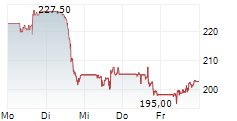
DUBLIN (dpa-AFX) - Accenture (ACN) has invested, through Accenture Ventures, in Replit, an AI-powered software creation platform company, to help enterprises accelerate the creation of new digital platforms using AI-driven software development. Accenture will collaborate with Replit to explore how AI-driven development can be applied to enterprise environments. Terms of the investment were not disclosed. The companies are also entering into a strategic partnership. Replit provides a cloud-based platform that combines coding environments with AI-powered development assistance, collaboration tools, and hosting infrastructure in a single workspace. In pre-market trading on NYSE, Accenture shares are up 0.15 percent to $192.49. Copyright(c) 2026 RTTNews.com. All Rights Reserved Copyright RTT News/dpa-AFX© 2026 AFX News
Anthropic completes tender offer, but employees hold onto shares - The Economic Times
The total value of the share sale, which closed last week, could not be learned -- but it fell short of the amount that investors had lined up, which was as much as $6 billion, some of the people said. Current and former employees wanted to hold more of their shares ahead of Anthropic's upcoming IPO.Anthropic employees have sold some equity to investors, wrapping up a secondary share sale that started earlier this year, according to people familiar with the matter. But some investors weren't able to pick up as many shares as they planned because of the limited number that employees were willing to sell. The tender offer took place at the same value as the company's most recent fundraising in February, said the people, who asked not to be identified discussing private information. The company was valued at $350 billion in its latest deal, not including the $30 billion it raised. Anthropic declined to comment. The total value of the share sale, which closed last week, could not be learned -- but it fell short of the amount that investors had lined up, which was as much as $6 billion, some of the people said. Current and former employees wanted to hold more of their shares ahead of Anthropic's upcoming initial public offering, expected as soon as this year. Some investors were able to get their full allocation in the deal, while others were only able to deploy some of the capital that they had set aside for the tender offer. The smaller-than-expected transaction suggests that employees are optimistic about the company's prospects as its annualised revenue climbs, one of the people said. Last month, the company surpassed $19 billion in annualised run-rate revenue. By April, Anthropic announced it surpassed $30 billion in run-rate revenue.

Bitcoin ETFs Bleed $94M While Polymarket Gives 43% Chance Of Positive Flows Today
U.S. spot Bitcoin (CRYPTO: BTC) ETFs posted $94 million in net outflows on Wednesday despite Bitcoin rallying from $67,800 to $71,000 on U.S.-Iran ceasefire news. The Outflow Breakdown Additionally, Grayscale Bitcoin Trust (NYSE:GBTC) posted $11 million in outflows. Meanwhile, iShares Bitcoin Trust (NASDAQ:IBIT) saw positive flows worth $40.4 million. Morgan Stanley Bitcoin Trust (NYSE:MSBT) reported $30.6 million in net inflows on its debut, with about $34 million in trading volume for the day. This exceeded Bloomberg Senior Analyst Eric Balchunas' $30 million estimate. MSBT was designed to undercut established spot Bitcoin funds with a 0.14% sponsor fee, the lowest among Bitcoin ETPs. In comparison, IBIT charges a 0.25% fee. Grayscale Bitcoin Mini Trust (NYSE:BTC) was previously the cheapest at 0.15%. The Profit-Taking Thesis Institutions appear to be taking profits from the Bitcoin rally rather than joining the momentum, according to LVRG Research Director Nick Ruck. This follows aggressive buying the dip earlier in the week. "Crypto ETFs saw outflows once traders realized that the ceasefire was far from a done deal," said Jeff Mei, COO of BTSE. "Israel continued to bomb Lebanon, and the Saudi pipeline was bombed by a drone," he added. "Traders are in Extreme Fear territory, as conflicting ceasefire chatter continues to spark sharp, sudden risk-off sentiment," said Dominick John, analyst at Zeus Research. The Polymarket View Polymarket traders give Bitcoin ETF flows only 43% odds of being positive on April 9, down about 7% over the session. The probability shows uncertainty rather than clear directional conviction. Meanwhile, the end-of-April price breakdown shows the highest probability around $75,000 at roughly 61%, followed by $65,000 at 41%. Higher price targets above $90,000 carry very low probability, suggesting traders are not pricing in a strong upside move in the near term. The Technical Picture Bitcoin trades below the 100 and 200-day EMAs. Price now tests resistance between $70,500 and $74,000, where the 20-day EMA and Supertrend converge. This zone has capped upside attempts repeatedly. A break above $74,000 opens a path toward $75,500 and potentially $83,700, where the 200-day EMA sits as major overhead resistance. However, the ascending trendline near $66,000 acts as immediate support. A breakdown below exposes Bitcoin to $60,000-$62,000. Image: Shutterstock Market News and Data brought to you by Benzinga APIs To add Benzinga News as your preferred source on Google, click here.

IT industry, Govt. examine cybersecurity implications of Anthropic's Mythos model
The Indian IT industry and the Union government are studying the ramifications of Claude Mythos, Anthropic's unreleased model that has been billed as a powerful scanner - and potentially a vector - of undiscovered security vulnerabilities across the world's most widely used computer systems. The Hindu has learnt that officials in the Electronics and Information Technology Ministry and at the Computer Emergency Response Team, India (CERT-in) are deliberating what Mythos's capabilities could mean in the coming days, even as a consortium of American firms, in partnership with Anthropic, rushes to patch software vulnerabilities that human cybersecurity experts have not hitherto spotted or fixed.

SpaceX Starship launch delayed again in Texas. Here's the latest
Here's everything to know about Starship's next mission, which SpaceX refers to as flight 12. SpaceX chief Elon Musk said the commercial spaceflight company is bumping the 2026 debut launch of its massive Starship rocket yet again. The delay marks the third time that Starship's 12th overall test flight has slipped this year amid preparations for SpaceX to roll out a larger and more advanced version of a rocket due to reach the moon and, perhaps, Mars. Musk, the billionaire who founded the company in 2002, first indicated in January that Starship was on track for a March liftoff from SpaceX's Starbase company town and headquarters in South Texas. But at the beginning of March, Musk indicated that projected test flight was now being targeted for April. In the latest update in April, the tech mogul and world's richest man announced that SpaceX was now working toward a Starship launch sometime in May. The news comes as SpaceX prepares for its first-ever public offering on the stock market later this summer, and as a race heats up between it and rival billionaire Jeff Bezos' Blue Origin to develop a lunar lander for NASA. Here's everything to know about Starship's next mission, which SpaceX refers to as flight 12. When is the next Starship launch? Elon Musk pushes date to May Musk, the CEO of SpaceX, said in an April 3 post on social media site X that Starship's next flight test was "4 to 6 weeks away." Considering the timing of the post, that would mean the launch is now being targeted for early to mid-May. Neither Musk nor SpaceX have disclosed reasons for the delays. Where is SpaceX based in Texas? What to know about Starbase As it has 11 times already, the Starship rocket would get off the ground from Starbase, SpaceX's company town and headquarters located about 180 miles south of Corpus Christi near the U.S.-Mexico border. In May 2025, Texas voters in Cameron County - most of whom are SpaceX employees - approved a measure to officially recognize the company's headquarters as its own town, complete with a mayor and city commissioners. What is SpaceX's Starship rocket? Standing at more than 400 feet tall when fully stacked, Starship is regarded as the largest and most powerful launch vehicle in the world. SpaceX is developing Starship to be a fully reusable transportation system that can carry huge satellites and other payloads to space, meaning the rocket and vehicle can return to the ground for additional missions. The fully integrated spacecraft is composed of both a lower-stage booster known as Super Heavy that provides the initial burst of thrust at liftoff, as well as an upper stage simply called Starship, which is the vehicle where crew and cargo would ride. How could Starship be used on Artemis moon missions? In the years ahead, Starship is due to help NASA astronauts land on the moon under the U.S. space agency's Artemis program. SpaceX is working on a lunar lander iteration of Starship known as the Human Landing System (HLS) that could ferry astronauts from lunar orbit down to the moon's surface. That mission, known as Artemis IV, is targeted for 2028 and would be the first time humans stepped on the moon since NASA's Apollo era ended more than 50 years ago. But amid concerns that development has lagged, NASA appears to now be considering using competitor Blue Origin's experimental lunar lander known as Blue Moon instead. Under the Artemis III planned for 2027, astronauts aboard NASA's Orion spacecraft are due to dock in Earth orbit with one or both the landers in a critical test that would precede a moon landing a year later. Musk also has dreams of Starship being the vehicle that transports the first humans to Mars, though in February he announced SpaceX's intentions of shifting its focus to building a lunar city first. What happened with Starship in 2025? SpaceX conducted five Starship flight tests in 2025, the first three of which ended in disaster when the vehicle met a premature fiery demise before completing many key objectives. But SpaceX ended 2025 on a high note, with its final two Starship launches of the year in August and October being considered inarguable successes. The most recent Starship test, taking place Oct. 13, was also the final flight for that iteration of the rocket, known as Version 2. What's next for SpaceX, Starship in 2026? Version 3 to make debut SpaceX's next prototype of Starship, known as Version 3, is expected to make its debut during flight 12 from Starbase. At about 408 feet tall, Version 3 is expected to not only be slightly larger than its predecessor, but considerably more powerful, according to Musk. If all goes to plan, Version 3 (V3) could be the Starship model to reach orbit and also refuel its upper stage midflight. The complex process, requiring two Starships equipped with docking adapters to meet up in orbit to transfer hundreds of tons of super-cooled propellant, is necessary for Starship to reach distant destinations like Mars. Eric Lagatta is the Space Connect reporter for the USA TODAY Network. Reach him at [email protected]
Accenture Invests In Replit
(RTTNews) - Accenture (ACN) has invested, through Accenture Ventures, in Replit, an AI-powered software creation platform company, to help enterprises accelerate the creation of new digital platforms using AI-driven software development. Accenture will collaborate with Replit to explore how AI-driven development can be applied to enterprise environments. Terms of the investment were not disclosed. The companies are also entering into a strategic partnership. Replit provides a cloud-based platform that combines coding environments with AI-powered development assistance, collaboration tools, and hosting infrastructure in a single workspace. In pre-market trading on NYSE, Accenture shares are up 0.15 percent to $192.49.
