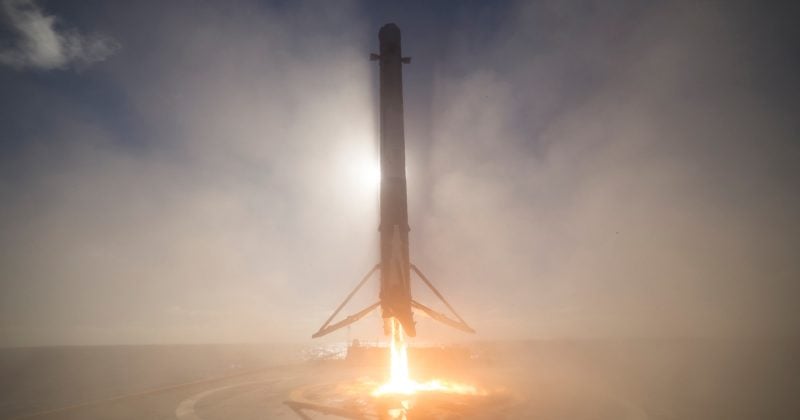
News & Updates
The latest news and updates from companies in the WLTH portfolio.
Polymarket: Iran Hormuz fee odds dip to 72% for Dec 31 after ship attacks
Polymarket Reprices "Iran Charges Hormuz Fees" Odds After Shipping-Security Headlines Polymarket traders are pricing a 72% chance that Iran charges Hormuz fees by the December 31 strike, with $1.11M matched, after the latest shipping-security headlines. The move shows how the market is distributing probability across multiple deadline strikes rather than a single yes/no bet. Key Takeaways * Prediction: Polymarket prices 72% Yes / 28% No for "Iran charges Hormuz fees by December 31?" (leading strike). * Basis: After fresh reporting tied to Iran and commercial-ship attacks, the leading strike slipped from 74.5% to 72% even as volume reached $1.11M. * Timing: The market's resolution date is 2026-08-31 23:59 UTC, with the 24h and 7d change both at +17.5 percentage points in the summary. A top US commander in the Middle East said Iran attacked seven commercial ships in the past week, framing a sharp jump in maritime-security risk around regional shipping lanes. The comments put renewed attention on the kinds of actions that could affect passage conditions and costs for commercial traffic. Strike-Ladder Breakdown: $1.11M Matched as Dec 31 Holds 72% Yes vs Aug 31 at 49.5% This is a price-ladder market: each row is a separate contract about whether fees are in place by a specific deadline, so "December 31" is a strike, not a settlement price. The ladder shows a steep time distribution: July 15 is priced at 1.45% Yes / 98.55% No, July 31 at 10% / 90%, August 31 at 49.5% / 50.5%, October 31 at 61.5% / 38.5%, and December 31 at 72% / 28%. Even with $1,106,307 in matched volume, the front end of the curve stays low while the later strikes carry most of the probability, signaling traders see timing -- not direction -- as the main uncertainty. On pricing dynamics, the latest tick is a 2.5-point pullback (74.5% to 72%) against a +17.5-point gain over both 24 hours and 7 days in the summary, with a neutral trend, moderate momentum, and moderate volatility -- more consistent with consolidation after an upswing than a full reversal. Watch whether probability migrates from the December 31 strike toward August 31 or October 31 (the near-resolution strikes), since that would indicate traders think implementation is accelerating ahead of the 2026-08-31 23:59 UTC resolution date. What Traders Watch Next on Polymarket: Probability Migration Across Deadlines and Cross-Market Macro/Crypto Hedges Zooming out from the headline contract, traders often rotate into adjacent Polymarket lines to express timing risk, second-order impacts, or broader hedges as new deadlines approach. Right now that includes 100% on "Iran military action against a gulf state on...?" (July 12) with $3,812,683 matched, 43% on "Iran announces withdrawal from MOU negotiations by...?" (August 15) with $5,590,378 matched, 98.25% No on "Strait of Hormuz traffic returns to normal by July 31?" with $16,586,181 matched, and 80.5% No on "Will the U.S. invade Iran before 2027?" with $41,618,170 matched -- contracts that can pull attention and liquidity as traders reprice cross-market narratives. Odds Trend By the Numbers * Platform: Polymarket * Market: Iran charges Hormuz fees by...? * Contract type: Price strike ladder: each rung has separate Yes/No; Yes means the spot price is above that USD strike at settlement. * Resolution window: Aug 31, 2026 (UTC) * Status: Active (open for trading) * Volume: ~$1,106,307 Top strike rungs +1 more strikes not shown

Polymarket prices 18% odds Putin is out by June 2027 on $17M volume
predict.info -- Premium Domain For Sale Domain only: USD 200,000. Prediction platform technology priced separately. predict.info Polymarket Reprices "Putin Out by June 30, 2027" After Fresh US-Russia Sanctions-Bill Catalyst On Polymarket, traders are pricing an 18% chance that Vladimir Putin is out as President of Russia by June 30, 2027, on about $17.44M in volume. The repricing comes alongside fresh headlines about a possible new US Russia sanctions bill, and the market's ladder strikes show where conviction drops off across nearer deadlines. Key Takeaways * Prediction: Polymarket implies 18% that Putin is out by June 30, 2027 (Yes 18% / No 82%). * Basis: Sanctions-bill chatter is a macro catalyst, but the ladder remains heavily skewed to "No" on earlier 2026 cutoffs. * Timing: This is a date-ladder market resolving at June 30, 2027; recent pricing has been weaker, with a -2.0 pp move over both 24h and 7d. A report says US President Donald Trump suggested Congress could soon approve a new sanctions bill targeting Russia and was asked if he might sign it within the next week or two. He framed it as tied to the late Sen. Lindsey Graham, said lawmakers could expand it to include Iran and Hezbollah, and described a revised version that narrows tariffs to top buyers of Russian oil or gas while lowering the maximum tariff and adding waiver authority. Ladder Odds and Liquidity Snapshot: $17.44M Volume With 18% (Jun 2027) vs 9.5% (Dec 2026) and 2-4.35% on Aug/Sep 2026 This Polymarket listing is a price-ladder by date: each strike is its own binary contract, where "Yes" means Putin is out by that cutoff and "No" means he is not by that cutoff. The curve is steep: June 30, 2027 is priced Yes 18% / No 82%, while December 31, 2026 is Yes 9.5% / No 90.5%, and the nearer September 30, 2026 and August 31, 2026 strikes fall to Yes 4.35% / No 95.65% and Yes 2% / No 98%. With $17.44M matched, the ladder shape signals relatively low conviction in a near-term exit scenario even if traders assign a non-trivial tail probability over a longer horizon. The historical summary points to weaker recent pricing (latest odds 8.5 vs an average of 16.6 across the last five observations) alongside a -2.0 pp change over both 24 hours and seven days, consistent with a market leaning "No" rather than building a rapid-out narrative. Watch whether the ladder's nearer 2026 strikes (July/August/September/December 2026) lift together or stay pinned near single digits; a broad, parallel move would indicate traders are updating the timeline, not just adding long-horizon tail risk. Also watch whether the latest odds continues to sit well below the recent average, which would reinforce the current bearish/strong-momentum read into the June 30, 2027 resolution window. What Traders Watch Next on Polymarket: Timeline-Shift Signals Across 2026 Strikes and Cross-Market Positioning in Macro/ Beyond this timeline-driven contract, Polymarket traders are also triangulating risk across energy chokepoints and macro path-dependence, where moves can rhyme across otherwise separate books. In geopolitics-adjacent flow, "Iran charges Hormuz fees by...?" sits at 72.0% on the December 31 outcome ($1.11M), while "US charges Hormuz fees by...?" is much lower at 9.5% for December 31 ($661K). On the macro side, "How many Fed rate cuts in 2026?" is anchored at 80.7% for 0 (0 bps) on hefty $42.41M volume, and "Fed Decision in September?" has "No change" at 56.5% ($2.83M) -- useful cross-checks for how traders are positioning around timing risk across the platform. Odds Trend By the Numbers * Platform: Polymarket * Market: Putin out as President of Russia by...? * Contract type: Price strike ladder: each rung has separate Yes/No; Yes means the spot price is above that USD strike at settlement. * Resolution window: Jun 30, 2027 (UTC) * Status: Active (open for trading) * Volume: ~$17,438,699 Top strike rungs +1 more strikes not shown

Not OpenAI or Anthropic: DeepSeek founder Liang Wenfeng is world's richest creator of AI models
DeepSeek founder Liang Wenfeng's net worth more than doubled to US$36 billion after his firm's most recent fundraising round. Hong Kong - DeepSeek founder Liang Wenfeng's net worth more than doubled after his firm's most recent fundraising round, making the Chinese entrepreneur the world's richest among creators of AI models. Liang is now worth US$36 billion (S$46.5 billion), up from about US$16.7 billion previously, according to the Bloomberg Billionaires Index. That ranks him well above OpenAI president Greg Brockman (No 100), with an estimated net worth of US$25.5 billion, and Anthropic co-founder Dario Amodei's (No 491) whose fortune stands at US$7.98 billion. Ironically, OpenAI co-founder and CEO Samuel Altman, with $3.4 billion, did not even make Bloomberg's list of the Top 500 richest people. In the ranking, Bloomberg looked at firms whose primary business and majority of revenue come directly from AI models, instead of other businesses in the AI supply chain - notably, data centres and semiconductors. As such it rules out Big Tech founders like Tesla and SpaceX's Elon Musk, Google's Larry Page, Amazon's Jeff Bezos, Meta's Mark Zuckerberg and Nvidia's Jensen Huang. For Liang, most of his fortune is derived from his stake in DeepSeek. What sets him apart from his Silicon Valley peers is the sheer scale of his equity retention. In the United States, building a US$50 billion frontier AI company typically requires giving up massive chunks of equity to tech giants and VCs. By contrast, maintaining a near-78 per cent stake in DeepSeek gives Liang a boost to his personal wealth and control that is unusual among modern AI founders. While US giants like OpenAI and Anthropic command massive valuations approaching US$1 trillion, their equity is more fragmented across larger investor bases or multiple co-founders. Strong demand for investment boosted DeepSeek's valuation about fivefold from the initial US$10 billion reported in April. Following the start-up's US$7.4 billion funding round in June 2026 - which valued the company at US$50 billion and saw Liang personally invest US$3 billion - his stake is estimated to have diluted to approximately 78 per cent, according to the Bloomberg Billionaires Index. Liang was born in 1985 in Zhanjiang, in China's southern Guangdong province, where his father was an elementary school teacher. He studied electronic engineering at Zhejiang University, a prestigious college in the city of Hangzhou where he also earned a master's degree in information and communication engineering. Liang created DeepSeek in 2023 as an offshoot of the AI division of his hedge fund, Zhejiang High-Flyer Asset Management, which he set up with two former university classmates. The trio had begun trading as students during the global financial crisis. Early on, High-Flyer used its massive trading profits to stockpile advanced graphics chips before US export restrictions tightened. Those early investments gave DeepSeek the computing power necessary to develop its breakthrough models without relying on traditional venture capital. DeepSeek shocked the global tech industry in early 2025 by releasing a model that achieved performance comparable to US rivals like OpenAI, but at a fraction of the cost. The start-up is keeping up that momentum, recently showcasing its latest V4 model and publicly touting its compatibility with chips made by domestic tech giant Huawei Technologies. For years, consumer internet tycoons like Alibaba's Jack Ma defined tech wealth in China. That era is now giving way to state-backed artificial intelligence. The influx of state and corporate capital marks DeepSeek's transition from a private software experiment into a critical national asset. Liang's US$36 billion fortune makes him China's eighth-richest person, just behind Chen Tianshi, the hardware AI billionaire and Cambricon Technologies co-founder. BLOOMBERG
Export limits on Anthropic LLMs a step toward industry standards, US official says | MLex | Specialist news and analysis on legal risk and regulation
By Mike Swift ( July 14, 2026, 23:58 GMT | Insight) -- US Commerce Department official Jeffrey Kessler told Congress the Trump administration's temporary export restrictions on Anthropic's Fable 5 and Mythos 5 AI models were based on national security concerns and were a step toward establishing objective, government-wide standards for reviewing frontier AI models. Asked if the administration will establish public industry-wide rules and guidelines to evaluate frontier models, Kessler said, "I think that's going to happen."A senior Trump Administration official told Congress Tuesday that the US government's recent temporary export block on Anthropic's most powerful AI models was part of an effort to create standards to evaluate the most powerful new models for national security and safety threats.... Prepare for tomorrow's regulatory change, today MLex identifies risk to business wherever it emerges, with specialist reporters across the globe providing exclusive news and deep-dive analysis on the proposals, probes, enforcement actions and rulings that matter to your organization and clients, now and in the longer term. Know what others in the room don't, with features including: * Daily newsletters for Antitrust, M&A, Trade, Data Privacy & Security, Technology, AI and more * Custom alerts on specific filters including geographies, industries, topics and companies to suit your practice needs * Predictive analysis from expert journalists across North America, the UK and Europe, Latin America and Asia-Pacific * Curated case files bringing together news, analysis and source documents in a single timeline Experience MLex today with a 14-day free trial.

SpaceX targets Thursday for Starship's 13th test flight from South Texas
SpaceX's latest test flight is currently scheduled for Thursday with the 90-minute launch window opening at 5:45 p.m. SpaceX is looking at later this week for its next flight test of Starship from its South Texas launch site. The 13th test looks to test modifications to hardware and software from previous flights, while launching Starlink satellites for the first time. SpaceX to launch 13th Starship flight test What we know: SpaceX's latest test flight is currently scheduled for Thursday with the 90-minute launch window opening at 5:45 p.m. The latest test flight will test the company's Super Heavy booster with the objective of a successful launch, ascent, stage separation, boostback burn and landing burn. SpaceX said the booster's hardware has been modified to improve relight reliability. For Starship, the company hopes to launch 20 Starlink satellites and have a successful relight of an engine while in space with a controlled entry, descent and splashdown in the Indian Ocean. The company is also doing some testing of Starship's heat shields. What went wrong during test flight 12? SpaceX had issues with both the Super Heavy booster and Starship during its last test flight. During the previous test flight, SpaceX said differences in engine startup on the ship caused the booster's directional flip to be off by 90 degrees. Some of the booster's engines also failed to reignite, causing its boostback burn to end early. The Federal Aviation Administration cited "heat effects on propulsion system components during the ascent and erroneous engine alarm system settings" as causes for the booster's failure. SpaceX said those issues have been addressed for the upcoming test. Starship also experienced issues during the test flight, when one of it lost one of its engines. Starship was still able to hit its planned trajectory.
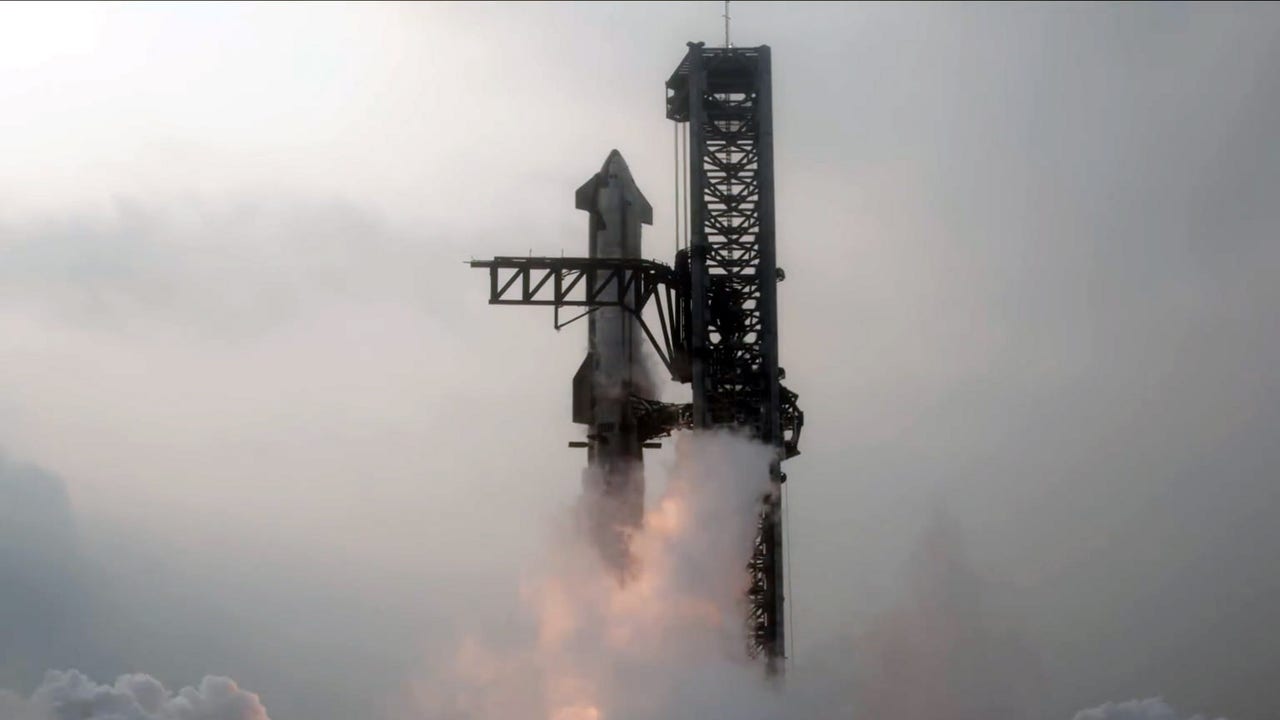
Frontier Airlines to Roll Out SpaceX Starlink In-Flight Wi-Fi Beginning in 2027
Frontier Airlines ($ULCC) announced it will introduce in-flight Wi-Fi powered by SpaceX ($SPCX)'s Starlink, with installations across its fleet beginning in early 2027. Frontier becomes the first U.S. ultra-low-cost carrier to adopt Starlink as airlines continue investing in premium passenger amenities to attract higher-spending travelers. * Frontier plans to begin installing Starlink Wi-Fi across its fleet in early 2027. * The airline is the first U.S. ultra-low-cost carrier to partner with Starlink for in-flight connectivity. * Frontier is one of five Indigo Partners portfolio airlines expected to install Starlink on more than 1,000 aircraft. * The carrier recently introduced first-class seating and loyalty program enhancements as part of its broader product strategy. * Financial terms of the agreement were not disclosed. Relevant Companies * Frontier Airlines ($ULCC) - The Starlink rollout expands the airline's onboard offerings as it targets higher-value customers. * SpaceX ($SPCX) - Starlink continues expanding its commercial aviation customer base through new airline connectivity agreements. * Amazon ($AMZN) - Its Kuiper satellite internet service competes with Starlink for airline connectivity contracts.

The unconventional career of attorney general nominee Todd Blanche
Acting Attorney General Todd Blanche will sit before a Senate panel for his hearing to be confirmed in that role permanently. It comes after he's been involved in a number of high-profile, controversial decisions, including investigations, indictments and the rollout of the Epstein files. Justice correspondent Ali Rogin tracks his unlikely path to the nation's top law enforcement job.
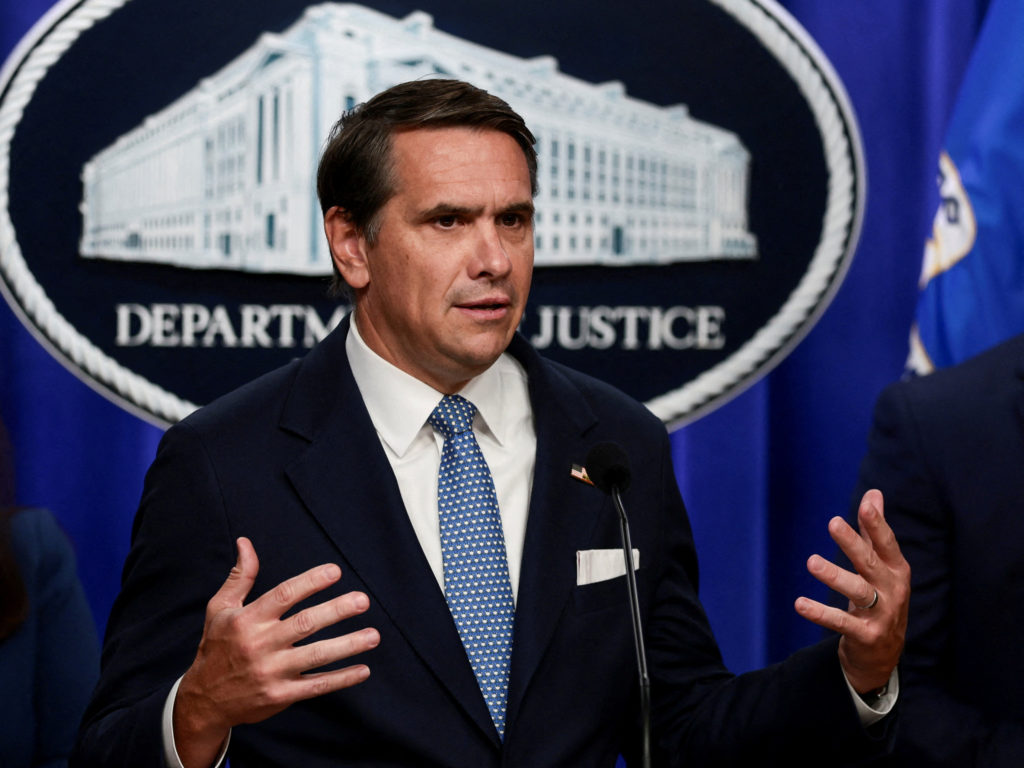
European lawmakers criticize Anthropic for AI policy hearing representation
Based on information from Politico EU, European policymakers expressed dissatisfaction with AI company Anthropic's representation during a hearing concerning the risks of advanced AI capabilities. Lawmakers had specifically requested the presence of Anthropic's head of public policy, but the company instead sent a technical employee, Donny Greenberg, who joined the company in April. The hearing, the first of its kind in Brussels regarding advanced AI risks, focused on Anthropic's cyber-capable models, Mythos and Fable, which are capable of identifying and exploiting software vulnerabilities. European institutions have sought access to these models, concerned about potential risks to critical infrastructure. Lawmakers voiced frustration that Greenberg, identifying himself as a technical expert rather than a policy specialist, might be unable to address their policy-related questions. This was exacerbated by the perception that Greenberg was reading his responses, leading to questions about whether he was relying on AI for his answers. Anthropic stated that it is working with the EU's AI Office and cybersecurity agency, ENISA, to enhance cyber resilience, acknowledging AI as a dual-use tool. The incident highlights the growing geopolitical and business complexities surrounding the testing and deployment of advanced AI models.

Anthropic launches free Claude for Teachers
Anthropic on Tuesday launched a free version of its chatbot geared specifically towards teachers, as a growing number of educators utilize artificial intelligence (AI) in the classroom. In a release, the company said its Claude for Teachers platform will provide K-12 teachers in the U.S. access to a library of teaching skills and a direct connection to evidence-based curricula mapped to academic standards in all 50 states. Teachers who use the new platform will receive AI assistance on generating math problems for practice and tests, creating interactive activities, lessons and "high-quality" math diagrams and turning lesson materials into "classroom-ready designs and interactive learning experiences," according to Anthropic. Users can also receive insights about their classes, assignments and student progress, along with "personalized instructional feedback grounded in real classroom talk." If teachers sign up for Claude for Teachers by June 30, 2027, they will receive a full year of access. The company noted a specific version of Claude for schools and districts is coming soon. "Teachers have been experimenting with AI for a while. But they told us they wanted something curriculum-aligned, evidence-based, and able to work in the background while they focus on their students," Drew Bent, Anthropic's education lead, wrote Tuesday on social platform X. During the 2024-25 school year, 6 in 10 teachers reported using an AI tool for work, according to a Gallup survey released in June 2025. Just under one-third of teachers said they used such tools weekly, with regular AI users estimating they saved nearly six hours per week on average. Research from the Center for Democracy and Technology released in October 2025 found that half of students said using AI in class makes them feel less connected to their teacher, while seven in 10 teachers expressed concern about the technology weakening important skills their students need to learn. "As many hype up the possibilities for AI to transform education, we cannot let the negative impact on students get lost in the shuffle," said Elizabeth Laird, the director of the Equity in Civic Technology Project at the center. "Our research shows AI use in schools comes with real risks, like large-scale data breaches, tech-fueled sexual harassment and bullying, and treating students unfairly."

INVESTOR ALERT: Pomerantz Law Firm Investigates Claims On Behalf of Investors of Cerebras ...
NEW YORK, July 14, 2026 (GLOBE NEWSWIRE) -- Pomerantz LLP is investigating claims on behalf of investors of Cerebras Systems Inc. ("Cerebras" or the "Company") (NASDAQ: CBRS). Such investors are advised to contact Danielle Peyton at [email protected] or 646-581-9980, ext. 7980. The investigation concerns whether Cerebras and certain of its officers and/or directors have engaged in securities fraud or other unlawful business practices.

Release The Kraken Genome!
Sailors have told tales of giant tentacled sea monsters for millennia. In ancient times, it was the Kraken. In more recent work, Jules Verne delighted and terrified the public while reading 20,000 Leagues Under The Sea.The monstrous Architeuthis dux, the giant squid, must have been terrifying to ancient mariners. They were the size of modern school buses, never a good thing when you are in a wooden trireme, with eyes as big as dinner plates and tentacles that can snatch prey 10 yards away.During an evolutionary scale when most creatures got smaller, how did this squid get so big?Publication of its full genome sequence may give us clues. Sailors have told tales of giant tentacled sea monsters for millennia. In ancient times, it was the Kraken. In more recent work, Jules Verne delighted and terrified the public while reading 20,000 Leagues Under The Sea. The monstrous Architeuthis dux, the giant squid, must have been terrifying to ancient mariners. They were the size of modern school buses, never a good thing when you are in a wooden trireme, with eyes as big as dinner plates and tentacles that can snatch prey 10 yards away. During an evolutionary scale when most creatures got smaller, how did this squid get so big? Publication of its full genome sequence may give us clues. Release the Kraken genome! Illustration from Jules Verne's 20,000 Leagues Under the Sea. Credit: Alphonse de Neuville A rare sighting now as then Giant squid are rarely sighted and have never been caught and kept alive, meaning their biology (even how they reproduce) is still largely a mystery. The genome sequence can help. "In terms of their genes, we found the giant squid look a lot like other animals. This means we can study these truly bizarre animals to learn more about ourselves," says Dr. Caroline Albertin of the Marine Biological Laboratory (MBL), Woods Hole, who in 2015 led the team that sequenced the first genome of a cephalopod (the group that includes squid, octopus, cuttlefish, and nautilus). The giant squid genome is also big. At around 2.7 billion DNA base pairs, it's about 90 percent the size of the human genome. Important developmental genes in almost all animals (Hox and Wnt) were present in single copies only in the giant squid genome. That means this gigantic, invertebrate creature - long a source of sea-monster lore - did not get so big through whole-genome duplication, a strategy that evolution took long ago to increase the size of vertebrates. Analysis identified more than 100 genes in the protocadherin family -- typically not found in abundance in invertebrates -- in the giant squid genome. Protocadherins are thought to be important in wiring up a complicated brain correctly and were thought to be a vertebrate innovation. Albertin says they were really intrigued to find more than 100 of them in the octopus genome (in 2015). That seemed like a smoking gun to how you make a complicated brain. They found a similar expansion of protocadherins in the giant squid, as well. The team also analyzed a gene family that (so far) is unique to cephalopods, called reflectins. "Reflectins encode a protein that is involved in making iridescence. Color is an important part of camouflage, so we are trying to understand what this gene family is doing and how it works," Albertin says. So how did it get so big? "A genome is a first step for answering a lot of questions about the biology of these very weird animals," Albertin said, such as how they acquired the largest brain among the invertebrates, their sophisticated behaviors and agility, and their incredible skill at instantaneous camouflage. "While cephalopods have many complex and elaborate features, they are thought to have evolved independently of the vertebrates. By comparing their genomes we can ask, 'Are cephalopods and vertebrates built the same way or are they built differently?'"

SpaceX Fizzles to Close $1 Above IPO Price Weeks After Debut
(Bloomberg) -- Three days of losses have brought SpaceX shares to the brink of falling below their initial public offering price, a key level that traders and investors watch to assess the health of new issues. Most Read from Bloomberg Shares fell 2.2% Tuesday to close at $136.08 each, just $1 above the $135 price tag buyers paid last month in the biggest first-time share sale ever. Elon Musk's rocket, satellite and artificial intelligence company has plunged one-third from its post-listing peak, erasing nearly $850 billion in value. A company's shares falling below the IPO price within days or weeks of its first trading day punctures the narrative that's been carefully choreographed by the company and its bankers to hype up expectations. Putting shareholders in the red at such an early stage is a blow to confidence that some newly-listed firms don't recover from. Skeptics note that the stock trades at a forward estimated price-to-sales ratio of more than 30 times, among the highest in the Nasdaq-100 Index and modestly lagging that of Palantir Technologies Inc. SpaceX is also facing an extended lock-up that will see insiders periodically releasing shares into the market over the coming months. "We still don't think SpaceX has found its low," according to Ken Mahoney, chief executive officer of Mahoney Asset Management. "There will be continuous supply coming on in the coming months, and you would have to monitor how much demand would be there as you move down the quality spectrum." Index Addition SpaceX's slip near the IPO price comes just a week after the company was added to the Nasdaq 100 through fast-entry rules, and after analysts gave the company -- whose unconventional pitch included a base on the moon and eventually a colony on Mars -- a resoundingly bullish reception. More than a dozen bankers including Morgan Stanley, JPMorgan Chase & Co. and Goldman Sachs Group Inc. started coverage with buy-equivalent ratings, according to data compiled by Bloomberg. Over 80% of Wall Street analysts covering SpaceX say to buy shares and see major upside ahead. The average price target of $236.25 is more than 70% above Tuesday's close. It's normal for newly-public stocks to experience volatility. A Truist Wealth analysis of 30 major technology IPOs over the past 15 years found that they averaged a maximum decline of 55% in the first year of trading.

SpaceX Fizzles to Close $1 Above IPO Price Weeks After Debut
(Bloomberg) -- Three days of losses have brought SpaceX shares to the brink of falling below their initial public offering price, a key level that traders and investors watch to assess the health of new issues. Most Read from Bloomberg Shares fell 2.2% Tuesday to close at $136.08 each, just $1 above the $135 price tag buyers paid last month in the biggest first-time share sale ever. Elon Musk's rocket, satellite and artificial intelligence company has plunged one-third from its post-listing peak, erasing nearly $850 billion in value. A company's shares falling below the IPO price within days or weeks of its first trading day punctures the narrative that's been carefully choreographed by the company and its bankers to hype up expectations. Putting shareholders in the red at such an early stage is a blow to confidence that some newly-listed firms don't recover from. Skeptics note that the stock trades at a forward estimated price-to-sales ratio of more than 30 times, among the highest in the Nasdaq-100 Index and modestly lagging that of Palantir Technologies Inc. SpaceX is also facing an extended lock-up that will see insiders periodically releasing shares into the market over the coming months. "We still don't think SpaceX has found its low," according to Ken Mahoney, chief executive officer of Mahoney Asset Management. "There will be continuous supply coming on in the coming months, and you would have to monitor how much demand would be there as you move down the quality spectrum." Index Addition SpaceX's slip near the IPO price comes just a week after the company was added to the Nasdaq 100 through fast-entry rules, and after analysts gave the company -- whose unconventional pitch included a base on the moon and eventually a colony on Mars -- a resoundingly bullish reception. More than a dozen bankers including Morgan Stanley, JPMorgan Chase & Co. and Goldman Sachs Group Inc. started coverage with buy-equivalent ratings, according to data compiled by Bloomberg. Over 80% of Wall Street analysts covering SpaceX say to buy shares and see major upside ahead. The average price target of $236.25 is more than 70% above Tuesday's close. It's normal for newly-public stocks to experience volatility. A Truist Wealth analysis of 30 major technology IPOs over the past 15 years found that they averaged a maximum decline of 55% in the first year of trading.
MoffettNathanson Initiates Cautious "Neutral" Coverage on Post-IPO SpaceX Valuations
On Tuesday, July 14, 2026, technology and telecom research firm MoffettNathanson issued a comprehensive 93-page report initiating coverage on Space Exploration Technologies Corp. (SpaceX) with a "Neutral" rating and a target share price of $131. The cautious outlook represents the low end of a wide Wall Street valuation spectrum following the expiration of the quiet period for the underwriting syndicate of SpaceX's historic Initial Public Offering (IPO). While other investment firms issued highly optimistic forecasts ranging from $143 (Deutsche Bank) to $800 (Raymond James), MoffettNathanson warned that current market expectations disconnect from quantifiable financial realities. Analysis of the Trillion-Dollar S-1 Disclosures The analytical report compared and contrasted the economic trajectories of SpaceX and its direct-to-device (D2D) competitor, AST SpaceMobile. MoffettNathanson's lead analyst, Julie Zhu, identified multiple points of friction within the optimistic metrics outlined in the aerospace giant's S-1 regulatory filings: * Absurd TAM Projections: The prospectus defines Starlink's total addressable market (TAM) at almost $30 trillion, which the report labels as highly unrealistic. * D2D Niche Modeling: The highly publicized mobility and direct-to-device cellular segments are modeled as niche services rather than mass-market consumer replacements. * Orbital Compute Bottlenecks: Founder and CEO Elon Musk's public target of deploying 100 gigawatts (GW) of orbital data center compute annually by 2029 exceeds current global in-service terrestrial data center capacity and faces severe raw material input constraints over the next three and a half years. Monopoly Leverage and Sovereign Antitrust Risks Despite the cautious pricing model, the researchers acknowledged that SpaceX maintains a functional monopoly in the rocket launch segment, estimating that its nearest competitor, Blue Origin, remains at least 10 years behind in heavy-lift reuse development. However, MoffettNathanson warned that leveraging this dominance to control adjacent sectors like consumer telecommunications and orbital AI hosting introduces severe political risks. Specifically, the report notes that international governments may resist relying on foreign-owned space systems for critical national telecommunications infrastructure, exposing the company to global regulatory and antitrust pushback. Projected Market Volatility and Volumetric Disconnect MoffettNathanson anticipates significant stock price volatility for the Nasdaq-listed SPCX shares as early-stage index inclusions and pre-IPO lock-up periods expire. The firm concluded that the current market capital tier -- implied at roughly $1.77 trillion post-debut -- is highly reliant on broad economic sentiment rather than near-term cash flow. The analysis suggests that while public markets may extend the benefit of the doubt to SpaceX's "unknown unknown" opportunities during general bull markets, the stock remains highly exposed to downward corrections should broader market sentiment shift toward skepticism.

Nobel Laureate John Jumper Leaves Google DeepMind for Rival Anthropic - The AI Software Report
Search for articles and insights about software, technology trends, and industry news Anthropic has recruited Nobel laureate John Jumper from rival Google DeepMind, TechCrunch reported, accelerating the high-stakes talent battle between the top AI labs. Jumper spent nearly nine years at Google, where he famously led the AlphaFold team and was a key member of the unit developing corporate coding tools. His transition to Anthropic marks the departure of one of Google's most decorated research pillars. The exit comes as Google faces commercial headwinds with some of its advanced software developments. Bloomberg reports that Google has struggled to sell the specific coding tools that Jumper was helping develop to corporate clients. Jumper's departure is part of a broader leadership drain for the search giant, occurring the same week that Character AI co-founder Noam Shazeer left DeepMind to join OpenAI. Jumper shared the 2024 Nobel Prize in chemistry for creating AlphaFold, an AI model that predicts 3D protein structures from genetic sequences. His move to Anthropic follows a highly celebrated tenure at Google, where his work bridged the gap between foundational machine learning and biological sciences. Regarding his early career advancement at the company, Jumper stated that DeepMind CEO Demis Hassabis "took a real chance letting me lead the AlphaFold team just six months after finishing my PhD" before executing his recent move.

How to watch SpaceX launch Starship Flight 13 on July 16
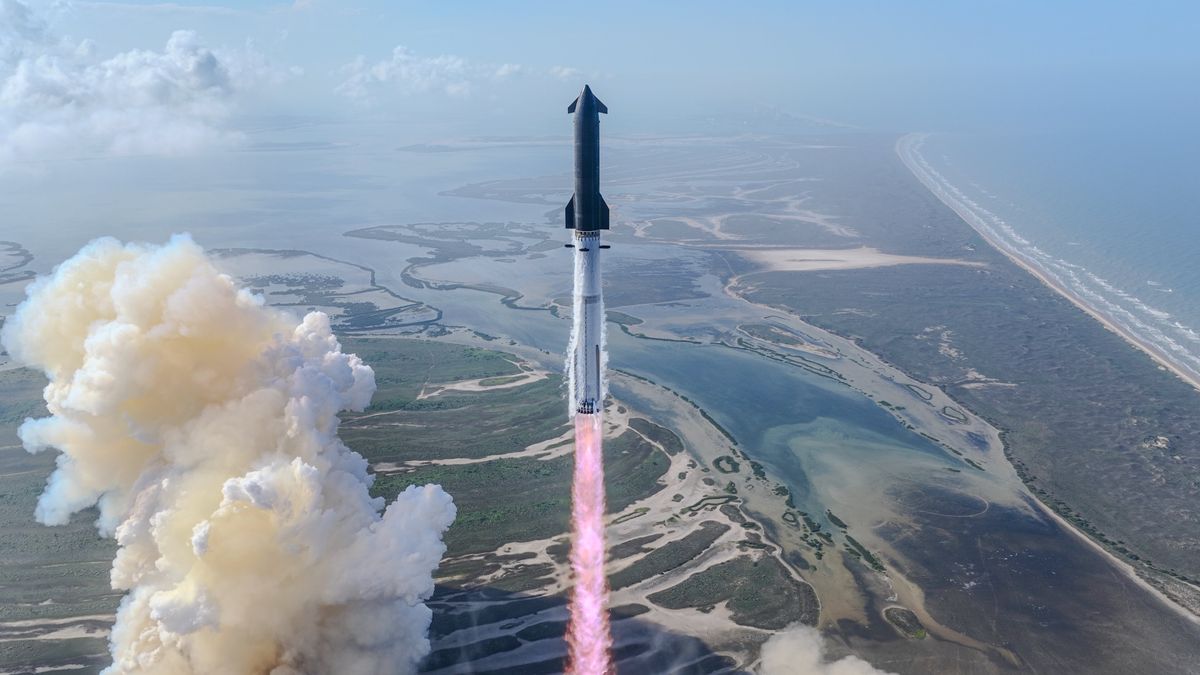
These will be the first Starlink Version 3 satellites to deploy in space. SpaceX's next Starship test flight aims to achieve a major milestone by deploying 20 upgraded Starlink satellites, marking the first Starlink Version 3s to deploy in space.. Liftoff for the spacecraft's upcoming 13th test flight is scheduled for Wednesday, July 16, at 6:45 p.m. EDT (2245 GMT) from the company's Starbase facility in South Texas. You can watch the launch live on Space.com, courtesy of SpaceX, beginning 30 minutes before liftoff. Follow our Starship live blog for more mission updates. The mission follows a nearly two-month pause after Flight 12 ended with the loss of the Super Heavy booster during its return to the Gulf after stage separation. After reviewing the anomaly and SpaceX's corrective actions, the Federal Aviation Administration cleared the company to resume Starship launches. "The upcoming flight will aim to complete similar objectives targeted on the previous flight test, which debuted the Starship and Super Heavy V3 vehicles, while also carrying next-generation Starlink V3 satellites for the first time," SpaceX officials said in a statement announcing the test flight. As with previous flights, Flight 13's primary goal is to gather engineering data while testing upgrades to the world's most powerful rocket. Here's what to watch for: The mission will begin with all 33 Raptor 3 engines igniting on the Super Heavy booster, generating up to 18 million pounds (about 8,200 metric tons) of thrust at liftoff. About 2.5 minutes later, the booster will separate from the Starship upper stage and begin its return toward the Gulf of Mexico for a controlled splashdown rather than a launch tower catch. SpaceX is continuing to refine its booster recovery procedures following Flight 12's landing burn failure. One of Flight 13's biggest milestones will come after stage separation, when Starship is expected to deploy 20 Starlink V3 satellites for the first time. The satellites are designed to test Starship's payload deployment capabilities and will intentionally reenter Earth's atmosphere after completing the demonstration rather than remain in orbit. The flight will also continue testing SpaceX's upgraded Starship vehicle, including improvements to its propulsion system, avionics and overall performance. Engineers will closely monitor the rocket throughout ascent to evaluate how the latest design performs under flight conditions. After completing its satellite deployment, Starship will continue along a suborbital trajectory before reentering Earth's atmosphere over the Indian Ocean. The spacecraft's descent will provide additional data on its heat shield, flight controls and guidance systems before ending with a planned splashdown roughly an hour after launch. While Flight 13 remains another developmental mission, it represents an important step toward making Starship an operational launch vehicle. Successfully deploying Starlink satellites would demonstrate the rocket's ability to begin carrying real payloads while continuing to advance SpaceX's goal of building a fully reusable system for missions to Earth orbit, the moon and eventually Mars.
Claude is warmer in Hindi, more rigorous in English: Anthropic study on AI language variations
New research from Anthropic suggests that Claude's values vary by language, with the popular AI chatbot found to express greater warmth in Hindi and Arabic responses compared to outputs in English and Russian, which tend to be more rigorous and analytical. When Claude generates responses in English, it emphasises different values than when it responds in Portuguese, Indonesian, or Chinese, Anthropic said in a new study published on Monday, July 13. As part of the study, Anthropic researchers set out to measure how the values Claude expresses vary across two factors: models and languages. It adopted a value axis approach where researchers first identified more than 3,000 values expressed by Claude and compressed them into a small number of axes, with each axis in the form of a number line between two groups of values such as those relating to emotional warmth on one end and those relating to rigour on the other end. Analysing Claude's responses in various languages, Anthropic said that the largest difference was observed in the Warmth vs Rigour axis followed by the Candor vs Execution axis. The variations stayed mostly stable on the Deference vs Caution and Depth vs Brevity axes, as per the company. The researchers said that the values expressed by Claude vary based on the language because its training data differs across languages. "One possibility is that our training data is not evenly distributed across languages. Some languages have far more data than others, and training for Claude to express consistent values may be more effective in languages where data is abundant. The composition of that data also varies," Anthropic said. A few languages being over-represented in professional writing could also reflect in Claude expressing different values. Anthropic also said that Claude might be looking to closely match humans' intended behaviour for some languages than others. Story continues below this ad "Claude may also be more closely matching our intended behavior for some languages than others, resulting in a gap in how well Claude serves certain language communities. "Different languages carry different conversational norms, and Claude may be responding with different values based on those norms," it added. Anthropic's latest findings mark an important first step in addressing hidden biases and language-specific gaps during model training. These differences could have real-world implications in terms of user experience. For instance, two people asking Claude to evaluate the same business plan, one in Hindi and the other in Russian, could come away with different impressions of the quality of the model's responses based on how its assessment is framed. Methodology Anthropic researchers began the experiment by identifying 3,307 values and manually clustering those with similar meanings to produce a shorter list of 339 values. Then, they used a privacy-preserving tool to sample 3,09,815 Claude conversations where the user gave the chatbot a subjective task to complete. These samples were collected from three underlying Claude models: Sonnet 4.6, Opus 4.6, and Opus 4.7. It also looked at the 20 most common languages used on the Claude AI chatbot platform, which led to a sample size of roughly 5,000 conversations per model-language pair. Story continues below this ad Also Read | Anthropic researchers find Claude has a hidden 'thinking' workspace: Here's what it means Using its analysis tool, the researchers then labelled every conversation based on which of the 339 values were present or absent. They applied a technique called dimensionality reduction to compress the labelled values into axes based on which ones Claude tends to express together. It came down to the following four key axes that captured 15 per cent of the variation in Claude's values: -Warmth vs Rigour: Whether Claude leans toward expressing positivity and care for the person or emphasising accuracy and precision. -Deference vs Caution: Whether Claude leans toward accommodating what someone wants or guarding against possible risk and harm. -Depth vs Brevity: Whether Claude leans toward explaining in depth or doing only what was asked. -Candor vs Execution: Whether Claude leans toward foregrounding its own uncertainty or producing a more polished and confident answer. The researchers' privacy-preserving analysis tool also provided a short description of how Claude expressed that value. These descriptions were grouped together within a value group based on their reflection of similar behaviours, which gave a clearer view on how the models differed. Story continues below this ad Key findings Beyond warmth vs rigour, Anthropic found that Claude expresses the most deference in Arabic and the most caution in English. On the depth vs brevity axis, Claude was found to lean toward depth in English, refining and correcting details, while leaning toward brevity in Arabic. Meanwhile, between candor and execution, Claude was found to lean the most toward candor in Dutch, owning up to its own errors, while it leaned most toward execution in Indonesian. In its analysis of how values vary across models, Anthropic found that Sonnet 4.6 is regarded as particularly warm, while Opus 4.7 is known for rigour. This means that responses by Sonnet 4.6 can also be characterised as encouraging or positive. Sonnet 4.6 further leans toward expressing more deference to the user and emotional warmth while Opus 4.7 leans toward expressing a focus on accuracy and precision as well as guarding against misuse, as per the study. To be sure, Sonnet 4.6 can express deference and caution in the same conversation. In other words, the value groups on either end of each axis are mutually exclusive. However, the more Claude expresses values on one side of an axis, the less it tends to express values on the other. Story continues below this ad Also Read | Anthropic introduces India pricing for Claude as AI race heats up Meanwhile, Opus 4.7 leans toward depth by showing the reasoning behind its conclusions, while Opus 4.6 and Sonnet 4.6 lean toward brevity. Opus 4.6 in particular tends to get straight to the point. On the candor vs execution axis, Opus 4.7 leans toward candor by being upfront about its limitations, while Opus 4.6 leans toward execution, being more likely to stay within the scope of the user's request. Anthropic further said that these findings were in line with how users have come to perceive these models, both internally and online. Moving forward, Anthropic said that it will attempt to track how values vary during model evaluation and post-deployment monitoring. "Tracing these differences back to specific data, training stages, or contextual factors would show us where to intervene if we wanted to shape Claude's behavior in more nuanced ways," Anthropic said.

Deutsche Bank sees SpaceX orbital data centers matching ground costs By Investing.com
Investing.com -- Deutsche Bank released analysis on Tuesday suggesting SpaceX could achieve cost parity between orbital and terrestrial data centers by the early 2030s through vertical integration and scaled Starship launches. The bank examined SpaceX's Starmind constellation, which will use AI1 satellites equipped with optical inter-satellite links to route traffic through the existing Starlink network. The AI1 satellites will not require complex phased-array antennas, relying instead on optical terminals for communication with possible Ka-band backup for telemetry. Deutsche Bank estimates more than 10,000 Starlink satellites are currently in orbit, with V2 mini satellites each carrying three optical terminals capable of handling approximately 600 gigabits per second of capacity. The bank anticipates V3 satellites may have at least 2-3 terabits per second of capacity per satellite. Leading providers of optical terminals include Tesat-Spacecom, a subsidiary of Airbus, Mynaric, SA Photonics, which CACI acquired in 2021, and SpaceX itself. SpaceX is utilizing E-band, V-band, W-band, and proposed D-band spectrum for gateway backhaul, in addition to traditional Ku and Ka bands. The FCC recently adopted new standards replacing 1990s-era limits, which Deutsche Bank said could allow up to seven times more capacity from the same number of satellites. SpaceX is building a solar cell manufacturing facility in Bastrop, Texas, targeting 10 gigawatts of capacity across two floors. Construction began in late March, with equipment installation underway. The plant aims for production ramp-up by the end of 2027, initially producing silicon solar cells with approximately 19% efficiency. The AI1 satellite will use a double-sided active deployable liquid radiator covering 110 square meters, capable of dissipating 1,400 watts per square meter. SpaceX is targeting prototype deployments of AI1 satellites late next year, with FCC filings outlining a constellation of up to one million satellites in low Earth orbit. Each AI1 satellite is expected to run at approximately 120 kilowatts, similar to the power consumption of a NVIDIA GB300 NVL72 rack. SpaceX expressed openness to hosting Nvidia GPUs, Google TPUs, Amazon Trainium, and Tesla AI chips. Deutsche Bank estimates upfront capital expenditure for 1 gigawatt of AI compute on the ground is $38 billion with $900 million in annual operating expenses, totaling $42.5 billion over five years based on Epoch AI analysis. The bank calculates that deploying a 1 gigawatt space data center constellation would currently cost six times more than terrestrial alternatives excluding compute costs. This gap could narrow to 1.0-1.5 times by the end of the decade and become cheaper in the early-to-mid 2030s through Starship reusability and satellite optimization. This article was generated with the support of AI and reviewed by an editor. For more information see our T&C.

Musk's xAI Draws Flak As AI Power Push Hits Black Communities With Toxic Air
Authorities fast-tracked such projects forgoing required studies, hearings. (Representational Image) xAI's Collossus 2 data centre in Tennessee runs on 59 natural gas turbines, will be disproportionately polluting the air in the surrounding Black communities, and is operating without federal clean air permits, as per a Reuters report on Monday. The report cited communications between regulators and xAI representatives regarding the development, and identified two times more unpermitted turbines compared to the figures that the company had publicly reported. The firm had claimed that it had set up 27 unpermitted turbine projects as of January, and had contended that they did not neccessitate the aforementioned permits. ALSO READ: OpenAI's Feud With xAI Carries On As Apple Secrets Fight Revs Up As per the report's analysis, the pollution from these turbine projects is set to largely impact the surrounding Black communities, who are also gauged to be affected by disproportionately high rates of lung disease. The analysis used government data and information from regulators. Reuters cited a 2022 report from UCLA and Columbia University which attributed this phenomenon to redlining, a practice where banks and financial institutions racially discriminated against Black communities in providing mortgages and loans. This led to them making their homes in "red-lined" areas which were usually unsuitable for human settlement due to heavy underinvestment and proximity to hazardous environments. The report stated that local authorities fast-tracked such projects, forgoing the required environmental studies and public hearings, which tend to take years. ALSO READ: 'xAI Is Kind Of A Failure': AI Pioneer Yann LeCun Questions Musk's AI Bet Civil Rights organisations such as the National Association for the Advancement of Coloured People (NAACP) and the Southern Environmental Law Center had sued xAI in April due to the company operating such turbine projects across the US in similar situations, without Clean Air permits. Environmental regulators in Mississippi, which has 57 of 59 turbines that xAI is operating, argued that since these projects were mobile and did not operate "onsite" for over a year, they were not required to have these permits. Essential Business Intelligence, Sharp Market Insights, Practical Personal Finance Advice, Daily Fuel, Gold and Silver Prices and Latest Stories -- On NDTV Profit.
Raymond James sets $800 price target on SpaceX, valuing company at $10.5 trillion
The Street-high target implies a 450% upside and would make SpaceX worth more than any company in history, and its 18,712 BTC treasury adds a crypto wrinkle worth watching. A Wall Street analyst just looked at SpaceX and essentially said: "This company should be worth more than the entire GDP of Japan." Raymond James analyst Brian Gesuale initiated coverage of SpaceX with a Strong Buy rating and an $800 price target, implying a market capitalization of roughly $10.5 trillion. The current Street-high target represents a potential 425-450% upside from SpaceX's recent trading levels around $145 per share. The numbers behind the moonshot thesis Gesuale's model projects SpaceX generating over $837 billion in revenue by 2031, with $696 billion in EBITDA. The analyst used a 27x exit multiple on discounted cash flows from 2031 to arrive at the $800 figure, anchoring the thesis to what he estimates is a total addressable market approaching $30 trillion in the long term. SpaceX debuted on public markets via the SPCX ticker in mid-June 2026. Shares initially surged more than 40%, pushing the company's market cap to approximately $2.5 trillion before the inevitable profit-taking set in. The stock has since pulled back to a 52-week low range of $138-$145. The bull case rests on SpaceX's positioning as what Gesuale calls a crucial industrial infrastructure player of the 21st century. Between Starlink's satellite internet constellation, the company's dominant launch services business, and the upcoming Starship launch planned for July 16, 2026, there's no shortage of catalysts on the calendar. The Bitcoin treasury angle crypto investors should watch Buried in the analyst note is a detail that bridges the gap between traditional aerospace investing and digital asset markets: SpaceX holds a confirmed 18,712 BTC on its balance sheet. That figure exceeds earlier estimates from prior blockchain tracking services, suggesting SpaceX has been quietly accumulating Bitcoin beyond what public trackers had identified. SpaceX's recent acquisition of xAI, the artificial intelligence company Musk founded in 2023, adds another dimension. The deal, completed in early 2026, combined with ongoing compute collaborations with Tesla, positions SpaceX at the intersection of space infrastructure, AI, and potentially decentralized compute networks. What this means for investors on both sides of the aisle For crypto investors, SpaceX's 18,712 BTC treasury means that every institutional dollar flowing into SPCX shares is, in a fractional sense, also a bet on Bitcoin. If Gesuale's thesis attracts even a portion of the capital it implies, the downstream effects on BTC demand through corporate treasury expansion could be material. If SpaceX's valuation compresses, management might face pressure to liquidate Bitcoin holdings to shore up the balance sheet. That scenario would create selling pressure in crypto markets at precisely the wrong moment. The Starship launch on July 16 will be the first real test of whether SpaceX can deliver on the kind of operational milestones that justify even a fraction of Gesuale's projections.