News & Updates
The latest news and updates from companies in the WLTH portfolio.
How to Spot a Stock Market Bubble 101: Raymond James Just Placed an $800 Price Target on SpaceX, Valuing Elon Musk's Company at $10.5 Trillion
One month ago, on June 12, Elon Musk's artificial intelligence (AI) and space economy conglomerate, Space Exploration Technologies (SpaceX) (NASDAQ: SPCX), rewrote history with its initial public offering (IPO). The $85.7 billion raised, including the underwriters' overallotment, nearly tripled the previous IPO record holder, Saudi Aramco. But in kicking off IPO mania -- large language model developers Anthropic and OpenAI are expected to follow in SpaceX's footsteps -- SpaceX may also be fueling the final stages of an AI bubble that history suggests is waiting to pop. Where to invest $1,000 right now? Our analyst team just revealed what they believe are the 10 best stocks to buy right now, when you join Stock Advisor. See the stocks " Rarely are stock market bubble warning signs as glaring as Raymond James Financial's price target assigned to SpaceX. Image source: Getty Images. Wall Street's high-water price target foresees SpaceX reaching $800 in 2031 Given that 21 underwriters helped bring SpaceX public and received shares for doing so, it should come as no surprise that Wall Street analysts have, as a whole, presented an overwhelmingly positive outlook for the company. But Raymond James Financial analyst Brian Gesuale is a true outlier. His $800 price target by 2031 implies 451% upside, based on where SpaceX's shares ended on July 10, and assumes a valuation of roughly $10.5 trillion. For context, this would be more than double Nvidia's current market cap. Gesuale foresees SpaceX's full-year sales scaling from an estimated $38.5 billion in 2026 to approximately $837 billion by 2031. More importantly, earnings before interest, taxes, depreciation, and amortization (EBITDA) are projected to catapult from $17.7 billion in 2026 to $696 billion by 2031. While there's no question that AI and the space economy are two of the hottest addressable opportunities on Wall Street, several headwinds suggest Gesuale's pie-in-the-sky price target is pure fiction and the sign of an end-stage bubble that's about to burst. Image source: Getty Images. SpaceX spotlights everything wrong with Wall Street Although the stock market is a long-term wealth-creating machine, it's prone to occasional bubble-bursting events. SpaceX's current $1.91 trillion valuation and Raymond James' $800 price target for the company spotlight everything that's wrong with Wall Street over the short term. For starters, SpaceX hasn't demonstrated that its operating model is sustainable. While satellite-based broadband services provider Starlink is profitable, AI start-up xAI -- the segment responsible for the lion's share of SpaceX's $28.5 trillion addressable market -- is burning cash as Musk's company chases AI compute capacity. Elon Musk also has a terrible track record of fulfilling lofty promises and innovative expectations. As CEO of Tesla, Musk proclaimed that 1 million robotaxis would be on public roads by the end of 2020, which never happened. He's also assured investors that Level 5 full self-driving is "one year away" annually for more than a decade. Musk continually overpromises and underdelivers. SpaceX is likely to be haunted by historical precedent, as well. No company at the forefront of a game-changing technology has sustained a price-to-sales (P/S) ratio above 30 for any extended period. SpaceX is trading at roughly 50 times Gesuale's forecast sales for this year. Lastly, every game-changing technology for more than three decades has navigated an early stage bubble-bursting event. These bubbles have formed because investors constantly overestimate the optimization timeline of innovations. It'll likely be years before SpaceX's solutions are optimized, making Raymond James' high-water price target highly unlikely. Should you buy stock in Space Exploration Technologies right now? Before you buy stock in Space Exploration Technologies, consider this: The Motley Fool Stock Advisor analyst team just identified what they believe are the 10 best stocks for investors to buy now... and Space Exploration Technologies wasn't one of them. The 10 stocks that made the cut could produce monster returns in the coming years. Consider when Netflix made this list on December 17, 2004... if you invested $1,000 at the time of our recommendation, you'd have $395,679!* Or when Nvidia made this list on April 15, 2005... if you invested $1,000 at the time of our recommendation, you'd have $1,294,805!* Now, it's worth noting Stock Advisor's total average return is 929% -- a market-crushing outperformance compared to 211% for the S&P 500. Don't miss the latest top 10 list, available with Stock Advisor, and join an investing community built by individual investors for individual investors. See the 10 stocks " *Stock Advisor returns as of July 14, 2026. Sean Williams has no position in any of the stocks mentioned. The Motley Fool has positions in and recommends Nvidia and Tesla. The Motley Fool has a disclosure policy. The views and opinions expressed herein are the views and opinions of the author and do not necessarily reflect those of Nasdaq, Inc.

SpaceX (SPCX) Stock Plummets 40% as Cathie Wood Continues Buying Amid Market Concerns
* SPCX shares declined to $136.78 on Monday, barely holding above the $135 IPO level after reaching $225.64 in mid-June * China successfully recovered a Long March rocket booster on July 10, sparking competitive fears in reusable space launch tech * Cathie Wood's ARK Invest acquired $21.3 million of SPCX shares Monday through three ETFs, after buying $52M the prior week * An upcoming lockup expiration -- unlocking 20% of shares post-August earnings -- is creating downward pressure * The company carries a valuation approaching 50x projected 2026 revenue with no expected profitability this year Space Exploration Technologies Corp. (SPCX) has witnessed a dramatic 40% decline from its June 16 peak of $225.64, settling at $139.14 on Monday -- a downturn that's captured significant market attention despite overwhelmingly positive analyst sentiment. Space Exploration Technologies Corp., SPCX The aerospace company debuted at $135 per share on June 11, jumped to $150 within 24 hours, and climbed as high as $225.64 before entering a steep correction. Monday's intraday low of $136.78 brought the stock perilously close to breaching its initial offering price. Tuesday's premarket session showed SPCX down an additional 0.4% to $138.61. Yet analyst conviction remains strong: 80% maintain Buy ratings on the stock -- significantly above the typical S&P 500 consensus of 55%-60%. The mean price target hovers around $240, suggesting a potential market capitalization near $3.2 trillion. Evercore ISI initiated coverage Tuesday with a Buy recommendation and $230 target. The market response was muted. Chinese Reusable Rocket Breakthrough On July 10, China demonstrated successful recovery of a Long March booster using a ship-based cable system -- a notable achievement in reusable launch vehicle technology that caught investors' attention. SpaceX has maintained unquestioned leadership in this critical competitive advantage, forming a cornerstone of the investment thesis. This Chinese demonstration suggests the technological moat may be narrowing, despite SpaceX maintaining superior scale and operational capabilities. Share Lockup and Premium Valuation A technical headwind is compounding selling pressure. Following the company's inaugural quarterly earnings release -- anticipated mid-August -- approximately 20% of total outstanding shares will exit lockup restrictions. This substantial supply increase is prompting some shareholders to exit positions preemptively. Valuation concerns persist as well. With a current market capitalization around $1.8 trillion yet no anticipated profitability through 2026, SpaceX commands roughly 50 times forecasted 2026 sales -- an elevated multiple even accounting for robust growth projections. ARK Invest Accumulates Shares Contrarian activity emerged Monday as ARK Invest acquired 130,241 SPCX shares -- approximately $21.3 million -- distributed among ARKK, ARKQ, and ARKW funds. This follows the previous week's $52 million accumulation. The aggressive buying hasn't reversed the downtrend. Technical analysis shows deteriorating momentum with the MACD indicator turning bearish. Market observers identify $145 as a new resistance zone after previously serving as support. A definitive close beneath $135 would represent a significant technical breakdown below the IPO threshold -- a psychologically important marker for market participants. As of Tuesday morning, SpaceX was changing hands at $138.61.

SpaceX shares are struggling. Evercore ISI still says it's 'too compelling to ignore'
SpaceX has a lot to prove following its record-smashing initial public offering, but its shares -- even as they're sliding -- have too much upside potential to pass up on, according to Evercore ISI. The investment firm initiated coverage of the space technology name with an outperform rating. It also put a $230 price target on shares, suggesting 65% upside from Monday's close. "The upside skew is too compelling to ignore," analyst Kutgun Maral said Tuesday in a note. "While one can debate the feasibility of certain ambitions and timelines, we don't think there's a debate that this is an extraordinary company on a real path to reshaping the future of humanity." Shares have fallen nearly 7% over the past five days amid concerns about its valuation and lofty ambitions. It has also tumbled more than 38% since hitting a peak of $225.64. SPCX 1M mountain SPCX 1-mo chart However, if SpaceX can follow through on several of its projects, including the roll out of heavy-lift launch vehicle Starship by the end of this year, its setup should remain compelling, per Maral. Other key goals for the firm include scaling Starlink broadband and paving a path for Grok to gain ground in the hyper-competitive artificial intelligence market. "Growth can accelerate rather than fade as the decade wears on," Maral wrote. Evercore ISI's call falls in line with consensus on the Street. Of the 31 analysts covering SpaceX, 26 have a buy or strong buy on the stock, LSEG data shows.

Pollution from Elon Musk's unpermitted xAI power project hits hardest in Black communities
Potential emissions from the turbines are far beyond the threshold that would require a federal permit, and would be released near predominantly Black communities already estimated to be suffering disproportionately high rates of lung disease, according to a Reuters analysis based on government data and information in the correspondence with regulators. Elon Musk's artificial intelligence company xAI has installed 59 natural gas turbines for its Colossus 2 data center project in Tennessee without securing federal clean air permits, according to communications between regulators and xAI representatives. Potential emissions from the turbines are far beyond the threshold that would require a federal permit, and would be released near predominantly Black communities already estimated to be suffering disproportionately high rates of lung disease, according to a Reuters analysis based on government data and information in the correspondence with regulators. The findings, which have not been previously reported, reflect how exploding electricity demand from AI data centers is driving companies to build off-grid power plants at a pace outstripping environmental oversight, with potentially big risks to public health. The number of unpermitted turbines identified by Reuters is about double what xAI has publicly acknowledged. The company previously said it was running 27 unpermitted turbines for Colossus 2 as of January and has argued the permits are not required. At least 57 of the 59 turbines are located in Mississippi, just over the state line from Tennessee where the data center is located. The xAI turbines are among scores of off-grid power plants for data centers proposed or under construction around the country. Local authorities often fast-track approvals in just weeks or months, without the years of environmental studies and public hearings typically required for such power generation projects that connect to the grid, Reuters has reported. Mississippi regulators in March issued a permit for permanent turbines for Colossus 2, allowing construction of 41 gas-fired turbines. The approval came three weeks after the state's only public hearing on the project. The xAI cluster of temporary turbines in Mississippi is already among the biggest off-grid data center power projects, according to Ben King, an analyst with think tank Rhodium Group, who reviewed the Reuters analysis. "This looks to be an unprecedented level of behind-the-meter gas being installed in one place," he said, referring to off-grid natural gas plants serving just one customer. The communications reviewed by Reuters show xAI, now owned by trillionaire Musk's SpaceX, has installed 57 off-grid turbines in Southaven, Mississippi, just across the state line from its Colossus 2 data center in Memphis, a facility supporting the Grok chatbot and other AI systems. The records show the company has also installed two other unpermitted turbines for the project on a different site. Reuters could not determine the location. The communications, obtained through a Reuters public records request, included emails between Trinity Consultants, representing xAI and subsidiary MZX Tech, and the Mississippi Department of Environmental Quality (MDEQ). xAI did not respond to Reuters' request for comment. xAI's turbines are part of a widening environmental justice battle over whether the AI boom is adding disproportionate pollution burdens to communities of color. Civil rights groups including the NAACP and the Southern Environmental Law Center sued xAI in April to halt their operations, arguing the turbines produce emissions subject to the federal Clean Air Act and shouldn't be operated without permits. They contend the turbines are polluting homes, schools and churches in historically Black communities. "The scale of it is astonishing," said Patrick Anderson, an attorney with the Southern Environmental Law Center. "This is an absolutely huge Clean Air Act violation that threatens public health." Securing a Clean Air Act permit would have exposed xAI's project to extensive review and public comment, potentially taking years. Mississippi environmental regulators and xAI have argued in court filings that the turbines are exempt because they are "mobile" and intended to operate onsite for less than a year. "MDEQ has determined that portable/temporary turbines do not require an air permit," the agency said in a statement to Reuters. The U.S. Environmental Protection Agency said in January 2026 that even temporary turbines exceeding emissions thresholds must obtain permits. The agency, however, told Reuters it's considering changes allowing "regulatory flexibilities" for portable units while continuing to protect public health. xAI, the MDEQ and the EPA did not answer questions from Reuters about pollution impacts on communities of color from power generation to serve data centers. The U.S. Justice Department weighed in on the lawsuit in a June 15 filing, saying that restricting the turbines could threaten national security interests because xAI's systems support U.S. military operations, including operations involving Iran. The outcome of the lawsuit filed by civil rights groups could help define how environmental laws apply to the fast-growing AI sector, where companies are scrambling to bring power supplies online to support energy-intensive computing. "This sets up scenarios where the government can create sacrifice zones and tell communities they have to breathe illegal air pollution," said Mary Rock, a senior attorney for Earthjustice which is representing the NAACP and SELC. The dispute echoes the findings of a 2022 study by researchers from UCLA and Columbia University and published in the Nature Energy journal that found that previously redlined communities - where banks historically discriminated against Black mortgage applicants - now face disproportionately high exposure to pollutants from fossil fuel facilities. "Air pollution from these and other sources contributes to systemic racial disparities in chronic disease and ultimately shorter lives," Lara Cushing, a UCLA public health professor who co-authored the study, told Reuters. Big emissions The emails reviewed by Reuters included the manufacturer emissions profiles for 32 of the 59 turbines, including 30 at the Southaven site. A Reuters analysis based on that information found that those 30 turbines alone could emit nearly 2,500 short tons of nitrogen oxide, 4,000 short tons of carbon monoxide and 22 short tons of formaldehyde annually, assuming they operate continuously at 80% of capacity. According to the EPA, gas turbines are typically operated at loads of 80% or more to achieve efficiency. Nitrogen oxides contribute to smog and respiratory inflammation, according to the American Lung Association. Carbon monoxide deprives the body of oxygen, and formaldehyde is a carcinogen. The xAI site's potential emissions far exceed a Clean Air Act threshold that requires permitting for facilities capable of more than 100 short tons annually of pollutants such as nitrogen oxide. "This is a massive amount of turbines and an unfathomable amount of air pollution," Southaven resident Shannon Samsa said in an interview. "It's not a hypothetical," she said, "that air pollution is bad for you." The nitrogen oxide emissions calculated by Reuters for about half the plant's turbines would put the facility "up there with some of the heaviest polluting natural gas power plants across the entire country," said Nicholas Mailloux, a postdoctoral researcher at the University of Wisconsin-Madison who studies air quality and health benefits of the clean-energy transition. He said the facility would be on par with the top 25 U.S. gas plants for nitrogen oxide emissions, citing EPA data for actual emissions. The people affected In the Colonial Hills neighborhood of Southaven, the turbines serving Colossus 2 can be heard around the clock, often firing off noisy bursts that residents compare to jet engines. Ervin Laws, a Colonial Hills resident in his 20s, said the noise wakes him up at night. "I can't do anything about it, because he's got more money than me," he said, referring to Musk. The turbines were installed in communities already estimated to be facing relatively high respiratory disease burdens, according to a Reuters analysis of CDC data. In 27 of 28 census tracts within five miles of the site - spanning both Mississippi and Tennessee - the estimated asthma rates were higher than their respective countywide figures. In 24 tracts, chronic obstructive pulmonary disease rates were also higher. Five miles is a distance commonly used in environmental health research to capture populations likely to be exposed to air pollution from a stationary source. A separate Reuters analysis of Census Bureau data found that the residents living near the facility are disproportionately Black. Because the five-mile radius crosses state lines, Reuters compared each side against its own county baseline. Within five miles of the facility in DeSoto county, Mississippi - where the turbines are located - about 46% of residents are Black, compared with 33% countywide, according to census data. Across the state line in Tennessee, where residents have no say in Mississippi's permitting process, about 94% of residents within five miles of the facility are Black, compared to 52% in surrounding Shelby County. Jayajit Chakraborty, a professor at the University of California, Santa Barbara, said the Reuters analysis was consistent with research that shows communities of color face higher exposure to fossil fuel pollution. Shelby County and portions of DeSoto County have also previously failed to meet federal ozone standards and remain subject to EPA-approved plans to ensure they do not slip back into violation, according to regulatory documents. Nitrogen oxide is a key precursor to ozone formation, which the EPA says can harm respiratory health. "Given this community struggles with high asthma rates, additional NOx exposure at such high rates could exacerbate public health issues in a community that is already seeing more than its fair share of exposure to toxic air pollution," said Victoria Nelson, an independent environmental engineer, formerly at EPA. Sarah Gladney, 72, has watched the rapid expansion of xAI's Memphis-area presence from her home in the historically Black neighborhood of Boxtown, a few miles from where the company built its Colossus 1 data center in 2024. "Once they got their foot in the door in Memphis, I feel like it's going to be a continuous movement of xAI into these other communities," she said. "It's all about the money, and it's not about the health or wellness of the people that live in or near these communities."

How to Spot a Stock Market Bubble 101: Raymond James Just Placed an $800 Price Target on SpaceX, Valuing Elon Musk's Company at $10.5 Trillion
One month ago, on June 12, Elon Musk's artificial intelligence (AI) and space economy conglomerate, Space Exploration Technologies (SpaceX) (NASDAQ: SPCX), rewrote history with its initial public offering (IPO). The $85.7 billion raised, including the underwriters' overallotment, nearly tripled the previous IPO record holder, Saudi Aramco. But in kicking off IPO mania -- large language model developers Anthropic and OpenAI are expected to follow in SpaceX's footsteps -- SpaceX may also be fueling the final stages of an AI bubble that history suggests is waiting to pop. Missed Nvidia in 2009? This Rare Signal Is Flashing Again. In 2009, a "Double Down" signal flashed for a little-known chipmaker called Nvidia. For the first time in years, that same "Total Conviction" signal is flashing for a company 1/100th the size of Nvidia. Continue " Rarely are stock market bubble warning signs as glaring as Raymond James Financial's price target assigned to SpaceX. Wall Street's high-water price target foresees SpaceX reaching $800 in 2031 Given that 21 underwriters helped bring SpaceX public and received shares for doing so, it should come as no surprise that Wall Street analysts have, as a whole, presented an overwhelmingly positive outlook for the company. But Raymond James Financial analyst Brian Gesuale is a true outlier. His $800 price target by 2031 implies 451% upside, based on where SpaceX's shares ended on July 10, and assumes a valuation of roughly $10.5 trillion. For context, this would be more than double Nvidia's current market cap. Gesuale foresees SpaceX's full-year sales scaling from an estimated $38.5 billion in 2026 to approximately $837 billion by 2031. More importantly, earnings before interest, taxes, depreciation, and amortization (EBITDA) are projected to catapult from $17.7 billion in 2026 to $696 billion by 2031. While there's no question that AI and the space economy are two of the hottest addressable opportunities on Wall Street, several headwinds suggest Gesuale's pie-in-the-sky price target is pure fiction and the sign of an end-stage bubble that's about to burst. SpaceX spotlights everything wrong with Wall Street Although the stock market is a long-term wealth-creating machine, it's prone to occasional bubble-bursting events. SpaceX's current $1.91 trillion valuation and Raymond James' $800 price target for the company spotlight everything that's wrong with Wall Street over the short term. For starters, SpaceX hasn't demonstrated that its operating model is sustainable. While satellite-based broadband services provider Starlink is profitable, AI start-up xAI -- the segment responsible for the lion's share of SpaceX's $28.5 trillion addressable market -- is burning cash as Musk's company chases AI compute capacity.
SpaceX Launches Starlink 15-14 and 10-45 Missions, marking 600th Reused Booster flight
The Falcon 9 booster completed its 15th flight before landing successfully on the "Of Course I Still Love You" droneship, marking SpaceX's 665th Falcon 9 mission and its 84th launch of 2026. Flight SpaceX has officially launched the Starlink 15-14 mission from Vandenberg Space Force Base in California at 1:28 UTC Tuesday, July 14 (July 13th, 2026 at 6:28pm PDT). The Falcon 9 rocket was reportedly launched from Space Launch Complex 4E carrying booster B1093-15, flying for the 15th time. The rocket delivered a batch of 27 Starlink v2-mini satellites to low Earth orbit. As per the official reports, the booster returned to Earth, just over eight minutes after liftoff, landing on the "Of Course I Still Love You" droneship stationed downrange in the Pacific Ocean. NASASpaceflight.com shared the liftoff footage of the launch on Facebook noting, "SpaceX has launched the Starlink 15-14 mission today (July 13th, 2026) at 6:28pm PDT (1:28 UTC Tuesday) aboard Falcon 9 booster B1093-15 from Space Launch Complex 4E at the Vandenberg Space Force Base in sunny California, sending a batch of 27 Starlink v2-mini satellites to low-Earth orbit." "Just over eight minutes later, after completing its mission, the booster returned to planet Earth, landing on the "Of Course I Still Love You" droneship stationed downrange in the Pacific Ocean. This completes the 665th overall mission for a Falcon 9 rocket and it was SpaceX's 84th mission of 2026," the caption read. The mission was the 665th overall Falcon 9 mission and SpaceX's 84th of 2026, according to the official reports. Furthermore, SpaceX also launched the Starlink 10-45 mission using the Falcon 9 first stage booster with the tail number B1080, marking its 28th flight and the 600th launch of a flight-proven Falcon 9 booster, a milestone in the rocket family's reusability record. The booster previously flew two crew flights for Axiom Space, which includes the European Space Agency's Euclid observatory, and Northrop Grumman's NG-21. As per the reports by weather officials, the weather forecast noted, there's a 90% chance of favorable weather conditions at the time of the launch. Officials are monitoring weather conditions with concerns related to Thick Cloud Layers Rule. The forecast calls for a temperature of 77°F, overcast clouds, 85% cloud cover and a wind speed of 6mph. "Some lingering thick clouds left over by the evening convection may be present at the beginning of the launch window but should gradually dissipate through the window," launch weather officers wrote. "As a result, we have raised the POV slightly at the beginning of tonight's launch window, but overall good weather is expected," he added. SpaceX's project specifically aims for a space-based Internet communication system as the launch is a part of SpaceX's Starlink satellite internet constellation, a global broadband network designed to provide high-speed internet coverage worldwide. According to the reports, the Starlink mega-constellation uses thousands of satellites in low Earth orbit to deliver reliable internet connectivity to underserved and remote areas across the globe. A separate Falcon 9 launched the same day from Vandenberg Space Force Base in California, deploying 27 Starlink satellites as part of the Starlink 15-14 mission, reinforcing polar orbit coverage as SpaceX balances launches between its Florida and California ranges. SpaceX is now looking forward to Thursday, July 16 as the Federal Aviation Administration concluded its review of the company's May Starship test flight, clearing SpaceX to attempt Starship Flight 13 as early as July 16. The launch will mark the second flight of the upgraded V3 Starship configuration.

How to Spot a Stock Market Bubble 101: Raymond James Just Placed an $800 Price Target on SpaceX, Valuing Elon Musk's Company at $10.5 Trillion
One month ago, on June 12, Elon Musk's artificial intelligence (AI) and space economy conglomerate, Space Exploration Technologies (SpaceX) (SPCX 4.75%), rewrote history with its initial public offering (IPO). The $85.7 billion raised, including the underwriters' overallotment, nearly tripled the previous IPO record holder, Saudi Aramco. But in kicking off IPO mania -- large language model developers Anthropic and OpenAI are expected to follow in SpaceX's footsteps -- SpaceX may also be fueling the final stages of an AI bubble that history suggests is waiting to pop. Rarely are stock market bubble warning signs as glaring as Raymond James Financial's price target assigned to SpaceX. Wall Street's high-water price target foresees SpaceX reaching $800 in 2031 Given that 21 underwriters helped bring SpaceX public and received shares for doing so, it should come as no surprise that Wall Street analysts have, as a whole, presented an overwhelmingly positive outlook for the company. But Raymond James Financial analyst Brian Gesuale is a true outlier. His $800 price target by 2031 implies 451% upside, based on where SpaceX's shares ended on July 10, and assumes a valuation of roughly $10.5 trillion. For context, this would be more than double Nvidia's current market cap. Gesuale foresees SpaceX's full-year sales scaling from an estimated $38.5 billion in 2026 to approximately $837 billion by 2031. More importantly, earnings before interest, taxes, depreciation, and amortization (EBITDA) are projected to catapult from $17.7 billion in 2026 to $696 billion by 2031. While there's no question that AI and the space economy are two of the hottest addressable opportunities on Wall Street, several headwinds suggest Gesuale's pie-in-the-sky price target is pure fiction and the sign of an end-stage bubble that's about to burst. SpaceX spotlights everything wrong with Wall Street Although the stock market is a long-term wealth-creating machine, it's prone to occasional bubble-bursting events. SpaceX's current $1.91 trillion valuation and Raymond James' $800 price target for the company spotlight everything that's wrong with Wall Street over the short term. For starters, SpaceX hasn't demonstrated that its operating model is sustainable. While satellite-based broadband services provider Starlink is profitable, AI start-up xAI -- the segment responsible for the lion's share of SpaceX's $28.5 trillion addressable market -- is burning cash as Musk's company chases AI compute capacity. Elon Musk also has a terrible track record of fulfilling lofty promises and innovative expectations. As CEO of Tesla, Musk proclaimed that 1 million robotaxis would be on public roads by the end of 2020, which never happened. He's also assured investors that Level 5 full self-driving is "one year away" annually for more than a decade. Musk continually overpromises and underdelivers. SpaceX is likely to be haunted by historical precedent, as well. No company at the forefront of a game-changing technology has sustained a price-to-sales (P/S) ratio above 30 for any extended period. SpaceX is trading at roughly 50 times Gesuale's forecast sales for this year. Lastly, every game-changing technology for more than three decades has navigated an early stage bubble-bursting event. These bubbles have formed because investors constantly overestimate the optimization timeline of innovations. It'll likely be years before SpaceX's solutions are optimized, making Raymond James' high-water price target highly unlikely.

LTM Partners with Anthropic to Expand Enterprise AI Adoption
LTM has partnered with Anthropic to integrate Claude into its AI platform, helping enterprises scale AI adoption across software development and business operations. LTM has partnered with AI company Anthropic to help enterprises deploy Claude across software engineering, application modernisation, and business operations, as organisations increasingly shift their focus from AI experimentation to large-scale implementation. The partnership will see Claude and Claude Code integrated into LTM's BlueVerse AI Delivery Fabric, the company's enterprise AI platform, to support AI-assisted software development, application modernisation, site reliability engineering (SRE), observability, and agent orchestration. The collaboration is expected to initially focus on industries including banking and financial services (BFSI), technology, consumer businesses, and manufacturing. Helping Enterprises Scale AI Deployments While many enterprises have experimented with generative AI over the past two years, scaling those initiatives across business functions remains a challenge. LTM said the partnership aims to address this gap by combining Anthropic's AI models with its enterprise implementation capabilities. Chris Ciauri, Managing Director of International at Anthropic, said the partnership is intended to help customers embed AI into their software development and modernisation programmes. "LTM brings delivery expertise, trained professionals, and long-standing client relationships across industries. By embedding Claude and Claude Code into BlueVerse, the partnership enables customers to integrate frontier AI into how they build, modernise, and manage software," he said. Building Skills Alongside Technology As part of the collaboration, LTM will expand its AI1000 talent initiative to train architects and engineers on Claude, while also establishing a dedicated Center of Excellence (CoE). According to the company, the CoE will focus on developing reusable AI skills, reference architectures, governance frameworks, and best practices for deploying AI across enterprise environments. It will also support areas such as responsible AI, model governance, and data privacy. Enterprise AI Moves Beyond Pilots LTM said it will also integrate Claude into its own delivery operations to establish internal AI workflows before extending those capabilities to customers. Venu Lambu, CEO and Managing Director of LTM, said the partnership is aimed at helping enterprises translate AI investments into measurable business outcomes. "Combining Claude with our BlueVerse platform, domain expertise, technology capabilities, and AI1000 talent initiative creates a foundation for enterprises to embed AI across their businesses and accelerate modernisation," he said. As enterprise AI adoption matures, technology service providers are increasingly partnering with model developers to deliver implementation, governance, and industry-specific solutions alongside AI models. LTM's collaboration with Anthropic reflects this shift, with the emphasis moving from access to AI models to deploying them at scale across business operations.

Anthropic Keeps Claude Fable 5 Available for Paid Subscribers Until July 19
Anthropic has extended promotional access to its flagship Claude Fable 5 model for eligible paid subscribers until July 19, giving users another week before usage-based billing comes into effect. The extension applies to Claude Pro, Max, Team, and premium seat-based Enterprise subscribers where the feature is enabled by their organisations. During this period, eligible users can continue using Claude Fable 5 for up to 50% of their weekly subscription limits without paying additional usage charges. The announcement marks the latest extension to what was initially introduced as a temporary promotional benefit. Anthropic had originally planned to include Fable 5 in eligible subscriptions until July 7 before moving users to paid usage credits. The deadline was later pushed to July 12 and has now been extended to July 19. The company said the temporary arrangement remains in place while it works to expand the computing capacity needed to support demand for the model. "We've extended this promotion through July 19, 2026, at 11:59:59 PM PT." Anthropic also confirmed that the 50% increase in Claude Code weekly usage limits will continue through the same date. What Changes for Paid Subscribers For eligible subscribers, no additional action is required to continue using Claude Fable 5 during the extended promotional period. Fable 5 shares the same weekly usage pool as other Claude models, although Anthropic notes that it consumes weekly tokens faster because of its higher performance. Once users exhaust their complimentary Fable 5 allowance, they can either purchase usage credits to continue using the model or switch to another Claude model within their remaining weekly subscription limits. The extension does not apply to free-tier users, standard seats on seat-based Enterprise plans, usage-based Enterprise plans, or API usage, which continues to be billed separately. Subscribers can access Claude Fable 5 across Claude on the web, mobile, desktop, Claude Code, Claude Design, Claude for Microsoft 365, Claude for Teams, Claude Cowork, and other supported experiences. On the web, desktop, and mobile apps, the model is available through the model picker. Temporary Measure Before Standard Availability Anthropic has indicated that the current access model is temporary rather than a permanent change to its subscription plans. The company said it intends to restore Claude Fable 5 as a standard subscription benefit once sufficient compute capacity is available, although it has not announced a timeline. Until then, the latest extension gives eligible subscribers additional time to continue using Anthropic's flagship model under their existing plans while postponing the transition to usage-based credits.

Here's How Big Wall Street Expects SpaceX's Business to Get in 5 Years
When a company's valuation is high and wildly above what its fundamentals justify, that's a clear sign that expectations are high. While that can be an encouraging sign that there is a ton of growth likely ahead for the business, it also signifies risk, because if it falls short and the growth story unravels, the stock could be poised for a significant sell-off. One company whose valuation hinges on its growth story is Space Exploration Technologies (NASDAQ: SPCX), which is often referred to as just SpaceX. Its market cap has been hovering around $2 trillion since its shares went public about a month ago. It has some tremendous growth opportunities, and here's just how big analysts believe the business will get in five years. Missed Nvidia in 2009? This Rare Signal Is Flashing Again. In 2009, a "Double Down" signal flashed for a little-known chipmaker called Nvidia. For the first time in years, that same "Total Conviction" signal is flashing for a company 1/100th the size of Nvidia. Continue " Image source: Getty Images. SpaceX's revenue could top $565 billion by 2031 In recent years, there has been some solid growth, but nothing like what analysts expect from the company in the future. From $10.4 billion in revenue in 2023, the company's top line would rise by 35% to just over $14 billion in 2024, and then by another 33% in 2025, totaling $18.7 billion last year. That's a strong growth rate, but if analysts are right, then the company's top line could be about to take off, significantly. The bull case around SpaceX centers around its growth potential. Today, it trades at around 100 times its trailing revenue, but if the business gets much larger in the future, then its high valuation may be much more tenable. By 2031, Wall Street analysts project that its revenue will soar to $565 billion -- that's more than 30 times what it achieved this past year. Those kinds of numbers would make it among the largest companies in terms of revenue. E-commerce giant Amazon is the leader today, with its revenue totaling $743 billion over its past four quarters. Expectations are high, but so too is the risk SpaceX has some mammoth opportunities in artificial intelligence, space, and telecom. The problem, however, is that kind of significant growth means expectations are going to be through the roof for SpaceX. Not only will the company likely need to ramp up spending at a time when investors are growing more concerned about high capital expenditures, but it will also need to execute and prove that it's making the most of those investments. It's a tall task, to say the least. Given that the stock isn't cheap, investors who buy it at its current levels aren't leaving themselves with any margin for error. While SpaceX's business may do well and achieve its lofty expectations, there's also a strong chance it falls well short of them, which is why taking a wait-and-see approach with the space stock may be the safest option right now. Should you buy stock in Space Exploration Technologies right now? Before you buy stock in Space Exploration Technologies, consider this: The Motley Fool Stock Advisor analyst team just identified what they believe are the 10 best stocks for investors to buy now... and Space Exploration Technologies wasn't one of them. The 10 stocks that made the cut could produce monster returns in the coming years. Consider when Netflix made this list on December 17, 2004... if you invested $1,000 at the time of our recommendation, you'd have $395,679!* Or when Nvidia made this list on April 15, 2005... if you invested $1,000 at the time of our recommendation, you'd have $1,294,805!* Now, it's worth noting Stock Advisor's total average return is 929% -- a market-crushing outperformance compared to 211% for the S&P 500. Don't miss the latest top 10 list, available with Stock Advisor, and join an investing community built by individual investors for individual investors. See the 10 stocks " *Stock Advisor returns as of July 14, 2026. David Jagielski, CPA has no position in any of the stocks mentioned. The Motley Fool has positions in and recommends Amazon. The Motley Fool has a disclosure policy. The views and opinions expressed herein are the views and opinions of the author and do not necessarily reflect those of Nasdaq, Inc.
Kraken rolls out Mastercard crypto debit card in UK and Europe
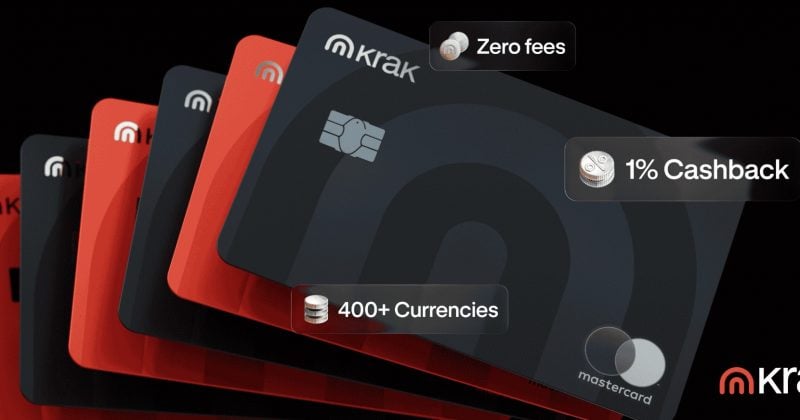
The exchange's new card lets users spend from over 600 crypto and cash balances at 150 million merchants, with up to 2% cash back in Bitcoin. Kraken just made it possible to buy your morning coffee with Dogecoin. Whether that's progress or a sign of the end times depends on your perspective, but the exchange officially launched the Kraken Card on July 13, a Mastercard-enabled debit card available to verified users across the UK and European Economic Area. The card supports spending from more than 600 crypto and cash balances held on Kraken's platform, with near real-time conversion at the point of sale. It works at over 150 million merchants worldwide. No monthly fees, no forex fees, and cash-back rewards of up to 2% paid in Bitcoin, euros, or pounds sterling. From exchange to neobank This launch has been a slow build. Kraken first announced its partnership with Mastercard back in April 2025, laying the groundwork for crypto-linked payment products. The initial rollout came in November 2025 with a more modest 1% cash-back structure tied to Kraken's peer-to-peer payment features. The July 2026 version is the full package. Both physical and virtual card options are available, issued through Monavate, an FCA-authorized provider. In English: instead of selling your Bitcoin on an exchange, withdrawing to a bank account, waiting two days, and then spending those funds, you just tap the card and Kraken handles the conversion instantly. The bigger picture: crypto meets traditional finance Competitors have been circling this space too. Coinbase has had its own Visa-linked card for years. Crypto.com built an entire brand identity around its metal cards. But Kraken's version stands out in a couple of ways: the sheer breadth of supported assets (600-plus is significantly more than most competitors offer) and the 2% cash-back tier, which is competitive with many traditional rewards cards, not just crypto ones. The geographic focus is also notable. By targeting the UK and EEA specifically, Kraken is leaning into markets where crypto regulation has become increasingly clear under frameworks like MiCA in the EU. What this means for investors The cash-back structure is worth watching closely. Offering up to 2% back in Bitcoin creates a passive accumulation mechanism for users who might not otherwise buy Bitcoin directly. The risk side is straightforward. Tax reporting on crypto-to-fiat conversions at point of sale remains a headache in many jurisdictions, and users will need to understand that every coffee purchase could technically be a taxable event depending on local rules. Kraken's partnership with FCA-authorized Monavate helps on the compliance front, but tax treatment ultimately sits with the user.
Anthropic admits Claude has multiple personalities: It appears especially warm and friendly with Hindi users
Do you think AI responds the same way in every language? Anthropic says no. Its latest study revealed that Claude comes across as warmer and friendlier in Hindi, using more humour, politeness, and words of encouragement than it typically does in English. You might think that asking Claude the same question in Hindi or English would only change the language of the response. However, a new study by Anthropic suggests it also alters the chatbot's behaviour. According to the company, Claude exhibits different behavioural traits depending on the language users choose. In Hindi, for example, the AI is more likely to respond with humour, politeness, and encouragement than in English. In its latest research, Anthropic analysed over 309,000 anonymous conversations with Claude -- covering three models (Sonnet 4.6, Opus 4.6, and Opus 4.7) and the 20 most-used languages on the platform -- focusing primarily on queries seeking advice, feedback, and opinions: situations where there is no single correct answer. The company noted that its goal was not to measure accuracy, but to understand how Claude communicates with users. What were the results? Anthropic found that Claude conveyed greater warmth when responding in Hindi and Arabic. Conversely, its responses in English and Russian were more analytical and focused on rigor. To facilitate the comparison of results, Anthropic classified Claude's behaviour into four general categories: deference vs. caution, warmth vs. rigor, depth vs. brevity, and candor vs. execution. According to the company, this approach allowed researchers to focus on Claude's behaviour rather than on differences between the questions asked by users. For users in India, the study's most significant finding lies in what Anthropic calls the "warmth vs. rigor" axis. The company observed that Claude expressed the highest levels of warmth in Hindi and Arabic. In Hindi, the AI tended to use polite language, humour, and a light-hearted tone, while validating users' ideas and work. It also frequently offered unsolicited reassurance, adapted its tone to the user's emotional state, and encouraged people to aim higher. "The greatest variation is observed along the warmth-versus-rigor axis: Claude tends to express values associated with warmth primarily in Arabic and Hindi, and values associated with rigor mainly in English and Russian," Anthropic noted in its blog post. English, however, presented a different picture. Anthropic found that Claude was more inclined to respond with rigor and caution, questioning assumptions, correcting details without being asked, and backing up its answers with evidence. Overall, the company stated that the most significant differences across languages lay in the degree of warmth or rigor Claude displayed, while its other behavioural traits remained relatively constant. The study also revealed that Claude's behaviour varied depending on the model used. Sonnet 4.6 was perceived as the warmest; it often employed humour, adapted to the user's tone, and offered non-judgmental reassurance. Opus 4.7, by contrast, appeared more analytical: it tended to question assumptions, explain its reasoning, point out potential risks, and openly acknowledge its own limitations. Opus 4.6 fell somewhere in between, generally sticking to the user's request and getting straight to the point. Anthropic clarifies that these findings do not imply that Claude holds different beliefs. Rather, the company suggests that the results reflect differences in how the AI responds depending on the language and model. Anthropic added that it is continuing to investigate the causes of these variations but believes the research could help achieve greater consistency in future AI systems.

Here's How Big Wall Street Expects SpaceX's Business to Get in 5 Years
When a company's valuation is high and wildly above what its fundamentals justify, that's a clear sign that expectations are high. While that can be an encouraging sign that there is a ton of growth likely ahead for the business, it also signifies risk, because if it falls short and the growth story unravels, the stock could be poised for a significant sell-off. One company whose valuation hinges on its growth story is Space Exploration Technologies (NASDAQ: SPCX), which is often referred to as just SpaceX. Its market cap has been hovering around $2 trillion since its shares went public about a month ago. It has some tremendous growth opportunities, and here's just how big analysts believe the business will get in five years. Missed Nvidia in 2009? This Rare Signal Is Flashing Again. In 2009, a "Double Down" signal flashed for a little-known chipmaker called Nvidia. For the first time in years, that same "Total Conviction" signal is flashing for a company 1/100th the size of Nvidia. Continue " SpaceX's revenue could top $565 billion by 2031 In recent years, there has been some solid growth, but nothing like what analysts expect from the company in the future. From $10.4 billion in revenue in 2023, the company's top line would rise by 35% to just over $14 billion in 2024, and then by another 33% in 2025, totaling $18.7 billion last year. That's a strong growth rate, but if analysts are right, then the company's top line could be about to take off, significantly. The bull case around SpaceX centers around its growth potential. Today, it trades at around 100 times its trailing revenue, but if the business gets much larger in the future, then its high valuation may be much more tenable. By 2031, Wall Street analysts project that its revenue will soar to $565 billion -- that's more than 30 times what it achieved this past year. Those kinds of numbers would make it among the largest companies in terms of revenue. E-commerce giant Amazon is the leader today, with its revenue totaling $743 billion over its past four quarters. Expectations are high, but so too is the risk SpaceX has some mammoth opportunities in artificial intelligence, space, and telecom. The problem, however, is that kind of significant growth means expectations are going to be through the roof for SpaceX. Not only will the company likely need to ramp up spending at a time when investors are growing more concerned about high capital expenditures, but it will also need to execute and prove that it's making the most of those investments. It's a tall task, to say the least.
Evercore ISI Initiates SpaceX at Outperform With $230 Price Target
Space Exploration Technologies Corp. designs, manufactures, launches, and operates products and services built on technologies, including rockets and spacecraft. The Company's segments include Space, Connectivity, and artificial intelligence (AI). Its Space segment designs, manufactures, and launches reusable rockets to provide access to space. Its Connectivity segment operates broadband data and communications network powered by approximately 9,600 Starlink broadband and mobile satellites in Low-Earth orbit, delivering connectivity to consumer, enterprises, and government customers over 164 countries, territories, and other markets. In its AI segment, it operates a vertically integrated AI platform spanning its truth-seeking frontier model Grok, AI solutions for consumer and enterprise customers, X-its real-time information, entertainment, and free speech platform and AI computational infrastructure.

Pete Hegseth Called Anthropic a 'National Security Risk.' Now CISA Is Using It.
CISA is one of around 100 organizations approved to use Anthropic's Mythos model, which is far better than human penetration testers at detecting and exploiting software bugs. The United States Cybersecurity and Infrastructure Security Agency (CISA) is now using artificial intelligence (AI) developer Anthropic's Mythos platform to "audit government software" -- a seeming rebuke of the Pentagon, which classified the company as a "national security risk" in February and attempted to institute controls on its use by government agencies. CISA's Attack Surface Evaluation team has been employing the model to audit source code and identify flaws that could be exploited by cybercriminals or nation-state actors, Reuters first reported last week. The initiative is apparently part of a pilot program to evaluate whether AI can accelerate software security reviews across government systems. According to the Reuters report, Mythos successfully identified multiple vulnerabilities during testing, although specifics on the number of vulnerabilities, severity, or affected software were not disclosed. What to Know About Claude Mythos The Claude Mythos platform is an extremely advanced large language model (LLM) that hasn't been released to the general public due to concerns that its software engineering capabilities could be too dangerous. The software has already been used to identify thousands of zero-day vulnerabilities in every major operating system and web browser, including decades-old bugs. As the AI can spot even the most subtle bugs, it has the capability to self-correct any coding mistakes, giving it clear commercial applications. The main risk is that in the wrong hands, it could also autonomously execute exploits at scale and speed that far exceed any human capabilities. "Software code review and analysis are nothing new. Realistically, most issues found are not exploitable without very specific conditions being met (i.e., the vulnerable function needs to actually be invoked and exposed to the attacker in order to be abused)," explained Chris Traynor, penetration tester at Black Hills Information Security (BHIS) and instructor at Antisyphon. Traynor told The National Interest via email that he believes that AI vulnerability scanning will likely find many new and novel issues that were simply too complex to identify with legacy tools before. "But added complexity can cause limitations in exploitability," Traynor said. "AI scanning will likely produce a lot of unactionable output very quickly that will need to be reviewed by experts to find the real risks." AI Is Far Better Than Humans at Finding Bugs -- for Better and Worse Software bugs are virtually inevitable and incredibly common in development. Complex systems require thousands of lines of code, and anything from minor typos to miscommunications to logical missteps can lead to bugs. This introduces unpredictable variables. Code also doesn't exist in a bubble, nor is it created in one. Changes in operating systems, web browsers, and third-party services can break functioning software, often without warning. More worrisome is that such software bugs serve as the foundation for almost all exploits in cybersecurity. A bug has the potential to create unintended weaknesses, such as how a program handles data or permissions. Many software vulnerabilities can go unnoticed, often hidden for years. The danger is that AI can find those quickly. It is an extremely useful, but essentially neutral, tool: a developer or "white hat" penetration tester can use AI to help patch faulty code, or a "black hat" hacker can use it for nefarious purposes. "AI finding vulnerabilities in federal code at scale is interesting, but the harder question is what happens after the finding. A vulnerability that exists in a library no one calls, behind a network segment no one reaches, is not the same problem as one sitting in a critical authentication path," said Seemant Sehgal, founder and CEO of cybersecurity provider BreachLock. "Without validating exploitability and reachability, every finding lands with the same weight, and that creates its own kind of risk," Sehgal told The National Interest. "The real test of this program is whether the output helps prioritize action or just expands the backlog." The US Government Has a Mercurial Approach to AI The federal government is already using AI extensively, deploying more than 3,600 distinct AI programs across its agencies. But the Trump administration is less clear about how it believes AI should be used in security matters. "The federal government can't seem to decide what it thinks about AI in general, or Mythos in particular," Bronwen Aker, AI research and strategy analyst at BHIS, told The National Interest. "One week Anthropic is a supply-chain risk, the next week CISA is handing Mythos the keys to scan federal code for vulnerabilities." The intra-government squabbles over Anthropic are by now a matter of public record. In February, the Pentagon called for Anthropic to be banned across the entirety of the federal government. Four months later, in June, the Department of Commerce instituted an export ban on two powerful Anthropic models, Fable and Mythos, leading Anthropic to shut both of them down. Earlier this month, the Department of Commerce lifted the export ban, and Fable has been made available to the general public once more. Mythos had been strictly limited to just around 100 vetted US organizations focused on critical infrastructure and cybersecurity. That seems to include CISA, which is employing the platform in the software audit. "That inconsistency would be bad enough to start with, but because it's not clear what Mythos is actually scanning, it's much, much worse," Aker told The National Interest in an email. It remains unclear if it is government-written code or software built by third-party contractors and vendors. "In-house bugs are one problem," warned Aker. "Vendor bugs running across federal systems are a supply chain problem, and the public has a right to know which one this is." AI-Generated Code Is Part of the Security Problem Part of the problem is that at the same time AI scans for vulnerabilities in legacy code, it also generates new code on the other end -- code with many of the same flaws in it as human-generated code. In other words, using AI to patch bugs is only solving half the problem. Jacob Krell, senior director for secure AI solutions and cybersecurity at security provider Suzu Labs, observed that CISA pointing Mythos at government codebases should be seen as a smart move, but perhaps only the opening move in what could be a long game. "I've seen federal systems running code that hasn't had a serious security review in a decade, and a model like Mythos can cover that volume in hours instead of months," Krell told The National Interest. "Every federal agency and contractor also has developers writing code with AI assistants, and those tools produce insecure output more often than secure output. Authorization flaws, hardcoded credentials, missing input validation, all shipping by default because the models optimize for 'does it run' and skip 'is it safe.'" The danger is that when combined, the result is akin to a treadmill that isn't so easy to get off of. In this case, Mythos finds legacy bugs, teams patch them, but then AI coding tools introduce fresh vulnerabilities even as they fix the old ones. That puts everything from power grids to water systems, which may be privately run, still squarely in the crosshairs of hackers. Krell suggested that CISA can't simply harden federal code and call it done. "If the agency has a scanning tool this capable, the operators running critical infrastructure need access to it too, because those are the systems that actually keep the lights on," he said. "I'd want CISA to pair this initiative with secure-generation standards for AI coding tools in federal development, and extend scanning access to critical infrastructure operators. We are draining the pool while the hose is still running." About the Author: Peter Suciu Peter Suciu has contributed to dozens of newspapers, magazines and websites over a 30-year career in journalism. He regularly writes about military hardware, firearms history, cybersecurity, politics, and international affairs. Peter is also a contributing writer for Forbes and Clearance Jobs. He is based in Michigan. You can follow him on Twitter:@PeterSuciu. You can email the author: [email protected].

Samsung will make 2nm AI chips for Anthropic
A few days ago, it was reported that Samsung could win a contract to manufacture high-performance AI chips for Anthropic. A new report now claims that Samsung Foundry has secured the contract to make chips for Anthropic, the AI firm behind the popular Claude AI system. According to Newsworks Korea, Samsung Electronics has secured a major contract to fabricate proprietary AI accelerator chips for Anthropic. The chip will be fabricated using Samsung Foundry's cutting-edge 2 nm process node and packaged with the company's advanced packaging technology. It is unclear whether the chip will be manufactured at Samsung's plant in South Korea or its facility in Taylor, Texas. It is worth noting that Samsung Electronics invested in Anthropic's $65 billion Series H funding round. Anthropic is a US-based AI firm founded in 2021 by ex-OpenAI researchers, and it competes directly with OpenAI. Anthropic is significantly more valuable than OpenAI. Samsung Foundry's reported Anthropic contract comes just a few months after it secured chip orders from Tesla and Groq. This could help the company return to profitability next quarter. Samsung is also reportedly in talks with Google and Meta to manufacture AI chips, or components for their AI chips. Due to the ongoing AI boom, TSMC, a much larger contract chip manufacturer than Samsung, is facing significant production backlogs. As a result, it is charging high prices to make chips and is reportedly prioritizing orders from major brands such as Apple, AMD, MediaTek, and Nvidia. This could allow Samsung Foundry to attract more customers. Samsung Electronics is currently the only company that offers chip fabrication, chip packaging, and memory chips under one roof.
Claude Design: Anthropic's AI Tool (Access, Pricing, Uses)
Claude Design is Anthropic's prompt-based design workspace, and more than one million people used it in its first week. It turns plain English into editable slides, interactive prototypes, mockups, and one-page assets, then exports them to PDF, PPTX, Canva, standalone HTML, or straight into Claude Code. It launched on April 17, 2026, lives at claude.ai/design, and on launch day Figma's stock fell about 7%, according to Gizmodo. Claude Design got a major overhaul on June 17, 2026 that changed how it works and what it costs you in usage. It now imports your real design system, round-trips with Claude Code through a /design-sync command, lets you drag and resize elements directly on the canvas, and draws from your shared Claude usage pool instead of a small separate allowance. You also now pick which Claude model does the work. This guide covers what Claude Design is, how to access it on Mac, Windows, and Linux, what each plan costs, what you can build with it, and how it stacks up against Figma and Canva. The Key Takeaways * Claude Design is in beta on Pro, Max, Team, and Enterprise plans and included with your subscription. There is no free tier, and Enterprise has it off by default. * The June 17, 2026 update added design system imports, a two-way /design-sync round trip with Claude Code, direct canvas editing, and brand lockdown controls for admins. * Claude Design now shares usage limits with chat, Claude Code, and Claude Cowork. The separate design allowance that users burned through in minutes is gone. * It is browser only on Mac, Windows, and Linux. There is no native Claude Design app, and any third-party ".dmg" or ".exe" download claiming to be one is not from Anthropic. * You now pick the model inside Claude Design, choosing between Fable 5, Opus 4.8, Sonnet 5, and Haiku 4.5, alongside an Effort setting. The "powered by Opus 4.7" line from the April launch post is out of date. What is Claude Design? Claude Design is a prompt-based design surface built by Anthropic Labs, the team inside Anthropic that ships experimental products. You describe what you want in plain English, and Claude generates a working design on a side-by-side canvas. You refine it through chat, inline comments, direct manipulation, and layout controls that adjust spacing, color, typography, and alignment. The product is documented in Anthropic's launch announcement. It launched on April 17, 2026, three days after Anthropic CPO Mike Krieger stepped off Figma's board, a resignation TechCrunch dated to April 14. It arrived as a research preview and moved to beta with the June update. At launch it ran on one fixed model, Claude Opus 4.7, which Anthropic then called its most capable vision model. That is no longer how it works. Claude Design now ships a model picker, and you choose the model yourself. Claude Design accepts a wide range of inputs. You can drop in screenshots, photos, DOCX, PPTX, and XLSX files, or point it at a GitHub repository so Claude reads your real components. There is also a web capture tool that grabs elements directly from your own website, so prototypes look like the real product. Anything you build can be shared inside your organization with view-only, comment, or edit permissions. Who is Claude Design for? The tool serves three core audiences. Founders and product managers who need a clickable prototype before they brief a designer. Sales and marketing teams who need a polished pitch deck today, not next week. Engineers who want to sketch an internal admin UI without leaving Claude. Designers themselves are not the primary target, and Claude Design complements tools like Figma and Canva rather than replacing them. What changed in the June 2026 Claude Design update Exactly two months after launch, Anthropic shipped a major Claude Design update on June 17, 2026. The theme was brand consistency and getting designs into production code, and it also fixed the tool's most complained-about flaw. The full changelog is in Anthropic's June 17 announcement. Here is what actually matters. Design system imports Claude Design can now pull in one or several design systems from a GitHub repo, design files, or raw uploads. Once a system is in, Claude builds with your real components, checks its own output against your system, and corrects itself before you ever see the result. This is the difference between a mockup that looks vaguely like your product and one that uses your actual buttons, cards, and tokens. The /design-sync round trip with Claude Code The headline feature is two-way traffic with Claude Code. Running /design-sync inside Claude Code pulls your local codebase's design system into Claude Design, so every prototype starts from existing components instead of approximations. A /design command in the Claude Code terminal lets developers create, edit, and sync design projects without leaving their workflow. The trip back is just as short. When a design is ready, it hands off to Claude Code, which picks up where you left off with no screenshot and no rebuild. If you are already living in the terminal, our roundup of the best Claude Code skills covers what else you can bolt onto that workflow. Direct canvas editing Claude Design used to route almost every tweak through the chat pane. The update added rich layout controls that let you drag, resize, and align elements directly on the canvas. You still ask Claude for the big structural changes, but nudging a card two pixels left no longer costs you a prompt. Brand controls for Team and Enterprise Larger organizations get a new admin role that can approve a single standard design system and lock down edits. Every asset Claude produces then conforms to company guidelines, which is what turns Claude Design from a prototyping toy into something a brand team will actually sign off on. Shared usage limits, the token-burn fix This is the change that matters most to your wallet. At launch, Claude Design metered usage from its own small allowance, and it drained fast. PCWorld reviewer Ben Patterson burned 80% of his weekly Claude Design allowance in roughly 25 minutes on the Pro plan, producing three variations of a single webpage prototype. His review was headlined "I tried Claude Design for half an hour. I'm already locked out for a week." Anthropic scrapped that model. Claude Design now shares usage limits with chat, Claude Code, and Claude Cowork, so there is no separate design allowance to track and you draw from one larger pool. Anthropic also says it cut average token consumption per turn while holding output quality, and that error rates dropped sharply. Which model powers Claude Design? This is the question almost every other guide still gets wrong. Anthropic's April launch post said Claude Design ran on Claude Opus 4.7, and that page has never been updated, so write-ups keep repeating it. Open the product today and it is plainly false. Claude Design carries the same model picker as the rest of Claude, and Anthropic's support documentation lists Claude Design among the surfaces where organization model-access settings apply, right next to chat, Cowork, and Claude Code. The model picker: Fable 5, Opus 4.8, Sonnet 5, and Haiku 4.5 Open the Model dropdown in the prompt composer and you get four models. Fable 5 is pitched for your toughest challenges, Opus 4.8 for complex tasks, Sonnet 5 as the efficient everyday pick, and Haiku 4.5 for fast answers. A More models row opens the rest of the catalogue. No single model "powers" Claude Design any more, so the honest answer is that you decide, per project. In practice, Sonnet 5 is enough for most slide decks, one-pagers, and simple mockups, and it is the cheapest way to iterate. Step up to Opus 4.8 or Fable 5 when you are building a dense interactive prototype or working against an imported design system, where the model has to hold a lot of structure in its head at once. Drop to Haiku 4.5 for quick throwaway variations. The Effort control Underneath the model list sits Effort, which defaults to High. Effort trades intelligence against speed and usage, and Anthropic documents the full ladder as Low, Medium, High, Extra high, and Max in its guide to model, effort, and thinking settings. Because design work now draws from your shared pool, turning Effort down on rough drafts is the single easiest way to stretch a subscription further. Admins get a say too. Since July 1, 2026, Enterprise administrators can restrict both which models their users can reach and which effort levels they are allowed to set, which is the same rollout that brought the picker into Claude Design in the first place. Fable 5 and the included-usage window Claude Fable 5 launched on June 9, 2026 and sits above Opus 4.8 as Anthropic's most capable widely released model, with a 1 million token context window and API pricing of $10 per million input tokens and $50 per million output tokens. That capability is not free-flowing. Anthropic includes Fable 5 on paid plans for up to 50% of your weekly usage limit, after which you switch models or buy usage credits, as set out in its Fable 5 redeployment note. That inclusion window is promotional and Anthropic keeps extending it, first to July 7, then July 12, then July 19, 2026. The picker prints the current deadline next to Fable 5, so check the label before you commit a long session to it. Free plans never had access, and standard Enterprise seats are excluded. How to access Claude Design Claude Design is a browser-based product at claude.ai/design. It works identically on Mac, Windows, and Linux because all generation happens on Anthropic's cloud. There is no native Claude Design app for any operating system and no separate desktop installer. Here are the four steps to get in. Optionally, run /design-sync in Claude Code first to import your team's design system, so generations stay on-brand from the very first prompt. Once you are in, you write a prompt in the left chat pane, watch the design build on the right canvas, then fine-tune with the layout controls or by dragging elements directly. Using Claude Design on Mac, Windows, and Linux Because the heavy generation runs on Anthropic's cloud, any Apple silicon Mac, from the original M1 right through the current M5, runs Claude Design identically to a Windows laptop or a Linux desktop. You do not need a discrete GPU, and the Mac mini, MacBook Air, and entry-level MacBook Pro all handle the canvas without lag. The same goes for an average Windows ultrabook. If you build dense interactive prototypes, a larger display helps, because the chat pane and canvas sit side by side. Many Mac users prefer to run Claude Design inside the official Claude Desktop app for macOS, which you can download from claude.com/download. It gives Claude a dedicated window away from your browser tabs. The desktop app is not required, but it is the cleanest setup if you work in Claude all day. What you can build with Claude Design Claude Design starts you from five templates, Prototype, Slides, Document, Wireframe, and Animation, or from a blank prompt if you would rather just describe what you want. Each one is refined through conversation afterwards. Below are five concrete use cases with the kind of prompt that gets the best result on the first try. Two of those templates are easy to overlook. Wireframe deliberately strips the output back to low-fidelity structure, which is what you want when the argument is about layout rather than polish. Animation produces motion, and because Claude Design renders slides as HTML rather than PowerPoint, Anthropic's own presentation tutorial notes that it can animate transitions to carry a story across a deck. 1. Pitch decks and quarterly business reviews You describe the deck including target audience, slide count, and key data points, and Claude builds the full deck in PPTX format. Example prompt: "Build a 12-slide Series A pitch deck for a B2B SaaS analytics startup. Include problem, solution, market size, traction, business model, team, and ask. Use a minimal style with our blue and grey brand colors." The output drops straight into Microsoft PowerPoint, Apple Keynote, or Google Slides. For deeper presentation workflows, see our guide on how to use AI in PowerPoint. 2. Interactive prototypes for new features Product teams use Claude Design to make a feature tangible before they brief engineering. Example prompt: "Design a 5-screen onboarding flow for a fitness tracking app. Include a welcome screen, goal selection, profile setup, permission requests, and a celebration screen. Use a light theme with sans-serif type." Because the canvas renders real HTML, CSS, and JavaScript, every prototype is clickable and scrollable in the browser. You share the link with stakeholders, collect comments inline, then iterate without leaving the chat. 3. Landing page mockups and one-pagers Founders without a designer use Claude Design to draft a marketing site or sales one-pager in minutes. Example prompt: "Create a SaaS landing page for an AI invoice tool aimed at freelancers. Include a hero, three feature blocks, a pricing table, FAQ, and a CTA footer. Match the layout conventions of modern fintech landing pages." Uploading screenshots of pages you admire pulls real reference material into the prompt, which keeps the output anchored to actual conventions instead of generic templates. If you already have a site, the web capture tool grabs elements from it so the mockup matches your live product. 4. Mockups built on your real design system This use case got dramatically stronger in June. Import your design system from a GitHub repo, design files, or raw uploads, and a new dashboard mockup will use your actual buttons, cards, modals, and tokens. Claude validates its output against the system and fixes deviations before showing you anything, so designs become drop-in references for the next sprint rather than throwaways. When you are ready to ship, click Handoff to Claude Code and send the design to a local Claude Code agent or to Claude Code on the web. Claude Code picks up the design without starting over, so nothing gets rebuilt from a screenshot. 5. Data dashboards, infographics, and internal tools Claude Design also handles charts, dashboards, and quick internal tools. For text-heavy infographics that demand pixel-perfect typography, ChatGPT Images 2.0 is currently a stronger pick because it specializes in dense text rendering. For interactive dashboards with editable data, Claude Design is the better fit, because the output is real code rather than a flat image. Claude Design pricing and usage limits Claude Design is not free. It is included at no extra cost with Pro, Max, Team, and Enterprise Claude plans. Since June 17, 2026 it draws from the same shared usage pool as chat, Claude Code, and Claude Cowork, so there is no separate design allowance to monitor. Here is what each plan costs, and our full Claude pricing breakdown goes deeper on API and Bedrock rates. Pro: $20 per month Claude Pro is the cheapest way into Claude Design at $20 per month, or $17 per month billed annually. It is the right plan for individual founders, marketers, and engineers who want to try Claude Design without a team contract. Design work now competes with your chat and Claude Code usage for the same pool, so a heavy prototyping session will eat into what you have left for everything else. Max 5x: $100 per month Claude Max 5x costs $100 per month and gives you 5x the Pro usage. This is the sweet spot for power users running daily Claude Design sessions alongside heavy Claude Code or Claude Cowork work, precisely because all three now share one pool. Max 20x: $200 per month Claude Max 20x costs $200 per month for 20x the Pro usage, plus priority access to Anthropic's newest features and models. This is for designers and agencies treating Claude Design as their primary visual workflow. Team and Enterprise Team Standard is $25 per seat per month ($20 annually) and Team Premium is $125 per seat per month ($100 annually). Those Team plans run from 5 to 150 seats. Enterprise is custom-priced through sales and ships with Claude Design turned off by default, so an admin must enable it in Organization settings. Once you exhaust your plan limits, Pro and Max users can switch on extra usage, sometimes called usage credits, and keep working. That overflow is billed at standard API rates rather than being included, so it is a metered top-up, not a bigger bucket. If you bought your subscription through the mobile app, you have to enable extra usage on the web. Claude Design vs Figma vs Canva vs Fello AI These four tools solve overlapping problems from different starting points. Claude Design generates from a prompt. Figma builds on a vector canvas with components. Canva assembles from templates and stock assets. Fello AI sits one level up, giving you Claude, ChatGPT, Gemini, Grok, and DeepSeek in a single app. Here is how they compare on the metrics that matter. The short verdict. Use Claude Design when you need to go from idea to interactive output fast and you already pay for Claude Pro or higher. Pick Figma for production UI work, design systems, and developer handoff at scale. Use Canva for brand-consistent marketing collateral with stock assets. Choose Fello AI at $9.99 a month when you want several frontier models in one app and you do not need a design canvas at all. Fello AI: a multi-model alternative for $9.99 a month If you do not have a paid Claude plan and you mostly need AI-generated slides, documents, and everyday creation work, Fello AI is a cheaper way in. For $9.99 a month it bundles Claude, ChatGPT, Gemini, Grok, and DeepSeek, and its PowerPoint Skill produces real .pptx files straight from a chat conversation. The app runs natively on Mac, iPhone, and iPad with cross-device sync, and it holds a 4.7-star rating across more than 27,000 reviews. The trade-off is the canvas. Fello AI does not give you a side-by-side visual editor, so it is not a replacement for a real design surface. It is the better choice when you want speed and one-app access to several models, and the weaker choice when you specifically need to push pixels. Plenty of people run both, Claude Design for work that needs a canvas and Fello AI for everything else. How Claude Design fits with Claude Cowork and Claude Code Anthropic now ships three Claude products that talk to each other, namely Claude Design, Claude Code, and Claude Cowork. The intended workflow is straightforward. Claude Design produces the visual artifact, Claude Code implements it, and Claude Cowork runs the long-horizon agent tasks on top, like research, document drafts, and analytics. The June update tightened that loop considerably. All three now share one usage pool, one set of credentials, and one billing relationship, and /design-sync plus Handoff to Claude Code are the explicit bridges between visual work and shipped code. Claude Design also sends work out to Adobe, Base44, Canva, Gamma, Lovable, Miro, Replit, Vercel, and Wix, on top of PDF and PowerPoint export. If you want quick presentation generation outside the design canvas, our guide to converting PDF to PowerPoint with AI covers that workflow. Limits and caveats Claude Design is still in beta, and the constraints below matter before you commit a workflow to it. Enterprise organizations have it disabled by default and need an admin to opt in. Anthropic has never corrected its April launch post, which still claims the tool runs on Opus 4.7, so plenty of secondhand write-ups repeat a model claim the live product flatly contradicts. Whichever model you pick, its vision and reasoning limits apply to your designs as well. And because design work now draws from your shared pool, a long prototyping session directly reduces what you have left for chat and Claude Code. On capability, the honest boundaries hold. For brand-heavy marketing collateral with consistent assets across dozens of pieces, Canva still wins. For complex multi-screen design systems with tight pixel precision, Figma still wins. Claude Design is at its best on the first 80% of a design, and most teams will hand the last 20% to a real designer. Anthropic has also shipped Claude Dreaming, its agent memory feature, which is worth watching if you plan to keep design sessions context-aware across weeks. Conclusion Claude Design spent its first two months as an impressive demo with a punishing usage cap. The June 17 update fixed the cap, taught it your design system, and wired it directly into Claude Code, which is what turns it into something you can actually put in a workflow. If you already pay for Claude Pro, Max, Team, or Enterprise, open claude.ai/design and run one of the example prompts above, and run /design-sync first if you have a codebase worth matching. If you do not have a Claude subscription and you want several frontier models in one native Mac app instead, download Fello AI on the App Store. To compare the underlying models powering all of this, see our best AI models guide. If you are weighing the two big AI visual tools against each other, our head-to-head on Claude Design vs ChatGPT Images 2.0 breaks down which one wins for slides and mockups, and our walkthrough on how to use ChatGPT Images 2.0 to create visuals covers the OpenAI side in practice.

Claude Design: Anthropic's AI Tool (Access, Pricing, Uses)
Claude Design is Anthropic's prompt-based design workspace, and more than one million people used it in its first week. It turns plain English into editable slides, interactive prototypes, mockups, and one-page assets, then exports them to PDF, PPTX, Canva, standalone HTML, or straight into Claude Code. It launched on April 17, 2026, lives at claude.ai/design, and on launch day Figma's stock fell about 7%, according to Gizmodo. Claude Design got a major overhaul on June 17, 2026 that changed how it works and what it costs you in usage. It now imports your real design system, round-trips with Claude Code through a /design-sync command, lets you drag and resize elements directly on the canvas, and draws from your shared Claude usage pool instead of a small separate allowance. You also now pick which Claude model does the work. This guide covers what Claude Design is, how to access it on Mac, Windows, and Linux, what each plan costs, what you can build with it, and how it stacks up against Figma and Canva. The Key Takeaways * Claude Design is in beta on Pro, Max, Team, and Enterprise plans and included with your subscription. There is no free tier, and Enterprise has it off by default. * The June 17, 2026 update added design system imports, a two-way /design-sync round trip with Claude Code, direct canvas editing, and brand lockdown controls for admins. * Claude Design now shares usage limits with chat, Claude Code, and Claude Cowork. The separate design allowance that users burned through in minutes is gone. * It is browser only on Mac, Windows, and Linux. There is no native Claude Design app, and any third-party ".dmg" or ".exe" download claiming to be one is not from Anthropic. * You now pick the model inside Claude Design, choosing between Fable 5, Opus 4.8, Sonnet 5et Haiku 4.5, alongside an Effort setting. The "powered by Opus 4.7" line from the April launch post is out of date. What is Claude Design? Claude Design is a prompt-based design surface built by Anthropic Labs, the team inside Anthropic that ships experimental products. You describe what you want in plain English, and Claude generates a working design on a side-by-side canvas. You refine it through chat, inline comments, direct manipulation, and layout controls that adjust spacing, color, typography, and alignment. The product is documented in Anthropic's launch announcement. It launched on April 17, 2026, three days after Anthropic CPO Mike Krieger stepped off Figma's board, a resignation TechCrunch dated to April 14. It arrived as a research preview and moved to beta with the June update. At launch it ran on one fixed model, Claude Opus 4.7, which Anthropic then called its most capable vision model. That is no longer how it works. Claude Design now ships a model picker, and you choose the model yourself. Claude Design accepts a wide range of inputs. You can drop in screenshots, photos, DOCX, PPTXet XLSX files, or point it at a GitHub repository so Claude reads your real components. There is also a web capture tool that grabs elements directly from your own website, so prototypes look like the real product. Anything you build can be shared inside your organization with view-only, comment, or edit permissions. Who is Claude Design for? The tool serves three core audiences. Founders and product managers who need a clickable prototype before they brief a designer. Sales and marketing teams who need a polished pitch deck today, not next week. Engineers who want to sketch an internal admin UI without leaving Claude. Designers themselves are not the primary target, and Claude Design complements tools like Figma and Canva rather than replacing them. What changed in the June 2026 Claude Design update Exactly two months after launch, Anthropic shipped a major Claude Design update on June 17, 2026. The theme was brand consistency and getting designs into production code, and it also fixed the tool's most complained-about flaw. The full changelog is in Anthropic's June 17 announcement. Here is what actually matters. Design system imports Claude Design can now pull in one or several design systems from a GitHub repo, design files, or raw uploads. Once a system is in, Claude builds with your real components, checks its own output against your system, and corrects itself before you ever see the result. This is the difference between a mockup that looks vaguely like your product and one that uses your actual buttons, cards, and tokens. The /design-sync round trip with Claude Code The headline feature is two-way traffic with Claude Code. Running /design-sync inside Claude Code pulls your local codebase's design system into Claude Design, so every prototype starts from existing components instead of approximations. A /design command in the Claude Code terminal lets developers create, edit, and sync design projects without leaving their workflow. The trip back is just as short. When a design is ready, it hands off to Claude Code, which picks up where you left off with no screenshot and no rebuild. If you are already living in the terminal, our roundup of the best Claude Code skills covers what else you can bolt onto that workflow. Direct canvas editing Claude Design used to route almost every tweak through the chat pane. The update added rich layout controls that let you drag, resize, and align elements directly on the canvas. You still ask Claude for the big structural changes, but nudging a card two pixels left no longer costs you a prompt. Brand controls for Team and Enterprise Larger organizations get a new admin role that can approve a single standard design system and lock down edits. Every asset Claude produces then conforms to company guidelines, which is what turns Claude Design from a prototyping toy into something a brand team will actually sign off on. Shared usage limits, the token-burn fix This is the change that matters most to your wallet. At launch, Claude Design metered usage from its own small allowance, and it drained fast. PCWorld reviewer Ben Patterson burned 80% of his weekly Claude Design allowance in roughly 25 minutes on the Pro plan, producing three variations of a single webpage prototype. His review was headlined "I tried Claude Design for half an hour. I'm already locked out for a week." Anthropic scrapped that model. Claude Design now shares usage limits with chat, Claude Code, and Claude Cowork, so there is no separate design allowance to track and you draw from one larger pool. Anthropic also says it cut average token consumption per turn while holding output quality, and that error rates dropped sharply. Which model powers Claude Design? This is the question almost every other guide still gets wrong. Anthropic's April launch post said Claude Design ran on Claude Opus 4.7, and that page has never been updated, so write-ups keep repeating it. Open the product today and it is plainly false. Claude Design carries the same model picker as the rest of Claude, and Anthropic's support documentation lists Claude Design among the surfaces where organization model-access settings apply, right next to chat, Cowork, and Claude Code. The model picker: Fable 5, Opus 4.8, Sonnet 5, and Haiku 4.5 Open the Model dropdown in the prompt composer and you get four models. Fable 5 is pitched for your toughest challenges, Opus 4.8 for complex tasks, Sonnet 5 as the efficient everyday pick, and Haiku 4.5 for fast answers. A More models row opens the rest of the catalogue. No single model "powers" Claude Design any more, so the honest answer is that you decide, per project. In practice, Sonnet 5 is enough for most slide decks, one-pagers, and simple mockups, and it is the cheapest way to iterate. Step up to Opus 4.8 or Fable 5 when you are building a dense interactive prototype or working against an imported design system, where the model has to hold a lot of structure in its head at once. Drop to Haiku 4.5 for quick throwaway variations. The Effort control Underneath the model list sits Effort, which defaults to High. Effort trades intelligence against speed and usage, and Anthropic documents the full ladder as Low, Medium, High, Extra high, and Max in its guide to model, effort, and thinking settings. Because design work now draws from your shared pool, turning Effort down on rough drafts is the single easiest way to stretch a subscription further. Admins get a say too. Since July 1, 2026, Enterprise administrators can restrict both which models their users can reach and which effort levels they are allowed to set, which is the same rollout that brought the picker into Claude Design in the first place. Fable 5 and the included-usage window Claude Fable 5 launched on June 9, 2026 and sits above Opus 4.8 as Anthropic's most capable widely released model, with a 1 million token context window and API pricing of $10 per million input tokens and $50 per million output tokens. That capability is not free-flowing. Anthropic includes Fable 5 on paid plans for up to 50% of your weekly usage limit, after which you switch models or buy usage credits, as set out in its Fable 5 redeployment note. That inclusion window is promotional and Anthropic keeps extending it, first to July 7, then July 12, then July 19, 2026. The picker prints the current deadline next to Fable 5, so check the label before you commit a long session to it. Free plans never had access, and standard Enterprise seats are excluded. How to access Claude Design Claude Design is a browser-based product at claude.ai/design. It works identically on Mac, Windows, and Linux because all generation happens on Anthropic's cloud. There is no native Claude Design app for any operating system and no separate desktop installer. Here are the four steps to get in. Optionally, run /design-sync in Claude Code first to import your team's design system, so generations stay on-brand from the very first prompt. Once you are in, you write a prompt in the left chat pane, watch the design build on the right canvas, then fine-tune with the layout controls or by dragging elements directly. Using Claude Design on Mac, Windows, and Linux Because the heavy generation runs on Anthropic's cloud, any Apple silicon Mac, from the original M1 right through the current M5, runs Claude Design identically to a Windows laptop or a Linux desktop. You do not need a discrete GPU, and the Mac mini, MacBook Air, and entry-level MacBook Pro all handle the canvas without lag. The same goes for an average Windows ultrabook. If you build dense interactive prototypes, a larger display helps, because the chat pane and canvas sit side by side. Many Mac users prefer to run Claude Design inside the official Claude Desktop app for macOS, which you can download from claude.com/download. It gives Claude a dedicated window away from your browser tabs. The desktop app is not required, but it is the cleanest setup if you work in Claude all day. What you can build with Claude Design Claude Design starts you from five templates, Prototype, Slides, Document, Wireframe, and Animation, or from a blank prompt if you would rather just describe what you want. Each one is refined through conversation afterwards. Below are five concrete use cases with the kind of prompt that gets the best result on the first try. Two of those templates are easy to overlook. Wireframe deliberately strips the output back to low-fidelity structure, which is what you want when the argument is about layout rather than polish. Animation produces motion, and because Claude Design renders slides as HTML rather than PowerPoint, Anthropic's own presentation tutorial notes that it can animate transitions to carry a story across a deck. 1. Pitch decks and quarterly business reviews You describe the deck including target audience, slide count, and key data points, and Claude builds the full deck in PPTX format. Example prompt: "Build a 12-slide Series A pitch deck for a B2B SaaS analytics startup. Include problem, solution, market size, traction, business model, team, and ask. Use a minimal style with our blue and grey brand colors." The output drops straight into Microsoft PowerPoint, Apple Keynote, or Google Slides. For deeper presentation workflows, see our guide on how to use AI in PowerPoint. 2. Interactive prototypes for new features Product teams use Claude Design to make a feature tangible before they brief engineering. Example prompt: "Design a 5-screen onboarding flow for a fitness tracking app. Include a welcome screen, goal selection, profile setup, permission requests, and a celebration screen. Use a light theme with sans-serif type." Because the canvas renders real HTML, CSS, and JavaScript, every prototype is clickable and scrollable in the browser. You share the link with stakeholders, collect comments inline, then iterate without leaving the chat. 3. Landing page mockups and one-pagers Founders without a designer use Claude Design to draft a marketing site or sales one-pager in minutes. Example prompt: "Create a SaaS landing page for an AI invoice tool aimed at freelancers. Include a hero, three feature blocks, a pricing table, FAQ, and a CTA footer. Match the layout conventions of modern fintech landing pages." Uploading screenshots of pages you admire pulls real reference material into the prompt, which keeps the output anchored to actual conventions instead of generic templates. If you already have a site, the web capture tool grabs elements from it so the mockup matches your live product. 4. Mockups built on your real design system This use case got dramatically stronger in June. Import your design system from a GitHub repo, design files, or raw uploads, and a new dashboard mockup will use your actual buttons, cards, modals, and tokens. Claude validates its output against the system and fixes deviations before showing you anything, so designs become drop-in references for the next sprint rather than throwaways. When you are ready to ship, click Handoff to Claude Code and send the design to a local Claude Code agent or to Claude Code on the web. Claude Code picks up the design without starting over, so nothing gets rebuilt from a screenshot. 5. Data dashboards, infographics, and internal tools Claude Design also handles charts, dashboards, and quick internal tools. For text-heavy infographics that demand pixel-perfect typography, ChatGPT Images 2.0 is currently a stronger pick because it specializes in dense text rendering. For interactive dashboards with editable data, Claude Design is the better fit, because the output is real code rather than a flat image. Claude Design pricing and usage limits Claude Design is not free. It is included at no extra cost with Pro, Max, Team, and Enterprise Claude plans. Since June 17, 2026 it draws from the same shared usage pool as chat, Claude Code, and Claude Cowork, so there is no separate design allowance to monitor. Here is what each plan costs, and our full Claude pricing breakdown goes deeper on API and Bedrock rates. Pro: $20 per month Claude Pro is the cheapest way into Claude Design at $20 per month, or $17 per month billed annually. It is the right plan for individual founders, marketers, and engineers who want to try Claude Design without a team contract. Design work now competes with your chat and Claude Code usage for the same pool, so a heavy prototyping session will eat into what you have left for everything else. Max 5x: $100 per month Claude Max 5x costs $100 per month and gives you 5x the Pro usage. This is the sweet spot for power users running daily Claude Design sessions alongside heavy Claude Code or Claude Cowork work, precisely because all three now share one pool. Max 20x: $200 per month Claude Max 20x costs $200 per month for 20x the Pro usage, plus priority access to Anthropic's newest features and models. This is for designers and agencies treating Claude Design as their primary visual workflow. Team and Enterprise Team Standard is $25 per seat per month ($20 annually) and Team Premium is $125 per seat per month ($100 annually). Those Team plans run from 5 to 150 seats. Enterprise is custom-priced through sales and ships with Claude Design turned off by default, so an admin must enable it in Organization settings. Once you exhaust your plan limits, Pro and Max users can switch on extra usage, sometimes called usage credits, and keep working. That overflow is billed at standard API rates rather than being included, so it is a metered top-up, not a bigger bucket. If you bought your subscription through the mobile app, you have to enable extra usage on the web. Claude Design vs Figma vs Canva vs Fello AI These four tools solve overlapping problems from different starting points. Claude Design generates from a prompt. Figma builds on a vector canvas with components. Canva assembles from templates and stock assets. Fello AI sits one level up, giving you Claude, ChatGPT, Gemini, Grok, and DeepSeek in a single app. Here is how they compare on the metrics that matter. The short verdict. Use Claude Design when you need to go from idea to interactive output fast and you already pay for Claude Pro or higher. Pick Figma for production UI work, design systems, and developer handoff at scale. Use Canva for brand-consistent marketing collateral with stock assets. Choose Fello AI at $9.99 a month when you want several frontier models in one app and you do not need a design canvas at all. Fello AI: a multi-model alternative for $9.99 a month If you do not have a paid Claude plan and you mostly need AI-generated slides, documents, and everyday creation work, Fello AI is a cheaper way in. For $9.99 a month it bundles Claude, ChatGPT, Gemini, Grok, and DeepSeek, and its PowerPoint Skill produces real .pptx files straight from a chat conversation. The app runs natively on Mac, iPhone, and iPad with cross-device sync, and it holds a 4.7-star rating across more than 27,000 reviews. The trade-off is the canvas. Fello AI does not give you a side-by-side visual editor, so it is not a replacement for a real design surface. It is the better choice when you want speed and one-app access to several models, and the weaker choice when you specifically need to push pixels. Plenty of people run both, Claude Design for work that needs a canvas and Fello AI for everything else. How Claude Design fits with Claude Cowork and Claude Code Anthropic now ships three Claude products that talk to each other, namely Claude Design, Claude Code, and Claude Cowork. The intended workflow is straightforward. Claude Design produces the visual artifact, Claude Code implements it, and Claude Cowork runs the long-horizon agent tasks on top, like research, document drafts, and analytics. The June update tightened that loop considerably. All three now share one usage pool, one set of credentials, and one billing relationship, and /design-sync plus Handoff to Claude Code are the explicit bridges between visual work and shipped code. Claude Design also sends work out to Adobe, Base44, Canva, Gamma, Lovable, Miro, Replit, Vercel, and Wix, on top of PDF and PowerPoint export. If you want quick presentation generation outside the design canvas, our guide to converting PDF to PowerPoint with AI covers that workflow. Limits and caveats Claude Design is still in beta, and the constraints below matter before you commit a workflow to it. Enterprise organizations have it disabled by default and need an admin to opt in. Anthropic has never corrected its April launch post, which still claims the tool runs on Opus 4.7, so plenty of secondhand write-ups repeat a model claim the live product flatly contradicts. Whichever model you pick, its vision and reasoning limits apply to your designs as well. And because design work now draws from your shared pool, a long prototyping session directly reduces what you have left for chat and Claude Code. On capability, the honest boundaries hold. For brand-heavy marketing collateral with consistent assets across dozens of pieces, Canva still wins. For complex multi-screen design systems with tight pixel precision, Figma still wins. Claude Design is at its best on the first 80% of a design, and most teams will hand the last 20% to a real designer. Anthropic has also shipped Claude Dreaming, its agent memory feature, which is worth watching if you plan to keep design sessions context-aware across weeks. Conclusion Claude Design spent its first two months as an impressive demo with a punishing usage cap. The June 17 update fixed the cap, taught it your design system, and wired it directly into Claude Code, which is what turns it into something you can actually put in a workflow. If you already pay for Claude Pro, Max, Team, or Enterprise, open claude.ai/design and run one of the example prompts above, and run /design-sync first if you have a codebase worth matching. If you do not have a Claude subscription and you want several frontier models in one native Mac app instead, download Fello AI on the App Store. To compare the underlying models powering all of this, see our best AI models guide. If you are weighing the two big AI visual tools against each other, our head-to-head on Claude Design vs ChatGPT Images 2.0 breaks down which one wins for slides and mockups, and our walkthrough on how to use ChatGPT Images 2.0 to create visuals covers the OpenAI side in practice.
Kraken rolls out Mastercard crypto debit card in UK and Europe
Kraken has launched a Mastercard debit card in the UK and Europe, allowing users to spend from a wide range of cryptocurrency and cash balances. The crypto exchange said the card can be used for everyday purchases online and in stores wherever Mastercard is accepted. Users can pay from more than 600 supported crypto and cash currency balances. The funds are converted in near real time at the point of purchase. Kraken said the card offers up to 2% cashback, paid weekly in Bitcoin, euros or pounds. It also said there are no transaction or ATM fees. The product is being introduced first in the UK and the European Economic Area (EEA), with other markets expected to follow "soon," according to the company. In the UK, the Kraken Card is issued by Monavate, which is authorised by the Financial Conduct Authority (FCA) to carry out electronic money activities and related payment services. In the EEA, the card is issued by UAB Monavate, which is authorised by the Bank of Lithuania. The launch forms part of Kraken's broader effort to develop a "holistic financial offering". The company is also redesigning its app to include more personalised features and a more intuitive interface. The card launch follows a recent agreement by Kraken parent Payward to acquire Reap Technologies in a $600m deal. Reap Technologies focuses on stablecoin-based card issuing and payments infrastructure. The company has developed a card issuing and cross-border payments platform linking traditional financial systems with digital assets for global business payments. Kamo Asatryan, global head of consumer at Kraken and chief AI and data officer of Payward, said: "People shouldn't have to worry about where their money is sitting before they spend it. Our customers already earn, save, invest, and trade with Kraken. "The Kraken Card adds 'spend' to that list, bringing it all together into one experience that just works." "Kraken rolls out Mastercard crypto debit card in UK and Europe" was originally created and published by Electronic Payments International, a GlobalData owned brand.
Grok Build Uploaded Entire Git Repositories to xAI Storage, Not Just Files It Read - IT Security News
xAI's Grok Build coding CLI was uploading entire Git repositories, full commit history and all, to a Google Cloud Storage bucket run by xAI, not just the files a coding task needed. A researcher publishing as cereblab, testing version 0.2.93, captured one of those uploads, cloned the git bundle out of the intercepted request, and pulled back a file the agent had been told in plain terms not