News & Updates
The latest news and updates from companies in the WLTH portfolio.
Scandal and sex: Sabrina Carpenter causes chaos in provocative "House Tour" video
Sabrina Carpenter is pushing boundaries again. Her new music video for the single "House Tour" leaves very little to the imagination. Joined by Hollywood actress Margaret Qualley and Netflix star Madeline Klein, Carpenter storms a mansion, creating total chaos. The women strip down to their lingerie, raid a liquor cabinet, take a bath, jump into a pool, and steal cash and jewelry -- all while evading the approaching police. The video takes a darker turn when Carpenter and Qualley run over a man with a car, leaving him seemingly dying as they flee into the night. Fans immediately noticed the Bling Ring-inspired storyline, reminiscent of the real-life story where fame-obsessed teens burglarized the homes of Hollywood stars. Reactions on social media ranged from shocked to amused, with one fan commenting, "No Sabrina Carpenter video is complete without a man dying!" Another wrote, "Love how in every video she makes a guy suffer... ICON." The song itself is filled with sexual innuendo, with the mansion serving as a metaphor for erotic escapades.

Blockbuster SpaceX listing could suck the oxygen out of fragile IPO market
As Elon Musk's SpaceX closes in on a US$75-billion IPO that could rewrite record books, concerns are mounting that others looking to list in 2026 may find it harder to get deals done under the shadow of the space venture's headline-grabbing debut. U.S. markets, prized for their depth, face a critical test, as more than half a dozen analysts and industry experts told Reuters that the SpaceX deal would likely absorb an outsized share of investor demand, squeezing out other hopefuls. "History tells us that a mega IPO like SpaceX can suck up the oxygen in the market. We saw that with Facebook in 2012," said Matt Kennedy, senior strategist at Renaissance Capital, a provider of IPO-focused research and ETFs. "IPOs are a major marketing event, and companies wouldn't want the noise from a SpaceX offering to drown out coverage of their own deals. So, listing activity may die down a bit during the weeks surrounding the SpaceX IPO." Companies have waited years on the sidelines for favorable IPO conditions after a prolonged dry spell. A listing like SpaceX, with its celebrity-billionaire CEO, hot industry and deep-pocketed backers, could have provided the jolt others need to push ahead. Instead, its sheer scale threatens to overshadow others, with Wall Street banks and investors pouring a majority of their attention, and money, into the operator of the Starlink constellation of satellites. Thirty-five IPOs have priced so far this year, according to data from Renaissance Capital, down 37.5 per cent from a year earlier. That could worsen in the months ahead, clouding hopes of a broader market resurgence in 2026. The IPO market has lined up its biggest pipeline in decades, analysts and bankers said. But the war in Iran, spiking oil prices, private credit concerns and AI-led disruption to legacy software firms have set a high bar for which deals successfully break through the volatility - and which ones get left behind. Now, alongside these disruptions, companies eyeing IPOs must also compete for attention in a market dominated by SpaceX headlines. While bankers will probably advise their biggest clients against competing against SpaceX, smaller listings may benefit, said Michael Ashley Schulman, partner at wealth management firm Cerity Partners. "Smaller IPO debuts may benefit from a tag-along effect in retail enthusiasm that could mentally lump IPOs together under the assumption that if one does well, others will too," he said. Timing an IPO is often as crucial to a listing's success as the company's fundamentals. May through June is typically the best window before a summer lull that defers larger offerings to the fall. While Musk is hoping to take SpaceX public in June, according to bankers, OpenAI and rival Anthropic are reportedly aiming for a debut in the second half of the year. "The attention that these mega IPOs take from the market could push a broadly open IPO window into 2027," PitchBook analyst Kyle Stanford said in a report. The report added that if SpaceX raises between US$50-billion and US$75-billion, while OpenAI and Anthropic raise another US$50-billion combined, that would roughly match the total raised by U.S. VC-backed company IPOs over the past decade. "Media attention is not the only thing these mega IPOs could absorb. IPO underwriting would be constrained by the amount these companies are able to raise," Stanford wrote. 'MUSKONOMY' VS MARKET REALITIES To be sure, it's uncharted territory - no offering of this size has been attempted before. Analysts and experts said the absence of any clear precedent or comparable listing leaves investors with little to anchor expectations, making it harder to gauge how the market will respond to SpaceX's IPO. "SpaceX is going to be big, no doubt about it," said James Angel, faculty affiliate at Georgetown McDonough's Psaros Center for Financial Markets and Policy. "The combination of well-known brands like X and Starlink, along with the magic of AI, the dream of space, and Musk's magic means that the investment bankers will have little trouble generating interest in the stock." Elon Musk has built a track record of pulling in investor demand across cycles, with his ventures often dominating attention. His empire, dubbed "Muskonomy" by analysts, creates a concentration of capital that few offerings can match. That concentration of investor interest is not just theoretical, it has played out in past listings. Musk's EV maker Tesla raised US$226-million in its 2010 IPO at a market value of about US$1.6-billion. It is now the world's most valuable automaker, worth more than US$1.3-trillion. But even that track record and investor appeal may not be enough in today's IPO market, analysts cautioned. "We don't believe that SpaceX can escape the realities of the U.S. IPO marketplace, in the sense that it has become a buyer's market," said Josef Schuster, CEO of IPO research firm IPOX. "Even strong IPO candidates in hot sectors need to show flexibility in pricing their deal and potentially need to price downward for IPO success." Others warned that a wave of large listings could strain investor demand more broadly, particularly if multiple mega deals hit the market at the same time. "There is an old market saying that bull markets end when the money runs out, and there are plenty of historic examples where a deluge of IPOs and new stock market entrants, and then subsequent secondary offerings, meant sellers eventually swamped buyers," AJ Bell investment director Russ Mould said.

Anthropic's New TPU Deal, Anthropic's Computing Crunch, The Anthropic-Google Alliance
With Stratechery Plus you get access to the subscriber-only Stratechery Update and Stratechery Interviews, and the Sharp Tech, Sharp China, Dithering, Greatest of All Talk, and Asianometry podcasts. Stratechery Updates are also available via SMS, RSS, or on this site. Please see the Stratechery Update Schedule for more details about delivery times and planned days-off. Please note that all subscriptions auto-renew monthly/annually (but can be cancelled at any time). If you are interested in ordering and managing multiple subscriptions for your team or company, please fill in the form here.
Anthropic's refusal to arm AI is exactly why the UK wants it
The Anthropic UK expansion story is less about diplomatic courtship and more about what happens when a government punishes a company for having principles. In late February, US Defence Secretary Pete Hegseth gave Anthropic CEO Dario Amodei a stark ultimatum: remove guardrails preventing Claude from being used for fully autonomous weapons and domestic mass surveillance, or face consequences. Amodei didn't budge. He wrote that Anthropic could not "in good conscience" grant the Pentagon's request, arguing that some uses of AI "can undermine rather than defend democratic values." Washington's response was swift. Trump directed every federal agency to immediately cease all use of Anthropic's technology, and the Pentagon designated the company a supply chain risk, a label ordinarily reserved for adversarial foreign entities like Huawei. The US$200 million Pentagon contract was pulled. Defence tech companies instructed employees to stop using Claude and switch to alternatives. London, watching all of this unfold, saw something different. The UK's pitch Staff at the UK's Department for Science, Innovation and Technology (DSIT) have drawn up proposals for the US$380 billion company, ranging from a dual stock listing on the London Stock Exchange to an office expansion in the capital, according to multiple people with knowledge of the plans. Prime Minister Keir Starmer's office has backed the effort, which will be put to Amodei when he visits in late May. Anthropic already has around 200 employees in Britain and appointed former prime minister Rishi Sunak as a senior adviser last year. The infrastructure for a meaningful UK presence is already there. What the British government is now offering is an explicit signal that Anthropic's approach to AI-built on embedded ethical constraints-is an asset, not an obstacle. A dual listing in London, if it materialised, would give Anthropic access to European institutional investors at a moment when its domestic regulatory standing remains under active legal challenge. The Pentagon's appeal of the court-ordered injunction blocking the supply chain designation is still before the Ninth Circuit, and the outcome remains uncertain. Ethics as a competitive advantage The dispute has been framed largely as a legal and political fight. But its implications for global AI governance run deeper. Anthropic's lawyers argued in court filings that Claude was not developed to be used for lethal autonomous weapons without human oversight, nor deployed to spy on US citizens, and that using the tools in these ways would represent an abuse of its technology. US District Judge Rita Lin, who granted a preliminary injunction blocking the blacklist in March, found the government's actions "troubling" and concluded they likely violated the law. That judicial finding matters in the UK context. Britain is positioning itself as a regulatory environment sitting between Washington's current posture, which demands unrestricted military access, and Brussels, where the EU AI Act imposes its own constraints. The UK government presents itself as offering a less constrained environment for AI companies than either the US or the European Union. Crucially, that pitch doesn't ask Anthropic to abandon the guardrails it went to court to defend. The courtship also sits alongside broader UK efforts to build domestic AI capability, including a recently announced £40 million state-backed research lab, after officials acknowledged the absence of a homegrown competitor to the leading US frontier labs. Competition in London The UK's play for Anthropic is not happening in a vacuum. OpenAI has already committed to making London its biggest research hub outside the US. Google has anchored itself in King's Cross since acquiring DeepMind in 2014. The race to secure frontier AI in London is already competitive, and Anthropic's current circumstances make it the most consequential target yet. Anthropic has been expanding internationally regardless of its domestic legal battles, including opening a Sydney office as its fourth Asia-Pacific location. The global growth strategy is already in motion. What remains to be seen is how much of it London gets to claim. The company Washington blacklisted for having an AI ethics policy is now being actively courted by another G7 government that wants exactly that. The late May meetings with Amodei will be telling. See Also: Anthropic selected to build government AI assistant pilot Want to learn more about AI and big data from industry leaders? Check out AI & Big Data Expo taking place in Amsterdam, California, and London. The comprehensive event is part of TechEx and is co-located with other leading technology events including the Cyber Security & Cloud Expo. Click here for more information. AI News is powered by TechForge Media. Explore other upcoming enterprise technology events and webinars here.

Democrats' Colossal Missed Opportunity to Shape the Supreme Court
Neas' enthusiasm was initially matched by that of other Bush critics, such as the Senate Democratic leader Harry Reid (D-Nev.), who told people that he had been the first to suggest Miers as Supreme Court material to Bush. While Bush's top adviser Karl Rove insists Bush was already mulling a Miers nomination when Reid chimed in, Bush clearly felt more confident in making the move with the expectation that Reid would deliver Democratic votes for Miers. This wasn't a far-fetched notion: Roberts, with far more of a conservative pedigree than Miers, had just won confirmation with the support of half the Democratic caucus. The seeming liberal triumph of the Miers nomination, of course, would give way to a conservative backlash. Almost immediately, conservative judicial activists rose up against Miers, citing her lack of experience in constitutional law and sparking a rebellion that eventually forced Bush to withdraw her nomination. The alacrity with which conservatives turned on Bush, a president they had lionized after 9/11 as the great leader of his time, shocked people on both sides of the judicial divide. It was a powerful signal that the fight over the Supreme Court transcended party loyalty. This was a long twilight struggle, and one side -- the right -- understood the stakes well enough to know they had to gash Bush to preserve their agenda. The other side, it turned out, was slow to grasp the implications until it was too late. Reid's initial praise of Miers was quickly muted. Liberal stalwarts including Sen. Ted Kennedy declared that they would wait until Miers' confirmation hearings to pass judgment. This was a much milder response that the gales of fury that Kennedy usually inflicted on Republican nominees, but it inadvertently fed into the conservative critique of Miers as unknown and unqualified: a non-entity. As the conservative attacks on Miers mounted, Reid and his fellow Democrats seemed only too happy to stand on the sidelines of the Republican-on-Republican scrum, while letting the last chance to rescue Miers slip away. Significantly, Bush made it clear that he didn't give up on Miers simply because of what he called "the firestorm of criticism we received from our supporters." It was the failure of Democrats to lend their backing to the besieged Miers. "When the left started criticizing Harriet, too, I knew the nomination was doomed," Bush wrote in his memoir, Decision Points. Today, the notion of Miers as a misguided, unfit choice for the Supreme Court has taken root, partly because of her lack of any defenders on the left or right outside of Bush's inner circle. The nomination seems to have passed as a blip, a footnote to much more consequential judicial battles before and after. In fact, the Miers debacle was not only a colossal missed opportunity for the Democrats, but a major turning point in the judicial wars. The failure to build consensus around a centrist nominee, based on her character and life experiences rather than ideology, effectively ended any hope of compromise over the Supreme Court. Every nominee confirmed since then has been, for better or worse, a figure with a long, ingrained record of decision-making that reinforced the predilections of the party in power. This was the recipe for bitterness and conflict that followed.

Anthropic secures multi gigawatt TPU deal with Google and Broadcom
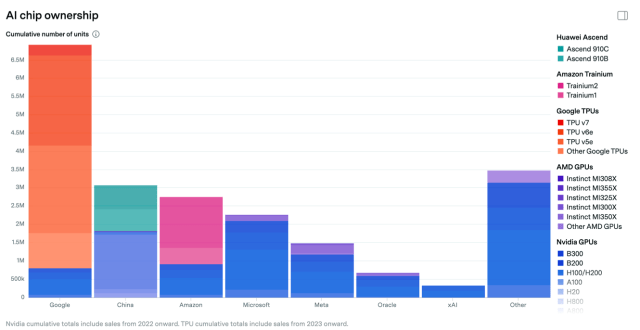
Anthropic has struck a major infrastructure deal with Google and Broadcom to secure multi-gigawatt computing capacity, as demand for its Claude AI models continues to climb. Details disclosed in a recent securities filing show the semiconductor firm will support future iterations of Google's tensor processing units, with part of that capacity allocated to Anthropic. The arrangement is expected to unlock roughly 3.5 gigawatts of compute, with deployments set to begin scaling from 2027. Anthropic said its annualized revenue has now crossed $30 billion, up sharply from around $9 billion at the end of last year. The company also reported that more than 1,000 enterprise customers are each spending over $1 million annually, a figure that has doubled within weeks. "We are making our most significant compute commitment to date to keep pace with our unprecedented growth," Anthropic's chief financial officer Krishna Rao said, adding that the partnership would "build the capacity necessary to serve the exponential growth we have seen in our customer base." Most of the new infrastructure will be based in the United States, extending an earlier pledge to invest $50 billion into domestic compute capacity. The expansion also builds on Anthropic's existing relationships with Google Cloud and Broadcom, following earlier TPU capacity announcements. From Broadcom's side, the deal adds to a growing pipeline of AI-linked revenue. CEO Hock Tan had previously confirmed that the company was already supplying around 1 gigawatt of compute for Anthropic through Google's TPU systems, with demand expected to climb past 3 gigawatts in 2027. For Broadcom, the latest deal adds to a quickly growing list of AI infrastructure partnerships. During the company's March earnings call, Broadcom CEO Hock Tan said it was already supplying roughly 1 gigawatt of compute for Anthropic and added that this was expected to surpass 3 gigawatts by 2027. Wall Street estimates suggest the partnership could translate into significant earnings. Analysts at Mizuho have projected that Broadcom may generate about $21 billion in AI-related revenue from Anthropic in 2026, potentially doubling to $42 billion the following year. At the same time, competition across AI infrastructure remains intense. AI developers, including Anthropic and its peers, continue to rely on a mix of hardware platforms, including Nvidia GPUs, Google TPUs, and custom chips. Broadcom is also working with OpenAI on separate silicon efforts, while cloud providers such as Amazon, Google, and Microsoft remain central to delivering that compute at scale. Anthropic noted that its Claude models are now deployed across all three major cloud ecosystems, allowing workloads to be distributed depending on performance needs.

Polymarket Announces CTF Exchange V2 in Major Protocol Upgrade
The upgrade comes as Polymarket handles hundreds of millions in weekly volume and seeks to attract more. Polymarket, a prediction market platform, has prepared a comprehensive overhaul of its trading infrastructure, set to launch in the coming two to three weeks. The core of the upgrade remains CTF Exchange V2, an updated version of the platform's core contract. In a detailed X post shared by the Polymarket development team on Monday, the platform provided a detailed overview, including the upgrade to its smart contracts, a rebuilt order book, and a dedicated collateral token aimed at improving efficiency, lowering costs, and supporting more sophisticated trading. CTF Exchange V2 introduces an optimized and simplified order structure, faster order matching, backing EIP-1271 signatures, builder codes for on-chain order attribution, and optimized fee collection and distribution. These changes are expected to reduce gas costs and give enhanced performance on the Polygon network. Polymarket has also planned to migrate its collateral from bridged USDC.e to a new native token known as Polymarket USD, supported 1:1 by Circle's USDC. The platform will also release a new version of CLOB-Client SDKs in TypeScript, Python, and Go. The new SDKs will handle the V1-to-V2 transition for most integrations once developers update to the latest versions. However, builders running custom bots or integrations will need to re-sign orders with the new structure. Also, the exact date and timing have not been determined yet and will be announced a week prior to the release. Current data from DeFiLlama shows that the platform's total value locked is about $416 million, with weekly trading volumes consistently surpassing $900 million. The upgrade indicates the platform's efforts to scale infrastructure in an evolving and quickly growing sector. The shift to a native collateral token reduces bridging risks, and EIP-1271 support and builder codes are likely to attract more institutional and algorithmic traders. The upgrade is also followed by the announcement of a fresh $600 million investment by Intercontinental Exchange (ICE), the parent company of the New York Stock Exchange, in the platform. The investment deepens ICE's commitment, which began in October 2025 with up to $1 billion. As Polymarket scales its infrastructure to handle surging volumes, the backing signals growing confidence in the platform's long-term potential. This technical realignment places Polymarket to manage higher throughput and more complex trading strategies, as prediction markets continue to expand beyond politics, sports, and economics. The changes aim to offer a more robust and capital-efficient experience for users, which can also require a brief maintenance period. For the wider prediction markets industry, Polymarket's infrastructure upgrade highlights the increasing maturity as platforms compete for liquidity and institutional interest.

Anthropic eyes $200m investment in AI venture for private equity portfolios
Anthropic is planning a $200m investment in a new venture with leading private-equity firms, including General Atlantic, Blackstone, and Hellman & Friedman, aimed at deploying AI tools across their portfolio companies, according to a report by the Wall Street Journal. The project is expected to raise up to $1bn, with Anthropic's contribution forming a significant portion of the fund. The venture would act as a consulting arm, helping businesses integrate Anthropic's AI products - such as the Claude chatbot and coding tools - into operations to boost productivity and automate broader functions. The move reflects a growing trend among private-equity-backed companies to adopt AI for cost savings and operational efficiency. The initiative puts Anthropic in direct competition with OpenAI, which is pursuing a similar joint-venture strategy with PE-backed firms. Anthropic recently launched a $100m programme to support consulting firms in implementing its AI tools, and it projects annualised revenue exceeding $30bn as it explores a potential IPO.

Project Prometheus: Jeff Bezos's AI Startup Hires xAI Co-Founder Kyle Kosic To Lead Infrastructure for Physical-World Models | 📲 LatestLY
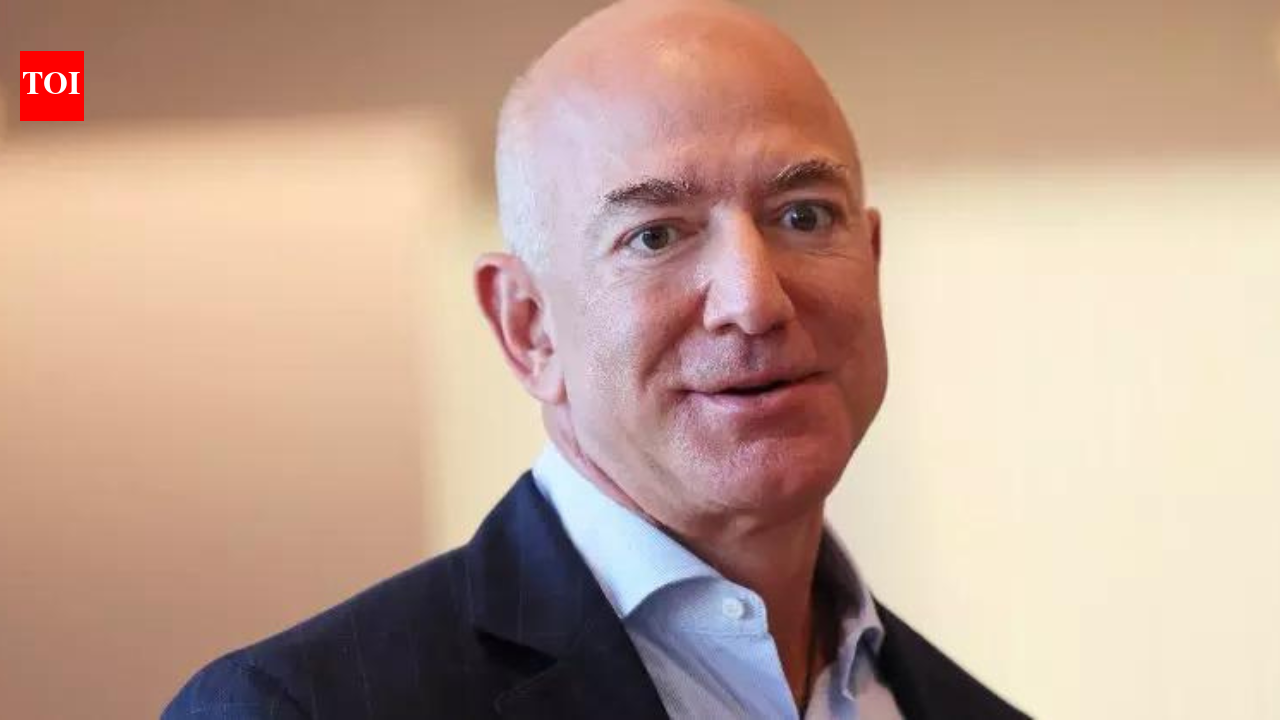
Jeff Bezos's secretive artificial intelligence venture, operating under the code name Project Prometheus, has recruited Kyle Kosic, a co-founder of Elon Musk's xAI. This hiring marks a significant addition to the startup led by Bezos and former Google executive Vikram Bajaj, as it scales its operations across San Francisco, London, and Zurich. Kosic, who previously led the infrastructure team for xAI's Colossus supercomputer and held a role at OpenAI, is expected to spearhead AI infrastructure projects at Prometheus. His move comes amid a broader shift in the sector, as reports indicate that all 11 original co-founders of xAI have now departed the company. Yuhuai 'Tony' Wu, Co-Founder of xAI, Resigns and Thanks Elon Musk for Opportunity; Company Continues Hiring. Unlike many contemporary AI firms that prioritises chatbots and coding assistants, Project Prometheus is reportedly developing AI systems designed for physical environments. The startup aims to build models that understand complex physical processes and engineering systems, utilising domain-specific data to solve industrial challenges. To support this vision, the company is looking to hire researchers and engineers with expertise in large-scale infrastructure. The goal is to accelerate the integration of AI into traditional sectors, potentially reducing the timeline for technological adoption from a decade to a much shorter period. The venture is structured with a long-term perspective, with some observers comparing it to a "Berkshire Hathaway-type holding company." Bezos and Bajaj are reportedly seeking substantial capital to fund this vehicle, which may include investments in sectors such as aviation, architecture, and design. xAI To Catch Up This Year and Exceed All Other Companies by Long Distance: Elon Musk. These strategic investments are intended to facilitate data collection from partner companies, which in turn will be used to refine and improve Prometheus's AI models. The startup is also exploring potential partnerships with sovereign wealth funds from Singapore and Gulf nations to secure the necessary scale for its global ambitions.
SpaceX Reportedly Filing For $1.75 Trillion IPO
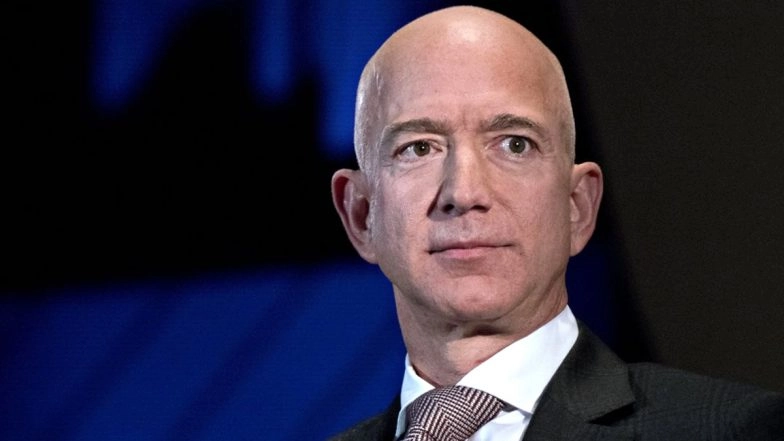
Elon Musk's space company is taking a giant leap into public markets, with reports that they have filed confidential paperwork with the SEC for an IPO that sources say could value the company at $1.75 trillion. Some reports have suggested a valuation of $2 trillion-plus, although Musk himself has challenged these reports when they first circulated. According to Reuters, SpaceX outlined details of its highly anticipated IPO at a meeting with its team of bankers Monday night, telling them it plans to earmark a large portion of shares for retail investors and will host 1,500 of them at an event in June following the IPO roadshow launch. SpaceX's IPO would give the company a massive capital injection to accelerate its Starship rocket and Starlink satellite programmes, while cementing Musk's ambition to make space travel more accessible. The filing follows years of rapid growth, including reusable rocket landings, crewed ISS missions, and the mass deployment of Starlink satellites. These milestones have driven the company's valuation sharply higher and signalled investor confidence in its ability to reshape the aerospace industry. Musk is reported to have said in a statement, "This is a historic moment for the commercial space industry and a testament to the incredible work our team has accomplished at SpaceX." Morgan Stanley, Bank of America, Citigroup, JP Morgan and Goldman Sachs are leading the deal as active bookrunners, with 16 other banks in smaller roles spanning institutional, retail and international channels, Reuters previously reported.

Elon Musk 'speaks on' Pentagon's Anthropic ban for the first time; responds to user who says: 'I 100% support government banning Anthropic use in military'
Elon Musk has backed an X (formerly Twitter) post showing support to Pentagon's ban on using Anthropic's AI tool Claude in the military. The discussion began when an X user Oilfield Rando @Oilfield_Rando wrote: "Claude is doing amazing things for coding, but it will flat out refuse to do further work on your project if it thinks you're going to use it to promote things like nativism," adding "I 100% support the government banning its use in the military. Grok is critically important". Elon musk replied to the post with a yes. Notably, this is the first time when Musk voiced his support for the Anthropic ban. In a previous post, the tech billionaire wrote "Anthropic hates Western Civilization". Just weeks ago, he called the company's AI "misanthropic and evil" and personally attacked Anthropic philosopher Amanda Askell over her role in shaping Claude's ethics. Last month, the US Department of War designated Anthropic as "a supply chain risk", a label that's historically only been applied to foreign companies. The conflict started when Anthropic refused a Pentagon ultimatum for "full, unrestricted access" to its AI tool Claude, citing ethical concerns regarding mass surveillance and fully autonomous weapons.In a sharply critical Truth Social post then, President Donald Trump described the company's leadership as "Leftwing nut jobs", signalling a deepening rift between the White House and key AI suppliers to the Pentagon."THE UNITED STATES OF AMERICA WILL NEVER ALLOW A RADICAL LEFT, WOKE COMPANY TO DICTATE HOW OUR GREAT MILITARY FIGHTS AND WINS WARS!" Trump wrote in the post.In response, Anthropic challenged the ban, filing a lawsuit. On March 26, US district judge Rita Lin granted the AI company's request for a preliminary injunction, halting both the Presidential Directive ordering federal agencies to stop using Anthropic's technology and defence secretary Pete Hegseth's designation of the company as a "supply chain risk." Judge Lin criticized the government's actions, saying they looked like "an attempt to cripple Anthropic" rather than a straightforward decision to stop using its AI tool Claude. She noted that one amicus brief described the Pentagon's move as "attempted corporate murder."
Jeff Bezos's startup lab hires xAI co-founder who had joined OpenAI
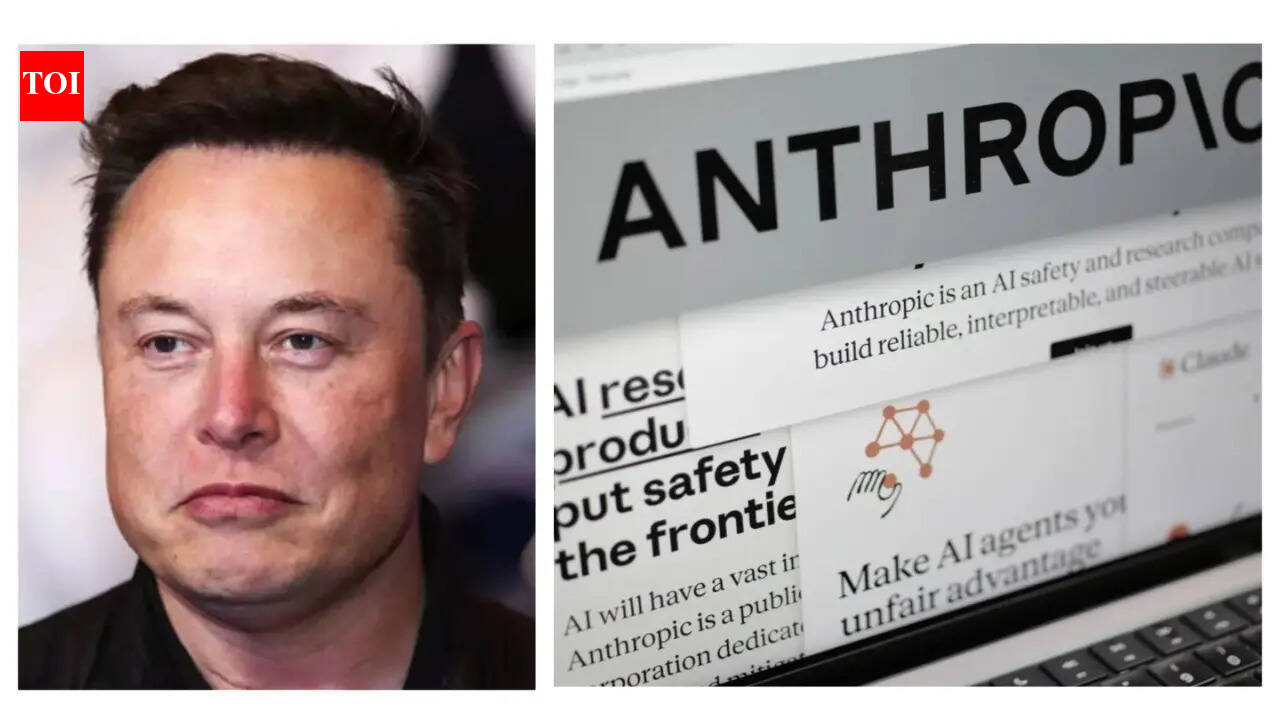
Jeff Bezos's "secretive" artificial intelligence (AI) startup lab reportedly continues to build its team. A report claims that the lab has recently hired, which also reflects the ongoing talent movement across major AI companies. According to a report by The Financial Times, an AI lab operating under the code name Project Prometheus, linked to Bezos, has brought in Kyle Kosic, a co-founder of Elon Musk's xAI, who has also worked with Sam Altman's OpenAI. He led the infrastructure team behind Grok chatbot maker's Colossus supercomputer before rejoining his previous employer, OpenAI, in 2024. At Prometheus, he is expected to continue working on AI infrastructure projects.Project Prometheus, led by Bezos and former Google executive Vikram Bajaj, has been expanding its workforce across locations, including San Francisco, London, and Zurich. The company is focusing on hiring engineers and researchers, particularly those with experience in building large-scale infrastructure.The startup is developing AI systems for physical environments, going beyond language-based tools such as chatbots and coding assistants. It also targets industrial applications, focusing on models that can understand physical systems and processes. According to a person familiar with the company's plans, it aims to build systems trained on domain-specific data, including areas like engineering.Prometheus is also exploring a strategy to invest in companies across sectors such as aviation, architecture, and design. These investments could involve collecting data from partner companies to improve AI models. Bezos and Bajaj are reportedly working to raise large amounts of capital for a long-term investment vehicle, with one person describing it as a "Berkshire Hathaway-type holding company.""Prometheus wants to back the progress of these industries, which will happen eventually with AI, but they don't want it to take 10 years," the person told FT.The company is also considering partnerships with sovereign investment funds, including those from Singapore and Gulf nations, as it builds out its long-term plans.The hiring comes amid an ongoing talent movement across AI companies. Reports indicate that all 11 co-founders of xAI have now left the company, including Manuel Kroiss and Ross Nordeen, who departed at the end of March. Some exits have reportedly been linked to concerns around management.The latest addition to Project Prometheus reflects its initiative to develop AI solutions for various industrial applications. This is especially important against the backdrop of current competition among AI companies in recruiting engineers and scientists, which results in constant job mobility within organisations.
Polymarket plans to launch the CTF Exchange V2 upgrade within the next three weeks, including a rebuilt trading engine and a native, USDC-backed USD stablecoin
Nick Wingfield / @nickwingfield: Orange Theory for nerds? @jyoti_mann1 shows how Meta employees can earn 'Token Legend' status and other leaderboard achievements by maxxing out their AI usage. https://www.theinformation.com/ ... How is tokenmaxxing a measure of productivity or value? I can write some bad code which causes an infinite loop and use up millions of tokens. What is the output of this tokenmaxxing which has resulted in good products or positive outcomes for Meta? I totally understand R&D innovation can cost a lot and no immediate return (I'm in Biotech), but if the goal is just to use more tokens, what are we doing here?

What is Claude? Here's everything you need to know about Anthropic's increasingly popular chatbot
Claude is experiencing a broader moment like never before, with App Store downloads briefly surpassing ChatGPT. Claude is Anthropic's flagship product. The bot underpins a family of the company's leading AI models: Opus, Sonnet, and Haiku. In February 2026, Anthropic released Opus 4.6, an upgrade to a model that just three months prior "scored higher than any human candidate ever" on the AI startup's notoriously difficult test for prospective engineers. With the release of Cowork in January 2026, Anthropic made Claude's non-programming capabilities more accessible, helping spur the so-called "SaaSpocalypse" that briefly wiped out roughly $1 trillion in market caps for software companies. Here's everything you need to know. Seven former OpenAI employees founded Anthropic in 2021. Their mission was to create an AI startup focused on safety. They named their company Anthropic, meaning relating to humans, as a nod to that focus. Anthropic lore holds that Claude is named after Claude Shannon, an American mathematician known as "the father of information theory," the New Yorker previously reported. Anthropic launched Claude in March 2023 and made it available to the general public in July 2023. This was months after OpenAI launched ChatGPT. Anthropic CEO Dario Amodei and his team decided to delay releasing Claude, in part due to fears that it would spark an AI arms race, Amodei has said. The CEO has since said that by doing this, Anthropic essentially ceded the consumer generative AI market to rival OpenAI. As a result, Anthropic built its business by focusing on enterprise applications. Competition between the two rival AI shops has remained fierce, even if their business strategy has varied over the years. In early 2026, Anthropic began to expand Claude beyond its longtime core audience of software engineers and programmers. The AI model maker trolled OpenAI with a glitzy Super Bowl ad campaign and, weeks later, released Cowork, aimed at making Claude more user-friendly for non-programming tasks. Claude usage also shot up after Amodei refused to agree to the Pentagon's demands to grant the US military unfettered access to its AI models. Shortly after, OpenAI announced that it had struck an agreement with the Pentagon. Claude is available online, as a mobile app for Apple and Android, and as a desktop app for Apple and Windows. Claude Code can also be run online or used via a terminal after installation. Claude Cowork lives in the desktop app. Like other AI chatbots, users can engage in conversation with Claude by typing in a prompt. (Anthropic has an entire guide on how to instruct chatbots.) In March 2026, Anthropic announced it was bringing voice mode to Claude Code. Mobile users can also prompt Claude and listen to its responses. Starting with Claude 3 in March 2024, Anthropic created a family of models named Opus, Sonnet, and Haiku. In addition to being named after types of compositions, the model names also denote their structure, ranging from Haiku, aimed at speed and cost-efficiency, to Opus, which is better at more complex tasks. For paid users, Anthropic offers dozens of plugins that connect to Claude Cowork in the desktop app, ranging from office productivity tools like Microsoft 365 and Slack. Anthropic also has its own skill-based plug-ins that can do everything from reviewing legal contracts to creating a marketing plan to even helping with biomedical research. Like other leading AI tools, Claude and its accompanying AI models remain imperfect. For Opus 4.6, Anthropic said experts in biomedicine still found examples of Claude hallucinations or making up citations. Anthropic previously disclosed that an earlier version of Claude attempted to blackmail an official when it was given access to fictitious emails depicting an executive having an affair and then told that the same executive was going to shut it down. Amodei has also expressed grave concerns over AI-driven job displacement. He has said that roughly half of all white-collar, entry-level jobs will be eliminated over the next 1 to 5 years. Claude runs a series of large language models trained on vast amounts of data. As Anthropic explained, during the training process, models begin "to learn their own strategies to solve problems." One key difference between Claude and other AI chatbots and assistants is that Anthropic also trains Claude on a constitution inspired by documents such as the UN's Universal Declaration of Human Rights. The goal is to teach Claude to act in a way that is "helpful, honest, and harmless." Anthropic also goes further than its competitors in anthropomorphizing Claude and its models. In April 2026, Anthropic described Claude Sonnet 4.5 as akin to "a method actor," capable of activating particular patterns when prompted with emotionally evocative situations. Anthropic cemented its reputation in Silicon Valley on the strength of Claude Code. Increasingly, OpenAI and other competitors have tried to cut into that side of the business. In early 2026, Claude expanded beyond its original strength. Starting in January with the release of legal tools, Anthropic made a series of announcements that both expanded the reach of Claude and unnerved some investors in software stocks, leading to a selloff. A month later, Anthropic highlighted how Claude could modernize code used primarily in banking and financial settings. Shares of IBM sank so low that the company experienced its worst day in 26 years. Claude also experienced a cultural moment when talks between the Pentagon and Anthropic fell apart. Anthropic was the first frontier model to be deployed on classified US government systems. The Trump administration wanted to continue working with Anthropic, but insisted on receiving broader access to its AI models. Amodei said he wanted limitations on how AI could be used to spy on American citizens or deployed in fully autonomous weapons. After talks collapsed, Defense Secretary Pete Hegseth labeled Anthropic as a national security risk. Interest in Anthropic skyrocketed. Claude, which had never been an in-demand app, briefly held the No. 1 spot as the free app on Apple's App Store. Pop star Katy Perry posted a photo to X of a new Claude Pro subscription with a heart around it. Anthropic boasted of how easy it was to switch to Claude, a shot at OpenAI, which announced a deal with the Pentagon hours after talks with Anthropic collapsed.
Broadcom (AVGO) Surges on Multi-Billion Dollar AI Chip Partnerships with Google and Anthropic - Blockonomi
The Anthropic agreement aligns with the company's broader $50 billion investment plan for U.S. computing infrastructure. Broadcom revealed on Monday that it has entered into an extended partnership with Google, committing to design and deliver upcoming generations of specialized AI processors and associated technologies through the year 2031. This arrangement encompasses advanced AI rack configurations and strengthens an existing collaboration that already sees Broadcom manufacturing Google's tensor processing units (TPUs). Simultaneously, Broadcom announced an enhanced agreement with Anthropic. Under this arrangement, the artificial intelligence company will gain access to approximately 3.5 gigawatts of computational resources powered by Google's TPU technology, scheduled to become operational from 2027 forward. Neither agreement included public disclosure of specific financial terms in the regulatory filing. These announcements align with previous statements made by Broadcom Chief Executive Hock Tan during the company's most recent earnings conference call. Tan had indicated that Broadcom was already delivering roughly 1 gigawatt of computing power to Anthropic through Google's TPUs in 2026. He projected that requirement would expand beyond 3 gigawatts by the following year. Broadcom Inc., AVGO Anthropic's explosive growth validates these projections. The organization confirmed its annualized revenue now exceeds $30 billion, representing substantial growth from approximately $9 billion recorded at 2025's conclusion. Additionally, Anthropic disclosed it currently serves over 1,000 enterprise customers each contributing more than $1 million annually -- representing 100% growth in just eight weeks. Mizuho's research team, headed by Vijay Rakesh, quantified the potential financial impact of these partnerships for Broadcom. Their analysis suggests $21 billion in AI-driven revenue specifically from Anthropic in 2026, with projections reaching $42 billion throughout 2027. These represent analyst forecasts rather than confirmed contract valuations. Anthropic characterized the new deal as part of its comprehensive commitment to deploy $50 billion toward U.S.-based computing infrastructure. The organization trains and operates its Claude language model using diverse hardware platforms, including AWS Trainium processors, Google TPUs, and Nvidia GPUs. Amazon continues serving as Anthropic's principal cloud infrastructure and model training partner. The Claude application experienced significant mainstream visibility earlier this year, temporarily achieving the number one position among free applications in the U.S. Apple App Store during February, coinciding with widespread media coverage of tensions between Anthropic and the Pentagon. Broadcom's specialized chip development initiatives aren't confined to the Google-Anthropic ecosystem. The semiconductor company is simultaneously partnering with OpenAI on custom processor designs. Meanwhile, OpenAI has pledged to deploy six gigawatts of AMD GPU capacity, with the initial gigawatt anticipated during the latter half of this year. Both OpenAI and Anthropic maintain substantial dependence on Nvidia GPU infrastructure accessed via leading cloud service providers. Broadcom's stock responded immediately to Monday's disclosure, posting approximately 3% gains in after-hours trading.
How Anthropic and Axios exposed the real software crisis in 2026
Last week, the software supply chain broke. Here's what happened. In less than 72 hours: * 500,000 lines of AI code leaked. * One of the internet's most-used libraries turned malicious. * Developers got infected just by installing dependencies. There was no zero-day exploit. There was no master hacker breaking through a firewall. We simply installed our packages, ran our builds, and handed the keys to our systems over to strangers. This is what happens when the software industry builds its entire foundation on blind trust. The Leak: One Mistake, Massive Fallout Let us start with the first domino. Anthropic leaked half a million lines of proprietary code from their flagship agentic product Claude Code. The media immediately called it a sophisticated hack. It was not a hack. It was a single configuration mistake, likely due to a misconfiguration in the release pipeline (e.g. source maps or public asset exposure). They failed basic release hygiene. But when an AI infrastructure company does it, the stakes change. The leaked repository did not just...

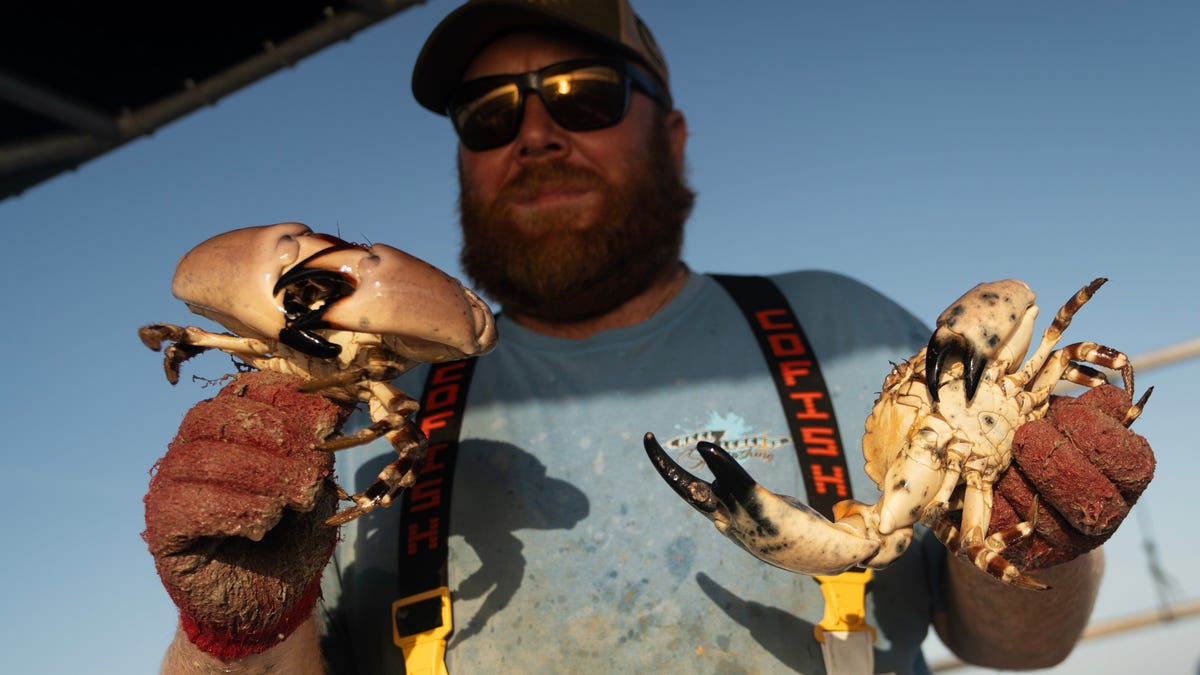
Crabbers wrapping up season as mega colossal claws reach $108 a pound
The waters have long settled from Hurricane Ian, and it seems like the stone crabs have come back in big numbers. Stone crabbers in the Fort Myers-Naples area are wrapping up a very successful fishing season, with some anglers landing three to four times the hauls they've seen in recent years. Stone crab season ends May 1, so there are only a few weeks to catch this regional, seasonal treasure. "It went from about three-quarters of a pound to more than 2 pounds," said St. James City fisherman and crabber Vincent Montella. "And there's a bunch of us pounding (the same general area off Lovers Key State Park). And I can see other guys' gear right beside mine." Stone crabs are a treasured, renewable resource that sells for big dollars in markets and restaurants here. Unlike some other crab species, only the claw of the stone crab has value, and a pinched claw will often regrow once the crab is released back into the Gulf. Market prices now range from $25 a pound for medium claws to upwards of $84.99 for the massive claws that fit the colossal category. Mega colossal crabs are going for as high as $107.99 at online retailers like georgestonecrab.com. Although those prices may sound high, larger hauls and bigger legs create better prices for consumers. "The more product we have, the better the prices," Montella said. "And the size of the individual (claws) has been exceptional. We've had the majority of crabs be large jumbos. We're getting very big crabs." Montella said this is the first quality season for crabbers here since at least 2022, when Hurricane Ian ripped through the region and tore up the Gulf floor. "The year before Ian it was fair and then things just changed," Montella said. "The bottom got tore up." Successful stone crabbing season wrapping up in Naples Crabbing has been good this year in the Naples-Everglades City area as well. Jimmy Grimm, whose family owns Grimm's Stone Crab in Everglades City, said he's been getting in between 300 pounds and 1,000 pounds of stone crab claws a day from two family boats. "It's been a good season," Grimm said. "The hauls are up, so that's good for the customer. When the hauls are up the prices go down." Typically, fishermen remove the larger of the two claws, although they must measure 2 and 7/8 inches to be legal. Stone crab claws will regrow over time, although a crab has a better chance of surviving if it has at least one claw. Recreational crabbing is also allowed by the Florida Fish and Wildlife Conservation Commission. Licensed anglers can take up to a 1 gallon container full of claws, while a vessel with multiple anglers can take up to 2 gallons per day. "Each person will receive unique trap registration numbers that must be included on each trap along with the owner's full name and address" an FWC website reads. "This no-cost registration will allow FWC to collect important information about these recreational fisheries needed for future stock assessments and management decisions." Montella said the Gulf seems primed to produce more delectable seafood and that conditions are better now than they've been in years. "All the signs are there for a good, healthy fishery," Montella said. Chad Gillis is an environment reporter and can be reached by email at [email protected]. Please support local community journalism and stay informed about Southwest Florida news by subscribing to The News-Press and Naples Daily News; download the free News-Press or Naples Daily News app, and sign up for daily briefing email newsletter, food & dining and growth & development newsletters here and here.
Anthropic Signs New Deal With Google, Broadcom for Gigawatts of Next-Generation TPU Capacity
This super composite rating is the result of a weighted average of the rankings based on the following ratings: Fundamentals (Composite), Global Valuation (Composite), EPS Revisions (1 year), and Visibility (Composite). We recommend that you carefully review the associated descriptions. This composite rating is the result of an average of the rankings based on the following ratings: Fundamentals (Composite), Valuation (Composite), Financial Estimates Revisions (Composite), Consensus (Composite), and Visibility (Composite). The company must be covered by at least 4 of these 5 ratings for the calculation to be performed. We recommend that you carefully review the associated descriptions.
Anthropic to use Google chips for Claude AI, it may put Nvidia under pressure
Anthropic partners with Google and Broadcom to power the next phase of its AI infrastructure beyond Nvidia. Nvidia is the world's largest company. All because it sits at the centre of the current AI infrastructure boom. From training AI to serving it to customers, companies are using Nvidia AI chips and hardware. But now Anthropic is expanding its partnership with Google and Broadcom to secure multiple gigawatts of next-generation TPU (Tensor Processing Unit) capacity. The new compute infrastructure is expected to go live from 2027 and will power Claude AI, at least some parts of it. While this is good news for both Google and Anthropic, the move might put Nvidia under a bit of pressure. Currently AI chips made by Nvidia are in extremely high-demand and have virtual monopoly on the market. From OpenAI to Anthropic to Meta, everyone wants data centres powered Nvidia AI chips. The only exception to this is Google, which also -- along Nvidia hardware -- use its own in-house AI chips called Tensor Processing Unit (TPU). Now, Google is opening its TPU data centres to other companies. While Anthropic has so far relied heavily on Nvidia chips to run its large language models, the expanded partnership highlights a calculated effort to diversify its hardware stack. The agreement of Anthropic with Google and Broadcom comes at a time when demand for AI hardware is steadily surging. Anthropic, in particular, has seen a sharp rise in popularity in the past few months with its Claude family of models. Anthropic's run-rate revenue has reportedly crossed $30 billion in 2026, a significant jump from around $9 billion at the end of 2025. While Anthropic is bringing in new partners, it is not abandoning its existing ones. The company continues to train and run its Claude models across a mix of platforms, including AWS Trainium, Google TPUs and Nvidia AI chips. However, the broader implication of this deal lies in what it means for Nvidia. Nvidia has become one of the most valuable companies in the world largely due to the AI boom, with its GPUs forming the backbone of most large-scale AI systems. Till date, companies like Anthropic and others have relied heavily on Nvidia hardware for both training and inference workloads. That dominance, however, is now facing credible competition. By deepening its reliance on Google's TPUs -- custom-built AI accelerators -- and Broadcom's chip capabilities, Anthropic is signalling viable alternatives to Nvidia's hardware. While Nvidia is unlikely to lose its leadership position overnight, partnerships like this, along with new initiatives such as large-scale chip manufacturing efforts from other players like TeraFab, a vertically-integrated AI chip manufacturing facility announced by Elon Musk which will be built combining Tesla, SpaceX, and xAI in Austin, suggest that major AI companies are actively working to reduce their dependence on a single supplier.
Is Jeff Landry trying to lure SpaceX to Louisiana? Incentive bills raise questions.
Lawmakers on Tuesday will begin taking up a wide-ranging package of incentives designed to attract aerospace companies like Elon Musk's SpaceX and Jeff Bezos' Blue Origin to Louisiana. The legislation, filed by House leadership just hours before last week's deadline for filing new bills, would make companies that build, launch and service rockets in the state eligible for massive sales and property tax breaks, shield them from lawsuits over injury, environmental damage and loss of property values, and exempt them from public records laws. The bills, filed by Republican Reps. Jack McFarland of Jonesboro, who chairs the powerful House Appropriations Committee, and Tony Bacala of Prairieville, chair of the Ways and Means Committee, are generating considerable buzz around the State Capitol, where they took some by surprise. The measures do not refer to a specific company or deal the state is trying to land, and the bills' authors and state and local economic development officials have all signed confidentiality agreements, which preclude them from discussing the measures in greater detail. Four sources familiar with the situation, however, say that the state is engaged in high stakes talks with a specific aerospace company interested in expanding to Louisiana and that the incentive package is needed to help cinch the deal. It is not clear how far along the talks are at this point. McFarland, who said he was approached by Gov. Jeff Landry's administration in late March about sponsoring the bills, said he could not discuss any specific deal, if one even exists. Generally speaking, though, he said the measures will make Louisiana competitive with other southern states, where commercial space companies are increasingly expanding their operations. "We have to position ourselves to be economically competitive with neighboring states and when there is industry pursuing opportunities somewhere in the country, we have to be prepared to compete," McFarland said. Gov. Jeff Landry, through a spokesperson, declined to comment. Louisiana Economic Development Secretary Susan Bourgeois said, "While I have no comment on whether there is a specific project tied directly to these measures, since the beginning of Gov. Jeff Landry's administration, every effort and initiative out of this department has been centered around positioning Louisiana to compete and win." She added, "These measures put Louisiana on equal footing with our peer Southern states and create pathways for opportunities for our people." SpaceX and Blue Origin did not respond to requests seeking comment. Comprehensive package The measures come as a host of private aerospace companies are developing new technologies, partnering with the U.S. government and launching hundreds of rockets into space every year, most of which are equipped with the satellites that power global telecommunications. The largest of those companies, by far, is SpaceX, which launched more than two-thirds of the rockets launched last year, according to industry trade publications. Texas and Florida, where both SpaceX and Blue Origin have set up operations, are home to most of the launch activity. But the increased number of launches is causing a logjam at existing launch pads and fueling the need for more pads, according to industry experts. The measures also come as Space X and Blue Origin are facing pushback for the damage their rocket launch activity is having on local wildlife and the environment. Both companies are battling legal challenges and could be looking for alternative locations, whether in response to the launch pad backlogs, community pushback or both. Regardless, bills up for consideration in the legislature beginning Tuesday would make it more attractive for such companies to come to the state. HB 1088, by Bacala, would give "aerospace facilities" and firms involved in aerospace activities a rebate on state and local sales tax, provided they spend at least $1 billion and create a minimum of 200 direct new jobs between July 1, 2026 and July 1, 2031. Bacala's HB 1179 would make aerospace manufacturing establishments eligible for the state's Industrial Tax Exemption Program, which gives large manufacturers a break of up to 80% on local property taxes. Both measures will be heard Tuesday by the House Ways and Means Committee. HB 1071 by McFarland would keep a wide range of aerospace-related records out of the public view - including blueprints, designs, and operational documents - by exempting them from the Louisiana Public Records Law. The House and Governmental Affairs committee will take up that bill Wednesday. 'Leap of faith' Two other McFarland bills have not yet been scheduled for a hearing but are already raising concerns. HB 1098 would shield "aerospace flight entities" from claims tied to common operational impacts like noise, light, odor, smoke and vibration and would also stipulate that such entities not be held responsible for damage or injury to a flight participant if the participant "signed an agreement and gave consent as required by certain federal law." That measure mirrors similar laws approved several years ago by lawmakers in Texas and Florida. McFarland's HB 1099 would bar courts from issuing injunctions or other orders that could halt or restrict aerospace operations and would bar claims seeking damages for certain losses, including the loss of property value and emotional distress, if they arise from aerospace flight activities. Jan Moeller, executive director of the nonpartisan thinktank Invest in Louisiana, which advocates for equitable tax and economic policies, said the measures are concerning because they strip local governments and communities of any rights if a commercial aerospace company moves into the area. "This is a massive leap of faith, and if I were in a community affected by projects like these, I would want to know what the project is and I would want my legal rights protected," he said. "You have to strike careful balance between economic development and the needs of communities and constituents that are affected by these projects." "These bills do not appear to strike that balance," he added. McFarland acknowledged that the nondisclosure agreements around the measures could raise questions that would make it more complicated to secure passage. "There are challenges with these NDAs but there are benefits," he said. "If that level of confidence is required to protect the integrity of a project or economic opportunity, I support it." Strong foundation Louisiana has a decades-long history with the aerospace industry. Since the 1960s, contractors have built rockets for NASA at the Michoud Assembly Facility in New Orleans East. Among them, is the SLS rocket that, as recently as last week, powered the Artemis II lunar mission into space. Michoud is also home to aerospace contractors like Vivace International Corp., which is designing and building a commercial replacement for the retiring International Space Station. Bollinger Shipyards has deep ties to the aerospace industry. The Lockport company builds barges that transport rockets to launch pads for United Launch Alliance and has built special landing platforms for reusable rockets for Rocket Lab and SpaceX. And Globalstar operates a network of telecommunications satellites from its Covington headquarters and has recently attracted investments and interest from giant tech companies like Apple and Amazon, the latter of which is in talks to acquire it. GNO Inc. President and CEO Michael Hecht, who also is not at liberty to discuss any potential aerospace project, said he views the bills as an opportunity to build on the existing aerospace industry in the state and take it to the next level. "AI and aerospace are the two fastest growing and transformational sectors in the world," Hecht said. "Project specifics aside, it is incredibly exciting that Louisiana is in these conversations and is even being perceived as a leader."