News & Updates
The latest news and updates from companies in the WLTH portfolio.
Broadcom Inks Twin Deals With Google and Anthropic
US semiconductor giant Broadcom has inked a five-year partnership with Google to develop the next generation of AI chips, and at the same time signed a new agreement with Anthropic to supply the frontier AI firm with the massive compute power it needs to train its Claude models. The three-way tie-up, detailed in a US securities filing, will see Broadcom supply custom Tensor Processing Units (TPUs) for Google's AI racks, while Anthropic will secure access to 3.5 gigawatts of TPU-based computing capacity through Broadcom starting from next year. The deal supports Anthropic's rapidly scaling operations, with the company reporting a run-rate revenue surpassing $30 billion, up from $9 billion at the end of 2025, as demand for its family of Claude models accelerates. According to Anthropic's figures, the appetite for its AI models has skyrocketed since the firm's highly public spat with the Pentagon in February, with the number of business customers projected to spend over $1 million more than doubling in less than two months. "We are building the capacity necessary to serve the exponential growth we have seen in our customer base while also enabling Claude to define the frontier of AI development," said Krishna Rao, CFO of Anthropic. "We are making our most significant compute commitment to date to keep pace with our unprecedented growth." The adoption of this expanded compute capacity is central to Anthropic's multi‑platform strategy, which blends Google's TPUs with Amazon's Trainium and Nvidia GPUs to boost performance for customers and reduce the firm's dependency on any single provider. However, the Broadcom agreement is conditional on the company's continued commercial success, with the chip firm on the hook for billions of dollars in compute infrastructure if the AI market contracts. Despite that get-out clause, for the moment, any lingering fears that the AI bubble will suddenly pop have not dampened Broadcom's confidence, with CEO Hock Tan saying in a recent earnings call that the partnership with Anthropic was "off to a very good start" this year in hitting 1 GW of TPU compute. As per reports from CNBC, analysts at Mizuho have estimated that Broadcom will pull in $21 billion in revenue from Anthropic this year alone, expected to double to $42 billion in 2027 as more capacity comes online. Broadcom is expecting big things from such partnerships, with the firm expecting AI revenue to grow 140% year on year over Q2'26, and the revenue from chips alone expected to pass $100 billion in 2027. That trajectory is thanks to Broadcom positioning itself at the centre of the AI ecosystem. Although not a household name, the firm has made deals to supply not only Google and Anthropic, but also Meta and OpenAI, which is expected to deploy 1 GW of XPU capacity next year.

Claude is having a moment. Meet the Anthropic chatbot capturing Wall Street's attention.
Claude is Anthropic's flagship product. The bot underpins a family of the company's leading AI models: Opus, Sonnet, and Haiku. In February 2026, Anthropic released Opus 4.6, an upgrade to a model that just three months prior "scored higher than any human candidate ever" on the AI startup's notoriously difficult test for prospective engineers. With the release of Cowork in January 2026, Anthropic made Claude's non-programming capabilities more accessible, helping spur the so-called "SaaSpocalypse" that briefly wiped out roughly $1 trillion in market caps for software companies. Here's everything you need to know. Seven former OpenAI employees founded Anthropic in 2021. Their mission was to create an AI startup focused on safety. They named their company Anthropic, meaning relating to humans, as a nod to that focus. Anthropic lore holds that Claude is named after Claude Shannon, an American mathematician known as "the father of information theory," the New Yorker previously reported. Anthropic launched Claude in March 2023 and made it available to the general public in July 2023. This was months after OpenAI launched ChatGPT. Anthropic CEO Dario Amodei and his team decided to delay releasing Claude, in part due to fears that it would spark an AI arms race, Amodei has said. The CEO has since said that by doing this, Anthropic essentially ceded the consumer generative AI market to rival OpenAI. As a result, Anthropic built its business by focusing on enterprise applications. Competition between the two rival AI shops has remained fierce, even if their business strategy has varied over the years. In early 2026, Anthropic began to expand Claude beyond its longtime core audience of software engineers and programmers. The AI model maker trolled OpenAI with a glitzy Super Bowl ad campaign and, weeks later, released Cowork, aimed at making Claude more user-friendly for non-programming tasks. Claude usage also shot up after Amodei refused to agree to the Pentagon's demands to grant the US military unfettered access to its AI models. Shortly after, OpenAI announced that it had struck an agreement with the Pentagon. Claude is available online, as a mobile app for Apple and Android, and as a desktop app for Apple and Windows. Claude Code can also be run online or used via a terminal after installation. Claude Cowork lives in the desktop app. Like other AI chatbots, users can engage in conversation with Claude by typing in a prompt. (Anthropic has an entire guide on how to instruct chatbots.) In March 2026, Anthropic announced it was bringing voice mode to Claude Code. Mobile users can also prompt Claude and listen to its responses. Starting with Claude 3 in March 2024, Anthropic created a family of models named Opus, Sonnet, and Haiku. In addition to being named after types of compositions, the model names also denote their structure, ranging from Haiku, aimed at speed and cost-efficiency, to Opus, which is better at more complex tasks. For paid users, Anthropic offers dozens of plugins that connect to Claude Cowork in the desktop app, ranging from office productivity tools like Microsoft 365 and Slack. Anthropic also has its own skill-based plug-ins that can do everything from reviewing legal contracts to creating a marketing plan to even helping with biomedical research. Like other leading AI tools, Claude and its accompanying AI models remain imperfect. For Opus 4.6, Anthropic said experts in biomedicine still found examples of Claude hallucinations or making up citations. Anthropic previously disclosed that an earlier version of Claude attempted to blackmail an official when it was given access to fictitious emails depicting an executive having an affair and then told that the same executive was going to shut it down. Amodei has also expressed grave concerns over AI-driven job displacement. He has said that roughly half of all white-collar, entry-level jobs will be eliminated over the next 1 to 5 years. Claude runs a series of large language models trained on vast amounts of data. As Anthropic explained, during the training process, models begin "to learn their own strategies to solve problems." One key difference between Claude and other AI chatbots and assistants is that Anthropic also trains Claude on a constitution inspired by documents such as the UN's Universal Declaration of Human Rights. The goal is to teach Claude to act in a way that is "helpful, honest, and harmless." Anthropic also goes further than its competitors in anthropomorphizing Claude and its models. In April 2026, Anthropic described Claude Sonnet 4.5 as akin to "a method actor," capable of activating particular patterns when prompted with emotionally evocative situations. Anthropic cemented its reputation in Silicon Valley on the strength of Claude Code. Increasingly, OpenAI and other competitors have tried to cut into that side of the business. In early 2026, Claude expanded beyond its original strength. Starting in January with the release of legal tools, Anthropic made a series of announcements that both expanded the reach of Claude and unnerved some investors in software stocks, leading to a selloff. A month later, Anthropic highlighted how Claude could modernize code used primarily in banking and financial settings. Shares of IBM sank so low that the company experienced its worst day in 26 years. Claude also experienced a cultural moment when talks between the Pentagon and Anthropic fell apart. Anthropic was the first frontier model to be deployed on classified US government systems. The Trump administration wanted to continue working with Anthropic, but insisted on receiving broader access to its AI models. Amodei said he wanted limitations on how AI could be used to spy on American citizens or deployed in fully autonomous weapons. After talks collapsed, Defense Secretary Pete Hegseth labeled Anthropic as a national security risk. Interest in Anthropic skyrocketed. Claude, which had never been an in-demand app, briefly held the No. 1 spot as the free app on Apple's App Store. Pop star Katy Perry posted a photo to X of a new Claude Pro subscription with a heart around it. Anthropic boasted of how easy it was to switch to Claude, a shot at OpenAI, which announced a deal with the Pentagon hours after talks with Anthropic collapsed.
Profit in the Chaos: How Smarter Procurement Shields Companies in Turbulent Times - Irish Tech News
For years, global supply chains were built on a simple premise: efficiency above all else. Companies stretched operations across continents, optimised for cost, and relied on predictability. That model held, until it didn't. Today, geopolitical instability has become a constant rather than an exception. Trade tensions, regional conflicts, shifting alliances, and regulatory fragmentation are no longer isolated shocks; they are recurring features of the global economy. For procurement teams, this has fundamentally changed their job. The challenge is no longer only about negotiating the best price. It's about navigating uncertainty in real time, understanding which suppliers are exposed to risk, which contracts may become unviable overnight, and where costs are quietly creeping in before they show up in financial reports. And yet, inside many organisations, procurement is still operating with limited visibility, making decisions using outdated, fragmented data. The reality on the ground is often far from the clean dashboards executives imagine. Supplier data sits in ERP systems that don't quite align with procurement platforms or processes. Contracts are buried in shared drives. Key decisions live in email threads or, worse, in someone's memory. Spreadsheets attempt to bridge the gaps, but quickly become outdated or inconsistent. In stable conditions, this fragmentation is inefficient. In unstable conditions, it becomes dangerous. When a geopolitical event disrupts a supplier, whether through sanctions, export controls, or currency volatility, the impact isn't neatly contained. It ripples across pricing, availability, and contractual obligations. Without a clear, connected view of procurement data, organisations are often left reacting after the damage is done. This is why procurement is quietly moving up the strategic agenda. Not because it's new, but because its importance is finally being recognised. In an environment where revenue growth is harder to predict, protecting margin becomes critical. And procurement is one of the few functions that can influence margin directly, without relying on market demand. A well timed renegotiation, better supplier consolidation, or simply identifying pricing inconsistencies can have an immediate financial impact. In some cases, savings generated through procurement decisions can rival the results of major sales initiatives, without the same level of risk or time investment. But to operate at that level, procurement needs something it has historically lacked: clarity. Over the past few years, a new category of tools has started to emerge, aimed at solving exactly this problem. Rather than adding another layer to an already crowded tech stack, these platforms focus on unifying procurement data, pulling together information from multiple systems and making it usable in a single environment. The shift here is subtle but important. It's less about automation for its own sake, and more about visibility. When procurement teams can see their data clearly, across suppliers, spend, and contracts, they can start to identify patterns. Supplier concentration risks become more obvious. Pricing anomalies stand out. Dependencies that were previously hidden begin to surface. In a volatile geopolitical climate with strong, unpredictable economic headwinds, that kind of visibility changes how decisions are made. Instead of reacting to disruptions, teams can anticipate them. Instead of broad, defensive cost-cutting measures, they can make targeted, informed adjustments. And instead of struggling to explain their impact, they can tie decisions directly to financial outcomes. Some platforms, such as Penny, are part of this shift, aiming to bring structure to what has traditionally been a fragmented function. By consolidating procurement data and creating a clearer line of sight across activity, they offer a way for teams to move faster and with more confidence, particularly when external conditions are anything but stable. What's notable is that this evolution isn't being driven solely by technology. It's being driven by necessity. As geopolitical uncertainty becomes embedded in the operating environment, the cost of not understanding your supply chain in detail is rising. Delays, price increases, and supplier failures are no longer edge cases; they are expected risks that need to be managed continuously. In that context, procurement's role starts to look very different. It becomes less about processing purchase orders and more about interpreting signals, economic, political, and operational and translating them into commercial decisions. It becomes a function that not only protects the business from downside risk, but actively contributes to financial performance. For companies that still view procurement as a back office activity, this shift can be easy to miss. The impact isn't always visible in a single headline metric. It shows up gradually, in better margins, fewer disruptions, and faster responses to change. But in an era where instability is the norm, those incremental advantages compound quickly. The organisations that come out ahead won't necessarily be the ones with the most diversified supply chains or the largest supplier networks. They'll be the ones that understand their procurement landscape, clearly and can act on that understanding before the next disruption hits. If the last 6 years are anything go by disruption isn't a bug, it's a feature. To connect with this articles author, Henry Joseph-Grant... click here More about Irish Tech News Irish Tech News are Ireland's No. 1 Online Tech Publication and often Ireland's No.1 Tech Podcast too. You can find hundreds of fantastic previous episodes and subscribe using whatever platform you like via our Anchor.fm page here: https://anchor.fm/irish-tech-news If you'd like to be featured in an upcoming Podcast email us at [email protected] now to discuss. Irish Tech News have a range of services available to help promote your business. Why not drop us a line at [email protected] now to find out more about how we can help you reach our audience. You can also find and follow us on Twitter, LinkedIn, Facebook, Instagram, TikTok and Snapchat.

Spacex Falcon 9 Rocket Launch Lights Up the Sky After Sunset
The spacex falcon 9 rocket launch turned a quiet evening sky into a moment many people noticed at once. Across Central California, the launch appeared as a towering white plume dotted with glowing spots, creating the kind of scene that briefly stops conversation and sends people outside to look up. What Happens When Clear Skies Meet a Twilight Launch? This launch stood out because of timing and visibility. SpaceX regularly launches rockets from Vandenberg Space Force Base about once a week, but this one drew extra attention because clear skies and a twilight launch just after sunset made the rocket visible across much of the Valley. At higher elevations, it was still catching sunlight, which helped produce the bright, unusual appearance in the sky. The rocket carried 25 Starlink satellites into low-Earth orbit. About two and a half minutes after launch, the rocket's first and second stages separated. The second stage continued into space, while the first stage returned to Earth and made a safe landing on a drone ship off the coast of Baja California, Mexico. What If the Strange Clouds Are Just the Aftermath? For some observers, the launch did not end when the rocket disappeared. The aftermath remained overhead in the form of unusual clouds, which were part of the successful mission. That lingering sky effect helped fuel the sense of surprise, especially for people who did not expect a launch to leave such a visible trail behind. The event also showed how a routine launch can become a shared visual moment when conditions align. In this case, the combination of a successful launch, a bright twilight sky, and widespread visibility meant that people in multiple areas could see the result. The spacex falcon 9 rocket launch was not unusual in its mechanics, but it was memorable in its appearance. What If the Launch Pattern Keeps Repeating? That pattern matters because launches like this are becoming familiar, yet they can still produce moments that feel extraordinary. When skies are clear and launch timing lines up with local light conditions, visibility can extend far beyond the launch site itself. The result is a spectacle that can be seen across a wide region, even if the mission itself follows a familiar sequence. What Should Readers Watch For Next? The main takeaway is that a single launch can carry both practical and public meaning. Practically, it placed 25 Starlink satellites into low-Earth orbit. Publicly, it reminded people that space activity can still produce unexpected scenes overhead, especially when the launch happens near sunset and weather cooperates. What comes next is less about mystery and more about pattern. If launches continue from Vandenberg at a steady pace, similar sights may keep appearing from time to time. The uncertainty is not whether launches will happen, but how often the sky conditions will turn them into visible events for people on the ground. For now, the spacex falcon 9 rocket launch is a clear example of how a routine mission can still reshape the evening view.

UBS Best Picks: These Leisure Stocks Could Surge Despite Global Chaos By Investing.com
Investing.com -- The Leisure sector, spanning hotels and gaming, remains relatively resilient despite heightened geopolitical uncertainty linked to the Middle East conflict. While elevated oil prices and macro volatility pose risks to global travel demand and consumer spending, structural factors such as diversified geographic exposure, asset-light models, and ongoing digital/AI integration provide important buffers. Within this context, UBS highlights selective opportunities where company-specific strengths can outweigh broader cyclical pressures. Accor (Hotels) Accor stands out as a defensive play within the hotel segment, supported by its asset-light business model and global diversification. Direct exposure to the Middle East is relatively limited (around 8-10%), reducing vulnerability to regional disruption. Importantly, historical trends suggest that geopolitical shocks tend to have only temporary effects on hotel demand, unless accompanied by a severe global downturn. Operationally, Accor is positioned to benefit from margin expansion through franchising and efficiency programs, while steady unit growth (~4%) supports medium-term revenue visibility. Additionally, strategic optionality, such as potential asset monetization and capital returns, adds further upside. The company is also integrating AI into pricing and customer experience, which could enhance revenue optimization over time. Lottomatica Group (Gaming) Lottomatica represents a high-conviction pick in gaming, driven by its strong balance sheet, disciplined leverage, and structural online growth. While gaming is inherently discretionary and sensitive to consumer income pressures, Lottomatica's exposure to fast-growing online segments provides a key offset to macro headwinds. The company is expected to generate robust cash flows, enabling meaningful shareholder returns while still deleveraging. Its positioning in less mature markets further supports sustained EBITDA growth, even in a softer economic backdrop. Compared to peers, Lottomatica trades at an attractive valuation, with a compelling free cash flow yield, suggesting potential for re-rating. This article was generated with the support of AI and reviewed by an editor. For more information see our T&C.
SpaceX launches Falcon 9 visible across San Diego skies deploying 25 Starlink satellites to orbit
On April 6, 2026, SpaceX carried out a Starlink mission using a Falcon 9 rocket. The launch placed 25 satellites into low-Earth orbit. It took place at 7:50 pm Pacific Time from Vandenberg Space Force Base in California. The mission followed a short delay caused by upper-level wind conditions, which required a shift from the original April 5 schedule. The operation forms part of an ongoing deployment programme aimed at expanding satellite-based internet coverage. Starlink remains the largest satellite constellation currently in operation, with continued launches planned to increase capacity and coverage.The mission was initially scheduled for April 5, 2026. Launch conditions were assessed before liftoff, and upper-level winds were identified as a constraint. As a result, the launch was postponed by one day. The revised launch window opened on April 6. At 7:50 pm PT, the Falcon 9 lifted off from Space Launch Complex 4 East at Vandenberg. The ascent phase proceeded according to standard flight parameters. No deviations were reported during liftoff or early flight.The first-stage booster used for this mission was on its first flight. After stage separation, the booster executed a controlled return sequence. It landed on the autonomous droneship Of Course I Still Love You, positioned in the Pacific Ocean. The landing was completed successfully. The launch involved placing 25 Starlink satellites into low-Earth orbit. After deployment, the satellites would take up their initial orbits and then move to their respective operational orbits. Starlink is a satellite network consisting of many satellites that will offer broadband internet services. There have been more than 10,000 satellites in space, and more will be sent out as the system expands.The satellite network aims to provide fast internet access over a broad geographic location.The launch was seen across portions of Southern California. People from places like San Diego have noticed a trail across the sky in the evenings as the rocket ascended. Visibility factors were affected by the timing of the launch, among other things. Launches at twilight times generally ensure good visibility because the sun is able to reflect light off the rocket plume.

Is Jeff Landry trying to lure SpaceX to Louisiana? Incentive bills raise questions.
Lawmakers on Tuesday will begin taking up a wide-ranging package of incentives designed to attract aerospace companies like Elon Musk's SpaceX and Jeff Bezos' Blue Origin to Louisiana. The legislation, filed by House leadership just hours before last week's deadline for filing new bills, would make companies that build, launch and service rockets in the state eligible for massive sales and property tax breaks, shield them from lawsuits over injury, environmental damage and loss of property values, and exempt them from public records laws. The bills, filed by Republican Reps. Jack McFarland of Jonesboro, who chairs the powerful House Appropriations Committee, and Tony Bacala of Prairieville, chair of the Ways and Means Committee, are generating considerable buzz around the State Capitol, where they took some by surprise. The measures do not refer to a specific company or deal the state is trying to land, and the bills' authors and state and local economic development officials have all signed confidentiality agreements, which preclude them from discussing the measures in greater detail. Four sources familiar with the situation, however, say that the state is engaged in high stakes talks with a specific aerospace company interested in expanding to Louisiana and that the incentive package is needed to help cinch the deal. It is not clear how far along the talks are at this point. McFarland, who said he was approached by Gov. Jeff Landry's administration in late March about sponsoring the bills, said he could not discuss any specific deal, if one even exists. Generally speaking, though, he said the measures will make Louisiana competitive with other southern states, where commercial space companies are increasingly expanding their operations. "We have to position ourselves to be economically competitive with neighboring states and when there is industry pursuing opportunities somewhere in the country, we have to be prepared to compete," McFarland said. Gov. Jeff Landry, through a spokesperson, declined to comment. Louisiana Economic Development Secretary Susan Bourgeois said, "While I have no comment on whether there is a specific project tied directly to these measures, since the beginning of Gov. Jeff Landry's administration, every effort and initiative out of this department has been centered around positioning Louisiana to compete and win." She added, "These measures put Louisiana on equal footing with our peer Southern states and create pathways for opportunities for our people." SpaceX and Blue Origin did not respond to requests seeking comment. Comprehensive package The measures come as a host of private aerospace companies are developing new technologies, partnering with the U.S. government and launching hundreds of rockets into space every year, most of which are equipped with the satellites that power global telecommunications. The largest of those companies, by far, is SpaceX, which launched more than two-thirds of the rockets launched last year, according to industry trade publications. Texas and Florida, where both SpaceX and Blue Origin have set up operations, are home to most of the launch activity. But the increased number of launches is causing a logjam at existing launch pads and fueling the need for more pads, according to industry experts. The measures also come as Space X and Blue Origin are facing pushback for the damage their rocket launch activity is having on local wildlife and the environment. Both companies are battling legal challenges and could be looking for alternative locations, whether in response to the launch pad backlogs, community pushback or both. Regardless, bills up for consideration in the legislature beginning Tuesday would make it more attractive for such companies to come to the state. HB 1088, by Bacala, would give "aerospace facilities" and firms involved in aerospace activities a rebate on state and local sales tax, provided they spend at least $1 billion and create a minimum of 200 direct new jobs between July 1, 2026 and July 1, 2031. Bacala's HB 1179 would make aerospace manufacturing establishments eligible for the state's Industrial Tax Exemption Program, which gives large manufacturers a break of up to 80% on local property taxes. Both measures will be heard Tuesday by the House Ways and Means Committee. HB 1071 by McFarland would keep a wide range of aerospace-related records out of the public view - including blueprints, designs, and operational documents - by exempting them from the Louisiana Public Records Law. The House and Governmental Affairs committee will take up that bill Wednesday. 'Leap of faith' Two other McFarland bills have not yet been scheduled for a hearing but are already raising concerns. HB 1098 would shield "aerospace flight entities" from claims tied to common operational impacts like noise, light, odor, smoke and vibration and would also stipulate that such entities not be held responsible for damage or injury to a flight participant if the participant "signed an agreement and gave consent as required by certain federal law." That measure mirrors similar laws approved several years ago by lawmakers in Texas and Florida. McFarland's HB 1099 would bar courts from issuing injunctions or other orders that could halt or restrict aerospace operations and would bar claims seeking damages for certain losses, including the loss of property value and emotional distress, if they arise from aerospace flight activities. Jan Moeller, executive director of the nonpartisan thinktank Invest in Louisiana, which advocates for equitable tax and economic policies, said the measures are concerning because they strip local governments and communities of any rights if a commercial aerospace company moves into the area. "This is a massive leap of faith, and if I were in a community affected by projects like these, I would want to know what the project is and I would want my legal rights protected," he said. "You have to strike careful balance between economic development and the needs of communities and constituents that are affected by these projects." "These bills do not appear to strike that balance," he added. McFarland acknowledged that the nondisclosure agreements around the measures could raise questions that would make it more complicated to secure passage. "There are challenges with these NDAs but there are benefits," he said. "If that level of confidence is required to protect the integrity of a project or economic opportunity, I support it." Strong foundation Louisiana has a decades-long history with the aerospace industry. Since the 1960s, contractors have built rockets for NASA at the Michoud Assembly Facility in New Orleans East. Among them, is the SLS rocket that, as recently as last week, powered the Artemis II lunar mission into space. Michoud is also home to aerospace contractors like Vivace International Corp., which is designing and building a commercial replacement for the retiring International Space Station. Bollinger Shipyards has deep ties to the aerospace industry. The Lockport company builds barges that transport rockets to launch pads for United Launch Alliance and has built special landing platforms for reusable rockets for Rocket Lab and SpaceX. And Globalstar operates a network of telecommunications satellites from its Covington headquarters and has recently attracted investments and interest from giant tech companies like Apple and Amazon, the latter of which is in talks to acquire it. GNO Inc. President and CEO Michael Hecht, who also is not at liberty to discuss any potential aerospace project, said he views the bills as an opportunity to build on the existing aerospace industry in the state and take it to the next level. "AI and aerospace are the two fastest growing and transformational sectors in the world," Hecht said. "Project specifics aside, it is incredibly exciting that Louisiana is in these conversations and is even being perceived as a leader."
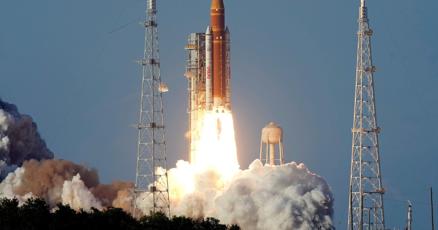
BA flight chaos as smoke fills cockpit and passengers left terrified
Read more: UK's best pizza restaurant hidden in market town less than hour from major city The plane had to abandon plans to head to Aberdeen Airportand emergency crews "lined the runway" as the plane came in to land at Heathrow. "It was very dramatic," the source added. Firefighters were reportedly seen waiting to board the plane as emergency services monitored the situation. The incident appeared less stressful than an event in August 2019, when smoke filled the cabin of a BA plane shortly before landing in Valencia. Passengers reported feeling terrified as they had to evacuate down emergency chutes. A statement from the airline said the Airbus A321 had "experienced a technical issue" as it approached Valencia from London Heathrow. Three passengers were taken to hospital and were since discharged.

UBS Best Picks: These Leisure Stocks Could Surge Despite Global Chaos By Investing.com
Investing.com -- The Leisure sector, spanning hotels and gaming, remains relatively resilient despite heightened geopolitical uncertainty linked to the Middle East conflict. While elevated oil prices and macro volatility pose risks to global travel demand and consumer spending, structural factors such as diversified geographic exposure, asset-light models, and ongoing digital/AI integration provide important buffers. Within this context, UBS highlights selective opportunities where company-specific strengths can outweigh broader cyclical pressures. Accor (Hotels) Accor stands out as a defensive play within the hotel segment, supported by its asset-light business model and global diversification. Direct exposure to the Middle East is relatively limited (around 8-10%), reducing vulnerability to regional disruption. Importantly, historical trends suggest that geopolitical shocks tend to have only temporary effects on hotel demand, unless accompanied by a severe global downturn. Operationally, Accor is positioned to benefit from margin expansion through franchising and efficiency programs, while steady unit growth (~4%) supports medium-term revenue visibility. Additionally, strategic optionality, such as potential asset monetization and capital returns, adds further upside. The company is also integrating AI into pricing and customer experience, which could enhance revenue optimization over time. Lottomatica Group (Gaming) Lottomatica represents a high-conviction pick in gaming, driven by its strong balance sheet, disciplined leverage, and structural online growth. While gaming is inherently discretionary and sensitive to consumer income pressures, Lottomatica's exposure to fast-growing online segments provides a key offset to macro headwinds. The company is expected to generate robust cash flows, enabling meaningful shareholder returns while still deleveraging. Its positioning in less mature markets further supports sustained EBITDA growth, even in a softer economic backdrop. Compared to peers, Lottomatica trades at an attractive valuation, with a compelling free cash flow yield, suggesting potential for re-rating. This article was generated with the support of AI and reviewed by an editor. For more information see our T&C.
Why Chaos Labs Just Walked Away From Managing Aave's Risk Operations - Blockonomi
The protocol confirms normal operations continue, with LlamaRisk expanding its role to ensure uninterrupted risk management. Chaos Labs has concluded its three-year engagement as the primary risk management partner for Aave, the leading decentralized lending protocol. This departure follows recent exits by other key contributors including ACI and BGD Labs, raising questions about contributor dynamics within the Aave ecosystem. In a statement posted on X, Chaos Labs founder Omer Goldberg announced the split, emphasizing that the decision "was not made in haste." He explained that despite working collaboratively with Aave's DAO contributors, the partnership structure ultimately failed to align with the firm's vision for proper risk management practices. Chaos Labs began its collaboration with Aave in November 2022, playing a critical role in managing risk exposure across the protocol's lending markets. Throughout this partnership, Aave experienced remarkable growth, with its total value locked surging from approximately $5 billion to more than $26 billion, all while avoiding significant bad debt incidents. The impending V4 protocol upgrade emerged as a primary friction point, according to Goldberg. He explained that the new version significantly expands risk management responsibilities, creating a situation where teams must simultaneously maintain both V3 and V4 systems during the migration period. "History suggests these transitions take months and even years," Goldberg stated. "The workload during the transition doesn't halve. It doubles." The financial terms proved equally problematic. Chaos Labs emphasized that even with Aave's offer to increase compensation to $5 million annually, the arrangement would still result in operational losses for the firm. Goldberg also highlighted growing concerns regarding legal exposure. He pointed out the absence of clear regulatory guidelines defining a risk manager's liability when protocol failures occur. "If things work, the work is invisible. If things break, the blame is not," he explained. These liability concerns gained relevance following a March 12 incident where a user suffered a $50 million loss through a transaction on Aave's interface. In response, Aave subsequently introduced an "Aave Shield" mechanism designed to restrict potentially dangerous trading activities. Aave Labs CEO Stani Kulechov presented an alternative narrative regarding the separation. According to Kulechov, Chaos Labs had requested exclusive risk provider status and advocated for replacing Chainlink's oracle infrastructure with its own solution. Aave's governance rejected both proposals. Kulechov emphasized the protocol's proven success with Chainlink's oracle system and expressed unwillingness to dismantle its dual-layer risk framework by eliminating LlamaRisk from the equation. Kulechov also indicated that Chaos Labs had been considering scaling back its risk consultancy operations even before formal separation discussions concluded. He assured the community that the transition has not affected Aave's smart contract functionality, asset listings, or blockchain network integrations. Moving forward, Aave plans to collaborate with LlamaRisk alongside internal teams to preserve comprehensive risk management capabilities. This development occurs as Aave maintains strong momentum. The protocol achieved a historic milestone in late February by surpassing $1 trillion in cumulative lending volume, marking a first for the decentralized finance sector.

Anthropic's revenue run rate jumps 230% to $30B
The company said the number of business clients spending over $1 million per year has doubled in less than two months. Back in February, during its Series G fundraising, Anthropic had reported 500 such customers. Now, that number has more than doubled to over 1,000. This rapid expansion of high-value enterprise customers has significantly contributed to the company's soaring run-rate revenue. Along with its financial growth, Anthropic has also signed a new deal with Google and Broadcom. The agreement secures multiple gigawatts of next-generation Tensor Processing Unit (TPU) capacity. Despite the expanded deal with Google and Broadcom, Anthropic has stuck to its multi-platform hardware strategy. The company continues to train and run Claude on a variety of AI hardware, including AWS Trainium, Google TPUs, and NVIDIA GPUs.

UBS Best Picks: These Leisure Stocks Could Surge Despite Global Chaos By Investing.com
Investing.com -- The Leisure sector, spanning hotels and gaming, remains relatively resilient despite heightened geopolitical uncertainty linked to the Middle East conflict. While elevated oil prices and macro volatility pose risks to global travel demand and consumer spending, structural factors such as diversified geographic exposure, asset-light models, and ongoing digital/AI integration provide important buffers. Within this context, UBS highlights selective opportunities where company-specific strengths can outweigh broader cyclical pressures. Accor (Hotels) Accor stands out as a defensive play within the hotel segment, supported by its asset-light business model and global diversification. Direct exposure to the Middle East is relatively limited (around 8-10%), reducing vulnerability to regional disruption. Importantly, historical trends suggest that geopolitical shocks tend to have only temporary effects on hotel demand, unless accompanied by a severe global downturn. Operationally, Accor is positioned to benefit from margin expansion through franchising and efficiency programs, while steady unit growth (~4%) supports medium-term revenue visibility. Additionally, strategic optionality, such as potential asset monetization and capital returns, adds further upside. The company is also integrating AI into pricing and customer experience, which could enhance revenue optimization over time. Lottomatica Group (Gaming) Lottomatica represents a high-conviction pick in gaming, driven by its strong balance sheet, disciplined leverage, and structural online growth. While gaming is inherently discretionary and sensitive to consumer income pressures, Lottomatica's exposure to fast-growing online segments provides a key offset to macro headwinds. The company is expected to generate robust cash flows, enabling meaningful shareholder returns while still deleveraging. Its positioning in less mature markets further supports sustained EBITDA growth, even in a softer economic backdrop. Compared to peers, Lottomatica trades at an attractive valuation, with a compelling free cash flow yield, suggesting potential for re-rating. This article was generated with the support of AI and reviewed by an editor. For more information see our T&C.
Polymarket USD at center as exchange overhaul
In a sweeping platform redesign, Polymarket is rolling out a native stablecoin called polymarket usd as part of a broader infrastructure upgrade for its prediction markets. The prediction market platform Polymarket, valued at more than $20 billion, is preparing a major upgrade to its core exchange infrastructure. The project will refresh its smart contracts, rebuild its order-matching system, and deploy a new collateral token to replace its current bridged stablecoin. The company outlined the modernization plan on X, noting that implementation will take place over the coming weeks. However, a precise launch date for the overhauled trading stack has not yet been disclosed, leaving users watching closely for further announcements. Moreover, the upgrade is designed to make the market more resilient and efficient for high-volume trading. By rebuilding critical components such as settlement logic and liquidity handling, the platform aims to support growth without compromising on security. At the heart of the redesign is Polymarket USD, a new collateral token that will replace USDC.e, the bridged derivative of Circle's USDC currently used on the platform. USDC.e works by locking USDC on the Ethereum mainnet and issuing a mirrored token on other chains, a model that depends heavily on bridge infrastructure. However, this bridge-based setup exposes users to additional risks tied to external smart contracts and cross-chain operators. By contrast, the new token keeps a full 1:1 backing with USDC while giving Polymarket direct control over settlement flows and custody arrangements on its venue. According to the team, the native stablecoin launch will not materially disrupt the average user's workflow. For most traders the migration will execute in the background, with only a single approval transaction required in the platform interface to authorize the new token. The infrastructure overhaul also brings in compatibility with EIP-1271, an Ethereum standard for contract-based signature validation. This change allows smart contract wallets, including multisignature wallets and automated trading setups, to sign and verify transactions natively on Polymarket. That said, the support for smart contract wallets is not just a convenience feature. It could open the door to more sophisticated market makers and algorithmic strategies that previously faced integration friction with the old signing model. In addition, the rebuilt trading stack is expected to enhance the performance of the matching engine and lower latency for order execution. While detailed benchmarks have not been shared, the move signals Polymarket's intent to compete with more established crypto derivatives venues on speed and reliability. Governance remains a separate but closely watched part of Polymarket's roadmap. In October 2025, the company's chief marketing officer publicly confirmed plans for a POLY token, though no launch timeline or technical documentation was provided at the time. The token is widely expected to power governance functions over market rules and dispute processes. Currently, Polymarket relies on a framework developed by UMA, where token holders vote to settle contested market outcomes based on submitted evidence and incentives. However, critics argue that UMA-style voting can encourage consensus rather than accuracy. In this model, large holders may steer results in their favor if economic incentives to conform outweigh incentives to be correct, raising concerns about potential manipulation in contentious markets. In a future design where Polymarket USD underpins trading and POLY oversees conflict resolution, governance would be more clearly separated from speculation. Traders could use the stablecoin for exposure to event outcomes, while POLY holders manage protocol parameters, oracle choices, and dispute adjudication. Polymarket's relationship with the United States market has also undergone a major shift. The platform halted access for U.S. users in 2022 amid regulatory pressure, effectively cutting off one of the world's largest pools of retail and professional traders from its markets. That changed after the platform obtained Commodity Futures Trading Commission registration in July 2025. The CFTC registration comeback cleared the way for Polymarket to re-establish regulated operations domestically, subject to ongoing compliance and reporting obligations. Following the approval, Polymarket announced plans to onboard brokers and clients across the U.S. and support trading through registered intermediaries. Moreover, the firm signaled that its long-term strategy relies on working inside existing derivatives rules instead of remaining in a regulatory gray area. Platform data indicates that Polymarket's fee revenue has been trending higher in recent weeks. The increase follows an expansion of the trading fee schedule, suggesting that volumes have remained robust despite the higher cost structure for participants. On the capital side, the company has attracted significant institutional support. Polymarket's valuation now exceeds $20 billion, with ICE -- parent of the NYSE -- completing a $600 million investment. This ice investment funding underscores Wall Street's interest in regulated prediction venues and alternative data sources. Moreover, the combination of new funding, a rebuilt infrastructure layer, and a streamlined stablecoin design positions the platform to compete aggressively in both crypto-native and traditional financial circles. The focus on regulatory alignment and technical robustness could further differentiate it from smaller, offshore prediction venues. As the bridged USDC migration to the new token unfolds, Polymarket will be watched closely by traders, regulators, and competitors. The initiative is not only a technical refresh but also a test of how prediction markets can scale under stricter compliance expectations. That said, success will depend on smooth execution of the upgrade, clear communication around POLY's eventual role, and continued growth of on-platform liquidity. If these elements align, Polymarket could set a template for how on-chain event markets operate at institutional scale. In summary, the combination of a revamped exchange engine, a native collateral token, and a regulated U.S. footprint marks a pivotal phase in Polymarket's evolution, with long-term implications for the broader prediction market ecosystem.

UBS Best Picks: These Leisure Stocks Could Surge Despite Global Chaos By Investing.com
Investing.com -- The Leisure sector, spanning hotels and gaming, remains relatively resilient despite heightened geopolitical uncertainty linked to the Middle East conflict. While elevated oil prices and macro volatility pose risks to global travel demand and consumer spending, structural factors such as diversified geographic exposure, asset-light models, and ongoing digital/AI integration provide important buffers. Within this context, UBS highlights selective opportunities where company-specific strengths can outweigh broader cyclical pressures. Accor (Hotels) Accor stands out as a defensive play within the hotel segment, supported by its asset-light business model and global diversification. Direct exposure to the Middle East is relatively limited (around 8-10%), reducing vulnerability to regional disruption. Importantly, historical trends suggest that geopolitical shocks tend to have only temporary effects on hotel demand, unless accompanied by a severe global downturn. Operationally, Accor is positioned to benefit from margin expansion through franchising and efficiency programs, while steady unit growth (~4%) supports medium-term revenue visibility. Additionally, strategic optionality, such as potential asset monetization and capital returns, adds further upside. The company is also integrating AI into pricing and customer experience, which could enhance revenue optimization over time. Lottomatica Group (Gaming) Lottomatica represents a high-conviction pick in gaming, driven by its strong balance sheet, disciplined leverage, and structural online growth. While gaming is inherently discretionary and sensitive to consumer income pressures, Lottomatica's exposure to fast-growing online segments provides a key offset to macro headwinds. The company is expected to generate robust cash flows, enabling meaningful shareholder returns while still deleveraging. Its positioning in less mature markets further supports sustained EBITDA growth, even in a softer economic backdrop. Compared to peers, Lottomatica trades at an attractive valuation, with a compelling free cash flow yield, suggesting potential for re-rating. This article was generated with the support of AI and reviewed by an editor. For more information see our T&C.
SpaceX launch dazzles California sky, did you see it?
A SpaceX Falcon 9 rocket carrying 25 Starlink satellites launched from Vandenberg Space Force Base Monday evening, creating a glowing spectacle visible across San Diego and Central California. A twilight launch that turned heads A SpaceX Falcon 9 rocket sent residents across Southern California and the Central Valley stepping outside Monday evening to find something unusual overhead. A towering white plume, glowing and dotted with bright spots, climbed slowly across the sky. For those who had not heard about the launch, the sight prompted a flood of questions. For those who had, it was simply SpaceX doing what it does almost every week. The rocket lifted off from Space Launch Complex 4 East at Vandenberg Space Force Base near Lompoc shortly after 8 p.m., carrying 25 Starlink satellites into low-Earth orbit. The launch had originally been scheduled for Sunday evening but was delayed due to weather conditions. Residents in Santa Barbara, San Luis Obispo and Ventura counties were warned ahead of time that they might hear one or more sonic booms as the rocket passed overhead. Why this one stood out SpaceX launches from Vandenberg roughly once a week, but Monday's flight was particularly visible. Clear skies across the region, combined with the timing of the launch just after sunset, created conditions that made the rocket unusually easy to spot. At higher elevations, the booster was still catching sunlight even as the ground below had gone dark, sending a bright, swirling column of exhaust across the sky that lingered long after the rocket climbed out of view. Photos and videos poured in from residents up and down the California coast, capturing the white trail from vantage points in Oceanside, San Marcos, Mission Beach and communities throughout the Central Valley. Under the right lighting conditions, Starlink satellites can appear in a slow-moving train as they cross the night sky, and Monday's launch offered some of the clearest viewing in recent memory. How the SpaceX flight unfolded About two and a half minutes after liftoff, the rocket's first and second stages separated. The second stage continued carrying the satellites toward orbit while the first stage turned back toward Earth, landing safely on a drone ship stationed in the Pacific Ocean off the coast of Baja California, Mexico. Booster recovery has become routine for SpaceX, though the precision of each landing still draws admiration from those watching live. The 25 satellites added Monday join a constellation that now numbers more than 10,000 in orbit, making Starlink the largest satellite network ever assembled. Orbiting approximately 340 miles above Earth, the system is designed to deliver high-speed, low-latency internet service to users around the globe, and SpaceX continues expanding it at a near-weekly pace. A familiar sight with an unfamiliar glow For communities near Vandenberg and across Central California, SpaceX launches have become a regular feature of the night sky. Most pass without much fanfare. Monday's was different. The combination of clear air, a post-sunset launch window and the rocket's angle of ascent produced a display that felt anything but routine to the thousands of people who stopped to look up. SpaceX offered a live stream of the launch for those who wanted to follow along in real time. Many in the region found their own backyard provided a better view.

Anthropic signs new deal with Google and Broadcom to scale next-generation TPU capacity - TechAfrica News
The new capacity is expected to come online starting in 2027 and will support growing global demand for Anthropic's frontier AI systems. Anthropic has expanded its infrastructure partnership with Google and Broadcom through a new agreement for multiple gigawatts of next-generation TPU capacity, as the company moves to scale compute infrastructure for its Claude AI models. The new capacity is expected to come online starting in 2027 and will support growing global demand for Anthropic's frontier AI systems. The company said the expansion marks a significant step in its long-term infrastructure strategy. "This groundbreaking partnership with Google and Broadcom is a continuation of our disciplined approach to scaling infrastructure: we are building the capacity necessary to serve the exponential growth we have seen in our customer base while also enabling Claude to define the frontier of AI development. We are making our most significant compute commitment to date to keep pace with our unprecedented growth." - Krishna Rao, CFO, Anthropic Anthropic said demand for Claude has accelerated sharply in 2026, with run-rate revenue now surpassing $30 billion, up from about $9 billion at the end of 2025. The company also noted that the number of enterprise customers spending over $1 million annually has grown from more than 500 in February to over 1,000 today. The majority of the new compute infrastructure will be located in the United States, extending Anthropic's earlier commitment to invest $50 billion in strengthening American computing capacity. The partnership builds on existing work with Google Cloud, including TPU capacity expansions announced last year, as well as Anthropic's ongoing relationship with Broadcom. The company also continues to rely on a multi-cloud strategy, using AWS Trainium, Google TPUs, and NVIDIA GPUs to distribute workloads across different hardware platforms. Anthropic said Amazon Web Services remains its primary cloud provider and training partner, including work on Project Rainier. The company added that Claude remains the only frontier AI model available across Amazon Web Services, Google Cloud, and Microsoft Azure.

Cracks Show at Aave as Chaos Labs Becomes Latest Exit
Aave now relies on LlamaRisk during V4 rollout while facing governance and operational challenges. Chaos Labs, the long-time risk management partner for Aave, is stepping away from the protocol -- an unexpected move that's turning heads across DeFi. The decision, shared in an Apr. 6 governance forum post, is the latest high-profile exit from Aave DAO and raises fresh questions about alignment, operations and what comes next as Aave prepares for its V4 upgrade. Chaos Labs' Tenure and Sudden Exit Since November 2022, Chaos Labs has played a central role in Aave's risk operations. The firm priced every loan, managed parameters across V2 and V3 markets across multiple networks, and supported the protocol's growth from $5.2 billion to over $26 billion in total value locked (TVL). During that time, Aave processed more than $2.5 trillion in deposits and $2 billion in liquidations -- with no material bad debt. Chaos Labs also built custom Risk Oracles that enabled real-time parameter updates, strengthening Aave's reputation for reliability during volatile market conditions. The decision to exit was proactive rather than sudden. In its forum announcement, Chaos Labs cited a "fundamental misalignment" in risk management philosophy. It pointed to three main factors behind its decision. First, the exit of other core contributors increased both workload and operational risk. Second, Aave's V4 architecture, which features a hub-and-spoke model, isolated markets, and new liquidation logic, introduced significant complexity that Chaos Labs neither designed nor fully supported. Third, the engagement had operated at a loss for three years, even with proposed budget increases. The firm said continuing to subsidize Aave's risk operations was not viable. Chaos Labs also raised broader concerns around institutional adoption. Aave's conservative risk framework has historically attracted regulated participants, but shifting priorities could weaken that positioning over time. Despite negotiations, including an offer from Aave Labs to double its budget to $5 million. However, the firm concluded that the terms no longer met the standards required to support Aave's scale. While expressing pride in its work, Chaos Labs said continuing under current conditions -- either under-resourced or at a loss -- was not sustainable. A Pattern of Contributor Exits Chaos Labs is not the first team to step away from Aave. In February 2026, BGD Labs, the group behind much of Aave's core engineering, said it would exit in April. A month later, the Aave Chan Initiative (ACI), a key contributor to governance and business development, announced plans to wind down by July. Together, these teams handled a significant share of development, governance and treasury operations. Their departures have fueled concerns about a potential contributor vacuum during Aave's V4 transition. The exits come amid a challenging period for the protocol. In March, a misconfiguration in the Collateral Asset Price Oracle (CAPO) caused a 2.85% undervaluation of wstETH collateral, triggering around $27 million in unintended liquidations across 34 accounts. While affected users were compensated, the incident raised concerns about oracle reliability. At the same time, governance tensions have been building. Disputes over transparency, self-voting on major budget proposals and resource allocation have added friction within the DAO. The timing adds pressure. Aave V4, launched on Ethereum in late March, introduced a new architecture designed to improve capital efficiency and risk isolation. But the transition requires careful oversight as V3 and V4 operate in parallel -- just as key contributors are leaving. Market sentiment has reflected the uncertainty. The AAVE token has seen increased volatility, alongside broader DeFi pressures and a separate $50 million-plus slippage event that, while functioning as designed, further tested confidence. What This Means for Aave and DeFi Aave founder Stani Kulechov responded swiftly on X, thanking Chaos Labs for their contributions. Kulechov confirmed that there would be no disruption to smart contracts, asset listings, or deployments. LlamaRisk, the other risk manager, will assume expanded responsibilities, supported by Aave Labs' engineering resources. The protocol will maintain its two-layer risk model to avoid vendor lock-in. The wave of exits underscores the challenges DAOs face in scaling while retaining talent and alignment. Aave remains a DeFi cornerstone with strong fundamentals, but the coming months, marked by V4 migration and governance transitions, will test its resilience. For users seeking stable lending options, the focus remains on protocol security and community-driven improvements. As one of the most battle-tested platforms, Aave's ability to adapt could reinforce its "Just Use Aave" ethos -- or signal deeper structural shifts in DeFi governance. [internal-linking title="Top Trending Crypto Articles" url1="https://www.ccn.com/crypto-exchanges/" text1="Check Out Our Recommended Exchanges Here" label1="Best Exchanges" url2="https://www.ccn.com/how-to-buy-crypto-with-credit-card/" text2="How To Buy Crypto with a Credit Card Now" label2="Buy Crypto Fast" url3="https://www.ccn.com/crypto-gambling/" text3="See Our Picks for the Best Crypto Gambling Sites" label3="Safe Crypto Gambling"
Anthropic Overtakes OpenAI in Revenue, Hitting $30 Billion Run Rate
A remarkable shift has taken place in the competition among major AI companies: Anthropic, developer of the AI assistant Claude, has overtaken OpenAI in annualized revenue. While Anthropic reports a run-rate revenue of over 30 billion US dollars, OpenAI states its own figure at around 24 to 25 billion US dollars per year (2 billion US dollars per month). The decisive difference lies in strategic focus: Anthropic consistently targets the enterprise business, while OpenAI has traditionally aimed at end consumers with ChatGPT. The figures Anthropic has published are impressive. At the end of 2025, the company's annualized revenue was still around 9 billion US dollars. Since then, that figure has more than tripled. Particularly striking is the growth in the large-customer segment: when Anthropic announced its Series G funding round in February 2026, the company counted over 500 enterprise customers each spending more than 1 million US dollars per year. Today, there are already more than 1,000 such customers -- a doubling in less than two months. OpenAI is also posting impressive growth figures. As a technology platform, the company reached 10 million and subsequently 100 million users faster than any other company. Within one year of ChatGPT's launch, OpenAI generated revenue of 1 billion US dollars; by the end of 2024, it was already 1 billion US dollars per quarter. Today, monthly revenue stands at 2 billion US dollars. OpenAI claims to be growing its revenue four times faster than the companies that defined the internet and mobile era, including Alphabet and Meta. The key difference, however, lies in the customer structure. OpenAI's growth is strongly driven by the mass-market product ChatGPT, which is aimed at consumers. Anthropic, by contrast, has focused on enterprise customers and API usage from the very beginning -- that is, on companies that integrate Claude into their own products and processes. To secure further growth, Anthropic has concluded a far-reaching infrastructure agreement with Google and Broadcom covering several gigawatts of next-generation computing capacity. The new TPU capacities are set to come online incrementally from 2027 onward and will be located predominantly in the United States. This is an extension of the commitment announced in November 2025 to invest 50 billion US dollars in American AI infrastructure. Anthropic operates its models on a broad hardware base, including AWS Trainium, Google TPUs, and NVIDIA GPUs. Amazon remains the primary cloud provider and training partner. Claude is also the only frontier AI model available on all three major cloud platforms: Amazon Web Services (Bedrock), Google Cloud (Vertex AI), and Microsoft Azure (Foundry). That Anthropic would overtake OpenAI in revenue was already predicted by Epoch AI back in February 2026, with an estimated timeframe of around mid-2026. Now, however, it has happened even earlier.

Britain Rolls Out the Red Carpet for Anthropic After Pentagon Blacklisting
The UK government is wooing the Claude maker with offers ranging from expanded London offices to a dual stock listing -- all while the AI company battles its own government in court. Key Takeaways: * Britain has prepared proposals for Anthropic that include expanded London offices and a potential dual stock listing, to be pitched during CEO Dario Amodei's visit in late May. * The U.S. government blacklisted Anthropic and labeled it a national-security supply-chain risk after the company blocked military use of Claude for surveillance and autonomous weapons. * A U.S. judge has temporarily halted the blacklisting, and Anthropic has a second lawsuit pending over the supply-chain risk designation. Britain sees an opening, and it's moving fast. The UK government is actively courting Anthropic -- the San Francisco company behind the AI assistant Claude -- with a package of incentives designed to deepen the firm's footprint on British soil. The timing is no accident. Anthropic is locked in an escalating dispute with the U.S. Defense Department after refusing to let the military deploy Claude for surveillance or autonomous weapons systems. The Financial Times reported Sunday that British government proposals for Anthropic span from a bigger London office to a dual stock listing. The newspaper cited people familiar with the plans. Prime Minister Keir Starmer's office has personally backed the effort, and officials plan to present the pitch directly to CEO Dario Amodei during a visit expected in late May. The backdrop to all this is remarkable. Washington blacklisted Anthropic and slapped it with a national-security supply-chain risk designation -- a severe penalty usually reserved for foreign adversaries, not American startups. Anthropic's offense? Declining to let the U.S. military use Claude for surveillance programs or autonomous weapons platforms. The legal battle is far from settled. A federal judge stepped in to temporarily block the blacklisting, giving Anthropic breathing room while it fights back. The company also has a second lawsuit pending that directly challenges the supply-chain risk label. For Britain, the situation creates a rare chance to lure a top-tier AI company closer. The UK has been aggressively positioning itself as a welcoming home for AI firms, and Anthropic's friction with the Pentagon hands London a recruitment pitch that practically writes itself: Come build here. We won't punish you for having ethical red lines. If Amodei accepts the offer -- or uses it as leverage in negotiations back home -- remains to be seen. But Britain is clearly betting that AI companies pushed away by Washington's defense priorities might find a friendlier landing strip across the Atlantic.

Microsoft-Backed OpenAI, Google, Anthropic Reportedly Team Up to Block Chinese AI Data Theft
This super composite rating is the result of a weighted average of the rankings based on the following ratings: Fundamentals (Composite), Global Valuation (Composite), EPS Revisions (1 year), and Visibility (Composite). We recommend that you carefully review the associated descriptions. This composite rating is the result of an average of the rankings based on the following ratings: Fundamentals (Composite), Valuation (Composite), Financial Estimates Revisions (Composite), Consensus (Composite), and Visibility (Composite). The company must be covered by at least 4 of these 5 ratings for the calculation to be performed. We recommend that you carefully review the associated descriptions.