News & Updates
The latest news and updates from companies in the WLTH portfolio.
Anthropic signs biggest compute deal yet with Google and Broadcom as run rate hits $30bn | TNW
In short: Anthropic has agreed to access approximately 3.5 gigawatts of next-generation Google TPU compute capacity via Broadcom from 2027, its largest infrastructure commitment to date -- while simultaneously disclosing that its revenue run rate has surpassed $30bn, more than tripling from roughly $9bn at the end of 2025. Anthropic has announced it is securing multiple gigawatts of next-generation compute capacity through a new agreement with Google and Broadcom, while disclosing revenue growth figures that underscore why the AI lab now requires infrastructure at a scale that would have seemed implausible two years ago. The deal, announced on 6 April 2026, gives Anthropic access to approximately 3.5 gigawatts of Google tensor processing unit (TPU) capacity via Broadcom starting in 2027, building on the 1 gigawatt already being supplied to the company in 2026. Krishna Rao, Anthropic's chief financial officer, described it as "our most significant compute commitment to date," adding that the agreement represents a continuation of the company's "disciplined approach to scaling infrastructure." The majority of the new capacity will be located in the United States, extending Anthropic's November 2025 commitment to invest $50bn in American AI computing infrastructure. The announcement is as much about Broadcom as it is about Anthropic or Google. Under the new arrangement, Broadcom acts as the intermediary layer between Google's custom silicon and Anthropic's training and inference workloads. In parallel, Broadcom has signed a separate long-term agreement with Google to design and supply future generations of custom TPU chips, and a supply assurance agreement to provide networking and other components for Google's next-generation AI data racks through 2031. This makes Broadcom an increasingly indispensable node in the AI infrastructure graph. The chipmaker, led by CEO Hock Tan, is not building AI models; it is building the silicon and the interconnects on which AI models are built. Broadcom shares rose approximately 3% in extended trading on the announcement, a reaction that reflects investor appetite for companies positioned at the physical layer of the AI stack rather than the application layer on top of it. Analysts at Mizuho, led by Vijay Rakesh, estimated that Broadcom would record $21bn in AI revenue from Anthropic in 2026 alone, rising to $42bn in 2027, figures that, even as projections, illustrate the financial weight of what is being committed. Broadcom had first signalled the scale of its Anthropic relationship in September 2025, when Hock Tan disclosed during an earnings call that a mystery customer had placed a $10bn order for custom TPU racks. In December 2025, he confirmed the customer was Anthropic, and that an additional $11bn order had since followed. The April 2026 announcement is the third act of the same story: a partnership that has now graduated from a reported $21bn commitment to multi-gigawatt infrastructure with a defined delivery timeline. The compute deal is intelligible only against the backdrop of Anthropic's commercial growth. The company says its run-rate revenue has now exceeded $30bn, up from approximately $9bn at the end of 2025. That trajectory -- more than a threefold increase in roughly three months, is the result of a compounding enterprise sales motion that accelerated sharply after Anthropic closed its Series G funding round on 12 February 2026. That round raised $30bn at a post-money valuation of $380bn, led by GIC and Coatue, and co-led by D.E. Shaw Ventures, Dragoneer, Founders Fund, ICONIQ, and MGX. When the Series G closed, Anthropic reported that more than 500 business customers were each spending over $1m on an annualised basis. As of the April announcement, that number has exceeded 1,000, doubling in less than two months. The pace of enterprise adoption is the proximate cause of the compute expansion: more revenue requires more inference capacity, more inference capacity requires more training compute, and more training compute requires more gigawatts. What distinguishes Anthropic's infrastructure approach from many of its peers is an explicit multi-vendor chip strategy. Claude is trained and served across three hardware platforms: Amazon's Trainium chips, Google's TPUs, and Nvidia GPUs. Anthropic says Claude is the only frontier model available on all three major cloud platforms, AWS, Google Cloud, and Microsoft Azure, a claim that carries commercial as well as technical significance. The multi-vendor stance gives Anthropic both resilience and negotiating leverage. If capacity is constrained on any single platform, workloads can shift. If one chipmaker faces supply disruption, export controls, or pricing pressure, Anthropic is not exposed to the full force of that shock. The strategy has precedent: Microsoft's own AI models reflect a similar instinct to hedge against single-vendor dependence, though in Microsoft's case the hedge is against a partner rather than a hardware supplier. The AWS relationship remains foundational. In late 2024, Anthropic named Amazon its primary cloud and training partner, with total Amazon investment reaching $8bn. Project Rainier, an Anthropic supercomputer cluster running roughly 500,000 Amazon Trainium 2 chips in Indiana, is expected to scale beyond one million Trainium 2 chips by the end of 2025. The Google relationship, which now extends through the new Broadcom deal to multi-gigawatt scale in 2027, sits alongside this rather than replacing it. The April deal is framed explicitly as an extension of Anthropic's November 2025 domestic infrastructure pledge: a $50bn commitment to American AI computing infrastructure, developed initially in partnership with Fluidstack, the UK-based neocloud operator, with data centre sites in Texas and New York coming online through 2026. The new Broadcom capacity, the majority of which will be US-based, expands that footprint into 2027 and beyond. This domestic emphasis is not incidental. The Trump administration's AI Action Plan has explicitly targeted US-based compute capacity as a strategic priority, and Anthropic, like its peers, has positioned its infrastructure investments accordingly. Whether that alignment reflects sincere strategic conviction or tactical regulatory positioning -- or both -- the practical effect is the same: a substantial share of the world's next-generation AI training capacity is being locked into American geography. The Anthropic-Google-Broadcom announcement is a data point in a pattern that has been building for 18 months. SoftBank's $40bn bridge loan to fund its OpenAI commitment reflected the same underlying dynamic: AI labs have grown so fast that their compute requirements now exceed what can be financed from revenue alone, requiring financial engineering at a scale once reserved for infrastructure utilities. Meta's $27bn infrastructure deal with Nebius reflects a parallel logic at the hyperscaler level. The compute arms race is also reshaping how AI companies manage their relationships with the services built on top of their models. Anthropic has been attentive to this: the company recently moved to restrict access to Claude via certain third-party frameworks, a decision that illustrated how the cost dynamics of frontier model inference are forcing AI labs to make difficult choices about which use cases they subsidise and which they price explicitly. For Broadcom, the trajectory is simpler: a chipmaker that was not widely discussed in the context of AI two years ago is now a load-bearing element of the infrastructure on which two of the world's most consequential AI models, Google's Gemini and Anthropic's Claude -- are built and served. That position, cemented through 2031 for Google's custom silicon and through the new multi-gigawatt agreement for Anthropic's TPU access, is the real story beneath the headline numbers. Nvidia remains the dominant force in AI accelerators, and firms like Nvidia's enterprise AI platform continues to expand its reach. But Broadcom's rise as the custom silicon partner of choice for hyperscale AI compute is one of the defining semiconductor industry shifts of this decade.
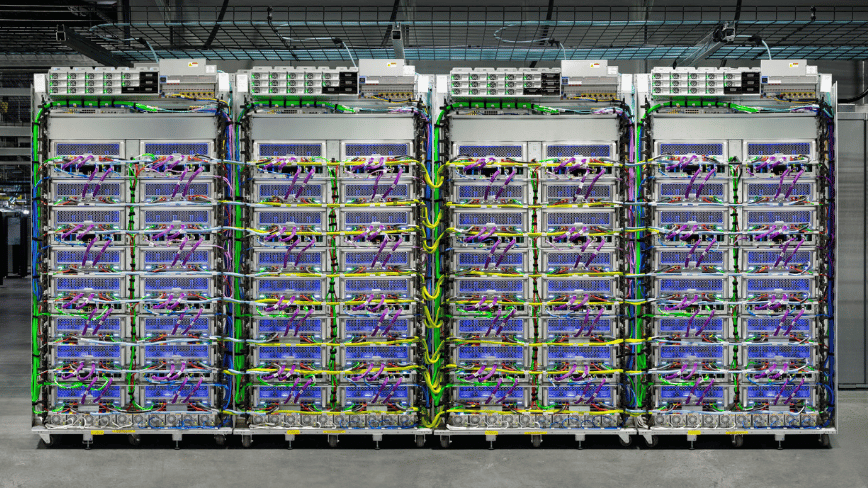
Anthropic Revenue Soars to $30B, Signs Major Google TPU Deal
Anthropic's run-rate revenue surpassed the USD 30 billion threshold, marking a substantial increase from the approximately USD 9 billion reported at the close of 2025, according to the company. "Demand from Claude customers has accelerated in 2026. Our run-rate revenue has now surpassed $30 billion--up from approximately $9 billion at the end of 2025," Anthropic said in a statement. The company noted that the surge in revenue followed an acceleration in demand from Claude customers throughout 2026. As per the company, the number of business clients spending over USD 1 million on an annualized basis doubled. While Anthropic reported 500 such customers during its Series G fundraising in February, "today that number exceeds 1,000, doubling in less than two months." This financial growth coincided with the signing of a new agreement with Google and Broadcom to secure multiple gigawatts of next-generation Tensor Processing Unit (TPU) capacity. "This significant expansion of our compute infrastructure will power our frontier Claude models and help us serve extraordinary demand from customers worldwide," Anthropic said in a statement. "This ground breaking partnership with Google and Broadcom is a continuation of our disciplined approach to scaling infrastructure: we are building the capacity necessary to serve the exponential growth we have seen in our customer base while also enabling Claude to define the frontier of AI development," said Krishna Rao, CFO of Anthropic. "We are making our most significant compute commitment to date to keep pace with our unprecedented growth." The vast majority of the new compute capacity was slated for placement within the United States. This move represented an expansion of the company's November 2025 commitment to invest USD 50 billion in American computing infrastructure. The arrangement also deepened existing collaborations with Google Cloud, building on TPU capacity increases previously announced in October. Despite the expanded deal with Google and Broadcom, Anthropic maintained its multi-platform hardware approach. The firm continued to train and run Claude on a range of AI hardware, including AWS Trainium, Google TPUs, and NVIDIA GPUs. The company stated that this diversity of platforms allowed for better performance and greater resilience for customers who depended on the model for critical work. "Amazon remains our primary cloud provider and training partner, and we continue to work closely with AWS on Project Rainier," the company said. Claude also maintained its position as the only frontier AI model available to customers across the three largest cloud platforms: Amazon Web Services (Bedrock), Google Cloud (Vertex AI), and Microsoft Azure (Foundry).

Jim Cramer Says SpaceX IPO Needs 'No Lock-Ups' To Avoid A Dangerous $3 Trillion Open - Tesla (NASDAQ:TSLA
Wall Street is bracing for a historic wave of mega-IPOs, and CNBC's Jim Cramer is sounding the alarm. He warns that the highly anticipated public debut of SpaceX could drain capital from the broader market unless structural precautions are taken to prevent an artificial price squeeze. Fearing The $3 Trillion Gorilla SpaceX confidentially filed its S-1 on April 1, targeting a valuation between $1.75 trillion and $2 trillion ahead of a potential June listing. However, Cramer fears overwhelming retail and institutional demand, combined with limited initial share offerings, could lead to disastrous market mechanics. "I am very worried about the amount of supply stemming from SpaceX, OpenAI and Anthropic," Cramer posted on X on Tuesday. "They really need to be spaced out and we will need no lock-ups so SpaceX won't open at $3 trillion." On Mad Money, Cramer elaborated that "bulls are killed by excess stock supply." If underwriters offer only a 5% sliver of the company to the public, the ensuing frenzy could skyrocket SpaceX's market cap, forcing the S&P 500 into an unprecedented rebalancing that draws hundreds of billions of dollars away from existing equities. The 'Musk Swap' Threatens Tesla "Tesla's about to lose that scarcity value," Cramer noted, arguing that SpaceX's growth story -- anchored by its recurring Starlink broadband revenue -- will eclipse Tesla's slowing core auto business. This aligns with recent bearish sentiment from Wall Street, including JPMorgan's recent "sell" rating on Tesla. A Thanksgiving Feast For Investors SpaceX isn't the only heavyweight entering the arena. With OpenAI, valued at around $852 billion, and Anthropic at $380 billion, industry experts echo Cramer's concerns about market absorption. Venture capitalist Chamath Palihapitiya recently likened the 2026 IPO pipeline to a Thanksgiving dinner, warning that after investors gorge themselves on SpaceX, the market's capital appetite for subsequent offerings may completely vanish. Disclaimer: This content was partially produced with the help of AI tools and was reviewed and published by Benzinga editors. Photo courtesy: Shutterstock Market News and Data brought to you by Benzinga APIs To add Benzinga News as your preferred source on Google, click here.

OpenAI, Google, Anthropic Unite Against Rising AI Copy Threat in China
Concerns rise over economic losses and risks from models lacking safety safeguards In a rare show of collaboration, leading artificial intelligence firms OpenAI, Anthropic, and Google have joined forces to address growing concerns over unauthorized AI model replication, particularly by Chinese competitors. The companies are working together through the Frontier Model Forum, a nonprofit initiative established in 2023 alongside Microsoft, to detect and counter 'adversarial distillation' a practice that could undermine both innovation and security in the global AI race.

SpaceX details IPO schedule; retail demand expected to break records - report (SPACE:Private)
SpaceX (SPACE) provided details of its IPO during a Monday night meeting with its bankers, indicating that a significant portion of shares will be allocated to retail investors and that it plans to host 1,500 of them at a June SpaceX plans to allocate a significantly larger share to retail investors than typical IPOs, potentially up to 30%, making it a bigger retail component than any IPO in history. SpaceX will host a major event for 1,500 retail investors and include retail investors from multiple countries, signaling high engagement and inclusiveness. SpaceX's proposed allocation for retail investors could reach 30%, far exceeding the usual 5-10% in most IPOs.
Anthropic's cloud deal with Google and Broadcom highlights energy rivalry with Bitcoin miners
Bitcoin miners are diversifying, leasing capacity to AI firms as operating pressures grow. Artificial intelligence startup Anthropic has unveiled a sweeping new agreement with Google and Broadcom to secure multiple gigawatts of next-generation TPU (Tensor Processing Unit) computing capacity, set to come online in 2027. Announcing what it calls the most pivotal investment in its history, Anthropic stated that its annual revenues are on track to surge from $9 billion by the end of 2025 to a projected $30 billion, underscoring the escalating financial stakes in the AI sector. ContentsThe competition for energy infrastructure intensifiesMiners pursue new revenue streamsThe competition for energy infrastructure intensifies The relentless demand for artificial intelligence technologies has triggered a direct contest over energy infrastructure, pitting AI developers against Bitcoin miners. Both industries are finding themselves vying for limited resources such as grid access, land use permits, cooling investments, and inexpensive electricity, driving up competition in the energy market. According to data from the University of Cambridge, global Bitcoin mining operations consistently consume between 13 and 25 gigawatts of electricity. Anthropic's move to secure several gigawatts in a single agreement highlights the voracious energy appetite of major AI firms and underscores the intensifying pressure facing crypto miners as they compete for the same infrastructure. Beyond Anthropic, OpenAI is also making headlines by leveraging recent investments to expand its operations, distributing its workload across five cloud service providers and four chip platforms. These expansive infrastructure plans have made the AI sector one of the fastest-growing sources of electricity demand in the United States. Miners pursue new revenue streams Rising energy costs and competitive pressures are beginning to squeeze the profitability of Bitcoin mining. In response, companies like Core Scientific have repurposed a significant share of their capacity for artificial intelligence services through agreements such as the one with CoreWeave. Meanwhile, miners like Iris Energy and Hut 8 have increased their revenues from data centers geared toward high-performance computing and AI workloads. In a sign of shifting strategies, firms including Riot Platforms, MARA Holdings, and Genius Group collectively sold more than 19,000 Bitcoins last week alone, suggesting that maintaining operations under current price and difficulty levels is an uphill battle. For a miner, income derived from one gigawatt of capacity can swing widely based on Bitcoin's price and network difficulty. By contrast, leasing that same capacity to an AI company generally offers a steady, contractually-defined cash flow, lending greater financial predictability in uncertain markets. As power prices increase and mining difficulty intensifies, leasing energy capacity to AI companies can sometimes prove more lucrative than engaging in direct mining operations, prompting miners to reevaluate their business models and seek out more stable income sources. Anthropic revealed that, within just two months, the number of customers paying over $1 million annually for its Claude product grew from 500 to more than 1,000. Still, Bitcoin mining has not faded into obscurity. The total computing power of the Bitcoin network continues to set new benchmarks, recently surpassing one zetahash per second, emphasizing the field's technical endurance even as economic pressures mount. Looking ahead, the focus for surviving miners may increasingly shift away from self-operated electricity production. Instead, leveraging their existing low-cost energy infrastructure to serve both AI companies and Bitcoin transactions could become the optimal path for adapting to an evolving digital economy. You can follow our news on Telegram, Facebook & CoinmarketcapDisclaimer: The information contained in this article does not constitute investment advice. Investors should be aware that cryptocurrencies carry high volatility and therefore risk, and should conduct their own research.

Business News | Anthropic Revenue Surges to USD 30 Billion; Secures Major TPU Deal with Google and Broadcom | LatestLY
Get latest articles and stories on Business at LatestLY. Anthropic's run-rate revenue surpassed the USD 30 billion threshold, marking a substantial increase from the approximately USD 9 billion reported at the close of 2025, according to the company. New Delhi [India], April 7 (ANI): Anthropic's run-rate revenue surpassed the USD 30 billion threshold, marking a substantial increase from the approximately USD 9 billion reported at the close of 2025, according to the company. "Demand from Claude customers has accelerated in 2026. Our run-rate revenue has now surpassed $30 billion--up from approximately $9 billion at the end of 2025," Anthropic said in a statement. Also Read | Middle East Conflict: Saudi Arabia-Bahrain Bridge Shut Amid Iranian Threats As Donald Trump's Deadline Nears. The company noted that the surge in revenue followed an acceleration in demand from Claude customers throughout 2026. As per the company, the number of business clients spending over USD 1 million on an annualized basis doubled. While Anthropic reported 500 such customers during its Series G fundraising in February, "today that number exceeds 1,000, doubling in less than two months." This financial growth coincided with the signing of a new agreement with Google and Broadcom to secure multiple gigawatts of next-generation Tensor Processing Unit (TPU) capacity. Also Read | France Gold Reserves Shift: Banque de France Repatriates Holdings, Books 12.8 Billion Euros Gain. "This significant expansion of our compute infrastructure will power our frontier Claude models and help us serve extraordinary demand from customers worldwide," Anthropic said in a statement. "This ground breaking partnership with Google and Broadcom is a continuation of our disciplined approach to scaling infrastructure: we are building the capacity necessary to serve the exponential growth we have seen in our customer base while also enabling Claude to define the frontier of AI development," said Krishna Rao, CFO of Anthropic. "We are making our most significant compute commitment to date to keep pace with our unprecedented growth." The vast majority of the new compute capacity was slated for placement within the United States. This move represented an expansion of the company's November 2025 commitment to invest USD 50 billion in American computing infrastructure. The arrangement also deepened existing collaborations with Google Cloud, building on TPU capacity increases previously announced in October. Despite the expanded deal with Google and Broadcom, Anthropic maintained its multi-platform hardware approach. The firm continued to train and run Claude on a range of AI hardware, including AWS Trainium, Google TPUs, and NVIDIA GPUs. The company stated that this diversity of platforms allowed for better performance and greater resilience for customers who depended on the model for critical work. "Amazon remains our primary cloud provider and training partner, and we continue to work closely with AWS on Project Rainier," the company said. Claude also maintained its position as the only frontier AI model available to customers across the three largest cloud platforms: Amazon Web Services (Bedrock), Google Cloud (Vertex AI), and Microsoft Azure (Foundry). (ANI) (The above story is verified and authored by ANI staff, ANI is South Asia's leading multimedia news agency with over 100 bureaus in India, South Asia and across the globe. ANI brings the latest news on Politics and Current Affairs in India & around the World, Sports, Health, Fitness, Entertainment, & News. The views appearing in the above post do not reflect the opinions of LatestLY)
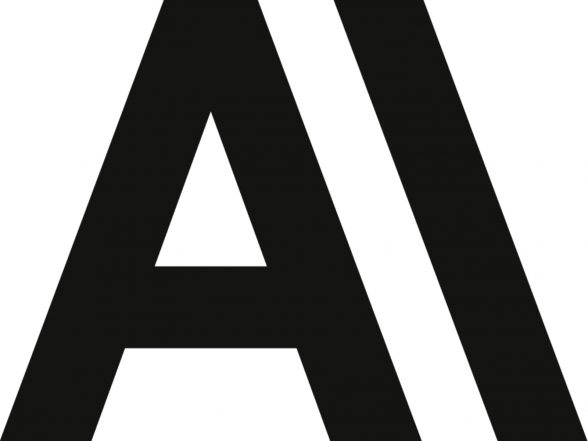
SpaceX's IPO Could Be a 'Netscape Moment' for the Space Economy
SpaceX's IPO could become the largest public offering ever, as the aerospace firm targets a valuation of $2 trillion. Following the news, shares of Rocket Lab (RKLB), Planet Labs (PL), and AST SpaceMobile (ASTS) all jumped sharply. Interestingly, this market reaction suggests that a SpaceX listing could benefit not just the company itself but the entire industry by changing how investors view space-related businesses. In fact, some analysts believe this moment could be similar to the early days of the internet. Speaking to Yahoo Finance, Chad Anderson, the CEO of Space Capital, compared the potential SpaceX IPO to Netscape's 1995 listing, which helped turn the internet into a serious investment category. In the same way, a public SpaceX could give institutional investors a clear benchmark for valuing the space economy. As a result, this could attract more capital and change the perception of space from a niche, high-risk area to a more established and important part of the global economy. Many experts also believe that this could lead to a "re-rating" of the entire space sector, which would result in higher valuations and more investments. Glen Anderson of Rainmaker Securities noted that space is increasingly being seen as critical infrastructure that covers areas like communications, defense, and data. In addition, the IPO could encourage more private space companies to go public, as they look to follow SpaceX and take advantage of renewed investor interest in the sector. Turning to Wall Street, out of the three stocks mentioned above, analysts think that RKLB stock has the most room to run. In fact, RKLB's average price target of $86.92 per share implies 28.1% upside potential.

Anthropic in Talks to Invest $200 Million in New Private-Equity Venture
Anthropic is planning to invest $200 million in a new venture with major private-equity firms that aims to sell AI tools to their portfolio companies, continuing a push for business customers. General Atlantic, Blackstone, and Hellman & Friedman are among the private-equity firms in discussions to back the project, people familiar with the matter said. The startup is in talks to raise $1 billion for the effort including Anthropic's planned contribution, the people said.

SpaceX IPO faces volatility risk on potential lock-up easing
SpaceX's long-anticipated initial public offering is gaining momentum for a potential June debut, with investor attention increasingly focused on a possible easing of lock-up restrictions that could affect early share price stability. According to industry sources on Sunday, the US aerospace company recently submitted IPO-related documents confidentially to the US Securities and Exchange Commission, allowing it to proceed with the listing process while limiting early disclosure of financial details. A key point of market focus is whether SpaceX will allow existing shareholders to sell shares from the first day of trading. Typically, pre-IPO investors are subject to a 180-day lock-up period, during which share sales are restricted to prevent excessive volatility. However, SpaceX is reportedly considering allowing partial sales by existing shareholders at listing, raising concerns that early selling pressure could weigh on initial price formation. Market participants say the company's limited free float could amplify those risks. SpaceX is expected to release less than 5 percent of its total shares to the public -- a relatively low level compared with typical large-cap IPOs. If early sales by existing shareholders are permitted alongside such a constrained supply, the interaction between limited float and additional sell orders could increase volatility during the initial trading phase, analysts said. Recent changes to Nasdaq's index inclusion rules are also seen as a potential factor. The exchange has eased requirements to allow newly listed large-cap companies to be added to major indices within 15 days of listing. Some market observers warn that if index-tracking funds begin allocating capital before sufficient liquidity is established, it could distort price discovery in the early stages of trading. While expectations for a June listing are building, the exact timing remains uncertain. Some market speculation has linked the potential debut to symbolic dates, including the June 28 birthday of SpaceX founder Elon Musk or even coinciding with astronomical events such as a planetary alignment, according to foreign media reports. As anticipation builds, investors are closely watching how the company balances liquidity, valuation and market stability in what could become one of the most closely scrutinized IPOs in recent years.
SpaceX to targets retail investors in IPO, sources say
New York | SpaceX outlined details of its highly anticipated IPO at a meeting with its team of bankers on Monday night (Tuesday AEST), telling them it plans to earmark a large portion of shares for retail investors and will host 1500 of them at an event in June following the IPO roadshow launch, according to two people familiar with the matter. "Retail is going to be a critical part of this and a bigger part than any IPO in history," chief financial officer Bret Johnsen said during the virtual meeting, the two people said, asking not to be identified because the discussion was private.
Anthropic's run-rate revenue skyrockets past USD 30 billion mark
Anthropic's run-rate revenue has surged past USD 30 billion, up from USD 9 billion in 2025. This growth is driven by accelerating demand from Claude customers, with the number of business clients spending over USD 1 million annually doubling.Massive Revenue Growth Anthropic's run-rate revenue surpassed the USD 30 billion threshold, marking a substantial increase from the approximately USD 9 billion reported at the close of 2025, according to the company. Add Asianet Newsable as a Preferred Source "Demand from Claude customers has accelerated in 2026. Our run-rate revenue has now surpassed $30 billion--up from approximately $9 billion at the end of 2025," Anthropic said in a statement. Accelerated Customer Adoption The company noted that the surge in revenue followed an acceleration in demand from Claude customers throughout 2026. As per the company, the number of business clients spending over USD 1 million on an annualized basis doubled. While Anthropic reported 500 such customers during its Series G fundraising in February, "today that number exceeds 1,000, doubling in less than two months." Strategic Partnership to Expand Compute Power This financial growth coincided with the signing of a new agreement with Google and Broadcom to secure multiple gigawatts of next-generation Tensor Processing Unit (TPU) capacity. "This significant expansion of our compute infrastructure will power our frontier Claude models and help us serve extraordinary demand from customers worldwide," Anthropic said in a statement. "This ground breaking partnership with Google and Broadcom is a continuation of our disciplined approach to scaling infrastructure: we are building the capacity necessary to serve the exponential growth we have seen in our customer base while also enabling Claude to define the frontier of AI development," said Krishna Rao, CFO of Anthropic. "We are making our most significant compute commitment to date to keep pace with our unprecedented growth." The vast majority of the new compute capacity was slated for placement within the United States. This move represented an expansion of the company's November 2025 commitment to invest USD 50 billion in American computing infrastructure. The arrangement also deepened existing collaborations with Google Cloud, building on TPU capacity increases previously announced in October. Commitment to Multi-Platform Strategy Despite the expanded deal with Google and Broadcom, Anthropic maintained its multi-platform hardware approach. The firm continued to train and run Claude on a range of AI hardware, including AWS Trainium, Google TPUs, and NVIDIA GPUs. The company stated that this diversity of platforms allowed for better performance and greater resilience for customers who depended on the model for critical work. "Amazon remains our primary cloud provider and training partner, and we continue to work closely with AWS on Project Rainier," the company said. Claude also maintained its position as the only frontier AI model available to customers across the three largest cloud platforms: Amazon Web Services (Bedrock), Google Cloud (Vertex AI), and Microsoft Azure (Foundry). (ANI) (Except for the headline, this story has not been edited by Asianet Newsable English staff and is published from a syndicated feed.) Read Full Article

Top News Today: DeepSeek V4 Launch, SatLeo Funding, RRB NTPC Answer Key, and Musk's SpaceX IPO Move
What's New Today: DeepSeek is preparing to roll out its V4 AI model using Huawei chips, while SatLeo Labs secures fresh funding to expand its thermal satellite mission. Fast-Track Insights: The Railway Recruitment Board has released the RRB NTPC Graduate answer key for candidates to review scores, and Elon Musk is pushing banks to adopt his Grok AI tool for the upcoming SpaceX IPO. Here's a quick rundown of the biggest tech headlines making waves today. Let's dive into the day's top tech stories, from artificial intelligence and space technology to recruitment updates and cryptocurrency trends.
Anthropic Tops $30 Billion Run Rate, Seals Deal With Broadcom
The collaboration with Broadcom and Google, which was first announced last month, will help Anthropic build "the capacity necessary to serve the remarkable growth we have seen in our customer base," Chief Financial Officer Krishna Rao said in a statement. Anthropic PBC said its revenue run rate has now topped $30 billion, up from $9 billion at the end of 2025, and confirmed plans to work with Broadcom Inc. and Google to power its burgeoning operations. The AI startup said that demand for its Claude services has accelerated this year, with more than 1,000 business customers spending over $1 million on an annual basis. That figure has more than doubled since February. The collaboration with Broadcom and Google, which was first announced last month, will help Anthropic build "the capacity necessary to serve the remarkable growth we have seen in our customer base," Chief Financial Officer Krishna Rao said in a statement. The annual run rate - a popular benchmark among tech startups - extrapolates the current sales level over a full year. The latest numbers suggest that a high-profile dispute with the US government hasn't stymied growth. Anthropic is waging a legal fight over the Pentagon's decision to declare the company a supply-chain risk following a standoff over AI safety guardrails. Anthropic has warned that the labeling could cost it billions in lost revenue, and an attorney for the company recently told a judge in San Francisco that the federal government's actions led to more than 100 enterprise customers contacting the company to express doubt about continuing their work with Anthropic. Still, some customers respect that Anthropic "demonstrates its principles" in its dealings with the US government, Paul Smith, Anthropic's chief commercial officer, said in an interview last week. ALSO READ: OpenAI, Anthropic, Google Unite To Combat Model Copying In China Broadcom is developing chips using Google's tensor processing units, or TPUs, offering an alternative to technology from Nvidia Corp. Broadcom and Alphabet Inc.'s Google have entered a long-term agreement to provide the chips and a supply assurance pact that runs through 2031, according to a Broadcom filing Monday. The three companies also are expanding a strategic collaboration that will let Anthropic access about 3.5 gigawatts' worth of computing power. That will begin in 2027. "The consumption of such expanded AI compute capacity by Anthropic is dependent on Anthropic's continued commercial success. In connection with this deployment, the parties are in discussions with certain operational and financial partners," Broadcom said in the filing. Broadcom shares climbed as much as 3.6% in late trading after the filing was announced. The company's chief executive officer, Hock Tan, previously discussed the collaboration during an earnings call last month. He also said Broadcom expects its AI chip sales to top $100 billion next year, making it a bigger competitor to Nvidia. ALSO READ: AI Models Like Claude Sonnet 4.5 Can Be 'Happy, Sorry, Frustrated, Anxious': Anthropic AI Emotions Study Google's TPUs were originally designed to speed up its ubiquitous search engine, but have become useful at creating and running AI software. Broadcom takes Google's specifications and creates fully-formed designs that can then be sent for manufacturing. (This story has not been edited by NDTV staff and is auto-generated from a syndicated feed.) Essential Business Intelligence, Continuous LIVE TV, Sharp Market Insights, Practical Personal Finance Advice and Latest Stories -- On NDTV Profit.
Dow Jones Top Company Headlines at 1 AM ET: Anthropic in Talks to Invest $200 Million in New Private-Equity Venture | LG ...
Anthropic in Talks to Invest $200 Million in New Private-Equity Venture General Atlantic, Blackstone, and Hellman & Friedman are among the private-equity firms in discussions to back the project. ---- LG Electronics Expects First-Quarter Earnings Rebound LG Electronics projected a solid earnings rebound in the first quarter, driven by improving profitability in its home-appliance, television and vehicle-component businesses. ---- Samsung Projects Eightfold Profit Leap as AI Chip Demand Soars The world's largest memory-chip maker forecast a more than eightfold jump in first-quarter operating profit, signaling continued record earnings amid the artificial-intelligence boom. ---- Broadcom to Supply AI Chips to Google, Computing Capacity to Anthropic in Expanded Collaboration Broadcom will develop and supply custom AI chips for Google and additional computing capacity to Anthropic in an expansion of the strategic collaboration between the three companies. ---- Amazon and U.S. Postal Service Reach Delivery Deal The e-commerce giant, under a new plan, will cut back the packages it ships through USPS by 20%, less than the proposal the sides had discussed earlier. ---- Casey's General Stores Joining S&P 500 This Week Casey's will join the S&P 500 before trading opens on Thursday, S&P Dow Jones Indices said. ---- BNY, Robinhood Win Contract for Running Trump Accounts The two firms are the early winners in Wall Street's race to play a role in setting up and running the new savings tool for children. ---- Festival Organizer Defends Kanye West Booking After Sponsors Flee Anheuser-Busch InBev follows PepsiCo and Diageo in pulling out of the planned U.K. event. ---- Oracle Names Hilary Maxson Chief Financial Officer Oracle hired Hilary Maxson as the software giant's new chief financial officer, effective immediately. ---- Pesticide Giant Syngenta Readies New Weapon Against Superweeds The chemical, launching first in Argentina, is designed to fight grass weeds in soybean crops. ---- Neurocrine to Buy Soleno, Nabbing Drug for Relentless Hunger Disorder The deal, valued at $2.9 billion, will expand Neurocrine's endocrinology and rare-disease portfolio. ---- NHTSA Ends Investigation Into Tesla's Summon Feature The National Highway Traffic Safety Administration closed its investigation into Tesla's "Actually Smart Summon" feature due to the low frequency and severity of reported crashes. ---- Gulf Funds Agree to Back Paramount's $81 Billion Takeover of Warner Commitments from three Middle East entities will help offset costs for the Ellison family. ---- 'Super Mario' Sequel Scores Year's Biggest Movie Opening Universal and Nintendo's animated adaptation is the latest in a string of hit family films. ---- Striking Beef Plant Workers to Resume Work Thousands of striking workers in Colorado agreed to return to work, ending a three-week strike at a slaughter plant owned by JBS, the world's largest meatpacker. (END) Dow Jones Newswires April 07, 2026 01:15 ET (05:15 GMT) Copyright (c) 2026 Dow Jones & Company, Inc.

Anthropic revenue surges to USD 30 billion; Secures major TPU deal with Google and Broadcom
New Delhi [India], April 7 (ANI): Anthropic's run-rate revenue surpassed the USD 30 billion threshold, marking a substantial increase from the approximately USD 9 billion reported at the close of 2025, according to the company. "Demand from Claude customers has accelerated in 2026. Our run-rate revenue has now surpassed $30 billion--up from approximately $9 billion at the end of 2025," Anthropic said in a statement. The company noted that the surge in revenue followed an acceleration in demand from Claude customers throughout 2026. As per the company, the number of business clients spending over USD 1 million on an annualized basis doubled. While Anthropic reported 500 such customers during its Series G fundraising in February, "today that number exceeds 1,000, doubling in less than two months." This financial growth coincided with the signing of a new agreement with Google and Broadcom to secure multiple gigawatts of next-generation Tensor Processing Unit (TPU) capacity. "This significant expansion of our compute infrastructure will power our frontier Claude models and help us serve extraordinary demand from customers worldwide," Anthropic said in a statement. "This ground breaking partnership with Google and Broadcom is a continuation of our disciplined approach to scaling infrastructure: we are building the capacity necessary to serve the exponential growth we have seen in our customer base while also enabling Claude to define the frontier of AI development," said Krishna Rao, CFO of Anthropic. "We are making our most significant compute commitment to date to keep pace with our unprecedented growth." The vast majority of the new compute capacity was slated for placement within the United States. This move represented an expansion of the company's November 2025 commitment to invest USD 50 billion in American computing infrastructure. The arrangement also deepened existing collaborations with Google Cloud, building on TPU capacity increases previously announced in October. Despite the expanded deal with Google and Broadcom, Anthropic maintained its multi-platform hardware approach. The firm continued to train and run Claude on a range of AI hardware, including AWS Trainium, Google TPUs, and NVIDIA GPUs. The company stated that this diversity of platforms allowed for better performance and greater resilience for customers who depended on the model for critical work. "Amazon remains our primary cloud provider and training partner, and we continue to work closely with AWS on Project Rainier," the company said. Claude also maintained its position as the only frontier AI model available to customers across the three largest cloud platforms: Amazon Web Services (Bedrock), Google Cloud (Vertex AI), and Microsoft Azure (Foundry). (ANI)

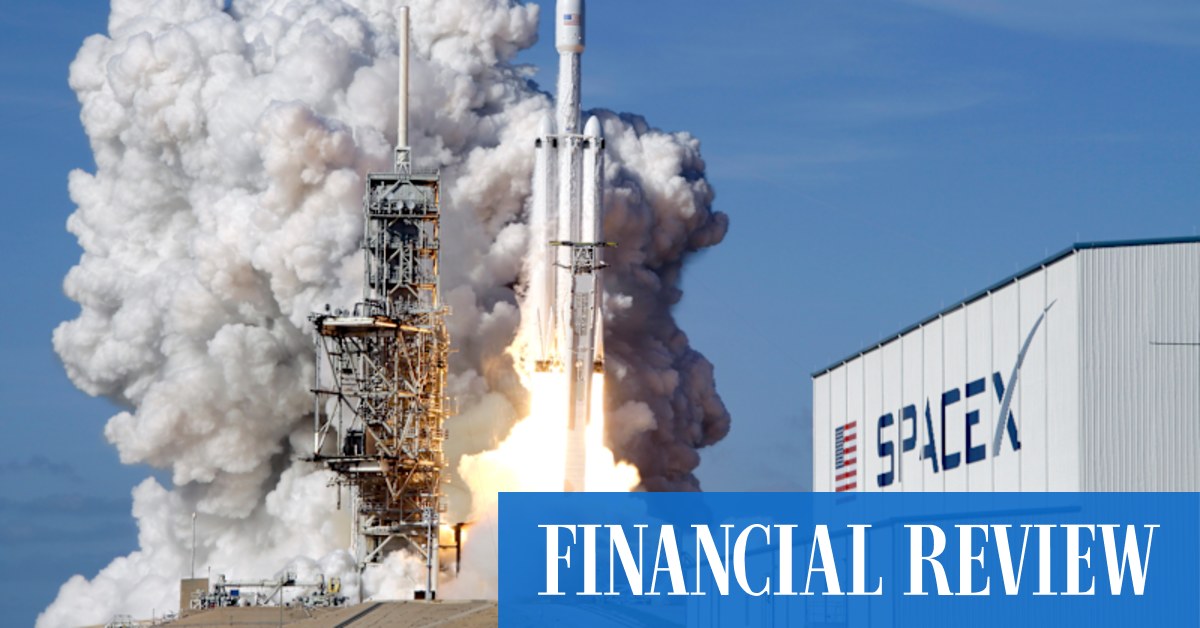
SpaceX lays out IPO details, targets early June roadshow: Reuters
A SpaceX Falcon 9 rocket is displayed outside a Space Exploration Technologies Corp. facility in Hawthorne, California, on March 26, 2026. SpaceX outlined details of its highly anticipated IPO at a meeting with its team of bankers Monday night, telling them it plans to earmark a large portion of shares for retail investors and will host 1,500 of them at an event in June following the IPO roadshow launch, according to two people familiar with the matter. "Retail is going to be a critical part of this and a bigger part than any IPO in history," Chief Financial Officer Bret Johnsen said during the virtual meeting, the two people said, asking not to be identified because the discussion was private. Johnsen said the large retail component is by design as "those are folks that have been incredibly supportive of us and of Elon (Musk) for a long time, and we want to make sure that we recognize that." Reuters reported last month that SpaceX is rewriting the IPO playbook with a large retail portion in the offering. The meeting brought together the full syndicate for the first time as part of the process for what is expected to be the biggest initial public offering ever as the rocket maker seeks to raise $75 billion, valuing SpaceX at as much as $1.75 trillion, Reuters has previously reported. The Elon Musk-led company plans to launch its roadshow the week of June 8, when executives and bankers will pitch the IPO to investors, the people said. About 125 financial analysts from the 21 banks on the deal are scheduled to meet with the company the day before, they added. On June 11, SpaceX plans to host 1,500 retail investors at what the people described as a major investor event. In addition to the U.S., everyday retail investors in the UK, EU, Australia, Canada, Japan and Korea would have the opportunity to participate in the offering, the people added. One of SpaceX's lead underwriters told the group of 21 investment banks the retail demand and allocation will be something they've "never seen before," the two people said. The structure of the deal and precise amount of the retail allocation are expected to be finalized closer to the IPO launch, they said. Reuters previously reported that founder Elon Musk wanted to set aside up to 30% of the company's shares for smaller investors, compared with 5% to 10% for most companies. The company plans to make its IPO prospectus public in late May, they said. SpaceX did not immediately respond to a request for comment. Morgan Stanley, Bank of America, Citigroup, JP Morgan and Goldman Sachs are leading the deal as active bookrunners, with 16 other banks in smaller roles spanning institutional, retail and international channels, Reuters previously reported. The $1.75 trillion target represents a significant step up from the $1.25 trillion combined valuation set when SpaceX merged with Musk's artificial intelligence startup xAI in February. Typically, SpaceX's roughly twice-yearly tender offers -- in which employees and investors are able to sell their existing shares, allowing them to cash out from a company that has remained private for nearly 25 years -- have served as the primary valuation anchor. The most recent, in December 2025, valued the company at $800 billion, before the merger with xAI.

SpaceX IPO could be biggest ever at $75B | News.az
SpaceX is preparing to rewrite IPO history -- by putting everyday investors at the center of what could become the largest public offering ever. The Elon Musk-led rocket company is targeting a massive $75 billion IPO, potentially valuing the business at up to $1.75 trillion, according to people familiar with the plans, News.az reports, citing Reuters. In a private meeting with bankers, Chief Financial Officer Bret Johnsen revealed that retail investors will play an unusually large role in the offering. Unlike typical IPOs -- where retail investors receive just 5% to 10% of shares -- SpaceX is expected to allocate a significantly larger portion, potentially up to 30%. That would make it the most retail-focused IPO ever. The strategy reflects the company's long-standing support base. These are investors who have backed SpaceX and Elon Musk for years, and the company wants to recognize that loyalty. SpaceX is planning to launch its IPO roadshow in the week of June 8, where executives and bankers will present the opportunity to institutional investors. But retail investors won't be sidelined. On June 11, the company is set to host a major investor event for around 1,500 individual investors, signaling a rare level of inclusion for non-institutional participants. The IPO will also be open to retail investors beyond the U.S., including those in: Bankers involved in the deal say the scale of retail demand could be unlike anything seen before. Final details -- such as the exact retail allocation -- are expected to be confirmed closer to launch. The targeted $1.75 trillion valuation marks a sharp jump from the roughly $1.25 trillion valuation established earlier this year, when SpaceX merged with Musk's AI startup, xAI. If successful, the offering would not only break records in size -- but could also reshape how future IPOs are structured. SpaceX is expected to release its IPO prospectus in late May, offering the first official look at financials and risks. With strong brand loyalty, global demand, and a retail-first strategy, the company is positioning this IPO as more than just a fundraising event -- it's aiming to make it a mass-market moment in financial history. If you want, I can also tailor this for Google News, Twitter/X threads, or a LinkedIn version with higher engagement tone.
OpenAI, Anthropic, Google Collaborate to Prevent AI Model Copying in China
In a collaborative effort, OpenAI, Anthropic, and Google are taking steps to safeguard their artificial intelligence technologies. These companies aim to prevent Chinese competitors from leveraging advanced US AI models illegally. Formation of the Frontier Model Forum To combat the risks posed by potential adversaries, an industry nonprofit known as the Frontier Model Forum was established in 2023. This initiative is a collaboration among OpenAI, Anthropic, Google, and Microsoft Corp. Objectives of Collaboration The principal goal of this collaborative effort is to share crucial information regarding attempts at adverse distillation. This practice involves illicitly extracting information from sophisticated AI models, which is against the terms of service of these companies. Significance in the AI Landscape By joining forces, these tech giants aim to maintain their competitive edge in the global AI race. The collaboration highlights the increasing need for security and integrity in AI development. * Participants: OpenAI, Anthropic, Google, Microsoft * Year Established: 2023 * Main Focus: Preventing illegal AI model extraction This cooperation among leading AI firms underscores the importance of safeguarding intellectual property and ensuring ethical standards in artificial intelligence research and application.

Anthropic expands compute deal with Google, Broadcom?
Anthropic has expanded its partnership with Google and Broadcom to secure multiple gigawatts of compute, positioning the startup to scale training and inference capacity as demand rises. A related filing describes Broadcom agreeing to produce future versions of Google's TPUs and also expanding the Anthropic deal to provide access to roughly 3.5 gigawatts of computing capacity. Anthropic also says its business momentum has accelerated, with reported run-rate revenue crossing $30B, up from about $9B at the end of 2025. This is a major datapoint in the ongoing race to lock in scarce AI infrastructure -- especially large-scale accelerator capacity. Compute availability isn't just a pricing or procurement issue; it affects training timelines, the ability to serve more users, and the cost structure of inference at production scale. The deal also signals how AI supply chains are being organized around TPU ecosystems. Instead of treating accelerators as interchangeable parts, the partnerships are structured around who builds future TPU generations and how much capacity a given AI company can reliably access. The scale language -- multiple gigawatts -- underscores that the bottleneck increasingly sits in datacenter power and end-to-end infrastructure, not just chips themselves. Securing long-term capacity can translate into faster product iteration and more consistent service quality. Finally, Anthropic's revenue run-rate claim suggests the company is converting that infrastructure into commercial outcomes. If accurate, it supports the broader market narrative that leading model companies are moving from "capacity-limited growth" toward "demand-limited growth," making compute contracts even more strategically important.
