News & Updates
The latest news and updates from companies in the WLTH portfolio.
SFO Security Lines Stay Under 15 Minutes While TSA Chaos Hits Other Airports Amid Government Shutdown
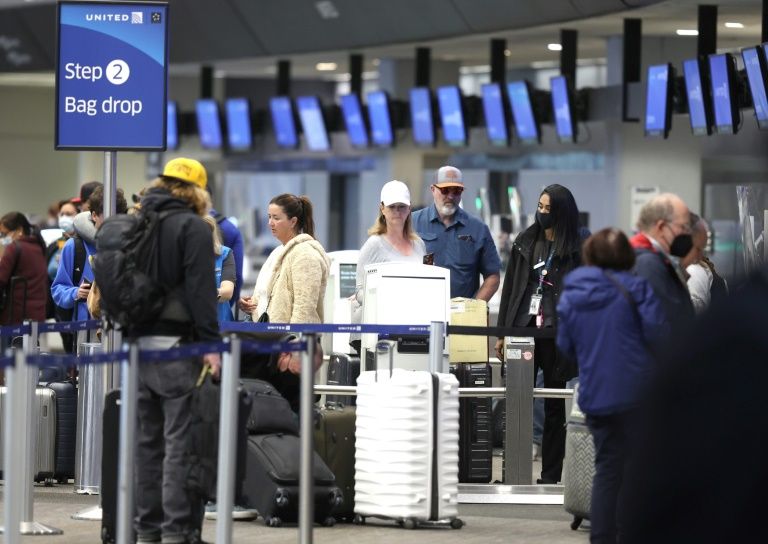
SAN FRANCISCO -- While travelers at many major U.S. airports have endured hours-long security lines due to the ongoing partial government shutdown, San Francisco International Airport has largely escaped the chaos, with average TSA wait times remaining steady at 10 to 15 minutes and all checkpoints operating normally as of early April 2026. SFO, one of the busiest airports in the country and a key international gateway for the Bay Area, participates in the Transportation Security Administration's Screening Partnership Program. This allows a private contractor, Covenant Aviation Security, to handle checkpoint screening under TSA supervision. Because the screeners are not federal TSA employees, they continue to receive uninterrupted pay during the funding impasse that has affected direct TSA operations elsewhere. Airport officials and local reports confirm that security lines at SFO have stayed consistent with typical operations, even as spring break travel overlapped with the shutdown's impact on federal staffing. In contrast to airports like Phoenix Sky Harbor or others reporting waits of 30 minutes or more -- and occasional checkpoint closures -- SFO has maintained smooth flow. Peak waits rarely exceeded 20-25 minutes, with many travelers clearing security in under 10 minutes during off-peak hours. "While we've seen and heard about the long security checkpoint lines over the last few weeks at major airports around the country, SFO is NOT experiencing this issue," the airport posted on social media in late March, highlighting its private contractor model as the reason for stability. Current real-time data shows average security waits at SFO around 12 minutes overall. Early morning hours from midnight to 3 a.m. often see waits as low as 1-3 minutes, while busier slots like 6-9 a.m. may reach 15-25 minutes. PreCheck lanes and CLEAR biometric services further reduce times for eligible passengers, sometimes to just 2-5 minutes. One checkpoint in Terminal 3 (Boarding Area F3) has been noted as occasionally closed, but alternatives remain open and all gates stay accessible. United Airlines, SFO's largest carrier, recently rolled out a helpful TSA wait time tracker in its mobile app for SFO and six other hubs. The feature provides estimated waits for both standard and PreCheck lanes, helping passengers plan arrivals more precisely amid broader travel uncertainties. SFO handled approximately 54.5 million passengers in 2025, a 4.3% increase from 2024, with strong growth in domestic traffic. The airport serves as a major hub for United Airlines and a critical link for transpacific routes to Asia, which accounted for a significant share of its international traffic. Despite the shutdown, security screening screened millions without the widespread disruptions seen nationally. The partial government shutdown, now stretching into April, has forced TSA officers at direct federal airports to work without pay, leading to increased callouts, fatigue and longer lines. Some airports consolidated lanes or temporarily closed checkpoints. SFO's model has provided a buffer: private screeners, paid through separate funding, reported full staffing and normal operations. Airport spokesman Doug Yakel noted that contracted officers have kept average peak wait times under 10 minutes in many recent periods, even while processing high volumes. This stands in stark contrast to reports from other hubs where waits stretched to hours, prompting airlines to advise arriving three hours early for domestic flights. Travelers at SFO praised the relative ease. Social media posts and local news shared stories of quick passages through security, with some contrasting their experience favorably against friends flying out of TSA-operated airports. "No lines at SFO -- right through security," one passenger remarked after a recent trip. SFO features multiple security checkpoints across its terminals: A and G in the International Terminal, B and C in Terminal 1, D in Terminal 2, and F1 plus the occasionally closed F3 in Terminal 3. All offer TSA PreCheck, Priority lanes and CLEAR where available. Hours vary slightly by checkpoint, with most opening as early as 3:15 a.m. and some operating nearly 24 hours. In addition to standard procedures, SFO supports TSA ConfirmID, a fee-based identity verification service for passengers without REAL ID-compliant documents. The airport also uses advanced imaging technology and continues promoting efficient packing to speed screening. Beyond security stability, SFO faces other operational pressures. A new FAA rule and temporary runway project have reduced hourly arrivals from 54 to 36 planes, potentially causing more flight delays independent of security. Officials emphasize that these changes do not affect checkpoint lines. For passengers, the airport recommends arriving at least two hours before domestic flights and three hours for international, though the consistent security times mean many can adhere to standard guidelines without extra buffer for shutdown-related delays. The MyTSA app, United's tracker and SFO's own flight information displays provide helpful updates. The Screening Partnership Program at SFO dates back years and makes it the largest U.S. airport using private contractors for screening. Only a handful of airports, including Kansas City and a few smaller ones, share this setup. During previous shutdowns, the model similarly prevented major disruptions. Local leaders and travelers have noted the irony: while the shutdown highlights vulnerabilities in federal TSA staffing, privatized operations at places like SFO demonstrate an alternative that maintains reliability. However, all checkpoints still follow strict TSA security protocols and oversight. As summer travel approaches, SFO continues investing in passenger experience with expanded dining, art installations and efficient terminal layouts. The airport consistently ranks well in traveler satisfaction surveys among large U.S. hubs. Travel tips for SFO remain standard but especially useful now: enroll in TSA PreCheck or CLEAR for faster processing, pack liquids and electronics accessibly, wear slip-on shoes, and check real-time wait data before heading to the airport. Those without PreCheck should factor in potentially longer standard lanes during peak times like early mornings and evenings. The broader context at SFO underscores a national conversation about airport security staffing. While most airports rely on federal TSA employees facing financial strain without pay, the private model at SFO has kept lines moving and morale steadier among screeners. Passengers navigating the Bay Area's busy travel season can take some comfort in SFO's resilience. As the shutdown persists without a clear resolution, airports without direct TSA staffing continue to serve as a relative bright spot for efficient security. SFO's role as a vibrant international gateway -- connecting Silicon Valley innovation with global destinations -- remains strong. With wait times stable and innovations like United's app tracker rolling out, the airport aims to keep travelers informed and moving smoothly even amid federal uncertainties. Many who flew through SFO in recent weeks shared gratitude online for the predictable experience. "While friends complained about three-hour TSA lines elsewhere, we were at our gate in 45 minutes total at SFO," one Bay Area resident posted. As conditions evolve, travelers should monitor official SFO channels and airline apps for the latest advisories. For now, San Francisco International stands out as a smoother option for those able to route through the West Coast hub. Phoenix Sky Harbor and other TSA-direct airports have seen fluctuating improvements with auxiliary support like ICE agents, but SFO's private contractor advantage has provided consistent relief without such interventions. With passenger numbers rebounding and technology enhancements in place, SFO positions itself well for the busy months ahead. The airport's ability to maintain normal wait times during a national staffing crunch serves as a case study in operational resilience.
Bitcoin miners face a new rival for cheap power as Anthropic signs multi-gigawatt compute deal
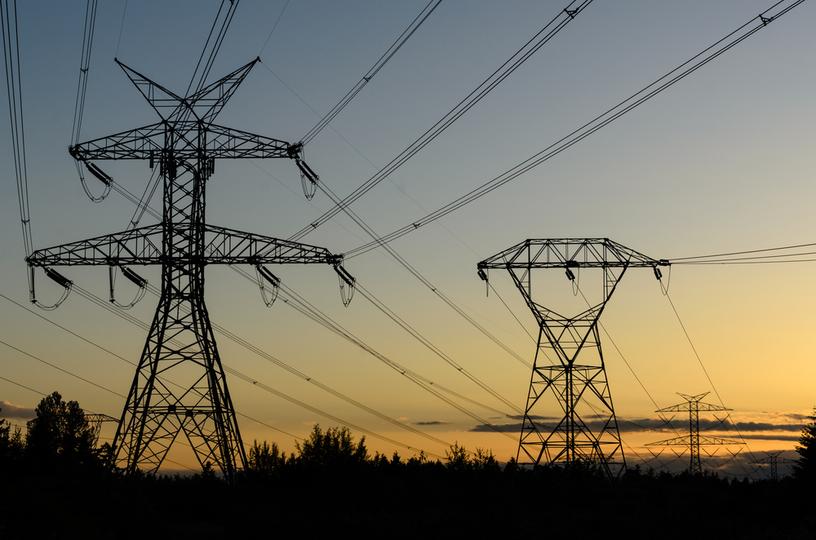
Under pressure from rising costs and volatile mining economics, major bitcoin miners are increasingly shifting toward hosting AI workloads, positioning themselves as power and data-center infrastructure providers that also mine bitcoin rather than pure-play mining companies. Anthropic has announced a partnership with Google and Broadcom for "multiple gigawatts" of next-generation TPU compute capacity expected to come online starting in 2027, a commitment the company called its most significant to date as revenue growth accelerated to a $30 billion annual run rate from $9 billion at the end of 2025. The scale of AI compute demand is now competing directly with bitcoin mining for the same scarce resources -- grid connections, land permits, cooling infrastructure, and cheap electricity. A Cambridge tracker estimates bitcoin mining draws roughly 13 to 25 gigawatts of continuous power globally depending on hardware efficiency assumptions. Anthropic securing multiple gigawatts from a single deal, on top of existing capacity across AWS Trainium, Google TPUs, and Nvidia GPUs, shows just how quickly AI is becoming a peer-level competitor for the same energy infrastructure that miners depend on. And Anthropic is one company. OpenAI, which raised $122 billion last week and described compute as a "strategic moat," is building across an even wider infrastructure portfolio spanning five cloud providers and four chip platforms. The aggregate AI compute buildout now represents one of the largest sources of new electricity demand in the United States, arriving at the same moment bitcoin miners are deciding whether to mine bitcoin or rent their infrastructure to AI companies. That decision is increasingly going one direction. Core Scientific converted a significant portion of its mining capacity to AI hosting through a deal with CoreWeave. Iris Energy and Hut 8 have expanded their AI and high-performance computing revenue. Riot Platforms, MARA Holdings, and Genius Group disclosed selling more than 19,000 BTC from their treasuries last week, a sign that mining economics alone are not sustaining operations at current prices and difficulty levels. A bitcoin miner running a gigawatt of capacity earns revenue that fluctuates with bitcoin's price and network difficulty. The same gigawatt rented to an AI company earns a contracted rate with predictable cash flows. At $69,000 bitcoin with difficulty at all-time highs and energy costs rising alongside every other industrial consumer competing for the same grid capacity, the AI rental often pays better. The revenue numbers behind the expansion tell their own story. Anthropic said the number of business customers spending more than $1 million annually on Claude has doubled from 500 to over 1,000 in less than two months. None of this means bitcoin mining is dying, however. The network's hashrate continues to hit record levels above 1 zetahash per second. But the miners who survive the current cycle may look less like energy companies that produce bitcoin and more like infrastructure companies that happen to mine bitcoin on the side while renting their real asset, cheap power at scale, to an AI industry that cannot build data centers fast enough.
SpaceX bankers bend over backwards to bag IPO role
Last week the New York Times reported that Elon Musk has required the investment banks, lawyers, auditors, and other advisers working on a SpaceX IPO to subscribe to Grok, the chatbot offered by its xAI venture. Some banks, according to the report, have agreed to spend "tens of millions of dollars" and begun integrating the software into their systems. According to the NYT: The banks' purchases of Grok subscriptions were not merely goodwill gestures, according to three people with knowledge of the arrangements. Mr. Musk insisted that they purchase the chatbot services. He has also asked the banks to advertise on X, his social media site, which is also owned by SpaceX, but was less adamant about that request, according to two of those people. . . . Mr. Musk's agreement with banks is a big score for SpaceX, which merged with xAI in February and whose Grok is a distant fourth in the artificial intelligence race behind OpenAI's ChatGPT, Claude and Google's Gemini. Even by the supine standards of Wall Street courtship, this is a notable development, even if not entirely new. Investment banking has long involved a degree of mutual back-scratching that rarely makes it into prospectuses or financial media. In the fin-de-siècle dotcom era, for example, some software companies treated banks pitching for the IPO as "dog-fooding" customers, telling underwriters to sign licensing agreements if they wanted to be considered for the mandate. (This paled in comparison to some of the inducements reportedly tendered by banks at the time, but that's a whole 'nother story.) Nor has the practice been confined to technology. Banks are large, reliable customers of all kinds of things, and it's not unknown for a range of old-world services businesses to insinuate to their investment bankers that a procurement relationship might need to precede any advisory one. Many corporates believe, not irrationally, that if a bank wants access to its trophy, fee-paying assignments, it should show "commitment". And that commitment has to extend beyond advisory or distribution capability -- which many issuers regard as largely interchangeable among the big banks. Private equity often makes similar points. I can recall a firm once complaining to me that our bank had taken a hard line in negotiating a software license renewal with one of its portfolio companies at precisely the moment we were pitching for an entirely separate mandate. The connection was as unstated as it was unmistakable. (I couldn't, and didn't, do anything about it.) A more familiar version of the same dynamic shows up in financing. While banks are not supposed to "tie" lending explicitly to investment banking mandates, the reverse is common practice. Companies routinely expect prospective advisers and underwriters to commit capital -- eg bridge loans, trade finance, revolving credit facilities -- before awarding M&A or capital markets business. This is one of those things that is widely understood but rarely spelled out publicly. What makes the situation described by the NYT different is not the request, but its apparent follow-through. In most large financial institutions, procurement decisions take place nowhere near the investment banking division. The people responsible for IT system or supplier contracts do not report to the bankers, have no incentive to indulge them, and must live with the consequences long after the deal team has moved on. Their KPIs revolve around cost control and operational stability, not revenue origination. Moreover, senior bankers are often reluctant to push too hard anyway. Requests to "support" a client by purchasing its products occupy a grey area. If something goes wrong -- for example, an underperforming vendor or a compliance problem -- those who applied the pressure risk taking the blame. The path of least resistance is usually to avoid forcing the issue, even if that occasionally means losing out to a rival that happens to use the product already. This is why the reported success of Musk's approach stands out. If banks really are committing tens of millions of dollars to Grok subscriptions to secure roles in a SpaceX IPO, it suggests a degree of influence that goes well beyond the usual give-and-take. Moving large, bureaucratic banks with multiple layers of procurement protocols to subscribe to a product that is not yet a market leader is not easy. The incentive, of course, is the deal itself. The SpaceX offering is slated to be the largest IPO in history, a once-in-a-lifetime blockbuster whose fees, profile and franchise value for the winning banks are literally incalculable. In that context, behaviour that might otherwise be resisted starts to look like a pragmatic but uncomfortable concession. It also says something about the broader character of this IPO. The offering is so big -- and so many people stand to make so much money -- that it is prompting extraordinary accommodations across the market. Changes to Nasdaq-100 index rules, widely understood to be designed to accelerate the entry of superjumbo candidates like SpaceX, Anthropic and OpenAI, are part of the same pattern. A company with sufficient clout can begin to reshape the mechanics of the market around it. None of this proves anything improper. Clients have long dangled the prospect of a large, juicy mandate to wangle concessions from its advisers, and most of what is described will be familiar to anyone who has spent time in the capital markets. What is rarer is seeing it work so visibly, at such scale, overcoming institutional frictions that would normally slow or stop it. This may not be the last time the world's richest person finds that the largest and powerful institutions prove more malleable than expected.

Elon Musk's Loyalty Litmus Test: SpaceX Investors Face a Choice Between Silence and the Exit Door
Elon Musk has never been one for subtlety. But his latest move -- pressuring potential investors in SpaceX to sign agreements that would bar them from publicly criticizing him -- represents something more brazen than his usual combativeness. It's a demand for personal fealty, woven into the financial architecture of what may be the most valuable private company on Earth. According to reporting by Yahoo Finance, which cited a Wall Street Journal investigation, Musk has been requiring that investors in SpaceX's share sales agree to non-disparagement clauses that specifically protect him as an individual -- not just the company. The clauses reportedly extend beyond typical corporate confidentiality provisions, effectively muzzling shareholders from making negative public statements about Musk personally. Investors who refuse the terms risk being cut out of one of the most sought-after private equity opportunities in the world. This isn't standard practice. Not even close. Non-disparagement clauses are common enough in business. They appear in employment contracts, settlement agreements, and occasionally in venture capital term sheets. But attaching such provisions to equity purchases in a way that shields a single individual -- the CEO -- from criticism by his own investors is virtually unheard of in Silicon Valley or on Wall Street. It conflates the interests of the company with the reputation of one man, a conflation Musk has increasingly insisted upon across all his ventures. SpaceX, formally known as Space Exploration Technologies Corp., was last valued at roughly $350 billion in a December 2024 tender offer, making it the most valuable private company in the United States by a wide margin. Demand for shares has been fierce. Institutional investors, sovereign wealth funds, and high-net-worth individuals have competed aggressively for allocations in periodic share sales that SpaceX orchestrates for employees and early backers looking to liquidate. That scarcity gives Musk enormous leverage -- a word he'd probably appreciate -- over the terms. And he's using it. The Wall Street Journal reported that some prospective investors balked at the non-disparagement language but ultimately signed anyway, unwilling to forfeit access to a company whose valuation trajectory has been almost vertically upward. Others walked away. The chilling effect is obvious: investors who might otherwise raise concerns about governance, conflicts of interest, or Musk's increasingly polarizing political activities are contractually silenced before they even write a check. The timing matters. Musk's public profile has grown far more controversial over the past two years. His role leading the Department of Government Efficiency under the Trump administration, his prolific and often inflammatory presence on X (the social media platform he owns), and his open alignment with far-right political figures in Europe have made him a lightning rod. Several major brands paused advertising on X. Nonprofit organizations and government agencies have publicly clashed with him. And some of Musk's own investors across his portfolio of companies -- Tesla, SpaceX, xAI, The Boring Company, Neuralink -- have grown quietly uncomfortable with the reputational risk his behavior introduces. Quietly being the operative word. The non-disparagement clauses ensure it stays that way. Consider the governance implications. SpaceX has no public shareholders, no SEC-mandated proxy votes, no annual meeting where disgruntled investors can air grievances. The company's board is small and largely composed of Musk allies. Gwynne Shotwell, SpaceX's president and chief operating officer, has been the primary check on Musk's more impulsive tendencies within the organization, but she operates inside the company, not as an external counterweight. Adding contractual gag orders for outside investors removes yet another potential source of accountability. This is a pattern. At Tesla, Musk has repeatedly bristled at shareholder activism. When investors challenged his $56 billion compensation package -- the largest in corporate history -- Musk fought back publicly and personally, at one point suggesting Tesla might move its incorporation from Delaware after a judge voided the pay deal. Tesla's board eventually held a new shareholder vote to ratify the package, which passed, though the legal battle continues. At X, Musk took the company private in 2022 specifically to escape the constraints of public market scrutiny. The non-disparagement push at SpaceX fits neatly into this broader effort to insulate himself from criticism by those with financial stakes in his enterprises. There's a commercial logic to it, too. SpaceX operates in a sector where government contracts are the lifeblood. NASA's Commercial Crew and Cargo programs, Department of Defense satellite launch contracts, and the National Reconnaissance Office's classified missions represent billions of dollars in revenue. Musk's political positioning -- particularly his closeness to the current White House -- is arguably an asset in securing those contracts. Public criticism from SpaceX's own investors could complicate that relationship or draw unwanted congressional attention. Silencing investors isn't just about ego. It's about protecting a business model that depends heavily on government goodwill. But the risks cut both ways. If Musk's political fortunes shift -- if a future administration views his DOGE involvement unfavorably, or if congressional investigations into potential conflicts of interest between his government role and his government-dependent businesses gain traction -- investors who signed non-disparagement agreements may find themselves unable to publicly distance themselves from a figure who has become politically toxic. They'd own shares in a company led by a controversial CEO and be contractually barred from saying so. That's not a theoretical concern. Recent reporting from Reuters has documented growing bipartisan scrutiny of the interplay between Musk's government advisory position and the billions in federal contracts flowing to SpaceX and Tesla. Democratic lawmakers have been particularly vocal, but some Republican members of Congress have also raised questions about whether Musk's dual role creates conflicts. If that scrutiny intensifies, SpaceX investors bound by non-disparagement clauses would be in an extraordinarily awkward position -- financially exposed to political risk and legally unable to address it publicly. The financial community's reaction has been mixed. Some fund managers, speaking on background, have described the clauses as aggressive but tolerable given SpaceX's performance. The company's Starlink satellite internet division alone could be worth $100 billion or more if spun off in an IPO, which Musk has hinted at for years without committing to a timeline. Starship, the massive next-generation rocket, successfully completed its first full test flight sequence in 2024 and is central to NASA's Artemis lunar program. The commercial fundamentals are extraordinary. For many investors, the math overrides the discomfort. Others see it differently. "You're essentially buying into a one-man show and agreeing never to question the man running it," one venture capital partner told colleagues, according to a person familiar with the conversation. "That's not investing. That's patronage." The legal enforceability of such clauses is also uncertain. Non-disparagement provisions in investment agreements haven't been widely tested in court, partly because they're so unusual. First Amendment protections don't apply directly to private contracts, but courts have historically been skeptical of overly broad restraints on speech, particularly when they serve no legitimate business purpose beyond protecting an individual's feelings. If an investor violated the clause and Musk sought to enforce it, the resulting litigation could become a spectacle -- and a precedent-setting one. So where does this leave SpaceX? Operationally, the company is performing at an extraordinary level. It launched over 100 missions in 2024. Starlink has more than 4 million subscribers across dozens of countries. The Raptor engine program continues to advance. SpaceX's engineering culture, driven by Shotwell's operational discipline and Musk's relentless ambition, has produced results that no competitor -- not United Launch Alliance, not Blue Origin, not Arianespace -- has matched. But operational excellence and governance excellence are different things. And Musk's insistence on personal loyalty oaths from investors suggests a leader who is either unwilling or unable to separate his identity from his companies. That's a risk factor that doesn't show up on a balance sheet. The broader question is whether this kind of arrangement becomes normalized. If the most valuable private company in the world can demand that investors surrender their right to speak freely about its CEO, what stops the next $100 billion startup from doing the same? Silicon Valley already suffers from a culture of founder worship that discourages dissent. Contractualizing that worship is a new frontier. Musk, for his part, has not publicly commented on the non-disparagement provisions. SpaceX did not respond to requests for comment from the Wall Street Journal. The company rarely engages with press inquiries, a communications strategy -- or lack thereof -- that mirrors Musk's approach at X, where he dissolved the entire public relations department shortly after acquiring the platform. For now, the money keeps flowing in. SpaceX's next tender offer is expected later this year, and demand will almost certainly exceed supply. Investors will weigh the terms, weigh the returns, and most will sign. The few who don't will simply be replaced by others willing to accept the conditions. That's the real power Musk holds. It's not the clause itself. It's the fact that he can impose it and still have investors lining up around the block. When a company is this dominant and this inaccessible through public markets, the CEO can write almost any terms he wants. And Elon Musk, more than perhaps any business leader of his generation, knows it.

SpaceX lays out IPO details, targets early June roadshow: Report | Company Business News
SpaceX outlined details of its highly anticipated IPO at a meeting with its team of bankers Monday night, telling them it plans to earmark a large portion of shares for retail investors and will host 1,500 of them at an event in June following the IPO roadshow launch, according to two people familiar with the matter. "Retail is going to be a critical part of this and a bigger part than any IPO in history," Chief Financial Officer Bret Johnsen said during the virtual meeting, the two people said, asking not to be identified because the discussion was private. Johnsen said the large retail component is by design as "those are folks that have been incredibly supportive of us and of Elon (Musk) for a long time, and we want to make sure that we recognize that." Reuters reported last month that SpaceX is rewriting the IPO playbook with a large retail portion in the offering. The meeting brought together the full syndicate for the first time as part of the process for what is expected to be the biggest initial public offering ever as the rocket maker seeks to raise $75 billion, valuing SpaceX at as much as $1.75 trillion, Reuters has previously reported. The Elon Musk-led company plans to launch its roadshow the week of June 8, when executives and bankers will pitch the IPO to investors, the people said. About 125 financial analysts from the 21 banks on the deal are scheduled to meet with the company the day before, they added. On June 11, SpaceX plans to host 1,500 retail investors at what the people described as a major investor event. In addition to the U.S., everyday retail investors in the UK, EU, Australia, Canada, Japan and Korea would have the opportunity to participate in the offering, the people added. One of SpaceX's lead underwriters told the group of 21 investment banks the retail demand and allocation will be something they've "never seen before," the two people said. The structure of the deal and precise amount of the retail allocation are expected to be finalized closer to the IPO launch, they said. Reuters previously reported that founder Elon Musk wanted to set aside up to 30% of the company's shares for smaller investors, compared with 5% to 10% for most companies. The company plans to make its IPO prospectus public in late May, they said. SpaceX did not immediately respond to a request for comment. Morgan Stanley, Bank of America, Citigroup, JP Morgan and Goldman Sachs are leading the deal as active bookrunners, with 16 other banks in smaller roles spanning institutional, retail and international channels, Reuters previously reported. The $1.75 trillion target represents a significant step up from the $1.25 trillion combined valuation set when SpaceX merged with Musk's artificial intelligence startup xAI in February. Typically, SpaceX's roughly twice-yearly tender offers -- in which employees and investors are able to sell their existing shares, allowing them to cash out from a company that has remained private for nearly 25 years -- have served as the primary valuation anchor. The most recent, in December 2025, valued the company at $800 billion, before the merger with xAI.

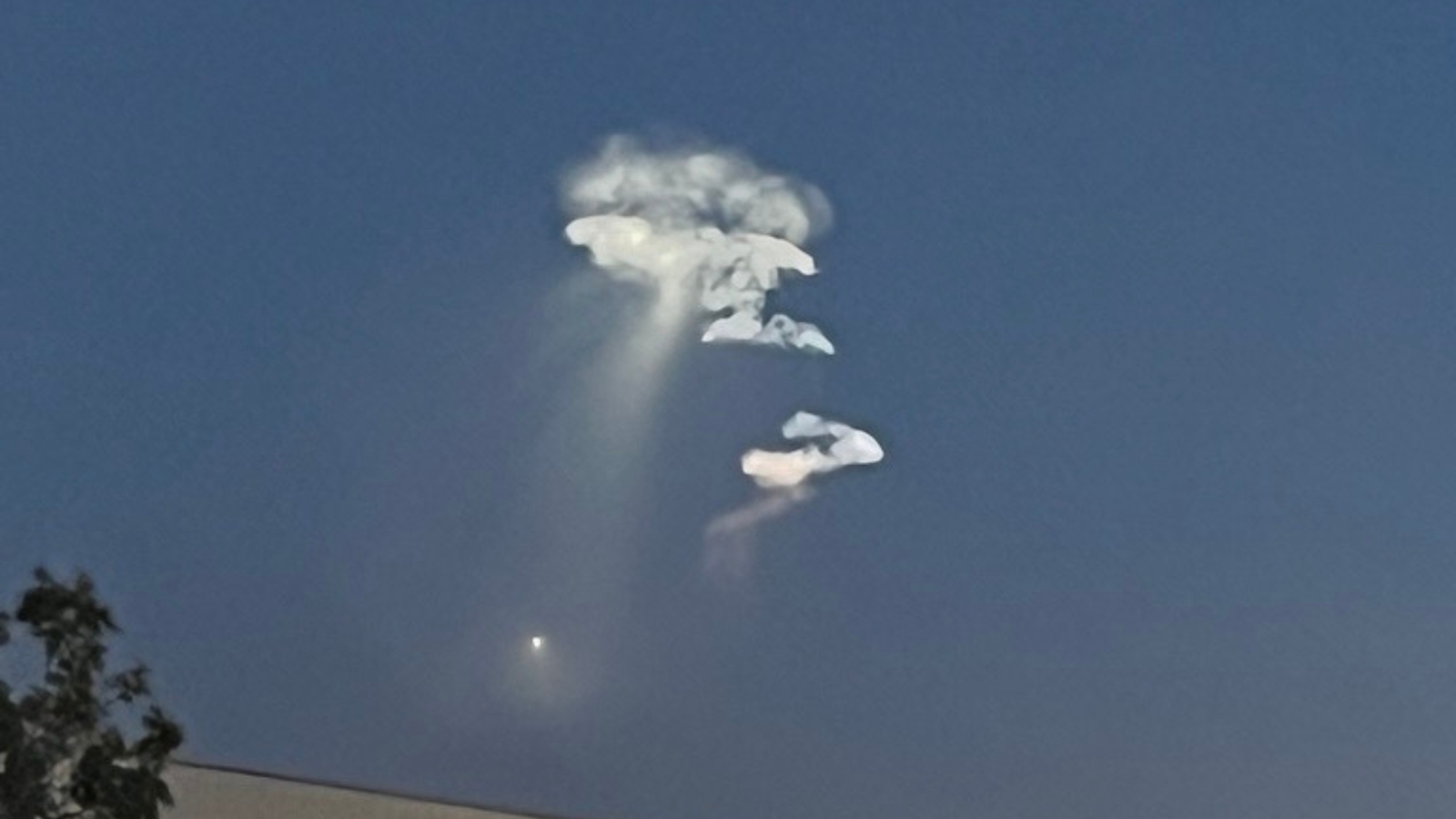
SpaceX launches 25 Starlinks, illuminates San Diego sky
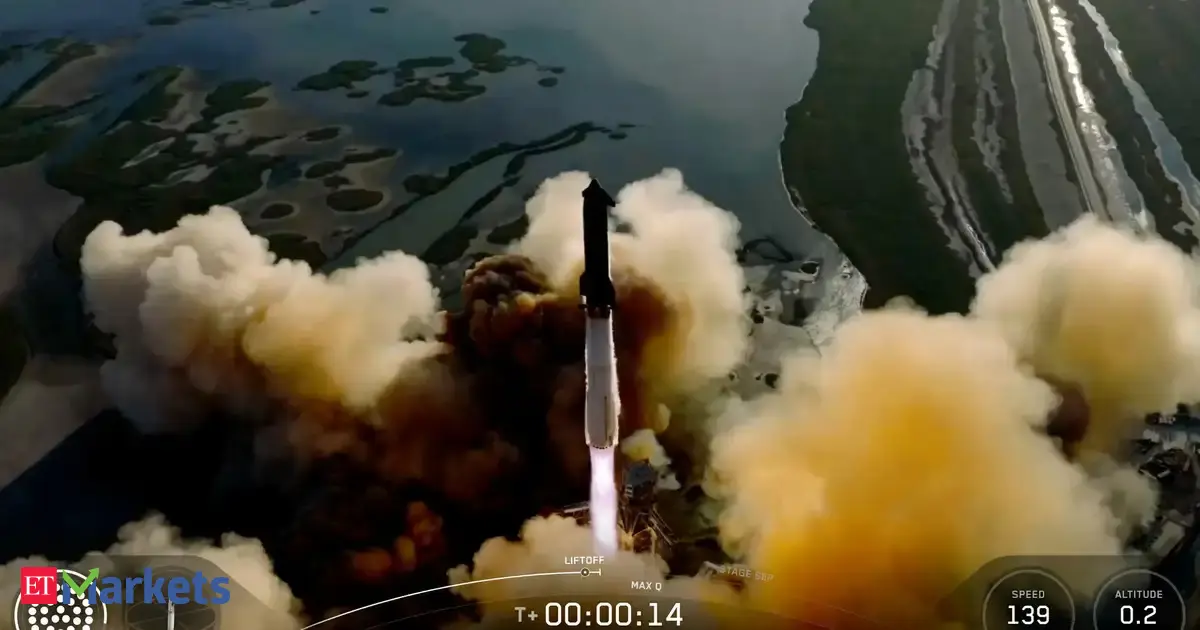
(FOX 5/KUSI) -- SpaceX's Falcon 9 launched 25 Starlink satellites into low-Earth orbit from California on Monday night, creating a spectacle across San Diego's skyline. The rocket took off from Vandenberg Space Force Base near Lompoc around 7:50 p.m., marking another batch of internet satellites added to Elon Musk's constellation. Starlink is made up of over 10,000 satellites, and growing, that provide high-speed, low-latency internet to millions of people around the world, all from space. The latest addition of satellites was planned to launch on Sunday, but the company said "upper-level winds" delayed the launch to Monday. Those interested in watching history unfold (the constellation of satellites is the largest ever in history) could do so during a live stream of the launch. But if you were in San Diego, you could also just look up. Several people sent in photos to FOX 5/KUSI of the glowing, white trail as the rocket launched the satellites into orbit. See images of the SpaceX Falcon 9 rocket above San Diego below.

US Stock Market | SpaceX plans record-breaking IPO with massive retail investor push
SpaceX is preparing for a groundbreaking IPO, planning to allocate an unusually large share to retail investors, potentially up to 30%. This move aims to reward supporters and broaden participation beyond traditional institutions. The company is also targeting a record-breaking $75 billion raise at a $1.75 trillion valuation. Elon Musk's rocket company SpaceX is preparing to rewrite the rules of public listings, with plans to allocate an unusually large share of its upcoming initial public offering to retail investors, according to people familiar with the matter, as reported by Reuters. The company discussed key details of the much-anticipated IPO during a meeting with its bankers, where it outlined its intention to make individual investors a central part of the offering. The move reflects a deliberate strategy to reward long-time supporters of the company and its founder, while broadening participation beyond traditional institutional investors, Reuters reported, citing sources. As part of its outreach, SpaceX is planning a large-scale investor engagement initiative. Following the launch of its IPO roadshow, the company is expected to host around 1,500 retail investors at a dedicated event in June, signalling an unprecedented level of focus on individual shareholders in a deal of this size. According to Reuters, the IPO could become the largest in history, with SpaceX aiming to raise about $75 billion at a valuation of up to $1.75 trillion. The offering is expected to draw significant global interest, with participation likely to extend beyond the United States to retail investors across Europe, the United Kingdom, Australia, Canada, Japan, and South Korea. The roadshow is slated to begin in the week of June 8, during which company executives and bankers will present the investment case to potential investors. Ahead of this, more than 100 analysts from banks involved in the deal are expected to meet with the company to gain deeper insights into its business and growth outlook, Reuters reported. The structure of the IPO, including the exact proportion of shares reserved for retail investors, is still being finalised and will be determined closer to the launch. However, earlier reporting by Reuters indicated that SpaceX could allocate as much as 30% of the offering to retail participants -- far above the typical 5% to 10% seen in most IPOs. Also read: US Stock Market | Fed faces tough trade-off as inflation and growth risks collide The company is also expected to release its IPO prospectus by late May, providing more detailed financial and operational disclosures to the public. If executed as planned, the IPO could mark a significant shift in how large technology companies approach public listings, potentially setting a new benchmark for retail investor inclusion in capital markets, Reuters reported. (Disclaimer: Recommendations, suggestions, views and opinions given by the experts are their own. These do not represent the views of The Economic Times)
Chaos persists as schools, students struggle to secure matric admit cards in Karachi
KARACHI: A day after the Board of Secondary Education Karachi (BSEK) postponed the matriculation exams for three days, the administrations of hundreds of schools, mostly privately run, are still scrambling to obtain admit cards for their thousands of students so they can learn about their examination centres. The matriculation exams, originally scheduled to begin on April 7, were postponed on Sunday night and will now commence on April 10, with approximately 385,000 candidates at 530 examination centres across Karachi Division. The board acknowledged the issue with admit cards but said that it was currently transitioning from a manual to a digital system. As a result, the software application became overloaded and experienced a temporary disruption. On Monday, representatives of private schools were seen gathered in large numbers at the board office to obtain admit cards, but received no clear response and were met with disappointment due to the lack of progress. BSEK issues revised exam schedule; MQM-P warns of protests if issue not resolved in next 24 hours The uncertainty, coupled with doubts about whether last-minute arrangements can ensure the smooth conduct of exams, is causing significant stress among students and their parents just days before the scheduled papers. Parents said that before examinations, students' focus should be on revision and preparation, but they are instead struggling with the mental stress of not receiving their admit cards. Later in the evening, the BSEK issued a revised schedule for the annual examination of ninth and tenth grade students. According to the new schedule, the first paper will be held on April 10 and the last paper on May 6. Science group exams will be held in the morning shift, while general group exams will be in the afternoon shift. All students will take their exams at their previously assigned exam centers. BSEK slammed for mismanagement In a statement issued on Monday, the All Sindh Private Schools and Colleges Association said the situation reflected mismanagement at the BSEK. The association welcomed the Sindh government's decision to postpone exams by three days but stressed that timely exams were in students' best interest. They attributed the crisis to the "incompetence of board chairman Ismail Rahoo." School representatives also raised concerns over alleged discrepancies in exam centre allocations and questioned the board's claims regarding data processing issues. They argued that the examination system had already been digitised in recent years, making the explanation of server failures unconvincing. They said the admit cards should have been issued at least a week before the exams and questioned whether such a hasty arrangement would now ensure accurate records on the admit cards and smooth management of the exams in examination halls. Separately, MQM-P members of the Sindh Assembly, in a statement on Monday, alleged that the delay is not accidental but a systemic failure of the education board and a result of corruption. They termed the delay an "educational tragedy" and "administrative terrorism". The statement said that the world is integrating Artificial Intelligence into education and educational management, whereas the city's board officials cannot even ensure basic documents ahead of the exams, despite their misleading claims that all preparations had been completed. The lawmakers demanded that all admit cards be immediately made available in downloadable format and called for action against officials responsible for what they termed "criminal negligence". They called for facilitation desks to assist students and parents and warned of protests if the issue was not resolved in the next 24 hours. Published in Dawn, April 7th, 2026

"The foolishness in attending to voice dissent" - Zanu PF blames opposition for public hearings chaos - NewZimbabwe.com
ZANU PF Treasurer, Patrick Chinamasa, has stopped short of labelling the recently held public hearings on the Constitutional Amendment Bill number 3 a ruling party event, accusing the opposition of causing chaos. Chaos erupted at the public hearings in Harare when opposition leaders were miffed by the Parliament officials, whom they accused of deliberately sidelining them from the proceedings. Writing on X, Chinamasa accused the opposition of attempting to air their views at an event dominated by ZANU PF members, causing chaos. "The City Sports Centre Public Hearing was marred by agents provocateurs and the naivety of some Zanu PF supporters, who failed to read that the end game of the agents provocateurs was to disrupt the proceedings without showing their hand, and to attract international attention and condemnation to the consultation process. "I always give this example to those who care to listen: when a person attends a Public Hearing with a predictable, overwhelming 99.99% of Zanupf supporters, with the intention to express publicly and loudly a 0.01% opposition view, I consider that provocative to the 99.99% of the attendees. "The reaction is predictable, by all accounts in Zimbabwe, as would be the case in any part of the world. I am sure those who have studied Behavioural Sciences will testify to this kind of behaviour by the masses at a mass gathering," said Chinamasa. The public hearings were dismissed by the opposition as superficial, meant to tick the boxes and push the bill which seeks to extend the presidential and parliamentary terms to 2030. "The behaviour of the masses, when assembled together, is highly predictable. An assembled crowd of people of one mind does not take kindly to a differing viewpoint. "I say this not to justify what happened at City Sports Centre, but to point out the frailty of human beings the world over, from time immemorial, and to highlight the foolishness of Doug Coltart and his ilk in attending that public hearing with the intention to voice opposition to Constitutional Amendment Number 3. Behaviourally, we are no different from the Jews of the year AD 33," added Chinamasa.

Anthropic expands Google, Broadcom partnership in multi-gigawatt AI compute push
New Delhi: Anthropic has announced a significant scale-up of its computer infrastructure with a new deal with Google and Broadcom. The transaction will guarantee several gigawatts of next-generation TPU capacity, which is anticipated to start becoming accessible in 2027. The relocation is an indication of the company working to keep up with the rapidly increasing world demand for its Claude AI models. The alliance is one of the biggest infrastructure investments by Anthropic to date. It is timed as the company is growing at an alarming rate, with the adoption by enterprises and the increasing competition in the AI arena. Anthropic noted that the new capacity would be able to serve its future generation of frontier models as well as enhance performance to customers across the world. Massive compute push to support AI growth Anthropic claimed the contract to be consistent with its long-term plan of constructing dependable and scalable infrastructure. According to Krishna Rao, the CFO of the company, the deal was a landmark partnership that would endure exponential customer demand without pushing the limits of AI development. The company revealed that its annualised revenue run rate has crossed $30 billion in 2026, up sharply from around $9 billion at the end of 2025. It also announced that it has over 1,000 enterprise clients who spend over $1 million a year, and this number doubled within two months. Strengthening US-based infrastructure A major part of the new computer power will be located in the United States. This builds upon the previous promise made by Anthropic in November 2025 to allocate $50 billion to domestic computing infrastructure. This is placed by the company as a wider move to create resilient and secure AI systems. The partnership also strengthens the existing relationship of Anthropic with Google Cloud and extends on the previous TPU capacity deals announced in the previous year. Meanwhile, its collaboration with Broadcom still serves to promote innovation at the hardware level. A multi-cloud strategy remains central Anthropic also underlined that it will in the future still operate a combination of AI hardware platforms, such as systems of Amazon Web Services, Google TPUs, and NVIDIA GPUs. This mixed-use strategy enables the company to balance workloads and make sure that there is reliability in various applications. The company affirmed that Amazon is its core cloud and training partner, and the two continue to work on Project Rainier. Anthropic is one of the few AI companies with a multi-cloud presence, as Claude models are present on all three major cloud platforms: AWS, Google Cloud, and Microsoft Azure.

Hashtag Trending: AI Shakeup: Outlook Fails in Orbit, Anthropic Leak Reveals "Mythos," AI Data Center Delays, Oracle Layoffs
Outlook Fails in Orbit, Anthropic Leak Reveals "Mythos," AI Data Center Delays, Oracle Layoffs & ChatGPT Mobile Share Slides Hashtag Trending would like to thank Meter for their support in bringing you this podcast. Meter delivers a complete networking stack, wired, wireless and cellular in one integrated solution that's built for performance and scale. You can find them at Meter.com/htt This episode covers NASA's Artemis II crew dealing with Microsoft Outlook failures aboard Orion, forcing reliance on backup coordination channels. It also reports a major Anthropic leak exposing roughly 3,000 internal files, source code, and references to a new model called Mythos, with Anthropic saying no customer data or model weights were compromised while DMCA takedowns caused some collateral repo removals. Analysts warn many U.S. AI data center projects may be delayed or canceled due to power limits, electrical gear shortages, tight GPU/memory supply, and concerns about materials like helium. Oracle is reportedly cutting up to 30,000 jobs despite sharply higher profits amid broader tech layoffs averaging about 1,000 per day. Apptopia data shows ChatGPT's U.S. mobile share declining four months as Gemini and Claude gain. A New Yorker profile scrutinizes Sam Altman's judgment, influence, and defense-deal optics. 00:00 Headlines Kickoff 00:30 Sponsor Message 00:46 Outlook In Orbit 01:45 Anthropic Leak Fallout 03:26 AI Data Center Bottlenecks 04:44 Oracle Layoffs Surge 05:56 Chat App Share Shift 07:32 Altman Under Fire 08:45 Wrap Up And Thanks

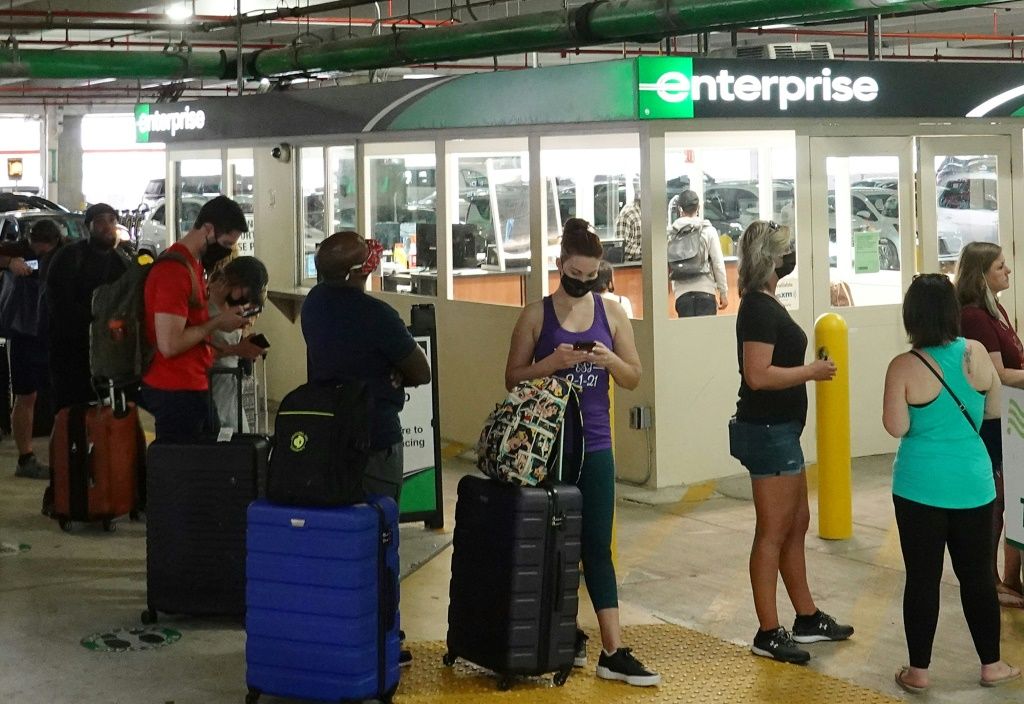
Miami International Airport TSA Lines Surge Amid Shutdown Chaos: Travelers Face Delays as Staffing Crisis Hits Peak Season
MIAMI -- Travelers at Miami International Airport encountered unpredictable security lines and mounting frustration in recent weeks as a partial government shutdown strained Transportation Security Administration operations during one of the busiest travel periods of the year. Long queues snaked through terminals at MIA and neighboring Fort Lauderdale-Hollywood International Airport in March 2026, with some passengers reporting waits of up to 35 minutes or more during morning peaks. The disruptions coincided with spring break crowds, East Coast weather delays and a federal funding impasse that left thousands of TSA workers unpaid and prompted hundreds of call-outs or resignations nationwide. As of early April 2026, conditions at MIA have largely stabilized. Real-time data from the airport's official website shows standard security checkpoint waits ranging from 8 to 18 minutes depending on the lane, with TSA PreCheck and CLEAR lanes often clearing in under 5 minutes. Checkpoint 1 remained closed in recent updates, while others operated with fluctuating but manageable volumes. Immigration processing, however, continued to see longer delays, sometimes exceeding 45 minutes. The partial shutdown, which affected Department of Homeland Security funding, forced many TSA officers to work without pay since mid-February. Union leaders described the situation as "dire," noting more than 450 officers had quit nationally since the impasse began. Absenteeism spiked, leading airports across the country -- including major hubs like Atlanta and Houston -- to post waits of an hour or longer on some days. South Florida airports experienced similar volatility, though MIA appeared to fare better than many peers. Miami-Dade Aviation Department communications director Greg Chin told local media that early morning lines in mid-March occasionally stretched to 18-35 minutes due to staffing shortages. By midday, waits typically dropped significantly. Some checkpoints, such as one near dining options, stayed closed temporarily as managers shifted personnel. Airport officials urged passengers to arrive early and monitor the MyTSA app or MIA's website for live updates. President Donald Trump proposed deploying Immigration and Customs Enforcement agents to assist at congested airports, but MIA and FLL officials confirmed they had not been notified of any such assignments as of late March. Travelers expressed mixed reactions: some appreciated the potential backup, while others worried about added complications at an already busy international gateway. Spring break 2026 amplified the pressure. MIA handled surges of tourists drawn to South Florida's beaches and events, with security lines averaging around 30 minutes during peak evening hours in mid-March according to some reports. Officials implemented operational adjustments to improve passenger flow, including better lane management and encouragement of trusted traveler programs. TSA PreCheck emerged as a key mitigator. Enrolled passengers frequently cleared screening in 1-5 minutes, even during busier periods. In February, the agency expanded TSA PreCheck Touchless ID at MIA, allowing eligible travelers to use facial recognition or mobile boarding passes for even faster processing. The technology rollout is part of a broader initiative to equip dozens more airports with biometric tools aimed at reducing document checks by up to 30%. Despite the challenges, many recent visitors reported smoother experiences entering April. Reddit users and social media posts from early April described TSA lines at MIA as "surprisingly fast," with some clearing from curb to concourse in as little as 13 minutes. One traveler called it "the shortest easiest line I've ever had at this notorious TSA checkpoint." Real-time trackers like Flightqueue.com showed standard waits consistently under 15 minutes on multiple days, a notable improvement from March peaks. Weather compounded problems earlier in the season. Thunderstorms and winter systems delayed or canceled hundreds of flights regionally, forcing rebookings and adding congestion. Airlines reduced schedules in some cases to ease pressure on air traffic control, which also faced unpaid staff. FlightAware data captured thousands of national disruptions during the height of the crisis. MIA officials emphasized proactive measures. The airport's mobile app provides real-time checkpoint wait times, interactive maps and flight status alerts. Passengers can scan boarding passes for personalized guidance. TSA recommends using the MyTSA app to check historical busyness by day and time, review the 3-1-1 liquids rule and prepare for screening to minimize delays. Travel experts advise arriving at least two to three hours early for domestic flights and longer for international departures, especially during holidays or when staffing issues persist. Enrolling in TSA PreCheck or CLEAR can save significant time for frequent flyers. Removing liquids, electronics and outer layers in advance also speeds the process. The funding standoff highlighted vulnerabilities in the aviation security system. TSA employs roughly 64,000 officers nationwide, many of whom felt "abandoned" during the unpaid period, according to union statements. Even after resolution, full staffing recovery could take days or weeks as agencies process back pay and rehiring. As conditions normalize in April, MIA continues handling millions of passengers annually as South Florida's primary international gateway. The airport serves major carriers including American Airlines, with extensive connections to Latin America and the Caribbean. For the latest updates, travelers should check miami-airport.com/tsa-waittimes.asp or the TSA website. Officials continue monitoring operations closely and adjusting staffing as needed. While the worst of the shutdown-related chaos appears to have eased at MIA, unpredictable variables like weather, holidays and federal budget negotiations mean vigilance remains essential. Passengers who plan ahead -- using apps, trusted traveler programs and realistic arrival buffers -- report the smoothest journeys through one of the nation's busiest airports. In the end, the recent strains at Miami International Airport's TSA checkpoints served as a reminder of the human element behind airport security. Officers working extended hours without timely pay kept the lines moving as best they could, while millions of travelers adapted with patience and preparation. As federal talks progress, both sides hope to avoid repeating the disruptions that turned routine screenings into headline-making ordeals during spring break 2026.
OpenAI, Anthropic And Google Join Hands To Tackle AI Model Copying In China: Here's What It Means
OpenAI, Anthropic, and Google have united to address the issue of Chinese firms allegedly using advanced US AI models to create cheaper imitations. (Image Created Using AI) Rivals OpenAI, Anthropic and Google have set aside their competitive differences to tackle a shared problem- Chinese companies allegedly extracting results from cutting-edge US AI models to build cheaper imitation versions. According to a Bloomberg report, the three US-based AI giants are sharing information through the Frontier Model Forum, an industry nonprofit they co-founded with Microsoft back in 2023, specifically to detect and counter what's being called adversarial distillation. It's a rare display of collaboration between companies that otherwise compete fiercely for the same customers and talent.

Anthropic inks deal with Google, Broadcom to secure AI chips; tops $30 billion run-rate | Company Business News
Anthropic's IPO could target a valuation exceeding $60 billion, The Information reported previously. Meanwhile, during a $30 billion funding round co-led by MGX that concluded in February, Anthropic was valued at $380 billion. Eshita Gain is a digital journalist at Mint, where she joined in May 2025. She writes on corporate developments, personal finance, markets, and business trends, with a focus on delivering timely and relevant stories to a broad audience. <br><br> While her core beat lies in business and finance, she is not confined to a single niche and frequently explores stories across domains, including international relations and policy developments. <br><br> She holds a postgraduate diploma in business and financial journalism by Bloomberg from the Asian College of Journalism (ACJ), Chennai. During her time there, she received rigorous training in tracking financial data, interpreting corporate filings, and reporting on business developments. She has pursued her graduation from St. Joseph's University, Bengaluru in a multi-disciplinary course. Her majors included Journalism, International Relations, peace and conflict studies. <br><br> Eshita has previously worked in digital marketing, which enables her to write SEO friendly copies that are clear and engaging. <br><br> Her primary interest lies in breaking down complex subjects and writing clear, accessible copies that inform readers. She aims to bridge the gap between technical financial language and everyday understanding. Outside the newsroom, Eshita enjoys reading non-fiction, and exploring new places, constantly seeking fresh perspectives and stories beyond headlines.

Hackers Turned Anthropic's Claude Code Leak into a Malware Lure
Hackers are exploiting a recent accidental source code leak from Anthropic to spread Vidar infostealer malware via fake GitHub repositories. These malicious sites have even managed to appear in top Google searches in some cases. They promise "unlocked" versions of Claude Code. However, they deliver a Rust-based file that steals sensitive data instead. Recently, a minor oversight by Anthropic, the creator of the popular Claude AI, led to the accidental exposure of the source code for Claude Code, their terminal-based coding assistant. This happened during a new software release. While the leak itself was a "mishap" and not a hack, the aftermath has proven far more dangerous for the public. According to reports, cybercriminals are now using the buzz surrounding the leak to distribute a powerful cocktail of malware. More specifically, they're setting up fake GitHub repositories that claim to host "unlocked" or "enterprise" versions of the leaked code. This way, hackers are luring curious developers into their trap. Hackers are capitalizing on Anthropic's Claude code leak by pushing malware It's not just the promise of free software that makes this campaign so effective; it's also how it's being delivered. One specific actor, who went by the name "dbzoomh," was able to optimize their malicious repository so well that it showed up on the first page of Google results for searches like "leaked Claude Code." Users who fall for the trick download a 7-Zip archive containing a file named ClaudeCode_x64.exe. Instead of a revolutionary AI tool, the executable deploys two distinct threats: Vidar and GhostSocks. Vidar is a well-known "infostealer" designed to vacuum up passwords, browser cookies, and even cryptocurrency wallet data. On the other hand, GhostSocks acts as a proxy tool, effectively turning the victim's computer into a relay for other malicious traffic, often sold to other criminals on the dark web. A pattern of vulnerability This incident follows a string of security headaches for Anthropic. Just days before this fake leak campaign began, researchers at Koi Security discovered "ShadowPrompt." This flaw in Claude's Chrome extension could allow data theft through zero-click attacks. Another group, Oasis, recently disclosed a chain of vulnerabilities they dubbed "Cloudy Day." It's noteworthy that Anthropic has been quick to patch these official flaws. However, they have no control over the "fake" versions circulating on platforms like GitHub. The company's rapid growth has even forced them to throttle usage during peak hours to keep up with demand. Of course, hackers are clearly happy to exploit this big surge. To stay safe, the developer community should stick to official channels only. The promise of "unlocked features" or "no usage limits" on a leaked product is almost always a red flag. As the popularity of tools like Claude continues to skyrocket, so will the creativity of those looking to hijack that success. In this case, curiosity didn't just kill the cat -- it stole its passwords.

Jeff Bezos's new lab hires xAI co-founder from OpenAI
A company owned by Jeff Bezos has poached an xAI co-founder from a role at OpenAI, as the tech billionaire's secretive start-up rapidly recruits to pursue its ambition to create AI systems that can transform the industrial sector. Kyle Kosic has joined Project Prometheus, a code name for the new company led by Bezos and former Google executive Vikram Bajaj, according to people familiar with the matter. A co-founder of xAI alongside Elon Musk, Kosic led the infrastructure team behind its Colossus supercomputer before returning to his former employer OpenAI in 2024. He will continue to work on AI infrastructure projects at Prometheus, the people said. His move marks the latest in a dizzying round of job changes as AI labs compete fiercely for top talent, often offering substantial salaries to lure staff from rivals. Musk has seen all 11 of his xAI co-founders leave, with several departing in recent months, and some with complaints about Musk's management. The last two, Manuel Kroiss and Ross Nordeen, left the company at the end of March, according to people familiar with the matter as first reported by Business Insider. Prometheus, meanwhile, has hired hundreds of staff at its headquarters in San Francisco and in its offices in London and Zurich. It has focused on hiring engineers, AI researchers and people with experience in "building out massive infrastructure projects", one person familiar with its hiring said. The start-up, launched by Bezos last year, is working on AI systems that can operate in the physical world and go beyond the language-based systems behind chatbots like ChatGPT or coding tools like Claude Code. Project Prometheus declined to comment. The company is particularly focused on the industrial sector. It envisions a model that can understand the laws of physics and is trained on data from specific domains, such as jet engine design, one person close to the company said. They added that the company had already "assembled the largest corpus of data on engineering" and how such systems work. Prometheus also plans to amass stakes in companies across sectors such as engineering, aviation, architecture and design. Those deals would include gathering data from these companies, which could be used to improve the start-up's AI model. Bezos and Bajaj are personally leading Prometheus's efforts to raise tens of billions of dollars or more for a "permanent capital vehicle" that would acquire equity stakes in companies likely to be disrupted by AI in the future. One person compared it to a "Berkshire Hathaway-type holding company". "Prometheus wants to back the progress of these industries, which will happen eventually with AI, but they don't want it to take 10 years," the person added. The start-up plans to have its staff working within these companies, often known as "forward deployed engineers". The investment and input from staff, it hopes, will improve margins and operations at the companies. The AI industry has struggled to create models that truly understand physical space due to a lack of high-quality data that represents the real world, rather than more readily available text and computer code. Competitors' current efforts involve training on video data and simulations to mimic real-world environments. Prometheus is also discussing investments in this vehicle with sovereign investment funds, including from Singapore and Gulf nations, multiple people said.

Point72 Takes the Performance Crown: A Quarter Defined by Chaos -- and Opportunity:
(HedgeCo.Net) In a quarter defined by volatility, dispersion, and macro uncertainty, one firm has emerged with a decisive edge. Point72, led by billionaire investor Steve Cohen, has taken the early performance crown for Q1 2026 -- outpacing many of its multi-strategy peers during one of the most challenging market environments in recent memory. While rivals struggled to navigate geopolitical shocks, energy-driven inflation swings, and cross-asset dislocations, Point72 demonstrated a level of adaptability and strategic positioning that is increasingly setting it apart in the modern hedge fund landscape. This outperformance is not merely a function of luck or timing. Rather, it reflects a deliberate evolution of Point72's investment architecture -- one that blends the traditional strengths of discretionary stock picking with a growing emphasis on thematic investing, data-driven insights, and global diversification. In a year where the rules of the market are being rewritten in real time, Point72's ability to identify and capitalize on emerging trends has proven to be a defining advantage. The first quarter of 2026 has been anything but orderly. Markets have been whipsawed by a confluence of factors, including geopolitical tensions in the Middle East, persistent inflationary pressures, and shifting expectations around central bank policy. The resulting volatility has created both challenges and opportunities for hedge funds. For many firms, the environment proved difficult. Multi-strategy platforms such as Citadel and Millennium Management experienced periods of drawdown as correlations spiked and traditional diversification strategies faltered. Yet for Point72, these same conditions provided fertile ground for alpha generation. The firm's performance in Q1 highlights a critical truth about modern markets: volatility is not inherently negative -- it is a source of opportunity for those equipped to navigate it effectively. Point72's success lies in its ability to embrace this volatility, rather than retreat from it. At the core of Point72's strategy is its multi-manager "pod" structure, a model that allocates capital across a wide array of independent portfolio managers. While this approach is shared by several leading hedge funds, Point72 has refined it in ways that are increasingly paying dividends. Unlike traditional diversification, which relies on asset class allocation, the pod model focuses on strategy-level diversification. Each portfolio manager operates with a degree of autonomy, pursuing distinct investment theses across equities, credit, macro, and quantitative strategies. This creates a mosaic of exposures that can adapt dynamically to changing market conditions. However, what differentiates Point72 is not just the structure itself, but how it is implemented. The firm places a strong emphasis on: In Q1 2026, this framework enabled Point72 to identify pockets of opportunity even as broader markets struggled. One of the most significant drivers of Point72's outperformance has been its exposure to artificial intelligence (AI) infrastructure -- a theme that continues to reshape global markets. As demand for AI capabilities accelerates, so too does the need for the underlying infrastructure that supports it: data centers, semiconductors, energy, and networking. Point72 has been early to recognize this trend, positioning its portfolios to benefit from the capital expenditure cycle associated with AI. This includes investments in: By taking a holistic view of the AI value chain, Point72 has been able to capture gains across multiple sectors, rather than relying on a single thematic bet. This approach reflects a broader shift in hedge fund strategy -- from isolated stock picking to thematic investing grounded in structural trends. In an environment where macro forces are increasingly influential, this ability to connect the dots across industries is becoming a key source of competitive advantage. In addition to AI, Point72 has capitalized on opportunities in emerging markets, where dispersion -- the variation in performance between individual securities -- has been particularly pronounced. Emerging markets have long been a source of both risk and reward for hedge funds. In 2026, they are once again in focus, driven by factors such as: For Point72, these dynamics have created a rich environment for stock selection. By leveraging local expertise and granular data, the firm has been able to identify mispriced assets and generate alpha through both long and short positions. This stands in contrast to more passive approaches, which often struggle to capture the nuances of emerging market dynamics. Point72's success in this area underscores the importance of active management in complex and rapidly evolving markets. Point72's performance in Q1 raises important questions about the nature of alpha in today's markets. Historically, hedge funds generated alpha through a combination of information asymmetry and analytical insight. Today, the landscape is more competitive, and traditional sources of edge are harder to sustain. In response, firms are evolving. Point72, in particular, has invested heavily in: These capabilities enhance the firm's ability to process vast amounts of information and identify patterns that may not be immediately apparent through traditional analysis. At the same time, Point72 has maintained a strong emphasis on human judgment. The combination of technology and experienced portfolio managers creates a hybrid model that is well-suited to the complexities of modern markets. While much attention is given to returns, risk management is often the true determinant of long-term success. In volatile environments, the ability to limit losses is just as important as the ability to generate gains. Point72's risk management framework is designed to achieve this balance. Key elements include: During Q1, these measures helped the firm navigate periods of market stress without incurring significant losses. This allowed Point72 to remain fully engaged in the market, rather than being forced to deleverage at inopportune times. Point72's outperformance also highlights the evolving competitive dynamics within the hedge fund industry. As capital becomes more concentrated among a handful of large platforms, the bar for success continues to rise. Firms such as Citadel and Millennium remain formidable competitors, with extensive resources and proven track records. However, the gap between top performers and the rest of the field is widening, driven by differences in: In this context, Point72's ability to innovate and adapt is a critical differentiator. At its core, the pod model is a talent-driven business. The success of firms like Point72 depends on their ability to attract, develop, and retain top portfolio managers. Under Steve Cohen's leadership, Point72 has built a reputation as a destination for elite investment talent. The firm offers: This combination has enabled Point72 to assemble a diverse and highly skilled team of managers, each contributing to the firm's overall performance. In a competitive labor market, this focus on talent is more important than ever. For institutional investors, Point72's performance in Q1 reinforces the value of multi-strategy hedge funds as a core allocation. Despite periodic drawdowns, these funds offer: However, the dispersion in performance among funds also highlights the importance of manager selection. Not all multi-strategy platforms are created equal, and identifying top performers requires careful due diligence. Point72's recent success is likely to attract increased investor interest, potentially leading to additional inflows. The key question for investors is whether Point72 can sustain its outperformance in the quarters ahead. While past performance is not indicative of future results, several factors suggest that the firm is well-positioned: At the same time, challenges remain. Markets are likely to remain volatile, and competition among hedge funds is intensifying. Maintaining an edge will require ongoing innovation and adaptability. Point72's performance in Q1 2026 is more than just a short-term success -- it is a reflection of a broader transformation within the hedge fund industry. As markets become more complex and interconnected, the ability to integrate data, technology, and human insight is becoming increasingly critical. In this new paradigm, firms that can adapt quickly and think holistically will have a distinct advantage. Point72's approach -- combining thematic investing, global diversification, and rigorous risk management -- offers a blueprint for what the modern hedge fund can be. For investors, the message is clear: in a world of uncertainty, alpha belongs to those who can navigate complexity with precision. And in the first quarter of 2026, Point72 has done exactly that.

SpaceX lays out IPO details, targets early June roadshow, sources say
NEW YORK: SpaceX outlined details of its highly anticipated IPO at a meeting with its team of bankers Monday night, telling them it plans to earmark a large portion of shares for retail investors and will host 1,500 of them at an event in June following the IPO roadshow launch, according to two people familiar with the matter. "Retail is going to be a critical part of this and a bigger part than any IPO in history," Chief Financial Officer Bret Johnsen said during the virtual meeting, the two people said, asking not to be identified because the discussion was private. Johnsen said the large retail component is by design as "those are folks that have been incredibly supportive of us and of Elon (Musk) for a long time, and we want to make sure that we recognize that." Reuters reported last month that SpaceX is rewriting the IPO playbook with a large retail portion in the offering. The meeting brought together the full syndicate for the first time as part of the process for what is expected to be the biggest initial public offering ever as the rocket maker seeks to raise $75 billion, valuing SpaceX at as much as $1.75 trillion, Reuters has previously reported. The Elon Musk-led company plans to launch its roadshow the week of June 8, when executives and bankers will pitch the IPO to investors, the people said. About 125 financial analysts from the 21 banks on the deal are scheduled to meet with the company the day before, they added. On June 11, SpaceX plans to host 1,500 retail investors at what the people described as a major investor event. In addition to the U.S., everyday retail investors in the UK, EU, Australia, Canada, Japan and Korea would have the opportunity to participate in the offering, the people added. One of SpaceX's lead underwriters told the group of 21 investment banks the retail demand and allocation will be something they've "never seen before," the two people said. The structure of the deal and precise amount of the retail allocation are expected to be finalized closer to the IPO launch, they said. Reuters previously reported that founder Elon Musk wanted to set aside up to 30% of the company's shares for smaller investors, compared with 5% to 10% for most companies. The company plans to make its IPO prospectus public in late May, they said. SpaceX did not immediately respond to a request for comment. Morgan Stanley, Bank of America, Citigroup, JP Morgan and Goldman Sachs are leading the deal as active bookrunners, with 16 other banks in smaller roles spanning institutional, retail and international channels, Reuters previously reported. The $1.75 trillion target represents a significant step up from the $1.25 trillion combined valuation set when SpaceX merged with Musk's artificial intelligence startup xAI in February. Typically, SpaceX's roughly twice-yearly tender offers -- in which employees and investors are able to sell their existing shares, allowing them to cash out from a company that has remained private for nearly 25 years -- have served as the primary valuation anchor. The most recent, in December 2025, valued the company at $800 billion, before the merger with xAI. (Reporting by Echo Wang in New York Writing by Dawn Kopecki; Editing by Shri Navaratnam)

Anthropic Revenue Run Rate Tops $30 Bn: Report - BW Businessworld
US artificial intelligence startup Anthropic said its annualised revenue run rate has climbed past USD 30 billion, more than tripling from USD 9 billion at the end of 2025, underscoring the breakneck pace of growth in demand for its Claude AI services. The company also confirmed plans to deepen its collaboration with Broadcom and Google to support its expanding computing needs, according to a Bloomberg News report. Anthropic said demand for Claude has accelerated sharply this year, with more than 1,000 business customers now spending over USD 1 million annually on its services, a figure that has more than doubled since February. The annual run rate, a commonly used startup metric, extrapolates current sales over a full year. "The collaboration will help us build the capacity necessary to serve the remarkable growth we have seen in our customer base," chief financial officer Krishna Rao said in a statement. The strong growth comes despite a high-profile dispute with the US government. Anthropic is challenging a decision by the U.S. Department of Defense to label the company a supply-chain risk following a standoff over AI safety guardrails. Anthropic has warned the designation could cost it billions of dollars in lost revenue. An attorney for the company recently told a judge in San Francisco that more than 100 enterprise customers had contacted Anthropic to express doubts about continuing their work after the government's action. Still, some customers value the company's stance. "They respect that Anthropic demonstrates its principles," chief commercial officer Paul Smith said in an interview last week. Broadcom is developing custom AI chips based on Google's tensor processing units, or TPUs, positioning them as an alternative to offerings from Nvidia. Broadcom and Google have signed a long-term agreement, including supply assurances through 2031, according to a Broadcom regulatory filing on Monday. Under an expanded strategic partnership, the three companies will also enable Anthropic to access about 3.5 gigawatts of computing power starting in 2027, a scale reflecting the massive infrastructure demands of advanced AI models. Broadcom shares rose as much as 3.6 per cent in late trading following the filing. Chief executive Hock Tan has said the company expects AI chip sales to exceed USD 100 billion next year, potentially intensifying competition in the fast-growing AI hardware market. Google's TPUs were originally designed to accelerate its search engine, but have since become a key technology for building and running AI software. Broadcom takes Google's specifications and turns them into full chip designs that can be manufactured at scale.

'What was that?': SpaceX rocket launch lights up Central California sky
FRESNO, Calif. (KFSN) -- A sight in the skies over Central California left many people wondering... "What was that?" It appeared as a towering plume of white smoke, dotted with glowing spots. That was a SpaceX Falcon 9 rocket, launching from Vandenberg Space Force Base along the Central Coast. The rocket was carrying 25 Starlink satellites into lowEarth orbit. About two and a half minutes after launch, the rocket's first and second stages separated. The second stage continued on into space, while the first stage returned to Earth, making a safe landing on a drone ship off the coast of Baja California, Mexico. SpaceX launches rockets from Vandenberg about once a week, but this one stood out. Clear skies, combined with a twilight launch just after sunset, meant the rocket was still catching sunlight at higher elevations, making it especially visible across much of the Valley.