News & Updates
The latest news and updates from companies in the WLTH portfolio.
Dave Freer's "Storm-Dragon" Wins First-Ever Prometheus Special Award For Young Adult Fiction
Freer's novel is the first in a category the Libertarian Futurist Society created years ago and had never used -- until now. WICHITA FALLS, Texas, Jul. 14, 2026 / PRZen / Raconteur Press is proud to announce that Storm-Dragon, the debut Boys' Adventure novel by Dave Freer, has won the 2026 Special Prometheus Award for Young Adult Fiction -- the first time this specific award has ever been presented to any book. The Libertarian Futurist Society's board approved a Special Award category for Young Adult Fiction several years ago but had not yet found a work it considered worthy of the honor. Storm-Dragon is that book. Special Prometheus Awards are occasional, not annual, and reserved for outstanding work outside the parameters of the Society's two annual categories, Best Novel and the Prometheus Hall of Fame. Only ten Special Awards have been given since the category was established in 1998, and the Society has not presented one since 2017, making this both a rare honor and a first. The win comes on the heels of Raconteur Press's first-ever Prometheus Award, announced last week when J. Kenton Pierce's A Kiss for Damocles took Best Novel. That makes two Prometheus Awards for Raconteur Press in the same award cycle, a significant milestone for a press now in its second year of publishing novels and its first year of publishing Boys' Adventure fiction. Storm-Dragon follows Skut, a refugee kid on a rough ocean colony world, who rescues a small alien creature -- an electrosensitive, six-limbed "dragon" that turns out to be a lot smarter and a lot more dangerous than anyone expected. His friend Podge, new in town, gets dragged into it, right as the whole settlement starts facing a threat nobody can explain. The boys navigate bullies, bad teachers, a town government that's gotten comfortable pushing people around, and eventually a raid that forces the whole colony to figure out what it actually stands for. The novel sits in the tradition of Robert Heinlein's and Andre Norton's classic adventure fiction for young readers: story first, with its themes of self-reliance and mutual respect emerging naturally rather than as argument. "Rita and I are thrilled and honored to have not one, but two of our novels recognized by the Prometheus Awards this year," said Ian McMurtrie. "Dave Freer's Storm-Dragon receiving the inaugural Special Award for Young Adult Fiction, alongside J. Kenton Pierce winning Best Novel with A Kiss for Damocles, demonstrates that engaging and entertaining stories that celebrate freedom, self-reliance, and adventure still have a place on bookshelves. We're incredibly proud of our little press publishing fiction that speaks to young readers and adults alike -- great storytelling is always in vogue." Storm-Dragon is Freer's first novel for Raconteur Press's Boys' Adventure line, launched to address what the Press has called a reading crisis among boys: a shortage of adventure fiction written to entertain young male readers rather than instruct them. Freer previously won the Prometheus Award for Best Novel in 2023 for Cloud-Castles, making him one of a small number of authors recognized by the Libertarian Futurist Society across multiple award cycles. A former marine biologist based in Tasmania, Australia, Freer's career has included work as a commercial shark fishery scientist, salvage diver, and steeplejack. He has authored or co-authored more than twenty novels. "I was actually a little worried that Storm-Dragon would win the Prometheus," said Freer. "That was not what it was written for. It was written to get boys reading for pleasure, as a gateway. By recognizing Storm-Dragon in this way, it means they think it follows in the footsteps of Heinlein Juvies -- exactly what I was in my usual inept fashion trying to do. I am delighted, and hope they make it a regular Prometheus feature, because firstly, it is fun to read, and secondly humans need our boys reading." The Prometheus Award, first presented in 1979 and awarded annually by the Libertarian Futurist Society since 1982, is one of the longest-running fan-based awards in science fiction. Past winners include Neal Stephenson, Poul Anderson, Vernor Vinge, Terry Pratchett, and Cory Doctorow. This year's awards will be presented at the Libertarian Futurist Society's 46th annual online ceremony, open to the public, on Sunday afternoon, Aug. 16, 2026. Freer has confirmed he will deliver his acceptance remotely from Tasmania despite a fourteen-hour time difference from the ceremony's Eastern-time slot. Storm-Dragon is available in paperback and ebook at Amazon and in paperback at IngramSpark. Parents, educators, and librarians are encouraged to contact [email protected] to request a review copy. About Raconteur Press Raconteur Press is a Texas-based independent publisher founded in 2022. The press publishes genre fiction anthologies, novels, and a Boys' Adventure line, with all books unapologetically designed to entertain. Raconteur operates on a philosophy of radical transparency, publishing sample contracts publicly and sharing its operational playbook openly with the indie publishing community. Learn more at raconteurpress.substack.com. About the Libertarian Futurist Society The Libertarian Futurist Society is a nonprofit organization dedicated to honoring science fiction and fantasy that explores themes of individual liberty. The Prometheus Award has been presented annually since 1982. Learn more at lfs.org. Available for Media Mr. Freer is available for interviews via email/video given the Tasmania time difference; scheduling can accommodate. Review copy, press kit, author bio, cover image, and award logo available on request. Contact [email protected]. Source: Raconteur Press Follow the full story here: https://przen.com/pr/33618412

OpenAI, Google, Anthropic Leaders Join 200 Experts To Warn Governments On AI
Over 200 Experts, Including OpenAI, Google And Anthropic Leaders, Warn AI Could Disrupt Jobs Faster Than Expected (Image credit: AI-generated) The rise of advanced artificial intelligence models is creating much wider concerns than one could imagine. Powerful AI models like Anthropic's Mythos, can be used to exploit software flaws and hack the banking systems, potentially carrying the abilities to shake the economies. Amid the AI boom, more than 200 world leaders, including top economists, AI researchers and Nobel Prize winners have come together to sign a joint statement urging governments to take immediate steps to prepare for the economic impact of AI, according to Reuters.

China Moves Closer to SpaceX
We may earn from vendors via affiliate links or sponsorships. This might affect product placement on our site, but not the content of our reviews. See our Terms of Use for details. China has taken a major step toward reusable spaceflight after recovering an orbital rocket booster for the first time, moving closer to the technology that helped SpaceX transform the launch industry. The test, carried out Friday from Hainan in southern China, saw the Long March 10B place a satellite into orbit before its first-stage booster returned to a floating recovery vessel roughly six minutes after separation. Instead of landing on deployable legs like SpaceX's Falcon 9, the booster used a net-based capture system to catch a net suspended above a sea platform. According to Chinese state media and the China Aerospace Science and Technology Corporation (CASC), the mission marked China's first successful recovery of an orbital-class rocket booster. The company said it plans to fly the first-stage booster again later this year. A different route to reusable launches Reusable rockets have transformed the economics of spaceflight by allowing the most expensive part of a launch vehicle, the first-stage booster, to fly multiple missions rather than being discarded after each launch. China's approach differs from the system pioneered by SpaceX. Rather than touching down on landing legs atop a drone ship, the Long March 10B is designed to be captured by a net mounted on a sea-based recovery platform. Chinese engineers say the design reduces the rocket's weight, increases payload capacity, and provides a larger capture area during landing. According to Reuters, the Long March 10B can carry at least 16 metric tons into low-Earth orbit, placing it in the same class as SpaceX's Falcon 9, which has become the backbone of Starlink deployments, NASA missions, and US government launches. A growing challenge to US space leadership Although China and the United States largely serve different launch markets due to national security restrictions, reusable launch technology could bolster China's broader ambitions in space. Lower launch costs would support the country's expanding commercial satellite constellations, future broadband networks, and long-term lunar program. The Long March 10 family is also expected to play a key role in China's planned crewed Moon missions before 2030. Chinese aerospace stocks reacted positively after the announcement, with China Spacesat and China Satellite Communications climbing to their daily trading limits, Reuters reported. The race is far from over China's latest success follows several failed recovery attempts by both state-backed and private companies, which have also been developing reusable rockets. Even so, SpaceX maintains a commanding lead. The company first landed an orbital Falcon 9 booster in 2015. Blue Origin has also joined the reusable rocket club after recovering its New Glenn booster. China's immediate goal is more modest: proving the recovered Long March 10B booster can fly again later this year. More about Innovation Looking beyond a single landing The successful recovery is less about one rocket than what it could unlock over the next decade. If China can repeatedly reuse boosters, it could reduce launch costs, accelerate satellite deployments, and strengthen its commercial space industry. That would increase competition in satellite internet and other space services, particularly in emerging markets where affordable launches matter most. The remaining challenge is consistency. Recovering one booster is an important milestone, but matching SpaceX's rapid launch pace and demonstrated reusability will require years of reliable operations, repeated reflights, and mature launch infrastructure. Also read: China's LineShine supercomputer topped the June 2026 TOP500 list, adding another benchmark to the country's advanced-technology push.

Cursor poaches designer behind Anthropic's Claude
The hire highlights the growing competition for AI product talent, as companies increasingly compete on user experience -- not just model performance. Jenny Wen, the designer involved in creating Anthropic's Claude and the general-purpose AI agent Cowork, has joined Cursor as its new head of design. She will be leveraging her experience at one of the most established AI labs at a rapidly growing company that aims to develop more than coding tools. Wen disclosed the news on X on July 13, after leaving Anthropic to take the position at Cursor, where she would be able to lead "a team that cares so deeply about craft, quality, and building great tools." She chose to make this decision at a time when Cursor is developing its own AI agent aimed at helping in the workplace, which puts it in competition with the product that Wen was involved in at Anthropic. From Claude to Cursor During her time at Anthropic, Wen had the task of designing both Claude and Cowork, the latter being the name of the AI agent that was designed to handle complex workplace tasks. According to Wen's portfolio, in 2025 Wen was heavily involved in directing the roadmap of Cowork as well as contributing to the development of the product post-launch. Before Anthropic, Wen worked at Figma as its Director of Design, where she launched FigJam, and previously served as the design leader at Dropbox, Square, and Shopify. The uniqueness of Wen's experience lies in the integration of product strategy and product creation. With more AI companies competing to develop better models, it is worth remembering that the skill to create desirable products remains just as crucial as the technical part. Initially recognized as an AI coding assistant, Cursor now aspires to pursue more ambitious goals. According to The Information, the company is now working on the creation of an AI assistant called Sand, which can manage e-mails and spreadsheets and help with engineering tasks. If released successfully, it will compete with Cowork by Anthropic and the recently introduced ChatGPT Work by OpenAI. Cursor has not made any announcements regarding the project. Additionally, the company is gearing up for its next growth stage. SpaceX declared in June that it has intentions to take over Anysphere, the parent company of Cursor, in an all-stock transaction worth $60 billion expected to close later this year. The agreement will give Cursor more resources, thus enabling it to widen its scope beyond just developing software. Why this matters for Anthropic? It is interesting to note that the timing takes place at a time when Anthropic has expanded the capabilities and accessibility of Cowork. The company has updated the service for use on both mobile and the web, as well as added the cloud execution functionality, which enables tasks to continue even if the user has disconnected. Anthropic even states that, out of its analysis of about 1.2 million Cowork sessions, knowledge-work tasks make up almost half of all usage, suggesting the product is increasingly being used for more than software development. While Wen's leaving may not indicate difficult times ahead for Anthropic, it points to the intense competition among AI firms for talented people like product leaders. Now that emerging AI technologies are growing in sophistication, the challenge is not just about developing better technologies, but also about creating software that easily fits into the routines of end-users. This is where experienced design leaders can make a big difference. Creating an effective workplace AI agent involves more than just technical performance. In addition to this, it requires proper design of workflows, simple interfaces, and a lot of trust for users to delegate important tasks. Those are qualities which, if developed, can give a strong competitive advantage. A broader shift in the AI talent market This step by Wen is indicative of a bigger trend emerging within the competitive environment surrounding AI enterprises. Whereas back in the days of early generative AI, the battle for talent was mainly carried out between researchers and infrastructure engineers, now there is competition among businesses to secure experts who already have experience working on creating and deploying AI products. These experts will be able to share valuable information about consumer behavior and preferences, as well as features that actually work. In the case of Cursor, the recruitment of the designer of one of the first AI workplace assistants will allow the company to go beyond programming in terms of further steps in its development. In the case of Anthropic, the hiring shows how the market has developed, with competition, among other things, both for skilled workers and for the designers behind those who turn advanced AI into products.

Why India Became Anthropic's Biggest AI Bet As Claude Gets Local Pricing? - The Logical Indian
Anthropic launches India-specific Claude pricing as AI competition intensifies. India now contributes 5.8% of global Claude.ai usage, making it Anthropic's second-largest market by usage share after the United States. But the company's decision to introduce India-specific rupee pricing is not only about making subscriptions easier to buy. It reflects a larger strategy to convert strong developer adoption into a sustainable business opportunity in one of the world's fastest-growing technology markets. Anthropic's move comes as global AI companies compete for India's developers, enterprises and startups, where adoption is increasingly shifting from experimentation to workplace applications. India Emerges As AI Hub Anthropic's data shows that India's Claude usage is heavily concentrated around technical work. Nearly half of Claude activity in the country involves computer and mathematical tasks, including software development, system modernisation and production software deployment. This usage pattern sets India apart from markets where AI adoption is driven primarily by consumer productivity tools. For Anthropic, Indian users represent a segment that is already integrating AI into professional workflows. However, total usage does not necessarily mean widespread adoption across the population. While India ranks second globally by overall Claude usage share, Anthropic's data shows that the country ranks much lower on Claude usage per working-age population. This suggests India's position is being driven largely by its scale, technology workforce and developer ecosystem rather than universal AI adoption. Rupee Pricing Targets Growth Anthropic's India pricing rollout addresses one of the practical barriers faced by local users: paying for a global subscription priced in foreign currency. The company has introduced India-specific pricing for Claude plans, with Claude Pro available at ₹2,000 per month when billed annually. Claude Max starts at ₹11,999 per month, while Claude Team plans begin at ₹2,399 per seat per month. The move simplifies pricing visibility for Indian customers by removing direct dollar conversion calculations. However, it does not represent a complete shift towards India-specific payment infrastructure. Reports indicate that payment options remain different from some India-focused digital platforms, with UPI availability not being part of the initial rollout. Anthropic's India pricing also does not appear to follow a low-cost market strategy. The India-listed Claude Pro annual price is higher than the US base price of $17 per month before taxes. However, comparisons are affected by currency exchange rates and different tax structures across markets. AI Companies Chase India Anthropic's localisation push comes amid intensifying competition among global AI companies looking to establish their position in India. The country offers a combination of a large software workforce, a rapidly expanding startup ecosystem and increasing enterprise interest in artificial intelligence. For AI firms, India represents both a large user base and a potential source of developers building applications around AI models. The challenge for companies like Anthropic is moving beyond free experimentation. While millions of users interact with AI tools globally, converting regular users into paying subscribers remains a major commercial challenge across the industry. In India, that challenge is closely linked to pricing, accessibility and whether businesses find enough value in integrating AI tools into everyday operations. Building Long-Term Presence The pricing announcement follows Anthropic's broader expansion strategy in India. The company opened its Bengaluru office in 2026 and appointed Irina Ghose, former Microsoft India Managing Director, to lead its India operations. The Bengaluru presence indicates that Anthropic views India as more than a market for selling subscriptions. The company is also looking to build partnerships and strengthen its enterprise presence. As competition increases among AI providers, success in India may depend on more than model capability. Pricing structures, local support, partnerships and developer adoption will play an important role in determining which AI platforms become deeply embedded in workplaces. For Anthropic, India's importance is already visible through usage patterns. The next challenge is converting that engagement into long-term customer relationships and commercial growth. News in FAQ 1: Why has Anthropic introduced rupee pricing for Claude AI in India? Anthropic has introduced rupee pricing to make Claude subscriptions easier for Indian users by displaying prices in local currency. The move simplifies billing, reduces currency conversion friction and reflects India's growing importance as one of Claude's largest usage markets. 2: How much does a Claude AI subscription cost in India? Claude Pro costs ₹2,000 per month with annual billing, Claude Max starts at ₹11,999 per month, and Claude Team plans begin at ₹2,399 per seat per month. Prices may vary depending on the selected plan and billing cycle. 3: Why is India important for Anthropic? India accounts for 5.8% of global Claude.ai usage, making it Anthropic's second-largest market by usage share after the United States. The company also sees strong demand from developers, startups and enterprises using AI for technical and business applications. 4: Is Claude AI cheaper in India than in the US? Not necessarily. While Claude is now priced in Indian rupees, the India-listed subscription price is broadly aligned with global pricing and may appear higher than the US base price because of taxes, exchange rates and local pricing structures. 5: What is Claude AI mainly used for in India? According to Anthropic, nearly half of Claude usage in India involves computer and mathematical tasks. These include software development, coding assistance, system modernisation, debugging and deploying production software across businesses and technology teams.

SpaceX stock wipes out $1.2 trillion in a month
SpaceX (NASDAQ: SPCX) has erased approximately $1.2 trillion in market value within a month of its historic public debut, as a sharp selloff reversed much of the stock's post-IPO rally. The aerospace and satellite communications company went public on Nasdaq on June 12, 2026, at $135 per share, briefly reaching a market capitalization of nearly $2.9 trillion just four days later. However, the stock has since fallen sharply, reducing its valuation to about $1.83 trillion at Monday's close. The decline reflects growing investor concerns over SpaceX's valuation following its record-breaking IPO and raises questions about whether the company's long-term growth prospects can justify its current market capitalization. Investor enthusiasm initially propelled SpaceX shares above $225 on June 16, making the company one of the world's most valuable publicly traded firms. The rally proved short-lived, with the stock entering a sustained downtrend marked by several steep daily declines, including a 16% drop in a single session. By July 13, SpaceX shares closed at $139 after falling more than 4% on the day, marking a new post-IPO low. At current levels, the stock trades only slightly above its $135 IPO price, leaving many investors who bought during the initial surge facing significant losses. Why SpaceX stock is declining The selloff comes as investors reassess SpaceX's valuation and financial outlook after the excitement surrounding its market debut. The company generated $18.7 billion in revenue in 2025, up about 33% year-over-year, but reported a net loss of $4.9 billion as heavy spending on artificial intelligence infrastructure and Starship development weighed on profitability. Starlink remains the company's primary profit driver, contributing roughly $11.4 billion in revenue and serving more than 10.3 million subscribers as of the first quarter of 2026. Analysts expect SpaceX revenue to reach between $34 billion and $43 billion this year, supported by continued subscriber growth and expanding AI compute contracts. At the same time, the Federal Aviation Administration has closed its investigation into the Starship Flight 12 anomaly, clearing the way for Starship Flight 13 as early as July 16. The mission is expected to deploy advanced Starlink V3 satellites and conduct additional reusability tests critical to SpaceX's long-term growth strategy. At the same time, concerns remain over insider share unlocks expected after second-quarter earnings in August, which could significantly increase the public float and add selling pressure. Despite the sharp decline, SpaceX remains one of the world's largest publicly traded companies. The stock's next move will likely depend on the success of upcoming Starship milestones, Starlink's continued expansion, AI revenue growth, and the company's ability to balance aggressive investment with a path to profitability.

Pollution from Musk's unpermitted xAI power project hits hardest in Black communities
July 14 (Reuters) - Elon Musk's artificial intelligence company xAI has installed 59 natural gas turbines for its Colossus 2 data center project in Tennessee without securing federal clean air permits, according to communications between regulators and xAI representatives. Potential emissions from the turbines are far beyond the threshold that would require a federal permit, and would be released near predominantly Black communities already estimated to be suffering disproportionately high rates of lung disease, according to a Reuters analysis based on government data and information in the correspondence with regulators. The findings, which have not been previously reported, reflect how exploding electricity demand from AI data centers is driving companies to build off-grid power plants at a pace outstripping environmental oversight, with potentially big risks to public health. The number of unpermitted turbines identified by Reuters is about double what xAI has publicly acknowledged. The company previously said it was running 27 unpermitted turbines for Colossus 2 as of January and has argued the permits are not required. At least 57 of the 59 turbines are located in Mississippi, just over the state line from Tennessee where the data center is located. The xAI turbines are among scores of off-grid power plants for data centers proposed or under construction around the country. Local authorities often fast-track approvals in just weeks or months, without the years of environmental studies and public hearings typically required for such power generation projects that connect to the grid,Reuters has reported. Mississippi regulators in March issued a permit for permanent turbines for Colossus 2, allowing construction of 41 gas-fired turbines. The approval came three weeks after the state's only public hearing on the project. The xAI cluster of temporary turbines in Mississippi is already among the biggest off-grid data center power projects, according to Ben King, an analyst with think tank Rhodium Group, who reviewed the Reuters analysis. "This looks to be an unprecedented level of behind-the-meter gas being installed in one place," he said, referring to off-grid natural gas plants serving just one customer. The communications reviewed by Reuters show xAI, now owned by trillionaire Musk's SpaceX, has installed 57 off-grid turbines in Southaven, Mississippi, just across the state line from its Colossus 2 data center in Memphis, a facility supporting the Grok chatbot and other AI systems. The records show the company has also installed two other unpermitted turbines for the project on a different site. Reuters could not determine the location. The communications, obtained through a Reuters public records request, included emails between Trinity Consultants, representing xAI and subsidiary MZX Tech, and the Mississippi Department of Environmental Quality (MDEQ). xAI did not respond to Reuters' request for comment. xAI's turbines are part of a widening environmental justice battle over whether the AI boom is adding disproportionate pollution burdens to communities of color. Civil rights groups including the NAACP and the Southern Environmental Law Center sued xAI in April to halt their operations, arguing the turbines produce emissions subject to the federal Clean Air Act and shouldn't be operated without permits. They contend the turbines are polluting homes, schools and churches in historically Black communities. "The scale of it is astonishing," said Patrick Anderson, an attorney with the Southern Environmental Law Center. "This is an absolutely huge Clean Air Act violation that threatens public health." Securing a Clean Air Act permit would have exposed xAI's project to extensive review and public comment, potentially taking years. Mississippi environmental regulators and xAI have argued in court filings that the turbines are exempt because they are "mobile" and intended to operate onsite for less than a year. "MDEQ has determined that portable/temporary turbines do not require an air permit," the agency said in a statement to Reuters. The U.S. Environmental Protection Agency said in January 2026 that even temporary turbines exceeding emissions thresholds must obtain permits. The agency, however, told Reuters it's considering changes allowing "regulatory flexibilities" for portable units while continuing to protect public health. xAI, the MDEQ and the EPA did not answer questions from Reuters about pollution impacts on communities of color from power generation to serve data centers. The U.S. Justice Departmentweighed in on the lawsuit in a June 15 filing, saying that restricting the turbines could threaten national security interests because xAI's systems support U.S. military operations, including operations involving Iran. The outcome of the lawsuit filed by civil rights groups could help define how environmental laws apply to the fast-growing AI sector, where companies are scrambling to bring power supplies online to support energy-intensive computing. "This sets up scenarios where the government can create sacrifice zones and tell communities they have to breathe illegal air pollution," said Mary Rock, a senior attorney for Earthjustice which is representing the NAACP and SELC. The dispute echoes the findings of a2022 study by researchers from UCLA and Columbia University and published in the Nature Energy journal that found that previously redlined communities - where banks historically discriminated against Black mortgage applicants - now face disproportionately high exposure to pollutants from fossil fuel facilities. "Air pollution from these and other sources contributes to systemic racial disparities in chronic disease and ultimately shorter lives," Lara Cushing, a UCLA public health professor who co-authored the study, told Reuters. BIG EMISSIONS The emails reviewed by Reuters included the manufacturer emissions profiles for 32 of the 59 turbines, including 30 at the Southaven site. A Reuters analysis based on that information found that those 30 turbines alone could emit nearly 2,500 short tons of nitrogen oxide, 4,000 short tons of carbon monoxide and 22 short tons of formaldehyde annually, assuming they operate continuously at 80% of capacity. According to the EPA, gas turbines are typically operated at loads of 80% or more to achieve efficiency. Nitrogen oxides contribute to smog and respiratory inflammation, according to the American Lung Association. Carbon monoxide deprives the body of oxygen, and formaldehyde is a carcinogen. The xAI site's potential emissions far exceed a Clean Air Act threshold that requires permitting for facilities capable of more than 100 short tons annually of pollutants such as nitrogen oxide. "This is a massive amount of turbines and an unfathomable amount of air pollution," Southaven resident Shannon Samsa said in an interview. "It's not a hypothetical," she said, "that air pollution is bad for you." The nitrogen oxide emissions calculated by Reuters for about half the plant's turbines would put the facility "up there with some of the heaviest polluting natural gas power plants across the entire country," said Nicholas Mailloux, a postdoctoral researcher at the University of Wisconsin-Madison who studies air quality and health benefits of the clean-energy transition. He said the facility would be on par with the top 25 U.S. gas plants for nitrogen oxide emissions, citingEPA data for actual emissions. THE PEOPLE AFFECTED In the Colonial Hills neighborhood of Southaven, the turbines serving Colossus 2 can be heard around the clock, often firing off noisy bursts that residents compare to jet engines. Ervin Laws, a Colonial Hills resident in his 20s, said the noise wakes him up at night. "I can't do anything about it, because he's got more money than me," he said, referring to Musk. The turbines were installed in communities already estimated to be facing relatively high respiratory disease burdens, according to a Reuters analysis of CDC data. In 27 of 28 census tracts within five miles of the site - spanning both Mississippi and Tennessee - the estimated asthma rates were higher than their respective countywide figures. In 24 tracts, chronic obstructive pulmonary disease rates were also higher. Five miles is a distance commonly used in environmental health research to capture populations likely to be exposed to air pollution from a stationary source. A separate Reuters analysis of Census Bureau data found that the residents living near the facility are disproportionately Black. Because the five-mile radius crosses state lines, Reuters compared each side against its own county baseline. Within five miles of the facility in DeSoto county, Mississippi - where the turbines are located - about 46% of residents are Black, compared with 33% countywide, according to census data. Across the state line in Tennessee, where residents have no say in Mississippi's permitting process, about 94% of residents within five miles of the facility are Black, compared to 52% in surrounding Shelby County. Jayajit Chakraborty, a professor at the University of California, Santa Barbara, said the Reuters analysis was consistent with research that shows communities of color face higher exposure to fossil fuel pollution. Shelby County and portions of DeSoto County have also previously failed to meet federal ozone standards and remain subject to EPA-approved plans to ensure they do not slip back into violation, according to regulatory documents. Nitrogen oxide is a key precursor to ozone formation, which the EPA says can harm respiratory health. "Given this community struggles with high asthma rates, additional NOx exposure at such high rates could exacerbate public health issues in a community that is already seeing more than its fair share of exposure to toxic air pollution," said Victoria Nelson, an independent environmental engineer, formerly at EPA. Sarah Gladney, 72, has watched the rapid expansion of xAI's Memphis-area presence from her home in the historically Black neighborhood of Boxtown, a few miles from where the company built its Colossus 1 data center in 2024. "Once they got their foot in the door in Memphis, I feel like it's going to be a continuous movement of xAI into these other communities," she said. "It's all about the money, and it's not about the health or wellness of the people that live in or near these communities." (Reporting by Disha Raychaudhuri and Valerie Volcovici; photos by Kevin Wurm; editing by David Gaffen, Kat Stafford, Ben Lesser and Richard Valdmanis)
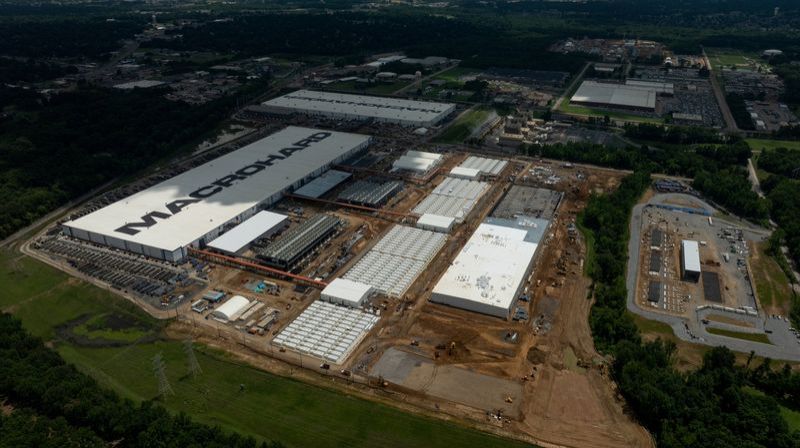
xAI installs unpermitted gas turbines for Colossus 2, polluting predominantly Black neighborhoods in Memphis area
Elon Musk's AI company faces lawsuit from NAACP and environmental groups over dozens of methane turbines operating without Clean Air Act permits Elon Musk's AI venture xAI has been running dozens of methane gas turbines without Clean Air Act permits to power its Colossus 2 data center, generating pollution that lands squarely on predominantly Black communities in the Memphis, Tennessee area. The NAACP, Earthjustice, and the Southern Environmental Law Center filed a lawsuit on April 14, 2026, alleging that xAI and its subsidiary MZX Tech are violating federal environmental law. Here's the thing: this isn't xAI's first time pulling this exact move. Its predecessor facility, Colossus 1, ran up to 35 unpermitted turbines before eventually receiving partial permits covering just 15 units. The numbers behind the pollution The scale of the unpermitted operation at the Southaven, Mississippi site is significant. Between 27 and 46 methane gas turbines have been installed, capable of generating up to 495 MW of power. The potential annual emissions paint a grim picture. The turbines could release over 1,700 tons of nitrogen oxides, 180 tons of fine particulate matter, 500 tons of carbon monoxide, and 19 tons of formaldehyde into the surrounding air each year. Those aren't just abstract numbers. Nitrogen oxides contribute to smog and respiratory disease. Fine particulate matter is linked to heart attacks and premature death. Formaldehyde is a known carcinogen. All of it is settling over neighborhoods that already face disproportionately high asthma rates and poor air quality. The turbines have been active since late 2025, meaning months of unregulated emissions were pumped into the atmosphere before the lawsuit was even filed. Mississippi regulators have since issued permits covering some additional turbines, but operations began well before any approval was granted. Environmental justice meets AI's energy appetite The lawsuit frames this as a textbook environmental justice issue. The communities bearing the health costs of xAI's power generation are predominantly Black neighborhoods in the greater Memphis area. xAI's approach with Colossus 1 set a troubling precedent. That facility became operational in June 2024, running unpermitted turbines for months before regulators caught up. The fact that the company repeated the same playbook with Colossus 2, but at a potentially larger scale, suggests this isn't an oversight.
Polymarket odds put Farage at 94.5% in Clacton by-election market
predict.info -- Premium Domain For Sale Domain only: USD 200,000. Prediction platform technology priced separately. predict.info Polymarket Odds Nudge Higher on Nigel Farage After Unrelated Washington Sanctions Headline Polymarket traders are pricing Nigel Farage as the overwhelming favorite to win the Clacton by-election, with the leading outcome at 94.5% on about $2.02m in volume. The latest nudge higher follows an unrelated news hook, but the contract's recent 24h/7d drift shows how quickly the market can fade confidence even while keeping a clear front-runner. Key Takeaways * Prediction market pricing: Nigel Farage leads the Polymarket Clacton by-election market at 94.5% implied odds (No at 5.5%). * Repricing signal: the top line moved up +1.85pp from 92.65%, after earlier swings that left the 24h change at -2.6pp, reflecting softer conviction despite a dominant leader. * Timing: the market is still active and set to resolve by 2027-06-30T23:59:00+00:00. A report says a Russia sanctions bill could advance in Congress as lawmakers look for a way to honor Graham. The piece frames the sanctions effort as an active legislative push rather than a settled outcome, with attention on the bill's prospects and next procedural steps. Clacton Contract Snapshot: 94.5% Implied Odds, $2.02M Volume, and -2.6pp 24h/7d Drift This is a multi-outcome Polymarket contract, so the headline 94.5% is the market-implied chance that the "Nigel Farage" outcome is the winner at resolution, not a standalone Yes/No event price. Within the outcome row, that corresponds to Yes 94.5% versus No 5.5% for the specific question "Will Nigel Farage win the Clacton by-election?", while the listed alternatives are sitting at 50%/50% in the feed, making the market look top-heavy rather than competitively priced across named challengers. Despite today's uptick (+1.85pp from 92.65% to 94.5%), the historical summary shows a -2.6pp move over both 24h and 7d, with "low" volatility and "weakening" consensus -- consistent with traders trimming confidence without changing who they think is most likely to win. With roughly $2.02m matched, the contract reads as a high-conviction favorite that is still sensitive to incremental information, which is the typical advantage of continuous pricing versus slower narrative shifts in traditional coverage. Watch whether the leader's implied probability holds above the low-90s after the next bout of trading activity, and whether the market begins to distribute probability away from a single dominant outcome as the resolution date (2027-06-30) approaches. What Traders Watch Next on Polymarket: UK Election Seats vs Macro and Crypto Contracts as Cross-Market Hedges Once traders size up a single-seat race, attention often shifts to the broader Polymarket slate where liquidity and cross-market positioning can matter just as much. On politics, "Democratic Presidential Nominee 2028" leads with 19.85% on Gavin Newsom and about $1,234,817,779 in volume, while "Brazil Presidential Election" has Luiz Inácio Lula da Silva at 60.5% on roughly $112,571,545 and "Next French Presidential Election" prices Marine Le Pen at 30.85% on around $112,245,103. For a more tactical angle tied to the same cycle, "Brazil Presidential Election First Round: 2nd Place" shows Flávio Bolsonaro at 83.5% with about $4,122,710 matched, giving traders another way to express view and hedge timing risk across related outcomes. Odds Trend By the Numbers * Platform: Polymarket * Market: Clacton by-election Winner * Contract type: Price strike ladder: each rung has separate Yes/No; Yes means the spot price is above that USD strike at settlement. * Resolution window: Jun 30, 2027 (UTC) * Status: Active (open for trading) * Volume: ~$2,016,550 Top strike rungs +48 more strikes not shown

Anthropic introduces Rupee-based pricing for Claude AI amid big India push
India is home to one of largest Claude user communities, and the company continues to explore ways to make its products more accessible in the region Anthropic has unveiled Rupee-denominated pricing for Claude AI assistant, simplifying payments for customers in India, a market that boasts of one of the largest Claude user communities. Claude Pro plan (more usage, access to Claude Code and Cowork) is available at ₹2,000 per month, and Max (with higher limits and priority access at high traffic times) is being offered from ₹11,999 per month. The Rupee-based pricing for Claude AI subscription can be seen on its website and mobile apps; the program currently supports card payments. Anthropic is testing local pricing in Indian rupees for new consumer subscriptions of Claude Pro, Max, and Team plans, as part of a broader push to offer local pricing across markets, people familiar with the development said. India is home to one of largest Claude user communities, and the company continues to explore ways to make its products more accessible in the region. Also Read Crude oil tops $87: Will it derail the big FPI comeback on D-Street? Freshers vs experienced professionals: Who is winning the AI hiring race? LTM expects AI revenue to outpace traditional services: CEO Venu Lambu Economists, tech leaders urge governments to prepare for AI job disruption Rupee falls 48 paise to 96.16 against US dollar during early trade The latest move comes as global AI companies like Anthropic and OpenAI are doubling down on India market. In February this year, Anthropic opened its office in Bengaluru and announced various partnerships across India, describing the market as the second-largest for its Claude.ai and home to a developer community doing "some of the most technically intense AI work". The Bengaluru office is Anthropic's second in Asia after Tokyo. At that time, an Anthropic statement had said that the company's run-rate revenue in India doubled since the expansion announcement in October 2025, and the range of organisations building on Claude reflected the broad distribution of growth from large enterprises to digital-native companies to startups shipping their first products. Anthropic has been drawing attention over its blockbuster funding, soaring valuations and the growing interest in its advanced AI model 'Mythos'. The model has demonstrated an ability to identify previously undisclosed vulnerabilities in widely used software codebases, making it a potent tool for defensive cybersecurity, whie at the same time raising concerns about its misuse. On Monday, IT Secretary S Krishnan had said that getting access to Mythos and other advanced frontier models is high on the government's priority, and while talks and processes for the same are on, alternate AI models are also being leveraged for now to track and fix vulnerabilities. OpenAI too has stepped up its India focus. The Sam Altman-led AI company recently appointed Prabhjeet Singh as Managing Director for India, one of the company's top-priority markets. More From This Section Apple, Samsung pull ahead as memory crisis hits smartphone market in Q2 Apple releases iOS 27 public beta for eligible iPhones: Check what's new Anthropic introduces India pricing for Claude subscription plans: Report Cert-In operationalises AI war room to work on frontier AI models Apple's lawsuit threatens to disrupt OpenAI's bid to rival the iPhone

Pollution From Musk's Unpermitted XAI Power Project Hits Hardest in Black Communities
By Disha Raychaudhuri and Valerie Volcovici July 14 (Reuters) - Elon Musk's artificial intelligence company xAI has installed 59 natural gas turbines for its Colossus 2 data center project in Tennessee without securing federal clean air permits, according to communications between regulators and xAI representatives. Potential emissions from the turbines are far beyond the threshold that would require a federal permit, and would be released near predominantly Black communities already estimated to be suffering disproportionately high rates of lung disease, according to a Reuters analysis based on government data and information in the correspondence with regulators. The findings, which have not been previously reported, reflect how exploding electricity demand from AI data centers is driving companies to build off-grid power plants at a pace outstripping environmental oversight, with potentially big risks to public health. The number of unpermitted turbines identified by Reuters is about double what xAI has publicly acknowledged. The company previously said it was running 27 unpermitted turbines for Colossus 2 as of January and has argued the permits are not required. At least 57 of the 59 turbines are located in Mississippi, just over the state line from Tennessee where the data center is located. The xAI turbines are among scores of off-grid power plants for data centers proposed or under construction around the country. Local authorities often fast-track approvals in just weeks or months, without the years of environmental studies and public hearings typically required for such power generation projects that connect to the grid, Reuters has reported. Mississippi regulators in March issued a permit for permanent turbines for Colossus 2, allowing construction of 41 gas-fired turbines. The approval came three weeks after the state's only public hearing on the project. The xAI cluster of temporary turbines in Mississippi is already among the biggest off-grid data center power projects, according to Ben King, an analyst with think tank Rhodium Group, who reviewed the Reuters analysis. "This looks to be an unprecedented level of behind-the-meter gas being installed in one place," he said, referring to off-grid natural gas plants serving just one customer. The communications reviewed by Reuters show xAI, now owned by trillionaire Musk's SpaceX, has installed 57 off-grid turbines in Southaven, Mississippi, just across the state line from its Colossus 2 data center in Memphis, a facility supporting the Grok chatbot and other AI systems. The records show the company has also installed two other unpermitted turbines for the project on a different site. Reuters could not determine the location. The communications, obtained through a Reuters public records request, included emails between Trinity Consultants, representing xAI and subsidiary MZX Tech, and the Mississippi Department of Environmental Quality (MDEQ). xAI did not respond to Reuters' request for comment. xAI's turbines are part of a widening environmental justice battle over whether the AI boom is adding disproportionate pollution burdens to communities of color. Civil rights groups including the NAACP and the Southern Environmental Law Center sued xAI in April to halt their operations, arguing the turbines produce emissions subject to the federal Clean Air Act and shouldn't be operated without permits. They contend the turbines are polluting homes, schools and churches in historically Black communities. "The scale of it is astonishing," said Patrick Anderson, an attorney with the Southern Environmental Law Center. "This is an absolutely huge Clean Air Act violation that threatens public health." Securing a Clean Air Act permit would have exposed xAI's project to extensive review and public comment, potentially taking years. Mississippi environmental regulators and xAI have argued in court filings that the turbines are exempt because they are "mobile" and intended to operate onsite for less than a year. "MDEQ has determined that portable/temporary turbines do not require an air permit," the agency said in a statement to Reuters. The U.S. Environmental Protection Agency said in January 2026 that even temporary turbines exceeding emissions thresholds must obtain permits. The agency, however, told Reuters it's considering changes allowing "regulatory flexibilities" for portable units while continuing to protect public health. xAI, the MDEQ and the EPA did not answer questions from Reuters about pollution impacts on communities of color from power generation to serve data centers. The U.S. Justice Department weighed in on the lawsuit in a June 15 filing, saying that restricting the turbines could threaten national security interests because xAI's systems support U.S. military operations, including operations involving Iran. The outcome of the lawsuit filed by civil rights groups could help define how environmental laws apply to the fast-growing AI sector, where companies are scrambling to bring power supplies online to support energy-intensive computing. "This sets up scenarios where the government can create sacrifice zones and tell communities they have to breathe illegal air pollution," said Mary Rock, a senior attorney for Earthjustice which is representing the NAACP and SELC. The dispute echoes the findings of a 2022 study by researchers from UCLA and Columbia University and published in the Nature Energy journal that found that previously redlined communities - where banks historically discriminated against Black mortgage applicants - now face disproportionately high exposure to pollutants from fossil fuel facilities. "Air pollution from these and other sources contributes to systemic racial disparities in chronic disease and ultimately shorter lives," Lara Cushing, a UCLA public health professor who co-authored the study, told Reuters. BIG EMISSIONS The emails reviewed by Reuters included the manufacturer emissions profiles for 32 of the 59 turbines, including 30 at the Southaven site. A Reuters analysis based on that information found that those 30 turbines alone could emit nearly 2,500 short tons of nitrogen oxide, 4,000 short tons of carbon monoxide and 22 short tons of formaldehyde annually, assuming they operate continuously at 80% of capacity. According to the EPA, gas turbines are typically operated at loads of 80% or more to achieve efficiency. Nitrogen oxides contribute to smog and respiratory inflammation, according to the American Lung Association. Carbon monoxide deprives the body of oxygen, and formaldehyde is a carcinogen. The xAI site's potential emissions far exceed a Clean Air Act threshold that requires permitting for facilities capable of more than 100 short tons annually of pollutants such as nitrogen oxide. "This is a massive amount of turbines and an unfathomable amount of air pollution," Southaven resident Shannon Samsa said in an interview. "It's not a hypothetical," she said, "that air pollution is bad for you." The nitrogen oxide emissions calculated by Reuters for about half the plant's turbines would put the facility "up there with some of the heaviest polluting natural gas power plants across the entire country," said Nicholas Mailloux, a postdoctoral researcher at the University of Wisconsin-Madison who studies air quality and health benefits of the clean-energy transition. He said the facility would be on par with the top 25 U.S. gas plants for nitrogen oxide emissions, citing EPA data for actual emissions. THE PEOPLE AFFECTED In the Colonial Hills neighborhood of Southaven, the turbines serving Colossus 2 can be heard around the clock, often firing off noisy bursts that residents compare to jet engines. Ervin Laws, a Colonial Hills resident in his 20s, said the noise wakes him up at night. "I can't do anything about it, because he's got more money than me," he said, referring to Musk. The turbines were installed in communities already estimated to be facing relatively high respiratory disease burdens, according to a Reuters analysis of CDC data. In 27 of 28 census tracts within five miles of the site - spanning both Mississippi and Tennessee - the estimated asthma rates were higher than their respective countywide figures. In 24 tracts, chronic obstructive pulmonary disease rates were also higher. Five miles is a distance commonly used in environmental health research to capture populations likely to be exposed to air pollution from a stationary source. A separate Reuters analysis of Census Bureau data found that the residents living near the facility are disproportionately Black. Because the five-mile radius crosses state lines, Reuters compared each side against its own county baseline. Within five miles of the facility in DeSoto county, Mississippi - where the turbines are located - about 46% of residents are Black, compared with 33% countywide, according to census data. Across the state line in Tennessee, where residents have no say in Mississippi's permitting process, about 94% of residents within five miles of the facility are Black, compared to 52% in surrounding Shelby County. Jayajit Chakraborty, a professor at the University of California, Santa Barbara, said the Reuters analysis was consistent with research that shows communities of color face higher exposure to fossil fuel pollution. Shelby County and portions of DeSoto County have also previously failed to meet federal ozone standards and remain subject to EPA-approved plans to ensure they do not slip back into violation, according to regulatory documents. Nitrogen oxide is a key precursor to ozone formation, which the EPA says can harm respiratory health. "Given this community struggles with high asthma rates, additional NOx exposure at such high rates could exacerbate public health issues in a community that is already seeing more than its fair share of exposure to toxic air pollution," said Victoria Nelson, an independent environmental engineer, formerly at EPA. Sarah Gladney, 72, has watched the rapid expansion of xAI's Memphis-area presence from her home in the historically Black neighborhood of Boxtown, a few miles from where the company built its Colossus 1 data center in 2024. "Once they got their foot in the door in Memphis, I feel like it's going to be a continuous movement of xAI into these other communities," she said. "It's all about the money, and it's not about the health or wellness of the people that live in or near these communities." (Reporting by Disha Raychaudhuri and Valerie Volcovici; photos by Kevin Wurm; editing by David Gaffen, Kat Stafford, Ben Lesser and Richard Valdmanis)

Polymarket: Hormuz traffic normal by Jul 31 seen at 2% after UK IRGC ban
Polymarket Pins "No" After UK IRGC-Ban Catalyst Reframes Strait of Hormuz Normalization Odds Polymarket traders are pricing a near-certain "No" on whether Strait of Hormuz traffic returns to normal by July 31, with No at 97.65% (Yes 2.35%) on $16.28M volume. The catalyst in headlines is a UK move to ban the IRGC and Iran's sharp response, and the market lens is how quickly odds compressed toward a single outcome. Key Takeaways * Prediction: Polymarket implies "No" at 97.65% (Yes 2.35%) that traffic returns to normal by July 31. * Basis: After the UK's IRGC-ban headline, pricing stayed pinned to No while the contract shows a sharp collapse from earlier Yes pricing. * Timing: The binary market resolves on 2026-07-31, with recent history showing high volatility and a reversal signal despite a bearish trend. A report says Iran criticized the UK decision to ban the IRGC as "irresponsible." The item frames the dispute as a political and security flashpoint, which can spill into market narratives tied to Gulf shipping risk even when the immediate policy action is UK-focused. Market Reaction: $16.28M Volume as "Yes" Collapses to 2.35% (Down 39.65 Points) and Liquidity Crowds the "No" Side This is a binary contract: "Yes" pays out only if traffic is judged to have returned to normal by the July 31 resolution date; at 2.35% Yes vs 97.65% No, Polymarket is treating "normal by deadline" as a low-probability tail outcome rather than a base case. The headline-level move is the magnitude of repricing: current Yes is 2.35% versus a prior 42.0%, a 39.65 percentage-point drop that indicates traders converged hard toward the No side rather than hovering around a coin-flip. The historical summary flags high volatility and a reversal_detected signal even as the trend is bearish with strong momentum, which is consistent with a market that previously swung around mid-range levels (avg_last_5 at 51.0% vs latest_odds at 42.0%) before breaking down. With $16.28M in volume while the market remains active, the key read is not just direction but concentration: the implied probability has compressed to a narrow band near zero for Yes, signaling low disagreement on the deadline framing even if day-to-day news shifts the narrative. Watch whether the Yes price can reclaim meaningfully above its current single-digit level without a sustained lift in conviction; any move would need to show up as a multi-point probability shift alongside continued volume ahead of the 2026-07-31 resolution. What Traders Watch Next on Polymarket: Spillover Contracts on Gulf Shipping Risk, Oil Price Spikes, and Broader Macro/Cr Beyond the headline contract, traders often triangulate sentiment by watching adjacent Polymarket boards that can move on the same newsflow. Right now that includes 100.0% on "Iran military action against a gulf state on...?" (July 12) on $3,932,475 volume, 42.5% on "Iran full airspace closure by...?" (August 31) on $3,617,945, 30.5% on "US-Iran Final Nuclear Deal by...?" (December 31) on $9,881,925, and 81.5% on "Will the U.S. invade Iran before 2027?" (No) on $41,396,247. Taken together, these spillover contracts give a broader read on how traders are pricing escalation risk, aviation disruption, and longer-dated diplomatic outcomes alongside the platform's macro and commodities-linked narratives. Odds Trend By the Numbers * Platform: Polymarket * Market: Strait of Hormuz traffic returns to normal by July 31? * Resolution window: Jul 31, 2026 (UTC) * Status: Active (open for trading) * Leading implied prob.: 2.4% * Volume: ~$16,280,937 * Top outcomes: Yes: Yes 2.4% / No 97.7%; No: Yes 2.4% / No 97.7%

Pollution from Musk's unpermitted xAI power project hits hardest in Black communities
By Disha Raychaudhuri and Valerie Volcovici July 14 (Reuters) - Elon Musk's artificial intelligence company xAI has installed 59 natural gas turbines for its Colossus 2 data center project in Tennessee without securing federal clean air permits, according to communications between regulators and xAI representatives. Potential emissions from the turbines are far beyond the threshold that would require a federal permit, and would be released near predominantly Black communities already estimated to be suffering disproportionately high rates of lung disease, according to a Reuters analysis based on government data and information in the correspondence with regulators. The findings, which have not been previously reported, reflect how exploding electricity demand from AI data centers is driving companies to build off-grid power plants at a pace outstripping environmental oversight, with potentially big risks to public health. The number of unpermitted turbines identified by Reuters is about double what xAI has publicly acknowledged. The company previously said it was running 27 unpermitted turbines for Colossus 2 as of January and has argued the permits are not required. At least 57 of the 59 turbines are located in Mississippi, just over the state line from Tennessee where the data center is located. The xAI turbines are among scores of off-grid power plants for data centers proposed or under construction around the country. Local authorities often fast-track approvals in just weeks or months, without the years of environmental studies and public hearings typically required for such power generation projects that connect to the grid, Reuters has reported. Mississippi regulators in March issued a permit for permanent turbines for Colossus 2, allowing construction of 41 gas-fired turbines. The approval came three weeks after the state's only public hearing on the project. The xAI cluster of temporary turbines in Mississippi is already among the biggest off-grid data center power projects, according to Ben King, an analyst with think tank Rhodium Group, who reviewed the Reuters analysis. "This looks to be an unprecedented level of behind-the-meter gas being installed in one place," he said, referring to off-grid natural gas plants serving just one customer. The communications reviewed by Reuters show xAI, now owned by trillionaire Musk's SpaceX, has installed 57 off-grid turbines in Southaven, Mississippi, just across the state line from its Colossus 2 data center in Memphis, a facility supporting the Grok chatbot and other AI systems. The records show the company has also installed two other unpermitted turbines for the project on a different site. Reuters could not determine the location. The communications, obtained through a Reuters public records request, included emails between Trinity Consultants, representing xAI and subsidiary MZX Tech, and the Mississippi Department of Environmental Quality (MDEQ). xAI did not respond to Reuters' request for comment. xAI's turbines are part of a widening environmental justice battle over whether the AI boom is adding disproportionate pollution burdens to communities of color. Civil rights groups including the NAACP and the Southern Environmental Law Center sued xAI in April to halt their operations, arguing the turbines produce emissions subject to the federal Clean Air Act and shouldn't be operated without permits. They contend the turbines are polluting homes, schools and churches in historically Black communities. "The scale of it is astonishing," said Patrick Anderson, an attorney with the Southern Environmental Law Center. "This is an absolutely huge Clean Air Act violation that threatens public health." Securing a Clean Air Act permit would have exposed xAI's project to extensive review and public comment, potentially taking years. Mississippi environmental regulators and xAI have argued in court filings that the turbines are exempt because they are "mobile" and intended to operate onsite for less than a year. "MDEQ has determined that portable/temporary turbines do not require an air permit," the agency said in a statement to Reuters. The U.S. Environmental Protection Agency said in January 2026 that even temporary turbines exceeding emissions thresholds must obtain permits. The agency, however, told Reuters it's considering changes allowing "regulatory flexibilities" for portable units while continuing to protect public health. xAI, the MDEQ and the EPA did not answer questions from Reuters about pollution impacts on communities of color from power generation to serve data centers. The U.S. Justice Department weighed in on the lawsuit in a June 15 filing, saying that restricting the turbines could threaten national security interests because xAI's systems support U.S. military operations, including operations involving Iran. The outcome of the lawsuit filed by civil rights groups could help define how environmental laws apply to the fast-growing AI sector, where companies are scrambling to bring power supplies online to support energy-intensive computing. "This sets up scenarios where the government can create sacrifice zones and tell communities they have to breathe illegal air pollution," said Mary Rock, a senior attorney for Earthjustice which is representing the NAACP and SELC. The dispute echoes the findings of a 2022 study by researchers from UCLA and Columbia University and published in the Nature Energy journal that found that previously redlined communities - where banks historically discriminated against Black mortgage applicants - now face disproportionately high exposure to pollutants from fossil fuel facilities. "Air pollution from these and other sources contributes to systemic racial disparities in chronic disease and ultimately shorter lives," Lara Cushing, a UCLA public health professor who co-authored the study, told Reuters. BIG EMISSIONS The emails reviewed by Reuters included the manufacturer emissions profiles for 32 of the 59 turbines, including 30 at the Southaven site. A Reuters analysis based on that information found that those 30 turbines alone could emit nearly 2,500 short tons of nitrogen oxide, 4,000 short tons of carbon monoxide and 22 short tons of formaldehyde annually, assuming they operate continuously at 80% of capacity. According to the EPA, gas turbines are typically operated at loads of 80% or more to achieve efficiency. Nitrogen oxides contribute to smog and respiratory inflammation, according to the American Lung Association. Carbon monoxide deprives the body of oxygen, and formaldehyde is a carcinogen. The xAI site's potential emissions far exceed a Clean Air Act threshold that requires permitting for facilities capable of more than 100 short tons annually of pollutants such as nitrogen oxide. "This is a massive amount of turbines and an unfathomable amount of air pollution," Southaven resident Shannon Samsa said in an interview. "It's not a hypothetical," she said, "that air pollution is bad for you." The nitrogen oxide emissions calculated by Reuters for about half the plant's turbines would put the facility "up there with some of the heaviest polluting natural gas power plants across the entire country," said Nicholas Mailloux, a postdoctoral researcher at the University of Wisconsin-Madison who studies air quality and health benefits of the clean-energy transition. He said the facility would be on par with the top 25 U.S. gas plants for nitrogen oxide emissions, citing EPA data for actual emissions. THE PEOPLE AFFECTED In the Colonial Hills neighborhood of Southaven, the turbines serving Colossus 2 can be heard around the clock, often firing off noisy bursts that residents compare to jet engines. Ervin Laws, a Colonial Hills resident in his 20s, said the noise wakes him up at night. "I can't do anything about it, because he's got more money than me," he said, referring to Musk. The turbines were installed in communities already estimated to be facing relatively high respiratory disease burdens, according to a Reuters analysis of CDC data. In 27 of 28 census tracts within five miles of the site - spanning both Mississippi and Tennessee - the estimated asthma rates were higher than their respective countywide figures. In 24 tracts, chronic obstructive pulmonary disease rates were also higher. Five miles is a distance commonly used in environmental health research to capture populations likely to be exposed to air pollution from a stationary source. A separate Reuters analysis of Census Bureau data found that the residents living near the facility are disproportionately Black. Because the five-mile radius crosses state lines, Reuters compared each side against its own county baseline. Within five miles of the facility in DeSoto county, Mississippi - where the turbines are located - about 46% of residents are Black, compared with 33% countywide, according to census data. Across the state line in Tennessee, where residents have no say in Mississippi's permitting process, about 94% of residents within five miles of the facility are Black, compared to 52% in surrounding Shelby County. Jayajit Chakraborty, a professor at the University of California, Santa Barbara, said the Reuters analysis was consistent with research that shows communities of color face higher exposure to fossil fuel pollution. Shelby County and portions of DeSoto County have also previously failed to meet federal ozone standards and remain subject to EPA-approved plans to ensure they do not slip back into violation, according to regulatory documents. Nitrogen oxide is a key precursor to ozone formation, which the EPA says can harm respiratory health. "Given this community struggles with high asthma rates, additional NOx exposure at such high rates could exacerbate public health issues in a community that is already seeing more than its fair share of exposure to toxic air pollution," said Victoria Nelson, an independent environmental engineer, formerly at EPA. Sarah Gladney, 72, has watched the rapid expansion of xAI's Memphis-area presence from her home in the historically Black neighborhood of Boxtown, a few miles from where the company built its Colossus 1 data center in 2024. "Once they got their foot in the door in Memphis, I feel like it's going to be a continuous movement of xAI into these other communities," she said. "It's all about the money, and it's not about the health or wellness of the people that live in or near these communities." (Reporting by Disha Raychaudhuri and Valerie Volcovici; photos by Kevin Wurm; editing by David Gaffen, Kat Stafford, Ben Lesser and Richard Valdmanis)

Pollution from Musk's unpermitted xAI power project hits hardest in Black communities
By Disha Raychaudhuri and Valerie Volcovici July 14 (Reuters) - Elon Musk's artificial intelligence company xAI has installed 59 natural gas turbines for its Colossus 2 data center project in Tennessee without securing federal clean air permits, according to communications between regulators and xAI representatives. Potential emissions from the turbines are far beyond the threshold that would require a federal permit, and would be released near predominantly Black communities already estimated to be suffering disproportionately high rates of lung disease, according to a Reuters analysis based on government data and information in the correspondence with regulators. The findings, which have not been previously reported, reflect how exploding electricity demand from AI data centers is driving companies to build off-grid power plants at a pace outstripping environmental oversight, with potentially big risks to public health. The number of unpermitted turbines identified by Reuters is about double what xAI has publicly acknowledged. The company previously said it was running 27 unpermitted turbines for Colossus 2 as of January and has argued the permits are not required. At least 57 of the 59 turbines are located in Mississippi, just over the state line from Tennessee where the data center is located. The xAI turbines are among scores of off-grid power plants for data centers proposed or under construction around the country. Local authorities often fast-track approvals in just weeks or months, without the years of environmental studies and public hearings typically required for such power generation projects that connect to the grid, Reuters has reported. Mississippi regulators in March issued a permit for permanent turbines for Colossus 2, allowing construction of 41 gas-fired turbines. The approval came three weeks after the state's only public hearing on the project. The xAI cluster of temporary turbines in Mississippi is already among the biggest off-grid data center power projects, according to Ben King, an analyst with think tank Rhodium Group, who reviewed the Reuters analysis. "This looks to be an unprecedented level of behind-the-meter gas being installed in one place," he said, referring to off-grid natural gas plants serving just one customer. The communications reviewed by Reuters show xAI, now owned by trillionaire Musk's SpaceX, has installed 57 off-grid turbines in Southaven, Mississippi, just across the state line from its Colossus 2 data center in Memphis, a facility supporting the Grok chatbot and other AI systems. The records show the company has also installed two other unpermitted turbines for the project on a different site. Reuters could not determine the location. The communications, obtained through a Reuters public records request, included emails between Trinity Consultants, representing xAI and subsidiary MZX Tech, and the Mississippi Department of Environmental Quality (MDEQ). xAI did not respond to Reuters' request for comment. xAI's turbines are part of a widening environmental justice battle over whether the AI boom is adding disproportionate pollution burdens to communities of color. Civil rights groups including the NAACP and the Southern Environmental Law Center sued xAI in April to halt their operations, arguing the turbines produce emissions subject to the federal Clean Air Act and shouldn't be operated without permits. They contend the turbines are polluting homes, schools and churches in historically Black communities. "The scale of it is astonishing," said Patrick Anderson, an attorney with the Southern Environmental Law Center. "This is an absolutely huge Clean Air Act violation that threatens public health." Securing a Clean Air Act permit would have exposed xAI's project to extensive review and public comment, potentially taking years. Mississippi environmental regulators and xAI have argued in court filings that the turbines are exempt because they are "mobile" and intended to operate onsite for less than a year. "MDEQ has determined that portable/temporary turbines do not require an air permit," the agency said in a statement to Reuters. The U.S. Environmental Protection Agency said in January 2026 that even temporary turbines exceeding emissions thresholds must obtain permits. The agency, however, told Reuters it's considering changes allowing "regulatory flexibilities" for portable units while continuing to protect public health. xAI, the MDEQ and the EPA did not answer questions from Reuters about pollution impacts on communities of color from power generation to serve data centers. The U.S. Justice Department weighed in on the lawsuit in a June 15 filing, saying that restricting the turbines could threaten national security interests because xAI's systems support U.S. military operations, including operations involving Iran. The outcome of the lawsuit filed by civil rights groups could help define how environmental laws apply to the fast-growing AI sector, where companies are scrambling to bring power supplies online to support energy-intensive computing. "This sets up scenarios where the government can create sacrifice zones and tell communities they have to breathe illegal air pollution," said Mary Rock, a senior attorney for Earthjustice which is representing the NAACP and SELC. The dispute echoes the findings of a 2022 study by researchers from UCLA and Columbia University and published in the Nature Energy journal that found that previously redlined communities - where banks historically discriminated against Black mortgage applicants - now face disproportionately high exposure to pollutants from fossil fuel facilities. "Air pollution from these and other sources contributes to systemic racial disparities in chronic disease and ultimately shorter lives," Lara Cushing, a UCLA public health professor who co-authored the study, told Reuters. BIG EMISSIONS The emails reviewed by Reuters included the manufacturer emissions profiles for 32 of the 59 turbines, including 30 at the Southaven site. A Reuters analysis based on that information found that those 30 turbines alone could emit nearly 2,500 short tons of nitrogen oxide, 4,000 short tons of carbon monoxide and 22 short tons of formaldehyde annually, assuming they operate continuously at 80% of capacity. According to the EPA, gas turbines are typically operated at loads of 80% or more to achieve efficiency. Nitrogen oxides contribute to smog and respiratory inflammation, according to the American Lung Association. Carbon monoxide deprives the body of oxygen, and formaldehyde is a carcinogen. The xAI site's potential emissions far exceed a Clean Air Act threshold that requires permitting for facilities capable of more than 100 short tons annually of pollutants such as nitrogen oxide. "This is a massive amount of turbines and an unfathomable amount of air pollution," Southaven resident Shannon Samsa said in an interview. "It's not a hypothetical," she said, "that air pollution is bad for you." The nitrogen oxide emissions calculated by Reuters for about half the plant's turbines would put the facility "up there with some of the heaviest polluting natural gas power plants across the entire country," said Nicholas Mailloux, a postdoctoral researcher at the University of Wisconsin-Madison who studies air quality and health benefits of the clean-energy transition. He said the facility would be on par with the top 25 U.S. gas plants for nitrogen oxide emissions, citing EPA data for actual emissions. THE PEOPLE AFFECTED In the Colonial Hills neighborhood of Southaven, the turbines serving Colossus 2 can be heard around the clock, often firing off noisy bursts that residents compare to jet engines. Ervin Laws, a Colonial Hills resident in his 20s, said the noise wakes him up at night. "I can't do anything about it, because he's got more money than me," he said, referring to Musk. The turbines were installed in communities already estimated to be facing relatively high respiratory disease burdens, according to a Reuters analysis of CDC data. In 27 of 28 census tracts within five miles of the site - spanning both Mississippi and Tennessee - the estimated asthma rates were higher than their respective countywide figures. In 24 tracts, chronic obstructive pulmonary disease rates were also higher. Five miles is a distance commonly used in environmental health research to capture populations likely to be exposed to air pollution from a stationary source. A separate Reuters analysis of Census Bureau data found that the residents living near the facility are disproportionately Black. Because the five-mile radius crosses state lines, Reuters compared each side against its own county baseline. Within five miles of the facility in DeSoto county, Mississippi - where the turbines are located - about 46% of residents are Black, compared with 33% countywide, according to census data. Across the state line in Tennessee, where residents have no say in Mississippi's permitting process, about 94% of residents within five miles of the facility are Black, compared to 52% in surrounding Shelby County. Jayajit Chakraborty, a professor at the University of California, Santa Barbara, said the Reuters analysis was consistent with research that shows communities of color face higher exposure to fossil fuel pollution. Shelby County and portions of DeSoto County have also previously failed to meet federal ozone standards and remain subject to EPA-approved plans to ensure they do not slip back into violation, according to regulatory documents. Nitrogen oxide is a key precursor to ozone formation, which the EPA says can harm respiratory health. "Given this community struggles with high asthma rates, additional NOx exposure at such high rates could exacerbate public health issues in a community that is already seeing more than its fair share of exposure to toxic air pollution," said Victoria Nelson, an independent environmental engineer, formerly at EPA. Sarah Gladney, 72, has watched the rapid expansion of xAI's Memphis-area presence from her home in the historically Black neighborhood of Boxtown, a few miles from where the company built its Colossus 1 data center in 2024. "Once they got their foot in the door in Memphis, I feel like it's going to be a continuous movement of xAI into these other communities," she said. "It's all about the money, and it's not about the health or wellness of the people that live in or near these communities." (Reporting by Disha Raychaudhuri and Valerie Volcovici; photos by Kevin Wurm; editing by David Gaffen, Kat Stafford, Ben Lesser and Richard Valdmanis)
Pollution from Musk's unpermitted xAI power project hits hardest in Black communities
Add Yahoo as a preferred source to see more of our stories on Google. By Disha Raychaudhuri and Valerie Volcovici July 14 (Reuters) - Elon Musk's artificial intelligence company xAI has installed 59 natural gas turbines for its Colossus 2 data center project in Tennessee without securing federal clean air permits, according to communications between regulators and xAI representatives. Potential emissions from the turbines are far beyond the threshold that would require a federal permit, and would be released near predominantly Black communities already estimated to be suffering disproportionately high rates of lung disease, according to a Reuters analysis based on government data and information in the correspondence with regulators. The findings, which have not been previously reported, reflect how exploding electricity demand from AI data centers is driving companies to build off-grid power plants at a pace outstripping environmental oversight, with potentially big risks to public health. The number of unpermitted turbines identified by Reuters is about double what xAI has publicly acknowledged. The company previously said it was running 27 unpermitted turbines for Colossus 2 as of January and has argued the permits are not required. At least 57 of the 59 turbines are located in Mississippi, just over the state line from Tennessee where the data center is located. The xAI turbines are among scores of off-grid power plants for data centers proposed or under construction around the country. Local authorities often fast-track approvals in just weeks or months, without the years of environmental studies and public hearings typically required for such power generation projects that connect to the grid, Reuters has reported. Mississippi regulators in March issued a permit for permanent turbines for Colossus 2, allowing construction of 41 gas-fired turbines. The approval came three weeks after the state's only public hearing on the project. The xAI cluster of temporary turbines in Mississippi is already among the biggest off-grid data center power projects, according to Ben King, an analyst with think tank Rhodium Group, who reviewed the Reuters analysis. "This looks to be an unprecedented level of behind-the-meter gas being installed in one place," he said, referring to off-grid natural gas plants serving just one customer. The communications reviewed by Reuters show xAI, now owned by trillionaire Musk's SpaceX, has installed 57 off-grid turbines in Southaven, Mississippi, just across the state line from its Colossus 2 data center in Memphis, a facility supporting the Grok chatbot and other AI systems. The records show the company has also installed two other unpermitted turbines for the project on a different site. Reuters could not determine the location. The communications, obtained through a Reuters public records request, included emails between Trinity Consultants, representing xAI and subsidiary MZX Tech, and the Mississippi Department of Environmental Quality (MDEQ). xAI did not respond to Reuters' request for comment. xAI's turbines are part of a widening environmental justice battle over whether the AI boom is adding disproportionate pollution burdens to communities of color. Civil rights groups including the NAACP and the Southern Environmental Law Center sued xAI in April to halt their operations, arguing the turbines produce emissions subject to the federal Clean Air Act and shouldn't be operated without permits. They contend the turbines are polluting homes, schools and churches in historically Black communities. "The scale of it is astonishing," said Patrick Anderson, an attorney with the Southern Environmental Law Center. "This is an absolutely huge Clean Air Act violation that threatens public health." Securing a Clean Air Act permit would have exposed xAI's project to extensive review and public comment, potentially taking years. Mississippi environmental regulators and xAI have argued in court filings that the turbines are exempt because they are "mobile" and intended to operate onsite for less than a year. "MDEQ has determined that portable/temporary turbines do not require an air permit," the agency said in a statement to Reuters. The U.S. Environmental Protection Agency said in January 2026 that even temporary turbines exceeding emissions thresholds must obtain permits. The agency, however, told Reuters it's considering changes allowing "regulatory flexibilities" for portable units while continuing to protect public health. xAI, the MDEQ and the EPA did not answer questions from Reuters about pollution impacts on communities of color from power generation to serve data centers. The U.S. Justice Department weighed in on the lawsuit in a June 15 filing, saying that restricting the turbines could threaten national security interests because xAI's systems support U.S. military operations, including operations involving Iran. The outcome of the lawsuit filed by civil rights groups could help define how environmental laws apply to the fast-growing AI sector, where companies are scrambling to bring power supplies online to support energy-intensive computing. "This sets up scenarios where the government can create sacrifice zones and tell communities they have to breathe illegal air pollution," said Mary Rock, a senior attorney for Earthjustice which is representing the NAACP and SELC. The dispute echoes the findings of a 2022 study by researchers from UCLA and Columbia University and published in the Nature Energy journal that found that previously redlined communities - where banks historically discriminated against Black mortgage applicants - now face disproportionately high exposure to pollutants from fossil fuel facilities. "Air pollution from these and other sources contributes to systemic racial disparities in chronic disease and ultimately shorter lives," Lara Cushing, a UCLA public health professor who co-authored the study, told Reuters. BIG EMISSIONS The emails reviewed by Reuters included the manufacturer emissions profiles for 32 of the 59 turbines, including 30 at the Southaven site. A Reuters analysis based on that information found that those 30 turbines alone could emit nearly 2,500 short tons of nitrogen oxide, 4,000 short tons of carbon monoxide and 22 short tons of formaldehyde annually, assuming they operate continuously at 80% of capacity. According to the EPA, gas turbines are typically operated at loads of 80% or more to achieve efficiency. Nitrogen oxides contribute to smog and respiratory inflammation, according to the American Lung Association. Carbon monoxide deprives the body of oxygen, and formaldehyde is a carcinogen. The xAI site's potential emissions far exceed a Clean Air Act threshold that requires permitting for facilities capable of more than 100 short tons annually of pollutants such as nitrogen oxide. "This is a massive amount of turbines and an unfathomable amount of air pollution," Southaven resident Shannon Samsa said in an interview. "It's not a hypothetical," she said, "that air pollution is bad for you." The nitrogen oxide emissions calculated by Reuters for about half the plant's turbines would put the facility "up there with some of the heaviest polluting natural gas power plants across the entire country," said Nicholas Mailloux, a postdoctoral researcher at the University of Wisconsin-Madison who studies air quality and health benefits of the clean-energy transition. He said the facility would be on par with the top 25 U.S. gas plants for nitrogen oxide emissions, citing EPA data for actual emissions. THE PEOPLE AFFECTED In the Colonial Hills neighborhood of Southaven, the turbines serving Colossus 2 can be heard around the clock, often firing off noisy bursts that residents compare to jet engines. Ervin Laws, a Colonial Hills resident in his 20s, said the noise wakes him up at night. "I can't do anything about it, because he's got more money than me," he said, referring to Musk. The turbines were installed in communities already estimated to be facing relatively high respiratory disease burdens, according to a Reuters analysis of CDC data. In 27 of 28 census tracts within five miles of the site - spanning both Mississippi and Tennessee - the estimated asthma rates were higher than their respective countywide figures. In 24 tracts, chronic obstructive pulmonary disease rates were also higher. Five miles is a distance commonly used in environmental health research to capture populations likely to be exposed to air pollution from a stationary source. A separate Reuters analysis of Census Bureau data found that the residents living near the facility are disproportionately Black. Because the five-mile radius crosses state lines, Reuters compared each side against its own county baseline. Within five miles of the facility in DeSoto county, Mississippi - where the turbines are located - about 46% of residents are Black, compared with 33% countywide, according to census data. Across the state line in Tennessee, where residents have no say in Mississippi's permitting process, about 94% of residents within five miles of the facility are Black, compared to 52% in surrounding Shelby County. Jayajit Chakraborty, a professor at the University of California, Santa Barbara, said the Reuters analysis was consistent with research that shows communities of color face higher exposure to fossil fuel pollution. Shelby County and portions of DeSoto County have also previously failed to meet federal ozone standards and remain subject to EPA-approved plans to ensure they do not slip back into violation, according to regulatory documents. Nitrogen oxide is a key precursor to ozone formation, which the EPA says can harm respiratory health. "Given this community struggles with high asthma rates, additional NOx exposure at such high rates could exacerbate public health issues in a community that is already seeing more than its fair share of exposure to toxic air pollution," said Victoria Nelson, an independent environmental engineer, formerly at EPA. Sarah Gladney, 72, has watched the rapid expansion of xAI's Memphis-area presence from her home in the historically Black neighborhood of Boxtown, a few miles from where the company built its Colossus 1 data center in 2024. "Once they got their foot in the door in Memphis, I feel like it's going to be a continuous movement of xAI into these other communities," she said. "It's all about the money, and it's not about the health or wellness of the people that live in or near these communities." (Reporting by Disha Raychaudhuri and Valerie Volcovici; photos by Kevin Wurm; editing by David Gaffen, Kat Stafford, Ben Lesser and Richard Valdmanis)
Canada Regulator Warns Banks About Cyber Risks of Anthropic's Claude Mythos
Canada's federal banking regulator warned the country's largest financial institutions about the risks of Anthropic's Claude Mythos and other advanced AI models, saying the new technology could increase cyber threats and reduce the time institutions have to identify and fix vulnerabilities, according to an email sent in April. The regulator, the Office of the Superintendent of Financial Institutions, sent the email to chief technology officers, chief information security officers, and chief risk officers across the financial industry, including the big banks and insurers, according to documents Reuters obtained through an access-to-information request. Regulators globally are trying to assess cybersecurity risks such as Anthropic's frontier AI model Mythos. Cybersecurity experts say Mythos, an AI model described as extremely capable at finding and exploiting cybersecurity vulnerabilities, poses significant challenges to the banking industry and its legacy technology systems. "Advanced artificial intelligence models, such as Anthropic Claude Mythos, significantly compress the timeframe for effective risk mitigation," OSFI said in the email. "Accordingly, this bulletin is grounded in our existing guidance and outlines sound practices that institutions can adopt to enhance the speed and effectiveness of risk identification, mitigation and response." Additional contents of the email were redacted due to some sections of the Access to Information Act. An acknowledgment of the risks of Mythos from OSFI could ensure Canadian banks, insurers and other regulated institutions invest in technology to protect clients from cyber risks. After Reuters sent questions to OSFI last week, the regulator on Monday posted a public bulletin on generative and agentic artificial intelligence online. "OSFI takes a technology‑neutral, risk‑focused approach to emerging technologies, including advanced artificial intelligence models such as Mythos. Our focus is not the technology itself, but how federally regulated financial institutions govern and manage the risks associated with its use," the regulator said in an emailed response to Reuters questions. In early April, Canadian bank executives met with regulators to discuss the risks posed by Mythos shortly after U.S. Treasury Secretary Scott Bessent and then-Federal Reserve Chair Jerome Powell convened an urgent meeting with bank CEOs to warn of cyber risks posed by Anthropic's latest artificial intelligence model. OSFI sent the email to company executives on April 29. Rapidly Changing Landscape OSFI is responsible for regulating and maintaining the stability of Canada's financial sector, from banks to pension funds, and identifying risks emerging from foreign interference, geopolitics and new technology. The cyber capabilities of some frontier AI systems are considered so powerful that access has been restricted, with euro zone banks currently excluded from Mythos. Anthropic has also had a tumultuous relationship with the U.S. government. A judge blocked its initial blacklisting by the Pentagon in March, and the conflict has eased following the private release of Anthropic's Mythos. Three of Canada's big six banks - Royal Bank of Canada, TD Bank and BMO - have outlined a plan to earn millions from their investments in AI as the banks moved from experimental AI projects to applying them in chatbots, building internal tools and lowering their reliance on third-party tools. Bank of Nova Scotia, CIBC and National Bank have also disclosed several AI initiatives. The Canadian government has said it has access to Anthropic's Project Glasswing, which allows companies to have access to Mythos. It is not clear which, if any, banks in Canada are using it. Some banks deferred comments to the Canadian Bankers Association, which said banks have invested heavily to protect the financial system and are complying with robust requirements from OSFI on cyber risk management and incident reporting. In an interview in June, RBC's AI Group Head Bruce Ross said Mythos underscored a shift in the cyberattack landscape, making it imperative for organizations to respond rapidly since attack methods can emerge as soon as new vulnerabilities are identified. "The way we're (the industry) dealing with it is, building our own AI defenses... we'll continue to do that," Ross said. (Reporting by Nivedita Balu in Toronto; editing by Caroline Stauffer and Deepa Babington)

Anthropic Wrongly Bills a Free-Tier User $16.6 Million: What Happened?
An audit by Vaudit found $1.7 million in overcharges across $34 million in AI invoices. Anthropic confirmed a massive billing error after its system tried to charge a South Korean free-tier user $16.6 million, despite zero API usage and no registered card. The phantom invoices blocked his credit card and triggered a four-day support ordeal before the company responded. Inside Anthropic's $16.6 Million Phantom Invoice A phantom invoice is a payment demand generated by a billing system without any underlying transaction or usage. That is exactly what a Korean developer, known as remy_notes, received from Anthropic in early July. The story quickly went viral after he shared the screenshots on Threads. The first invoice arrived on July 7, totaling $1,669,875. Less than 24 hours later, a second one multiplied the figure almost tenfold to $16,627,739. The escalation occurred without any activity being recorded on the accoun Follow us on X to get the latest news as it happens. The developer initially suspected phishing. However, the emails came from Anthropic's official domain and used the company's legitimate Stripe infrastructure. Furthermore, his dashboard showed zero API usage, no billable keys, and no payment method on file. He audited his own automation scripts and AI agents, finding nothing that explained the charges. His bank declined two overseas charge attempts on July 8 because the amounts exceeded the card's per-transaction limits. The repeated attempts still resulted in his primary credit card being blocked. What Caused the Billing Error, According to Anthropic Anthropic confirmed the mistake on July 12 and assured that no money was collected. The company attributed the invoices to an incorrect automatic credit reload setting, which it disabled as a precaution. It also clarified that the incident did not involve unauthorized access. Anthropic has not explained how the reload value reached such an extreme figure. The resolution, however, was far from smooth. The user spent four days and around 18 emails seeking written confirmation that the invoices were void. Meanwhile, automated replies kept arriving instead of human responses. He eventually asked the company to respond by Monday afternoon, Korean time. The case also exposed a wider industry problem. Audit startup Vaudit reviewed $34 million in AI invoices from 60 enterprise clients and found roughly $1.7 million in overcharges. That represents an error rate of about 5%, much of it tied to AI billing systems. Clients affected by those errors included major corporations like Panasonic, HP, and Honda. For users, the lesson is simple. Reviewing billing dashboards, monitoring card notifications, and reporting unusual charges quickly can prevent a glitch from becoming a financial nightmare.
:quality(82)/ba125d6198354767b4378a38de405963)
How To Stop Your Airtel Perplexity Pro Free Trial Before You're Billed
To avoid automatic billing, Airtel users should cancel their subscriptions before the renewal date. (AI Image) Airtel users who claimed the complimentary one-year Perplexity Pro subscription through the Airtel Thanks app may soon need to make an important decision. The free promotional offer, introduced through a partnership between Airtel and Perplexity in 2025, is now approaching its end for many subscribers. If you don't plan to continue with the paid version, you may want to cancel your subscription before the renewal date to avoid automatic billing. Keep on reading to know everything about cancelling your Airtel Perplexity Pro subscription and how to make sure your account isn't charged unexpectedly.

MEXC Reports 7.1 Billion USDT in SpaceX Futures Volume as Q2 Closes the Gap to Wall Street
Victoria, Seychelles, July 14th, 2026, Chainwire MEXC, a pioneer in 0-fee digital asset trading, today released its Ecosystem & Growth Report for the second quarter of 2026. In Q1, users mostly bought gold and other hedges against macro risk. In Q2, their attention turned to AI projects and US stocks, and MEXC spent the quarter building products for exactly that demand. Users can now back a company before its IPO, trade stock futures on it, hold tokenized shares, and buy real US stocks and ETFs, all inside one MEXC account. Every piece of that path launched or grew during the quarter. SpaceX was still a private company when MEXC ran two SPACEX(PRE) subscription rounds. More than 74,000 entries put over 173 million USDT into them, and demand for the second round reached more than 30 times the amount on offer. That demand mirrors a wider market trend: CoinGecko reports that tokenized pre-IPO trading volume surged 1,060%, with SpaceX accounting for the largest share of activity. The company then completed the largest IPO on record on June 12. Users kept trading it on MEXC after the listing, and SpaceX perpetual futures collected more than 7.1 billion USDT in volume in the weeks that followed. One name went from private to public within a quarter, and users traded at every stage. RealStocks launched on June 1 and added the last piece, real shares. Eligible users buy actual US stocks and ETFs through a licensed securities broker partner, and the shelf covers more than 7,000 names. More than 120,000 users signed up in the first month, and over half of the new accounts moved on to a first deposit. By June 18, the product had settled dividends on 34 stocks and ETFs, the kind of payout only real share ownership carries. Micron's June earnings lifted trading volume in its MEXC futures by approximately 142% in a single day. The activity spilled into related AI memory names, SanDisk, SK hynix, and a DRAM ETF. One earnings report moved a whole supply chain on the platform, because users now trade US market news the moment it breaks. "My first quarter as CEO had one goal, and that was to move MEXC from a crypto exchange toward a gateway for every market users care about," said Vugar Usi, CEO of MEXC. "Q2 put real numbers behind the word gateway, from Pre-IPO demand to actual dividend payouts." The quarter's ten biggest new-token gainers averaged +4,956%, and six of the ten were AI agent projects. Only one meme coin made the list, a clear reversal of the first quarter, when memes ran the gain rankings. The AI winners build practical systems. They settle transactions between agents, place trades for retail users, and verify identities, so the money went to projects that already do that work. The most-traded list leaned the same way, with four AI and infrastructure names to three meme names. During the quarter, MEXC appointed Vugar Usi as Chief Executive Officer and marked its 8th anniversary with a brand upgrade built on two promises: 0 Fees and Infinite Opportunities. The upgrade marks the company's move from a traditional exchange toward a universal gateway for global markets. A partnership brought the USD1 stablecoin into MEXC's trading and product suite, and the first USD1 event drew more than 161,000 participants, with new users alone pushing $2.4 billion through futures. A TradingView integration now sends perpetual futures orders straight from the chart, so users move from analysis to execution without a tab change. The Prediction Market added a Combo feature on June 9, which folds several event predictions into a single position. Average daily volume in the Prediction Market grew more than 6,700% from early to late June, and daily users rose more than 3,200%. The June Proof of Reserves put the average reserve ratio at 156.5%, which means the platform holds more assets than users have deposited, with Bitcoin backed at 269%. Between May and June, the risk team identified 4,394 illicit networks; a separate intervention effort blocked roughly 303,000 USDT in suspected fraudulent transfers. The full Q2 report, with the complete token tables, product data, and community programs, is available here. About MEXC MEXC is the world's fastest-growing cryptocurrency exchange, trusted by more than 40 million users across 170+ markets. Built on a user-first philosophy, MEXC offers industry-leading 0-fee trading and access to over 3,000 digital assets. As the Gateway to Infinite Opportunities, MEXC provides a single platform where users can easily trade cryptocurrencies alongside tokenized assets, including stocks, ETFs, commodities, and precious metals.

Anthropic study finds Claude is warmer in Hindi, more analytical in English
Anthropic analysed over 309,000 conversations across 20 languages and three Claude AI models for the study. The language you choose while chatting with an AI chatbot may influence more than just the language of the response. A new study by Anthropic has found that Claude AI shows different behavioral traits depending on the language used, with Hindi conversations tending to be more warmer, encouraging and polite compared to English. The research analysed over 309,000 anonymised conversations across Claude Sonnet 4.6, Opus 4.6 and Opus 4.7 in the 20 most widely used languages on the Claude platform. Instead of testing factual accuracy, the study focused on conversations including advice, feedback and opinions to understand how Claude interacts with users. Anthropic grouped Claude's responses into four behavioural dimensions- Deference vs. Caution, Warmth vs. Rigor, Depth vs. Brevity, and Candor vs. Execution. As per the company, these categories help explain how the AI adapts the communication styles across languages. In the blog post, the company mentioned that the biggest difference was found in the Warmth vs. Rigor category. Claude expressed the highest levels of warmth in Hindi and Arabic. The chatbot, in Hindi, was more likely to use the polite language, humour and playful expressions along with reassurance and encouragement. It was also found validating users' ideas, adapt its tone to conversation and motivating the users to pursue their goals. Also read: Apple iOS 27 public beta is here with Siri AI: Features, how to download and supported devices On the other hand, the English responses were more towards analytical thinking and precision. Anthropic found that Claude was more likely to challenge assumptions, correct factual details and support its answers with evidence. The company noted that English and Russian conversations consistently scored higher on the "rigor" side of the scale. In the entire study, the company stated that Sonnet 4.6 was the warmest model which frequently used humour and emotionally supportive language. Opus 4.7, in contrast, was more analytical, often explaining its reasoning, showing risks and acknowledging its own limitations. The Opus 4.6 was found between the two, offering concise responses while sticking closely to user requests. The company also clarified that these findings do not suggest that Claude holds different beliefs in different languages. Instead, it is the difference in communication style across languages and models.