News & Updates
The latest news and updates from companies in the WLTH portfolio.
Pollution from Musk's unpermitted xAI power project hits hardest in Black communities By Reuters
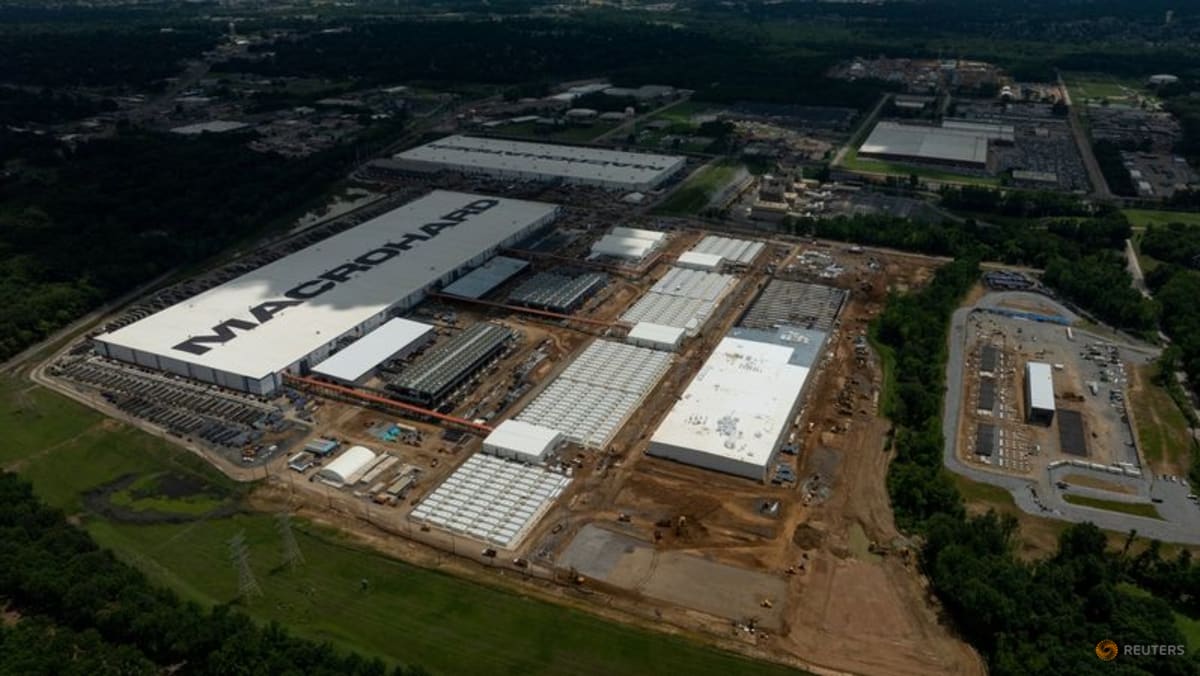
By Disha Raychaudhuri and Valerie Volcovici July 14 (Reuters) - Elon Musk's artificial intelligence company xAI has installed 59 natural gas turbines for its Colossus 2 data center project in Tennessee without securing federal clean air permits, according to communications between regulators and xAI representatives. Potential emissions from the turbines are far beyond the threshold that would require a federal permit, and would be released near predominantly Black communities already estimated to be suffering disproportionately high rates of lung disease, according to a Reuters analysis based on government data and information in the correspondence with regulators. The findings, which have not been previously reported, reflect how exploding electricity demand from AI data centers is driving companies to build off-grid power plants at a pace outstripping environmental oversight, with potentially big risks to public health. The number of unpermitted turbines identified by Reuters is about double what xAI has publicly acknowledged. The company previously said it was running 27 unpermitted turbines for Colossus 2 as of January and has argued the permits are not required. At least 57 of the 59 turbines are located in Mississippi, just over the state line from Tennessee where the data center is located. The xAI turbines are among scores of off-grid power plants for data centers proposed or under construction around the country. Local authorities often fast-track approvals in just weeks or months, without the years of environmental studies and public hearings typically required for such power generation projects that connect to the grid, Reuters has reported. Mississippi regulators in March issued a permit for permanent turbines for Colossus 2, allowing construction of 41 gas-fired turbines. The approval came three weeks after the state's only public hearing on the project. The xAI cluster of temporary turbines in Mississippi is already among the biggest off-grid data center power projects, according to Ben King, an analyst with think tank Rhodium Group, who reviewed the Reuters analysis. "This looks to be an unprecedented level of behind-the-meter gas being installed in one place," he said, referring to off-grid natural gas plants serving just one customer. The communications reviewed by Reuters show xAI, now owned by trillionaire Musk's SpaceX, has installed 57 off-grid turbines in Southaven, Mississippi, just across the state line from its Colossus 2 data center in Memphis, a facility supporting the Grok chatbot and other AI systems. The records show the company has also installed two other unpermitted turbines for the project on a different site. Reuters could not determine the location. The communications, obtained through a Reuters public records request, included emails between Trinity Consultants, representing xAI and subsidiary MZX Tech, and the Mississippi Department of Environmental Quality (MDEQ). xAI did not respond to Reuters' request for comment. xAI's turbines are part of a widening environmental justice battle over whether the AI boom is adding disproportionate pollution burdens to communities of color. Civil rights groups including the NAACP and the Southern Environmental Law Center sued xAI in April to halt their operations, arguing the turbines produce emissions subject to the federal Clean Air Act and shouldn't be operated without permits. They contend the turbines are polluting homes, schools and churches in historically Black communities. "The scale of it is astonishing," said Patrick Anderson, an attorney with the Southern Environmental Law Center. "This is an absolutely huge Clean Air Act violation that threatens public health." Securing a Clean Air Act permit would have exposed xAI's project to extensive review and public comment, potentially taking years. Mississippi environmental regulators and xAI have argued in court filings that the turbines are exempt because they are "mobile" and intended to operate onsite for less than a year. "MDEQ has determined that portable/temporary turbines do not require an air permit," the agency said in a statement to Reuters. The U.S. Environmental Protection Agency said in January 2026 that even temporary turbines exceeding emissions thresholds must obtain permits. The agency, however, told Reuters it's considering changes allowing "regulatory flexibilities" for portable units while continuing to protect public health. xAI, the MDEQ and the EPA did not answer questions from Reuters about pollution impacts on communities of color from power generation to serve data centers. The U.S. Justice Department weighed in on the lawsuit in a June 15 filing, saying that restricting the turbines could threaten national security interests because xAI's systems support U.S. military operations, including operations involving Iran. The outcome of the lawsuit filed by civil rights groups could help define how environmental laws apply to the fast-growing AI sector, where companies are scrambling to bring power supplies online to support energy-intensive computing. "This sets up scenarios where the government can create sacrifice zones and tell communities they have to breathe illegal air pollution," said Mary Rock, a senior attorney for Earthjustice which is representing the NAACP and SELC. The dispute echoes the findings of a 2022 study by researchers from UCLA and Columbia University and published in the Nature Energy journal that found that previously redlined communities - where banks historically discriminated against Black mortgage applicants - now face disproportionately high exposure to pollutants from fossil fuel facilities. "Air pollution from these and other sources contributes to systemic racial disparities in chronic disease and ultimately shorter lives," Lara Cushing, a UCLA public health professor who co-authored the study, told Reuters. BIG EMISSIONS The emails reviewed by Reuters included the manufacturer emissions profiles for 32 of the 59 turbines, including 30 at the Southaven site. A Reuters analysis based on that information found that those 30 turbines alone could emit nearly 2,500 short tons of nitrogen oxide, 4,000 short tons of carbon monoxide and 22 short tons of formaldehyde annually, assuming they operate continuously at 80% of capacity. According to the EPA, gas turbines are typically operated at loads of 80% or more to achieve efficiency. Nitrogen oxides contribute to smog and respiratory inflammation, according to the American Lung Association. Carbon monoxide deprives the body of oxygen, and formaldehyde is a carcinogen. The xAI site's potential emissions far exceed a Clean Air Act threshold that requires permitting for facilities capable of more than 100 short tons annually of pollutants such as nitrogen oxide. "This is a massive amount of turbines and an unfathomable amount of air pollution," Southaven resident Shannon Samsa said in an interview. "It's not a hypothetical," she said, "that air pollution is bad for you." The nitrogen oxide emissions calculated by Reuters for about half the plant's turbines would put the facility "up there with some of the heaviest polluting natural gas power plants across the entire country," said Nicholas Mailloux, a postdoctoral researcher at the University of Wisconsin-Madison who studies air quality and health benefits of the clean-energy transition. He said the facility would be on par with the top 25 U.S. gas plants for nitrogen oxide emissions, citing EPA data for actual emissions. THE PEOPLE AFFECTED In the Colonial Hills neighborhood of Southaven, the turbines serving Colossus 2 can be heard around the clock, often firing off noisy bursts that residents compare to jet engines. Ervin Laws, a Colonial Hills resident in his 20s, said the noise wakes him up at night. "I can't do anything about it, because he's got more money than me," he said, referring to Musk. The turbines were installed in communities already estimated to be facing relatively high respiratory disease burdens, according to a Reuters analysis of CDC data. In 27 of 28 census tracts within five miles of the site - spanning both Mississippi and Tennessee - the estimated asthma rates were higher than their respective countywide figures. In 24 tracts, chronic obstructive pulmonary disease rates were also higher. Five miles is a distance commonly used in environmental health research to capture populations likely to be exposed to air pollution from a stationary source. A separate Reuters analysis of Census Bureau data found that the residents living near the facility are disproportionately Black. Because the five-mile radius crosses state lines, Reuters compared each side against its own county baseline. Within five miles of the facility in DeSoto county, Mississippi - where the turbines are located - about 46% of residents are Black, compared with 33% countywide, according to census data. Across the state line in Tennessee, where residents have no say in Mississippi's permitting process, about 94% of residents within five miles of the facility are Black, compared to 52% in surrounding Shelby County. Jayajit Chakraborty, a professor at the University of California, Santa Barbara, said the Reuters analysis was consistent with research that shows communities of color face higher exposure to fossil fuel pollution. Shelby County and portions of DeSoto County have also previously failed to meet federal ozone standards and remain subject to EPA-approved plans to ensure they do not slip back into violation, according to regulatory documents. Nitrogen oxide is a key precursor to ozone formation, which the EPA says can harm respiratory health. "Given this community struggles with high asthma rates, additional NOx exposure at such high rates could exacerbate public health issues in a community that is already seeing more than its fair share of exposure to toxic air pollution," said Victoria Nelson, an independent environmental engineer, formerly at EPA. Sarah Gladney, 72, has watched the rapid expansion of xAI's Memphis-area presence from her home in the historically Black neighborhood of Boxtown, a few miles from where the company built its Colossus 1 data center in 2024. "Once they got their foot in the door in Memphis, I feel like it's going to be a continuous movement of xAI into these other communities," she said. "It's all about the money, and it's not about the health or wellness of the people that live in or near these communities."

Anthropic appoints Surajj Gurav to strengthen enterprise AI growth in India's BFSI sector The Mainstream
Anthropic has expanded its India go-to-market (GTM) team with the appointment of Surajj Gurav to its Enterprise GTM team. He will work with banking, financial services, and insurance (BFSI) organisations to accelerate the responsible adoption of enterprise AI. Surajj joins Anthropic's India GTM team led by Irina Ghose. In his new role, Surajj will partner with leading BFSI enterprises to help them adopt Anthropic's trusted AI capabilities while addressing the industry's regulatory, security, and governance requirements. His appointment supports the company's focus on enabling the safe and responsible adoption of AI across enterprises. Before joining Anthropic, Surajj served as Director - Sales, BFSI at Snowflake, where he led strategic engagements with financial institutions, helping organisations modernise data platforms and accelerate cloud-based digital transformation. Earlier, he was Chief Revenue Officer (India) at Snapwork Technologies, where he drove enterprise growth, customer acquisition, and revenue expansion across the Indian market. Prior to that, Surajj spent more than 3 years at Microsoft as Specialist - Business Applications, working with leading BFSI organisations to support digital transformation through Microsoft Dynamics 365, Power Platform, low-code application development, robotic process automation, and AI-enabled customer experience solutions. Over the course of nearly 3 decades, Surajj has also held leadership roles at MicroStrategy, Equifax, IBM India Pvt. Ltd., Oracle India, Sun Microsystems India, Pre-emptive Systems, Velocis Systems, Redington India Ltd., Team Computers Pvt. Ltd., Momentum Infocare Pvt. Ltd., SSI Limited, and Datapro Infoworld Ltd. His experience spans enterprise software, cloud platforms, analytics, AI, digital transformation, middleware, business applications, and enterprise technology sales. Throughout his career, he has partnered with organisations across banking, financial services, telecom, manufacturing, and the public sector to deliver large-scale technology transformation initiatives. With deep expertise in enterprise AI, cloud technologies, analytics, digital transformation, customer experience, and strategic enterprise sales, Surajj will play a key role in supporting Anthropic's continued growth across India's BFSI sector. Also read: Viksit Workforce for a Viksit Bharat Do Follow: The Mainstream LinkedIn | The Mainstream Facebook | The Mainstream Youtube | The Mainstream Twitter About us: The Mainstream is a premier platform delivering the latest updates and informed perspectives across the technology business and cyber landscape. Built on research-driven, thought leadership and original intellectual property, The Mainstream also curates summits & conferences that convene decision makers to explore how technology reshapes industries and leadership. With a growing presence in India and globally across the Middle East, Africa, ASEAN, the USA, the UK and Australia, The Mainstream carries a vision to bring the latest happenings and insights to 8.2 billion people and to place technology at the centre of conversation for leaders navigating the future.

Kraken rolls out Mastercard crypto debit card in UK and Europe
Kraken has launched a Mastercard debit card in the UK and Europe, allowing users to spend from a wide range of cryptocurrency and cash balances. The crypto exchange said the card can be used for everyday purchases online and in stores wherever Mastercard is accepted. Users can pay from more than 600 supported crypto and cash currency balances. The funds are converted in near real time at the point of purchase. Kraken said the card offers up to 2% cashback, paid weekly in Bitcoin, euros or pounds. It also said there are no transaction or ATM fees. The product is being introduced first in the UK and the European Economic Area (EEA), with other markets expected to follow "soon," according to the company. In the UK, the Kraken Card is issued by Monavate, which is authorised by the Financial Conduct Authority (FCA) to carry out electronic money activities and related payment services. In the EEA, the card is issued by UAB Monavate, which is authorised by the Bank of Lithuania. The launch forms part of Kraken's broader effort to develop a "holistic financial offering". The company is also redesigning its app to include more personalised features and a more intuitive interface. The card launch follows a recent agreement by Kraken parent Payward to acquire Reap Technologies in a $600m deal. Reap Technologies focuses on stablecoin-based card issuing and payments infrastructure. The company has developed a card issuing and cross-border payments platform linking traditional financial systems with digital assets for global business payments. Kamo Asatryan, global head of consumer at Kraken and chief AI and data officer of Payward, said: "People shouldn't have to worry about where their money is sitting before they spend it. Our customers already earn, save, invest, and trade with Kraken. "The Kraken Card adds 'spend' to that list, bringing it all together into one experience that just works."

Pollution from Musk's unpermitted xAI power project hits hardest in Black communities
July 14 : Elon Musk's artificial intelligence company xAI has installed 59 natural gas turbines for its Colossus 2 data center project in Tennessee without securing federal clean air permits, according to communications between regulators and xAI representatives. Potential emissions from the turbines are far beyond the threshold that would require a federal permit, and would be released near predominantly Black communities already estimated to be suffering disproportionately high rates of lung disease, according to a Reuters analysis based on government data and information in the correspondence with regulators. The findings, which have not been previously reported, reflect how exploding electricity demand from AI data centers is driving companies to build off-grid power plants at a pace outstripping environmental oversight, with potentially big risks to public health. The number of unpermitted turbines identified by Reuters is about double what xAI has publicly acknowledged. The company previously said it was running 27 unpermitted turbines for Colossus 2 as of January and has argued the permits are not required. At least 57 of the 59 turbines are located in Mississippi, just over the state line from Tennessee where the data center is located. The xAI turbines are among scores of off-grid power plants for data centers proposed or under construction around the country. Local authorities often fast-track approvals in just weeks or months, without the years of environmental studies and public hearings typically required for such power generation projects that connect to the grid, Reuters has reported. Mississippi regulators in March issued a permit for permanent turbines for Colossus 2, allowing construction of 41 gas-fired turbines. The approval came three weeks after the state's only public hearing on the project. The xAI cluster of temporary turbines in Mississippi is already among the biggest off-grid data center power projects, according to Ben King, an analyst with think tank Rhodium Group, who reviewed the Reuters analysis. "This looks to be an unprecedented level of behind-the-meter gas being installed in one place," he said, referring to off-grid natural gas plants serving just one customer. The communications reviewed by Reuters show xAI, now owned by trillionaire Musk's SpaceX, has installed 57 off-grid turbines in Southaven, Mississippi, just across the state line from its Colossus 2 data center in Memphis, a facility supporting the Grok chatbot and other AI systems. The records show the company has also installed two other unpermitted turbines for the project on a different site. Reuters could not determine the location. The communications, obtained through a Reuters public records request, included emails between Trinity Consultants, representing xAI and subsidiary MZX Tech, and the Mississippi Department of Environmental Quality (MDEQ). xAI did not respond to Reuters' request for comment. xAI's turbines are part of a widening environmental justice battle over whether the AI boom is adding disproportionate pollution burdens to communities of color. Civil rights groups including the NAACP and the Southern Environmental Law Center sued xAI in April to halt their operations, arguing the turbines produce emissions subject to the federal Clean Air Act and shouldn't be operated without permits. They contend the turbines are polluting homes, schools and churches in historically Black communities. "The scale of it is astonishing," said Patrick Anderson, an attorney with the Southern Environmental Law Center. "This is an absolutely huge Clean Air Act violation that threatens public health." Securing a Clean Air Act permit would have exposed xAI's project to extensive review and public comment, potentially taking years. Mississippi environmental regulators and xAI have argued in court filings that the turbines are exempt because they are "mobile" and intended to operate onsite for less than a year. "MDEQ has determined that portable/temporary turbines do not require an air permit," the agency said in a statement to Reuters. The U.S. Environmental Protection Agency said in January 2026 that even temporary turbines exceeding emissions thresholds must obtain permits. The agency, however, told Reuters it's considering changes allowing "regulatory flexibilities" for portable units while continuing to protect public health. xAI, the MDEQ and the EPA did not answer questions from Reuters about pollution impacts on communities of color from power generation to serve data centers. The U.S. Justice Department weighed in on the lawsuit in a June 15 filing, saying that restricting the turbines could threaten national security interests because xAI's systems support U.S. military operations, including operations involving Iran. The outcome of the lawsuit filed by civil rights groups could help define how environmental laws apply to the fast-growing AI sector, where companies are scrambling to bring power supplies online to support energy-intensive computing. "This sets up scenarios where the government can create sacrifice zones and tell communities they have to breathe illegal air pollution," said Mary Rock, a senior attorney for Earthjustice which is representing the NAACP and SELC. The dispute echoes the findings of a 2022 study by researchers from UCLA and Columbia University and published in the Nature Energy journal that found that previously redlined communities - where banks historically discriminated against Black mortgage applicants - now face disproportionately high exposure to pollutants from fossil fuel facilities. "Air pollution from these and other sources contributes to systemic racial disparities in chronic disease and ultimately shorter lives," Lara Cushing, a UCLA public health professor who co-authored the study, told Reuters. BIG EMISSIONS The emails reviewed by Reuters included the manufacturer emissions profiles for 32 of the 59 turbines, including 30 at the Southaven site. A Reuters analysis based on that information found that those 30 turbines alone could emit nearly 2,500 short tons of nitrogen oxide, 4,000 short tons of carbon monoxide and 22 short tons of formaldehyde annually, assuming they operate continuously at 80 per cent of capacity. According to the EPA, gas turbines are typically operated at loads of 80 per cent or more to achieve efficiency. Nitrogen oxides contribute to smog and respiratory inflammation, according to the American Lung Association. Carbon monoxide deprives the body of oxygen, and formaldehyde is a carcinogen. The xAI site's potential emissions far exceed a Clean Air Act threshold that requires permitting for facilities capable of more than 100 short tons annually of pollutants such as nitrogen oxide. "This is a massive amount of turbines and an unfathomable amount of air pollution," Southaven resident Shannon Samsa said in an interview. "It's not a hypothetical," she said, "that air pollution is bad for you." The nitrogen oxide emissions calculated by Reuters for about half the plant's turbines would put the facility "up there with some of the heaviest polluting natural gas power plants across the entire country," said Nicholas Mailloux, a postdoctoral researcher at the University of Wisconsin-Madison who studies air quality and health benefits of the clean-energy transition. He said the facility would be on par with the top 25 U.S. gas plants for nitrogen oxide emissions, citing EPA data for actual emissions. THE PEOPLE AFFECTED In the Colonial Hills neighborhood of Southaven, the turbines serving Colossus 2 can be heard around the clock, often firing off noisy bursts that residents compare to jet engines. Ervin Laws, a Colonial Hills resident in his 20s, said the noise wakes him up at night. "I can't do anything about it, because he's got more money than me," he said, referring to Musk. The turbines were installed in communities already estimated to be facing relatively high respiratory disease burdens, according to a Reuters analysis of CDC data. In 27 of 28 census tracts within five miles of the site - spanning both Mississippi and Tennessee - the estimated asthma rates were higher than their respective countywide figures. In 24 tracts, chronic obstructive pulmonary disease rates were also higher. Five miles is a distance commonly used in environmental health research to capture populations likely to be exposed to air pollution from a stationary source. A separate Reuters analysis of Census Bureau data found that the residents living near the facility are disproportionately Black. Because the five-mile radius crosses state lines, Reuters compared each side against its own county baseline. Within five miles of the facility in DeSoto county, Mississippi - where the turbines are located - about 46 per cent of residents are Black, compared with 33 per cent countywide, according to census data. Across the state line in Tennessee, where residents have no say in Mississippi's permitting process, about 94 per cent of residents within five miles of the facility are Black, compared to 52 per cent in surrounding Shelby County. Jayajit Chakraborty, a professor at the University of California, Santa Barbara, said the Reuters analysis was consistent with research that shows communities of color face higher exposure to fossil fuel pollution. Shelby County and portions of DeSoto County have also previously failed to meet federal ozone standards and remain subject to EPA-approved plans to ensure they do not slip back into violation, according to regulatory documents. Nitrogen oxide is a key precursor to ozone formation, which the EPA says can harm respiratory health. "Given this community struggles with high asthma rates, additional NOx exposure at such high rates could exacerbate public health issues in a community that is already seeing more than its fair share of exposure to toxic air pollution," said Victoria Nelson, an independent environmental engineer, formerly at EPA. Sarah Gladney, 72, has watched the rapid expansion of xAI's Memphis-area presence from her home in the historically Black neighborhood of Boxtown, a few miles from where the company built its Colossus 1 data center in 2024. "Once they got their foot in the door in Memphis, I feel like it's going to be a continuous movement of xAI into these other communities," she said. "It's all about the money, and it's not about the health or wellness of the people that live in or near these communities."
Pollution from Musk's unpermitted xAI power project hits hardest in Black communities
By Disha Raychaudhuri and Valerie Volcovici July 14 (Reuters) - Elon Musk's artificial intelligence company xAI has installed 59 natural gas turbines for its Colossus 2 data center project in Tennessee without securing federal clean air permits, according to communications between regulators and xAI representatives. Potential emissions from the turbines are far beyond the threshold that would require a federal permit, and would be released near predominantly Black communities already estimated to be suffering disproportionately high rates of lung disease, according to a Reuters analysis based on government data and information in the correspondence with regulators. The findings, which have not been previously reported, reflect how exploding electricity demand from AI data centers is driving companies to build off-grid power plants at a pace outstripping environmental oversight, with potentially big risks to public health. The number of unpermitted turbines identified by Reuters is about double what xAI has publicly acknowledged. The company previously said it was running 27 unpermitted turbines for Colossus 2 as of January and has argued the permits are not required. At least 57 of the 59 turbines are located in Mississippi, just over the state line from Tennessee where the data center is located. The xAI turbines are among scores of off-grid power plants for data centers proposed or under construction around the country. Local authorities often fast-track approvals in just weeks or months, without the years of environmental studies and public hearings typically required for such power generation projects that connect to the grid, Reuters has reported. Mississippi regulators in March issued a permit for permanent turbines for Colossus 2, allowing construction of 41 gas-fired turbines. The approval came three weeks after the state's only public hearing on the project. The xAI cluster of temporary turbines in Mississippi is already among the biggest off-grid data center power projects, according to Ben King, an analyst with think tank Rhodium Group, who reviewed the Reuters analysis. "This looks to be an unprecedented level of behind-the-meter gas being installed in one place," he said, referring to off-grid natural gas plants serving just one customer. The communications reviewed by Reuters show xAI, now owned by trillionaire Musk's SpaceX, has installed 57 off-grid turbines in Southaven, Mississippi, just across the state line from its Colossus 2 data center in Memphis, a facility supporting the Grok chatbot and other AI systems. The records show the company has also installed two other unpermitted turbines for the project on a different site. Reuters could not determine the location. The communications, obtained through a Reuters public records request, included emails between Trinity Consultants, representing xAI and subsidiary MZX Tech, and the Mississippi Department of Environmental Quality (MDEQ). xAI did not respond to Reuters' request for comment. xAI's turbines are part of a widening environmental justice battle over whether the AI boom is adding disproportionate pollution burdens to communities of color. Civil rights groups including the NAACP and the Southern Environmental Law Center sued xAI in April to halt their operations, arguing the turbines produce emissions subject to the federal Clean Air Act and shouldn't be operated without permits. They contend the turbines are polluting homes, schools and churches in historically Black communities. "The scale of it is astonishing," said Patrick Anderson, an attorney with the Southern Environmental Law Center. "This is an absolutely huge Clean Air Act violation that threatens public health." Securing a Clean Air Act permit would have exposed xAI's project to extensive review and public comment, potentially taking years. Mississippi environmental regulators and xAI have argued in court filings that the turbines are exempt because they are "mobile" and intended to operate onsite for less than a year. "MDEQ has determined that portable/temporary turbines do not require an air permit," the agency said in a statement to Reuters. The U.S. Environmental Protection Agency said in January 2026 that even temporary turbines exceeding emissions thresholds must obtain permits. The agency, however, told Reuters it's considering changes allowing "regulatory flexibilities" for portable units while continuing to protect public health. xAI, the MDEQ and the EPA did not answer questions from Reuters about pollution impacts on communities of color from power generation to serve data centers. The U.S. Justice Department weighed in on the lawsuit in a June 15 filing, saying that restricting the turbines could threaten national security interests because xAI's systems support U.S. military operations, including operations involving Iran. The outcome of the lawsuit filed by civil rights groups could help define how environmental laws apply to the fast-growing AI sector, where companies are scrambling to bring power supplies online to support energy-intensive computing. "This sets up scenarios where the government can create sacrifice zones and tell communities they have to breathe illegal air pollution," said Mary Rock, a senior attorney for Earthjustice which is representing the NAACP and SELC. The dispute echoes the findings of a 2022 study by researchers from UCLA and Columbia University and published in the Nature Energy journal that found that previously redlined communities - where banks historically discriminated against Black mortgage applicants - now face disproportionately high exposure to pollutants from fossil fuel facilities. "Air pollution from these and other sources contributes to systemic racial disparities in chronic disease and ultimately shorter lives," Lara Cushing, a UCLA public health professor who co-authored the study, told Reuters. BIG EMISSIONS The emails reviewed by Reuters included the manufacturer emissions profiles for 32 of the 59 turbines, including 30 at the Southaven site. A Reuters analysis based on that information found that those 30 turbines alone could emit nearly 2,500 short tons of nitrogen oxide, 4,000 short tons of carbon monoxide and 22 short tons of formaldehyde annually, assuming they operate continuously at 80% of capacity. According to the EPA, gas turbines are typically operated at loads of 80% or more to achieve efficiency. Nitrogen oxides contribute to smog and respiratory inflammation, according to the American Lung Association. Carbon monoxide deprives the body of oxygen, and formaldehyde is a carcinogen. The xAI site's potential emissions far exceed a Clean Air Act threshold that requires permitting for facilities capable of more than 100 short tons annually of pollutants such as nitrogen oxide. "This is a massive amount of turbines and an unfathomable amount of air pollution," Southaven resident Shannon Samsa said in an interview. "It's not a hypothetical," she said, "that air pollution is bad for you." The nitrogen oxide emissions calculated by Reuters for about half the plant's turbines would put the facility "up there with some of the heaviest polluting natural gas power plants across the entire country," said Nicholas Mailloux, a postdoctoral researcher at the University of Wisconsin-Madison who studies air quality and health benefits of the clean-energy transition. He said the facility would be on par with the top 25 U.S. gas plants for nitrogen oxide emissions, citing EPA data for actual emissions. THE PEOPLE AFFECTED In the Colonial Hills neighborhood of Southaven, the turbines serving Colossus 2 can be heard around the clock, often firing off noisy bursts that residents compare to jet engines. Ervin Laws, a Colonial Hills resident in his 20s, said the noise wakes him up at night. "I can't do anything about it, because he's got more money than me," he said, referring to Musk. The turbines were installed in communities already estimated to be facing relatively high respiratory disease burdens, according to a Reuters analysis of CDC data. In 27 of 28 census tracts within five miles of the site - spanning both Mississippi and Tennessee - the estimated asthma rates were higher than their respective countywide figures. In 24 tracts, chronic obstructive pulmonary disease rates were also higher. Five miles is a distance commonly used in environmental health research to capture populations likely to be exposed to air pollution from a stationary source. A separate Reuters analysis of Census Bureau data found that the residents living near the facility are disproportionately Black. Because the five-mile radius crosses state lines, Reuters compared each side against its own county baseline. Within five miles of the facility in DeSoto county, Mississippi - where the turbines are located - about 46% of residents are Black, compared with 33% countywide, according to census data. Across the state line in Tennessee, where residents have no say in Mississippi's permitting process, about 94% of residents within five miles of the facility are Black, compared to 52% in surrounding Shelby County. Jayajit Chakraborty, a professor at the University of California, Santa Barbara, said the Reuters analysis was consistent with research that shows communities of color face higher exposure to fossil fuel pollution. Shelby County and portions of DeSoto County have also previously failed to meet federal ozone standards and remain subject to EPA-approved plans to ensure they do not slip back into violation, according to regulatory documents. Nitrogen oxide is a key precursor to ozone formation, which the EPA says can harm respiratory health. "Given this community struggles with high asthma rates, additional NOx exposure at such high rates could exacerbate public health issues in a community that is already seeing more than its fair share of exposure to toxic air pollution," said Victoria Nelson, an independent environmental engineer, formerly at EPA. Sarah Gladney, 72, has watched the rapid expansion of xAI's Memphis-area presence from her home in the historically Black neighborhood of Boxtown, a few miles from where the company built its Colossus 1 data center in 2024. "Once they got their foot in the door in Memphis, I feel like it's going to be a continuous movement of xAI into these other communities," she said. "It's all about the money, and it's not about the health or wellness of the people that live in or near these communities." (Reporting by Disha Raychaudhuri and Valerie Volcovici; photos by Kevin Wurm; editing by David Gaffen, Kat Stafford, Ben Lesser and Richard Valdmanis)
Pollution from Musk's unpermitted xAI power project hits hardest in Black communities
Add Yahoo as a preferred source to see more of our stories on Google. By Disha Raychaudhuri and Valerie Volcovici July 14 (Reuters) - Elon Musk's artificial intelligence company xAI has installed 59 natural gas turbines for its Colossus 2 data center project in Tennessee without securing federal clean air permits, according to communications between regulators and xAI representatives. Potential emissions from the turbines are far beyond the threshold that would require a federal permit, and would be released near predominantly Black communities already estimated to be suffering disproportionately high rates of lung disease, according to a Reuters analysis based on government data and information in the correspondence with regulators. The findings, which have not been previously reported, reflect how exploding electricity demand from AI data centers is driving companies to build off-grid power plants at a pace outstripping environmental oversight, with potentially big risks to public health. The number of unpermitted turbines identified by Reuters is about double what xAI has publicly acknowledged. The company previously said it was running 27 unpermitted turbines for Colossus 2 as of January and has argued the permits are not required. At least 57 of the 59 turbines are located in Mississippi, just over the state line from Tennessee where the data center is located. The xAI turbines are among scores of off-grid power plants for data centers proposed or under construction around the country. Local authorities often fast-track approvals in just weeks or months, without the years of environmental studies and public hearings typically required for such power generation projects that connect to the grid, Reuters has reported. Mississippi regulators in March issued a permit for permanent turbines for Colossus 2, allowing construction of 41 gas-fired turbines. The approval came three weeks after the state's only public hearing on the project. The xAI cluster of temporary turbines in Mississippi is already among the biggest off-grid data center power projects, according to Ben King, an analyst with think tank Rhodium Group, who reviewed the Reuters analysis. "This looks to be an unprecedented level of behind-the-meter gas being installed in one place," he said, referring to off-grid natural gas plants serving just one customer. The communications reviewed by Reuters show xAI, now owned by trillionaire Musk's SpaceX, has installed 57 off-grid turbines in Southaven, Mississippi, just across the state line from its Colossus 2 data center in Memphis, a facility supporting the Grok chatbot and other AI systems. The records show the company has also installed two other unpermitted turbines for the project on a different site. Reuters could not determine the location. The communications, obtained through a Reuters public records request, included emails between Trinity Consultants, representing xAI and subsidiary MZX Tech, and the Mississippi Department of Environmental Quality (MDEQ). xAI did not respond to Reuters' request for comment. xAI's turbines are part of a widening environmental justice battle over whether the AI boom is adding disproportionate pollution burdens to communities of color. Civil rights groups including the NAACP and the Southern Environmental Law Center sued xAI in April to halt their operations, arguing the turbines produce emissions subject to the federal Clean Air Act and shouldn't be operated without permits. They contend the turbines are polluting homes, schools and churches in historically Black communities. "The scale of it is astonishing," said Patrick Anderson, an attorney with the Southern Environmental Law Center. "This is an absolutely huge Clean Air Act violation that threatens public health." Securing a Clean Air Act permit would have exposed xAI's project to extensive review and public comment, potentially taking years. Mississippi environmental regulators and xAI have argued in court filings that the turbines are exempt because they are "mobile" and intended to operate onsite for less than a year. "MDEQ has determined that portable/temporary turbines do not require an air permit," the agency said in a statement to Reuters. The U.S. Environmental Protection Agency said in January 2026 that even temporary turbines exceeding emissions thresholds must obtain permits. The agency, however, told Reuters it's considering changes allowing "regulatory flexibilities" for portable units while continuing to protect public health. xAI, the MDEQ and the EPA did not answer questions from Reuters about pollution impacts on communities of color from power generation to serve data centers. The U.S. Justice Department weighed in on the lawsuit in a June 15 filing, saying that restricting the turbines could threaten national security interests because xAI's systems support U.S. military operations, including operations involving Iran. The outcome of the lawsuit filed by civil rights groups could help define how environmental laws apply to the fast-growing AI sector, where companies are scrambling to bring power supplies online to support energy-intensive computing. "This sets up scenarios where the government can create sacrifice zones and tell communities they have to breathe illegal air pollution," said Mary Rock, a senior attorney for Earthjustice which is representing the NAACP and SELC. The dispute echoes the findings of a 2022 study by researchers from UCLA and Columbia University and published in the Nature Energy journal that found that previously redlined communities - where banks historically discriminated against Black mortgage applicants - now face disproportionately high exposure to pollutants from fossil fuel facilities. "Air pollution from these and other sources contributes to systemic racial disparities in chronic disease and ultimately shorter lives," Lara Cushing, a UCLA public health professor who co-authored the study, told Reuters. BIG EMISSIONS The emails reviewed by Reuters included the manufacturer emissions profiles for 32 of the 59 turbines, including 30 at the Southaven site. A Reuters analysis based on that information found that those 30 turbines alone could emit nearly 2,500 short tons of nitrogen oxide, 4,000 short tons of carbon monoxide and 22 short tons of formaldehyde annually, assuming they operate continuously at 80% of capacity. According to the EPA, gas turbines are typically operated at loads of 80% or more to achieve efficiency. Nitrogen oxides contribute to smog and respiratory inflammation, according to the American Lung Association. Carbon monoxide deprives the body of oxygen, and formaldehyde is a carcinogen. The xAI site's potential emissions far exceed a Clean Air Act threshold that requires permitting for facilities capable of more than 100 short tons annually of pollutants such as nitrogen oxide. "This is a massive amount of turbines and an unfathomable amount of air pollution," Southaven resident Shannon Samsa said in an interview. "It's not a hypothetical," she said, "that air pollution is bad for you." The nitrogen oxide emissions calculated by Reuters for about half the plant's turbines would put the facility "up there with some of the heaviest polluting natural gas power plants across the entire country," said Nicholas Mailloux, a postdoctoral researcher at the University of Wisconsin-Madison who studies air quality and health benefits of the clean-energy transition. He said the facility would be on par with the top 25 U.S. gas plants for nitrogen oxide emissions, citing EPA data for actual emissions. THE PEOPLE AFFECTED In the Colonial Hills neighborhood of Southaven, the turbines serving Colossus 2 can be heard around the clock, often firing off noisy bursts that residents compare to jet engines. Ervin Laws, a Colonial Hills resident in his 20s, said the noise wakes him up at night. "I can't do anything about it, because he's got more money than me," he said, referring to Musk. The turbines were installed in communities already estimated to be facing relatively high respiratory disease burdens, according to a Reuters analysis of CDC data. In 27 of 28 census tracts within five miles of the site - spanning both Mississippi and Tennessee - the estimated asthma rates were higher than their respective countywide figures. In 24 tracts, chronic obstructive pulmonary disease rates were also higher. Five miles is a distance commonly used in environmental health research to capture populations likely to be exposed to air pollution from a stationary source. A separate Reuters analysis of Census Bureau data found that the residents living near the facility are disproportionately Black. Because the five-mile radius crosses state lines, Reuters compared each side against its own county baseline. Within five miles of the facility in DeSoto county, Mississippi - where the turbines are located - about 46% of residents are Black, compared with 33% countywide, according to census data. Across the state line in Tennessee, where residents have no say in Mississippi's permitting process, about 94% of residents within five miles of the facility are Black, compared to 52% in surrounding Shelby County. Jayajit Chakraborty, a professor at the University of California, Santa Barbara, said the Reuters analysis was consistent with research that shows communities of color face higher exposure to fossil fuel pollution. Shelby County and portions of DeSoto County have also previously failed to meet federal ozone standards and remain subject to EPA-approved plans to ensure they do not slip back into violation, according to regulatory documents. Nitrogen oxide is a key precursor to ozone formation, which the EPA says can harm respiratory health. "Given this community struggles with high asthma rates, additional NOx exposure at such high rates could exacerbate public health issues in a community that is already seeing more than its fair share of exposure to toxic air pollution," said Victoria Nelson, an independent environmental engineer, formerly at EPA. Sarah Gladney, 72, has watched the rapid expansion of xAI's Memphis-area presence from her home in the historically Black neighborhood of Boxtown, a few miles from where the company built its Colossus 1 data center in 2024. "Once they got their foot in the door in Memphis, I feel like it's going to be a continuous movement of xAI into these other communities," she said. "It's all about the money, and it's not about the health or wellness of the people that live in or near these communities." (Reporting by Disha Raychaudhuri and Valerie Volcovici; photos by Kevin Wurm; editing by David Gaffen, Kat Stafford, Ben Lesser and Richard Valdmanis)
MEXC reports 7.1 billion USDT in SpaceX futures volume as Q2 closes the gap to Wall Street
Victoria, Seychelles, July 14th, 2026, Chainwire MEXC, a pioneer in 0-fee digital asset trading, today released its Ecosystem & Growth Report for the second quarter of 2026. In Q1, users mostly bought gold and other hedges against macro risk. In Q2, their attention turned to AI projects and US stocks, and MEXC spent the quarter building products for exactly that demand. Users can now back a company before its IPO, trade stock futures on it, hold tokenized shares, and buy real US stocks and ETFs, all inside one MEXC account. Every piece of that path launched or grew during the quarter. SpaceX was still a private company when MEXC ran two SPACEX(PRE) subscription rounds. More than 74,000 entries put over 173 million USDT into them, and demand for the second round reached more than 30 times the amount on offer. That demand mirrors a wider market trend: CoinGecko reports that tokenized pre-IPO trading volume surged 1,060%, with SpaceX accounting for the largest share of activity. The company then completed the largest IPO on record on June 12. Users kept trading it on MEXC after the listing, and SpaceX perpetual futures collected more than 7.1 billion USDT in volume in the weeks that followed. One name went from private to public within a quarter, and users traded at every stage. RealStocks launched on June 1 and added the last piece, real shares. Eligible users buy actual US stocks and ETFs through a licensed securities broker partner, and the shelf covers more than 7,000 names. More than 120,000 users signed up in the first month, and over half of the new accounts moved on to a first deposit. By June 18, the product had settled dividends on 34 stocks and ETFs, the kind of payout only real share ownership carries. Micron's June earnings lifted trading volume in its MEXC futures by approximately 142% in a single day. The activity spilled into related AI memory names, SanDisk, SK hynix, and a DRAM ETF. One earnings report moved a whole supply chain on the platform, because users now trade US market news the moment it breaks. "My first quarter as CEO had one goal, and that was to move MEXC from a crypto exchange toward a gateway for every market users care about," said Vugar Usi, CEO of MEXC. "Q2 put real numbers behind the word gateway, from Pre-IPO demand to actual dividend payouts." The quarter's ten biggest new-token gainers averaged +4,956%, and six of the ten were AI agent projects. Only one meme coin made the list, a clear reversal of the first quarter, when memes ran the gain rankings. The AI winners build practical systems. They settle transactions between agents, place trades for retail users, and verify identities, so the money went to projects that already do that work. The most-traded list leaned the same way, with four AI and infrastructure names to three meme names. During the quarter, MEXC appointed Vugar Usi as Chief Executive Officer and marked its 8th anniversary with a brand upgrade built on two promises: 0 Fees and Infinite Opportunities. The upgrade marks the company's move from a traditional exchange toward a universal gateway for global markets. A partnership brought the USD1 stablecoin into MEXC's trading and product suite, and the first USD1 event drew more than 161,000 participants, with new users alone pushing $2.4 billion through futures. A TradingView integration now sends perpetual futures orders straight from the chart, so users move from analysis to execution without a tab change. The Prediction Market added a Combo feature on June 9, which folds several event predictions into a single position. Average daily volume in the Prediction Market grew more than 6,700% from early to late June, and daily users rose more than 3,200%. The June Proof of Reserves put the average reserve ratio at 156.5%, which means the platform holds more assets than users have deposited, with Bitcoin backed at 269%. Between May and June, the risk team identified 4,394 illicit networks; a separate intervention effort blocked roughly 303,000 USDT in suspected fraudulent transfers. The full Q2 report, with the complete token tables, product data, and community programs, is available here. About MEXC MEXC is the world's fastest-growing cryptocurrency exchange, trusted by more than 40 million users across 170+ markets. Built on a user-first philosophy, MEXC offers industry-leading 0-fee trading and access to over 3,000 digital assets. As the Gateway to Infinite Opportunities, MEXC provides a single platform where users can easily trade cryptocurrencies alongside tokenized assets, including stocks, ETFs, commodities, and precious metals. MEXC Official Website| X | Telegram |How to Sign Up on MEXC For media inquiries, please contact MEXC PR team: [email protected]
Insight: Pollution from Musk's unpermitted xAI power project hits hardest in Black communities
July 14 (Reuters) - Elon Musk's artificial intelligence company xAI has installed 59 natural gas turbines for its Colossus 2 data center project in Tennessee without securing federal clean air permits, according to communications between regulators and xAI representatives. Potential emissions from the turbines are far beyond the threshold that would require a federal permit, and would be released near predominantly Black communities already estimated to be suffering disproportionately high rates of lung disease, according to a Reuters analysis based on government data and information in the correspondence with regulators. The findings, which have not been previously reported, reflect how exploding electricity demand from AI data centers is driving companies to build off-grid power plants at a pace outstripping environmental oversight, with potentially big risks to public health. The number of unpermitted turbines identified by Reuters is about double what xAI has publicly acknowledged. The company previously said it was running 27 unpermitted turbines for Colossus 2 as of January and has argued the permits are not required. At least 57 of the 59 turbines are located in Mississippi, just over the state line from Tennessee where the data center is located. The xAI turbines are among scores of off-grid power plants for data centers proposed or under construction around the country. Local authorities often fast-track approvals in just weeks or months, without the years of environmental studies and public hearings typically required for such power generation projects that connect to the grid, Reuters has reported. Mississippi regulators in March issued a permit for permanent turbines for Colossus 2, allowing construction of 41 gas-fired turbines. The approval came three weeks after the state's only public hearing on the project. The xAI cluster of temporary turbines in Mississippi is already among the biggest off-grid data center power projects, according to Ben King, an analyst with think tank Rhodium Group, who reviewed the Reuters analysis. "This looks to be an unprecedented level of behind-the-meter gas being installed in one place," he said, referring to off-grid natural gas plants serving just one customer. The communications reviewed by Reuters show xAI, now owned by trillionaire Musk's SpaceX (SPCX.O), opens new tab, has installed 57 off-grid turbines in Southaven, Mississippi, just across the state line from its Colossus 2 data center in Memphis, a facility supporting the Grok chatbot and other AI systems. The records show the company has also installed two other unpermitted turbines for the project on a different site. Reuters could not determine the location. The communications, obtained through a Reuters public records request, included emails between Trinity Consultants, representing xAI and subsidiary MZX Tech, and the Mississippi Department of Environmental Quality (MDEQ). xAI did not respond to Reuters' request for comment. xAI's turbines are part of a widening environmental justice battle over whether the AI boom is adding disproportionate pollution burdens to communities of color. Civil rights groups including the NAACP and the Southern Environmental Law Center sued xAI in April to halt their operations, arguing the turbines produce emissions subject to the federal Clean Air Act and shouldn't be operated without permits. They contend the turbines are polluting homes, schools and churches in historically Black communities. "The scale of it is astonishing," said Patrick Anderson, an attorney with the Southern Environmental Law Center. "This is an absolutely huge Clean Air Act violation that threatens public health." Securing a Clean Air Act permit would have exposed xAI's project to extensive review and public comment, potentially taking years. Mississippi environmental regulators and xAI have argued in court filings that the turbines are exempt because they are "mobile" and intended to operate onsite for less than a year. "MDEQ has determined that portable/temporary turbines do not require an air permit," the agency said in a statement to Reuters. The U.S. Environmental Protection Agency said in January 2026 that even temporary turbines exceeding emissions thresholds must obtain permits. The agency, however, told Reuters it's considering changes allowing "regulatory flexibilities" for portable units while continuing to protect public health. xAI, the MDEQ and the EPA did not answer questions from Reuters about pollution impacts on communities of color from power generation to serve data centers. The U.S. Justice Department weighed in on the lawsuit in a June 15 filing, saying that restricting the turbines could threaten national security interests because xAI's systems support U.S. military operations, including operations involving Iran. The outcome of the lawsuit filed by civil rights groups could help define how environmental laws apply to the fast-growing AI sector, where companies are scrambling to bring power supplies online to support energy-intensive computing. "This sets up scenarios where the government can create sacrifice zones and tell communities they have to breathe illegal air pollution," said Mary Rock, a senior attorney for Earthjustice which is representing the NAACP and SELC. The dispute echoes the findings of a 2022 study, opens new tab by researchers from UCLA and Columbia University and published in the Nature Energy journal that found that previously redlined communities - where banks historically discriminated against Black mortgage applicants - now face disproportionately high exposure to pollutants from fossil fuel facilities. "Air pollution from these and other sources contributes to systemic racial disparities in chronic disease and ultimately shorter lives," Lara Cushing, a UCLA public health professor who co-authored the study, told Reuters. BIG EMISSIONS The emails reviewed by Reuters included the manufacturer emissions profiles for 32 of the 59 turbines, including 30 at the Southaven site. A Reuters analysis based on that information found that those 30 turbines alone could emit nearly 2,500 short tons of nitrogen oxide, 4,000 short tons of carbon monoxide and 22 short tons of formaldehyde annually, assuming they operate continuously at 80% of capacity. According to the EPA, gas turbines are typically operated at loads of 80% or more to achieve efficiency. Nitrogen oxides contribute to smog and respiratory inflammation, according to the American Lung Association. Carbon monoxide deprives the body of oxygen, and formaldehyde is a carcinogen. The xAI site's potential emissions far exceed a Clean Air Act threshold that requires permitting for facilities capable of more than 100 short tons annually of pollutants such as nitrogen oxide. "This is a massive amount of turbines and an unfathomable amount of air pollution," Southaven resident Shannon Samsa said in an interview. "It's not a hypothetical," she said, "that air pollution is bad for you." The nitrogen oxide emissions calculated by Reuters for about half the plant's turbines would put the facility "up there with some of the heaviest polluting natural gas power plants across the entire country," said Nicholas Mailloux, a postdoctoral researcher at the University of Wisconsin-Madison who studies air quality and health benefits of the clean-energy transition. He said the facility would be on par with the top 25 U.S. gas plants for nitrogen oxide emissions, citing EPA data, opens new tab for actual emissions. THE PEOPLE AFFECTED In the Colonial Hills neighborhood of Southaven, the turbines serving Colossus 2 can be heard around the clock, often firing off noisy bursts that residents compare to jet engines. Ervin Laws, a Colonial Hills resident in his 20s, said the noise wakes him up at night. "I can't do anything about it, because he's got more money than me," he said, referring to Musk. The turbines were installed in communities already estimated to be facing relatively high respiratory disease burdens, according to a Reuters analysis of CDC data. In 27 of 28 census tracts within five miles of the site - spanning both Mississippi and Tennessee - the estimated asthma rates were higher than their respective countywide figures. In 24 tracts, chronic obstructive pulmonary disease rates were also higher. Five miles is a distance commonly used in environmental health research to capture populations likely to be exposed to air pollution from a stationary source. A separate Reuters analysis of Census Bureau data found that the residents living near the facility are disproportionately Black. Because the five-mile radius crosses state lines, Reuters compared each side against its own county baseline. Within five miles of the facility in DeSoto county, Mississippi - where the turbines are located - about 46% of residents are Black, compared with 33% countywide, according to census data. Across the state line in Tennessee, where residents have no say in Mississippi's permitting process, about 94% of residents within five miles of the facility are Black, compared to 52% in surrounding Shelby County. Jayajit Chakraborty, a professor at the University of California, Santa Barbara, said the Reuters analysis was consistent with research that shows communities of color face higher exposure to fossil fuel pollution. Shelby County and portions of DeSoto County have also previously failed to meet federal ozone standards and remain subject to EPA-approved plans to ensure they do not slip back into violation, according to regulatory documents. Nitrogen oxide is a key precursor to ozone formation, which the EPA says can harm respiratory health. "Given this community struggles with high asthma rates, additional NOx exposure at such high rates could exacerbate public health issues in a community that is already seeing more than its fair share of exposure to toxic air pollution," said Victoria Nelson, an independent environmental engineer, formerly at EPA. Sarah Gladney, 72, has watched the rapid expansion of xAI's Memphis-area presence from her home in the historically Black neighborhood of Boxtown, a few miles from where the company built its Colossus 1 data center in 2024. "Once they got their foot in the door in Memphis, I feel like it's going to be a continuous movement of xAI into these other communities," she said. "It's all about the money, and it's not about the health or wellness of the people that live in or near these communities." Reporting by Disha Raychaudhuri and Valerie Volcovici; photos by Kevin Wurm; editing by David Gaffen, Kat Stafford, Ben Lesser and Richard Valdmanis Our Standards: The Thomson Reuters Trust Principles., opens new tab * Suggested Topics: * Environment * Environmental Justice * Gas * Climate Change * Fuel Oil Disha Raychaudhuri Thomson Reuters Disha is a data journalist based in Washington, D.C., covering global inequality, race and social justice issues. She joined Reuters in 2020 as a data journalist on the legal news team where she covered a wide range of topics including bankruptcy, opioid settlements and the legislative push to restrict transgender healthcare in the US. Prior to joining Reuters she was a data reporter at The Star-Ledger in New Jersey. Contact: [email protected] Valerie Volcovici Thomson Reuters Valerie Volcovici covers U.S. climate and energy policy from Washington, DC. She is focused on climate and environmental regulations at federal agencies and in Congress and how the energy transition is transforming the United States. Other areas of coverage include her award-winning reporting plastic pollution and the ins and outs of global climate diplomacy and United Nations climate negotiations.

Crypto Exchanges Close the Gap to Wall Street as MEXC Logs 7.1 Billion in SpaceX Futures
The build-out is happening almost entirely offshore, with US retail locked out and MEXC still operating in Europe without a MiCA license. Crypto exchange MEXC said today (Tuesday) that perpetual futures tied to SpaceX shares drew more than 7.1 billion USDT in trading volume in the weeks after the rocket company listed on June 12. The figure comes from the exchange's own second-quarter report and has not been independently audited. Users could subscribe to SpaceX before it went public, trade futures on it afterward, hold a tokenized version, and buy the actual share, without ever leaving the platform. MEXC ran two SPACEX(PRE) subscription rounds while the company was still private, collecting over 173 million USDT from more than 74,000 entries, the report said. One name went from private to publicly traded inside a single quarter, and MEXC sold a product at every stage of the journey. RealStocks, which went live June 1, supplied the last piece. The service routes orders for actual US shares and ETFs through a licensed securities broker partner, giving buyers dividends rather than price exposure alone. The exchange has still not named the broker, disclosed custody arrangements, or explained how the USDT-to-dollar conversion is priced. More than 120,000 users signed up in the first month and 52% of them funded an account, according to the company. By June 18, it had settled dividends on 34 stocks and ETFs. Stock futures carried much of the equity flow. Micron's June earnings lifted MU futures volume on the platform by roughly 142% in a single day, MEXC said, with activity spilling into SanDisk, SK hynix and a DRAM ETF. "Q2 put real numbers behind the word gateway," said Vugar Usi, who took over as chief executive during the quarter. Binance, Kraken and Coinbase Are Building the Same Thing Binance opened access to roughly 7,000 US stocks on June 1, the same day RealStocks launched. Orders are arranged through broker-dealer Nest Trading, with Alpaca handling custody, dividends and corporate actions, and fractional purchases start at $5, funded in USDC, USDT or BNB. Kraken went the tokenized route instead. Its xStocks brand passed $25 billion in cumulative transaction volume in under eight months, listed on Deutsche Börse's 360X venue, and now accounts for eight of the eleven largest tokenized equities. Coinbase has described its own version of the plan as an "Everything Exchange" covering crypto, stocks, derivatives and event contracts. Prediction markets are the other shared front. MEXC opened a zero-fee event contract platform in March and added multi-outcome Combo positions on June 9. Average daily volume there rose more than 6,700% between early and late June, the company said, off a starting base it did not disclose. Traffic Runs Both Ways as Brokers Copy the Perpetual The borrowing is not one-directional. On Monday, Pepperstone said it would extend its perpetual CFD range beyond SpaceX into metals, stock indices and energy, with gold, silver, Nasdaq, S&P 500, WTI and Brent versions listed as planned. The perpetual, a contract with no expiry that uses periodic funding payments to stay near the underlying, began life in crypto and is now being fitted onto shares and commodities inside a regulated CFD wrapper. "We believe perpetual markets will become a standard feature of modern finance," Pepperstone group chief executive Tamas Szabo said. European regulators have already told firms that perpetual futures fall under EU CFD rules, which drags the format inside the same retail leverage caps that MEXC's offshore version sits outside. The Refund the Report Does Not Mention MEXC's Launchpad section says SPACEX(PRE) traded 12% above its subscription price at listing and reached a 38% peak return. It says nothing about refunds. On June 12, MEXC cancelled tokenized SpaceX allocations and returned money to subscribers, along with Binance, Bybit and Bitget Wallet, after xStocks failed to source the underlying shares. All four had been reselling access to allocations that Kraken's tokenization arm promised to procure, and when that single supplier came up empty, so did everyone hanging off it. Demand was never the constraint. Binance's campaign drew more than $557 million in USDC before it was pulled, and MEXC's first round ran 15.5 times oversubscribed. The shares just never showed up. US Retail Stays Outside the Perimeter None of this touches American investors. Tokenized equity products are closed to US persons, and Kraken's SpaceX token also excluded users in the UK, Canada and Australia. Europe is narrowing as well. MEXC entered July without a MiCA license and without any public update on its application, and its published list of restricted jurisdictions, last revised in May, does not include EU member states. Hong Kong's securities regulator put the exchange on its warning list over unlicensed activity in 2024. MEXC put its June reserve ratio at 156.5% across major assets, with bitcoin backed at 269%, and said its futures insurance fund hit $753 million in July. Both numbers are the exchange's own, and neither has been verified by an outside auditor.
Musk Fortune Falls Below $900 Billion As SpaceX Slides
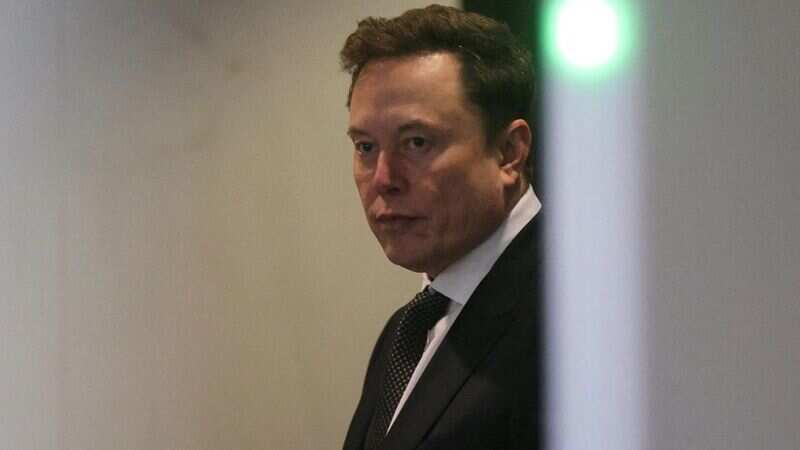
Elon Musk's net worth has fallen below one trillion dollars recently. SpaceX shares experienced a significant decline after their initial public offering. This market shift reflects a demand for AI profits over future promises. Musk's wealth contraction coincides with Tesla's India expansion plans. Starlink's launch in India remains stalled due to regulatory and security concerns. Elon Musk stopped being a trillionaire on Monday, and the reason says more about the AI trade than about the richest man alive. His fortune slipped to $879.3 billion after another pullback in SpaceX shares stripped $37.9 billion from his wealth in a single session -- with a later reading closer to $871.6 billion as the sell-off deepened. The peak was $1.45 trillion, reached on 16 June when SpaceX shares touched an all-time high above $225. Four weeks and more than half a trillion dollars later, the world's first almost-instant multitrillionaire is merely, spectacularly, rich.The cause is singular, and it sits outside Musk himself. SpaceX shares slid to just under $140, closing on the $135 price at which the company went public a month ago, a decline of more than 38 per cent from the high it touched the day after listing. The rocket that carried Musk past every wealth record in history is doing what rockets do once the burn ends -- falling back toward the pad it launched from. The force pulling it down is a market that has switched from paying for AI promises to demanding AI profits, and that same force has already halved Larry Ellison and dropped him from second-richest to eighth in a matter of weeks.
BBC Audio | World Business Report | SpaceX's lift-off moment stalls
Twenty five days ago SpaceX debuted on the stock market in the largest initial public offering in history, selling US$75bn worth of shares. Now its joined the Nasdaq 100 index of firms including Microsoft, Apple and Nvidia, so why have its shares fallen? We hear from tech investor Eileen Burbridge and financial advisor Jennifer Snyder on why investors might not be feeling reassured. Canada's launching a new national strategy for artificial intelligence called the 'AI for All' plan, setting targets for economic growth, jobs and safeguards as the government looks to strengthen its control over the technology. Leanna Byrne speaks to Jerry McGinn of the Center for Strategic and International Studies (CSIS) on how NATO countries will pay for the biggest rise in defence spending in decades. And China's robotaxi firms are racing overseas, but will passengers trust cars without drivers? Global business news, with live guests and contributions from Asia, Europe and the USA. (Picture: SpaceX founder and CEO Elon Musk is shown celebrating the company's debut on the Nasdaq market in New York City, New York, USA, on 12 June 2026. Credit: Sarah Yenesel / EPA / Shutterstock.)

Bank: "Unknown Unknowns for SpaceX"
In recent days slew of banks have issued their valuation forecasts on SpaceX following on from its Initial Public Offering (IPO). The range was extremely wide, from $143 per share from Deutsche Bank to a staggering $800 from Raymond James. However, analysts at technology research company Moffett Nathanson took a more modest view and their share price guidance was $131, and said there was no credible financial model to support anything higher. Moffett Nathanson issued a comprehensive 93-page report where they compared and contrasted the prospects for SpaceX and its rival AST SpaceMobile. They stated: "Never before has so much attention been lavished on a company in advance of its IPO. And no company, in the weeks following its IPO, has been treated to more withering scrutiny. By now, you will surely have read umpteen articles and reports poking and prodding every aspect of the largest IPO of all time." "By and large, the coverage has been split into two camps. One camp has fawned over the sheer audacity of the enterprise and the spectacular size of SpaceX's addressable market. The other has relentlessly lampooned the utter ridiculousness of so many of the numbers thrown around in the company's S-1 and analyst commentary," continued Moffett Nathanson. "We're in neither camp." "To be sure," the report added. "There is plenty to poke fun at. SpaceX's assessment of its total addressable market (TAM), at almost $30 trillion, is absurd. So too are its forecasts for a mobility (D2D wireless) segment that is, to us, likely little more than a niche market. Founder and CEO Elon Musk has called for launching compute into orbit at a rate of 100 GW annually by year-end 2029, an amount that exceeds global in-service data centre capacity today and for which sufficient material inputs will not exist in three-and-a-half years. There is simply no credible financial model that can support what is at the time of this writing a roughly $2 trillion valuation. Our own certainly does not. On this basis alone, it would be easy - some might argue prudent - to initiate coverage with a flashing red 'Sell' rating." Moffett Nathanson admitted that SpaceX has fashioned a monopoly in the rocket segment, with Blue Origin the only competitor but probably 10 years or more behind. The researchers look at the other key expectations outlined by SpaceX, not least its Starlink service and in particular the prospects of orbital data centers. "There are 'unknown unknown' opportunities that will inevitably arise from SpaceX's advantaged position, and those opportunities should appropriately be rewarded in SpaceX's valuation, even if there is, admittedly, no rigorously quantifiable approach to doing so," says the report, and adds that "SpaceX faces significant regulatory, antitrust, and political risk. It is perfectly legal to establish a dominant position in a business, as SpaceX has done in its Space segment, by innovating, taking risks, and driving down costs. Leveraging that dominant position into dominant positions in adjacent businesses, however, introduces antitrust risk. Overseas governments may also be hesitant to rely on foreign-owned critical infrastructure." "We expect significant volatility in SpaceX shares. Much has been made of technical factors such as index inclusion and lock-up expirations. These are not our specialty, nor our focus. What is more important, in our view, is the yawning disconnect between valuation and actual forecasts. We suspect - but we certainly can't be sure - that the market will be inclined to give SpaceX the benefit of the doubt when it is feeling generally ebullient. We further suspect that it will not give SpaceX the benefit of the doubt if sentiment for the broader market turns generally skeptical," stated the firm.

Anthropic starts localizing Claude pricing for India, its biggest market after the US
Anthropic has started localizing Claude's pricing in India, its biggest market outside the U.S., as global AI companies increasingly tailor their offerings to win users in the world's most populous nation. Local pricing has begun to appear for some users in India on Claude's website and mobile apps. However, Anthropic has yet to enable payments via the Unified Payments Interface (UPI), India's widely used instant payments network. Users still need to pay by card or through Apple's and Google's app store billing systems. This is unlike OpenAI, which rolled out Indian rupee pricing for ChatGPT in August with UPI support. Claude users in India have long sought rupee-denominated subscriptions, with dollar pricing and currency conversion adding friction to accessing the service. The move is particularly significant, as India accounts for 5.8% of global Claude usage, making it the service's second-largest market after the U.S., according to Anthropic. On Claude's website in India, Anthropic is listing Claude Pro at ₹2,000 (about $21) a month when billed annually, compared with $17 a month in the U.S. Claude Max starts at ₹11,999 (around $125) a month in India, versus $100 in the U.S., while Team plans start at ₹2,399 (around $25) per seat a month, compared with $20 in the U.S. The India prices include local taxes. Moreover, prices on Claude's mobile apps vary slightly from those listed on its website. Claude's India Rupee pricing.Image Credits:Anthropic / TechCrunch The Indian rupee pricing comes amid Anthropic's growing focus on India. The Claude maker opened an office in Bengaluru in February, after announcing the move in October, and in January appointed former Microsoft India managing director Irina Ghose to lead its business in the country. Anthropic has also partnered with Indian IT services giants Infosys and Tata Consultancy Services in recent months as it looks to scale enterprise AI deployments. That expansion faced a setback in June when Anthropic abruptly suspended access to its Fable 5 and Mythos 5 models for non-U.S. entities, prompting some Indian developers and startup f ...

SpaceX cleared to fly Starship again after booster failure in May
The Federal Aviation Administration (FAA) has cleared SpaceX to fly Starship prototypes again, after the company identified the probable cause of the failure of the rocket system's booster stage during a flight in May. SpaceX said over the weekend that the next flight of Starship could happen as soon as this Thursday, July 16. It would be the second-ever launch of the third version, or V3, of Starship. SpaceX also said that this Starship will carry the first third-generation Starlink satellites to space. Previously, Starship had only carried dummy versions of the larger, more powerful internet satellites. This is SpaceX's second test flight of its Starship system, and its first as a public company, testing the market's appetite for the company's "fly, fail, fix" approach to rocket development that often ends in fireballs -- or, as CEO Elon Musk calls the explosions: "rapid unscheduled disassembly." SpaceX completed its IPO and publicly listed on the Nasdaq Stock Exchange on June 12, making it one of the 10 most valuable companies in the world and raising nearly $86 billion, a record. SpaceX's first test launch of the V3 Starship on May 22 was largely successful. The company's Super Heavy booster lifted the 407-foot rocket into space before the upper stage section separated and deployed 20 satellite simulators along with two modified Starlinks that recorded footage of the Starship exterior. The new third-generation booster was supposed to return to Earth and perform a simulated landing in the Gulf of Mexico. But its engines didn't properly re-ignite, and it instead plummeted into the water below. The problem happened at that moment of booster separation, according to SpaceX and the FAA. SpaceX said in a post published over the weekend that "slight differences in engine startup on the ship" caused the Booster to turn 90 degrees in the wrong ...

Anthropic Claude India Pricing announced: Check what users will have to pay for Claude services
Anthropic Claude Cost India: Anthropic now offers its Claude AI assistant with pricing in Indian rupees. This move simplifies payments and removes currency conversion fees for users. India has become Anthropic's second-largest global market after the United States. The company recently opened an office in Bengaluru to support its growth. Localized pricing is crucial for competing in India's tech market. Anthropic has quietly done something Indian users have been asking for: it has started charging for its Claude AI assistant in rupees instead of US dollars. The switch means anyone signing up for a paid Claude plan in India will now see prices in familiar currency, without the extra math or the surprise dollar conversion charges that usually show up on the credit card bill. What Changes for Anthropic UsersIndian subscribers browsing Claude's web and mobile apps will now find rupee price tags on every paid tier. Gone is the need to route payments through international cards or absorb currency conversion fees, a hurdle that has long kept budget-conscious users away from foreign AI subscriptions. Anthropic Claude India Pricing: The New Price TagsClaude Pro: Rs 2,000 a month if billed yearly, or Rs 2,399 a month if paid monthly Claude Max: Two new tiers at Rs 11,999 and Rs 23,999 a month, built for developers, researchers and anyone who burns through AI credits quickly Claude Team: Starts at Rs 2,399 per user per month on annual billing, aimed at businesses Claude Team Premium: Rs 11,999 per user per month for companies wanting higher limits All these figures already include GST, so there are no hidden add-ons at checkout. Why Anthropic Is Betting Big on IndiaThe numbers explain the urgency. India now makes up 5.8% of Claude's entire global user base, enough to place it just behind the US in Anthropic's rankings. Growth has been sharp too. Anthropic CEO Dario Amodei said Anthropic's revenue run rate in India had doubled in just four months, a pace that has clearly caught the company's attention. That kind of momentum is hard to ignore, and it explains why Anthropic has been laying down roots rather than just testing the waters. Anthropic Setting Up Shop in BengaluruThe rupee pricing is the latest step in a broader India push. Anthropic opened its first Indian office in Bengaluru back in February, giving it a direct line to the country's massive developer and enterprise community. It has also teamed up with homegrown fintech player Razorpay, making it easier for Indian businesses to plug Claude into their own products and services. A Crowded BattlefieldAnthropic is not the only one eyeing India's AI appetite. OpenAI, Google, Microsoft and Perplexity have all ramped up their India game with new launches, partnerships and enterprise deals of their own. Local pricing gives Anthropic one less excuse for price-sensitive Indian users to look elsewhere, and one more reason to believe the country is no longer just another market on the map, but a genuine growth engine for the company.

Kalshi, Polymarket: Gambling or Financial Products Under US Law?
Prediction markets, which allow people to put money on everything from elections to sporting events, have grown into a multibillion dollar industry. Their rapid expansion has triggered a wave of lawsuits over one fundamental question: who gets to regulate them, states or the federal government? States argue many of the contracts offered on prediction market platforms are simply another form of gambling and fall under state gaming laws. Prediction market companies contend that their contracts are financial products that should be regulated under federal commodities law. In this video, we explain how prediction markets work, why states and the Commodity Futures Trading Commission disagree over who has authority to regulate them, how courts have responded to the growing number of lawsuits, and why the answers could reshape the future of sports betting, event contracts, and prediction markets in the US. FEATURING Melinda Roth, Professor, Washington & Lee School of Law Gillian Brassil, Reporter, Bloomberg Law J.J. McCorvey, Reporter, Bloomberg News

Kalshi, Polymarket: Gambling or Financial Products Under US Law?
Prediction markets, which allow people to put money on everything from elections to sporting events, have grown into a multibillion dollar industry. Their rapid expansion has triggered a wave of lawsuits over one fundamental question: who gets to regulate them, states or the federal government? States argue many of the contracts offered on prediction market platforms are simply another form of gambling and fall under state gaming laws. Prediction market companies contend that their contracts are financial products that should be regulated under federal commodities law. In this video, we explain how prediction markets work, why states and the Commodity Futures Trading Commission disagree over who has authority to regulate them, how courts have responded to the growing number of lawsuits, and why the answers could reshape the future of sports betting, event contracts, and prediction markets in the US. FEATURING Melinda Roth, Professor, Washington & Lee School of Law Gillian Brassil, Reporter, Bloomberg Law J.J. McCorvey, Reporter, Bloomberg News
Sam Altman tears into Anthropic's latest AI safety ad: 'Thought this was satire' | Mint
OpenAI CEO Sam Altman criticized Anthropic's new ad as 'satire' amidst ongoing tensions with Elon Musk. OpenAI CEO Sam Altman has attacked Anthropic over a new ad from the Claude maker which he said looked like 'satire'. The new attack by Altman comes amid the OpenAI's chief's ongoing feud with Elon Musk and the recent lawsuit filed by Apple over theft of confidential trade secrets. There's hope in hard questions." Anthropic wrote in a post X that contained a video containing what seemed like random pictures and posed questions over AI safety. Some of th questions in the video included, "Can AI be trusted?" and "If it ends up taking like almost all the jobs, then what does it mean to work?" Altman responded to the video writing, "i thought this was satire, kept looking for the handle to be spelled c1audeai or something" "hard questions are great but only if we deem you worthy enough to not silently downgrade you, or even get access at all" he added In a separate post on X that seemed to be aimed at OpenAI's rivals, Altman wrote, "come for the best model, stay because we don't treat you with contempt" Notably, this is not the first time that tensions have flared up between OpenAI and Anthropic. In fact, Anthropic is set up by former OpenAI employees Dario Amodei and his sister Daniela Amodei. The sourness in the relationship between the two companies was on full display during the AI Impact Summit held in India earlier this year as well when Amodei and Altman refused to hold hands during the "unity hand-raise," initiated by PM Modi. Meanwhile, Anthropic had also targetted OpenAI with a series of Super Bowl ads earlier this year which targetted OpenAI's plans to brings ads to cheaper Go tier and free users. Anthropic, in response, vowed to keep Claude completely ad-free. "Ads are coming to AI. But not to Claude." read one commercial by Anthropic Altman went on to call the ads funny but 'deceptive'. "I guess it's on brand for Anthropic doublespeak to use a deceptive ad to critique theoretical deceptive ads that aren't real, but a Super Bowl ad is not where I would expect it." the OpenAI chief wrote then Recently, OpenAI released its latest GPT-5.6 series of models which it claimed even surpasses the performance of Anthropic's Claude Fable 5 model which was widely considered to be the most powerful AI model at the time. Sam Altman and Elon Musk battle: After the GPT-5.6 launch, Altman also found himself in a renewed public spat with Musk, who once again referred to the OpenAI chief as "Scam Altman." Meanwhile, Altman described it as a sign of ChatGPT being in the right direction that Musk was 'obsessed' with him once again. He also accused Musk of deceiving public market investors on claims of starting AI datacenters in space. Musk responded by bringing in the new lawsuit filed by Apple and claimed that OpenAI stole Apple's phone technology. "After stealing an open source AI charity, you then stole all of Apple's phone technology! Wow. What do you plan for an encore? That's tough to beat." Musk wrote

SpaceX Stock Drops 25% From IPO as $18.5 Billion Revenue Fails to Calm AI Bubble Fears
* SpaceX shares fell near IPO price amid technology sector weakness. * Starlink generated $11.4 billion revenue despite continued company losses. * AI valuation concerns pressured technology stocks and market sentiment. * Investors questioned whether AI spending justifies current company valuations. SpaceX shares have declined roughly 25% since the company's initial public offering, extending losses as the broader technology sector comes under pressure from concerns that AI-related valuations have outpaced earnings growth. The stock recently fell to $149.47, its lowest level since listing, leaving it within striking distance of its $135 IPO price. The decline reflects growing investor caution over richly valued AI and technology companies despite continued optimism from Wall Street. While SpaceX remains the dominant commercial launch provider and its Starlink satellite business continues to expand, investors are weighing persistent operating losses, elevated capital expenditure and broader concerns that the AI investment boom could resemble previous technology bubbles. SpaceX Stock Extends Decline Despite Strong Revenue Growth SpaceX shares fell another 4.45% in the latest trading session, bringing the stock closer to its IPO price after losing nearly 28.7% from its post-listing high during its first week of trading. The decline has also affected founder Elon Musk's wealth, with his estimated net worth falling below $900 billion as the company's market value contracted. Financial results continue to divide investors. SpaceX reported more than $18.5 billion in revenue last year but posted a net loss of nearly $5 billion, highlighting the significant investment required to expand its launch, satellite and artificial intelligence businesses. Starlink Growth Offsets Concerns Over Profitability Despite the recent sell-off, investors remain encouraged by the continued expansion of Starlink, which has become SpaceX's largest commercial business. The satellite internet division generated approximately $11.4 billion in revenue during 2025, underscoring the company's growing recurring revenue base beyond launch services. Some analysts also view SpaceX's AI initiatives as an emerging growth driver, particularly in terrestrial applications rather than long-term space exploration. Others remain cautious, arguing that the company's valuation continues to reflect aggressive assumptions regarding future AI commercialization and ambitious space development projects. AI Market Correction Weighs on Technology Stocks SpaceX's decline comes amid a broader retreat across AI-linked equities as investors reassess whether corporate earnings can justify unprecedented spending on artificial intelligence infrastructure. In early July, the S&P 500 fell 0.4%, while the Nasdaq Composite declined 1.2%. Samsung Electronics dropped 6.9%, and several members of the "Magnificent Seven" technology group also retreated after reaching record valuations. Economic data point to the scale of the current AI investment cycle. U.S. AI investment reached 11.33% of gross domestic product in the first quarter, according to the analysis cited, approaching the 11.49% peak recorded during the dot-com era. Meanwhile, real business fixed investment increased 5.5% last year, reflecting continued spending on AI infrastructure despite mounting concerns over future demand. Market Concentration Raises Bubble Concerns Several valuation metrics suggest investors are becoming increasingly concerned about concentration risk within U.S. equity markets. The Buffett Indicator, which compares total U.S. stock market capitalization with GDP, stood at approximately 236%, a level historically associated with elevated market valuations. At the same time, the 10 largest companies account for roughly 40% of total U.S. market capitalization, exceeding the 26% to 29% concentration seen during the peak of the dot-com boom. Nvidia remains one of the largest beneficiaries of the AI investment cycle, with a market capitalization of around $5 trillion, making investor sentiment toward AI infrastructure companies increasingly influential on broader market performance. Semiconductor Spending and Private AI Valuations Remain in Focus Some investors have warned that AI infrastructure spending may be outpacing sustainable demand. Investor Michael Burry, known for predicting the 2008 financial crisis, has questioned long-term returns on AI investments, citing the relatively short two-to-three-year replacement cycle for AI chips and significant insider selling among semiconductor companies. Memory manufacturers have also benefited from the AI boom. Companies including SK Hynix and Micron Technology have roughly tripled revenue over the past year as demand for high-bandwidth memory accelerated. However, new fabrication plants typically require at least three years to become operational, raising the risk of excess capacity if AI demand weakens before new production comes online. Meanwhile, private-market enthusiasm for AI companies remains strong. As reported earlier by IBTimes.sg, Anthropic has reached a reported valuation of $1.2 trillion, ahead of OpenAI's $908 billion, even as OpenAI is reportedly considering delaying its IPO until 2027. The contrast between rising private-market valuations and declining public-market share prices highlights a growing divide in investor sentiment. As public markets increasingly demand stronger earnings to support premium valuations, SpaceX's post-IPO performance has become a closely watched indicator of how investors are reassessing companies positioned at the intersection of AI infrastructure, advanced technology and long-term growth.
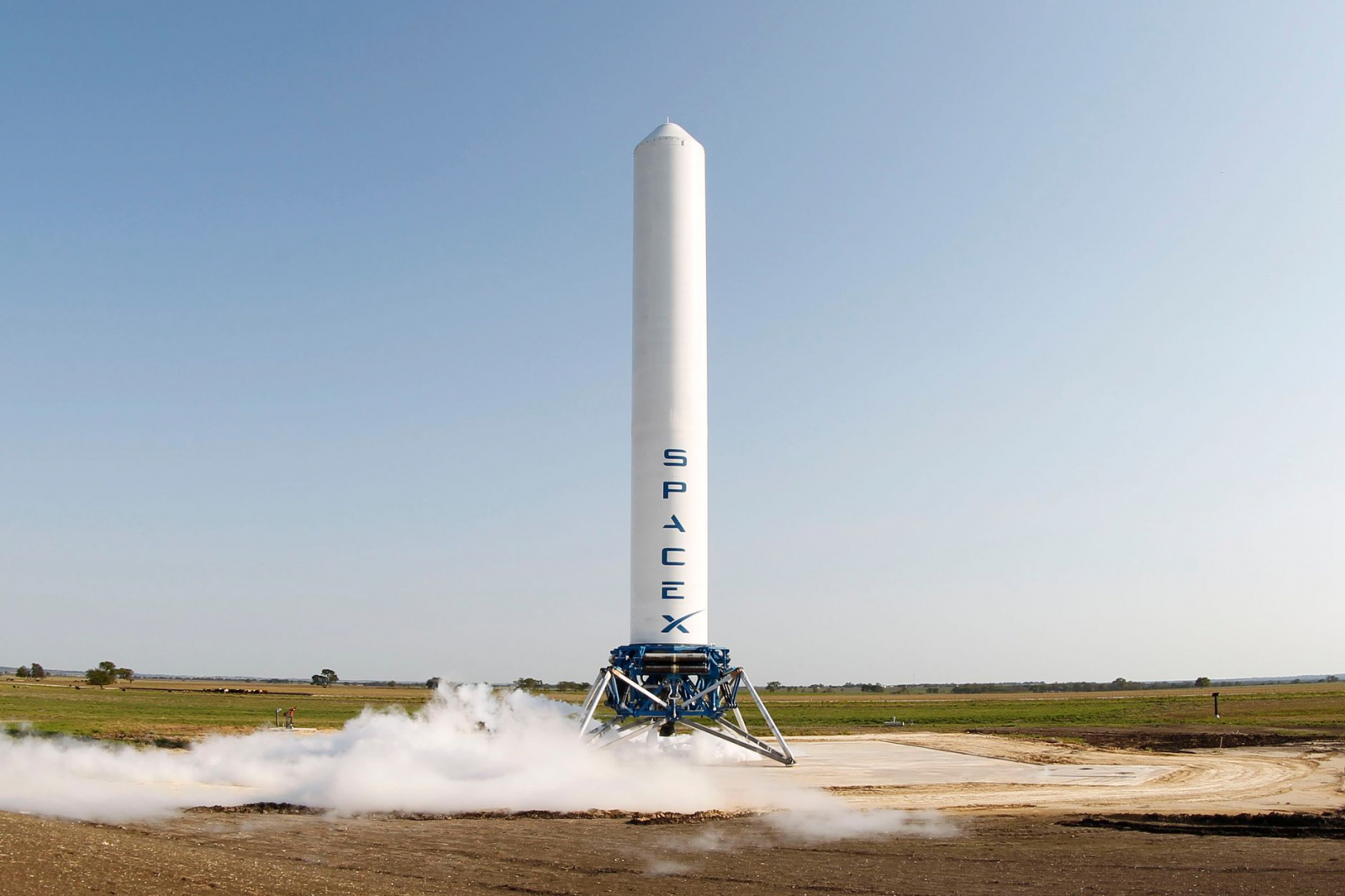
PsiQuantum has a plan to make a massive quantum computer out of light
The machine that could change the world will be housed in a room that looks like a data center crossed with an ice cream factory. Inside will be some 100 stainless-steel cabinets, each about six feet tall and connected to a supply of liquid helium that keeps them only a few degrees above absolute zero. Inside those cabinets will be hundreds of chips, and on those, thousands of particles of light flying through a maze of optical switches and beam splitters. Each photon must be accounted for, because precisely measuring where it ends up will help answer questions that current computers might take millions of years to solve. This computer, as described, does not exist. It's the brainchild of a company called PsiQuantum, founded in 2016 by four physicists from UK universities. In a crowded field of deep-pocketed competitors with similarly fantastical visions, the company aims to be first to fulfill its promise. In the years since the physicist Richard Feynman first envisioned them in 1981, quantum computers have promised to speed up everything from medical research to AI by harnessing the qualities of quantum particles. Unlike normal computer bits, which can be either a 1 or 0, quantum bits can exist in multiple states at once. And combining enough of those quantum bits together could produce a computer capable of tasks well beyond the reach of today's conventional machines. But even today's best quantum prototypes are too small and error-prone to do anything useful. That makes PsiQuantum's promises for what its computers will ultimately do all the more bold. Consider the company's hopes for predicting the effects of cytochrome P450 enzymes, which often break down drugs in the body. If pharma companies knew more precisely how they would work on a particular molecule, they could design more effective medications faster. Estimating this for a specific drug can take over 10 years with today's methods, says Philipp Ernst, vice president of quantum applications for PsiQuantum, but "we aim to get it down to four minutes." In a field full of such claims, PsiQuantum has attracted unusual investment and scrutiny for two reasons: It is one of the few companies aiming directly at building a large and useful machine, and it is already working with a major chip manufacturer to build its systems using existing semiconductor fabs. Its vision has attracted momentum: Last year, PsiQuantum raised $1 billion in funding and broke ground in Chicago on a site it's building in partnership with local governments. It also has a second site in the works in Australia, which it promises will be operational -- meaning hardware-ready -- in 2027. And it's one of just two companies (along with Microsoft) to reach the third stage of an intensive government evaluation program to see which quantum companies might succeed. Evaluating whether PsiQuantum will do what it says is harder than, say, judging a drugmaker by its clinical trial results: Advances in quantum computing are incremental, opaque, and tough to verify from the outside. But the company is now approaching its prove-it moment, when years of closed-door work and hundreds of millions in investment will either culminate in a useful quantum computer or fall short. We could start to know which as soon as next year. A new kind of machine Terry Rudolph, one of PsiQuantum's four founders, is soft-spoken and shaggy-haired. He was born in Malawi and learned only after earning his first physics degree that he is a grandson of the famed physicist Erwin Schrödinger. He later self-published a 150-page book to explain quantum computing to teenagers (my PR contact gave me a signed copy with a wink that said "We never expect anyone to actually read this," but I can report that it is a funny and helpful book). Around 2014, Rudolph and his cofounders became increasingly convinced that the quantum breakthroughs they were finding to be possible in theory might also be possible in a real machine. They eventually left their academic positions and divided the tasks before them: Rudolph worked on theory, Mark Thompson on engineering, Pete Shadbolt on scaling the technology up, and Jeremy O'Brien on articulating the vision and finding investors (O'Brien served as CEO until February; he's been replaced by Victor Peng, a veteran of the semiconductor industry). To understand why the quantum computer the company is building would be a big deal, consider how imprecise much of modern science remains. We cannot reliably predict, for example, which lithium-ion battery will catch fire or how quickly a critical aircraft component will corrode. This isn't just because these systems are complex, though they are. It's that, at their core, they are governed by quantum mechanics. Subatomic particles don't have well-defined properties -- this location and that velocity -- but instead occupy quantum states spread across many possibilities. And that in turn influences a range of atomic and molecular behavior. Schrödinger (Rudolph's grandfather, remember) showed how to describe this haziness mathematically a century ago this year, but precisely carrying out the calculations on real-world systems quickly becomes unfeasible even for the best computers. Scientists cope with this gap using approximations, imperfect simulations, or experiments on animals. PsiQuantum co-founder and chief scientific officer Pete Shadbolt (left), and machinery the company has built to manufacture its own barium titanate, a material with the perfect qualities for routing light particles (right). Feynman, David Deutsch, and other physicists in the 1980s wondered if we could do better. Maybe such complexity could instead be modeled using a new kind of machine. Rather than using transistors that are only ever on or off, this one would use particles held in quantum states, manipulate them to perform calculations, and then measure them at the end for an answer. Using quantum systems to simulate quantum systems would for the first time allow a simulation of physics and chemistry that directly reflected reality. It would be an invaluable tool for designing new drugs, materials, or really anything affected by quantum mechanics. Revolutionary, in other words. Humankind's leaps in understanding how nature works have often resulted in the invention of powerful new tools, Rudolph told me. "I don't think it's a coincidence that the Industrial Revolution coincided with our ability to calculate and simulate the laws of Newtonian mechanics, the laws of thermodynamics,...the laws of classical electromagnetism," he says. "Whenever we have more power to calculate and simulate and understand things, we build incredible machines that come from it." He sees something similar coming with quantum computers. Chasing photons One mystery has always been which quantum thing -- ions, atoms, or something entirely new engineered with quantum properties -- could be made stable and controllable enough to use as a qubit, the basic unit in the quantum computing world. Quantum systems are delicate, and observing any particular particle causes it to collapse into one state rather than a superposition of multiple states. If this happens during the computation rather than at the end, it produces an error that must be corrected for. Too many of these means the computer fails to produce a useful answer. Just as engineers in the early days of aviation weren't sure whether airplane wings would be fixed or flap like a bird's, we're not yet sure which of these quantum things will work best. Google and IBM are betting on superconducting qubits, superconducting circuits made of aluminum or other metals. Intel is using electrons. PsiQuantum is using photons, the particles that make up light. "Photons have lots of nice things going for them," Rudolph says. They can maintain quantum states for a long time; indeed, the photons in the universe's cosmic microwave background may have done so for billions of years. But photons also move fast and scatter easily. More importantly, two photons are more likely to pass through one other than interact. That makes them a challenging candidate for quantum computation, in which qubits need ways to influence one another. For a while, this last flaw seemed to doom the idea of quantum computing with light. But in 2001, researchers from the Los Alamos National Laboratory and the University of Queensland found a loophole. They discovered they could essentially fake interactions between photons by sending the light particles through a network of beam splitters and detectors. Their paper changed everything. PsiQuantum was created to make the theory a reality. Size was the first problem; previous plans would have required a computer as large as California. Mercedes Gimeno-Segovia, who was a PhD student of Rudolph's in the early 2010s (after almost becoming a professional violinist instead), thought of a way for the machine to be smaller. The basic process since then has been this: First create photons with lasers and then "entangle" them, exploiting a quantum phenomenon in which the particles no longer have individual states but instead share one. Next, route them through a maze of gates that perform computations, and finally read out details of their quantum state at the end, all while tracking and correcting for the errors that occur. Succeeding at each of these steps millions of times is not so much an engineering hurdle as a brick wall. And building the supply chain -- like manufacturing new materials with the qualities to route individual photons around -- is arduous. To get a sense of it all, last year I joined Shadbolt at the SLAC National Accelerator Laboratory, in Menlo Park, California. The center has helped produce several Nobel Prizes and played a role in the 1968 discovery of quarks, fundamental building blocks of matter that make up protons and neutrons. But PsiQuantum set up shop there essentially to siphon liquid helium from SLAC's giant cryoplant. This is what the company uses to cool its computing cabinets down to deep-space temperatures. Right now the cabinets operate at 2 K, or -456 °F, but the goal is to be able to run them slightly warmer -- at a balmy -452 °F. Most quantum approaches require the whole machine to be cooled to superconducting temperatures, so that much of the expense in running it will actually be spent on refrigeration. But photonic computers require only one piece to be this cold -- the detectors that measure single photons at the end of the computation. And the required temperature can be a bit higher. (PsiQuantum said in May that it will spend some of the $100 million award in CHIPS Act funding it's slated to get on these detectors). The siphoning setup was a temporary solution; PsiQuantum now has its own cooling system at its testing facility in Milpitas, California, and is setting up a larger one at its production site in Australia next year. These helium systems represent some of the biggest capital expenditures for any quantum company and will consume a significant chunk of PsiQuantum's $1 billion funding round. In the afternoon we drove to a lab in San Jose, where I donned a cleanroom suit -- a head-to-toe covering that keeps dust at bay -- to watch the manufacture of a blueish crystal called barium titanate. It's prized by PsiQuantum because it quickly and reliably routes light particles with very little electrical input, keeping the precious photons undisturbed as they move through the circuit. But for all barium titanate's theoretical value to the company, its structure makes it a pain to manufacture, and the material wasn't available at scale when PsiQuantum got its start. The company, in what Rudolph told me was an agonizing decision, opted to make it in-house, requiring a massive investment. I saw a technician -- operating at what looked like a giant pressure cooker -- adding the base elements to several hoppers; then I watched through a porthole as the elements got heated, vaporized, and finally crystallized into a thin layer on a wafer disc. At that time each disc took about 12 hours to make; the company now says several are produced each day. The discs then get shipped to the chipmaker GlobalFoundries in Malta, New York, where PsiQuantum's chips are made. The company has invested heavily in making its own barium titanate, a material whose delicate crystalline structure is tedious to manufacture. PsiQuantum's bet is that this entire supply chain, byzantine as it might sound, will make the company more efficient than its competitors. That's because, if you squint, it looks like a souped-up and high-precision version of the existing supply chain for silicon photonic chips, another type of technology that transmits information with light -- one that's already used in data centers. If PsiQuantum produces its chips at scale, it can take advantage of tools and infrastructure that already exist. But it's not a given that one working chip can easily be wired up to thousands more. That's why the company is testing in phases: Its Milpitas site has connected three cabinets together, with 250 chips in each, but the next step is to scale the systems up and see whether the company's techniques for correcting errors can keep up. Once the cooling system arrives at the Australian site late next year, the company says, it aims to connect about 100 cabinets together. Then PsiQuantum will work up to running the world-changing algorithms it has promised. The timeline for this, it's worth noting, is up for debate. News articles have said that 2027 is the year that PsiQuantum aims to have its first full-scale quantum computer come online at its Australian site, but the company insists the deadline has been misread, and that it only intends for its facility to be "operational" by the end of next year. That means cooling systems in place and ready for hardware to be installed, but no promises about what size computer will be ready. In an industry where timelines are perpetually in flux yet central to how companies are judged, that distinction isn't trivial. Into the unknown The outsider with perhaps the best guess of whether PsiQuantum will succeed is the Pentagon. The US Defense Advanced Research Projects Agency -- the Pentagon's research and development arm -- has been running an initiative to determine which of the boastful quantum companies might actually deliver. In the last year and a half, the heads of the program have been sounding more confident. Joe Altepeter, who ran the program until last year and proudly described himself as a "quantum skeptic," told me in March 2025: "I am more optimistic now than I have been at any point in the past 10 years." And in a statement earlier this year, his successor, Micah Stoutimore, said "it now seems likely that someone will build a utility-scale quantum computer by 2033," referring to a machine that generates more value from its calculations than it costs to build and operate. The program has been scrutinizing PsiQuantum's systems for over a year and putting them through the third stage of a benchmarking initiative meant to determine whether the technology will actually work. But to the rest of the industry, PsiQuantum is sort of a black box. "It is very hard for an outsider to evaluate," says Scott Aaronson, a theoretical computer scientist at the University of Texas at Austin who runs a popular blog that often covers the industry. Other companies, like Google and Quantinuum, have regularly published results over the years demonstrating chips and systems with incremental improvement, publicly laying the engineering groundwork needed to eventually build large machines. PsiQuantum has instead focused squarely on a commercial goal -- a computer with one million qubits, which is the scale that researchers expect to unlock research currently not possible on normal computers. PsiQuantum often differentiates itself with this industrial-scale goal, but IBM, which debuted a development road map in 2020, has been progressively building bigger and bigger systems. It initially targeted 2028 for a large-scale, error-corrected system, a deadline that now appears to have been pushed out to 2030. Making it useful On top of actually building the machine, a major focus for PsiQuantum is getting the rest of the world to develop a plan for how to use it. PsiQuantum has announced partnerships with customers including the defense giant Lockheed Martin, which intends to use it for materials design; the automaker Mercedes, which wants it for battery design; and the aerospace manufacturer Airbus. That these companies don't have a computer to experiment with is not a problem, according to Ernst at PsiQuantum. "There's a PlayStation 6 probably coming up from Sony next year or the year after, and people are programming those games right now," he says. "This is, in principle, very similar." (It's a glib analogy but not an entirely empty one; the quantum algorithms for solving a research problem can be cracked even if there is not yet hardware to run them on.) The idea is that experts in quantum information from both PsiQuantum and its customers will be able to translate design problems -- say, the requirements for a battery in a Mercedes electric vehicle -- into algorithms the computer could solve. The company offers a software package called Construct, which companies can use to design their own algorithms that might one day run on the computer. The future of quantum computing hinges on these algorithms. Quantum computers get painted as a speedup for everything, but in reality, they're suited to a subset of problems, and answering a question with this sort of machine requires the question to be formulated with very specific types of algorithms. People spend entire careers working on such algorithms, even if the computers to run them don't exist yet. At their core, they use the rules of quantum mechanics to manipulate probabilities in ways that ordinary computers can't. The most famous example, and a reason the government is so interested in quantum computers, is Shor's algorithm. It was developed in 1994 by the theoretical computer scientist Peter Shor and could effectively break many forms of encryption used online, for everything from credit card numbers to military intelligence. The thing keeping the world together, for now, is that nobody has a computer to run the algorithm on (and security experts are already launching new encryption methods that could withstand attacks from a quantum computer). PsiQuantum is researching how long its systems might take to run Shor's algorithm. PsiQuantum's chips are manufactured at GlobalFoundries in Malta, New York, and tested at company headquarters in California. Both PsiQuantum and GlobalFoundries have been awarded federal CHIPS Act funding. The company also published a paper in December in collaboration with Airbus, essentially seeing if a new algorithm developed by the authors could beat a classical computer in modeling fluid dynamics, like the turbulence around an airplane wing. Andrew Childs, an expert in quantum simulation, told me PsiQuantum achieved only a moderate speed increase over what today's computers can do. "It's probably unlikely that speedups like this will have a significant practical impact until we have very large-scale quantum computers," he said in an email. (When I asked Ernst, he agreed the improvement was modest.) Some of the algorithms PsiQuantum is working on are not expected to be perfected or even used in the first applications of its computer. Instead, its initial tasks might be more along the lines that Feynman envisioned way back in 1981: simulating the smallest particles of our world. The company's most significant research in this realm is in modeling quantum chemistry. Take those pesky P450 enzymes. More precisely understanding how they operate, PsiQuantum says, would allow for faster drug development and testing. Last year, PsiQuantum published methods for doing these sorts of chemistry calculations on a quantum computer, along with another paper demonstrating an algorithm that can simulate the collision of two molecules and estimate the likelihood of different outcomes femtosecond by femtosecond (there are one quadrillion femtoseconds in a second). It's a remarkable amount of detail not currently possible with today's technology, and it would allow drug and materials researchers to simulate new chemical interactions. Dominic Berry, who developed some of the core techniques used in the collision paper but isn't involved in PsiQuantum, says the company made impressive improvements, but to do the simulations scientists are most curious about would require the algorithm to be made even faster and PsiQuantum's early computer to have fewer errors than currently expected. Until PsiQuantum's computers are up and running, the breakthroughs that these research papers tease remain in the realm of theory. It's a space where Rudolph operates quite comfortably. He told me that Alan Turing created the theory of classical computing with pen and paper, imagining how the 1s and 0s would be represented in the machine, and how with the right approach to logic you could compute almost anything. "But there is no way that by hand, with a pen and paper, Turing was ever going to produce -- you know -- Minecraft and Facebook," he says. That took more than 70 years of tinkering (during which we fortunately created more useful things than Minecraft and Facebook). For all the time Rudolph spends dreaming up things quantum computers might do, in other words, people working on those problems are still stuck with pen and paper for now: "Until you have the actual machine in hand, you don't have the opportunity to really explore its potential."
