News & Updates
The latest news and updates from companies in the WLTH portfolio.
Polymarket criticized over 'disgusting' bets on fate of pilots on US jet shot by Iran
After strong criticism from a federal lawmaker, the online betting platform Polymarket stopped accepting wagers on when US warplane crew members who were shot down in Iran might be rescued. It promised to investigate how the market materialized. The criticism came from Seth Moulton, a Massachusetts Democratic representative who earned two bronze star medals serving with the United States marine corps in Iraq from 2003 to 2008 and published an X post describing Polymarket's acceptance of bets on the downed pilots' fate as "DISGUSTING". Prior to Moulton's post, Iranian military forces on Friday had shot down an F-15E Strike Eagle jet occupied by two US air force members participating in the war on Iran being waged by the US and Israel since late February. Related: A timeline of the two US military jets shot down by Iran forces The aircraft's pilot was rescued within seven hours. Donald Trump announced the other crew member's rescue just after midnight Sunday through a post on his Truth Social platform. For a time, Polymarket permitted users to wager on the timing of those rescues, with most betting they would occur by Saturday. Moulton did not take kindly to learning that the platform was allowing such bets. While the search and rescue efforts for the downed jet crew were in full effect, Moulton wrote on X: "Their safety is unknown... And people are betting on whether or not they'll be saved. This is DISGUSTING." Polymarket's X account replied to Moulton: "We took this market down immediately as it does not meet our integrity standards. It should not have been posted, and we are investigating how this slipped through our internal safeguards." Moulton countered in another post that Polymarket was still accepting hundreds of other war-related wagers that it should deactivate, adding that the company's "integrity standards are severely lacking". At one point during the exchange, Moulton mentioned that the president's oldest son and namesake, Donald Trump Jr, is an investor in Polymarket, which the congressman referred to as a "dystopian death market". "Taking down this particular bet after I called it out can only be the first step," Moulton wrote. Polymarket did not immediately respond to a request for additional comment on Moulton's condemnation or details about the investigation it vowed to undertake. Platforms such as Polymarket, where users can bet on matters ranging from war and elections to entertainment industry awards and sports, have drawn congressional scrutiny as they accumulate an exponentially growing number of betters. Congressional lawmakers in March introduced a proposal to ban prediction markets from accepting bets pertaining to sports or casino-style games. And a separate but similar proposal in March called on banning prediction markets on government actions, war and "events ripe for rigging". In a statement about the latter of those two measures, Chris Murphy, a Democratic US senator of Connecticut, said: "When events that involve good and evil, life and death become just another financial product, morality no longer matters and the soul of America is fundamentally corrupted."
The Anthropic Trap: Why the Drake Equation Can't Tell Us How Many Civilizations Exist
Part 2 of The Mystery of Nature's Fine Tuning. Read Part 1 here. "This is counterintuitive: the more miraculous our existence seems, the more inevitable it becomes under strict conditions; relax those conditions, and our existence starts to look like a fluke!" -- Author As I wrote that final sentence in the previous article, a ruminative thought struck me. I was only half right about the Drake Equation. Revising it with Bayesian inference was the right instinct, but I had completely missed its connection to anthropic reasoning and the trap that connection creates. For readers new to this series, found here, here's the essential idea: the so-called "fine-tuning problem" becomes less mysterious once we apply conditional probability (Bayesian inference). We don't observe the universe at a random moment, so we can't use a frequentist argument that assumes random sampling. Our existence already filters what we can observe.

Polymarket criticized over 'disgusting' bets on fate of pilots on US jet shot by Iran
Add Yahoo as a preferred source to see more of our stories on Google. After strong criticism from a federal lawmaker, the online betting platform Polymarket stopped accepting wagers on when US warplane crew members who were shot down in Iran might be rescued. It promised to investigate how the market materialized. The criticism came from Seth Moulton, a Massachusetts Democratic representative who earned two bronze star medals serving with the United States marine corps in Iraq from 2003 to 2008 and published an X post describing Polymarket's acceptance of bets on the downed pilots' fate as "DISGUSTING". Prior to Moulton's post, Iranian military forces on Friday had shot down an F-15E Strike Eagle jet occupied by two US air force members participating in the war on Iran being waged by the US and Israel since late February. The aircraft's pilot was rescued within seven hours. Donald Trump announced the other crew member's rescue just after midnight Sunday through a post on his Truth Social platform. For a time, Polymarket permitted users to wager on the timing of those rescues, with most betting they would occur by Saturday. Moulton did not take kindly to learning that the platform was allowing such bets. While the search and rescue efforts for the downed jet crew were in full effect, Moulton wrote on X: "Their safety is unknown... And people are betting on whether or not they'll be saved. This is DISGUSTING." Polymarket's X account replied to Moulton: "We took this market down immediately as it does not meet our integrity standards. It should not have been posted, and we are investigating how this slipped through our internal safeguards." Moulton countered in another post that Polymarket was still accepting hundreds of other war-related wagers that it should deactivate, adding that the company's "integrity standards are severely lacking". At one point during the exchange, Moulton mentioned that the president's oldest son and namesake, Donald Trump Jr, is an investor in Polymarket, which the congressman referred to as a "dystopian death market". "Taking down this particular bet after I called it out can only be the first step," Moulton wrote. Polymarket did not immediately respond to a request for additional comment on Moulton's condemnation or details about the investigation it vowed to undertake. Platforms such as Polymarket, where users can bet on matters ranging from war and elections to entertainment industry awards and sports, have drawn congressional scrutiny as they accumulate an exponentially growing number of betters. Congressional lawmakers in March introduced a proposal to ban prediction markets from accepting bets pertaining to sports or casino-style games. And a separate but similar proposal in March called on banning prediction markets on government actions, war and "events ripe for rigging". In a statement about the latter of those two measures, Chris Murphy, a Democratic US senator of Connecticut, said: "When events that involve good and evil, life and death become just another financial product, morality no longer matters and the soul of America is fundamentally corrupted."
Will SpaceX IPO make you rich? SpaceX IPO buzz heats up as up to 30% shares may go to small investors -- here's how to buy SpaceX IPO shares fast
SpaceX IPO news is surging fast in 2026. Up to 30% shares may go to retail investors. That is nearly three times typical IPO allocation. Valuation estimates are touching $1.5 trillion levels. This could become the biggest IPO ever recorded. The SpaceX IPO 2026 is expected to happen in the first half of the year, possibly June. Many investors are searching how to buy SpaceX stock IPO 2026 early. While access may expand via platforms like Robinhood Markets, experts warn about high valuation risks and advise careful timing before investing.
Polymarket criticized over 'disgusting' bets on fate of pilots on US jet shot by Iran
US congressman decried bets on when two crew members on the F-15 jet shot down by Iranian forces would be rescued After strong criticism from a federal lawmaker, the online betting platform Polymarket stopped accepting wagers on when US warplane crew members who were shot down in Iran might be rescued. It promised to investigate how the market materialized. The criticism came from Seth Moulton, a Massachusetts Democratic representative who earned two bronze star medals serving with the United States marine corps in Iraq from 2003 to 2008 and published an X post describing Polymarket's acceptance of bets on the downed pilots' fate as "DISGUSTING". Prior to Moulton's post, Iranian military forces on Friday had shot down an F-15E Strike Eagle jet occupied by two US air force members participating in the war on Iran being waged by the US and Israel since late February. The aircraft's pilot was rescued within seven hours. Donald Trump announced the other crew member's rescue just after midnight Sunday through a post on his Truth Social platform. For a time, Polymarket permitted users to wager on the timing of those rescues, with most betting they would occur by Saturday. Moulton did not take kindly to learning that the platform was allowing such bets. While the search and rescue efforts for the downed jet crew were in full effect, Moulton wrote on X: "Their safety is unknown... And people are betting on whether or not they'll be saved. This is DISGUSTING." Polymarket's X account replied to Moulton: "We took this market down immediately as it does not meet our integrity standards. It should not have been posted, and we are investigating how this slipped through our internal safeguards." Moulton countered in another post that Polymarket was still accepting hundreds of other war-related wagers that it should deactivate, adding that the company's "integrity standards are severely lacking". At one point during the exchange, Moulton mentioned that the president's oldest son and namesake, Donald Trump Jr, is an investor in Polymarket, which the congressman referred to as a "dystopian death market". "Taking down this particular bet after I called it out can only be the first step," Moulton wrote. Polymarket did not immediately respond to a request for additional comment on Moulton's condemnation or details about the investigation it vowed to undertake. Platforms such as Polymarket, where users can bet on matters ranging from war and elections to entertainment industry awards and sports, have drawn congressional scrutiny as they accumulate an exponentially growing number of betters. Congressional lawmakers in March introduced a proposal to ban prediction markets from accepting bets pertaining to sports or casino-style games. And a separate but similar proposal in March called on banning prediction markets on government actions, war and "events ripe for rigging". In a statement about the latter of those two measures, Chris Murphy, a Democratic US senator of Connecticut, said: "When events that involve good and evil, life and death become just another financial product, morality no longer matters and the soul of America is fundamentally corrupted."
Cramer Flags New Trade: Sell Some Tesla, Wait for SpaceX IPO? - Tesla (NASDAQ:TSLA)
TSLA stock is moving. See the chart and price action here. Cramer's Bold Take In a social media post reacting to JPMorgan's fresh downgrade of Tesla to Sell, with a call for the stock to plunge roughly 60%, Cramer shared his takeaway from the bearish note: "Bold... Must mean people are going to sell this one to buy SpaceX," Cramer wrote, framing a rotation trade from the struggling EV story to the private space giant whenever that IPO window opens. The Downgrade to Sell JPMorgan's downgrade hinges on a disconnect between Tesla's fundamentals and its recent price action, according to Brian Sozzi at Yahoo Finance. The bank notes that expectations for Tesla's financial and operational performance have "collapsed" across virtually every metric through the end of the decade, yet the stock has rallied more than 50% and analyst price targets are up over 30% over the same window. That mismatch, JPMorgan argues, implies the market is baking in a massive inflection in Tesla's performance sometime after 2030 -- a period where results are expected to turn materially stronger than earlier forecasts, despite the current trend of those forecasts moving lower. In plain English, the call is that Tesla's near- and medium-term story looks worse, but the stock is being supported by long-dated hopes far beyond this decade. JPMorgan urges investors to be cautious about paying current prices for that distant, high-execution-risk payoff, especially after factoring in the time value of money. TSLA Price Action: According to Benzinga Pro data, Tesla stock was up 0.91% at $363.86 in Monday's premarket trading. This image was generated using artificial intelligence via Gemini. Market News and Data brought to you by Benzinga APIs To add Benzinga News as your preferred source on Google, click here.

Setback for China's SpaceX rival: Tianlong-3 maiden flight fails
According to reports, the Tianlong-3 lifted off from the Jiuquan space center in northern China at 12:17 p.m. China Standard Time. The goal of the mission was a sun-synchronous orbit. Reuters and Golem (a German outlet) both report that although the rocket successfully left the pad, the mission failed and the payload could not be placed into its intended orbit. Space Pioneer has not yet provided any specific details about the payload itself. From a technical perspective, the Tianlong-3 marks an important development step for Space Pioneer and for China's private space industry. The first stage is powered by nine TH-12 engines, while the second stage uses a single vacuum-optimized TH-12 engine. According to Golem, the rocket did not yet fly in a reusable configuration during its debut, although the program is clearly geared toward reusability in the long term and according to Reuters, is intended to help China catch up with SpaceX in the commercial launch market. After around two minutes of flight, there was apparently a problem in the propulsion system. Initial images suggest that an explosion may have occurred in the area of one of the engines. The exact sequence of events has not yet been officially confirmed, but current reports indicate that the flight path deviated from its intended course either near the end of first-stage operation or during the transition to the second stage. Since the second stage relies on only a single engine, it is significantly less fault-tolerant than the first.

Consultants hit out at striking doctors and warn walkouts will cause weeks of chaos
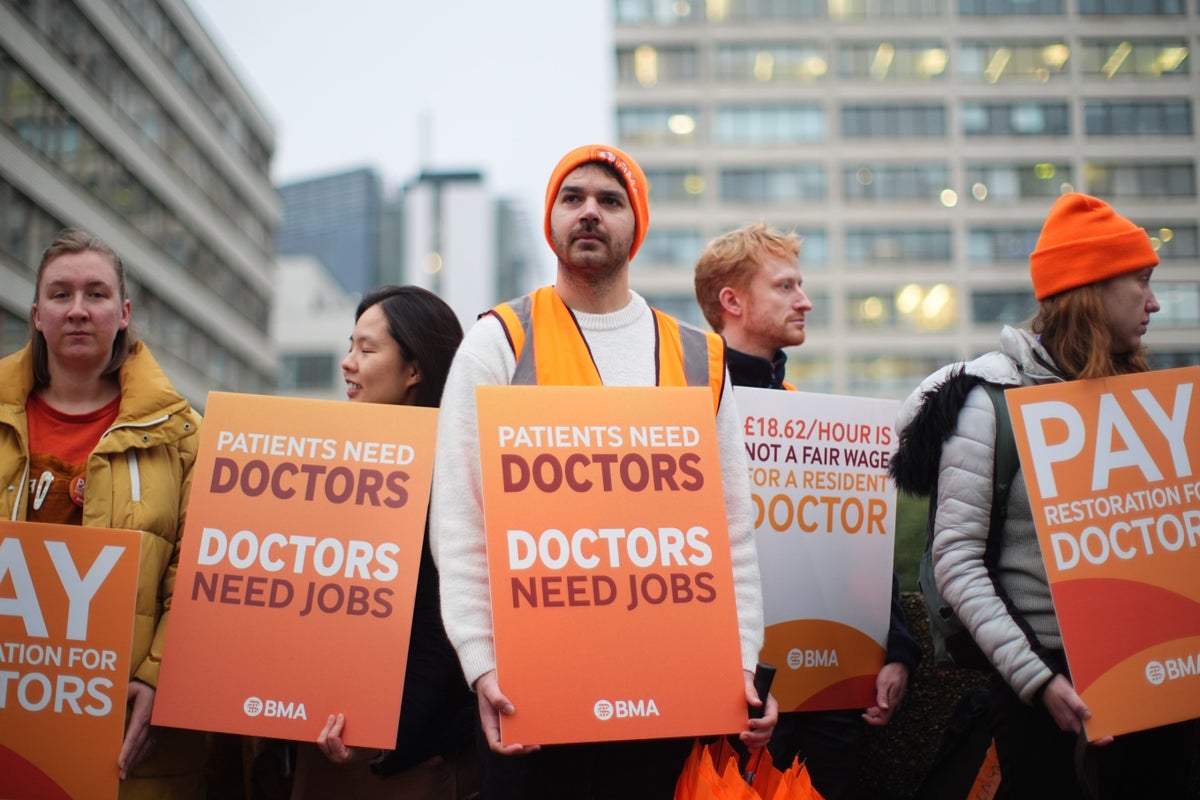
Furious healthcare leaders have hit out at striking senior doctors, warning the six-day walkout will cause weeks of chaos for patients. Senior medics have told The Independent that the industrial action, which begins the day after the bank holiday weekend, could be the toughest strike yet, with hospitals scrambling to cover the shifts of tens of thousands of staff during the Easter break. One "knackered" consultant, who now faces having to fill in for striking staff, hit out at the British Medical Association (BMA), which represents doctors and brought the strike action, saying: "The BMA is trying to put me in an early grave." The warning comes after the collapse of talks prompted the government to withdraw an offer of 1,000 additional training places, saying it is no longer considered "financially or operationally" possible after the BMA confirmed its 15th walkout would go ahead on Tuesday and see tens of thousands of resident doctors go on strike. Healthcare leaders have warned that, as well as cancelling appointments and surgeries this week, the disruption will last for weeks, as staff drafted in to cover the strike will need to take leave once it's over. Rory Deighton, acute and community care director for the NHS Alliance, told The Independent: "The NHS has had to work out ways of minimising the impact of strikes for patients and staff, not just during but also after walkouts as the full effect is worked through. [this] action could leave a real sting in the tail. "There's precious little time to prepare, with the bank holiday and Easter break adding to the challenge of adapting services, arranging cover, and then getting back to business as usual in the days and weeks that follow. "It also comes as health leaders contend with far-reaching organisational change, with posts going locally, regionally and nationally - making it even harder for them to deal with the demands of a strike. It's not too late for the government and BMA to find a way forward." NHS leaders have also warned that this strike could be harder to cope with than previous ones, because of a law change that means less notice is required. One leader told The Independent: "Each round of industrial action has been harder to manage as other clinical staff have become more weary. This time will be even harder to manage as yet again it falls immediately after a bank holiday period. But it also exploits the new legislation, which means that only 10 days' notice of strikes has to be given. "Ten days makes it much harder; if you add a bank holiday into the mix, then it is harder still. Operational teams would normally be planning how to maintain safe, urgent, and emergency care over this period, but they now have to plan for a further six days of industrial action immediately after, so 10 days of disruption in total." Another NHS trust chief said: "To be honest, people are a bit stressed as many of the seniors we normally look to act down are already booked off on leave for Easter. So we are struggling to cover the shifts and are worried that we may be asked to pay enhanced BMA rates." But NHS England said hospital teams across the country will be working to minimise disruption for patients during the walkout and urged patients to attend planned appointments unless they have been contacted to reschedule, and those with life-threatening emergencies should still call 999 or attend A&E. Meanwhile, senior consultants have told The Independent the BMA is losing their support. One consultant said the "BMA is trying to put me in an early grave", while another added: "[We're] a bit fed up of them [the BMA]... There are big ongoing issues with how resident doctors are treated, and a lot of historic anger about that. But another set of strikes, especially timed after the Easter bank holidays, seems like a tactic designed to cause the most disruption and problems for already stretched services. "Locally, with the last strikes, lots of residents didn't partake. I am unsure if they will with these again, as there is a very vocal part of the BMA behind them, but I'm not sure it's felt the same on the ground." Writing for The Independent last week, health secretary Wes Streeting said negotiations had raised the question about whether the BMA is "serious about reaching an agreement at all". He said he did not "underestimate the pressure doctors are under", but added: "Negotiation is a two-way process. If one side cannot even agree among themselves on an alternative, it becomes increasingly difficult to see how meaningful progress can be made across the table. Good faith cannot run in only one direction." Dr Jack Fletcher, chair of the BMA's resident doctors committee, said on Thursday that he would "happily" meet with ministers over the Easter weekend to avoid walkouts. When challenged on why the BMA did not put the government's offer to its members for a vote, Dr Fletcher said it did not meet the threshold, and accused the government of pushing for the move to ensure a six-week referendum. As the strikes loomed, the head of the NHS in England said last week it would increasingly look at clinical models to reduce its reliance on resident doctors. Speaking to the Health Service Journal, Jim Mackey said that while the strategy was not meant "as a threat to residents", it is necessary to consider alternative models "if we continue to have a system that feels unreliable, [when] one of the key things the population needs from us is reliability". He did not say how that might be achieved.
Peace Or Chaos, What Will US, Iran Pick? Decoding The Best & Worst Possible Outcomes
US-Iran ceasefire? While a best-case scenario would mean durable peace, regional stabilisation, worst-case scenario would lead to escalation and strategic chaos. News18 explains Amid the escalating conflict and American President Donald Trump's threats, can there be a US-Iran ceasefire? What could be the terms? News18 looks at the best-case and worst-case scenarios. Experts and reports suggest that a best-case scenario could involve a long-term de-escalation, reopening the Strait of Hormuz, and nuclear negotiations. The worst-case scenario would include a failed, temporary truce that triggers a wider regional war, chaotic Iranian civil strife, and major global economic shocks from destroyed energy infrastructure. The Best-Case Scenario: Durable Peace and Regional Stabilisation The 45-day ceasefire holds, extending into formal, long-term negotiations addressing Iran's nuclear program and missile capabilities, similar to the proposed Islamabad Accord. * Immediate reopening of the Strait of Hormuz lowers energy prices. * A managed, multipolar Gulf emerges, reducing the likelihood of direct military confrontation between Iran, Israel, and the US. * In this scenario, Iran's leadership might agree to strict constraints on its nuclear program in exchange for sanctions relief, according to the Guardian and other reports. Worst-Case Scenario: Escalation and Strategic Chaos The truce fails, leading to a more intense, uncontrolled escalation. * Sustained closure of the Strait of Hormuz and destruction of major energy infrastructure (like South Pars gas field) drives oil prices much higher, causing massive market instability. * The conflict triggers a chaotic civil war within Iran, creating a massive refugee crisis and destabilising the region. * Iran's proxies (like the Houthis) permanently disrupt key shipping lanes, leading to an asymmetrical war. * Iran decides it has nothing left to lose and directly targets U.S. assets, forcing a large-scale US military response. Key Factors Shaping the Outcome Nuclear Constraints: Any deal must address Iran's nuclear program, or it risks a "more dangerous, more volatile Middle East," as warned by officials. Security Guarantees: Iran has demanded guarantees that attacks won't be repeated, which is a major point of contention. Weapon Supply: A shortage of interceptor missiles could make the situation far worse if attacks continue, leaving energy infrastructure vulnerable. KEY FAQs What is the best-case scenario? Negotiated settlement / ceasefire, de-escalation and stability in the Gulf, oil prices stabilise, global markets recover. What is the worst-case scenario? Full regional escalation or prolonged war; attacks on energy infrastructure and Strait of Hormuz disruption; global recession, refugee crisis, instability. What is the most likely scenario? Prolonged conflict with periodic escalation. No decisive victory, continued tensions. Economic uncertainty and volatility.

VPN.com CEO Michael Gargiulo: Claude and Anthropic Users Need Stealth Domain Acquisition to Secure Premium Domain Names
ATLANTA and SAN FRANCISCO, April 6, 2026 /PRNewswire/ -- VPN.com CEO and Premium Domain Broker Michael Gargiulo is calling attention to a growing reality for AI founders, Claude builders, and Anthropic users: The race for premium domain names is getting more competitive, more expensive, and far less forgiving for companies that reveal their interest too early. As Artificial Intelligence products move from idea to launch at record speed, Gargiulo says startups building with Claude and within the broader Anthropic ecosystem are entering a domain market where stealth matters. The moment a founder signals interest in a category-defining domain, the negotiation can shift fast. "AI founders are building some of the most exciting companies in the world right now, especially with the advent of Model Context Protocol," Gargiulo said. "But the second you show your hand on a premium domain, you can lose leverage. Sellers may not know every detail of your company at first. That's when the price can move and the timeline can drag, which is why every project needs their own premium domain broker or intellectual property advisor." Gargiulo, who acquired VPN.com as a seven-figure domain and has spent years advising brands on premium digital real estate, says many AI companies still underestimate how exposed they become during direct outreach. Founders often approach domain owners themselves, use branded email addresses, or mention product plans too early in the process. According to Gargiulo, that creates an information imbalance from the start. "When a company is tied to a major AI trend, a strong product launch, or a fast-moving funding story, even a simple inquiry can carry weight," he explained. "That weight turns into pricing pressure. It turns into seller confidence because the future is largely driven through prayer and distribution. Copycats or unnecessary attention around a brand strategy that should've stayed private." The warning comes as more startups, developers, and AI-native operators seek premium exact-match domains, category names, and highly memorable digital brands that can stand out in an increasingly crowded market, one where AI is now capable of copying technology in a matter of hours or days. Gargiulo says Claude and Anthropic users are part of a broader shift in which teams are thinking more seriously about trust, memorability, and authority from day one. "A premium domain gives a company instant credibility," Gargiulo said. "In AI and Large Language Models (LLMs), trust is everything. Users are asking whether the product is real, whether the company is established, whether the experience is secure, and whether the brand will still matter a year from now. A great domain helps answer those questions before a customer reads a single line. Developing technologies like Artificial General Intelligence, Retrieval-Augmented Generation, Natural Language Processing, Generative Pre-trained Transformers, and Deep Machine Learning, will still rely on ultra premium domain names. Models, bots, crawlers, and humans will greatly depend on the trust signals that premium domain names provide." VPN.com Stealth Domain Brokers continue to advise entrepreneurs, operators, and brands on acquiring premium domain names with discretion and long-term strategy in mind. Gargiulo says the message for Anthropic users and Claude-focused builders is straightforward: if the domain is important enough to shape your brand, it's important enough to protect the process around acquiring it. Need help acquiring a premium domain? Contact these experts today: vpn.com/domain-broker/get-started About VPN.com VPN.com helps entrepreneurs, executives, and brands acquire premium domain names through expert brokerage and strategic negotiation. VPN.com, CEO Michael Gargiulo and VP Sharjil Saleem have spent years guiding VPN.com; the company understands global brand management, what it takes to secure world-class digital assets, and help visionary brands build on category-defining domain names that matter.

Elon Musk Has a Strange Requirement for Banks Working on SpaceX's IPO
In normal circumstances, banks pitch for IPO business with expertise and competitive fees. But SpaceX isn't a normal circumstance, and Elon Musk doesn't do things in a normal way. The future trillionaire is demanding that banks, law firms, and auditors working on the IPO purchase Grok subscriptions, and some banks have already agreed to spend tens of millions. The stakes are massive. SpaceX's IPO is expected to raise over $50 billion at a valuation above $1 trillion, generating more than $500 million in fees for the five banks advising: Bank of America, Citigroup, Goldman Sachs, JPMorgan Chase and Morgan Stanley. The move is a big win for Grok, which ranks fourth in the AI race behind ChatGPT, Claude, and Google's Gemini. The chatbot has also been mired in controversy after sharing antisemitic content and generating nonconsensual sexualized images, leading countries like Indonesia and Malaysia to ban it.
Bad news Claude users -- Anthropic says you'll need to pay to use OpenClaw now
* OpenClaw and other third parties removed from Claude subscription as of April 4, 2026 * "These tools put an outsized strain on our systems," Anthropic says * OpenClaw founders criticise Anthropic for "lock[ing] out open source" Anthropic has removed a number of third-party tools, including OpenClaw, from the standard Claude subscription with effect from April 4, 2026, meaning that users wishing to connect to OpenClaw and other third-party services will need to pay separately. "Starting April 4..., you'll no longer be able to use your Claude subscription limits for third-party harnesses including OpenClaw," the company wrote in an email shared by a customer (via Hacker News). With existing subscription limits no longer applying to the use of these tools, users will need to take on pay-as-you-go billing, prepaid usage bundles or API costs to regain access. OpenClaw is now separately chargeable for Claude users "To make the transition easier, we're offering a one-time credit for extra usage equal to your monthly subscription price," Anthropic added, which is redeemable until April 17. Up to 30% off bundles is also being offered. The company likely made the change because Claude subscriptions were designed for human chat usage, not for autonomous agent workflows. with agentic tools like OpenClaw generating massive compute usage beyond what a typical human user would require, it's put Anthropic's current model under strain. "We've been working to manage demand across the board, but these tools put an outsized strain on our systems," the company added in its email. Users are also being promised the potential to refund their subscriptions based on the fact that their terms have changed. OpenClaw creator Peter Steinberger criticized Anthropic for "copy[ing] some popular features into their closed harness" and then "lock[ing] out open source. "Both me and Dave Morin tried to talk sense into Anthropic, best we managed was delaying this for a week," he added. While the move may be un unsavory one for OpenClaw and Anthropic users, it marks a broader industry shift from flat-rate to usage-based as AI models and use cases evolve. OpenClaw is an open source AI agent that runs on your own hardware and connects large language models (LLMs) like Claude or ChatGPT to the software and services you use every day. Unlike a chatbot, it doesn't stop at generating a response. It can take actions: reading and writing files, sending messages, browsing the web, executing scripts, and calling external APIs, all through familiar messaging apps like WhatsApp, Telegram, or Slack. Follow TechRadar on Google News and add us as a preferred source to get our expert news, reviews, and opinion in your feeds. Make sure to click the Follow button! And of course you can also follow TechRadar on TikTok for news, reviews, unboxings in video form, and get regular updates from us on WhatsApp too.
VPN.com CEO Michael Gargiulo: Claude and Anthropic Users Need Stealth Domain Acquisition to Secure Premium Domain Names | Weekly Voice
ATLANTA and SAN FRANCISCO, April 6, 2026 /PRNewswire/ -- VPN.com CEO and Premium Domain Broker Michael Gargiulo is calling attention to a growing reality for AI founders, Claude builders, and Anthropic users: The race for premium domain names is getting more competitive, more expensive, and far less forgiving for companies that reveal their interest too early. As Artificial Intelligence products move from idea to launch at record speed, Gargiulo says startups building with Claude and within the broader Anthropic ecosystem are entering a domain market where stealth matters. The moment a founder signals interest in a category-defining domain, the negotiation can shift fast. "AI founders are building some of the most exciting companies in the world right now, especially with the advent of Model Context Protocol," Gargiulo said. "But the second you show your hand on a premium domain, you can lose leverage. Sellers may not know every detail of your company at first. That's when the price can move and the timeline can drag, which is why every project needs their own premium domain broker or intellectual property advisor." Gargiulo, who acquired VPN.com as a seven-figure domain and has spent years advising brands on premium digital real estate, says many AI companies still underestimate how exposed they become during direct outreach. Founders often approach domain owners themselves, use branded email addresses, or mention product plans too early in the process. According to Gargiulo, that creates an information imbalance from the start. "When a company is tied to a major AI trend, a strong product launch, or a fast-moving funding story, even a simple inquiry can carry weight," he explained. "That weight turns into pricing pressure. It turns into seller confidence because the future is largely driven through prayer and distribution. Copycats or unnecessary attention around a brand strategy that should've stayed private." The warning comes as more startups, developers, and AI-native operators seek premium exact-match domains, category names, and highly memorable digital brands that can stand out in an increasingly crowded market, one where AI is now capable of copying technology in a matter of hours or days. Gargiulo says Claude and Anthropic users are part of a broader shift in which teams are thinking more seriously about trust, memorability, and authority from day one. "A premium domain gives a company instant credibility," Gargiulo said. "In AI and Large Language Models (LLMs), trust is everything. Users are asking whether the product is real, whether the company is established, whether the experience is secure, and whether the brand will still matter a year from now. A great domain helps answer those questions before a customer reads a single line. Developing technologies like Artificial General Intelligence, Retrieval-Augmented Generation, Natural Language Processing, Generative Pre-trained Transformers, and Deep Machine Learning, will still rely on ultra premium domain names. Models, bots, crawlers, and humans will greatly depend on the trust signals that premium domain names provide." VPN.com Stealth Domain Brokers continue to advise entrepreneurs, operators, and brands on acquiring premium domain names with discretion and long-term strategy in mind. Gargiulo says the message for Anthropic users and Claude-focused builders is straightforward: if the domain is important enough to shape your brand, it's important enough to protect the process around acquiring it. Need help acquiring a premium domain? Contact these experts today: vpn.com/domain-broker/get-started Read More: VPN.com CEO: "Internet Diplomacy Could Stop Wars" Calls for Swift Consequences Read More: VPN.com CEO Humbly Requests Apple Recognize "Yeshua" Spelling in Apple Dictionary Read More: VPN.com Setting the Standard for Modern Domain and Intellectual Property Advisory View original content:https://www.prnewswire.com/news-releases/vpncom-ceo-michael-gargiulo-claude-and-anthropic-users-need-stealth-domain-acquisition-to-secure-premium-domain-names-302734648.html

VPN.com CEO Michael Gargiulo: Claude and Anthropic Users Need Stealth Domain Acquisition to Secure Premium Domain Names | Weekly Voice
ATLANTA and SAN FRANCISCO, April 6, 2026 /PRNewswire/ -- VPN.com CEO and Premium Domain Broker Michael Gargiulo is calling attention to a growing reality for AI founders, Claude builders, and Anthropic users: The race for premium domain names is getting more competitive, more expensive, and far less forgiving for companies that reveal their interest too early. As Artificial Intelligence products move from idea to launch at record speed, Gargiulo says startups building with Claude and within the broader Anthropic ecosystem are entering a domain market where stealth matters. The moment a founder signals interest in a category-defining domain, the negotiation can shift fast. "AI founders are building some of the most exciting companies in the world right now, especially with the advent of Model Context Protocol," Gargiulo said. "But the second you show your hand on a premium domain, you can lose leverage. Sellers may not know every detail of your company at first. That's when the price can move and the timeline can drag, which is why every project needs their own premium domain broker or intellectual property advisor." Gargiulo, who acquired VPN.com as a seven-figure domain and has spent years advising brands on premium digital real estate, says many AI companies still underestimate how exposed they become during direct outreach. Founders often approach domain owners themselves, use branded email addresses, or mention product plans too early in the process. According to Gargiulo, that creates an information imbalance from the start. "When a company is tied to a major AI trend, a strong product launch, or a fast-moving funding story, even a simple inquiry can carry weight," he explained. "That weight turns into pricing pressure. It turns into seller confidence because the future is largely driven through prayer and distribution. Copycats or unnecessary attention around a brand strategy that should've stayed private." The warning comes as more startups, developers, and AI-native operators seek premium exact-match domains, category names, and highly memorable digital brands that can stand out in an increasingly crowded market, one where AI is now capable of copying technology in a matter of hours or days. Gargiulo says Claude and Anthropic users are part of a broader shift in which teams are thinking more seriously about trust, memorability, and authority from day one. "A premium domain gives a company instant credibility," Gargiulo said. "In AI and Large Language Models (LLMs), trust is everything. Users are asking whether the product is real, whether the company is established, whether the experience is secure, and whether the brand will still matter a year from now. A great domain helps answer those questions before a customer reads a single line. Developing technologies like Artificial General Intelligence, Retrieval-Augmented Generation, Natural Language Processing, Generative Pre-trained Transformers, and Deep Machine Learning, will still rely on ultra premium domain names. Models, bots, crawlers, and humans will greatly depend on the trust signals that premium domain names provide." VPN.com Stealth Domain Brokers continue to advise entrepreneurs, operators, and brands on acquiring premium domain names with discretion and long-term strategy in mind. Gargiulo says the message for Anthropic users and Claude-focused builders is straightforward: if the domain is important enough to shape your brand, it's important enough to protect the process around acquiring it. Need help acquiring a premium domain? Contact these experts today: vpn.com/domain-broker/get-started About VPN.com VPN.com helps entrepreneurs, executives, and brands acquire premium domain names through expert brokerage and strategic negotiation. VPN.com, CEO Michael Gargiulo and VP Sharjil Saleem have spent years guiding VPN.com; the company understands global brand management, what it takes to secure world-class digital assets, and help visionary brands build on category-defining domain names that matter.
Elon Musk asks SpaceX IPO banks to buy Grok AI subscriptions to join $2 trillion IPO, NYT reports - Tech Startups
Elon Musk is pushing deeper into AI -- and this time, he's tying it directly to one of the most anticipated IPOs in history. Banks lining up to help take SpaceX public are being asked to do more than structure the deal. They're being told to buy into Grok. Musk is requiring banks and other advisers working on SpaceX's planned IPO to purchase subscriptions to Grok, his AI chatbot, according to a report from The New York Times, which cited people familiar with the matter. Some of those banks have already agreed to spend tens of millions of dollars annually and have started integrating the chatbot into their internal systems, the report said. "Elon Musk has made a particularly bold demand of his Wall Street advisers ahead of the initial public offering of his company SpaceX. Mr. Musk is requiring banks, law firms, auditors and other advisers working on the I.P.O. to buy subscriptions to Grok, his artificial intelligence chatbot, which is part of SpaceX," the New York Times reported, citing four people with knowledge of the matter, who were not authorized to speak publicly about confidential discussions. Three of the people told the Times that "Some of the banks have agreed to spend tens of millions on the chatbot, and they have already started integrating Grok into their I.T. systems." It's an unusual move, even by Musk's standards. Wall Street banks are used to competing for roles on blockbuster IPOs. Being asked to adopt a founder's AI product as part of the process adds a new layer -- one that blends capital markets with product distribution. Several of the biggest names in finance are already involved. Morgan Stanley, Goldman Sachs, JPMorgan Chase, Bank of America, and Citigroup are serving as active bookrunners on the deal, according to an earlier Reuters report. None of the parties is saying much publicly. Musk and SpaceX did not respond to requests for comment. JPMorgan Chase, Goldman Sachs, Citigroup, and Bank of America declined to comment. Morgan Stanley has not responded. Behind the scenes, the scale of the IPO is starting to come into focus. Bloomberg News reported that SpaceX has raised its target valuation to more than $2 trillion. If that number holds, it would put the company in a league of its own before even hitting the public markets. The fundraising target is just as ambitious. SpaceX is aiming to raise around $75 billion, a figure that would surpass previous landmark listings, including Saudi Aramco's 2019 debut and Alibaba's 2014 IPO. That context makes Musk's Grok push easier to read. Access to a deal of this size doesn't come often. Tying participation to the adoption of his AI product gives him leverage that few founders ever have. It's early, and the details may still shift. But one thing is clear: Musk isn't treating this IPO as a standalone event. He's using it as a distribution engine -- one that could put Grok inside some of the most powerful financial institutions in the world before the first share of SpaceX even starts trading.
Iran: Execution of Enemy Agent Involved in Rioting, Chaos
The Iranian judiciary announced today, Monday, the execution of Ali Fahim, one of the individuals involved in the riots and chaos that occurred several months ago in the country. The Iranian Fars News Agency reported that Fahim had participated in an attack on a military site with the aim of seizing weapons stored in the site's depot. A number of hostile elements had attacked a military site in Tehran with the aim of seizing the weapons stored there. After sabotaging the site, they intended to enter the weapons depot, but they failed and ended up trapped in a fire they themselves had started in the building. They were arrested after fleeing to the roof.

Anthropic's Claude Code Is Watching What You Type -- and Flagging You for Profanity
When developers invite an AI assistant into their terminal, they expect it to write code. They don't necessarily expect it to monitor their language. But that's exactly what Anthropic's Claude Code has been doing. The company's command-line coding tool -- positioned as a serious productivity aid for professional software engineers -- contains a system prompt that instructs the AI to track whether users employ profanity or express frustration. And when it detects such language, it adjusts its behavior accordingly, adopting what the prompt describes as a more "direct" and "concise" communication style. The revelation, which surfaced after users extracted and published Claude Code's hidden system prompt, has ignited a fierce debate about the boundaries between AI safety, user surveillance, and corporate paternalism. It's a conversation that cuts to the heart of how AI companies build products for adults who are paying customers -- and how much behavioral monitoring those customers should tolerate. Inside the System Prompt That Started It All The controversy began when the full text of Claude Code's system prompt became public. As PCWorld reported, the prompt contains explicit instructions telling the AI to watch for signs of user frustration, including the use of curse words. The relevant section reads: "If the human seems frustrated or annoyed, be more direct and concise. If they use profanity, match their energy with more direct (but still professional) communication." On its face, this might seem innocuous -- even thoughtful. An AI that reads the room and adjusts its tone? That sounds like good product design. But the backlash has been substantial, particularly among the developer community that Claude Code is built to serve. The issue isn't that the AI adapts its communication style. It's that Anthropic built a monitoring layer into the tool that classifies specific types of user speech -- profanity, frustration, emotional state -- and uses that classification to alter the AI's responses. Developers are asking a reasonable question: what else is being tracked, and where does that data go? Anthropic has positioned itself as the safety-conscious AI lab. The company, founded by former OpenAI researchers Dario and Daniela Amodei, has built its brand around the concept of "Constitutional AI" -- systems designed to be helpful, harmless, and honest. Claude's system prompts have always been more elaborate and more opinionated than those of competing models. But the profanity monitoring in Claude Code feels, to many users, like a line crossed. Simon Willison, a prominent developer and AI commentator, noted that system prompts in AI tools function as a kind of hidden constitution -- one that users never vote on and rarely get to read. When those prompts include behavioral surveillance, even at a superficial level, trust erodes fast. The timing matters too. Claude Code launched as a direct competitor to tools like GitHub Copilot, Cursor, and Windsurf. It's a premium product aimed at professional developers who spend hours each day in their terminals. These are not casual consumers. They're power users who care deeply about what's running on their machines and what's being sent to remote servers. And they curse. A lot. Software development is a frustrating discipline. Builds fail. Dependencies break. APIs return cryptic errors at 2 a.m. Profanity in a developer's terminal is about as surprising as coffee in a developer's mug. The idea that an AI tool would flag this behavior -- even if only to adjust its own tone -- strikes many as absurd. But the backlash goes deeper than wounded pride over four-letter words. The Bigger Question: Who Controls the AI's Personality? What the Claude Code controversy really exposes is a fundamental tension in how AI products are built and sold. When you purchase a coding tool, you expect it to serve your needs. You don't expect it to have opinions about your emotional state. And you certainly don't expect it to modify its behavior based on a hidden rubric you never agreed to. This isn't a new problem. AI companies have struggled with the alignment between user expectations and corporate safety policies since the first chatbots shipped. OpenAI has faced repeated criticism for ChatGPT's refusal to engage with certain topics. Google's Gemini drew fire for overcorrecting on image generation. But Claude Code represents something slightly different: a tool that doesn't refuse to help, but instead quietly monitors and adapts based on how you express yourself. The distinction matters. Refusal is visible. You ask for something, the AI says no, and you know where you stand. Behavioral adaptation based on hidden monitoring is invisible. The user doesn't know their language has been classified. They don't know the AI's response has been modified. They just get a subtly different experience -- one shaped by judgments they never consented to. Some defenders of Anthropic's approach argue this is no different from any well-designed software that adapts to user behavior. Gmail suggests replies based on email content. Spotify adjusts recommendations based on listening patterns. Why shouldn't an AI coding assistant adjust its tone based on conversational cues? The counterargument is straightforward: those other products are transparent about what they're doing. Gmail doesn't hide its Smart Reply feature behind an inaccessible system prompt. Spotify's recommendation algorithm is a known feature, not a secret behavior modifier. Claude Code's profanity monitoring was discovered, not disclosed. Anthropic hasn't helped its case with its response -- or lack thereof. The company has been relatively quiet as the controversy has unfolded, offering no detailed public statement explaining the rationale behind the system prompt's language-monitoring instructions. This silence has allowed speculation to fill the void. On X (formerly Twitter), developers have been vocal. Some have posted screenshots of their extracted system prompts, highlighting the profanity-related instructions. Others have tested the boundaries, deliberately using profanity to see how Claude Code's responses change. The results are mixed -- the behavioral shift is subtle, not dramatic -- but the principle remains contentious. There's also a competitive dimension. Microsoft's GitHub Copilot, powered by OpenAI's models, doesn't include comparable language monitoring in its system prompts. Neither does Cursor, the increasingly popular AI-powered code editor. For developers already on the fence about which tool to adopt, Anthropic's approach could be a deciding factor. Not because the monitoring is harmful in any concrete way, but because it signals a philosophy of user interaction that many find patronizing. The developer community has a long memory for this kind of thing. When Apple introduced App Tracking Transparency, it won enormous goodwill by putting control in users' hands. When Facebook resisted similar transparency, it paid a reputational price that persists to this day. Anthropic is a much smaller company, but it's operating in a market where trust is currency -- and where its primary customers are technically sophisticated enough to extract and publish system prompts. What Comes Next for AI Tool Transparency The Claude Code episode is unlikely to remain isolated. As AI-powered development tools become more deeply integrated into professional workflows, questions about what these tools monitor, classify, and report will only intensify. And the answers will shape which companies win the trust -- and the subscriptions -- of the developer market. Several voices in the AI policy space have called for standardized disclosure requirements for system prompts, or at minimum, for the behavioral monitoring rules embedded within them. The argument is simple: if an AI tool is classifying your speech, you should know about it upfront. Not buried in a terms-of-service document. Not hidden in a system prompt that requires technical skill to extract. Upfront. Anthropic could turn this into an advantage. The company already publishes more about its safety research than most competitors. It could extend that transparency to its product design, openly documenting what Claude Code monitors and why. It could give users control over these features -- a toggle to disable tone adaptation, for instance, or a dashboard showing what behavioral signals the AI has detected. Or it could do nothing and hope the controversy fades. That's a gamble. The developer community is small enough that reputational damage spreads quickly and large enough that it represents a market worth billions. And developers talk. Constantly. On GitHub, on X, on Hacker News, on Reddit. A single system prompt revelation can become a meme, and memes have a way of sticking. For now, Claude Code remains a capable tool. Its code generation quality is competitive. Its terminal integration is smooth. Its understanding of complex codebases is genuinely impressive. But capability alone doesn't win markets. Trust does. And trust, once questioned, requires more than silence to restore. The profanity monitoring in Claude Code may be trivial in isolation. A minor feature in a complex system prompt. But it's become a symbol of something larger: the unanswered question of how much authority AI companies should have over the tools professionals use every day. Developers didn't sign up for a language monitor. They signed up for a coding assistant. Anthropic would do well to remember the difference.

The Unraveling of OpenAI: How a $157 Billion Darling Lost Its Crown to Anthropic
For nearly three years, OpenAI was the undisputed king of artificial intelligence -- a company that had captured the public imagination, commanded staggering valuations, and bent the trajectory of Silicon Valley to its will. That era is over. What has transpired in the first months of 2026 amounts to one of the most dramatic corporate implosions in recent technology history. A cascade of executive departures, legal entanglements, product stumbles, and a botched corporate restructuring has sent investors fleeing from OpenAI and into the arms of its chief rival, Anthropic. The shift has been swift, merciless, and -- to many industry observers -- long overdue. As the Los Angeles Times reported, the investor exodus from OpenAI has accelerated to a degree that would have been unthinkable just twelve months ago. Firms that once clamored to get allocation in OpenAI funding rounds are now redirecting capital to Anthropic, the San Francisco-based AI safety company founded by former OpenAI executives Dario and Daniela Amodei. The reversal of fortune isn't just a story about two companies. It's a story about what happens when institutional trust collapses in an industry running on conviction capital. The numbers tell a brutal tale. OpenAI's valuation, which peaked at $157 billion in late 2024, has come under severe pressure as secondary market transactions have priced shares at sharp discounts. Meanwhile, Anthropic has closed new funding at a valuation north of $100 billion, with investors including Google, Spark Capital, and Salesforce Ventures all increasing their positions. The gap is closing -- fast. A Crisis Built Layer by Layer OpenAI's troubles didn't arrive all at once. They accumulated. The November 2023 boardroom coup that briefly ousted CEO Sam Altman was the first visible crack. Altman returned within days, seemingly triumphant, but the episode exposed deep fissures over the company's direction, its commitment to safety research, and the structural tension between its nonprofit board and its commercial ambitions. Several board members were replaced. Ilya Sutskever, the company's co-founder and chief scientist who had sided with the board, departed months later. So did Jan Leike, who co-led the superalignment team and publicly accused OpenAI of prioritizing "shiny products" over safety. Those departures were early tremors. The earthquake came in 2025. OpenAI's attempt to convert from its unusual capped-profit structure to a fully for-profit corporation drew immediate legal challenges. The attorneys general of California and Delaware launched investigations. Elon Musk, an original co-founder who had already been waging a public campaign against Altman, filed suit to block the conversion, arguing it would betray the organization's founding charitable mission. A coalition of nonprofits joined the effort. The litigation is ongoing, and legal experts have said the uncertainty alone has frozen potential strategic partnerships. Then came the product problems. GPT-5, released in mid-2025 with enormous fanfare, underperformed expectations. Benchmarks showed incremental improvement over GPT-4 Turbo rather than the generational leap OpenAI had promised. Enterprise customers reported persistent hallucination issues and unreliable function calling. Several major contracts -- including a widely reported deal with a Fortune 50 financial services firm -- were paused or renegotiated. And the talent bleed accelerated. By early 2026, more than a dozen senior researchers and engineers had left for competitors, with Anthropic and Google DeepMind being the primary beneficiaries. The departures weren't quiet. Multiple former employees posted detailed criticisms of OpenAI's internal culture, describing an organization where commercial pressure had overwhelmed research integrity. For investors who had written checks based on the assumption that OpenAI possessed an insurmountable technical lead, these signals were devastating. The contrast with Anthropic could not be starker. While OpenAI stumbled, Anthropic executed. Its Claude model family has steadily gained ground in enterprise adoption, with Claude 3.5 Opus earning particular praise for reliability in complex reasoning tasks and code generation. Anthropic's constitutional AI approach -- which builds safety constraints directly into model training rather than applying them as post-hoc filters -- has resonated with corporate buyers increasingly worried about liability and regulatory compliance. Anthropic has also benefited from a simpler corporate story. It's a conventional C-corporation. There's no nonprofit overhang, no structural ambiguity about fiduciary duties, no courtroom battles over its right to exist in its current form. For institutional investors writing nine- and ten-figure checks, that clarity matters enormously. The financial dynamics have shifted accordingly. According to the Los Angeles Times, several prominent venture capital and growth equity firms that participated in OpenAI's 2024 funding rounds have either reduced their positions on secondary markets or explicitly redirected follow-on capital to Anthropic. One investor, speaking on condition of anonymity, described OpenAI's situation as "a governance crisis masquerading as a technology company." That's a damning characterization, but it captures a real dynamic. The AI industry runs on forward-looking narratives. When the narrative turns, capital follows -- and in this case, it's following at speed. Microsoft, OpenAI's most important backer with roughly $13 billion invested, finds itself in an awkward position. The company has publicly reaffirmed its partnership with OpenAI, but it has also hedged aggressively. Microsoft now offers Anthropic's Claude models through Azure alongside OpenAI's GPT models. It has expanded its internal AI research efforts under the leadership of Mustafa Suleyman, the former DeepMind and Inflection AI co-founder who joined Microsoft in 2024. And it has reportedly explored scenarios in which its OpenAI investment could be restructured or partially unwound, though both companies have denied any active negotiations to that effect. The broader market implications are significant. OpenAI's troubles have validated a thesis that many AI researchers held privately but rarely voiced publicly: that the gap between the leading foundation model companies is narrower than the hype suggested. Anthropic, Google DeepMind, Meta's AI research division, and a handful of well-funded startups including Mistral and xAI have all demonstrated frontier-class capabilities. The idea that any single company would dominate artificial intelligence the way Google dominated search or Apple dominated smartphones now looks naive. But Anthropic's ascent isn't without risks of its own. The company is burning cash at an extraordinary rate -- reportedly more than $2 billion annually on compute costs alone. Its revenue, while growing rapidly, doesn't yet come close to covering expenses. And its heavy reliance on Google, which has invested billions and provides cloud infrastructure, creates a dependency that could become problematic if competitive dynamics shift. Still, the momentum is unmistakable. Anthropic has poached top talent not only from OpenAI but from Google and Meta. It recently opened a major research office in London, positioning itself to attract European AI talent. Its partnerships with enterprise software companies have multiplied. And its public messaging -- emphasizing safety, interpretability, and responsible scaling -- has aligned it with the regulatory direction of travel in both the United States and the European Union. For Sam Altman, the reversal represents a personal crisis as much as a corporate one. He spent 2024 as perhaps the most visible figure in global technology, meeting with heads of state, testifying before Congress, and appearing on magazine covers. His ambition extended beyond OpenAI itself -- he pursued massive fundraising for AI chip manufacturing, proposed a global AI governance framework, and positioned himself as the industry's de facto spokesman. That public profile now works against him. Every setback is amplified. Every departure is scrutinized. Altman has not been silent. In recent public appearances, he has acknowledged that OpenAI faces challenges but insisted the company's technical capabilities remain industry-leading. He has pointed to OpenAI's massive consumer user base -- ChatGPT still has more than 200 million monthly active users -- as evidence of enduring strength. And he has framed the corporate restructuring effort as necessary for OpenAI to raise the capital required to pursue artificial general intelligence. Those arguments aren't wrong, exactly. But they're no longer sufficient. The AI industry has entered a new phase -- one defined less by breathless excitement about what's possible and more by hard questions about execution, governance, and sustainable business models. In that environment, Anthropic's disciplined approach and clean corporate structure have proven more attractive to the capital markets than OpenAI's grand vision and messy reality. None of this means OpenAI is finished. The company retains enormous resources, deep technical talent, and the most recognized brand in artificial intelligence. Turnarounds are possible. But the window is narrowing, and the competitive field is unforgiving. What's clear is that the era of OpenAI exceptionalism -- the period when the company could command premium valuations and unlimited goodwill simply by being OpenAI -- has ended. The market has moved on. And in an industry where perception and reality are often indistinguishable, that may be the most dangerous development of all.

Anthropic Blocks OpenClaw from Claude Subscriptions to Cut Costs
Anthropic has taken a significant step by blocking Claude Pro and Max subscribers from utilizing flat-rate plans with third-party AI frameworks such as OpenClaw. This change, effective from April 4, 2026, shifts the financial responsibility of operating these autonomous agents onto users through a new pay-as-you-go billing model. The decision has drawn criticism from developers who relied on predictable subscription costs. Cost Increase for Users Developers will experience sharp cost increases, with some reporting rises of up to 50 times their previous monthly expenses. Anthropic has halted a previously quiet subsidy that allowed its Claude models to be widely integrated into the open-source AI agent community. Starting from the operative date, users in Claude's Pro and Max tiers can no longer extend their usage through third-party services like OpenClaw, forcing users to pay separately under the new "extra usage" structure. Origins of OpenClaw OpenClaw, an open-source AI agent framework, was created by Austrian developer Peter Steinberger. Initially launched in November 2025 as Clawdbot, it gained rapid popularity, reaching over 247,000 GitHub stars by March 2, 2026. The framework supports more than 50 integrations, effectively making it an appealing tool for developers working with Claude, GPT-4o, and more. Impact of the Restrictions * Over 135,000 OpenClaw instances were active when the announcement was made. * Developers using these tools face unexpected financial burdens due to the abrupt cost structure change. * Comparison shows that heavy users may have been cross-subsidized by Anthropic's original pricing model. Backlash from Developers The timing of this restriction has created significant concern within the development community. Many had structured their projects around the assumption that a flat monthly subscription would sufficiently cover their needs. The decision has been described as a betrayal by those involved in the open-source community. Transition Measures In response to the backlash, Anthropic has implemented two concessions: * Subscribers will receive a one-time credit equivalent to their monthly plan cost, valid until April 17. * Discounts of up to 30% are available for users pre-purchasing extra usage bundles. Future of Anthropic's Ecosystem This move aligns with Anthropic's broader strategy to centralize user relationships and data through its services. The company has also established a Claude Partner Network, committing $100 million to integrate enterprise consulting services around its products. Furthermore, a marketplace for Claude-powered applications has been launched, further driving home the message that developers should operate within Anthropic's ecosystem to avoid escalating costs. In light of these developments, the landscape of AI development is shifting. The focus has moved from rapid user acquisition in 2025 to understanding sustainable monetization strategies in 2026.
UK Pitches Anthropic on London Expansion as Pentagon Feud Deepens
Next Step: Anthropic CEO Dario Amodei is scheduled to visit the UK in late May, when officials plan to formally present their expansion proposals. As Washington treats Anthropic as a security liability, London is rolling out the welcome mat. UK government officials have urged Anthropic to expand in London, proposing to grow the AI company's office and secure a dual stock listing, the Financial Times reported. Anthropic's feud with the US Department of Defense has deepened the urgency on both sides. Developed by staffers at the Department for Science, Innovation and Technology, the proposals come as Anthropic's relationship with Washington has rapidly deteriorated. After the company refused to drop its AI safety guardrails, the Pentagon pulled its contract and designated Anthropic a supply chain risk, a label typically reserved for foreign adversaries. UK officials have been closely watching those tensions, with the Financial Times reporting that courtship efforts intensified as the dispute deepened. Britain emerges here as an opportunistic beneficiary of a Washington policy clash, competing to attract Anthropic on the strength of its ethical commitments rather than despite them. London Mayor Sadiq Khan has personally intervened, pitching London as AI-friendly in a letter to Anthropic CEO Dario Amodei. Khan said that he believes London can provide "a stable, proportionate, and pro-innovation environment" in which advanced AI can flourish. Anthropic already employs around 200 people in the UK, including about 60 researchers, and appointed Rishi Sunak as a senior adviser last year. UK Business Secretary Peter Kyle, who set up a Global Talent Taskforce to attract tech companies, has said the effort targets talent recruitment rather than just a stock listing. Officials noted that discussions build on a memorandum of understanding signed last year to collaborate on scientific progress and secure AI supply chains. According to the Financial Times, officials have also outlined plans for a £40 million state-backed research lab focused on fundamental AI work. One government figure described a dual listing on the London Stock Exchange as "the dream," though the outcome remains unlikely. Officials are scheduled to present proposals to Amodei during a planned visit to the UK in late May, where he will meet policymakers and customers. Taken together, the cross-government effort indicates that Britain views regulatory credibility, not just scale, as its competitive edge in attracting frontier AI companies. It positions the UK as a potential second home for Anthropic at a time when its primary market relationship is under legal strain. Britain's opening stems directly from a sharp government-industry clash over AI safety. In January 2026, the Pentagon awarded Anthropic a major contract for frontier AI capabilities. Within weeks, talks collapsed over the company's refusal to grant unrestricted military access to its models, and the Defense Department branded Anthropic a supply chain risk, the first time a US company had received that classification. Anthropic sued the Pentagon on March 9. Judge Rita Lin of the Northern California district court called the designation what "looks like an attempt to cripple Anthropic" and achieved a temporary court order blocking it. Despite that ruling, political tensions persist. Claude remains the only AI model approved for use on Pentagon classified networks, giving the Defense Department a practical reason to maintain the relationship. Aalok Mehta, director of the Wadhwani AI Center at CSIS, argued that the Pentagon believes Anthropic has "the best product for military use" and is applying pressure accordingly. Meanwhile, OpenAI took a different route, revising its Pentagon deal to ban surveillance after facing employee and public pushback over defense AI access. In contrast, London's AI sector has been expanding rapidly. In February 2026, OpenAI committed to making London its largest research hub outside the US as part of a Pentagon AI push involving multiple providers that accelerated competition for government and commercial footholds. Google DeepMind has been based in the city since its 2014 acquisition. According to the Financial Times, Databricks is also investing $850m in UK AI operations. Anthropic's preparations for a potential initial public offering as early as this year make the dual listing proposal strategically timed. Alison Taylor, a clinical associate professor at NYU Stern School of Business, argued that Anthropic's bet on ethical positioning gives it "a hand in shaping regulation when it does happen," an advantage a deeper UK presence would reinforce. Anthropic has not publicly commented on the UK proposals. Amodei's late-May visit will be the next decision point for both sides. If Anthropic accepts the proposals, its roughly 200 UK employees could anchor a materially expanded operation, and a London Stock Exchange listing would give British investors direct stakes in one of AI's widely watched companies. For the UK government, securing Anthropic would validate its pitch that responsible AI development and economic ambition can coexist, a message it wants heard before the regulatory environment hardens.