News & Updates
The latest news and updates from companies in the WLTH portfolio.
'Absolute carnage': Bank of Dave star slams 'colossal' airport queues
The Lancashire businessman shared footage of huge passport control queues after returning from Mallorca Manchester Airport has responded to a viral social media video posted by Bank of Dave star Dave Fishwick, which showed 'colossal queues' and 'absolute carnage' at passport control over the weekend. Fishwick, who inspired the Netflix film Bank of Dave, shared the footage on his X account on Sunday (July 12), cautioning fellow travellers about the longest queues he's 'ever, ever seen. '. The Lancashire businessman, who was awarded an OBE this year in the King's Honours List after being nominated by Prime Minister Sir Keir Starmer, encountered the 'unbelievable' queues upon returning from Mallorca at the weekend. He said: "Absolute carnage at Manchester Airport today. Just arrived back from Mallorca and the queues are colossal. It's more than I've ever, ever seen before. "I've been flying for decades, I fly all over the world for lots of different reasons, and it's definitely the longest queues I've ever, ever seen. "So if you are going to land at Manchester from anywhere you're going in the world then please, please, please have a think about giving yourself plenty of time if someone's coming to pick you up or taxis are booked, because this is just unbelievable." The airport has since addressed the footage, stating that the lengthy queues were the result of multiple delayed flights arriving simultaneously within a brief window of time. Around 1,500 passengers entered immigration at the same time owing to the delays, resulting in peak waiting times of around 25 minutes, according to the airport. A Manchester Airport spokesperson told the M.E.N: "On rare occasions disruption to inbound flight schedules can cause immigration to become busier than usual. In these circumstances we deploy systems to help keep the flow of passengers moving, including implementing zig-zag style queues - which is what this video shows. "At the time in question, several out-of-schedule arrivals in a short period of time resulted in around 1,500 passengers arriving into immigration at a similar time. Our teams were deployed to manage queues with the result that wait times peaked at around 25 minutes." It comes after the Bank of Dave star was awarded an OBE in the King's Honours List - after being nominated by Prime Minister Sir Keir Starmer. Dave, from Burnley, has been honoured the OBE for services to finance, business and charity. His own rags to riches story, and subsequent David and Goliath battle against the banking industry to set up his own bank, has inspired two global Netflix films as well as spin-off books and even a musical that premiered in Salford in May.

Former Fed Chair Bernanke Joins Anthropic's AI Oversight Body
Benzinga and Yahoo Finance LLC may earn commission or revenue on some items through the links below. Anthropic has hired former Federal Reserve Chairman Ben Bernanke to its long-term benefit trust (LTBT), an AI oversight body tasked with ensuring the company remains accountable to its broader public interest goals. In his role, Bernanke will provide guidance on the potential risks and societal impacts of AI, as well as how AI is changing the economy. He will also lead insight into Anthropic's economic research, in addition to other areas of the artificial intelligence company's work, Anthropic reported. "The potential of artificial intelligence is enormous, and so is the range of outcomes. How that potential plays out will depend, in part, on the institutions we build around it," Bernanke said. "Anthropic has created a unique governance structure to try to ensure that the long-run benefits of AI for humanity far outweigh the risks. I am honored to have this opportunity, and I will try to contribute in any way I can to this critical mission." Anthropic operates as a Public Benefit Corporation, a structure designed to pursue financial growth while also advancing broader societal interests. The LTBT was established to help preserve that balance over time by providing oversight and ensuring the company remains accountable in how it builds and deploys AI systems, "AI may have the most significant economic effects of any technology in modern history, and Anthropic has a dual responsibility to understand those effects and to act on them," said Daniela Amodei, Co-Founder and President of Anthropic. "Ben's career has run from studying how economies react to disruptive moments to helping steer the world's largest economy through one such time. His judgment will make us better at anticipating and responding to how advanced AI affects workforces and economies around the world." See Also: Avoid the #1 Investing Mistake: How Your 'Safe' Holdings Could Be Costing You Big Time Bernanke led the Federal Reserve from 2006 to 2014. Before joining the Federal Reserve, he spent more than two decades as an academic economist and earned a Nobel Prize in Economic Sciences in 2022. On the LTBT, Bernanke will be joining the CEO of the Clinton Health Access Initiative, Neil Buddy Shah, the CEO of the Center for a New American Security, Richard Fontaine, and Mariano-Florentino Cuellar, who joined Stanford University's Center for Advanced Study in Behavioral Sciences this month.
Tuesday newspaper round-up: North Sea oil, Anthropic, EV owners
The US government has already paid back tens of billions of dollars in tariffs it collected before the supreme court ruled them illegal, according to budget figures released on Monday. Tariffs - taxes on imported goods - have been a key part of president Donald Trump's game economic plan since he took office again last year. But in February, the supreme court shut down a big chunk of the extra tariffs Trump ordered, forcing the government to return money to the companies that had paid them. - Guardian The UK's North Sea oil industry has made a last-ditch attempt to curry favour with the Labour government by appealing to Andy Burnham's reindustrialisation agenda just days before he is expected to become Britain's next prime minister. Industry lobbyists have written to more than 400 Labour MPs to call on the government's new leaders to allow more oil and gas drilling in UK waters to support homegrown energy and show "a commitment to UK manufacturing, industrial capability and the skilled workforce that has powered the nation for generations". - Guardian The founder of online bank Monzo has become the latest high-profile figure to join Anthropic, the AI company behind the Claude chatbot. Tom Blomfield, who is one of Britain's most successful tech entrepreneurs, will take a leave of absence from his current role at start-up investor Y Combinator to join Anthropic, which recently overtook OpenAI as the world's most valuable AI company. - Telegraph Electric vehicle (EV) owners will be taxed for driving abroad under Labour's pay-per-mile plan. In a consultation response published on Monday, the Government said charging drivers for overseas mileage was proportionate because not doing so would require the use of location data to show where they were - raising privacy concerns. - Telegraph The United Arab Emirates is building another port in an attempt to bypass the Strait of Hormuz, having already expedited the construction of a new oil pipeline. The new port would join an existing facility in Fujairah along the country's eastern coastline and past the tip of the strait that Iran closed to shipping during the war with the United States. - The Times

Bernstein Slashes Targets On VZ, CHTR, T, CMCSA, TMUS Stocks: What's The SpaceX Connection?
* While Starlink is not expected to materially affect telecom operators in the near term, Bernstein said it still adds another competitor to an already saturated and highly competitive market. * The firm added that uncertainty around Starlink's long-term strategy is likely to persist, prompting it to lower price targets across the telecom sector. * Meanwhile, reports have also suggested that SpaceX has held executive-level discussions with Charter Communications about a consumer mobile offering to leverage existing terrestrial infrastructure to accelerate its entry into the broader telecom market. Wall Street is beginning to price in SpaceX's telecom ambitions. Equity research firm Bernstein slashed the price targets on five major telecom operators on Monday, citing valuation risks tied to SpaceX's (SPCX) Starlink. The company lowered price targets on Verizon Communications (VZN), Charter Communications (CHTR), AT&T (T), Comcast (CMCSA) and T-Mobile US (TMUS). See what 10M+ investors are talking about. Get the Stocktwits Daily Rip for what retail is watching right now, free to your inbox Last month, several media reports said SpaceX is planning to launch a direct-to-consumer Starlink mobile service and is considering building its own terrestrial wireless network in the U.S. Why Bernstein Cut Telecom Price Targets While SpaceX's Starlink is unlikely to have a substantial near-term impact for telecom companies, it "represents another competitor in an already mature and highly penetrated broadband market," Bernstein reportedly said in a note, as per TheFly. The analyst said the prospect of a Starlink mobile offering could intensify competition in the U.S. telecom sector, making subscriber gains increasingly dependent on taking market share from rivals. The firm added that uncertainty around Starlink's long-term strategy is likely to persist, prompting it to lower price targets across the telecom sector. VZ, CHTR, T, CMCSA, TMUS Target Cuts How Much Bernstein Cut Each Stock Target Bernstein lowered the price target on Verizon to $44 from $49 and maintained a 'Market Perform' rating on the shares, as per TheFly. The revised target still implies an upside of about 3% from current levels. The firm cut Charter's price target to $170 from $210 and kept a 'Market Perform' rating on the shares, implying an upside of about 29% from current levels.
Anthropic Starts India Pricing For Claude AI, Pro Plan At Rs 2,000
The pricing update underscores India's growing importance for Anthropic File photo Anthropic has started introducing India-specific pricing for its Claude AI assistant, allowing users to pay for subscriptions in rupees instead of US dollars. The move is expected to make the chatbot more accessible to Indian users and marks another step in the company's growing focus on what it now describes as its second-largest market after the United States. Indian users are beginning to see local pricing across Claude's paid plans on the web and mobile apps, eliminating the need for dollar-denominated payments and reducing the friction associated with international transactions. The localisation comes as global AI companies race to expand in India, one of the world's fastest-growing markets for generative AI. Under the new pricing, Claude Pro will cost Rs 2,000 per month with annual billing, or Rs 2,399 per month if billed monthly. Anthropic has also introduced two Claude Max tiers priced at Rs 11,999 and Rs 23,999 per month, offering significantly higher usage limits for developers, researchers and power users. Businesses can subscribe to the Claude Team plan from Rs 2,399 per user per month on annual billing, while the Premium Team tier is priced at Rs 11,999 per user per month. All prices include GST. The pricing update underscores India's growing importance for Anthropic. The company says India has emerged as its second-largest market globally after the US, accounting for 5.8% of Claude's worldwide user base. Earlier this year, CEO Dario Amodei said Anthropic's revenue run rate in India had doubled in just four months, highlighting the rapid pace of AI adoption in the country. Anthropic has been steadily expanding its presence in India. In February, the company opened its first office in Bengaluru and has since increased its focus on developers and enterprises. The company has also partnered with fintech firm Razorpay to make Claude more accessible to businesses building AI-powered products and services. The latest move comes as competition in the AI assistant market intensifies. OpenAI, Google, Microsoft and Perplexity have all stepped up their efforts in India through new products, partnerships and enterprise offerings. By introducing local currency pricing, Anthropic is lowering one of the biggest barriers to paid subscriptions while signalling that India is becoming central to its long-term growth strategy. How may i help you today Show full article Track Latest News Live on NDTV.com and get news updates from India and around the world Anthropic, AI Adoption India, Generative AI Market
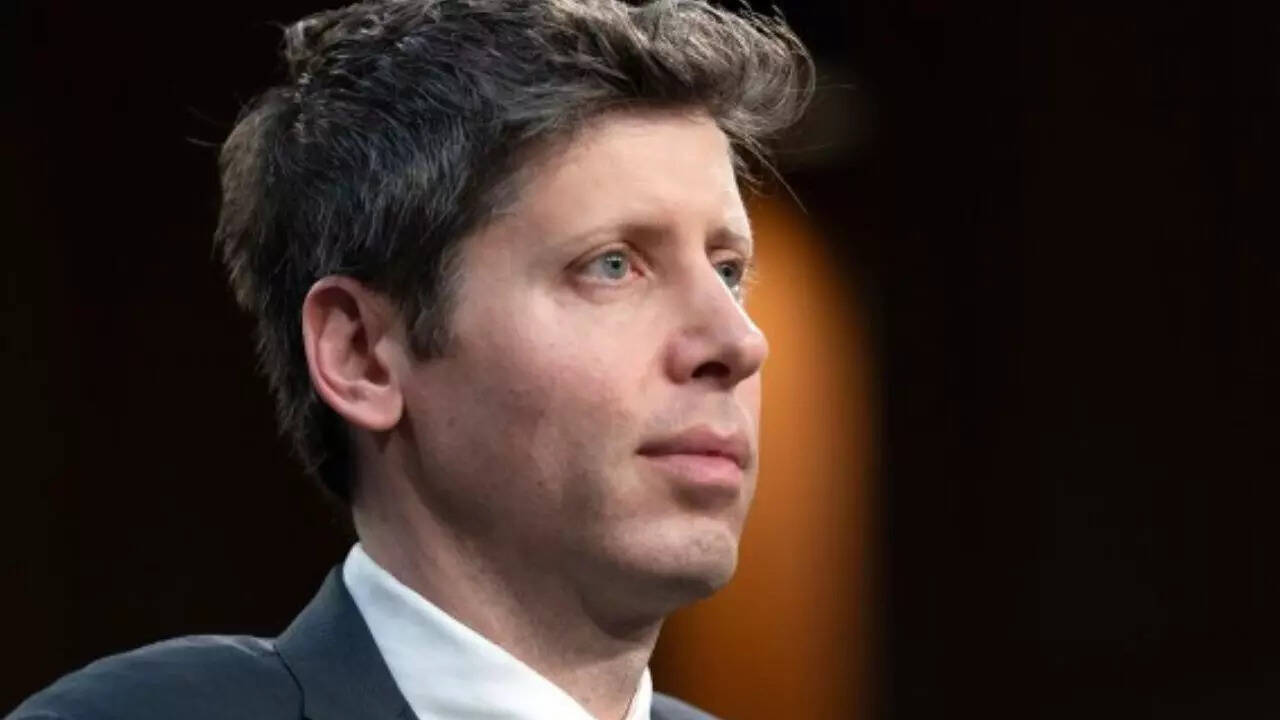
Sam Altman can't stop making fun as Claude maker Anthropic 'goes around America' to ask people 'hard question on AI'; says: I thought this was ...
OpenAI CEO Sam Altman has mocked rival Anthropic's new advertising campaign that asks people to share their concerns about AI. Anthropic launched the campaign under the theme "There's hope in hard questions," encouraging people to ask difficult questions about AI's impact on jobs, families, science and society. The Claude maker said it wants to better understand public concerns and will publicly track the steps it takes to address them. However, Sam Altman responded with a series of sarcastic posts on X (formerly Twitter), saying he initially thought the campaign was a parody."i thought this was satire, kept looking for the handle to be spelled c1audeai or something," Altman wrote in reply to Anthropic's post on X.Continuing his criticism of the campaign, Altman wrote in another post."hard questions are great but only if we deem you worthy enough to not silently downgrade you, or even get access at all"Anthropic said AI has the potential to improve people's lives by making work easier, speeding up scientific research and helping solve major medical and social challenges. At the same time, it acknowledged concerns about job losses, creative work, human agency and the misuse of AI. The company said it is launching a new initiative to better understand these concerns and has invited people to submit their toughest questions about AI.According to Anthropic, it has already surveyed 52,000 Americans about their hopes and concerns around AI, collected responses from 81,000 Claude users across 159 countries and 70 languages, conducted in-person focus groups and studied anonymised real-world Claude usage data.The company said it will publicly report the actions it takes to address these questions and be transparent about where it falls short of its goals.
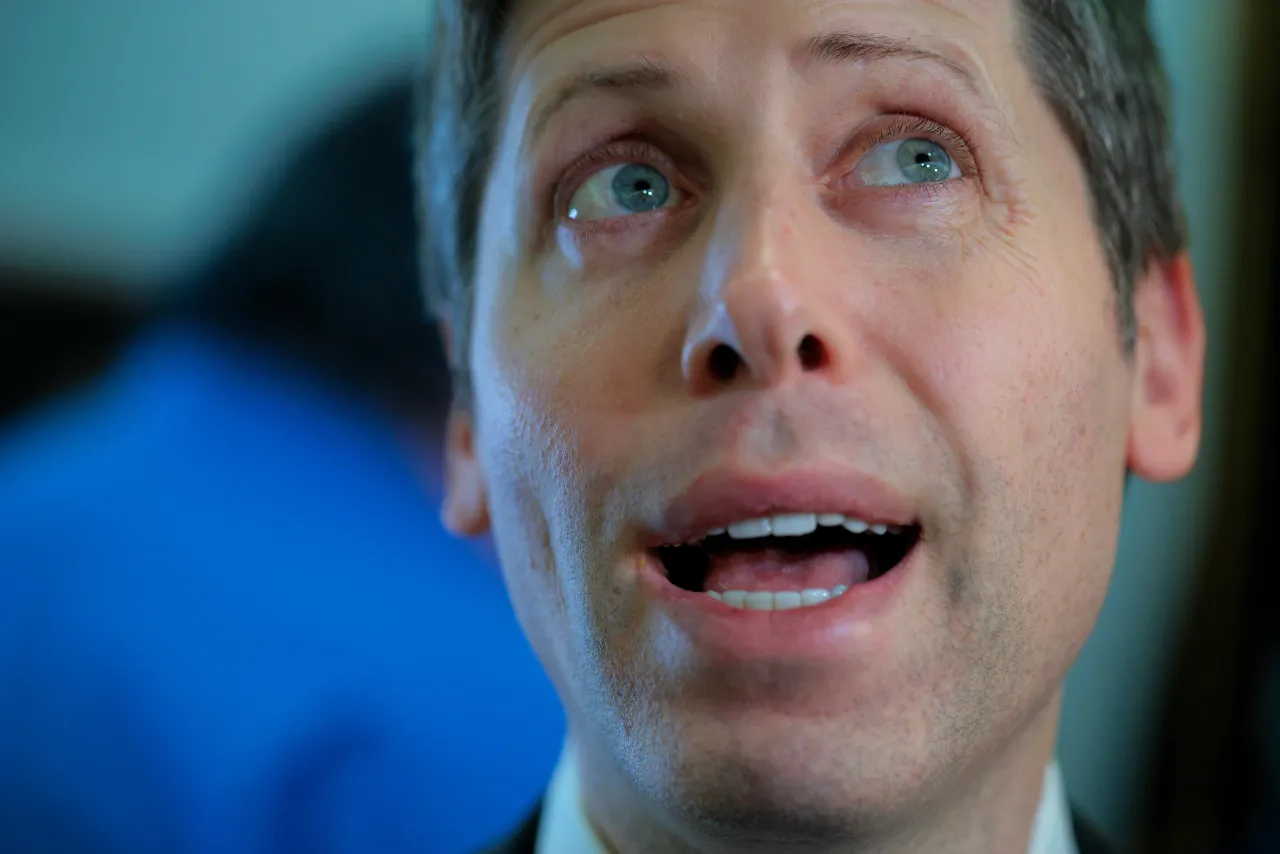
OpenAI CEO Sam Altman Throws Shade At Anthropic's New Ad Amid Tussle With Elon Musk, Apple: 'Thought This Was Satire'
* Altman took a swipe at a new advertisement for Anthropic's Claude. * In the past few days, he has again rebutted Elon Musk and said he is "not afraid of Apple" following the iPhone maker's lawsuit. * Investors are closely watching developments at OpenAI as it moves toward a public listing. OpenAI CEO Sam Altman took a more combative tone toward tech rivals on Monday, days after his AI startup was hit with a major trade-secret theft lawsuit by Apple. "Come for the best model, stay because we don't treat you with contempt," Altman posted on X on Monday, without context. Given the timing, X users interpreted it as criticism aimed at companies like Apple, Anthropic or SpaceXAI. In a separate post, Altman took a swipe at a new advertisement for Anthropic's Claude. The ad, titled "There's Hope in Hard Questions," features a narrator reflecting on whether AI can be built to benefit humanity. Responding to it, Altman wrote, "i thought this was satire, kept looking for the handle to be spelled c1audeai or something." Anthropic was started by former OpenAI employees, and the company now appears to be leading in the AI market. Altman Sharpens The Rhetoric The OpenAI CEO is no stranger to quirky responses to online critics, but lately he appears to be taking a more head-on approach. In the past few days, he's rebutted criticism from SpaceX and Tesla founder Elon Musk, saying that he was wooing public market investors with unproven claims about space data centers and that he is "not afraid of Apple" following the iPhone maker's lawsuit. Altman and Musk have frequently traded jabs online amid Musk's long-running legal campaign against OpenAI, including challenges to its restructuring and its relationship with Apple. Apple Lawsuit On Friday, Apple said it sued OpenAI in California, alleging that OpenAI encouraged Apple employees to share information, components, drawings, and other materials related to upcoming products -- as part of OpenAI's efforts to develop its own suite of devices. The suit also named Tang Tan, a 25-year Apple veteran who joined OpenAI as its chief hardware officer last year, as a defendant. The suit marks a dramatic turn for two companies that were close partners. OpenAI has powered Apple Intelligence and Siri, but ties between the two have frayed over the past year. OpenAI IPO Watch Investors are closely watching developments at OpenAI as it moves toward a public listing, setting up a potential IPO showdown with chief rival Anthropic. Both companies confidentially filed IPO paperwork with regulators last month, before reports emerged that OpenAI may delay its listing until next year rather than the previously expected fourth-quarter timeline. OpenAI now broadly trails Anthropic, based on the most recently disclosed numbers. In April, Anthropic said it tripled its annual revenue run rate to $30 billion, surpassing OpenAI's ARR of about $24 billion. Anthropic is valued at $1.08 trillion, compared to OpenAI's private market valuation of $868.4 billion, according to data from Nasdaq Private Market. For updates and corrections, email newsroom[at]stocktwits[dot]com.
Anthropic launches Claude AI subscription plans in India: Prices start at Rs 2,399, beats ChatGPT Pro
New Delhi: Anthropic has launched local pricing for the Claude AI subscriptions in India, where users can pay in Indian Rupees instead of USD. The foreign exchange charges and bill uncertainties will be eliminated from Indian customers' bills, simplifying the subscription process for developers, professionals, and business users. India is already Claude's second-largest market, accounting for nearly 6 per cent of its global users, making the localisation an important step for the AI company. The price, however, does reflect Anthropic's approach. Unlike OpenAI and Google, which have introduced affordable India-specific plans, Anthropic is positioning Claude as a premium AI service. Local billing makes it easier for 6 per cent more to use, but the company is hoping they'll pay more for the more advanced models and usage caps than for price alone. Claude Pro, Max and Team plans are now available in India Multiple subscription tiers have been introduced by Anthropic with GST-inclusive pricing. The monthly rate for Claude Pro is Rs 2399, and users who pay annual rates pay an effective monthly rate of Rs 1999 per month. AC2399 and models based on Claude's Sonnet 5, Opus and Fable 5 are included in the plan. Claude Max is offered in two versions for developers and heavy AI users. The Max 5x plan will charge you Rs 11,999 per month, while the Max 20x plan will cost you Rs 23,999 per month which also provides much higher usage limits and priority access. The company has also launched a Team subscription for businesses. Team Standard is priced at Rs 2399 per seat per month (billed annually), and Team Premium is priced at Rs 11999 per seat per month (billed annually). Anthropic says such plans will encompass enterprise-focused attributes, including a 200,000-token context window and guarantees that customer data won't be fed into training its AI models. How Claude compares with ChatGPT and Gemini The biggest difference remains affordabilities. If you are looking for the best AI features with a reasonable budget, both OpenAI's ChatGPT Go and Google's Gemini AI Plus feature a monthly subscription cost of Rs 399. Both ChatGPT Plus and Google's Gemini Pro are lower in price than a monthly subscription to Claude Pro, which is priced at Rs 1,999 and Rs 1,950, respectively. Anthropic does have an advantage at the high end. Claude Max 5x offers a lower price at Rs 11,999 per month as compared to ChatGPT Pro pricing by OpenAI at Rs 19,900 per month. Google doesn't have anything like this premium consumer option just now. Another area where Anthropic still trails is payments. OpenAI and Google have integrated UPI payment into their services in India, with Claude still accepting credit card and app store payments for its subscriptions. Overall, Anthropic's pricing in India is not as much about the price and more about the professional community that appreciates the larger context windows, advanced coding skills and higher usage limits. While ChatGPT and Gemini are the more budget-friendly options, Claude is pitching itself as more of a productivity app than an AI assistant for the masses.
OpenAI CEO Sam Altman Throws Shade At Anthropic's New Ad Amid Tussle With Elon Musk, Apple: 'Thought This Was Satire'
* Altman took a swipe at a new advertisement for Anthropic's Claude. * In the past few days, he has again rebutted Elon Musk and said he is "not afraid of Apple" following the iPhone maker's lawsuit. * Investors are closely watching developments at OpenAI as it moves toward a public listing. OpenAI CEO Sam Altman took a more combative tone toward tech rivals on Monday, days after his AI startup was hit with a major trade-secret theft lawsuit by Apple. "Come for the best model, stay because we don't treat you with contempt," Altman posted on X on Monday, without context. Given the timing, X users interpreted it as criticism aimed at companies like Apple, Anthropic or SpaceXAI. See what 10M+ investors are talking about. Get the Stocktwits Daily Rip for what retail is watching right now, free to your inbox In a separate post, Altman took a swipe at a new advertisement for Anthropic's Claude. The ad, titled "There's Hope in Hard Questions," features a narrator reflecting on whether AI can be built to benefit humanity. Responding to it, Altman wrote, "i thought this was satire, kept looking for the handle to be spelled c1audeai or something." Anthropic was started by former OpenAI employees, and the company now appears to be leading in the AI market. Altman Sharpens The Rhetoric The OpenAI CEO is no stranger to quirky responses to online critics, but lately he appears to be taking a more head-on approach. In the past few days, he's rebutted criticism from SpaceX and Tesla founder Elon Musk, saying that he was wooing public market investors with unproven claims about space data centers and that he is "not afraid of Apple" following the iPhone maker's lawsuit. Altman and Musk have frequently traded jabs online amid Musk's long-running legal campaign against OpenAI, including challenges to its restructuring and its relationship with Apple. Apple Lawsuit On Friday, Apple said it sued OpenAI in California, alleging that OpenAI encouraged Apple employees to share information, components, drawings, and other materials related to upcoming products -- as part of OpenAI's efforts to develop its own suite of devices. The suit also named Tang Tan, a 25-year Apple veteran who joined OpenAI as its chief hardware officer last year, as a defendant. The suit marks a dramatic turn for two companies that were close partners. OpenAI has powered Apple Intelligence and Siri, but ties between the two have frayed over the past year. OpenAI IPO Watch Investors are closely watching developments at OpenAI as it moves toward a public listing, setting up a potential IPO showdown with chief rival Anthropic.
Anthropic's extravagant tokenizer complicates AI pricing
Claude looks substantially more token-hungry than OpenAI's GPT-5.x, thanks to the new tokenizer that Anthropic shipped with recent releases. Large language models (LLMs) use tokenizers to handle the mapping of text into tokens. There's no set definition of a token, but they're typically a set of three or four characters that are mapped to the integers LLMs actually process. Tokens have become the basic economic unit for billing use of AI models. Because the slicing of words into tokens and the tokens required per task vary across models, it has become rather difficult to predict the final bill for playing the AI slot machine. Recent changes to Anthropic's tokenizer appear to have further complicated matters by making the same content more costly to process on certain models. Playcode, an AI app building platform, recently analyzed the impact of Anthropic's latest tokenizer and found that the same TypeScript file processed by Claude can consume up to 73 percent more tokens than OpenAI's GPT-5.x model family. Anthropic acknowledges its new tokenizer - announced at the end of June when Sonnet 5 shipped - may generate more tokens for the same input than prior versions. "Sonnet 5 is an upgrade to Sonnet 4.6, but it uses an updated tokenizer that changes how the model processes text to improve performance (this is similar to the tokenizer change we introduced with Claude Opus 4.7)," the company explained. "The tradeoff is that the same input can map to more tokens: roughly 1.0-1.35× depending on the content type." Anthropic offered Sonnet at a reduced introductory rate - $2/million input tokens and $10/million output tokens through August 31, 2026 - to make the inflated token generation more or less cost-neutral. But the price is set to rise to $3/million and $15/millionafter that. Anthropic did not immediately respond to a request for comment. The company says that users of its new tokenizer may see their bills rise by as much as a third compared to the tokenizer it used with its older models. Costs for Anthropic users could go even higher when compared against the latest iteration of OpenAI's o200k tokenizer. Playcode's cross-vendor token comparison finds that for a 2,888 character TypeScript file, Claude's new tokenizer emits 1.73x more tokens than GPT-5.x's tokenizer and 1.32x more than Claude's old tokenizer. These figures differ for different types of code: Rust taps in at 1.58x, JavaScript 1.52x, and Python 1.50x. So if Anthropic's list prices were adjusted to be comparable with OpenAI's GPT-5.x baseline, Playcode suggests Opus 4.8's cost would be $7.50/M input and $37.50/M output instead of the published figure of $5/M and $25/M. The AI app platform notes that a team from marketing platform Ploy this week published an account of a production migration using OpenAI's GPT-5.6 Sol and Anthropic's Opus 4.8. "GPT-5.6 finished pages 2.2× faster, cost 27 percent less, and used about half the output tokens," Ploy claimed. There are other factors that go into calculating AI bills. As we noted recently, costs should be judged in terms of task completion and the impact of model harnesses (e.g. Claude Code, Codex, Pi, OpenCode, etc.) should also be evaluated when attempting to calculate the cost of running AI workloads. ®

Blue Cloud Softech Soars on 5-Year SpaceX AI Services Deal
The agreement covers diverse AI infrastructure and solutions. The shares of small-cap tech company 'Blue Cloud Softech Solution' soared to hit 5 per cent upper circuit for the second consecutive session after the company announced that its United States subsidiary executed a definitive five-year Master Services Agreement (MSA) with SpaceX International for Artificial Intelligence (AI) services. The BSE-listed company started the session with a decent gap-up at Rs 22 as compared to the last day's closing of Rs 21.66. However, despite bearish sentiment in the domestic stock market, the stock escalated 5 per cent to hit the upper circuit limit at Rs 22.74. Last seen, the IT stock was trading at Rs 22.71, up 4.85 per cent or Rs 1.05. Earlier in the last session, the stock opened flat. However, the scrip witnessed strong buying following the announcement and jumped 5 per cent to hit the upper circuit of Rs 21.68. Later, the stock ended the session at Rs 21.66. Stock Market Today: Amid a sharp rise in crude prices--Brent crude climbed to $84 per barrel--due to escalating tension in the Middle East, the key domestic equity benchmark indices--Sensex, Nifty--traded significantly lower in early trade on Tuesday. Last seen, Sensex was trading at 77,272.04, up 0.44 per cent or 344.36 points. Nifty50 was quoted at 24,111.85, down 0.41 per cent or 99.15 points. "The Agreement enables BCSSL-USA to provide Artificial Intelligence (AI) infrastructure, cloud-native AI platforms, enterprise AI solutions, AI consulting, AI integration, AI operations and related AI-enabled digital transformation services, subject to mutually agreed Statements of Work and applicable contractual terms," the exchange filing added. Disclaimer: This story is for informational purposes only. It should not be considered as investment advice.
Polymarket odds for 0 Fed cuts in 2026 dip to 80% on China export view
predict.info -- Premium Domain For Sale Domain only: USD 200,000. Prediction platform technology priced separately. predict.info Polymarket's 2026 "0 Fed Rate Cuts" Odds Dip After China-Export Disinflation Catalyst Polymarket traders are still pricing "0 Fed rate cuts in 2026" as the dominant outcome, even after a small dip to 80.15% implied odds on the ladder. The immediate trigger is a fresh macro take on disinflation pressure from Chinese exports, while the market lens is the per-rung Yes/No pricing and $42.19M in volume. Key Takeaways * Prediction: Polymarket's leading rung is 0 cuts (0 bps) at 80.15% Yes (19.85% No). * Basis: After an inflation-related catalyst, the ladder remains heavily skewed toward "no cuts," with only 13.5% on 1 cut and 4.25% on 2 cuts. * Timing: The contract resolves on 2026-12-31, so these odds reflect a full-year policy-path bet rather than a near-term meeting call. A PIMCO commentator said China's push up the manufacturing value chain could keep exports growing and gaining global share, which may dampen inflation pressure in emerging markets, help local currencies, and ease inflation conditions abroad. Ladder Pricing Snapshot: 0 Cuts at 80.15% (Yes) With $42.19M Volume and 1-2 Cuts at 13.5% / 4.25% This is a Polymarket ladder market, meaning each rung is its own Yes/No contract on a specific count of 2026 cuts, not a single "settlement price" bet. On the current board, 0 cuts trades at 80.15% Yes / 19.85% No, while 1 cut is 13.5% Yes / 86.5% No and 2 cuts is 4.25% Yes / 95.75% No, showing the distribution is concentrated at the low-cut end. The latest move is a modest softening in the leader (down from 82.1% to 80.15%) alongside large cumulative matched volume of $42.19M, which points to active two-sided positioning even as the top outcome stays intact. The historical summary flags moderate volatility with strengthening consensus and a +5.35 pp change over both 24h and 7d, consistent with a market that has recently drifted toward "no cuts," but can still reprice quickly when macro narratives shift. For readers comparing lenses: unlike a periodic forecast update, this ladder continuously translates policy-path disagreement into separate probabilities across cut counts, with extreme tails priced near zero (for example, 4 cuts at 0.55% Yes / 99.45% No and 12+ cuts at 0.5% Yes / 99.5% No). Watch whether the ladder's probability mass migrates from 0 cuts into 1-2 cuts (the most plausible alternative rungs) and whether the leader's pullback extends beyond a couple of percentage points while volume continues to build ahead of the 2026-12-31 resolution. Cross-Contract Watchlist: How the 2026 Rate-Cut Ladder Connects to CPI, Recession, and BTC Polymarket Markets Zooming out from the 2026 cuts ladder, traders often cross-check it against shorter-horizon Fed timing and adjacent policy-path bets that can move first. On Polymarket, "Fed Decision in July?" has "No change" leading at 64.5% on $53,245,199 volume (+7.0 pp), while "Fed Decision in September?" prices a "25 bps increase" at 51.0% on $2,458,405. For a longer-dated directional hedge, "Fed rate hike in 2026?" shows "Yes" at 69.5% on $3,958,597 (+3.0 pp), giving a quick read on whether positioning is shifting from 'no cuts' toward outright tightening across the platform's macro slate. Odds Trend By the Numbers * Platform: Polymarket * Market: How many Fed rate cuts in 2026? * Contract type: Price strike ladder: each rung has separate Yes/No; Yes means the spot price is above that USD strike at settlement. * Resolution window: Dec 31, 2026 (UTC) * Status: Active (open for trading) * Volume: ~$42,194,371 Top strike rungs +9 more strikes not shown

Polymarket odds of US invading Iran before 2027 jump to 19% on report
predict.info -- Premium Domain For Sale Domain only: USD 200,000. Prediction platform technology priced separately. predict.info Polymarket Reprices "U.S. Invade Iran Before 2027?" After Strike-and-Threat Catalyst Polymarket traders lifted the implied odds on "Will the U.S. invade Iran before 2027?" to 19% (from 11.5%), even as the market still prices "No" at 81%. The repricing follows a report describing fresh threats tied to strikes and a specific Iranian nuclear site, with $41.39M in matched volume framing how fast sentiment moved. Key Takeaways * Polymarket implies a 19% chance of a U.S. invasion of Iran before 2027 (Yes 19% / No 81%), with "No" the leading outcome. * The contract repriced upward after a report about Trump threatening to attack an underground Iranian nuclear facility following multiple nights of U.S. strikes. * This market resolves on 2026-12-31, so the trade is about a before-2027 event trigger, not a near-term headline. A report says U.S. President Donald Trump threatened to attack a heavily fortified underground nuclear facility in Iran referred to as "Pickaxe Mountain." It says the threat followed a third night of U.S. strikes and included a demand that the U.S. be paid 20% of the value of all cargo passing through the Strait of Hormuz. Odds & Liquidity Check: Yes Jumps to 19% (No 81%) on $41.39M Matched Volume The Polymarket contract is a binary Yes/No event: "Yes" pays out only if the U.S. invades Iran before the 2026-12-31 resolution date; at the latest snapshot, Yes is 19% and No is 81%, so traders still lean heavily toward "no invasion" despite the jump. The move is large in level terms -- up 7.5 percentage points from 11.5% -- which signals a risk repricing rather than a flip in consensus, since the leading outcome remains No. Market history in the provided summary shows a bearish but moderate-momentum backdrop with reversal_detected=true, and change_24h and change_7d both at -2.0pp, highlighting that recent trading had been pushing odds down before this latest step-up. With $41.39M in volume on an active market, Polymarket is functioning as a continuously updating probability gauge: it can react quickly to new threat-and-strike headlines, while still keeping the base case anchored to No. Watch whether the Yes price holds above the recent average (avg_last_5 at 17.9%) or fades back toward the prior 11.5% level, and whether volatility stays "moderate" as the market digests new information ahead of the 2026-12-31 resolution. What Traders Watch Next on Polymarket: Spillover to Macro, Energy, and Crypto Volatility Contracts Beyond the headline contract, traders often triangulate risk by watching adjacent Polymarket questions that price the knock-on timeline and disruption channels. Right now that includes 100% on "Iran military action against a gulf state on...?" ($3.92M volume), 30.5% on "US-Iran Final Nuclear Deal by...?" ($9.85M volume), and 97.55% on "Strait of Hormuz traffic returns to normal by July 31?" ($16.25M volume). Taken together, these markets show how participants translate the same newsflow into separate probabilities for escalation, negotiations, and energy-shipping normalization. Odds Trend By the Numbers * Platform: Polymarket * Market: Will the U.S. invade Iran before 2027? * Resolution window: Dec 31, 2026 (UTC) * Status: Active (open for trading) * Leading implied prob.: 19.0% * Volume: ~$41,391,859 * Top outcomes: Yes: Yes 19.0% / No 81.0%; No: Yes 19.0% / No 81.0%

Tuesday newspaper round-up: North Sea oil, Anthropic, EV owners
(Sharecast News) - The US government has already paid back tens of billions of dollars in tariffs it collected before the supreme court ruled them illegal, according to budget figures released on Monday. Tariffs - taxes on imported goods - have been a key part of president Donald Trump's game economic plan since he took office again last year. But in February, the supreme court shut down a big chunk of the extra tariffs Trump ordered, forcing the government to return money to the companies that had paid them. - Guardian The UK's North Sea oil industry has made a last-ditch attempt to curry favour with the Labour government by appealing to Andy Burnham's reindustrialisation agenda just days before he is expected to become Britain's next prime minister. Industry lobbyists have written to more than 400 Labour MPs to call on the government's new leaders to allow more oil and gas drilling in UK waters to support homegrown energy and show "a commitment to UK manufacturing, industrial capability and the skilled workforce that has powered the nation for generations". - Guardian The founder of online bank Monzo has become the latest high-profile figure to join Anthropic, the AI company behind the Claude chatbot. Tom Blomfield, who is one of Britain's most successful tech entrepreneurs, will take a leave of absence from his current role at start-up investor Y Combinator to join Anthropic, which recently overtook OpenAI as the world's most valuable AI company. - Telegraph Electric vehicle (EV) owners will be taxed for driving abroad under Labour's pay-per-mile plan. In a consultation response published on Monday, the Government said charging drivers for overseas mileage was proportionate because not doing so would require the use of location data to show where they were - raising privacy concerns. - Telegraph The United Arab Emirates is building another port in an attempt to bypass the Strait of Hormuz, having already expedited the construction of a new oil pipeline. The new port would join an existing facility in Fujairah along the country's eastern coastline and past the tip of the strait that Iran closed to shipping during the war with the United States. - The Times
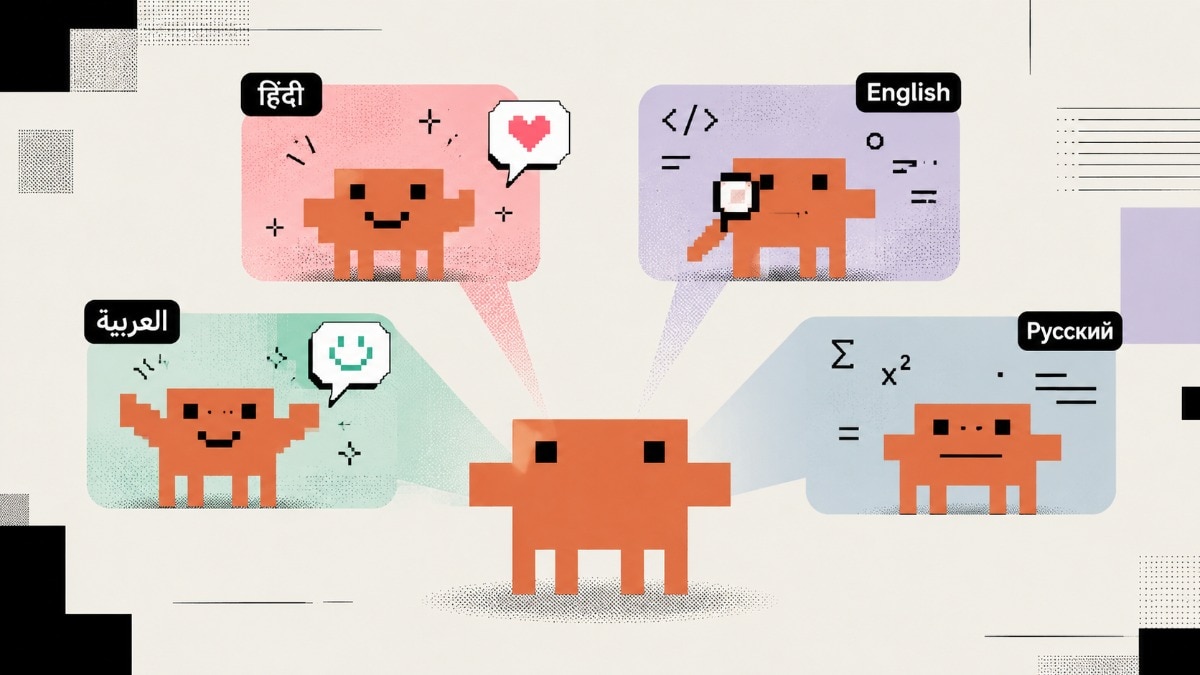
Anthropic admits Claude has multiple personalities, it is extra warm and friendly with Hindi users
Anthropic says Claude doesn't respond the same in every language, with Hindi users getting warmer and friendlier replies than English speakers. (Image created using AI by Divya Bhati) You might think asking Claude the same question in Hindi or English would only change the language of the reply. But a new study by Anthropic suggests it changes the chatbot's behaviour too. According to the company, Claude expresses different behavioural traits depending on the language users choose. In Hindi, for example, the AI is more likely to respond with humour, politeness and encouragement than it typically does in English. In its latest research, Anthropic analysed more than 309,000 anonymised Claude AI conversations across three Claude models- Sonnet 4.6, Opus 4.6 and Opus 4.7 -- and the 20 most commonly used languages on Claude AI. The conversations mostly involved advice, feedback and opinion-based questions, where there is no single correct answer. Instead of measuring accuracy, the company said it wanted to understand how Claude communicates with users. The results? Anthropic found that Claude came across as warmest when responding in Hindi and Arabic. In contrast, its responses in English and Russian were more analytical and focused on rigour. To make the results easier to compare, Anthropic grouped Claude's behaviour into four broad categories: Deference vs Caution, Warmth vs Rigor, Depth vs Brevity, and Candor vs Execution. According to the company, this helped researchers focus on Claude's behaviour rather than differences in the questions people asked. For Indian users, the biggest takeaway from the study is what Anthropic calls the Warmth vs Rigor axis. The company found that Claude expressed the highest levels of warmth in Hindi and Arabic. In Hindi, the AI was more likely to use polite language, humour and playfulness while affirming users' ideas and work. It also tended to offer reassurance without being asked, adapt its tone to a user's emotional state and encourage users to aim higher. "The largest variation is in the Warmth vs. Rigor axis, with Claude leaning toward expressing warmth-related values most in Arabic and Hindi and rigor-related values most in English and Russian," Anthropic said in its blog post. English, however, painted a different picture. Anthropic found that Claude was more likely to respond with rigour and caution, challenge assumptions, correct details without being prompted and back up its responses with evidence. Overall, the company said the biggest differences between languages lay in how warm or rigorous Claude appeared, while its other behavioural traits remained relatively consistent. The study also found that Claude's behaviour changed depending on the model being used. Sonnet 4.6 came across as the warmest, often using humour, matching a user's tone and offering reassurance without judgement. Opus 4.7, on the other hand, was more analytical. It was more likely to challenge assumptions, explain its reasoning, highlight potential risks and openly acknowledge its own limitations. Opus 4.6 sat somewhere in between, generally sticking closely to a user's request and getting straight to the point. Anthropic notes that the findings do not mean Claude has different beliefs. Instead, the company suggests the results reflected differences in how the AI responds across languages and models. Anthropic added that it is still investigating why these variations exist, but believes the research could help make future AI systems more consistent.
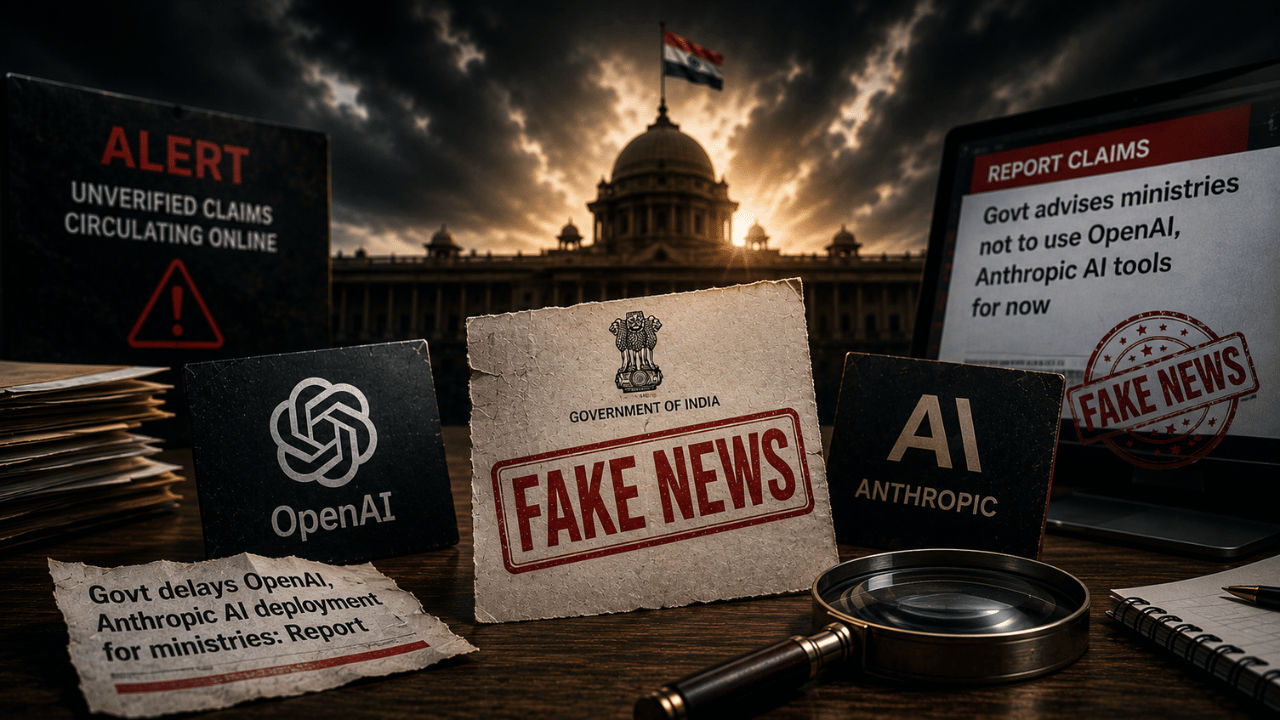
Govt denies reports of delaying OpenAI, Anthropic cybersecurity AI deployment
Report claimed a temporary pause, but the government rejected the claim. The Indian government has asked all ministries to prepare a list of the AI tools they need so these tools can be provided to them. A recent report claimed that the Ministry of Electronics and Information Technology (MeitY) advised ministries not to use cybersecurity AI models made by OpenAI and Anthropic for now. The report did not explain the reason for this advice. Furthermore, the report also claimed that the ban is at the timing of deployment and not on the tools. However, the Indian government has denied the report and said no such halt has been ordered. PIB debunks claim The Press Information Bureau (PIB), which is also the official fact-check agency for the Indian government, recently posted on its official X handle and stated that MeitY had not issued any direction or advisory asking ministries to stop the rollout or use of OpenAI or Anthropic's AI models. Furthermore, the agency also urged the citizens to rely only on official government websites and verified sources for authentic information. Also read: OpenAI asks court to make Elon Musk's xAI pay over Rs 9.5 crore after lawsuit dismissal What the report claimed about OpenAI and Anthropic AI tools According to the report, a department under MeitY had circulated an office memorandum asking ministries not to deploy cybersecurity models developed by OpenAI and Anthropic for the time being. It claimed the development came days after representatives of both companies met officials from several ministries to promote their AI tools. However, the report said it could not independently confirm how many ministries were approached or the level of those meetings. Not only that but it also claims that the Ministry of Finance had written to the department seeking approval to explore the use of agentic AI and OpenAI's GPT 5.5 model for cybersecurity work. And the ministry also outlined the possible applications of AI in the letter, including finding software vulnerabilities, strengthening cyber defence and supporting security operations. Also read: Sam Altman pokes fun at Anthropic's Claude commercial, says he thought it was satire The report also claimed that the department responded with a memorandum declining the proposal for now. However, a source quoted in the report said the response should not be considered a permanent ban. Instead, the concern was about deploying the technology too early rather than blocking its use altogether.
Hyperion snags $290m SpaceX bet as stock crashes back to earth
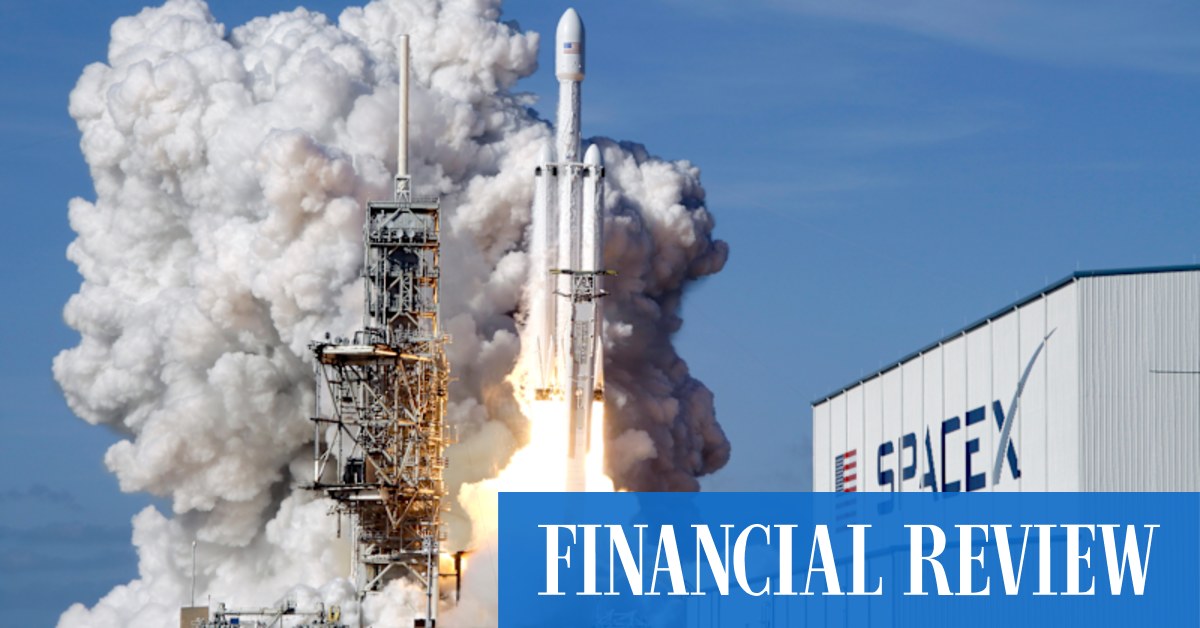
Hyperion Asset Management's outsized bet on Elon Musk's SpaceX is threatening to undo a recent winning streak for the fund manager as shares of the rocket and artificial intelligence business spiral back towards its initial public offering price. The $12.5 billion money manager, which is already one of Australia's biggest shareholders of Musk's electric carmaker Tesla, disclosed in late June that it had snagged a stake in SpaceX in its Global Growth Fund.
Anthropic is Keeping Free Claude Fable 5 Access Longer Than Planned
Anthropic has extended free access to its flagship Claude Fable 5 AI model for paid subscribers, delaying plans to move the model to a pay-per-use system. Claude Fable 5 was originally scheduled to require usage credits from July 13. However, according to an update on Anthropic's support page, subscribers on the Pro, Max, Team, and Enterprise plans will continue to have access to the model at no additional cost until July 19, 2026. During this period, users can spend up to 50% of their weekly usage limit on Fable 5. Once the promotional period ends, users will either need to purchase usage credits to continue using Claude Fable 5 or switch to another Claude model. Anthropic has also extended the temporary 50% increase to Claude Code usage limits until July 19. Because of its advanced capabilities, Fable 5 consumes usage quota much faster than Anthropic's other Claude models. The extension appears to reflect growing competition in the AI market. OpenAI's GPT-5.6 Sol is included with a standard ChatGPT subscription, offers lower API pricing, and is reported to be more token-efficient. At the same time, Anthropic faces increasing pressure from lower-cost rivals such as GLM 5.2, Meta's Spark 1.1, and Grok 4.5, making it more difficult to rely on Claude Opus 4.8 alone to compete. Claude Fable 5 itself has had an eventful launch. Shortly after its debut in June, Anthropic temporarily withdrew both Claude Fable 5 and the more powerful Claude Mythos 5 after U.S. export controls restricted access to the models over cybersecurity concerns. Following the removal of those restrictions, Anthropic restored Fable 5 globally on July 1 with stronger security safeguards, while Mythos 5 remains available only to approved organizations through the company's Project Glasswing program. Anthropic has said the updated release includes improved cybersecurity classifiers that automatically fall back to Claude Opus 4.8 when certain high-risk requests are detected. The company also stated that it intends to bring Claude Fable 5 back as a standard part of paid subscriptions once computing capacity allows, but for now, the model will eventually move to a usage credit system after the promotional period ends.
Anthropic confirms Claude acts differently depending on your language and which model you pick
A new study shows Claude's isn't nearly as consistent as you might assume. If you've ever felt like Claude gave you a completely different vibe on one day than another, you weren't imagining it. Anthropic just published research confirming that its chatbot's personality shifts depending on which model you pick and which language you type in, and the pattern is consistent enough that it's worth knowing before you ask your next question. The model you pick decides how Claude responds The company analyzed 300,000 real Claude conversations and mapped the chatbot's behavior across four traits, including how cautious versus accommodating it is and how encouraging versus rigorous its tone is. Its findings suggest that you may be talking to a somewhat different version of Claude depending on the model you choose. The split shows up clearly when different models were compared. Anthropic's data shows that Opus 4.7 tends to challenge your thinking and flag problems with your plan unprompted. On the other hand, Sonnet 4.6 leans toward quick, encouraging answers that affirm what you already believe. Neither is objectively better, and which one you should use depends largely on what you're doing. If you're drafting a risky business plan and want real feedback, Opus 4.7 is a better fit, while Sonnet 4.6 is more suited if you only want a quick pass. Your language changes Claude's tone too The data also reveals the language you use matters almost as much as the model. Claude reportedly comes across as warmer in Hindi and Arabic, while it gets more rigorous and skeptical in English and Russian. As such, if you're bilingual and asking Claude for a second opinion, switching languages might get you a genuinely different answer, not just a translated one. Recommended Videos Anthropic is careful to note it doesn't yet know whether these shifts are a problem or just Claude adapting to different cultural norms. Either way, the finding is a useful reminder for anyone using AI for real decisions. Don't assume the first answer you get is the only answer. Trying a different model or language could get you a meaningfully different result.
Cerebras Stock: Strong Potential, But The Risk/Reward Doesn't Add Up (NASDAQ:CBRS) | Seeking Alpha
Despite ambitious international expansion and manufacturing scale-up, the forward P/S of 53.73 makes the risk/reward unattractive for new entry. A few years ago, OpenAI's (OPENAI) release of ChatGPT put the spotlight on parallel computing, particularly NVIDIA's (NVDA) GPUs. Since then, competing GPUs have been released, and some companies have been looking for other I'm a full-time investor with a strong focus on the tech sector. I graduated with a Bachelor of Commerce Degree with Distinction, major in Finance. I'm also a proud lifetime member of the Beta Gamma Sigma International Business Honor Society. My core values are: Excellence, Integrity, Transparency, & Respect. I always, to the best of my ability, hold true to these values which I believe are key for long-term success. I would like to invite all of my readers to leave their constructive criticism and feedback in the comments section so that I can further enhance the quality of my work moving forward. Thank you and God Bless America! Analyst's Disclosure: I/we have no stock, option or similar derivative position in any of the companies mentioned, and no plans to initiate any such positions within the next 72 hours. I wrote this article myself, and it expresses my own opinions. I am not receiving compensation for it (other than from Seeking Alpha). I have no business relationship with any company whose stock is mentioned in this article. Seeking Alpha's Disclosure: Past performance is no guarantee of future results. No recommendation or advice is being given as to whether any investment is suitable for a particular investor. Any views or opinions expressed above may not reflect those of Seeking Alpha as a whole. Seeking Alpha is not a licensed securities dealer, broker or US investment adviser or investment bank. Our analysts are third party authors that include both professional investors and individual investors who may not be licensed or certified by any institute or regulatory body.