News & Updates
The latest news and updates from companies in the WLTH portfolio.
OpenAI's Feud With xAI Carries On as Apple Secrets Fight Revs Up
OpenAI asked a judge to find that a lawsuit filed by xAI Corp. accusing the ChatGPT maker of trade secret theft "should never have been filed" and seeks to recoup more than $1 million in legal expenses from Elon Musk's company. Sam Altman's artificial intelligence startup filed its request Monday, ...
TSLA Stock Back To $400? Jefferies Lays Out Bull Case, Says SpaceX Merger Could Hand Shareholders A Premium
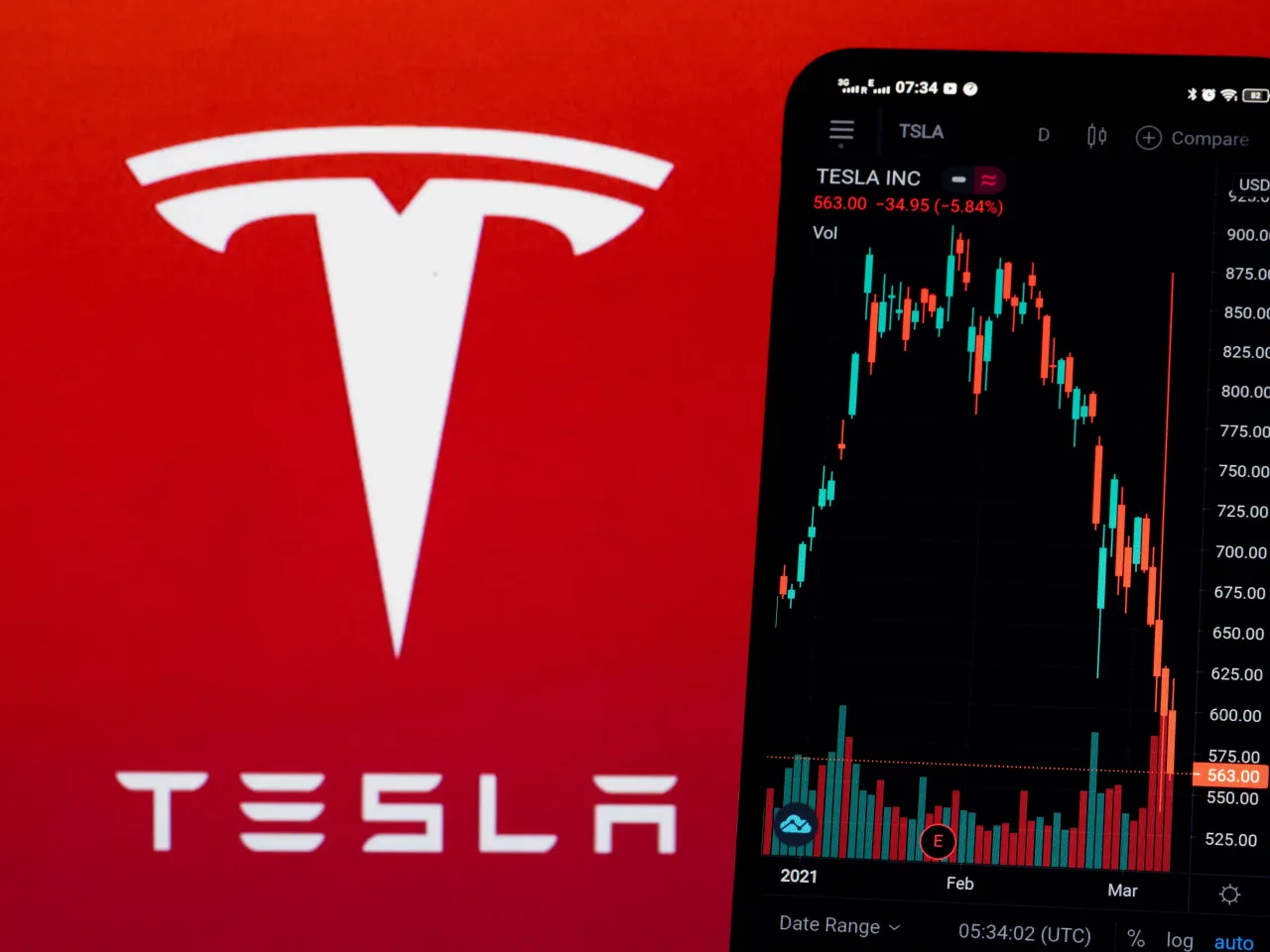
* The brokerage raised Q2 EBIT to $1.45 billion but still expects a $7.5 billion free cash flow outflow. * Jefferies said that a Tesla-SpaceX merger could leave room for a shareholder premium, with Musk retaining 55.3% voting control. * Tesla's Semi will enter a pilot in Chicago with Paper Transport to test its 500-mile range in colder conditions. Shares of Tesla, Inc. (TSLA) rose 0.2% in overnight trading late Monday as Jefferies raised its price target and said that a potential SpaceX merger could leave room for a shareholder premium. TSLA stock fell 3% on Monday, snapping two straight sessions of gains. Jefferies Lifts TSLA Outlook Ahead Of Q2 Earnings Jefferies raised its Tesla price target to $400 from $375 while maintaining a 'Hold' rating, implying a modest 1% upside from current levels. The firm cited Tesla's "significant auto volume beat" after the company delivered 480,100 vehicles in the second quarter, well above the consensus estimate of 406,000. Model 3 and Model Y vehicles accounted for 467,800 deliveries. The brokerage said that the strength in China and Europe validated the "unique value proposition of Tesla vehicles," even as the broader auto industry faces a growing risk of commoditization. The brokerage also said that Tesla's multi-year deterioration in growth and earnings had started to reverse. Jefferies raised its second-quarter (Q2) earnings before interest and taxes (EBIT) forecast to $1.45 billion, representing a 5.1% margin, and increased its longer-term EBIT estimates by about 6%. Tesla is set to report its Q2 earnings on July 22. The firm now expects automotive revenue of $21 billion, including $250 million from zero-emission vehicle credits and $500 million from leasing. Group revenue and EBIT are projected at $28.7 billion and $1.45 billion, respectively. For fiscal 2026, Jefferies raised its EBIT estimate by 4% to $6.2 billion, partly reflecting stronger volumes and the higher-priced long-wheelbase Model Y. Jefferies also expects Q2 capital spending of $6.9 billion, leaving Tesla with $41.7 billion in liquidity. Deliveries running ahead of production should also provide a near-term cash-flow benefit by reducing inventory. However, Jefferies maintained its forecast of about $7.5 billion in free cash flow outflows, including $23 billion in capital expenditures. It also struck a cautious note on autonomy, saying low implied Cybercab production pointed to further delays in Tesla's robotaxi ramp. Tesla-SpaceX Merger Thesis Gains Steam The debate over a potential Tesla-SpaceX merger has evolved beyond retail speculation. What began as prominent retail investors modeling ownership structures and exchange ratios has now drawn institutional attention, with firms such as Jefferies and JPMorgan publishing analytical frameworks that examine voting control, governance implications, and potential merger-premium structures. Jefferies said it continues to see logic in merging Tesla with Elon Musk's privately held space company. Under a nil-premium deal, Musk would retain an estimated 55.3% voting stake in the combined entity. The structure, Jefferies said, could leave room for Tesla shareholders to receive a premium. The argument adds to growing Wall Street interest in whether Musk could eventually bring his automotive, AI, energy and space businesses closer together. JPMorgan recently called a Tesla-SpaceX merger "strategically coherent on paper," pointing to potential integration across AI, robotics, energy, transportation and space. It maintained a 'Neutral' rating. Tesla Semi Enters Chicago Pilot Separately, Tesla's Semi is entering a new pilot program with Wisconsin-based Paper Transport. Paper Transport will test the long-range truck in dedicated Chicago operations, giving Tesla another opportunity to assess its performance in colder temperatures and snow-heavy conditions. The configuration offers about 500 miles of range and is priced at $290,000. Tesla has previously conducted Semi fleet trials with PepsiCo and Frito-Lay. How Do Retail Traders Feel About TSLA? On Stocktwits, retail sentiment for TSLA was 'bullish' amid a 396% jump in 24-hour message volumes. One user said, "$TSLA 390 has been holding for last couple days. earnings coming up. give me 450." Another user said, "I actually feel better that Tesla isn't going parabolic heading into next week's earnings. Trading below $400 keeps the stock in a healthier range, and a strong earnings call or Elon Musk's commentary could spark a short squeeze." So far this year, Tesla's stock has lagged its "Magnificent Seven" peers, making it the group's second-worst performer, down 12%. For updates and corrections, email newsroom[at]stocktwits[dot]com.
TSLA Stock Back To $400? Jefferies Lays Out Bull Case, Says SpaceX Merger Could Hand Shareholders A Premium
* The brokerage raised Q2 EBIT to $1.45 billion but still expects a $7.5 billion free cash flow outflow. * Jefferies said that a Tesla-SpaceX merger could leave room for a shareholder premium, with Musk retaining 55.3% voting control. * Tesla's Semi will enter a pilot in Chicago with Paper Transport to test its 500-mile range in colder conditions. Shares of Tesla, Inc. (TSLA) rose 0.2% in overnight trading late Monday as Jefferies raised its price target and said that a potential SpaceX merger could leave room for a shareholder premium. TSLA stock fell 3% on Monday, snapping two straight sessions of gains. See what 10M+ investors are talking about. Get the Stocktwits Daily Rip for what retail is watching right now, free to your inbox Jefferies Lifts TSLA Outlook Ahead Of Q2 Earnings Jefferies raised its Tesla price target to $400 from $375 while maintaining a 'Hold' rating, implying a modest 1% upside from current levels. The firm cited Tesla's "significant auto volume beat" after the company delivered 480,100 vehicles in the second quarter, well above the consensus estimate of 406,000. Model 3 and Model Y vehicles accounted for 467,800 deliveries. The brokerage said that the strength in China and Europe validated the "unique value proposition of Tesla vehicles," even as the broader auto industry faces a growing risk of commoditization. The brokerage also said that Tesla's multi-year deterioration in growth and earnings had started to reverse. Jefferies raised its second-quarter (Q2) earnings before interest and taxes (EBIT) forecast to $1.45 billion, representing a 5.1% margin, and increased its longer-term EBIT estimates by about 6%. Tesla is set to report its Q2 earnings on July 22. The firm now expects automotive revenue of $21 billion, including $250 million from zero-emission vehicle credits and $500 million from leasing. Group revenue and EBIT are projected at $28.7 billion and $1.45 billion, respectively. For fiscal 2026, Jefferies raised its EBIT estimate by 4% to $6.2 billion, partly reflecting stronger volumes and the higher-priced long-wheelbase Model Y. Jefferies also expects Q2 capital spending of $6.9 billion, leaving Tesla with $41.7 billion in liquidity. Deliveries running ahead of production should also provide a near-term cash-flow benefit by reducing inventory. However, Jefferies maintained its forecast of about $7.5 billion in free cash flow outflows, including $23 billion in capital expenditures. It also struck a cautious note on autonomy, saying low implied Cybercab production pointed to further delays in Tesla's robotaxi ramp.
Citi sends powerful sign to SpaceX investors
SpaceX stock is trading at $145.30, about 8% above its $135 IPO price, according to Yahoo Finance at the time of writing. Interestingly, SpaceX stock climbed as high as $225.64 after its $135 IPO, according to Yahoo Finance reporting, indicating a peak post-IPO gain of about 67%, before sharply retreating from those highs. So SpaceX investors were naturally looking for proof that Wall Street's post-IPO optimism wasn't misplaced and that the company was truly onto something special. Citi's analysts obliged, offering far more than a simple stock call. Following a 10-hour teach-in on space and AI, the firm argued that SpaceX sits at the center of a 10-plus-year investment cycle, with launch leadership, Starlink, orbital AI, and extreme vertical integration creating a compounding infrastructure story. Citi just hailed SpaceX as a platform for the future, while the market still has to decide how much of that future is investable today. Why Citi sees SpaceX as more than a rocket company Citi kicked things off with a buy rating and a $200 base-case price target for SpaceX stock, implying an expected return of about 34.9% from current levels. In the note shared with me, Citi valued SpaceX as a vertically integrated platform spanning space access, global connectivity, and AI infrastructure, rather than just a launch provider. Moreover, Citi derived its target from the average of three methods: 2027 growth-adjusted multiples for trillion-dollar peers, a sum-of-the-parts analysis valuing Space, Connectivity, and AI separately, and 2030 comparable-company multiples for large-cap platform peers. Put bluntly, as my fellow tech reporter Vuk Zdinjak noted in perhaps the most honest take on SpaceX, that kind of valuation framework shows how tough it is to value such a business. In the Bank of America note he covered, he panned the bank's use of a nearly 20-year cash-flow model that stretched far beyond the usual 5- to 10-year DCF window and well past the typical 12-month life of a price target. Analysts looked to assign a present value to businesses that may not be fully proven for years. Nevertheless, Citi is sold on SpaceX's abilities, especially its reusable launch capability, Starlink's global satellite network, the xAI/Grok integration, and future terrestrial and orbital compute infrastructure. It also argues that extreme vertical integration will likely push costs down and throughput up at a scale competitors might struggle to match. Wall Street price targets for SpaceX stock
SpaceX is gearing up for Starship's 13th test flight later this week
The next test flight of SpaceX's Starship spacecraft and Super Heavy booster could take off as soon as Thursday, and much of the hour-long mission will look a lot like the last Starship flight in May. But there are a few key differences for this launch, set to occur during a launch window that opens at 5:45 pm CDT (22:45 UTC) on Thursday. The most notable change is the inclusion of real, functioning Starlink satellites inside Starship's cargo bay. SpaceX previously tested the ship's payload deployment mechanism using simulators mimicking the mass and dimensions of the company's next-generation Starlink Version 3 broadband satellites. This time -- Starship's 13th full-scale test flight and the second to use SpaceX's newest version of Starship -- technicians have installed 20 Starlink V3 satellites into the ship's deployer, a system of pulleys and cables designed to eject a stack of satellites one at a time through an opening on side of the spacecraft. The satellites will not be part of SpaceX's operational network, but engineers will attempt to briefly establish laser communication links between the Starlink V3s and other spacecraft flying in low-Earth orbit. If successful, these links will validate Starlink V3's interoperability with SpaceX's previous generation of Starlink satellites. As with all of SpaceX's previous Starship test flights, the more than 400-foot-tall rocket will fly on a long suborbital trajectory arcing halfway around the world from the launch site at Starbase, Texas, to a predetermined location in the Indian Ocean. The flight of Starship and the 20 Starlink satellites will last a little more than an hour before they fall back into the atmosphere. The ship will target a controlled splashdown northwest of Australia, while the Starlink satellites will burn up during reentry. A new ingredient The flight plan for this week's mission has just enough time in space for the Starlink satellites to extend their solar arrays and antennas. The satellites will also attempt to connect with ground stations in South Africa as they soar nearly more than 100 miles overhead. What's more, some of the Starlink V3s will host cameras to scan Starship's heat shield and transmit the imagery down to engineers on the ground, according to SpaceX. The imagery will allow ground teams to "continue testing methods of analyzing Starship's heat shield readiness for return to launch site on future missions," SpaceX said in a post on its website. Two of the Starlink mockups carried cameras for external imaging on the last Starship mission, returning views of the ship set against the ghostly darkness of space. This time, SpaceX has affixed cameras to six of the Starlink satellites. The imaging opportunity on this week's mission will occur during nighttime, just as it did on the last flight. The presence of Starlink V3s on the next Starship test flight is a harbinger for what's to come. Fully-loaded Starships will be capable of launching up to 60 Starlink V3s on a single flight, unlocking a dramatic expansion of the network's capacity. Each Falcon 9 launch with V2 satellites adds about 2.6 Tbps to the constellation. Pairing Starship with a full stack of V3 satellites will add 60 Tbps to the network. Starship is designed to carry other kinds of satellites, too, including customer payloads and massive platforms for SpaceX's proposed orbital data center network. The rocket is also designed for flights to the Moon and Mars. Starship is a core part of NASA's Artemis program to land astronauts at the Moon's south pole. But the first real operational missions for Starship will begin fielding SpaceX's third-generation Starlink constellation, perhaps later this year if all goes according to plan. Lessons learned SpaceX must send Starship into low-Earth orbit before achieving any these lofty objectives. A near-perfect test flight Thursday would put the company on the cusp of an orbital launch. That, in turn, would allow Starship to move toward several important milestones, such bona fide satellite launches, in-orbit refueling demos, and the first return of Starship to Starbase, Texas, for future reuse. One reason SpaceX isn't attempting an orbital flight this week is Starship's failure to complete one of its test objectives on the last launch, when the spacecraft was supposed to ignite one of its six Raptor engines for a brief burn in space. The spacecraft skipped the burn after a Raptor engine shut down prematurely during the launch sequence. The rest of the ship's flight went according to plan, culminating in a pinpoint splashdown in the Indian Ocean. It was the first flight of SpaceX's Starship V3 debuting new, more powerful Raptor engines. But officials need confidence in the Raptor engine's ability to reignite in the airless vacuum of space before proceeding to an orbital flight. In a worst-case scenario, a failed Raptor engine relight would strand Starship in orbit, leaving the enormous stainless steel vehicle to an unguided reentry that could become a risk to public safety. The flight plan for this week's mission includes the Raptor restart objective left unaccomplished in May. In an update posted to its website over the weekend, SpaceX did not address what caused the premature shutdown of the Raptor engine on Flight 12. "The vehicle was able to demonstrate its engine out capability and reach its planned suborbital trajectory," the company wrote on its website. "Several hardware and operational modifications have been made to address the interconnected causes with additional reliability improvements planned in upcoming versions of the Raptor engine." The other goal left incomplete on Starship's last flight involved the splashdown of the rocket's Super Heavy booster, or first stage, which lost control moments separating from the ship, or upper stage, a few minutes after liftoff. SpaceX intended for the booster to fly itself to a water landing in the Gulf of Mexico downrange from its launch base in South Texas. "At stage separation on Flight 12, slight differences in engine startup on the ship caused the directional flip of the booster to be off by approximately 90 degrees," SpaceX wrote. "The startup sequence has been modified to be more robust to timing variability and more reliably flip in the desired direction, which is done to increase overall performance. "After stage separation and the flip, the Super Heavy booster attempted its boostback burn," SpaceX continued. "Five of its 33 engines experienced issues when attempting to relight causing the boostback burn to end early. The Super Heavy on this upcoming flight has hardware modifications to improve relight reliability along with updates to engine alarms and aborts to match the conditions seen in the multi-engine flight environment." SpaceX will also use Flight 13 to continue experimenting with Starship's heat shield, one of the most daunting technical challenges on the program. If the full rocket is to become rapidly reusable, as SpaceX intends, the heat shield's thousands of ceramic tiles must not only protect the ship once. They have to be robust enough to handle the extreme heating of reentry over and over again without refurbishment or replacement. "What's single biggest remaining problem for Starship? It's having the heat shield be reusable," Musk said in February on the Dwarkesh Podcast. "No one has ever made a reusable orbital heat shield. The heat shield's got to make it through the ascent phase without shucking a bunch of tiles, and then it's got to come back in and also not lose a bunch of tiles or overheat the main airframe." "We have brought the ship back and had it do a soft landing in the ocean. We've done it a few times, but it lost a lot of tiles, and it ... would not have been reusable without a lot of work," Musk said. "If you want to be able to land it, refill propellant and fly again, you can't do this laborious inspection of 40,000 tiles type of thing." On this flight, SpaceX will test out modified tiles and attachment mechanisms to gather flight data on different heat shield options. The shield will also have "load sensing tiles" to take measurements as the vehicle experiences higher dynamic pressure during ascent than on previous flights. This higher dynamic pressure will put "added stress on the tile attachments in exchange for increased payload to orbit capability," SpaceX said.
Anthropic Claude Sonnet 5 vs Sonnet 4.6 vs Opus 4.8: Agentic Coding Benchmarks, API Pricing, and Cost-Performance Tradeoffs Compared
Anthropic just shipped Claude Sonnet 5. They call it its most agentic Sonnet model yet. It plans, drives browsers and terminals, and runs autonomously across long tasks. Sonnet 5 is the default model for Free and Pro plans today. Max, Team, and Enterprise users can select it. It is also live in Claude Code and on the Claude Platform. TL;DR * Sonnet 5 is Anthropic's most agentic mid-tier model, closing much of the gap to Opus 4.8. * Beats Sonnet 4.6 on every published benchmark: 63.2% SWE-bench Pro, 81.2% OSWorld-Verified, 57.4% HLE. * Cheaper to run: $2/$10 per MTok intro pricing through Aug 31, then $3/$15; Opus 4.8 is $5/$25. * Best value at low/medium effort; at xhigh it can cost more than Opus 4.8 for similar quality. * Safer than 4.6, with deliberately low cyber capability -- Opus stays the pick for accuracy-critical work. Claude Sonnet 5 Sonnet sits in the middle of Anthropic's lineup. It is above the cheaper Haiku 4.5 and below the flagship Opus 4.8. Sonnet 5 is an upgrade to Sonnet 4.6, which launched in February 2026. Anthropic frames this release around agentic reliability, not one headline benchmark. In practice, that means longer task chains without losing context. It means better self-correction when a tool call fails. It means steadier behavior across extended sessions inside Claude Code or Cowork. The model exposes effort levels: low, medium, high, and xhigh (extra high). Higher effort spends more tokens on reasoning. That raises both quality and cost. It is important to note that Sonnet 5 uses an updated tokenizer, the same one introduced with Opus 4.7. The same text can map to roughly 1.0 to 1.35 times more tokens. Interactive Explainer Benchmark Anthropic team published a benchmark table comparing Sonnet 5, Sonnet 4.6, and Opus 4.8. Sonnet 5 beats its predecessor in every tested category. It closes much of the gap to Opus 4.8. On agentic coding (SWE-bench Pro), Sonnet 5 scores 63.2%. Sonnet 4.6 scored 58.1%. Opus 4.8 still leads at 69.2%. On computer use (OSWorld-Verified), Sonnet 5 posts 81.2% against Sonnet 4.6's 78.5%. On Terminal-Bench 2.1, it reaches 80.4% versus 67.0%. On Humanity's Last Exam with tools, Sonnet 5 hits 57.4%. That nearly matches Opus 4.8 at 57.9%. There is one place where Sonnet 5 edges ahead. On the GDPval-AA v2 knowledge-work benchmark, it scores 1,618 against Opus 4.8's 1,615. Effort Levels: Where the Real Tradeoff Lives The cost-performance story is the most important part for developers. Sonnet 5 is a strict improvement over Sonnet 4.6 across every effort level. The clearest value appears at low and medium effort. At those levels, Sonnet 5 delivers quality that earlier Sonnet pricing could not buy. Opus 4.8 remains the accuracy leader at the top of the range. A practical routing policy follows from this. Send most agentic coding, tool use, and knowledge work to Sonnet 5. Reserve Opus 4.8 for accuracy-critical tasks. Keep Haiku 4.5 for high-volume, latency-sensitive calls. Use Cases: Where Sonnet 5 Fits Early access partners described concrete workflows. Their reports map to common engineering jobs. * Multi-step software engineering: One tester asked Sonnet 5 to investigate a bug. It wrote a reproducing test, implemented the fix, then confirmed the bug returned without the change. It did this in a single pass. * Brownfield debugging: Another partner ran it on hard pull requests. The model traced failures to their root causes. It shipped durable fixes rather than symptom patches. * Business automation: Zapier handed it a two-part job. It updated Salesforce account tiers, then sent a launch email to enterprise contacts. It finished the task end to end. * Computer-use agents: Pace runs insurance workflows like submission intake and loss runs. Its agents act on the operational systems teams already use. * Data exploration: ClickHouse agents query live data and produce insights on the fly. Faster reasoning means faster time-to-insight for analysts. Comparison Table Sonnet 5's introductory pricing runs through August 31, 2026. Standard pricing of $3/$15 begins after that date. Standard prompt caching (cache reads at 0.1x input) and the 50% Batch API discount also apply. Per token, Sonnet 5 undercuts GPT-5.5 and Gemini 3.1 Pro, but costs more than Gemini 3.5 Flash. Anthropic lists a 1M-token context window for Sonnet 5 in its launch post. It does not publish context figures for the other models here. Coding Example: Calling Sonnet 5 The API call mirrors any other Anthropic model. You change the model string to . Strengths and Weaknesses Strengths: * Improves on Sonnet 4.6 in every benchmark category Anthropic tested * Near-Opus 4.8 quality on several evaluations, at lower per-token prices * Edges Opus 4.8 on the GDPval-AA v2 knowledge-work benchmark * Lower hallucination, sycophancy, and undesirable-behavior rates than Sonnet 4.6 * Drop-in API change: you only swap the model string Weaknesses: * Opus 4.8 still wins on the hardest accuracy-critical tasks * At xhigh effort, cost can exceed Opus 4.8 at similar quality * The new tokenizer can raise token counts by up to 1.35 times * Cyber capability is intentionally low; use Opus for sanctioned cyber work * Standard pricing of $3/$15 arrives after August 31, 2026 Community Reaction Check out the Technical details. Also, feel free to follow us on and don't forget to join our 150k+ML SubReddit and Subscribe to our Newsletter. Wait! are you on telegram? now you can join us on telegram as well. Need to partner with us for promoting your GitHub Repo OR Hugging Face Page OR Product Release OR Webinar etc.?

Analysts Are Bullish on Top NA Stocks: HawkEye 360, Inc. (HAWK), SpaceX (SPCX)
There's a lot to be optimistic about in the NA sector as 3 analysts just weighed in on HawkEye 360, Inc. (HAWK), SpaceX (SPCX) and Hemab Therapeutics Holdings, Inc. (COAG) with bullish sentiments. TipRanks Welcomes a New ETF - NYSE:RANK * TipRanks has entered a new arena in the investing world, powering the index of an ETF based on its unique data now trading under the ticker RANK on the NYSE. * RANK tracks the performance of the TipRanks US Momentum Analysts Index, a rules-based index of 50 large U.S. companies. HawkEye 360, Inc. (HAWK) In a report released today, Louie DiPalma from William Blair maintained a Buy rating on HawkEye 360, Inc.. The company's shares closed last Monday at $19.34, close to its 52-week low of $18.71. According to TipRanks.com, DiPalma is a 4-star analyst with an average return of 6.0% and a 51.8% success rate. DiPalma covers the Technology sector, focusing on stocks such as Palantir Technologies, Science Applications, and Caci International. HawkEye 360, Inc. has an analyst consensus of Strong Buy, with a price target consensus of $37.86. See the top stocks recommended by analysts >> SpaceX (SPCX) In a report released today, Douglas Harned from Bernstein maintained a Buy rating on SpaceX, with a price target of $239.00. The company's shares closed last Monday at $137.58. According to TipRanks.com, Harned is a 4-star analyst with an average return of 12.9% and a 56.1% success rate. Harned covers the Industrial Goods sector, focusing on stocks such as L3Harris Technologies, Huntington Ingalls, and Northrop Grumman. The word on The Street in general, suggests a Strong Buy analyst consensus rating for SpaceX with a $241.36 average price target, implying a 66.8% upside from current levels. In a report issued on June 30, Wedbush also initiated coverage with a Buy rating on the stock with a $190.00 price target. Hemab Therapeutics Holdings, Inc. (COAG) Jefferies analyst Maury Raycroft maintained a Buy rating on Hemab Therapeutics Holdings, Inc. today and set a price target of $47.00. The company's shares closed last Monday at $40.75. According to TipRanks.com, Raycroft is a 4-star analyst with an average return of 12.2% and a 44.2% success rate. Raycroft covers the Healthcare sector, focusing on stocks such as Corbus Pharmaceuticals, Dianthus Therapeutics, and Compass Therapeutics. Hemab Therapeutics Holdings, Inc. has an analyst consensus of Strong Buy, with a price target consensus of $43.80, which is a 14.1% upside from current levels. In a report issued on June 29, Wedbush also maintained a Buy rating on the stock with a $42.00 price target.

PIB Fact Check debunks report of MeitY advisory against OpenAI, Anthropic use
New Delhi [India], July 14 (ANI): The Press Information Bureau's (PIB) Fact Check on Monday dismissed as 'fake' a media report claiming that the Ministry of Electronics and Information Technology (MeitY) had directed government ministries not to deploy OpenAI and Anthropic cybersecurity models. PIB Fact Check clarified that MeitY had not issued any direction or advisory restricting ministries from using OpenAI or Anthropic. It also urged the public to rely only on official government websites and verified sources for authentic information. https://x.com/PIBFactCheck/status/2076679913965547670 In a post on X, PIB Fact Check shared, 'This claim is FAKE. MeitY has not issued any such direction or advisory prohibiting Ministries from using OpenAI or Anthropic. For authentic information, rely only on official government websites and verified sources.' (ANI)

Polymarket lifts Putin-out-by-2027 odds to 19.5% after Iran escalation
predict.info -- Premium Domain For Sale Domain only: USD 200,000. Prediction platform technology priced separately. predict.info Polymarket Reprices "Putin Out by June 30, 2027" Ladder After Iran-Strike Headlines Lift Tail-Risk Odds On Polymarket, the "Putin out as President of Russia by...?" ladder is currently pricing a 19.5% chance of being out by June 30, 2027 on $17.26M in volume. The repricing follows fresh headlines about US strikes and a reinstated blockade tied to Iran, which traders may be mapping into broader geopolitical tail-risk via the contract's per-deadline odds. Key Takeaways * Polymarket's leading strike implies 19.5% "Yes" that Putin is out by June 30, 2027 (80.5% "No"). * The Iran-related escalation headline is a plausible catalyst traders translate into higher long-horizon regime-change risk, reflected in the ladder's deadline-by-deadline pricing. * Resolution is June 30, 2027; near-term strikes remain low (e.g., 0.45% by July 31, 2026), while the market shows -2.0pp over 24h and 7d in the summary. The related report says the US conducted a third consecutive night of strikes in Iran and that President Donald Trump warned Iran would be "hit hard" on Monday and Tuesday. It also describes a reinstated naval blockade applying to vessels traveling to and from Iranian ports and notes claims around attacks on US bases in Kuwait, Bahrain, and Oman, alongside shipping-security concerns near the Strait of Hormuz. Odds Ladder & Liquidity Check: 19.5% "Yes" on June 30, 2027 With $17.26M Volume, While Near-Term Strikes Stay Sub‑1% This is a ladder (price_ladder) market: each row is a separate binary that pays out on whether Putin is out by that specific deadline, not a single "final date" bet. At the long strike, June 30, 2027 sits at Yes 19.5% / No 80.5%, while earlier deadlines are priced much lower -- December 31, 2026 at Yes 9.5% / No 90.5% and September 30, 2026 at Yes 4.05% / No 95.95% -- showing the market concentrates most probability in the longer horizon rather than the next 12-15 months. The structure matters for interpretation: a trader who thinks the risk is rising soon should look at the nearer strikes (e.g., July 31, 2026 at Yes 0.45% / No 99.55%), which remain close to zero despite the higher 2027 line. Even with $17.26M matched, the historical summary flags a bearish, strong-momentum tape with latest odds at 8.5% versus an average of 17.3 over the last five points, suggesting recent action has leaned toward "No" despite the headline-driven impulse traders may be reacting to. That contrast is exactly what continuously traded prediction markets surface: the same catalyst can lift long-dated tail risk while leaving near-term deadlines largely unchanged. Watch whether buying pressure shows up in the nearer deadlines (July/August/September 2026) rather than only the June 2027 strike; a move there would signal traders are shifting from "long-horizon tail risk" to "near-term transition risk" ahead of the June 30, 2027 resolution window. What Traders Watch Next on Polymarket: Near-Term 2026 Deadline Contracts and Cross-Market Geopolitical Tail-Risk Hedges Beyond the headline ladder, traders are also cross-checking nearby contracts that express the same tail-risk through shipping, regional escalation, and macro catalysts. In the Strait of Hormuz complex, 97.15% is on "No" for "Strait of Hormuz traffic returns to normal by July 31?" ($16.21M), while the longer-dated "Strait of Hormuz traffic returns to normal by December 31?" sits at 56.5% "Yes" ($5.07M), underscoring how timing drives pricing. The calendar-style "Iran military action against a gulf state on...?" is led by July 9 at 81.9% ($651.8K), and macro watchers keep one eye on policy sensitivity via "Fed Decision in July?" at 63.5% for "No change" ($52.83M). Odds Trend By the Numbers * Platform: Polymarket * Market: Putin out as President of Russia by...? * Contract type: Price strike ladder: each rung has separate Yes/No; Yes means the spot price is above that USD strike at settlement. * Resolution window: Jun 30, 2027 (UTC) * Status: Active (open for trading) * Volume: ~$17,260,705 Top strike rungs +1 more strikes not shown

Polymarket slashes Hormuz normal-traffic odds to 56.5% after conflict headlines
Polymarket Reprices Strait of Hormuz "Traffic Normal by Dec. 31" Contract After U.S. Control Headlines Polymarket traders now price a 56.5% chance that Strait of Hormuz traffic returns to normal by Dec. 31, down sharply from 85.5% previously, on $5.07M in matched volume. The repricing follows fresh headlines about the conflict pace and stated U.S. intent to seek control of the strait, as reflected in the contract's intraday swing and reversal signals. Key Takeaways * Polymarket's leading outcome is Yes at 56.5% (No 43.5%) for traffic returning to normal by Dec. 31. * The market de-risked after conflict-related headlines tied directly to the Strait of Hormuz, with implied odds dropping from 85.5% to 56.5%. * Settlement hinges on conditions by the 2026-12-31 resolution date; recent signals show reversal_detected true and a -2.0pp change over 24h and 7d. A report says Donald Trump described the Iran war as moving "very fast" and said the U.S. will seek control of the Strait of Hormuz. The broader update also notes oil prices rising alongside the latest fighting in the Middle East. Odds Slide to 56.5% (from 85.5%) on $5.07M Matched Volume as Two-Sided Liquidity Signals a Reversal This is a binary Polymarket contract: a Yes price of 56.5% is the market's implied probability that traffic is back to "normal" by the 2026-12-31 resolution date, while No at 43.5% captures the remainder. The notable signal is the magnitude of the repricing -- down from 85.5% previously to 56.5% now -- suggesting traders have shifted from near-consensus to a more contested base case rather than a small incremental update. Despite the broader historical_summary labeling consensus as "stable," the combination of moderate volatility, moderate momentum, and reversal_detected true points to choppy, two-sided trading rather than a clean trend. With $5.07M in matched volume, the current mid-50s pricing reads like an equilibrium between scenarios where conditions normalize before year-end and scenarios where disruption persists long enough to flip settlement. Watch whether implied odds stabilize around the mid-50s or continue to mean-revert toward the recent average (avg_last_5: 86.9) versus extending the bearish trend; either path would clarify whether the "reversal_detected" flag turns into a sustained direction ahead of the Dec. 31 resolution. Traders Also Track Related Polymarket Contracts: Oil Price Spikes, Iran War Escalation Odds, and Macro Risk Sentiment Ma Beyond the core Hormuz setup, Polymarket traders are also triangulating risk across adjacent contracts that can move in tandem with headlines and crude pricing. 80.5% "No" on "Will the U.S. invade Iran before 2027?" leads with $41.35M matched, while the nearer-dated "Strait of Hormuz traffic returns to normal by July 31?" sits at 97.15% "No" on $16.21M. On the diplomatic track, "US-Iran Final Nuclear Deal by...?" has 30.5% on "December 31" with $9.83M, and "Iran full airspace closure by...?" is split at 50.0% on "August 31" with $3.55M -- together offering a quick read on how traders are pricing escalation versus normalization across timelines. Odds Trend By the Numbers * Platform: Polymarket * Market: Strait of Hormuz traffic returns to normal by December 31? * Resolution window: Dec 31, 2026 (UTC) * Status: Active (open for trading) * Leading implied prob.: 56.5% * Volume: ~$5,070,567 * Top outcomes: Yes: Yes 56.5% / No 43.5%; No: Yes 56.5% / No 43.5%

FAA Closes SpaceX Starship Flight 12 Investigation, Clears Flight 13 for Launch
The Federal Aviation Administration (FAA) closed its investigation into the SpaceX Starship Flight 12 mishap, clearing Tesla ($TSLA) CEO Elon Musk's SpaceX to proceed with Starship Flight 13 once all remaining safety and licensing requirements are satisfied. The FAA accepted SpaceX's findings and corrective actions, concluding there were no reports of public injuries or property damage from the May test flight. * The FAA accepted SpaceX's investigation into the Flight 12 Super Heavy booster failure. * The final report identified heat effects on propulsion system components and erroneous engine alarm settings as the two most probable causes of the mishap. * SpaceX implemented four corrective actions, including hardware and software configuration updates. * The FAA said Starship Flight 13 may proceed after all remaining safety and licensing requirements are met, potentially allowing a launch as soon as this week. Relevant Companies * Tesla ($TSLA) - CEO Elon Musk also leads SpaceX, making major Starship milestones closely watched by investors.

Prediction: $25,000 Invested in SpaceX Today Will Be Worth This Much by 2050
Let's get right to it: A $25,000 investment in Space Exploration Technologies (NASDAQ: SPCX) stock today could be worth over $100,000 by 2050 if revenue grows 19% annually. By the same token, the same investment in SpaceX is more likely to be worth about $28,000 by 2050 if revenue grows more moderately -- albeit still bullish -- at a rate of 13% annually. Let's unpack these predictions. Missed Nvidia in 2009? This Rare Signal Is Flashing Again. In 2009, a "Double Down" signal flashed for a little-known chipmaker called Nvidia. For the first time in years, that same "Total Conviction" signal is flashing for a company 1/100th the size of Nvidia. Continue " First, keep in mind that SpaceX carried a roughly $1.8 trillion valuation at its initial public offering (IPO), despite reporting about $19 billion in 2025 revenue. At the time of its IPO, the stock was already trading close to 100 times annual sales -- a figure that hasn't changed much, even after the stock has plummeted over 30% from its all-time high. Under the bullish scenario, SpaceX would need to quadruple by 2050 for a $25,000 investment to hit $100,000 or more, which would imply a $7 trillion market cap. If we value that version of SpaceX at a price-to-sales ratio of about 5, then the space company would need to generate about $1.5 trillion in annual sales by that year, or almost 19% revenue growth annually. That's not technically impossible, but it would also mean SpaceX has become the most dominant launch, satellite, and artificial intelligence (AI) company in the world. In short, very little has to go wrong, and if it does, it can't go wrong for long. Under a less bullish scenario, SpaceX's valuation would rise only modestly, from about $1.8 trillion to about $2 trillion by 2050. If, again, we assume a price-to-sales ratio of 5, SpaceX would generate about $400 billion in 2050 sales, which implies compound annual revenue growth of about 13% for the next 25 years. That's still impressive growth, even if the concomitant growth in the stock is only modest. These are, of course, my own figures, but they drive home the point that, however you slice it, SpaceX stock is still very pricy right now. Even as the stock nears its IPO price of $135, I think long-term investors should continue to wait. SpaceX may become one of the most important companies in the world, but at today's valuation, much of that success appears already priced in. Should you buy stock in Space Exploration Technologies right now? Before you buy stock in Space Exploration Technologies, consider this:
India News | PIB Fact Check Debunks Report of MeitY Advisory Against OpenAI, Anthropic Use
Get latest articles and stories on India at LatestLY. The Press Information Bureau's (PIB) Fact Check on Monday dismissed as "fake" a media report claiming that the Ministry of Electronics and Information Technology (MeitY) had directed government ministries not to deploy OpenAI and Anthropic cybersecurity models. New Delhi [India], July 14 (ANI): The Press Information Bureau's (PIB) Fact Check on Monday dismissed as "fake" a media report claiming that the Ministry of Electronics and Information Technology (MeitY) had directed government ministries not to deploy OpenAI and Anthropic cybersecurity models. PIB Fact Check clarified that MeitY had not issued any direction or advisory restricting ministries from using OpenAI or Anthropic. Also Read | Shimla Weather Forecast & Update for Today, Tuesday, 14 July 2026: Expect Drizzle and High Humidity, High of 25?C. It also urged the public to rely only on official government websites and verified sources for authentic information. https://x.com/PIBFactCheck/status/2076679913965547670 Also Read | Kolkata Weather Forecast & Update for Today, Tuesday, 14 July 2026: Expect Thunderstorms and High Humidity, High of 33?C. In a post on X, PIB Fact Check shared, "This claim is FAKE. MeitY has not issued any such direction or advisory prohibiting Ministries from using OpenAI or Anthropic. For authentic information, rely only on official government websites and verified sources." (ANI)

Prediction: $25,000 Invested in SpaceX Today Will Be Worth This Much by 2050
Let's get right to it: A $25,000 investment in Space Exploration Technologies (NASDAQ: SPCX) stock today could be worth over $100,000 by 2050 if revenue grows 19% annually. By the same token, the same investment in SpaceX is more likely to be worth about $28,000 by 2050 if revenue grows more moderately -- albeit still bullish -- at a rate of 13% annually. Let's unpack these predictions. Missed Nvidia in 2009? This Rare Signal Is Flashing Again. In 2009, a "Double Down" signal flashed for a little-known chipmaker called Nvidia. For the first time in years, that same "Total Conviction" signal is flashing for a company 1/100th the size of Nvidia. Continue " First, keep in mind that SpaceX carried a roughly $1.8 trillion valuation at its initial public offering (IPO), despite reporting about $19 billion in 2025 revenue. At the time of its IPO, the stock was already trading close to 100 times annual sales -- a figure that hasn't changed much, even after the stock has plummeted over 30% from its all-time high. Under the bullish scenario, SpaceX would need to quadruple by 2050 for a $25,000 investment to hit $100,000 or more, which would imply a $7 trillion market cap. If we value that version of SpaceX at a price-to-sales ratio of about 5, then the space company would need to generate about $1.5 trillion in annual sales by that year, or almost 19% revenue growth annually. That's not technically impossible, but it would also mean SpaceX has become the most dominant launch, satellite, and artificial intelligence (AI) company in the world. In short, very little has to go wrong, and if it does, it can't go wrong for long. Image source: Getty Images. Under a less bullish scenario, SpaceX's valuation would rise only modestly, from about $1.8 trillion to about $2 trillion by 2050. If, again, we assume a price-to-sales ratio of 5, SpaceX would generate about $400 billion in 2050 sales, which implies compound annual revenue growth of about 13% for the next 25 years. That's still impressive growth, even if the concomitant growth in the stock is only modest. These are, of course, my own figures, but they drive home the point that, however you slice it, SpaceX stock is still very pricy right now. Even as the stock nears its IPO price of $135, I think long-term investors should continue to wait. SpaceX may become one of the most important companies in the world, but at today's valuation, much of that success appears already priced in. Should you buy stock in Space Exploration Technologies right now? Before you buy stock in Space Exploration Technologies, consider this: The Motley Fool Stock Advisor analyst team just identified what they believe are the 10 best stocks for investors to buy now... and Space Exploration Technologies wasn't one of them. The 10 stocks that made the cut could produce monster returns in the coming years. Consider when Netflix made this list on December 17, 2004... if you invested $1,000 at the time of our recommendation, you'd have $395,679!* Or when Nvidia made this list on April 15, 2005... if you invested $1,000 at the time of our recommendation, you'd have $1,294,805!* Now, it's worth noting Stock Advisor's total average return is 929% -- a market-crushing outperformance compared to 211% for the S&P 500. Don't miss the latest top 10 list, available with Stock Advisor, and join an investing community built by individual investors for individual investors. See the 10 stocks " *Stock Advisor returns as of July 13, 2026. Steven Porrello has no position in any of the stocks mentioned. The Motley Fool has no position in any of the stocks mentioned. The Motley Fool has a disclosure policy. The views and opinions expressed herein are the views and opinions of the author and do not necessarily reflect those of Nasdaq, Inc.

Prediction: $25,000 Invested in SpaceX Today Will Be Worth This Much by 2050
Let's get right to it: A $25,000 investment in Space Exploration Technologies (SPCX 4.75%) stock today could be worth over $100,000 by 2050 if revenue grows 19% annually. By the same token, the same investment in SpaceX is more likely to be worth about $28,000 by 2050 if revenue grows more moderately -- albeit still bullish -- at a rate of 13% annually. Let's unpack these predictions. First, keep in mind that SpaceX carried a roughly $1.8 trillion valuation at its initial public offering (IPO), despite reporting about $19 billion in 2025 revenue. At the time of its IPO, the stock was already trading close to 100 times annual sales -- a figure that hasn't changed much, even after the stock has plummeted over 30% from its all-time high. Under the bullish scenario, SpaceX would need to quadruple by 2050 for a $25,000 investment to hit $100,000 or more, which would imply a $7 trillion market cap. If we value that version of SpaceX at a price-to-sales ratio of about 5, then the space company would need to generate about $1.5 trillion in annual sales by that year, or almost 19% revenue growth annually. That's not technically impossible, but it would also mean SpaceX has become the most dominant launch, satellite, and artificial intelligence (AI) company in the world. In short, very little has to go wrong, and if it does, it can't go wrong for long. Under a less bullish scenario, SpaceX's valuation would rise only modestly, from about $1.8 trillion to about $2 trillion by 2050. If, again, we assume a price-to-sales ratio of 5, SpaceX would generate about $400 billion in 2050 sales, which implies compound annual revenue growth of about 13% for the next 25 years. That's still impressive growth, even if the concomitant growth in the stock is only modest. These are, of course, my own figures, but they drive home the point that, however you slice it, SpaceX stock is still very pricy right now. Even as the stock nears its IPO price of $135, I think long-term investors should continue to wait. SpaceX may become one of the most important companies in the world, but at today's valuation, much of that success appears already priced in.

SpaceX stock: Which ASX ETF buys you the most?
You're reading a free article with opinions that may differ from The Motley Fool's Premium Investing Services. Become a Motley Fool member today to get instant access to our top analyst recommendations, in-depth research, investing resources, and more. Learn More Now that the initial public offering (IPO) of Elon Musk's Space Exploration Technologies Corp (NASDAQ: SPCX) is complete and bedded down, investors all over the world have a myriad of options at their disposal if they wish to invest in this ambitious company. Yes, SpaceX stock has, at least as of the time of writing, come off the boil a little. Even so, this company remains a behemoth on the world stage, commanding a market capitalisation of US$1.91 trillion. For an investor wishing to get themselves a slice of this company, the most direct way remains buying SpaceX stock themselves. Yes, SpaceX is listed on the American NASDAQ exchange and is thus not available for purchase on the ASX. However, it has arguably never been easier to open a US brokerage account from Australia and put some shares against a name. Even if an investor isn't comfortable with owning a US stock directly, there are locally-based options. These essentially boil down to owning an exchange-traded fund (ETF) that, in turn, owns SpaceX shares. That allows ASX investors to indirectly invest in SpaceX without having to buy US dollars or open an international brokerage account. But which ASX ETF to pick? Well, SpaceX shares haven't qualified for many international index funds just yet. For instance, the company hasn't yet made the cut for either the iShares S&P 500 ETF (ASX: IVV) or the BetaShares Nasdaq 100 ETF (ASX: NDQ). It probably will with time, albeit as one relatively small holding among many. Two ASX ETFs to buy for SpaceX stock However, some ASX ETFs of the thematic persuasion haven't wasted any time in buying SpaceX stock. These ETFs are giving the company a lot of real estate. If that sounds appealing to investors, the first port of call may be the BetaShares Space Industry ETF (ASX: RCKT). This ETF was launched back in May. Although it didn't invest in SpaceX until the IPO, today, the company commands a whopping 26.8% of RCKT's entire portfolio. That means more than one in every four dollars invested in this fund finds its way to SpaceX stock. The other option for ASX investors seeking a substantial but local SpaceX investment is the Global X Space Tech ETF (ASX: MOON). This ETF has just over a month of ASX life to its name. Saying that, MOON's portfolio is dominated by SpaceX stock as well. Space Exploration Technologies Corp makes up 26.7% of the ETF's entire weighted portfolio. Thus, there are a few options for ASX investors who may like to own some SpaceX stock today.

Canada regulator cited Anthropic's Claude Mythos in warning to banks on cyber risks, email shows
TORONTO, July 13 (Reuters) - Canada's federal banking regulator warned the country's largest financial institutions about the risks of Anthropic's Claude Mythos and other advanced AI models, saying the new technology could increase cyber threats and reduce the time institutions have to identify and fix vulnerabilities, according to an email sent in April. The regulator, the Office of the Superintendent of Financial Institutions, sent the email to chief technology officers, chief information security officers, and chief risk officers across the financial industry, including the big banks and insurers, according to documents Reuters obtained through an access-to-information request. Regulators globally are trying to assess cybersecurity risks such as Anthropic's frontier AI model Mythos. Cybersecurity experts say Mythos, an AI model described as extremely capable at finding and exploiting cybersecurity vulnerabilities, poses significant challenges to the banking industry and its legacy technology systems. "Advanced artificial intelligence models, such as Anthropic Claude Mythos, significantly compress the timeframe for effective risk mitigation," OSFI said in the email. "Accordingly, this bulletin is grounded in our existing guidance and outlines sound practices that institutions can adopt to enhance the speed and effectiveness of risk identification, mitigation and response." Additional contents of the email were redacted due to some sections of the Access to Information Act. An acknowledgment of the risks of Mythos from OSFI could ensure Canadian banks, insurers and other regulated institutions invest in technology to protect clients from cyber risks. After Reuters sent questions to OSFI last week, the regulator on Monday posted a public bulletin on generative and agentic artificial intelligence online. "OSFI takes a technology‑neutral, risk‑focused approach to emerging technologies, including advanced artificial intelligence models such as Mythos. Our focus is not the technology itself, but how federally regulated financial institutions govern and manage the risks associated with its use," the regulator said in an emailed response to Reuters questions. In early April, Canadian bank executives met with regulators to discuss the risks posed by Mythos shortly after U.S. Treasury Secretary Scott Bessent and then-Federal Reserve Chair Jerome Powell convened an urgent meeting with bank CEOs to warn of cyber risks posed by Anthropic's latest artificial intelligence model. OSFI sent the email to company executives on April 29. RAPIDLY CHANGING LANDSCAPE OSFI is responsible for regulating and maintaining the stability of Canada's financial sector, from banks to pension funds, and identifying risks emerging from foreign interference, geopolitics and new technology. The cyber capabilities of some frontier AI systems are considered so powerful that access has been restricted, with euro zone banks currently excluded from Mythos. Anthropic has also had a tumultuous relationship with the U.S. government.A judge blocked its initial blacklisting by the Pentagon in March, and the conflict has eased following the private release of Anthropic's Mythos. Three of Canada's big six banks - Royal Bank of Canada, TD Bank and BMO - have outlined a plan to earn millions from their investments in AI as the banks moved from experimental AI projects to applying them in chatbots, building internal tools and lowering their reliance on third-party tools. Bank of Nova Scotia, CIBC and National Bank have also disclosed several AI initiatives. The Canadian government has said it has access to Anthropic's Project Glasswing, which allows companies to have access to Mythos. It is not clear which, if any, banks in Canada are using it.Some banks deferred comments to the Canadian Bankers Association, which said banks have invested heavily to protect the financial system and are complying with robust requirements from OSFI on cyber risk management and incident reporting.In an interview in June, RBC's chief technology officer Bruce Ross said Mythos underscored a shift in the cyberattack landscape, making it imperative for organizations to respond rapidly since attack methods can emerge as soon as new vulnerabilities are identified. "The way we're (the industry) dealing with it is, building our own AI defenses... we'll continue to do that," Ross said. (Reporting by Nivedita Balu in Toronto; Editing by Caroline Stauffer and Deepa Babington)
Analysts are still bullish on SpaceX shares after Nasdaq inclusion. Here is what that means for ASX investors
You're reading a free article with opinions that may differ from The Motley Fool's Premium Investing Services. Become a Motley Fool member today to get instant access to our top analyst recommendations, in-depth research, investing resources, and more. Learn More SpaceX shares have had an extraordinary first month. Shares were issued at US$135 before listing on 12 June, and the stock climbed well above US$200, pushing the valuation above US$2 trillion. Since then, SpaceX shares have come back down to earth. Although, the company was then fast-tracked into the Nasdaq-100 index in early July, approximately 15 trading days after listing. Analysts remain bullish. For ASX investors, that matters more than most realise, because a large number of Australians now own a piece of SpaceX without having made any decision to buy it. Reasons to remain bullish on SpaceX shares The core of the bull case is Starlink. According to SpaceX's S-1 filing with the SEC, the Starlink connectivity segment generated US$11.4 billion in revenue in 2025. The segment delivered US$4.4 billion in operating income, representing year-on-year growth of 49.8% and 120.4% respectively. Starlink served 10.3 million subscribers across 164 countries as at 31 March 2026, up from just 2.3 million in 2023. This is a business growing at extraordinary speed with a defensible moat. Launching a satellite constellation of that scale requires launch capability almost no competitor possesses. The Nasdaq-100 inclusion added a further mechanical tailwind. This will force index-tracking funds worldwide to buy SPCX regardless of any individual portfolio manager's view on valuation. Betashares Space Industry ETF The Betashares Space Industry ETF (ASX: RCKT) is the most direct ASX exposure. SpaceX has already been included in RCKT following the fund's fast-track inclusion feature. This allowed it to enter the Solactive Space Industry Index far more quickly than standard timelines would permit. SpaceX now represents approximately 27% of the RCKT portfolio, making it the fund's single largest holding by a wide margin. That concentration deserves a closer look. RCKT is no longer a diversified space economy fund in any meaningful sense. It is now, in effect, a SpaceX fund with 28 other holdings attached, and its performance will be dominated by what SPCX does from here. Betashares Nasdaq 100 ETF The Betashares Nasdaq 100 ETF (ASX: NDQ) is where most Australians now own SpaceX without having chosen to. NDQ is one of the most widely held ETFs in Australia, and SpaceX's Nasdaq-100 inclusion means every NDQ holder automatically gained SpaceX exposure when the index inclusion took effect. The same applies to holders of the Vanguard MSCI International Shares ETF (ASX: VGS) and the iShares S&P 500 ETF (ASX: IVV). What's more, the millions of Australians whose superannuation funds hold international shares benchmarked against major US indices have also gained exposure. For most investors, that exposure will be small relative to the overall portfolio. But it exists, automatically, without any further action required. The risk worth understanding for SpaceX shares SpaceX is not a conventionally profitable company. The company posted a GAAP net loss of US$4.94 billion in 2025, driven by losses in the xAI and Space divisions that offset Starlink's profitability. A company trading above US$2 trillion with significant GAAP losses is a demanding proposition, even for investors genuinely excited by the long-term opportunity. The mechanical index buying that has supported the share price since listing was a one-time event, not a permanent support mechanism. Furthermore, SpaceX bonds issued shortly after the IPO have reportedly sold off to levels comparable with junk-rated borrowers. This is despite investment-grade ratings, a warning sign that the debt market is less enthusiastic than the equity market. Foolish takeaway for SpaceX shares Analysts remain bullish on SpaceX shares, and Starlink's growth justifies significant optimism. But for ASX investors, the more important point is that ownership of SpaceX is now largely automatic rather than chosen. RCKT holders own it heavily, at around 26% of the fund. NDQ, VGS, and IVV holders own it passively. Understanding how much SpaceX exposure you actually have is perhaps a more useful exercise than debating whether to buy it.

Microsoft Bets on In-House AI to Cut OpenAI and Anthropic Costs
Microsoft Corp. (NASDAQ: MSFT) has taken steps to lessen its reliance on frontier AI models, though it's not an outright declaration of protest. In June, the tech giant launched its own proprietary AI models (Microsoft AI or MAI) across select applications in its Office suite. What this means for the user experience is an open question, but this is a clear margin play for Microsoft. The company competes in multiple areas of the AI infrastructure buildout. In a way that makes this move about controlling the controllables. → MarketBeat Week in Review - 07/06 - 07/10 Instead of experiencing death by a thousand cuts from OpenAI and Anthropic (i.e., the frontier models), Microsoft is trying to widen its existing moat and deliver strong returns on investment (ROI) from its AI spend. But will this be sufficient to alter the sentiment towards MSFT, which has declined approximately 20% year-to-date? Microsoft Expands MAI to Reduce Reliance on OpenAI Here's the news behind the news. Bloomberg reported that Microsoft is quietly routing some Excel and Outlook prompts to MAI, its in-house model family, rather than to OpenAI or Anthropic. Tens of thousands of prompts a week are already running on Microsoft's own tech. → Pushing the Edge: Super Micro Computer Reboots the AI Landscape That's still a small slice of total Copilot traffic. OpenAI and Anthropic handle most of it today. But the direction of that travel matters more than the current split, and Microsoft has made its intentions clear. At Build 2026 in June, Microsoft unveiled seven MAI models, including its first reasoning model, MAI-Thinking-1. The company says it matches Anthropic's Claude Opus 4.6 on coding tasks. AI chief Mustafa Suleyman put it bluntly: "We pay a lot of money to Anthropic, so our goal is to reduce and ultimately eliminate that cost." → Why WD-40 Is Proving Great Businesses Never Go Out of Style How Microsoft's In-House AI Could Boost Profit Margins For investors, an easy way to think about this is as follows. Copilot is a $30-per-seat subscription that, prior to the MAI launch, was running on top of someone else's expensive AI model by default. Every prompt costs Microsoft money to process, and multiplied across hundreds of millions of Office users, that bill adds up fast.
SpaceX targets Thursday for new Starship flight test
LOS ANGELES, July 13 (Xinhua) -- SpaceX is targeting Thursday for the 13th flight test of its giant Starship rocket, the company announced on Monday. The 90-minute launch window is scheduled to open at 5:45 p.m. U.S. Central Time. The mission will continue testing the Version 3 Starship and Super Heavy vehicles. The booster's primary objectives include a successful launch, ascent, stage separation, boostback burn and landing burn before splashing down at an offshore landing site in the Gulf of Mexico, according to SpaceX. The Starship upper stage will attempt to deploy 20 next-generation Starlink V3 satellites, relight a single Raptor engine in space, and conduct another controlled reentry, descent and splashdown in the Indian Ocean. The flight will also test several upgrades and experiments related to Starship's heat shield as SpaceX continues developing a fully and rapidly reusable launch system. SpaceX conducted Starship's 12th flight test on May 22. During that mission, the Super Heavy booster failed to complete its planned boostback burn after stage separation and later made a hard splashdown in the Gulf of Mexico, according to the company. Following the test, the U.S. Federal Aviation Administration (FAA) required SpaceX to conduct a mishap investigation into the booster's failure. The FAA announced on Monday that the investigation has been closed, clearing the way for Flight 13 to proceed, provided all safety and licensing requirements are met. According to the FAA, it oversaw and accepted the findings and corrective actions from the SpaceX-led investigation. The final mishap report identified two most probable root causes for the loss of the Super Heavy booster: heat effects on propulsion system components during ascent and erroneous engine alarm system settings. The FAA said SpaceX has identified four corrective actions, including hardware and software configuration updates, to prevent a recurrence of the incident. ■