News & Updates
The latest news and updates from companies in the WLTH portfolio.
Delhi Weather LATEST Update: After Storm Chaos, Delhi Sees Partly Cloudy Skies and Mild Temperature Rise
Weather conditions are expected to remain unpredictable due to successive disturbances affecting North India. States like Uttar Pradesh, Rajasthan, and Madhya Pradesh may also experience rain, gusty winds, and possible hailstorms. Residents are advised to stay alert, avoid travel during severe weather, and take precautions during lightning activity. Meanwhile, Delhi's air quality remains in the 'moderate' category with an AQI of 134.

'Disaster': Owners left stranded in EV chaos
Aussies have been left stranded for up to five hours over the long Easter weekend, with one viral video exposing the "disaster" state of the country's electric vehicle charging infrastructure. Several frustrated drivers took to social media to reveal the grim reality of EV ownership during the holiday peak. In one video posted to Facebook, a user claimed they had to wait up to five hours to charge their car. The footage, with over 1.3 million views, shows people standing around as a single charger powers a single vehicle, with a line of cars waiting behind it. https://www.facebook.com/reel/930727469753344 "It's really a disaster and the worst is yet to come with all of this," one user commented. "Yep EV's are the way forward," another said sarcastically. However, the video also allowed others to brag about the pump's efficiency. "I just pulled into the petrol station, and I was gone in five minutes," one user said. In another post, a Tesla owner documented their experience at a Supercharger site in Cann River, Victoria where 10 cars were reportedly waiting to use three chargers. The site is a key stop for Tesla drivers, as Australia's sparse charging network leaves few alternatives for those on long-haul trips. According to Tesla's website, the next closest Superchargers are located in either Bairnsdale, Victoria, or Eden, NSW, about 165km and 109km away, respectively The growing frustration comes as demand for EVs continues to soar. With petrol prices stubbornly sitting above $2 a litre and diesel hovering near $3, Australians are feeling the pinch at the bowser. A BYD spokesperson confirmed that inquiries have spiked by 50 per cent following recent fuel price hikes linked to the US-Iran conflict. "We're seeing people who were ordinarily in the market for a new petrol vehicle now changing their preference for an EV or low-fuel-using super hybrid," they said. "We're also seeing customers who were considering an EV or super hybrid down the track bringing forward their purchasing decision." The company said it now has more than 10,000 orders across its range. Other brands are reporting similar record-breaking interest. Omoda Jaecoo, Chery's premium sub-brand, noted that its J5 EV has surpassed 4,000 orders since its Australian launch earlier this year, with 2,000 of those coming in the last fortnight alone. Meanwhile, car rental marketplace Turo reported that EV bookings in Australia have jumped 70 per cent. "We're seeing a massive surge in bookings for fuel-efficient cars on the marketplace," said Turo Australia managing director Rob Chan. "People travelling in Australia who might never have driven an EV or hybrid before are booking them. We predict that once customers experience high-end EVs and their lower running costs, they'll become a more mainstream choice." With thousands of new electric cars hitting the roads every month, the recent long weekend chaos has highlighted that the nation's struggling charging network is far from ready for this surge.

'Disaster': Owners left stranded in EV chaos
Aussies have been left stranded for up to five hours over the long Easter weekend, with one viral video exposing the "disaster" state of the country's electric vehicle charging infrastructure. Several frustrated drivers took to social media to reveal the grim reality of EV ownership during the holiday peak. In one video posted to Facebook, a user claimed they had to wait up to five hours to charge their car. The footage, with over 1.3 million views, shows people standing around as a single charger powers a single vehicle, with a line of cars waiting behind it. https://www.facebook.com/reel/930727469753344 "It's really a disaster and the worst is yet to come with all of this," one user commented. "Yep EV's are the way forward," another said sarcastically. However, the video also allowed others to brag about the pump's efficiency. "I just pulled into the petrol station, and I was gone in five minutes," one user said. In another post, a Tesla owner documented their experience at a Supercharger site in Victoria where 10 cars were reportedly waiting to use three chargers. The site in Cann River is a key stop for Tesla drivers, with the next closest Superchargers located in either Barnsdale, Victoria ,or Eden, NSW, about 165km and 109km away ,respectively The growing frustration comes as demand for EVs continues to soar. With petrol prices stubbornly sitting above $2 a litre and diesel hovering near $3, Australians are feeling the pinch at the bowser. A BYD spokesperson confirmed that inquiries have spiked by 50 per cent following recent fuel price hikes linked to the US-Iran conflict. "We're seeing people who were ordinarily in the market for a new petrol vehicle now changing their preference for an EV or low-fuel-using super hybrid," they said. "We're also seeing customers who were considering an EV or super hybrid down the track bringing forward their purchasing decision." The company said it now has more than 10,000 orders across its range. Other brands are reporting similar record-breaking interest. Omoda Jaecoo, Chery's premium sub-brand, noted that its J5 EV has surpassed 4,000 orders since its Australian launch earlier this year, with 2,000 of those coming in the last fortnight alone. Meanwhile, car rental marketplace Turo reported that EV bookings in Australia have jumped 70 per cent. "We're seeing a massive surge in bookings for fuel-efficient cars on the marketplace," said Turo Australia managing director Rob Chan. "People travelling in Australia who might never have driven an EV or hybrid before are booking them. We predict that once customers experience high-end EVs and their lower running costs, they'll become a more mainstream choice." With thousands of new electric cars hitting the roads every month, the recent long weekend chaos has highlighted that the nation's struggling charging network is far from ready for this surge. Originally published as 'Disaster': EV owners left waiting for hours in Easter holiday chaos
Artemis II launch, SpaceX IPO expectations fuel Korean aerospace rally - The Korea Times
The Artemis II crewed lunar mission lifts off from Pad 39B at Kennedy Space Center in Cape Canaveral, Fla., Wednesday. AFP-Yonhap NASA's historic Artemis II lunar launch and SpaceX's anticipated record-breaking initial public offering (IPO) are driving massive capital inflows into Korean aerospace equities and exchange-traded funds (ETFs). NASA successfully launched Artemis II on Wednesday at 6:35 p.m. (local time), marking the first crewed lunar mission in 54 years. The milestone accelerated market momentum sparked by a Bloomberg report that SpaceX filed confidentially for an IPO with the U.S. Securities and Exchange Commission for a June listing. SpaceX is targeting a 2,648 trillion won ($1.76 trillion) valuation and a $75 billion capital raise, which would surpass Saudi Aramco's record $29 billion IPO. Korean market shifts Domestic asset managers moved quickly to launch aerospace ETFs to capture the capital rotation. Korea Investment Management received a Korea Exchange ticker symbol for its ACE US Space Tech Active ETF, expected to launch in May. Hana Asset Management introduced the 1Q US Aerospace Tech ETF last November, while Samsung Asset Management rolled out the KODEX US Aerospace ETF last month. Korean aerospace stocks jumped an average of 55.6 percent this year through March 13, outperforming the broader market, including KOSPI's 28.8 percent and Kosdaq's 20.4percent gains. Hanwha Aerospace shares closed 6.3 percent higher despite broader market weakness. However, Mirae Asset Securities -- an investor in SpaceX -- reversed course after gaining more than 2 percent premarket as a broader market sell-off weighed on sentiment following U.S. President Donald Trump's hard-line remarks on Iran. Downstream commercial operations Daishin Securities researcher Kim A-young attributed the sector's upbeat outlook to expanding budgets driven by the growing rivalry for space dominance. She cited the race for space dominance between the U.S. and China in 2026 and 2027, increased European launch frequencies and the transition to low Earth orbit commercial space stations. "Domestic events also support this growth, including repeated launches of the Nuri rocket and military reconnaissance satellite deployments," Kim said. The Korea Aerospace Administration confirmed its research and development budget for this year at 949.5 billion won, up 4.5 percent from the previous year. KB Securities researcher Sung Hyun-dong recommended a corporate-centered approach focusing on downstream commercial players -- companies monetizing satellite data, ground station operations and communications services. "The domestic space industry grew 9.5 percent annually from 2022 to 2024," Sung added.

'Disaster': Owners left stranded in EV chaos
Aussies have been left stranded for up to five hours over the long Easter weekend, with one viral video exposing the "disaster" state of the country's electric vehicle charging infrastructure. Several frustrated drivers took to social media to reveal the grim reality of EV ownership during the holiday peak. In one video posted to Facebook, a user claimed they had to wait up to five hours to charge their car. The footage, with over 1.3 million views, shows people standing around as a single charger powers a single vehicle, with a line of cars waiting behind it. https://www.facebook.com/reel/930727469753344 "It's really a disaster and the worst is yet to come with all of this," one user commented. "Yep EV's are the way forward," another said sarcastically. However, the video also allowed others to brag about the pump's efficiency. "I just pulled into the petrol station, and I was gone in five minutes," one user said. In another post, a Tesla owner documented their experience at a Supercharger site in Victoria where 10 cars were reportedly waiting to use three chargers. The site in Cann River is a key stop for Tesla drivers, with the next closest Superchargers located in either Barnsdale, Victoria ,or Eden, NSW, about 165km and 109km away ,respectively The growing frustration comes as demand for EVs continues to soar. With petrol prices stubbornly sitting above $2 a litre and diesel hovering near $3, Australians are feeling the pinch at the bowser. A BYD spokesperson confirmed that inquiries have spiked by 50 per cent following recent fuel price hikes linked to the US-Iran conflict. "We're seeing people who were ordinarily in the market for a new petrol vehicle now changing their preference for an EV or low-fuel-using super hybrid," they said. "We're also seeing customers who were considering an EV or super hybrid down the track bringing forward their purchasing decision." The company said it now has more than 10,000 orders across its range. Other brands are reporting similar record-breaking interest. Omoda Jaecoo, Chery's premium sub-brand, noted that its J5 EV has surpassed 4,000 orders since its Australian launch earlier this year, with 2,000 of those coming in the last fortnight alone. Meanwhile, car rental marketplace Turo reported that EV bookings in Australia have jumped 70 per cent. "We're seeing a massive surge in bookings for fuel-efficient cars on the marketplace," said Turo Australia managing director Rob Chan. "People travelling in Australia who might never have driven an EV or hybrid before are booking them. We predict that once customers experience high-end EVs and their lower running costs, they'll become a more mainstream choice." With thousands of new electric cars hitting the roads every month, the recent long weekend chaos has highlighted that the nation's struggling charging network is far from ready for this surge. Originally published as 'Disaster': EV owners left waiting for hours in Easter holiday chaos
Less than a year after Anthropic called out China as an 'enemy nation', 'Claude leak' sends Chinese developers 'partying' as they see it as ...
American AI company Anthropic has been one of the most-vocal supporters of banning export of American AI software and hardware to China. So much so that it's CEO Dario Amodei has called China an adversarial nation" on numerous occasions. Like Microsoft-backed OpenAI and Alphabet's Google, Anthropic has not made its services available in mainland China, citing national security concerns. Due to this, China is among the list of countries, along with Russia, North Korea, Afghanistan, Iran and Cuba, where Claude chatbots and AI models are not available.Last week, a security researcher flagged that Anthropic accidentally made the source code for its popular vibe-coding tool, Claude Code, public. The news soon made developers start reposting the code on the developer platform GitHub. It triggered a frenzy among Chinese developers as well.The source code - running more than 512,000 lines and buried deep in the software package - was reportedly spotted and decrypted by software engineer and cybersecurity researcher Shou Chaofan, who then posted it on Twitter. According to a report in South China Post, Chinese developers have been having a field day since the leak.Several Developers in China are said to be scrambling to download copies of the leaked code and poring over the files to learn every detail. What reportedly makes Chinese developers highly enthusiastic about Anthropic's AI models is their advanced coding capabilities. On Chinese forums, many shared what they deemed to be the secret recipe for Claude Code -- from its architecture and agent design to memory mechanism, among others. One topic titled the "Claude Code source code leak incident" has more millions of views, with many local developers sharing what they had learned and suggesting how they could make better use of the tool.Though some industry experts claim that the leaked file only included codes for Claude Code, and not the model weights, there is also a view that says the leaked data is still a treasure trove for developers. As Zhang Ruiwang, a Beijing-based IT system architect, told South China Post, "But the code batches are indeed a treasure for AI companies or developers, as they revealed all the key engineering decisions Anthropic made." The leak comes just a month after Anthropic said that three Chinese AI companies set up more than 24,000 fraudulent accounts with its Claude AI model to help their own systems catch up. In February, in a blog post, Athropic claimed that three Chinese companies -- DeepSeek, Moonshot AI and MiniMax -- prompted Claude more than 16 million times, siphoning information from Anthropic's system to train and improve their own products. Anthropic said distillation had legitimate uses -- companies use it to build smaller versions of their own products, for example -- but it could also be used to build competitive products "in a fraction of the time, and at a fraction of the cost."

'Disaster': Owners left stranded in EV chaos
Aussies have been left stranded for up to five hours over the long Easter weekend, with one viral video exposing the "disaster" state of the country's electric vehicle charging infrastructure. Several frustrated drivers took to social media to reveal the grim reality of EV ownership during the holiday peak. In one video posted to Facebook, a user claimed they had to wait up to five hours to charge their car. The footage, with over 1.3 million views, shows people standing around as a single charger powers a single vehicle, with a line of cars waiting behind it. "It's really a disaster and the worst is yet to come with all of this," one user commented. "Yep EV's are the way forward," another said sarcastically. However, the video also allowed others to brag about the pump's efficiency. "I just pulled into the petrol station, and I was gone in five minutes," one user said. In another post, a Tesla owner documented their experience at a Supercharger site in Victoria where 10 cars were reportedly waiting to use three chargers. The site in Cann River is a key stop for Tesla drivers, with the next closest Superchargers located in either Barnsdale, Victoria ,or Eden, NSW, about 165km and 109km away ,respectively The growing frustration comes as demand for EVs continues to soar. With petrol prices stubbornly sitting above $2 a litre and diesel hovering near $3, Australians are feeling the pinch at the bowser. A BYD spokesperson confirmed that inquiries have spiked by 50 per cent following recent fuel price hikes linked to the US-Iran conflict. "We're seeing people who were ordinarily in the market for a new petrol vehicle now changing their preference for an EV or low-fuel-using super hybrid," they said. "We're also seeing customers who were considering an EV or super hybrid down the track bringing forward their purchasing decision." The company said it now has more than 10,000 orders across its range. Other brands are reporting similar record-breaking interest. Omoda Jaecoo, Chery's premium sub-brand, noted that its J5 EV has surpassed 4,000 orders since its Australian launch earlier this year, with 2,000 of those coming in the last fortnight alone. Meanwhile, car rental marketplace Turo reported that EV bookings in Australia have jumped 70 per cent. "We're seeing a massive surge in bookings for fuel-efficient cars on the marketplace," said Turo Australia managing director Rob Chan. "People travelling in Australia who might never have driven an EV or hybrid before are booking them. We predict that once customers experience high-end EVs and their lower running costs, they'll become a more mainstream choice." With thousands of new electric cars hitting the roads every month, the recent long weekend chaos has highlighted that the nation's struggling charging network is far from ready for this surge. Originally published as 'Disaster': EV owners left waiting for hours in Easter holiday chaos
'Disaster': Owners left stranded in EV chaos
Aussies have been left stranded for up to five hours over the long Easter weekend, with one viral video exposing the "disaster" state of the country's electric vehicle charging infrastructure. Several frustrated drivers took to social media to reveal the grim reality of EV ownership during the holiday peak. In one video posted to Facebook, a user claimed they had to wait up to five hours to charge their car. The footage, with over 1.3 million views, shows people standing around as a single charger powers a single vehicle, with a line of cars waiting behind it. "It's really a disaster and the worst is yet to come with all of this," one user commented. "Yep EV's are the way forward," another said sarcastically. However, the video also allowed others to brag about the pump's efficiency. "I just pulled into the petrol station, and I was gone in five minutes," one user said. In another post, a Tesla owner documented their experience at a Supercharger site in Victoria where 10 cars were reportedly waiting to use three chargers. The site in Cann River is a key stop for Tesla drivers, with the next closest Superchargers located in either Barnsdale, Victoria ,or Eden, NSW, about 165km and 109km away ,respectively The growing frustration comes as demand for EVs continues to soar. With petrol prices stubbornly sitting above $2 a litre and diesel hovering near $3, Australians are feeling the pinch at the bowser. A BYD spokesperson confirmed that inquiries have spiked by 50 per cent following recent fuel price hikes linked to the US-Iran conflict. "We're seeing people who were ordinarily in the market for a new petrol vehicle now changing their preference for an EV or low-fuel-using super hybrid," they said. "We're also seeing customers who were considering an EV or super hybrid down the track bringing forward their purchasing decision." The company said it now has more than 10,000 orders across its range. Other brands are reporting similar record-breaking interest. Omoda Jaecoo, Chery's premium sub-brand, noted that its J5 EV has surpassed 4,000 orders since its Australian launch earlier this year, with 2,000 of those coming in the last fortnight alone. Meanwhile, car rental marketplace Turo reported that EV bookings in Australia have jumped 70 per cent. "We're seeing a massive surge in bookings for fuel-efficient cars on the marketplace," said Turo Australia managing director Rob Chan. "People travelling in Australia who might never have driven an EV or hybrid before are booking them. We predict that once customers experience high-end EVs and their lower running costs, they'll become a more mainstream choice." With thousands of new electric cars hitting the roads every month, the recent long weekend chaos has highlighted that the nation's struggling charging network is far from ready for this surge.
How to minimize UK Storm Dave travel chaos?
Storm Dave's severe gales and blustery showers are driving road closures and train disruption across northern parts of the UK, with very strong gusts reported (including up to 93 mph at Capel Curig). The practical impact for travelers is straightforward: extra uncertainty for departure times and more likely knock-on delays across road and rail networks. Given the combination of high winds and poor-weather knock-ons, planning focus should be on resilience rather than speed: The disruption is occurring during a major travel period (Easter/holiday rush), when even small capacity reductions can cause big delays. If your itinerary depends on tight connections, this kind of weather system can turn a normal journey into a missed connection scenario. If your trip is flexible, delaying non-essential legs can reduce stress. If it's not flexible, treat the trip as "probabilistic": plan for reroutes, keep essentials accessible, and be ready to adjust quickly.

How Polymarket is run through unregulated foreign entity
A fast-growing crypto betting platform is facing scrutiny over how it routes most of its business through an offshore company - allowing it to offer wagers that would be banned in the United States. Polymarket, now valued at more than $11 billion, lets users bet on everything from elections to arrests. But critics say its structure is key to how it avoids the strict rules that govern American exchanges. Around 97 percent of its trades are handled through a little-known company in Panama called Adventure One QSS Inc, meaning much of its activity falls outside US oversight. That setup has allowed a wide range of controversial markets to flourish - including, most recently, bets tied to a real-life kidnapping. Users wagered more than $188,000 on whether an arrest would be made in the disappearance of 84-year-old Nancy Guthrie, effectively turning an active criminal case into a betting market. The example has fueled fresh concerns about how far these platforms can go when operating beyond US rules. Under US law, platforms cannot allow wagers tied to events like war, terrorism, assassination or death. But those kinds of markets have appeared on Polymarket's offshore site. The company was founded in 2020 by US entrepreneur Shayne Coplan, then 22, who launched it during the pandemic as a way for users to bet on real-world events using cryptocurrency. Polymarket, a crypto-based betting platform where users wager on real-world events, conducts the vast majority of its business - around 97 per cent by volume - through a little-known Panamanian company called Adventure One QSS Inc Initially, Polymarket marketed itself as a more transparent alternative to traditional betting or forecasting, arguing that market prices reflect collective beliefs. But as it grew, it also drew scrutiny from regulators, particularly in the US, because event-based contracts can fall under derivatives law. That regulatory pressure led to a major turning point. In January 2022, the Commodity Futures Trading Commission (CFTC) fined Polymarket's original US entity Blockratize Inc $1.4 million and ordered it to wind down unregistered markets. Shortly after, the platform's main activity shifted offshore to a Panama-incorporated entity, Adventure One, which now handles the vast majority of trading volume. Only a small part of its business - roughly 3 percent - runs through a registered American entity that complies with oversight from the CFTC. The Panama-based company, however, is not subject to those same requirements. That means it does not have to carry out identity checks, monitor trading in the same way, or restrict certain types of bets. Despite this, company leadership remains closely tied to the founder Coplan and current president Harry Jones are both based in the United States, according to public records. Under US rules, platforms cannot allow betting on events involving war, terrorism, assassination or death. Those restrictions stem from the Commodity Exchange Act, which governs financial derivatives markets. The company - now valued at more than $11 billion - was founded by Shayne Coplan (pictured), a US-based entrepreneur, in 2020, when he was just 22 years old Adventure One QSS Inc., incorporated in Panama in 2021, is not registered with US regulators and is not subject to the same rules governing American exchanges Yet such markets have appeared on Polymarket's offshore platform, alongside a wide range of geopolitical and other high-risk event contracts. In January, an anonymous user turned a $32,000 bet into more than $400,000 by correctly betting Venezuelan president Nicolás Maduro would be captured. Most of the trades came just hours before the surprise US operation that removed him from power. On another occasion, online sleuths spotted one anonymous account that correctly predicted nearly every outcome tied to the Super Bowl halftime show. The structure Polymarket operates by also allows users to trade without providing personal information. Unlike US-regulated exchanges, which require identity verification and sanctions screening, access to the offshore platform typically only requires a crypto wallet. Critics argue this creates potential risks, including the possibility of trading by sanctioned individuals, minors, or bad actors using anonymous accounts. Researchers have also raised concerns about trading activity on the platform. A 2025 academic study out of Columbia Business School and Barnard College found that roughly a quarter of transactions showed patterns consistent with 'wash trading' - a practice where traders buy and sell to themselves to artificially inflate activity. On regulated exchanges, such behavior is banned and monitored through surveillance systems. Separate analyses have flagged unusual trading patterns tied to major geopolitical events, with some accounts appearing to place highly accurate bets shortly before key developments. Under US rules, platforms cannot allow betting on events involving war, terrorism, assassination or death. Those restrictions stem from the Commodity Exchange Act, which governs financial derivatives markets While these findings do not prove wrongdoing, they have fueled debate about whether unregulated prediction markets are vulnerable to manipulation or insider advantage. Regulators around the world have taken notice. More than 15 jurisdictions - including the UK, France, Singapore and Canada's Ontario province - have either blocked access to Polymarket or taken enforcement action against its offshore operations. Authorities have cited concerns ranging from unlicensed gambling to lack of investor protections. In the US, regulators previously fined Polymarket's earlier operating entity and ordered it to shut down certain markets. Shortly after, operations shifted to the Panama-based company. The situation highlights a broader dilemma for regulators. Demand for prediction markets - where users bet on everything from elections to economic indicators - continues to grow. Last month, Intercontinental Exchange announced that it had invested $600 million in Polymarket, as the New York Stock Exchange parent expands into the fast-growing event-based trading segment. Polymarket faced backlash for allowing users to profit from bets tied to the alleged kidnapping of the elderly mother of Today show host Savannah Guthrie More than $188,000 was staked on whether an arrest would be made in the kidnapping case by February 28 The funding is part of the exchange operator's previously announced plan to invest up to $2 billion in Polymarket, the company said. But strict rules in the US limit what regulated platforms can offer. As a result, some of that demand is moving offshore, where platforms face fewer restrictions but also less oversight. Supporters argue prediction markets can provide valuable insights and crowd-sourced forecasting. Critics counter that without proper safeguards, they risk enabling harmful or unethical betting activity. Polymarket declined to comment to the Daily Mail.

Flight Chaos Sweeps Europe: Thousands Stranded Amid Widespread Disruptions - News Directory 3
The technical failure forced some carriers to revert to manual processes. A widespread cyberattack on Collins Aerospace has caused significant operational disruptions across major European aviation hubs, leading to thousands of stranded passengers and the cancellation of numerous flights. The attack targeted systems used for check-in and baggage drop, impacting critical infrastructure at several of the continent's busiest airports. The disruptions were concentrated at key transport hubs, including Heathrow in London, Brussels, and Berlin. At Heathrow, at least 13 flights were cancelled by the afternoon of Saturday, April 4, 2026. Passengers reported massive, hours-long queues as systems failed, affecting travel to major destinations such as Paris, Lisbon, and Amsterdam. The technical failure forced some carriers to revert to manual processes. KLM passengers at Heathrow reported that the airline was unable to issue boarding passes digitally, requiring travelers to collect them physically at check-in desks. Beyond the cyberattack, separate incidents contributed to the regional travel chaos. Dublin Airport experienced delays after a security alert necessitated the evacuation of Terminal 2, although the terminal has since reopened. Data regarding the scale of the disruption indicates a severe impact on the European aviation system. In one reported 24-hour period, 1,475 flights were delayed and 172 were cancelled across Spain, England, Italy, Norway, Denmark, Sweden, and the Netherlands. The disruption affected a broad spectrum of airline business models, impacting both network carriers and low-cost operators. Affected airlines include: The most severe congestion was reported at the busiest hubs in Madrid, London, and Rome. In Italy, congestion at Rome airports placed additional pressure on the national network, which complicated connections for passengers traveling to other European cities and international destinations. In the United Kingdom, London's airspace struggled to accommodate the revised schedules and altered flight patterns resulting from the system failures. These disruptions created knock-on effects that spread rapidly to regional and secondary airports, leaving crew and aircraft out of position and further delaying rotations. The scale of the event represents a major single-day disruption for the European system. While air traffic has largely recovered from the collapse seen during the pandemic era, these events demonstrate the vulnerability of the network when multiple countries are affected simultaneously. While the primary focus of the current crisis is European, other regions have reported isolated travel disruptions. At Detroit Metro Wayne County Airport in the United States, 143 flight delays and 22 cancellations were reported, impacting passengers traveling across the U.S., Canada, Mexico, Germany, and France. weather-related events have contributed to broader instability in the region. Snow has caused chaos across Europe, resulting in hundreds of cancelled flights and six reported deaths. Travel experts have described the cyberattack on Collins Aerospace as deeply concerning, warning that flight disruptions could persist for several days if the technical issues are not resolved quickly.

Buy This Space Stock Amid SpaceX IPO Frenzy
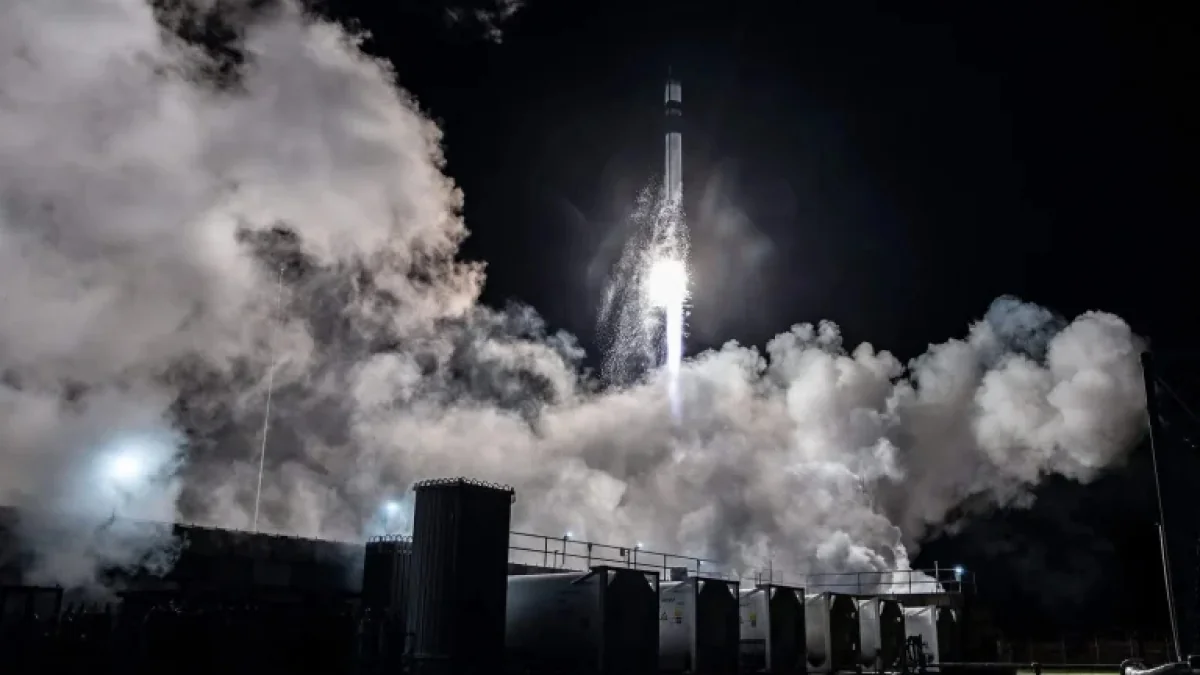
As excitement builds around SpaceX's impending IPO, investors are keen to capitalize on rising space stock valuations. SpaceX's confidential IPO filing suggests a valuation exceeding $1.75 trillion, spurring interest across the space industry. However, investors need to exercise caution amid numerous companies still unproven in the market. Invest in Rocket Lab Amid SpaceX IPO Frenzy Among the publicly traded companies, Rocket Lab stands out as a frontrunner. The firm has demonstrated significant progress across the entire space value chain, distinguishing it from competitors that merely offer future promises. Vertical Integration Drives Success Rocket Lab efficiently manages operations from launch to spacecraft production, alongside developing communication hardware. The company's Electron rocket has successfully completed nearly thirty missions, generating $199 million in revenue from launch services in 2025. Average revenue per launch has seen an increase, rising to $8.5 million from $7.8 million the previous year. * 2025 Total Revenue: $602 million, a 38% increase year-over-year. * Q4 Revenue: $180 million, up 36% compared to last year. * Space Systems Contribution: $402.8 million, making up 67% of total revenue. Expanding Backlog and Margins Rocket Lab's backlog grew by an impressive 73% to $1.85 billion. Approximately 37% of this backlog is anticipated to convert to revenue within the next year. The company's gross margins also peaked at 38% GAAP in the fourth quarter, highlighting robust operational control. Strategic Acquisition: Mynaric Recently, Rocket Lab acquired approval from Germany's Federal Ministry for Economic Affairs and Energy to purchase Mynaric, known for providing laser optical communication terminals. Initially valued at around $75 million, this acquisition will establish Rocket Lab's presence in Europe and enhance its high-bandwidth satellite communication capabilities. Significant Defense Contracts Rocket Lab has secured substantial contracts within the defense sector. In December, the U.S. Space Development Agency awarded the company an $816 million contract for building missile-warning and tracking satellites. Additionally, a recent $190 million contract with the War Department for hypersonic test flights using the HASTE launch vehicle underscores its expanding role in national security. Future Prospects and Risks While Rocket Lab's performance shows promise, challenges remain. The company reported a net loss for 2025, and its Q4 GAAP earnings per share were negative. Current guidance for Q1 presents expected revenue between $185 million and $200 million. Analysts predict a potential breakeven point in 2027 or later, necessitating careful monitoring of the company's progress. * Key Metrics: * 2025 net loss reported. * Q4 loss per share: $0.09. Despite these challenges, Rocket Lab's unique positioning and proven operational capabilities make it a strong candidate for investment. In an industry increasingly focused on vertical integration across launch, spacecraft, and defense, Rocket Lab provides a tangible option amid the SpaceX IPO excitement. Conclusion: Focus on Rocket Lab As SpaceX prepares for its IPO, investors should consider Rocket Lab as a viable investment in the space sector. With significant annual revenue, a robust backlog, and growing defense contracts, the company has established itself as a leader delivering results today. Investing in Rocket Lab offers a chance to support a business making real strides in a rapidly evolving industry.
An Inside Look at OpenAI and Anthropic's Finances Ahead of Their IPOs
An inside look at the financials of both companies prior to funding rounds completed earlier this year shows their Achilles' heel: the soaring costs needed to train new AI models. OpenAI expects to spend $121 billion on computing power for AI research in 2028. That means the company anticipates burning $85 billion that year even after almost doubling sales from the prior year. Such losses would dwarf that of virtually any other public company in history. Anthropic doesn't expect to spend nearly as much, but its rosiest forecasts tell a similar story of mounting computing costs. Both companies are releasing new versions of their AI models at a faster cadence than ever before, while pouring more resources into the training runs that create them. The arms race is showing no signs of slowing. Below are charts drawn from confidential financial documents that both companies shared with investors ahead of their latest funding rounds. They offer a window into the economics of the two largest AI labs in the world. The Information earlier reported some of the figures. What It Costs to Build a Digital Brain One defining factor of each startup's balance sheets is the runaway spending tied to training new AI models. The reason: Each jump in intelligence is harder to come by, and costs more than the last one. OpenAI expects to spend much more money than Anthropic training new models in the coming years. The costs are set to be so mind-bogglingly high that both companies report two different measures of profitability -- one that includes training costs, and one that leaves them out. Strip out "compute for research," and OpenAI is actually on track to turn a small pretax operating profit this year, as is Anthropic under its best-case scenario. Add it back in, and OpenAI doesn't expect to break even until the 2030s. Anthropic forecasts reaching that milestone sooner. An OpenAI spokesperson said the company is giving priority to growth over profits, and could dial back spending on training but expects a strong return on investment. Exploding Revenue Venture-capital firms have stomached vast losses in part because OpenAI and Anthropic are among the fastest-growing businesses in the history of tech. Each expects to more than double revenue this year, thanks largely to business customers' adoption of new AI tools. OpenAI was caught flat-footed after Anthropic released a new version of its coding tool Claude Code last fall, but has since poured more resources into its Codex coding assistant and prioritized sales to business customers. The revenue comparison between the two isn't technically apples to apples. Anthropic counts sales of its technology through cloud partners as revenue, while OpenAI doesn't. An Anthropic spokeswoman said that this is consistent with standard accounting practices because the company is the principal in the transaction. Inference costs OpenAI and Anthropic also spend billions of dollars a year to process queries made on their AI systems. These so-called "inference" costs currently eat into more than half of revenue for each company, though that percentage is expected to go down over time -- a sign that the technology is becoming cheaper to run. Only a tiny sliver of ChatGPT's users pay for the service, meaning that OpenAI doesn't generate revenue for a large chunk of its inference costs. Most of Anthropic's revenue comes from enterprises. An OpenAI spokesperson said the company chooses to support free users because it helps with broader adoption of its technology. He added that OpenAI can also make money from those users by showing them ads or converting them into subscribers, among other things. News Corp, owner of The Wall Street Journal, has a content-licensing partnership with OpenAI. Both OpenAI and Anthropic will burn through a giant amount of cash in the coming years, and are counting on their IPO investors to help buoy their businesses. To accommodate the massive amounts of cash these companies will need to raise, bankers are trying to change the rules around IPO fundraising by asking major index providers to loosen their rules for entry. The Nasdaq recently said it would allow newly listed companies to join its index faster, giving them access to broader pools of capital.

Climate cooperation offers a way out of energy price chaos
As the head of UN Climate Change, I'm used to making the case for clean energy. Today, the latest fossil fuel energy crisis is doing that job for me. War in the Middle East has exposed a brutal truth: Fossil fuel dependency rips away countries' sovereignty and security, putting food prices, household budgets, business bottom lines, and entire economies at the mercy of geopolitical shocks. In a world of "might is right" politics, the costs of fossil fuel subservience are spiralling out of control. The latest conflict has unleashed what the International Energy Agency has called "the greatest global energy security threat in history", constricting oil and gas supplies and sending prices soaring. Inflation inevitably follows, with higher bills for families and businesses. The impacts are reverberating around the world, with Asia deeply affected as it imports 40 per cent of its oil through the strait of Hormuz. The World Food Programme predicts that the war could push global hunger to record levels this year. Advertisement Some argue that the correct response to the current crisis is to slow the shift to renewable energy, and instead double-down on the cause of the turmoil -- fossil fuels. This defies economic logic and basic common sense. With geopolitics in disarray, energy price chaos will keep happening. Continued dependence on fossil fuels would leave countries forever lurching from crisis to crisis. It would also mean our planet keeps heating up, supercharging climate disasters like mega storms, droughts and floods. These are already ruining millions of lives. In 2025 alone, severe flash floods devastated parts of India and Nepal. If temperatures keep rising unchecked, this will only get worse. And yet the cause -- fossil fuels -- continues to receive trillions of dollars in subsidies globally. The good news is there is a clear solution to both the climate crisis and the fossil fuel cost crisis: Accelerating the shift to clean energy systems where renewables supply the power, backed by modern grids and storage, and clean technologies, like EVs, replace polluting alternatives. Advertisement Sunlight and wind don't depend on vulnerable shipping straits. Clean energy allows nations to insulate their economies from global turmoil, while creating jobs, cutting pollution, improving health and lowering costs. Renewable power is the cheapest there is. Many countries are already seizing these benefits and protecting themselves from climate disasters. But others need support. Over $2 trillion flowed into clean energy last year -- twice as much as fossil fuels -- but very little went to vulnerable developing economies. That must change urgently. Richer countries -- and the financial institutions they control -- have every incentive to ensure that affordable finance flows to developing nations for climate action. Because a truly global shift benefits us all. In our interconnected global economy, climate disasters hammering supply chains are a major inflation driver for every country. But through climate cooperation, countries are creating an alternative to the strong-arm politics dominating international affairs. you may like At UN Climate Change, we're supporting this cooperation. Our annual conferences, have driven major progress -- roughly halving the projected rise in global temperature, transforming global energy markets and supporting resilience-building. But we need to go far faster, and to ensure a just transition, including for economies and communities that have historically relied on fossil fuels. The quicker countries move, the greater the gains. Climate cannot wait. So, we're increasingly focussed on turning climate commitments into real-world outcomes that benefit billions more people. Last year at COP30 in Brazil, $1 trillion was committed to grids and storage, to invest in modern, clean energy systems. This year's COP31 in Türkiye will drive further progress. Today's turmoil underscores the urgency of this work. Climate cooperation is a cure for the chaos of this moment. Clean energy and climate resilience are essential, not despite global instability, but because of it. The writer is executive secretary of UN Climate Change

SpaceX targets more than US$2 trillion IPO valuation
CHICAGO: SpaceX boosted its target initial public offering (IPO) valuation above US$2 trillion, according to sources, as the world's most valuable startup gears up to pitch potentially the biggest-ever market debut. Billionaire Elon Musk's rocket, satellite and artificial intelligence (AI) company and its advisers are floating the figure to prospective investors in its IPO, the sources said, ahead of meetings in the coming weeks. The so-called testing-the-waters briefings would likely include more detail that would support the valuation, Bloomberg News has reported. At more than US$2 trillion, SpaceX's valuation would increase by nearly two thirds in a matter of months. The company's acquisition of Musk's xAI valued the combined company at US$1.25 trillion, Bloomberg News reported in February. It would also be bigger than all but five of the companies in the S&P 500 Index - Nvidia Corp, Apple Inc, Alphabet Inc, Microsoft Corp and Amazon.com Inc. It would be larger by that metric than Meta Platforms Inc. and Musk's own Tesla Inc, the two other members of the so-called Magnificent 7 stocks. SpaceX has filed confidentially for an IPO that could take place in June, Bloomberg News reported Wednesday. The listing would make SpaceX the first of a potential trio of mega-IPOs, followed by OpenAI and Anthropic PBC, whose chatbots are rivals to SpaceX subsidiary xAI's Grok. Deliberations are ongoing and details of the offering could still change, the sources said. A representative for SpaceX didn't immediately respond to a request for comment. SpaceX leads launch and low-earth orbit communication/broadband offerings, with the xAI merger and planned IPO supporting investment in larger launch vehicles and data centres in space. Launch and Starlink still generate the majority of revenue, approaching US$20bil in 2026, as xAI is likely to garner less than US$1bil. Launch and Starlink are peer leaders with significant distance from rivals. A listing for SpaceX would raise as much as US$75bil, Bloomberg News has reported. At that size, it would dwarf the biggest ever IPO, Saudi Aramco's US$29bil debut in 2019. The company would use the funds to fund Musk's vision of AI data centres in space and a factory on the moon. The billionaire's grand plans will require unprecedented amounts of capital and resources that span several of the companies he controls. Furthermore, Musk said in March that his Terafab project, which would eventually manufacture his own chips for robotics, AI and space data centres, will be jointly run by Tesla and SpaceX. -- Bloomberg
Polymarket Pulls Military Rescue Betting Market After Congressional Backlash - TokenPost
Polymarket has removed a controversial betting market that allowed users to wager on the rescue timeline of two U.S. airmen after their F-15E fighter jet was shot down over Iran. The prediction platform pulled the listing following swift public criticism and pushback from elected officials, acknowledging the market failed to meet its internal integrity standards. Both crew members have since been safely rescued. Massachusetts Representative Seth Moulton was among the loudest critics, publicly condemning the market as "disgusting" and arguing it turned a life-or-death military operation into a financial transaction. Moulton has previously gone as far as banning his own staff from using prediction platforms like Polymarket and Kalshi, citing concerns that monetary incentives could distort or influence sensitive policy decisions. Polymarket confirmed the removal and announced a review into how the listing cleared its internal safeguards in the first place, signaling a potential gap in its moderation process. The controversy arrives at a turbulent time for the prediction market industry. A coalition of congressional Democrats recently introduced legislation that would prohibit contracts tied to elections, acts of war, and government decisions. Separately, several U.S. senators have pushed the Commodity Futures Trading Commission to ban markets linked to individual deaths on national security grounds. The CFTC itself has taken an aggressive posture, filing lawsuits against three states it accuses of attempting to sidestep federal oversight of the sector. Outside politics, the NFL has formally requested that prediction platforms avoid listing contracts it considers manipulable or ethically objectionable, including bets on officiating outcomes. Despite mounting scrutiny, the industry continues to grow. Kalshi recently secured a margin trading license for institutional investors, and major financial players are moving in. JPMorgan CEO Jamie Dimon has publicly signaled the banking giant's interest in entering the prediction market space, suggesting mainstream finance sees long-term opportunity in the sector regardless of regulatory headwinds.

Anthropic sure has a mess on its hands thanks to that Claude Code source leak - IT Security News
The technical storage or access is necessary for the legitimate purpose of storing preferences that are not requested by the subscriber or user. The technical storage or access that is used exclusively for statistical purposes. The technical storage or access that is used exclusively for anonymous statistical purposes. Without a subpoena, voluntary compliance on the part of your Internet Service Provider, or additional records from a third party, information stored or retrieved for this purpose alone cannot usually be used to identify you.

Anthropic Says Claude Code Users Will Need to Pay More for OpenClaw | PYMNTS.com
By completing this form, you agree to receive marketing communications from PYMNTS and to the sharing of your information with our sponsor, if applicable, in accordance with our Privacy Policy and Terms and Conditions. The AI startup said that as of April 4, subscribers will "no longer be able to use your Claude subscription limits for third-party harnesses including OpenClaw," according to a customer email shared on the Hacker News forum, and reported by TechCrunch. Instead, subscribers must now pay for extra usage through "a pay-as-you-go option billed separately from your subscription." The changes are beginning with OpenClaw, though the policy "applies to all third-party harnesses and will be rolled out to more shortly," the email said. Anthropic's head of Claude Code Boris Cherny said in a post on social media platform X that the company's "subscriptions weren't built for the usage patterns of these third-party tools" and that Anthropic was now attempting "to be intentional in managing our growth to continue to serve our customers sustainably long-term." OpenClaw is an open-source personal agentic assistant that links to any large language model through an application programming interface (API). The company's creator Peter Steinberger announced recently that he was joining Anthropic rival OpenAI, with OpenClaw continuing as an open source project with backing from the ChatGPT maker. Per the TechCrunch report, Steinberger posted that he and OpenClaw board member Dave Morin "tried to talk sense into Anthropic" but were only able to get the company to delay the price increase by one week. "Funny how timings match up, first they copy some popular features into their closed harness, then they lock out open source," Steinberger said. Cherny maintained that Claude Code team members are "big fans of open source" and that he himself "just put up a few [pull requests] to improve prompt cache efficiency for OpenClaw specifically." Writing about the rise of OpenClaw earlier this year, PYMNTS said that the tool had demonstrated something companies can no longer put off addressing. "When an AI agent such as OpenClaw browses the web, reads email, retrieves files or initiates a transaction, it does not interact with dashboards or graphical interfaces designed for human users. It operates entirely through APIs," that report said. "It calls endpoints. It authenticates. It executes instructions in structured formats. It sequences actions across domains, maintains state across sessions and adapts its next call based on prior responses. That change reframes what enterprise software is and who it is built for."

Meta pauses all contracts with Mercor after breach
This audio is auto-generated. Please let us know if you have feedback. Meta has paused all contracts with data provider Mercor after Mercor's systems were hit by hackers last week, which could have compromised data integrity. As reported by Wired, on Thursday Mercor confirmed that its services had been targeted as part of an expanded supply-chain exploit, which was traced back to the use of LiteLLM, a widely used open-source library for connecting applications to AI services. It's unclear to what extent the breach impacted Mercor's systems, but the belief is that the hack was designed to harvest credentials from incoming data streams. Mercor provides vetted data to help power artificial intelligence projects, employing various experts to confirm and improve data quality in order to ensure more accurate outputs from its AI systems. Mercor provides data to all of the major AI providers, including Anthropic, OpenAI and Meta. TechCrunch further reported that the hackers responsible for the breach have since shared Slack data and ticketing info extracted from Mercor's servers, as well as videos of conversations that allegedly took place between Mercor's AI systems and contractors on its platform. Given the potential for harm, Meta quickly sought to distance itself from Mercor in the hopes that it could avoid any expanded blowback from the breach. It's not clear whether Meta user data was exposed as part of the attack, but Meta suspended all its work with Mercor pending further investigation. The breach has implications both for the data security elements of AI projects and the integrity of AI systems, which have become a much bigger source of information for many people. On the data security front, the vast amounts of data being fed into AI systems means that there's also potential for large-scale exposure if these intake streams are able to be breached. That could open up a range of vulnerabilities, depending on the source input. In terms of system integrity, according to research conducted by SEMRush, more than 112 million Americans used AI-powered tools in 2024, while McKinsey has reported that 44% of AI-powered search users now say it's their primary and preferred source of insight. Due to the significant influence of AI tools, the security of their data inputs is integral to accurate information flow. It also means that they will inevitably become targets of hacking groups seeking to sway users. The Mercor incident is another reminder of this, and of the advanced security that will be required to ensure accurate information is fed into AI projects, creating additional costs in terms of broader AI infrastructure.

Elon Musk pressures potential SpaceX investors to advertise on X
This audio is auto-generated. Please let us know if you have feedback. X owner Elon Musk is trying another tactic to boost ad spend in the app, this time by pressuring potential SpaceX investors to also buy X ads and subscribe to xAI's Grok tools. As reported by the New York Times, Musk has told banks, law firms and other advisers working on the upcoming SpaceX public offering that they need to be paying customers of xAI and advertise on X in order to win favor for his business. As per the New York Times: "Some of the banks have agreed to spend tens of millions on the chatbot, and they have already started integrating Grok into their I.T. systems, three of the people said." The New York Times said that Bank of America, Citigroup, Goldman Sachs, JPMorgan Chase and Morgan Stanley are expected to work on the offering, while law firms Gibson Dunn and Davis Polk are also advising on the deal. SpaceX's IPO is expected to be one of the biggest public offerings ever, with Reuters reporting on April 3 that the company had boosted its target valuation to more than $2 trillion. SpaceX is a leader in satellite connection and is looking to sell potential investors on projects such as orbital data centers for artificial intelligence projects. In addition, Musk has also outlined the potential for humanoid robots, which are being developed in conjunction with Tesla, and could be another business opportunity. In February, Musk announced on X that SpaceX is planning to build a self-sustaining base on the moon, which Musk said could be up and running within 10 years. That could be a key step towards eventual travel to Mars, which remains a longer-term vision for SpaceX. Musk's predictions, however, tend to be highly optimistic, and it's not clear how achievable any of these goals are. Even so, Musk's cult of personality has won him many supporters, including rich investors who might be keen to latch onto the SpaceX IPO. This could end up being a boon for X, especially if it brings more ad dollars to the platform and helps make the app a more sustainable stand-alone proposition. It's difficult to say how well X is performing because as a private entity, the platform isn't required to provide in-depth data on usage or general performance. That could change with a SpaceX IPO because X is now part of the broader SpaceX/xAI business. Though it's still unlikely the company will provide significant insight into usage or ad revenue data. However, based on X's EU user count, which it has to report under the EU Digital Services Act, is that X's usage in that region declined by 15% in the second half of 2025. Additional reports indicate that X's ad revenue also declined last year. Fewer users and ongoing questions about brand safety are apparently prompting more caution from potential ad partners and these factors combined have caused X's revenue to decline since Musk took over the business in 2022. Musk has made several efforts to force advertisers back to the app, including taking legal action against brands that cut their ad spend. In addition, according to CNBC, SpaceX has become a major advertiser on X, which could also juice the app's performance numbers. Forcing potential SpaceX investors to take up X ads is another step along similar lines. It will be interesting to see if Musk is able to bully enough of them to boost the platform's ad performance in any significant way.