News & Updates
The latest news and updates from companies in the WLTH portfolio.
Anthropic: You Can't Use OpenClaw With Claude Without Paying Extra
AI firm Anthropic has clamped down on people using its Claude chatbot via the agentic AI tool OpenClaw. OpenClaw, released in late 2025, is a free and open-source AI agent that can execute tasks via third-party large language models (LLMs) like Claude, ChatGPT, Grok or Google Gemini. The app, which was even called "Clawd" when it debuted, has always had a close relationship with Anthropic's LLMs. As of 4 April 2026, Claude Pro and Max subscribers can no longer use their available credits through third-party frameworks such as OpenClaw. They are allowed to keep using tools like OpenClaw in theory, but they must now pay separately under a new "extra usage" billing system. Anthropic's Boris Cherny, head of Claude Code, chalked up the move to cost concerns in a post on X, saying the tool's subscriptions "weren't built for the usage patterns of these third-party tools." "Capacity is a resource we manage thoughtfully, and we are prioritizing our customers using our products and API," said Cherny. Cherny explained that his firm was a "big fan of open source," and that the move "is more about engineering constraints." Though the move currently only impacts OpenClaw, the policy is set to be rolled out to other third-party tools in the coming weeks. The news follows OpenClaw's creator Peter Steinberger joining OpenAI in February. The move saw OpenAI's CEO Sam Altman promise to support OpenClaw as an open source project. Steinberger claimed he had "begged" Anthropic to reconsider the recent restriction on OpenClaw, but was only able to delay the change by a week. The Claude-maker isn't the only AI giant that is shutting down popular products due to resource concerns. Last month, OpenAI shut down its AI video generator Sora, both the consumer app and the API. A spokesperson said the company wanted to free up resources for other areas of the business, such as "world simulation research to advance robotics."

Polymarket Apologizes for Allowing 'Disgusting' Bets on US Pilots Downed in Iran
Prediction platform Polymarket has apologized for allowing users to place bets on whether American airmen from a downed US fighter jet would be rescued from Iran after facing backlash over questionable ethics. On Friday, a two-seater F-15E Strike Eagle was shot down over Iran, prompting the US to launch a high-risk extraction mission. US officials said that while one crew member was evacuated shortly after the crash, it took the US more than 24 hours to locate and extract the other, an operation that reportedly involved several helicopters and a CIA deception ploy. Iranian officials, however, have denied that the operation was a success, claiming that Tehran destroyed a C-130 military transport plane and two Black Hawk helicopters, with videos circulating on social media showing the aircraft's debris. The uncertainty about the fate of the US service members prompted a now-deleted bet that allowed users to buy 'yes' or 'no' positions on whether the airmen would be recovered by April 3 or April 4, with roughly 63% of traders predicting a Saturday rescue. Democratic congressman Seth Moulton was one of the first to flag the bet, writing on X: "This is DISGUSTING." They could be your neighbor, a friend, a family member. And people are betting on whether or not they'll be saved." Polymarket promptly deleted the bet, replying to Moulton: "We took this market down immediately as it does not meet our integrity standards. It should not have been posted, and we are investigating how this slipped through our internal safeguards." Moulton, however, did not accept the apology as sufficient, saying that Polymarket's "integrity standards are severely lacking," pointing to dozens of other active war bets still visible on the platform. Trump administration, recalling that Donald Trump Jr. "is an investor in this dystopian death market and may have access to intelligence that isn't public yet." The episode is the latest in a string of controversies for Polymarket tied to the Iran war. According to several media reports, six suspected insiders collectively won $1.2 million by betting that the US would strike Iran on February 28 - the exact day coordinated US-Israeli airstrikes began - with all of the accounts funded within hours of the attack. Israeli prosecutors separately filed indictments against an IDF reservist and a civilian for allegedly using classified military intelligence to bet on Polymarket during the Twelve-Day War in June 2025.

Can Orbital Data Centers Help Justify A Massive Valuation For Spacex?
BERITAJA is a International-focused news website dedicated to reporting current events and trending stories from across the country. We publish news coverage on local and national issues, politics, business, technology, and community developments. Content is curated and edited to ensure clarity and relevance for our readers. SpaceX has reportedly revenge confidential paperwork for an first nationalist offering successful which the institution would raise $75 cardinal astatine a $1.75 trillion valuation. And according to CEO Elon Musk, orbital information centers will beryllium a large portion of SpaceX's future. On the latest section of TechCrunch's Equity podcast, Kirsten Korosec, Sean O'Kane, and I discussed Musk's vision, arsenic good arsenic different companies that are pursuing akin goals. It will return significant tech improvement and monolithic superior spending to make orbital information centers a reality, but arsenic Sean noted, pinch "opposition happening about the state to information centers successful general," executives for illustration Musk and Jeff Bezos whitethorn beryllium thinking, "The engineering situation whitethorn beryllium little than the societal situation backmost here" connected Earth. Read a preview of our conversation, edited for magnitude and clarity, below. Sean: This has been a inclination -- I would opportunity a quickly forming inclination -- complete the past half twelvemonth to a year, and we person different examples of it. We person SpaceX; I consciousness for illustration successful immoderate ways, Elon Musk was precocious connected this trend. And for the moment, let's group speech the existent mechanics and the viability of information centers successful space. We could talk about that successful a 2nd if we want, but -- Kirsten: We person a really bully communicative we'll nexus to successful the show notes, by the way. One of our about caller hires, Tim Fernholz, is amazing. He writes each about the physics and the constraints of that. Sean: Yeah, I deliberation it's a really absorbing engineering challenge. It's a really absorbing physics challenge. It's a really absorbing orbital mechanics challenge. But it's thing that intelligibly a bunch of companies and group are going to effort and chase. [There's] going to beryllium SpaceX doing it, pinch a benignant of variance of what they're already moving connected pinch their Starlink network. There's a startup that had travel retired of Y Combinator, primitively called Starcloud, that was really 1 of the first ones retired location trying to build a immense business about this, that just raised $170 cardinal this week, their valuation [on] that tipped them complete into a unicorn status. Jeff Bezos is trying to spell aft this arsenic well. This is simply a adjacent procreation type of the title that we've seen happening betwixt Starlink and Amazon's Leo outer network, and Blue Origin has its ain outer web coming online arsenic good successful the adjacent mates of years. So there's going to beryllium a full bunch of this happening, and it feels for illustration it wasn't happening a twelvemonth ago. I cognize the measurement that Elon Musk pitches it is -- we cognize he's allergic to reddish tape, he's built a information halfway successful Memphis, too. Maybe now he knows the challenges and the risks you person to return to sidestep that reddish tape. There's a batch of guidance happening about the state to information centers successful general. And these group say, "We person entree to space, truthful let's conscionable effort and do it up there." The engineering situation whitethorn beryllium little than the societal situation backmost present connected our [planet]. Kirsten: And it besides creates excitement, right? If a institution is about to spell [public] and they're moving connected information centers successful space, this is thing that group could person expectations about successful a affirmative measurement and disregard the constraints. It feels for illustration a institution that is moving connected thing that's not aged and outdated, but signals the future. And it's really a awesome strategy erstwhile you deliberation about it. Anthony: Not that Elon Musk is the only 1 who does this, but it seems for illustration he's incredibly successful astatine being like, "Don't judge my companies based connected really overmuch money they're making now, judge them based connected these expansive visions that I could rotation retired about what will hap successful the future." And going backmost to a constituent that Sean was making, I deliberation that portion of what's absorbing is to [ask]: How does this fresh successful pinch the broader information halfway rollout? How does it fresh successful pinch guidance and the thought that possibly group are not going to beryllium capable to build arsenic galore information centers arsenic they want to? I don't deliberation immoderate of america are engineers who could really measure the viability of these plans. It does surely person a tinge of imagination to it, but moreover erstwhile they do laic retired these plans, it feels for illustration conscionable a driblet successful the bucket successful position of compute capabilities compared to what they want to build retired connected Earth. So it feels for illustration there's not a script wherever this replaces a full bunch of caller information centers connected Earth. It's conscionable benignant of a [...] supplement to it. Sean: The past 2 things I'll constituent retired that are really beforehand and halfway for maine is, one, we've seen a backing disconnected successful immoderate ways [from] information centers -- not conscionable because of opposition, but because possibly we don't request arsenic much, right? We spot a bunch of jockeying from immoderate of the AI labs about, "Well, possibly we don't request to lease this overmuch from this company," aliases whatever. And if that becomes a point that is much existent than it was 5 months ago, do you each of a abrupt suffer each that momentum to do thing arsenic crazy arsenic putting the information centers successful space? Providing that it works, even. The different point is that the thought of building these monolithic information centers successful space, pinch each these satellites that dress up the quote unquote "data center," is business for SpaceX. And I deliberation this is unsocial to them compared to these different companies: They are a motorboat institution primarily, moreover though they make a bunch of gross from Starlink. They are the conveyance that gets the information centers to space. They get to book that arsenic gross for SpaceX. And truthful it becomes this point where, of people [Musk] wants -- whether aliases not it works, he would yet person to beryllium it -- but of people he wants to nonstop much and much satellites into abstraction because it's much gross for SpaceX. And that makes SpaceX look amended arsenic a nationalist company. And past you conscionable benignant of tumble down the way until he finds thing other to transportation the investors on.

Britain woos Anthropic expansion after US defense clash, FT says
BRITAIN is trying to tempt Anthropic to expand its presence in the country, as it seeks to capitalize on a fight between the maker of artificial intelligence app Claude and the US Defense Department, the Financial Times (FT) said on Sunday. British government proposals for Anthropic range from an office expansion in London to a dual stock listing, the newspaper reported, citing people with knowledge of the plans. Anthropic and Britain's Department of Science, Innovation and Technology did not immediately respond to Reuters requests for comment. Prime Minister Keir Starmer's office has supported the department's work, which will be put to Anthropic CEO Dario Amodei when he visits in late May, the FT said. The US government blacklisted Anthropic, designating the company a national-security supply-chain risk after it refused to allow the military to use AI chatbot Claude for US surveillance or autonomous weapons. Get the latest news delivered to your inbox Sign up for The Manila Times newsletters By signing up with an email address, I acknowledge that I have read and agree to the Terms of Service and Privacy Policy. A US judge temporarily blocked the blacklisting, and the AI startup has a second lawsuit pending over the supply-chain risk designation.

Polymarket Apologizes for Allowing 'Disgusting' Bets on US Pilots Downed in Iran
Prediction platform Polymarket has apologized for allowing users to place bets on whether American airmen from a downed US fighter jet would be rescued from Iran after facing backlash over questionable ethics. On Friday, a two-seater F-15E Strike Eagle was shot down over Iran, prompting the US to launch a high-risk extraction mission. US officials said that while one crew member was evacuated shortly after the crash, it took the US more than 24 hours to locate and extract the other, an operation that reportedly involved several helicopters and a CIA deception ploy. Iranian officials, however, have denied that the operation was a success, claiming that Tehran destroyed a C-130 military transport plane and two Black Hawk helicopters, with videos circulating on social media showing the aircraft's debris. The uncertainty about the fate of the US service members prompted a now-deleted bet that allowed users to buy 'yes' or 'no' positions on whether the airmen would be recovered by April 3 or April 4, with roughly 63% of traders predicting a Saturday rescue. Democratic congressman Seth Moulton was one of the first to flag the bet, writing on X: "This is DISGUSTING." They could be your neighbor, a friend, a family member. And people are betting on whether or not they'll be saved." Polymarket promptly deleted the bet, replying to Moulton: "We took this market down immediately as it does not meet our integrity standards. It should not have been posted, and we are investigating how this slipped through our internal safeguards." Moulton, however, did not accept the apology as sufficient, saying that Polymarket's "integrity standards are severely lacking," pointing to dozens of other active war bets still visible on the platform. Trump administration, recalling that Donald Trump Jr. "is an investor in this dystopian death market and may have access to intelligence that isn't public yet." The episode is the latest in a string of controversies for Polymarket tied to the Iran war. According to several media reports, six suspected insiders collectively won $1.2 million by betting that the US would strike Iran on February 28 - the exact day coordinated US-Israeli airstrikes began - with all of the accounts funded within hours of the attack. Israeli prosecutors separately filed indictments against an IDF reservist and a civilian for allegedly using classified military intelligence to bet on Polymarket during the Twelve-Day War in June 2025.
Starlink Surpasses 10,000 Satellites Milestone: SpaceX Revolutionizes Global Internet in 2026
SpaceX has pushed its Starlink megaconstellation past the 10,000-satellite mark in orbit, a milestone that underscores the company's rapid dominance of low-Earth orbit and its ambition to deliver high-speed internet to every corner of the planet, according to a widely shared social media post and tracking data released Sunday. Finance and space commentator Wall Street Mav highlighted the achievement in a Truth Social-style X post on Easter Sunday, April 5, 2026, noting that Starlink now accounts for more than two-thirds of all active satellites circling Earth. The post, which included a striking animation of the constellation, quickly garnered hundreds of thousands of views and sparked discussion about the future of global connectivity. As of April 5, independent trackers report 10,168 operational Starlink satellites, with 10,177 in orbit and more than 11,700 launched since the program began in 2019. The constellation has grown steadily, crossing the 10,000-operational threshold in mid-March when a Falcon 9 mission from Vandenberg Space Force Base in California added another batch of satellites. The low-altitude design -- satellites orbiting between 480 and 550 kilometers -- is central to Starlink's strategy. At these heights, even uncontrolled satellites will naturally deorbit within about five years due to atmospheric drag, burning up harmlessly on re-entry and minimizing long-term space debris, the X post emphasized. SpaceX equips each satellite with a collision-avoidance system that allows autonomous maneuvers to steer clear of other objects, including the company's own fleet. "Every satellite is in a lane to avoid other Starlink satellites," the post stated. "They all are connected to a collision avoidance system and can make small course adjustments if needed." This infrastructure enables Starlink to provide high-speed, low-latency internet anywhere on Earth without the need for expensive underground or undersea fiber cables. Users require only a small dish antenna that automatically scans the sky for the nearest satellite. The service already reaches ships at sea, aircraft in flight and remote communities previously cut off from reliable broadband. Starlink's expansion comes as the company reports more than 10 million active customers worldwide as of early 2026, with median download speeds around 170 Mbps and Priority plans reaching up to 300 Mbps. Coverage now blankets nearly all populated regions, including polar areas, with uptime exceeding 99.9 percent. In 2025 alone, the network added more than 4.6 million new customers and expanded to 35 additional countries and territories. The milestone reflects SpaceX's aggressive launch cadence. The company has conducted dozens of Starlink missions in 2026, deploying batches of 25 to 29 satellites per flight. Recent launches have included direct-to-cell capabilities for mobile connectivity and improved V2 Mini satellites with inter-satellite laser links for better global performance. Elon Musk, SpaceX's founder and CEO, has described Starlink as essential infrastructure for the future, enabling everything from rural education and disaster response to potential support for Mars missions. The network has proven critical in conflict zones, maritime operations and areas hit by natural disasters where traditional infrastructure fails. Yet the rapid buildup has also raised concerns. Astronomers have long complained about light pollution from the bright satellites interfering with ground-based observations. Some experts worry about the long-term risk of orbital crowding, though SpaceX maintains that its automated systems and low orbits keep the risk of collisions low. One reply to the viral post noted fears of a "Kessler Syndrome" scenario, but the company points to its deorbiting record -- roughly 1 to 2 satellites re-enter daily on average -- as evidence of responsible stewardship. The constellation now dwarfs all other satellite operators combined. Independent trackers show Starlink making up roughly 65 to 70 percent of active satellites in orbit, a dominance that has drawn regulatory scrutiny in some markets over competition and spectrum use. Still, demand continues to surge, with the company adding customers at a rate of roughly a million every 50 days in recent periods. For everyday users, Starlink has transformed connectivity. Rural households, RVers, maritime fleets and airlines now access reliable broadband previously unavailable. In-flight Wi-Fi on equipped aircraft and high-speed service on ships demonstrate the network's versatility beyond fixed terrestrial installations. SpaceX continues to iterate on the technology. Newer satellites feature enhanced capabilities for direct-to-cell service, potentially eliminating the need for traditional cell towers in remote areas. Future plans include denser shells of satellites and even larger constellations, though regulatory limits from the Federal Communications Commission cap certain phases at around 7,500 satellites initially, with approvals for expansion. The achievement arrives amid broader discussions about space infrastructure. While governments and traditional telecoms have invested in fiber and 5G terrestrial networks, Starlink offers a satellite-first alternative that bypasses costly ground infrastructure. Proponents argue it levels the playing field for global digital access; critics caution about reliance on a single private company for critical communications. Wall Street Mav's post framed the milestone positively, emphasizing the absence of long-term orbital trash and the revolutionary potential of orbital connectivity. Replies ranged from celebration of exponential innovation to questions about coordination with other satellite providers and even lighthearted observations about the visual density of the animation, which exaggerates satellite sizes for clarity. As of early April 2026, SpaceX shows no signs of slowing. Additional Falcon 9 launches are scheduled throughout the month, with analysts expecting the constellation to continue growing toward the company's long-term target of 12,000 or more satellites in the initial phase, with potential for tens of thousands more in later generations. The broader impact extends to geopolitics and economics. Starlink has been credited with maintaining connectivity in regions affected by conflict or natural disasters, while also prompting traditional telecom providers to accelerate rural broadband efforts. Pricing remains a point of discussion, with residential plans positioned as premium alternatives to slower legacy satellite services. For SpaceX, the Starlink program has become a major revenue driver, helping fund ambitious goals such as reusable rocket development and human spaceflight. The network's success has also intensified competition, with rivals like Amazon's Project Kuiper and European initiatives racing to deploy their own constellations. Despite occasional anomalies -- such as a fragmentation event in late March that posed no risk to the International Space Station -- the constellation's reliability remains high. SpaceX coordinates closely with NASA, the U.S. Space Force and international partners to track objects and mitigate risks. As the animation in the viral post illustrates, the night sky is increasingly populated with moving points of light from Starlink. For many, that sight symbolizes progress toward a truly connected planet. For others, it prompts reflection on humanity's growing footprint in space. The milestone of 10,000-plus satellites marks more than a numerical achievement. It represents a fundamental shift in how the world accesses information, conducts business and stays connected -- all from a network of small satellites orbiting hundreds of kilometers overhead. SpaceX officials have not issued a formal statement on the exact 10,000 threshold Sunday, but company updates and independent trackers confirm the constellation's continued expansion. With launches occurring nearly weekly, the number is expected to climb further in the coming months. For users in remote villages, aboard ships crossing oceans or passengers flying at 30,000 feet, the practical result is simple: high-speed internet anywhere, delivered not by cables buried in the ground but by a constellation of intelligent satellites overhead. The viral X post captured a moment of awe at that scale. As one commenter replied, "This is what exponential innovation looks like." Whether viewed as the greatest infrastructure project in history or a concentration of private power in space, Starlink's growth is reshaping the digital world in real time.

Storm causes flight chaos over Easter weekend
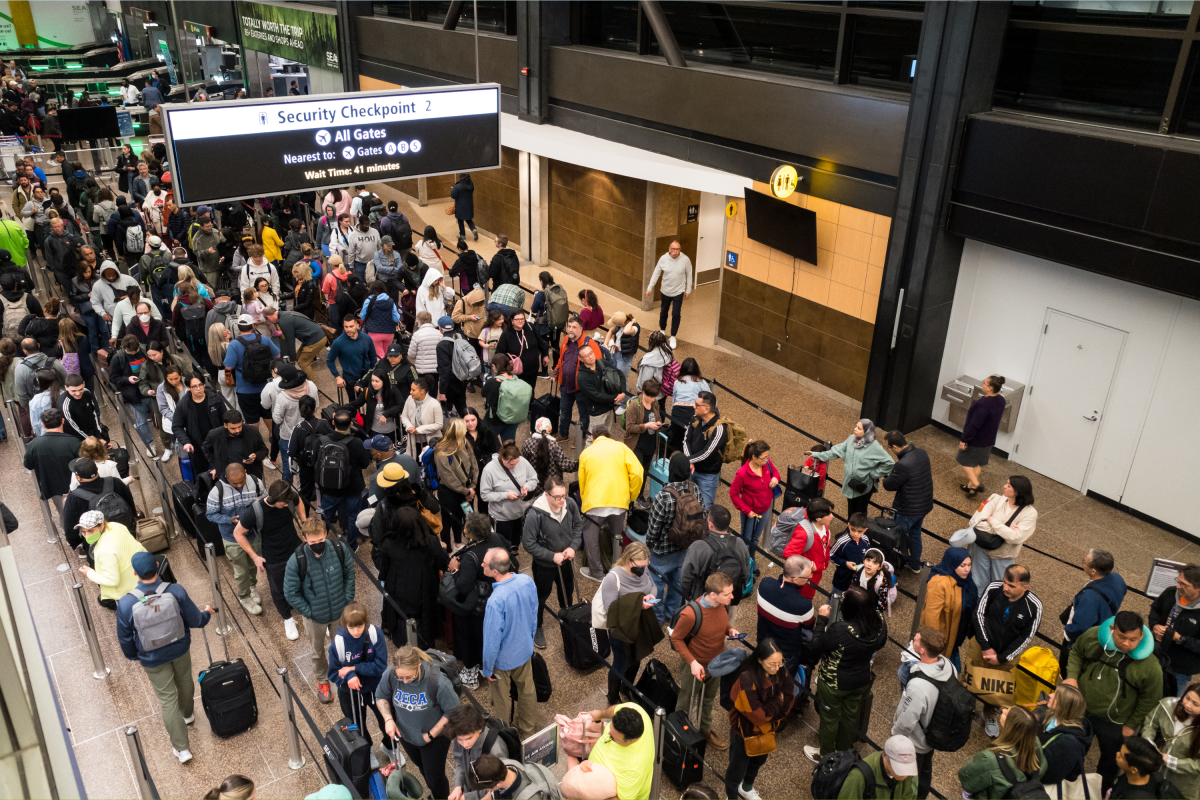
Severe spring storms combined with a high number of Easter holiday travelers led to widespread disruption across U.S. air travel over the holiday weekend, with tens of thousands of flights delayed and well over 2,000 cancellations recorded nationwide between Thursday and Saturday, according to flight‑tracking data. FlightAware data shows that the United States experienced more than 15,000 flight delays between April 2 and April 4, including over 6,000 delays and nearly 500 cancellations into, within, or out of the U.S. on Easter Saturday alone, as severe weather battered some of the country's busiest airport hubs. The worst disruptions were concentrated at major hub airports in the Midwest, South, and Southeast, where thunderstorms and low visibility triggered FAA ground stops and air traffic flow restrictions. Chicago O'Hare International Airport saw the most sustained disruption, canceling more than 800 flights on Thursday after two separate Federal Aviation Administration ground stops caused by storms, according to Simple Flying. As a key hub for both American Airlines and United Airlines, delays at O'Hare quickly spread through the carriers' national networks, with more than a quarter of their flights delayed on both Thursday and Friday. In Texas, Dallas/Fort Worth International Airport was also heavily affected. Nearly 1,000 flights -- about 45 percent of the airport's daily schedule -- were delayed on Saturday, while Houston's George Bush Intercontinental Airport experienced a similar level of disruption as severe thunderstorms moved across the region. Hartsfield-Jackson Atlanta International Airport, Delta Air Lines' main hub, did not escape the chaos, but recorded comparatively lower cancellation rates than some rival hubs, despite hundreds of delays tied to weather and congestion. The disruptions affected multiple carriers, including American Airlines, United Airlines, Delta Air Lines, and several regional operators, as aircraft and crew-scheduling issues compounded weather‑related delays. The Traveler said that passengers were reporting missed connections, long wait times, and crowded terminals as backlogs built at security checkpoints and departure gates. Flight‑tracking data, reported by Simple Flying, shows an initial improvement in operations through Easter Sunday, although conditions varied by region as weather systems continued to move east. Airlines expect smoother operations heading into Easter Monday as the strongest storm activity has dissipated, though carriers advised travelers to continue monitoring the status of their flights closely. Passengers were also urged to arrive at airports earlier than usual due to lingering congestion, with some travelers reporting security line waits lasting several hours during the peak of the disruption.
Gemini Overtakes Perplexity, Becomes No. 2 Bot Referral To Websites
* by Laurie Sullivan , April 3, 2026 Google Gemini has overtaken Perplexity to become the world's second-largest source of AI chatbot referrals to websites for the first time, according to independent web analytics company Statcounter. Publishers have struggled with the lack of referral traffic from AI chatbots to websites from one of the most used traditional search engines worldwide, but recently this has changed. March 2026 data released in April shows Google Gemini accounted for 8.65% of referrals -- up from 2.31% in the year-ago month. It measured all AI chatbot referrals globally, surpassing Perplexity, which fell to 7.07%. Perplexity -- in second place with 12.07% in April 2025 -- has seen its share erode steadily to a decline of more than 40% from its peak. ChatGPT continues to lead the percentage of referrals sent from the chatbot to websites, with 78.16%, while others trail. Microsoft Copilot accounted for 3.19% of all referrals, Claude for 2.91%, and DeepSeek for 0.02%, according to the data. Chatbot referral traffic represents visitors who arrive at a website by clicking links within AI interfaces like ChatGPT, Gemini, Claude, or Perplexity. As AI transitions into a primary "discovery engine" for users, this traffic has become increasingly critical. Referral traffic from AI chatbots to websites based on queries or news-driven spikes is an important metric for brands because it represents a pre-qualified audience willing to take action like making a purchase. AI traffic converts roughly twice as well as standard organic search traffic, according to numerous reports. "Google has the advantage of integrating Gemini across its ecosystem -- Search, Android, Workspace and Chrome," stated Aodhan Cullen, CEO, Statcounter. While the advantage appears to translate into growing website referral traffic, per Cullen, the AI chatbot referral market is shifting rapidly, with Claude experiencing substantial growth. Anthropic's Claude jumped from 1.37% in February to 2.91% in March 2026 -- more than doubling its share in a single month. Since April 2025, Claude's referral share has grown nearly tenfold from just 0.30%. Claude's recent surge in referral traffic comes amid a widely reported wave of users switching from ChatGPT. Cullen explained that weekly data shows Claude's referral share peaked at 3.6% in week 12 in mid-March before falling back to 2.49% in week 13 of 2026. '' This suggests the initial wave of users switching from ChatGPT may have been driven to an extent by the news cycle, and it remains to be seen whether Claude can sustain its gains.

Gaya Dam Water Release Triggers Chaos in Falgu Riverbed, Safety Concerns Rise
This led to hundreds of residents rushing into the shallow riverbed, many carrying nets and containers to catch fish. Gaya Dam Water Release:The controlled water release from a rubber dam in Bihar's Gaya district caused an unexpected surge of people into the Falgu River riverbed. This created public safety issues and urban water management problems and civic compliance violations. The dam incident happened after local authorities released water from the dam which served as their routine desilting and cleaning operation for the upcoming monsoon season. The officials intended to remove accumulated waste which included ritual offerings and organic debris that had polluted the reservoir and degraded water quality. The exposed riverbed became visible when water levels dropped which enabled people to see fish that swam through the area. This led to hundreds of residents rushing into the shallow riverbed, many carrying nets and containers to catch fish. Nalanda Temple Stampede: 8 Killed, Several Injured at Sheetla Temple Amid Heavy Crowd in Bihar Despite authorities warning about potential risks which included slippery surfaces and residual currents and sudden water flow changes people of all ages entered the area. Eyewitness accounts described scenes of chaos, with children, youths, and old individuals wading into the riverbed, often ignoring safety protocols. Pappu Pandey, a Gayapal Panda (priest), said the condition of the water had deteriorated significantly due to waste accumulation. "One can clearly see the extent of the filth mixed with the water. This accumulation of waste had been causing significant distress. Pilgrims were forced to contend with various unpleasant conditions, and those performing Pind Daan rituals were even reluctant to go near the dam. Thousands of pilgrims visit Devghat daily to perform the rituals of Pind Daan; however, the foul stench and decay had become a source of great misery. Now that the water has been released from the dam, proper cleaning and sanitation work can finally be undertaken," he said. Officials expressed concern that lack of enforcement and crowd control measures contributed to the escalation of the situation into a potential hazard. The dam, constructed on the Falgu River, serves an essential function because it controls water levels to support the continuous religious practices. This include pind daan and tarpan that define Gaya's cultural heritage. The religious use of the site has led to increased pollution problems which require the site to undergo regular cleaning operations. The experts believe that the incident demonstrates an ongoing problem which affects Indian cities when people use infrastructure systems in public spaces. The water release operation had been scheduled but it failed to provide: The urban planners require integrated planning methods to handle infrastructure needs between technical systems and human reaction patterns in areas that have active cultural activities

Anthropic Claude Code Leak Sparks Frenzy Among Chinese Developers - IT Security News
A fresh wave of interest emerged worldwide after Anthropic's code surfaced online, drawing sharp focus from tech builders across China. This exposure came through a misstep - shipping a tool meant for coding tasks with hidden layers exposed, revealing structural choices usually kept private. Details once locked inside now show how decisions shape performance behind the scenes. Even after fixing the breach fast, consequences moved faster. Around the globe, coders started studying the files, yet reaction surged most sharply in China - official reach of Anthropic's systems missing there entirely. Using encrypted tunnels online, builders hurried copies of the shared source down onto machines, racing ahead of any shutdown moves. Though patched swiftly, effects rippled outward without pause.

Thousands Passengers Stranded Europe: 3 Key Disruptions Behind Easter Travel Chaos
Thousands passengers stranded europe became the defining image of the Easter getaway as delays and cancellations spread across major hubs, with Heathrow among the affected airports. The scale of the disruption matters not just because of the numbers, but because it hit at one of the year's busiest travel periods. A total of 1, 901 European flights were delayed and 75 were cancelled, turning what should have been a routine holiday departure window into a test of airline resilience and airport capacity. Why the holiday rush turned into a travel bottleneck The immediate impact was clear: passengers faced longer waits, missed connections, and uncertainty at departure points across Europe. The disruption stretched across several major travel centers, including London, Paris, Rome, Madrid, and other hubs named in the context. When delays rise to this level during an Easter getaway, the problem is no longer isolated to a single airport or airline. It becomes a network issue, with each delayed flight creating pressure on the next scheduled departure. That is why thousands passengers stranded europe resonated so strongly: it captured a continent-wide breakdown in timing. The numbers also suggest a mismatch between seasonal demand and operational capacity. Even without adding details beyond the context, the pattern is straightforward. A holiday travel surge met a wave of delays and cancellations, and the result was cascading disruption. For travelers, the practical effect is not only lost time but the possibility of missed onward plans, especially when the affected airports sit at the center of dense European route networks. What lies beneath the flight delays and cancellations The context points to a broad disruption rather than a single localized incident. European travel systems are tightly connected, so when one airport slows, the impact can spread quickly across airlines and connecting routes. That is especially relevant when the affected services involve multiple carriers and hubs at once. In this case, the disruption affected KLM, British, ITA, Ryanair, and other airlines across London, Paris, Rome, Madrid, and beyond. From an editorial perspective, the key issue is not only the headline count of 1, 901 delays and 75 cancellations. It is the concentration of disruption during a peak leisure window, when passenger expectations are highest and airport throughput is under the most strain. The Easter getaway amplifies operational weaknesses because more travelers are moving within a shorter period of time. That makes every delay more costly in human terms, even if the underlying cause is not specified in the context. Thousands passengers stranded europe therefore reflects a wider structural vulnerability: the fragility of tightly scheduled air travel when many routes are running near capacity. Once delays stack up, the recovery process becomes slower and more visible to passengers on the ground. How the disruption reached major European hubs Heathrow was among the affected hubs, underscoring the reach of the disruption. But the context makes clear that the problem was not confined to one airport or one country. Spain, England, France, Italy, Ireland, and the Netherlands were all named among the locations hit by the delays and cancellations. That geographic spread matters because it shows the issue as a regional travel event rather than a local airport malfunction. When major hubs in multiple cities are affected at once, travelers encounter a chain reaction: delayed departures, crowded terminals, and compressed rebooking windows. Airlines then face pressure to reposition aircraft and crews while maintaining schedules elsewhere. Even without further operational details, the scale alone points to a difficult recovery period for passengers and carriers alike. In that sense, thousands passengers stranded europe is not just a travel headline; it is a snapshot of how quickly holiday mobility can unravel. Regional impact and the passenger experience The broader consequence is a reminder that cross-border travel in Europe remains highly interdependent. A delay in one major city can reverberate through multiple markets, especially during a holiday period when flight demand is elevated. The affected airlines and hubs named in the context suggest that the strain was distributed across several layers of the network, from short-haul leisure routes to connecting travel plans. For passengers, the real cost is uncertainty. A cancellation is visible and immediate, but a delay can be just as disruptive when it causes missed reservations, late arrivals, or hours spent waiting without clarity on the next available option. That is why the Easter disruption stands out: it was not only a statistic, but a continent-wide inconvenience felt in terminals and departure lounges. With 1, 901 delays and 75 cancellations already defining the holiday period, the open question is whether Europe's busiest travel windows can absorb this kind of pressure without thousands passengers stranded europe becoming a familiar seasonal pattern.

Polymarket apologizes for allowing 'disgusting' bets on US pilots downed in Iran
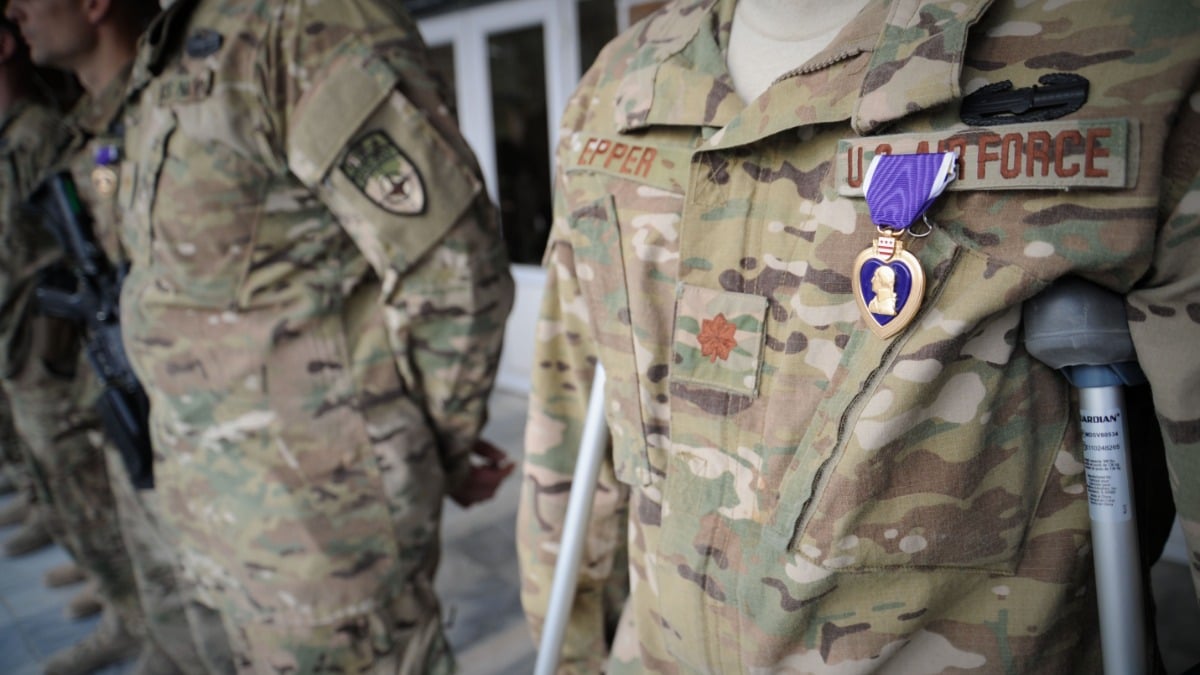
The platform pulled a bid on when the American airmen would be extracted from the country after a backlash Prediction platform Polymarket has apologized for allowing users to place bets on whether American airmen from a downed US fighter jet would be rescued from Iran after facing backlash over questionable ethics. On Friday, a two-seater F-15E Strike Eagle was shot down over Iran, prompting the US to launch a high-risk extraction mission. US officials said that while one crew member was evacuated shortly after the crash, it took the US more than 24 hours to locate and extract the other, an operation that reportedly involved several helicopters and a CIA deception ploy. Iranian officials, however, have denied that the operation was a success, claiming that Tehran destroyed a C-130 military transport plane and two Black Hawk helicopters, with videos circulating on social media showing the aircraft's debris. The uncertainty about the fate of the US service members prompted a now-deleted bet that allowed users to buy 'yes' or 'no' positions on whether the airmen would be recovered by April 3 or April 4, with roughly 63% of traders predicting a Saturday rescue. Democratic congressman Seth Moulton was one of the first to flag the bet, writing on X: "This is DISGUSTING." They could be your neighbor, a friend, a family member. And people are betting on whether or not they'll be saved." Polymarket promptly deleted the bet, replying to Moulton: "We took this market down immediately as it does not meet our integrity standards. It should not have been posted, and we are investigating how this slipped through our internal safeguards." Moulton, however, did not accept the apology as sufficient, saying that Polymarket's "integrity standards are severely lacking," pointing to dozens of other active war bets still visible on the platform. He also took a swing at the Trump administration, recalling that Donald Trump Jr. "is an investor in this dystopian death market and may have access to intelligence that isn't public yet." The episode is the latest in a string of controversies for Polymarket tied to the Iran war. According to several media reports, six suspected insiders collectively won $1.2 million by betting that the US would strike Iran on February 28 - the exact day coordinated US-Israeli airstrikes began - with all of the accounts funded within hours of the attack. Israeli prosecutors separately filed indictments against an IDF reservist and a civilian for allegedly using classified military intelligence to bet on Polymarket during the Twelve-Day War in June 2025.

AI: Anthropic launches a political committee amid tension with the Trump administration
In the midst of a technological war with the Pentagon, Anthropic, the AI giant behind Claude, has just launched AnthroPAC, a political committee funded by its employees. A bold move amid tension with the Trump administration, which could well redraw the rules of the game for artificial intelligence... and cryptos. On April 3, 2026, Anthropic officially registered AnthroPAC, its political action committee (PAC), with the Federal Election Commission. The timing is no accident. Indeed, as the midterm elections approach, the company seeks to influence the debate on AI regulation. This PAC, funded by voluntary employee contributions ($5,000 per year), will support candidates involved in policies related to artificial intelligence. The creation of this PAC comes in an explosive context where since February 2026, Anthropic has been in open conflict with the Trump administration. Indeed, the Pentagon attempted to impose the use of its Claude model without the ethical safeguards required by the company. Moreover, President Trump even ordered federal agencies to cease all collaboration with Anthropic! Labeling it a risk for the supply chain. The stake is therefore high for Anthropic because if the conflict with Trump worsens, the company risks losing crucial federal contracts. But also, of seeing its Claude model marginalized. As a result, AnthroPAC could serve as a lever to support candidates favorable to softer AI regulation, while weakening the company's political opponents. A risky but potentially rewarding strategy. Among AI cryptos, Fetch.ai (FET) is undoubtedly the most exposed to the repercussions of the conflict between Anthropic and the Trump administration. Indeed, this project, which combines blockchain and AI to create autonomous agents, heavily depends on regulatory advances in the United States. Too strict regulation could slow its adoption, while a loosening would directly benefit its ecosystem. Besides FET, other cryptos like SingularityNET (AGIX) and Bittensor (TAO) are also to watch. Two scenarios emerge for 2026. At best, looser regulation thanks to AnthroPAC could trigger a massive rise in AI cryptos. Conversely, if the conflict worsens, these assets could face intense selling pressure, especially if projects relocate outside the United States. By launching AnthroPAC, Anthropic is not just playing the political card; it is redefining the rules of the game for the entire AI industry. Cryptos linked to this sector like FET, AGIX, or TAO could be the big winners... or the first victims. One thing is certain, this showdown with the Trump administration goes far beyond a simple technological conflict.

Anthropic UK Expansion: Britain Woos AI Firm After Pentagon Blacklisted It
Why is Britain courting Anthropic after the US Pentagon blacklisted the AI company The British government is pitching Anthropic, the San Francisco-based artificial intelligence company behind the Claude chatbot, on a London office expansion and a potential dual stock listing. The approach comes as Anthropic fights a U.S. national-security blacklisting in federal court. The U.S. Defense Department designated Anthropic a supply-chain risk on April 5, 2026, according to letsdatascience.com, after the company refused to allow its Claude AI system to be used for military surveillance and autonomous weapons applications. A federal judge subsequently blocked the Pentagon's designation, ruling it likely violated constitutional protections. The Trump administration is now appealing that ruling. Into that legal and diplomatic opening, British officials have moved quickly. The U.K. government is courting Anthropic with proposals that include expanding its London office footprint and pursuing a dual listing on the London Stock Exchange, according to City A.M. Anthropic Chief Executive Dario Amodei is expected to visit the U.K. in late May 2026 to discuss the proposals directly with British officials, the Straits Times reported. The timing carries weight for Anthropic's long-term financial strategy. The company is preparing for an initial public offering as early as 2026, with preliminary discussions already underway with major Wall Street banks, according to Benzinga. A dual listing in London, if it materialized, would give Anthropic access to European institutional investors instantly when its domestic regulatory standing is under active legal challenge. Anthropic IPO Plans and the London Dual Listing Opportunity Britain's pitch leans on a regulatory positioning that distinguishes it from both Washington and Brussels. The U.K. government presents itself as offering a less constrained environment for AI companies than the U.S. or the European Union, according to opentools.ai. That framing sits alongside broader efforts to attract technology investment: the government named Cognizant, the IT services firm, as a strategic partner for its TechFirst program, an initiative aimed at developing domestic AI talent. Former Financial Times editor Lionel Barber, who joined the advisory board of Capitol AI as the U.S. firm expands into the U.K. and Europe, has argued the stakes are clear for Britain. "The U.K. must become more business-friendly and not succumb to a narrative of decline," Barber said, according to the Darlington and Stockton Times. Anthropic, for its part, has been expanding internationally regardless of the domestic legal dispute. The company opened a Sydney office as its fourth Asia-Pacific location, according to a company announcement on Anthropic.com. The Sydney move signals a global growth strategy that the U.K. is now competing to capture a larger share of. The company is also managing a separate internal crisis. Anthropic issued approximately 8,000 copyright takedown notices to contain a significant source code leak, according to PCMag. The leak and the Pentagon dispute together frame a company navigating considerable institutional turbulence while fielding expansion overtures from a foreign government. Also Read: US Deploys Rescue Choppers in Search for Missing F-15 Co-Pilot as Bakhtiari Tribe Members Shoot at Them after Bounty Announcement Whether Amodei's late-May meetings with British officials translate into formal commitments depends in part on how the federal appeals court rules on the Pentagon blacklisting. The Trump administration's appeal keeps that cloud in place, and any London listing or major office expansion would carry different implications for a company whose U.S. regulatory status is unresolved. NOTE: This article was produced with the assistance of an artificial intelligence tool but thoroughly vetted by human editor.
Clare Fm: Storm Dave Leaves Flights Cancelled and Power Cut Chaos
Storm Dave brought major disruption across Ireland on Saturday night, with clare fm coverage reflecting the scale of the travel and power problems as strong winds hit the country. More than 18, 000 homes and businesses were without power by 8pm ET, while around 17 flights to and from Dublin Airport were cancelled. Thousands of passengers due to return to Cork were diverted to Shannon and then taken on by bus after landing, as the storm continued to batter transport networks. The disruption came during the Easter weekend, when a nationwide weather advisory was already in place. A spokesman for the Dublin Airport operator said the stormy conditions led to 53 go-arounds and 13 diversions, while strong winds were expected to continue affecting flight operations into Sunday. Passengers due to fly on Sunday were advised to contact their airlines or check official airport information before travelling. Flights diverted as winds hit airports The biggest travel pressure was felt in the air, where strong winds made landings difficult and forced changes to flight plans. A spokesperson for Shannon Airport said nine aircraft were diverted there on Saturday afternoon, including services that had been due to land in Cork, Dublin and Kerry. Among the diverted flights were services from London Stansted, Lanzarote, Amsterdam Schiphol, Reus, Palma de Mallorca, Alicante, Bristol and Barcelona. In several cases, Cork-bound passengers instead landed in Shannon before continuing by road. That air disruption echoed across the country, with travel plans being reshaped late in the day and into the night. In this context, clare fm becomes one more point of reference for listeners following a fast-moving weather story that affected multiple airports at once. Power cuts spread across the country Electricity networks were also under strain. issued on Saturday evening, a spokesperson for ESB said approximately 18, 000 homes, farms and businesses were without power by 8pm ET. Crews were mobilised in affected areas and were responding where it was safe to do so. The company urged the public to stay away from fallen wires or damaged electricity infrastructure because they may still be live and dangerous. It also asked anyone spotting damage to report it by phone. Storm Dave has also been linked to the jet stream, a fast-moving air current in the upper atmosphere that can drive low-pressure systems into place. That wider weather pattern helped fuel the strong winds now causing the travel and power problems being tracked closely by clare fm. Wider disruption across Ireland, Scotland, Wales and Northern Ireland Elsewhere, Storm Dave caused parallel problems across Scotland, Wales and Northern Ireland. In Scotland, transport was disrupted, roads were blocked overnight and homes lost power, while rail and ferry operators warned of longer journey times and cancellations. In Wales and Northern Ireland, thousands of homes were left without power and road and rail travel was also affected before high wind and snow warnings lifted on Sunday morning. Winds of up to 93mph were recorded in Capel Curig in north Wales, while the Met Office said weather warnings were clearing as the storm moved out. What happens next depends on how quickly services can recover and how fast crews restore power. For now, Storm Dave remains a live weekend disruption, and clare fm listeners following the story will be watching for airline updates, network repairs and the next weather changes through Sunday.

Polymarket Has Turned Our Climate Apocalypse Into a Casino
Intensifying wildfires, coastal erosion, and increased hurricane activity are taking an ever-rising toll on humanity. And as the grim consequences of climate change become quotidian, some are starting to ask not how to fix it, but how to profit from it. In a blistering essay on catastrophe markets, Aeon notes that the rise of weather-based betting rather faithfully follows the development of industrial capitalism. Since at least the 1880s, communities across the US have delighted in weather betting, most often on rain. Continuing into the early 20th century, weather betting continued to spread, becoming a common pastime among American office workers. As the Fort Worth Star-Telegram wrote in 1915, "gambling on the weather has become an institution throughout a great part of the United States." Back then, one form of weather gambling involved players paying 15-cents to a clandestine gambling syndicate to place a blind bet on the upcoming temperature in four random cities. (The player who most accurately guessed the four temperatures would win the bulk of the pot.) Over a century later, the technology has obviously changed, but the underlying grift remains. Look no further than Polymarket bets on the Palisade wildfires of early 2025. That disaster -- which scorched over 35,000 acres and took 31 lives -- was fueled by high winds and drought conditions, which are symptoms of heat-trapping gasses linked to fossil fuel burning, two separate analyses found. Whatever the cause, gamblers were eager to cash in. As the Palisade fires raged, they bought into a million-dollar game of chance in which bettors wagered on how fast the fires would spread, how long they would last, and how many acres would ultimately burn. Needless to say, the situation is anything but tasteful. One Polymarket bettor quoted by Aeon quipped that trading volume was "so high in this market it cause[d] another fire." Tyler Austin Harper, an environmental studies professor at Bates College, remarked at the time that turning natural disaster into events to wager on was "depraved." "The gamblification of everything is Evil in [the] fullest sense of the word," he wrote. "Capital-E Evil." While prediction market platforms like Polymarket have evidently cooled it on the wildfire markets in the ensuing months, they still offer plenty of climate catastrophes for users to wager on. Will the superheated waters of the Atlantic ocean produce a named hurricane before the typical season starts in June? Will March of 2026 have been the hottest on record? Gambling on the climate and weather might not be new, but the ever rising rate of major disaster declarations means there are more crises than ever for everyday consumers to bet on. And as unregulated bookie platforms like Polymarket and Kalshi gain prominence, the result will be a citizenry trained to treat environmental catastrophe not as a problem to solve, but as a line to bet.

Space Squabble: Elon Musk's SpaceX Accuses Amazon of Violating Orbital Rules as Satellite Rivalry Escalates
Elon Musk's SpaceX has filed a formal complaint with the FCC accusing Amazon of breaching its orbital debris mitigation plan by launching satellites at supposedly unauthorized altitudes, raising concerns over collision risks in low-Earth orbit. Ars Technica reports that SpaceX, the operator of the Starlink broadband satellite constellation, has accused Amazon and its launch partner Arianespace of negligence in deploying satellites at insertion altitudes significantly higher than those outlined in Amazon's FCC-approved orbital debris mitigation plan. The dispute centers on Amazon's Project Kuiper, formerly known as Kuiper Systems, which is building a LEO broadband constellation to compete with Starlink's network of over 10,000 operational satellites. In a letter submitted to the FCC, SpaceX alleged that Amazon launched satellites into orbits with insertion altitudes above 450 kilometers on eight separate occasions without submitting an amended orbital debris mitigation plan or obtaining Commission approval for the change. Amazon had previously told the FCC in a 2021 application that its satellites would be launched into an initial deployment orbit at or near 400 kilometers before being raised to their operational altitudes of between 590 and 630 kilometers. SpaceX's filing focused specifically on Amazon's February 12, 2026, Ariane 6 launch, which it claimed inserted satellites at an altitude high enough to create what SpaceX described as unmitigable collision risks with dozens of operational spacecraft. SpaceX stated that Starlink satellites alone were forced to conduct 30 collision avoidance maneuvers within hours of the Ariane launch to avoid the newly deployed Amazon satellites. SpaceX further alleged that the estimated collision risk from the insertion considerably exceeded the FCC's semi-annual reporting threshold for unmitigated conjunctions. Amazon denied the allegations in a response letter filed with the FCC, stating that its launches comply with the flexibility provided under the "at or near 400 km" language of its license. Amazon said it had been transparent with both the FCC and SpaceX regarding its insertion altitudes and noted that it had explained its safety-focused approach to SpaceX in coordination meetings prior to launching production satellites into the disputed altitude range. Amazon also pointed out that SpaceX itself had launched Amazon satellites to an insertion altitude of 460 kilometers in July 2025, and on two subsequent occasions, without raising objections at the time. Amazon attributed the current dispute to SpaceX's own recent decision to lower portions of its Starlink constellation to altitudes of 475, 480, and 485 kilometers, which it said placed SpaceX's satellites directly into the altitude range Amazon uses for orbit insertion. Amazon stated that SpaceX only began raising concerns after this orbital adjustment created the overlap now at issue. On the question of risk methodology, Amazon said the risk threshold cited in SpaceX's letter relies on a measurement approach the FCC expressly rejected when evaluating Amazon's orbital debris mitigation plans. Amazon stated it uses an industry-standard risk threshold consistent with best practices adopted by both NASA and the FAA, and said it independently verified its risk posture with the space safety firm SpaceNav. Amazon acknowledged that changing the insertion altitude for its Ariane launches requires significant lead time, with Arianespace requiring between three and six months for final mission analysis when adjusting target orbit parameters. Amazon said it committed to using lower initial altitudes beginning with its fourth Ariane mission and stated that SpaceX declined a proposed solution that would have maintained Amazon's deployment schedule while addressing SpaceX's concerns. The dispute is the latest development in a long-running regulatory rivalry between the two companies. Both SpaceX and Amazon have accused each other of using FCC proceedings to delay the other's satellite launches at various points over the years. The conflict emerges against a broader backdrop of growing concerns about the proliferation of debris in low-Earth orbit. SpaceX this week disclosed it was monitoring for debris following the loss of contact with a Starlink satellite, a second such incident since December. Radar tracking firm LeoLabs reported that both events produced tens of trackable fragments and appeared to have been caused by the Starlink satellites themselves rather than external collisions. SpaceX has not requested any specific FCC action against Amazon but stated that Amazon must swiftly ensure its launch plans comply with its authorization before irreparable harm results. Amazon told the FCC it will continue to work constructively with SpaceX and other operators to address the concerns arising from the current orbital situation. Read more at Ars Technica here.

Britain woos Anthropic expansion after US defence clash, FT says
April 5 (Reuters) - Britain is trying to tempt Anthropic to expand its presence in the country, as it seeks to capitalise on a fight between the maker of artificial intelligence app Claude and the U.S. Defense Department, the Financial Times said on Sunday. British government proposals for Anthropic range from an office expansion in London to a dual stock listing, the newspaper reported, citing people with knowledge of the plans. Anthropic and Britain's Department of Science, Innovation and Technology did not immediately respond to Reuters requests for comment. Prime Minister Keir Starmer's office has supported the department's work, which will be put to Anthropic CEO Dario Amodei when he visits in late May, the FT said. The U.S. government blacklisted Anthropic, designating the company a national-security supply-chain risk after it refused to allow the military to use AI chatbot Claude for U.S. surveillance or autonomous weapons. A U.S. judge temporarily blocked the blacklisting, and the AI startup has a second lawsuit pending over the supply-chain risk designation. (Reporting by Chandni Shah in Bengaluru; Editing by Clarence Fernandez and William Mallard)

Polymarket allowed bets on downed US pilots in Iran, and a Marine veteran congressman had to publicly shame them into taking it down | Attack of the Fanboy
Polymarket has apologized after letting users place bets on the fate of American pilots following a U.S. fighter jet being shot down over Iran. The prediction market platform took down the controversial market after facing public backlash, including sharp criticism from a U.S. Marine Corps veteran congressman. According to NBC News, the incident happened after a two-seater F-15E Strike Eagle was shot down last Friday, according to a U.S. official. One crew member was rescued, while the other remained missing, sparking an ongoing search and rescue operation in Iran. In the now-deleted market, Polymarket users could bet on when the pilots would be rescued, with most bettors predicting a Saturday recovery. The market was titled, "US confirms pilots rescued by...?" Representative Seth Moulton, a Democrat from Massachusetts and a Marine Corps veteran who served in Iraq, criticized the market on X. He pointed out that people were placing bets while a search and rescue mission was still active. "They could be your neighbor, a friend, a family member," Moulton wrote. He added, "And people are betting on whether or not they'll be saved. This is DISGUSTING." In response to Moulton's post, Polymarket apologized and confirmed the market's removal. The company stated, "We took this market down immediately as it does not meet our integrity standards. It should not have been posted, and we are investigating how this slipped through our internal safeguards." Moulton was not satisfied, replying that Polymarket's "integrity standards are severely lacking" and pointing to other war-related bets still active on the platform. He urged the company to go further, writing, "Taking down this particular bet after I called it out can only be the first step, @Polymarket. There are still 219 war bets active on your platform. Remove these immediately." This is not the first time prediction market platforms have drawn congressional attention. Last month, lawmakers introduced a Senate bill aimed at banning prediction markets from accepting transactions related to sports events and casino-style games. Senator Chris Murphy, a Democrat from Connecticut, has also pledged to introduce legislation specifically to ban bets tied to government actions, amid rising tensions in the region, including Israel's strikes on Iranian fuel depots that drew significant White House attention. Concerns about insider trading have also grown. According to Al Jazeera, a Polymarket user known as "Magamyman" reportedly made over $500,000 in a single day from a bet on US-Israel strikes tied to Iran's supreme leader, Ayatollah Ali Khamenei, being removed from power. Representative Mike Levin highlighted that "Magamyman" entered the position when the probability of a strike was only 17 percent, with the trade placed just 71 minutes before the news broke. Other accounts - "Planktonbet," "Dicedicedice," and "nothingeverhappens911" - also placed bets within 24 hours of the strike, and all were opened in February and focused exclusively on Iran-related bets, according to analytics firm Bubblemap. Polymarket operates using cryptocurrency and allows anonymous users, making oversight very difficult. In contrast, Kalshi, the only U.S.-regulated prediction market, requires user identification and falls under the oversight of the Commodity Futures Trading Commission (CFTC). Although U.S. users are officially prohibited from trading on Polymarket, a 2024 investigation found that Americans frequently bypass geolocation restrictions using VPNs. The broader situation around missile activity traced back to Iran has only added more fuel to the debate over whether these markets enable dangerous speculation. Kalshi has a "death carveout" policy that prevents settling trades when an event's outcome involves death. CEO Tarek Mansour said that as a federally regulated platform, they are "required and feel it is important not to enable direct profiting from war, assassination, terrorism, or other violent outcomes." Polymarket, however, has continued hosting positions on Iran, including "Will the Iran regime fall before 2027?" and "Who will enter Iran by June 30th?" The push for regulation has come from both sides of the aisle. On the right, former White House budget director Mick Mulvaney launched a coalition called Gambling Is Not Investing, which advocates regulating prediction markets like state-level gambling. Utah Governor Spencer Cox stated that "Rebranding betting as a financial product doesn't reduce the harm it causes," calling it "gambling - pure and simple." On the left, Senator Murphy called the Polymarket Iran trades "insane" and pledged to introduce legislation "ASAP to ban this," citing concerns about "corrupt and destabilizing prediction markets, where insiders who know the outcome (especially in government) can rig the game to favor certain bets." Both Polymarket and Kalshi have ties to President Donald Trump's orbit. In July 2025, the U.S. Department of Justice dropped its investigation into Polymarket, and a month later the company received backing from 1789 Capital, a venture firm linked to Donald Trump Jr., who also joined Polymarket's board. Donald Trump Jr. joined Kalshi as a strategic adviser in January 2025. In May, the CFTC withdrew an appeal that had sought to block a federal court ruling allowing Kalshi to offer bets on U.S. elections, and several Kalshi staffers have since joined the Trump administration.
Polymarket Has Turned Our Climate Apocalypse Into a Casino
Can't-miss innovations from the bleeding edge of science and tech Intensifying wildfires, coastal erosion, and increased hurricane activity are taking an ever-rising toll on humanity. And as the grim consequences of climate change become quotidian, some are starting to ask not how to fix it, but how to profit from it. In a blistering essay on catastrophe markets, Aeon notes that the rise of weather-based betting rather faithfully follows the development of industrial capitalism. Since at least the 1880s, communities across the US have delighted in weather betting, most often on rain. Continuing into the early 20th century, weather betting continued to spread, becoming a common pastime among American office workers. As the Fort Worth Star-Telegram wrote in 1915, "gambling on the weather has become an institution throughout a great part of the United States." Back then, one form of weather gambling involved players paying 15-cents to a clandestine gambling syndicate to place a blind bet on the upcoming temperature in four random cities. (The player who most accurately guessed the four temperatures would win the bulk of the pot.) Over a century later, the technology has obviously changed, but the underlying grift remains. Look no further than Polymarket bets on the Palisade wildfires of early 2025. That disaster -- which scorched over 35,000 acres and took 31 lives -- was fueled by high winds and drought conditions, which are symptoms of heat-trapping gasses linked to fossil fuel burning, two separate analyses found. Whatever the cause, gamblers were eager to cash in. As the Palisade fires raged, they bought into a million-dollar game of chance in which bettors wagered on how fast the fires would spread, how long they would last, and how many acres would ultimately burn. Needless to say, the situation is anything but tasteful. One Polymarket bettor quoted by Aeon quipped that trading volume was "so high in this market it cause[d] another fire." Tyler Austin Harper, an environmental studies professor at Bates College, remarked at the time that turning natural disaster into events to wager on was "depraved." "The gamblification of everything is Evil in [the] fullest sense of the word," he wrote. "Capital-E Evil." While prediction market platforms like Polymarket have evidently cooled it on the wildfire markets in the ensuing months, they still offer plenty of climate catastrophes for users to wager on. Will the superheated waters of the Atlantic ocean produce a named hurricane before the typical season starts in June? Will March of 2026 have been the hottest on record? Gambling on the climate and weather might not be new, but the ever rising rate of major disaster declarations means there are more crises than ever for everyday consumers to bet on. And as unregulated bookie platforms like Polymarket and Kalshi gain prominence, the result will be a citizenry trained to treat environmental catastrophe not as a problem to solve, but as a line to bet.