News & Updates
The latest news and updates from companies in the WLTH portfolio.
Flood Threat, Flight Chaos and Power Cuts: Storm Dave's Wider Impact Across Ireland and Scotland
Storm Dave has turned the Easter weekend into a test of resilience, and the flood warnings now sitting alongside flight cancellations and power cuts show how quickly severe weather can reshape a holiday period. In Ireland, more than 18, 000 homes and businesses lost electricity, while Dublin Airport saw cancellations and diversions. In Scotland, the same system drove transport disruption, blocked roads and official flood warnings, revealing a storm whose effects went far beyond wind alone. Disruption spreads from airports to power networks The immediate impact of Storm Dave was most visible in the travel network. Around 17 flights to and from Dublin Airport were cancelled, while many more holidaymakers faced delays and diversions. At Cork, thousands of passengers due to return were diverted to Shannon and then transferred by bus. A Dublin Airport spokesman said the storm led to 53 go-arounds and 13 diversions, while strong winds were expected to continue affecting flight operations. At the same time, the electricity network came under pressure. A spokesperson for ESB said approximately 18, 000 homes, farms and businesses were without power by 8pm on Saturday. Crews were mobilised in affected areas where it was safe to work, and the public was warned to stay away from fallen wires or damaged electricity infrastructure. That combination of air travel disruption and outages made the storm a multi-sector event rather than a single weather incident. Why the flood warnings matter now While wind was the most disruptive force in Ireland, flood risk became a central concern in Scotland. The Scottish Environment Protection Agency issued three flood warnings for Tayside, covering Aberbothrie, the River Isla at Couper Angus and the River Earn between Innerpeffray and Bridge of Earn. It said river levels were high after heavy and persistent rainfall on Saturday night, with flooding expected. Eight lower-level flood alerts were also issued for northern and western areas of Scotland. That matters because flood warnings often signal a shift in the nature of the storm's threat. In the early stage, travel delays and power cuts dominate public attention. But once rainfall combines with saturated ground and rising rivers, the risk becomes more localised, more persistent and harder to manage. In this case, the weather system did not simply pass through; it left an operational footprint that continued into Sunday. Travel systems under pressure across both countries Scotland's transport network also showed the strain. Strong winds battered the country from Saturday afternoon through the night, with the Met Office recording a top wind speed of 73mph in Buchan, Aberdeenshire. Roads including the A8, A87 and A83 were blocked by trees overnight or restricted because of hazardous conditions before reopening. ScotRail warned that emergency speed restrictions would be introduced on sections of the network, lengthening journey times. Ferry services were also affected. Several sailings were cancelled by CalMac on Saturday night and Sunday morning, with some disruption expected to continue into Monday on the Oban to Kennacraig route. Elsewhere, some services resumed as conditions improved. The picture was similar on bridges and roads, where restrictions remained in place and drivers were warned to prepare for sudden gusts and vehicles being pushed off course. What the storm reveals about wider vulnerability Storm Dave exposed how quickly everyday systems can be knocked off balance when one weather event hits multiple sectors at once. Airports had to manage go-arounds and diversions. Utilities had to mobilise repair crews. Road, rail and ferry operators had to adjust timetables and warn passengers to check before travelling. The result was not just inconvenience, but a broad reminder that weather disruption can cascade through transport, energy and emergency planning at the same time. The storm was fuelled by the jet stream, described as a current of fast-moving air in the upper atmosphere that acts like a conveyor belt for low-pressure systems. In practical terms, that meant the weather pattern had enough force to affect Ireland and Scotland simultaneously. With a nationwide weather advisory in place for the Easter weekend, the immediate question is not only how long the disruption lasts, but how prepared transport and utility systems are for the next flood-risk system that arrives with the same speed and intensity.

Why did Anthropic block Claude OpenClaw use?
Anthropic moved to restrict how Claude subscribers can use third-party agent tooling, specifically OpenClaw. Starting in early April, Claude Pro and Max subscriptions would no longer cover usage through tools like OpenClaw. In other words, the "flat-rate" access that customers expected to work with third-party agent frameworks stopped applying to at least one major integration. The changes weren't framed as a technical fix; they were presented as a capacity and cost-management step. Anthropic described the update as a way to "better manage capacity," and users were told that third-party tooling such as OpenClaw would require extra payment beyond the standard Claude subscription tier. Several related posts emphasized that connecting Claude to third-party agent frameworks is now more expensive, starting with OpenClaw. This is a concrete signal that the economics of AI agent ecosystems are tightening. OpenClaw is part of the broader push to let models take actions via external tools, but Anthropic appears unwilling to absorb the marginal compute and operational load of those integrations under existing subscription pricing. For developers and businesses building with Claude, the policy increases uncertainty around total cost of ownership for agentic workflows. It also pressures competing agent frameworks to align with vendor pricing models, potentially slowing the "mix-and-match" approach that powered early agent tooling growth. More broadly, it highlights a recurring pattern in LLM platforms: features that extend models into tool-using agents can rapidly outgrow the subscription bundling assumptions that consumers rely on.

This ETF Might Double Again This Year After SpaceX's IPO
This post may contain links from our sponsors and affiliates, and Flywheel Publishing may receive compensation for actions taken through them. UFO returned 66.36% in 2025 while the S&P 500 gained a fourth of that. With a SpaceX IPO looking increasingly likely before year-end, the question is whether the fund can repeat that performance in 2026 -- and whether investors understand what they're actually buying. Procure Space ETF (NYSEARCA:UFO) tracks the S-Network Space Index, a benchmark capturing companies that derive meaningful revenue from space-related activities. The fund launched in April 2019 and carries an expense ratio of 0.94% on $360 million in assets. Its dividend yield is 0.4%, so this is a capital appreciation vehicle, not an income play. The portfolio centers on two primary sectors: Industrials at 51% and Media & Communications at 372. Those categories cover satellite operators, launch companies, space infrastructure builders, and defense contractors with space exposure. Largest positions include Planet Labs (NYSE:PL) at 5.8%, MDA Space at 5.6%, among other space stocks. Traditional defense names like Lockheed Martin (NYSE:LMT | LMT Price Prediction), Northrop Grumman (NYSE:NOC), and RTX (NYSE:RTX) round out the lower-weight holdings, blending pure-play space bets with larger aerospace anchors. Procure Holdings' CEO said this is "the only pure-play space ETF" in the U.S., unlike ETFs that blend in broader defense and adjacent technology exposure. SpaceX does not currently sit inside UFO's portfolio. The company remains private as of March 30, 2026, so the fund holds no direct SpaceX exposure today. The catalyst story runs through two channels: the halo effect on existing holdings and the eventual inclusion of SpaceX shares after a listing. Prediction markets are pricing a high probability of a 2026 IPO. Traders on Polymarket assign a 52% implied probability that SpaceX goes public by June 30, 2026, and 93% by December 31, 2026. Moreover, reports show SpaceX could file its IPO prospectus with the SEC imminently, potentially raising over $75 billion at a $1.75 trillion valuation. That filing speculation alone moved the sector: Rocket Lab (NASDAQ:RKLB) jumped when the reports surfaced, and AST SpaceMobile (NASDAQ:ASTS) saw similar gains that session. Once SpaceX is publicly traded, the S-Network Space Index methodology would evaluate it for inclusion. Given SpaceX's scale in launch services, Starlink broadband, and space infrastructure, it would almost certainly qualify at a weighting that could reshape the fund's character entirely. UFO has delivered real results, and the fund is up 103% over the past year and has gained 11% year-to-date in 2026 through late March. The "double again" thesis is not guaranteed. Much of 2025's momentum is now priced into the holdings. Rocket Lab and AST SpaceMobile have each pulled back sharply in recent weeks. That said, a successful SpaceX IPO will certainly make UFO surge by at least the mid-double digits. This is a high-conviction growth vehicle if you want to bet on the commercialization of space as a multi-year theme. UFO gives you a concentrated basket of early-stage and mid-cap space companies. That said, the fund's path depends heavily on whether SpaceX actually crosses the IPO finish line this year. The recent volatility in key holdings shows how quickly the thesis can be tested.
Easter 2026 Flight Chaos: Full List of Major US Airport Cancellations on Easter Sunday
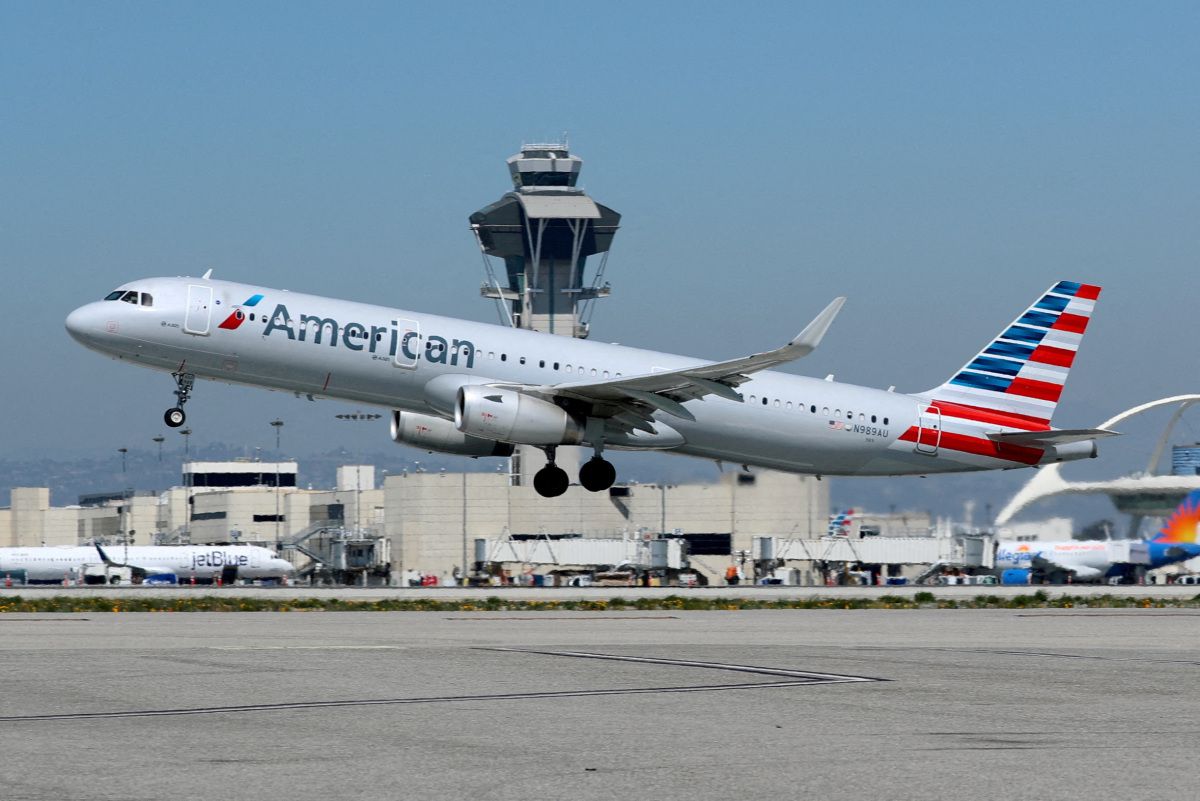
Hundreds of U.S. flights faced cancellations and delays on Easter Sunday, April 5, 2026, as the ripple effects of severe spring storms and record holiday travel continued to disrupt operations at major airports nationwide. Exact real-time lists of every individual cancelled flight are dynamic and best checked via live trackers like FlightAware, airline apps or airport websites, as schedules change rapidly during recovery. However, here is a summary of the latest reported impacts based on aggregated data from the Easter weekend, with focus on Easter Sunday effects stemming from prior days' chaos. Nationwide Overview on Easter Weekend Peak * Easter Saturday (April 4): 339 flights cancelled and 3,577 delayed across the U.S., for a total of 3,916 disruptions. * Cumulative Easter Weekend: Over 5,500-5,600 delays reported in key periods, with several hundred cancellations overall as thunderstorms battered hubs and created crew/aircraft shortages. * Easter Sunday saw lingering cancellations in the low hundreds as airlines worked to reposition planes and crews, though full final tallies were still compiling late in the day. Major Airports Hit Hardest - Bullet Point Summary of Reported Disruptions * Chicago O'Hare International Airport (ORD): One of the worst-affected hubs over the weekend. On peak days, it logged dozens of cancellations (e.g., 46 on one reported day) and hundreds of delays (up to 268+ in single-day spikes). Residual thunderstorms and network-wide knock-on effects made recovery slow into Easter Sunday. United Airlines and regional partners like SkyWest were heavily impacted here. * Miami International Airport (MIA): Approximately 175 flights disrupted (delays + cancellations) over a two-day stretch during the Easter rush, making it a flashpoint for Southeast travel. Thunderstorms and high volumes led to ground stops and cascading issues. * Dallas-Fort Worth International Airport (DFW): Significant delays and cancellations as part of the national ripple effect from Midwest and Southeast weather. American Airlines operations faced notable strain. * Atlanta Hartsfield-Jackson International Airport (ATL): Multiple days of heavy delays and some cancellations tied to both local weather threats and upstream hub disruptions from Chicago and Florida. * Orlando International Airport (MCO): High leisure travel volume amplified issues, with dozens of cancellations and hundreds of delays reported in the Easter period, affecting families heading to or from vacation hotspots. * Chicago Midway International Airport (MDW): Over 100 delayed flights on key days, with some cancellations adding to Southwest Airlines' challenges in the region. * Reagan Washington National Airport (DCA): 7 cancellations and 61 delays documented on Easter Saturday alone (68 total disruptions), with effects continuing into Sunday due to constrained airspace and network backups. * Other Notable Hubs: Newark Liberty (EWR), New York's JFK and LaGuardia (LGA), and airports in the Northeast and Mid-Atlantic saw secondary delays and scattered cancellations from weather and schedule disruptions. Airlines Most Affected - Key Highlights * American Airlines: Frequently led or ranked high in delays (e.g., 533 on one peak day), with dozens of cancellations at its major hubs like DFW, ORD and MIA. * Southwest Airlines: Significant delays (e.g., 524 reported on a heavy day) and cancellations, particularly at Midway and other Southwest-focused airports. * SkyWest Airlines (regional carrier): Highest cancellation count on some days (e.g., 40+), affecting feeder routes into major hubs. * United Airlines: Substantial disruptions at ORD and EWR, with crew and aircraft repositioning challenges. * Delta Air Lines: Impacts at ATL and other Southeast gateways, though often fewer outright cancellations than peers during the weather events. Note on Individual Flight Lists: Comprehensive, up-to-the-minute lists of specific flight numbers cancelled on Easter Sunday (April 5) are not statically published in news reports due to their fluid nature. Travelers should: * Use FlightAware.com/live/cancelled for real-time national and airport-specific cancellation stats. * Check their airline's app or website for personalized flight status. * Monitor airport departure/arrival boards and FAA delay information. Many airlines issued travel waivers allowing free changes or refunds for affected Easter weekend flights. Passengers impacted by cancellations may be entitled to rebooking, meals, or hotels under Department of Transportation guidelines when the cause is within airline control (weather events often qualify as uncontrollable, limiting extra compensation but requiring reasonable accommodations). Why the Easter Meltdown Happened Spring thunderstorms brought heavy rain, lightning and gusty winds that forced ground stops at key hubs like Chicago and Florida airports. High Easter travel demand -- with families flocking to beaches, reunions and vacations -- left little buffer in tight airline schedules. A single delay at a major hub quickly cascaded nationwide as planes and crews fell out of position. Aviation experts note that while safety remained the top priority (no major incidents reported), the frequency of large-scale weather disruptions highlights needs for better infrastructure, air traffic modernization and more resilient scheduling. Tips for Stranded or Affected Travelers * Check flight status early and often. * Enroll in airline text/email alerts. * Have flexible rebooking options ready. * Document all expenses if seeking reimbursement. * Consider travel insurance for future trips during volatile seasons. As of late Easter Sunday evening, some recovery was underway with clearing weather in many areas, but full normalization could stretch into Monday for displaced aircraft and crews. Additional spring storm systems may bring more volatility in coming days. The Easter 2026 travel chaos serves as a reminder of how quickly holiday plans can unravel when weather meets peak demand. Millions flew successfully, but for thousands, the weekend meant extra nights in airports or hotels instead of family celebrations. For the absolute latest on any specific route or airport, visit official sources like FlightAware, airline sites or the FAA's delay dashboard. Safe travels as the busy spring season continues.
Polymarket Apologizes for Bets on Fate of US Pilots
Polymarket is backpedaling after letting users gamble on whether two pilots from a downed US fighter jet in Iran would be found alive. Both have been rescued. The crypto-based prediction market pulled a contract that invited bets on the crew's fate after a congressman publicly blasted the wagering, reports NBC News. "We took this market down immediately as it does not meet our integrity standards," the company wrote. "It should not have been posted, and we are investigating how this slipped through our internal safeguards."

Use Perplexity? Lawsuit Accuses It of Sharing Personal Data With Google and Meta Without Permission
The lawsuit claims that Perplexity incorporated ad trackers such as Facebook Meta Pixel, Google Ads, and Google DoubleClick into its code, which would share information with Meta and Google without consent. AI search engine Perplexity has been hit with a new lawsuit that claims it shared users' data with Google and Meta without their permission, which are also named in the complaint. The lawsuit, filed earlier this week in federal court in San Francisco, claims that the tool incorporated ad trackers such as Facebook Meta Pixel, Google Ads, and Google DoubleClick into its code. These ad trackers would allegedly then gather information from website visitors and forward that information to Meta, Google, and other third parties, which would exploit that data for commercial purposes. The court document, spotted by Ars Technica, highlights how Perplexity would encourage users to engage with its AI in an interactive dialogue. For example, it might ask a user seeking treatment for liver cancer a series of suggested questions. The tech giants could then use this data to target the cancer-suffering user with ads for alternative treatments or nearby clinics. The plaintiff, John Doe, claims that his private conversations, in which he asked Perplexity for advice on things like stock investments and retirement fund planning, were shared with Meta and Google. The plaintiff is seeking damages of up to $5,000 per violation, and a ruling to stop Perplexity from engaging further in this type of unauthorized sharing of personal data. The complaint claimed that users' personal data was shared even when they opted for Perplexity's "Incognito" mode, and regardless of whether they registered for a Perplexity account. The complaint argues that the actions of Perplexity, Meta, and Google "constitute an extreme invasion" of consumers' rights to privacy and violate both federal and California law. "Users of interactive conversation platforms like Perplexity's AI Machine simply do not anticipate that their confidential communications to an unauthorized third party -- let alone Meta, which has a sordid history of privacy violations in pursuit of ever-increasing advertising revenue -- occur without consumers' informed consent," read the challenge. Perplexity and Meta have yet to officially comment on the news. However, Google told Ars Technica that "Businesses manage the data they collect and are responsible for informing users about it. "By default, data sent to Google Analytics for measurement does not identify individuals, we have strict policies against advertising based on sensitive information, and we don't sell personal information," Google's spokesperson added. The news comes after a judge ruled against Perplexity in a ruling last month and ordered it to block its AI agents from placing orders on Amazon without permission, though the AI firm intends to fight the decision.

Use Perplexity? Lawsuit Accuses It of Sharing Personal Data With Google and Meta Without Permission
AI search engine Perplexity has been hit with a new lawsuit that claims it shared users' data with Google and Meta without their permission, which are also named in the complaint. The lawsuit, filed earlier this week in federal court in San Francisco, claims that the tool incorporated ad trackers such as Facebook Meta Pixel, Google Ads, and Google DoubleClick into its code. These ad trackers would allegedly then gather information from website visitors and forward that information to Meta, Google, and other third parties, which would exploit that data for commercial purposes. The court document, spotted by Ars Technica, highlights how Perplexity would encourage users to engage with its AI in an interactive dialogue. For example, it might ask a user seeking treatment for liver cancer a series of suggested questions. The tech giants could then use this data to target the cancer-suffering user with ads for alternative treatments or nearby clinics. The plaintiff, John Doe, claims that his private conversations, in which he asked Perplexity for advice on things like stock investments and retirement fund planning, were shared with Meta and Google. The plaintiff is seeking damages of up to $5,000 per violation, and a ruling to stop Perplexity from engaging further in this type of unauthorized sharing of personal data. The complaint claimed that users' personal data was shared even when they opted for Perplexity's "Incognito" mode, and regardless of whether they registered for a Perplexity account. The complaint argues that the actions of Perplexity, Meta, and Google "constitute an extreme invasion" of consumers' rights to privacy and violate both federal and California law. "Users of interactive conversation platforms like Perplexity's AI Machine simply do not anticipate that their confidential communications to an unauthorized third party -- let alone Meta, which has a sordid history of privacy violations in pursuit of ever-increasing advertising revenue -- occur without consumers' informed consent," read the challenge. Perplexity and Meta have yet to officially comment on the news. However, Google told Ars Technica that "Businesses manage the data they collect and are responsible for informing users about it. "By default, data sent to Google Analytics for measurement does not identify individuals, we have strict policies against advertising based on sensitive information, and we don't sell personal information," Google's spokesperson added. The news comes after a judge ruled against Perplexity in a ruling last month and ordered it to block its AI agents from placing orders on Amazon without permission, though the AI firm intends to fight the decision.

Chaos At Gatwick: Angry Nigerians Confront Air Peace Manager After 24-Hour Overnight Nightmare
LONDON -- Tension at London's Gatwick Airport reached a breaking point today as a sea of frustrated Nigerian travelers reportedly confronted an Air Peace Operational Manager following a grueling overnight delay. What was intended to be a smooth flight back to Lagos and Abuja devolved into a scene of "pure vawulence" as exhausted families and the elderly demanded answers after being left in the terminal for hours without clear updates. Reports filtered in throughout the night of passengers sleeping on airport floors and benches after the flight -- originally scheduled for departure yesterday -- was repeatedly pushed back due to what the airline described as "technical hitches." By the time an official appeared to address the crowd, patience had entirely evaporated. Viral videos from the scene show a crowd of angry Nigerians surrounding the manager, with some reportedly being held back by airport security as voices were raised in raw pidgin and English. Passengers claimed they were "abandoned" without food vouchers or hotel accommodations for a significant period. While security intervened before the situation turned physical, the manager was seen being shielded as the atmosphere nearly spiraled out of control. Air Peace Pleads for Calm In a swift reaction, the management of Air Peace has appealed for calm. While they have yet to address the specific "near-fight" in London, the airline has previously cited strict safety protocols -- including cracked windshields or bird strikes on other routes -- as reasons for recent operational disruptions. The airline maintains that they never "abandon" passengers and are working around the clock to deploy a replacement aircraft to evacuate those stranded. The Nigerian Civil Aviation Authority (NCAA) has reportedly stepped in to monitor the situation, following a string of "unexplained disruptions" that have plagued the indigenous giant in recent weeks. Under international aviation law, passengers delayed for significant periods are entitled to meals, communication, and hotel lodging -- rights that the travelers at Gatwick insist were ignored. A Test of Patriotism Since launching the London-Lagos route, Air Peace has been hailed for crashing airfares and challenging foreign monopolies. However, frequent delays are now testing the loyalty of even its most patriotic supporters. "We love Air Peace because it's our own, but they must respect our time," one passenger shared on X. "You cannot leave people in the London cold like this without a word." As the "Indigenous Giant" battles to maintain its reputation, the fallout from the Gatwick confrontation serves as a stark reminder that while price is a factor, reliability remains the ultimate currency in international aviation.

E*TRADE Is in Talks With SpaceX to Take the Lead in Its Upcoming IPO
E*TRADE is owned by Morgan Stanley, one of the lead underwriters for the IPO. SpaceX finally filed plans for what's expected to be the largest initial public offering (IPO) in history, doing so in a confidential Securities and Exchange Commission (SEC) document on Wednesday, April 1. Elon Musk's satellite company is one of the most awaited IPO stocks in recent memory because the firm is reportedly looking to raise an astounding $75 billion, or more than double the amount raised by the current IPO record holder, at a valuation of $1.75 trillion. Will AI create the world's first trillionaire? Our team just released a report on the one little-known company, called an "Indispensable Monopoly" providing the critical technology Nvidia and Intel both need. Continue " E*TRADE is rumored to be the leading contender to run the retail portion of the SpaceX IPO. Image source: Getty Images. Speaking of big numbers, SpaceX, which is expected to list on the Nasdaq stock exchange, will reportedly set aside up to 30% of the shares offered to the public for retail investors. That's way more than the typical 90% professional/10% retail split, implying big business for the broker running the retail slice of the SpaceX offering. Reportedly and to the surprise of some market observers, it's going to be E*TRADE from Morgan Stanley (NYSE: MS) managing that tranche, not Robinhood Markets (NASDAQ: HOOD) or SoFi Technologies. Given the expected popularity of SpaceX stock among retail investors, it's not surprising the E*TRADE talk is stirring up a lot of chatter. For those who love a good conspiracy theory, Morgan Stanley is one of 21 banks participating in the institutional side of the SpaceX IPO. However, Musk's company hasn't said that's why the retail portion is being tilted to E*TRADE. SpaceX hasn't even confirmed that's happening, and companies aren't legally obligated to tell investors why one bank is chosen over another to be involved in an IPO. There are some clues as to why SpaceX may be opting for E*TRADE over, say, Robinhood, and it boils down to simple math. As of last June, the average account size on Robinhood was $10,528. That's more than quadruple the $2,533 average seen in 2018 but still dwarfed by the $69,000 average on E*TRADE when Morgan Stanley bought the broker six years ago. It's not a stretch to assume that number is higher today simply because the S&P 500 posted gains over that period. In other words, SpaceX gains access to a more affluent clientele with E*TRADE than it would with some retail-centric digital brokers. Robinhood's client base is young, which might be a consideration for SpaceX. As of March 2025, the average Robinhood customer was 35 years old, with a significant share of customers younger than 43. Many of the firm's clients are 27 or younger. On the other hand, E*TRADE's clients are more "seasoned." By some estimates, typical E*TRADE account holders are older millennials and Gen Xers, with decent penetration among baby boomers. To reiterate, SpaceX hasn't even confirmed that it's tapping E*TRADE for the retail slice of the IPO. Still, the broker's demographics may be appealing to Musk's company for a simple reason: Experienced investors are less likely to dump the stock amid the first rally. With age comes experience. It's well documented that age and affluence affect investor behavior, and these factors may be considerations for SpaceX. After all, Musk likely wants a devoted investor base for SpaceX. When our analyst team has a stock tip, it can pay to listen. After all, Stock Advisor's total average return is 926%* -- a market-crushing outperformance compared to 185% for the S&P 500. Todd Shriber has no position in any of the stocks mentioned. The Motley Fool recommends Nasdaq. The Motley Fool has a disclosure policy.

Use Perplexity? Lawsuit Accuses It of Sharing Personal Data With Google and Meta Without Permission
AI search engine Perplexity has been hit with a new lawsuit that claims it shared users' data with Google and Meta without their permission, which are also named in the complaint. The lawsuit, filed earlier this week in federal court in San Francisco, claims that the tool incorporated ad trackers such as Facebook Meta Pixel, Google Ads, and Google DoubleClick into its code. These ad trackers would allegedly then gather information from website visitors and forward that information to Meta, Google, and other third parties, which would exploit that data for commercial purposes. The court document, spotted by Ars Technica, highlights how Perplexity would encourage users to engage with its AI in an interactive dialogue. For example, it might ask a user seeking treatment for liver cancer a series of suggested questions. The tech giants could then use this data to target the cancer-suffering user with ads for alternative treatments or nearby clinics. The plaintiff, John Doe, claims that his private conversations, in which he asked Perplexity for advice on things like stock investments and retirement fund planning, were shared with Meta and Google. The plaintiff is seeking damages of up to $5,000 per violation, and a ruling to stop Perplexity from engaging further in this type of unauthorized sharing of personal data. The complaint claimed that users' personal data was shared even when they opted for Perplexity's "Incognito" mode, and regardless of whether they registered for a Perplexity account. The complaint argues that the actions of Perplexity, Meta, and Google "constitute an extreme invasion" of consumers' rights to privacy and violate both federal and California law. "Users of interactive conversation platforms like Perplexity's AI Machine simply do not anticipate that their confidential communications to an unauthorized third party -- let alone Meta, which has a sordid history of privacy violations in pursuit of ever-increasing advertising revenue -- occur without consumers' informed consent," read the challenge. Perplexity and Meta have yet to officially comment on the news. However, Google told Ars Technica that "Businesses manage the data they collect and are responsible for informing users about it. "By default, data sent to Google Analytics for measurement does not identify individuals, we have strict policies against advertising based on sensitive information, and we don't sell personal information," Google's spokesperson added. The news comes after a judge ruled against Perplexity in a ruling last month and ordered it to block its AI agents from placing orders on Amazon without permission, though the AI firm intends to fight the decision.

Use Perplexity? Lawsuit Accuses It of Sharing Personal Data With Google and Meta Without Permission
AI search engine Perplexity has been hit with a new lawsuit that claims it shared users' data with Google and Meta without their permission, which are also named in the complaint. The lawsuit, filed earlier this week in federal court in San Francisco, claims that the tool incorporated ad trackers such as Facebook Meta Pixel, Google Ads, and Google DoubleClick into its code. These ad trackers would allegedly then gather information from website visitors and forward that information to Meta, Google, and other third parties, which would exploit that data for commercial purposes. The court document, spotted by Ars Technica, highlights how Perplexity would encourage users to engage with its AI in an interactive dialogue. For example, it might ask a user seeking treatment for liver cancer a series of suggested questions. The tech giants could then use this data to target the cancer-suffering user with ads for alternative treatments or nearby clinics. The plaintiff, John Doe, claims that his private conversations, in which he asked Perplexity for advice on things like stock investments and retirement fund planning, were shared with Meta and Google. The plaintiff is seeking damages of up to $5,000 per violation, and a ruling to stop Perplexity from engaging further in this type of unauthorized sharing of personal data. The complaint claimed that users' personal data was shared even when they opted for Perplexity's "Incognito" mode, and regardless of whether they registered for a Perplexity account. The complaint argues that the actions of Perplexity, Meta, and Google "constitute an extreme invasion" of consumers' rights to privacy and violate both federal and California law. "Users of interactive conversation platforms like Perplexity's AI Machine simply do not anticipate that their confidential communications to an unauthorized third party -- let alone Meta, which has a sordid history of privacy violations in pursuit of ever-increasing advertising revenue -- occur without consumers' informed consent," read the challenge. Perplexity and Meta have yet to officially comment on the news. However, Google told Ars Technica that "Businesses manage the data they collect and are responsible for informing users about it. "By default, data sent to Google Analytics for measurement does not identify individuals, we have strict policies against advertising based on sensitive information, and we don't sell personal information," Google's spokesperson added. The news comes after a judge ruled against Perplexity in a ruling last month and ordered it to block its AI agents from placing orders on Amazon without permission, though the AI firm intends to fight the decision.

List of 134 North East postcodes hit by power cuts as Storm Dave causes chaos
Hundreds of North East postcodes have reported power cuts on Easter Sunday following disruption caused by Storm Dave(Image: Vincent Cole - Manchester Evening News) Thousands of properties across the North East have reported power cuts on Sunday morning as Storm Dave hit the region overnight. An Amber weather warning was put in place by the Met Office across the North East between 7pm on Saturday to 3am today, stating Storm Dave could cause "injuries or danger to life". Spells of high winds with gusts of up to 60-70mph and reaching up to 80mph in coastal and exposed locations hit Northern England and southern Scotland on Saturday evening and overnight before easing early on Sunday. This morning hundreds of households across Northumberland, County Durham, Tyneside and Wearside have woken up to power cuts Easter Sunday. Areas including Blaydon, Ponteland, Bedlington and South Hylton have all been hit. Northern Power Grid are currently responding to a number of call outs. across the region. Posting on X, a statement read: "We're supporting customers affected by Storm Dave. "We're working to restore power as quickly as possible. We're contacting our Priority Services Membership customers for extra help during a power cut. We'll be in touch letting you know when your power will be back on." You can follow our live updates of the damage and disruption caused by Storm Dave here.

Cordon in place after part of building comes away in Storm Dave chaos
A police cordon is in place on Devon Street in Liverpool city centre(Image: Liverpool Echo) A cordon is in place in Liverpool city centre after a building became damaged during Storm Dave. Emergency services were called to Devon Street at around 9.30am this morning (Sunday, April 5) after a large chunk of material came away from a building block under construction. Merseyside Police and Merseyside Fire and Rescue Service were in attendance. A cordon is currently in place blocking both entrances of Devon Street. The incident comes after the region was issued with a yellow weather warning for wind from the Met Office. The warning came into place from 5pm last night (Saturday, April 4) until 3am today. Strong winds from Storm Dave have been battering the city over the Easter weekend. Earlier today, the ECHO reported how emergency services were called to a student accommodation block opposite Lime Street station last night after a huge piece of equipment was seen dramatically dangling and swinging from the building amid strong winds from Storm Dave. A video from the scene shows what appears to be a window-cleaning platform attached to Unite Students, Horizon Heights, on Skelhorne Street spinning out of control in gale-force winds before hitting the window. Road closures and a cordon were put in place by Merseyside Police and Merseyside Fire and Rescue Service at around midnight while they dealt with the incident. The Met Office website said: "A spell of very strong southwesterly, then westerly winds is expected across north Wales, northern England and southern Scotland on Saturday evening and overnight before easing early on Sunday. "Gusts of 60-70 mph are possible widely with some coastal or exposed locations seeing gusts of around 80 mph."

Travel Chaos for UK Tourists: Agency Shutdown Leads to Cancellations for Disney and Major Destinations
Published on April 3, 2026 Simply Florida Travel Ltd, a Glasgow-based travel agency known for offering holiday packages to popular destinations such as Walt Disney World, Universal Studios, New York City, and Toronto, has ceased operations, leaving hundreds of holidaymakers stranded. The company, which also offered cruises and trips to Niagara Falls and Miami, was officially dissolved on January 6, 2026, and its website has been taken offline. The sudden closure of the travel agency has caused significant disruption for those who had booked flights and holiday packages through the company. Customers have been left without their planned trips, as all holidays have been cancelled. While Simply Florida Travel operated under the protection of the Air Travel Organisers' Licensing (ATOL) scheme, customers are now facing a complex process to claim refunds and arrange alternate travel plans. What Led to the Closure of Simply Florida Travel? The closure of Simply Florida Travel was not due to insolvency or financial failure. According to a spokesperson from the Travel Network Group, the owner of the business made a personal decision to shut down the company after fulfilling all existing customer commitments. The company applied to be struck off the register of businesses in October 2025, and by January 2026, it had officially ceased trading. Despite the suddenness of the closure, the Travel Trust Association (TTA) confirmed that there were no outstanding bookings and no claims process required for customers who had made reservations. The majority of bookings made by Simply Florida Travel prior to its closure had been successfully fulfilled. Impact on Customers and the Broader UK Travel Industry The collapse of Simply Florida Travel highlights a broader issue in the UK travel industry, where several other agencies, such as Regen Central Ltd and Gold Crest Holidays, have also ceased operations in recent months. The closures have left hundreds of travelers facing uncertainty, especially with the added challenge of navigating the complex process of securing refunds and rebooking holidays. For tourists, particularly those planning trips to destinations like Disney World, Universal Studios, New York, and Toronto, the closure is a major blow. Many families who had booked holidays in advance are now scrambling to make alternate arrangements. While the TTA has provided some reassurances about refunds, the situation remains fluid, and customers must reach out to their respective insurance companies or the TTA for more details. What Should Affected Travelers Do Next? For travelers who had holidays booked through Simply Florida Travel, the first step is to contact the TTA for any refund or compensation options. Customers are encouraged to reach out to their insurers to understand their coverage under the ATOL scheme, especially if they paid for the trip via credit card. Here are some essential steps: The Broader Impact on the Travel Industry and Business Travelers For business travelers who had booked trips to the US or Canada, the shutdown of Simply Florida Travel presents a significant challenge. Business trips to major cities like New York, Miami, and Toronto could now require urgent rebooking or rearranging of itineraries. The collapse of a trusted travel provider also creates additional logistical hurdles for companies, particularly for those relying on seamless travel coordination for international events, meetings, and conferences. For the broader tourism industry, the continued closure of travel agencies like Simply Florida Travel raises concerns about the stability and reliability of smaller agencies. Travelers, especially those looking to book package holidays or specialized tours, are encouraged to research agencies thoroughly before making bookings. Quick Travel Tips for UK Tourists Affected by Travel Disruptions: Looking Ahead: Ensuring a Safer Travel Experience While the closure of Simply Florida Travel highlights the risks of booking with smaller travel providers, it also emphasizes the importance of choosing established, reliable agencies with strong financial backing and reputable customer service. For future travels, it's crucial for tourists and business travelers alike to thoroughly research their options and ensure they are protected with robust travel insurance coverage. As the travel industry continues to recover from the disruptions caused by the pandemic and ongoing economic pressures, travelers can expect to see more shifts in how travel agencies operate. Staying informed, proactive, and prepared for unexpected changes can help ensure a safer and more reliable travel experience in the future.

Anthropic Thrives in Private Markets, But SpaceX May Disrupt Momentum
Glen Anderson has been a key player in the private markets since 2010, observing significant changes in institutional investment. As president of Rainmaker Securities, he facilitates transactions in around 1,000 private company stocks. Currently, the focus of attention has shifted primarily to three major players: Anthropic, OpenAI, and SpaceX. Surging Demand for Anthropic Anderson highlights a remarkable surge in demand for shares of Anthropic. According to a recent report, investors have expressed a willingness to deploy approximately $2 billion into the company. In contrast, around $600 million of OpenAI shares are struggling to find buyers. Investors' enthusiasm for Anthropic has risen significantly, aided by the company's public dispute with the Department of Defense. This conflict has unexpectedly enhanced Anthropic's image, fostering a narrative where it is viewed as a champion against governmental overreach. Anderson asserts, "There's just no sellers" of Anthropic shares, highlighting the growing sentiment surrounding the company. OpenAI's Position While OpenAI remains a significant player, its market vibrancy has decreased compared to Anthropic. Valuation estimates for OpenAI suggest that its shares are trading at around $765 billion, which is notably lower than its recent primary-round valuation of $852 billion. OpenAI is attempting to regulate its secondary trading environment more effectively. In line with this, banks like Morgan Stanley and Goldman Sachs have begun offering shares to high-net-worth clients without imposing carry fees, a move that contrasts sharply with the higher fees associated with Anthropic shares. SpaceX's Unique Market Position Amidst this competitive landscape, SpaceX stands out. The company has managed to avoid the significant corrections faced by many private firms from 2022 to 2024, period during which valuations plummeted by up to 70%. SpaceX's disciplined approach to funding rounds has allowed it to sustain upward momentum in valuations. Back in 2015, SpaceX was valued at about $12 billion, following a $1 billion investment from Google and Fidelity. Presently, its valuation has surged past $1 trillion, resulting in more than a 100-fold return for early investors. This upward trajectory is linked to a recently confidential filing for an initial public offering (IPO), aiming to raise between $50 billion and $75 billion, possibly as soon as June. Impact of SpaceX's IPO on the Market The impending SpaceX IPO could significantly alter the landscape for other private companies, including Anthropic and OpenAI, both considering their own public offerings. Anderson points out that the dynamics of the secondary market are already shifting, with investors eager to acquire SpaceX shares while supply dwindles as the IPO approaches. * SpaceX IPO could potentially raise $50-$75 billion. * Only Saudi Aramco's IPO approached similar financial stature. * SpaceX's prior valuation has seen staggering growth from $12 billion to over $1 trillion. As the IPO landscape evolves, Anderson suggests companies like Anthropic and OpenAI will face challenges. The first-mover advantage in IPOs can dictate market reception, and those who follow may contend with less liquidity and investor interest. As the situation unfolds, the implications for investors in the secondary market will become clearer. For more insights on these market dynamics, tune into the upcoming episode of the StrictlyVC Download podcast, featuring an interview with Glen Anderson.

E*TRADE Is in Talks With SpaceX to Take the Lead in Its Upcoming IPO | The Motley Fool
E*TRADE is owned by Morgan Stanley, one of the lead underwriters for the IPO. SpaceX finally filed plans for what's expected to be the largest initial public offering (IPO) in history, doing so in a confidential Securities and Exchange Commission (SEC) document on Wednesday, April 1. Elon Musk's satellite company is one of the most awaited IPO stocks in recent memory because the firm is reportedly looking to raise an astounding $75 billion, or more than double the amount raised by the current IPO record holder, at a valuation of $1.75 trillion. Speaking of big numbers, SpaceX, which is expected to list on the Nasdaq stock exchange, will reportedly set aside up to 30% of the shares offered to the public for retail investors. That's way more than the typical 90% professional/10% retail split, implying big business for the broker running the retail slice of the SpaceX offering. Reportedly and to the surprise of some market observers, it's going to be E*TRADE from Morgan Stanley (MS 0.22%) managing that tranche, not Robinhood Markets (HOOD 1.73%) or SoFi Technologies. Given the expected popularity of SpaceX stock among retail investors, it's not surprising the E*TRADE talk is stirring up a lot of chatter. For those who love a good conspiracy theory, Morgan Stanley is one of 21 banks participating in the institutional side of the SpaceX IPO. However, Musk's company hasn't said that's why the retail portion is being tilted to E*TRADE. SpaceX hasn't even confirmed that's happening, and companies aren't legally obligated to tell investors why one bank is chosen over another to be involved in an IPO. There are some clues as to why SpaceX may be opting for E*TRADE over, say, Robinhood, and it boils down to simple math. As of last June, the average account size on Robinhood was $10,528. That's more than quadruple the $2,533 average seen in 2018 but still dwarfed by the $69,000 average on E*TRADE when Morgan Stanley bought the broker six years ago. It's not a stretch to assume that number is higher today simply because the S&P 500 posted gains over that period. In other words, SpaceX gains access to a more affluent clientele with E*TRADE than it would with some retail-centric digital brokers. Robinhood's client base is young, which might be a consideration for SpaceX. As of March 2025, the average Robinhood customer was 35 years old, with a significant share of customers younger than 43. Many of the firm's clients are 27 or younger. On the other hand, E*TRADE's clients are more "seasoned." By some estimates, typical E*TRADE account holders are older millennials and Gen Xers, with decent penetration among baby boomers. To reiterate, SpaceX hasn't even confirmed that it's tapping E*TRADE for the retail slice of the IPO. Still, the broker's demographics may be appealing to Musk's company for a simple reason: Experienced investors are less likely to dump the stock amid the first rally. With age comes experience. It's well documented that age and affluence affect investor behavior, and these factors may be considerations for SpaceX. After all, Musk likely wants a devoted investor base for SpaceX.

BREAKING: Chaos At London Airport As Nigeria-Bound Air Peace Passengers Almost Beat Up Operational Manager After Overnight Delay
According to some of the affected passengers, the flight was initially scheduled to depart London, United Kingdom at 9:20 p.m. on Saturday, but airline officials first delayed it to 10:20 p.m., and then provided no further updates. Passengers bound for Nigeria on an Air Peace flight from London Heathrow reportedly grew frustrated and confrontational after repeated delays left them stranded overnight. According to some of the affected passengers, the flight was initially scheduled to depart London, United Kingdom at 9:20 p.m. on Saturday, but airline officials first delayed it to 10:20 p.m., and then provided no further updates. Frustrations among passengers later escalated, with some reportedly confronting the airline's operational manager. "Passengers almost beat up the operational manager at London Heathrow Airport on Saturday," one of the passengers said. "We were scheduled to depart London at 21:20 (9.20 p.m.) but they moved it and said we would depart at 22:20 (10.20 p.m.). But around that time, they stopped responding to us. That was when passengers became enraged." Passengers were eventually evacuated to a nearby hotel for the night. Later, Air Peace reportedly sent an official email apologising for the disruption and announcing a new departure time of 3:00 p.m. on Sunday. "Around 3 a.m., we were evacuated to a hotel. They later sent an email apologising, saying that the time to leave is now 15:00 (3.00 p.m.) on Sunday," one of the passengers said. Travellers described the experience as chaotic, with long periods of silence from airline staff fueling confusion and anger. An Air Peace official, speaking on condition of anonymity, attributed the delay to a technical issue, adding that the airline provided hotel accommodations for passengers and acted in accordance with international standards. The official said, "The passengers were informed about the technical issue and we provided all of them hotel accommodations. All of them were provided information that XYZ service will not be operating due to a technical issue and we provided them based on NCAA (Nigeria Civil Aviation Authority) directive, customer protections and of course customer regulatory service. "We provided them hotel accommodations and of course people also had the opportunity to fly on another service. We have given them the opportunity to reschedule and we have also given them the opportunity to stay in hotel while the flight will be moved to another time. "So if you are saying that the people are agitated, I think that is a wrong narrative that is being pushed out. I can confirm that any information that we left them stranded or anything like that is wrong. I don't know where the narrative that we didn't communicate to them came from." "If it was so, how did they get hotel accommodations? How did people know that the flight was not flying? So I think that is an attempt to cause problems because passengers were officially informed," the official added. In March, Air Peace was summoned to the Nigerian Civil Aviation Authority (NCAA) headquarters for an urgent meeting concerning multiple unexplained disruptions affecting passengers, SaharaReporters has reported. The directive came after complaints from travellers on the Heathrow-Abuja flight, who were reportedly rerouted via Gatwick-Lagos-Abuja and subsequently stranded in Lagos due to an air return reportedly caused by a cracked windshield. Michael Achimugu, Director of Public Affairs and Consumer Protection at NCAA, confirmed that the situation had "activated the Consumer Protection Department of the NCAA." He explained that the combination of flight disruptions, delayed refunds, unprocessed compensation, and unmet passenger needs prompted the regulatory authority to intervene. The NCAA emphasised that a thorough investigation into the incidents would be conducted to ensure passenger rights and operational standards are upheld. "Appropriate action will be taken as usual based on the facts of the incident as enshrined in Part 19 of the NCAA regulations 2023," Achimugu added.

Musk Forces Banks to Use Grok, Ahead of SpaceX IPO
Elon Musk is reportedly forcing banks, auditors, and law firms working on the upcoming SpaceX IPO to subscribe to X's controversial in-house chatbot Grok. As per reports by The New York Times, many of the banks involved in the offering, which could be worth over two trillion when finalized, have agreed to spend "tens of millions" on the chatbot. The firms have already started integrating Grok into their IT systems in some cases, according to anonymous sources who spoke to The Times. Musk also requested that the banks advertise on X, though this request was reportedly less of an emphasis. These firms have a big incentive to follow through on these requests. It's common for financial services firms working on an IPO to take a cut of transactions, which could mean substantial fees for a deal of this size. The news comes after SpaceX and xAI -- the company behind X and Grok -- merged in February, a partnership which Musk claims could one day lead to data centres in Earth's orbit. Neither SpaceX nor Musk has yet publicly commented on the reports. Some of the biggest names in finance, including JPMorgan Chase, Goldman Sachs, Citigroup, and Bank of America, have been confirmed to be working on the deal. The news comes as the chatbot appears to be looking to push further into the corporate world. Bloomberg reported last month that xAI had posted a job listing looking for Wall Street bankers, portfolio managers, traders, and credit analysts to help teach the tool about the world of financial services. In January, Grok launched new Business and Enterprise plans aimed at corporations. These plans offered additional security measures and the promise of not training Grok on users' interactions with the tool. Enterprise subscribers also gained access to features such as custom single sign-on (SSO), directory sync (SCIM), as well as extra auditing controls. Grok, which launched in November 2023, has inspired significant controversy. The chatbot made headlines in January for allegedly generating sexually suggestive images of minors in bikinis, inspiring investigations and legal challenges across the planet.

Storm Dave: Power Outages and Travel Chaos Across Ireland - News Directory 3
The impact on the national power grid has been substantial, with reports varying by source on the total number of affected premises. Storm Dave has caused significant operational disruptions across Ireland's transport and energy infrastructure, resulting in widespread power outages and the cancellation of multiple flights during the Easter bank holiday weekend. The weather system brought damaging gusts that impacted the national electricity grid and aviation hubs, with the most severe effects concentrated in coastal regions and major urban centers including Dublin, Cork, and Galway. The impact on the national power grid has been substantial, with reports varying by source on the total number of affected premises. According to the Irish Times and RTÉ, approximately 18,000 homes, farms, and businesses were without power as a result of the storm. ESB Networks reported that crews were mobilized in impacted areas to respond to outages where safety permitted. The company issued a public warning against approaching fallen wires or damaged electricity network infrastructure, noting that such equipment is live and dangerous. The outages were attributed to strong winds and fallen trees bringing down power lines. Specific localized faults were reported in areas such as Thurles, where a restore time of 5 p.m. Was estimated for affected premises. Dublin Airport experienced significant operational challenges on Saturday, April 4, 2026. The airport reported that 17 flights were cancelled due to the strong winds associated with Storm Dave. The challenging wind conditions led to 53 go-arounds -- where pilots decide not to complete a landing attempt and circle the aircraft for another approach -- and 13 diversions. The disruption extended to other regional hubs. Shannon Airport served as a primary diversion point for aircraft unable to land at other destinations. Nine aircraft were diverted to Shannon on Saturday afternoon, including flights from London Stansted, Lanzarote, Amsterdam Schiphol, Reus Airport in Spain, and Palma de Mallorca Airport. Passengers bound for Cork Airport were among those diverted to Shannon, necessitating bus transfers to reach their final destination. Other diversions to Shannon included flights originally destined for Dublin and Kerry airports from Alicante, Bristol, and Barcelona. Met Éireann implemented a tiered warning system to manage the risks posed by the storm. A status orange wind warning was in effect for Co Wexford and coastal areas stretching from Kerry to Dublin on the evening of April 4, 2026. The remainder of the country was placed under a status yellow warning. The storm's impact was felt across several counties, with reported infrastructure damage and power issues in Mayo and Roscommon. Beyond aviation and power, the storm affected broader public transportation networks. Reports indicate that bus and rail services were compromised by debris, flooding, and fallen trees across critical routes. The Daa and airline operators advised passengers traveling on Sunday, April 5, 2026, to contact their airlines directly or monitor official websites for updates on flight statuses as strong winds were expected to continue impacting operations.
Musk Forces Banks to Use Grok, Ahead of SpaceX IPO
Elon Musk is reportedly forcing banks, auditors, and law firms working on the upcoming SpaceX IPO to subscribe to X's controversial in-house chatbot Grok. As per reports by The New York Times, many of the banks involved in the offering, which could be worth over two trillion when finalized, have agreed to spend "tens of millions" on the chatbot. The firms have already started integrating Grok into their IT systems in some cases, according to anonymous sources who spoke to The Times. Musk also requested that the banks advertise on X, though this request was reportedly less of an emphasis. These firms have a big incentive to follow through on these requests. It's common for financial services firms working on an IPO to take a cut of transactions, which could mean substantial fees for a deal of this size. The news comes after SpaceX and xAI -- the company behind X and Grok -- merged in February, a partnership which Musk claims could one day lead to data centres in Earth's orbit. Neither SpaceX nor Musk has yet publicly commented on the reports. Some of the biggest names in finance, including JPMorgan Chase, Goldman Sachs, Citigroup, and Bank of America, have been confirmed to be working on the deal. The news comes as the chatbot appears to be looking to push further into the corporate world. Bloomberg reported last month that xAI had posted a job listing looking for Wall Street bankers, portfolio managers, traders, and credit analysts to help teach the tool about the world of financial services. In January, Grok launched new Business and Enterprise plans aimed at corporations. These plans offered additional security measures and the promise of not training Grok on users' interactions with the tool. Enterprise subscribers also gained access to features such as custom single sign-on (SSO), directory sync (SCIM), as well as extra auditing controls. Grok, which launched in November 2023, has inspired significant controversy. The chatbot made headlines in January for allegedly generating sexually suggestive images of minors in bikinis, inspiring investigations and legal challenges across the planet.
