News & Updates
The latest news and updates from companies in the WLTH portfolio.
Musk Forces Banks to Use Grok, Ahead of SpaceX IPO
Elon Musk is reportedly forcing banks, auditors, and law firms working on the upcoming SpaceX IPO to subscribe to X's controversial in-house chatbot Grok. As per reports by The New York Times, many of the banks involved in the offering, which could be worth over two trillion when finalized, have agreed to spend "tens of millions" on the chatbot. The firms have already started integrating Grok into their IT systems in some cases, according to anonymous sources who spoke to The Times. Musk also requested that the banks advertise on X, though this request was reportedly less of an emphasis. These firms have a big incentive to follow through on these requests. It's common for financial services firms working on an IPO to take a cut of transactions, which could mean substantial fees for a deal of this size. The news comes after SpaceX and xAI -- the company behind X and Grok -- merged in February, a partnership which Musk claims could one day lead to data centres in Earth's orbit. Neither SpaceX nor Musk has yet publicly commented on the reports. Some of the biggest names in finance, including JPMorgan Chase, Goldman Sachs, Citigroup, and Bank of America, have been confirmed to be working on the deal. The news comes as the chatbot appears to be looking to push further into the corporate world. Bloomberg reported last month that xAI had posted a job listing looking for Wall Street bankers, portfolio managers, traders, and credit analysts to help teach the tool about the world of financial services. In January, Grok launched new Business and Enterprise plans aimed at corporations. These plans offered additional security measures and the promise of not training Grok on users' interactions with the tool. Enterprise subscribers also gained access to features such as custom single sign-on (SSO), directory sync (SCIM), as well as extra auditing controls. Grok, which launched in November 2023, has inspired significant controversy. The chatbot made headlines in January for allegedly generating sexually suggestive images of minors in bikinis, inspiring investigations and legal challenges across the planet.

Musk Forces Banks to Use Grok, Ahead of SpaceX IPO
Elon Musk is reportedly forcing banks, auditors, and law firms working on the upcoming SpaceX IPO to subscribe to X's controversial in-house chatbot Grok. As per reports by The New York Times, many of the banks involved in the offering, which could be worth over two trillion when finalized, have agreed to spend "tens of millions" on the chatbot. The firms have already started integrating Grok into their IT systems in some cases, according to anonymous sources who spoke to The Times. Musk also requested that the banks advertise on X, though this request was reportedly less of an emphasis. These firms have a big incentive to follow through on these requests. It's common for financial services firms working on an IPO to take a cut of transactions, which could mean substantial fees for a deal of this size. The news comes after SpaceX and xAI -- the company behind X and Grok -- merged in February, a partnership which Musk claims could one day lead to data centres in Earth's orbit. Neither SpaceX nor Musk has yet publicly commented on the reports. Some of the biggest names in finance, including JPMorgan Chase, Goldman Sachs, Citigroup, and Bank of America, have been confirmed to be working on the deal. The news comes as the chatbot appears to be looking to push further into the corporate world. Bloomberg reported last month that xAI had posted a job listing looking for Wall Street bankers, portfolio managers, traders, and credit analysts to help teach the tool about the world of financial services. In January, Grok launched new Business and Enterprise plans aimed at corporations. These plans offered additional security measures and the promise of not training Grok on users' interactions with the tool. Enterprise subscribers also gained access to features such as custom single sign-on (SSO), directory sync (SCIM), as well as extra auditing controls. Grok, which launched in November 2023, has inspired significant controversy. The chatbot made headlines in January for allegedly generating sexually suggestive images of minors in bikinis, inspiring investigations and legal challenges across the planet.

UK Courts Anthropic After US Military Dispute Sparks Blacklist Concerns - Blockonomi
Federal courts have temporarily halted the blacklist enforcement, with additional legal challenges underway British officials are making aggressive moves to attract Anthropic, the developer of the Claude AI assistant, as reported by the Financial Times. The UK sees a strategic opening to expand the company's presence following escalating tensions between Anthropic and the Pentagon. The British government's pitch encompasses expanding Anthropic's current London operations and facilitating a dual stock market listing. The UK's Department of Science, Innovation and Technology is spearheading these initiatives. Prime Minister Keir Starmer's administration has thrown its weight behind the department's outreach efforts. Officials plan to present these proposals directly to Anthropic's Chief Executive Dario Amodei during his anticipated UK visit scheduled for late May. Both Anthropic and the UK's Department of Science, Innovation and Technology declined to provide statements when contacted by Reuters. The Department of Defense labeled Anthropic as a national-security supply-chain threat. The designation stemmed from the company's firm stance against permitting its Claude AI system to be deployed for US military surveillance operations or autonomous weaponry applications. This classification resulted in Anthropic being added to a government blacklist. Such listings typically limit a company's capacity to collaborate with federal agencies and approved contractors. Anthropic mounted a swift legal response. A federal judge granted temporary relief, preventing the blacklist from becoming operational while litigation proceeds. The AI company has simultaneously launched a separate legal challenge targeting the supply-chain threat classification itself. This additional lawsuit remains pending judicial review. The UK's aggressive courtship represents part of a wider strategy to capitalize on uncertainty surrounding American technology governance. A dual stock listing arrangement would enable Anthropic shares to trade on British exchanges parallel to any potential US market debut. This structure would provide UK-based investors with immediate access to company equity. Expanding the London facility would strengthen Anthropic's European footprint significantly. Britain has cultivated a thriving AI ecosystem, with government officials making tech investment attraction a cornerstone policy objective. The Financial Times report did not indicate whether Anthropic has shown interest in or rejected the British proposals. Amodei's late May UK visit is anticipated as the critical juncture when officials will formally present their complete package. The temporary judicial stay on the blacklist designation leaves Anthropic's regulatory status in flux. The resolution of both ongoing legal battles will probably determine the company's strategic direction going forward.
'I visited Britain's most battered train bridge. No wonder the railways are in chaos'
For people living near Watling Street in Hinckley, it's not unusual to be woken in the night by a thunderous bang as another lorry comes to grief at the local railway bridge. This small Leicestershire town is home to Britain's most battered bridge. Surrounded by depots of enormous vehicles, it was struck at least 22 times by lorries and buses throughout 2024 and 2025. Across the country, a railway bridge is hit by a road vehicle every five hours, with about 1,700 strikes on bridges recorded by Network Rail between April 2024 and March 2025. The result was 120 days of delays to train journeys last year and a £23m bill for taxpayers, with each strike costing about £13,000. Some 43 per cent of lorry drivers admit to not measuring their vehicle before setting off and 52 per cent do not take low bridges into account. Outside Hinckley on the A5, heavy goods vehicles of all types, from concrete mixers to delivery vans, push their luck at speed, zooming eye-wateringly close to the underbelly of the bridge that bears the scars of past collisions. Each time one crunches underneath the steelwork, mayhem ensues, with long traffic jams, train delays and debris littering the road, according to residents. "It's a nightmare," one neighbour says. "It's frightening, like a bang or an explosion. It happens all the time, at least once a week." The bridge's luminous yellow-striped warning signs are visibly scarred by scrapes, while the supporting walls are missing large chunks of brick. In the lay-by, splinters and vehicle parts lie scattered through the undergrowth and residents of a nearby caravan park report tables, chairs and even mattresses flying out of lorries. A mother with two young daughters sighs as she recalls how the bangs shake the caravan almost weekly. Chantelle Callton, 35, tells The Telegraph: "Oh my God, it shakes. It's like a bomb's gone off. Everybody speeds down here, so it's very dangerous." The bridge is so notorious that she was warned about it more than six years ago before she moved there. "If we go a week when it's not been hit, we'll say: 'We're due one soon,'" she adds. Dianna Smith, 60, who runs the caravan site with her husband, says her son and his friend had to help a trapped driver out of a lorry in the night. "It's a ticking time-bomb until something bad happens," she adds. "They get that much speed up and don't realise they're too high. One lorry's top was pulled back like a tin opener. They have to stop the trains and it messes everything up." Betty Watton, 44, sitting outside with her two chihuahuas, lives closest to the bridge and says drivers often flee the scene. She says: "One lorry tore the whole top off and just left it in the road, rolled up like a big piece of scrap. One time paint tins spilt and paint went everywhere, but it's mainly parcels." At a nearby depot filled with HGVs and lorries, workers clad in orange hi-vis laugh knowingly at the mention of the bridge. They refuse to speak, but one jokes to another: "How many times have you hit it?" Vehicles over a certain height at the Greenway Environmental depot have to take lengthy detours to avoid the bridge, including driving on to the motorway, the assistant manager says. Another worker suggests it might not be the most strategic location for a lorry depot. "Earlier this year, one was full of papers, cardboard and packaging. When that got ripped apart, it peeled the lid back and paper and card flew everywhere, blocking the street off for quite a while," he says. "There are a lot of industrial sites and major warehouses here. The kind of places that have drivers that are coming here for the very first time. They follow their sat nav, but still... "There are a lot of light-up signs the whole way saying: 'High vehicle. Turn back.' But it's become quite an issue that lorry drivers use their phones while driving." National Highways has planned to lower the road under the bridge since 2023, but critics of the scheme fear it would be complex and lead to flooding. Karen, the landlady of a nearby pub, says road works will only add to the traffic jams blighting her business. With the construction of a new supermarket depot around the bridge, she fears that the problem will not be going away anytime soon.
Cotswolds traffic chaos as thousands flock for Easter weekend
Significant traffic chaos in the Cotswolds is being reported as thousands of Easter tourists flock to the area for a break. Congestion is being reported on the A361 towards Bradwell Grove, near Burford, as hundreds of motorists travel to the Cotswolds Wildlife Park. Drivers are queuing on entry to the popular destination this Easter weekend. Oxfordshire County Council, the highways authority, said: "Delays on the A361 southbound towards Bradwell Grove due to increased traffic heading to Cotswold Wildlife Park. "Please allow extra time for your journey." READ MORE: Two dogs including bulldog and akita seized after covapoo killed The AA says traffic is backed up to Signet, which is half way to Burford Roundabout on the A40. It added: "Queueing traffic on A361 southbound at Hen'n'Chick Lane. Holiday traffic." Burford Hill and the High Street are also badly congested with traffic as of late Saturday morning, April 4. The area around Jeremy Clarkson's Diddly Squat Farm just between Chipping Norton and Chadlington is also heavy with activity, according to the AA.

Is SpaceX the Once‑in‑a‑Generation Investment Everyone Will Wish They Bought?
That opening line from Star Trek still packs a punch. It's arguably more relevant now than ever before, thanks to two developments. One is NASA's Artemis II launch, the first human moon mission in more than 50 years. The other is SpaceX's impending initial public offering (IPO). Will AI create the world's first trillionaire? Our team just released a report on the one little-known company, called an "Indispensable Monopoly" providing the critical technology Nvidia and Intel both need. Continue " Tesla (NASDAQ: TSLA) CEO Elon Musk founded SpaceX in 2002 with a vision of one day colonizing Mars. SpaceX is now moving forward with an IPO that could value the company as much as $1.5 trillion. Is SpaceX the once-in-a-generation opportunity everyone will wish they bought? Image source: Getty Images. Whether or not SpaceX's valuation actually hits $1.5 trillion in the upcoming IPO, the company currently ranks as the world's most valuable private company. How did it achieve this lofty status? To paraphrase the Star Trek opening, by going boldly where no company has gone before. SpaceX dominates theglobal marketfor launching satellites (and anything else) into space. Its Falcon 9 is the world's most cost-efficient rocket. It's also the most reliable, with 633 launches and counting. The company's Starship is the first fully reusable spacecraft designed to carry humans not only into orbit around the Earth but also to the moon, Mars, and even beyond. It can transport up to 150 metric tonnes of fully reusable material. SpaceX hopes to eventually have a fleet of thousands of Starships that will transport crew and equipment to establish a self-sufficient city on Mars. Starlink is SpaceX's satellite internet service. It has become a cash cow for the company, with 2025 revenue estimated at roughly $11.8 billion. That figure could be just the tip of the iceberg for Starlink's potential, though. Earlier this year, SpaceX acquired Musk's artificial intelligence (AI) start-up, xAI. The combination of these two companies might seem to be an odd pairing. However, AI data centers require massive amounts of electricity. Musk believes that harnessing solar energy in space is the best way to scale, which could make xAI a better fit for SpaceX than it appears at first glance. Can retail investors buy shares of SpaceX today? Not yet. The only way to invest in SpaceX is indirectly through funds that own small stakes in the space technology company, such as the ARK Venture Fund (NASDAQ: ARKVX) and XOVR ETF (NASDAQ: XOVR). However, several other space stocks currently trade on U.S. stock exchanges. Rocket Lab (NASDAQ: RKLB) is probably the most similar to SpaceX. The company's Electron rocket has launched 252 satellites into space. Rocket Lab is developing a next-generation rocket, Neuron, that will carry heavier payloads. It also develops other space technology, including spacecraft and components. Intuitive Machines (NASDAQ: LUNR) is a key partner to NASA. The company's Space Data Network and ground station infrastructure were used for the recent Artemis 2 launch. Intuitive Machines has built over 300 spacecraft and has delivered over 260 kilograms of payload to the moon's surface. AST SpaceMobile (NASDAQ: ASTS) competes with SpaceX's Starlink in the satellite internet services market. Many of the largest communications services companies use AST's technology, including AT&T (NYSE: T), Telefonica (OTC: TELF.Y), and Verizon (NYSE: VZ). Admittedly, none of those stocks enjoys the level of buzz that SpaceX has. I think that SpaceX will be the most exciting IPO stock in years (and perhaps ever). It could even be a once-in-a-generation opportunity for investors. However, I also view the entire nascent space technology industry as a once-in-a-generation investing opportunity. Risks abound, though. There's no guarantee that SpaceX or any of the smaller companies competing with it will be huge winners over the long run. Still, I suspect Star Trek had it right that space is the final frontier. It will probably be a massively profitable frontier -- eventually. Many investors could one day look back and regret not jumping aboard early. Ever feel like you missed the boat in buying the most successful stocks? Then you'll want to hear this. On rare occasions, our expert team of analysts issues a "Double Down" stock recommendation for companies that they think are about to pop. If you're worried you've already missed your chance to invest, now is the best time to buy before it's too late. And the numbers speak for themselves: Right now, we're issuing "Double Down" alerts for three incredible companies, available when you join Stock Advisor, and there may not be another chance like this anytime soon. Keith Speights has positions in Verizon Communications. The Motley Fool has positions in and recommends AST SpaceMobile, Intuitive Machines, Rocket Lab, and Tesla. The Motley Fool recommends Verizon Communications. The Motley Fool has a disclosure policy.

SpaceX IPO: Can Elon Musk's $1.5 Trillion Valuation Survive the Market Test? - Blockonomi
Direct investment in SpaceX remains unavailable to retail traders, with limited fund access through ARKVX Elon Musk's aerospace powerhouse is preparing for what could become one of the largest initial public offerings in American market history. With a private valuation climbing to $1.5 trillion, SpaceX currently holds the title of the planet's most valuable privately-held enterprise. Musk launched SpaceX back in 2002 with Mars colonization as his ultimate vision. Over two decades, the enterprise has transformed into a leading player across rocket technology, satellite-based internet connectivity, and artificial intelligence applications. The Falcon 9 launch vehicle stands as the globe's most economically efficient and dependable rocket system, having completed more than 633 successful missions. Meanwhile, the company's Starship platform represents a completely reusable spacecraft engineered for transporting humans and equipment to lunar and Martian destinations. SpaceX's Starlink internet constellation generated roughly $11.8 billion during 2025, establishing itself as a cornerstone revenue driver for the organization. The integration of xAI into SpaceX's portfolio occurred earlier this year. Musk has publicly stated his vision for space-based solar energy collection to fuel AI computing infrastructure on a massive scale, explaining the strategic rationale behind combining these ventures. The timing of SpaceX's public market entry comes amid lingering skepticism about new listings. The IPO frenzy of 2021 left countless investors nursing substantial losses. Allbirds serves as a cautionary tale -- once commanding a $2.2 billion valuation, the company recently sold for approximately $39 million. BuzzFeed has seen its market capitalization collapse from over $1 billion to roughly $23 million. Names like UiPath, GitLab, and Warby Parker continue trading 70-80% beneath their debut prices. These spectacular failures have created a more skeptical investor base. SpaceX faces pressure to demonstrate sustainable profitability rather than relying on market enthusiasm alone. Unlike numerous ventures from the 2021 cohort, SpaceX operates as an established business generating substantial revenue. However, market observers note that restoring investor confidence requires clearing a significantly higher bar following years of disappointing IPO performance. Mainstream investors lack direct purchasing options for SpaceX equity at present. Access remains limited to specialized vehicles like the ARK Venture Fund and XOVR ETF, both maintaining modest positions in the company. Investors seeking immediate exposure to the space economy can access several companies already trading on public exchanges. Rocket Lab has successfully deployed 252 satellites and is advancing development of its Neuron next-generation launch system. Intuitive Machines maintains a NASA partnership and provided critical infrastructure for the recent Artemis 2 lunar mission. AST SpaceMobile operates as a direct Starlink competitor in satellite communications, with AT&T and Verizon among its strategic partners. On the reporting date, Intuitive Machines' shares surged 18.53%. AST SpaceMobile climbed 10.28%, while Rocket Lab advanced 3.27%.
Nine flights diverted to Shannon Airport due to weather chaos
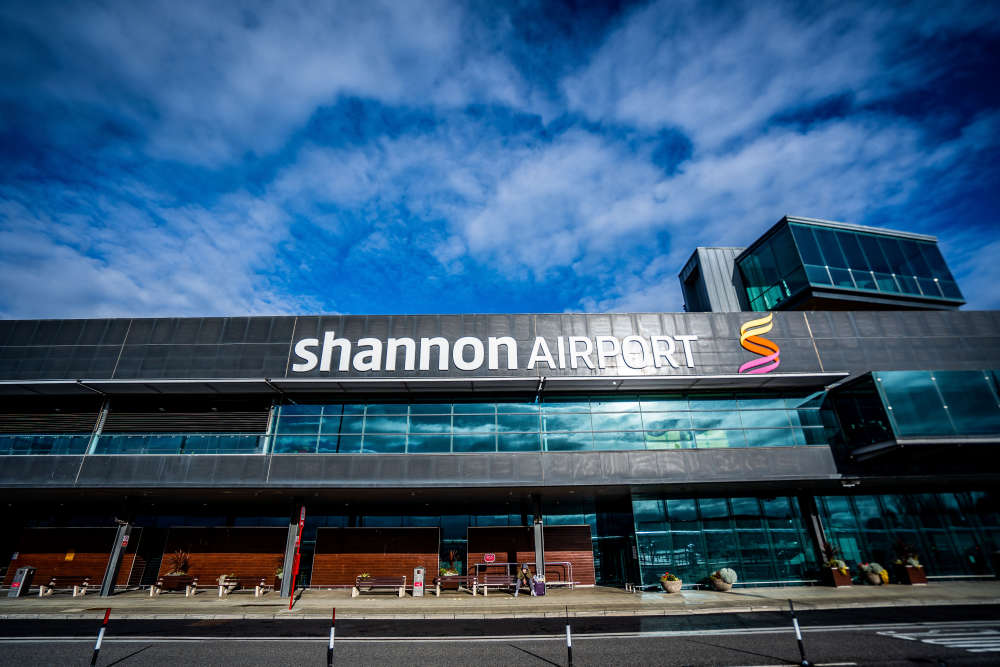
A spokesperson for The Shannon Airport Group has confirmed that a total of nine aircraft diverted to Shannon Airport on Saturday, 4th April, due to adverse weather conditions associated with Storm David. Shannon Airport operations teams provided support to all diverted aircraft and passengers throughout the duration of the weather-related disruption. The initial diversions occurred between 15:50 and 18:25 and primarily affected flights destined for Cork and Dublin. Ryanair flight FR905 from London Stansted to Cork diverted to Shannon at 15:50, resulting in bus transfers for passengers to Cork and a rescheduled departure from Shannon for outbound passengers at 20:10. Ryanair flight FR5911 from Lanzarote to Dublin, KLM flight KL1129 from Amsterdam to Cork, and Ryanair flight FR9007 from Reus to Cork also diverted to Shannon with bus transfers organised for their respective passengers. Ryanair flight FR7513 from Palma de Mallorca to Cork completed the first group of diversions upon landing at 18:25. Four additional aircraft diverted to Shannon later in the evening due to ongoing weather conditions at Dublin and Kerry airports. These included Ryanair flight FR7063 from Alicante to Dublin, Ryanair flight FR507 from Bristol to Dublin, and Ryanair flight FR6394 from Barcelona to Dublin. Furthermore, Ryanair flight FR7017-702, originally scheduled to operate from London Stansted to Kerry and return to Stansted, operated both legs from Shannon Airport. Shannon Airport operations teams continued to facilitate all diverted services until the conclusion of the weather event.
Coefficient Bio: Everything to know about Anthropic's $400 million biotech acquisition
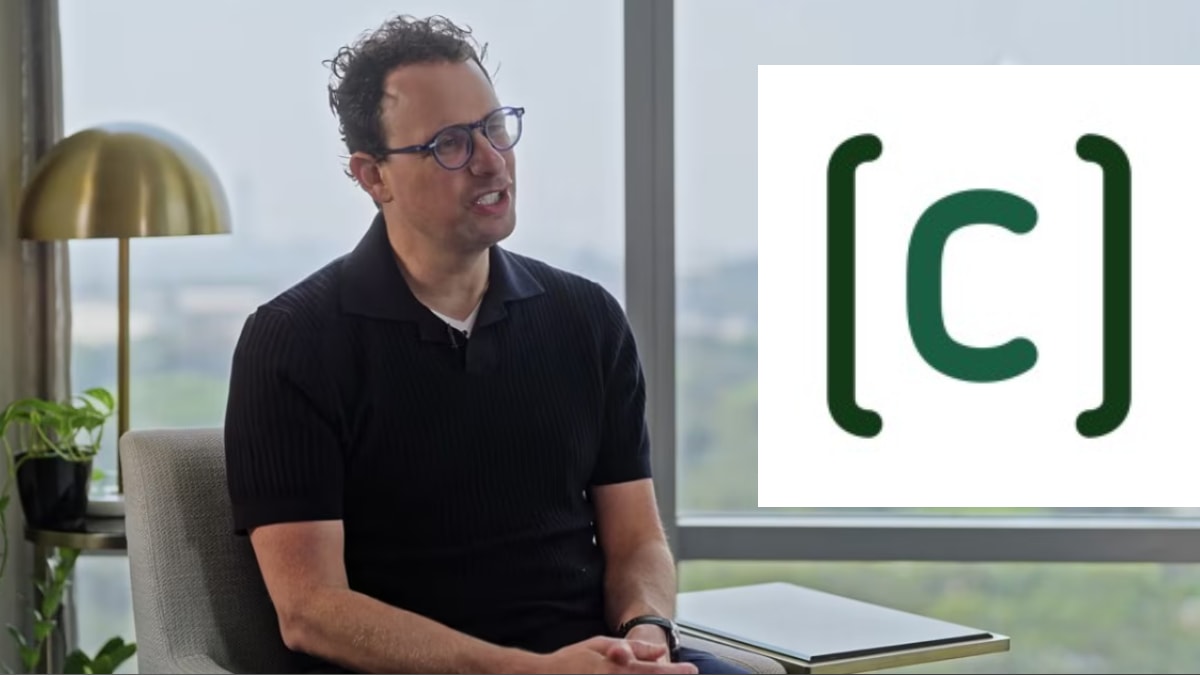
The move positions Anthropic in a $100B+ drug discovery market that's ripe for disruption, blending frontier models with wet-lab integration. Anthropic is making strides in the AI space. The AI firm has acquired stealth startup Coefficient Bio for over $400 million in an all-stock deal. Closed in early April 2026, the acquisition pulls a tiny team of elite ex-Genentech researchers into Anthropic's Healthcare and Life Sciences group, pushing the AI lab's ambitions beyond smart chatbots into drug discovery. Founded in late summer 2025 in New York City, Coefficient Bio has operated in near-total stealth for just 7-8 months before its explosive exit. Backed heavily by Dimension, which reportedly held about half the company, the startup assembled fewer than 10 experts focused on AI-native biotech tools. Coefficient Bio: Tracing the origins Coefficient Bio emerged from the computational biology powerhouse at Genentech's Prescient Design unit. Its co-founders include: - CEO Aris Theologis, with prior stints at Evozyne and Paragon Biosciences in business development. - CTO Nathan C. Frey, PhD, a former Group Leader and Principal Scientist who spearheaded AI for biomolecule design, lab-in-the-loop systems, and NVIDIA collaborations like BioNeMo. - Samuel Stanton, a Principal ML Scientist. The team blended machine learning engineers, scientists, and experimental biologists to tackle biology's toughest challenges. No public products or revenue surfaced, but their mandate was bold - build AI foundation models, generative tools, and autonomous systems for drug R&D - from molecule design and clinical planning to closed-loop experimentation integrating virtual simulations with physical labs. This "artificial superintelligence for science" vision aimed to supercharge human flourishing by slashing discovery timelines in a field plagued by high failure rates and costs. Anthropic's acquisition: What's bought now The deal, valued at roughly $400 million, closed swiftly amid Anthropic's healthcare push. It follows the October 2025 launch of Claude for Life Sciences - a research accelerator that aligns with rival AI labs chasing domain-specific edges. Sources describe it as an all-stock purchase, with Coefficient's full team -- nearly all Genentech alumni -- joining under leader Eric Kauderer-Abrams. No cash changed hands publicly, but the premium reflects scarcity in AI-biotech talent amid frothy 2026 M&A. Strategic wins for Anthropic? For Anthropic, this isn't a mere acquisition. Instead, it's a bet on transforming Claude from generalist to biotech competitor. Coefficient's tech slots into workflows for drug candidate ID, R&D strategy, and automated science, potentially yielding breakthroughs where traditional methods stutter. Talent scarcity drives the price, too. Experts in biological foundation models are rare, enabling faster iteration on proprietary data loops that general AI lacks. It strengthens Anthropic against OpenAI and xAI in science, where success relies on AI genuinely accelerating discoveries, not just paper reviews. The move positions Anthropic in a $100B+ drug discovery market that's ripe for disruption, blending frontier models with wet-lab integration.
Polymarket Faces Congressional Heat After Removing Controversial Bet on Missing Airman - Blockonomi
A coalition of 42 Democratic members of Congress has called on the CFTC to issue warnings against federal workers exploiting classified information on trading platforms A controversial prediction market on Polymarket was shut down after allowing users to wager on the outcome involving a missing U.S. airman whose F-15E fighter jet was downed over Iranian territory on Friday. While one crew member was successfully recovered, the second remained missing at the time. The betting market prompted users to predict when U.S. officials would announce the recovery of both crew members. More than 60% of participants had placed bets indicating the rescue would not be verified by Saturday. Massachusetts Representative Seth Moulton, a member of the Democratic Party, took to X to denounce the market as "DISGUSTING." He emphasized that bettors were wagering on the fate of someone who "could be your neighbor, a friend, a family member." In a statement posted on X, Polymarket announced it had swiftly removed the market for failing to comply with its integrity standards. The company added that it was launching an investigation to understand how the listing bypassed its review processes. Yet Moulton dismissed this explanation. Speaking to CNBC via email, he argued that the platform only acted after facing public criticism, not due to any genuine policy violation. Several users and members of the media also challenged Polymarket's justification. Jack Newsham, a correspondent for Business Insider, noted on X that after examining the platform's Market Integrity guidelines and terms of service, he was unable to identify which specific regulation had been violated. Moulton has emerged as a prominent congressional advocate for stronger regulation of prediction market services. Last month, he implemented a prohibition preventing his staff from engaging with platforms such as Polymarket or Kalshi, a move his office believes represents the first such restriction in Congress. He has also raised concerns that Donald Trump Jr., whom he alleges has financial ties to Polymarket, might have access to classified intelligence. CNBC reported that attempts to reach Trump Jr. for comment were unsuccessful. Last month, a coalition of Democratic legislators introduced a bill seeking to prohibit prediction markets from accepting bets on elections, military conflicts, governmental decisions, and sporting events. In February, six Democratic senators petitioned the CFTC to establish clear prohibitions on contracts tied to individual fatalities, citing them as threats to national security. On Thursday, the CFTC filed legal actions against three states for attempting to circumvent its regulatory jurisdiction over prediction markets. In a separate incident, multiple traders reportedly profited approximately $1 million by accurately predicting when U.S. military strikes against Iran would occur. Some participants placed their bets mere hours before the attacks commenced, using recently established wallets that focused almost exclusively on strike-related wagers. Following these revelations, at least 42 Democratic legislators have called on the CFTC and the Office of Government Ethics to issue explicit warnings prohibiting federal employees from leveraging classified information when participating in prediction markets. Polymarket has disclosed that it does not collect fees on geopolitical prediction markets. However, overall daily platform fees have surged from $363,000 to more than $1 million since implementing a broader fee structure on March 30. As of Saturday, Polymarket's war-related category featured 223 active betting markets, representing an increase from 219 the day before.
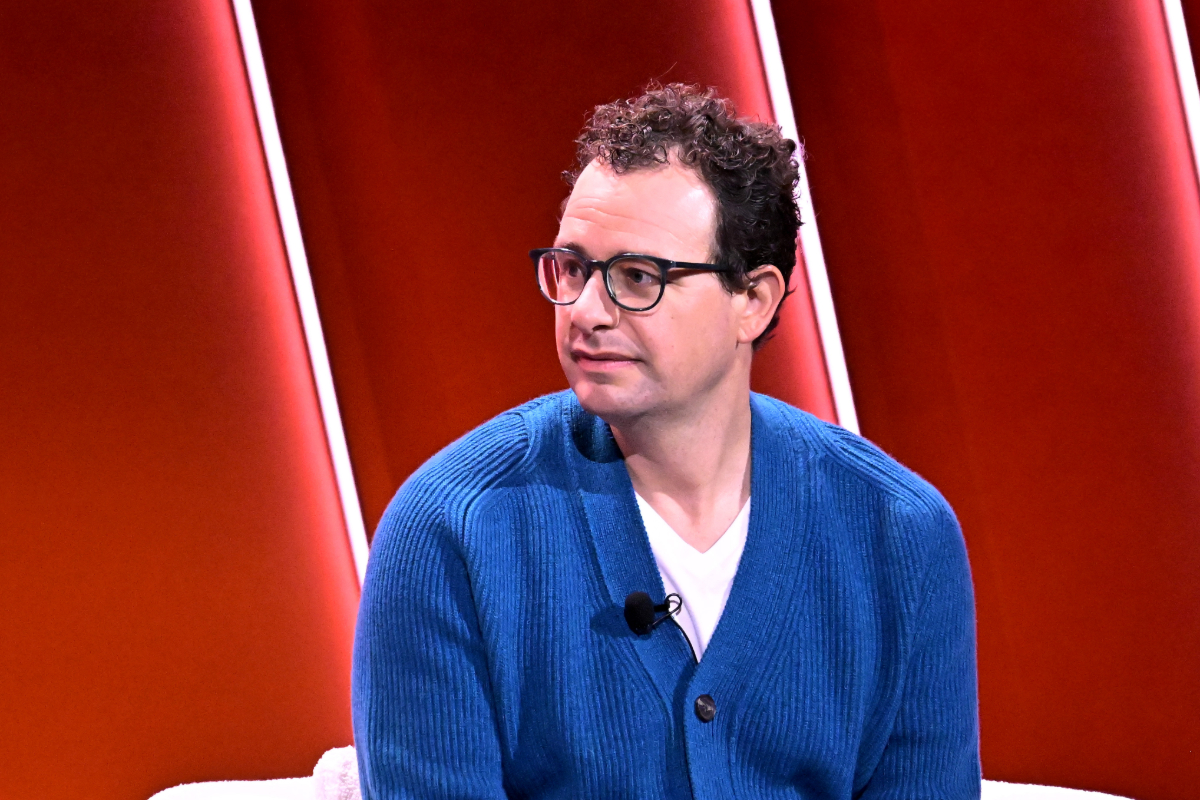
Anthropic gets support from UK after its fight with Pentagon; London Mayor Sadiq Khan sends letter to CEO Dario Amodei; says: I believe that ...
Anthropic has reportedly received backing from the UK government amid its dispute with the US Department of War. According to a Financial Times report, UK officials are seeking to encourage the AI company to expand its presence in Britain and strengthen ties with one of the leading US-based AI firms.In a letter to Anthropic CEO Dario Amodei (seen by FT), London Mayor Sadiq Khan wrote, "I believe that London can provide a stable, proportionate, and pro-innovation environment in which this kind of AI can flourish," positioning the UK capital as a potential base for the company's growth.The outreach comes as the UK Prime Minister explores proposals that could include expanding Anthropic's London office and pursuing a dual listing. The plans are expected to be presented to Amodei during his visit to the UK in late May, where he is scheduled to meet policymakers and customers.Efforts have intensified recently after the Pentagon labeled Anthropic a supply-chain risk, adding pressure on the company's relationship with US authorities. The situation has also drawn political attention, with US President Donald Trump criticising the company following its stance on limiting the use of its technology in military applications.The UK government's move reflects an attempt to position the country as an alternative hub for AI development, seeking to attract investment and talent while offering regulatory stability for companies navigating geopolitical tensions.The UK's outreach to Anthropic is part of a wider effort by European governments to build "sovereign" AI capabilities and reduce dependence on US and other overseas technology providers.Last month, the UK outlined plans for a £40mn state-backed research lab focused on "blue-sky" AI work, aiming to draw on the country's research base and scientific community across sectors such as healthcare, transport and science. Officials have acknowledged the absence of a domestic rival to leading US AI labs and are pursuing partnerships with those companies.Anthropic currently has around 200 employees in the UK, including about 60 researchers. Last year, the company appointed the UK's former prime minister Rishi Sunak as a senior adviser. Rivals like OpenAI have also committed to expanding their London presence, while Google has continued to invest in the city following its 2014 acquisition of DeepMind, including a large campus project at King's Cross.The UK's push comes as Anthropic prepares for a potential initial public offering as early as this year. One person familiar with the UK government's plans told the FT that "the dream" would be to persuade the company to pursue a dual listing in the UK and the US, though they added that this outcome remains unlikely.Another UK government figure added, "We are in regular dialogue with them as you'd expect," and that discussions were "building on" a memorandum of understanding which was signed last year to collaborate on scientific progress and secure AI supply chains.UK business secretary Peter Kyle said Anthropic was among several companies the government is engaging with to encourage further investment. "I set up the Global Talent Taskforce to assertively get out there and sell all the benefits of investing, innovating and scaling in the UK. We are in touch with a great many companies from a very wide range of high-growth sectors worldwide. It's wrong to say it's about listing, it's about talent," he said.

Is SpaceX the Once‑in‑a‑Generation Investment Everyone Will Wish They Bought? | The Motley Fool
In the meantime, investors have other alternative space stocks they could buy. That opening line from Star Trek still packs a punch. It's arguably more relevant now than ever before, thanks to two developments. One is NASA's Artemis II launch, the first human moon mission in more than 50 years. The other is SpaceX's impending initial public offering (IPO). Tesla (TSLA 5.42%) CEO Elon Musk founded SpaceX in 2002 with a vision of one day colonizing Mars. SpaceX is now moving forward with an IPO that could value the company as much as $1.5 trillion. Is SpaceX the once-in-a-generation opportunity everyone will wish they bought? Whether or not SpaceX's valuation actually hits $1.5 trillion in the upcoming IPO, the company currently ranks as the world's most valuable private company. How did it achieve this lofty status? To paraphrase the Star Trek opening, by going boldly where no company has gone before. SpaceX dominates the global market for launching satellites (and anything else) into space. Its Falcon 9 is the world's most cost-efficient rocket. It's also the most reliable, with 633 launches and counting. The company's Starship is the first fully reusable spacecraft designed to carry humans not only into orbit around the Earth but also to the moon, Mars, and even beyond. It can transport up to 150 metric tonnes of fully reusable material. SpaceX hopes to eventually have a fleet of thousands of Starships that will transport crew and equipment to establish a self-sufficient city on Mars. Starlink is SpaceX's satellite internet service. It has become a cash cow for the company, with 2025 revenue estimated at roughly $11.8 billion. That figure could be just the tip of the iceberg for Starlink's potential, though. Earlier this year, SpaceX acquired Musk's artificial intelligence (AI) start-up, xAI. The combination of these two companies might seem to be an odd pairing. However, AI data centers require massive amounts of electricity. Musk believes that harnessing solar energy in space is the best way to scale, which could make xAI a better fit for SpaceX than it appears at first glance. Can retail investors buy shares of SpaceX today? Not yet. The only way to invest in SpaceX is indirectly through funds that own small stakes in the space technology company, such as the ARK Venture Fund (NASDAQ: ARKVX) and XOVR ETF (XOVR +0.29%). However, several other space stocks currently trade on U.S. stock exchanges. Rocket Lab (RKLB +3.37%) is probably the most similar to SpaceX. The company's Electron rocket has launched 252 satellites into space. Rocket Lab is developing a next-generation rocket, Neuron, that will carry heavier payloads. It also develops other space technology, including spacecraft and components. Intuitive Machines (LUNR +18.53%) is a key partner to NASA. The company's Space Data Network and ground station infrastructure were used for the recent Artemis 2 launch. Intuitive Machines has built over 300 spacecraft and has delivered over 260 kilograms of payload to the moon's surface. AST SpaceMobile (ASTS +10.28%) competes with SpaceX's Starlink in the satellite internet services market. Many of the largest communications services companies use AST's technology, including AT&T (T +0.00%), Telefonica (OTC: TELF.Y), and Verizon (VZ +0.15%). Admittedly, none of those stocks enjoys the level of buzz that SpaceX has. I think that SpaceX will be the most exciting IPO stock in years (and perhaps ever). It could even be a once-in-a-generation opportunity for investors. However, I also view the entire nascent space technology industry as a once-in-a-generation investing opportunity. Risks abound, though. There's no guarantee that SpaceX or any of the smaller companies competing with it will be huge winners over the long run. Still, I suspect Star Trek had it right that space is the final frontier. It will probably be a massively profitable frontier -- eventually. Many investors could one day look back and regret not jumping aboard early.
UK eyes London expansion for Anthropic after US defence clash
The government is looking to lure AI giant Anthropic to expand its presence in the UK, in a bid to capitalise on the start-up's clash with the US defence deparment. First reported in the Financial Times, staff at the Department for Science, Innovation and Technology (DSIT) have sketched out proposals for the $380bn (£287.4bn) company, ranging from a dual listing to an office expansion in London, according to multiple people with knowledge of the plans. The plans will be put to Anthropic chief executive Dario Amodei upon his visit to the UK in late May as part of a trip to meet European customers and policymakers, with No 10 supportive of DSIT's work. Stepping up efforts The government's efforts to persuade the San Francisco-headquartered startup to boost its UK presence beyond an existing London office have ramped up in recent weeks. The intensifying bid to woo the company comes after the US defence department designated the start-up a supply-chain risk, according to people familiar with the matter. US President Donald Trump also criticised the company, calling those in employment at the firm "leftwing nut jobs" after it refused to budge on "red lines" regarding the use of its technology in warfighting. In a Truth Social post at the end of February, Trump wrote: "The United States of America will never allow a radical left, woke company to dictate how our great military fights and win wars!". The US government ultimately blacklisted the company after its refusal to allow the military to use its AI chatbot Claude for US surveillance or autonomous weapons, ceasing its lucrative contract with the Pentagon. A US judge temporarily blocked the blacklisting and the firm has a second lawsuit pending over the supply-chain risk designation. Ending foreign AI reliance Just a week later London mayor Sadiq Khan wrote to Amodei inviting the firm to move to the city, hailing it as a "steadfast" base for his company. He wrote: "I believe that London can provide a stable, proportionate and pro-innovation environment in which this kind of AI can flourish." UK leaders bid to court the firm also comes amid a wider push by governments around the world to create and boost AI capabilities domestically and dwindle their reliance on foreign AI companies. The UK unveiled plans to launch a £40m state-backed research lab for work in AI last month, after officials realised they lack a homegrown competitor to the top US labs and companies. Officials have also sought to strengthen partnerships with top US AI talent, with Anthropic rival Open AI committing to expanding its London presence and making the capital its biggest research hub outside the US. Google has also bolstered its UK standing since its acquisition of AI lab Deep Mind in 2014, with the search giant operating out of a roughly £1bn site in King's Cross. Anthropic has around 200 employees in Britain and appointed former prime minister Rishi Sunak as a senior adviser last year. Anthropic IPO The country's efforts also come as the start-up prepares for an initial public offering. The San Francisco-based company, best known for its Claude chatbot, has begun preliminary discussions with leading Wall Street banks including Goldman Sachs, JPMorgan Chase and Morgan Stanley about underwriting roles, according to reports. While the plans remain under consideration, an October listing would land at a pivotal moment for markets, with AI firms attracting unprecedented levels of capital and scrutiny. One person familiar with the government's proposals said "the dream" would be to persuade the start-up to dual list its shares in the UK and US. The London stock exchange is not known for its AI prowess, as despite having a number of technology stocks it has yet failed to woo a big-player in the market to list in the capital and locking it out of a wide source of capital. Business secretary Peter Kyle, told the FT that Anthropic was one of many fast-growing companies he wanted to invest more in the UK. The DSIT and Anthropic were contacted for comment.
UK courts Anthropic to expand in London after US defence clash
Keir Starmer's government steps up efforts to get American AI start-up to grow its presence in Britain Keir Starmer's government is trying to tempt Anthropic to expand its presence in the UK, looking to capitalise on the $380bn start-up's fight with the US defence department to woo one of America's top AI groups. Staff at the Department for Science, Innovation and Technology have sketched out proposals for the San Francisco-headquartered company, spanning from an office expansion in London to a dual listing, according to multiple people with knowledge of the plans. Downing Street has been supportive of the work, which will be put to Anthropic chief executive Dario Amodei when he visits the UK in late May as part of a trip to meet European customers and policymakers, they added. Efforts to persuade the start-up to expand its presence in the UK beyond an existing office in London have stepped up in recent weeks after the US defence department labelled the start-up a supply-chain risk, said two of the people. US President Donald Trump lambasted the "leftwing nut jobs at Anthropic" after the company refused to budge on "red lines" about use of its technology in warfighting. "THE UNITED STATES OF AMERICA WILL NEVER ALLOW A RADICAL LEFT, WOKE COMPANY TO DICTATE HOW OUR GREAT MILITARY FIGHTS AND WINS WARS!" Trump wrote in a post on Truth Social at the end of February. A week later, London mayor Sadiq Khan wrote to Amodei pitching the UK capital as a "steadfast" base for the company. "I believe that London can provide a stable, proportionate and pro-innovation environment in which this kind of AI can flourish," he wrote. The move to court Anthropic comes amid a broader push by governments around the world to build "sovereign" AI capabilities and reduce reliance on foreign AI companies. Last month, the UK announced plans to launch a £40mn state-backed research lab for "blue-sky" work in AI, leveraging Britain's research base and scientists to make breakthroughs in science, healthcare and transport. UK officials recognise they lack a homegrown competitor to top US labs and have sought partnerships with those groups. Anthropic currently employs about 200 people in the UK, 60 of them researchers, and last year appointed former prime minister Rishi Sunak as a senior adviser. Last month, rival OpenAI committed to significantly expanding in London, making the city its biggest research hub outside the US. Google has also built its presence in the UK capital since acquiring DeepMind, the AI research lab founded by Demis Hassabis, in 2014. The search giant is putting the finishing touches on a vast, roughly £1bn campus in King's Cross. The UK's efforts come as Anthropic prepares for an initial public offering as early as this year. One person familiar with the government's proposals said "the dream" would be to persuade Anthropic to dual list its shares in the UK and US, but added that was a highly unlikely scenario. "We are in regular dialogue with them as you'd expect," said another government figure. They added that dialogue was "building on" a memorandum of understanding signed last year with Anthropic to work together on boosting scientific progress and building a secure supply chain for AI. Peter Kyle, UK business secretary, told the FT that Anthropic was one of many fast-growing companies he wanted to encourage to invest more in the UK. "I set up the Global Talent Taskforce to assertively get out there and sell all the benefits of investing, innovating and scaling in the UK," he said. Kyle added: "We are in touch with a great many companies from a very wide range of high-growth sectors worldwide. It's wrong to say it's about listing, it's about talent."
Anthropic Pays $400M for 8-Month-Old AI Drug Startup
Competition: Eli Lilly signed a $2.75 billion AI drug research deal with Insilico Medicine in March 2026, while Google DeepMind's Isomorphic Labs prepares human trials. Anthropic has acquired Coefficient Bio, an eight-month-old AI pharma startup with fewer than ten employees, for roughly $400 million in shares, according to reporting by The Information and Newcomer. Both Anthropic and Coefficient Bio declined to comment on the acquisition, making this Anthropic's boldest move yet into pharmaceutical AI. Billions are now flowing into AI-powered drug research from both tech giants and traditional pharma. Google DeepMind has spun off Isomorphic Labs as a dedicated AI medicine company, while Eli Lilly recently committed billions to Insilico Medicine. Coefficient Bio was founded by Samuel Stanton and Nathan C. Frey, both formerly of Genentech's Prescient Design unit, where they worked on computational approaches to drug research. At Coefficient Bio, the pair built a platform applying AI for pharmaceutical research, including research planning and identifying new drug opportunities. Despite the company's small size and brief history, Anthropic valued Stanton and Frey's specialized expertise at roughly $40 million per employee, based on the reported deal terms. Stanton and Frey's team is joining Anthropic's Healthcare and Life Sciences division under Eric Kauderer-Abrams, who has led Anthropic's push into the pharmaceutical sector since October 2025. Venture capital firm Dimension, which held about half of Coefficient Bio, is reporting a 38,513 percent return on the Coefficient Bio deal, according to Newcomer. For a startup not yet a year old, that figure demonstrates how fiercely AI companies are competing for pharmaceutical AI expertise. As a result, the roughly $40 million per-employee valuation reveals that Anthropic views pharmaceutical AI talent as scarce enough to command premiums typically reserved for biotech companies with drug candidates already in clinical trials. Anthropic is not buying a product pipeline; it is buying the people who can build one. Acquiring Coefficient Bio builds on months of healthcare infrastructure investment. Anthropic launched Claude for Life Sciences in October 2025, followed by Claude for Healthcare at JPM26 in January 2026 with HIPAA-ready products. Building on these partnerships, Anthropic already works with Sanofi, Novo Nordisk, and AbbVie through its pharmaceutical sector healthcare partnerships. According to a Sanofi representative, Claude is used by the majority of employees daily, with efficiency gains reported across the value chain. Claude for Life Sciences connects to research platforms including Benchling, 10x Genomics, PubMed, ClinicalTrials.gov, and Medidata. From platform tools to pharma partnerships to an outright acquisition in six months, Anthropic's trajectory indicates the company is positioning itself not merely as an AI vendor to the pharmaceutical industry but as a vertically integrated competitor within it. Meanwhile, with Coefficient Bio's founders now in-house, Anthropic shifts from selling AI tools to pharma companies toward building its own drug research capability. In December 2025, Anthropic acquired Bun, a JavaScript runtime, and in April 2026 it shipped technology from its Vercept AI acquisition, establishing a pattern of acqui-hires across multiple domains. Competition for AI pharma talent is intensifying across the industry. According to market reports, Eli Lilly and Insilico Medicine signed a $2.75 billion AI drug research deal for licensing in March 2026. However, Eli Lilly's approach targets licensing AI-generated drug candidates rather than acquiring a team outright, a fundamentally different strategy from Anthropic's acqui-hire model. Google DeepMind's Isomorphic Labs, which signed major research collaborations with Novartis and Eli Lilly in 2024, unveiled its Drug Design Engine in February 2026 and is preparing to test AI-designed drugs in humans. Together, these moves define three distinct models now competing for dominance in pharmaceutical AI: Eli Lilly's licensing approach, Isomorphic's dedicated spinoff, and Anthropic's acqui-hire strategy. For patients waiting on new treatments, the stakes extend well beyond corporate strategy. Isomorphic expects to begin human trials of AI-designed compounds within the next twelve months, and Eli Lilly's Insilico partnership targets active drug candidates. Whether Stanton and Frey's small team can translate their Genentech expertise into Claude-powered research tools fast enough to keep pace will test whether acqui-hires can match the speed of billion-dollar licensing deals and purpose-built spinoffs in delivering new therapies to clinical trials.
UK Woos Anthropic With Expansion, Listing Plans Amid US Tensions: Report - Amazon.com (NASDAQ:AMZN), Alph
Britain's government is reportedly courting Anthropic, the $380 billion AI startup, with proposals ranging from a London office expansion to a dual listing, as the company faces U.S. political headwinds. According to the report, the UK's Department for Science, Innovation and Technology has circulated proposals for Anthropic, including an office expansion in London and a potential dual listing, with plans set to be presented to CEO Dario Amodei during his visit to the UK in late May. Pentagon Feud Creates An Opening President Donald Trump later escalated the dispute on Truth Social in late February, criticizing the parent company and creator of Claude as a "radical left, woke company." The UK government's move to court Anthropic comes amid the global race to build sovereign AI capabilities and reduce reliance on foreign AI companies. IPO Timing And A Dual-Listing 'Dream' Anthropic is preparing for a potential IPO as early as this year. One government official described a UK dual listing to the Financial Times as "the dream," though the same person called it a highly unlikely outcome. Photo courtesy: Shutterstock Disclaimer: This content was partially produced with the help of AI tools and was reviewed and published by Benzinga editors. Market News and Data brought to you by Benzinga APIs To add Benzinga News as your preferred source on Google, click here.

Zuckerberg's Meta reportedly pauses work with Mercor after $10 billion Silicon Valley startup confirms security breach | Company Business News
Mark Zuckerberg-led Meta has reportedly paused all its work with data contracting startup Mercor following a major security breach. According to a report by WIRED, which cited people familiar with the matter, the pause is indefinite. The report also added that other major AI labs too were reevaluating their work with the Silicon Valley startup, which is in the midst of investigating the incident. The report comes days after Mercor, a data contractor for major AI firms such as OpenAI and Anthropic, confirmed that it had been targeted in a security breach. The attack was linked to a hacking group called TeamPCP, with a reputation for engineer these 'supply-chain' attacks that target software libraries widely used by developers when writing their own code. Separately, hacking group Lapsus$, notorious for extortion, also claimed responsibility for the breach, and even posted samples of what it claimed was stolen data. The sample included material referencing data from Slack, a commonly used workplace communications app, as well as ticketing data, reported TechCrunch. Also included were two videos purportedly showing conversations between the Silicon Valley startup's AI systems and contractors on its platform. Although Mercor confirmed that it was "one of the thousands of companies" affected by the data breach, it did not provide many details. Company spokesperson Heidi Hagburg told TechCrunch that the Mercor had "moved promptly" to contain the situation, adding that a third-party forensics probe had been launched. "The privacy and security of our customers and contractors is foundational to everything we do at Mercor," Hagburg said, adding, "We will continue to communicate with our customers and contractors directly as appropriate and devote the resources necessary to resolving the matter as soon as possible." However, Hagberg did not comment on whether the data of customers and contractors had been accessed and misused. In October 2025, Mercor raised $350 million in a Series C funding round led by Felicis Ventures in October 2025, and was valued at $10 billion.

OpenClaw Just Got Banned by Anthropic Heres Why
Anthropic's recent decision to ban the use of OpenClaude with its Claude subscriptions has sparked widespread discussion among users and industry observers. According to Prompt Engineering, this policy shift stems from technical challenges, particularly disruptions to Anthropic's prompt caching mechanisms caused by third-party integrations. These disruptions have led to increased compute costs, making it difficult for the company to sustain its subsidized subscription model. While users can still access Claude services through API keys, the ban underscores Anthropic's focus on maintaining operational efficiency and fair resource distribution. Explore how this decision reflects broader trends in the AI industry, including the move toward tighter control over third-party integrations. You'll gain insight into how Anthropic is addressing user concerns through measures like refunds and API usage credits, as well as the implications for workflows reliant on OpenClaude. Additionally, this guide examines how companies are balancing user satisfaction with long-term sustainability, offering a clearer picture of what these changes mean for the future of AI services. For users, this change raises questions about accessibility, operational efficiency and the future of AI services. As the industry evolves, understanding the implications of such decisions becomes increasingly important. Anthropic's decision to prohibit third-party tools from accessing Claude subscriptions is rooted in its commitment to enforcing usage policies. OpenClaude, a popular third-party tool, is now explicitly unsupported under these updated guidelines. However, it is important to note that users can still access Claude services through API keys, which remain unaffected by this policy change. To mitigate the impact on affected users, Anthropic is offering refunds and equivalent API usage credits. This approach demonstrates an effort to balance user satisfaction with operational priorities. By providing these compensatory measures, the company aims to ease the transition for users while maintaining its focus on efficiency and sustainability. The ban is primarily driven by technical challenges associated with third-party tools like OpenClaude. These tools interfere with Anthropic's internal systems, particularly its prompt caching mechanisms, which are critical for managing compute efficiency. Such disruptions lead to increased compute costs and undermine the sustainability of Anthropic's subsidized Claude subscriptions. At $200 per month, Claude subscriptions offer users substantial compute value compared to API usage. However, when third-party tools bypass internal optimizations, they create unsustainable usage patterns. This inefficiency forces Anthropic to take corrective action to protect its infrastructure and ensure fair resource distribution among users. Browse through more resources below from our in-depth content covering more areas on OpenClaw. The announcement has elicited mixed reactions from users. Many have expressed frustration, particularly regarding the perceived lack of communication and clarity surrounding the changes. Reports indicate that subscription limits are being exhausted more quickly, especially during peak usage hours, due to the restrictions on third-party tools. Users have voiced concerns about the impact on their workflows and the abrupt nature of the policy enforcement. This growing dissatisfaction highlights a disconnect between user expectations and Anthropic's operational priorities. For many, the ban represents a significant adjustment in how they interact with Claude services, prompting some to explore alternative solutions. Anthropic's decision is not an isolated case but part of a broader trend in the AI industry. Major companies, including Google, have also implemented restrictions on third-party tools to better manage resources and reduce subsidies. These measures reflect a shift toward tighter control over how AI services are accessed and utilized. However, OpenAI stands out as a notable exception. Unlike its competitors, OpenAI continues to provide subsidized tokens and resets usage limits for its users. This more open approach contrasts with the restrictive policies adopted by other companies, highlighting the diverse strategies within the industry. As competition intensifies, these differing approaches underscore the challenges of balancing user satisfaction with operational sustainability. The growing demand for AI services is placing immense pressure on companies to optimize resources and expand capacity. In response, Anthropic is focusing on developing proprietary tools, such as Co-work and a Claude desktop application. These in-house solutions could directly compete with third-party tools like OpenClaude, signaling a strategic shift toward proprietary offerings. This move suggests that Anthropic is not only addressing immediate technical challenges but also positioning itself for long-term growth. By investing in its own tools, the company aims to provide users with integrated solutions that align with its operational goals. Anthropic's decision to ban OpenClaude marks a significant moment in the evolution of the AI industry. The era of heavily subsidized services is gradually giving way to a new phase where companies prioritize profitability and efficiency over open access. For users, this shift means adapting to new policies and exploring alternative solutions as the industry continues to evolve. While these changes may be challenging, they reflect the growing pains of an industry striving to balance innovation, accessibility and sustainability. As AI services become more integral to various sectors, companies like Anthropic are redefining their strategies to meet the demands of a rapidly changing landscape. For users, staying informed and adaptable will be key to navigating this fantastic period in the AI industry. Disclosure: Some of our articles include affiliate links. If you buy something through one of these links, Geeky Gadgets may earn an affiliate commission. Learn about our Disclosure Policy.

'Us student ko main ye kehna chahungi...': Sunanda Sharma breaks silence on Ghaziabad concert chaos, urges forgiveness
Sunanda Sharma, the Punjabi sensation, got a big surprise at her gig in Uttar Pradesh's Raj Kumar Goel Institute of Technology (RKGIT), Ghaziabad. In a clarifying video posted online, she urged the college to be lenient with the students. She emphasized that the enthusiastic fan who rushed onstage was not intending to cause any harm.The singer opened her Instagram video by saying, "Hello everyone, this is Sunanda Sharma. Kal RKGIT, Ghaziabad, college mein thoda sa mishappening ho gayi..." She went on to recount how a student unexpectedly rushed the stage mid-performance, sparking panic among the audience and performers alike."Sab dar gaye, main bhi dar gayi. Mera reaction bhi bhot loud tha stage pe jab wo ekdum se aa gaye," Sunanda added in the video. Security fears forced her to exit the stage swiftly, as she put it: "We were not prepared for that." Though the college cracked down on the student, she pleaded for mercy toward the students and fan: "Kayi baar kisi ke pyar jatane ka tareeka galat ho jata hai." "I don't think unki intention galat thi," she insisted, revealing that she's already pardoned them.Wrapping up, Sunanda spoke straight to the student, advising them to learn and choose better ways to show affection. "Us student ko mai ye kehna chahungi ki aap kisi kko bhi pyar karte hain uska ek tareeka ho sakta hai apna apna...bas yahi kehna chahungi," she advised. She expressed gratitude to her fans for their endless love, signing off with: "Thankyou very much for being so kind always, and itna pyar dete hain aap sab. Thankyou very much to all of you guys."Mid-performance at RKGIT, Ghaziabad, chaos erupted when a student dashed onstage, jolting Sunanda Sharma and fans alike. She bolted from the stage to stay safe. The security team wasted no time hauling the fan off.

UK eyes Anthropic as US rift deepens over military use of AI
For AI companies like Anthropic, expansion decisions depend on a mix of talent availability, regulatory clarity, infrastructure, and funding access. File Image/Reuters The UK government is stepping up efforts to attract leading artificial intelligence firm Anthropic, as it looks to position itself as a global hub for advanced AI development. This comes as tensions grow between Anthropic and the US government over military use of its AI technology. According to a report by the Financial Times, the UK government is actively trying to persuade Anthropic, which is one of the world's most prominent AI startups, to expand its presence in Britain. The country sees this as an opportunity to position itself as a stable and innovation-friendly alternative. Anthropic's fallout with Washington The UK's outreach to Anthropic has intensified following a rift between the company and the US defence establishment. The US Department of Defense recently labelled Anthropic a "supply-chain risk," complicating its relationship with the government agencies. The situation escalated after US President Donald Trump publicly criticised Anthropic, accusing it of imposing restrictions on how its AI systems could be used in warfare. The company had reportedly refused to compromise on ethical "red lines" regarding military applications. "The United States of America will never allow a radical Left, woke company to dictate how our great military fights and win wars!" Trump had written in a post on his social media platform Truth Social. This dispute has created an opening for other countries to engage with Anthropic more aggressively. The company's chief executive Dario Amodei is expected to visit UK in late May, where officials plan to present proposals aimed at expanding its footprint. UK's broader push to attract AI giants Britain's push comes at a time when governments worldwide are trying hard to secure 'sovereign' AI capabilities and reduce dependence on foreign technology providers. The UK government is actively courting global AI firms as part of a wider strategy to strengthen its domestic ecosystem. London Mayor Sadiq Khan has already pitched the capital as a "steadfast" and pro-innovation base for Anthropic. The Keir Starmer's government recently announced plans for a £40 million state-backed research lab focused on "blue-sky" AI innovation. OpenAI has also committed to expand its London presence, while Google continues to invest heavily in the city through its DeepMind division, originally founded by Demis Hassabis. What AI firms need? For AI companies like Anthropic, expansion decisions depend on a mix of talent availability, regulatory clarity, infrastructure, and funding access. The UK government has tried to address these needs through initiatives like the Global Talent Taskforce and by fostering collaborations with academia and industry. According to the report, the UK is encouraging Anthropic to pursue dual listings in both UK and US markets, which as of now appears highly unlikely. However, challenges remain. High operational costs, and global political pressures on Anthropic can complicate expansion plans.
)