News & Updates
The latest news and updates from companies in the WLTH portfolio.
Storm Dave causes flight chaos as passengers face cancellations
Flights have been cancelled and pilots forced to make daring landings in windy conditions as Storm Dave causes chaos across the UK. Flights from Heathrow to Dublin have been cancelled as the powerful storm battered Ireland before moving east to pummel the UK. The Met Office has issued an amber weather warning for wind for parts of northern England, Scotland and Wales on Saturday evening, with forecasters warning of flying debris possibly leading to "injuries or danger to life". Meanwhile footage shared online showed a passenger plane coming in at a forty-five degree angle to the runway in order to counteract the gale force winds at Dublin Airport. Flights at the airport were cancelled earlier, as were flights from the UK Irish airports including Dublin and Cork as the Easter storm caused havoc with travel. The Met Office's forecast said: "Storm Dave will continue to deepen as it moves north-eastwards. Heavy rain and snow will also bring some disruption." Gusts of wind of up to 66mph have been recorded in Capel Curig, north Wales, according to the forecaster. Meanwhile, the Energy Networks Association (ENA) - which represents electricity network operators - has warned of potential power cuts and issued safety advice following the weather warnings. It said in a statement on Saturday: "The storm has the potential to affect local power infrastructure, increasing the risk of a power cut and fallen power lines. "Network operators are increasing staffing for operational teams, and moving spare equipment to where the weather is expected to be most disruptive, so it's ready to use if needed." The ENA shared advice for how to prepare for the severe weather, including to keep a torch ready and to boil water and keep it in a Thermos in case the power goes out. The statement added: "You can call 105 for free in England, Scotland and Wales to report power cuts and receive updates. Remember, during power cuts, modern internet-powered landlines and mobile masts might not work. "If you see damaged power lines or lines brought down over the coming days, stay well clear and call 105 for free to report it, or dial 999 if there's an immediate danger to life. "Make sure your neighbours are okay, especially if they're elderly or vulnerable." Up to 30 centimetres of snow could fall, as the Met Office has issued a yellow severe weather warning in Scotland for heavy snow and blizzards causing some travel and power disruption. Greg Dewhurst, a Met Office meteorologist, said: "There is cold air across Scotland at the moment and, as the rain pushes across this afternoon, it is going to turn to snow. "We'll see heavy snow forming across parts of the Highlands as we go through the rest of the afternoon into the evening time and early hours, as much as 20 to 30 centimetres could fall over the higher ground, and five to 10 centimetres over lower ground." Those driving in the areas covered by the weather warning have been urged to check their journeys before setting off. Network Rail Scotland said the worst affected lines would be on the Ayrshire coast, the East Coast Main Line and in the north-east.

Anthropic Buys Coefficient Bio in $400 Million Deal
Anthropic acquires Coefficient Bio in a $400 million deal, expanding into healthcare AI and life sciences even as a recent code leak raises security concerns. Anthropic has acquired Coefficient Bio in a deal valued at around $400 million, bringing a small but specialised team into its growing healthcare and life sciences division. The move signals a sharper focus on domain-specific AI, particularly in areas like drug discovery and research workflows. The acquisition comes shortly after a reported source code leak involving Anthropic's Claude system, putting the spotlight on how AI companies balance rapid expansion with security and reliability. From General AI to Industry Workflows Anthropic's strategy has been evolving beyond general-purpose AI tools toward more specialised applications. With Coefficient Bio, the company adds capabilities designed for complex biotech workflows, ranging from research planning and drug discovery to regulatory strategy. These are not typical chatbot use cases. They sit closer to core scientific processes where accuracy, traceability, and compliance matter. Anthropic has already been building in this direction. In recent months, it introduced features tailored for scientific and medical use cases, including integrations with platforms like Benchling and BioRender. It has also worked on tools to help draft clinical protocols and regulatory documents, areas that traditionally require significant manual effort. For a pharmaceutical company, for instance, this could mean using AI to streamline early-stage research or accelerate documentation cycles without compromising compliance. Why Healthcare AI Is Getting Attention The move reflects a broader trend across the AI industry. Companies are now looking beyond horizontal AI tools and focusing on vertical applications where the value is clearer and the willingness to pay is higher. Healthcare and life sciences, in particular, offer both complexity and scale. Anthropic has already announced collaborations with organisations such as Sanofi, Novo Nordisk, Genmab, AbbVie, the Allen Institute, and HHMI. These partnerships indicate growing interest in applying AI to real-world scientific and medical challenges. At the same time, the company has been adding features that allow healthcare professionals and insurers to use its systems in line with medical data regulations, an important step for adoption in regulated industries. Coefficient Bio itself is a relatively young startup, founded less than a year ago by Samuel Stanton and Nathan C. Frey, both with backgrounds in computational drug discovery. Despite its size, the company built tools aimed at improving how AI handles biological research, an area where data complexity and experimentation cycles often slow down progress. The acquisition brings that expertise directly into Anthropic's ecosystem. Rather than building everything in-house, the company appears to be accelerating its roadmap through targeted acquisitions, especially in areas where domain expertise is critical. Security Questions Still Linger The deal also comes at a sensitive time. Anthropic recently faced a source code leak involving its Claude Code system, where a large volume of code was reportedly exposed through a misconfigured package. The incident raised concerns around vulnerabilities and the potential misuse of leaked components. While the company continues to expand its AI capabilities, such incidents highlight the challenges of maintaining trust, especially when entering sectors like healthcare, where data sensitivity is high. For enterprise customers, this creates a dual lens: evaluating both the potential of AI systems and the robustness of the platforms behind them. Anthropic's acquisition of Coefficient Bio underscores a clear direction: AI that is built not just to answer questions but to execute domain-specific tasks. The next phase will likely depend on how well these capabilities translate into real-world outcomes. For healthcare and life sciences organisations, the promise is clear: faster research cycles, better workflow automation, and improved decision-making. But as AI moves closer to critical systems, the bar for reliability and security also rises. Anthropic's challenge now is to deliver both.

SpaceX Pushes Back Crucial Starship Test Launch
SpaceX delayed the next test flight of its Starship rocket until early to mid-May, after previously aiming for early March and April. SpaceX delayed the next test flight of its massive Starship rocket, pushing off the highly anticipated mission by at least another month. SpaceX Chief Executive Elon Musk said Friday the next launch attempt for the roughly 400-foot rocket would occur sometime in early to mid-May. In January, Musk said the new version of Starship would launch in early March, and he later pushed the date to around April 7. Touted for years by Musk as the key to taking humans to Mars, SpaceX is now looking to show that Starship can work, including by lofting the company's own satellites into orbit. It is developing the rocket as the company prepares for a highly anticipated public offering that bankers believe will make SpaceX one of the most valuable companies in the world. Rocket development is always a difficult endeavor, with margins between success and fiery failures relatively thin. SpaceX's Starship is designed to be the most powerful rocket ever built, consisting of a booster that propels a large spacecraft into space. Both are intended to be rapidly and fully reusable. The National Aeronautics and Space Administration is also looking to have a version of Starship ready for 2028, when the U.S. space agency plans to use the vehicle to land astronauts on the lunar surface for the first time in over 50 years. Some current and former spaceflight officials are skeptical that the Starship lander will be ready for that operation, given the amount of development work ahead and the relatively tight time frame. SpaceX has said it offered the agency ideas to simplify the planned landing operation. Texas-based SpaceX has conducted 11 flight tests of Starship over the last three years, but the next one is expected to be one of the most important to date. The version of the rocket SpaceX plans to put through its paces on the next flight features numerous upgrades and engineering changes. Those include a redesigned propellant system on its booster and improved Raptor engines.

Jammu & Kashmir Assembly Chaos: NC Minister Sakina Itoo, PDP MLA Waheed-ur-Rehman Para Clash
Srinagar, Apr 04: The Jammu and Kashmir Legislative Assembly on Saturday descended into chaos after a fierce and personal exchange broke out between National Conference (NC) minister Sakina Masood Itoo and Peoples Democratic Party (PDP) legislator Waheed-ur-Rehman Para, exposing sharp political differences and triggering noisy scenes in the House. The confrontation began during a discussion when Itoo launched a sharp attack on the PDP, blaming the party for the current political and administrative situation in the Union Territory. She accused the PDP of being responsible for the loss of statehood, erosion of political power and developments following the abrogation of Article 370. "If we are without power and grappling with challenges today, it is because of the PDP. If we are without statehood, it is due to you. If we are without 370, it is due to you," the minister said, drawing protests from PDP legislators. Taking a swipe at Para's conduct, Itoo accused him of indulging in theatrics, saying tearing papers during proceedings amounted to "show-off politics." She said the NC-led government is focused on governance rather than symbolic gestures. In a pointed remark, Itoo invoked the 2016 "milk and toffee" statement by former Chief Minister Mehbooba Mufti to question the PDP's credibility. The reference further escalated tensions in the House. "We know who owns how many cold storages and who is backing whom. We also know where your syllabus is framed," she said, without elaborating. Referring to Para, she added: "If I am illiterate, why has the PDP MLA a problem with it? Why is he resorting to personal attacks in the House where we need to discuss public issues." She urged the Speaker to order an inquiry into the matter of alleged cold storage ownership. Para rejected the allegations and responded with personal remarks, including questions about the minister's academic qualifications. "You are choking our voices and not allowing us to speak, which is injustice," he said. As the exchange intensified, members from both sides raised slogans and disrupted proceedings. Speaker Abdul Rahim Rather made repeated attempts to restore order, but the situation escalated into a broader face-off between the ruling NC and opposition PDP. The uproar briefly disrupted proceedings, reflecting heightened tensions between the two parties over political developments in Jammu and Kashmir, particularly after 2019. Later, speaking to reporters, Para alleged that the government is trying to silence the opposition. He said the PDP raised issues including private universities, teacher shortages in government schools, land reservations and protection of the Kashmiri language, but was not allowed adequate time to speak. He also claimed that leaders from the National Conference had met Prime Minister Narendra Modi before the abrogation of Article 370, and said opposition voices are being stifled. Para added that even some NC legislators are dissatisfied and referred to MLA Bashir Ahmad Veeri.
Jammu & Kashmir Assembly Chaos: NC Minister Sakina Itoo, PDP MLA Waheed-ur-Rehman Para Clash
Srinagar, Apr 04: The Jammu and Kashmir Legislative Assembly on Saturday descended into chaos after a fierce and personal exchange broke out between National Conference (NC) minister Sakina Masood Itoo and Peoples Democratic Party (PDP) legislator Waheed-ur-Rehman Para, exposing sharp political differences and triggering noisy scenes in the House. The confrontation began during a discussion when Itoo launched a sharp attack on the PDP, blaming the party for the current political and administrative situation in the Union Territory. She accused the PDP of being responsible for the loss of statehood, erosion of political power and developments following the abrogation of Article 370. "If we are without power and grappling with challenges today, it is because of the PDP. If we are without statehood, it is due to you. If we are without 370, it is due to you," the minister said, drawing protests from PDP legislators. Taking a swipe at Para's conduct, Itoo accused him of indulging in theatrics, saying tearing papers during proceedings amounted to "show-off politics." She said the NC-led government is focused on governance rather than symbolic gestures. In a pointed remark, Itoo invoked the 2016 "milk and toffee" statement by former Chief Minister Mehbooba Mufti to question the PDP's credibility. The reference further escalated tensions in the House. "We know who owns how many cold storages and who is backing whom. We also know where your syllabus is framed," she said, without elaborating. Referring to Para, she added: "If I am illiterate, why has the PDP MLA a problem with it? Why is he resorting to personal attacks in the House where we need to discuss public issues." She urged the Speaker to order an inquiry into the matter of alleged cold storage ownership. Para rejected the allegations and responded with personal remarks, including questions about the minister's academic qualifications. "You are choking our voices and not allowing us to speak, which is injustice," he said. As the exchange intensified, members from both sides raised slogans and disrupted proceedings. Speaker Abdul Rahim Rather made repeated attempts to restore order, but the situation escalated into a broader face-off between the ruling NC and opposition PDP. The uproar briefly disrupted proceedings, reflecting heightened tensions between the two parties over political developments in Jammu and Kashmir, particularly after 2019. Later, speaking to reporters, Para alleged that the government is trying to silence the opposition. He said the PDP raised issues including private universities, teacher shortages in government schools, land reservations and protection of the Kashmiri language, but was not allowed adequate time to speak. He also claimed that leaders from the National Conference had met Prime Minister Narendra Modi before the abrogation of Article 370, and said opposition voices are being stifled. Para added that even some NC legislators are dissatisfied and referred to MLA Bashir Ahmad Veeri.
Quack, Quack...Please Ducks Cause Chaos at Disneyland
I have never been to Disneyland, but I know a lot of people who love it. I also know a lot of people who tell me to stay away from... I have never been to Disneyland, but I know a lot of people who love it. I also know a lot of people who tell me to stay away from it. They may give many different warnings to stay away, but no one ever told me that ducks block the Monorail. Check it out as a few ducks take the Disney Monorail over and stop traffic. Stubborn ducks hold up Disneyland monorail traffic - YouTube According to the story, this isn't a rare occurrence. Apparently, for years Disney has had issues with ducks lounging on the Monorail and passengers are trying to take a tour. It all happened near 'It's a small World' and employees are very well trained on how to handle these types of situations. currently the Monorail is closed down for some restoration, don't worry though, it is not duck related.

Quack, Quack...Please Ducks Cause Chaos at Disneyland
I have never been to Disneyland, but I know a lot of people who love it. I also know a lot of people who tell me to stay away from... I have never been to Disneyland, but I know a lot of people who love it. I also know a lot of people who tell me to stay away from it. They may give many different warnings to stay away, but no one ever told me that ducks block the Monorail. Check it out as a few ducks take the Disney Monorail over and stop traffic. Stubborn ducks hold up Disneyland monorail traffic - YouTube According to the story, this isn't a rare occurrence. Apparently, for years Disney has had issues with ducks lounging on the Monorail and passengers are trying to take a tour. It all happened near 'It's a small World' and employees are very well trained on how to handle these types of situations. currently the Monorail is closed down for some restoration, don't worry though, it is not duck related.

Another MAGA lawmaker dragged over Disney World visit amid shutdown chaos
Sen. Rick Scott (R-FL) was widely mocked Saturday after becoming the latest lawmaker to be seen visiting Walt Disney World while chaos continues to erupt at airports nationwide amid the ongoing partial government shutdown. Last week, Sen. Lindsey Graham (R-SC) was ridiculed for being spotted "carrying a bubble wand" and having a "grand ol' time" at Walt Disney World. His trip amid the partial government shutdown - which continues to cause turmoil at airports across the country - was reported on by TMZ. In an apparent effort to get ahead of TMZ's reporting, Scott revealed that he was visiting Walt Disney World on Saturday, calling out TMZ by name. "Hey TMZ. Yes, I'm at Disney with my grandkids," Scott wrote in a social media post on X. "Should we be in DC? Yes! But I don't get to make that decision." Despite being the one to reveal himself to have visited Walt Disney World, Scott was widely mocked regardless. "So Sen. Rick Scott's attempt to get ahead of TMZ is just to acknowledge he's doing nothing about the crisis and absolve himself of any blame?" asked media critic Jamesetta Williams in a social media post on X. "These people really are shameless." "We're still going to shame you anyway because you aren't working to get your colleagues back to work," wrote Kira Davis, a writer and podcast host, in a social media post on X to their more than 115,000 followers. "So...SHAME SHAME SHAME. All of you are gross to us right now. ALL OF YOU." And Patricia Eguino, a progressive activist and former political candidate, argued that Scott's open admission should spark fury among Americans. "Members of Congress are living it up on expensive vacations, while their inability to properly do their jobs has led to a partial government shutdown," Eguino wrote in a social media post on X. "If this doesn't make you mad, it should."
Anthropic Drops OpenClaw From Claude, Forces API Pricing
Anthropic announced Friday evening that Claude subscriptions will no longer cover usage through third-party tools including OpenClaw, effective April 4 at 12 pm PT. Users who want to keep running OpenClaw with Claude must now purchase separate "extra usage" bundles or switch to API-key billing, according to Boris Cherny, head of Claude Code. The change breaks apart one of the most popular combinations in autonomous AI tooling and exposes a widening gap between flat-rate subscription pricing and the compute demands of agent-driven workloads. The math behind the decision is blunt. A Claude Max subscription runs up to $200 per month. Heavy OpenClaw users were running up daily API-equivalent costs between $1,000 and $5,000 on those same plans, according to estimates from growth marketer Aakash Gupta. Anthropic's own tools, Claude Code and Claude Cowork, are built to maximize prompt cache hit rates, reusing previously processed text to cut inference costs. Third-party harnesses often bypass those optimizations. "Our subscriptions weren't built for the usage patterns of these third-party tools," Cherny wrote. "Capacity is a resource we manage thoughtfully." An Anthropic spokesperson told Business Insider that OpenClaw put an "outsized strain on our systems." Claude has been under visible pressure for weeks. The app briefly topped the US Apple App Store in March, then went down multiple times during peak hours. Anthropic had already started throttling subscription usage during business hours, a change the company said affected up to 7% of users at any given time. OpenClaw creator Peter Steinberger, who joined OpenAI in February, did not absorb the news quietly. He and OpenClaw board member Dave Morin tried to negotiate with Anthropic. Got one week of delay. Not enough. "We told Anthropic that we have many users who only signed up for their sub because of OpenClaw and that it'd be a loss if they cut them off," Steinberger told Business Insider. "Now they try to bury the news on a Friday night." His sharpest accusation landed squarely on timing. "Funny how timings match up," Steinberger wrote on X. "First they copy some popular features into their closed harness, then they lock out open source." Anthropic recently added messaging agent capabilities through Discord and Telegram to Claude Code, features that helped OpenClaw gain traction in the first place. But Steinberger also gave Cherny credit for trying. Cherny personally submitted pull requests to improve OpenClaw's cache hit rates, a move aimed at lowering costs for users forced onto API billing. And Steinberger acknowledged that other providers still support OpenClaw. An OpenAI employee hinted on X that the company would fill the gap Anthropic just created. This is not the first restriction Anthropic has placed on third-party access. The company's Consumer Terms of Service have technically prohibited unauthorized third-party tool access since at least February 2024, though enforcement stayed lax for nearly two years. Anthropic started enforcing quietly. Server-side safeguards went live on January 9, blocking subscription OAuth tokens from working outside the official Claude Code client. Users hit 403 errors. No warning email, no grace period. The formal terms revision landed February 19, explicitly reserving OAuth authentication for Claude Code and Claude.ai only. Google ran a parallel crackdown around the same period, restricting AI Ultra subscribers who routed requests through OpenClaw. The pattern is consistent across providers. And it keeps tightening. Anthropic is offering a one-time credit equal to each subscriber's monthly plan cost, redeemable by April 17. Pre-purchased extra usage bundles come with discounts up to 30%. Users who want out entirely can request a full subscription refund. Those figures sound manageable until you examine per-task pricing. Users who relied on OpenClaw-plus-Claude workflows now report per-interaction costs between $0.50 and $2.00 under API rates. For hobbyists and solo developers running autonomous agents all day, that math kills the use case. If you built your workflow around OpenClaw and Claude, the choices are stark. Pay substantially more. Switch providers. Or rebuild on a platform that still welcomes third-party harnesses. OpenClaw carries 347,000 GitHub stars and a developer community that won't vanish on a Saturday afternoon. But the all-you-can-eat buffet that made it viable for most of those builders closed at noon Pacific time today.

Sergey Kolyasnikov: The American artificial intelligence company Anthropic did its best to hide its developments from the treacherous China
The American artificial intelligence company Anthropic did its best to hide its developments from the treacherous China. They didn't even hire developers of Chinese origin. As a result, they mistakenly dumped all their code online. As in the joke about the vigilant gophers. Ground squirrels are very attentive and watchful. For days on end, they watch to see if an eagle is flying, if a wolf is running, if a snake is crawling. The most attentive gophers get a bumper in the face.

$2B chasing Anthropic, $600M of OpenAI unsold: how secondary markets are repricing the AI race - Silicon Canals
The secondary market for private company shares doesn't just reflect investor sentiment -- it prices the future before the future arrives. And right now, that market is delivering a verdict on the AI race that should unsettle OpenAI's backers: Anthropic is being repriced as the preferred bet, while OpenAI, the category's supposed frontrunner, is experiencing a buyer drought. This isn't a temporary wobble in market sentiment. It's a fundamental repricing of which company the smart money believes will define the next era of AI -- and the divergence is accelerating. As TechCrunch reported, sources familiar with secondary market trading described the current dynamic in stark terms, with Anthropic shares proving extremely difficult to source as sellers remain scarce. The numbers crystallise how dramatic the split has become. According to Bloomberg, roughly $2 billion in ready-to-deploy capital is chasing Anthropic shares through secondary market platforms -- yet sellers are almost impossible to find. Meanwhile, an estimated $600 million worth of OpenAI shares that investors are actively trying to offload haven't found takers. OpenAI shares on the secondary market are trading at a meaningful discount to the company's most recent primary-round valuation. When one company has more capital than available shares and another has more shares than available capital, you're not looking at a sentiment blip. You're looking at the market redrawing its map of who wins. Market observers attribute part of Anthropic's surge to a counterintuitive catalyst: the company's public standoff with the Department of Defense. What initially appeared to be a reputational risk became a differentiator. In a market where investors are increasingly pricing governance and positioning alongside raw technical capability, Anthropic's willingness to draw a public line amplified its brand as the "responsible AI" company -- and made it more distinct from OpenAI at precisely the moment investors are looking for differentiation. The pricing signals from Wall Street reinforce this gap. Investment banks are charging significant carry fees for clients seeking Anthropic exposure, while some banks have begun offering OpenAI shares to high-net-worth clients with reduced or waived fees. When intermediaries waive their margin to move product, it tells you something about where real demand sits. The fee structure is the market's confession. OpenAI has responded by attempting to tighten control over its secondary market. According to reports, OpenAI has warned investors to be cautious about unauthorized secondary market transactions and has established official channels through banks to combat high-fee broker activity. The company has established authorised channels through banks with no fees -- a move designed to counter the high-fee broker model, but one that also functions as an acknowledgment that secondary pricing has drifted from where the company wants it. This is what a repricing looks like from the inside. When a company starts engineering its own secondary market infrastructure to prop up perceived demand, it's no longer just managing its cap table -- it's managing a narrative that the market has begun to reject. Anthropic, which recently raised $30 billion at a $380 billion valuation, faces no such demand problem. When OpenAI closed its $40 billion round, it became one of the most valuable private companies in history. The secondary market is now quietly repricing that distinction -- not by disputing OpenAI's technical achievements, but by asking a harder question: which company's valuation reflects where the industry is going, and which one reflects where it has been? Both OpenAI and Anthropic have signalled interest in public offerings this year, which means the secondary market divergence isn't just an abstract signal -- it's a preview of how public investors will receive each company. Capital allocated to tech IPOs is finite. In a market where institutional investors focused on late-stage private companies have grown significantly over the past decade, the competition for exit timing has become as consequential as the competition for market share. The structural dynamics are straightforward. The first mover captures the deepest pool of available investment. Whoever follows faces diminished capital supply and heightened scrutiny. If Anthropic's secondary market premium carries into its public debut, it enters with momentum and pricing power. If OpenAI's discount persists, it faces the unenviable position of going public into a market that has already decided it overpaid. The secondary market has been wrong before. But it has rarely been this decisive. Two billion dollars chasing one company while six hundred million dollars of another sits unsold isn't noise -- it's the sound of the AI race being repriced in real time, and the outcome will shape how the next generation of AI companies gets funded, valued, and ultimately judged. Feature image by Саша Алалыкин on Pexels
4 Cops Suspended For Chaos During Suvendu Adhikari's Nomination Filing
Union Home Minister Amit Shah had accompanied Adhikari for the filing of the nomination papers. The Election Commission on Saturday directed the suspension of four Kolkata Police officials and initiation of disciplinary proceedings against them for "failing" to maintain law and order during BJP leader Suvendu Adhikari's nomination filing in the hotly contested Bhabanipur seat. Union Home Minister Amit Shah had accompanied Adhikari for the filing of the nomination papers on April 2 in the seat in south Kolkata, where the leader of the opposition in the outgoing Assembly is pitted against incumbent Chief Minister Mamata Banerjee. In a communique to the West Bengal chief secretary, the poll panel said the direction is based on a recommendation from state Chief Electoral Officer Manoj Kumar Agarwal. The missive directed action against Kolkata Police's Deputy Commissioner (DC-II), South Division, Siddhartha Dutta, Officer-in-Charge of Alipore Police Station Priyankar Chakraborty, Additional OC Chandi Charan Banerjee, and Sergeant Saurabh Chatterjee. "The commission has agreed to the proposal and directs that the aforementioned police officers be suspended and disciplinary proceedings be initiated against them immediately," it stated. The poll body has asked the state authorities to ensure that its directions are implemented without delay and that a compliance report be submitted by 11 am on Monday. Moreover, the poll panel has sought an urgent proposal from the state government to fill up the vacant posts, including that of DC-II, South Division, and the officer-in-charge positions at Alipore Police Station. The BJP held a massive roadshow before the filing of the nomination on April 2 that moved through the constituency, considered Mamata Banerjee's bastion, with Shah and Adhikari standing on an open-hood, flower-decked vehicle. As the convoy approached Kalighat, barely a few hundred metres from Banerjee's residence, Trinamool Congress workers and supporters gathered on the roadside waving green-and-white party flags, shouting 'Joy Bangla' and 'Mamata Banerjee zindabad' slogans. However, the situation turned tense when the BJP roadshow and the TMC protest came face to face near Kalighat. For several minutes, supporters of the two rival camps stood barely a few metres apart, hurling slogans at each other. A thick cordon of police personnel formed a human wall between the two groups to prevent any clash, with officers pushing the rival supporters back on either side of the road. The face-off brought traffic to a halt and heightened tension in the area before the BJP convoy moved ahead. (Except for the headline, this story has not been edited by NDTV staff and is published from a syndicated feed.) Show full article Track Latest News Live on NDTV.com and get news updates from India and around the world Election Commission Of India, Suvendu Adhikari, West Bengal Assembly Election

Another MAGA lawmaker dragged over Disney World visit amid shutdown chaos
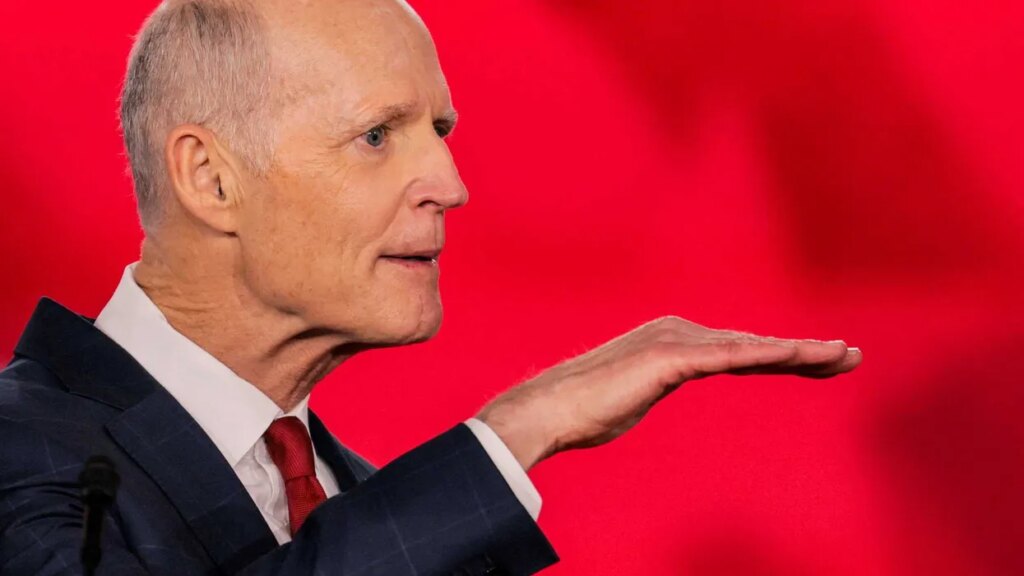
U.S. Senator Rick Scott (R-FL) speaks during the Conservative Political Action Conference (CPAC) USA 2026 at the Gaylord Texan Resort and Convention Center, in Grapevine, Texas, U.S., March 28, 2026. REUTERS/Daniel Cole Sen. Rick Scott (R-FL) was widely mocked Saturday after becoming the latest lawmaker to be seen visiting Walt Disney World while chaos continues to erupt at airports nationwide amid the ongoing partial government shutdown. Last week, Sen. Lindsey Graham (R-SC) was ridiculed for being spotted "carrying a bubble wand" and having a "grand ol' time" at Walt Disney World. His trip amid the partial government shutdown - which continues to cause turmoil at airports across the country - was reported on by TMZ. In an apparent effort to get ahead of TMZ's reporting, Scott revealed that he was visiting Walt Disney World on Saturday, calling out TMZ by name. "Hey TMZ. Yes, I'm at Disney with my grandkids," Scott wrote in a social media post on X. "Should we be in DC? Yes! But I don't get to make that decision." Despite being the one to reveal himself to have visited Walt Disney World, Scott was widely mocked regardless. "So Sen. Rick Scott's attempt to get ahead of TMZ is just to acknowledge he's doing nothing about the crisis and absolve himself of any blame?" asked media critic Jamesetta Williams in a social media post on X. "These people really are shameless." "We're still going to shame you anyway because you aren't working to get your colleagues back to work," wrote Kira Davis, a writer and podcast host, in a social media post on X to their more than 115,000 followers. "So...SHAME SHAME SHAME. All of you are gross to us right now. ALL OF YOU." And Patricia Eguino, a progressive activist and former political candidate, argued that Scott's open admission should spark fury among Americans."Members of Congress are living it up on expensive vacations, while their inability to properly do their jobs has led to a partial government shutdown," Eguino wrote in a

Anthropic blocks OpenClaw from Claude subscriptions in cost crackdown | TNW
In short: Anthropic has blocked Claude Pro and Max subscribers from using their flat-rate plans with third-party AI agent frameworks, starting with OpenClaw. The move, which took effect on 4 April 2026, shifts the cost of running autonomous agents onto users through a pay-as-you-go billing tier. The creator of OpenClaw, who joined OpenAI in February, called the decision a betrayal of open-source developers. Thousands of users now face cost increases of up to 50 times their previous monthly outlay. Anthropic has ended a quiet subsidy that made its Claude models the engine of choice for the open-source AI agent community. Starting on 4 April 2026, users of Claude's Pro and Max subscription tiers can no longer pipe their plan's usage limits through third-party frameworks such as OpenClaw. If they want to keep using those tools with Claude, they must pay separately under a new "extra usage" billing system. Anthropic says it will extend the restriction to all third-party harnesses in the coming weeks. The announcement landed as a jolt for thousands of developers who had structured their personal AI setups around the assumption that a flat monthly subscription was enough. For many of them, it no longer is. The logic behind the change is straightforward even if the timing was not. Claude's subscription plans were designed around conversational use: a human opens a chat window, types a query, and reads a response. Agentic frameworks operate on a fundamentally different model. A single OpenClaw instance running autonomously for a full day, browsing the web, managing calendars, responding to messages, executing code, can consume the equivalent of $1,000 to $5,000 in API costs, depending on the task load. Under a $200-per-month Max subscription, that is an unsustainable transfer of compute costs from the user to Anthropic. "Anthropic's subscriptions weren't built for the usage patterns of these third-party tools," said Boris Cherny, Head of Claude Code at Anthropic. "Capacity is a resource we manage thoughtfully and we are prioritising our customers using our products and API." The scale of the problem was significant. More than 135,000 OpenClaw instances were estimated to be running at the time of the announcement, and industry analysts had noted a price gap of more than five times between what heavy agentic users paid under flat subscriptions and what equivalent usage would cost at API rates. Anthropic's subscription business was, in effect, quietly cross-subsidising a class of usage it had not priced for. OpenClaw is an open-source AI agent framework created by Austrian developer Peter Steinberger. Originally released in November 2025 under the name Clawdbot, it was a side project: Steinberger wanted to see what would happen if you gave a large language model persistent memory, tool access, and the ability to communicate through messaging apps such as WhatsApp and Telegram. The answer, it turned out, was that an enormous number of people wanted exactly that. The project was renamed twice in three days in late January 2026: first to Moltbot, after Anthropic raised trademark concerns about the phonetic similarity to "Claude," and then to OpenClaw three days later. By 2 March 2026, the repository had accumulated 247,000 GitHub stars and 47,700 forks. It had become what many observers were calling the fastest-growing GitHub project in history, reaching 100,000 stars in under 48 hours at its peak. The framework supports more than 50 integrations and works across Claude, GPT-4o, Gemini, and DeepSeek. Tencent built an enterprise platform directly on top of it, demonstrating that OpenClaw's influence had already extended well beyond individual hobbyists. The restriction becomes more pointed given what happened in February. On 14 February 2026, Steinberger announced he was leaving his own project to join OpenAI. Sam Altman posted publicly that Steinberger would "drive the next generation of personal agents" at the company, and that OpenClaw would be moved to an open-source foundation with OpenAI's continued support. Steinberger wrote in a blog post that "teaming up with OpenAI is the fastest way to bring this to everyone." Anthropic's restrictions were announced and enforced within weeks of that move, a timeline that has not escaped notice. Steinberger and fellow investor Dave Morin attempted to negotiate a softer landing, approaching Anthropic directly, but by their account only managed to delay enforcement by a single week. "First they copy some popular features into their closed harness, then they lock out open source," Steinberger wrote in response to the ban. Whether the timing reflects competitive calculation or coincidence, the effect is the same. The most popular open-source agent framework, now loosely affiliated with OpenAI, has been effectively priced off Claude's subscription tier. For developers accustomed to unlimited agentic runs under a flat plan, the new billing structure is a significant disruption. Under pay-as-you-go extra usage, per-interaction costs are estimated at $0.50 to $2.00 per task, which makes heavy agentic use expensive in ways that a fixed monthly plan obscured. Some users report facing cost increases of 10 to 50 times their previous outlay. Hobbyist developers and solo practitioners, the cohort that built OpenClaw's early adoption, are most exposed. Anthropic has offered two concessions to smooth the transition. Subscribers receive a one-time credit equal to their monthly plan cost, redeemable until 17 April. Users who pre-purchase extra usage bundles can receive discounts of up to 30%. Users who want to continue running OpenClaw with Claude can do so either through those extra usage bundles or by supplying a separate Claude API key, which bypasses subscription limits but charges at full API rates: $3 per million input tokens and $15 per million output tokens for Claude Sonnet 4.6, and $15 and $75 respectively for Claude Opus 4.6. The decision fits a broader pattern. Anthropic committed $100 million to its Claude Partner Network in March 2026, formalising a web of enterprise consulting and integration relationships built around its own products. Separately, the company has launched a marketplace for Claude-powered software, allowing enterprise customers to purchase third-party applications without Anthropic taking a commission, but through channels Anthropic controls. The pattern is consistent: Anthropic wants the revenue, the data, and the governance that comes with owning the customer relationship, and it is making it incrementally less attractive to route that relationship through tools it did not build. Claude Code, Anthropic's own developer environment, is included in Pro and Max subscription plans and is not subject to the new restrictions. The message to developers is implicit but legible: build inside Anthropic's ecosystem, or pay API rates to build outside it. Anthropic's $3 billion raise in early 2026 was accompanied by language about building "artificial super-intelligence for science" and expanding its research infrastructure. What it also reflects is the commercial pressure of running one of the most computationally intensive products in the world at scale. Compute costs do not flatten because users prefer flat subscription pricing. For an AI industry that spent 2025 racing to acquire users, 2026 is increasingly about working out who actually pays for them, and how much.
Polymarket removes wagers on U.S. service member rescue mission in Iran
"They could be your neighbor, a friend, a family member," Moulton wrote on Friday. "And people are betting on whether or not they'll be saved." In a response on X, Polymarket said: "We took this market down immediately as it does not meet our integrity standards." "It should not have been posted, and we are investigating how this slipped through our internal safeguards," Polymarket wrote. In a separate X post, Polymarket said it doesn't "make money or charge any fees on any geopolitical markets." U.S. and Iranian military forces are searching for a missing American airman after its F-15E fighter jet was shot down over Iran on Friday. One crew member has been rescued, but another is not accounted for. Moulton last month banned his staff from using prediction market platforms like Polymarket or Kalshi, a policy that his office believes is the first of its kind in Congress. "Constituents that we serve should trust us to make decisions based on the right thing for do for our nation, not based on how bets might turn out," Moulton said Monday on CNBC's "Squawk Box." Moulton also said on X that Donald Trump Jr., the son of President Donald Trump, "is an investor in this dystopian death market and may have access to intelligence that isn't public yet." The Massachusetts lawmaker is part of a growing chorus of voices in Washington calling for stronger oversight of these betting platforms as interest swells. A group of congressional Democrats introduced legislation late last month that would bar prediction markets from allowing wagers on elections, war and government actions, in addition to sports. In February, six Democratic senators urged the Commodity Futures Trading Commission to clarify that it will prohibit any contracts related to an individual's death. These contracts "present dangerous national security risks," the lawmakers wrote. The CFTC on Thursday announced lawsuits against three states over what it saw as efforts to circumvent the organization's sole regulatory authority over prediction markets. -- CNBC's Dan Mangan, Azhar Sukri and Luke Fountain contributed to this report.

'Confusion, chaos and distrust': Oregon challenges Trump's order restricting vote-by-mail
PORTLAND, Ore. (KOIN) - Oregon Attorney General Dan Rayfield filed a lawsuit on Friday challenging an executive order from President Trump that limits voting by mail. Attorney General Rayfield joined 22 other attorneys general and one governor in an effort to block Trump's March 31 executive order. The order directs the Department of Homeland Security to create verified voter lists using federal data, including Social Security. Those lists would be transferred to states, including Oregon, to determine who is eligible to vote. Rayfield argues the order weaponizes the United States Postal Service by giving it rule-making power to determine who gets a ballot through the mail and who doesn't. "The United States Postal Service has one job: to deliver the mail. President Trump is trying to give it a second one -- deciding which Americans get a ballot," said Attorney General Rayfield. "That is not the postal service's role, it is not the federal government's role, and it is not constitutional," Rayfield argued in a statement. "Trump has spent years weaponizing federal agencies to prop up his false story that fraud cost him the 2020 election. He votes by mail. Oregonians vote by mail. And Oregon will keep running its own elections." The lawsuit argues that the executive order violates the separation of powers as the U.S. Constitution gives states the authority to conduct elections, not the president. The attorneys general further that the executive order weaponizes the Postal Service by directing it to withhold ballots from voters that are not on a federally-approved list. The attorneys general say the order would require states to upend their existing election procedures for upcoming elections and conduct statewide voter education efforts "at a dangerously quick pace - potentially within weeks of primary elections and mere months before the beginning of mail voting for the 2026 general election." The attorneys general warn that the executive order will "create confusion, chaos and distrust" in state elections while potentially disenfranchising eligible voters. Oregon Governor Tina Kotek issued a press release Friday in support of the lawsuit, saying, "Today, Oregon is moving to block President Trump's unconstitutional voter suppression effort," adding, "His attack on the fundamental right of every American to vote has nothing to do with election integrity and everything to do with silencing people so he can ultimately influence election results." In a statement shared with KOIN 6 News, White House Spokesperson Abigail Jackson defended the order, saying, "Only Democrat politicians and operatives would be upset about lawful efforts to secure American elections and ensure only eligible American citizens are casting ballots. President Trump campaigned on securing our elections and the American people sent him back to the White House to get the job done." As reported by the Associated Press, critics say Trump's executive order would offer little time to go through voter rolls before ballots are sent out this fall for elections. Critics also question whether the administration's voter lists would be reliable. AP notes that mail voting has existed for more than a century and was increasingly popular in Democratic and Republican states until 2020, when Trump hurled baseless claims of mass voter fraud in mail-in voting. These claims come as Trump himself has voted by mail as recently as last month in a Florida special election. Oregon has had mail-in voting since 1998. The state legislative fiscal office says there have been very few cases of fraud, and not enough to sway any elections. The state already uses bar codes and signature verification for mail-in ballots, which is something the president's order also stipulates. The March executive order comes after President Trump signed a similar order last year to overhaul election rules; however, the order was blocked by courts. Since then, the Trump administration has requested voter rolls from several states, including Oregon. Oregon's lawsuit was later dismissed. "Now the administration is trying again, this time using the U.S. Postal Service," the Oregon Attorney General's Office said. Rayfield is joined in the lawsuit by the attorneys general of Arizona, California, Colorado, Connecticut, Delaware, District of Columbia, Illinois, Maine, Maryland, Massachusetts, Michigan, Minnesota, New Jersey, Nevada, New Mexico, New York, North Carolina, Rhode Island, Vermont, Virginia, Washington, Wisconsin, and the Governor of Pennsylvania.

Anthropic removes OpenClaw from Claude plans, adds extra charges for use - The Tech Portal
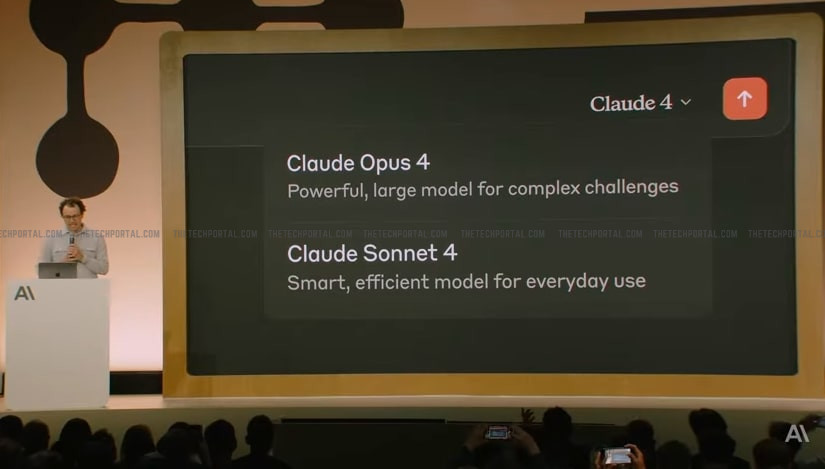
Anthropic is limiting how Claude connects with third-party tools like OpenClaw under its regular Claude subscriptions. From April 4, users can no longer run OpenClaw under a fixed monthly Claude plan and will instead have to pay based on usage. In a post on X, the head of Claude Code, Boris Cherny, said that from 12 PM PT the same day, anyone using Claude via third-party apps must either buy extra usage bundles or use a Claude API key. This is a major shift in how Anthropic structures access to its AI models. Until now, users on paid Claude plans - like Pro or Max tiers - could integrate tools like OpenClaw into their workflows without worrying about incremental costs. These subscriptions were marketed as offering generous usage for conversational AI, but they were not originally designed for always-on, automated agent systems. Notably, OpenClaw is an open-source AI agent framework that allows Claude to perform real-world tasks beyond simple conversations. Users have been leveraging it to build persistent assistants capable of handling email, scheduling, research, coding workflows, and even multi-step business processes. In many cases, these agents run continuously or trigger frequent model calls in the background, dramatically increasing compute usage compared to traditional chat interactions. Anthropic's cause for the change is rooted in infrastructure and cost pressures. According to the company, third-party agent tools like OpenClaw were placing an 'outsized strain' on its systems. Unlike normal users who interact with Claude intermittently, automated agents can generate thousands of requests per day, sometimes across multiple parallel processes. This created a mismatch between the flat-rate subscription pricing and the actual resources being consumed. "We've been working hard to meet the increase in demand for Claude, and our subscriptions weren't built for the usage patterns of these third-party tools. Capacity is a resource we manage thoughtfully, and we are prioritizing our customers using our products and API," Cherny added. The new system introduces two primary options for affected users. First, they can purchase additional usage bundles, which provide a fixed amount of compute credits beyond their subscription limits. Second, they can switch to API-based billing, where they pay per token processed. And to ease the transition, the AI firm has reportedly offered one-time credits to impacted subscribers, equivalent to a month's subscription value, along with discounted bundles to help reduce the impact of the change. The Tech Portal is published by Blue Box Media Private Limited. Our investors have no influence over our reporting. Read our full Ownership and Funding Disclosure →
Polymarket apologizes for allowing wagers on fate of U.S. pilots downed in Iran
Prediction market platform Polymarket issued an apology for allowing users to place bets on the fate of American pilots aboard a U.S. fighter jet downed over Iran. A two-seater F-15E Strike Eagle was shot down on Friday, according to a U.S. official. One crew member was rescued, but the other remains missing. In a since-deleted market, users were able to wager on when the pilots might be rescued, with the majority predicting a Saturday rescue. "US confirms pilots rescued by...?" the market read. Rep. Seth Moulton, a U.S. Marine Corps veteran who served in Iraq, slammed the market in a post on X, noting that bets were being placed as a dangerous search and rescue operation was ongoing in Iran. "They could be your neighbor, a friend, a family member," the Democrat from Massachusetts wrote. "And people are betting on whether or not they'll be saved." "This is DISGUSTING," he added. In a reply to Moulton's X post, Polymarket apologized and said it took the market down. "We took this market down immediately as it does not meet our integrity standards," the company wrote. "It should not have been posted, and we are investigating how this slipped through our internal safeguards." Moulton replied to Polymarket's apology, saying the company's "integrity standards are severely lacking" and pointing to other war-related bets still active on the platform. "Taking down this particular bet after I called it out can only be the first step, @Polymarket," he wrote. "There are still 219 war bets active on your platform. Remove these immediately." Prediction market platforms, where users can place bets on everything from wars and elections to pop culture and sporting events, have recently come under congressional scrutiny as their popularity has soared. Last month, lawmakers introduced a Senate bill that would ban prediction markets from accepting or listing transactions related to sports events and casino-style games. In recent weeks, Sen. Chris Murphy, D-Conn., has also pledged to introduce legislation to ban bets tied to government actions, citing wagers made on the ongoing war.

SpaceX Eyes Wall Street: What the IPO Buzz Means for Investors Right Now
SpaceX IPO: Elon Musk's SpaceX has taken an early step toward becoming a public company. Recent reports say the company has confidentially filed IPO paperwork with the US Securities and Exchange Commission. That sounds like a big moment, and it is, but it does not mean regular investors can buy SpaceX stock right away. A confidential filing means the company has quietly sent business and financial papers to regulators without showing everything to the public yet. Reuters reported this week that SpaceX filed confidentially and is aiming for what could become one of the biggest stock market listings ever. Right now, many big details are still missing. There is no public share price yet. There is no final listing date. There is also no confirmed final valuation from the company itself. Some reports have talked about a possible listing window later in 2026, and Reuters said the normal IPO path from filing to first trade can take around three to six months, depending on regulator review and market conditions. Powerica's Rs 1,100-cr IPO to open on Mar 24; sets price band at Rs 375-395 After a company files, regulators begin checking the documents. They can ask questions. They can ask for changes. The company may have to update numbers or explain risks in more detail. During this stage, investment banks also play a major role. Reuters reported that major banks tied to the expected SpaceX offering include Morgan Stanley, Goldman Sachs, and JPMorgan, among others. Roadshow is the part where company leaders speak with large investors and try to build interest in the stock. They explain how the business works, where growth may come from, and why investors should care. This stage matters because it helps test how much buyers may be willing to pay. But normal retail investors usually do not get early access during this part. You can only buy after the stock is officially listed and begins trading in the open market. Reuters says SpaceX is even planning an analyst day in April, which shows the company is moving deeper into the public-market process. Upcoming IPOs: All about Travelstack Tech, Learnfluence Education, Tea Post The reason people are watching this so closely is simple. SpaceX is huge, and the numbers being discussed are enormous. Reuters reported that SpaceX has explored valuations above $1.75 trillion and even above $2 trillion, with fundraising targets that could beat Saudi Aramco's record IPO. If that really happens, it would be one of the biggest listings the market has ever seen. A big reason for that excitement is the kind of company SpaceX has become. It is not only a rocket launch business anymore. It also runs Starlink, its satellite internet service, which gives it a stream of repeat revenue that many investors like. At the same time, SpaceX still spends heavily on giant projects like Starship and other future systems, which makes the company exciting but also harder to value. That mix is what makes the IPO story so big. It is part space, part telecom, part infrastructure, and part long-term technology bet.

The Unprecedented Catch in Elon Musk's SpaceX IPO
The most contentious detail of the upcoming SpaceX initial public offering isn't the rocket science -- it's a mandatory software subscription. Elon Musk is reportedly requiring the deal's lead investment banks, law firms, and other advisors to commit tens of millions of dollars to his artificial intelligence platform, Grok, as a condition for securing their roles in the historic deal. Space X's IPO is expected to raise as much as $80 billion and value the company at $1.75 trillion, more than twice as much as the richest IPO to date, Saudi Aramco's $29 billion debut in 2019. MorganStanley, Goldman Sachs, and JPMorgan Chase are among the banks dealing with Musk's request, an unconventional ask by a billionaire known for his unorthodox management style. The New York Times says some banks have already agreed to subscribe to Grok and are now integrating the chatbot into their Information Technology systems.
