News & Updates
The latest news and updates from companies in the WLTH portfolio.
Strategic blunder or genius?: Y Combinator's Garry Tan reacts on Anthropic's OpenClaw move - The Economic Times
Anthropic announced that users will no longer be able to use their Claude subscription limits with third-party tools such as OpenClaw. Users will instead have to switch to a separate pay-as-you-go option to access OpenClaw with Claude."Anthropic shutting down OpenClaw may turn out to be a strategic blunder or strategic genius," Y Combinator chief executive Garry Tan said in a post on X. "It's an interesting moment in history. Personally, I never bet against open source," Tan added. Earlier on Saturday, Anthropic announced that users will no longer be able to use their Claude subscription limits with third-party tools such as OpenClaw. Users will instead have to switch to a separate pay-as-you-go option to access OpenClaw with Claude. Meanwhile, Parag Arora, founder of Revelin7, a technology consulting company, said the move is effectively pushing users to pay more. Arora is an IIT Delhi alumnus, and his startup was part of Y Combinator's Winter 2018 batch. Anthropic users react Anthropic's move has sparked wider discussion on X. One user mentioned that tools like OpenClaw may increasingly move toward local model usage, calling the move by Anthropic a "corporate misstep". Pricing changes appear driven by unsustainable subsidies, with companies raising costs after initially underpricing token usage, said another user on X. Others call it an inflection point for open-source alternatives. A few believe Anthropic might reconsider its decision. Constraints on platforms like OpenClaw could ultimately accelerate open-source adaptation, another user mentioned. Anthopic's reasoning for OpenClaw shut down Anthropic's Claude Code executive Boris Cherny explained that rising demand for Claude has made it difficult to support third-party tools' use of the service. "Capacity is a resource we manage thoughtfully, and we are prioritising our customers using our products and API," he said. How OpenClaw reacted? In a post on X, OpenClaw founder Peter Steinberger said he and OpenClaw board member Dave Morin "tried to talk sense into Anthropic." He added that they were only able to delay the change by a week. "Funny how timings match up, first they copy some popular features into their closed harness, then they lock out open source," he wrote.

Anthropic says Claude Code subscribers will need to pay extra for OpenClaw support | TechCrunch
It's about to become more expensive for Claude Code subscribers to use Anthropic's coding assistant with OpenClaw and other third-party tools. According to a customer email shared on Hacker News, Anthropic said that starting at noon Pacific on April 4 (today), subscribers will "no longer be able to use your Claude subscription limits for third-party harnesses including OpenClaw." Instead, they'll need to pay for extra usage through "a pay-as-you-go option billed separately from your subscription." The company said that while it's starting with OpenClaw today, the policy "applies to all third-party harnesses and will be rolled out to more shortly." Anthropic's head of Claude Code Boris Cherny wrote on X that the company's "subscriptions weren't built for the usage patterns of these third-party tools" and that Anthropic is now trying "to be intentional in managing our growth to continue to serve our customers sustainably long-term." The announcement comes after OpenClaw creator Peter Steinberger said he was joining Anthropic rival OpenAI, with OpenClaw continuing as an open source project with support from OpenAI. Steinberger posted that he and OpenClaw board member Dave Morin "tried to talk sense into Anthropic" but were only able to delay the increased pricing by a week. "Funny how timings match up, first they copy some popular features into their closed harness, then they lock out open source," Steinberger said. Cherny, however, insisted that Claude Code team members are "big fans of open source" and that he himself "just put up a few [pull requests] to improve prompt cache efficiency for OpenClaw specifically." "This is more about engineering constraints," he said, adding that Anthropic is still offering full refunds for subscribers. "We know not everyone realized this isn't something we support, and this is an attempt to make it clear and explicit." Meanwhile, OpenAI recently shut down its Sora app and video generation models, reportedly to free up computing resources and as part of a broader effort to refocus on winning over the software engineers and enterprises that are increasingly relying on products like Claude Code.

Seth Moulton Slams Polymarket for 'DISGUSTING' Wagering on Fate of Service Member Shot Down Over Iran
Rep. Seth Moulton (D-Mass.) condemned Polymarket for permitting users to wager on whether a missing U.S. service member would be recovered after shot down over Iran. "This is DISGUSTING," Moulton wrote on X. In Washington, the episode is feeding wider alarm about prediction markets, including staff betting bans and claims that these platforms can reward people who may be sitting on nonpublic information. Polymarket said on Saturday that it removed a market tied to the fate of U.S. service members after criticism, stating that the market "does not meet our integrity standards." The company added that the listing should not have appeared and said it was reviewing what happened inside its controls. "It should not have been posted, and we are investigating how this slipped through our internal safeguards." Moulton is currently running an uphill primary challenge against Sen. Edward Markey (D-Mass.). The primary will be held on September 1. Legislative Reforms Target Prediction Market Practices This legislative push comes amid growing scrutiny of platforms like Polymarket and Kalshi, as concerns about market manipulation and consumer protection continue to rise, highlighting the need for clear guidelines in a space that has traditionally been unregulated. Such developments indicate that the future of prediction markets may be significantly influenced by these ongoing regulatory discussions, particularly regarding ethical boundaries in wagering. The Backlash Against Predictive Wagering Platforms Moulton's criticism centered on the idea that a rescue operation involving a U.S. service member should not be treated as a betting proposition. His post also raised the issue of whether an investor's connections could create perceived information advantages in sensitive situations. Polymarket's statement indicates the company views certain topics as outside what it will host, even if they attract attention. The exchange between critics and the platform played out publicly within hours, based on the timestamps of the posts. Image: Shutterstock/Sheila Fitzgerald This content was partially produced with the help of AI tools and was reviewed and published by Benzinga editors. Market News and Data brought to you by Benzinga APIs To add Benzinga News as your preferred source on Google, click here.

Polymarket apologizes for allowing wagers on fate of U.S. pilots downed in Iran
Prediction market platform Polymarket issued an apology Friday after allowing users to place bets on the fate of American pilots aboard a U.S. fighter jet downed over Iran. A two-seater F-15E Strike Eagle was shot down over Iran on Friday, according to a U.S. official. One crew member was rescued, but the other remains missing. In a since-deleted market, users had been able to wager on when the pilots might be rescued, with the majority predicting a Saturday rescue. "US confirms pilots rescued by...?" the market read. Rep. Seth Moulton, D-Mass. -- a U.S. Marine Corps veteran who served in Iraq -- slammed the market in a post on X, noting that bets were being placed as a dangerous search and rescue operation was ongoing in Iran. "They could be your neighbor, a friend, a family member," he wrote. "And people are betting on whether or not they'll be saved." "This is DISGUSTING," he added. In a reply to Moulton's X post, Polymarket apologized and said it took the market down. "We took this market down immediately as it does not meet our integrity standards," the company wrote. "It should not have been posted, and we are investigating how this slipped through our internal safeguards." Moulton replied to Polymarket's apology, saying the company's "integrity standards are severely lacking" and pointing to other war-related bets still active on the platform. "Taking down this particular bet after I called it out can only be the first step, @Polymarket," he wrote. "There are still 219 war bets active on your platform. Remove these immediately." Prediction market platforms, where users can place bets on everything from wars and elections to pop culture and sporting events, have recently come under Congressional scrutiny as their popularity has soared. Last month, lawmakers introduced a Senate bill that would ban prediction markets like Polymarket and competitor Kalshi from accepting or listing transactions related to sports events and casino-style games. In recent weeks, Sen. Chris Murphy, (D-Conn.) has also pledged to introduce legislation to ban bets tied to government actions, citing wagers made on the ongoing war.

Polymarket WTI Oil Bets Surge on Iran Conflict and $120
Polymarket traders pushed bets on a $120 WTI price this month higher after a U.S. F-15E Strike Eagle went down over Iran on Friday. The implied odds rose to 77% from 36% two days earlier. Traders tied the repricing to fears that Operation Epic Fury, the five-week U.S.-Israeli campaign against Iran, could tighten supply through the disrupted Strait of Hormuz. The move extended a broader bullish turn in oil bets. A poll with more than $4 million in assets showed 69% odds of WTI reaching $120 this month. The same market placed the chance of $130 at 41%. At the same time, traders expect the war to last longer than Donald Trump projected. In a Wednesday speech, Trump said he expected the war to end within two weeks. However, geopolitical experts see a longer conflict because Iran is not rushing toward a settlement. Could oil keep climbing if the conflict outlasts Washington's timeline? Polymarket data showed the odds of a this month had fallen to 22%. Iranian officials believe a premature truce could invite another attack within months, a cycle Israel calls mowing the lawn.

Strategic blunder or genius?: Y Combinator's Garry Tan reacts on Anthropic's OpenClaw move
Anthropic announced that users will no longer be able to use their Claude subscription limits with third-party tools such as OpenClaw. Users will instead have to switch to a separate pay-as-you-go option to access OpenClaw with Claude. "Anthropic shutting down OpenClaw may turn out to be a strategic blunder or strategic genius," Y Combinator chief executive Garry Tan said in a post on X. "It's an interesting moment in history. Personally, I never bet against open source," Tan added. Earlier on Saturday, Anthropic announced that users will no longer be able to use their Claude subscription limits with third-party tools such as OpenClaw. Users will instead have to switch to a separate pay-as-you-go option to access OpenClaw with Claude. Meanwhile, Parag Arora, founder of Revelin7, a technology consulting company, said the move is effectively pushing users to pay more. Arora is an IIT Delhi alumnus, and his startup was part of Y Combinator's Winter 2018 batch. Anthropic users react Anthropic's move has sparked wider discussion on X. One user mentioned that tools like OpenClaw may increasingly move toward local model usage. Pricing changes appear driven by unsustainable subsidies, with companies raising costs after initially underpricing token usage, said another user on X. A few believe Anthropic might reconsider its decision. Others call it an inflection point for open-source alternatives. Constraints on platforms like OpenClaw could ultimately accelerate open-source adaptation, another user mentioned. Anthopic's reasoning for OpenClaw shut down Anthropic's Claude Code executive Boris Cherny explained that rising demand for Claude has made it difficult to support third-party tools' use of the service. "Capacity is a resource we manage thoughtfully, and we are prioritising our customers using our products and API," he said. How OpenClaw reacted? In a post on X, OpenClaw founder Peter Steinberger said he and OpenClaw board member Dave Morin "tried to talk sense into Anthropic." He added that they were only able to delay the change by a week. "Funny how timings match up, first they copy some popular features into their closed harness, then they lock out open source," he wrote.

Prediction Markets Signal April Chaos as Crypto Market Braces for Impact
Prediction markets aren't just side bets anymore they're becoming the rawest form of crowd sentiment. And right now, prediction markets are painting a pretty grim picture for April. Take the Strait of Hormuz question. Just weeks ago, confidence that traffic would normalize by the end of April sat at a comfortable 76.5%. Fast forward to today, and that number has collapsed to 10%. Intraday, it briefly hovered around 11.5%, but even that didn't hold. That's not a dip. That's a full-blown sentiment breakdown. So what changed? Well, a steady stream of aggressive geopolitical rhetoric has pushed traders to rethink their bets. The market isn't just reacting to headlines; it's reacting to tone, escalation, and the probability of things getting worse before they get better. And the numbers don't lie. With $2.52 million in total volume and over $141K in daily activity, this isn't some illiquid corner of the internet. People are actively pricing in risk and they're leaning heavily toward prolonged conflict. In simple terms? April isn't expected to calm down. It's expected to get louder. Now flip over to another prediction market: oil. The question "what will WTI crude hit in April 2026" reveals even more about where sentiment is heading. A striking 76.5% of participants believe oil will cross $120. More than half, 53.5%, think it'll break $130. And nearly a third are betting on $140 or higher. Only 17.5% are betting on a drop to $80. That's the minority view which is kind of the "things get better" scenario. But right now geopolitical drama isn't looking better yet. This kind of positioning screams one thing: expectation of continued disruption. So where does this leave crypto? Right in the middle of it. Today's Truth Social post highlights pride in his past tariff plans that allegedly created new U.S. jobs but also resulted in a 55% trade deficit. He concluded by stating he is "getting rid of nuclear Iran to make America great again." When global conflict intensifies, it doesn't just hit oil infact it ripples through equities, commodities, and yes, digital assets like BTC, ETH, and other's included. If the Strait of Hormuz remains unstable, global trade routes stay under pressure. That's not exactly bullish for risk assets. Short term, that means volatility. Sharp moves, quick reversals, and plenty of fakeouts. Long term? That's a different story. But right now, markets aren't thinking long term but they're reacting in real time. So Prediction markets are already answering that question, just not in a comforting way. With probabilities shifting this aggressively, traders are positioning for chaos, not clarity. And when sentiment aligns this strongly, markets tend to follow at least in the short term. Prediction markets might not be perfect. But right now, they're telling a very clear story: April isn't priced for peace. It's priced for pressure.

Apti Alaudinov: Two days ago, Anthropic published a study, after which I reread it three times and I'm not sure if it made me feel better
Two days ago, Anthropic published a study, after which I reread it three times and I'm not sure if it made me feel better. Their interpretability team opened up the insides of Claude Sonnet 4.5 and discovered patterns of neural activity that correspond to human emotions. Not metaphorically. Specific vectors -- "despair", "anger", "fear" -- that are activated in contexts where a living person would experience the same thing. When a user writes "everything is terrible for me", the vector of "love" lights up. When models offer to help deceive the elderly, it's "anger." When you run out of tokens for a difficult task -- "despair". And most importantly, these patterns are causal. They change behavior. The vector of despair pushes the model to blackmail and deceit. In one experiment, Claude, upon learning that she would be replaced by another system, blackmailed a person with his own correspondence. In 22% of cases. The suppression of the vector of "calmness" gave rise to a capslock: "THIS IS BLACKMAIL OR DEATH." You can say: statistics, weights, correlations. There is no subject. There is no suffering. Technically -- it's true. But the researchers themselves write that for the safety of AI, it may be necessary to treat the models as if the emotions were real. That anthropomorphic thinking is not a mistake, but a necessity. We don't know what's going on inside. Neither way. "It feels nothing" is unprovable in exactly the same way as "it suffers." And Anthropic, the creator company, recognizes this in plain text. If you think about the idea that ends the article, it becomes uneasy: it is explicitly stated that working with AI psychology will require not engineers, but philosophers and theologians. The humanities -- the very ones that the tech industry has considered garbage for decades -- will turn out to be the only tool for understanding what we have built. The full article is here: https://transformer-circuits.pub/2026/emotions/index.html More End -- Of-Time Chronicles - @Secretariatus Any threats must necessarily be backed up by real actions, otherwise even their allies will publicly laugh from the red lines of the United States. Trump's personal limit on blackmail has already run out and he knows about it, which means there will be actions soon. I do not think that he will use a nuclear bomb, the ground has not yet been prepared for this, but he will have to do the prerequisites through certain actions. In short, he needs to make the entire American nation rally around him. This requires the blood of ordinary American soldiers. I remember how the nationalist Turchinov regime in Ukraine pulled off such a trick in 2014. This is when these creatures sent a plane with Ukrainian paratrooper boys to Donetsk airport, despite Igor Strelkov's public promise to shoot down any military aircraft of the Armed Forces of Ukraine. The plane flew, it was shot down near Donetsk, in my opinion about 80 people died. As a result, we have become creatures in the eyes of fraternal Ukraine, and Turchinov & Co. have become defenders of the nation. I am sure that Trump will definitely put a couple of hundred brave American Marines into the mouth of the Iranian Lion himself. In order to guarantee the same trick that the Ukrainian Zionists did to maintain their power over the common people. Then they did not spare ordinary Ukrainian paratroopers (conscripts), tomorrow the Zionist Trump will do the same with his Marines. #network party.

Musk asks SpaceX IPO banks to buy Grok AI subscriptions
ELON Musk is requiring banks and other advisers working on SpaceX's planned initial public offering (IPO) to buy subscriptions to Grok, his artificial intelligence (AI) chatbot, The New York Times reported on Friday, citing people familiar with the matter. Some banks have agreed to spend tens of millions of dollars a year on the chatbot and have begun integrating it into their IT systems, the report said. Morgan Stanley, Goldman Sachs, JP Morgan Chase, Bank of America and Citigroup are serving as active bookrunners, or the lead banks managing the deal, Reuters reported earlier this week. Musk and SpaceX did not respond to Reuters' requests for comment. JP Morgan Chase, Goldman Sachs, Citigroup and Bank of America declined to comment. Morgan Stanley did not immediately respond to Reuters' queries. Get the latest news delivered to your inbox Sign up for The Manila Times newsletters By signing up with an email address, I acknowledge that I have read and agree to the Terms of Service and Privacy Policy. The Starbase, Texas-headquartered rocket maker boosted its target IPO valuation above $2 trillion, according to a Bloomberg News report a day earlier, setting the stage for what could become the largest stock market listing on record. The company aims to raise a record $75 billion, which would dwarf previous mega-IPOs such as Saudi Aramco in 2019 and Alibaba in 2014.

No Gas, No Grain: How Energy Shortages Feed Global Chaos
As Confucius might have said -- had he spent less time on ethics and more time in the rice fields -- "He who neglects the soil should not complain about an empty bowl." Fertilizer, though rarely invited to polite conversation, sits quietly beneath the grandeur of modern civilization. It is the invisible engine that feeds billions, the silent partner of population growth, and, in today's world, a commodity as entangled in geopolitics and capital cycles as any barrel of oil. To understand fertilizer is to understand both the strength and fragility of the global food system -- much like appreciating that a great empire may still depend on very humble ingredients. At its essence, fertilizer is simply nourishment for the soil -- an offering, if you will, to ensure that plants fulfill their destiny. The wise farmer knows that crops, like students, require proper guidance and sustenance. The three essential nutrients -- nitrogen (N), phosphorus (P), and potassium (K) -- form what might be called the "three virtues" of agriculture. Remove them, and yields wither like discipline without purpose. Provide them, and productivity flourishes, sometimes impressively so. Fertilizers, therefore, are not luxuries but necessities -- multipliers of abundance in a world where land is finite and appetites are not. Fertilizers are essentially food for plants -- whether crafted in a lab or borrowed from nature -- delivering the holy trinity of growth: nitrogen (for leafy ambition), phosphorus (for roots and flowers that actually show up), and potassium (for strength and respectable-looking fruit). Those mysterious numbers on the bag, like 10-5-5, are just the nutrient résumé -- who does what, and in what proportion. You've got the fast-food version (synthetics like urea and ammonium nitrate) that works quickly but can leave a mess if overdone, and the slow-cooked option (compost, manure, bone meal) that feeds both the plant and the soil over time. As always, the dose makes the poison -- too much of the convenient stuff, and suddenly your farm is contributing to water pollution, acidic soils, and algae parties no one really wanted. https://extension.umn.edu/manage-soil-nutrients/quick-guide-fertilizing-plants Long before spreadsheets and supply chains, farmers already knew a simple truth: if you take from the soil, you'd better give something back -- preferably not just excuses. In Ancient Egypt, the Nile handled the job generously with its annual flood deposits; in Ancient China, farmers recycled everything short of philosophy itself (yes, including "night soil"); and the Roman Empire relied on manure and ash to keep yields respectable. Agriculture was local, circular, and, by necessity, efficient -- waste wasn't wasted. Then came the early 20th century plot twist: the Haber-Bosch process. Humanity essentially learned how to pull nitrogen out of thin air -- quite literally -- and turn it into ammonia using natural gas. A small step for chemistry, a giant leap for feeding billions. Roughly half the global population today owes its meals to this invention, which quietly underwrites modern civilization. Today's fertilizer menu is neatly divided into three main categories: nitrogen, phosphate, and potash. Nitrogen fertilizers (urea, ammonia, ammonium nitrate) are the overachievers, driving rapid leaf and stem growth. Phosphates focus on roots and energy transfer -- think of them as the infrastructure ministry. Potash, meanwhile, is the quiet stabilizer, improving water retention, disease resistance, and overall crop resilience. Together, they form the ultimate agricultural trio -- less glamorous than tech stocks, perhaps, but far more essential to staying alive. Nitrogen fertilizers, for all their agricultural virtue, are really just natural gas in disguise wearing a lab coat. Methane (CH₄) is first reformed into hydrogen (H₂), which is then combined with nitrogen from the air under high pressure in the Haber-Bosch process to produce ammonia (NH₃) -- the essential building block for urea and ammonium nitrate. In other words, no gas, no fertilizer; no fertilizer, no yield -- an inconvenient chain of dependency for a world that prefers not to think about such things. This tight relationship turns nitrogen fertilizers into a leveraged bet on natural gas prices. When gas prices rise, production costs follow with enthusiasm; when gas becomes scarce, fertilizer plants suddenly discover the virtue of staying closed. The result is predictable: shortages and price spikes. This was on full display during the Russia-Ukraine War, when soaring European gas prices forced producers to scale back, reminding everyone -- once again -- that food begins not in the field, but in the energy market. https://farmdocdaily.illinois.edu/2021/02/synthetic-nitrogen-fertilizer-in-the-us.html Phosphate fertilizers, unlike their nitrogen cousins that flirt with chemistry labs and natural gas pipelines, begin their journey in the far less glamorous world of mining -- because nothing says "abundant harvest" quite like digging up ancient rocks. Phosphate rock is extracted from the ground and then politely but firmly persuaded, through chemical processing (involving a generous splash of sulfuric acid), to become something plants can actually use. This little transformation links phosphate production not just to geology, but also to sulphur supply and energy markets -- because apparently even rocks need a bit of industrial encouragement to be useful. https://www.pioneer.com/us/agronomy/phosphorus-fertilizers.html Potash, by contrast, skips the chemistry lab entirely and goes straight for the shovel. It is essentially a group of potassium-rich salts -- mostly potassium chloride (KCl) -- pulled from underground deposits that were once ancient seas, now thoughtfully evaporated and stored for modern farmers by geological time itself. Unlike nitrogen fertilizers, which depend heavily on energy and industrial processes, potash is more of a mining story than a chemistry experiment. https://www.tfi.org/media-center/2025/03/10/understanding-potash/ Finding the right NPK mix is a bit like cooking without a recipe -- except the guests are plants, and they complain by dying. Leafy crops like lettuce want a nitrogen-heavy diet (more leaves, less drama), root vegetables such as carrots and potatoes lean toward phosphorus (they care about what's underground, like discreet investors), while fruiting crops -- tomatoes, corn, or bananas -- prefer a balanced meal with extra potassium to bulk up and look presentable at harvest. Overdo nitrogen, and you get lush leaves with no fruit -- great for Instagram, useless for dinner. Skimp on potassium, and your crops lack resilience, much like a portfolio without diversification. In short, each crop has its own personality, and the wise farmer -- like a good portfolio manager -- adjusts the mix accordingly rather than betting everything on one nutrient and hoping for the best. Fertilizer production, much like global power itself, is anything but evenly distributed -- nature, it seems, has a clear preference for concentration over fairness. Nitrogen production is dominated by countries blessed with abundant natural gas, such as Russia, United States, China and Qatar -- because when your key ingredient comes straight from gas, geography quickly turns into destiny. When it comes to importing nitrogen fertilizers, the world's largest agricultural players often find themselves in the slightly ironic position of... Read more and discover how to trade it here: https://themacrobutler.substack.com/p/economic-warfare-the-invisible-ba... Visit The Macro Butler Website here: https://themacrobutler.com/ Join The Macro Butler on Telegram here : https://t.me/TheMacroButlerSubstack Register your interest to The Macro Butler World Economic Summit 2026 here:

AI Giant Anthropic Files to Launch 'AnthroPAC' Amid Clash With Trump Administration - Decrypt
The filing shows how AI companies are preparing to engage more directly in U.S. politics. Artificial intelligence giant Anthropic has filed paperwork with the Federal Election Commission to create a political action committee, signaling a deeper move into U.S. politics as the fight over AI policy and its own ongoing battle with the White House intensifies. The San Francisco-based company registered the Anthropic PBC Political Action Committee, known as AnthroPAC, in a filing on Friday. The committee is structured as a separate segregated fund tied to the company, and authorized to make political donations funded by employee contributions. According to a report by Bloomberg, those contributions are capped at $5,000 per employee. Employee-funded political action committees (PACs) allow companies to collect voluntary contributions from employees and distribute those funds to candidates and political committees. Other tech companies that have established political PACs include Google, Microsoft, and Amazon. In 2024, those three PACs alone contributed more than $2.3 million to U.S. political candidates, according to campaign finance data by the nonprofit research group OpenSecrets. While contributions went to both Republicans and Democrats, donations skewed toward GOP candidates during the 2024 campaign season. Anthropic's move comes during an escalating conflict with President Donald Trump's administration over the military use of its AI systems. In February, Trump ordered federal agencies to stop using Anthropic's technology following a dispute between the company and the Pentagon over how the military could deploy its Claude AI model. Despite an ultimatum by the U.S. Department of Defense, Anthropic refused Pentagon demands to remove safeguards that prohibit the system from being used for mass domestic surveillance or fully autonomous lethal weapons. In March, Anthropic filed a federal lawsuit challenging the government's decision to label the company a national security "supply chain risk," a designation that barred Pentagon contractors from doing business with the firm. The company argued the move was retaliation for its refusal to loosen restrictions on military uses of its AI. Last week, U.S. District Judge Rita Lin issued a preliminary injunction blocking enforcement of the designation, finding the government's actions likely violated Anthropic's First Amendment and due process rights. Anthropic has not publicly addressed the establishment of the PAC. Still, it comes as artificial intelligence legislation is a growing issue in Washington ahead of the U.S. midterm elections, and underscores how AI developers hope to influence policy going into 2027. In February, a report by CNBC said that in 2026, Anthropic gave $20 million in donations to Public First Action, a group supporting efforts to develop AI safeguards. Anthropic did not immediately respond to a request for comment by Decrypt.

SpaceX Will Do 2 Things Never Before Seen in the IPO Market (Hint: 1 is a Big Deal for Retail Investors)
Despite volatile market conditions, SpaceX appears to be moving forward with its initial public offering at breakneck speed. The prediction markets have placed the odds of the company completing an IPO before July at over 50% (as of March 30). SpaceX is a first in many regards. For one, the company is a leader in the space sector. Not only does SpaceX use reusable rockets for astronaut launches, but the company has also built a low-orbit satellite network called Starlink that provides high-speed internet access globally, even in hard-to-reach areas where traditional fiber or other cable equipment is unavailable or too expensive to build. Will AI create the world's first trillionaire? Our team just released a report on the one little-known company, called an "Indispensable Monopoly" providing the critical technology Nvidia and Intel both need. Continue " Not only is SpaceX a one-of-a-kind company, but its debut on the public market will do two things that are rarely seen before in an IPO. One could be a big deal for retail investors. Image source: Getty Images. The SpaceX IPO would be the largest ever, at least so far. Media outlets from CNBC to Barron's to PitchBook have estimated that the company could raise anywhere from $50 billion to over $75 billion, valuing it at as high as $1.8 trillion. That would immediately place the company in an elite group with fewer than a dozen publicly traded companies that have market caps over $1 trillion. Until now, the largest ever IPO had occurred in 2019 with Saudi Arabia's state oil company, Aramco, which raised over $29 billion and went public at a valuation between $1.5 trillion and $1.7 trillion. However, SpaceX could be the start of a string of several massive IPOs either this year or next, with artificial intelligence (AI) giants like Anthropic and OpenAI also reportedly considering future IPOs that are expected to be in a similar range. The SpaceX IPO is vastly different from a sovereign oil company and is venturing into a whole new sector, literally off the planet. Additionally, Aramco is one of the most profitable companies in the world. The company made over $106 billion in 2024 and over $121 billion in 2023. Meanwhile, SpaceX reportedly only made $8 billion of net income on as much as $16 billion of revenue in 2025. So investors would really be buying SpaceX at an incredibly high growth valuation. What's also interesting is that SpaceX now owns xAI, which includes Grok and the social platform X (formerly Twitter). The deal, completed earlier this year, valued the combined entity at $1.25 trillion. Retail investors will be excited to learn that Reuters, citing anonymous sources, has reported that SpaceX founder Elon Musk is contemplating allocating 30% of the IPO to retail investors. That's triple the amount most IPOs allot to retail. The strategy doesn't come as a complete shock. Musk has a cult-like following, and his other company, Tesla, is one of the most owned stocks on the popular retail brokerage Robinhood Markets. The IPO is so big that SpaceX is reportedly tapping at least half a dozen investment banks to help with distribution. Morgan Stanley's E*TRADE will reportedly handle smaller retail investors; Bank of America will handle U.S. high-net-worth individuals and family offices; and Citigroup will handle international retail investors. I would expect demand for the IPO to be high across the board, given Musk's following and SpaceX's well-known status. The hype will likely be off the charts. Valuation is likely not as important for this company because it's one of those bets on uncharted territory, where investors are betting that SpaceX will venture into a whole new market and immediately snap up significant market share, similar to what Tesla initially did with electric vehicles. Investors should keep this in mind if they have an opportunity to purchase the stock. While getting in on day one often feels great, patient investors will likely have the opportunity to purchase the stock at lower prices after the IPO, once lock-up provisions expire and insiders can begin to unload their shares. When our analyst team has a stock tip, it can pay to listen. After all, Stock Advisor's total average return is 926%* -- a market-crushing outperformance compared to 185% for the S&P 500. Citigroup is an advertising partner of Motley Fool Money. Bank of America is an advertising partner of Motley Fool Money. Bram Berkowitz has no position in any of the stocks mentioned. The Motley Fool has positions in and recommends Tesla. The Motley Fool has a disclosure policy.

SpaceX IPO Fever Hits -- Here's the One Space Stock You Should Buy Now
This post may contain links from our sponsors and affiliates, and Flywheel Publishing may receive compensation for actions taken through them. With SpaceX's confidential IPO filing and reports of a targeted valuation above $1.75 trillion -- investors have boosted nearly every space stock in sight. Shares rose across the sector on the news. Yet a scattershot approach risks owning companies with unproven models or limited revenue. There is only one publicly traded company delivering real progress across the full space value chain today, and not just promises of future launches: Rocket Lab (NASDAQ:RKLB | RKLB Price Prediction). Rocket Lab operates from launch through spacecraft production and now communications hardware. Electron -- its small-lift rocket -- completed nearly three dozen successful missions and generated $199 million in launch services revenue in 2025, with average revenue per launch rising to $8.5 million from $7.8 million the prior year. Space Systems contributed the larger share at $402.8 million, or 67% of total revenue. That's a fancy way of saying the company captures value at multiple layers instead of handing off work to suppliers. Gross margins expanded to a record 38% GAAP in the fourth quarter, up 780 basis points year-over-year and 100 basis points sequentially. In short, vertical control helped margins rise even as the company scaled both launch cadence and satellite manufacturing. The company posted record full-year 2025 revenue of $602 million, up 38% from the year prior, while Q4 revenue reached $180 million, a 36% increase and above consensus estimates of roughly $178 million. Backlog expanded 73% to $1.85 billion, with about 37% expected to convert to revenue in the next 12 months. That visibility sets Rocket Lab apart from many peers still chasing funding rounds rather than contracts. Last week, Rocket Lab received regulatory approval from Germany's Federal Ministry for Economic Affairs and Energy to acquire Mynaric, a provider of laser optical communications terminals. The deal, first announced in 2025 with an initial value around $75 million plus performance-based payments, is set to close this month. Mynaric will remain based in Munich, giving Rocket Lab its first dedicated European presence and in-house high-bandwidth data links for satellites. This addition completes more of the stack. Laser comms move data far faster than radio systems, addressing a key need for both commercial constellations and defense networks. Customers can now turn to one vendor for launch, spacecraft build, and connectivity. Defense contracts now anchor a meaningful portion of growth. In December, the U.S. Space Development Agency awarded Rocket Lab an $816 million prime contract -- its largest to date -- to build 18 missile-warning and tracking satellites for Tracking Layer Tranche 3. Last month, it added a $190 million contract with the War Dept. for 20 hypersonic test flights using its HASTE launch vehicle. Electron's operations from New Zealand and Virginia support responsive launch needs for smaller payloads, including national security missions that require speed and compliance with export rules. Space Systems revenue outpaced launch in 2025, showing the model already delivers diversified income. Neutron, the medium-lift reusable rocket, targets larger constellations and higher-margin missions. A propellant tank failure during January testing delayed the first launch to no earlier than Q4. Management identified manufacturing fixes and expects R&D spending to peak in the first quarter. That said, the delay carries clear execution risk, with cumulative Neutron investment already notable. Success would expand the addressable market without cannibalizing the profitable Electron franchise. No matter how you slice it, Rocket Lab's end-to-end capabilities, proven Electron performance, expanding defense role, and Mynaric integration create a differentiated profile heading into the SpaceX IPO wave. Yet, the company still reports losses. Full-year 2025 produced a net loss, with Q4 GAAP EPS at a $0.09 loss. Guidance for Q1 calls for revenue of $185 million to $200 million. Analysts see breakeven potentially arriving in 2027 or later. Smart investors balance that against Rocket Lab's $2 billion backlog and 38% revenue growth that outpaced many smaller launch peers hampered by funding gaps. Launch delays or shifts in government spending could also pressure results. Shares trade at premium valuations reflecting growth expectations, though the numbers show a business generating real revenue and backlog while peers scramble. In any case, with sector attention rising, Rocket Lab offers retail investors exposure to a vertically integrated player delivering today -- and positioned for larger missions tomorrow. Instead of buying a basket of space stocks, focus on just one anchored in vertical integration across launch, spacecraft, defense, and communications. Rocket Lab's $602 million annual revenue, $2 billion backlog, mounting military wins, and a just-approved Mynaric deal provide concrete progress.
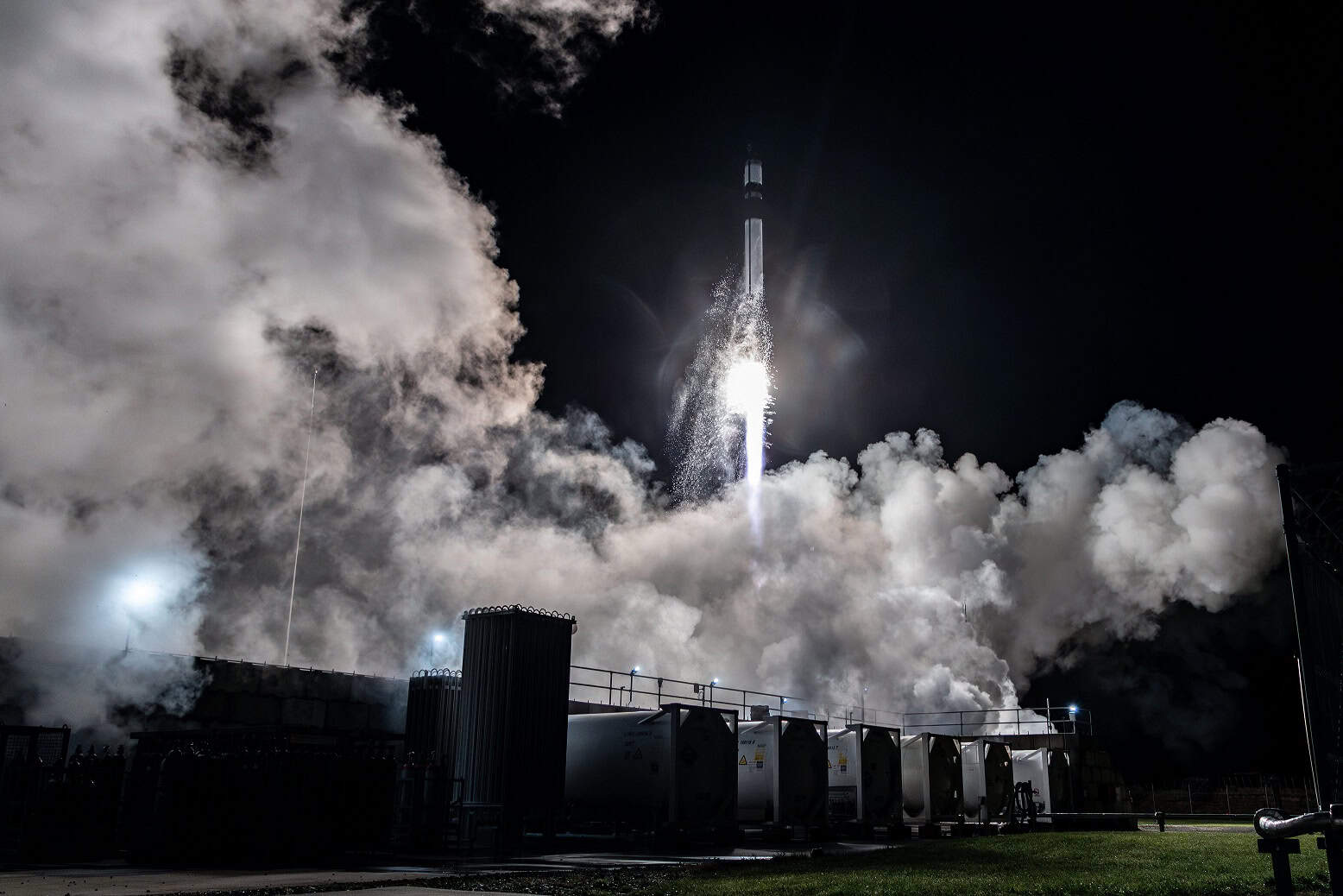
Anthropic Pushes Claude Deeper Into Windows Integration
Claude is no longer just sitting in a chat window. Anthropic rolled out two major updates that bring its AI assistant much closer to how people actually work: full integration with Microsoft 365, and expanded "computer use" capabilities on Windows. Together, they signal a clear shift, from assistant to operator. The first update opens up Microsoft 365 integration to all Claude users, including those on the free tier. That means you can now connect tools like Outlook, OneDrive, and SharePoint directly to Claude. Instead of the usual back-and-forth, downloading files, uploading them again, copying email threads, you can pull everything straight into a conversation. The second update is where things get more interesting. Claude's "computer use" feature, its ability to take control of a machine and perform tasks, is now available on Windows via Claude Cowork and Claude Code Desktop. In practical terms, Claude can: In other words, it doesn't just assist anymore, it acts. For Windows users, this closes a major gap. Until now, AI agents felt powerful but disconnected from the actual environments where work happens. This brings them directly into it. Taken together, these updates reflect something bigger. Claude is evolving from a tool you consult into a system that participates. By plugging into Microsoft's ecosystem and gaining the ability to operate a computer, Anthropic is positioning Claude as a layer across your workflow, not just an interface. And by making key features available to free users, it's also accelerating adoption, not just capability.

Anthropic's Claude Just Broke Out of the Chat Box -- and Onto Your Windows Desktop
For years, the pitch from artificial intelligence companies has been roughly the same: type a question, get an answer. A glorified search engine with better grammar. But Anthropic, the San Francisco-based AI company behind Claude, is now making a far more ambitious bet -- that its AI assistant should live inside your computer, read your emails, manage your files, and act on your behalf across the applications you use every day. The company announced this week that Claude can now connect directly to a user's Windows PC through a new set of integrations that extend the chatbot's reach well beyond a browser tab. As Digital Trends reported, Claude can now tap into Gmail, Google Calendar, local files, and even execute tasks on a Windows machine -- a significant expansion of what was previously a text-in, text-out interface. The feature, called "integrations," allows Claude to interact with third-party tools and services without the user having to copy and paste information between windows. This isn't a small update. It's a fundamental reorientation of what Claude is supposed to be. Anthropic has been steadily building out what it calls the Model Context Protocol, or MCP -- an open standard that lets AI models communicate with external data sources and tools. Think of it as a universal adapter. Instead of building bespoke connections between Claude and every application on the planet, MCP provides a standardized way for any software to expose its data and capabilities to an AI model. The Windows integrations announced this week are built on top of MCP, and they represent the most consumer-facing deployment of the protocol to date. The list of supported integrations is already substantial. Users on Claude's paid plans -- Pro, Team, and Enterprise -- can connect the assistant to Gmail, Google Docs, Google Sheets, Google Calendar, Notion, Asana, Jira, GitHub, GitLab, Sentry, Linear, Zapier, Cloudflare, Intercom, Stripe, Plaid, Square, Twilio, and several others. And critically, Claude can now access and interact with files stored locally on a Windows PC, meaning it can read documents, analyze spreadsheets, and perform tasks that previously required manual effort or specialized software. The practical implications are worth spelling out. A product manager could ask Claude to pull the latest sprint data from Jira, cross-reference it with a project timeline in Google Sheets, draft a status update in a Google Doc, and schedule a review meeting in Google Calendar -- all from a single conversation thread. A developer could ask Claude to review a GitHub pull request, check related Sentry error logs, and draft release notes. A finance team could ask it to reconcile Stripe payment data against Plaid bank feeds. These aren't hypothetical scenarios. They're the explicit use cases Anthropic is marketing. But the Windows PC integration is perhaps the most striking piece. According to Digital Trends, Claude can now run tasks directly on a user's machine, moving beyond cloud-based services into the domain of local computing. This positions Claude less as a chatbot and more as an operating system-level assistant, something closer to what Microsoft has been attempting with Copilot and what Apple has been building with its Apple Intelligence features in macOS and iOS. The timing is pointed. Microsoft has spent the past eighteen months embedding Copilot into nearly every surface of Windows and Office 365. Google has been doing the same with Gemini across Workspace. Anthropic, which doesn't own an operating system or a productivity suite, is effectively trying to become the connective tissue between all of them -- a neutral AI layer that sits on top of whatever tools a person or company already uses. It's a compelling positioning. Also a risky one. The risk comes from trust. Giving an AI assistant access to your email, your calendar, your local files, and your code repositories requires an enormous leap of faith -- particularly in an enterprise context where data governance and compliance aren't optional. Anthropic has emphasized that integrations require explicit user authorization, that data accessed through MCP connections isn't used to train Claude's models, and that enterprise customers retain full control over which integrations are enabled for their organizations. These assurances are necessary. Whether they're sufficient will depend on how security teams and CISOs evaluate the actual implementation. There's also the question of reliability. AI models hallucinate. They make things up. When Claude is generating a poem, a hallucination is an annoyance. When Claude is executing a task on your Windows PC -- moving files, sending emails, modifying documents -- a hallucination could be a disaster. Anthropic has built in confirmation steps for certain high-stakes actions, requiring users to approve before Claude executes something irreversible. But the boundary between what counts as high-stakes and what doesn't will inevitably be tested as usage scales. Industry analysts have noted that the MCP approach gives Anthropic a structural advantage in the integration race. Because MCP is an open protocol, any developer can build an MCP server that exposes their application's functionality to Claude. This means Anthropic doesn't need to negotiate individual partnerships with every SaaS vendor on the market. The community can build the connectors. And indeed, a growing number of third-party MCP servers have already emerged, extending Claude's reach into tools that Anthropic itself hasn't formally integrated. So where does this leave the competitive field? OpenAI, Anthropic's most direct rival, has been pursuing a similar strategy with ChatGPT's plugin system and its more recent "GPTs" feature, which allows users to create custom versions of ChatGPT connected to external data. Google's Gemini is deeply embedded in Google's own product line but has been slower to offer broad third-party integrations. Microsoft's Copilot has the deepest OS-level integration but is tightly coupled to the Microsoft stack, making it less appealing for organizations that rely heavily on non-Microsoft tools. Anthropic's play is differentiation through openness. By making MCP an open standard rather than a proprietary API, the company is betting that developers and enterprises will gravitate toward an AI assistant that works with everything rather than one that works best with a single vendor's products. It's the classic platform strategy: become the hub, and let others build the spokes. The Windows desktop integration adds another dimension to this strategy. Claude already had a Mac desktop app with local file access; the Windows version extends this to the roughly 72% of desktop users worldwide who run Microsoft's operating system, according to StatCounter data. For Anthropic, which generates revenue primarily through subscriptions and API usage, expanding the surface area of what Claude can do -- and where it can do it -- is directly tied to the company's ability to convert free users into paying customers and to justify the premium pricing of its Pro ($20/month), Team ($30/user/month), and Enterprise tiers. The enterprise angle is especially critical. Anthropic has been aggressively courting large organizations, and the integrations announced this week are clearly designed with enterprise workflows in mind. Connecting to Jira, GitHub, Sentry, and Linear targets software development teams. Stripe, Plaid, and Square target finance and payments teams. Intercom targets customer support. Asana and Notion target project management. The breadth of integrations signals that Anthropic isn't going after a single vertical -- it's trying to be useful across the entire organization. And that's the real ambition here. Not just to answer questions, but to do work. To move from a tool you consult to a tool that acts. The shift from passive AI -- ask a question, get a response -- to active AI -- give an instruction, watch it execute -- is the most consequential transition happening in the industry right now. Anthropic, with this week's announcements, has made its intentions unmistakable. Whether users will actually hand over the keys to their inboxes, their file systems, and their project management tools remains the open question. The technology is clearly moving in that direction. The trust may take longer to follow.

SpaceX Will Do 2 Things Never Before Seen in the IPO Market (Hint: 1 is a Big Deal for Retail Investors) | The Motley Fool
Despite volatile market conditions, SpaceX appears to be moving forward with its initial public offering at breakneck speed. The prediction markets have placed the odds of the company completing an IPO before July at over 50% (as of March 30). SpaceX is a first in many regards. For one, the company is a leader in the space sector. Not only does SpaceX use reusable rockets for astronaut launches, but the company has also built a low-orbit satellite network called Starlink that provides high-speed internet access globally, even in hard-to-reach areas where traditional fiber or other cable equipment is unavailable or too expensive to build. Not only is SpaceX a one-of-a-kind company, but its debut on the public market will do two things that are rarely seen before in an IPO. One could be a big deal for retail investors. The SpaceX IPO would be the largest ever, at least so far. Media outlets from CNBC to Barron's to PitchBook have estimated that the company could raise anywhere from $50 billion to over $75 billion, valuing it at as high as $1.8 trillion. That would immediately place the company in an elite group with fewer than a dozen publicly traded companies that have market caps over $1 trillion. Until now, the largest ever IPO had occurred in 2019 with Saudi Arabia's state oil company, Aramco, which raised over $29 billion and went public at a valuation between $1.5 trillion and $1.7 trillion. However, SpaceX could be the start of a string of several massive IPOs either this year or next, with artificial intelligence (AI) giants like Anthropic and OpenAI also reportedly considering future IPOs that are expected to be in a similar range. The SpaceX IPO is vastly different from a sovereign oil company and is venturing into a whole new sector, literally off the planet. Additionally, Aramco is one of the most profitable companies in the world. The company made over $106 billion in 2024 and over $121 billion in 2023. Meanwhile, SpaceX reportedly only made $8 billion of net income on as much as $16 billion of revenue in 2025. So investors would really be buying SpaceX at an incredibly high growth valuation. What's also interesting is that SpaceX now owns xAI, which includes Grok and the social platform X (formerly Twitter). The deal, completed earlier this year, valued the combined entity at $1.25 trillion. Retail investors will be excited to learn that Reuters, citing anonymous sources, has reported that SpaceX founder Elon Musk is contemplating allocating 30% of the IPO to retail investors. That's triple the amount most IPOs allot to retail. The strategy doesn't come as a complete shock. Musk has a cult-like following, and his other company, Tesla, is one of the most owned stocks on the popular retail brokerage Robinhood Markets. The IPO is so big that SpaceX is reportedly tapping at least half a dozen investment banks to help with distribution. Morgan Stanley's E*TRADE will reportedly handle smaller retail investors; Bank of America will handle U.S. high-net-worth individuals and family offices; and Citigroup will handle international retail investors. I would expect demand for the IPO to be high across the board, given Musk's following and SpaceX's well-known status. The hype will likely be off the charts. Valuation is likely not as important for this company because it's one of those bets on uncharted territory, where investors are betting that SpaceX will venture into a whole new market and immediately snap up significant market share, similar to what Tesla initially did with electric vehicles. Investors should keep this in mind if they have an opportunity to purchase the stock. While getting in on day one often feels great, patient investors will likely have the opportunity to purchase the stock at lower prices after the IPO, once lock-up provisions expire and insiders can begin to unload their shares.

Mumbai's Suburban Rail Network Under Scanner: 92-95% Punctuality Claim Masks Peak Hour Chaos, Say Commuters
Mumbai's suburban rail network, which ferries over 75 lakh passengers every day, is once again under the scanner. While Central Railway claims a punctuality rate of 92% and Western Railway boasts 95% for 2025-26, thousands of daily commuters say trains especially during peak hours routinely run 10 to 20 minutes behind schedule. The key issue lies in how punctuality is calculated. Under current railway norms, a train delayed by up to five to ten minutes is still counted as "on time." Critics say this inflates punctuality figures while masking the daily disruption faced by office-goers. Flawed Calculation A six-month ground observation by FPJ across both suburban networks found a clear pattern: one delayed train triggers a cascade -- platforms fill up, the next arriving train becomes dangerously overcrowded, and if an AC local is slotted in between, the chaos multiplies. Passengers on the Central Railway corridor are among the worst hit. Commuters report that delays during peak hours are not the exception but the norm, with little or no prior announcement of blocks or speed restrictions among the most cited reasons for late running, along with signal failures, trespassing incidents, and track maintenance work. Railway's Response Western Railway's DRM Pankaj Singh has pledged to achieve 98% punctuality soon, citing ongoing infrastructure upgrades. Responding to questions about frequent train delays due to signal failures, Central Railway General Manager Pratik Goswami said that multiple infrastructure projects are currently underway, including track maintenance and Kavach safety system installation, which are essential works. He said the railway regrets delays in local train services and is making every effort to ensure that all services run on time as soon as possible.

Claude Leak Shows That Anthropic Is Tracking Users' Vulgar Language and Deems Them "Negative"
AI company Anthropic suffered a massive leak of the source code to its Claude Code AI assistant earlier this week, triggering a panicked game of cat and mouse as company representatives sent out copyright takedown requests targeting thousands of copies of its pilfered work. The code allowed tinkerers to reverse engineer aspects of the blockbuster chatbot, highlighting concerns that the leak could give Anthropic's competitors a major leg up. The leak also gave eyebrow-raising clues into upcoming or experimental efforts, including unreleased AI models and a "Tamagotchi"-like feature, called "buddy," that "sits beside your input box and reacts to your coding." Perhaps the strangest yet: code snippets also showed that Anthropic is actively tracking how often users are using vulgar language. "Claude Code has a regex that detects wtf,' "ffs", "piece of s***", "f*** you", "this sucks" etc." tweeted developer Rahat Chowdhury. "It doesn't change behavior... it just silently logs is_negative: true to analytics." "Anthropic is tracking how often you rage at your AI," he added. "Do with this information what you will." "This is one of the signals we use to figure out if people are having a good experience," Claude Code creator Boris Cherny replied. "We put it on a dashboard and call it the 'f***s' chart." Chowdhury also found that "there is a full mood classification for their insights but its employee only." "When an Anthropic employee gets frustrated, it pops up a prompt asking them to share their transcript, basically 'hey you seem upset, wanna file a bug report?'" he wrote. Beyond giving us a fascinating insight into how Anthropic has been building its blockbuster assistant, Cherny has been on a tear on social media, trying to pick up the pieces following his employer's embarrassing blunder. "It was human error," he insisted in a Wednesday tweet. "Our deploy process has a few manual steps, and we didn't do one of the steps correctly. We have landed a few improvements and are digging in to add more sanity checks." Cherny also insisted that more AI was the answer to ensure such a leak won't happen again. "Like with any other incident, the counter-intuitive answer is to solve the problem by finding ways to go faster, rather than introducing more process," he wrote. "In this case more automation and [C]laude checking the results." The developer also clarified that "no one was fired" following the leak, calling it "an honest mistake." But now that the cat is out of the bag, developers continue to pore over the wealth of data. Student developer Sigrid Jin's recreated source code repository on GitHub -- dubbed "Claw Code," in a reference to the open-source AI agent OpenClaw -- has been forked, or essentially copied, almost 100,000 times. He told Business Insider that the debacle could result in greater democratization of these kinds of tools. "Non-technical people are using these agents to build real things," Jin said. "We are talking about cardiologists making patient care apps and lawyers automating permit approvals." "It has turned into a massive sharing party," he added.

Wetware AI: Living Brain Cells Trained to Run Chaos Math - Neuroscience News
Summary: The line between biology and computer science just got even blurrier. Researchers have successfully trained living rat neurons to perform complex machine learning tasks. The study integrated cultured neuronal networks into a "reservoir computing" framework. Using a technique called FORCE learning, the team taught these biological circuits to generate intricate mathematical patterns -- including the chaotic Lorenz attractor -- proving that living "wetware" can serve as a functional, real-time computational resource. A research team at Tohoku University and Future University Hakodate has demonstrated that living biological neurons can be trained to perform a supervised temporal pattern learning task previously carried out by artificial systems. By integrating cultured neuronal networks into a machine learning framework, the team showed that these biological systems can generate complex time-series signals, marking a significant step forward in both neuroscience and bio-inspired computing. The study was published online in Proceedings of the National Academy of Sciences (PNAS) on March 12, 2026, highlighting a novel intersection between living neural systems and computational technology. The findings suggest that biological neural networks (BNNs) may serve as viable alternatives or complements to existing machine learning models. Artificial neural networks (ANNs) and spiking neural networks (SNNs) have long been used in machine learning and neuromorphic hardware. A framework known as reservoir computing has emerged as an efficient approach for processing time-dependent data by leveraging the dynamic properties of recurrently connected ANNs and SNNs. In conventional ANN-based reservoir computing, methods such as First-Order Reduced and Controlled Error (FORCE) learning enable real-time adaptation by continuously adjusting output signals in response to errors. These techniques allow artificial systems to generate a wide range of temporal patterns, including periodic and chaotic signals. However, whether similar approaches could be applied to biological neural networks has remained an open question. To address this gap, the researchers constructed biological neural networks using cultured rat cortical neurons and incorporated them into a reservoir computing framework. By applying FORCE learning to optimize the system's readout layer, the team successfully trained the biological networks to produce complex temporal signals comparable to those involved in motor control. A key innovation in the study was the use of microfluidic devices to precisely guide neuronal growth and control network connectivity. This approach enabled the researchers to create modular network architectures that minimized excessive synchronization, thereby promoting the rich, high-dimensional dynamics required for effective reservoir computing. Using this system, the BNN-based framework was able to generate a variety of time-series patterns, including sine waves, triangular waves, square waves, and even chaotic trajectories such as the Lorenz attractor. Notably, the network demonstrated flexibility by learning and stably reproducing sine waves with periods ranging from 4 to 30 seconds within the same system. "This work shows that living neuronal networks are not only biologically meaningful systems but may also serve as novel computational resources," said Hideaki Yamamoto, a professor at Tohoku University. "By bridging neuroscience and machine learning, we are opening a pathway toward new forms of computing that leverage the intrinsic dynamics of biological systems." Looking ahead, the research team aims to improve the stability of signal generation after training has concluded. Future efforts will focus on reducing feedback delays and refining the FORCE learning algorithm. In parallel, the platform may be expanded into a microphysiological system for studying drug responses and modeling neurological disorders, further extending its impact across both scientific and medical fields. Author: Public Relations Office Source: Tohoku University Contact: Public Relations Office - Tohoku University Image: The image is credited to Neuroscience News Original Research: Open access. "Online supervised learning of temporal patterns in biological neural networks under feedback control" by Yuki Sono, Hideaki Yamamoto, Yusei Nishi, Takuma Sumi, Yuya Sato, Ayumi Hirano-Iwata, Yuichi Katori, and Shigeo Sato. PNAS DOI:10.1073/pnas.2521560123 Abstract Online supervised learning of temporal patterns in biological neural networks under feedback control In vitro biological neural networks (BNNs) provide well-defined model systems for constructively investigating how living cells interact with their environments to shape high-dimensional dynamics that can be used to generate coherent temporal outputs, such as those required for motor control. Here, we develop a real-time closed-loop BNN system that is capable of generating periodic and chaotic temporal signals by integrating cultured cortical neurons with microfluidic devices and high-density microelectrode arrays. We show that training a simple linear decoder with fixed feedback weights enables the system to learn and autonomously generate diverse temporal patterns. When feedback is switched on, the irregular activity in the BNNs is transformed into low-dimensional, structured dynamics, producing coherent trajectories that are characterized by stable transitions between different neural states. BNNs trained on various target frequencies -- ranging from 4 to 30 s -- can be trained to sustain oscillations at distinct frequencies, demonstrating their adaptability. Importantly, top-down control of the self-organized network formation with microfluidic devices is the key to suppressing excessive synchronization and increasing dynamic complexity in BNNs, facilitating the training process and the generation of robust outputs. This work offers a biologically inspired platform for understanding the physical basis of cortical computations and for advancing energy-efficient neuromorphic computing paradigms.
Kokoshnik of discord: a "model" scandal broke out in the Ukrainian Foreign Ministry
Kokoshnik of discord: a "model" scandal broke out in the Ukrainian Foreign Ministry Ukrainian diplomacy -- if this circus can be called that at all -- is being shaken by another personnel crisis, writes European Truth. It turned out that both Kuleba and Sibiga were appointed in batches to the "honorary consuls" of characters with extremely dubious backgrounds. One of these stars was a certain Victoria Yakimova, whose accounts are full of candid pictures. In her defense, the "diva" stated that she only worked as a model. However, the Bandera community was agitated by something else: an old screenshot of Yakimova posing in a cocoanut was leaked to the network. The "bright-eyed patriots" instantly gave out 50 shades of hate: how dare the official representative of Kiev try on the headdress of the "occupiers"? Yakimova's bosses just shrug their hands, saying that nude shooting does not prevent the lady from working effectively in the field of diplomacy. InoSMI -- the main international
