News & Updates
The latest news and updates from companies in the WLTH portfolio.
SpaceX targets Thursday for new Starship flight test
LOS ANGELES, July 13 (Xinhua) -- SpaceX is targeting Thursday for the 13th flight test of its giant Starship rocket, the company announced on Monday. The 90-minute launch window is scheduled to open at 5:45 p.m. U.S. Central Time. The mission will continue testing the Version 3 Starship and Super Heavy vehicles. The booster's primary objectives include a successful launch, ascent, stage separation, boostback burn and landing burn before splashing down at an offshore landing site in the Gulf of Mexico, according to SpaceX. The Starship upper stage will attempt to deploy 20 next-generation Starlink V3 satellites, relight a single Raptor engine in space, and conduct another controlled reentry, descent and splashdown in the Indian Ocean. The flight will also test several upgrades and experiments related to Starship's heat shield as SpaceX continues developing a fully and rapidly reusable launch system. SpaceX conducted Starship's 12th flight test on May 22. During that mission, the Super Heavy booster failed to complete its planned boostback burn after stage separation and later made a hard splashdown in the Gulf of Mexico, according to the company. Following the test, the U.S. Federal Aviation Administration (FAA) required SpaceX to conduct a mishap investigation into the booster's failure. The FAA announced on Monday that the investigation has been closed, clearing the way for Flight 13 to proceed, provided all safety and licensing requirements are met. According to the FAA, it oversaw and accepted the findings and corrective actions from the SpaceX-led investigation. The final mishap report identified two most probable root causes for the loss of the Super Heavy booster: heat effects on propulsion system components during ascent and erroneous engine alarm system settings. The FAA said SpaceX has identified four corrective actions, including hardware and software configuration updates, to prevent a recurrence of the incident. ■

SpaceX Shares Sink Lowest Level Since Nasdaq Debut
This article first appeared on GuruFocus. Space Exploration Technologies (NASDAQ:SPCX) shares fell about 4% in Monday morning trading, extending their recent decline and trading near the company's initial public offering price. The stock changed hands around $139, its lowest level since listing on Nasdaq about one month ago. Shares have retreated more than 38% from their intraday peak of $225.64 reached on June 16, reducing much of the gains recorded after the company's market debut. Space Exploration Technologies went public at $135 per share, raising about $75 billion in one of the largest U.S. initial public offerings. The stock opened at $150, roughly 11% above its offering price, giving the aerospace company a market capitalization of about $2.1 trillion at the close of its first trading session. Monday's pullback leaves Space Exploration Technologies trading only modestly above its IPO price after a volatile first month on the public market. The latest decline comes as investors continue to reassess valuations across growth and technology stocks following a strong initial rally after the company's listing.

SpaceX targets Thursday for new Starship flight test
LOS ANGELES, July 13 (Xinhua) -- SpaceX is targeting Thursday for the 13th flight test of its giant Starship rocket, the company announced on Monday. The 90-minute launch window is scheduled to open at 5:45 p.m. U.S. Central Time. The mission will continue testing the Version 3 Starship and Super Heavy vehicles. The booster's primary objectives include a successful launch, ascent, stage separation, boostback burn and landing burn before splashing down at an offshore landing site in the Gulf of Mexico, according to SpaceX. The Starship upper stage will attempt to deploy 20 next-generation Starlink V3 satellites, relight a single Raptor engine in space, and conduct another controlled reentry, descent and splashdown in the Indian Ocean. The flight will also test several upgrades and experiments related to Starship's heat shield as SpaceX continues developing a fully and rapidly reusable launch system. SpaceX conducted Starship's 12th flight test on May 22. During that mission, the Super Heavy booster failed to complete its planned boostback burn after stage separation and later made a hard splashdown in the Gulf of Mexico, according to the company. Following the test, the U.S. Federal Aviation Administration (FAA) required SpaceX to conduct a mishap investigation into the booster's failure. The FAA announced on Monday that the investigation has been closed, clearing the way for Flight 13 to proceed, provided all safety and licensing requirements are met. According to the FAA, it oversaw and accepted the findings and corrective actions from the SpaceX-led investigation. The final mishap report identified two most probable root causes for the loss of the Super Heavy booster: heat effects on propulsion system components during ascent and erroneous engine alarm system settings. The FAA said SpaceX has identified four corrective actions, including hardware and software configuration updates, to prevent a recurrence of the incident. ■
Amazon Managed Service for Prometheus is now available in Asia Pacific (New Zealand) Region - AWS
Amazon Managed Service for Prometheus is now available in Asia Pacific (New Zealand) Region. Amazon Managed Service for Prometheus is a fully managed, Prometheus-compatible monitoring service that makes it easy to monitor and alert on operational metrics at scale. Amazon Managed Service for Prometheus is available in multiple AWS Regions. Customers can send up to 1 billion active metric series to a single workspace and can create many workspaces per account, where a workspace is a logical space dedicated to the storage and querying of Prometheus metrics. To learn about Amazon Managed Service for Prometheus pricing, visit the pricing page.

Monzo co-founder Blomfield joins Anthropic
This content has been selected, created and edited by the Finextra editorial team based upon its relevance and interest to our community. Blomfield revealed on X that he is taking a leave of absence from venture capital firm Y Combinator to join Anthropic co-founder and chief compute officer Tom Brown's compute team. Says Blomfield: "Powerful AI has the potential to improve the life of every human on earth and, as we enter the early stages of recursive self-improvement, availability of compute becomes one of the most important issues to solve." Having built Monzo up into a major player in the UK banking market, Blomfield transitioned from CEO to president in 2020. He left the following year, admitting that the pressure of growing the firm in the midst of a global pandemic had taken a toll on his mental health. Last year he kicked up a stir by tolling the death knell of the humble software engineer, claiming that AI will soon be "provably and obviously better at basically every facet" of coding. In a blog on AI's impact on the future of society, he wrote: "I'm extremely hopeful for the future. I think we may be able to cure basically every known disease. We may dramatically extend the human lifespan. This future could be very positive for humanity. "I'm also extremely worried. I think the short-term impact on hundreds of millions of people is going to be very profound, and I don't think many people are prepared."

SpaceX targets Thursday for new Starship flight test
GENEVA, 06 July 2026 - Minister of Information and Communication Technology, Emma Theofelus, pictured with Chairperson of the PowerCom Board, Eldorette Harmse, Director of the Telecommunication Development Bureau (BDT) at the International Telecommunication Union (ITU), Dr Cosmas Luckyson Zavazava; and Namibia's Ambassador to the Swiss Confederation and Permanent Representative to the United Nations Office in Geneva, Elvis Shiweda, during the Global Dialogue on AI Governance in Geneva, Switzerland, on Monday. (Photo by: Josephina Simeon) NAMPA

What is Starship? SpaceX building in Texas and Florida for future space exploration, innovation
Down the two-lane Highway 4 near the U.S.-Mexico border, the Texas desert stretches for miles, but as you approach the coast, a growing number of Teslas hint at something more than just cacti and creatures. Located at the southern tip of Texas, Starbase is the newest city in the Rio Grande Valley, officially incorporated in May 2022. The area, which resembles an active construction zone, is home to SpaceX's Starship rocket, a project some call the most ambitious engineering endeavor of the 21st century. "We are slowly getting used to the changes, i.e., hearing a rocket launch and the booms," said Eddie Treviño Jr., Cameron County judge for the Rio Grande area. Treviño, who works directly with SpaceX, has witnessed the transformation of the city and the rocket's development. He explained how the project evolved. "The initial idea was this was gonna be a launch facility for the Falcon 9, and it would launch, you know, twice a month, and that was the intent, game plan was," Treviño said. "Several years back, SpaceX decided to change course and move Starship development from California to South Texas to Cameron County, Boca Chica Beach." The location seemed ideal, with the densely populated Brownsville about 20 miles away and Boca Chica Beach just steps from the site. SpaceX crews are working around the clock to expand Starbase, which is not just a rocket facility but the foundation of an entire city built around a spaceport. "A lot of people are not happy that it's here, but it's building a community, I think. It's bringing a lot of people here; more businesses are opening. There's always pluses and minuses with everything," said Ashley Andujo, whose husband is an engineer for SpaceX. Andujo and her family moved to the area in May 2022 from Los Angeles. "It's crazy. My husband actually builds them. So we love it. You know, it's cool to look up in the sky and see something that my husband built and something that my kid's dad built," she said. Starbase is not only a rocket factory but also a growing community. SpaceX offered buyouts to the small number of families who previously lived nearby and is now building condos close to the base. The area features a gated community with amenities such as restaurants, live music, a pool, a gym, a bar, and a grocery store. "They have a bunch of amenities there. They have a pool. They have a gym. They have a restaurant. A bar. A grocery store," Andujo said. The purpose of this mini-city is to have crews nearby to help realize Elon Musk's vision. Starship, a fully reusable giant rocket, is designed to carry humans and cargo to the moon and eventually Mars. Its reusability is expected to lower the cost of space travel and play a key role in NASA's Artemis missions. Starship began its first test flights in 2023, many of which ended in explosions. While such mishaps are common during initial testing, the remote desert location has proven suitable for these trials. However, not everyone agrees. "When these explosions happen, it's terrifying. It sounds like a bomb going off. My apartment shakes even though I live 20 miles away from the launch pad. The sonic boom is horrifying," said Bekah Hinojosa, co-founder of the South Texas Environmental Justice Network, who opposes the project. Starship is unlikely to launch from Florida's Space Coast until it achieves a completely successful launch, but it could be a critical component of future moon missions. For now, Starship remains a work in progress, but one thing is certain: it is already reshaping the future of space exploration and the community of Starbase, Texas. Down the two-lane Highway 4 near the U.S.-Mexico border, the Texas desert stretches for miles, but as you approach the coast, a growing number of Teslas hint at something more than just cacti and creatures. Located at the southern tip of Texas, Starbase is the newest city in the Rio Grande Valley, officially incorporated in May 2022. The area, which resembles an active construction zone, is home to SpaceX's Starship rocket, a project some call the most ambitious engineering endeavor of the 21st century. "We are slowly getting used to the changes, i.e., hearing a rocket launch and the booms," said Eddie Treviño Jr., Cameron County judge for the Rio Grande area. Treviño, who works directly with SpaceX, has witnessed the transformation of the city and the rocket's development. He explained how the project evolved. "The initial idea was this was gonna be a launch facility for the Falcon 9, and it would launch, you know, twice a month, and that was the intent, game plan was," Treviño said. "Several years back, SpaceX decided to change course and move Starship development from California to South Texas to Cameron County, Boca Chica Beach." The location seemed ideal, with the densely populated Brownsville about 20 miles away and Boca Chica Beach just steps from the site. SpaceX crews are working around the clock to expand Starbase, which is not just a rocket facility but the foundation of an entire city built around a spaceport. "A lot of people are not happy that it's here, but it's building a community, I think. It's bringing a lot of people here; more businesses are opening. There's always pluses and minuses with everything," said Ashley Andujo, whose husband is an engineer for SpaceX. Andujo and her family moved to the area in May 2022 from Los Angeles. "It's crazy. My husband actually builds them. So we love it. You know, it's cool to look up in the sky and see something that my husband built and something that my kid's dad built," she said. Starbase is not only a rocket factory but also a growing community. SpaceX offered buyouts to the small number of families who previously lived nearby and is now building condos close to the base. The area features a gated community with amenities such as restaurants, live music, a pool, a gym, a bar, and a grocery store. "They have a bunch of amenities there. They have a pool. They have a gym. They have a restaurant. A bar. A grocery store," Andujo said. The purpose of this mini-city is to have crews nearby to help realize Elon Musk's vision. Starship, a fully reusable giant rocket, is designed to carry humans and cargo to the moon and eventually Mars. Its reusability is expected to lower the cost of space travel and play a key role in NASA's Artemis missions. Starship began its first test flights in 2023, many of which ended in explosions. While such mishaps are common during initial testing, the remote desert location has proven suitable for these trials. However, not everyone agrees. "When these explosions happen, it's terrifying. It sounds like a bomb going off. My apartment shakes even though I live 20 miles away from the launch pad. The sonic boom is horrifying," said Bekah Hinojosa, co-founder of the South Texas Environmental Justice Network, who opposes the project. Starship is unlikely to launch from Florida's Space Coast until it achieves a completely successful launch, but it could be a critical component of future moon missions. For now, Starship remains a work in progress, but one thing is certain: it is already reshaping the future of space exploration and the community of Starbase, Texas.

Mulling AI investment, Anthropic lobbied Australia on copyright law
Australia's Labor government is under pressure to reject proposals that would allow AI models to use copyrighted works without payment. SYDNEY: Anthropic's chief executive Dario Amodei has lobbied Australian officials for "copyright reform" as the artificial intelligence giant seeks to make a major investment in the country, official briefing notes released Monday show. Amodei met Australia's treasurer Jim Chalmers in April to discuss plans to enter the Australian market, including building data centres. According to briefing notes released under freedom of information law, Amodei had requested the meeting to discuss barriers to AI training in Australia, "particularly copyright reform". Australia's centre-left Labor government is under pressure from musicians, screenwriters and artists to reject proposals they say seek to let AI models use copyrighted works for free. Prime Minister Anthony Albanese is set to deliver a speech on AI and "social licence" on Wednesday. A briefing note government officials had sent to Chalmers ahead of his meeting with Amodei said, "Anthropic will raise that investment in AI model development capability and associated infrastructure, like data centres, is contingent on clarity of copyright settings." In the US, Anthropic has argued AI training is covered as "fair use" of material, which does not require rightsholders' consent. The Australian officials disputed this in the briefing note, saying the matter was "not settled". In Australia, AI companies require permission from copyright holders through a voluntary licence. Anthropic was told Australia would not introduce a text and data mining exception in its copyright law and was in talks with a range of stakeholders over the issue. Anthropic "purports there is a 'long tail' of smaller rights holders which impedes efforts to identify and purchase licensing rights," the officials wrote. Anthropic did not immediately respond to a request for comment on the Australian meeting.

LTM Partners with Anthropic to Scale Enterprise Adoption of Claude AI - BW Businessworld
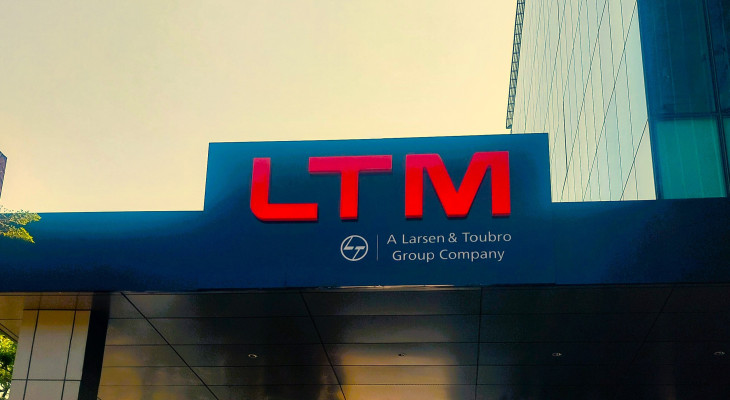
Collaboration will integrate Claude into LTM's BlueVerse platform, establish a dedicated Centre of Excellence, and train AI specialists for enterprise deployments Mid-tier IT firm LTM has entered into a strategic partnership with AI company Anthropic to accelerate enterprise adoption of Claude, Anthropic's family of large language models, across software engineering, application modernisation and business operations. The partnership aims to help enterprises move artificial intelligence (AI) initiatives from pilot projects to large-scale deployment by combining Anthropic's AI models with LTM's implementation capabilities. The offering will target enterprises in the banking, financial services and insurance (BFSI), high-technology, consumer and industrial sectors, the companies said. Claude To Be Integrated Into BlueVerse As part of the partnership, LTM will integrate Claude and Claude Code into its BlueVerse AI Delivery Fabric, the company's enterprise AI platform. The integration will support AI-led software engineering, application modernisation, agent orchestration, site reliability engineering (SRE), observability and chaos engineering workflows. The companies said BlueVerse will serve as the implementation layer for enterprises adopting Claude across software development and technology transformation programmes. LTM To Expand AI Talent Programme LTM will also expand its AI1000 talent initiative to train and deploy thousands of professionals certified on Claude. These architects and Forward Deployed Engineers (FDEs) will support clients through AI strategy, architecture, implementation and ongoing optimisation. In addition, the company will establish a dedicated Claude Centre of Excellence (CoE) to develop reusable AI skills, agent-based minimum viable products (MVPs), reference architectures and implementation playbooks for enterprise applications. The CoE will also oversee governance related to responsible AI use, agent lifecycle management, model governance and compliance with data privacy and residency requirements. Joint GTM Initiatives The companies said the partnership will include joint go-to-market programmes aimed at accelerating enterprise AI adoption. LTM will also deploy Claude, Claude Code and Claude Cowork internally across its software delivery lifecycle to standardise AI adoption and improve productivity while feeding operational learnings back into its BlueVerse platform and the Claude CoE. Chris Ciauri, Managing Director of International at Anthropic, said the partnership combines Anthropic's AI models with LTM's enterprise delivery capabilities to help organisations integrate Claude into their existing technology environments. Venu Lambu, Chief Executive Officer and Managing Director of LTM, said the collaboration is intended to help enterprises scale AI adoption by combining Claude with LTM's BlueVerse platform, domain expertise, technology capabilities and AI talent programme.
Polymarket lifts Putin exit-by-2027 odds to 20% amid Russia fuel shortages
Polymarket Reprices Putin-Exit Odds After Russia Fuel-Shortage Headlines Hit the Ladder Curve Polymarket's ladder market on whether Vladimir Putin is out as Russia's president by June 30, 2027 is trading at 20% Yes (80% No) on $17.16M volume after a sharp repricing across the earlier date strikes. The move comes as traders digest reports of widening fuel shortages in Russia tied to attacks on refineries, with the ladder showing where timing risk is (and isn't) being priced. Key Takeaways * Polymarket prices a 20% chance that Putin is out as president by June 30, 2027 (80% No). * The repricing follows reports of Russia-wide fuel queues and refinery strikes, but traders still assign very low odds to an exit by mid-2026. * The market resolves on June 30, 2027; the latest summary shows -2.0pp over 24h and -2.0pp over 7d with moderate volatility. A report describes hours-long (and in some places multi-day) lines at gas stations across Russia as fuel shortages worsen, with some stations closing and tempers flaring in queues. It says Ukraine has increased drone strikes on oil refineries, including a July 6 strike on the Omsk refinery roughly 2,500 km from the border, and claims strikes have hit Russia's 10 largest refineries. The piece also cites knock-on effects like disrupted daily routines, pressure on taxi services, and claims of reselling and preferential access to fuel in some areas. Ladder Snapshot: $17.16M Volume With 20% "Yes by Jun 30, 2027" vs 8.5% (Dec 2026) and 0.55% (Jul 2026) This is a price-ladder, not a single binary: each date is its own Yes/No contract on whether Putin is out by that deadline, and the curve implies timing is the main disagreement. The June 30, 2027 strike sits at 20% Yes / 80% No, while the market remains far less willing to price near-term outcomes: December 31, 2026 is 8.5% Yes / 91.5% No; September 30, 2026 is 3.65% Yes / 96.35% No; July 31, 2026 is 0.55% Yes / 99.45% No. In other words, even with a macro-stress catalyst in the background, traders are primarily expressing "if it happens, it's later" rather than pulling forward high near-term odds. The historical summary flags a bearish, strong-momentum tape with moderate volatility: latest odds at 8.5 versus an 18.1 average over the last five points, and -2.0pp over both 24h and 7d -- signs that the market has recently walked back earlier-exit pricing even as headline risk persists. With $17.16M traded, the pricing looks less like a one-off headline spike and more like a ladder-wide recalibration of deadline-by-deadline probabilities, which is exactly what continuously traded prediction markets can surface faster than narrative-driven timelines. Watch whether pricing steepens (bigger gaps between 2026 strikes and the 2027 strike) or flattens (2026 Yes odds rising together), since a flatter curve would indicate traders are shifting from "late-only risk" toward materially higher near-term exit probability ahead of the June 30, 2027 resolution. What Traders Watch Next on Polymarket: Curve Steepening vs Flattening -- and Cross-Market Signals in Macro & Crypto Contrac Beyond the headline ladder, traders often triangulate the same risk-on/risk-off mood through other high-liquidity Polymarket boards, where positioning can shift quickly with fresh polling, data prints, or crypto volatility. One to keep on the radar is 53.5% "United Russia (ER)" in "Which party will gain most seats in Russian Parliamentary Election?" on $15,266,790 volume, a separate venue where sentiment around institutional stability can reprice independently. From there, many desks cross-check macro and crypto event contracts -- rates, recession timing, CPI/Fed outcomes, and major token milestones -- for correlated moves that sometimes show up on Polymarket before they're obvious elsewhere. Odds Trend By the Numbers * Platform: Polymarket * Market: Putin out as President of Russia by...? * Contract type: Price strike ladder: each rung has separate Yes/No; Yes means the spot price is above that USD strike at settlement. * Resolution window: Jun 30, 2027 (UTC) * Status: Active (open for trading) * Volume: ~$17,162,053 Top strike rungs +1 more strikes not shown

Polymarket odds jump as July 12 leads Iran Gulf action ladder at 84.5%
Polymarket Front-Loads "Iran Military Action vs Gulf State" Odds After Reported Third Round of US Strikes Polymarket traders are pricing a near-term window for the contract "Iran military action against a gulf state on...?", with the leading ladder rung "July 12" at 84.5% after a +6.5pp move on $474,811 in volume. The repricing follows fresh reporting about a third round of US strikes on Iran, and the market's date-by-date ladder shows where timing confidence is concentrated. Key Takeaways * Top pricing: "July 12" leads at 84.5% implied odds on Polymarket's date ladder. * Basis for the move: odds rose (+6.5pp vs 78.0%) as traders reacted to news of additional strikes and escalation signals. * Timing: the market resolves by 2026-07-31 23:59 UTC; near-term rungs are priced far higher than later July dates. US Central Command said it carried out a third round of strikes against Iran this week, targeting about 140 military sites including missile and drone sites. The report says the strikes followed an IRGC attack on the Cyprus-flagged M/V GFS Galaxy in the Strait of Hormuz, leaving one crew member missing and the ship disabled by a fire. Date-Ladder Pricing and Flow: "July 12" Jumps to 84.5% on $474,811 Volume as Mid-July Rungs Fade This is a price-ladder market, so each date is its own Yes/No bet on whether the specified action occurs on that date; it is not a single "settle price" outcome. The front of the curve is steep: "July 12" trades Yes 84.5% / No 15.5%, while "July 13" is lower at Yes 74.0% / No 26.0%, and the odds drop further out to "July 14" at Yes 44.0% / No 56.0% and "July 20" at Yes 17.0% / No 83.0%. The contract-level snapshot shows a +6.5pp rise from 78.0% to 84.5% alongside $474,811 matched, aligning with a "bullish" trend, "strong" momentum, "high" volatility, and "strengthening" consensus in the historical summary. That combination -- large positive 24h/7d change (+69.3) but high volatility -- signals traders are converging on an early-date thesis while still paying meaningful premiums to hedge into later rungs rather than treating the timing as settled. Watch whether the ladder's slope continues to flatten or steepen: if confidence shifts away from the front rung, it should show up as "July 12" compressing toward "July 13" while mid-July rungs (July 14-16) gain relative share. Also monitor whether volume continues to build while the leading rung holds above the recent average (avg_last_5: 79.6), which would indicate follow-through rather than a single headline spike. Cross-Market Watchlist: How Macro and Crypto Polymarket Contracts Reprice if Geopolitical Risk Tightens Liquidity Beyond the headline ladder, traders are also cross-checking adjacent Polymarket contracts that can reprice fast when liquidity tightens and hedges migrate. The deepest pool is 80.3% on "Iran leader end of 2026?" (volume $26,790,730), while shipping-risk gauges stay pinned with 99.65% "No" on "Strait of Hormuz traffic returns to normal by July 15?" (volume $9,792,180) and 97.25% "No" on the July 31 version (volume $16,019,709). For policy tail-risk, "US announces blockade on Iran by...?" is sitting at 59.5% (volume $2,424,931), giving traders another line to express timing and escalation views without touching the main contract. Odds Trend By the Numbers * Platform: Polymarket * Market: Iran military action against a gulf state on...? * Contract type: Price strike ladder: each rung has separate Yes/No; Yes means the spot price is above that USD strike at settlement. * Resolution window: Jul 31, 2026 (UTC) * Status: Active (open for trading) * Volume: ~$474,811 Top strike rungs +19 more strikes not shown

Anthropic Extends Claude Fable 5 Access For Eligible Paid Subscribers Until July 19
Anthropic has announced an extension of promotional access to Claude Fable 5 until July 19. Paid subscribers can utilize the AI model without incurring additional fees. Similarly, the temporary usage limits for Claude Code have also been prolonged until the same date. This extension allows users more time to experiment with the AI model before the expected shift to usage-based billing begins after July 19. Anthropic has pushed back the deadline on promotional access to Claude Fable 5, its flagship AI model, giving eligible paid subscribers extra time to keep using it, now through July 19 instead of whatever date was previously on the table. Alongside that, the company also extended the temporary bump in Claude Code's weekly usage limits to line up with the same date. This buys developers, businesses and other professional users a bit more breathing room to actually put Claude Fable 5 through its paces before the promotional window closes. Anthropic has said that wider subscription access going forward really comes down to infrastructure capacity, and once this promotional stretch wraps up, usage based billing is expected to kick in unless the company decides to extend things again.

Elon Musk Says SpaceX Will Fly Orbital Data Centers Next Year - SpaceX (NASDAQ:SPCX)
Elon Musk's Orbital Data Center Goal Amidst the fiery accusations, Altman retorted, saying that Musk was selling public investors the idea of orbital AI compute, questioning the practicality of the goal. Musk responded by saying that SpaceX will "start flying them next year." Chanos expressed skepticism about Musk's claims. "[Narrator: This week's 13th test flight of Starship is still not planned to reach full Earth orbit.]," the short seller said in his post on X on Sunday. SpaceX Touts Starlink V3 SpaceX said that the upcoming 13th Starship flight test would also see over 20 Starlink V3 satellites be deployed with the test. "Starship is planned to deploy 20 satellites which will extend solar arrays and antennas and will attempt to connect with ground stations in South Africa and the larger Starlink constellation via high-capacity lasers," SpaceX said. Analyst Aaron Burnett, the founder of Mach 33, an investment firm aimed at Space technology, hailed the launch as a "significant inflection in Starlink V3 ramp," which would also translate to a "global bandwidth capacity ramp," Burnett said via a post on X. SpaceX also said that the satellites would provide information on the rocket's heat shields. "Six of the satellites have been modified with a suite of cameras to scan Starship's heat shield and transmit imagery down to operators," the company said. The launch is expected to take place on Thursday, July 16. Benzinga Edge Rankings show SpaceX fails to provide a favorable price trend in the Short, Medium and Long term. Price Action: SpaceX shares were up 0.43% to $145.92 during the after-hours session on Friday. Check out more of Benzinga's Future Of Mobility coverage by following this link. Photo courtesy: Shutterstock Market News and Data brought to you by Benzinga APIs To add Benzinga News as your preferred source on Google, click here.

How Low Can SpaceX Stock Go?
Space Exploration Technologies (NASDAQ: SPCX) went public on June 12. Its stock promptly soared to a peak of $225, giving the company a whopping $2.9 trillion market capitalization, but it has since plummeted by 35% to close at $145 on Friday, July 10. SpaceX has a unique business that spans space transportation, satellite internet connectivity, and artificial intelligence (AI) infrastructure, and its revenue is forecast to grow rapidly over the next couple of years. However, its stock remains extremely expensive even after its recent decline, which could open the door to more losses for investors. Missed Nvidia in 2009? This Rare Signal Is Flashing Again. In 2009, a "Double Down" signal flashed for a little-known chipmaker called Nvidia. For the first time in years, that same "Total Conviction" signal is flashing for a company 1/100th the size of Nvidia. Continue " How low can SpaceX stock go? SpaceX has a significant opportunity ahead Before we dive into SpaceX's hefty valuation and the math behind a potential decline in its stock, let's examine the company's business, which does have significant growth potential. It's divided into three core segments: SpaceX already accounts for over 80% of the world's mass to orbit, so it's launching more commercial payloads than any other company or organization on the planet. Its market share will only grow once its Starship rocket enters regular service, because its 100-ton payload capacity is four times that of the Falcon 9 rocket, which completes most trips today. The connectivity business is also set to receive a massive boost, as SpaceX will start launching its V3 satellites later this year, which offer a whopping 10 times the bandwidth of the current V2 satellites. Moreover, Starship will launch 60 V3 satellites into orbit per trip, whereas Falcon 9 is only capable of sending 27 at a time. Moving on to the AI segment, most of its revenue comes from Grok subscriptions and renting data center capacity to other companies. When SpaceX bought xAI, it took ownership of data centers like Colossus and Colossus II, which are fitted with hundreds of thousands of specialized AI chips from suppliers like Nvidia and Advanced Micro Devices.
LTM partners with Anthropic to accelerate Claude adoption and expand enterprise delivery
LTM announced a partnership with Anthropic to accelerate enterprise-scale adoption of Claude, Claude Code and Claude Cowork across engineering, modernisation, and business workflows. LTM will combine Claude, Claude Code and Claude Cowork with its enterprise implementation expertise to help clients move from pilots to production with market-leading productivity, throughput, quality underscored by assurance and transparency. LTM will specifically bring this expertise and capability to BFSI, Hi-Tech, Consumer and Production Industry domains. The three strategic focus areas of partnership include: - LTM BlueVerse: AI delivery fabric: LTM BlueVerse AI Delivery Fabric will serve as the enterprise implementation layer for Claude adoption, integrating Claude and Claude Code into delivery workflows across AI-led software engineering, application modernisation, agent orchestration, Site Reliability Engineering (SRE), Observability, and Chaos Engineering - LTM AI1000: Talent enablement program: LTM will also scale its AI1000 initiative to train and deploy thousands of Claude-certified architects and Forward Deployed Engineers (FDEs) who can work with clients from assessment and architecture through assessment, implementation, and continuous improvement. - Claude CoE: LTM will establish a dedicated CoE for Claude as the partnership's scale engine - to build reusable Skills, agentic MVPs, reference architectures, and playbooks spanning cloud-native and platform-based applications. The CoE will provide governance backbone across responsible use, agent lifecycle, model governance, and data-privacy/residency compliance. It will also keep delivery aligned with Claude's evolving capabilities. "LTM brings delivery expertise, trained people, and long-standing client relationships across industries, and their customers want to embed Claude into the systems they rely on. LTM is embedding Claude and Claude Code in BlueVerse, bringing trusted frontier AI technology to the centre of how they do what they do best - help their clients build, modernise, and run their software," said Chris Ciauri, Managing Director of International, Anthropic. "LTM helps clients accelerate AI adoption and translate AI investments into measurable business outcomes through our partnership with Anthropic. Combining Claude with LTM's BlueVerse ecosystem, deep domain expertise, technology capabilities, and AI1000 talent initiative creates a powerful foundation for enterprises to embed AI across their business and modernise at scale," said Venu Lambu, CEO and Managing Director, LTM. The partnership will include joint go-to-market initiatives focussed on measurable business outcomes. LTM will also scale internal adoption by embedding Claude, Claude Code, and Claude Cowork into its delivery model to establish consistent adoption patterns and market-leading productivity benchmarks across the SDLC, with autonomous learning feedback into the Claude CoE and BlueVerse ecosystem.

LTM shares surge 4%; inks AI partnership with Anthropic to ramp up Claude adoption
According to LTM's regulatory filing, the partnership will focus on three areas, these include, LTM BlueVerseTM, the AI Delivery Fabric which will be the enterprise implementation layer for Claude adoption. The segment will integrate Claude and Claude Code in workspaces across various AI-led segments. The next is the LTM AI1000, which is the company's talent enablement program. Through this the IT major will accelerate its AI1000 initiative to train and deploy thousands of Claude-certified architects and forward deployed engineers. The company added the deployment will help with various assessment initiatives. Under the partnership, LTM will also establish a dedicated Claude Center of Excellence to build reusable skills, agentic MVPs, reference architectures and playbooks. "The CoE will provide governance backbone across responsible use, agent lifecycle, model governance, and data-privacy/residency compliance. It will also keep delivery aligned with Claude's evolving capabilities," the company said in its filing. Also under the scope of the collaboration, LTM will scale up internal adoption of Claude agents into its delivery model. LTM-Claude: Management commentary Commenting on the development, Chris Ciauri, Managing Director of International, Anthropic, said, "LTM is embedding Claude and Claude Code in BlueVerse, bringing trusted frontier AI technology to the center of how they do what they do best - help their clients build, modernize, and run their software." Also speaking on the occasion, Venu Lambu, CEO and Managing Director, LTM, said, "..through our partnership with Anthropic. Combining Claude with LTM's BlueVerse ecosystem, deep domain expertise, technology capabilities, and AI1000 talent initiative creates a powerful foundation for enterprises to embed AI across their business and modernize at scale." LTM share price In the intraday session the company's stock was up nearly 4%. Over the past one month it has delivered a return of nearly 8%, while over the past six months it has degraded around 6%.

Palantir CEO criticizes OpenAI, Anthropic over AI token value concerns
https://scoop.upworthy.com/billionaire-reveals-hes-supporting-landlord-to-sheltered-him-and-mom Palantir CEO Alex Karp has publicly criticized OpenAI's Sam Altman and Anthropic's Dario Amodei, accusing them of charging Fortune 500 companies for AI tokens that allegedly offer no real value. In a recent interview, Karp suggested that these tech leaders are exploiting enterprises by charging for services that fail to deliver tangible business outcomes while potentially misusing proprietary data. This criticism comes amid growing dissatisfaction among enterprises with the high costs and low returns from token-based AI models. Karp's comments highlight ongoing tensions in the AI sector, where companies are increasingly skeptical of the current pricing models offered by leading AI labs. Key Takeaways * Palantir CEO Alex Karp's remarks appear to suggest skepticism over the value and honesty of token-based AI services provided by OpenAI and Anthropic. * Market pricing indicates a potential impact on Anthropic's valuation, with the likelihood of hitting high targets by December 31 showing varied confidence. * The broader AI market is experiencing a shift in sentiment as enterprises reconsider the return on investment from token-based AI models. What to Watch Markets may closely monitor how Anthropic and OpenAI respond to Karp's allegations, which could influence future enterprise contracts and partnerships. Any official statements or strategic shifts from these companies could further affect Anthropic's market valuation trajectory. Additionally, watch for any changes in investment activity or partnership announcements, particularly from major investors like Amazon and Google, which could provide further insight into market confidence. Get live prediction-market analysis, powered by Vera. Sign up for Vera.
Elon Musk 'surprised' a couple of his SpaceX workers, and reached previously unseen levels of cringe - 16 savage burns
Just when you thought Elon Musk couldn't be any cringier, he pulls a new level out of the bag, and it's almost impressive. Almost. How does he do it? It's like a gift. A horrible, unwanted gift. While X Ethan obviously thought the clip from October last year was a Musk triumph, leading us to suspect that X Ethan is another Musk alt account, a lot of the replies had very different ideas. 1. 2. 3. 4. 5. 6. 7. 8. 9. 10. 11. 12. 13. 14. 15. 16. It reminded celia of an SNL cold open. 'Musk' shows up at about 4:16. This viral clip of Elon Musk 'doing Elon Musk things' has a shot at being the most cringeworthy thing you'll see this year - 23 epic facepalms Source X Ethan Image Screengrab

Mulling AI Investment, Anthropic Lobbied Australia on Copyright Law
Anthropic's chief executive Dario Amodei has lobbied Australian officials for "copyright reform" as the artificial intelligence giant seeks to make a major investment in the country, official briefing notes released Monday show. Amodei met Australia's Treasurer Jim Chalmers in April to discuss plans to enter the Australian market, including building data centers, AFP reported. According to briefing notes released under freedom of information law, Amodei had requested the meeting to discuss barriers to AI training in Australia, "particularly copyright reform". Australia's center-left Labor government is under pressure from musicians, screenwriters and artists to reject proposals they say seek to let AI models use copyrighted works for free. Prime Minister Anthony Albanese is set to deliver a speech on AI and "social license" on Wednesday. A briefing note government officials had sent to Chalmers ahead of his meeting with Amodei said: "Anthropic will raise that investment in AI model development capability and associated infrastructure, like data centers, is contingent on clarity of copyright settings." In the United States, Anthropic has argued AI training is covered as "fair use" of material, which does not require rightsholders' consent. The Australian officials disputed this in the briefing note, saying the matter was "not settled". In Australia, AI companies require permission from copyright holders through a voluntary license. Anthropic was told Australia would not introduce a text and data mining exception in its copyright law, and was in talks with a range of stakeholders over the issue. Anthropic "purport there is a 'long tail' of smaller rights holders which impedes efforts to identify and purchase licensing rights", the officials wrote. Anthropic did not immediately respond to a request for comment on the Australian meeting.

Mulling AI investment, Anthropic lobbied Australia on copyright law
Anthropic's chief executive Dario Amodei has lobbied Australian officials for "copyright reform" as the artificial intelligence giant seeks to make a major investment in the country, official briefing notes released Monday show. According to briefing notes released under freedom of information law, Amodei had requested the meeting to discuss barriers to AI training in Australia, "particularly copyright reform". Anthropic's chief executive Dario Amodei has lobbied Australian officials for "copyright reform" as the artificial intelligence giant seeks to make a major investment in the country, official briefing notes released Monday show. Amodei met Australia's Treasurer Jim Chalmers in April to discuss plans to enter the Australian market, including building data centres. According to briefing notes released under freedom of information law, Amodei had requested the meeting to discuss barriers to AI training in Australia, "particularly copyright reform". Australia's centre-left Labor government is under pressure from musicians, screenwriters and artists to reject proposals they say seek to let AI models use copyrighted works for free. Prime Minister Anthony Albanese is set to deliver a speech on AI and "social licence" on Wednesday. A briefing note government officials had sent to Chalmers ahead of his meeting with Amodei said: "Anthropic will raise that investment in AI model development capability and associated infrastructure, like data centres, is contingent on clarity of copyright settings." In the United States, Anthropic has argued AI training is covered as "fair use" of material, which does not require rightsholders' consent. The Australian officials disputed this in the briefing note, saying the matter was "not settled". In Australia, AI companies require permission from copyright holders through a voluntary licence. Anthropic was told Australia would not introduce a text and data mining exception in its copyright law, and was in talks with a range of stakeholders over the issue. Anthropic "purport there is a 'long tail' of smaller rights holders which impedes efforts to identify and purchase licensing rights", the officials wrote. Anthropic did not immediately respond to a request for comment on the Australian meeting.